Article

Attitude, Opinions, and Working Preferences Survey among Pet Practitioners Relating to Antimicrobials in India


1
Department of Veterinary Public Health and Epidemiology, Lala Lajpat Rai University of Veterinary and Animal Sciences, Hisar 125004, India
2
Department of Veterinary Clinical Complex (VCC), Lala Lajpat Rai University of Veterinary and Animal Sciences, Hisar 125004, India
3
Department of Veterinary Physiology and Biochemistry, Lala Lajpat Rai University of Veterinary and Animal Sciences, Hisar 125004, India
4
Department of Animal Biotechnology, Lala Lajpat Rai University of Veterinary and Animal Sciences, Hisar 125004, India
*
Author to whom correspondence should be addressed.
Antibiotics 2022, 11(10), 1289; https://doi.org/10.3390/antibiotics11101289

Submission received: 4 June 2022 / Revised: 28 June 2022 / Accepted: 28 June 2022 / Published: 22 September 2022
(This article belongs to the Special Issue Antibiotic Use in Veterinary)

Abstract

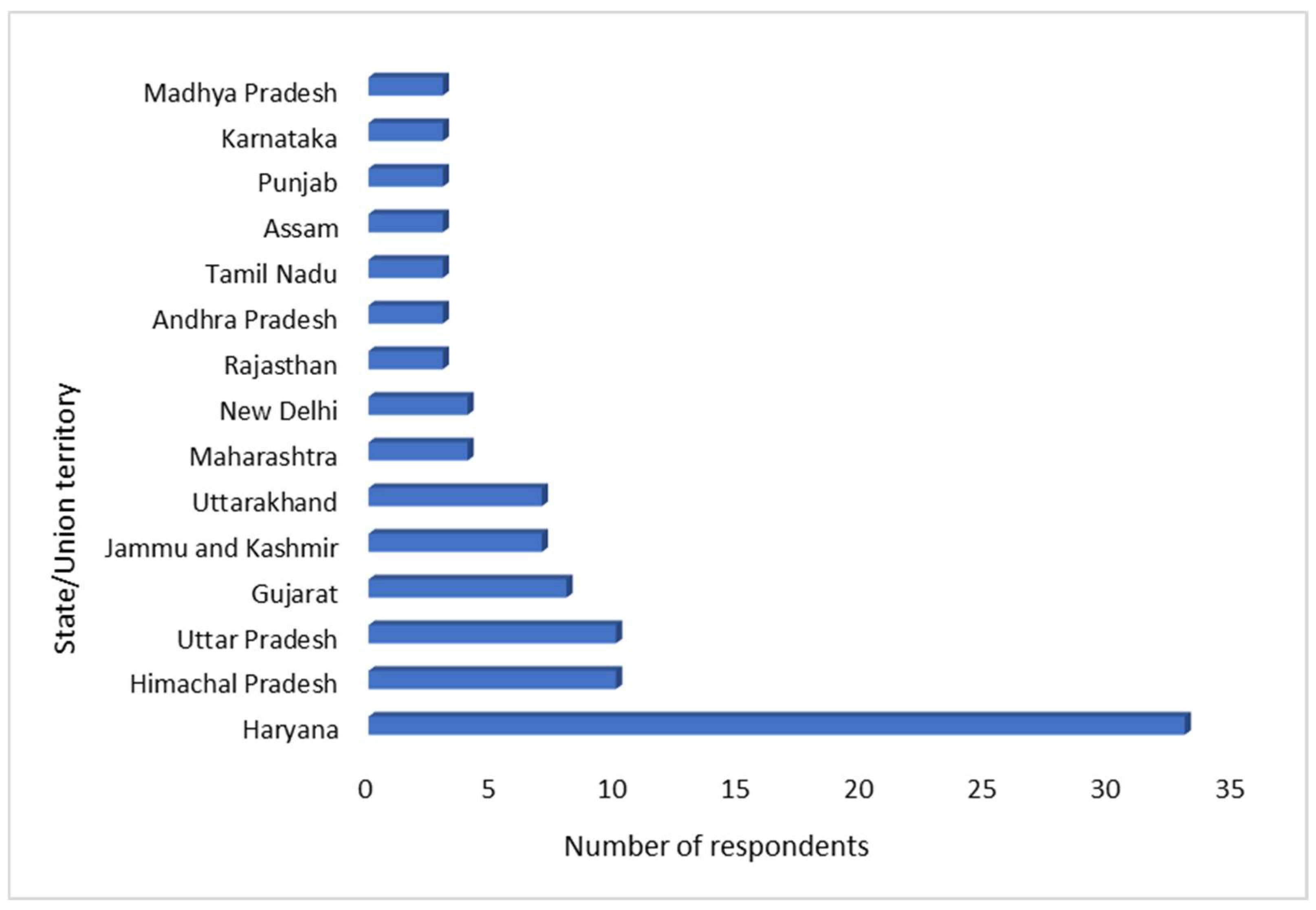
The indiscriminate usage and overuse of antimicrobials in pets or companion animals are underlying causes of antimicrobial resistance (AMR). Despite the multi-faceted global challenge presented by antimicrobial resistance, very few studies have appraised pet practitioners’ factors, such as written policy on antimicrobials, dose rate prescribed, use of critically important antimicrobials, and antimicrobial prescription in clean surgical procedures, which can contribute to AMR. In the present study, an online cross-sectional survey among randomly selected pet practitioners (n = 104) of various Indian provinces and union territories was conducted using a questionnaire comprising 33 closed-ended questions on different parameters, viz., the dosage regimen and level of compliance towards guidelines of the World Health Organization (WHO), other relevant veterinary associations, and their opinion while prescribing antimicrobials. Almost every practitioner of the 104 respondents had revealed the difficulties with owner compliance; i.e., incomplete course of the antibiotics, inappropriate follow-ups, and improper care of the sick animals. The majority of practitioners (95%) reported self-prescription of antimicrobials by the owner before presenting the pet(s) to the veterinary clinic, whereas more than half of the respondents (64%) revealed unavailability of antibiogram facilities. Furthermore, a large number (76%) of practitioners stated empirical treatment based on their experience as the main criteria for antimicrobial choice in the absence of timely results from the laboratory. Although non-necessitated use of antimicrobials in clean surgical procedures has been claimed, surprisingly, the majority of pet practitioners (97%) reported their use to reduce the post-operative complications. The use of the highest priority, critically important antimicrobials (HPCIA) listed by the WHO for humans, particularly quinolones and third-generation cephalosporin, also has been reported for different infections. The treatment durations were nearly as per the recommended guidelines issued by the Danish Small Animal Veterinary Association (DSAVA) for different ailments. Analysis using chi-square tests exhibited a significant correlation between less experienced veterinarians (less than 5 years) and prescription of antimicrobials restricted for critically important infections in human medicine. However, there seems to be no association between the experience of the practitioner and the further studied parameters, namely, antimicrobial regimen prescription, weighing the animals before prescription, dose rate calculation, and antimicrobial selection and use after clean surgical operations. The findings suggest periodic awareness campaigns among practitioners regarding the implementation of the official guidelines, the need for systematic surveillance of AMR, awareness among pet owners about antimicrobial resistance, and the importance of rational use of antimicrobials on their pets.
Keywords: antimicrobial resistance; India; survey; pet practitioner; companion animals antimicrobial resistance; India; survey; pet practitioner; companion animals