Biosensor-Integrated Virtual Reality for Cognitive Behavioral Therapy in Psychosis: A Systematic Review of a New Therapeutic Frontier

 , ,
, ,  , and
, and
Abstract
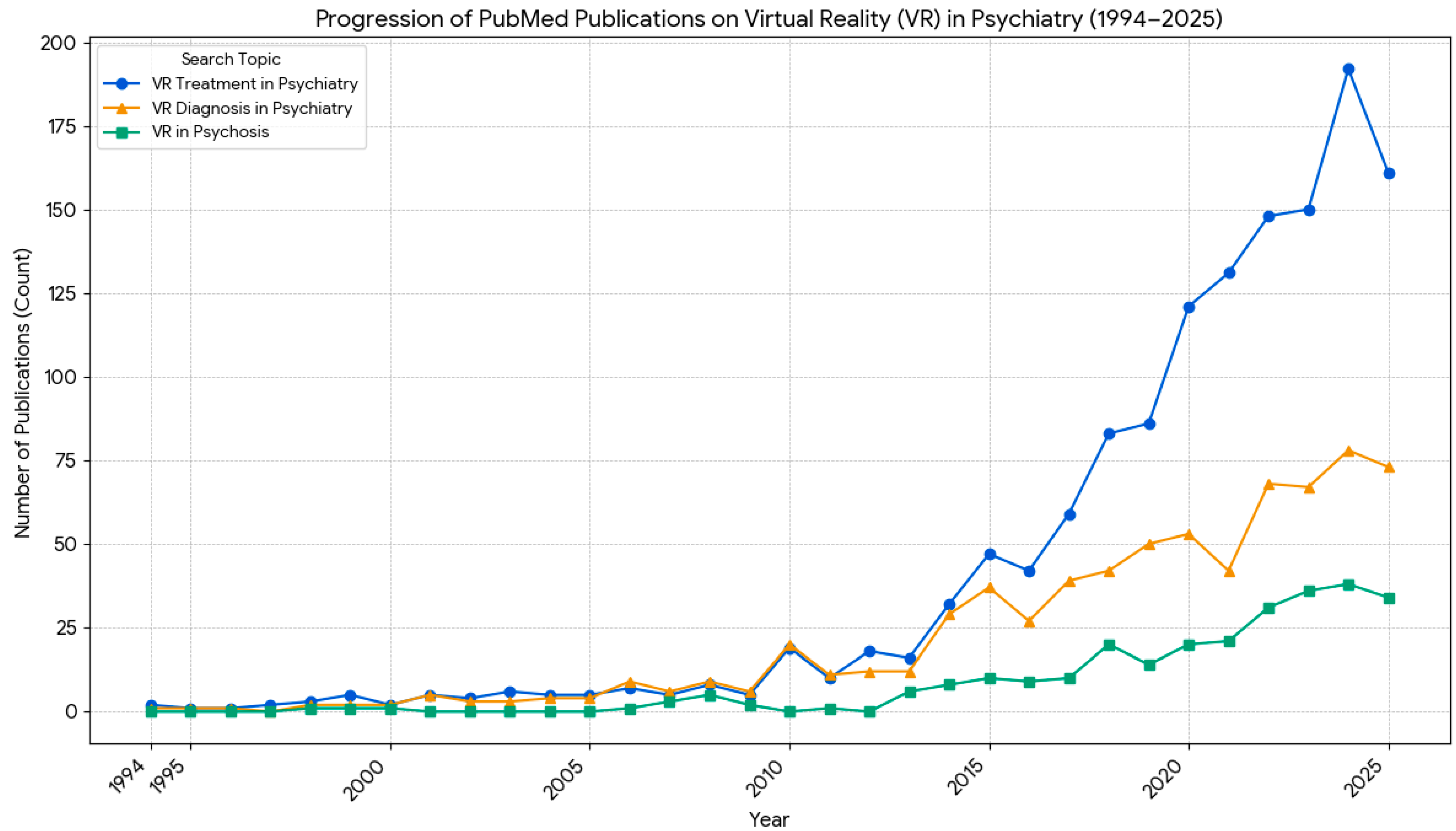
1. Introduction
1.1. The Challenge of Functional Recovery in Psychosis
1.2. Cognitive Behavioral Therapy for Psychosis as the Standard of Care and Its Limitations
1.3. The Emergence of Digital Therapeutics
1.4. The Use of Biosensors in Medicine
2. Materials and Methods
2.1. Search Strategy
2.2. Data Extraction and Screening
2.3. Inclusion and Exclusion Criteria
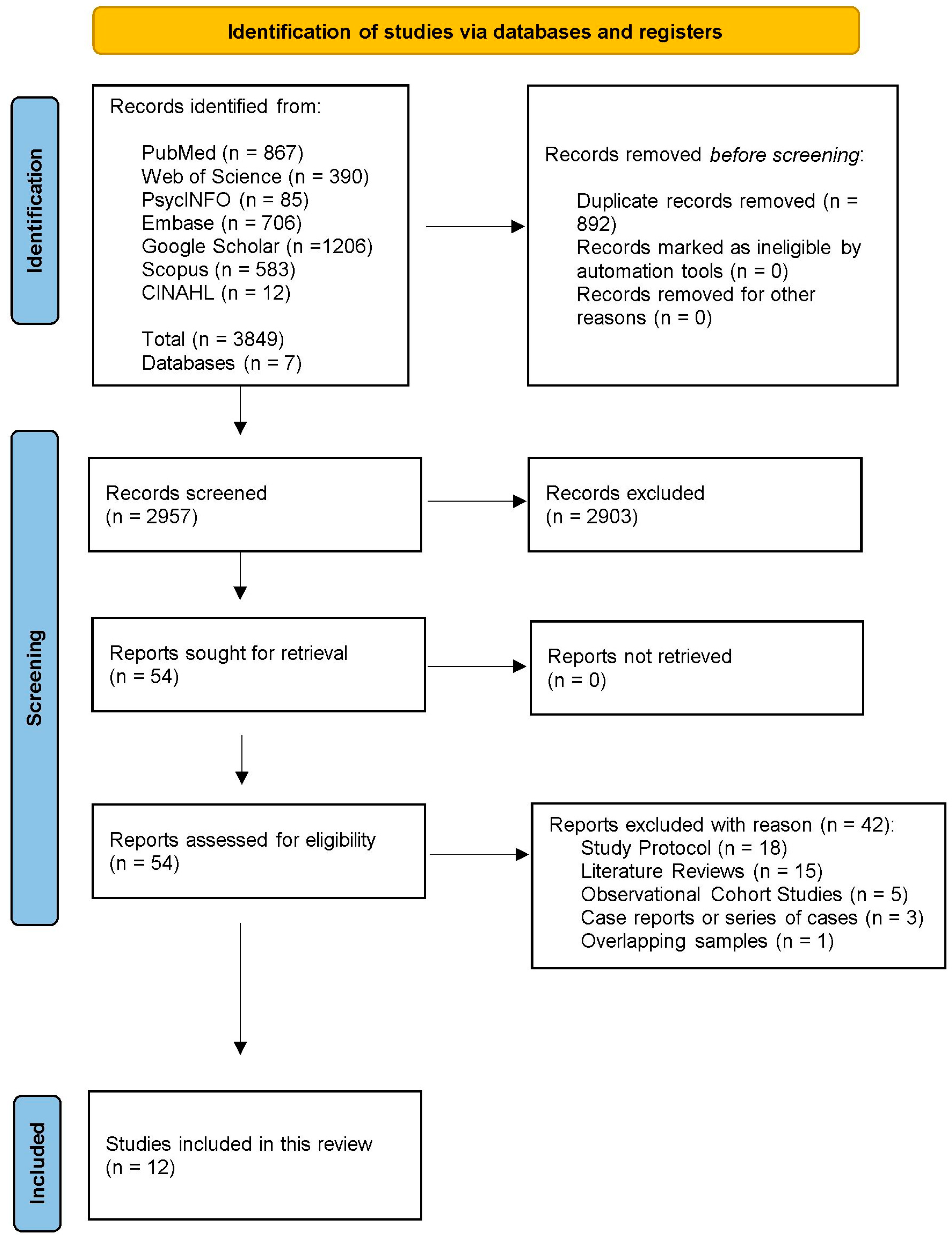
2.4. Results of the Literature Search
3. Results
3.1. Characteristics of Included Studies
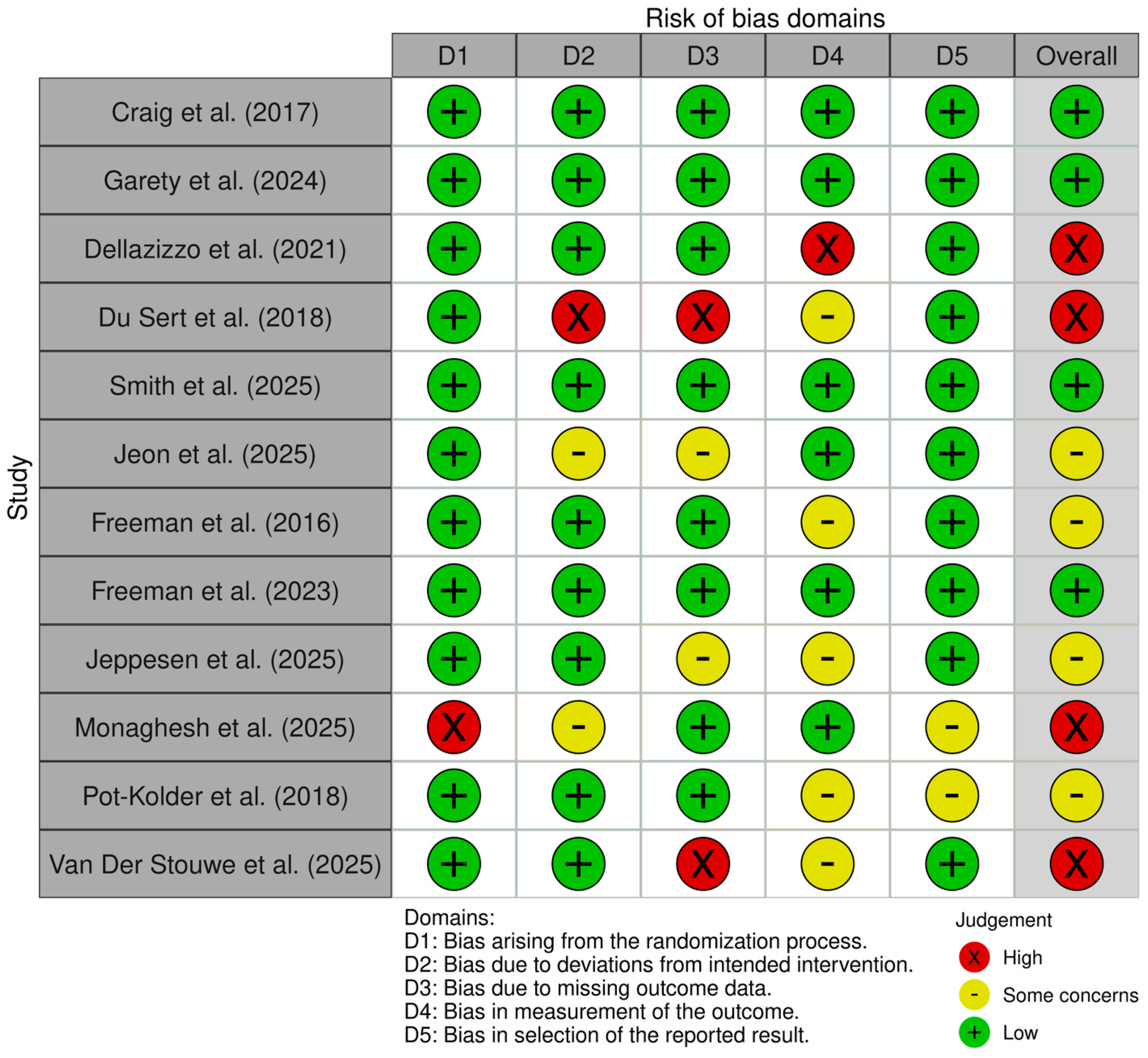
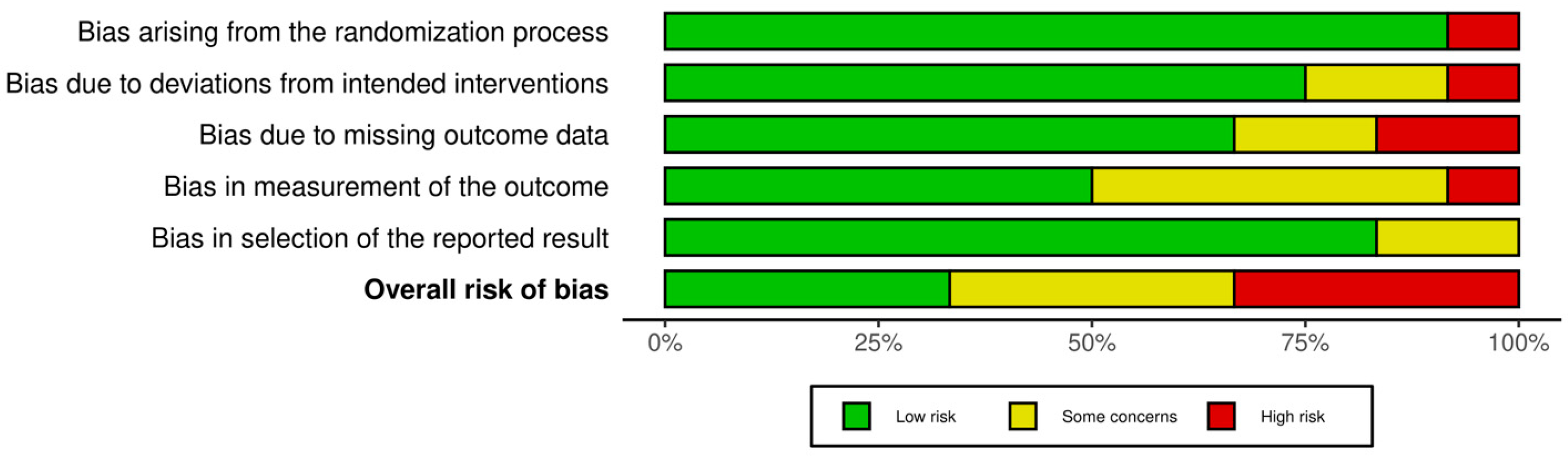
3.2. Risk of Bias and Quality Assessment
3.3. Auditory Verbal Hallucinations (AVH) and AVATAR Therapy (AT)
3.4. VRT for AVHs
3.5. Delusions and Paranoia
3.6. Safety and Tolerability
4. Discussion
4.1. The Value of VR-Assisted Therapies
4.2. The Engagement Paradox and Patient Adherence
4.3. Integrating Biosensors with VR Therapeutics
4.3.1. A Multi-Modal Biosensing Toolkit for Immersive Psychiatry
4.3.2. Closed-Loop Systems: Towards Real-Time, Data-Driven Therapeutic Adaptation
4.3.3. Implementation Challenges and Clinical Justification
5. Future Directions
5.1. A Synthesized Model of Biosensor-Integrated VR-CBTp
- The Patient: The individual at the center of the experience, immersed in the VR environment.
- The VR Simulation: A library of evidence-based, targeted therapeutic scenarios that can be tailored to the patient’s specific delusional themes or social anxieties.
- The Multi-Modal Biosensor Array: A suite of integrated, non-invasive sensors (e.g., EEG, HRV, eye-tracking) capturing a continuous stream of physiological and behavioral data.
- The AI/ML Analysis Engine: A sophisticated computational core that processes the high-dimensional data in real-time to infer the patient’s internal state (e.g., level of arousal, cognitive load, valence of emotional response, attentional focus).
- The Real-Time Feedback Loop: An adaptive mechanism that uses the output from the analysis engine to dynamically modify the VR simulation to maintain an optimal level of therapeutic challenge, titrating exposure based on objective data.
- The Clinician Dashboard: An intuitive interface that provides the therapist with a synthesized, longitudinal view of the patient’s objective and subjective data, highlighting patterns, tracking progress, and informing clinical decision-making both within and between sessions.
5.2. A Research Roadmap for the Next Decade
6. Strengths and Limitations
6.1. Strengths
6.2. Limitations
7. Conclusions
Author Contributions
Funding
Institutional Review Board Statement
Informed Consent Statement
Data Availability Statement
Acknowledgments
Conflicts of Interest
References
- Lieberman, J.A.; First, M.B. Psychotic Disorders. N. Engl. J. Med. 2018, 379, 270–280. [Google Scholar] [CrossRef] [Scilit]
- Bobes, J.; Alegría, A.A.; Saiz-Gonzalez, M.D.; Barber, I.; Pérez, J.L.; Saiz-Ruiz, J. Change in Psychiatrists’ Attitudes towards the Physical Health Care of Patients with Schizophrenia Coinciding with the Dissemination of the Consensus on Physical Health in Patients with Schizophrenia. Eur. Psychiatry 2010, 26, 305–312. [Google Scholar] [CrossRef] [Scilit]
- Miller, M.L.; Strassnig, M.T.; Bromet, E.; Depp, C.A.; Jonas, K.; Lin, W.; Moore, R.C.; Patterson, T.L.; Penn, D.L.; Pinkham, A.E.; et al. Performance-Based Assessment of Social Skills in a Large Sample of Participants with Schizophrenia, Bipolar Disorder and Healthy Controls: Correlates of Social Competence and Social Appropriateness. Schizophr. Res. 2021, 236, 80–86. [Google Scholar] [CrossRef] [Scilit]
- Hazlett, E.A.; Romero, M.J.; Haznedar, M.M.; New, A.S.; Goldstein, K.E.; Newmark, R.E.; Siever, L.J.; Buchsbaum, M.S. Deficient Attentional Modulation of Startle Eyeblink Is Associated with Symptom Severity in the Schizophrenia Spectrum. Schizophr. Res. 2007, 93, 288–295. [Google Scholar] [CrossRef] [Scilit] [PubMed]
- Jameel, L.; Rus-Calafell, M.; Cella, M.; Bradley, J.; Valmaggia, L. A Case Series in Using Virtual-Reality Assisted CBTp for Social Difficulties in Psychosis. J. Behav. Cogn. Ther. 2024, 35, 100519. [Google Scholar] [CrossRef] [Scilit]
- Polese, D.; Fornaro, M.; Palermo, M.; De Luca, V.; De Bartolomeis, A. Treatment-Resistant to Antipsychotics: A Resistance to Everything? Psychotherapy in Treatment-Resistant Schizophrenia and Nonaffective Psychosis: A 25-Year Systematic Review and Exploratory Meta-Analysis. Front. Psychiatry 2019, 10, 210. [Google Scholar] [CrossRef] [Scilit]
- Correll, C.U.; Schooler, N.R. Negative Symptoms in Schizophrenia: A Review and Clinical Guide for Recognition, Assessment, and Treatment. Neuropsychiatr. Dis. Treat. 2020, 16, 519–534. [Google Scholar] [CrossRef] [Scilit] [PubMed]
- Chan, K.C.-S.; Hui, C.L.-M.; Suen, Y.-N.; Lee, E.H.-M.; Chang, W.-C.; Chan, S.K.-W.; Chen, E.Y.-H. Application of Immersive Virtual Reality for Assessment and Intervention in Psychosis: A Systematic Review. Brain Sci. 2023, 13, 471. [Google Scholar] [CrossRef] [Scilit]
- Miranda, B.; Rego, P.A.; Romero, L.; Moreira, P.M. Application of Immersive VR Serious Games in the Treatment of Schizophrenia Negative Symptoms. Computers 2024, 13, 42. [Google Scholar] [CrossRef] [Scilit]
- Grossman, M.J.; Doell, F.K.; Watson-Gaze, J.; Baer, L.H.; Martins, F.; Kidd, S.A. Increasing Access to CBT for Psychosis: Development, Feasibility, and Acceptability of a Specialized Outpatient Service. Community Ment. Health J. 2022, 58, 1448–1456. [Google Scholar] [CrossRef] [Scilit] [PubMed]
- Hazell, C.M.; Hayward, M.; Cavanagh, K.; Strauss, C. A Systematic Review and Meta-Analysis of Low Intensity CBT for Psychosis. Clin. Psychol. Rev. 2016, 45, 183–192. [Google Scholar] [CrossRef] [Scilit]
- Li, M.; Patel, J.; Katapally, T.R. The Impact of Extended Reality Cognitive Behavioral Therapy on Mental Disorders among Children and Youth: A Systematic Review and Meta-Analysis Protocol. PLoS ONE 2025, 20, e0315313. [Google Scholar] [CrossRef] [Scilit]
- Thomas, N. What’s Really Wrong with Cognitive Behavioral Therapy for Psychosis? Front. Psychol. 2015, 6, 323. [Google Scholar] [CrossRef] [Scilit]
- Rees, S.N.; Crowe, M.; Harris, S. The Lesbian, Gay, Bisexual and Transgender Communities’ Mental Health Care Needs and Experiences of Mental Health Services: An Integrative Review of Qualitative Studies. J. Psychiatr. Ment. Health Nurs. 2020, 28, 578–589. [Google Scholar] [CrossRef] [Scilit] [PubMed]
- Kohn, L.; Christiaens, W.; Detraux, J.; De Lepeleire, J.; De Hert, M.; Gillain, B.; Delaunoit, B.; Savoye, I.; Mistiaen, P.; Jespers, V. Barriers to Somatic Health Care for Persons with Severe Mental Illness in Belgium: A Qualitative Study of Patients’ and Healthcare Professionals’ Perspectives. Front. Psychiatry 2022, 12, 798530. [Google Scholar] [CrossRef] [Scilit]
- Higgins, E.T. Self-Discrepancy: A Theory Relating Self and Affect. Psychol. Rev. 1987, 94, 319–340. [Google Scholar] [CrossRef]
- Torous, J.; Linardon, J.; Goldberg, S.B.; Sun, S.; Bell, I.; Nicholas, J.; Hassan, L.; Hua, Y.; Milton, A.; Firth, J. The Evolving Field of Digital Mental Health: Current Evidence and Implementation Issues for Smartphone Apps, Generative Artificial Intelligence, and Virtual Reality. World Psychiatry 2025, 24, 156–174. [Google Scholar] [CrossRef] [Scilit] [PubMed]
- Yee, J.; Matheson, H.; Bogie, B.J.M.; Du Perron, É.; Thérond, A.; Charest, M.; Van Driel, C.; Goyette, M.; Lei, Y.T.; Noël, C.; et al. Cognitive Remediation for Psychosis in Virtual Reality (ThinkTactic VR): A Qualitative, Iterative, User-Centered Co-Development Study. JMIR Ment. Health 2025, 12, e69359. [Google Scholar] [CrossRef] [Scilit]
- Rizzo, A.S.; Koenig, S.T.; Talbot, T.B. Clinical Virtual Reality: Emerging Opportunities for Psychiatry. FOCUS J. Lifelong Learn. Psychiatry 2018, 16, 266–278. [Google Scholar] [CrossRef] [Scilit]
- Nwokedi, N.C.N.; Soyege, N.O.S.; Balogu, N.O.D.; Mustapha, N.A.Y.; Tomoh, N.B.O.; Mbata, N.A.O.; Iguma, N.D.R. Virtual Reality (VR) and Augmented Reality (AR) in Medicine: A Review of Clinical Applications. Int. J. Sci. Res. Sci. Eng. Technol. 2024, 11, 438–449. [Google Scholar] [CrossRef] [Scilit]
- Kritikos, J.; Alevizopoulos, G.; Koutsouris, D. Personalized Virtual Reality Human-Computer Interaction for Psychiatric and Neurological Illnesses: A Dynamically Adaptive Virtual Reality Environment That Changes According to Real-Time Feedback from Electrophysiological Signal Responses. Front. Hum. Neurosci. 2021, 15, 596980. [Google Scholar] [CrossRef] [Scilit] [PubMed]
- Sarantopoulos, A.; Alevizopoulos, A.; Vasiliades, J.; Alevizopoulos, G.; Stergiou, A.; Kritikos, I. Enhancing Cognitive Screening for Alzheimer’s Disease: Integrating Virtual Reality and AI-Driven Speech. Adv. Artif. Intell. Robot. Res. 2025, 1, 23–40. [Google Scholar]
- Lee, E.E.; Torous, J.; De Choudhury, M.; Depp, C.A.; Graham, S.A.; Kim, H.-C.; Paulus, M.P.; Krystal, J.H.; Jeste, D.V. Artificial Intelligence for Mental Health Care: Clinical Applications, Barriers, Facilitators, and Artificial Wisdom. Biol. Psychiatry Cogn. Neurosci. Neuroimaging 2021, 6, 856–864. [Google Scholar] [CrossRef] [Scilit]
- Becerra, X.; Palm, A.; Haffajee, R.L.; Contreras, J.; Barkoff, A.; O’Connell, D.; Valdez, R.O.; Walensky, R.P.; Brooks-LaSure, C.; Califf, R.M.; et al. Addressing the Nation’s Behavioral Health Crisis: An HHS Roadmap to Integrate Behavioral Health. Forefr. Group 2022, 3, 49–88. [Google Scholar] [CrossRef] [Scilit]
- Ballout, S. Trauma, Mental Health Workforce Shortages, and Health Equity: A Crisis in Public Health. Int. J. Environ. Res. Public Health 2025, 22, 620. [Google Scholar] [CrossRef] [Scilit]
- Kang, M.; Chai, K. Wearable Sensing Systems for Monitoring Mental Health. Sensors 2022, 22, 994. [Google Scholar] [CrossRef] [Scilit]
- Koorathota, S.; Ma, J.L.; Faller, J.; Hong, L.; Lapborisuth, P.; Sajda, P. Pupil-Linked Arousal Correlates with Neural Activity Prior to Sensorimotor Decisions. J. Neural Eng. 2023, 20, 066031. [Google Scholar] [CrossRef] [Scilit]
- Kritikos, J.; Tzannetos, G.; Zoitaki, C.; Poulopoulou, S.; Koutsouris, D. Anxiety Detection from Electrodermal Activity Sensor with Movement; Interaction during Virtual Reality Simulation. In 2019 9th International IEEE/EMBS Conference on Neural Engineering (NER); IEEE: Piscataway, NJ, USA, 2019; pp. 571–576. [Google Scholar] [CrossRef] [Scilit]
- Caravas, P.; Kritikos, J.; Alevizopoulos, G.; Koutsouris, D. Participant Modeling: The Use of a Guided Master in the Modern World of Virtual Reality Exposure Therapy Targeting Fear of Heights. In International Conference on Wearables in Healthcare; Springer: Cham, Switzerland, 2021; pp. 161–174. [Google Scholar]
- Alevizopoulos, A.; Kritikos, J.; Alevizopoulos, G. Intelligent Machines and Mental Health in the Era of COVID-19. Psychiatriki 2021, 32, 99–102. [Google Scholar] [CrossRef] [Scilit] [PubMed]
- Page, M.J.; McKenzie, J.E.; Bossuyt, P.M.; Boutron, I.; Hoffmann, T.C.; Mulrow, C.D.; Shamseer, L.; Tetzlaff, J.M.; Akl, E.A.; Brennan, S.E.; et al. The PRISMA 2020 Statement: An Updated Guideline for Reporting Systematic Reviews. BMJ 2021, 372, n71. [Google Scholar] [CrossRef] [Scilit]
- Tandon, R.; Gaebel, W.; Barch, D.M.; Bustillo, J.; Gur, R.E.; Heckers, S.; Malaspina, D.; Owen, M.J.; Schultz, S.; Tsuang, M.; et al. Definition and Description of Schizophrenia in the DSM-5. Schizophr. Res. 2013, 150, 3–10. [Google Scholar] [CrossRef] [Scilit] [PubMed]
- Martingano, A.J.; Hererra, F.; Konrath, S. Virtual Reality Improves Emotional but Not Cognitive Empathy: A Meta-Analysis. Technol. Mind Behav. 2021, 2, 7. [Google Scholar] [CrossRef] [Scilit]
- Craig, T.K.; Rus-Calafell, M.; Ward, T.; Leff, J.P.; Huckvale, M.; Howarth, E.; Emsley, R.; Garety, P.A. AVATAR Therapy for Auditory Verbal Hallucinations in People with Psychosis: A Single-Blind, Randomised Controlled Trial. Lancet Psychiatry 2017, 5, 31–40. [Google Scholar] [CrossRef] [Scilit]
- Garety, P.A.; Edwards, C.J.; Jafari, H.; Emsley, R.; Huckvale, M.; Rus-Calafell, M.; Fornells-Ambrojo, M.; Gumley, A.; Haddock, G.; Bucci, S.; et al. Digital AVATAR Therapy for Distressing Voices in Psychosis: The Phase 2/3 AVATAR2 Trial. Nat. Med. 2024, 30, 3658–3668. [Google Scholar] [CrossRef] [Scilit]
- Dellazizzo, L.; Potvin, S.; Phraxayavong, K.; Dumais, A. One-Year Randomized Trial Comparing Virtual Reality-Assisted Therapy to Cognitive–Behavioral Therapy for Patients with Treatment-Resistant Schizophrenia. Schizophrenia 2021, 7, 9. [Google Scholar] [CrossRef] [Scilit]
- Du Sert, O.P.; Potvin, S.; Lipp, O.; Dellazizzo, L.; Laurelli, M.; Breton, R.; Lalonde, P.; Phraxayavong, K.; O’Connor, K.; Pelletier, J.-F.; et al. Virtual Reality Therapy for Refractory Auditory Verbal Hallucinations in Schizophrenia: A Pilot Clinical Trial. Schizophr. Res. 2018, 197, 176–181. [Google Scholar] [CrossRef] [Scilit] [PubMed]
- Smith, L.C.; Vernal, D.L.; Mariegaard, L.S.; Christensen, A.G.; Jansen, J.E.; Schytte, G.; Stokbro, L.A.; Albert, N.; Christensen, M.J.; Thomas, N.; et al. Immersive Virtual Reality-Assisted Therapy Targeting Persistent Auditory Verbal Hallucinations in Patients Diagnosed with Schizophrenia Spectrum Disorders in Denmark: The Challenge Assessor-Masked, Randomised Clinical Trial. Lancet Psychiatry 2025, 12, 557–567. [Google Scholar] [CrossRef] [Scilit] [PubMed]
- Jeon, E.; Li, L.; Le, T.-H.; Kim, W.-S.; Odkhuu, S.; Kang, C.Y.; Setiani, A.; Rami, F.Z.; Chung, Y.-C. Virtual Reality Therapy Targeting Ideas of Reference in Patients with Psychosis: A Single-Blind Parallel-Group Randomized Controlled Trial. Psychol. Med. 2025, 55, e121. [Google Scholar] [CrossRef] [Scilit]
- Freeman, D.; Bradley, J.; Antley, A.; Bourke, E.; DeWeever, N.; Evans, N.; Černis, E.; Sheaves, B.; Waite, F.; Dunn, G.; et al. Virtual Reality in the Treatment of Persecutory Delusions: Randomised Controlled Experimental Study Testing How to Reduce Delusional Conviction. Br. J. Psychiatry 2016, 209, 62–67. [Google Scholar] [CrossRef] [Scilit] [PubMed]
- Freeman, D.; Lister, R.; Waite, F.; Galal, U.; Yu, L.-M.; Lambe, S.; Beckley, A.; Bold, E.; Jenner, L.; Diamond, R.; et al. Automated Virtual Reality Cognitive Therapy versus Virtual Reality Mental Relaxation Therapy for the Treatment of Persistent Persecutory Delusions in Patients with Psychosis (THRIVE): A Parallel-Group, Single-Blind, Randomised Controlled Trial in England with Mediation Analyses. Lancet Psychiatry 2023, 10, 836–847. [Google Scholar] [CrossRef] [Scilit]
- Jeppesen, U.N.; Vernal, D.L.; Due, A.S.; Mariegaard, L.S.; Pinkham, A.E.; Austin, S.F.; Vos, M.; Christensen, M.J.; Hansen, N.K.; Smith, L.C.; et al. Virtual Reality-Based versus Standard Cognitive Behavioral Therapy for Paranoia in Schizophrenia Spectrum Disorders: A Randomized Controlled Trial. Nat. Med. 2025, 31, 3425–3439. [Google Scholar] [CrossRef] [Scilit]
- Monaghesh, E.; Farhang, S.; Samad-Soltani, T. Virtual Reality Assisted Cognitive Behavioral Therapy Improves Theory of Mind and Decreases Paranoia in Patients with Schizophrenia: A Randomized Controlled Trial. J. Behav. Ther. Exp. Psychiatry 2025, 89, 102055. [Google Scholar] [CrossRef] [Scilit]
- Pot-Kolder, R.M.C.A.; Geraets, C.N.W.; Veling, W.; Van Beilen, M.; Staring, A.B.P.; Gijsman, H.J.; Delespaul, P.A.E.G.; Van Der Gaag, M. Virtual-Reality-Based Cognitive Behavioural Therapy versus Waiting List Control for Paranoid Ideation and Social Avoidance in Patients with Psychotic Disorders: A Single-Blind Randomised Controlled Trial. Lancet Psychiatry 2018, 5, 217–226. [Google Scholar] [CrossRef] [Scilit]
- Van Der Stouwe, E.C.D.; Geraets, C.N.W.; Berkhof, M.; Hidding, M.; Van Amstel, S.; Van Den Berg, D.; Van Grunsven, R.; De Jager, J.; Kooijmans, E.; Sageot, M.; et al. Virtual-Reality Cognitive Behavior Therapy versus Cognitive Behavior Therapy for Paranoid Ideation: A Pragmatic, Single-Blind, Multicenter Randomized Clinical Superiority Trial. Psychol. Med. 2025, 55, e188. [Google Scholar] [CrossRef] [Scilit] [PubMed]
- Sterne, J.A.C.; Savović, J.; Page, M.J.; Elbers, R.G.; Blencowe, N.S.; Boutron, I.; Cates, C.J.; Cheng, H.-Y.; Corbett, M.S.; Eldridge, S.M.; et al. RoB 2: A Revised Tool for Assessing Risk of Bias in Randomised Trials. BMJ 2019, 366, l4898. [Google Scholar] [CrossRef] [Scilit]
- McGuinness, L.A.; Higgins, J.P.T. Risk-of-bias Visualization (Robvis): An R Package and Shiny Web App for Visualizing Risk-of-bias Assessments. Res. Synth. Methods 2020, 12, 55–61. [Google Scholar] [CrossRef] [Scilit]
- Smith, L.C.; Mateos, A.C.; Due, A.S.; Bergström, J.; Nordentoft, M.; Clemmensen, L.; Glenthøj, L.B. Immersive Virtual Reality in the Treatment of Auditory Hallucinations: A PRISMA Scoping Review. Psychiatry Res. 2024, 334, 115834. [Google Scholar] [CrossRef] [Scilit]
- Aali, G.; Kariotis, T.; Shokraneh, F. Avatar Therapy for People with Schizophrenia or Related Disorders. Cochrane Libr. 2020, 2020, CD011898. [Google Scholar] [CrossRef] [Scilit]
- Fernández-Caballero, A.; Navarro, E.; Fernández-Sotos, P.; González, P.; Ricarte, J.J.; Latorre, J.M.; Rodriguez-Jimenez, R. Human-Avatar Symbiosis for the Treatment of Auditory Verbal Hallucinations in Schizophrenia through Virtual/Augmented Reality and Brain-Computer Interfaces. Front. Neuroinformatics 2017, 11, 64. [Google Scholar] [CrossRef] [Scilit]
- Leff, J.; Williams, G.; Huckvale, M.; Arbuthnot, M.; Leff, A.P. Avatar Therapy for Persecutory Auditory Hallucinations: What Is It and How Does It Work? Psychosis 2013, 6, 166–176. [Google Scholar] [CrossRef] [Scilit] [PubMed]
- McCarthy-Jones, S.; Trauer, T.; Mackinnon, A.; Sims, E.; Thomas, N.; Copolov, D.L. A New Phenomenological Survey of Auditory Hallucinations: Evidence for Subtypes and Implications for Theory and Practice. Schizophr. Bull. 2012, 40, 231–235. [Google Scholar] [CrossRef] [Scilit]
- Haddock, G.; McCARRON, J.; Tarrier, N.; Faragher, E.B. Scales to Measure Dimensions of Hallucinations and Delusions: The Psychotic Symptom Rating Scales (PSYRATS). Psychol. Med. 1999, 29, 879–889. [Google Scholar] [CrossRef] [Scilit] [PubMed]
- Woodward, T.S.; Jung, K.; Hwang, H.; Yin, J.; Taylor, L.; Menon, M.; Peters, E.; Kuipers, E.; Waters, F.; Lecomte, T.; et al. Symptom Dimensions of the Psychotic Symptom Rating Scales in Psychosis: A Multisite Study. Schizophr. Bull. 2014, 40, S265–S274. [Google Scholar] [CrossRef] [Scilit]
- Steel, C.; Garety, P.A.; Freeman, D.; Craig, E.; Kuipers, E.; Bebbington, P.; Fowler, D.; Dunn, G. The Multidimensional Measurement of the Positive Symptoms of Psychosis. Int. J. Methods Psychiatr. Res. 2007, 16, 88–96. [Google Scholar] [CrossRef] [Scilit]
- Christensen, M.J.; Rydborg, M.P.; Jørgensen, R.; Nielsen, C.D.; Mainz, J.; Bell, I.H.; Thomas, N.; Smith, L.C.; Mariegaard, L.S.; Ward, T.; et al. Immersive Virtual Reality–Assisted Therapy for Distressing Voices in Psychosis: Qualitative Study of Participants’ and Therapists’ Experiences in the Challenge Trial. JMIR Serious Games 2025, 13, e77920. [Google Scholar] [CrossRef] [Scilit]
- Fekete, J.T.; Győrffy, B. MetaAnalysisOnline.Com: Web-Based Tool for the Rapid Meta-Analysis of Clinical and Epidemiological Studies. J. Med. Internet Res. 2025, 27, e64016. [Google Scholar] [CrossRef] [Scilit]
- Green, C.E.L.; Freeman, D.; Kuipers, E.; Bebbington, P.; Fowler, D.; Dunn, G.; Garety, P.A. Measuring Ideas of Persecution and Social Reference: The Green et al. Paranoid Thought Scales (GPTS). Psychol. Med. 2007, 38, 101–111. [Google Scholar] [CrossRef] [Scilit]
- Freeman, D.; Loe, B.S.; Kingdon, D.; Startup, H.; Molodynski, A.; Rosebrock, L.; Brown, P.; Sheaves, B.; Waite, F.; Bird, J.C. The Revised Green et al., Paranoid Thoughts Scale (R-GPTS): Psychometric Properties, Severity Ranges, and Clinical Cut-Offs. Psychol. Med. 2019, 51, 244–253. [Google Scholar] [CrossRef] [Scilit] [PubMed]
- Brown, P.; Spronck, P.; Powell, W. The Simulator Sickness Questionnaire, and the Erroneous Zero Baseline Assumption. Front. Virtual Real. 2022, 3, 945800. [Google Scholar] [CrossRef] [Scilit]
- Spark, J.; Pot-Kolder, R.; Dzafic, I.; Nelson, B.; Byrne, L.K.; Lum, J.A.G. Virtual Reality for the Treatment of Positive Symptoms of Psychosis: A Meta-Analysis of Trials. Curr. Treat. Options Psychiatry 2025, 12, 10. [Google Scholar] [CrossRef] [Scilit]
- Cobandag, M.; Sigala, N. The Effectiveness of Non-Pharmacological Treatments for Auditory Verbal Hallucinations in Schizophrenia Spectrum Disorders: A Systematic Review and Meta-Analysis. Eur. Psychiatry 2025, 68, e155. [Google Scholar] [CrossRef] [Scilit]
- Hsu, T.-W.; Tseng, P.-T.; Hsu, C.-W.; Yang, F.-C.; Changchien, T.-C.; Lin, Y.-H.; Liang, C.-S. AVATAR Therapy for Medication-Resistant Auditory Hallucination in Patients with Psychosis: A Systematic Review and Meta-Analysis. Schizophrenia 2025, 12, 10. [Google Scholar] [CrossRef] [Scilit] [PubMed]
- Lindgren, M.; Torniainen-Holm, M.; Heiskanen, I.; Voutilainen, G.; Pulkkinen, U.; Mehtälä, T.; Jokela, M.; Kieseppä, T.; Suvisaari, J.; Therman, S. Theory of Mind in a First-Episode Psychosis Population Using the Hinting Task. Psychiatry Res. 2018, 263, 185–192. [Google Scholar] [CrossRef] [Scilit] [PubMed]
- Mevlevioğlu, D.; Tabirca, S.; Murphy, D. Anxiety Classification in Virtual Reality Using Biosensors: A Mini Scoping Review. PLoS ONE 2023, 18, e0287984. [Google Scholar] [CrossRef] [Scilit] [PubMed]
- Williams, L.M.; Pines, A.; Goldstein-Piekarski, A.N.; Rosas, L.G.; Kullar, M.; Sacchet, M.D.; Gevaert, O.; Bailenson, J.; Lavori, P.W.; Dagum, P.; et al. The ENGAGE Study: Integrating Neuroimaging, Virtual Reality and Smartphone Sensing to Understand Self-Regulation for Managing Depression and Obesity in a Precision Medicine Model. Behav. Res. Ther. 2017, 101, 58–70. [Google Scholar] [CrossRef] [Scilit]
- Zhao, X.; Lou, Z.; Shah, P.T.; Wu, C.; Liu, R.; Xie, W.; Zhang, S. Integration of Multi-Modal Biosensing Approaches for Depression: Current Status, Challenges, and Future Perspectives. Sensors 2025, 25, 4858. [Google Scholar] [CrossRef] [Scilit]



| Author (Year) | Intervention | Control Group | Population | Primary Findings | Effect Size |
|---|---|---|---|---|---|
| Craig et al. (2017) [34] | AVATAR Therapy | TAU (supportive counseling) | 150 | AVATAR therapy was significantly more effective in reducing AVH severity at 16 weeks but not at 24 weeks. | Cd = 0.8 |
| Garety et al. (2024) [35] | AVATAR Therapy | TAU (N/A) | 345 | Both AV-BRF and AV-EXT were superior to TAU at 16 weeks, but not at 28 weeks. | At 16 weeks: AV-BRF(Cd) = 0.38, AV-EXT(Cd) = 0.58 At 28 weeks: AV-BRF(Cd) = 0.22, AV-EXT(Cd) = 0.38 |
| Dellazizzo et al. (2021) [36] | VRT | CBT | 74 | Both interventions were effective. VRT was not statistically superior to CBT, but achieved a numerically larger effect. | VRT: Cd = 1.08 CBT: Cd = 0.555 |
| Du Sert et al. (2018) [37] | VRT | TAU (antipsychotics) | 15 | VRT produced significant improvements in AVH severity, particularly distress, which were maintained at 3-month follow-up. | PSYRATS-AH Total: Cd = 1.0 PSYRATS-AH Distress: Cd = 1.2 |
| Smith et al. (2025) [38] | VRT | TAU (supportive counseling) | 215 | Challenge-VRT significantly reduced AVH severity compared to TAU. | At 12 weeks: Adjusted Mean Difference = −2.26, Cd = 0.27 |
| Jeon et al. (2025) [39] | VRT | VR-control | 70 | VRT showed a significant improvement in PSYRATS-D scores compared to VR-control. | Cd = 0.865, for positive symptoms |
| Freeman et al. (2016) [40] | VR-CBT | VR-control | 30 | VR-CBT led to significantly greater reductions in delusional conviction. | Cd = 1.3 |
| Freeman et al. (2023) [41] | VR-CBT | VRMR | 77 | No significant difference between the two active VR interventions. Both groups showed large improvements. | VR-CBT(Cd) = 1.6 VRMR(Cd) = 1.3 |
| Jeppesen et al. (2025) [42] | VR-CBT | CBT | 254 | VR-CBTp was not superior to standard CBTp in reducing paranoia. | Cd = 0.04 (non-significant) |
| Monaghesh et al. (2025) [43] | VR-CBT | CBT | 60 | VR-CBT was significantly superior to traditional CBT. | Cd = 0.25 |
| Pot-Kolder et al. (2018) [44] | VR-CBT | TAU (waitlist) | 116 | Significant reduction in Momentary Paranoia vs. control. No immediate effect on Time with Others. | Paranoia (Cd) = 1.49 |
| Van Der Stouwe et al. (2025) [45] | VR-CBT | CBT | 98 | Both groups improved. VR-CBTp showed a significantly greater reduction in Momentary Paranoia than standard CBTp. | Effect size between VR-CBT and CBT was 0.62 favoring VR-CBT |
| Author (Year) | Country Setting | Size (Male) | Age in Years (SD) | Ethnicity | Main Diagnosis | Intervention (Male) | Control (Male) |
|---|---|---|---|---|---|---|---|
| Craig et al. (2017) [34] | United Kingdom, South London and Maudsley NHS trust | 150 (102) | 42.7 (±10.7) | White = 58, Black = 54, Asian = 5, Other = 33 | Paranoid schizophrenia = 115 | 75 (57) | 75 (45) |
| Garety et al. (2024) [35] | United Kingdom, university trial sitesa | 345 (212) | 39.61 (±13.26) | White = 203, Black = 57, South Asian = 27 | Schizophrenia = 151 | 230 (143) | 115 (69) |
| Dellazizzo et al. (2021) [36] | Canada, Institut Universitaire en Santé Mentale de Montréal | 74 (56) | 42.5 (±12.7) | Caucasian = 61, Visible minorities = 13 | Schizophrenia = 57 | 37 (29) | 37 (27) |
| Du Sert et al. (2018) [37] | Canada, Institut Universitaire en Santé Mentale de Montréal | 15 (10) | 42.9 (±12.4) | Caucasian = 13, Visible minorities = 2 | Schizophrenia = 12 | 15 (10), partial cross-over | 15 (10), partial cross-over |
| Smith et al. (2025) [38] | Denmark, out-patient psychiatric clinicsb | 270 (105) | 32.83 (±11.9) | N/A | Schizophrenia = 249 | 140 (53) | 130 (52) |
| Jeon et al. (2025) [39] | South Korea, out-patient psychiatric clinicsc | 70 (39) | 30.01 (±8.12) | N/A | Schizophrenia = 52 | 32 (17) | 38 (22) |
| Freeman et al. (2016) [40] | United Kingdom, Oxford Health NHS trust | 30 (16) | - VR-CBT: 42.1 (±13.4) - VR-control: 40.6 (±14.4) | White = 29, Mixed = 1 | Schizophrenia = 10 | 15 (10) | 15 (6) |
| Freeman et al. (2023) [41] | United Kingdom, National Health Service trustsd | 80 (49) | 40.3 (±13.1) | White = 64, Black = 6, South Asian = 4, Chinese = 1, Other = 5 | Schizophrenia = 36 | VR-CBT: 39 (25) | VRMR: 41 (24) |
| Jeppesen et al. (2025) [42] | Denmark, capital region and north Denmark region | 254 (146) | 26.8 (22.8–33.1) | N/A | Schizophrenia = 184 | 126 (54) | 128 (54) |
| Monaghesh et al. (2025) [43] | Iran, Razi Hospital, Tabriz | 60 (36) | - VR-CBT: 30.8 - CBT: 32.1 | N/A | Schizophrenia = 60 | 30 (19) | 30 (17) |
| Pot-Kolder et al. (2018) [44] | Netherlands, mental health centers | 116 (82) | - VR-CBT: 36.5 - TAU: 39.5 | Dutch = 40, Other = 76 | Schizophrenia = 95 | 58 (40) | 58 (42) |
| Van Der Stouwe et al. (2025) [45] | Netherlands and Belgium, mental health centerse | 98 (72) | - VR-CBT: 35.5 (±12.9) - CBT: 36.1 (±12.3) | Dutch = 79, Other = 19 | Unspecified schizophrenia spectrum and other psychotic disorder = 41 | 48 (33) | 50 (39) |
| Sensor Type | Physiological Target | Clinical Application in VR Psychosis Treatment |
|---|---|---|
| EKG/HRV | Cardiac Activity | Monitoring baseline arousal and heart-rate variability responses to auditory verbal hallucinations during AVATAR therapy. |
| EEG | Neurologic Activity | Assessing cognitive load and neural correlates of belief modification during exposure. |
| EDA/Sweat Sensors | Electrodermal Activity | Quantifying acute stress and sympathetic nervous system arousal in real-time to prevent therapeutic flooding. |
| Pupillometry/Eye-tracking | Pupil Dilation & Gaze | Measuring attentional focus, avoidance behaviors, and subconscious responses to persecutory virtual stimuli. |
Disclaimer/Publisher’s Note: The statements, opinions and data contained in all publications are solely those of the individual author(s) and contributor(s) and not of MDPI and/or the editor(s). MDPI and/or the editor(s) disclaim responsibility for any injury to people or property resulting from any ideas, methods, instructions or products referred to in the content. |
© 2026 by the authors. Licensee MDPI, Basel, Switzerland. This article is an open access article distributed under the terms and conditions of the Creative Commons Attribution (CC BY) license.
Share and Cite
Alevizopoulos, A.G.; Anastasiou, G.G.; Kritikos, I.; Alevizopoulou, M.; Alevizopoulos, G.A. Biosensor-Integrated Virtual Reality for Cognitive Behavioral Therapy in Psychosis: A Systematic Review of a New Therapeutic Frontier. Biosensors 2026, 16, 265. https://doi.org/10.3390/bios16050265
Alevizopoulos AG, Anastasiou GG, Kritikos I, Alevizopoulou M, Alevizopoulos GA. Biosensor-Integrated Virtual Reality for Cognitive Behavioral Therapy in Psychosis: A Systematic Review of a New Therapeutic Frontier. Biosensors. 2026; 16(5):265. https://doi.org/10.3390/bios16050265
Chicago/Turabian StyleAlevizopoulos, Aristomenis G., Georgios G. Anastasiou, Iakovos Kritikos, Maria Alevizopoulou, and Georgios A. Alevizopoulos. 2026. "Biosensor-Integrated Virtual Reality for Cognitive Behavioral Therapy in Psychosis: A Systematic Review of a New Therapeutic Frontier" Biosensors 16, no. 5: 265. https://doi.org/10.3390/bios16050265
APA StyleAlevizopoulos, A. G., Anastasiou, G. G., Kritikos, I., Alevizopoulou, M., & Alevizopoulos, G. A. (2026). Biosensor-Integrated Virtual Reality for Cognitive Behavioral Therapy in Psychosis: A Systematic Review of a New Therapeutic Frontier. Biosensors, 16(5), 265. https://doi.org/10.3390/bios16050265