Biosensor Technologies for Avian Influenza Detection: A New Frontier in Rapid Diagnostics for HPAI

 , , ,
, , ,  ,
,  and
and
Abstract
1. Introduction
1.1. Background on Avian Influenza Viruses (AIVs)
1.2. Global Impact of Highly Pathogenic Avian Influenza (HPAI)
1.3. Limitations of Conventional Diagnostics
1.4. Scope and Objectives of This Review
2. Current Diagnostic Approaches for Avian Influenza
2.1. Molecular Techniques

| Diagnostic Assay | Target | Relative Sensitivity | Relative Specificity | Estimated Cost per Sample | Required Expertise | Time to Result | Use Case | Notes |
|---|---|---|---|---|---|---|---|---|
| Virus isolation | Viable virus | High | Moderate | $$$ | High | 1 to 3 weeks | Confirmatory testing, strain isolation, research | Gold standard; requires biosafety level 3 (BSL-3) lab |
| Antigen detection | AIV protein | Low | High | $$ | Moderate | 15 min | Rapid screening at point of care | May yield false negatives in low-viral-load samples |
| Real-time RT-PCR | AIV RNA (M protein) | High | High | $$ | Moderate | ~3 h | Detection and subtype identification | Standard for surveillance; multiplexing possible |
| Agar gel immunodiffusion (AGID) | Antibody to IAV nucleoprotein and matrix protein | Moderate | Moderate | $$ | High | 48 h | Serological surveillance post-infection | Less sensitive than ELISA; requires intact serum antibody |
| ELISA | Antibody to IAV | Moderate | Moderate | $ | Moderate | ~2 h | Large-scale seroprevalence studies and flock surveillance | Can distinguish vaccinated vs. infected animals (DIVA-compatible formats) depending on vaccine design |
| Hemagglutination (HA) inhibition (HAI) | Identification of IAV HA subtype and subtype-specific antibodies | High | Moderate | $$ | High | ~2 h | HA subtyping, immune status evaluation (titer instead of positive vs. negative result) | Requires standardized RBCs and reference antigens; may require BSL-3 |
| Neuraminidase (NA) inhibition (NAI) | Identification of IAV NA subtype and subtype-specific antibodies | High | Moderate | $$ | High | ~3 h | NA subtyping, strain differentiation | Used alongside HAI for full subtype identification |
| Loop-mediated isothermal amplification (LAMP) | AIV RNA | Moderate to high | High | $ | Low to moderate | ~30–60 min | Field diagnostics, resource-limited settings | Isothermal amplification; does not require a thermocycler |
| Next-generation sequencing (NGS) | Whole AIV genome | Very high | Very high | $$$$ | Very high | Days | Whole-genome surveillance, variant detection | Requires bioinformatics infrastructure; current requirement for HPAI vs. LPAI differentiation |
| Microarray/DNA chip | Multiple AIV gene targets | High | High | $$$ | High | ~6 h | Simultaneous detection and subtyping of multiple strains | Less commonly used in field settings |
2.2. Immunological Assays
2.3. Virus Isolation and Culture
2.4. Challenges in Existing Diagnostic Practices
3. Biosensor Technologies: Fundamentals and Classifications
3.1. Definition and Components of Biosensors
3.1.1. Biorecognition Elements
3.1.2. Transducers
3.1.3. Signal Processing Systems
3.2. Classification Based on Signal Transduction
3.2.1. Electroanalytical Biosensors
3.2.2. Optical Biosensors
3.2.3. Piezoelectric and Acoustic Sensors
3.2.4. Thermal and Magnetic Sensors
3.3. Analytical Performance Metrics
3.4. Comparison of Biosensor Platforms
4. Biorecognition Elements in Avian Influenza Biosensors
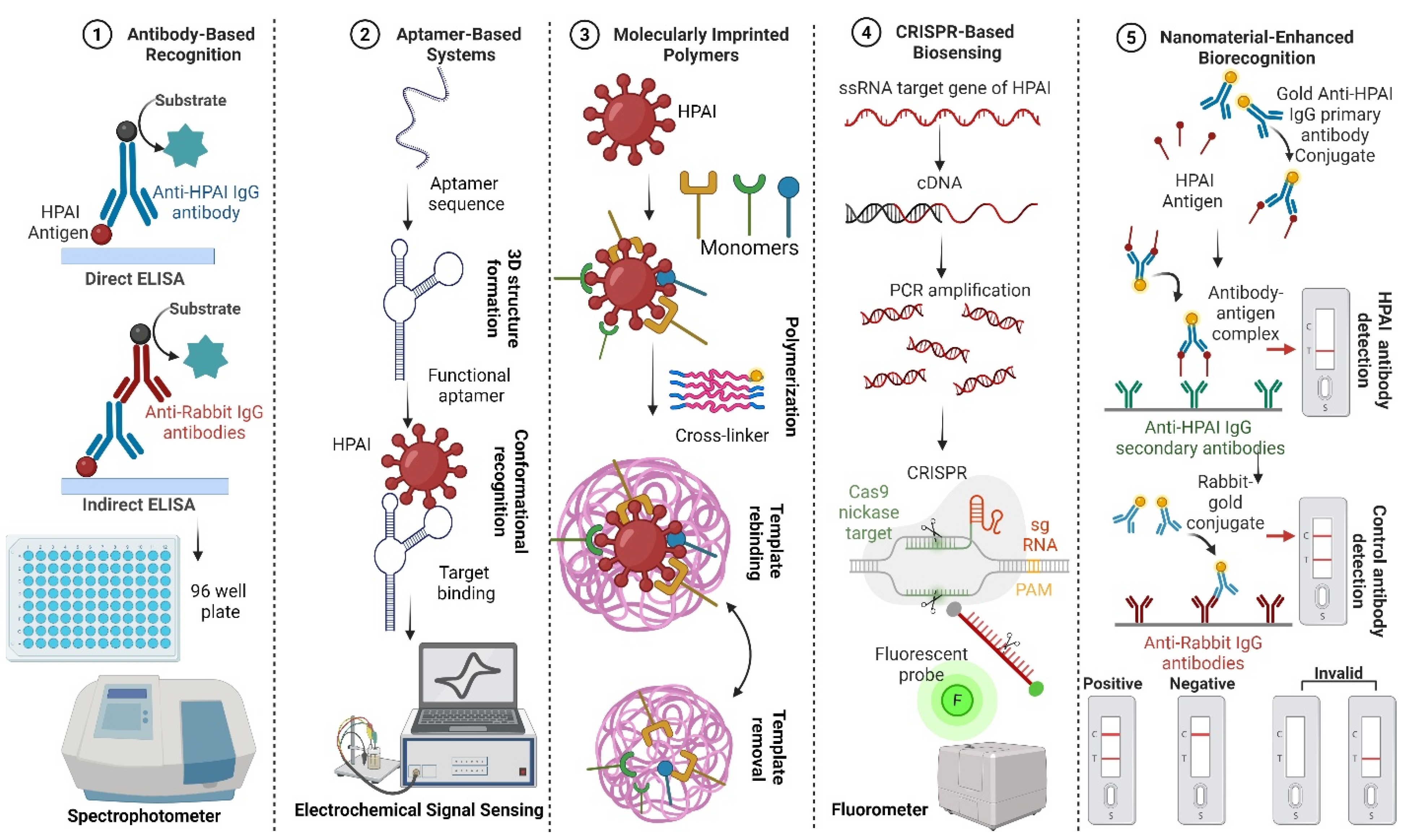
4.1. Antibody-Based Recognition
4.1.1. Lateral Flow Immunoassays (LFA)
4.1.2. Enzyme-Linked Immunosorbent Assays (ELISA)
4.2. Aptamer-Based Systems
4.3. Molecularly Imprinted Polymers (MIPs)
4.4. CRISPR-Based Biosensing
4.5. Nanomaterial-Enhanced Biorecognition
5. Targeting Viral Subtypes and Pathogenicity Markers
5.1. Hemagglutinin (HA) and Neuraminidase (NA) Subtype Detection
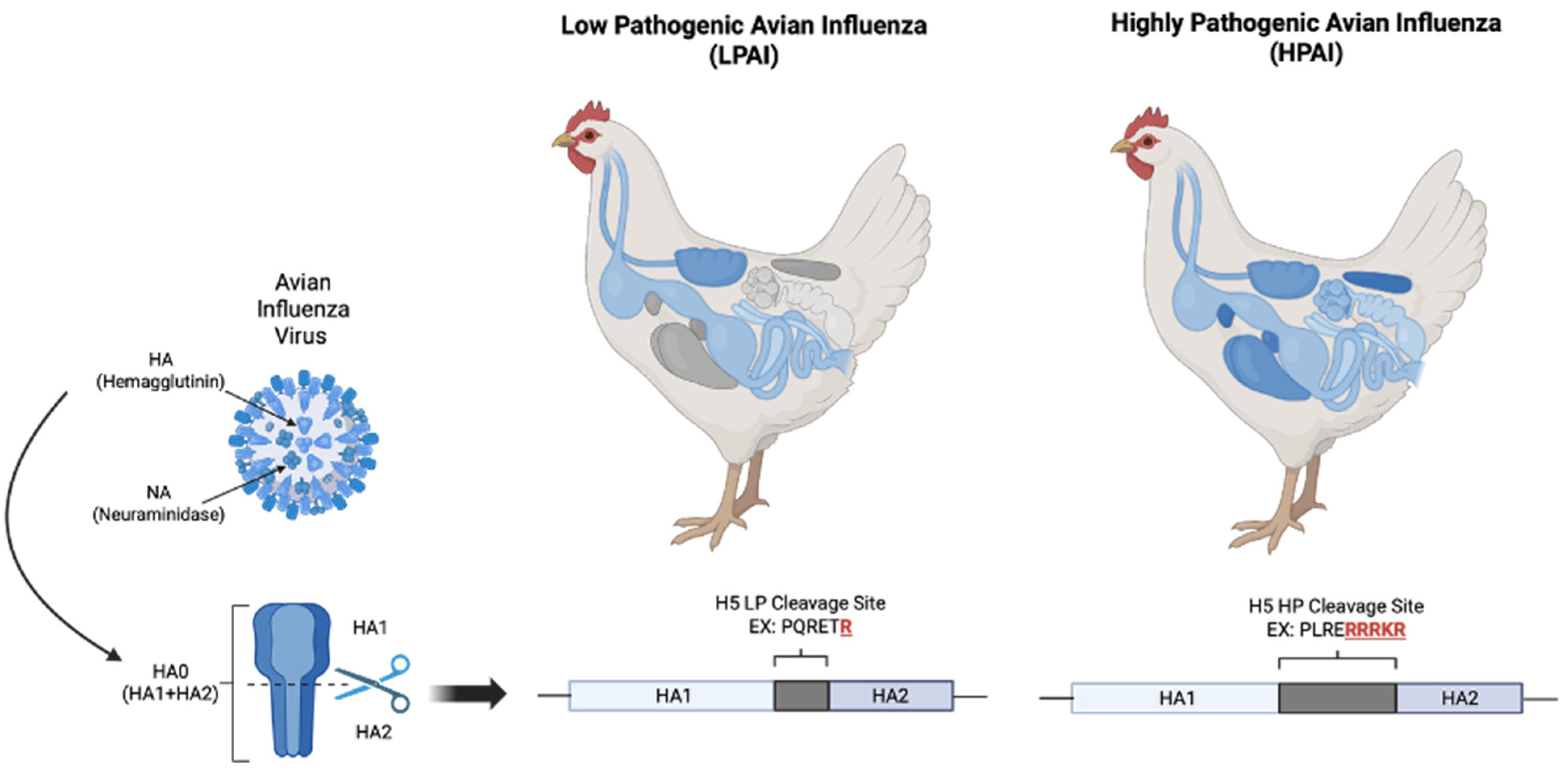
5.2. Distinguishing LPAI from HPAI
5.3. Multiplexed Detection Approaches
6. Differentiating Infected from Vaccinated Animals (DIVA)
6.1. Importance of DIVA in Outbreak Management and Trade
6.2. Limitations of Current DIVA-Compatible Diagnostics
6.3. Biosensor Strategies for DIVA Compatibility
6.3.1. Viral Antigen/Virion-Based Biosensor Detection
6.3.2. Host–Antibody (Serology-Based) Biosensors and Recombinant/Marker–Vaccine Detection
6.3.3. Feasibility and Practical Considerations
7. Field Deployment and Point-of-Care Considerations
7.1. Requirements for Field-Ready Diagnostics
7.2. Sample Matrices and Pre-Analytical Processing
7.3. Integration with Digital and Mobile Platforms
7.4. Pilot Studies and Deployment Examples
8. One Health Implications and Surveillance Integration
8.1. Zoonotic Risk and Public Health Relevance
8.2. Biosensors in One Health Surveillance Systems
8.3. Global Health Equity and Low-Resource Settings
9. Challenges, Gaps, and Future Directions
9.1. Technical Barriers and Standardization Needs
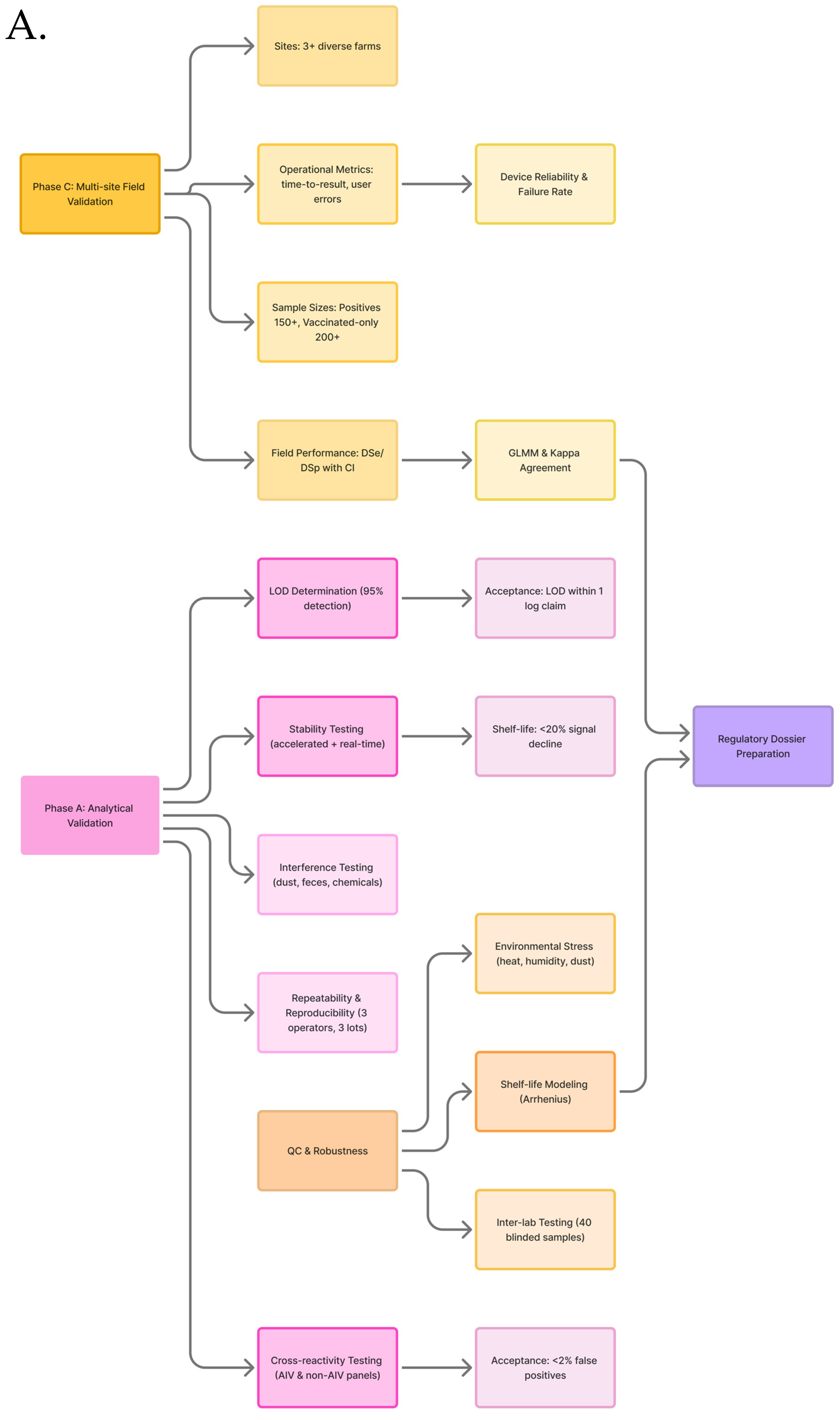
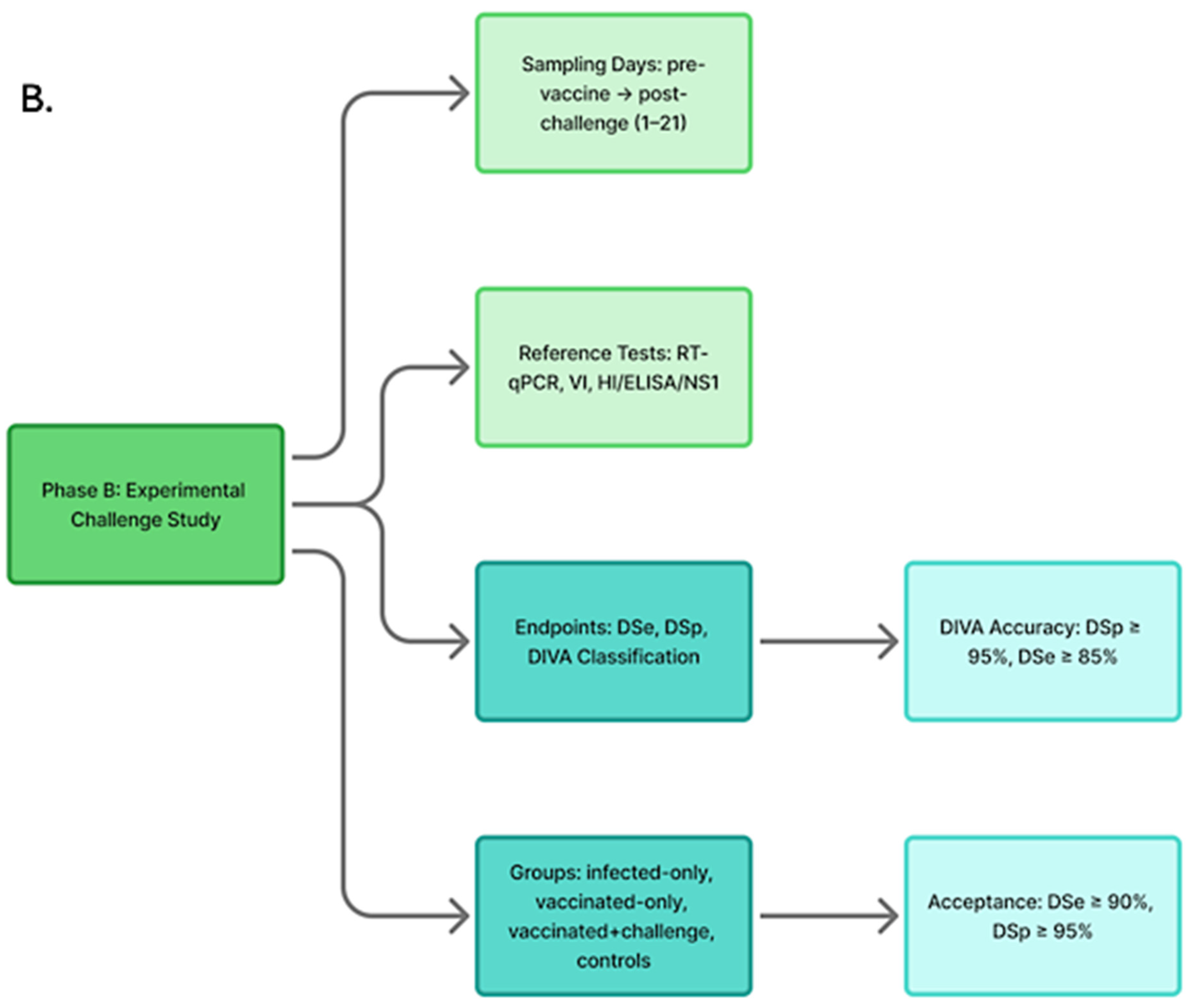
9.2. Regulatory and Validation Challenges
9.3. Research Priorities and Interdisciplinary Collaboration
9.4. Emerging Technologies and Paradigms
10. Conclusions
10.1. Summary of Key Insights
10.2. Vision for Future AI Diagnostics
10.3. Final Remarks
Funding
Institutional Review Board Statement
Informed Consent Statement
Data Availability Statement
Conflicts of Interest
References
- Suarez, D.L. Influenza a Virus. In Avian Influenza; John Wiley & Sons: Hoboken, NJ, USA, 2008; pp. 1–22. [Google Scholar]
- Maclachlan, N.; Dubovi, E.J.; Barthold, S.W.; Swayne, D.; Winton, J.R. Fenner’s Veterinary Virology, 5th ed.; Elsevier: Amsterdam, The Netherlands, 2016; pp. 1–581. [Google Scholar]
- Liu, R.; Sheng, Z.; Huang, C.; Wang, D.; Li, F. Influenza D virus. Curr. Opin. Virol. 2020, 44, 154–161. [Google Scholar] [CrossRef] [PubMed]
- Shaw, M.; Palese, P. Orthomyxoviridae: The viruses and their replication. In Fields Virology; Lippencott Williams and Wilkins: Philadelphia, PA, USA, 2007; pp. 1647–1689. [Google Scholar]
- O’Neill, R.E.; Talon, J.; Palese, P. The influenza virus NEP (NS2 protein) mediates the nuclear export of viral ribonucleoproteins. EMBO J. 1998, 17, 288–296. [Google Scholar] [CrossRef]
- Lupiani, B.; Reddy, S.M. The history of avian influenza. Comp. Immunol. Microbiol. Infect. Dis. 2009, 32, 311–323. [Google Scholar] [CrossRef]
- Kang, M.; Wang, L.F.; Sun, B.W.; Wan, W.B.; Ji, X.; Baele, G.; Bi, Y.H.; Suchard, M.A.; Lai, A.; Zhang, M.; et al. Zoonotic infections by avian influenza virus: Changing global epidemiology, investigation, and control. Lancet Infect. Dis. 2024, 24, e522–e531. [Google Scholar] [CrossRef] [PubMed]
- Kawaoka, Y.; Chambers, T.M.; Sladen, W.L.; Webster, R.G. Is the gene pool of influenza viruses in shorebirds and gulls different from that in wild ducks? Virology 1988, 163, 247–250. [Google Scholar] [CrossRef]
- Slemons, R.D.; Johnson, D.C.; Osborn, J.S.; Hayes, F. Type-A influenza viruses isolated from wild free-flying ducks in California. Avian Dis. 1974, 18, 119–124. [Google Scholar] [CrossRef]
- Voorhees, I.E.H.; Glaser, A.L.; Toohey-Kurth, K.; Newbury, S.; Dalziel, B.D.; Dubovi, E.J.; Poulsen, K.; Leutenegger, C.; Willgert, K.J.E.; Brisbane-Cohen, L.; et al. Spread of Canine Influenza A(H3N2) Virus, United States. Emerg. Infect. Dis. 2017, 23, 1950–1957. [Google Scholar] [CrossRef]
- Steel, J.; Lowen, A.C. Influenza A virus reassortment. In Current Topics in Microbiology and Immunology; Springer: Berlin/Heidelberg, Germany, 2014; Volume 385, pp. 377–401. [Google Scholar] [CrossRef]
- Suguitan, A.L., Jr.; Matsuoka, Y.; Lau, Y.F.; Santos, C.P.; Vogel, L.; Cheng, L.I.; Orandle, M.; Subbarao, K. The multibasic cleavage site of the hemagglutinin of highly pathogenic A/Vietnam/1203/2004 (H5N1) avian influenza virus acts as a virulence factor in a host-specific manner in mammals. J. Virol. 2012, 86, 2706–2714. [Google Scholar] [CrossRef]
- Suzuki, Y.; Ito, T.; Suzuki, T.; Holland, R.E., Jr.; Chambers, T.M.; Kiso, M.; Ishida, H.; Kawaoka, Y. Sialic acid species as a determinant of the host range of influenza A viruses. J. Virol. 2000, 74, 11825–11831. [Google Scholar] [CrossRef]
- Pan American Health Organization/World Health Organization. Epidemiological Update: Avian Influenza A(H5N1) in the Americas Region, 4 March 2025; PAHO/WHO: Washington, DC, USA, 2025. [Google Scholar]
- World Organisation for Animal Health (WOAH). Global Situation of HPAI; WOAH: Paris, France, 2022. [Google Scholar]
- Cardona, C.; Yee, K.; Carpenter, T. Are live bird markets reservoirs of avian influenza? Poult. Sci. 2009, 88, 856–859. [Google Scholar] [CrossRef]
- Swayne, D.E. Impact of vaccines and vaccination on global control of avian influenza. Avian Dis. 2012, 56, 818–828. [Google Scholar] [CrossRef]
- Mitchell, J.L.; Thompson, J.M.; Malone, T. The Economic Impact of HPAI on U.S. Egg Consumers: Estimating a $1.41 Billion Loss in Consumer Surplus; University of Arkansas: Fayetteville, AR, USA, 2025. [Google Scholar]
- Zamani, O.; Bittmann, T.; Ortega, D.L. The effect of avian influenza outbreaks on retail price premiums in the United States poultry market. Poult. Sci. 2024, 103, 104102. [Google Scholar] [CrossRef]
- Gao, R.; Cao, B.; Hu, Y.; Feng, Z.; Wang, D.; Hu, W.; Chen, J.; Jie, Z.; Qiu, H.; Xu, K.; et al. Human infection with a novel avian-origin influenza A (H7N9) virus. N. Engl. J. Med. 2013, 368, 1888–1897. [Google Scholar] [CrossRef]
- Herfst, S.; Schrauwen, E.J.; Linster, M.; Chutinimitkul, S.; de Wit, E.; Munster, V.J.; Sorrell, E.M.; Bestebroer, T.M.; Burke, D.F.; Smith, D.J.; et al. Airborne transmission of influenza A/H5N1 virus between ferrets. Science 2012, 336, 1534–1541. [Google Scholar] [CrossRef]
- Thompson, A.J.; Paulson, J.C. Adaptation of influenza viruses to human airway receptors. J. Biol. Chem. 2021, 296, 100017. [Google Scholar] [CrossRef]
- Ma, W.; Kahn, R.E.; Richt, J.A. The pig as a mixing vessel for influenza viruses: Human and veterinary implications. J. Mol. Genet. Med. 2008, 3, 158–166. [Google Scholar] [CrossRef] [PubMed]
- Hu, X.; Saxena, A.; Magstadt, D.R.; Gauger, P.C.; Burrough, E.R.; Zhang, J.; Siepker, C.; Mainenti, M.; Gorden, P.J.; Plummer, P.J.; et al. Genomic characterization of highly pathogenic avian influenza A H5N1 virus newly emerged in dairy cattle. Emerg. Microbes Infect. 2024, 13, 2380421. [Google Scholar] [CrossRef] [PubMed]
- Kaiser, F.; Cardenas, S.; Yinda, K.C.; Mukesh, R.K.; Ochwoto, M.; Gallogly, S.; Wickenhagen, A.; Bibby, K.; de Wit, E.; Morris, D.; et al. Highly Pathogenic Avian Influenza A(H5N1) Virus Stability in Irradiated Raw Milk and Wastewater and on Surfaces, United States. Emerg. Infect. Dis. 2025, 31, 833–837. [Google Scholar] [CrossRef]
- Mostafa, A.; Naguib, M.M.; Nogales, A.; Barre, R.S.; Stewart, J.P.; García-Sastre, A.; Martinez-Sobrido, L. Avian influenza A (H5N1) virus in dairy cattle: Origin, evolution, and cross-species transmission. mBio 2024, 15, e02542-24. [Google Scholar] [CrossRef] [PubMed]
- Thiry, E.; Zicola, A.; Addie, D.; Egberink, H.; Hartmann, K.; Lutz, H.; Poulet, H.; Horzinek, M.C. Highly pathogenic avian influenza H5N1 virus in cats and other carnivores. Vet. Microbiol. 2007, 122, 25–31. [Google Scholar] [CrossRef]
- Food and Agriculture Organization of the United Nations; World Organisation for Animal Health. Global Strategy for the Prevention and Control of High Pathogenicity Avian Influenza (2024–2033)—Achieving Sustainable, Resilient Poultry Production Systems; FAO/World Organisation for Animal Health: Rome, Italy, 2025. [Google Scholar] [CrossRef]
- Azeem, S.; Yoon, K.J. Diagnostic Assays for Avian Influenza Virus Surveillance and Monitoring in Poultry. Viruses 2025, 17, 228. [Google Scholar] [CrossRef]
- Oshitani, H.; Kamigaki, T.; Suzuki, A. Major issues and challenges of influenza pandemic preparedness in developing countries. Emerg. Infect. Dis. 2008, 14, 875–880. [Google Scholar] [CrossRef]
- Spackman, E. Avian Influenza Virus Detection and Quantitation by Real-Time RT-PCR. Methods Mol. Biol. 2020, 2123, 137–148. [Google Scholar] [CrossRef] [PubMed]
- Astill, J.; Dara, R.A.; Fraser, E.D.G.; Sharif, S. Detecting and Predicting Emerging Disease in Poultry with the Implementation of New Technologies and Big Data: A Focus on Avian Influenza Virus. Front. Vet. Sci. 2018, 5, 263. [Google Scholar] [CrossRef]
- Sakai-Tagawa, Y.; Yamayoshi, S.; Kawakami, C.; Le, M.Q.; Uchida, Y.; Saito, T.; Nidom, C.A.; Humaira, I.; Toohey-Kurth, K.; Arafa, A.S.; et al. Reactivity and sensitivity of commercially available influenza rapid diagnostic tests in Japan. Sci. Rep. 2017, 7, 14483. [Google Scholar] [CrossRef] [PubMed]
- Vijaykrishna, D.; Bahl, J.; Riley, S.; Duan, L.; Zhang, J.X.; Chen, H.; Peiris, J.S.; Smith, G.J.; Guan, Y. Evolutionary dynamics and emergence of panzootic H5N1 influenza viruses. PLoS Pathog. 2008, 4, e1000161. [Google Scholar] [CrossRef] [PubMed]
- Wang, Y.; Wang, M.; Zhang, H.; Zhao, C.; Zhang, Y.; He, G.; Deng, G.; Cui, P.; Li, Y.; Liu, W.; et al. Emergence, Evolution, and Biological Characteristics of H10N4 and H10N8 Avian Influenza Viruses in Migratory Wild Birds Detected in Eastern China in 2020. Microbiol. Spectr. 2022, 10, e0080722. [Google Scholar] [CrossRef]
- Raza, M.A.; Ashraf, M.A.; Amjad, M.N.; Din, G.U.; Shen, B.; Hu, Y. The peculiar characteristics and advancement in diagnostic methodologies of influenza A virus. Front. Microbiol. 2025, 15, 1435384. [Google Scholar] [CrossRef]
- Wittwer, C.T.; Herrmann, M.G.; Gundry, C.N.; Elenitoba-Johnson, K.S. Real-time multiplex PCR assays. Methods 2001, 25, 430–442. [Google Scholar] [CrossRef]
- Okamatsu, M.; Hiono, T.; Kida, H.; Sakoda, Y. Recent developments in the diagnosis of avian influenza. Vet. J. 2016, 215, 82–86. [Google Scholar] [CrossRef]
- Baek, Y.H.; Um, J.; Antigua, K.J.C.; Park, J.H.; Kim, Y.; Oh, S.; Kim, Y.I.; Choi, W.S.; Kim, S.G.; Jeong, J.H.; et al. Development of a reverse transcription-loop-mediated isothermal amplification as a rapid early-detection method for novel SARS-CoV-2. Emerg. Microbes Infect. 2020, 9, 998–1007. [Google Scholar] [CrossRef]
- Mahony, J.; Chong, S.; Bulir, D.; Ruyter, A.; Mwawasi, K.; Waltho, D. Multiplex loop-mediated isothermal amplification (M-LAMP) assay for the detection of influenza A/H1, A/H3 and influenza B can provide a specimen-to-result diagnosis in 40 min with single genome copy sensitivity. J. Clin. Virol. 2013, 58, 127–131. [Google Scholar] [CrossRef] [PubMed]
- Warmt, C.; Yaslanmaz, C.; Henkel, J. Investigation and validation of labelling loop mediated isothermal amplification (LAMP) products with different nucleotide modifications for various downstream analysis. Sci. Rep. 2022, 12, 7137. [Google Scholar] [CrossRef] [PubMed]
- Goraichuk, I.V.; Risalvato, J.; Pantin-Jackwood, M.; Suarez, D.L. Improved influenza A whole-genome sequencing protocol. Front. Cell. Infect. Microbiol. 2024, 14, 1497278. [Google Scholar] [CrossRef] [PubMed]
- Spackman, E.; Suarez, D.L.; Senne, D.A. Avian Influenza Diagnostics and Surveillance Methods. In Avian Influenza; John Wiley & Sons: Hoboken, NJ, USA, 2008; pp. 299–308. [Google Scholar]
- Jenson, T.A. Agar Gel Immunodiffusion Assay to Detect Antibodies to Type A Influenza Virus. Methods Mol. Biol. 2020, 2123, 165–175. [Google Scholar] [CrossRef]
- Carpenter, J.W. Diseases of Poultry. 11th ed. J. Avian Med. Surg. 2003, 17, 109. [Google Scholar]
- TPALMER; USDA NVSL. Agar Gel Immunodiffusion Test to Detect Antibodies to Type A Influenza Virus; NVSL-SOP-0045.03; NVSL: Ames, IA, USA, 2021. [Google Scholar]
- Spackman, E.; Killian, M.L. Detection of Influenza A Antibodies in Avian Samples by ELISA. Methods Mol. Biol. 2020, 2123, 177–193. [Google Scholar] [CrossRef]
- Schulman, J.L.; Kilbourne, E.D. Independent variation in nature of hemagglutinin and neuraminidase antigens of influenza virus: Distinctiveness of hemagglutinin antigen of Hong Kong-68 virus. Proc. Natl. Acad. Sci. USA 1969, 63, 326–333. [Google Scholar] [CrossRef]
- Lee, C.W.; Senne, D.A.; Suarez, D.L. Development and application of reference antisera against 15 hemagglutinin subtypes of influenza virus by DNA vaccination of chickens. Clin. Vaccine Immunol. 2006, 13, 395–402. [Google Scholar] [CrossRef]
- Woolcock, P.R. Avian influenza virus isolation and propagation in chicken eggs. Methods Mol. Biol. 2008, 436, 35–46. [Google Scholar] [CrossRef]
- Brown, J.D.; Poulson, R.; Carter, D.L.; Lebarbenchon, C.; Stallknecht, D.E. Infectivity of Avian Influenza Virus-Positive Field Samples for Mallards: What Do Our Diagnostic Results Mean? J. Wildl. Dis. 2013, 49, 180–185, 186. [Google Scholar] [CrossRef] [PubMed]
- OIE/WOAH. Manual of Diagnostic Tests and Vaccines for Terrestrial Animals: Avian Influenza; WOAH: Paris, France, 2024. [Google Scholar]
- Fedorko, D.P.; Nelson, N.A.; McAuliffe, J.M.; Subbarao, K. Performance of rapid tests for detection of avian influenza A virus types H5N1 and H9N2. J. Clin. Microbiol. 2006, 44, 1596–1597. [Google Scholar] [CrossRef]
- Capua, I.; Marangon, S. Control of avian influenza in poultry. Emerg. Infect. Dis. 2006, 12, 1319–1324. [Google Scholar] [CrossRef]
- Zhang, J.; Fang, X.; Mao, Y.; Qi, H.; Wu, J.; Liu, X.; You, F.; Zhao, W.; Chen, Y.; Zheng, L. Real-time, selective, and low-cost detection of trace level SARS-CoV-2 spike-protein for cold-chain food quarantine. npj Sci. Food 2021, 5, 12. [Google Scholar] [CrossRef]
- Cheng, C.; Wu, J.; Fikrig, E.; Wang, P.; Chen, J.; Eda, S.; Terry, P. Unamplified RNA Sensor for On-Site Screening of Zika Virus Disease in a Limited Resource Setting. ChemElectroChem 2017, 4, 485–489. [Google Scholar] [CrossRef]
- Cheng, C.; Wu, J.J.; Chen, J. A Sensitive and Specific Genomic RNA Sensor for Point-of-Care Screening of Zika Virus from Serum. Anal. Chem. 2021, 93, 11379–11387. [Google Scholar] [CrossRef]
- Cheng, C.; Oueslati, R.; Wu, J.; Chen, J.; Eda, S. Capacitive DNA sensor for rapid and sensitive detection of whole genome human herpesvirus-1 dsDNA in serum. Electrophoresis 2017, 38, 1617–1623. [Google Scholar] [CrossRef] [PubMed]
- Qi, H.; Hu, Z.; Yang, Z.; Zhang, J.; Wu, J.J.; Cheng, C.; Wang, C.; Zheng, L. Capacitive Aptasensor Coupled with Microfluidic Enrichment for Real-Time Detection of Trace SARS-CoV-2 Nucleocapsid Protein. Anal. Chem. 2022, 94, 2812–2819. [Google Scholar] [CrossRef]
- Liang, L.G.; Wang, P.; Fu, J.; Zhu, L.; Cheng, L.; Liu, F.; Wu, N.; Xu, L.; Yao, H.; Wu, H. Portable lab-on-a-chip platform enabling multiplex recombinant enzyme polymerase amplification detection of H5/H7/H10 avian influenza virus subtypes. Poult. Sci. 2025, 104, 105463. [Google Scholar] [CrossRef]
- Štukovnik, Z.; Bren, U. Recent Developments in Electrochemical-Impedimetric Biosensors for Virus Detection. Int. J. Mol. Sci. 2022, 23, 15922. [Google Scholar] [CrossRef] [PubMed]
- Cheng, C.; Cui, H.; Wu, J.; Eda, S. A PCR-free point-of-care capacitive immunoassay for influenza A virus. Microchim. Acta 2017, 184, 1649–1657. [Google Scholar] [CrossRef]
- Homola, J. Surface Plasmon Resonance Sensors for Detection of Chemical and Biological Species. Chem. Rev. 2008, 108, 462–493. [Google Scholar] [CrossRef] [PubMed]
- Bai, H.; Wang, R.; Hargis, B.; Lu, H.; Li, Y. A SPR Aptasensor for Detection of Avian Influenza Virus H5N1. Sensors 2012, 12, 12506–12518. [Google Scholar] [CrossRef]
- Ellington, A.D.; Szostak, J.W. In vitro selection of RNA molecules that bind specific ligands. Nature 1990, 346, 818–822. [Google Scholar] [CrossRef]
- Zhou, L.; Peng, R.; Zhang, R.; Li, J. The applications of CRISPR/Cas system in molecular detection. J. Cell. Mol. Med. 2018, 22, 5807–5815. [Google Scholar] [CrossRef] [PubMed]
- Guyonnet, V.; Peters, A.R. Are current avian influenza vaccines a solution for smallholder poultry farmers? Gates Open Res. 2020, 4, 122. [Google Scholar] [CrossRef]
- Wang, R.; Li, Y. Hydrogel based QCM aptasensor for detection of avian influenzavirus. Biosens. Bioelectron. 2013, 42, 148–155. [Google Scholar] [CrossRef]
- Li, D.; Wang, J.; Wang, R.; Li, Y.; Abi-Ghanem, D.; Berghman, L.; Hargis, B.; Lu, H. A nanobeads amplified QCM immunosensor for the detection of avian influenza virus H5N1. Biosens. Bioelectron. 2011, 26, 4146–4154. [Google Scholar] [CrossRef]
- Wangchareansak, T.; Thitithanyanont, A.; Chuakheaw, D.; Gleeson, M.P.; Lieberzeit, P.A.; Sangma, C. Influenza A virus molecularly imprinted polymers and their application in virus sub-type classification. J. Mater. Chem. B 2013, 1, 2190–2197. [Google Scholar] [CrossRef]
- Nidzworski, D.; Pranszke, P.; Grudniewska, M.; Król, E.; Gromadzka, B. Universal biosensor for detection of influenza virus. Biosens. Bioelectron. 2014, 59, 239–242. [Google Scholar] [CrossRef] [PubMed]
- Kumar, J.; Xu, M.; Li, Y.A.; You, S.-W.; Doherty, B.M.; Gardiner, W.D.; Cirrito, J.R.; Yuede, C.M.; Benegal, A.; Vahey, M.D.; et al. Capacitive Biosensor for Rapid Detection of Avian (H5N1) Influenza and E. coli in Aerosols. ACS Sens. 2025, 10, 3381–3389. [Google Scholar] [CrossRef]
- Nguyen, V.-T.; Seo, H.B.; Kim, B.C.; Kim, S.K.; Song, C.-S.; Gu, M.B. Highly sensitive sandwich-type SPR based detection of whole H5Nx viruses using a pair of aptamers. Biosens. Bioelectron. 2016, 86, 293–300. [Google Scholar]
- Lee, T.; Kim, G.H.; Kim, S.M.; Hong, K.; Kim, Y.; Park, C.; Sohn, H.; Min, J. Label-free localized surface plasmon resonance biosensor composed of multi-functional DNA 3 way junction on hollow Au spike-like nanoparticles (HAuSN) for avian influenza virus detection. Colloids Surf. B Biointerfaces 2019, 182, 110341. [Google Scholar] [CrossRef]
- Park, G.; Lim, J.W.; Park, C.; Yeom, M.; Lee, S.; Lyoo, K.S.; Song, D.; Haam, S. Cell-mimetic biosensors to detect avian influenza virus via viral fusion. Biosens. Bioelectron. 2022, 212, 114407. [Google Scholar] [CrossRef]
- Singh, A.; Arutyunov, D.; Szymanski, C.M.; Evoy, S. Bacteriophage based probes for pathogen detection. Analyst 2012, 137, 3405–3421. [Google Scholar] [PubMed]
- Bahadır, E.B.; Sezgintürk, M.K. Applications of commercial biosensors in clinical, food, environmental, and biothreat/biowarfare analyses. Anal. Biochem. 2015, 478, 107–120. [Google Scholar] [CrossRef] [PubMed]
- Sharma, A.; Sharma, N.; Kumari, A.; Lee, H.-J.; Kim, T.; Tripathi, K.M. Nano-carbon based sensors for bacterial detection and discrimination in clinical diagnosis: A junction between material science and biology. Appl. Mater. Today 2020, 18, 100467. [Google Scholar] [CrossRef]
- Morales, M.A.; Halpern, J.M. Guide to selecting a biorecognition element for biosensors. Bioconjug. Chem. 2018, 29, 3231–3239. [Google Scholar] [CrossRef] [PubMed]
- Rasooly, A.; Herold, K.E.; Herold, K.E. Biosensors and Biodetection; Springer: Berlin/Heidelberg, Germany, 2009. [Google Scholar]
- Perumal, V.; Hashim, U. Advances in biosensors: Principle, architecture and applications. J. Appl. Biomed. 2014, 12, 1–15. [Google Scholar] [CrossRef]
- Zourob, M.; Elwary, S.; Khademhosseini, A. Recognition Receptors in Biosensors; Springer: Berlin/Heidelberg, Germany, 2010. [Google Scholar]
- Hayden, O.; Lieberzeit, P.A.; Blaas, D.; Dickert, F.L. Artificial antibodies for bioanalyte detection—Sensing viruses and proteins. Adv. Funct. Mater. 2006, 16, 1269–1278. [Google Scholar] [CrossRef]
- Mavrikou, S.; Moschopoulou, G.; Tsekouras, V.; Kintzios, S. Development of a portable, ultra-rapid and ultra-sensitive cell-based biosensor for the direct detection of the SARS-CoV-2 S1 spike protein antigen. Sensors 2020, 20, 3121. [Google Scholar] [CrossRef]
- Huang, J.C.; Chang, Y.-F.; Chen, K.-H.; Su, L.-C.; Lee, C.-W.; Chen, C.-C.; Chen, Y.-M.A.; Chou, C. Detection of severe acute respiratory syndrome (SARS) coronavirus nucleocapsid protein in human serum using a localized surface plasmon coupled fluorescence fiber-optic biosensor. Biosens. Bioelectron. 2009, 25, 320–325. [Google Scholar] [CrossRef]
- Che, X.-Y.; Qiu, L.-W.; Pan, Y.-X.; Wen, K.; Hao, W.; Zhang, L.-Y.; Wang, Y.-D.; Liao, Z.-Y.; Hua, X.; Cheng, V.C. Sensitive and specific monoclonal antibody-based capture enzyme immunoassay for detection of nucleocapsid antigen in sera from patients with severe acute respiratory syndrome. J. Clin. Microbiol. 2004, 42, 2629–2635. [Google Scholar] [CrossRef][Green Version]
- Ji, T.; Liu, Z.; Wang, G.; Guo, X.; Lai, C.; Chen, H.; Huang, S.; Xia, S.; Chen, B.; Jia, H. Detection of COVID-19: A review of the current literature and future perspectives. Biosens. Bioelectron. 2020, 166, 112455. [Google Scholar] [CrossRef] [PubMed]
- Yang, B.; Gong, H.; Chen, C.; Chen, X.; Cai, C. A virus resonance light scattering sensor based on mussel-inspired molecularly imprinted polymers for high sensitive and high selective detection of Hepatitis A Virus. Biosens. Bioelectron. 2017, 87, 679–685. [Google Scholar] [CrossRef] [PubMed]
- Zuo, B.; Li, S.; Guo, Z.; Zhang, J.; Chen, C. Piezoelectric immunosensor for SARS-associated coronavirus in sputum. Anal. Chem. 2004, 76, 3536–3540. [Google Scholar] [CrossRef]
- Patolsky, F.; Zheng, G.; Hayden, O.; Lakadamyali, M.; Zhuang, X.; Lieber, C.M. Electrical detection of single viruses. Proc. Natl. Acad. Sci. USA 2004, 101, 14017–14022. [Google Scholar] [CrossRef]
- Muñoz-Dorado, J.; Marcos-Torres, F.J.; García-Bravo, E.; Moraleda-Muñoz, A.; Pérez, J. Myxobacteria: Moving, killing, feeding, and surviving together. Front. Microbiol. 2016, 7, 781. [Google Scholar] [CrossRef] [PubMed]
- Dincer, C.; Bruch, R.; Costa-Rama, E.; Fernández-Abedul, M.T.; Merkoçi, A.; Manz, A.; Urban, G.A.; Güder, F. Disposable sensors in diagnostics, food, and environmental monitoring. Adv. Mater. 2019, 31, 1806739. [Google Scholar] [CrossRef]
- Reid, R.; Chatterjee, B.; Das, S.J.; Ghosh, S.; Sharma, T.K. Application of aptamers as molecular recognition elements in lateral flow assays. Anal. Biochem. 2020, 593, 113574. [Google Scholar] [CrossRef]
- Cinquanta, L.; Fontana, D.E.; Bizzaro, N. Chemiluminescent immunoassay technology: What does it change in autoantibody detection? Autoimmun. Highlights 2017, 8, 9. [Google Scholar] [CrossRef]
- Clark, M.F.; Lister, R.M.; Bar-Joseph, M. ELISA techniques. In Methods in Enzymology; Academic Press: Cambridge, MA, USA, 1986; Volume 118, pp. 742–766. [Google Scholar]
- Koczula, K.M.; Gallotta, A. Lateral flow assays. Essays Biochem. 2016, 60, 111–120. [Google Scholar] [CrossRef]
- Dziąbowska, K.; Czaczyk, E.; Nidzworski, D. Detection methods of human and animal influenza virus—Current trends. Biosensors 2018, 8, 94. [Google Scholar] [CrossRef]
- Mina, M.J.; Parker, R.; Larremore, D.B. Rethinking COVID-19 test sensitivity—A strategy for containment. N. Engl. J. Med. 2020, 383, e120. [Google Scholar] [CrossRef]
- Wong, R.; Tse, H. Lateral Flow Immunoassay; Springer Science & Business Media: Berlin/Heidelberg, Germany, 2008. [Google Scholar]
- Peto, T.; Covid, U. Lateral Flow Oversight Team. COVID-19: Rapid antigen detection for SARS-CoV-2 by lateral flow assay: A national systematic evaluation of sensitivity and specificity for mass-testing. eClinicalMedicine 2021, 36, 100924. [Google Scholar] [CrossRef] [PubMed]
- Rowe, T.; Abernathy, R.A.; Hu-Primmer, J.; Thompson, W.W.; Lu, X.; Lim, W.; Fukuda, K.; Cox, N.J.; Katz, J.M. Detection of antibody to avian influenza A (H5N1) virus in human serum by using a combination of serologic assays. J. Clin. Microbiol. 1999, 37, 937–943. [Google Scholar] [CrossRef] [PubMed]
- Prabakaran, M.; Ho, H.-T.; Prabhu, N.; Velumani, S.; Szyporta, M.; He, F.; Chan, K.-P.; Chen, L.-M.; Matsuoka, Y.; Donis, R.O. Development of epitope-blocking ELISA for universal detection of antibodies to human H5N1 influenza viruses. PLoS ONE 2009, 4, e4566. [Google Scholar] [CrossRef] [PubMed]
- Ellis, J.; Fleming, D.; Zambon, M. Multiplex reverse transcription-PCR for surveillance of influenza A and B viruses in England and Wales in 1995 and 1996. J. Clin. Microbiol. 1997, 35, 2076–2082. [Google Scholar] [CrossRef]
- Chen, Y.; Xu, F.; Fan, X.; Luo, H.; Ge, S.; Zheng, Q.; Xia, N.; Chen, H.; Guan, Y.; Zhang, J. Evaluation of a rapid test for detection of H5N1 avian influenza virus. J. Virol. Methods 2008, 154, 213–215. [Google Scholar] [CrossRef]
- Adair, B.; Todd, D.; McKillop, E.; McNulty, M. Detection of influenza A type-specific antibodies in chicken and turkey sera by enzyme linked immunosorbent assay. Avian Pathol. 1989, 18, 455–463. [Google Scholar] [CrossRef]
- Fatunmbi, O.O.; Newman, J.A.; Sivanandan, V.; Halvorson, D.A. A broad-spectrum avian influenza subtype antigen for indirect enzyme-linked immunosorbent assay. Avian Dis. 1989, 33, 264–269. [Google Scholar] [CrossRef]
- Snyder, D.; Marquardt, W.; Mallinson, E.; Allen, D.; Savage, P. An enzyme-linked immunosorbent assay method for the simultaneous measurement of antibody titer to multiple viral, bacterial or protein antigens. Vet. Immunol. Immunopathol. 1985, 9, 303–317. [Google Scholar] [CrossRef]
- Yokoyama, W.M. Production of monoclonal antibody supernatant and ascites fluid. Curr. Protoc. Mol. Biol. 2008, 83, 11.10. [Google Scholar] [CrossRef]
- Wu, W.L.; Chen, Y.; Wang, P.; Song, W.; Lau, S.-Y.; Rayner, J.M.; Smith, G.J.; Webster, R.G.; Peiris, J.M.; Lin, T. Antigenic profile of avian H5N1 viruses in Asia from 2002 to 2007. J. Virol. 2008, 82, 1798–1807. [Google Scholar] [CrossRef]
- Burlington, D.; Wright, P.; Van Wyke, K.; Phelan, M.; Mayner, R.; Murphy, B. Development of subtype-specific and heterosubtypic antibodies to the influenza A virus hemagglutinin after primary infection in children. J. Clin. Microbiol. 1985, 21, 847–849. [Google Scholar] [CrossRef]
- Remarque, E.; De Bruijn, I.; Boersma, W.; Masurel, N.; Ligthart, G. Altered antibody response to influenza H1N1 vaccine in healthy elderly people as determined by HI, ELISA, and neutralization assay. J. Med. Virol. 1998, 55, 82–87. [Google Scholar] [CrossRef]
- Zhang, A.; Jin, M.; Liu, F.; Guo, X.; Hu, Q.; Han, L.; Tan, Y.; Chen, H. Development and evaluation of a DAS-ELISA for rapid detection of avian influenza viruses. Avian Dis. 2006, 50, 325–330. [Google Scholar] [CrossRef]
- Ho, H.-T.; Qian, H.-L.; He, F.; Meng, T.; Szyporta, M.; Prabhu, N.; Prabakaran, M.; Chan, K.-P.; Kwang, J. Rapid detection of H5N1 subtype influenza viruses by antigen capture enzyme-linked immunosorbent assay using H5-and N1-specific monoclonal antibodies. Clin. Vaccine Immunol. 2009, 16, 726–732. [Google Scholar] [CrossRef] [PubMed]
- He, F.; Soejoedono, R.D.; Murtini, S.; Goutama, M.; Kwang, J. Complementary monoclonal antibody-based dot ELISA for universal detection of H5 avian influenza virus. BMC Microbiol. 2010, 10, 330. [Google Scholar] [CrossRef]
- Zhang, G.; Shoham, D.; Gilichinsky, D.; Davydov, S.; Castello, J.D.; Rogers, S.O. Evidence of influenza A virus RNA in Siberian lake ice. J. Virol. 2006, 80, 12229–12235. [Google Scholar] [CrossRef] [PubMed]
- Li, Z.N.; Trost, J.F.; Weber, K.M.; LeMasters, E.H.; Nasreen, S.; Esfandiari, J.; Gunasekera, A.H.; McCausland, M.; Sturm-Ramirez, K.; Wrammert, J. Novel multiplex assay platforms to detect influenza A hemagglutinin subtype-specific antibody responses for high-throughput and in-field applications. Influenza Other Respir. Viruses 2017, 11, 289–297. [Google Scholar] [CrossRef] [PubMed]
- Bishai, F.; Galli, R. Enzyme-linked immunosorbent assay for detection of antibodies to influenza A and B and parainfluenza type 1 in sera of patients. J. Clin. Microbiol. 1978, 8, 648–656. [Google Scholar] [CrossRef]
- Shafer, A.; Katz, J.; Eernisse, K. Development and validation of a competitive enzyme-linked immunosorbent assay for detection of type A influenza antibodies in avian sera. Avian Dis. 1998, 42, 28–34. [Google Scholar] [CrossRef]
- U.S. Food and Drug Administration (FDA). Influenza Diagnostic Tests; FDA: Silver Spring, MD, USA, 2024. [Google Scholar]
- Labuda, J.; Brett, A.M.O.; Evtugyn, G.; Fojta, M.; Mascini, M.; Ozsoz, M.; Palchetti, I.; Paleček, E.; Wang, J. Electrochemical nucleic acid-based biosensors: Concepts, terms, and methodology (IUPAC Technical Report). Pure Appl. Chem. 2010, 82, 1161–1187. [Google Scholar] [CrossRef]
- van den Kieboom, C.H.; van der Beek, S.L.; Mészáros, T.; Gyurcsányi, R.E.; Ferwerda, G.; de Jonge, M.I. Aptasensors for viral diagnostics. TrAC Trends Anal. Chem. 2015, 74, 58–67. [Google Scholar] [CrossRef]
- Rodrigues, L.; Mota, M. Bioinspired Materials for Medical Applications; Woodhead Publishing: Sawston, UK, 2016. [Google Scholar]
- Wang, C.-H.; Wu, J.-J.; Lee, G.-B. Screening of highly-specific aptamers and their applications in paper-based microfluidic chips for rapid diagnosis of multiple bacteria. Sens. Actuators B Chem. 2019, 284, 395–402. [Google Scholar] [CrossRef]
- Sousa, D.; Ferreira, D.; Rodrigues, J.; Rodrigues, L. Nanotechnology in Targeted Drug Delivery and Therapeutics. In Applications of Targeted Nano Drugs and Delivery Systems; Elsevier: Amsterdam, The Netherlands, 2019. [Google Scholar]
- Meirinho, S.G.; Dias, L.G.; Peres, A.M.; Rodrigues, L.R. Electrochemical aptasensor for human osteopontin detection using a DNA aptamer selected by SELEX. Anal. Chim. Acta 2017, 987, 25–37. [Google Scholar] [CrossRef]
- Dwivedi, H.P.; Smiley, R.D.; Jaykus, L.-A. Selection and characterization of DNA aptamers with binding selectivity to Campylobacter jejuni using whole-cell SELEX. Appl. Microbiol. Biotechnol. 2010, 87, 2323–2334. [Google Scholar] [CrossRef]
- Meirinho, S.G.; Dias, L.G.; Peres, A.M.; Rodrigues, L.R. Voltammetric aptasensors for protein disease biomarkers detection: A review. Biotechnol. Adv. 2016, 34, 941–953. [Google Scholar] [CrossRef] [PubMed]
- Bauer, M.; Strom, M.; Hammond, D.S.; Shigdar, S. Anything you can do, I can do better: Can aptamers replace antibodies in clinical diagnostic applications? Molecules 2019, 24, 4377. [Google Scholar] [CrossRef] [PubMed]
- Bruno, J.G. Predicting the uncertain future of aptamer-based diagnostics and therapeutics. Molecules 2015, 20, 6866–6887. [Google Scholar] [CrossRef] [PubMed]
- Lakhin, A.; Tarantul, V.Z.; Gening, L. Aptamers: Problems, solutions and prospects. Acta Naturae 2013, 5, 34–43. [Google Scholar] [CrossRef]
- Chen, C.; Zou, Z.; Chen, L.; Ji, X.; He, Z. Functionalized magnetic microparticle-based colorimetric platform for influenza A virus detection. Nanotechnology 2016, 27, 435102. [Google Scholar] [CrossRef] [PubMed]
- Jeon, S.H.; Kayhan, B.; Ben-Yedidia, T.; Arnon, R. A DNA aptamer prevents influenza infection by blocking the receptor binding region of the viral hemagglutinin. J. Biol. Chem. 2004, 279, 48410–48419. [Google Scholar] [CrossRef]
- Bai, C.; Lu, Z.; Jiang, H.; Yang, Z.; Liu, X.; Ding, H.; Li, H.; Dong, J.; Huang, A.; Fang, T. Aptamer selection and application in multivalent binding-based electrical impedance detection of inactivated H1N1 virus. Biosens. Bioelectron. 2018, 110, 162–167. [Google Scholar] [CrossRef]
- Pan, J.; Chen, W.; Ma, Y.; Pan, G. Molecularly imprinted polymers as receptor mimics for selective cell recognition. Chem. Soc. Rev. 2018, 47, 5574–5587. [Google Scholar] [CrossRef] [PubMed]
- Cesewski, E.; Johnson, B.N. Electrochemical biosensors for pathogen detection. Biosens. Bioelectron. 2020, 159, 112214. [Google Scholar] [CrossRef] [PubMed]
- Piletsky, S.; Canfarotta, F.; Poma, A.; Bossi, A.M.; Piletsky, S. Molecularly imprinted polymers for cell recognition. Trends Biotechnol. 2020, 38, 368–387. [Google Scholar] [CrossRef]
- Khan, R.R.; Ibrahim, H.; Rawal, G.; Zhang, J.; Lu, M.; Dong, L. Multichannel microfluidic virus sensor for rapid detection of respiratory viruses using virus-imprinted polymer for digital livestock farming. Sens. Actuators B Chem. 2023, 389, 133920. [Google Scholar] [CrossRef]
- Lee, W.-I.; Subramanian, A.; Mueller, S.; Levon, K.; Nam, C.-Y.; Rafailovich, M.H. Potentiometric Biosensors Based on Molecular-Imprinted Self-Assembled Monolayer Films for Rapid Detection of Influenza A Virus and SARS-CoV-2 Spike Protein. ACS Appl. Nano Mater. 2022, 5, 5045–5055. [Google Scholar] [CrossRef]
- Mali, P.; Yang, L.; Esvelt, K.M.; Aach, J.; Guell, M.; DiCarlo, J.E.; Norville, J.E.; Church, G.M. RNA-guided human genome engineering via Cas9. Science 2013, 339, 823–826. [Google Scholar] [CrossRef]
- Senís, E.; Fatouros, C.; Große, S.; Wiedtke, E.; Niopek, D.; Mueller, A.K.; Börner, K.; Grimm, D. CRISPR/Cas9-mediated genome engineering: An adeno-associated viral (AAV) vector toolbox. Biotechnol. J. 2014, 9, 1402–1412. [Google Scholar] [CrossRef]
- Chen, B.; Gilbert, L.A.; Cimini, B.A.; Schnitzbauer, J.; Zhang, W.; Li, G.-W.; Park, J.; Blackburn, E.H.; Weissman, J.S.; Qi, L.S. Dynamic imaging of genomic loci in living human cells by an optimized CRISPR/Cas system. Cell 2013, 155, 1479–1491. [Google Scholar] [CrossRef] [PubMed]
- Sander, J.D.; Joung, J.K. CRISPR-Cas systems for editing, regulating and targeting genomes. Nat. Biotechnol. 2014, 32, 347–355. [Google Scholar] [CrossRef]
- Kaminski, M.M.; Abudayyeh, O.O.; Gootenberg, J.S.; Zhang, F.; Collins, J.J. CRISPR-based diagnostics. Nat. Biomed. Eng. 2021, 5, 643–656. [Google Scholar] [CrossRef]
- Choi, W.-S.; Jeong, J.H.; Nicolas, H.D.G.; Oh, S.; Antigua, K.J.C.; Park, J.-H.; Kim, B.; Yoon, S.-W.; Shin, K.S.; Choi, Y.K. Peptide nucleic acid (PNA)-enhanced specificity of a dual-target real-time quantitative polymerase chain reaction (RT-qPCR) assay for the detection and differentiation of SARS-CoV-2 from related viruses. Diagnostics 2020, 10, 775. [Google Scholar] [CrossRef]
- Shinoda, H.; Taguchi, Y.; Nakagawa, R.; Makino, A.; Okazaki, S.; Nakano, M.; Muramoto, Y.; Takahashi, C.; Takahashi, I.; Ando, J. Amplification-free RNA detection with CRISPR–Cas13. Commun. Biol. 2021, 4, 476. [Google Scholar] [CrossRef] [PubMed]
- Srivastava, S.; Upadhyay, D.J.; Srivastava, A. Next-generation molecular diagnostics development by CRISPR/Cas tool: Rapid detection and surveillance of viral disease outbreaks. Front. Mol. Biosci. 2020, 7, 582499. [Google Scholar] [CrossRef] [PubMed]
- Zhao, F.; Lee, E.Y.; Noh, G.S.; Shin, J.; Liu, H.; Qiao, Z.; Shin, Y. A robust, hand-powered, instrument-free sample preparation system for point-of-care pathogen detection. Sci. Rep. 2019, 9, 16374. [Google Scholar] [CrossRef]
- Wang, X.; Shang, X.; Huang, X. Next-generation pathogen diagnosis with CRISPR/Cas-based detection methods. Emerg. Microbes Infect. 2020, 9, 1682–1691. [Google Scholar] [CrossRef]
- Cong, L.; Ran, F.A.; Cox, D.; Lin, S.; Barretto, R.; Habib, N.; Hsu, P.D.; Wu, X.; Jiang, W.; Marraffini, L.A. Multiplex genome engineering using CRISPR/Cas systems. Science 2013, 339, 819–823. [Google Scholar] [CrossRef]
- Mehravar, M.; Shirazi, A.; Mehrazar, M.M.; Nazari, M. In vitro pre-validation of gene editing by CRISPR/Cas9 ribonucleoprotein. Avicenna J. Med. Biotechnol. 2019, 11, 259–263. [Google Scholar] [PubMed]
- Pardee, K.; Green, A.A.; Takahashi, M.K.; Braff, D.; Lambert, G.; Lee, J.W.; Ferrante, T.; Ma, D.; Donghia, N.; Fan, M. Rapid, low-cost detection of Zika virus using programmable biomolecular components. Cell 2016, 165, 1255–1266. [Google Scholar] [CrossRef] [PubMed]
- Kellner, M.J.; Koob, J.G.; Gootenberg, J.S.; Abudayyeh, O.O.; Zhang, F. SHERLOCK: Nucleic acid detection with CRISPR nucleases. Nat. Protoc. 2019, 14, 2986–3012. [Google Scholar] [CrossRef] [PubMed]
- Gootenberg, J.S.; Abudayyeh, O.O.; Lee, J.W.; Essletzbichler, P.; Dy, A.J.; Joung, J.; Verdine, V.; Donghia, N.; Daringer, N.M.; Freije, C.A.; et al. Nucleic acid detection with CRISPR-Cas13a/C2c2. Science 2017, 356, 438–442. [Google Scholar] [CrossRef]
- Chen, J.S.; Ma, E.; Harrington, L.B.; Da Costa, M.; Tian, X.; Palefsky, J.M.; Doudna, J.A. CRISPR-Cas12a target binding unleashes indiscriminate single-stranded DNase activity. Science 2018, 360, 436–439. [Google Scholar] [CrossRef]
- Li, S.Y.; Cheng, Q.X.; Wang, J.M.; Li, X.Y.; Zhang, Z.L.; Gao, S.; Cao, R.B.; Zhao, G.P.; Wang, J. CRISPR-Cas12a-assisted nucleic acid detection. Cell Discov. 2018, 4, 20. [Google Scholar] [CrossRef]
- Ding, X.; Yin, K.; Li, Z.; Lalla, R.V.; Ballesteros, E.; Sfeir, M.M.; Liu, C. Ultrasensitive and visual detection of SARS-CoV-2 using all-in-one dual CRISPR-Cas12a assay. Nat. Commun. 2020, 11, 4711. [Google Scholar] [CrossRef]
- Sajid, M.; Kawde, A.-N.; Daud, M. Designs, formats and applications of lateral flow assay: A literature review. J. Saudi Chem. Soc. 2015, 19, 689–705. [Google Scholar] [CrossRef]
- Li, R.; Li, P.; Guo, X.; Jin, M.; Zhang, W.; Zhang, Q. A chromatographic strip for rapid semi-quantitative detection of H5 subtype avian influenza viruses in poultry. Food Anal. Methods 2013, 6, 1712–1717. [Google Scholar] [CrossRef]
- Durairaj, K.; Than, D.D.; Nguyen, A.T.V.; Kim, H.S.; Yeo, S.-J.; Park, H. Cysteamine-gold coated carboxylated fluorescent nanoparticle mediated point-of-care dual-modality detection of the H5N1 pathogenic virus. Int. J. Mol. Sci. 2022, 23, 7957. [Google Scholar] [CrossRef]
- Zhang, W.; Wu, D.; Wei, J.; Xiao, G. A new method for the detection of the H5 influenza virus by magnetic beads capturing quantum dot fluorescent signals. Biotechnol. Lett. 2010, 32, 1933–1937. [Google Scholar] [CrossRef] [PubMed]
- Yager, P.; Edwards, T.; Fu, E.; Helton, K.; Nelson, K.; Tam, M.R.; Weigl, B.H. Microfluidic diagnostic technologies for global public health. Nature 2006, 442, 412–418. [Google Scholar] [CrossRef]
- Han, M.-Y.; Xie, T.-A.; Li, J.-X.; Chen, H.-J.; Yang, X.-H.; Guo, X.-G. Evaluation of Lateral-Flow Assay for Rapid Detection of Influenza Virus. BioMed Res. Int. 2020, 2020, 3969868. [Google Scholar] [CrossRef]
- Song, C.; Liu, Y.; Jiang, X.; Zhang, J.; Dong, C.; Li, J.; Wang, L. Ultrasensitive SERS determination of avian influenza A H7N9 virus via exonuclease III-assisted cycling amplification. Talanta 2019, 205, 120137. [Google Scholar] [CrossRef]
- Xiao, M.; Xie, K.; Dong, X.; Wang, L.; Huang, C.; Xu, F.; Xiao, W.; Jin, M.; Huang, B.; Tang, Y. Ultrasensitive detection of avian influenza A (H7N9) virus using surface-enhanced Raman scattering-based lateral flow immunoassay strips. Anal. Chim. Acta 2019, 1053, 139–147. [Google Scholar] [CrossRef]
- Yeh, Y.-T.; Gulino, K.; Zhang, Y.; Sabestien, A.; Chou, T.-W.; Zhou, B.; Lin, Z.; Albert, I.; Lu, H.; Swaminathan, V. A rapid and label-free platform for virus capture and identification from clinical samples. Proc. Natl. Acad. Sci. USA 2020, 117, 895–901. [Google Scholar] [CrossRef]
- Lee, D.; Bhardwaj, J.; Jang, J. Paper-based electrochemical immunosensor for label-free detection of multiple avian influenza virus antigens using flexible screen-printed carbon nanotube-polydimethylsiloxane electrodes. Sci. Rep. 2022, 12, 2311. [Google Scholar] [CrossRef] [PubMed]
- Matsubara, T.; Ujie, M.; Yamamoto, T.; Einaga, Y.; Daidoji, T.; Nakaya, T.; Sato, T. Avian Influenza Virus Detection by Optimized Peptide Termination on a Boron-Doped Diamond Electrode. ACS Sens. 2020, 5, 431–439. [Google Scholar] [CrossRef] [PubMed]
- Yang, Y.-J.; Bai, Y.-Y.; Huangfu, Y.-Y.; Yang, X.-Y.; Tian, Y.-S.; Zhang, Z.-L. Single-Nanoparticle Collision Electrochemistry Biosensor Based on an Electrocatalytic Strategy for Highly Sensitive and Specific Detection of H7N9 Avian Influenza Virus. Anal. Chem. 2022, 94, 8392–8398. [Google Scholar] [CrossRef]
- Lin, C.; Guo, Y.; Zhao, M.; Sun, M.; Luo, F.; Guo, L.; Qiu, B.; Lin, Z.; Chen, G. Highly sensitive colorimetric immunosensor for influenza virus H5N1 based on enzyme-encapsulated liposome. Anal. Chim. Acta 2017, 963, 112–118. [Google Scholar] [CrossRef]
- Su, Z.; Zhao, G.; Dou, W. High-sensitivity detection of two H7 subtypes of avian influenza viruses (AIVs) by immunochromatographic assay with highly chromatic red silica nanoparticles. Anal. Methods 2021, 13, 2313–2319. [Google Scholar] [CrossRef]
- Jung, H.; Park, S.H.; Lee, J.; Lee, B.; Park, J.; Seok, Y.; Choi, J.-H.; Kim, M.-G.; Song, C.-S.; Lee, J. A Size-Selectively Biomolecule-Immobilized Nanoprobe-Based Chemiluminescent Lateral Flow Immunoassay for Detection of Avian-Origin Viruses. Anal. Chem. 2021, 93, 792–800. [Google Scholar] [CrossRef] [PubMed]
- Chen, S.; Cai, G.; Gong, X.; Wang, L.; Cai, C.; Gong, H. Non-autofluorescence Detection of H5N1 Virus Using Photochemical Aptamer Sensors Based on Persistent Luminescent Nanoparticles. ACS Appl. Mater. Interfaces 2022, 14, 46964–46971. [Google Scholar] [CrossRef]
- Olsen, B.; Munster, V.J.; Wallensten, A.; Waldenström, J.; Osterhaus, A.D.; Fouchier, R.A. Global patterns of influenza a virus in wild birds. Science 2006, 312, 384–388. [Google Scholar] [CrossRef]
- Webster, R.G.; Bean, W.J.; Gorman, O.T.; Chambers, T.M.; Kawaoka, Y. Evolution and ecology of influenza A viruses. Microbiol. Rev. 1992, 56, 152–179. [Google Scholar] [CrossRef]
- Zhou, B.; Donnelly, M.E.; Scholes, D.T.; St George, K.; Hatta, M.; Kawaoka, Y.; Wentworth, D.E. Single-reaction genomic amplification accelerates sequencing and vaccine production for classical and Swine origin human influenza a viruses. J. Virol. 2009, 83, 10309–10313. [Google Scholar] [CrossRef]
- Tsukamoto, K.; Panei, C.J.; Shishido, M.; Noguchi, D.; Pearce, J.; Kang, H.M.; Jeong, O.M.; Lee, Y.J.; Nakanishi, K.; Ashizawa, T. SYBR green-based real-time reverse transcription-PCR for typing and subtyping of all hemagglutinin and neuraminidase genes of avian influenza viruses and comparison to standard serological subtyping tests. J. Clin. Microbiol. 2012, 50, 37–45. [Google Scholar] [CrossRef]
- World Health Organization. Manual for the Laboratory Diagnosis and Virological Surveillance of Influenza; WHO: Geneva, Switzerland, 2011. [Google Scholar]
- Sidoti, F.; Rizzo, F.; Costa, C.; Astegiano, S.; Curtoni, A.; Mandola, M.L.; Cavallo, R.; Bergallo, M. Development of real time RT-PCR assays for detection of type A influenza virus and for subtyping of avian H5 and H7 hemagglutinin subtypes. Mol. Biotechnol. 2010, 44, 41–50. [Google Scholar] [CrossRef]
- An, S.H.; Heo, G.B.; Kang, Y.M.; Lee, Y.J.; Lee, K.N. Development of a multiplex and universal RT-PCR assay for hemagglutinin and neuraminidase subtyping of avian influenza virus. J. Vet. Sci. 2025, 26, e59. [Google Scholar] [CrossRef] [PubMed]
- Centers for Disease Control and Prevention (CDC). Influenza Virus Testing Methods; CDC: Atlanta, GA, USA, 2024. [Google Scholar]
- WHO Global Influenza Surveillance and Response System (GISRS). Molecular Detection of Influenza Viruses; WHO: Geneva, Switzerland, 2017. [Google Scholar]
- Tong, S.; Zhu, X.; Li, Y.; Shi, M.; Zhang, J.; Bourgeois, M.; Yang, H.; Chen, X.; Recuenco, S.; Gomez, J.; et al. New world bats harbor diverse influenza A viruses. PLoS Pathog. 2013, 9, e1003657. [Google Scholar] [CrossRef] [PubMed]
- Capua, I.; Alexander, D.J. Avian influenza: Recent developments. Avian Pathol. 2004, 33, 393–404. [Google Scholar] [CrossRef]
- Lee, C.W.; Suarez, D.L. Avian influenza virus: Prospects for prevention and control by vaccination. Anim. Health Res. Rev. 2005, 6, 1–15. [Google Scholar] [CrossRef]
- World Health Organization. Global Influenza Programme; WHO: Geneva, Switzerland, 2022. [Google Scholar]
- Daoust, P.-Y.; Kibenge, F.S.B.; Fouchier, R.A.M.; van de Bildt, M.W.G.; van Riel, D.; Kuiken, T. Replication of low pathogenic avian influenza virus in naturally infected Mallard ducks (Anas platyrhynchos) causes no morphologic lesions. J. Wildl. Dis. 2011, 47, 401–409. [Google Scholar] [CrossRef]
- Kuiken, T. Is low pathogenic avian influenza virus virulent for wild waterbirds? Proc. Biol. Sci. 2013, 280, 20130990. [Google Scholar] [CrossRef]
- Munster, V.J.; Baas, C.; Lexmond, P.; Bestebroer, T.M.; Guldemeester, J.; Beyer, W.E.; de Wit, E.; Schutten, M.; Rimmelzwaan, G.F.; Osterhaus, A.D.; et al. Practical considerations for high-throughput influenza A virus surveillance studies of wild birds by use of molecular diagnostic tests. J. Clin. Microbiol. 2009, 47, 666–673. [Google Scholar] [CrossRef]
- Slemons, R.D.; Easterday, B.C. Virus replication in the digestive tract of ducks exposed by aerosol to type-A influenza. Avian Dis. 1978, 22, 367–377. [Google Scholar] [CrossRef]
- Webster, R.G.; Yakhno, M.; Hinshaw, V.S.; Bean, W.J.; Murti, K.G. Intestinal influenza: Replication and characterization of influenza viruses in ducks. Virology 1978, 84, 268–278. [Google Scholar] [CrossRef] [PubMed]
- Pepin, K.M.; Spackman, E.; Brown, J.D.; Pabilonia, K.L.; Garber, L.P.; Weaver, J.T.; Kennedy, D.A.; Patyk, K.A.; Huyvaert, K.P.; Miller, R.S.; et al. Using quantitative disease dynamics as a tool for guiding response to avian influenza in poultry in the United States of America. Prev. Vet. Med. 2014, 113, 376–397. [Google Scholar] [CrossRef] [PubMed]
- Bergervoet, S.A.; Pritz-Verschuren, S.B.E.; Gonzales, J.L.; Bossers, A.; Poen, M.J.; Dutta, J.; Khan, Z.; Kriti, D.; van Bakel, H.; Bouwstra, R.; et al. Circulation of low pathogenic avian influenza (LPAI) viruses in wild birds and poultry in the Netherlands, 2006–2016. Sci Rep 2019, 9, 13681. [Google Scholar] [CrossRef] [PubMed]
- França, M.S.; Brown, J.D. Influenza pathobiology and pathogenesis in avian species. Curr. Top. Microbiol. Immunol. 2014, 385, 221–242. [Google Scholar] [CrossRef]
- World Organisation for Animal Health. Avian Influenza (Including Infection with High Pathogenicity Avian Influenza Viruses); WOAH: Paris, France, 2024; Chapter 3.3.4. [Google Scholar]
- Yang, F.; Yan, S.; Zhu, L.; Yao, H.; Dong, D.; Wu, D.; Wu, N.; Ye, C.; Wu, H. A multiplex TaqMan real-time RT-PCR assay for the simultaneous detection of H4, H6, and H10 avian influenza viruses. Heliyon 2023, 9, e15647. [Google Scholar] [CrossRef]
- Suarez, D.L. Overview of avian influenza DIVA test strategies. Biologicals 2005, 33, 221–226. [Google Scholar] [CrossRef]
- Tumpey Terrence, M.; Alvarez, R.; Swayne David, E.; Suarez David, L. Diagnostic Approach for Differentiating Infected from Vaccinated Poultry on the Basis of Antibodies to NS1, the Nonstructural Protein of Influenza A Virus. J. Clin. Microbiol. 2005, 43, 676–683. [Google Scholar] [CrossRef]
- Suarez, D.L. DIVA vaccination strategies for avian influenza virus. Avian Dis. 2012, 56, 836–844. [Google Scholar] [CrossRef] [PubMed]
- OIE/WOAH. High Pathogenicity Avian Influenza and Vaccination (Terrestrial Code Guidance); WOAH: Paris, France, 2022. [Google Scholar]
- Nogales, A.; DeDiego, M.L.; Martínez-Sobrido, L. Live attenuated influenza A virus vaccines with modified NS1 proteins for veterinary use. Front. Cell. Infect. Microbiol. 2022, 12, 954811. [Google Scholar] [CrossRef] [PubMed]
- Avellaneda, G.; Mundt, E.; Lee, C.W.; Jadhao, S.; Suarez, D.L. Differentiation of infected and vaccinated animals (DIVA) using the NS1 protein of avian influenza virus. Avian Dis. 2010, 54, 278–286. [Google Scholar] [CrossRef] [PubMed]
- Hasan, N.H.; Ignjatovic, J.; Peaston, A.; Hemmatzadeh, F. Avian Influenza Virus and DIVA Strategies. Viral Immunol. 2016, 29, 198–211. [Google Scholar] [CrossRef]
- Capua, I.; Cattoli, G.; Marangon, S. DIVA—A vaccination strategy enabling the detection of field exposure to avian influenza. Dev. Biol. 2004, 119, 229–233. [Google Scholar]
- Talazadeh, F.; Mayahi, M.; Seifi, M.; Pourmahdi Borujeni, M. Evaluation of a commercial ELISA Kit (IDEXX) to differentiate ai virus-infected poultry from AI-vaccinated poultry (DIVA). Rev. Bras. Ciência Avícola 2014, 16, 73–77. [Google Scholar] [CrossRef][Green Version]
- Ibrahim, S.; Spackman, E.; Suarez, D.L.; Goraichuk, I.V.; Lee, C.-W. Evaluation of an N1 NA antibody-specific enzyme-linked lectin assay for detection of H5N1 highly pathogenic avian influenza virus infection in vaccinated birds. J. Virol. Methods 2025, 334, 115127. [Google Scholar] [CrossRef]
- Capua, I.; Terregino, C.; Cattoli, G.; Mutinelli, F.; Rodriguez, J.F. Development of a DIVA (Differentiating Infected from Vaccinated Animals) strategy using a vaccine containing a heterologous neuraminidase for the control of avian influenza. Avian Pathol. 2003, 32, 47–55. [Google Scholar] [CrossRef]
- Shojaei, T.R.; Tabatabaei, M.; Shawky, S.; Salleh, M.A.; Bald, D. A review on emerging diagnostic assay for viral detection: The case of avian influenza virus. Mol. Biol. Rep. 2015, 42, 187–199. [Google Scholar] [CrossRef]
- Mollarasouli, F.; Bahrani, S.; Amrollahimiyandeh, Y.; Paimard, G. Nanomaterials-based immunosensors for avian influenza virus detection. Talanta 2024, 279, 126591. [Google Scholar] [CrossRef] [PubMed]
- Suarez, D.L.; Pantin-Jackwood, M.J. Recombinant viral-vectored vaccines for the control of avian influenza in poultry. Vet. Microbiol. 2017, 206, 144–151. [Google Scholar] [CrossRef]
- Li, S.; Cui, H.; Yuan, Q.; Wu, J.; Wadhwa, A.; Eda, S.; Jiang, H. AC electrokinetics-enhanced capacitive immunosensor for point-of-care serodiagnosis of infectious diseases. Biosens. Bioelectron. 2014, 51, 437–443. [Google Scholar] [CrossRef] [PubMed]
- Woo, H.-M.; Kim, K.-S.; Lee, J.-M.; Shim, H.-S.; Cho, S.-J.; Lee, W.-K.; Ko, H.W.; Keum, Y.-S.; Kim, S.-Y.; Pathinayake, P. Single-stranded DNA aptamer that specifically binds to the influenza virus NS1 protein suppresses interferon antagonism. Antivir. Res. 2013, 100, 337–345. [Google Scholar] [CrossRef]
- Pilvenyte, G.; Ratautaite, V.; Boguzaite, R.; Ramanavicius, S.; Chen, C.-F.; Viter, R.; Ramanavicius, A. Molecularly imprinted polymer-based electrochemical sensors for the diagnosis of infectious diseases. Biosensors 2023, 13, 620. [Google Scholar] [CrossRef]
- Shen, J.; Chen, Z.; Xie, R.; Li, J.; Liu, C.; He, Y.; Ma, X.; Yang, H.; Xie, Z. CRISPR/Cas12a-Assisted isothermal amplification for rapid and specific diagnosis of respiratory virus on an microfluidic platform. Biosens. Bioelectron. 2023, 237, 115523. [Google Scholar] [CrossRef]
- Zhou, J.; Li, Z.; Seun Olajide, J.; Wang, G. CRISPR/Cas-based nucleic acid detection strategies: Trends and challenges. Heliyon 2024, 10, e26179. [Google Scholar] [CrossRef] [PubMed]
- Wang, L.; Qin, Z.; Pantin-Jackwood, M.; Faulkner, O.; Suarez, D.L.; Garcia, M.; Lupiani, B.; Reddy, S.M.; Saif, Y.M.; Lee, C.-W. Development of DIVA (differentiation of infected from vaccinated animals) vaccines utilizing heterologous NA and NS1 protein strategies for the control of triple reassortant H3N2 influenza in turkeys. Vaccine 2011, 29, 7966–7974. [Google Scholar] [CrossRef]
- Yang, H.; Xu, W.; Liang, X.; Yang, Y.; Zhou, Y. Carbon nanotubes in electrochemical, colorimetric, and fluorimetric immunosensors and immunoassays: A review. Microchim. Acta 2020, 187, 206. [Google Scholar] [CrossRef]
- Fu, J.; Wang, P.; Wu, H.; Yang, F.; Cheng, L.; Liu, F.; Yao, H.; Wu, N.; Xu, L.; Wu, H. Development of a graphene oxide multilayer quantum dot-based immunochromatographic strip for the ultrasensitive detection of H7 subtype avian influenza viruses. Poult. Sci. 2025, 104, 104924. [Google Scholar] [CrossRef]
- Lakshmanan, K.; Liu, B.M. Impact of Point-of-Care Testing on Diagnosis, Treatment, and Surveillance of Vaccine-Preventable Viral Infections. Diagnostics 2025, 15, 123. [Google Scholar] [CrossRef]
- Hansen, S.; Abd El Wahed, A. Point-Of-Care or Point-Of-Need Diagnostic Tests: Time to Change Outbreak Investigation and Pathogen Detection. Trop. Med. Infect. Dis. 2020, 5, 151. [Google Scholar] [CrossRef]
- Aborode, A.T.; Adesola, R.O.; Scott, G.Y.; Arthur-Hayford, E.; Otorkpa, O.J.; Kwaku, S.D.; Elebesunu, E.E.; Nibokun, E.O.; Aruorivwooghene, I.J.; Bakre, A.A.; et al. Bringing lab to the field: Exploring innovations in point-of-care diagnostics for the rapid detection and management of tropical diseases in resource-limited settings. Adv. Biomark. Sci. Technol. 2025, 7, 28–43. [Google Scholar] [CrossRef]
- Slomka, M.J.; To, T.L.; Tong, H.H.; Coward, V.J.; Mawhinney, I.C.; Banks, J.; Brown, I.H. Evaluation of lateral flow devices for identification of infected poultry by testing swab and feather specimens during H5N1 highly pathogenic avian influenza outbreaks in Vietnam. Influenza Other Respir. Viruses 2012, 6, 318–327. [Google Scholar] [CrossRef]
- Mata Calidonio, J.; Maddox, A.I.; Patel, D.S.; Dain, J.B.; Torres Sosa, M.; Hill, N.J.; Hamad-Schifferli, K. Development of an Immunoassay for Highly Pathogenic Avian Influenza (H5N1) across Diverse Sample Matrices. ACS Nanosci. Au 2025, 5, 93–99. [Google Scholar] [CrossRef]
- Daum, L.T.; Worthy, S.A.; Yim, K.C.; Nogueras, M.; Schuman, R.F.; Choi, Y.W.; Fischer, G.W. A clinical specimen collection and transport medium for molecular diagnostic and genomic applications. Epidemiol. Infect. 2011, 139, 1764–1773. [Google Scholar] [CrossRef] [PubMed]
- Peeling, R.W.; Mabey, D. Point-of-care tests for diagnosing infections in the developing world. Clin. Microbiol. Infect. 2010, 16, 1062–1069. [Google Scholar] [CrossRef] [PubMed]
- Yamamoto, Y.; Nakamura, K.; Okamatsu, M.; Miyazaki, A.; Yamada, M.; Mase, M. Detecting Avian Influenza Virus (H5N1) in Domestic Duck Feathers. Emerg. Infect. Dis. J. 2008, 14, 1671. [Google Scholar] [CrossRef] [PubMed]
- Yager, P.; Domingo, G.J.; Gerdes, J. Point-of-Care Diagnostics for Global Health. Annu. Rev. Biomed. Eng. 2008, 10, 107–144. [Google Scholar] [CrossRef]
- Kabay, G.; DeCastro, J.; Altay, A.; Smith, K.; Lu, H.-W.; Capossela, A.M.; Moarefian, M.; Aran, K.; Dincer, C. Emerging Biosensing Technologies for the Diagnostics of Viral Infectious Diseases. Adv. Mater. 2022, 34, 2201085. [Google Scholar] [CrossRef]
- Xing, E.; Chen, H.; Xin, X.; Cui, H.; Dou, Y.; Song, S. Recent Advances in Smart Phone-Based Biosensors for Various Applications. Chemosensors 2025, 13, 221. [Google Scholar] [CrossRef]
- Musa, E.; Nia, Z.M.; Bragazzi, N.L.; Leung, D.; Lee, N.; Kong, J.D. Avian Influenza: Lessons from Past Outbreaks and an Inventory of Data Sources, Mathematical and AI Models, and Early Warning Systems for Forecasting and Hotspot Detection to Tackle Ongoing Outbreaks. Healthcare 2024, 12, 1959. [Google Scholar] [CrossRef]
- Karlsson, E.A. Technical Item II: One Health Approaches to Addressing the Risk: Case Studies and Discussions Focused on Avian Influenza with the Objective of Implementing Effective/Efficient Surveillance and Data Sharing Across Sectors Including Wildlife and the Environment; World Health Organisation for Animal Health: Paris, France, 2023. [Google Scholar]
- Bartlett, M.L.; Uhart, M. Leveraging one health as a sentinel approach for pandemic resilience. Virol. J. 2024, 21, 269. [Google Scholar] [CrossRef] [PubMed]
- Kuiken, T. Broadening the aims of avian influenza surveillance according to the One Health approach. mBio 2024, 15, e02111-24. [Google Scholar] [CrossRef]
- Charostad, J.; Rezaei Zadeh Rukerd, M.; Mahmoudvand, S.; Bashash, D.; Hashemi, S.M.A.; Nakhaie, M.; Zandi, K. A comprehensive review of highly pathogenic avian influenza (HPAI) H5N1: An imminent threat at doorstep. Travel Med. Infect. Dis. 2023, 55, 102638. [Google Scholar] [CrossRef] [PubMed]
- Mahmoud, S.H.; Gomaa, M.; El Taweel, A.; Moatasim, Y.; Kamel, M.N.; El Sayes, M.; Abo Shama, N.M.; Badra, R.; Mahmoud, M.; McKenzie, P.P.; et al. Transmission dynamics of avian influenza viruses in Egyptian poultry markets. npj Viruses 2024, 2, 25. [Google Scholar] [CrossRef] [PubMed]
- Wang, X.; Wang, Q.; Cheng, W.; Yu, Z.; Ling, F.; Mao, H.; Chen, E. Risk factors for avian influenza virus contamination of live poultry markets in Zhejiang, China during the 2015–2016 human influenza season. Sci. Rep. 2017, 7, 42722. [Google Scholar] [CrossRef]
- Fournié, G.; Guitian, F.J.; Mangtani, P.; Ghani, A.C. Impact of the implementation of rest days in live bird markets on the dynamics of H5N1 highly pathogenic avian influenza. J. R. Soc. Interface 2011, 8, 1079–1089. [Google Scholar] [CrossRef]
- Chen, Y.; Wang, P.; Zhang, F.-N.; Dai, H.; Jiao, X.-Y.; Wang, X.-Y.; Yu, Q.-W.; Kang, M.; Su, S.; Wang, D. Sensors for surveillance of RNA viruses: A One Health perspective. Lancet Microbe 2025, 6, 101029. [Google Scholar] [CrossRef] [PubMed]
- Migliozzi, D.; Guibentif, T. Assessing the Potential Deployment of Biosensors for Point-of-Care Diagnostics in Developing Countries: Technological, Economic and Regulatory Aspects. Biosensors 2018, 8, 119. [Google Scholar] [CrossRef]
- Kuupiel, D.; Bawontuo, V.; Mashamba-Thompson, T.P. Improving the Accessibility and Efficiency of Point-of-Care Diagnostics Services in Low- and Middle-Income Countries: Lean and Agile Supply Chain Management. Diagnostics 2017, 7, 58. [Google Scholar] [CrossRef] [PubMed]
- van der Goot, J.A.; Engel, B.; van de Water, S.G.; Buist, W.; de Jong, M.C.; Koch, G.; van Boven, M.; Stegeman, A. Validation of diagnostic tests for detection of avian influenza in vaccinated chickens using Bayesian analysis. Vaccine 2010, 28, 1771–1777. [Google Scholar] [CrossRef][Green Version]
- Land, K.J.; Boeras, D.I.; Chen, X.-S.; Ramsay, A.R.; Peeling, R.W. REASSURED diagnostics to inform disease control strategies, strengthen health systems and improve patient outcomes. Nat. Microbiol. 2019, 4, 46–54. [Google Scholar] [CrossRef] [PubMed]
- World Organisation for Animal Health (WOAH). The Register of Diagnostic Kits; WOAH: Paris, France, 2024. [Google Scholar]
- World Organisation for Animal Health (WOAH). Manual of Diagnostic Tests and Vaccines for Terrestrial Animals; WOAH: Paris, France, 2024. [Google Scholar]
- Coopersmith, M.; Dijkman, R.; Bartlett, M.L.; Currie, R.; Schuurman, S.; de Wit, S. Development and Laboratory Validation of Rapid, Bird-Side Molecular Diagnostic Assays for Avian Influenza Virus Including Panzootic H5Nx. Microorganisms 2025, 13, 1090. [Google Scholar] [CrossRef]
- Kelly, T.R.; Machalaba, C.; Karesh, W.B.; Crook, P.Z.; Gilardi, K.; Nziza, J.; Uhart, M.M.; Robles, E.A.; Saylors, K.; Joly, D.O.; et al. Implementing One Health approaches to confront emerging and re-emerging zoonotic disease threats: Lessons from PREDICT. One Health Outlook 2020, 2, 1. [Google Scholar] [CrossRef]
- Flynn, C.D.; Chang, D. Artificial Intelligence in Point-of-Care Biosensing: Challenges and Opportunities. Diagnostics 2024, 14, 1100. [Google Scholar] [CrossRef]
- Yu, R.; Feng, S.; Sun, Q.; Xu, H.; Jiang, Q.; Guo, J.; Dai, B.; Cui, D.; Wang, K. Ambient energy harvesters in wearable electronics: Fundamentals, methodologies, and applications. J. Nanobiotechnol. 2024, 22, 497. [Google Scholar] [CrossRef]
- Kardjadj, M. Advances in Point-of-Care Infectious Disease Diagnostics: Integration of Technologies, Validation, Artificial Intelligence, and Regulatory Oversight. Diagnostics 2025, 15, 2845. [Google Scholar] [CrossRef]
- Torres, M.D.T.; de Araujo, W.R.; de Lima, L.F.; Ferreira, A.L.; de la Fuente-Nunez, C. Low-cost biosensor for rapid detection of SARS-CoV-2 at the point of care. Matter 2021, 4, 2403–2416. [Google Scholar] [CrossRef]
- Kevadiya, B.D.; Machhi, J.; Herskovitz, J.; Oleynikov, M.D.; Blomberg, W.R.; Bajwa, N.; Soni, D.; Das, S.; Hasan, M.; Patel, M.; et al. Diagnostics for SARS-CoV-2 infections. Nat Mater. 2021, 20, 593–605. [Google Scholar] [CrossRef] [PubMed]
- Zhang, X.; Li, G.; Chen, G.; Zhu, N.; Wu, D.; Wu, Y.; James, T.D. Recent progresses and remaining challenges for the detection of Zika virus. Med. Res. Rev. 2021, 41, 2039–2108. [Google Scholar] [CrossRef]
- Park, H.; Kwon, N.; Park, G.; Jang, M.; Kwon, Y.; Yoon, Y.; An, J.; Min, J.; Lee, T. Fast-response elctrochemical biosensor based on a truncated aptamer and MXene heterolayer for West Nile virus detection in human serum. Bioelectrochemistry 2023, 154, 108540. [Google Scholar] [CrossRef] [PubMed]
- Saylan, Y.; Erdem, Ö.; Ünal, S.; Denizli, A. An alternative medical diagnosis method: Biosensors for virus detection. Biosensors 2019, 9, 65. [Google Scholar] [CrossRef] [PubMed]
- Justino, C.I.L.; Duarte, A.C.; Rocha-Santos, T.A.P. Recent progress in biosensors for environmental monitoring: A review. Sensors 2017, 17, 2918. [Google Scholar] [CrossRef]


| Platform Class | Representative Sensor Example | Target | LOD (Standardized) | Assay Time | Applicable Sample Types | Key Limitations | References |
|---|---|---|---|---|---|---|---|
| Electrochemical (EIS) | Universal influenza A sensor (anti-M1) | M1 antigen/virion | NR (paper-specific) | <1 h | Biological matrices | Fouling; calibration; surface reproducibility | [71] |
| Capacitive electrochemical (GO/PB) | Aerosol AIV H5N1 capacitive sensor | RNA/virion | 56 copies/mL | <5 min | Aerosols (sampler liquid), environmental | Sampler dependency; matrix effects | [72] |
| SPR (label-free) | Sandwich SPR aptamers for whole H5Nx | Whole virion | 200 EID50/mL | ~10–20 min (typical SPR run) | Buffer, clarified swab extract | Instrument cost; RI drift; needs stable temp | [73] |
| LSPR plasmonic (nanoparticle) | DNA 3-way junction HAuSN LSPR | H5N1 HA | 1 pM (=1 fmol/mL) | ~10–20 min | PBS; diluted chicken serum | May require sample dilution; optical stability | [74] |
| Cell-mimetic optical (fusion/FRET) | Cell-mimetic biosensor | Virion fusion signature | Not reported | NR | Biological environments | Often broad influenza, limited subtype | [75] |
| QCM aptasensor | Hydrogel-amplified QCM H5N1 | Whole virion/HA | ~0.0128 HAU/mL | ~30–60 min | Processed swab eluate | Sensitive to viscosity/temp; flow control | [69] |
| MIP-QCM | Influenza MIP QCM subtype profiling | Virion/epitope | ~102–103 PFU/mL | ~30–60 min | Processed matrices | Template variability; validation needed | [68] |
| Test Type | Principle | Time Required | Sensitivity | Specificity | Ease of Use | Cost | Portability | Sample Type | Common Use Case | |
|---|---|---|---|---|---|---|---|---|---|---|
| Direct Antigen detection test | Rapid Antigen Test (Lateral Flow Assay—LFA) | Detects viral nucleoprotein (NP) via immunochromatography | 10–30 min | Moderate (~60–80%) | High (~90–95%) | Very easy (minimal training) | Low | High (field-deployable) | Cloacal/oropharyngeal swabs, tissues | Field screening, quick diagnosis |
| Enzyme-Linked Immunosorbent Assay (ELISA) | Antibody–antigen binding detected via enzyme reaction | 2–4 h | High (~85–95%) | High (~95–99%) | Moderate (lab equipment needed) | Moderate-High | Low (lab-based) | Swabs, tissues, fluids | High-throughput lab testing | |
| Indirect Antibody detection test | Rapid Antibody Test (Lateral Flow Assay—LFA) | Immunochromatographic detection of anti-HPAI antibodies | 10–30 min | Moderate (~60–80%) | Moderate (~85–90%) | Very easy (field-friendly) | Low | High (portable) | Serum, whole blood | Field serology, quick screening |
| Enzyme-Linked Immunosorbent Assay (ELISA) | Detects anti-HPAI antibodies via enzyme-linked secondary antibodies | 2–4 h | High (~85–95%) | High (~90–98%) | Moderate (lab equipment needed) | Moderate | Low (lab-based) | Serum, plasma | High-throughput serosurveillance | |
| Hemagglutination Inhibition (HI) Test | Measures antibodies blocking viral hemagglutination (HA) | 4–6 h | High (~80–95%) | High (~95–100%) | Moderate (requires standardized reagents) | Moderate | Low (lab-based) | Serum | Subtype-specific antibody detection | |
| Virus Neutralization Test (VNT) | Detects neutralizing antibodies through viral infectivity reduction | 3–5 days | Very high (~95–100%) | Very high (~98–100%) | High skill required | High | Low (lab-based) | Serum | Gold standard for protective immunity |
| Manufacturer | Device Name | Method | Detection Targets | Key Features |
|---|---|---|---|---|
| Quidel Corp. (San Diego, CA, USA) | QuickVue Influenza A + B Test | Immunoassay | Influenza A and B | Rapid visual read (10–15 min) |
| Quidel Corp. (San Diego, CA, USA) | Sofia Influenza A + B FIA | Fluorescent Immunoassay | Influenza A and B | Automated (Sofia Analyzer), higher sensitivity than QuickVue |
| Abbott Diagnostics Scarborough, Inc. (Abbott Park, IL, USA) | BinaxNOW Influenza A & B Card | Immunochromatographic | Influenza A and B | Rapid (15 min), no subtyping |
| Becton, Dickinson and Company (Sparks, MD, USA) | BD Veritor System (Flu A + B) | Digital Immunoassay | Influenza A and B | Digital reader reduces interpretation errors |
| CorDx, Inc. (San Diego, CA, USA) | Tyfast Flu A/B & COVID-19 Test | Multiplex Rapid Test | Flu A/B + COVID-19 | Combined detection, 15 min result |
| Healgen Scientific, LLC. (Houston, TX, USA) | COVID-19/Flu A&B Combo Test | Lateral Flow | Flu A/B + COVID-19 | Dual-target cassette (nasal/swab) |
| Sekisui Diagnostics, LLC. (San Diego, CA, USA) | OSOM Flu A&B Test | Immunochromatographic | Influenza A and B | High specificity |
| Princeton BioMeditech Corporation (Monmouth Junction, NJ, USA) | BioSign Flu A + B | Lateral Flow | Influenza A and B | Visual read, 10–15 min |
| Thermo Fisher Scientific (Waltham, MA, USA) | Xpect Flu A&B | Immunoassay | Influenza A and B | Moderate complexity, lab-based |
| Virus Strain | Target | Detection Method | Key Findings |
|---|---|---|---|
| H5Nx (avian influenza) [73] | Whole virus | Sandwich-type surface plasmon resonance (SPR) biosensor |
|
| H3N2 [131,132] | Globular region of hemagglutinin (HA) | Aptamer-functionalized magnetic microparticles + colorimetric readout |
|
| H1N1 [129,133] | Inactivated virus particles | Electrochemical impedance sensor (EIS) + sandwich enzyme-linked oligonucleotide assay (ELONA) |
|
| H1N1 variants [130] | Minin-hemagglutinin (stem region) or whole virus DNA aptamer | ssDNA aptamer-based electrochemical assay |
|
| Method | CRISPR System | Target Gene(s) | Limit of Detection (LOD) | Detection Time | Output Type | Strengths | Limitations |
|---|---|---|---|---|---|---|---|
| SHERLOCK (Specific High Sensitivity Enzymatic Reporter UnLOCKing) [153] | Cas13a | HA, NA, M gene | 10–100 copies/μL | ~1 h | Fluorescence/Lateral Flow | High sensitivity; RNA detection | Requires pre-amplification (e.g., RPA) |
| DETECTR (DNA Endonuclease Targeted CRISPR Trans Reporter) [154] | Cas12a | M gene | 10 copies/μL | ~30–60 min | Fluorescence/Lateral Flow | Rapid, visual detection | Mainly for DNA; needs amplification |
| CRISPR/Cas12a with RT-LAMP [155] | Cas12a | HA, M gene | 1–10 copies/reaction | ~45–60 min | Colorimetric or Lateral Flow | Isothermal; easy to adapt in field | Requires optimization of LAMP conditions |
| All-in-One Dual CRISPR-Cas12a (AIOD-CRISPR) [156] | Cas12a | HA gene | ~1 copy/μL | ~30–40 min | Fluorescence | One-pot, simple setup | Limited to lab conditions for now |
| Nanomaterial | Target (Subtype) | Limit of Detection (LOD) | Linear Range | Detection Time | Detection Method/Platform |
|---|---|---|---|---|---|
| Gold nanoparticle [74] | H5N1 | 1 pM | 1–104 pM | 10 min | UV–Vis Spectroscopy/Surface Plasmon Resonance (SPR) |
| Silver nanorod [163] | H7N9 | 31 × 10−6 pM (H7), 44 × 10−6 pM (N9) | 10−3–1014 pM | 7 h | Confocal Raman spectroscopy/Surface Enhanced Raman Spectroscopy (SERS) |
| AuAg4–ATP@AgNPs [164] | H7N9 | 1.8 × 10² PFU | – | 20 min | Naked eye + Raman/Surface Enhanced Raman Spectroscopy (SERS) |
| Nitrogen-doped carbon nanotube arrays decorated with AuNP [165] | H5N2 | 0.7 × 10² PFU/mL | – | Few minutes | Raman spectroscopy/Surface Enhanced Raman Spectroscopy (SERS) |
| Multi-walled carbon nanotube- polydimethylsiloxane [166] | H5N1, H7N9, H9N2 | 55.7 pg/mL (H5N1); 99.6 pg/mL (H7N9); 54 pg/mL (H9N2) | 102–105 pg/mL | 20–30 min | Differential Pulse Voltammetry/Electrochemical |
| Boron-doped diamond [167] | H5N3, H7N1, H9N2 | 0.13 PFU (H5N3); 0.38 PFU (H7N1); 6.70 PFU (H9N2) | 3–400 PFU | – | Electrochemical Impedance Spectroscopy/Electrochemical |
| Magnetic nanospheres + AuNPs [168] | H7N9 | 0.03 pg/mL | 0.2–2 × 10⁵ pg/mL | – | Single-nanoparticle collision electrochemistry (SNCE)/Electrochemical |
| Enzyme-encapsulated liposome [169] | H5N1 | 40 pg/mL | 100–4000 pg/mL | – | Naked eye + UV–Vis/Colorimetric |
| Silica nanoparticle [170] | H7N2, H7N9 | 0.08 pg/mL | 102–104 pg/mL | 15 min | Naked eye, camera + ImageJ software (1.53 t)/Luminescent |
| Porous silica nanoparticle [171] | H9N2, H5N9 | 0.7 × 10³ PFU/mL (H9N2); 0.7 × 10⁴ PFU/mL (H5N9) | – | – | Optical/Electronic Instrument/Luminescent |
| Magnetic imprinted polymer + Zn2GeO4:Mn2+ [172] | H5N1 | 0.013 × 10⁵ PFU/mL | (0.013–1.28) × 105 PFU/mL | – | MIP-Aptasensor/Luminescent |
| Biosensor Platform | Biorecognition Strategy | How the Platform Enables DIVA | Key Strengths | Primary Limitations |
|---|---|---|---|---|
| ACEK-Enhanced Impedimetric Sensor [210] | Antigen detection (HA/NS1) with AC electrokinetic concentration | Detects higher NS1/HA levels during natural infection compared to vaccinated birds; antigen presence directly indicates active viral replication |
|
|
| Aptamer-Based Fluorescent Sensor (NS1 or HA) [211] | Synthetic single-stranded DNA aptamers with high target affinity | NS1 is expressed only during viral replication, not after inactivated vaccination; aptamers can differentiate HA variants |
|
|
| Molecularly Imprinted Polymer (MIP) Electrochemical NS1 Sensor [212] | Synthetic polymer with tailored NS1-shaped binding cavities | Detects NS1 as infection-only marker absent from most conventional vaccines |
|
|
| CRISPR-Cas12 SHERLOCK Viral RNA Assay [213] | Cas12-mediated RNA recognition with collateral reporter cleavage | Targets internal gene regions that are not included in recombinant marker vaccines, allowing for molecular discrimination |
|
|
| CRISPR-Cas13 DETECTR for Vaccine Marker Deletions [214] | Cas13 collateral cleavage triggered by engineered deletion markers | Designed for recombinant DIVA vaccines lacking specific genomic segments; detects presence of deletion sites |
|
|
| Gold Nanoparticle (AuNP) NS1-Antibody Lateral Flow Assay [215] | AuNP–NS1 conjugates detect infection-derived anti-NS1 antibodies | Infected birds mount NS1-specific antibodies; vaccinated birds (inactivated) typically do not |
|
|
| Carbon-Nanomaterial Electrochemical Immunoelectrode [216] | CNT-enhanced multi-analyte antibody profiling | Profiles differential antibody patterns (e.g., anti-HA vs. anti-marker antibodies) to distinguish vaccination from infection |
|
|
| Quantum Dot (QD) Multiplex Immunoassay [217] | Fluorescent QD-tagged viral antigens and marker proteins | Simultaneously distinguishes infection antigens (HA/NA) from recombinant marker proteins via unique spectral signatures |
|
|
Disclaimer/Publisher’s Note: The statements, opinions and data contained in all publications are solely those of the individual author(s) and contributor(s) and not of MDPI and/or the editor(s). MDPI and/or the editor(s) disclaim responsibility for any injury to people or property resulting from any ideas, methods, instructions or products referred to in the content. |
© 2026 by the authors. Licensee MDPI, Basel, Switzerland. This article is an open access article distributed under the terms and conditions of the Creative Commons Attribution (CC BY) license.
Share and Cite
Risalvato, J.; Sewid, A.H.; Dalrymple, D.Z.; Eda, S.; Wu, J.J.; Gerhold, R.W. Biosensor Technologies for Avian Influenza Detection: A New Frontier in Rapid Diagnostics for HPAI. Biosensors 2026, 16, 118. https://doi.org/10.3390/bios16020118
Risalvato J, Sewid AH, Dalrymple DZ, Eda S, Wu JJ, Gerhold RW. Biosensor Technologies for Avian Influenza Detection: A New Frontier in Rapid Diagnostics for HPAI. Biosensors. 2026; 16(2):118. https://doi.org/10.3390/bios16020118
Chicago/Turabian StyleRisalvato, Jacquline, Alaa H. Sewid, Durina Z. Dalrymple, Shigetoshi Eda, J. Jayne Wu, and Richard W. Gerhold. 2026. "Biosensor Technologies for Avian Influenza Detection: A New Frontier in Rapid Diagnostics for HPAI" Biosensors 16, no. 2: 118. https://doi.org/10.3390/bios16020118
APA StyleRisalvato, J., Sewid, A. H., Dalrymple, D. Z., Eda, S., Wu, J. J., & Gerhold, R. W. (2026). Biosensor Technologies for Avian Influenza Detection: A New Frontier in Rapid Diagnostics for HPAI. Biosensors, 16(2), 118. https://doi.org/10.3390/bios16020118