Article

Noncontact Breathing Pattern Monitoring Using a 120 GHz Dual Radar System with Motion Interference Suppression


by
Zihan Yang
1,
Yinzhe Liu
1,
Hao Yang
1,
Jing Shi
2,
Anyong Hu
1,*,
Jun Xu
2,
Xiaodong Zhuge
1 and
Jungang Miao
1
1
School of Electronics and Information Engineering, Beihang University, Beijing 100191, China
2
Emergency Department, State Key Laboratory of Complex Severe and Rare Diseases, Peking Union Medical College Hospital, Chinese Academy of Medical Science and Peking Union Medical College, Beijing 100730, China
*
Author to whom correspondence should be addressed.
Biosensors 2025, 15(8), 486; https://doi.org/10.3390/bios15080486
Submission received: 31 May 2025 / Revised: 13 July 2025 / Accepted: 24 July 2025 / Published: 28 July 2025
(This article belongs to the Section Wearable Biosensors)

Abstract

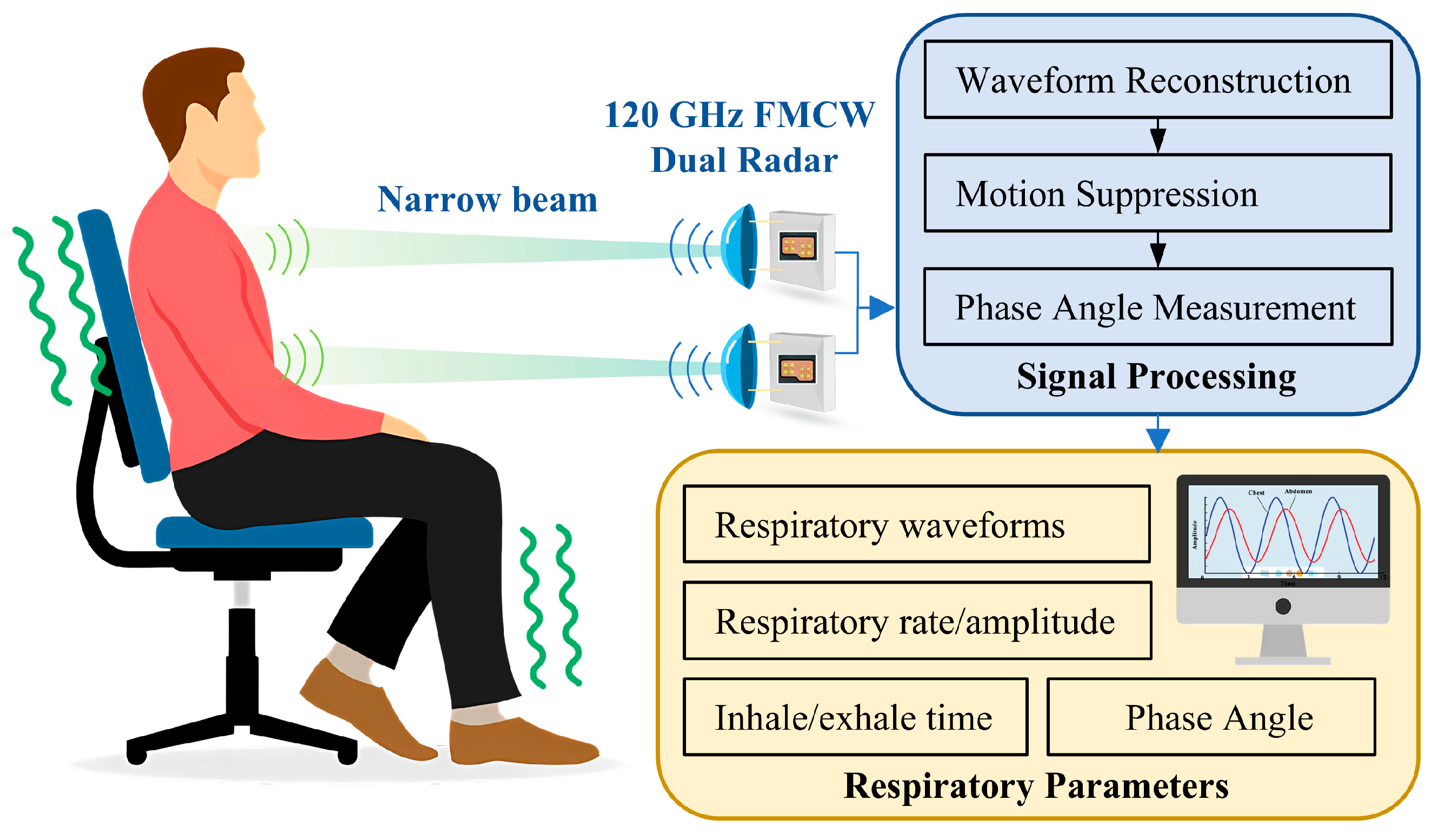
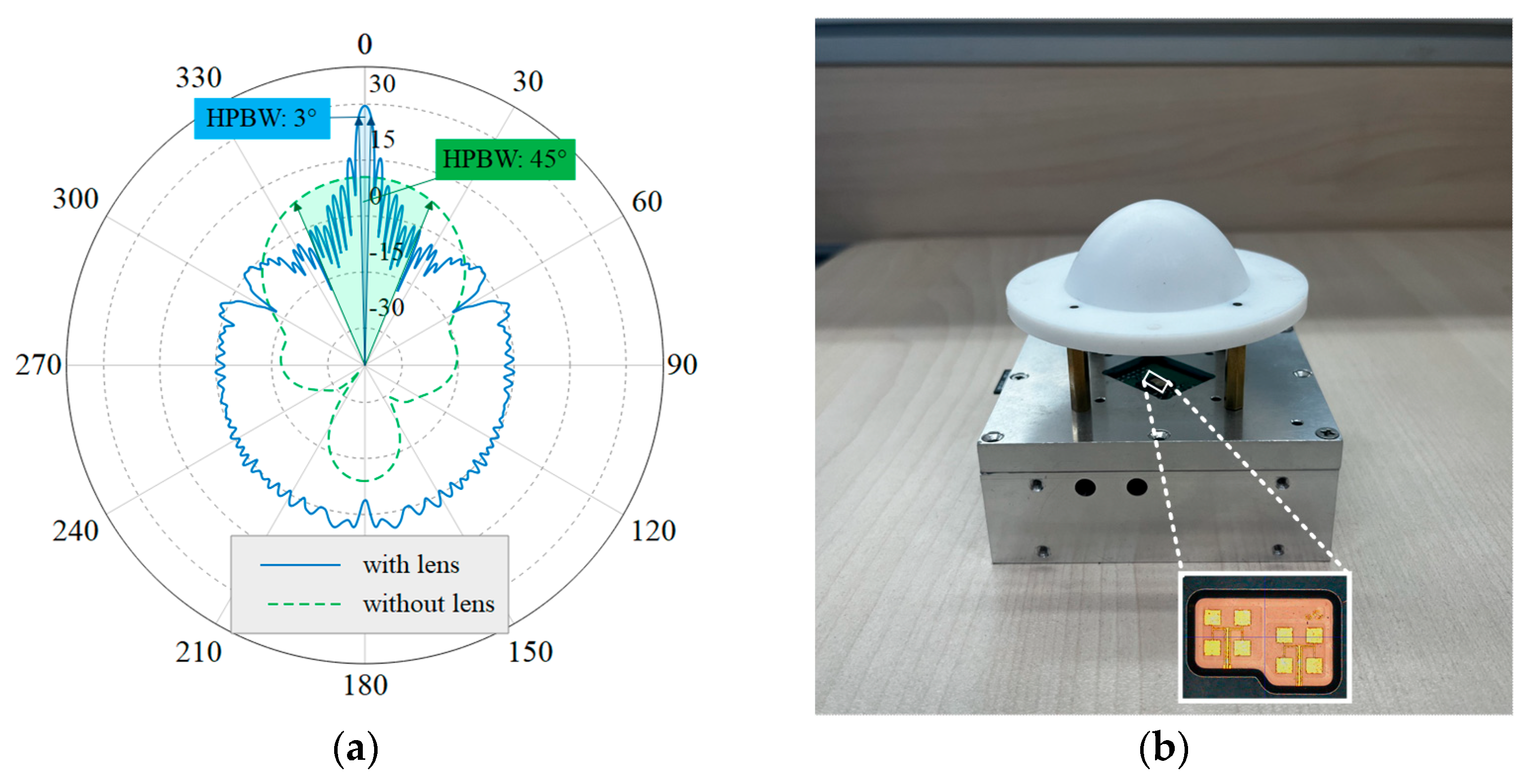
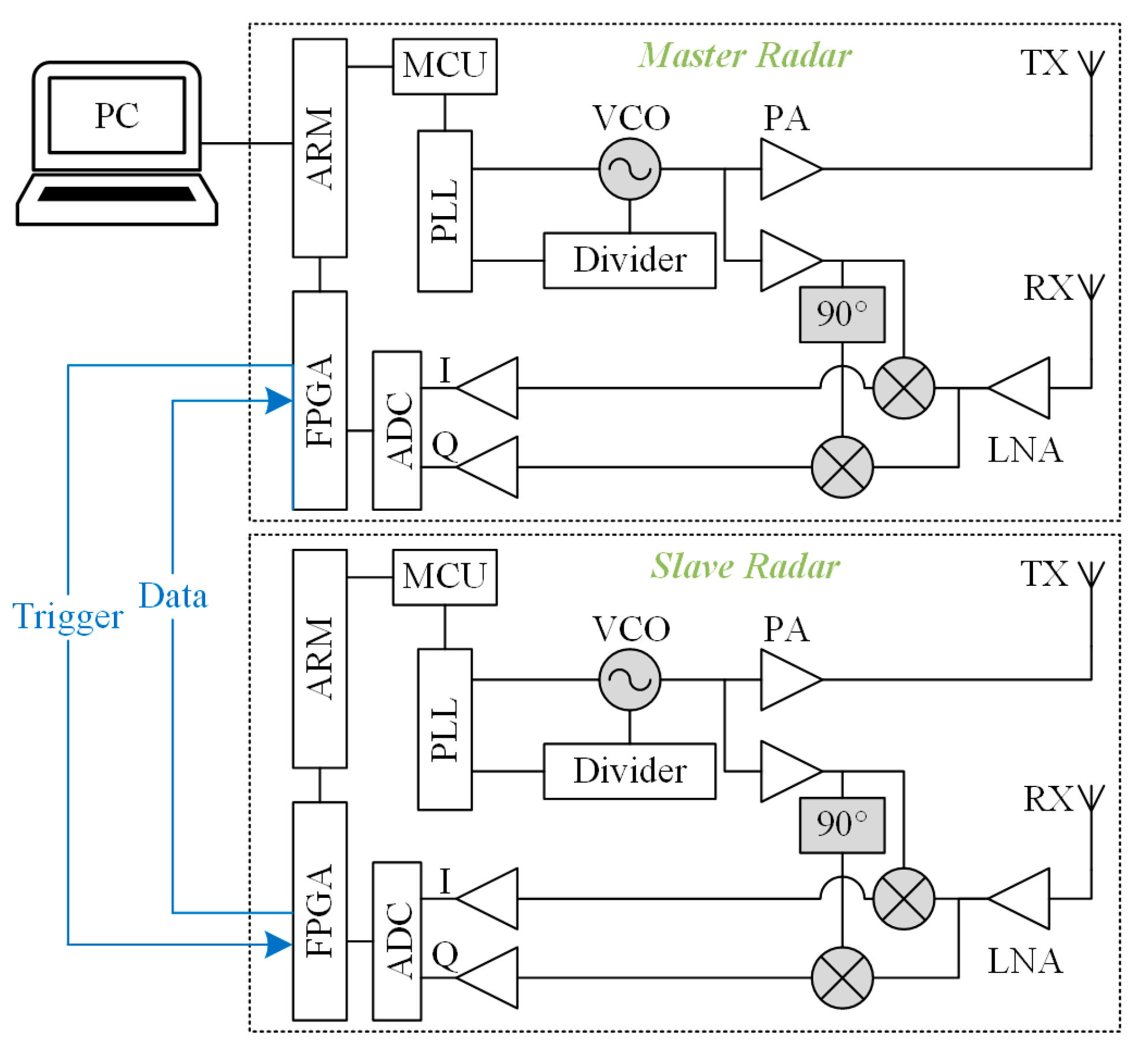
Continuous monitoring of respiratory patterns is essential for disease diagnosis and daily health care. Contact medical devices enable reliable respiratory monitoring, but can cause discomfort and are limited in some settings. Radar offers a noncontact respiration measurement method for continuous, real-time, high-precision monitoring. However, it is difficult for a single radar to characterize the coordination of chest and abdominal movements during measured breathing. Moreover, motion interference during prolonged measurements can seriously affect accuracy. This study proposes a dual radar system with customized narrow-beam antennas and signals to measure the chest and abdomen separately, and an adaptive dynamic time warping (DTW) algorithm is used to effectively suppress motion interference. The system is capable of reconstructing respiratory waveforms of the chest and abdomen, and robustly extracting various respiratory parameters via motion interference. Experiments on 35 healthy subjects, 2 patients with chronic obstructive pulmonary disease (COPD), and 1 patient with heart failure showed a high correlation between radar and respiratory belt signals, with correlation coefficients of 0.92 for both the chest and abdomen, a root mean square error of 0.80 bpm for the respiratory rate, and a mean absolute error of 3.4° for the thoracoabdominal phase angle. This system provides a noncontact method for prolonged respiratory monitoring, measurement of chest and abdominal asynchrony and apnea detection, showing promise for applications in respiratory disorder detection and home monitoring.
Keywords: dual radar; narrow beam antenna; breathing pattern; motion interference; thoracoabdominal asynchrony measurement; apnea detection dual radar; narrow beam antenna; breathing pattern; motion interference; thoracoabdominal asynchrony measurement; apnea detection