Non-Invasive and Long-Term Electrophysiological Monitoring Sensors for Cerebral Organoids Differentiation



Abstract
1. Introduction
2. Materials and Methods
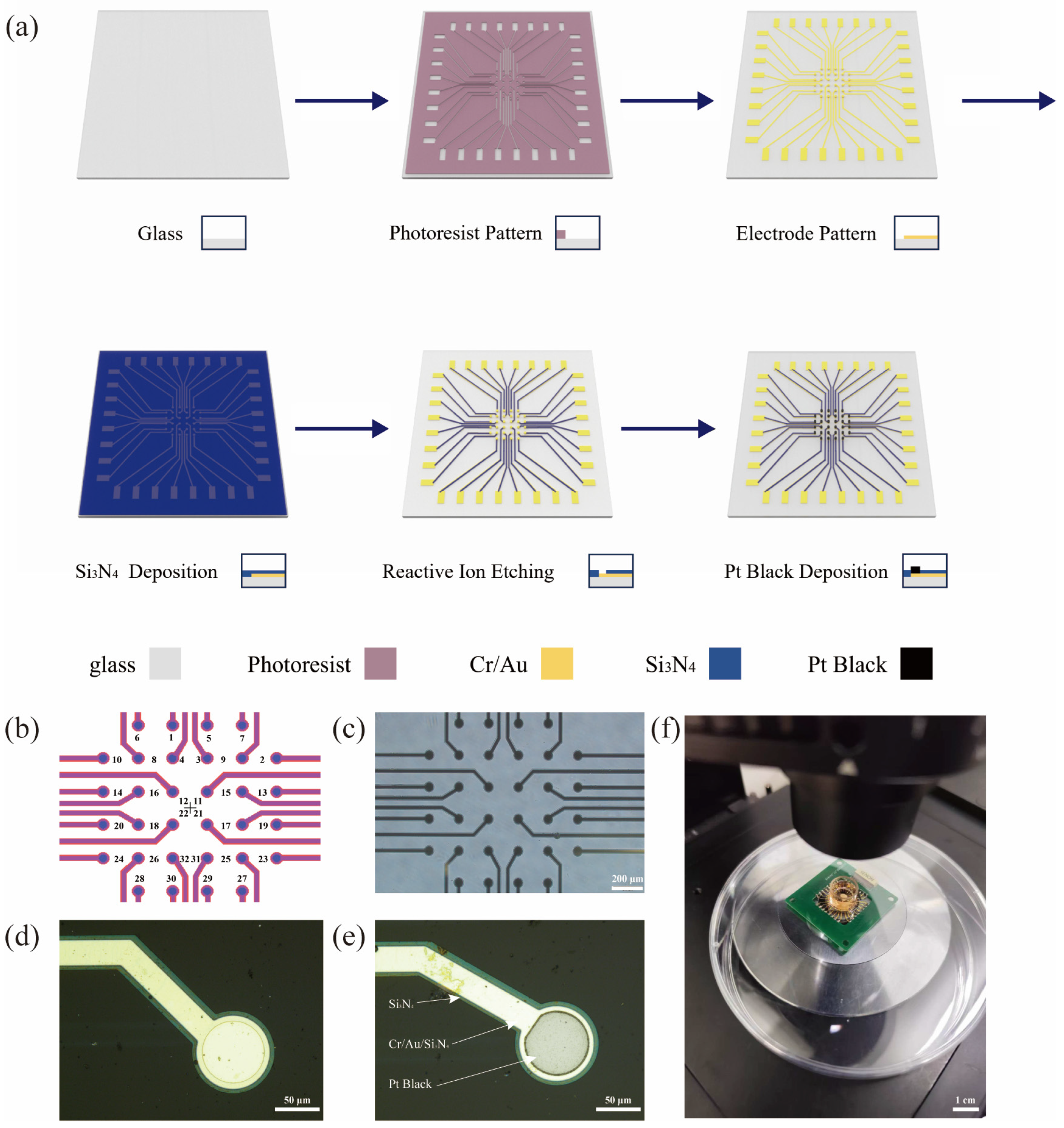
2.1. Design and Fabrication of the MEA
2.2. Cell Culture
2.3. Assembly of the MEA System
2.4. Pt Black Electrochemical Deposition
2.5. Electrochemical Impedance
2.6. Sterilization Procedures
2.7. Electrophysiological Recordings
2.8. Drug Testing
2.9. Statistical Analysis
3. Results
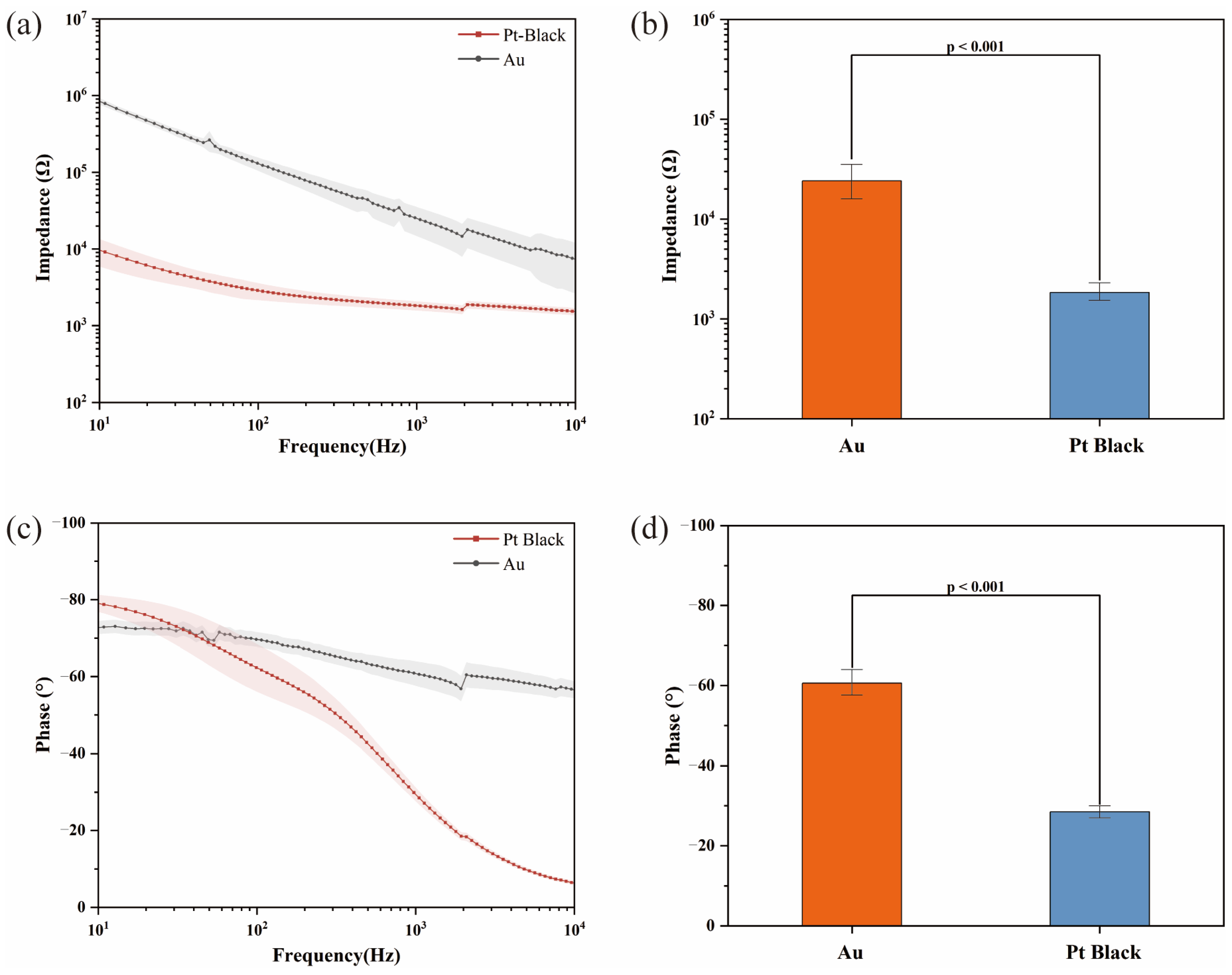
3.1. Impedance Evaluation of the MEA
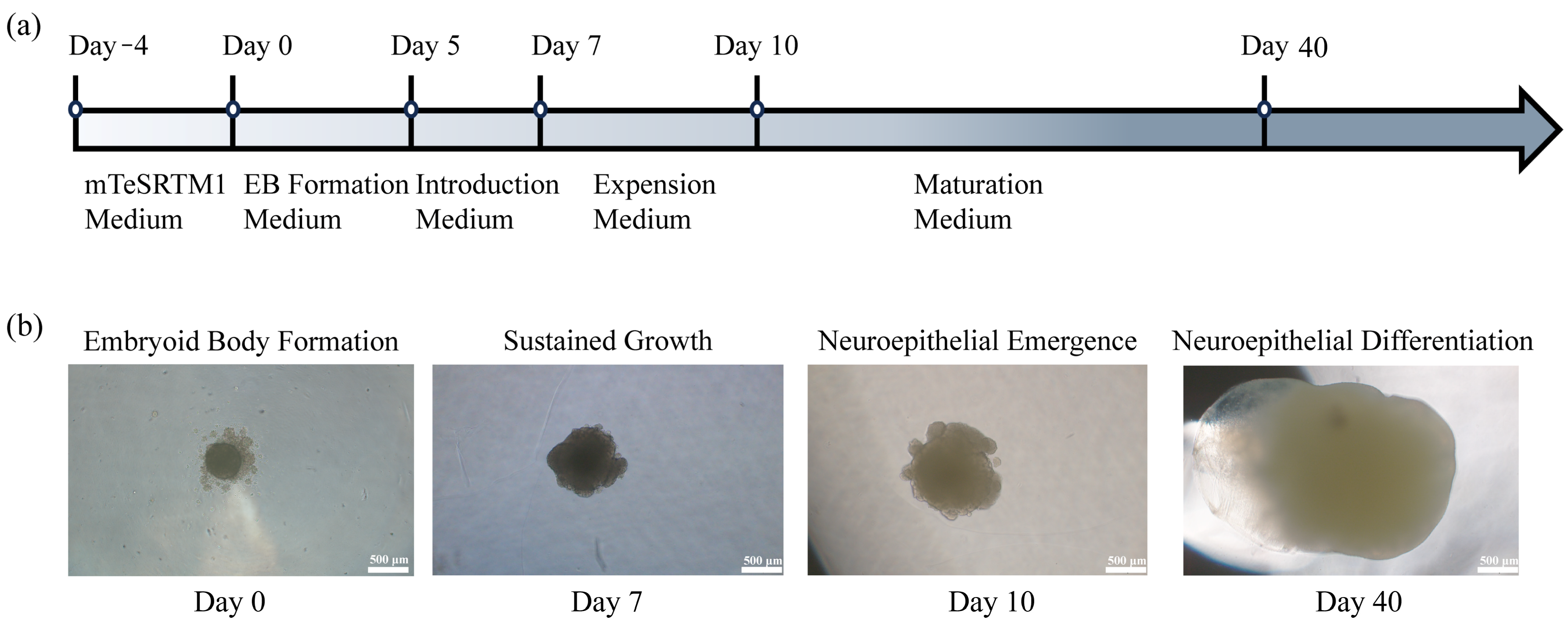
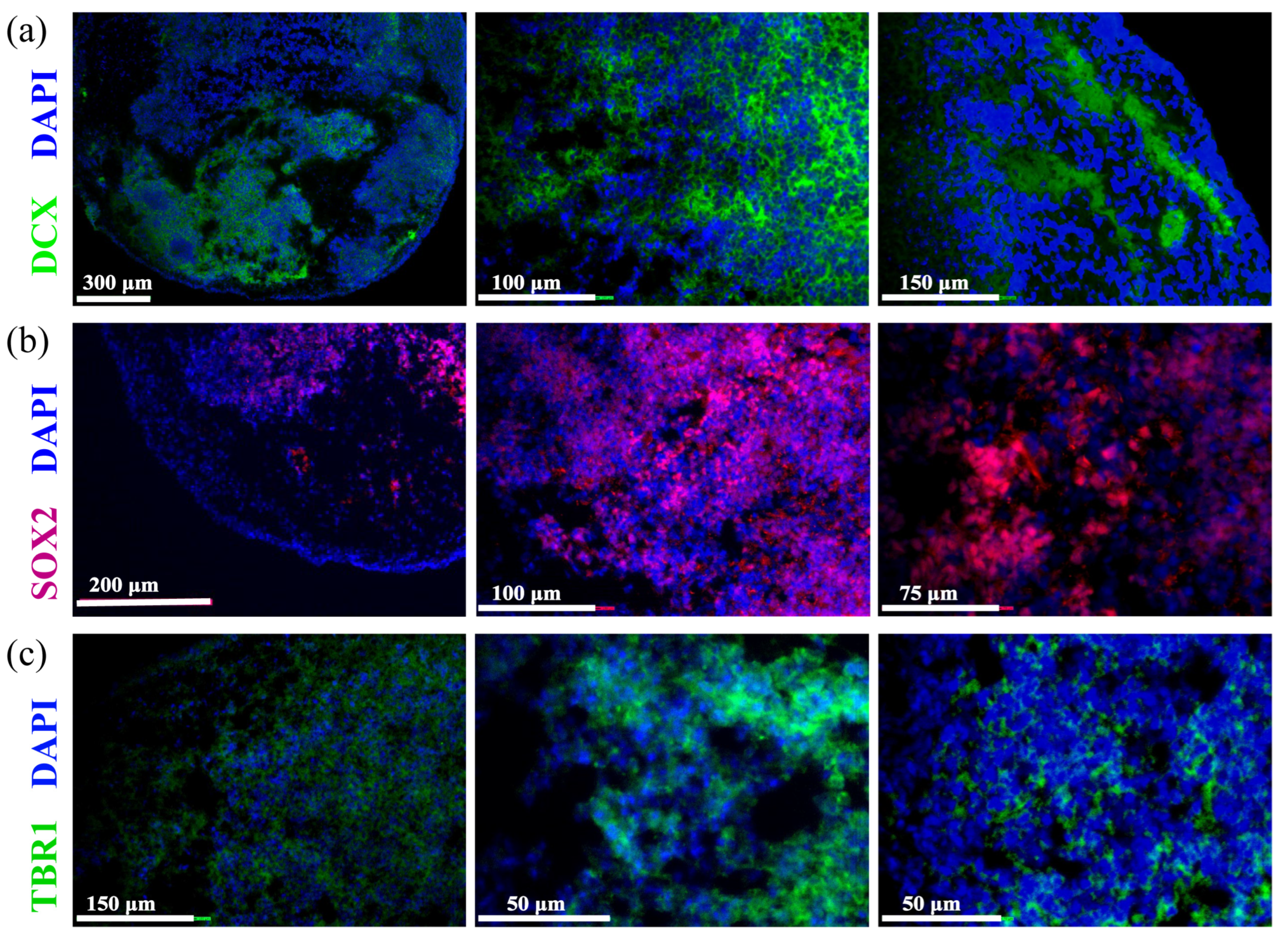
3.2. Organoid Development
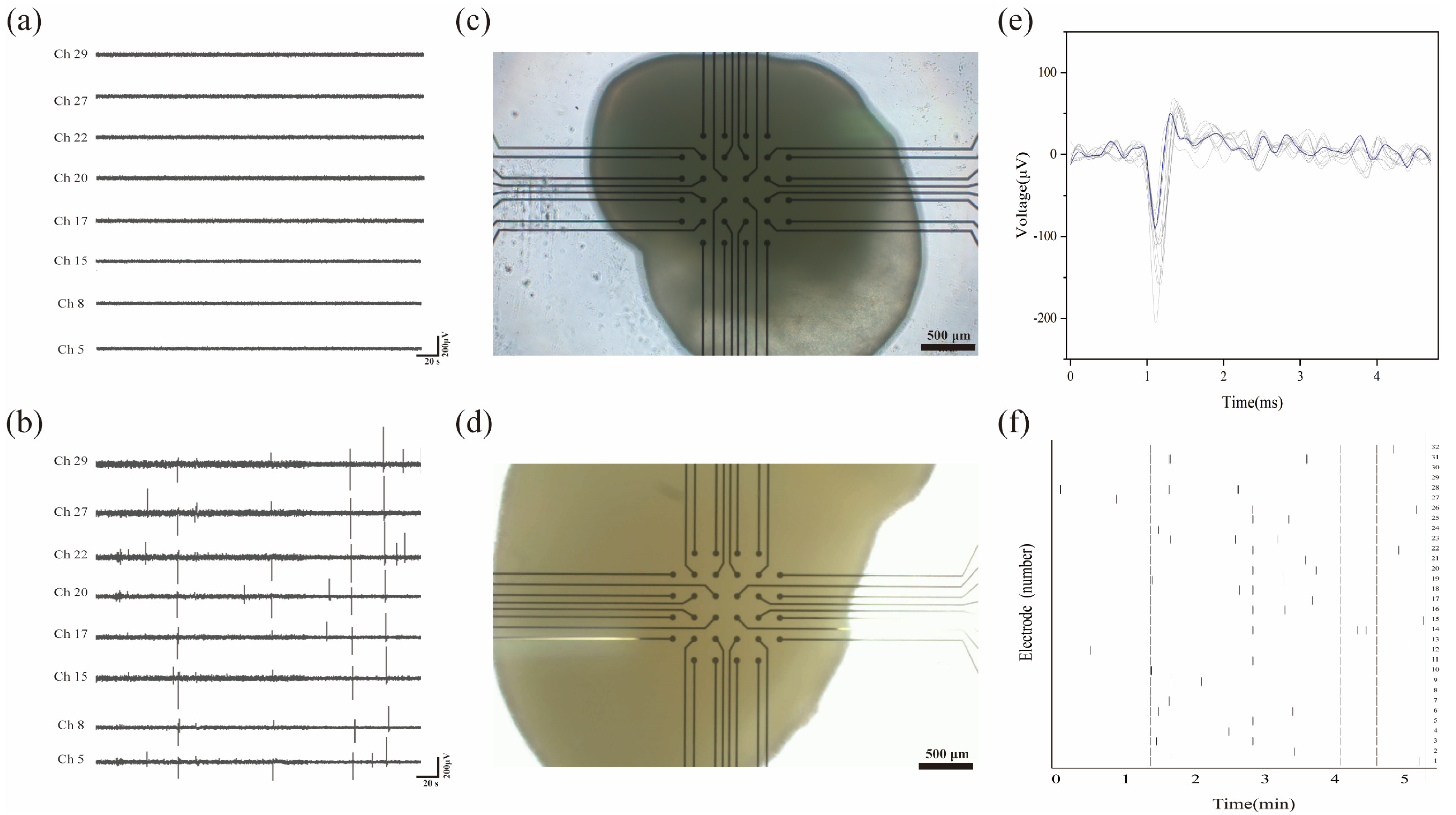
3.3. Electrophysiological Activity Recordings
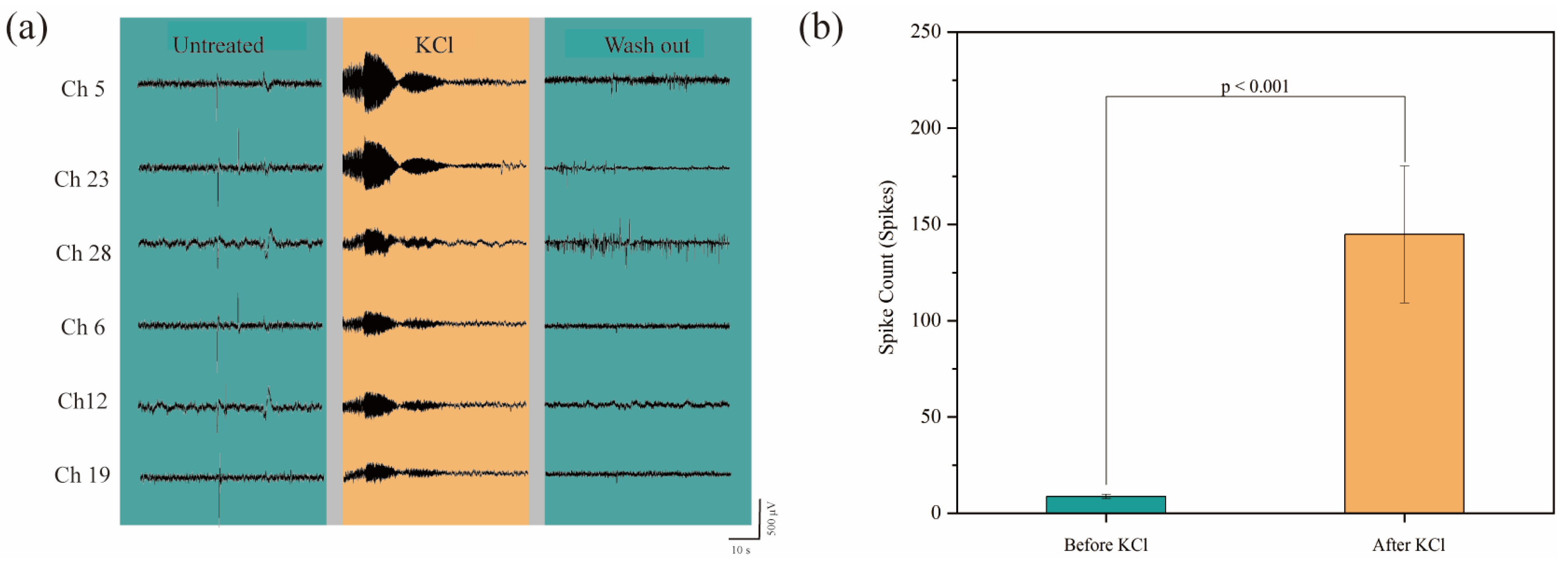
3.4. Drug Effects on Cerebral Organoids
4. Discussion

| Technology | Number of Channels | Applications | Impedance (1 kHz) | Reference |
|---|---|---|---|---|
| CMOS–MEA | 4096 | Neuronal networks | 300 kΩ | [38] |
| Flexible MEA | 16 | In vivo brain tissue | 60 kΩ | [39] |
| Planar MEA | 16 | Astrocytic cultures | Not Available | [40] |
| Custom MEA | 32 | Organoids | 2 kΩ | This work |
5. Conclusions
Supplementary Materials
Author Contributions
Funding
Institutional Review Board Statement
Informed Consent Statement
Data Availability Statement
Acknowledgments
Conflicts of Interest
References
- Tsytsarev, V.; Sopova, J.V.; Leonova, E.I.; Inyushin, M.; Markina, A.A.; Chirinskaite, A.V.; Volnova, A.B. Neurophotonic Methods in Approach to in Vivo Animal Epileptic Models: Advantages and Limitations. Epilepsia 2024, 65, 600–614. [Google Scholar] [CrossRef] [Scilit]
- De Vitis, E.; Stanzione, A.; Romano, A.; Quattrini, A.; Gigli, G.; Moroni, L.; Gervaso, F.; Polini, A. The Evolution of Technology-Driven In Vitro Models for Neurodegenerative Diseases. Adv. Sci. 2024, 11, 2304989. [Google Scholar] [CrossRef] [Scilit] [PubMed]
- Osaki, T.; Shin, Y.; Sivathanu, V.; Campisi, M.; Kamm, R.D. In Vitro Microfluidic Models for Neurodegenerative Disorders. Adv. Healthc. Mater. 2018, 7, 1700489. [Google Scholar] [CrossRef] [Scilit]
- Park, Y.; Franz, C.K.; Ryu, H.; Luan, H.; Cotton, K.Y.; Kim, J.U.; Chung, T.S.; Zhao, S.; Vazquez-Guardado, A.; Yang, D.S.; et al. Three-Dimensional, Multifunctional Neural Interfaces for Cortical Spheroids and Engineered Assembloids. Sci. Adv. 2021, 7, eabf9153. [Google Scholar] [CrossRef] [Scilit] [PubMed]
- Sloan, S.A.; Andersen, J.; Pașca, A.M.; Birey, F.; Pașca, S.P. Generation and Assembly of Human Brain Region–Specific Three-Dimensional Cultures. Nat. Protoc. 2018, 13, 2062–2085. [Google Scholar] [CrossRef] [Scilit]
- Paşca, A.M.; Sloan, S.A.; Clarke, L.E.; Tian, Y.; Makinson, C.D.; Huber, N.; Kim, C.H.; Park, J.-Y.; O’Rourke, N.A.; Nguyen, K.D.; et al. Functional Cortical Neurons and Astrocytes from Human Pluripotent Stem Cells in 3D Culture. Nat. Methods 2015, 12, 671–678. [Google Scholar] [CrossRef] [Scilit] [PubMed]
- Anderson, W.A.; Bosak, A.; Hogberg, H.T.; Hartung, T.; Moore, M.J. Advances in 3D Neuronal Microphysiological Systems: Towards a Functional Nervous System on a Chip. Vitro Cell Dev. Biol.-Anim. 2021, 57, 191–206. [Google Scholar] [CrossRef] [Scilit]
- Di Lullo, E.; Kriegstein, A.R. The Use of Brain Organoids to Investigate Neural Development and Disease. Nat. Rev. Neurosci. 2017, 18, 573–584. [Google Scholar] [CrossRef] [Scilit]
- Grenier, K.; Kao, J.; Diamandis, P. Three-Dimensional Modeling of Human Neurodegeneration: Brain Organoids Coming of Age. Mol. Psychiatry 2020, 25, 254–274. [Google Scholar] [CrossRef] [Scilit]
- Eichmüller, O.L.; Knoblich, J.A. Human Cerebral Organoids—A New Tool for Clinical Neurology Research. Nat. Rev. Neurol. 2022, 18, 661–680. [Google Scholar] [CrossRef] [Scilit]
- Lancaster, M.A.; Renner, M.; Martin, C.-A.; Wenzel, D.; Bicknell, L.S.; Hurles, M.E.; Homfray, T.; Penninger, J.M.; Jackson, A.P.; Knoblich, J.A. Cerebral Organoids Model Human Brain Development and Microcephaly. Nature 2013, 501, 373–379. [Google Scholar] [CrossRef] [Scilit] [PubMed]
- Bershteyn, M.; Kriegstein, A.R. Cerebral Organoids in a Dish: Progress and Prospects. Cell 2013, 155, 19–20. [Google Scholar] [CrossRef] [Scilit]
- McCracken, K.W.; Catá, E.M.; Crawford, C.M.; Sinagoga, K.L.; Schumacher, M.; Rockich, B.E.; Tsai, Y.-H.; Mayhew, C.N.; Spence, J.R.; Zavros, Y.; et al. Modelling Human Development and Disease in Pluripotent Stem-Cell-Derived Gastric Organoids. Nature 2014, 516, 400–404. [Google Scholar] [CrossRef] [Scilit] [PubMed]
- Babu, H.W.S.; Kumar, S.M.; Kaur, H.; Iyer, M.; Vellingiri, B. Midbrain Organoids for Parkinson’s Disease (PD)—A Powerful Tool to Understand the Disease Pathogenesis. Life Sci. 2024, 345, 122610. [Google Scholar] [CrossRef] [Scilit]
- Kim, H.; Park, H.J.; Choi, H.; Chang, Y.; Park, H.; Shin, J.; Kim, J.; Lengner, C.J.; Lee, Y.K.; Kim, J. Modeling G2019S-LRRK2 Sporadic Parkinson’s Disease in 3D Midbrain Organoids. Stem Cell Rep. 2019, 12, 518–531. [Google Scholar] [CrossRef] [Scilit]
- Chang, Y.; Kim, J.; Park, H.; Choi, H.; Kim, J. Modelling Neurodegenerative Diseases with 3D Brain Organoids. Biol. Rev. 2020, 95, 1497–1509. [Google Scholar] [CrossRef] [Scilit] [PubMed]
- Andrews, M.G.; Kriegstein, A.R. Challenges of Organoid Research. Annu. Rev. Neurosci. 2022, 45, 23–39. [Google Scholar] [CrossRef] [Scilit]
- Quadrato, G.; Brown, J.; Arlotta, P. The Promises and Challenges of Human Brain Organoids as Models of Neuropsychiatric Disease. Nat. Med. 2016, 22, 1220–1228. [Google Scholar] [CrossRef] [Scilit]
- Urrestizala-Arenaza, N.; Cerchio, S.; Cavaliere, F.; Magliaro, C. Limitations of Human Brain Organoids to Study Neurodegenerative Diseases: A Manual to Survive. Front. Cell. Neurosci. 2024, 18, 1419526. [Google Scholar] [CrossRef] [Scilit]
- Passaro, A.P.; Stice, S.L. Electrophysiological Analysis of Brain Organoids: Current Approaches and Advancements. Front. Neurosci. 2021, 14, 622137. [Google Scholar] [CrossRef] [Scilit]
- Trujillo, C.A.; Gao, R.; Negraes, P.D.; Gu, J.; Buchanan, J.; Preissl, S.; Wang, A.; Wu, W.; Haddad, G.G.; Chaim, I.A.; et al. Complex Oscillatory Waves Emerging from Cortical Organoids Model Early Human Brain Network Development. Cell Stem Cell 2019, 25, 558–569.e7. [Google Scholar] [CrossRef] [Scilit] [PubMed]
- Gao, J.; Zhang, H.; Xiong, P.; Yan, X.; Liao, C.; Jiang, G. Application of Electrophysiological Technique in Toxicological Study: From Manual to Automated Patch-Clamp Recording. TrAC Trends Anal. Chem. 2020, 133, 116082. [Google Scholar] [CrossRef] [Scilit]
- Sucher, N.J.; Deitcher, D.L. PCR and Patch-Clamp Analysis of Single Neurons. Neuron 1995, 14, 1095–1100. [Google Scholar] [CrossRef] [Scilit] [PubMed]
- Wu, H.; Gemes, G.; Hogan, Q.H. Recording SOCE Activity in Neurons by Patch-Clamp Electrophysiology and Microfluorometric Calcium Imaging. In The CRAC Channel; Penna, A., Constantin, B., Eds.; Springer: New York, NY, USA, 2018; Volume 1843, pp. 41–53. ISBN 978-1-4939-8702-3. [Google Scholar]
- Formozov, A.; Chini, M.; Dieter, A.; Yang, W.; Pöpplau, J.A.; Hanganu-Opatz, I.L.; Wiegert, J.S. Calcium Imaging and Electrophysiology of Hippocampal Activity under Anesthesia and Natural Sleep in Mice. Sci. Data 2022, 9, 113. [Google Scholar] [CrossRef] [Scilit]
- Liu, Y.; Xu, S.; Yang, Y.; Zhang, K.; He, E.; Liang, W.; Luo, J.; Wu, Y.; Cai, X. Nanomaterial-Based Microelectrode Arrays for in Vitro Bidirectional Brain–Computer Interfaces: A Review. Microsyst. Nanoeng. 2023, 9, 13. [Google Scholar] [CrossRef] [Scilit]
- Yakoub, A.M. Cerebral Organoids Exhibit Mature Neurons and Astrocytes and Recapitulate Electrophysiological Activity of the Human Brain. Neural Regen. Res. 2019, 14, 757. [Google Scholar] [CrossRef] [Scilit]
- Sunwoo, S.; Han, S.I.; Kang, H.; Cho, Y.S.; Jung, D.; Lim, C.; Lim, C.; Cha, M.; Lee, S.; Hyeon, T.; et al. Stretchable Low-Impedance Nanocomposite Comprised of Ag–Au Core–Shell Nanowires and Pt Black for Epicardial Recording and Stimulation. Adv. Mater. Technol. 2020, 5, 1900768. [Google Scholar] [CrossRef] [Scilit]
- Stanca, S.E.; Hänschke, F.; Ihring, A.; Zieger, G.; Dellith, J.; Kessler, E.; Meyer, H.-G. Chemical and Electrochemical Synthesis of Platinum Black. Sci. Rep. 2017, 7, 1074. [Google Scholar] [CrossRef] [Scilit]
- Lee, Y.J.; Kim, H.; Kang, J.Y.; Do, S.H.; Lee, S.H. Biofunctionalization of Nerve Interface via Biocompatible Polymer-Roughened Pt Black on Cuff Electrode for Chronic Recording. Adv. Healthc. Mater. 2017, 6, 1601022. [Google Scholar] [CrossRef] [Scilit]
- Giandomenico, S.L.; Sutcliffe, M.; Lancaster, M.A. Generation and Long-Term Culture of Advanced Cerebral Organoids for Studying Later Stages of Neural Development. Nat. Protoc. 2021, 16, 579–602. [Google Scholar] [CrossRef] [Scilit]
- Gomes, A.R.; Fernandes, T.G.; Vaz, S.H.; Silva, T.P.; Bekman, E.P.; Xapelli, S.; Duarte, S.; Ghazvini, M.; Gribnau, J.; Muotri, A.R.; et al. Modeling Rett Syndrome With Human Patient-Specific Forebrain Organoids. Front. Cell Dev. Biol. 2020, 8, 610427. [Google Scholar] [CrossRef] [Scilit] [PubMed]
- De Kleijn, K.M.A.; Zuure, W.A.; Straasheijm, K.R.; Martens, M.B.; Avramut, M.C.; Koning, R.I.; Martens, G.J.M. Human Cortical Spheroids with a High Diversity of Innately Developing Brain Cell Types. Stem Cell Res. Ther. 2023, 14, 50. [Google Scholar] [CrossRef] [Scilit]
- Livezey, J.A.; Glaser, J.I. Deep Learning Approaches for Neural Decoding across Architectures and Recording Modalities. Brief. Bioinform. 2021, 22, 1577–1591. [Google Scholar] [CrossRef] [Scilit] [PubMed]
- Shukla, S.; Comerci, C.J.; Süel, G.M.; Jahed, Z. Bioelectronic Tools for Understanding the Universal Language of Electrical Signaling across Species and Kingdoms. Biosens. Bioelectron. 2025, 267, 116843. [Google Scholar] [CrossRef] [Scilit]
- Song, J.; Jeong, H.E.; Choi, A.; Kim, H.N. Monitoring of Electrophysiological Functions in Brain-on-a-chip and Brain Organoids. Adv. NanoBiomed Res. 2024, 4, 2400052. [Google Scholar] [CrossRef] [Scilit]
- Aydogmus, H.; Hu, M.; Ivancevic, L.; Frimat, J.-P.; van den Maagdenberg, A.M.J.M.; Sarro, P.M.; Mastrangeli, M. An Organ-on-Chip Device with Integrated Charge Sensors and Recording Microelectrodes. Sci. Rep. 2023, 13, 8062. [Google Scholar] [CrossRef] [Scilit]
- Abbott, J.; Ye, T.; Krenek, K.; Gertner, R.S.; Wu, W.; Jung, H.S.; Ham, D.; Park, H. Extracellular Recording of Direct Synaptic Signals with a CMOS-Nanoelectrode Array. Lab Chip 2020, 20, 3239–3248. [Google Scholar] [CrossRef] [Scilit]
- Zhou, C.; Tian, Y.; Li, G.; Ye, Y.; Gao, L.; Li, J.; Liu, Z.; Su, H.; Lu, Y.; Li, M.; et al. Through-Polymer, via Technology-Enabled, Flexible, Lightweight, and Integrated Devices for Implantable Neural Probes. Microsyst. Nanoeng. 2024, 10, 54. [Google Scholar] [CrossRef] [Scilit]
- Kuroda, T.; Matsuda, N.; Ishibashi, Y.; Suzuki, I. Detection of Astrocytic Slow Oscillatory Activity and Response to Seizurogenic Compounds Using Planar Microelectrode Array. Front. Neurosci. 2023, 16, 1050150. [Google Scholar] [CrossRef] [Scilit]


Disclaimer/Publisher’s Note: The statements, opinions and data contained in all publications are solely those of the individual author(s) and contributor(s) and not of MDPI and/or the editor(s). MDPI and/or the editor(s) disclaim responsibility for any injury to people or property resulting from any ideas, methods, instructions or products referred to in the content. |
© 2025 by the authors. Licensee MDPI, Basel, Switzerland. This article is an open access article distributed under the terms and conditions of the Creative Commons Attribution (CC BY) license (https://creativecommons.org/licenses/by/4.0/).
Share and Cite
Jin, Y.; Guo, Y.; Li, Q.; Wu, L.; Ge, Y.; Zhao, J. Non-Invasive and Long-Term Electrophysiological Monitoring Sensors for Cerebral Organoids Differentiation. Biosensors 2025, 15, 173. https://doi.org/10.3390/bios15030173
Jin Y, Guo Y, Li Q, Wu L, Ge Y, Zhao J. Non-Invasive and Long-Term Electrophysiological Monitoring Sensors for Cerebral Organoids Differentiation. Biosensors. 2025; 15(3):173. https://doi.org/10.3390/bios15030173
Chicago/Turabian StyleJin, Yan, Yixun Guo, Qiushi Li, Lei Wu, Yuqing Ge, and Jianlong Zhao. 2025. "Non-Invasive and Long-Term Electrophysiological Monitoring Sensors for Cerebral Organoids Differentiation" Biosensors 15, no. 3: 173. https://doi.org/10.3390/bios15030173
APA StyleJin, Y., Guo, Y., Li, Q., Wu, L., Ge, Y., & Zhao, J. (2025). Non-Invasive and Long-Term Electrophysiological Monitoring Sensors for Cerebral Organoids Differentiation. Biosensors, 15(3), 173. https://doi.org/10.3390/bios15030173