Review

A Review on Integrated ZnO-Based SERS Biosensors and Their Potential in Detecting Biomarkers of Neurodegenerative Diseases


by
Alia Colniță
1,
Vlad-Alexandru Toma
1,2,3,
Ioana Andreea Brezeștean
1,*,
Muhammad Ali Tahir
4 and
Nicoleta Elena Dina
1,*
1
Department of Molecular and Biomolecular Physics, National Institute for Research and Development of Isotopic and Molecular Technologies, 67-103 Donat, 400293 Cluj-Napoca, Romania
2
Department of Molecular Biology and Biotechnology, Faculty of Biology and Geology, Babeș-Bolyai University, 5-7 Clinicilor, 400006 Cluj-Napoca, Romania
3
Institute of Biological Research, Department of Biochemistry and Experimental Biology, 48 Republicii, Branch of NIRDBS Bucharest, 400015 Cluj-Napoca, Romania
4
Shanghai Key Laboratory of Atmospheric Particle Pollution and Prevention, Department of Environmental Science & Engineering, Fudan University, Shanghai 200433, China
*
Authors to whom correspondence should be addressed.
Biosensors 2023, 13(5), 499; https://doi.org/10.3390/bios13050499
Submission received: 22 February 2023 / Revised: 15 April 2023 / Accepted: 20 April 2023 / Published: 25 April 2023
(This article belongs to the Special Issue Surface-Enhanced Raman Scattering Biosensors)

Abstract

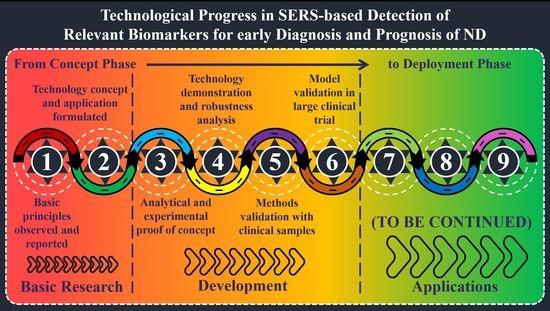
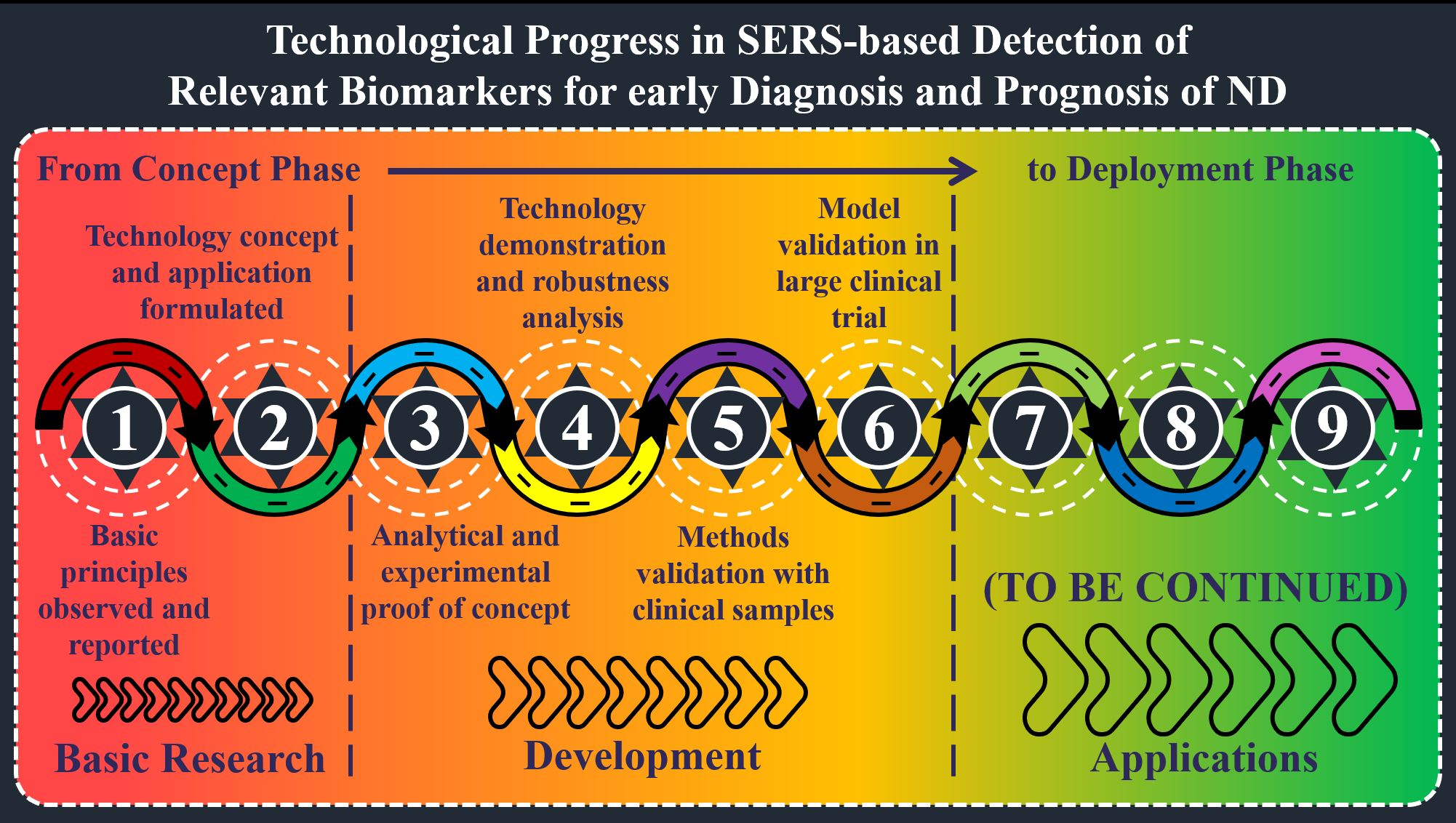
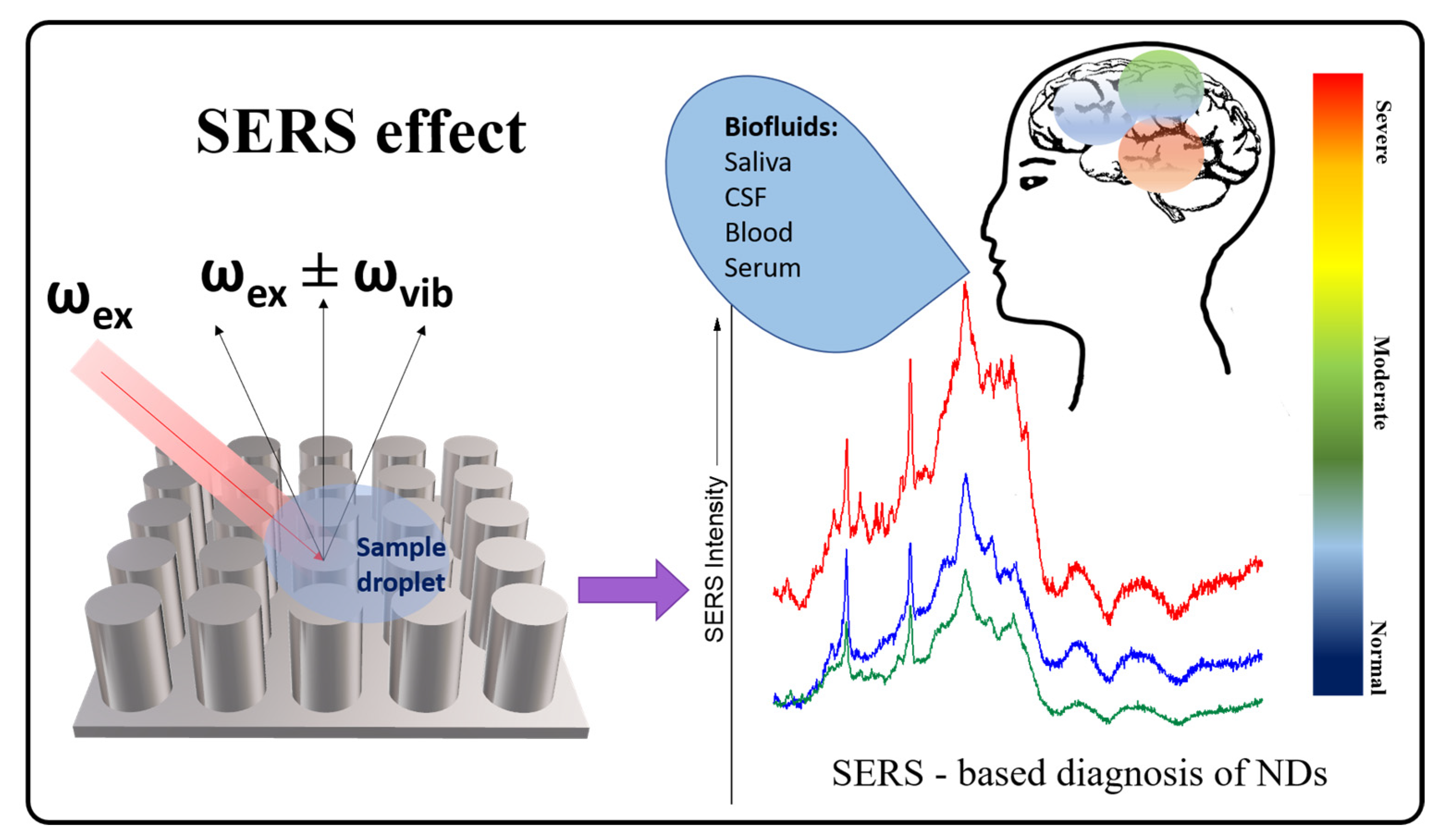
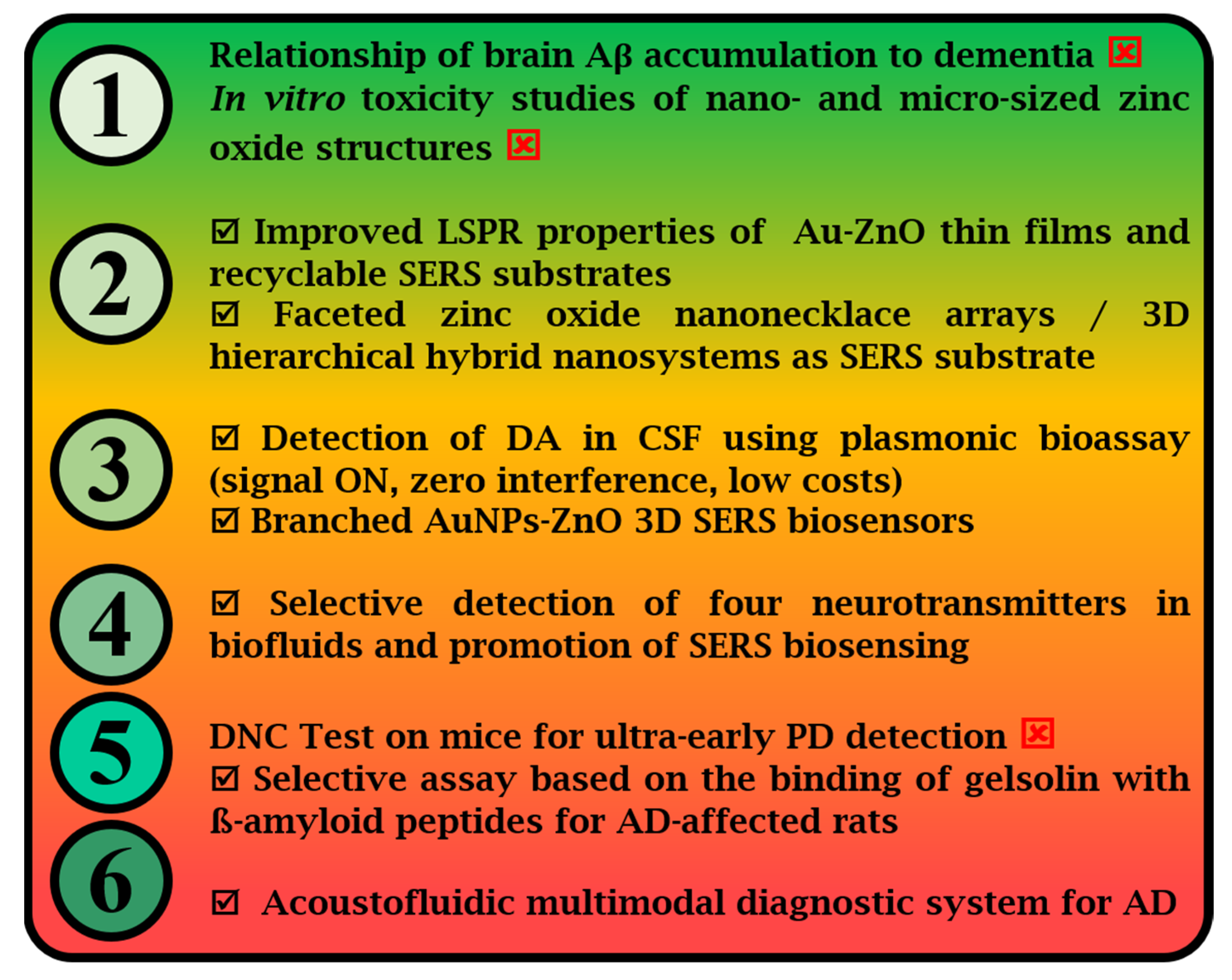
Surface-enhanced Raman spectroscopy (SERS) applications in clinical diagnosis and spectral pathology are increasing due to the potential of the technique to bio-barcode incipient and differential diseases via real-time monitoring of biomarkers in fluids and in real-time via biomolecular fingerprinting. Additionally, the rapid advancements in micro/nanotechnology have a visible influence in all aspects of science and life. The miniaturization and enhanced properties of materials at the micro/nanoscale transcended the confines of the laboratory and are revolutionizing domains such as electronics, optics, medicine, and environmental science. The societal and technological impact of SERS biosensing by using semiconductor-based nanostructured smart substrates will be huge once minor technical pitfalls are solved. Herein, challenges in clinical routine testing are addressed in order to understand the context of how SERS can perform in real, in vivo sampling and bioassays for early neurodegenerative disease (ND) diagnosis. The main interest in translating SERS into clinical practice is reinforced by the practical advantages: portability of the designed setups, versatility in using nanomaterials of various matter and costs, readiness, and reliability. As we will present in this review, in the frame of technology readiness levels (TRL), the current maturity reached by semiconductor-based SERS biosensors, in particular that of zinc oxide (ZnO)-based hybrid SERS substrates, is situated at the development level TRL 6 (out of 9 levels). Three-dimensional, multilayered SERS substrates that provide additional plasmonic hot spots in the z-axis are of key importance in designing highly performant SERS biosensors for the detection of ND biomarkers.
Keywords: neurodegenerative diseases; SERS; zinc-oxide-based SERS substrates; biomarkers; dopamine; amyloid-β; diagnosis neurodegenerative diseases; SERS; zinc-oxide-based SERS substrates; biomarkers; dopamine; amyloid-β; diagnosis
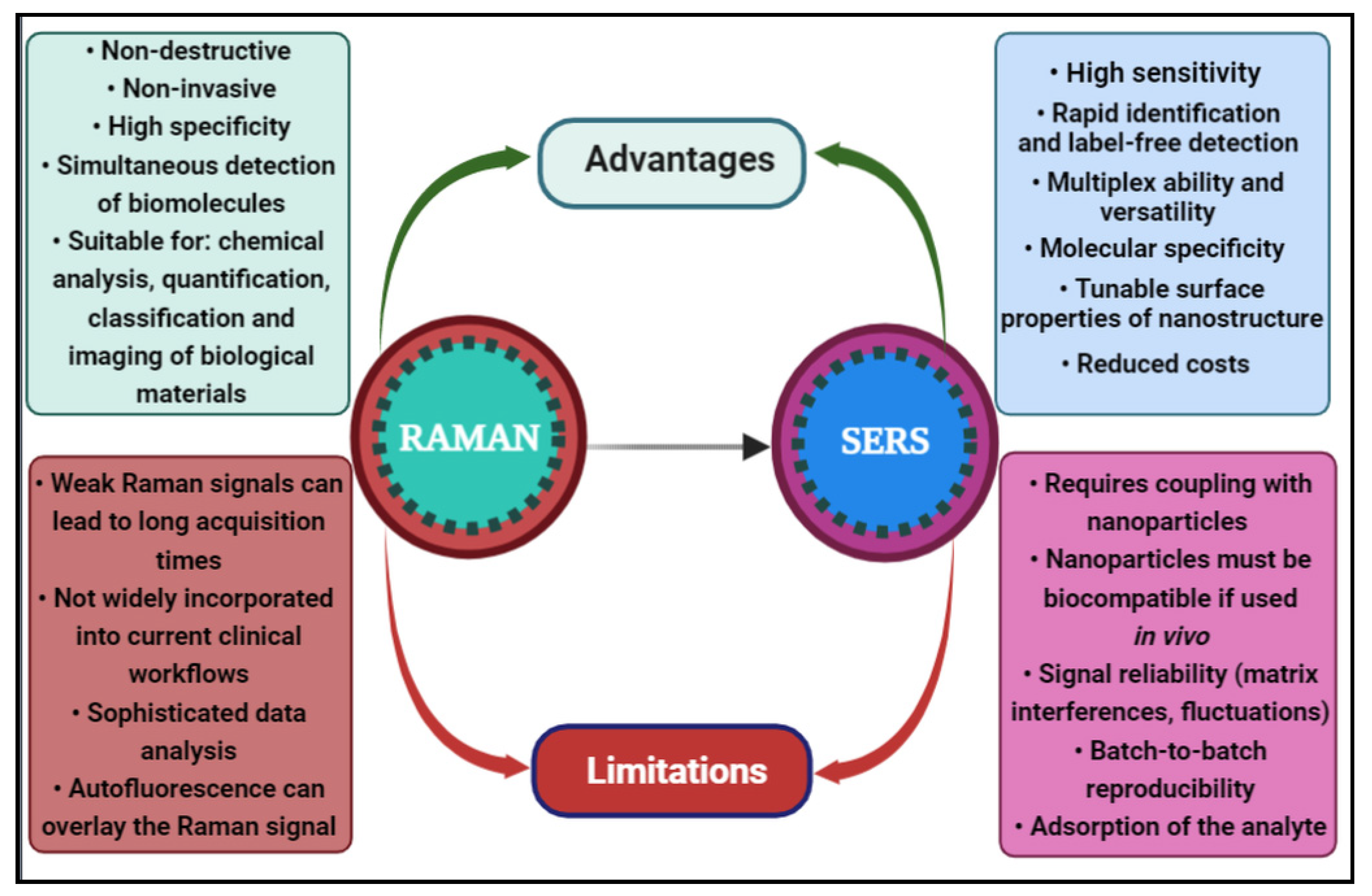
Graphical Abstract