Article

Development of GO/Co/Chitosan-Based Nano-Biosensor for Real-Time Detection of D-Glucose

1
Department of Green Chemical Engineering, Sangmyung University, 31 Sangmyungdae-Gil, Dongnam-Gu, Cheonan 31066, Korea
2
Department of Chemical and Biological Engineering, Korea University, 145, Anam-Ro, Seongbuk-Gu, Seoul 02841, Korea
3
E & S Healthcare Ltd., Suite N313, 11-3, Techno 1-ro, Yuseong-gu, Daejeon 34015, Korea
4
Department of Convergence Bio-Chemical Engineering, Soonchunhyang University, 22, Soonchunhyang-ro, Asan-si 31538, Korea
5
Department of Biotechnology, Sangmyung University, 20, Gongjimun, 2-Gil, Jongno-Gum, Seoul 03016, Korea
6
Department of Chemical Engineering, Kwangwoon University, 20 Kwangwoon-Ro, Nowon-Gu, Seoul 01890, Korea
*
Authors to whom correspondence should be addressed.
These authors contributed equally to this work.
Biosensors 2022, 12(7), 464; https://doi.org/10.3390/bios12070464
Submission received: 20 May 2022 / Revised: 20 June 2022 / Accepted: 24 June 2022 / Published: 27 June 2022
(This article belongs to the Section Biosensor Materials)

Abstract

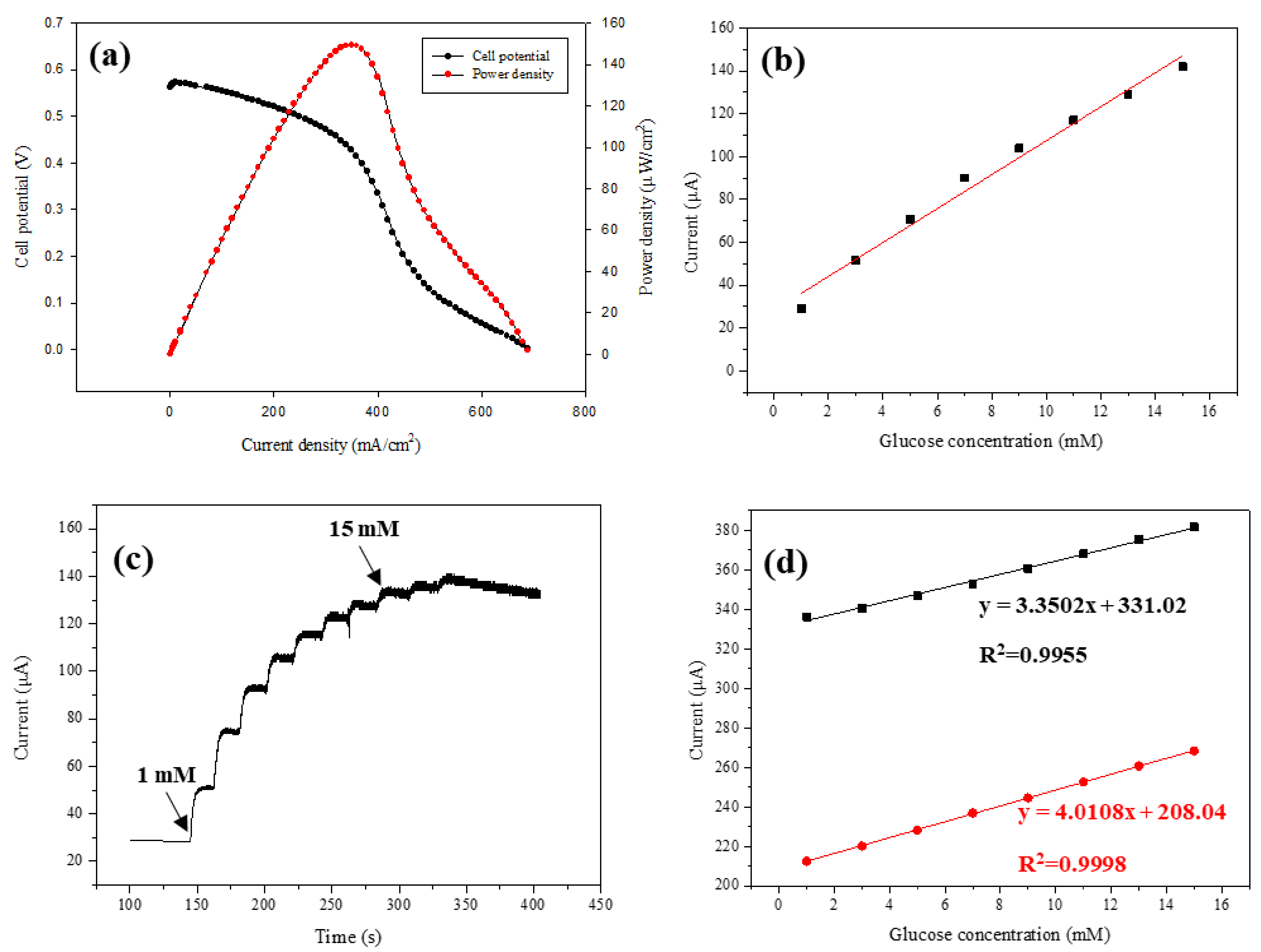
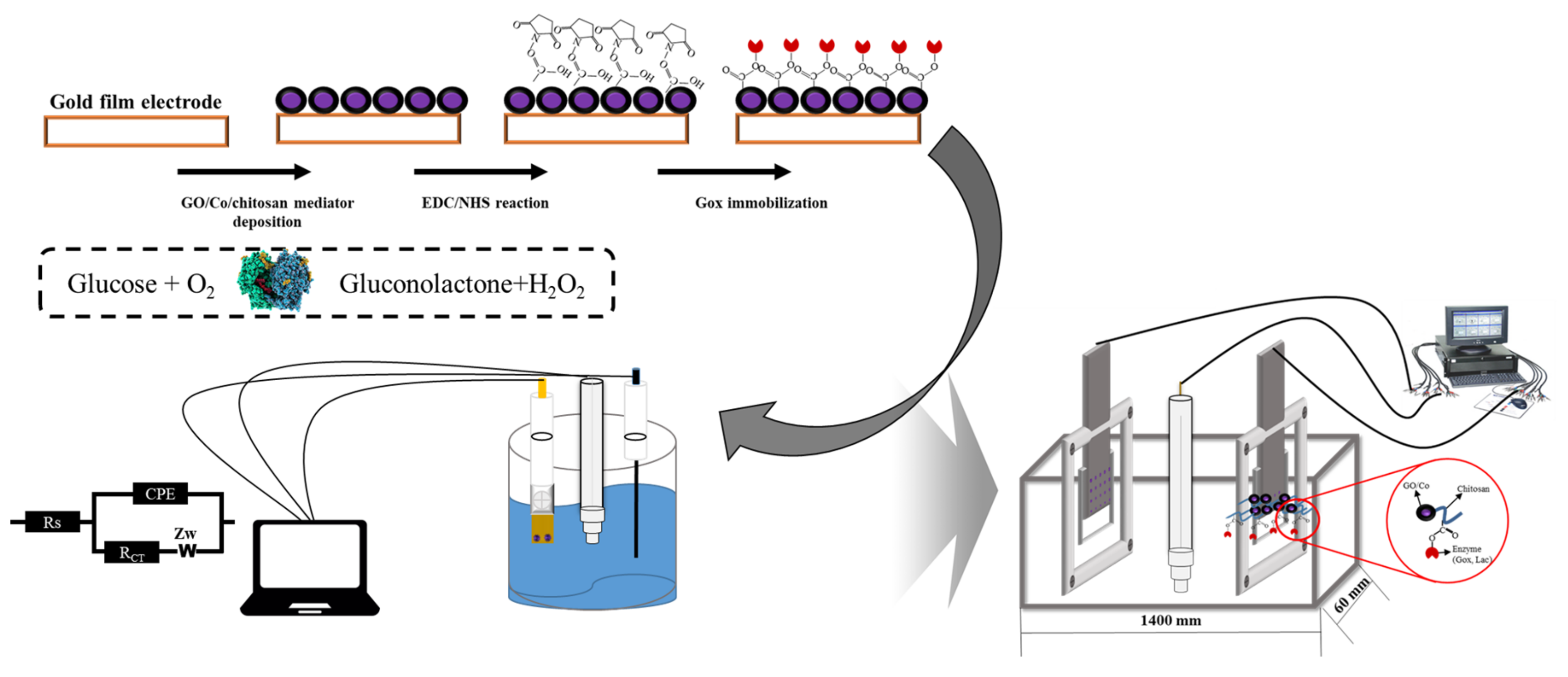
Electrochemical nano-biosensor systems are popular in the industrial field, along with evaluations of medical, agricultural, environmental and sports analysis, because they can simultaneously perform qualitative and quantitative analyses with high sensitivity. However, real-time detection using an electrochemical nano-biosensor is greatly affected by the surrounding environment with the performance of the electron transport materials. Therefore, many researchers are trying to find good factors for real-time detection. In this work, it was found that a composite composed of graphite oxide/cobalt/chitosan had strong stability and electron transfer capability and was applied to a bioelectrochemical nano-biosensor with high sensitivity and stability. As a mediator-modified electrode, the GO/Co/chitosan composite was electrically deposited onto an Au film electrode by covalent boding, while glucose oxidase as a receptor was immobilized on the end of the GO/Co/chitosan composite. It was confirmed that the electron transfer ability of the GO/Co/chitosan composite was excellent, as shown with power density analysis. In addition, the real-time detection of D-glucose could be successfully performed by the developed nano-biosensor with a high range of detected concentrations from 1.0 to 15.0 mM. Furthermore, the slope value composed of the current, per the concentration of D-glucose as a detection response, was significantly maintained even after 14 days.
Keywords: GO/Co/chitosan; nano-biosensor; real-time detection; D-glucose; glucose oxidase GO/Co/chitosan; nano-biosensor; real-time detection; D-glucose; glucose oxidase