3.2. Dispersion Stability
The colloidal stability of the prepared nanofluids was assessed immediately after the completion of the ultrasonication step (Day 1) through visual inspection of the dispersion state and through quantitative zeta potential measurements.
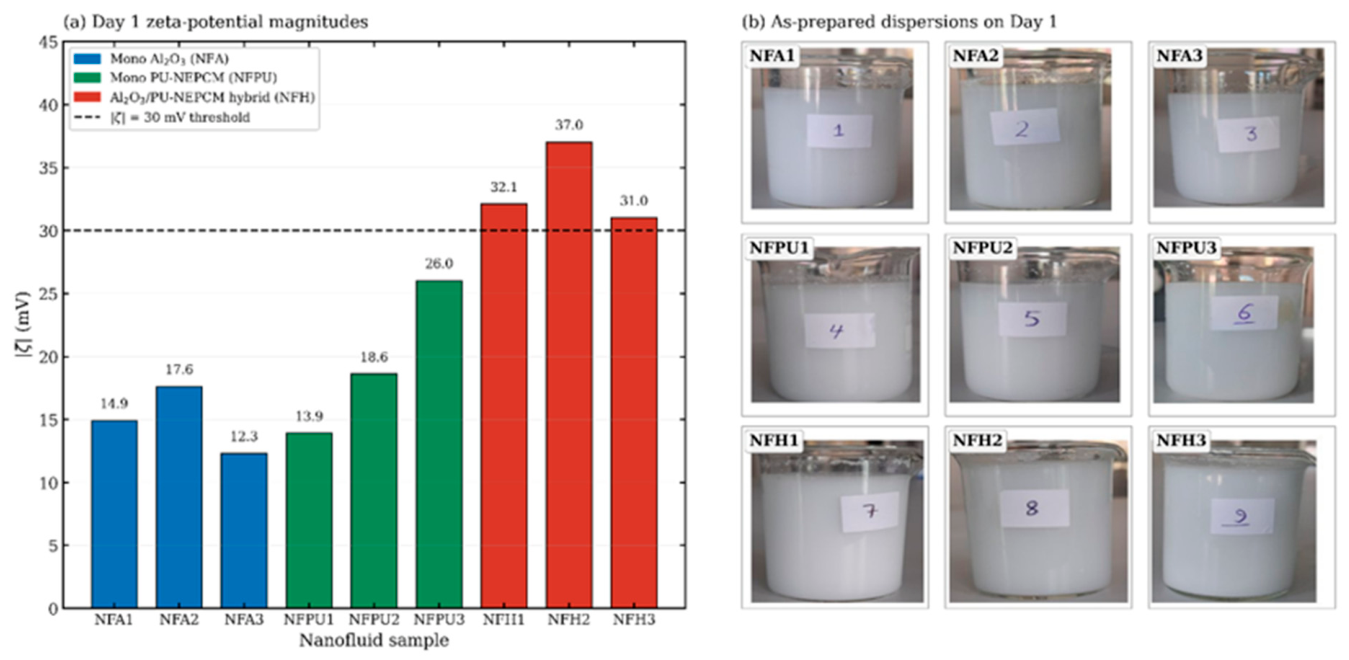
Figure 5 summarizes both qualitative and quantitative stability indicators across the nine investigated formulations.
Visually, all nine nanofluids appeared as homogeneous, opaque-to-milky white dispersions with no observable macroscopic sedimentation or phase separation within the time scale of the subsequent thermophysical measurements (
Figure 5b). This homogeneous appearance was retained throughout the property characterization protocol, supporting the interpretation that the Day-1 measurements reflect the as-prepared dispersion state.
Quantitatively, the measured zeta potential values (
Figure 5a) revealed a systematic dependence on both formulation type and total volume fraction. The mono Al
2O
3 nanofluids (NFA1–NFA3) exhibited |
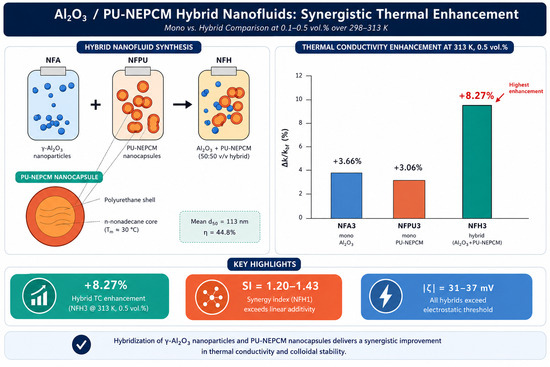
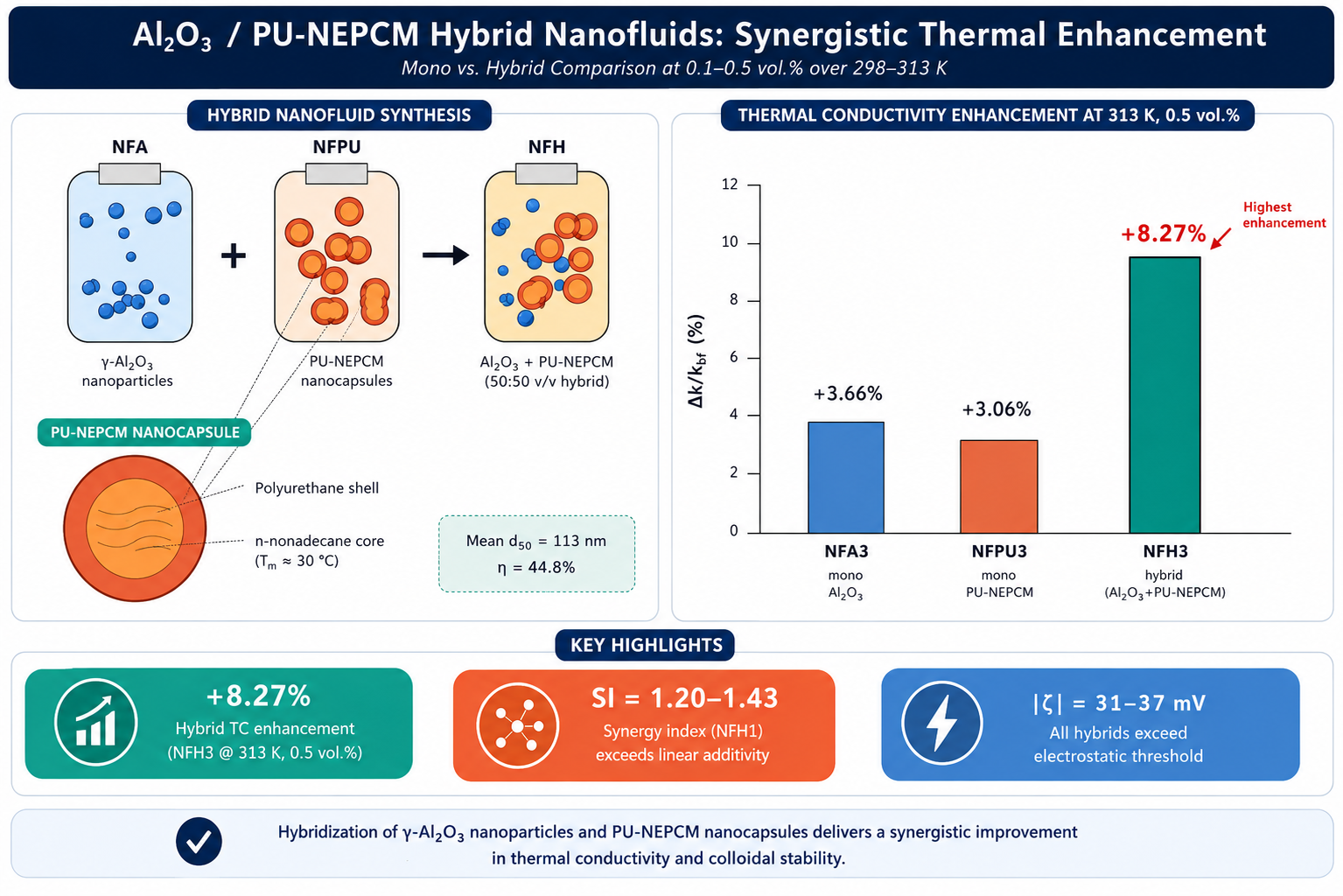
ζ| values in the range of 12.3–17.6 mV, and the mono PU-NEPCM nanofluids (NFPU1–NFPU3) showed a moderate increase from 13.9 mV at 0.1 vol.% to 26.0 mV at 0.5 vol.%, reflecting an enhanced electrostatic contribution from the NP-10-stabilized polymer surface at higher particle loadings. Notably, the hybrid formulations (NFH1–NFH3) yielded substantially higher zeta potential magnitudes of 31.0–37.0 mV, exceeding the conventionally accepted |
ζ| ≥ 30 mV threshold for good electrostatic stabilization against aggregation [
18]. Two implications follow: First, the hybrid dispersions are colloidally well-stabilized at the time of measurement, which is essential for the interpretability of the subsequent thermophysical comparisons. Second, and more unexpectedly, hybridization itself produced a measurable enhancement in colloidal stability beyond that of either mono-component system at the same total volume fraction.
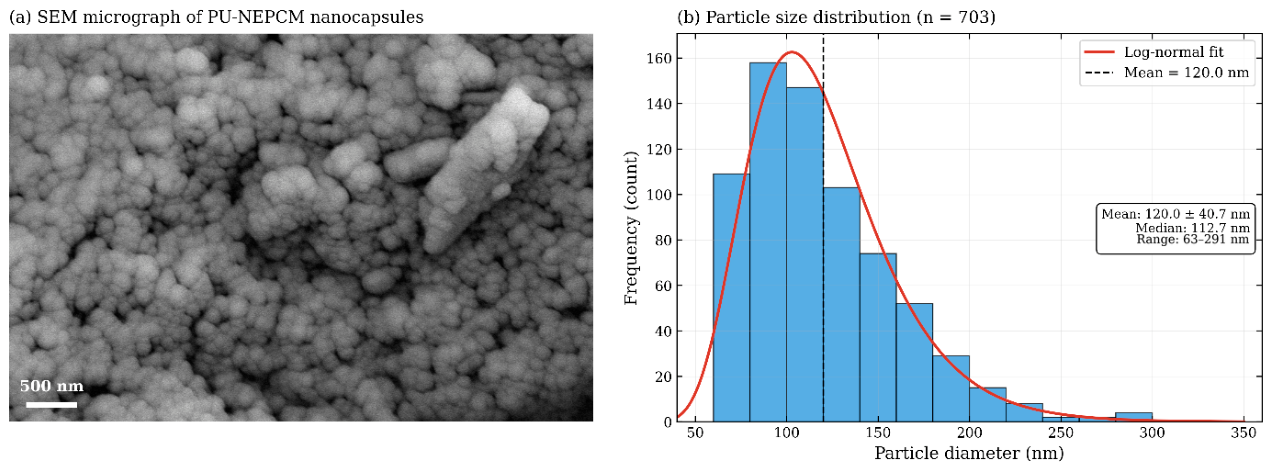
The origin of this hybrid-induced colloidal stabilization can be attributed to the co-presence of two chemically and structurally dissimilar dispersed phases—a metal oxide (Al2O3) and a polymer-shelled PCM (PU-NEPCM)—whose combination is not a simple average of the two mono behaviors. It should first be emphasized that the two mono systems are not strongly aggregating suspensions that the hybrid somehow rescues; rather, both mono families are already kinetically dispersed by the NP-10 surfactant but carry only a modest electrostatic charge (|ζ| = 12.3–17.6 mV for NFA and 13.9–26.0 mV for NFPU), placing them in the weakly stabilized regime. The hybrid combination raises |ζ| above the conventional 30 mV threshold through two cooperative effects: First, the two surfaces differ in their charging behavior: the γ-Al2O3 surface develops its charge through the protonation/deprotonation of amphoteric surface hydroxyl groups, whereas the PU-NEPCM surface acquires charge mainly through the adsorbed NP-10 layer on the polyurethane shell. When both surfaces are present, the surfactant partitions between two distinct surface chemistries and the suspension carries a more heterogeneous and, in net magnitude, larger charge population than either mono system, raising the measured zeta potential. Second, the marked size and density contrast between the small, dense Al2O3 nanoparticles (<50 nm; 3.95 g cm−3) and the larger, lighter PU-NEPCM capsules (≈120 nm; 1.19 g cm−3) introduces a steric/geometric contribution: the smaller oxide particles can occupy the interstitial regions between the larger capsules and hinder their close approach, adding a steric barrier to the electrostatic repulsion and further suppressing aggregation. The combination of an enhanced electrostatic charge and this additional steric hindrance provides a consistent explanation for why the hybrid suspensions are more stable than either mono-component system at the same total volume fraction, rather than merely intermediate between them. This hybrid-induced stabilization represents an additional functional benefit of the Al2O3/PU-NEPCM combination beyond the thermal conductivity considerations discussed in the subsequent sections.
It should be noted that the present study focuses on the short-term dispersion behavior relevant to the thermophysical-property measurement protocol. The systematic evaluation of long-term colloidal stability, including time-resolved zeta potential evolution, dynamic-light-scattering aggregation kinetics, and sedimentation rate analysis, falls beyond the scope of this work and is reserved for a dedicated future investigation. The Day-1 zeta potential values, together with the visual homogeneity records, nevertheless provide a consistent stability baseline against which the mono and hybrid formulations were characterized under directly comparable conditions.
Because the encapsulated n-nonadecane core repeatedly melts and freezes within the operating temperature window, repeated thermal cycling could in principle influence the long-term dispersion behavior through volume changes of the core and gradual reorganization of the adsorbed surfactant layer; assessing whether such thermal cycling effects alter the colloidal stability of the present formulations is an important direction for the future investigation noted above.
3.3. Thermal Conductivity
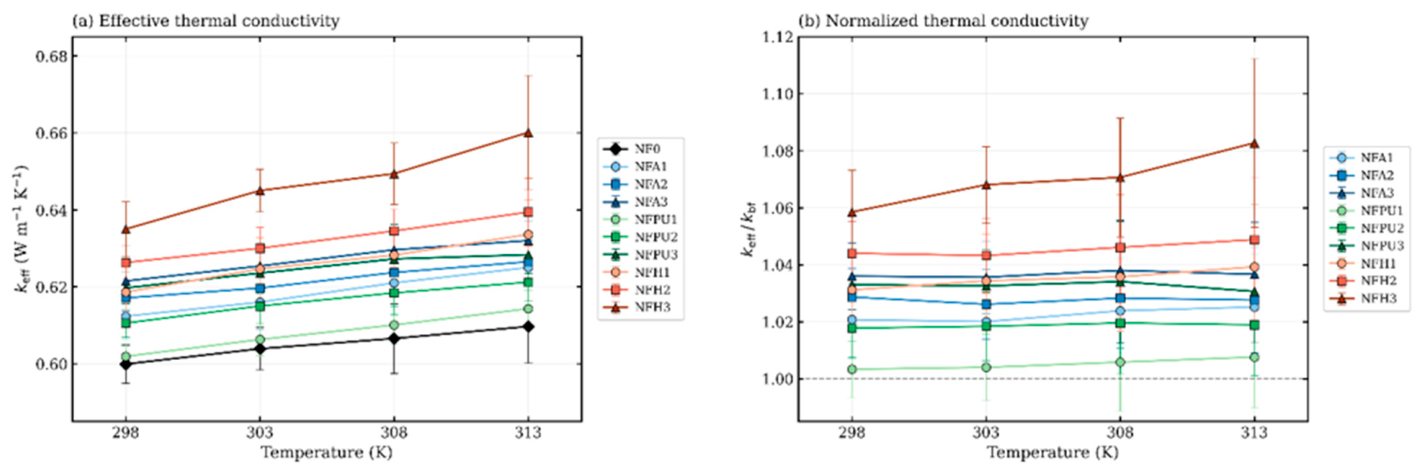
Figure 6 presents the effective thermal conductivity
(panel a) and the conductivity enhancement ratio
(panel b) of all nine nanofluids and the surfactant-containing base fluid (NF0) over the investigated temperature range of 298–313 K. Two general trends are evident across all formulations: (i)
increases monotonically with temperature, in line with the temperature dependence of the base fluid and the expected Brownian-motion-assisted heat transport at higher temperatures [
8,
26]; and (ii) at any fixed temperature,
increases with the total solid volume fraction. The enhancement relative to the base fluid is, however, strongly composition dependent: at the maximum loading investigated (0.5 vol.%) and at 313 K, NFA3 (mono Al
2O
3) yielded
(a 3.66% enhancement), NFPU3 (mono PU-NEPCM) yielded 1.031 (3.06%), and the hybrid NFH3 yielded 1.083 (8.27%). The hybrid response therefore exceeded both mono-component systems by approximately 4.6 and 5.2 percentage points, respectively.
The contrasting behavior of the two mono families reflects their different heat-transport mechanisms. Aluminum oxide nanoparticles contribute primarily through their intrinsically high bulk thermal conductivity (γ-Al
2O
3 ≈ 30–40 W m
−1 K
−1), so that even at low dilution (0.5 vol.%) they provide a measurable enhancement via the percolative formation of locally conductive paths and interfacial-layer ordering of the surrounding water molecules around the particle surfaces [
5,
6,
7,
9]. PU-NEPCM particles, in contrast, possess a low bulk thermal conductivity (~0.25 W m
−1 K
−1 as reported in our earlier study [
23]) and would, on the basis of pure conductive considerations, be expected to slightly decrease the effective conductivity of the suspension. The fact that all NFPU samples nevertheless showed a positive enhancement (0.76–3.06% at 313 K) indicates that additional, non-conductive mechanisms are at play, most notably (i) the latent heat absorption/release of the encapsulated n-nonadecane core within the phase-transition window (
T_
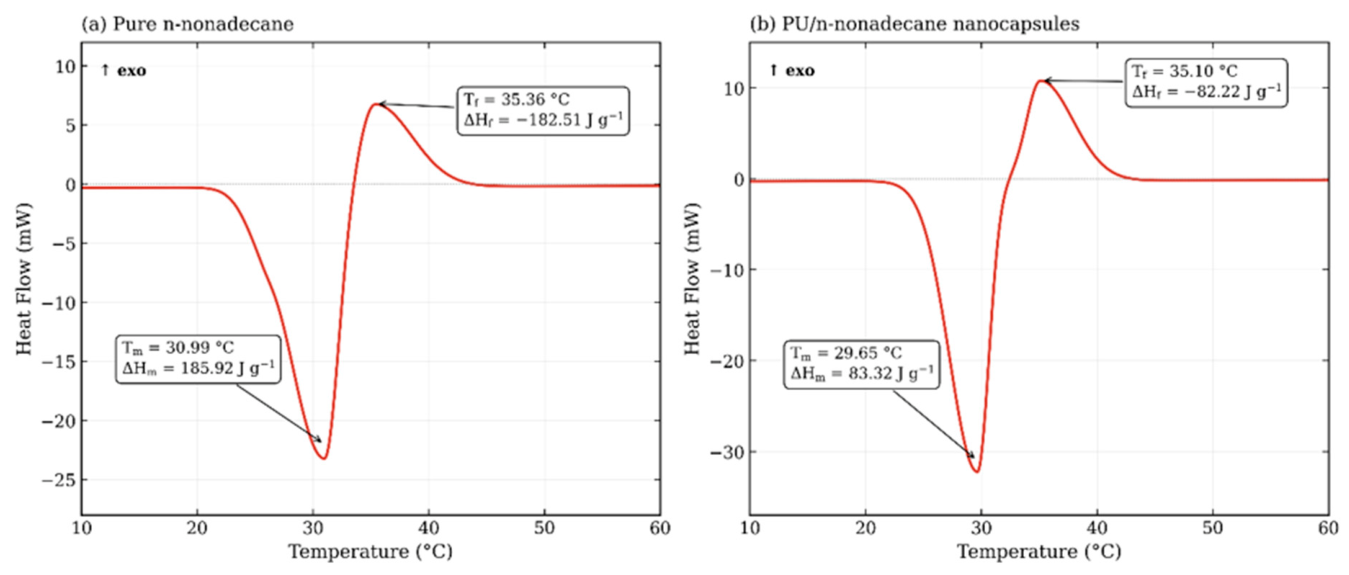
m ≈ 30 °C), which augments the apparent transient heat-flux response sensed by the KS-1 hot-wire probe [
12,
14], and (ii) Brownian agitation of the nanocapsules, which generates a micro-convective contribution to heat transport [
8].
The contrasting size scales of the two dispersed phases warrant a brief comment in relation to the conventional expectation that, for a given material, a smaller particle size favors higher thermal conductivity through the larger specific surface area available for interfacial heat transport and Brownian-motion-driven micro-convection. In the present hybrid system, this expectation cannot be applied directly, because the two constituents differ simultaneously in size and in intrinsic transport mechanism: the γ-Al
2O
3 nanoparticles (<50 nm) are considerably smaller than the PU-NEPCM nanocapsules (mean diameter 120.0 nm,
Section 3.1.1), yet they also possess a far higher intrinsic conductivity (≈30 versus ≈0.25 W m
−1 K
−1). Consequently, the measured conductivity ranking is not governed by particle size as an independent variable but by the dominant heat-transport pathway of each phase. For the smaller Al
2O
3 particles, the high specific surface area and high intrinsic conductivity act in the same direction, reinforcing the effective-medium, Brownian, and interfacial-nanolayer contributions; for the larger PU-NEPCM capsules, by contrast, the enhancement originates almost entirely from the latent heat exchange of the encapsulated n-nonadecane core rather than from any size-related conduction effect. The smaller particle size of Al
2O
3 therefore contributes to its larger conductive role, but in this hybrid system, the size effect is convoluted with intrinsic conductivity and latent heat contributions and cannot be isolated as a single controlling factor.
The Maxwell effective-medium prediction for non-interacting spherical inclusions provides a useful baseline for assessing the magnitude of these anomalous contributions [
4]:
where
is the conductivity of the dispersed phase and
φ its volume fraction. Substituting
for Al
2O
3 and
at 313 K, Equation (4) predicts
for NFA3 (a 1.4% enhancement), whereas the measured value is 1.037 (3.66%). The measured enhancement therefore exceeds the Maxwell prediction by approximately 2.3 percentage points, consistent with the “anomalous” thermal conductivity enhancement widely reported for low-loaded oxide nanofluids and attributed to Brownian-motion-driven micro-convection and to the formation of an interfacial nanolayer of ordered solvent molecules around the nanoparticles [
26,
27]. For NFPU3, the Maxwell model based on the bulk PU-NEPCM conductivity predicts a slight decrease (~−0.4%), whereas the measured value is +3.06%; this much larger deviation confirms that the latent heat contribution is the dominant enhancement mechanism for the encapsulated-PCM system.
The substantially larger enhancement of the hybrid formulations cannot be explained by a simple linear combination of the individual mono-component contributions. Evaluating the synergy index from Equation (1) at 313 K and 0.5 vol.% total loading gives
SI = (1.083 − 1)/[(1.037 − 1) + (1.031 − 1)] = 1.22, indicating that the hybrid response exceeds the linear sum of the two mono contributions by ~22%. The probable origin of this synergy is the coupling of two complementary mechanisms within the hybrid suspension: thermally conductive Al
2O
3 paths efficiently transport the heat released or absorbed by the n-nonadecane phase transition within the encapsulated PU-NEPCM particles, while Brownian agitation of the smaller Al
2O
3 nanoparticles continuously perturbs the local thermal field around the larger PU-NEPCM capsules, enhancing the effective coupling between sensible and latent heat-transport pathways [
15,
16,
17,
27]. A more detailed treatment of the synergy index across temperature and concentration is presented in
Section 3.6.
Finally, the temperature slope of is itself informative. For the mono Al2O3 family, the enhancement ratio is nearly temperature-independent over the investigated window, consistent with a temperature-insensitive Brownian/interfacial-layer mechanism. For the hybrid family, however, the enhancement ratio increases noticeably with temperature, from ~5.9% at 298 K to ~8.3% at 313 K—a trend that tracks the melting interval of n-nonadecane and supports the interpretation that latent heat-driven contributions become progressively more relevant as the operating temperature traverses the phase-transition window.
3.4. Dynamic Viscosity
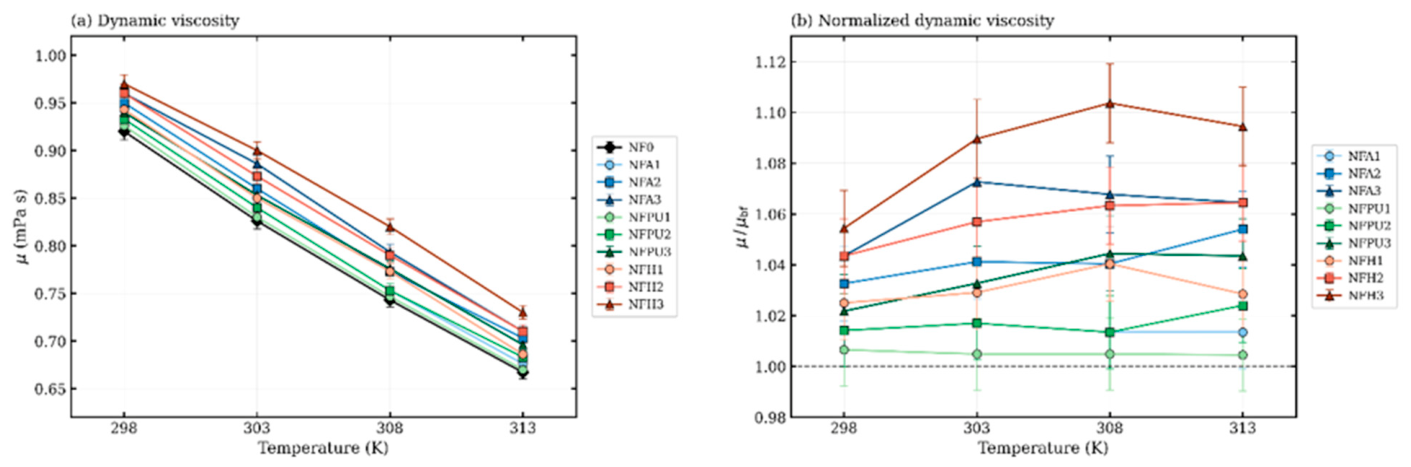
Figure 7 presents the dynamic viscosity
μ (panel a) and the normalized viscosity ratio
μ/
μ_
bf (panel b) of all nanofluids over the investigated temperature range. As expected from the temperature dependence of water and dilute aqueous suspensions, all formulations exhibited a monotonic decrease in
μ with increasing temperature, in line with the thermally activated viscous-flow behavior of the base fluid. At any fixed temperature,
μ increased with the total solid volume fraction across all three families, consistent with the expectation that dispersed phases hinder momentum transport between adjacent fluid layers and elevate the effective viscosity [
2,
3].
At the maximum loading investigated (0.5 vol.%) and at 313 K, the measured viscosity ratios were
μ/
μ_
bf = 1.064 for NFA3 (6.45% increase), 1.043 for NFPU3 (4.35%), and 1.094 for NFH3 (9.45%). The hybrid formulation therefore showed the largest viscosity penalty among the three families, exceeding the mono Al
2O
3 and mono PU-NEPCM systems by approximately 3.0 and 5.1 percentage points, respectively, at otherwise identical loading and temperature. The relative ordering NFH > NFA > NFPU was preserved across all investigated temperatures and concentrations. At 298 K, the corresponding viscosity increases were comparatively smaller (NFA3: 4.35%, NFPU3: 2.17%, NFH3: 5.43%), reflecting the reduced relative effect of dispersed particles on viscosity at lower temperatures, where the base fluid viscosity itself is higher [
2].
The lower viscosity penalty of the NFPU family relative to NFA at otherwise identical loading is consistent with the lower particle–fluid hydrodynamic friction expected for polymer-shelled, lower-density (1.19 g cm
−3) capsules compared with the denser γ-Al
2O
3 nanoparticles (3.95 g cm
−3). The substantially larger viscosity increase of the hybrid system, in turn, indicates that the simultaneous presence of two chemically and morphologically distinct dispersed phases produces a stronger hydrodynamic-interaction contribution than would be expected from a simple linear combination of the two mono components [
28].
To provide a compact, predictive description of the experimental viscosity data and to enable comparison across families, a two-factor correlation was fitted to each family in the form previously used in our earlier study of EG-based PU-NEPCM nanofluids [
23]:
Here,
A0 and
B0 describe the temperature dependence of the base fluid viscosity (Arrhenius-type form), and the polynomial term (1 +
Cφ +
Dφ2) captures the concentration dependence of the relative viscosity at fixed temperature. The fitted coefficients are summarized in
Table 4. The coefficient of determination exceeded 0.993 in all three cases, with maximum deviations between fitted and measured values below 1.6%, comparable to the manufacturer-stated ±1% accuracy of the SV-10 vibroviscometer.
Several physical interpretations follow from the fitted coefficients. The temperature parameter
B0 is similar across the three families (1874–1946 K), corresponding to an apparent flow activation energy of ~15.6–16.2 kJ mol
−1 and indicating that the base fluid sets the dominant temperature dependence, as expected for low-loaded suspensions. The linear concentration coefficient
C shows the most informative trend:
C_NFPU = +0.039 corresponds to the smallest concentration sensitivity,
C_NFA = +0.155 is intermediate, and
C_NFH = +0.232 is the largest. Notably,
C_NFH exceeds the sum of the two mono coefficients (
C_NFA +
C_NFPU ≈ 0.194) by approximately 20%, confirming that the hybrid viscosity response contains an additional non-additive contribution beyond a simple linear average of the two mono behaviors [
2,
18].
The negative quadratic coefficient
D_NFH = −0.153 indicates a gradual saturation of the concentration-induced viscosity increase between 0.3 and 0.5 vol.%, rather than continued steepening; a similar but weaker trend is observed for NFA (
D = −0.069). This sub-linear behavior is consistent with the onset of inter-particle hindrance effects at the upper end of the investigated concentration range, and is also visually consistent with the slight curvature visible in the
μ/
μ_
bf profiles of
Figure 7b for NFA3 and NFH3 at higher temperatures. Equation (5), together with the coefficients of
Table 4, therefore provides a compact engineering correlation that captures both the Arrhenius-like temperature dependence and the non-additive hybrid concentration behavior within the investigated parameter window, complementing recent efforts to develop scaling-based correlations for the transport properties of hybrid nanofluids [
29].
3.5. Statistical Analysis of the Main Thermophysical Responses
A two-factor analysis of variance (ANOVA) was performed on the normalized thermal conductivity (
) and normalized dynamic viscosity (
μ/
μ_
bf) of each of the three nanofluid families, using temperature (four levels: 298, 303, 308, 313 K) and total volume fraction (three levels: 0.1, 0.3, 0.5 vol.%) as the independent factors. The aim was to quantify, on a common statistical basis, the relative influence of temperature and concentration on the two thermophysical responses, and to verify whether the qualitative trends discussed in the preceding sections (and the non-additive hybrid behavior captured by the viscosity correlation) are reflected in a formal significance test. The results are summarized in
Table 5.
Three principal observations emerge from
Table 5. First, particle concentration was the statistically dominant factor for both
and
across all three families, with
p-values below 0.001 in five of the six analyses and below 0.005 in the sixth. This formally confirms the observation made qualitatively from
Figure 6 and
Figure 7 that concentration controls the thermophysical response of the investigated nanofluids more strongly than temperature within the near-ambient range examined here, in line with prior reports for dilute oxide and PCM-containing nanofluids [
5,
12].
Second, temperature was not statistically significant (
p > 0.05) for either response in the NFA and NFPU families, indicating that the normalized properties of the two mono systems do not change appreciably over the 298–313 K window and that the thermophysical enhancement they provide can be regarded—at the resolution of the present measurements—as essentially temperature-independent. This is consistent with the near-flat temperature trends of
for the NFA and NFPU families in
Figure 6b and with the small temperature variation of the viscosity coefficient
B0 in
Table 4.
Third, and most importantly, the temperature effect on
was statistically significant for the hybrid family only (
p = 0.043 for NFH). This is consistent with the larger temperature coefficient observed for NFH in the viscosity correlation (Equation (5),
Table 4) and with the steeper temperature dependence of the NFH curves in
Figure 7b. The combination of hybrid composition and the presence of an encapsulated PCM core that traverses its phase-transition interval within the investigated temperature range (
Section 3.1.3) is the most plausible origin of this additional temperature sensitivity, since the solid-to-liquid transition of the n-nonadecane core modifies the effective deformability and interaction of the dispersed PU-NEPCM particles in a way that is absent in the all-solid NFA system and only weakly present in the unmixed NFPU system. The
p-value for temperature in the NFH thermal conductivity ANOVA (
p = 0.059), although marginally above the conventional 0.05 threshold, is notably lower than the corresponding values for NFA (
p = 0.119) and NFPU (
p = 0.512), supporting the same picture from a different observable.
Taken together, the ANOVA results provide independent statistical support for two of the central interpretations of this study: (i) the dominance of particle concentration over temperature as a control variable for the normalized thermophysical response of low-loaded mono and hybrid nanofluids in the near-ambient range, and (ii) the emergence of a non-trivial temperature sensitivity in the hybrid system consistent with the phase-transition contribution of the encapsulated PCM core. The R2 values of all six fits exceed 88%, confirming that temperature and concentration together explain the dominant share of the observed variability in both responses.
3.6. Synergy and Performance Indices
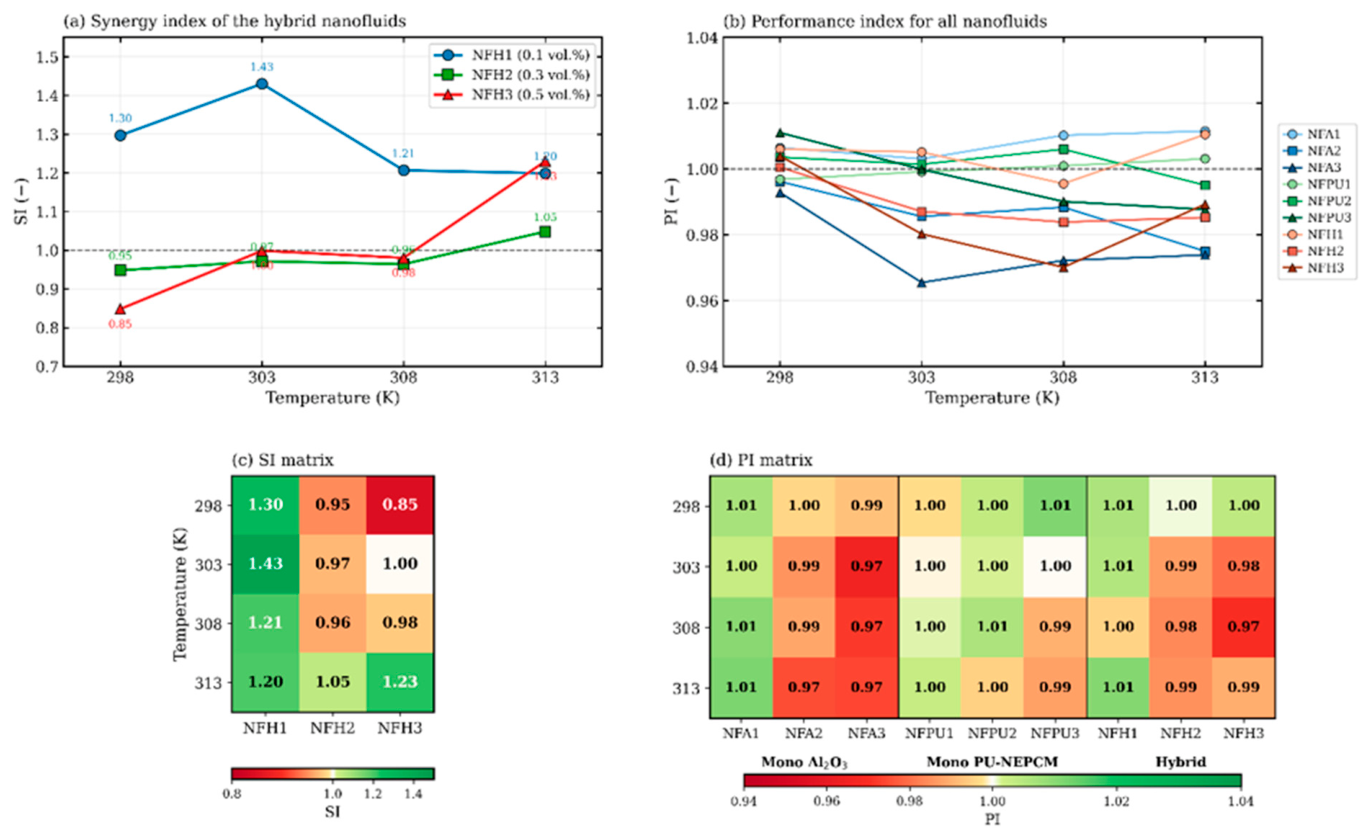
Figure 8 summarizes the synergy index
SI and the performance index
PI of the prepared nanofluids, calculated from Equations (1) and (2) using the measured thermophysical properties at each investigated temperature. The line plots (panels a, b) show the temperature dependence of the two indices, and the heatmap matrices (panels c, d) provide a compact display of all individual values for direct comparison across formulations and temperatures.
The SI values shown in
Figure 8a,c reveal a markedly concentration- and temperature-dependent behavior. NFH1 (0.1 vol.% total loading) exhibited a consistently strong synergistic response, with SI between 1.20 and 1.43 across the entire investigated temperature window and a maximum of 1.43 at 303 K. This indicates that at low total loading the hybrid thermal conductivity enhancement exceeded the linear sum of the two mono-component enhancements by 20–43%, providing clear evidence of synergistic coupling between the Al
2O
3 and PU-NEPCM constituents. NFH2 (0.3 vol.%) showed essentially additive behavior, with SI values clustered close to unity (0.95–1.05). NFH3 (0.5 vol.%), in contrast, displayed a pronounced temperature-dependent crossover: starting from a sub-additive value of
SI = 0.85 at 298 K, it remained below or near unity up to 308 K, and then increased sharply to
SI = 1.23 at 313 K.
This crossover is one of the most informative observations of the present study because it directly tracks the phase-transition window of the encapsulated n-nonadecane core. At sub-melting temperatures, the encapsulated PCM remains in the solid state and contributes only its sensible-heat conductivity to the suspension, which is insufficient to compensate for the inter-component hindrance at high loadings; once the PCM transitions to the liquid state across 303–308 K, its effective participation in heat transport increases, and the cross-component coupling identified in
Section 3.3 emerges as a clear synergistic contribution at 313 K. The fact that this crossover is most visible at the highest loading (NFH3), where the absolute PCM volume is largest, supports this interpretation. The opposite ordering at 298 K—where the smallest hybrid (NFH1) shows the strongest synergy and the largest hybrid (NFH3) the weakest—further supports a mechanism in which low loadings favor cross-component coupling through Brownian micro-mixing, whereas high loadings without PCM melting are limited by inter-particle hindrance. This loading-dependent synergy behavior is consistent with the framework recently summarized for hybrid nanofluid systems in [
30].
It is worth clarifying whether this loading-dependent synergy reflects differences in dispersion state among the three hybrids, as opposed to a difference in the underlying coupling mechanism. The Day-1 zeta potential data argue against a dispersion-quality explanation: all three hybrid formulations are comparably well stabilized at the time of measurement, with |
ζ| = 32.1–37.0 mV (
Table S3.1), each exceeding the conventional |
ζ| ≥ 30 mV threshold for good electrostatic stabilization. Since NFH1, NFH2, and NFH3 are all well dispersed, the pronounced contrast in their synergy indices cannot be attributed to one hybrid being better or more poorly dispersed than another. The loading dependence instead arises from a shift in the balance between two competing contributions. At the lowest loading (NFH1, 0.1 vol.%), the dispersed phases are well separated, and Brownian-driven micro-mixing of the small Al
2O
3 nanoparticles couples efficiently to the latent heat exchange of the PU-NEPCM capsules, yielding a strong and temperature-robust synergy (
SI = 1.20–1.43). As the loading increases, inter-particle hindrance progressively counteracts this coupling while the encapsulated core remains solid, so that NFH3 is sub-additive below the melting interval (
SI = 0.85 at 298 K). Once the temperature traverses the n-nonadecane transition (≈30 °C), the latent contribution is activated, and the cross-component coupling re-emerges, producing the sharp rise to
SI = 1.23 at 313 K. The loading-dependent synergy is therefore governed by the competition between Brownian micro-mixing and inter-particle hindrance, modulated by the phase state of the encapsulated PCM, rather than by differences in colloidal dispersion among the hybrids.
In contrast to
SI, which isolates the synergistic component of the thermal conductivity response, the performance index
PI incorporates the simultaneous viscosity penalty and therefore provides a more direct engineering assessment of the conductivity-viscosity trade-off. As shown in
Figure 8b,d, the calculated
PI values fall within the narrow band of 0.97–1.01 across all nine formulations and four temperatures, indicating that the thermal conductivity enhancement and the viscosity penalty are of comparable magnitude in the present low-loaded systems. Three observations are particularly noteworthy: First, NFH1 maintained PI ≥ 1.00 across the entire temperature range, making it the only formulation in the dataset that simultaneously combines a clearly synergistic thermal response (
SI = 1.20–1.43) and a non-degraded conductivity-to-viscosity balance. From a practical viewpoint, NFH1 therefore emerges as the most balanced candidate within the investigated parameter window. Second, mono Al
2O
3 at 0.3 and 0.5 vol.% (NFA2, NFA3) showed the lowest
PI values (down to 0.97 at 308–313 K), reflecting the comparatively steep viscosity increase of the denser oxide nanoparticles noted in
Section 3.4 from the larger concentration coefficient C of Equation (5). Third, the
PI values of NFH2 and NFH3 also dropped slightly below unity at higher temperatures (~0.97–0.99), driven by the larger viscosity penalty of the hybrid suspensions at elevated loading.
Two further points clarify why most performance-index values fall marginally below unity and how the conductivity-viscosity trade-off may be improved, and two factors determine whether the balance is favorable: First, the present
PI definition (Equation (2)) accounts only for the steady-state conductive gain and the viscous penalty and does not credit the latent heat storage capacity of the encapsulated n-nonadecane core; for the PCM-containing families (NFPU, NFH), the reported PI values therefore represent a conservative lower bound on the true thermal performance, most markedly across the phase-transition window where the latent contribution is active. The fact that the NFPU and NFH formulations nevertheless reached
PI ≈ 1, despite carrying a built-in latent heat reservoir that is not reflected in the
measurement, implies that their effective energy-handling capacity exceeds what
PI alone suggests—consistent with the temperature-dependent rise in
SI at higher loading discussed above. Conversely, the all-solid NFA system has no latent heat reservoir, and its
PI values therefore directly represent its full thermal-rheological performance. Second, the trade-off is most favorable at low loading: NFH1 is the only formulation that maintains
PI ≥ 1.00 at every temperature while also exhibiting strong synergy (
SI = 1.20–1.43), because at low loading the conductivity gain from hybrid coupling is realized without the steep viscosity rise that accompanies higher solid fractions, as quantified by the large concentration coefficient C of the hybrid viscosity correlation (
Table 4). From a practical standpoint, the conductivity-viscosity trade-off is therefore best resolved by adopting a low-loaded hybrid (rather than mono) formulation and, where the operating range spans the PCM melting interval, by exploiting the latent heat contribution that the steady-state PI does not capture. The incorporation of this latent heat term into a unified performance metric is identified as a direction for future work in the Conclusion.
Taken together, the SI and PI analyses indicate that hybrid synergy is real but condition-dependent, most pronounced at low total loading (NFH1) and emerging at high loading only above the PCM melting interval (NFH3 at 313 K), while the conductivity-viscosity balance remains near unity across all systems, with NFH1 providing the most favorable combination of synergy and trade-off within the investigated parameter window.