3.1. Regulation of MXene Structure via KOH Treatment
Ti
3C
2T
x MXene was treated in a KOH solution for different durations to modulate its surface chemical structures. As shown in
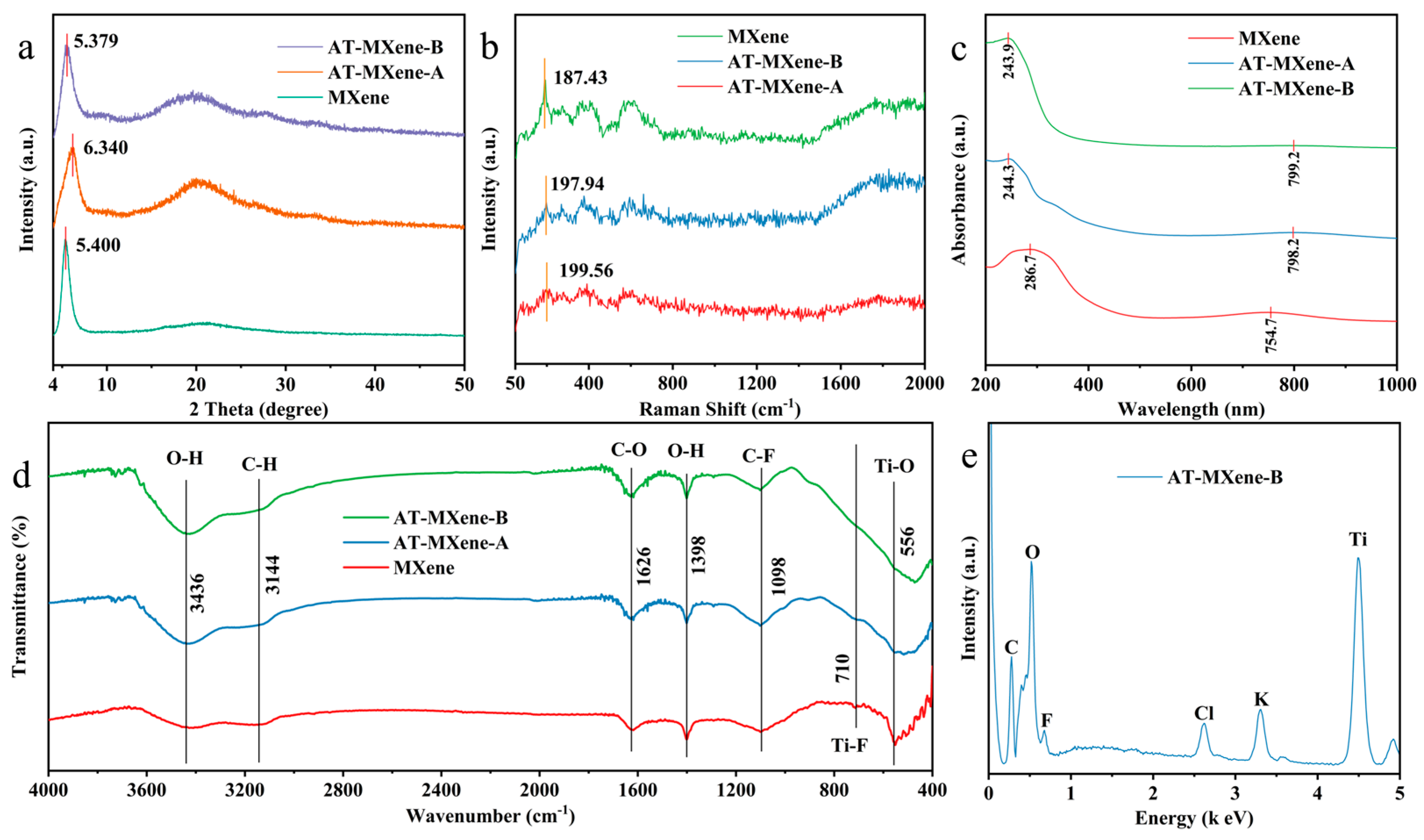
Figure 1a, both KOH-treated samples exhibit typical (002) diffraction peaks in the low-angle region. The (002) peak of the pristine Ti
3C
2T
x MXene is located at 5.40°. After KOH treatment for 12 h, the (002) peak of AT-MXene-A shifts slightly to 6.34°, indicating a decrease in the interlayer spacing of the sample. This could be due to the so-called ‘chaotropic cation intercalation mechanism’ [
7], which relates to the intercalation of hydrophobic potassium cations, the volume repulsive effect and strong interaction between MXene nanosheets and K
+. Specifically, for the treatment for a longer time (24 h), the (002) peak of AT-MXene-B shifted to a lower degree, suggesting an increasing interlayer spacing, which could be due to the intercalation of more potassium cations and extensive changes in surface terminal groups on MXene surface. These results indicate that KOH treatment not only regulates the interlayer spacing of MXene but also alters its chemical composition. This is similar to the findings on the structural regulation of MXene through alkaline treatment [
17].
As shown in
Figure 1b, all three MXene samples display characteristic Ti-C vibrational peaks in the low wavenumber region (100–300 cm
−1) in their Raman spectra, similar to other reports [
22]. However, a significant blue shift in the peak positions is observed after the alkali treatment. The peak position for pristine Ti
3C
2T
x MXene is located at 187.43 cm
−1, while those for AT-MXene-B and AT-MXene-A shift to 197.94 cm
−1 and 199.56 cm
−1, respectively. Such a peak shift indicates a change in the local chemical environment of Ti-C bond, which is typically associated with surface group transformations (e.g., from -F to -O or -OH) and changes in lattice stress [
23]. These changes suggest that KOH treatment modulates the surface chemical state of MXene, potentially enhancing its electrochemical activity and pseudocapacitive behaviors. In its UV absorption spectrum (
Figure 1c), pristine Ti
3C
2T
x MXene displays a distinct UV absorption peak at 286.7 nm, accompanied by a broad near-infrared absorption peak near 754.7 nm, which are characteristic absorption features of Ti
3C
2T
x MXene. As suggested in previous studies [
24,
25], the absorption peak that occurs at approximately 240–290 nm is commonly ascribed to electronic transitions associated with the Ti-C bond. In contrast, the broad peak that is observed near 800 nm is attributed to the localized surface plasmon resonance (LSPR) absorption, which is the result of the oscillation of free electrons in MXene. Consequently, these two characteristic peaks are indicative of the structural state of MXene and the concentration of conductive electrons, respectively. After a 12 h alkali treatment, a significant shift from 286.7 nm for pristine MXene to 244.3 nm for AT-MXene-A sample was observed. Further extension of the alkali treatment time to 24 h resulted in a significant shift to 243.9 nm, as seen in the UV absorption peak of AT-MXene-B. Such a shift could be attributed to the surface oxidation of MXene. In the alkaline environment, active titanium (Ti) sites on the Ti
3C
2T
x surface tend to react with hydroxyl (OH
−) ions and/or dissolved oxygen, resulting in the formation of Ti-O bonds or even TiO
2. Changes in the near-infrared absorption peaks further confirm the oxidation of MXene after the alkaline treatment. In the spectrum of AT-MXene-A, a peak appears at 798.2 nm, showing a significant red shift compared to that of pristine MXene (754.7 nm). Meanwhile, that of AT-MXene-B shifts even further to 799.2 nm, accompanied by a significant decrease in peak intensity, indicating a marked decrease in free electron concentration and a weakening of metallic properties. These changes could be ascribed to the formation of TiO
x/TiO
2 on the MXene surface, which alters the electronic structure of the Ti-C framework and reduces the concentration of free electrons. FTIR spectroscopy is a viable analytical method for the study of F-terminal groups within Ti
3C
2T
x [
26]. Subsequent to KOH treatment, a significant alteration in the Ti-F bonds was observed. As shown in
Figure 1d, the Ti-F bending vibration peak for pristine Ti
3C
2T
x is located at 710 cm
−1 and it becomes too weak to be defined in both AT-MXene-A and AT-MXene-B, confirming the removal of F-terminal groups.
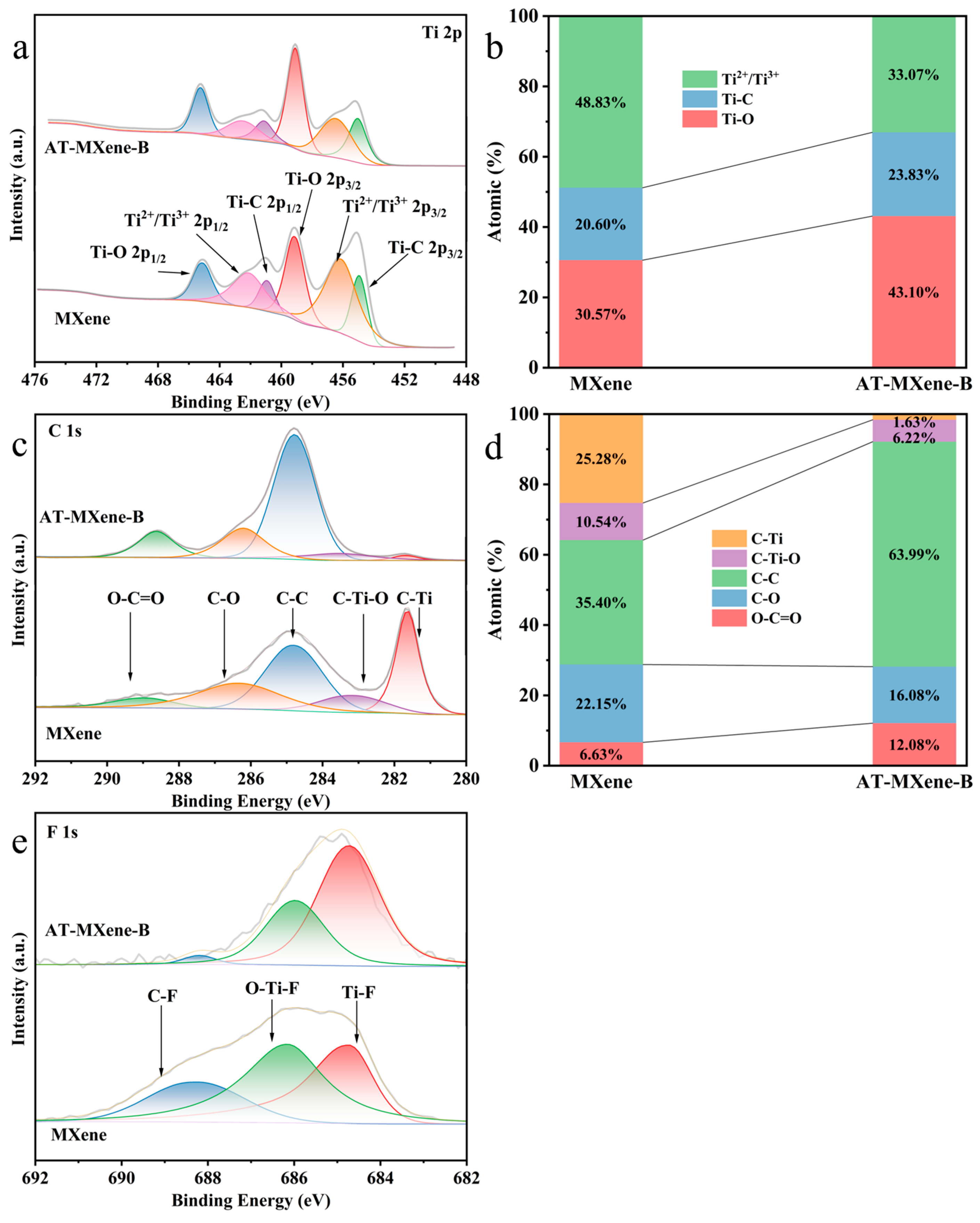
XPS spectra reveal the surface chemical changes in MXene induced by alkali treatment. During the KOH-treatment process, the Ti–C bonds of MXene undergo dissociation and cleavage, causing their proportion to plummet from 25.28% to 1.63% (
Figure 2c,d). The released free carbon atoms undergo in situ rearrangement on the surface, increasing the proportion of C–C bonds from 35.40% to 63.99%. Meanwhile, the titanium atoms detached from the carbon framework are oxidized and converted into more stable TiO
2 or oxygen-rich titanium species, which corresponds to a marked rise in the proportion of Ti–O bonds in the Ti 2p spectra (
Figure 2a,b) from 30.57% to 43.10%. In addition, as shown in
Figure 2e, the almost disappearance of the C–F bonds further confirms the extensive removal of surface F-terminal groups by the alkali treatment, which coincides with the EDS analysis results (
Table S1).
The change in the microstructure of Ti
3C
2T
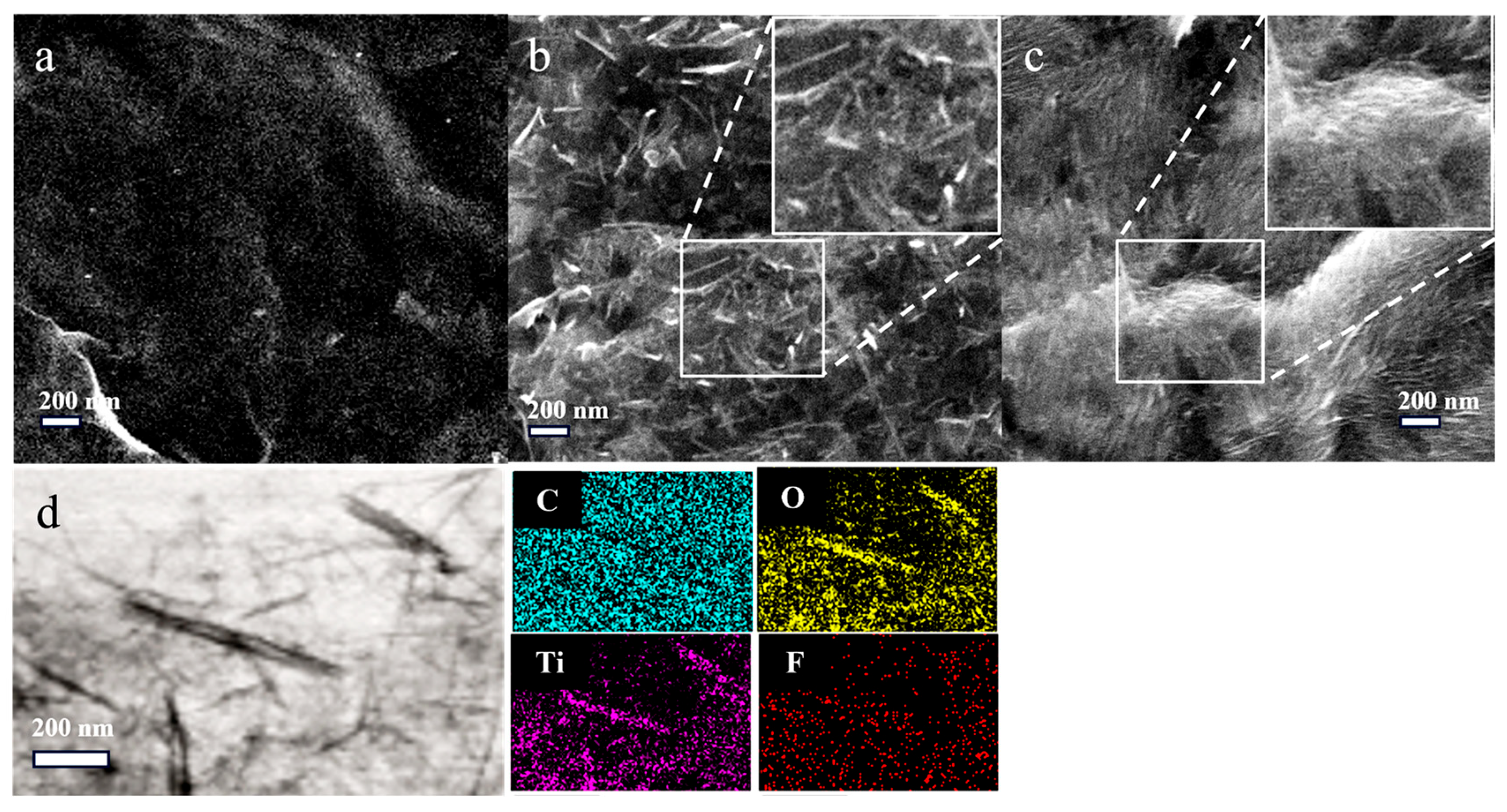
x MXene after KOH treatment was observed with SEM imaging. As shown in
Figure 3a, pristine MXene displays a characteristic dense layered stacking structure with a relatively smooth surface, suggesting tight interlayer bonding that hinders the penetration and diffusion of electrolyte ions. Following the KOH treatment, both AT-MXene-A (
Figure 3b) and AT-MXene-B (
Figure 3c) exhibited retention of their flake morphology, whilst displaying some fibrous nanostructures on their surfaces. These phenomena can be attributed to the in situ generation of TiO
2 nanorods or nanowires due to partial oxidation of Ti in the MXene in the alkaline environment. In comparison with the nanorods observed in AT-MXene-A, those in AT-MXene-B are longer and more densely packed. This suggests that as the KOH treatment time increases, more Ti elements in MXene undergo oxidation, leading to the formation of longer TiO
2 nanowires. As shown in
Figure 3d, a number of TiO
2 nanowires were formed on the surface of the alkali-treated MXene, exhibiting an intertwined distribution. The EDS mapping reveals a pronounced co-enrichment of Ti and O elements in the nanowire region. Notably, the original 2D layered outline of MXene can still be observed in the TEM image, suggesting that the oxidation process is a localized partial oxidation rather than a complete structural collapse. Consequently, a hierarchical structure composed of a MXene framework and TiO
2 nanowires is formed. Such a structure can effectively suppress the re-stacking of nanosheets and create more ion transport channels, which benefits its electrochemical capacitive performance.
Moreover, as demonstrated in
Table S1, there was a significant decrease in the F content from 5.97 at% to 0.91 at%, accompanied by an increase in the O content from 21.34 at% to 46.55 at% and the decrease in Ti content from 56.43 at% to 25.83 at%, as the KOH treatment progressed for 24 h. This indicates that the -F groups were effectively removed, concomitant with the generation of the 1D TiO
2 nanostructures. Concurrently, the C content increased from 11.79 at% to 22.87 at%, reflecting the layer exfoliation and structural reconstruction processes. Moreover, the introduction of the K element in AT-MXene-B (
Figure 1e) suggests the K
+ intercalation or retention within the layered MXene structure after the KOH treatment and its content is 2.59 at% (
Table S1). The 1D TiO
2/MXene composite products are totally different from the recent work on the similar alkaline treatment of Ti
3C
2T
x with KOH solution, where such 1D TiO
2 nanostructures were absent in their products [
7]. This could be due to the low concentration of KOH solution and low temperature used in their work. In summary, the KOH treatment resulted in the transformation of Ti
3C
2T
x MXene from a dense layered structure to a surface-distributed fibrous structure. This transformation was accompanied by a synergistic regulation of surface groups and hierarchical composite structure. Such changes in Ti
3C
2T
x MXene were believed to facilitate ion diffusion and electrochemical reactions.
3.2. Regulation of MXene Electrochemical Performance via the Synergistic Effect of KOH Treatment of MXene and Iron-Ion-Containing Electrolytes
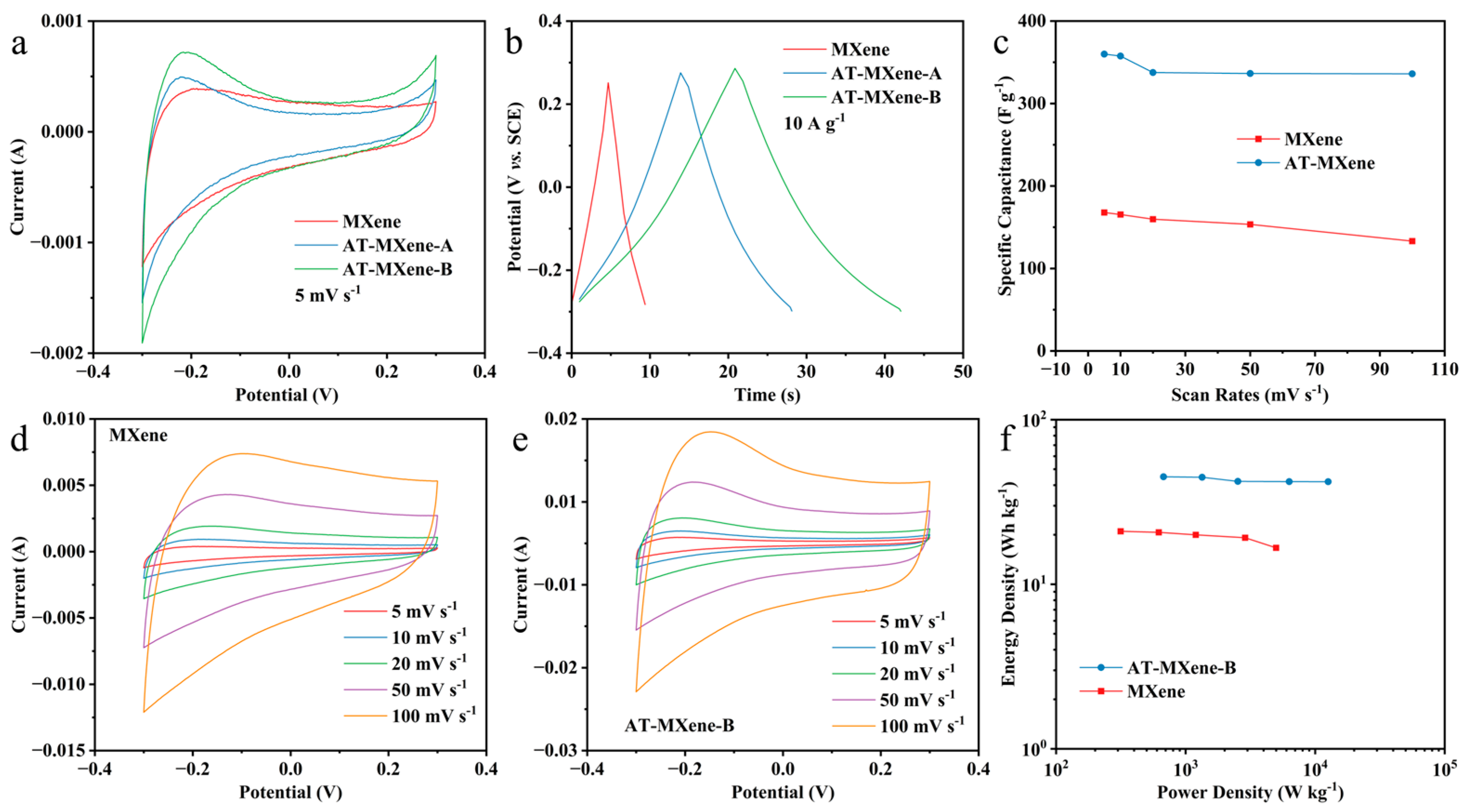
As shown in
Figure 4a, the CV curve of MXene bears a close resemblance to that of MXene in the literature [
27], with the capacitance being primarily attributed to the alteration in titanium oxidation state. In contrast, the CV curve area of either AT-MXene-A or AT-MXene-B was significantly enlarged. A substantial enhancement in current response was observed in the range of approximately −0.3 V to −0.2 V, particularly for AT-MXene-B. This behavior is attributed to the fact that KOH treatment effectively regulates MXene surface groups, reducing the content of -F groups and promoting the generation of oxygen-containing active groups. Concurrently, 1D TiO
2 nanostructures are formed in situ on the surface, thereby introducing more electrochemically active sites on MXene surface, preventing its re-stacking and promoting the electrochemical reactions for capacitance. As suggested previously, oxygen-groups on MXene contribute more capacitance than F-terminal group, and they operate as active sites for the adsorption of hydrogen ions for energy storage reaction [
28]. As shown in
Figure 4b, the GCD curves illustrate substantial variances in the capacitive performance of samples. Pristine Ti
3C
2T
x MXene exhibits a specific capacitance of 78.17 F g
−1 and its GCD curve demonstrates an approximate linear triangular profile. After 12 h alkaline treatment, the specific capacitance of the resulting AT-MXene-A was significantly enhanced to 234.33 F g
−1. Further increasing KOH-treatment time to 24 h led to a further augment to 350.33 F g
−1 (AT-MXene-B). Moreover, it exhibits nonlinear charging and discharging characteristics with a region of gentle slope appearing in the curves, which reflects the involvement of Faradaic reactions during the GCD process. As shown in
Figure 4d,e, the CV current increased with the scan rate for both Ti
3C
2T
x MXene and AT-MXene-B samples, and the dependence of the corresponding specific capacitance on the scan rate was plotted as
Figure 4c. Clearly, all the capacitances of AT-MXene-B are much larger than those for pristine Ti
3C
2T
x MXene, indicating that alkaline treatment of MXene significantly enhances its specific capacitance.
In 1M H
2SO
4, the AT-MXene-B electrode exhibits markedly enhanced energy storage capability over the entire power density range compared with pristine MXene, as shown in
Figure 4f. Specifically, AT-MXene-B achieves an energy density of 44.97 Wh kg
−1 at a power density of 674.58 W kg
−1, whereas pristine Ti
3C
2T
x MXene delivers only 20.68 Wh kg
−1 under similar conditions. Even when the power density increases to approximately 12,600 W kg
−1, AT-MXene-B still maintains an energy density above 42 Wh kg
−1, corresponding to an energy retention of over 90%, which is significantly higher than that of pristine Ti
3C
2T
x MXene. These results indicate that the alkali treatment of MXene not only enhances the energy density but also maintains excellent energy retention capability at high power output. Its improved Ragone performance can be ascribed to the regulated surface chemical groups and hierarchical composite structure resulting from the alkaline treatment of Ti
3C
2T
x MXene. These features promote ion transport and expose more electrochemically active sites for charge storage.
As illustrated in
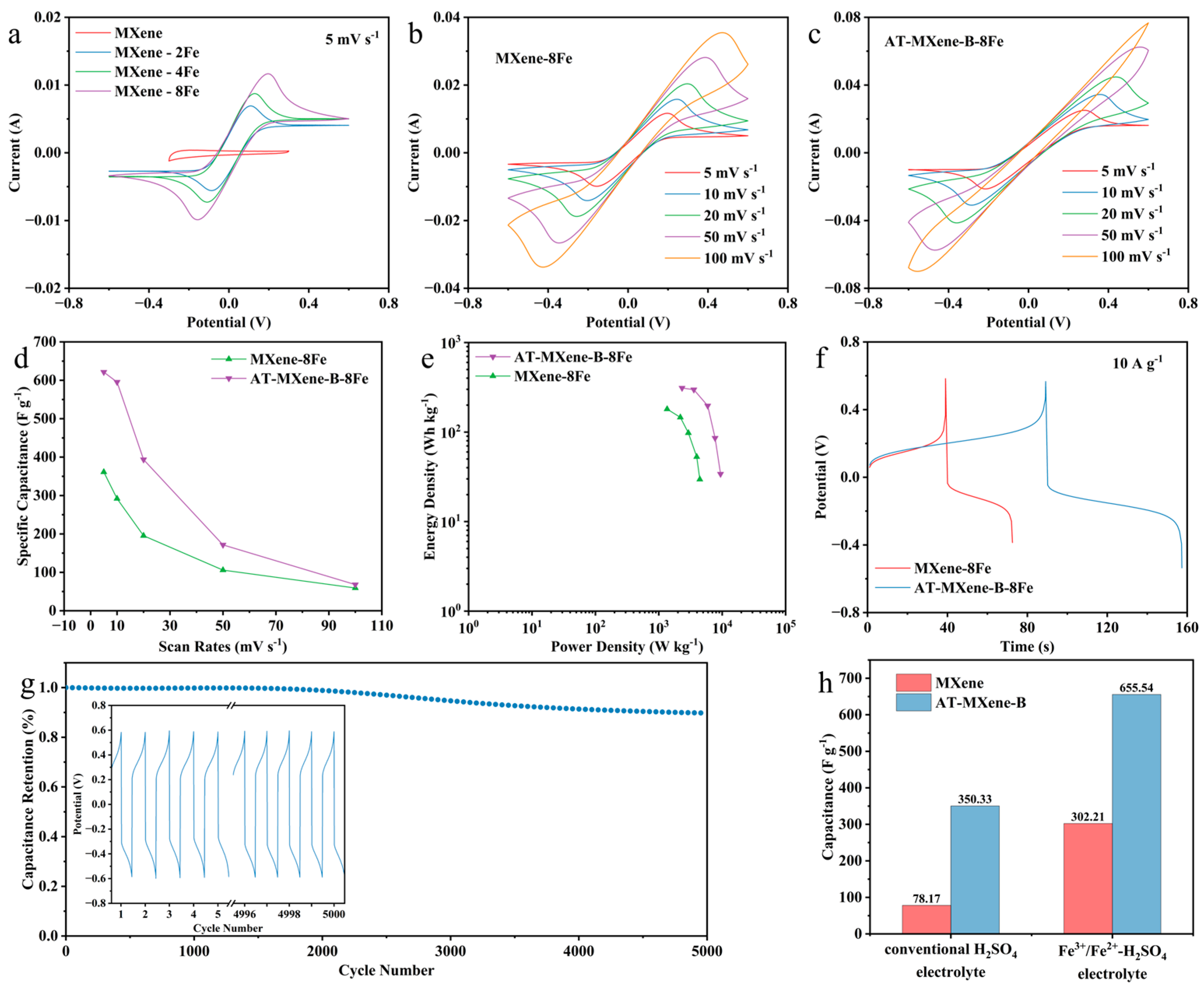
Figure 5a, all the MXene-based electrodes exhibit a pair of distinct redox peaks in the iron-ion electrolyte, which are attributed to the electron transfer process of the Fe
2+/Fe
3+ redox couple at the electrode interface, as described in Equation (5). Specifically, the anodic peak during the forward scan represents the oxidation of Fe
2+ to Fe
3+, while the cathodic peak in the reverse scan corresponds to the reduction of Fe
3+ back to Fe
2+.
In an acidic aqueous electrolyte containing Fe
3+/Fe
2+, the reaction sequence of the active species is primarily governed by their oxidizing and reducing abilities. Because the Fe
3+/Fe
2+ couple possesses a relatively high and reversible redox activity, pseudocapacitive reactions preferentially occur during the cyclic voltammetry (CV) scan. During the forward scan (potential gradually increasing), the electrode undergoes an oxidation reaction: Fe
2+ in the system first loses electrons and is oxidized to Fe
3+, corresponding to the anodic oxidation peak in the CV curve. As the potential rises further, if it exceeds the water stability window in the acidic electrolyte, the oxygen evolution reaction (ORR) may also occur. Therefore, the positive potential of the operation window is set to be 0.6 V, which is far less than that of the ORR (1.23 V vs. RHE). Conversely, during the reverse scan, Fe
3+, owing to its strong oxidizing nature, preferentially accepts electrons and is reduced to Fe
2+, producing a distinct cathodic reduction peak. When the potential shifts further negative, H
+ may participate in reduction reactions, and the hydrogen evolution reaction (HER) may take place. Due to the presence of high concentration of iron ions in the electrolyte, HER hardly occurred within the negative potential limit of the operation voltage window (−0.6 V) in this work. Therefore, throughout the entire CV scan within the voltage window of −0.6~0.6 V, the reversible Fe
3+/Fe
2+ redox couple dominates the major Faradaic pseudocapacitive behavior without the occurrence of both ORR and HER. This could also be verified by its excellent long-term cycling stability of the electrochemical system of AT-MXene-B in 0.8 M Fe
2+/Fe
3+-H
2SO
4 electrolyte (AT-MXene-B-8Fe) operated within the potential window, as shown in
Figure 5g. In fact, the multi-cyclic stability is a crucial parameter for evaluating the practical viability of supercapacitors. As can be seen from
Figure 5g, the AT-MXene-B-8Fe system retains its capacitance as high as approximately 90% of its initial value after 5000 GCD cycles.
In common H
2SO
4 electrolyte, it is noteworthy that the stable voltage range of MXene is comparatively constrained compared to that in 1 M H
2SO
4 electrolyte containing Fe
2+/Fe
3+, as shown in
Figure 5a. Actually, widening its potential window results in an irreversible electrochemical reaction of the MXene electrode material (
Figure S1). Therefore, the stable potential range of pristine Ti
3C
2T
x MXene in 1 M H
2SO
4 solution in
Figure 4 is set to be from −0.3 V to 0.3 V, which contrasts sharply with its wide voltage range of −0.6 V to 0.6 V in the redox-active electrolyte containing Fe
2+/Fe
3+. Besides the widened potential window in the redox-active electrolyte, the CV curve area of MXene in 0.2 M Fe
2+/Fe
3+-H
2SO
4 electrolyte (MXene-2Fe) is significantly enlarged, and distinct redox peaks appear in the range from −0.1 to 0.2 V, indicating the introduction of reversible Faradaic reactions centered on Fe
2+/Fe
3+ in the system. This change is primarily attributed to the regulation of the surface chemical state of Ti
3C
2T
x MXene by KOH-treatment: most F- groups were removed, oxygen-containing active groups increased, and a 1D TiO
2 nanostructure was formed in situ on the surface, thereby providing more active sites with affinity for iron ions, enhancing their interfacial adsorption and charge transfer capabilities. Moreover, an increase in the concentration of Fe
2+/Fe
3+ in the electrolyte results in a gradual strengthening of the redox peak current. According to the previous work [
19], a high concentration of Fe
3+/Fe
2+ redox additive of up to 0.8 M could exist stably in normal sulfate acid electrolyte. Among these electrolytes, MXene-8Fe demonstrated the most pronounced redox response, suggesting its superior electrochemical capacitive performance. Therefore, 0.8 M Fe
2+/Fe
3+-H
2SO
4 electrolyte is determined to be the optimized electrolyte for pairing with the MXene electrode in this work. The findings were further validated by GCD testing. As shown in
Figure 5f, at 10 A g
−1, AT-MXene-B-8Fe exhibited a great increase in discharge time and its specific capacitance is calculated to be 655.54 F g
−1, which is double that of MXene-8Fe (302.21 Fg
−1). And this value is more than eight times that of Ti
3C
2T
x MXene in common H
2SO
4 electrolyte (
Figure 4b), confirming the effectiveness of the proposed strategy for synergistic regulation of the MXene electrode material and redox activity of electrolyte. It is noted that this specific capacitance is remarkably larger than most capacitance values for the various MXene materials in the literature, as can be seen in
Table 1. Additionally, the flatter and longer voltage plateau in its GCD curves suggests an even more significant contribution from Faradaic reactions. In fact, as shown in
Figure 5h, the respective contributions of the MXene surface modification (the formation of TiO
2 on Ti
3C
2T
x) and the addition of Fe
2+/Fe
3+ additive to electrolyte to the capacitance enhancement of the electrochemical system could be clarified by the control experimental results. Similar to those in conventional H
2SO
4 electrolyte, the CV currents increase with the scan rate for both Ti
3C
2T
x MXene and AT-MXene-B, as shown in
Figure 5b and
Figure 4c. It can be seen that, at the same scan rate, the CV current of AT-MXene-B is much larger than that of pristine MXene. The dependence of the corresponding specific capacitance on the scan rate was plotted in
Figure 5d. Evidently, all the capacitances of AT-MXene-B and MXene decreased with the increasing scan rate and the capacitance of AT-MXene-B was always larger than that of MXene at the same scan rate. The capacitance difference between them changed with the scan rate, and the largest one was achieved at the smallest scan rate (5 mV s
−1), implying the diffusion-controlled electrochemical reaction in the system with redox electrolyte.
As illustrated in
Figure 5e, the AT-MXene-B-8Fe system achieves a remarkably high energy density of nearly 310 Wh kg
−1 at a power density of 2330 W kg
−1, substantially surpassing that of the MXene-8Fe system (145 Wh kg
−1). This dramatic increase demonstrates the effectiveness of Fe
3+/Fe
2+ redox couples in contributing additional pseudocapacitance through reversible Faradaic reactions, thereby greatly boosting the overall energy density of the electrochemical system. More importantly, the AT-MXene-B-8Fe consistently delivers higher energy densities than MXene-8Fe across the entire power density range, indicating that the alkali-treated MXene enables more efficient utilization of redox-active ions.
3.3. The Synergistic Energy Storage Mechanism of KOH-Treated MXene in Iron-Ion-Containing Electrolytes
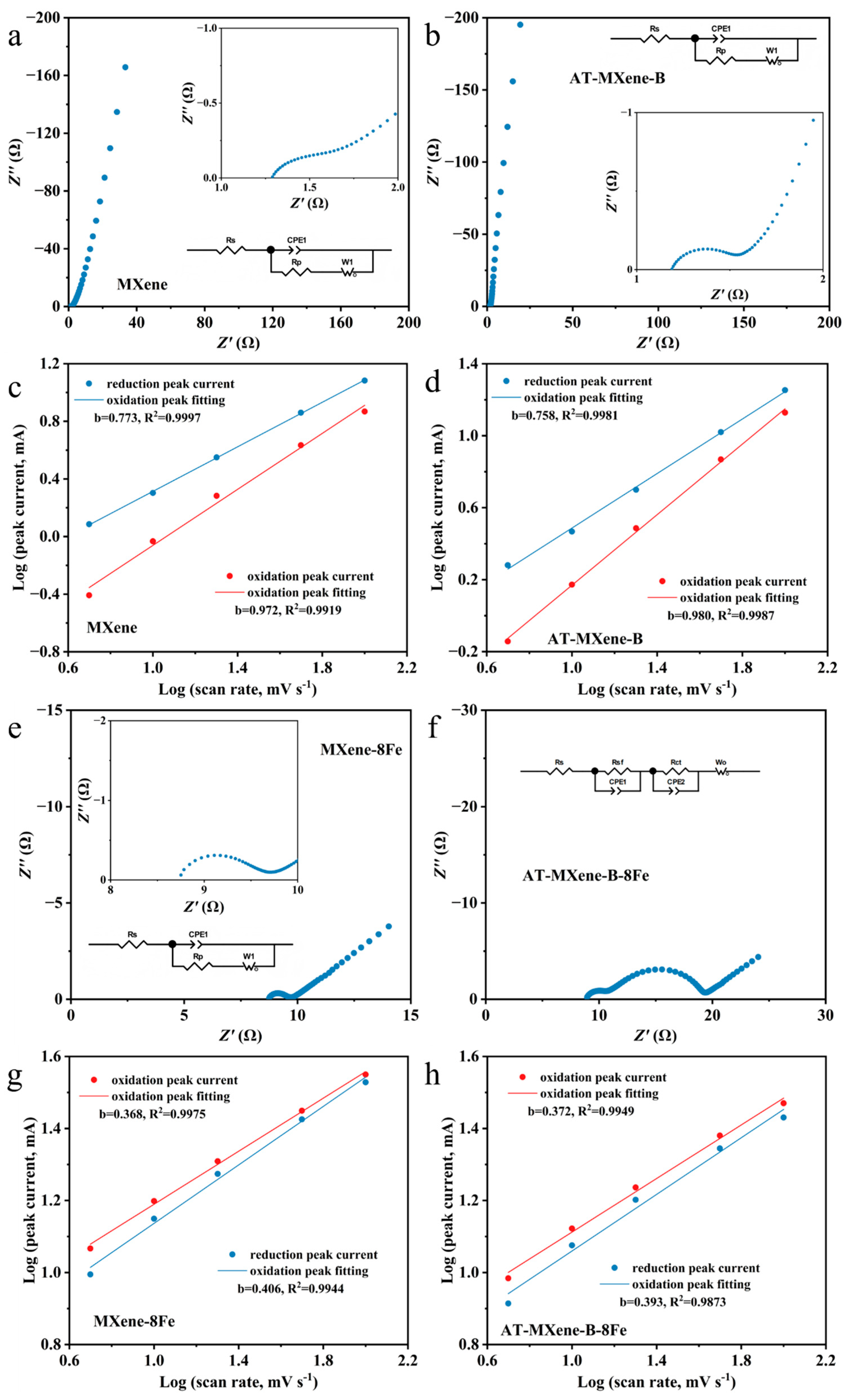
The EIS test provides further elucidation on the mechanism behind the performance enhancement from a kinetic perspective. The impedance spectra were fitted using equivalent circuits (
Figure 6a,b,e), where R
s represents the equivalent series resistance, R
ct corresponds to the charge transfer resistance at the electrode/electrolyte interface, CPE denotes the constant phase element accounting for non-ideal capacitive behavior, and W
o describes the Warburg diffusion associated with ion transport [
36,
37,
38].
In common H
2SO
4 electrolyte, the Nyquist plot of Ti
3C
2T
x MXene (
Figure 6a) exhibits a smaller semicircle in the high-frequency region than that of AT-MXene-B (
Figure 6b), indicating a lower charge transfer resistance. Meanwhile, in the low-frequency region, the AT-MXene-B curve is closer to vertical, indicating that its ion diffusion process is closer to ideal capacitive behavior. This phenomenon is attributed to the restructuring of the surface physicochemical structure by KOH treatment, and the formation of TiO
2 nanowires on the Ti
3C
2T
x MXene surface, which provide wider diffusion channels and more electrochemically active sites for active ions. In the redox-active electrolyte, the larger semicircular diameter of MXene-8Fe (inset in
Figure 6e) than that of its counterpart Ti
3C
2T
x MXene system (inset in
Figure 6a) indicates a substantial increase in charge transfer resistance. Concurrently, the curve slope in the low-frequency region is reduced. This phenomenon can be attributed primarily to the redox reactions of the additional Fe
2+/Fe
3+ ions at the electrode/electrolyte interface, which endow the system with high capacitive performance along with a strong dependence on the ion diffusion kinetics. As shown in
Figure 6e, the Nyquist plot of MXene-8Fe consists of a typical “single compressed semicircle + low-frequency Warburg line,” indicating that the system is primarily dominated by a single interfacial electrochemical reaction process and possesses a single primary time constant. This suggests that the energy storage mechanism of this system is majorly governed by pseudocapacitive behavior, which is controlled by ion diffusion.
In contrast, the Nyquist plot of AT-MXene-B-8Fe exhibits a distinct “broadened semicircle” or even a “double-arc trend” in the high-to-mid-frequency range (
Figure 6f), indicating a more complex interfacial reaction process. The equivalent circuit of this system necessitates the incorporation of additional interfacial elements for effective description. Among these, similar to previous reports [
39], additional Rsf and CPE1 corresponding to the resistance and capacitive responses of the active layers (such as the oxygen-enriched layer and iron ion coordination layer) formed on the Ti
3C
2T
x MXene surface after alkali treatment are added, while Rct and CPE2 related to the charge transfer process between the electrode body and the electrolyte remain in the equivalent circuit. The emergence of this dual-parallel structure indicates the presence of two distinct time constants in the electrochemical system, corresponding to the “surface-modified layer response” and the “interfacial charge transfer process”. This suggests that the electrochemical reaction of the entire AT-MXene-B-8Fe system has evolved to a multi-interface synergistic process from a single-interface process for the MXene-8Fe system.
In order to quantitatively analyze the energy storage kinetics, the CV curves of the electrochemical systems obtained at different scan rates were fitted to power-law relationships. The relationship between peak current and scan rate follows the power-law
[
18,
40], where the b-values provide insight into the dominant kinetic process. As shown in
Figure 5c, the b-values for the oxidation and reduction peaks of Ti
3C
2T
x MXene are 0.972 and 0.770, respectively; in the meanwhile, the values for the oxidation peak and reduction peak of AT-MXene-B are 0.980 and 0.758 (
Figure 6d). The minor discrepancies between them suggest that their energy storage processes are governed by surface capacitance of the electrode materials. In the iron-ion-containing electrolyte, the b-values of the oxidation and reduction peaks for MXene-8Fe are 0.368 and 0.406, respectively, as shown in
Figure 6g, while those for AT-MXene-B-8Fe are 0.372 and 0.393 (
Figure 6f). Such minor discrepancies between them mean that both electrochemical systems are synergistically controlled by interfacial reactions, despite the change in the Ti
3C
2T
x MXene electrode materials in the surface chemical properties by KOH treatment and the formation of a hierarchical structure of TiO
2/MXene composite. These demonstrate unequivocally that the introduction of mixed iron ions in the common electrolyte significantly enhances the insertion/extraction process of ions within the electrode, thereby shifting the energy storage mechanism from being dominated by surface adsorption to the diffusion of electrolyte ions.
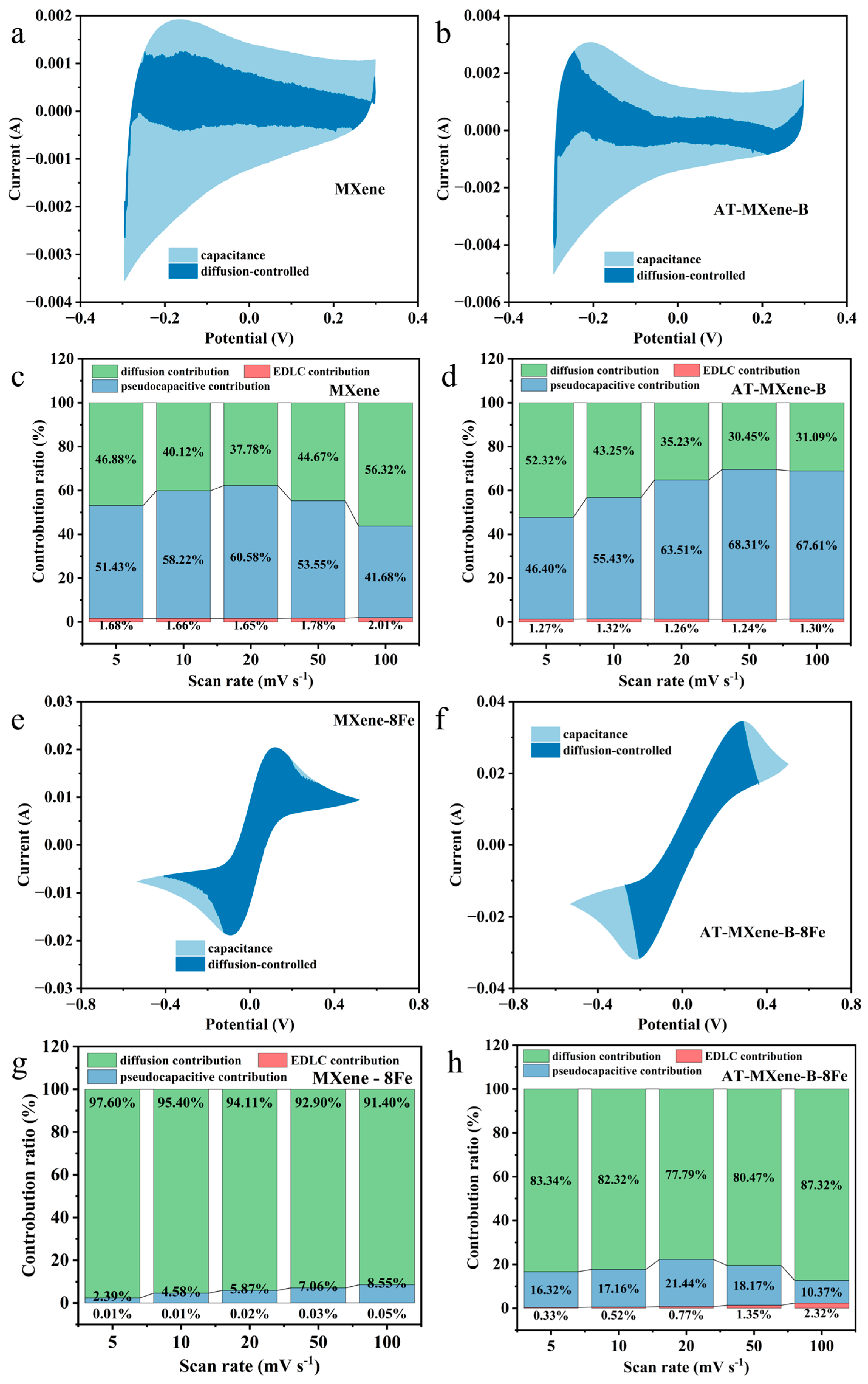
To further quantify the charge storage contributions, the current response was deconvoluted into capacitive (
) and diffusion-controlled (
) components based on
[
41,
42]. A thorough examination of the contributions to the total capacitance can provide a more precise insight into the relative proportions of different energy storage mechanisms. In common H
2SO
4 electrolyte, for AT-MXene-B, the diffusion-controlled contribution was estimated to be 52.32% at 5 mV s
−1, as shown in
Figure 7d. However, as the scan rate increased to 100 mV s
−1, this proportion decreased to 31.09%. Consequently, the pseudocapacitive contribution exhibited an increase from 46.40% to 67.61%, while the EDLC contribution remained at a consistently negligible level. In contrast, for pristine Ti
3C
2T
x MXene, the diffusion contribution fluctuates between 37.78% and 56.32%, and the pseudocapacitance contribution varies accordingly between 41.68% and 60.58%, despite the slightly higher EDLC contribution, as shown in
Figure 7c. It can be seen that, only at the largest scan rate in the work (100 mV s
−1), the dominant contribution switches from pseudocapacitance to the diffusion-controlled part. These results indicate that AT-MXene-B exhibits strong ion diffusion-controlled characteristics at low scan rates, while gently shifting toward surface pseudocapacitance dominance at high scan rates, demonstrating excellent rate capability and kinetic adaptability.
In contrast, in the iron-ion-containing electrolyte, for the MXene-8Fe system (
Figure 7g), the diffusion-controlled contribution consistently dominated across all the scan rates (91.40–97.60%), while the pseudocapacitive contribution was only 2.39–8.55%. This discrepancy further substantiates the fact that iron ions efficaciously induce pseudocapacitive reactions and promote the profound diffusion of electrolyte ions into the MXene electrode, thereby considerably enhancing the utilization of active sites. Meanwhile, for AT-MXene-B-8Fe (
Figure 7h), the diffusion contribution diminished a little to 77.79–87.32%, while the pseudocapacitive contribution augmented substantially to 10.37–21.44%. These results indicate that alkali treatment effectively modulates the surface properties of the MXene electrode material, altering the energy storage mechanism of the corresponding electrode/electrolyte system from being almost solely diffusion-controlled to being jointly dominated by diffusion and pseudocapacitance. Such a change in mechanism benefits its energy storage application.