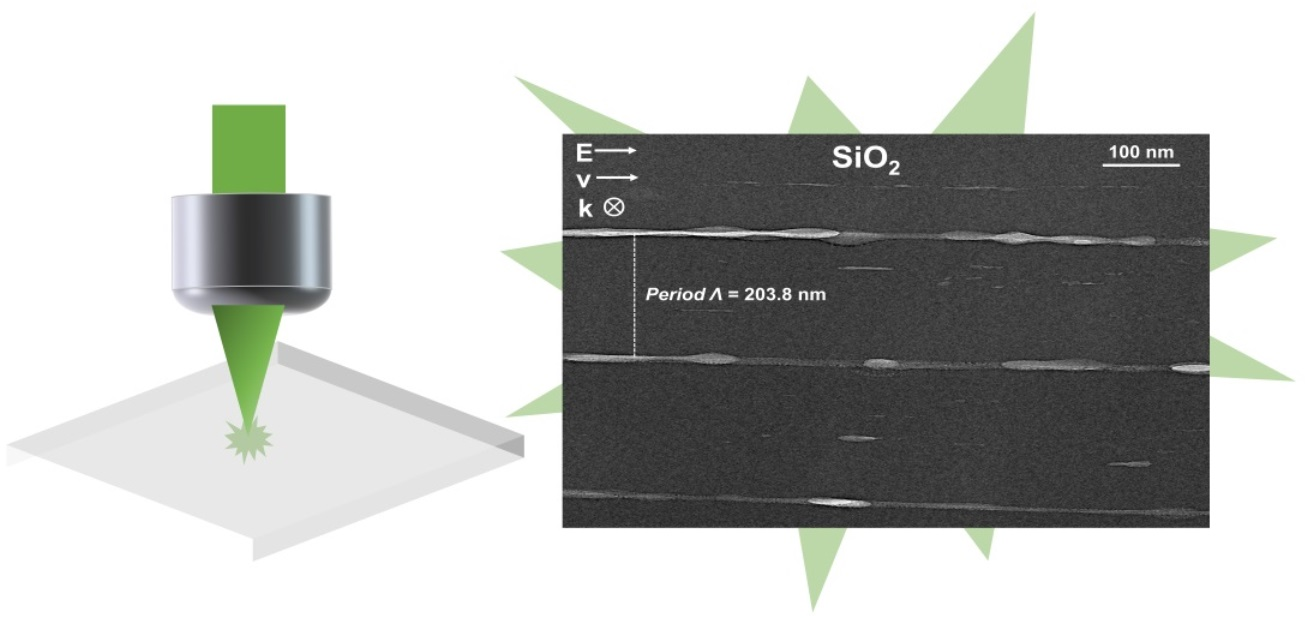
On the Formation of Nanogratings in Commercial Oxide Glasses by Femtosecond Laser Direct Writing
 , ,
, ,  ,
,  ,
,  and
and Abstract
Share and Cite
Xie, Q.; Cavillon, M.; Pugliese, D.; Janner, D.; Poumellec, B.; Lancry, M. On the Formation of Nanogratings in Commercial Oxide Glasses by Femtosecond Laser Direct Writing. Nanomaterials 2022, 12, 2986. https://doi.org/10.3390/nano12172986
Xie Q, Cavillon M, Pugliese D, Janner D, Poumellec B, Lancry M. On the Formation of Nanogratings in Commercial Oxide Glasses by Femtosecond Laser Direct Writing. Nanomaterials. 2022; 12(17):2986. https://doi.org/10.3390/nano12172986
Chicago/Turabian StyleXie, Qiong, Maxime Cavillon, Diego Pugliese, Davide Janner, Bertrand Poumellec, and Matthieu Lancry. 2022. "On the Formation of Nanogratings in Commercial Oxide Glasses by Femtosecond Laser Direct Writing" Nanomaterials 12, no. 17: 2986. https://doi.org/10.3390/nano12172986
APA StyleXie, Q., Cavillon, M., Pugliese, D., Janner, D., Poumellec, B., & Lancry, M. (2022). On the Formation of Nanogratings in Commercial Oxide Glasses by Femtosecond Laser Direct Writing. Nanomaterials, 12(17), 2986. https://doi.org/10.3390/nano12172986