Article

Comparative Study of the Structural Features and Electrochemical Properties of Nitrogen-Containing Multi-Walled Carbon Nanotubes after Ion-Beam Irradiation and Hydrochloric Acid Treatment


by
Petr M. Korusenko
1,2,*,
Sergey N. Nesov
2,3,
Anna A. Iurchenkova
4,5,
Ekaterina O. Fedorovskaya
5,
Valery V. Bolotov
3,
Sergey N. Povoroznyuk
3,
Dmitry A. Smirnov
6 and
Alexander S. Vinogradov
1
1
Department of Solid State Electronics, St. Petersburg State University, 7/9 Universitetskaya nab., 199034 Saint Petersburg, Russia
2
Department of Physics, Omsk State Technical University, 11 Mira prosp., 644050 Omsk, Russia
3
Laboratory of Physics of Nanomaterials and Heterostructures, Omsk Scientific Center of SB RAS, 15 Karl Marx prosp., 644024 Omsk, Russia
4
Laboratory of Hybrid Materials for Electrochemical Storage Devices, Department of Natural Science, Novosibirsk State University, 2 Pirogova ul., 630090 Novosibirsk, Russia
5
Research Group of Electrochemical Energy Conversion and Storage, Department of Chemistry, School of Chemical Engineering, Aalto University, P.O. Box 16100, FI-00076 Aalto, Finland
6
Institute of Solid State Physics, Dresden University of Technology, D-01069 Dresden, Germany
*
Author to whom correspondence should be addressed.
Nanomaterials 2021, 11(9), 2163; https://doi.org/10.3390/nano11092163
Submission received: 2 August 2021 / Revised: 18 August 2021 / Accepted: 22 August 2021 / Published: 24 August 2021

Abstract

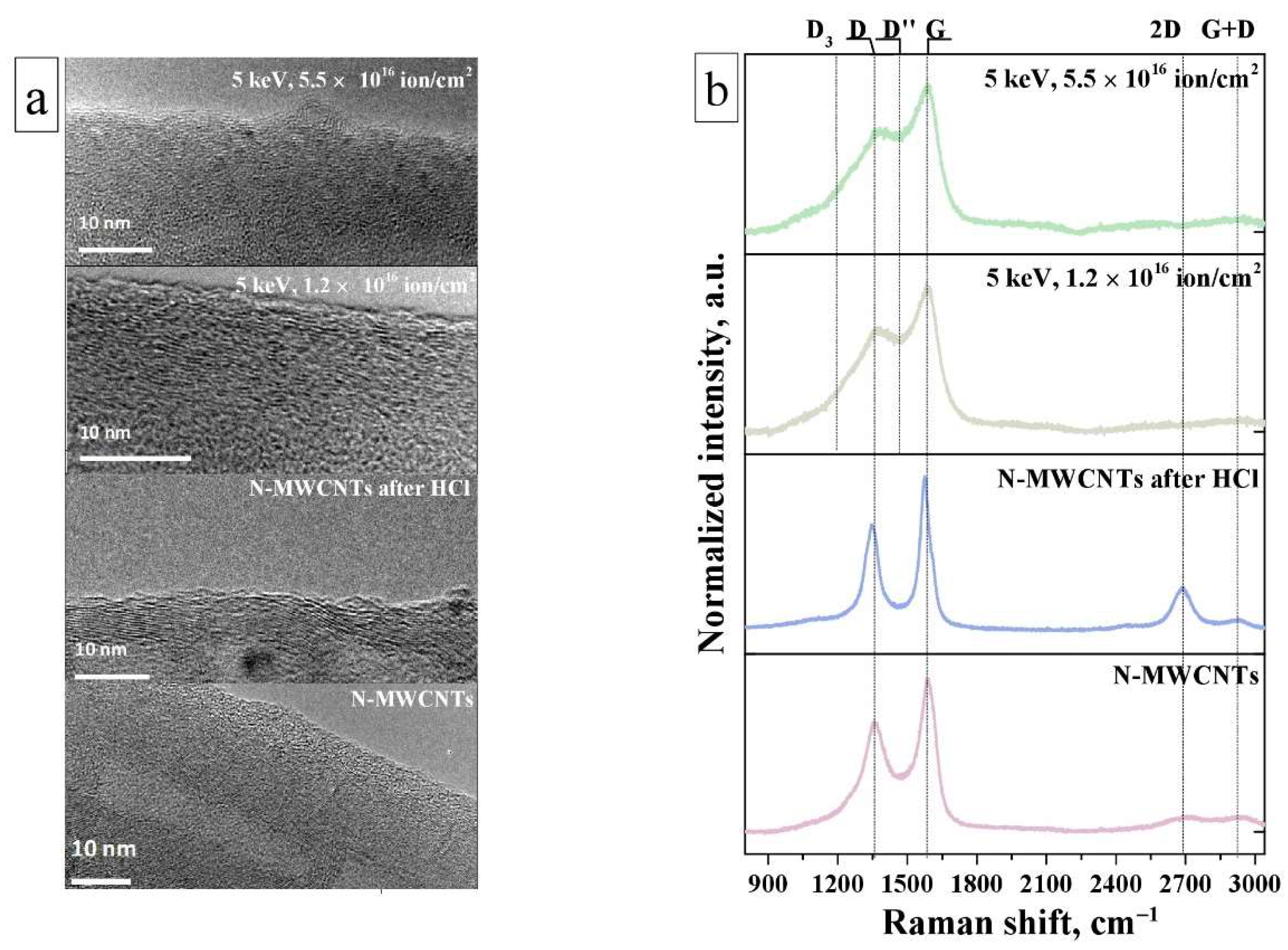
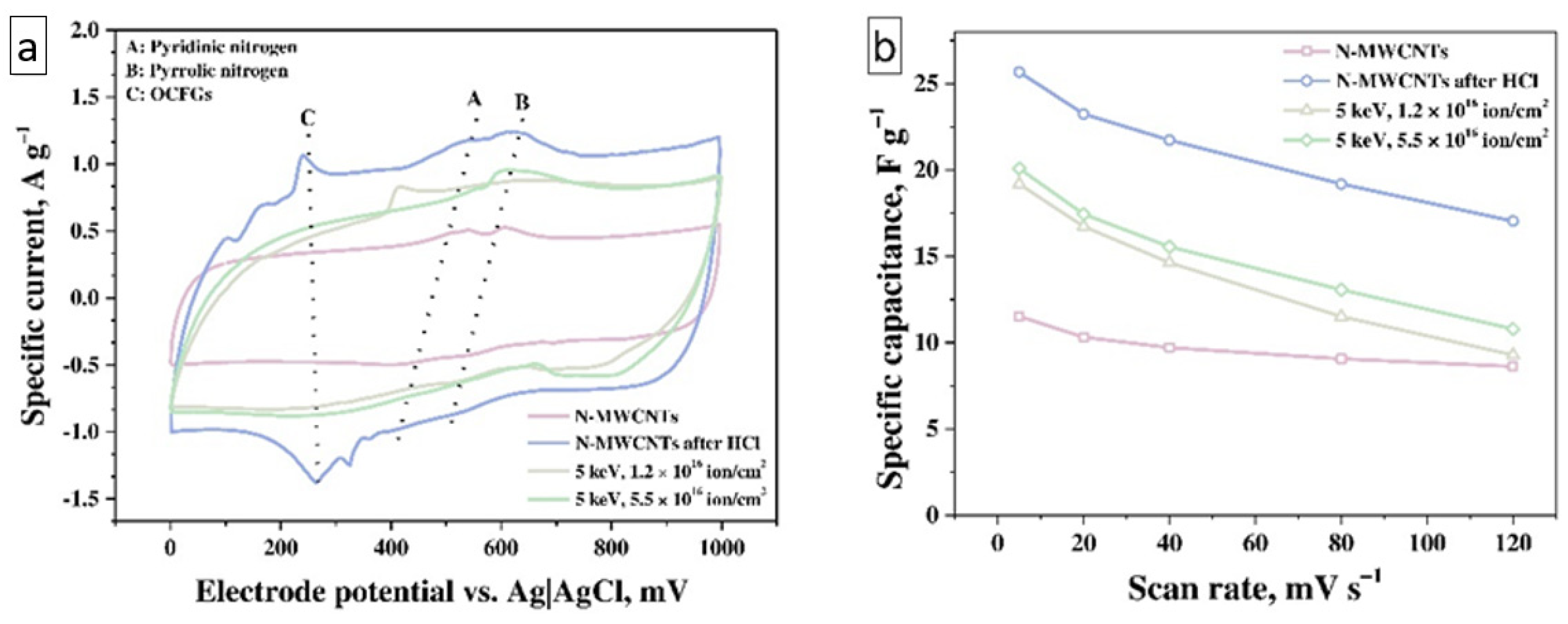
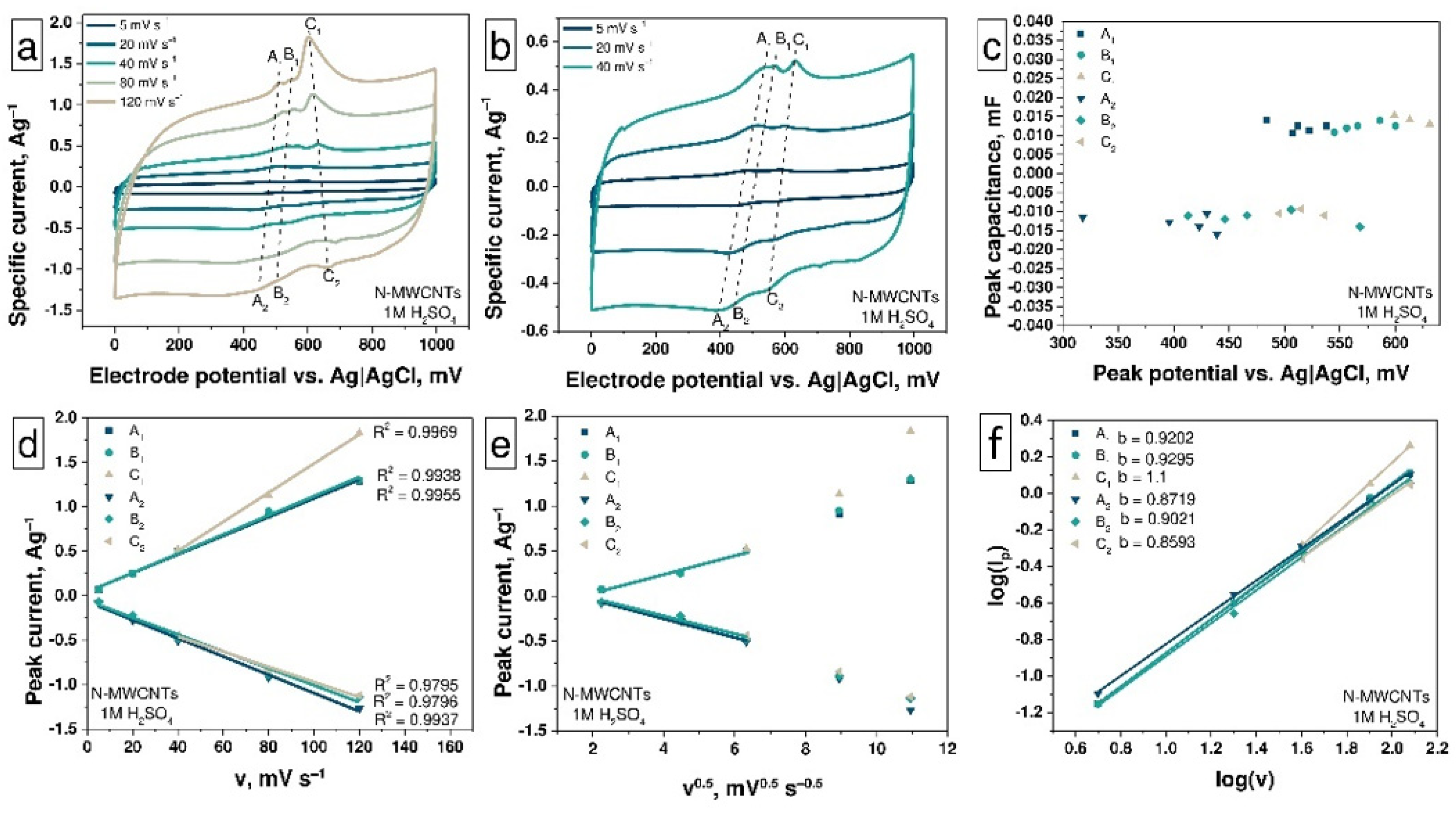
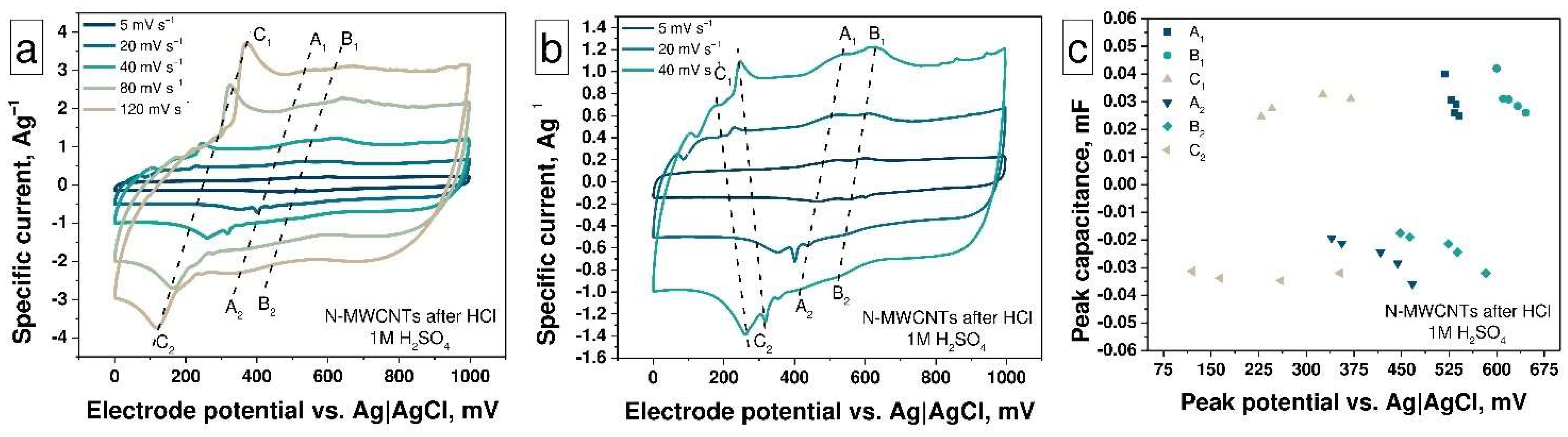
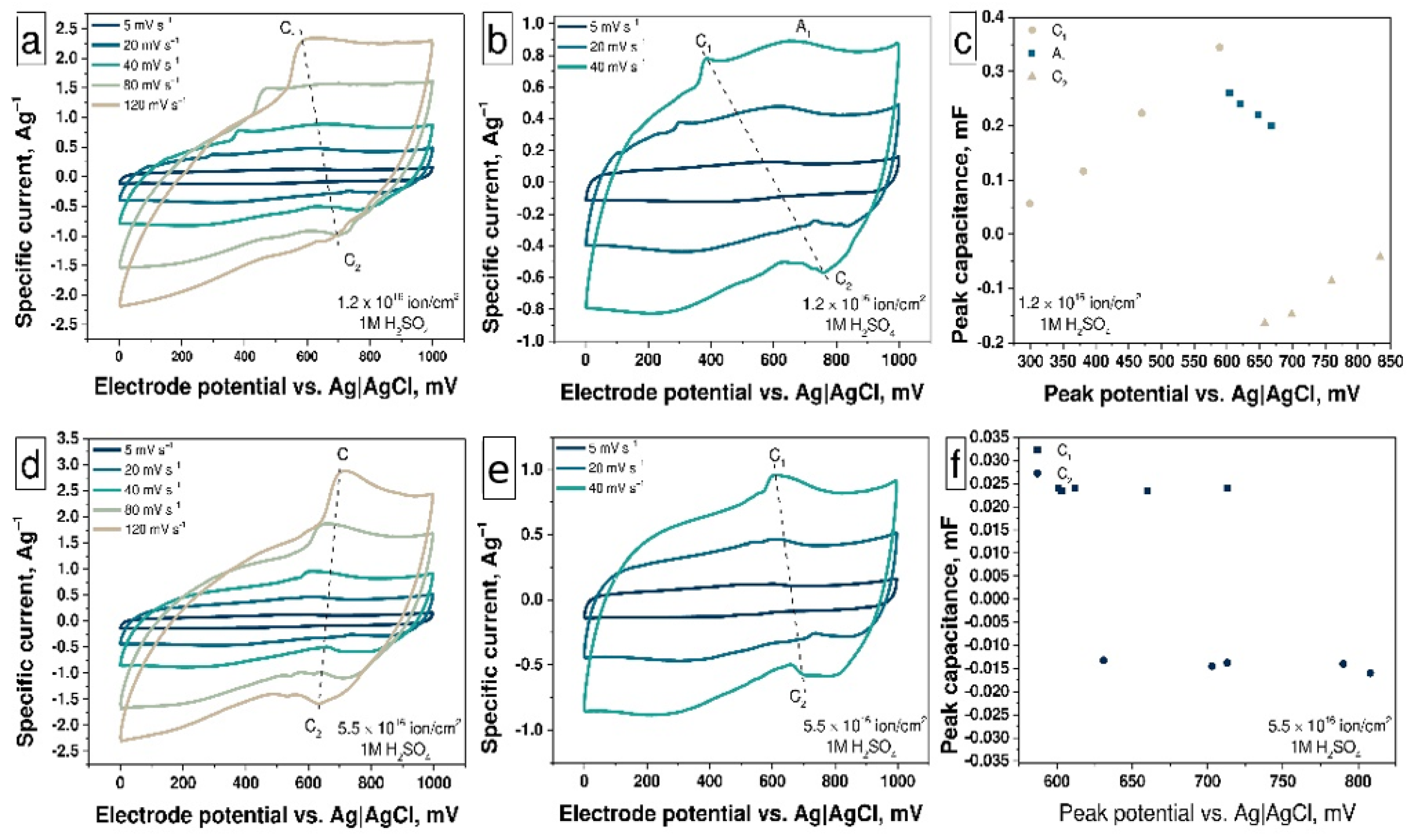
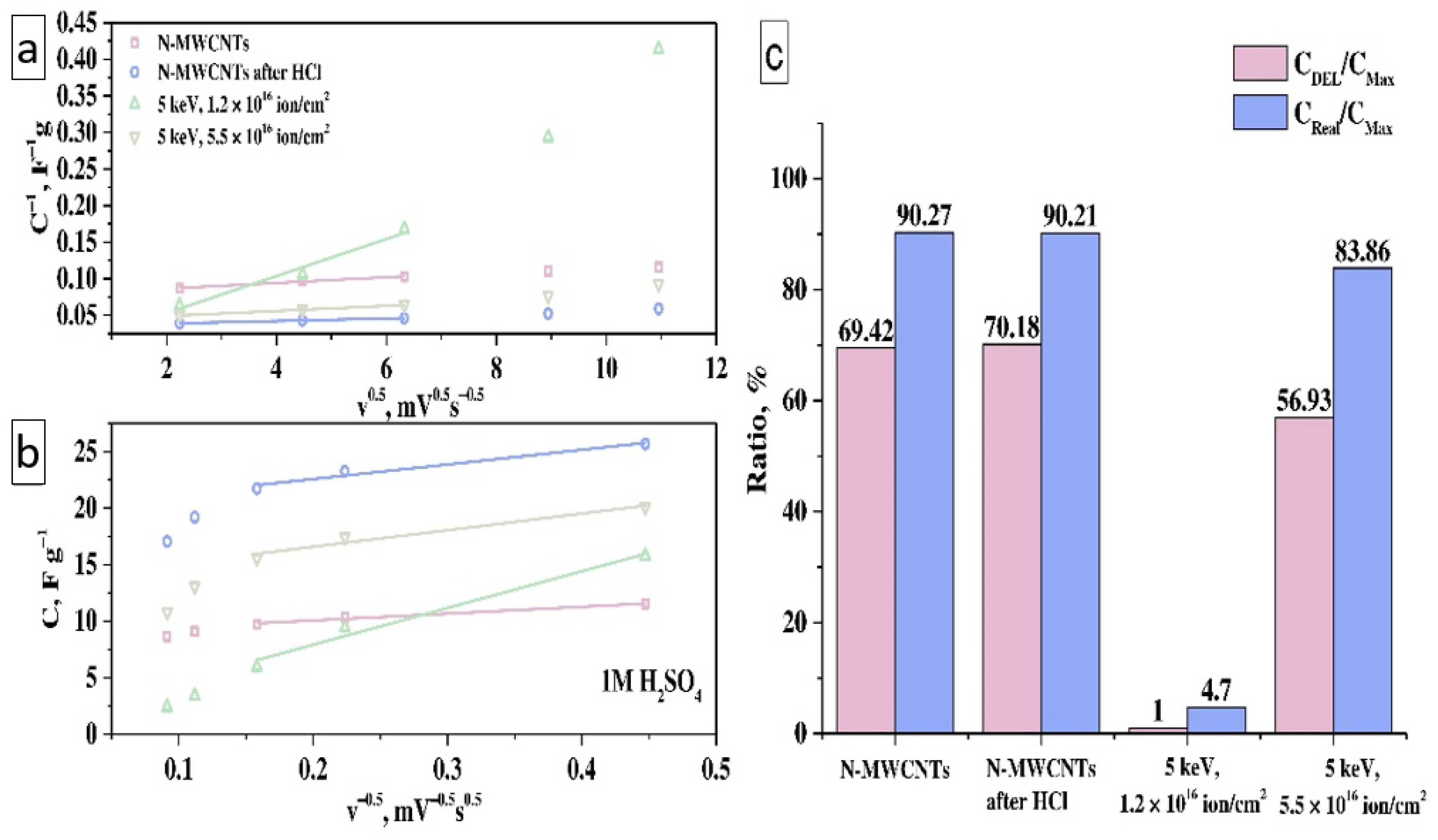
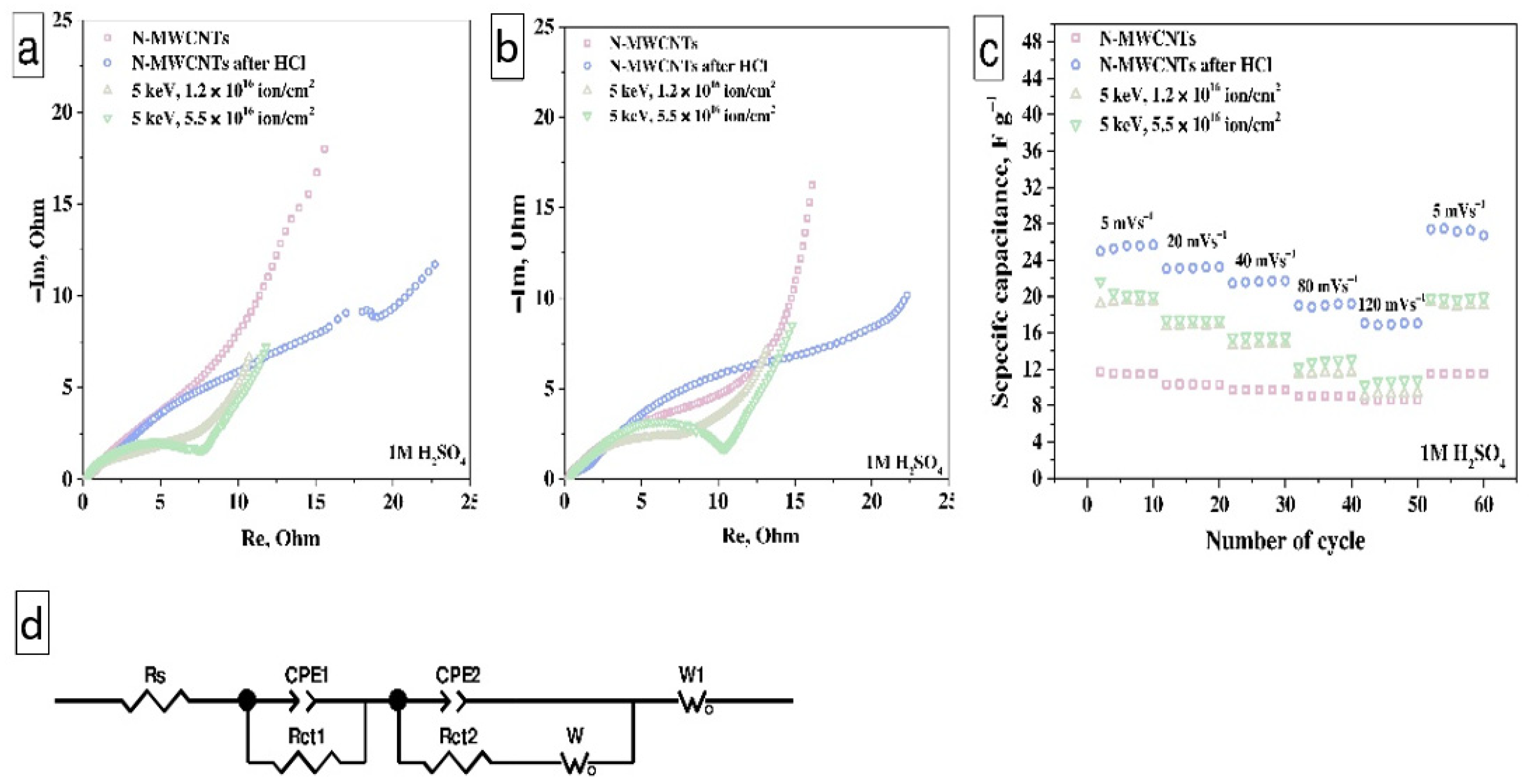
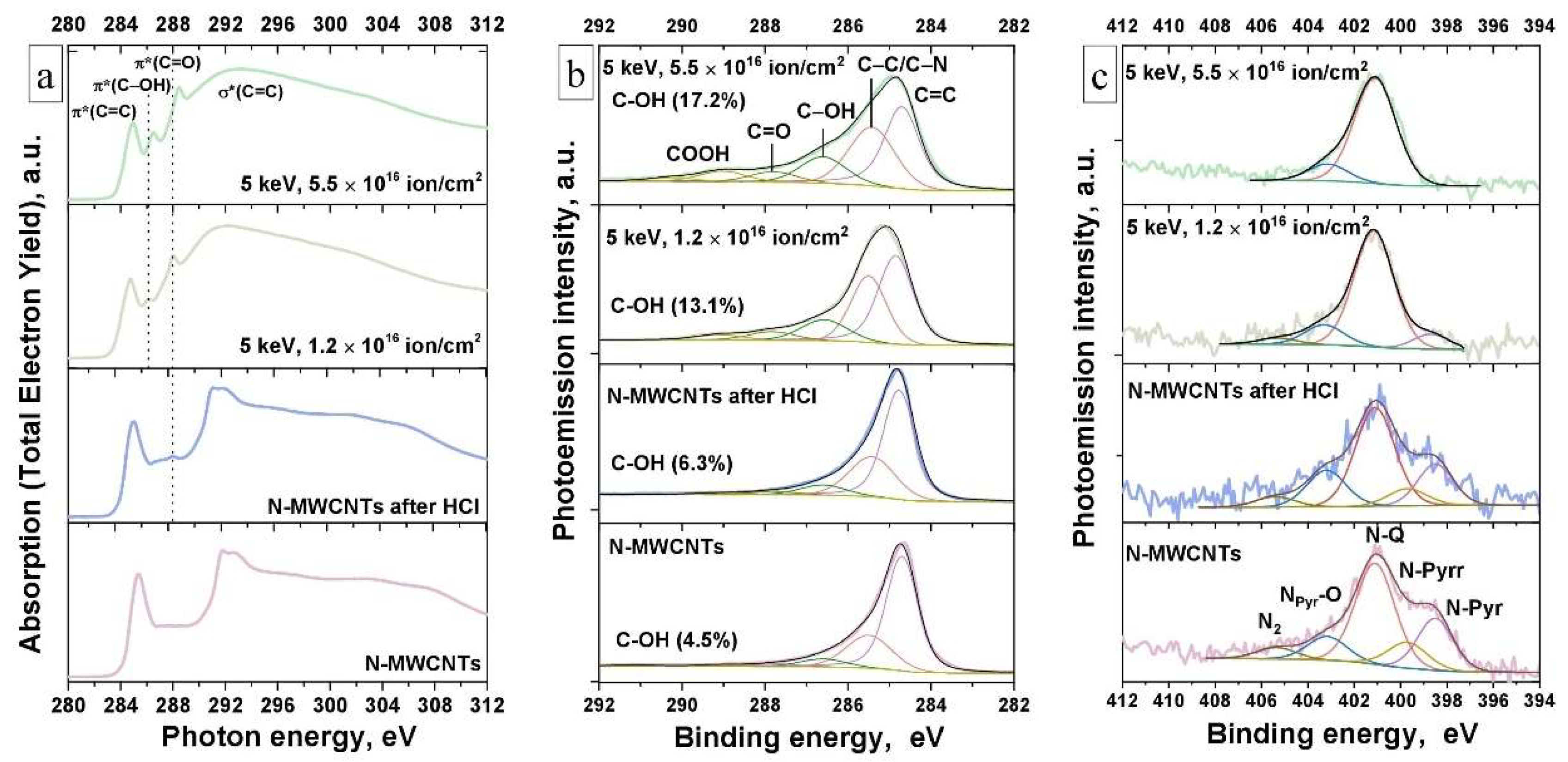
Using a set of microscopic, spectroscopic, and electrochemical methods, a detailed study of the interrelation between the structural and electrochemical properties of the as-prepared nitrogen-containing multi-walled carbon nanotubes (N-MWCNTs) and their modified derivatives is carried out. It was found that after treatment of nanotubes with hydrochloric acid, their structure is improved by removing amorphous carbon from the outer layers of N-MWCNTs. On the contrary, ion bombardment leads to the formation of vacancy-type structural defects both on the surface and in the bulk of N-MWCNTs. It is shown that the treated nanotubes have an increased specific capacitance (up to 27 F·g−1) compared to the as-prepared nanotubes (13 F·g−1). This is due to an increase in the redox capacitance. It is associated with the reversible Faraday reactions with the participation of electrochemically active pyridinic and pyrrolic nitrogen inclusions and oxygen-containing functional groups (OCFG). Based on the comparison between cyclic voltammograms of N-MWCNTs treated in HCl and with an ion beam, the peaks on these curves were separated and assigned to specific nitrogen inclusions and OCFGs. It is shown that the rate of redox reactions with the participation of OCFGs is significantly higher than that of reactions with nitrogen inclusions in the pyridinic and pyrrolic forms. Moreover, it was established that treatment of N-MWCNTs in HCl is accompanied by a significant increase in the activity of nitrogen centers, which, in turn, leads to an increase in the rate of redox reactions involving OCFGs. Due to the significant contribution of redox capacitance, the obtained results can be used to develop supercapacitors with increased total specific capacitance.
Keywords: nitrogen-containing multi-walled carbon nanotubes; functionalization; oxygen-containing functional groups; pyrrolic and pyridinic nitrogen inclusions; ion beam irradiation; hydrochloric acid treatment; electrochemical behavior; pseudocapacitance; supercapacitors nitrogen-containing multi-walled carbon nanotubes; functionalization; oxygen-containing functional groups; pyrrolic and pyridinic nitrogen inclusions; ion beam irradiation; hydrochloric acid treatment; electrochemical behavior; pseudocapacitance; supercapacitors