Article

pH-Responsive Properties of Asymmetric Nanopapers of Nanofibrillated Cellulose


French National Research Institute for Agriculture, Food and Environment (INRAE), UR Biopolymer, Interactions, Assemblies (BIA), F-44316 Nantes, France
*
Author to whom correspondence should be addressed.
Nanomaterials 2020, 10(7), 1380; https://doi.org/10.3390/nano10071380
Submission received: 16 June 2020 / Revised: 9 July 2020 / Accepted: 10 July 2020 / Published: 15 July 2020
(This article belongs to the Special Issue New Horizon in Cellulose Nanofiber and Its Materials)

Abstract

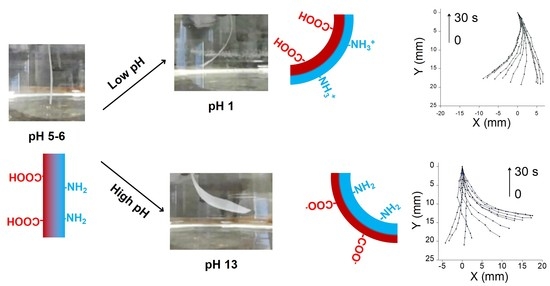
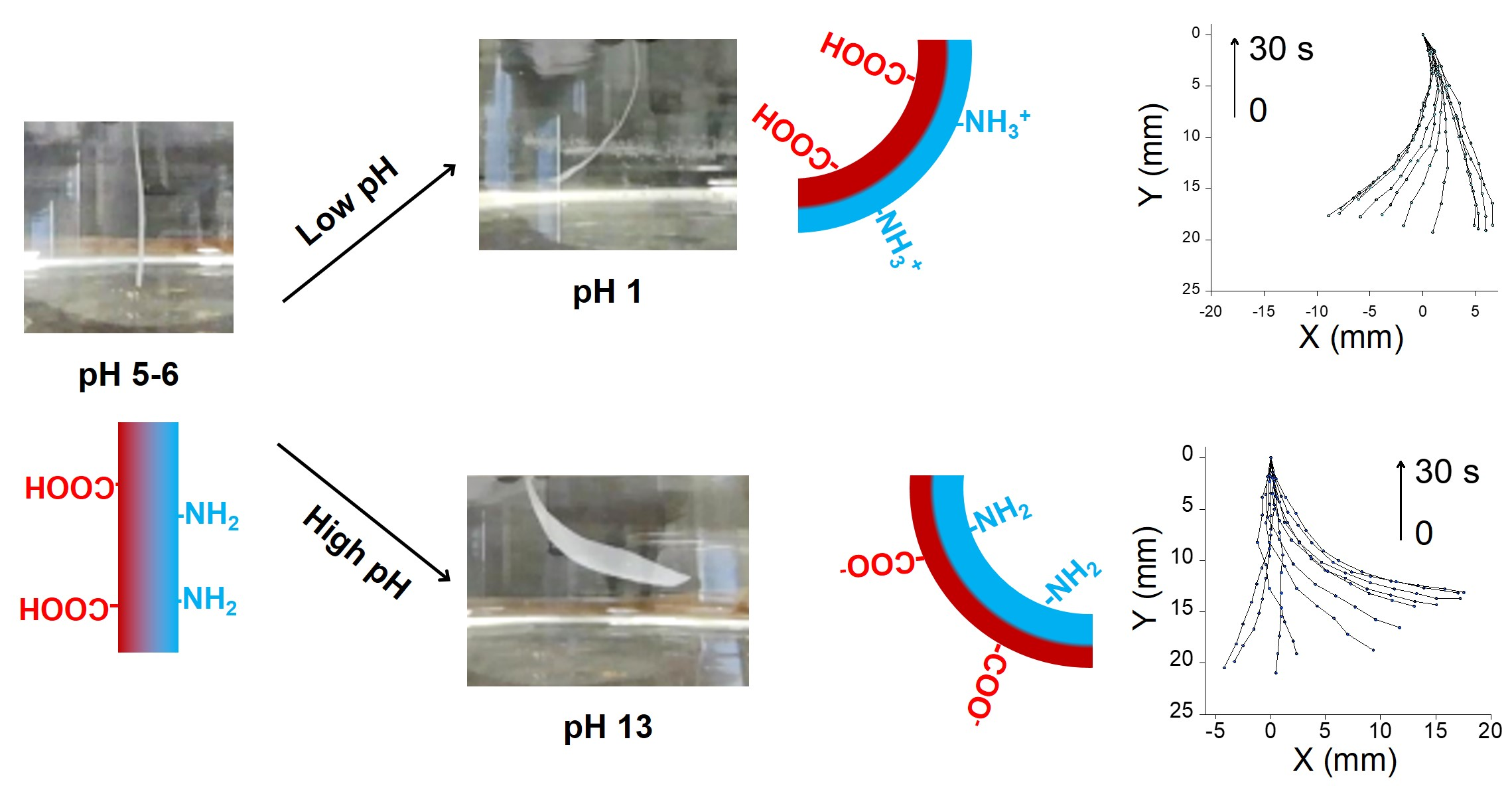
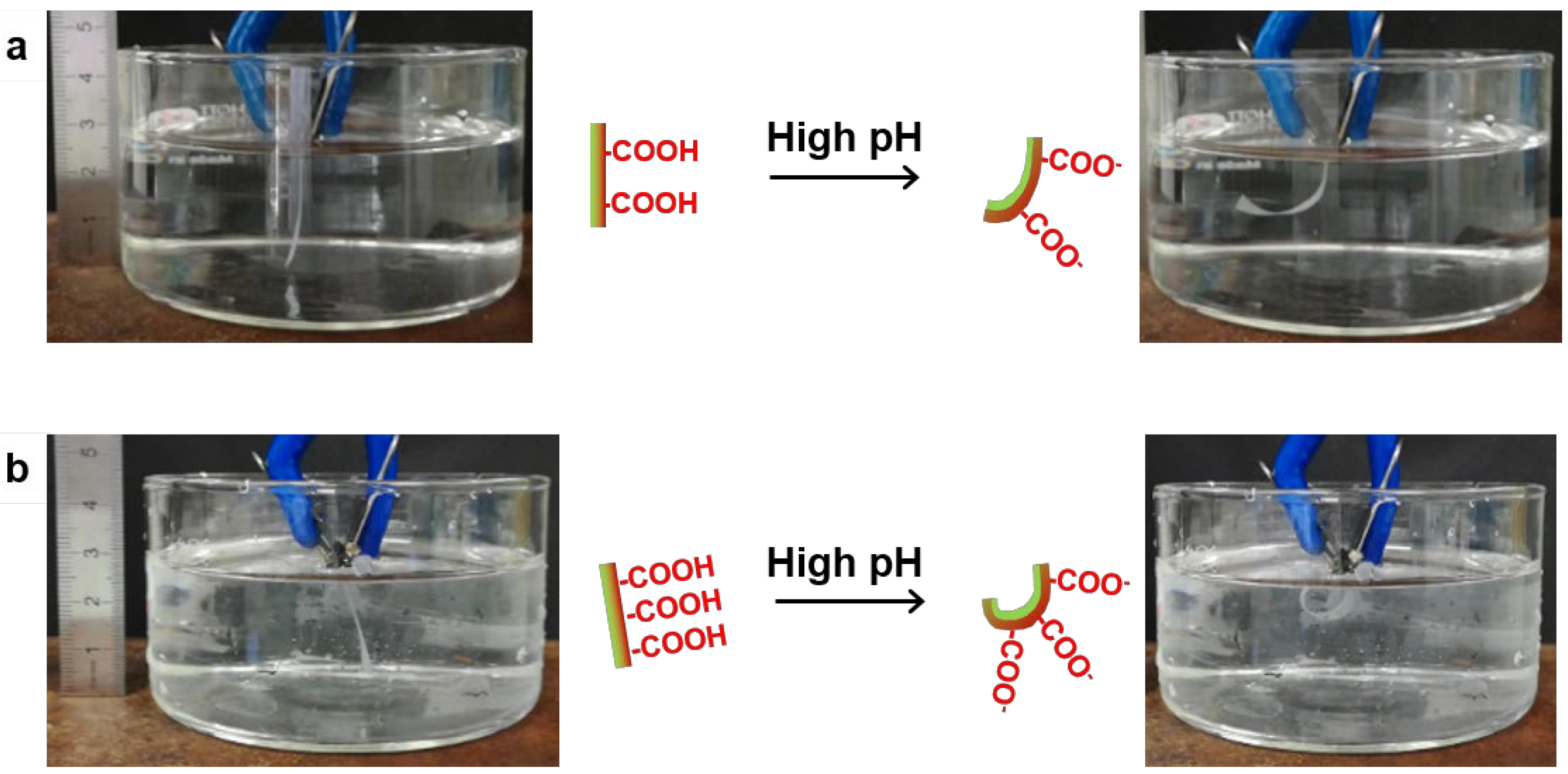
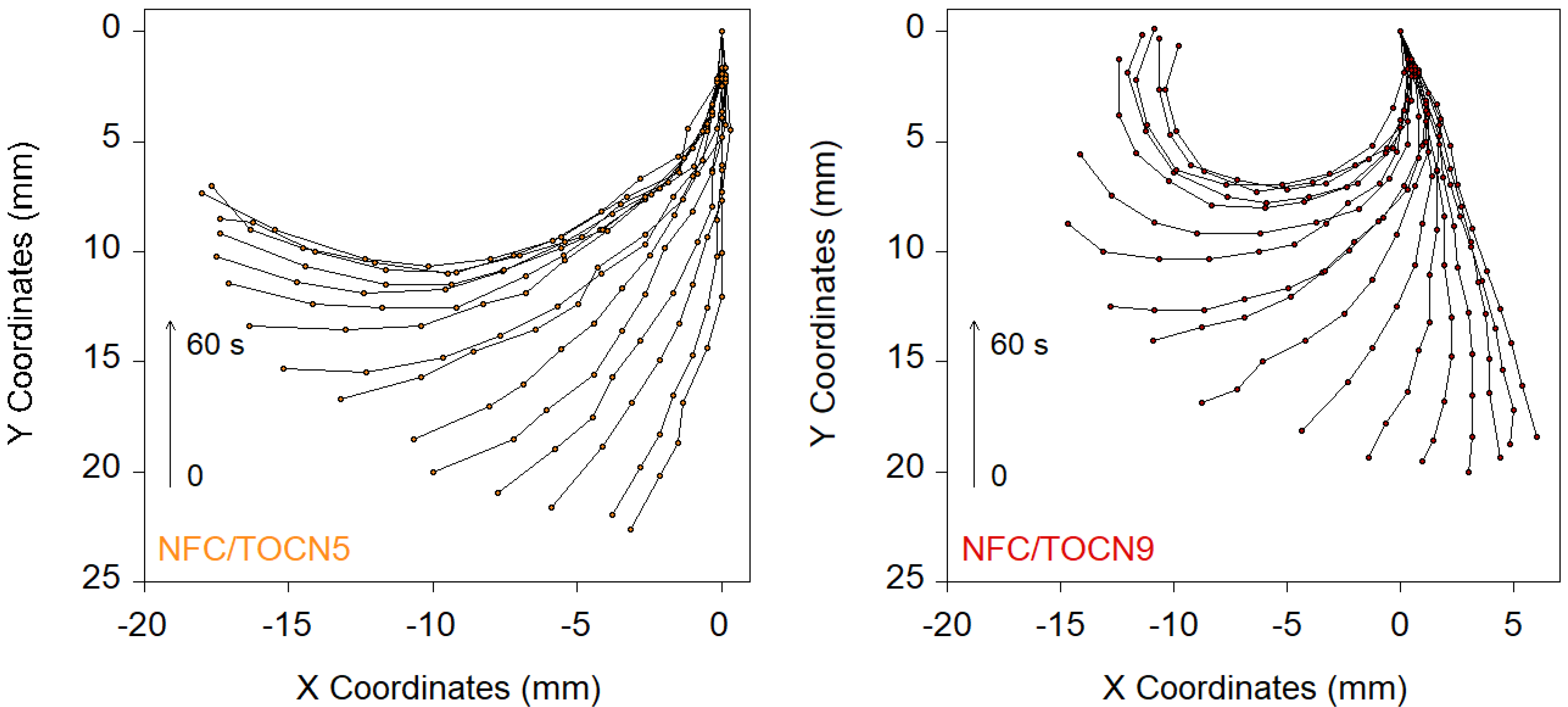
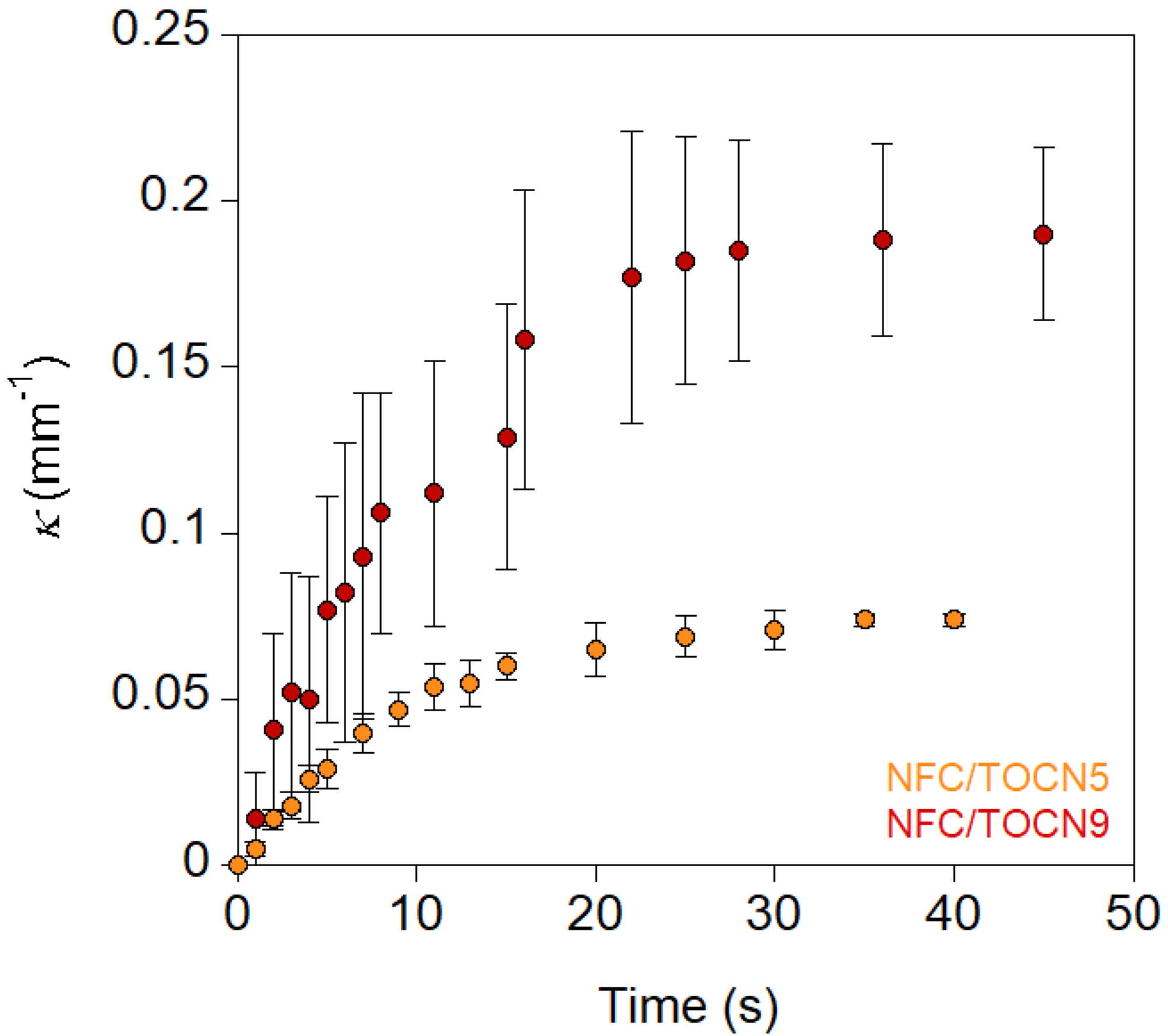
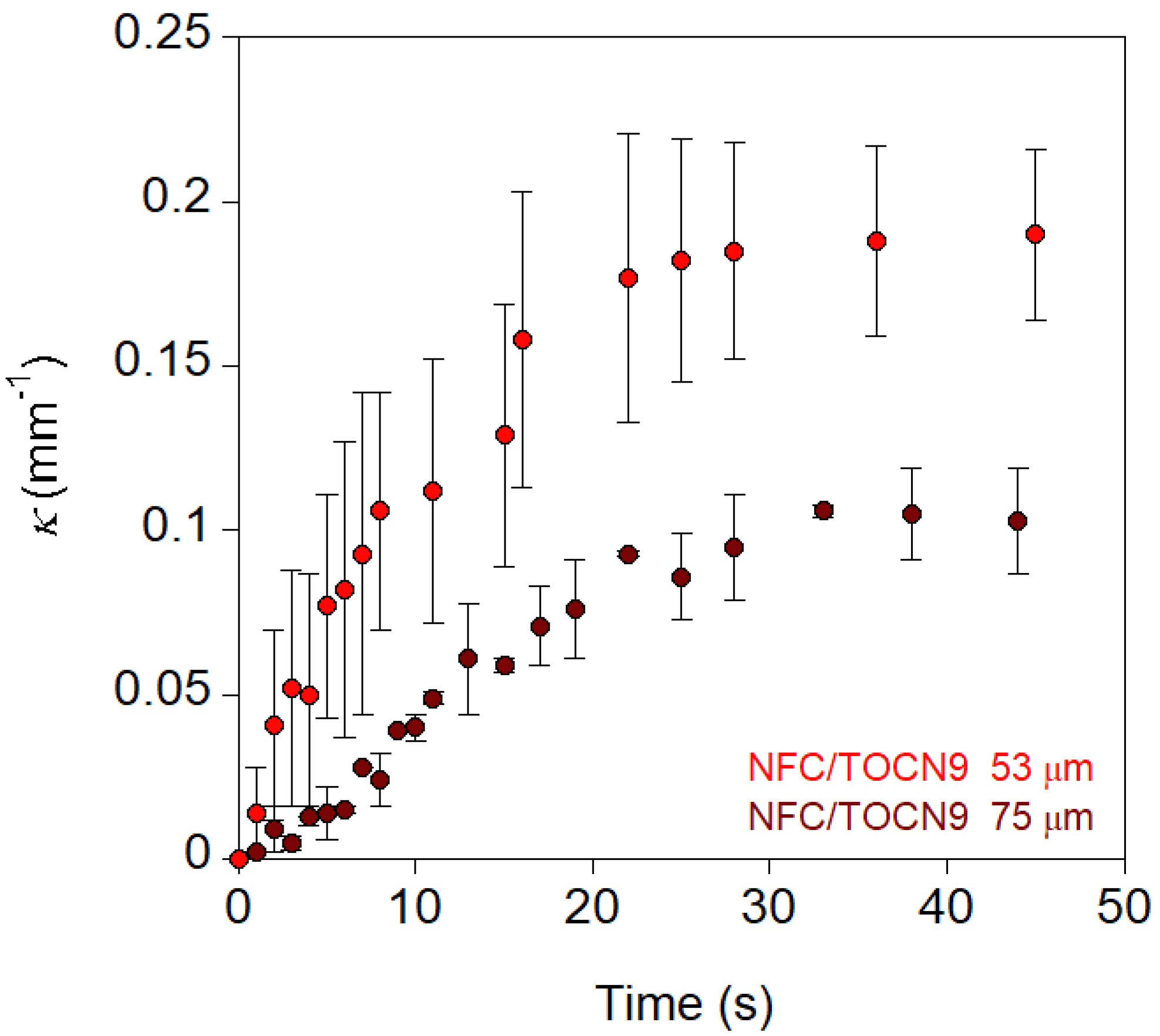
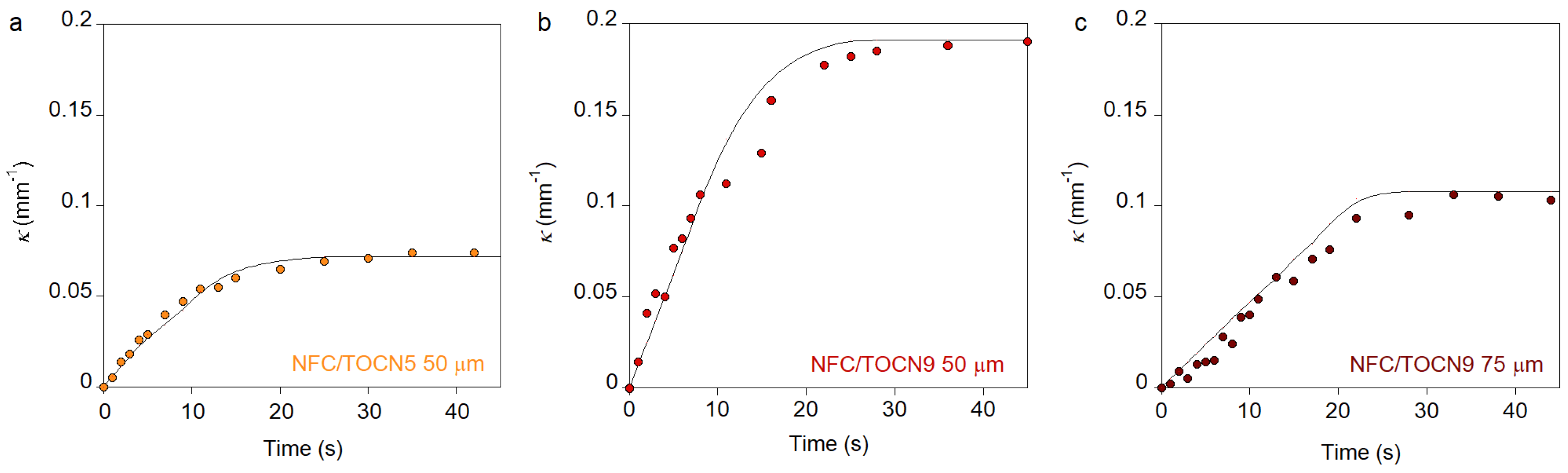
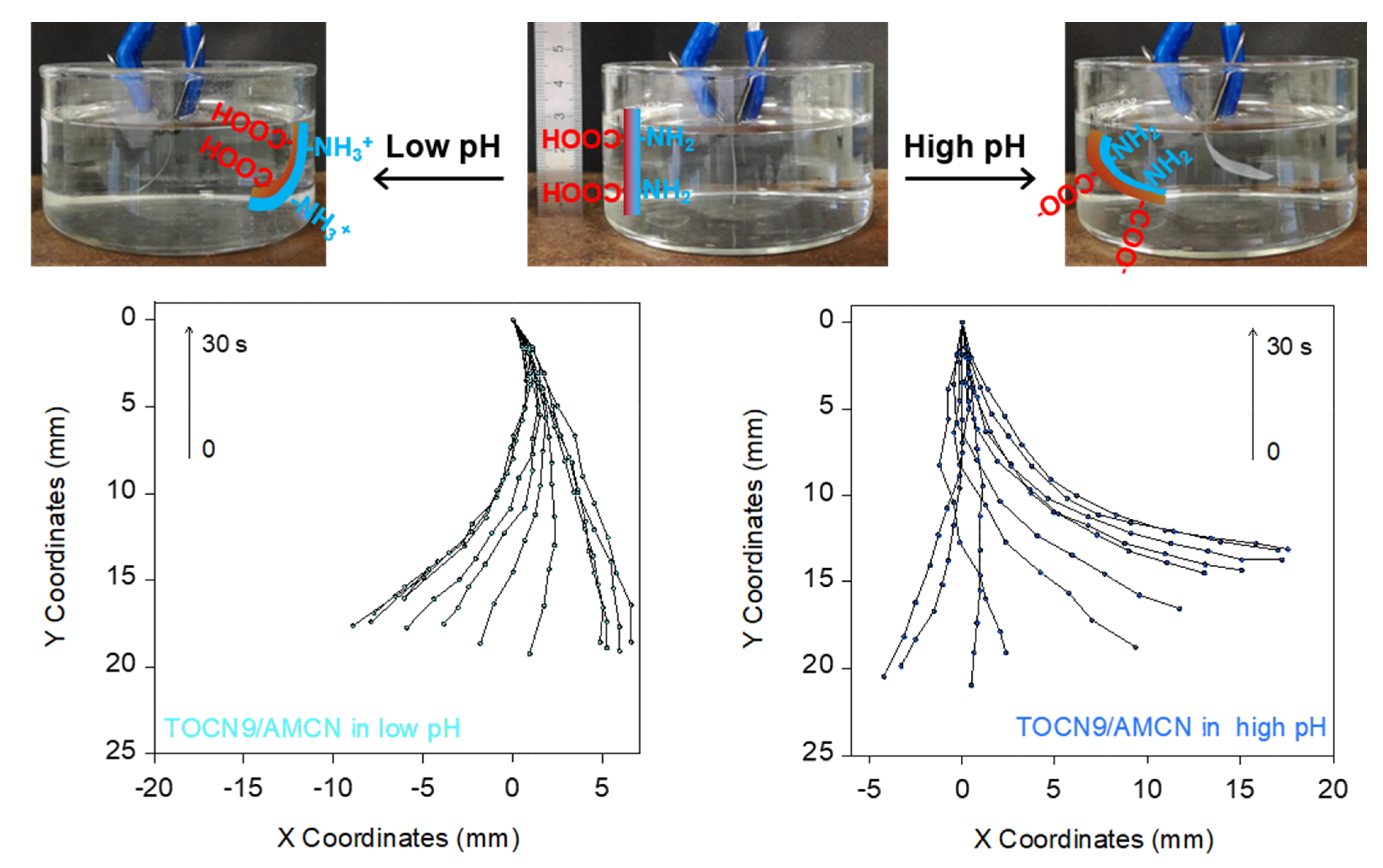
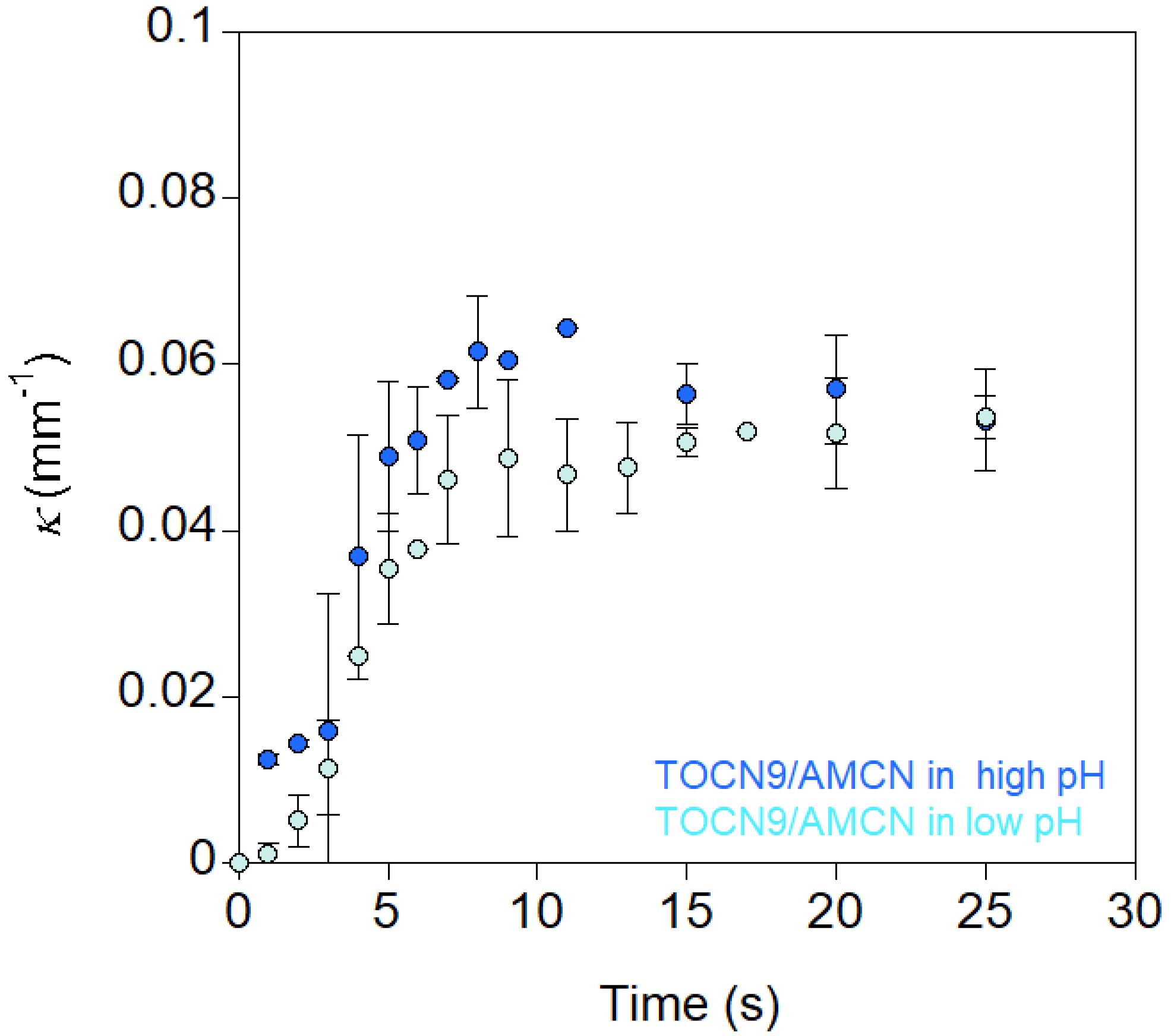
Inspired by plant movements driven by the arrangement of cellulose, we have fabricated nanopapers of nanofibrillated cellulose (NFC) showing actuation under pH changes. Bending was achieved by a concentration gradient of charged groups along the film thickness. Hence, the resulting nanopapers contained higher concentration of charged groups on one side of the film than on the opposite side, so that pH changes resulted in charge-dependent asymmetric deprotonation of the two layers. Electrostatic repulsions separate the nanofibers in the nanopaper, thus facilitating an asymmetric swelling and the subsequent expanding that results in bending. Nanofibrillated cellulose was modified by 2,2,6,6-tetramethylpiperidin-1-yloxyl radical (TEMPO) oxidation at two reaction times to get different surface concentrations of carboxylic acid groups. TEMPO-oxidized NFC was further chemically transformed into amine-modified NFC by amidation. The formation of graded nanopapers was accomplished by successive filtration of NFC dispersions with varying charge nature and/or concentration. The extent of bending was controlled by the charge concentration and the nanopaper thickness. The direction of bending was tuned by the layer composition (carboxylic acid or amine groups). In all cases, a steady-state was achieved within less than 25 s. This work opens new routes for the use of cellulosic materials as actuators.
Keywords: nanocellulose; cellulose nanofiber; film; actuator; bending nanocellulose; cellulose nanofiber; film; actuator; bending
Graphical Abstract