
ATP-Responsive Bimetallic Metal–Organic Frameworks Amplify Oxidative Stress in the Tumor Microenvironment for Synergistic Chemo-Immunotherapy

 , , and
Abstract
1. Introduction
2. Materials and Methods
2.1. Materials and Reagents
2.2. Synthesis of Cu/ZIF@PDA Nanoparticles
2.3. Nanoparticle Characterization
2.4. ATP-Triggered Disassembly
2.5. Evaluation of Cascade Catalytic Performance
2.5.1. GSH Depletion
2.5.2. SOD-Mimicking Activity
2.5.3. •OH Generation
2.6. In Vitro Cytotoxicity and Intracellular ROS Detection
2.7. Western Blot Analysis
2.8. Assessment of Dendritic Cell (DC) Maturation
2.9. In Vivo Antitumor Therapy and Re-Challenge
2.10. In Vivo Immune Analysis
2.11. TUNEL Staining of Tumor Sections
2.12. Statistical Analysis
3. Results
3.1. Synthesis, Characterization of CZP Nanoparticles
3.2. ATP-Responsive Disassembly and Cascade Catalytic Performance
3.3. In Vitro Anticancer Efficacy
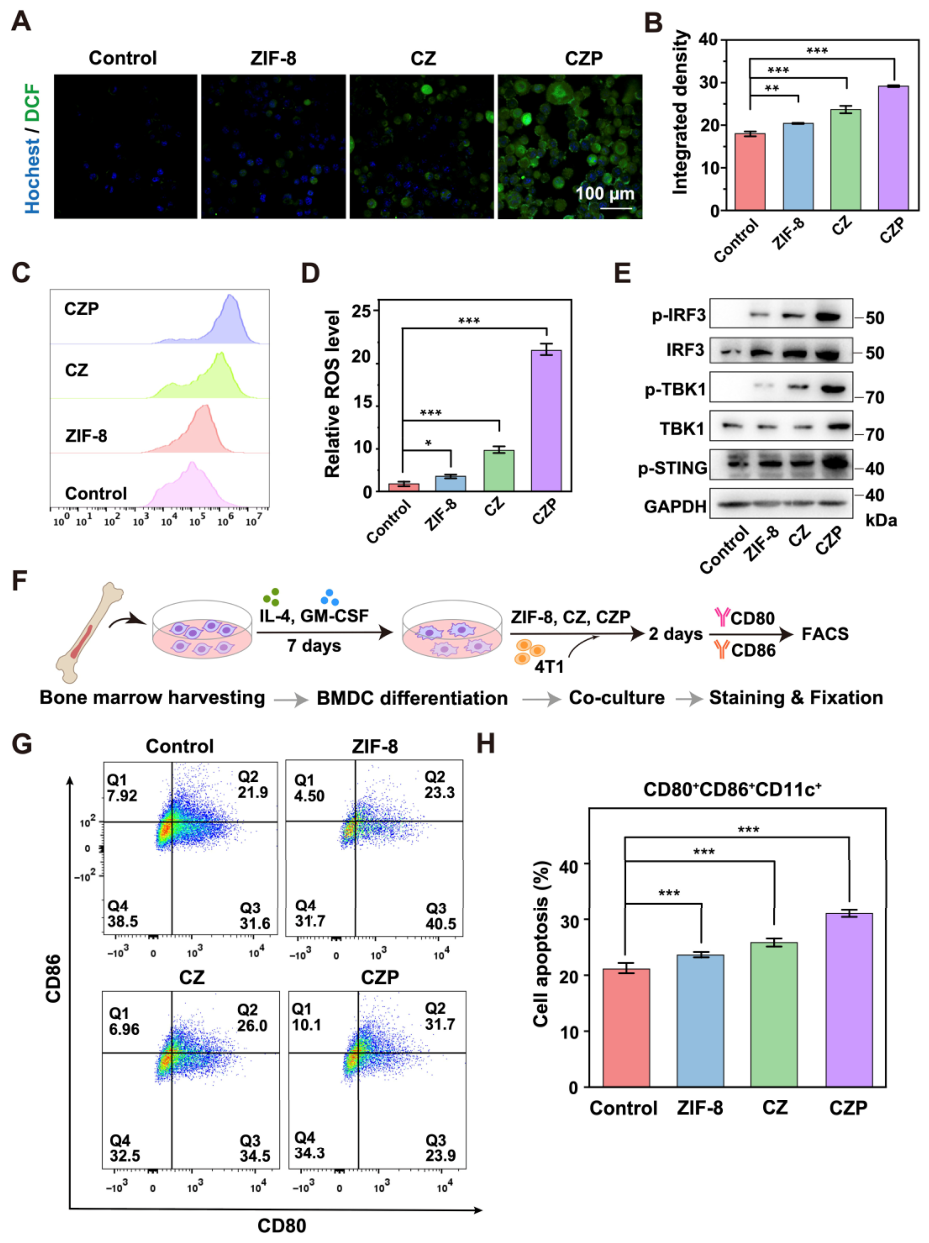
3.4. Intracellular ROS Generation, STING Pathway Activation, and Dendritic Cell Maturation In Vitro
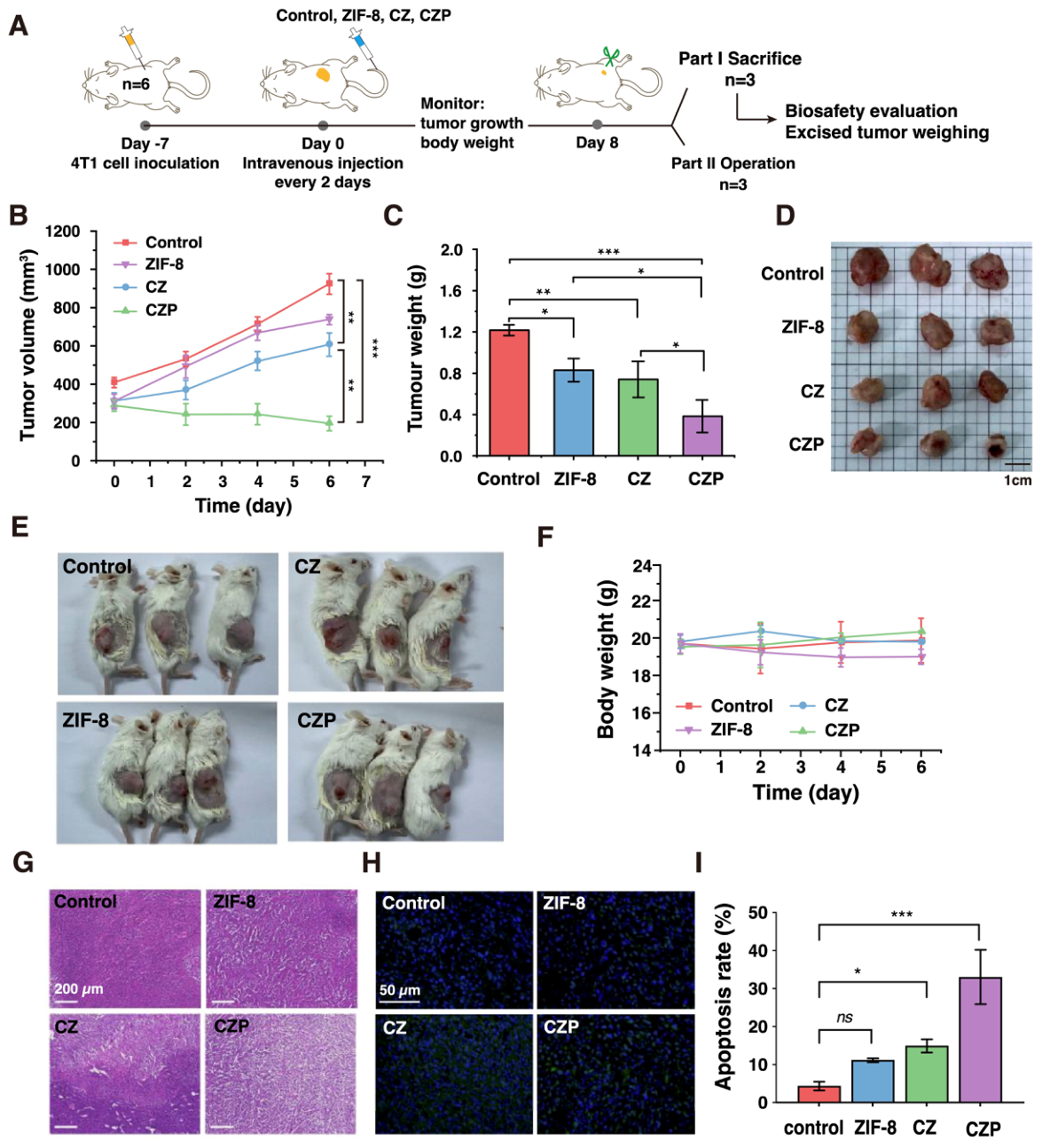
3.5. In Vivo Antitumor Efficacy and Biosafety of CZP
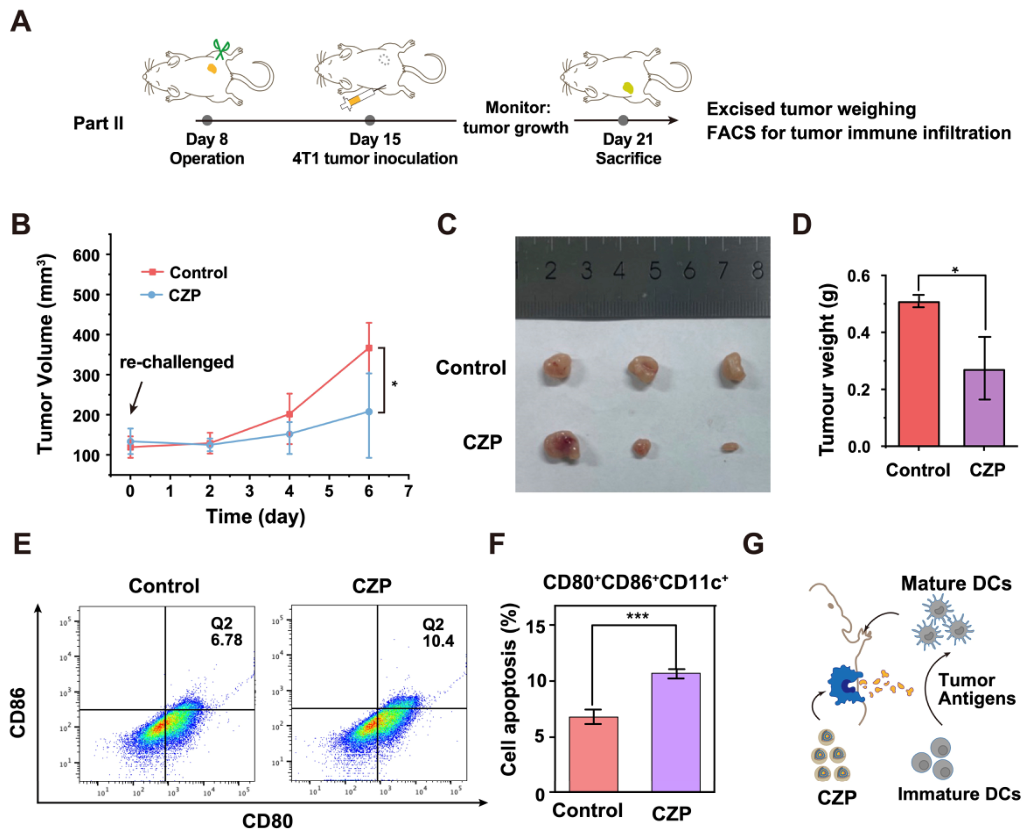
3.6. Re-Challenge Protection and Tumor Immune Activation Associated with CZP Treatment
4. Discussion
5. Conclusions
Supplementary Materials
Author Contributions
Funding
Institutional Review Board Statement
Informed Consent Statement
Data Availability Statement
Acknowledgments
Conflicts of Interest
Abbreviations
| 2-MIM | 2-methylimidazole |
| ATP | Adenosine triphosphate |
| BMDCs | Bone marrow-derived dendritic cells |
| CCK-8 | Cell Counting Kit-8 |
| CDT | Chemodynamic therapy |
| cGAS | Cyclic GMP-AMP synthase |
| CZP | Cu/ZIF@PDA |
| DC | Dendritic cell |
| DLS | Dynamic light scattering |
| dsDNA | Double-stranded DNA |
| DTNB | 5,5′-dithiobis-(2-nitrobenzoic acid) |
| EDS | Energy-dispersive X-ray spectroscopy |
| FTIR | Fourier transform infrared |
| GSH | Glutathione |
| ICB | Immune checkpoint blockade |
| ICD | Immunogenic cell death |
| MB | Methylene blue |
| MOF | Metal–organic framework |
| mtDNA | Mitochondrial DNA |
| PDA | Polydopamine |
| PI | Propidium iodide |
| ROS | Reactive oxygen species |
| SEM | Scanning electron microscopy |
| SOD | Superoxide dismutase |
| STING | Stimulator of interferon genes |
| TEM | Transmission electron microscopy |
| TME | Tumor microenvironment |
| WST | Water-soluble tetrazolium |
| XPS | X-ray photoelectron spectroscopy |
| XRD | X-ray diffraction |
References
- Siegel, R.L.; Kratzer, T.B.; Giaquinto, A.N.; Sung, H.; Jemal, A. Cancer statistics, 2025. CA Cancer J. Clin. 2025, 75, 10–45. [Google Scholar] [CrossRef] [Scilit] [PubMed]
- Bray, F.; Laversanne, M.; Sung, H.; Ferlay, J.; Siegel, R.L.; Soerjomataram, I.; Jemal, A. Global cancer statistics 2022: GLOBOCAN estimates of incidence and mortality worldwide for 36 cancers in 185 countries. CA Cancer J. Clin. 2024, 74, 229–263. [Google Scholar] [CrossRef] [Scilit] [PubMed]
- Wu, Y.; Song, Y.; Wang, R.; Wang, T. Molecular mechanisms of tumor resistance to radiotherapy. Mol. Cancer 2023, 22, 96. [Google Scholar] [CrossRef] [Scilit] [PubMed]
- Banfill, K.; Giuliani, M.; Aznar, M.; Franks, K.; McWilliam, A.; Schmitt, M.; Sun, F.; Vozenin, M.C.; Faivre Finn, C.; IASLC Advanced Radiation Technology Committee. Cardiac Toxicity of Thoracic Radiotherapy: Existing Evidence and Future Directions. J. Thorac. Oncol. 2021, 16, 216–227. [Google Scholar] [CrossRef] [Scilit]
- Espinosa-Carrasco, G.; Chiu, E.; Scrivo, A.; Zumbo, P.; Dave, A.; Betel, D.; Kang, S.W.; Jang, H.J.; Hellmann, M.D.; Burt, B.M.; et al. Intratumoral immune triads are required for immunotherapy-mediated elimination of solid tumors. Cancer Cell 2024, 42, 1202–1216.e8. [Google Scholar] [CrossRef] [Scilit]
- Maxwell, M.B.; Hom-Tedla, M.S.; Yi, J.; Li, S.; Rivera, S.A.; Yu, J.; Burns, M.J.; McRae, H.M.; Stevenson, B.T.; Coakley, K.E.; et al. ARID1A suppresses R-loop-mediated STING-type I interferon pathway activation of anti-tumor immunity. Cell 2024, 187, 3390–3408.e19. [Google Scholar] [CrossRef] [Scilit]
- Zhang, J.; Huang, D.; Saw, P.E.; Song, E. Turning cold tumors hot: From molecular mechanisms to clinical applications. Trends Immunol. 2022, 43, 523–545. [Google Scholar] [CrossRef] [Scilit]
- Liu, Y.T.; Wang, Y.L.; Wang, S.; Li, J.J.; He, W.; Fan, X.J.; Wan, X.B. Turning cold tumors into hot tumors to ignite immunotherapy. Mol. Cancer 2025, 24, 254. [Google Scholar] [CrossRef] [Scilit]
- Chen, T.; Xu, Z.G.; Luo, J.; Manne, R.K.; Wang, Z.; Hsu, C.C.; Pan, B.S.; Cai, Z.; Tsai, P.J.; Tsai, Y.S.; et al. NSUN2 is a glucose sensor suppressing cGAS/STING to maintain tumorigenesis and immunotherapy resistance. Cell Metab. 2023, 35, 1782–1798.e8. [Google Scholar] [CrossRef] [Scilit]
- Vignali, P.D.A.; DePeaux, K.; Watson, M.J.; Ye, C.; Ford, B.R.; Lontos, K.; McGaa, N.K.; Scharping, N.E.; Menk, A.V.; Robson, S.C.; et al. Hypoxia drives CD39-dependent suppressor function in exhausted T cells to limit antitumor immunity. Nat. Immunol. 2023, 24, 267–279. [Google Scholar] [CrossRef] [Scilit]
- Zuo, Y.; Vohwinkel, D.J.; Dong, B.; McDowell, J.R.; Guzman, B.V.; Manickavel Pandian, T.S.; Chattopadhyay, S.; McGray, A.J.R.; Olejniczak, S.H.; Ohm, J.; et al. IL-36gamma armored CAR T cells reprogram neutrophils to induce endogenous antitumor immunity. Cancer Cell 2026, 44, 366–382.e10. [Google Scholar] [CrossRef] [Scilit] [PubMed]
- de la Calle-Fabregat, C.; Calafell-Segura, J.; Gardet, M.; Dunsmore, G.; Mulder, K.; Ciudad, L.; Silvin, A.; Moreno-Caceres, J.; Corbi, A.L.; Munoz-Pinedo, C.; et al. NF-kappaB and TET2 promote macrophage reprogramming in hypoxia that overrides the immunosuppressive effects of the tumor microenvironment. Sci. Adv. 2024, 10, eadq5226. [Google Scholar] [CrossRef] [Scilit] [PubMed]
- Khosravi, G.R.; Mostafavi, S.; Bastan, S.; Ebrahimi, N.; Gharibvand, R.S.; Eskandari, N. Immunologic tumor microenvironment modulators for turning cold tumors hot. Cancer Commun. 2024, 44, 521–553. [Google Scholar] [CrossRef] [Scilit] [PubMed]
- Xiao, J.; Wang, S.; Chen, L.; Ding, X.; Dang, Y.; Han, M.; Zheng, Y.; Shen, H.; Wu, S.; Wang, M.; et al. 25-Hydroxycholesterol regulates lysosome AMP kinase activation and metabolic reprogramming to educate immunosuppressive macrophages. Immunity 2024, 57, 1087–1104.e7. [Google Scholar] [CrossRef] [Scilit]
- Shang, H.; Xia, D.; Geng, R.; Wu, J.; Deng, W.; Tong, Y.; Ba, X.; Zhong, Z.; He, Y.; Huang, Q.; et al. Thermosensitive Resiquimod-Loaded Lipid Nanoparticles Promote the Polarization of Tumor-Associated Macrophages to Enhance Bladder Cancer Immunotherapy. ACS Nano 2025, 19, 19599–19621. [Google Scholar] [CrossRef] [Scilit]
- Sun, X.; Huang, X.; Park, K.S.; Zhou, X.; Kennedy, A.A.; Pretto, C.D.; Wu, Q.; Wan, Z.; Xu, Y.; Gong, W.; et al. Self-Assembled STING-Activating Coordination Nanoparticles for Cancer Immunotherapy and Vaccine Applications. ACS Nano 2024, 18, 10439–10453. [Google Scholar] [CrossRef] [Scilit]
- Pena, Q.; Wang, A.; Zaremba, O.; Shi, Y.; Scheeren, H.W.; Metselaar, J.M.; Kiessling, F.; Pallares, R.M.; Wuttke, S.; Lammers, T. Metallodrugs in cancer nanomedicine. Chem. Soc. Rev. 2022, 51, 2544–2582. [Google Scholar] [CrossRef] [Scilit]
- Zhang, C.; Bu, W.; Ni, D.; Zhang, S.; Li, Q.; Yao, Z.; Zhang, J.; Yao, H.; Wang, Z.; Shi, J. Synthesis of Iron Nanometallic Glasses and Their Application in Cancer Therapy by a Localized Fenton Reaction. Angew. Chem. Int. Ed. Engl. 2016, 55, 2101–2106. [Google Scholar] [CrossRef] [Scilit]
- Zhao, Y.; Li, T.; Yao, Y.; Xue, S.; Xu, T.; Mi, S.; Li, D.; Tang, X.; Zhi, F.; Ding, D.; et al. Bidirectionally H2O2-suppliable and antioxidant-consumable copper peroxide nanoparticles for photochemodynamic immunotherapy. Biomaterials 2026, 329, 123988. [Google Scholar] [CrossRef] [Scilit]
- Pan, Y.; Tang, H.; Zhang, Y.; Zhang, Z. Coordination Self-Assembly of a Carrier-Free Hyaluronic Acid-Modified Nanoplatform for Augmented Photothermal/Chemodynamic Therapy and Robust Antimetastatic Immunity. ACS Appl. Mater. Interfaces 2026, 18, 11732–11750. [Google Scholar] [CrossRef] [Scilit]
- Huang, J.; Yang, J.; Yang, Y.; Lu, X.; Xu, J.; Lu, S.; Pan, H.; Zhou, W.; Li, W.; Chen, S. Mitigating Doxorubicin-Induced Cardiotoxicity and Enhancing Anti-Tumor Efficacy with a Metformin-Integrated Self-Assembled Nanomedicine. Adv. Sci. 2025, 12, e2415227. [Google Scholar] [CrossRef] [Scilit] [PubMed]
- Li, Q.; Lin, L.; Zhang, C.; Zhang, H.; Ma, Y.; Qian, H.; Chen, X.L.; Wang, X. The progression of inorganic nanoparticles and natural products for inflammatory bowel disease. J. Nanobiotechnol. 2024, 22, 17. [Google Scholar] [CrossRef] [Scilit] [PubMed]
- Aishajiang, R.; Liu, Z.; Liang, Y.; Du, P.; Wei, Y.; Zhuo, X.; Liu, S.; Lei, P.; Wang, T.; Yu, D. Concurrent Amplification of Ferroptosis and Immune System Activation Via Nanomedicine-Mediated Radiosensitization for Triple-Negative Breast Cancer Therapy. Adv. Sci. 2025, 12, e2407833. [Google Scholar] [CrossRef] [Scilit] [PubMed]
- Niu, B.; Liao, K.; Zhou, Y.; Wen, T.; Quan, G.; Pan, X.; Wu, C. Application of glutathione depletion in cancer therapy: Enhanced ROS-based therapy, ferroptosis, and chemotherapy. Biomaterials 2021, 277, 121110. [Google Scholar] [CrossRef] [Scilit]
- Hu, Z.; Tan, H.; Ye, Y.; Xu, W.; Gao, J.; Liu, L.; Zhang, L.; Jiang, J.; Tian, H.; Peng, F.; et al. NIR-Actuated Ferroptosis Nanomotor for Enhanced Tumor Penetration and Therapy. Adv. Mater. 2024, 36, e2412227. [Google Scholar] [CrossRef] [Scilit]
- Chen, W.; Hu, F.; Gao, Q.; Zheng, C.; Bai, Q.; Liu, J.; Sun, N.; Zhang, W.; Zhang, Y.; Dong, K.; et al. Tumor acidification and GSH depletion by bimetallic composite nanoparticles for enhanced chemodynamic therapy of TNBC. J. Nanobiotechnol. 2024, 22, 98. [Google Scholar] [CrossRef] [Scilit]
- Shen, M.; Jiang, X.; Peng, Q.; Oyang, L.; Ren, Z.; Wang, J.; Peng, M.; Zhou, Y.; Deng, X.; Liao, Q. The cGAS–STING pathway in cancer immunity: Mechanisms, challenges, and therapeutic implications. J. Hematol. Oncol. 2025, 18, 40. [Google Scholar] [CrossRef] [Scilit]
- Li, Q.; Wu, P.; Du, Q.; Hanif, U.; Hu, H.; Li, K. cGAS-STING, an important signaling pathway in diseases and their therapy. MedComm 2024, 5, e511. [Google Scholar] [CrossRef] [Scilit]
- Wang, Q.; Yu, Y.; Zhuang, J.; Liu, R.; Sun, C. Demystifying the cGAS-STING pathway: Precision regulation in the tumor immune microenvironment. Mol. Cancer 2025, 24, 178. [Google Scholar] [CrossRef] [Scilit]
- Wang, C.; Zhang, R.; He, J.; Yu, L.; Li, X.; Zhang, J.; Li, S.; Zhang, C.; Kagan, J.C.; Karp, J.M.; et al. Ultrasound-responsive low-dose doxorubicin liposomes trigger mitochondrial DNA release and activate cGAS-STING-mediated antitumour immunity. Nat. Commun. 2023, 14, 3877. [Google Scholar] [CrossRef] [Scilit]
- Sun, S.; Yu, M.; Yu, L.; Huang, W.; Zhu, M.; Fu, Y.; Yan, L.; Wang, Q.; Ji, X.; Zhao, J.; et al. Nrf2 silencing amplifies DNA photooxidative damage to activate the STING pathway for synergistic tumor immunotherapy. Biomaterials 2023, 296, 122068. [Google Scholar] [CrossRef] [Scilit]
- Meng, X.; Wang, L.; Zhao, N.; Zhao, D.; Shen, Y.; Yao, Y.; Jing, W.; Man, S.; Dai, Y.; Zhao, Y. Stimuli-responsive cancer nanomedicines inhibit glycolysis and impair redox homeostasis. Acta Biomater. 2023, 167, 374–386. [Google Scholar] [CrossRef] [Scilit]
- Xu, J.; Wu, M.; Yang, J.; Zhao, D.; He, D.; Liu, Y.; Yan, X.; Liu, Y.; Pu, D.; Tan, Q.; et al. Multimodal smart systems reprogramme macrophages and remove urate to treat gouty arthritis. Nat. Nanotechnol. 2024, 19, 1544–1557. [Google Scholar] [CrossRef] [Scilit]
- Wang, Z.; Liu, B.; Sun, Q.; Dong, S.; Kuang, Y.; Dong, Y.; He, F.; Gai, S.; Yang, P. Fusiform-Like Copper(II)-Based Metal-Organic Framework through Relief Hypoxia and GSH-Depletion Co-Enhanced Starvation and Chemodynamic Synergetic Cancer Therapy. ACS Appl. Mater. Interfaces 2020, 12, 17254–17267. [Google Scholar] [CrossRef] [Scilit]
- Peng, L.; Wang, C.; Lin, Q.; Chang, Y.; Zhang, X.; Wang, J.; Li, Z.; Yang, Z.; Sun, W.; Lu, W.; et al. H2O2 and Phosphorylated Peptide Dual-Responsive Nanochannel Device. Anal. Chem. 2023, 95, 10390–10397. [Google Scholar] [CrossRef] [Scilit]
- Zeng, Y.; Zhang, C.; Du, D.; Li, Y.; Sun, L.; Han, Y.; He, X.; Dai, J.; Shi, L. Metal-organic framework-based hydrogel with structurally dynamic properties as a stimuli-responsive localized drug delivery system for cancer therapy. Acta Biomater. 2022, 145, 43–51. [Google Scholar] [CrossRef] [Scilit]


Disclaimer/Publisher’s Note: The statements, opinions and data contained in all publications are solely those of the individual author(s) and contributor(s) and not of MDPI and/or the editor(s). MDPI and/or the editor(s) disclaim responsibility for any injury to people or property resulting from any ideas, methods, instructions or products referred to in the content. |
© 2026 by the authors. Licensee MDPI, Basel, Switzerland. This article is an open access article distributed under the terms and conditions of the Creative Commons Attribution (CC BY) license.
Share and Cite
Li, Y.; Zhang, W.; Xu, Z.; Ma, S.; Xiong, Y.; Yu, L.; Gao, H.; Shu, Y.; Fei, T. ATP-Responsive Bimetallic Metal–Organic Frameworks Amplify Oxidative Stress in the Tumor Microenvironment for Synergistic Chemo-Immunotherapy. J. Funct. Biomater. 2026, 17, 199. https://doi.org/10.3390/jfb17040199
Li Y, Zhang W, Xu Z, Ma S, Xiong Y, Yu L, Gao H, Shu Y, Fei T. ATP-Responsive Bimetallic Metal–Organic Frameworks Amplify Oxidative Stress in the Tumor Microenvironment for Synergistic Chemo-Immunotherapy. Journal of Functional Biomaterials. 2026; 17(4):199. https://doi.org/10.3390/jfb17040199
Chicago/Turabian StyleLi, You, Wenxin Zhang, Zitao Xu, Shixin Ma, Yufei Xiong, Li Yu, Huiling Gao, Yang Shu, and Teng Fei. 2026. "ATP-Responsive Bimetallic Metal–Organic Frameworks Amplify Oxidative Stress in the Tumor Microenvironment for Synergistic Chemo-Immunotherapy" Journal of Functional Biomaterials 17, no. 4: 199. https://doi.org/10.3390/jfb17040199
APA StyleLi, Y., Zhang, W., Xu, Z., Ma, S., Xiong, Y., Yu, L., Gao, H., Shu, Y., & Fei, T. (2026). ATP-Responsive Bimetallic Metal–Organic Frameworks Amplify Oxidative Stress in the Tumor Microenvironment for Synergistic Chemo-Immunotherapy. Journal of Functional Biomaterials, 17(4), 199. https://doi.org/10.3390/jfb17040199