Article

Machine Learning-Enabled Secure Unified Framework for Remote Electrocardiogram Monitoring via a Multi-Level Blockchain System


Department of Electrical and Computer Engineering, University of Nebraska-Lincoln, Lincoln, NE 68588, USA
*
Author to whom correspondence should be addressed.
Information 2026, 17(4), 383; https://doi.org/10.3390/info17040383
Submission received: 7 March 2026 / Revised: 6 April 2026 / Accepted: 15 April 2026 / Published: 18 April 2026
(This article belongs to the Special Issue Machine Learning and Simulation for Public Health)

Abstract

Timely classification of cardiovascular diseases is crucial to improve medical outcomes. Emerging remote patient monitoring systems help achieve this by enabling continuous monitoring of electrocardiogram signals in home environments. However, these systems struggle with unique challenges like missing genuine medical emergencies, rising energy demands, scalability challenges, handling vast medical databases, data processing delays, and safeguarding patient records. To overcome these challenges, we propose a single framework with three main phases: (a) an embedded hardware-driven K-Nearest Neighbor (KNN)-assisted real-time ECG monitoring and classification method; (b) a differentiated communication strategy (DCS) formed with a priority-based ECG data packaging framework and multi-layered security protocols; and (c) a multi-level blockchain network (MLBN) architecture armed with adaptive security mechanisms and real-time cross-chain medical data communication bridges. Simulations are conducted using the ECG signals (1000 fragments) dataset and the Ganache Ethereum development framework. The classification accuracies obtained for patient urgent categories U1 to U5 are 91.43%, 95.71%, 94.23%, 90.00%, and 91.43%, respectively. The performance evaluation results of the KNN-guided classification method, along with DCS and MLBN simulation results obtained from average gas consumption analysis, confirms reliability and viability of our framework, while also revolutionizing remote patient monitoring technology and addressing critical challenges in existing systems.

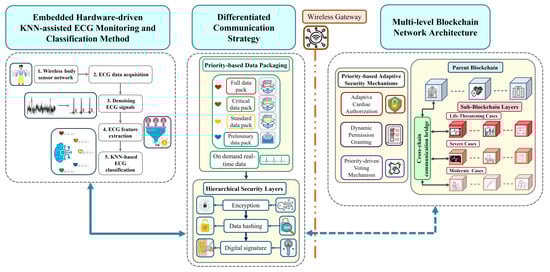
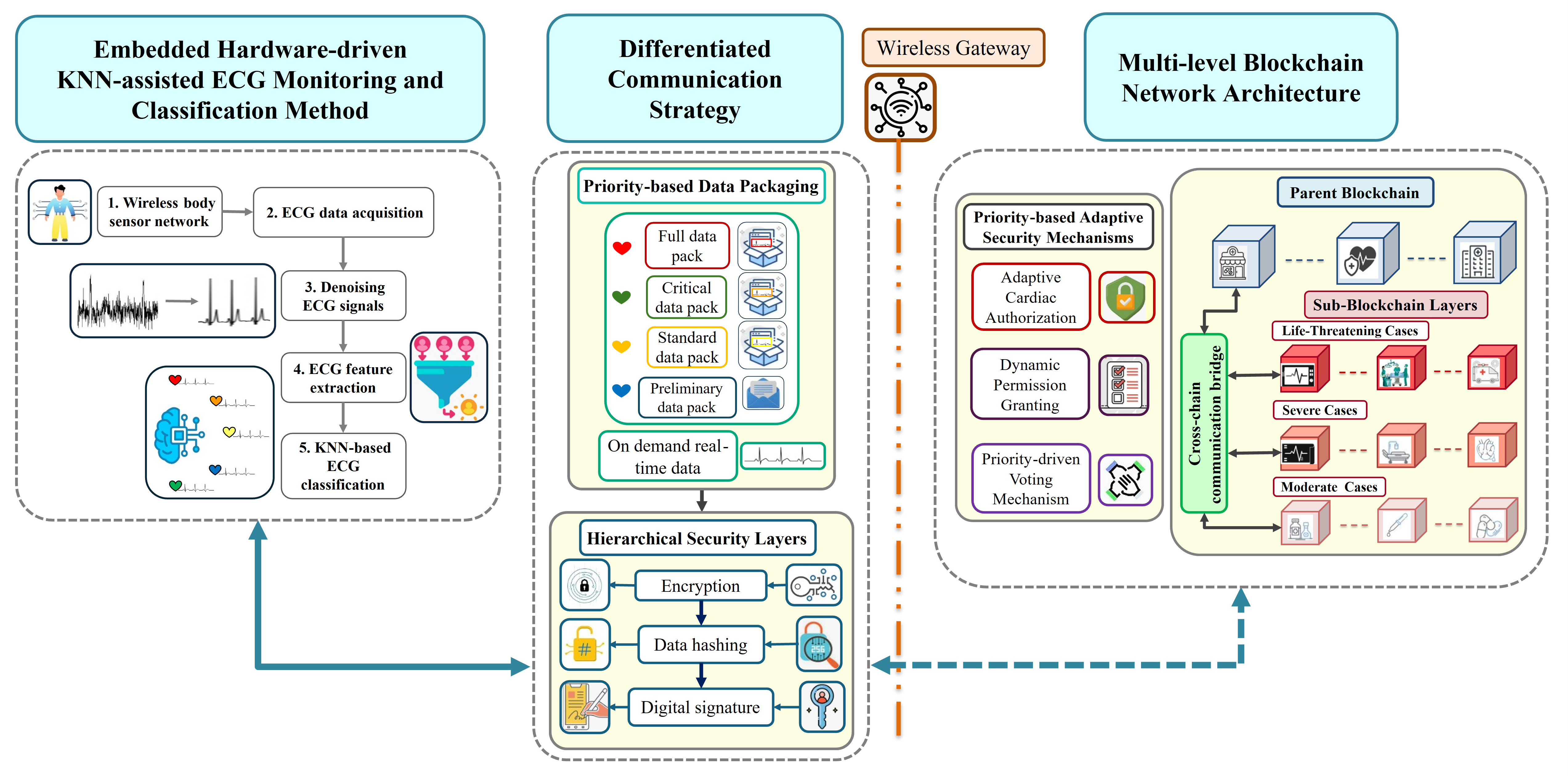
Graphical Abstract

1. Introduction

Cardiovascular diseases (CVDs) such as arrhythmia, coronary artery diseases and cerebrovascular diseases are among the leading causes of death globally [1]. Electrocardiogram (ECG) signals are one of the primary methods that medical professionals use to identify complex heart conditions in hospitals and clinical settings. In addition, remote patient monitoring technology plays a major role by enabling remote heart monitoring via ECGs in home environments [2]. Moreover, the integration of artificial intelligence (AI) and machine learning (ML) has further enhanced the capability of ECG analysis by enabling the automated identification of abnormalities in real-time ECGs [3,4]. Meanwhile, wearable and Internet of Things (IoT)-based healthcare systems have enabled continuous physiological data collection, and blockchain-based technologies are emerging as a promising solution for secure and decentralized medical data management [5,6,7].
Despite these advancements, remote patient monitoring systems still face several critical challenges [8,9]. These challenges include: difficulties in precisely detecting genuine medical emergencies of heart patients; growing power requirements caused by continuous wireless transmission of medical data; scalability challenges arising from rapidly increasing patient population; management of extensive medical databases; handling patient information processing delays; and safeguarding medical records from cybercriminals.
Recently, researchers have developed a variety of innovative solutions to address different aspects of the abovementioned challenges [10,11,12,13,14,15,16,17,18]. However, none of them have proposed a single framework that addresses all of these critical challenges experienced in remote patient monitoring environments. Through our study, we propose a three-stage framework to resolve all of these drawbacks within these systems. In the first stage, we utilize an embedded hardware-driven, ML-based real-time ECG classification method for continuous heart monitoring and accurate detection of common cardiac conditions and true patient urgencies across five urgent categories. This phase not only contributes to improving the patient outcomes, but also offers a user-friendly, low-cost and low-power solution. Moreover, the proposed KNN-based ECG classification approach is specifically designed to be lightweight and computationally efficient, with the potential to be adapted to resource-constrained embedded environments, thereby providing a resource-efficient solution for continuous heart monitoring at home. Through the second stage, we integrate a differentiated communication strategy (DCS) formed by introducing a priority-based data packaging framework combined with multiple layers of security protocols. This novel medical data communication strategy significantly reduces wireless data volume and determines how often wireless transmissions are required, thereby conserving wireless data transmission energy and providing a promising solution for increasing energy demands. Additionally, the multiple security layers ensure the security of patient medical records throughout the data transmission period. From the third stage, we propose a multi-level blockchain network (MLBN) architecture designed to enhance healthcare services for patients with CVDs, scalable up to be able to cover a large city or a small country. This architecture offers a practical solution to scalability challenges and facilitates the management of large medical databases by distributing data and workload across multiple blockchain layers. Furthermore, MLBN is equipped with patient priority-driven hierarchical layers of dynamic security mechanisms designed to protect blockchain layers from cyberthreats, while offering a fast patient information processing environment. Moreover, the specially designed cross-chain communication bridges allow secure exchange of patient data in real time between adjacent layers of blockchains within MLBN architecture. Therefore, by combining these three stages, the proposed framework offers a robust and reliable solution for the aforementioned challenges in remote patient monitoring systems, compared to other studies conducted in this research domain.
The remainder of this paper is organized as follows: Section 2 provides a broader understanding of related research studies, discussing their major contributions in the AI-assisted ECG monitoring and classification field, as well as blockchain-based multi-layered security architectures, while also highlighting the existing research gap. Section 3 presents a detailed discussion of the proposed system architecture and methodological framework outlining procedures for implementing our three-stage framework. Section 4 presents simulation results, followed by discussions and analysis. Finally, Section 5 concludes this paper by summarizing the key contributions of our study proposed for securely remote monitoring patients with CVDs using the introduced three-stage framework.

2. Related Works

Early detection and proactive causes of action are mandatory for improving the survival rate of patients with CVDs [19]. The existing Internet of Medical Things (IoMT) systems, remote patient monitoring systems, and telemedicine platforms have become useful in the medical industry for addressing these challenges [20]. However, they still struggle with unique challenges such as missing true medical emergencies, increasing energy demands, scalability issues, managing large volumes of medical databases, data processing delays and protecting medical records [21]. Recently, researchers have developed various solutions to address different aspects of the aforementioned challenges in the healthcare domain [22,23]. In this section, we aim to investigate their strategies by narrowing our focus into two key areas relevant to our study: first, examining research on AI-assisted ECG monitoring and classification within low-power edge devices; and second, exploring blockchain-based multi-layered security architectures for securing and managing medical data.

2.1. AI-Assisted ECG Monitoring and Classification Within Low-Power Edge Devices

Utsha et al. have proposed an edge-computing method for continuously monitoring heart rate and detecting abnormal heartbeats in individuals using a smartphone application named CardioHelp [10]. They have developed beat-by-beat ECG analysis algorithms that incorporate AI techniques to identify anomalies in ECG signals and notify users through this smart health application. The ECG data is transmitted to CardioHelp in real-time via a custom-made, wearable, embedded hardware-based ECG data collection system. The effectiveness of this system has been evaluated by assessing the performance of different AI models.
Utsha et al. have done commendable work by designing an edge computing technique for accurately identifying and notifying critical health conditions [10]. However, they have not paid attention to security concerns of medical records, when they share them with the physicians for further inspections. The security of the medical data must be ensured against cybercriminals, especially given the increased risk of cyberattacks in patient monitoring systems. Through our study, we address this gap by applying hierarchical layers of security mechanisms to ECG data packages generated by our priority-based ECG data packaging framework. These strategies are implanted within the proposed DCS and applied before transmitting data for further analysis. Furthermore, our innovative MLBN architecture establishes a highly secure link between healthcare providers and healthcare facilities through integrated adaptive security mechanisms that operate based on priority levels determined by the K-Nearest Neighbor (KNN) guided classification method. These procedures ensure patient authenticity and control access to the MLBN architecture, allowing only trusted medical stakeholders to connect. Therefore, our system outperforms the one proposed by Utsha et al. in remote patient monitoring by addressing both security concerns and challenges related to accurate classification.
Sadasivuni et al. have developed a personalized AI framework that predicts sepsis up to four hours before onset by combining patients’ ECG data and their electronic medical records [11]. The predictions are generated from raw ECG signals by using an on-chip classifier that combines an analog reservoir computer with an artificial neural network. Their solution for at-home patient monitoring reduces energy consumption by a factor of 13 compared to traditional digital systems, and by a factor of 159 compared to RF transmission of ECG samples. Kim et al. have introduced a framework called TinyCES, a tiny machine learning (TinyML)-assisted classification method for ECG monitoring [12]. TinyCES is designed to minimize memory usage and network resource requirements during classification, as continuous real-time ECG data transmission consumes more battery power and network resources.
Ran et al. have designed a homecare-oriented ECG classification platform based on a multilabel deep convolutional neural network for the continuous monitoring and classification of a wide range of cardiac diseases [13]. They have conducted an algorithm–hardware co-optimization process to expedite model computation on field-programmable gate array (FPGA), aimed at wearable applications or lightweight homecare for continuous monitoring. Meanwhile, a reconfigurable accelerator hardware framework has been designed to speed up convolution computations on FPGA, and a neural network has been optimized using channel-level pruning and parameter quantization methods. Falaschetti et al. have proposed a classification method for detecting arrhythmia by employing recurrent neural networks (RNNs) on ECG data and they have further explored the efficiency and effectiveness of utilizing different variations of general RNNs [14]. Additionally, they have evaluated their portability to STM32 microcontroller architecture.
Both Sadasivuni et al. and Kim et al. have offered excellent solutions to address the challenge of increasing energy demand resulting from continuous wireless medical data transmission [11,12]. Ran et al. and Falaschetti et al. have proposed impressive strategies to optimize computationally intensive deep learning algorithms for deployment on resource-limited devices for continuous ECG monitoring and classification [13,14]. However, their solutions have not focused on the area of secure medical data management, which plays a crucial role in protecting against cyberthreats and scalability challenges arising from the increasing number of patients. Additionally, taking immediate action for identified critical medical conditions is essential to improve patient outcomes, which is another important aspect not addressed in their studies. Through our framework, we offer a robust and viable solution that addresses both of these crucial aspects. First, our embedded hardware-driven, simple yet efficient KNN-guided ECG classification process accurately classifies and continuously monitors ECG signals in real-time, ensuring that true patient urgencies are not missed. Second, integrated novel DCS ensures medical data security and significantly minimizes the energy required for wireless data transmission, thereby conserving the battery power of embedded hardware setup. Third, the incorporated innovative MLBN architecture provides a scalable and highly secure remote patient monitoring platform through multiple interconnected blockchain layers and integrated priority-based dynamic security mechanisms. Hence, it enables rapid remote healthcare assistance through priority-based ECG data processing, while providing secure access to healthcare services and expert knowledge. Therefore, these advancements revolutionize the remote cardiovascular patient monitoring sector, moving beyond the strategies proposed by previous authors [11,12,13,14].

2.2. Blockchain-Based Multi-Layered Security Architectures for Securing and Managing Medical Data

Wang et al. have developed a secure and trustworthy smart healthcare system that connects with wireless body area networks based on a multistage blockchain to ensure the security and privacy of physiological information during transmission over public channels [15]. They have introduced a chaotic algorithm based on piecewise linear chaotic map (PLCM) to resist common attacks and to provide real-time transmission of front-end data with the feasibility to implement on power-constrained devices. Additionally, a multistage blockchain-based data transmission system has been proposed by integrating a second stage to ensure back-end data security. Sanober et al. have developed a blockchain-based layered framework incorporated with InterPlanetary File System (IPFS) storage to offer a secure environment for data exchange in healthcare systems [16]. They have proposed a multi-layered security framework that employs a 128-bit random deoxyribonucleic acid (RDA) encoding sequence together with advanced encryption standard (AES) 128 on data before storing them in IPFS. The framework also utilizes Rivest–Shamir Adleman (RSA) 2048 digital envelope for key transmission, RSA-1024 for digital signature, secure hash algorithm (SHA) 256 for hashing record files and a reputation-based filtering procedure to identify and mitigate cyberattacks.
Wang et al. and Sanober et al. have conducted admirable studies by introducing security frameworks that protect medical data during transmission and sharing [15,16]. However, they have not considered energy consumption associated with continuous wireless data transmission, which significantly drains the battery power of the embedded hardware platform. This presents a crucial challenge that must be addressed to provide an uninterrupted service for patients. We address this challenge by introducing the novel DCS, which transmits data only when an urgency is detected by the KNN-driven ECG classification process. This strategy significantly reduces the volume and determines how often real-time wireless data transmissions are needed, thereby extending the battery life of the embedded hardware setup, in addition to providing enhanced protection via hierarchical layers of security mechanisms implanted within DCS. Hence, our approach offers a unified and superior solution to both security and energy consumption challenges in wireless medical data transmission, compared to the methods proposed by Wang et al. and Sanober et al. [15,16].
Haritha et al. have presented a lattice-based access control (LBAC) model along with blockchain-based smart contract mechanisms to provide multi-level security in e-health systems [17]. They offer multilevel protection for user data by giving access based on their level of confidentiality. The user validation and authentication procedures have been performed utilizing smart contracts within a decentralized system that utilizes Ethereum virtual machine (EVM). Ji et al. have proposed a multi-level privacy-preserving location sharing framework based on blockchains for telecare medical information systems (TMIS), aiming to ensure security and privacy of location data recorded on a blockchain [18]. To achieve multi-level privacy, they have employed an order-preserving encryption scheme (OPE), which allows comparison operations to be performed on encrypted data and Merkle tree for verification of large data structures to provide verifiability of shared location.
Haritha et al. and Ji et al. have proposed noteworthy multi-layered security frameworks to control access in e-health systems and to ensure the integrity of location sharing data in TIMS [17,18]. Yet, they have not considered delays in medical data processing caused by these security layers, which can prevent timely responses to critical patient needs and put patients’ lives at risk. We have answered this critical aspect with an integrated MLBN system, which is equipped with adaptive security mechanisms that operate according to the patient’s urgency level determined by the KNN-guided classification process. This approach offers a practical solution to medical data processing delays while providing enhanced security for patient data. Therefore, the collective effort of these strategies makes our system more reliable and efficient compared to the systems proposed by Haritha et al. and Ji et al. [17,18].
We conducted our research by building upon the foundation established through our previous studies [24,25]. In this study, we first utilize an efficient and reliable KNN-driven ECG monitoring and classification process in embedded hardware by categorizing patient urgencies into five classification classes based on the severity and abnormality of ECG signals. Second, we introduce our novel DCS, containing an advanced priority-based ECG data packaging framework along with hierarchical layers of security mechanisms. Third, we propose an innovative MLBN architecture, enabling remote access to healthcare services and expertise knowledge. Furthermore, the proposed blockchain framework supports communication between layers, with cross-chain communication bridges enabling secure message exchange across blockchain layers. Also, we propose adaptive multiple security layers within MLBN, which activate according to the severity of patient ECGs to avoid data processing delays. Moreover, the implementation details of each proposed strategy are provided through pseudo-algorithms.

3. System Architecture and Methodological Framework

The proposed system architecture for securely remote monitoring common cardiac health conditions is organized into three primary phases. The first phase focuses on ECG monitoring and classification. The second phase implements the proposed DCS, while the third phase incorporates a novel security architecture: MLBN. The introduced architecture and relevant procedures for each phase are discussed under the following subsections.

3.1. ECG Monitoring and Classification

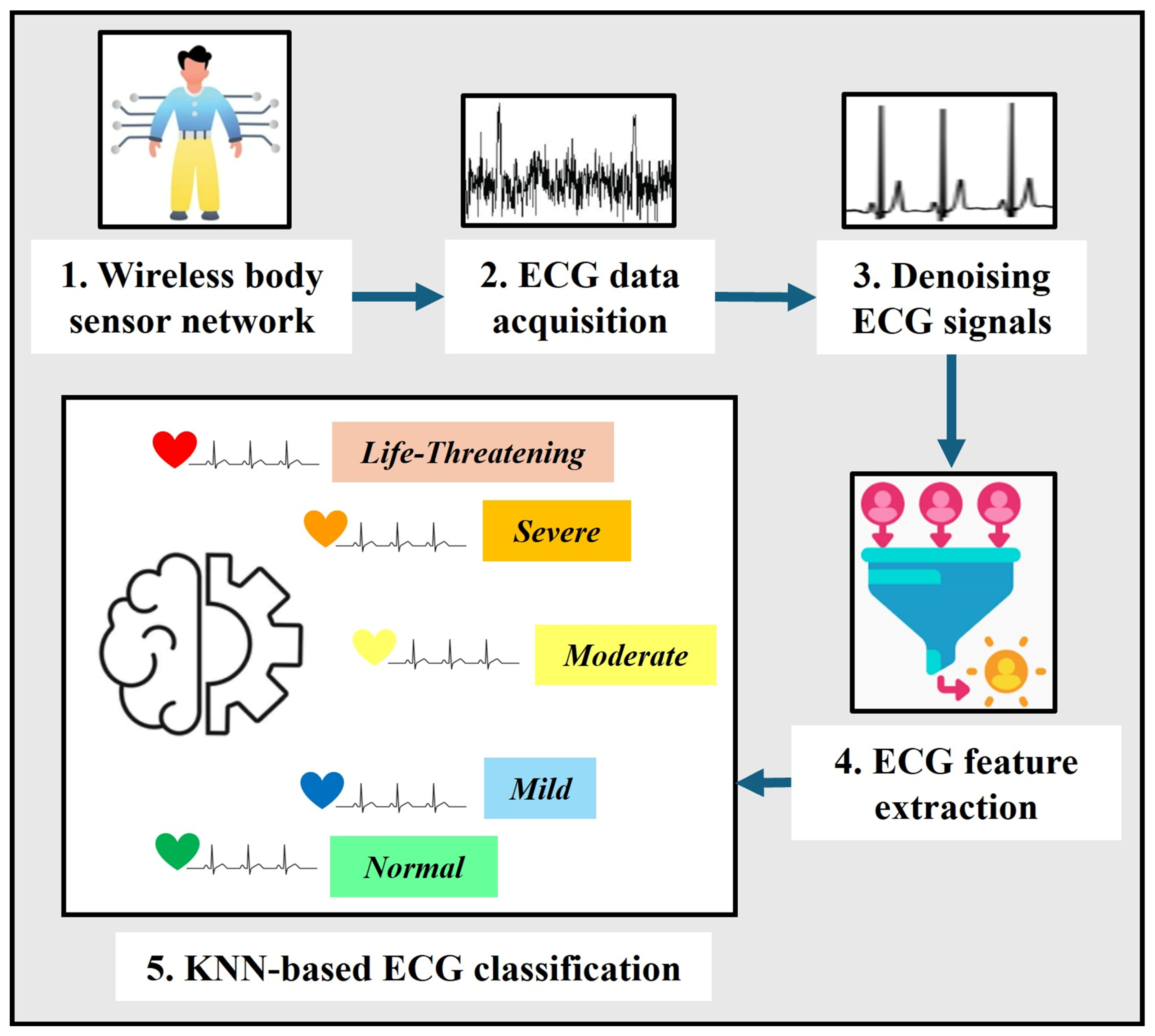
As illustrated in Figure 1, the proposed system is designed for real-time ECG monitoring and analysis in practical deployment, where ECG signals are continuously acquired through a wireless body sensor network. This physical ECG data acquisition process can be conducted by using commercially available devices such as wearable patch-based monitors (e.g., the Zio Patch) or mobile cardiac telemetry platforms (e.g., BodyKom). The acquired ECG data is transmitted to an embedded processing unit via a low-power short-range wireless communication protocol like Bluetooth. In this study, the real-time data acquisition was not physically implemented. Instead, a publicly available dataset was used to emulate the real-time ECG data acquisition scenario for the purpose of algorithm development and performance evaluation.
The ECG signal processing involves three main stages: (a) denoising ECG signals, (b) extracting ECG features, and (c) classifying ECGs. Specifically, the classification stage is performed by using a KNN ML model. We incorporate ML for this step, due to its inherent ability to identify uncertain or fuzzy patterns occurring in unseen data, enhancing reliability and accuracy of the classification process. This KNN model is designed to classify the monitoring ECG signals into five different categories based on their urgency: Life-Threatening (U1), Sever (U2), Moderate (U3), Mild (U4), and Normal (U5). Each category is assigned with a color code for rapid identification. Moreover, this phase is dedicated to detecting common cardiac conditions in ECG signals while offering a low-cost, low-power and user-friendly solution. The KNN-based urgency categorization plays a critical role in the next two primary phases, as their mechanisms prioritize urgency level of the patient. Algorithm 1 presents software implementation details for the afore-discussed procedure for the first phase.
Algorithm 1: ECG monitoring and classification at patient nodes
Input: Raw ECGs from wireless body area sensor network (SRaw(t))
Output: Urgency level of patient (ULevel)
Step 1: ECG signal acquisition; SRaw(t) = {s1, s2, s3, … ,sn}
   SRaw(t) is a vector of sensor readings from each sensor [s1, s2, s3, … ,sn]
Step 2: Denoising ECG signals; ŜDenoised(t) = Ω(SRaw(t))
   Ω ← Denoising function
   ŜDenoised(t) Denoised ECGs
Step 3: ECG feature extraction with function FExtract; F(t) = FExtract (ŜDenoised(t))
   F(t) {AMR, AMT, AMP, TDR, TDT, TDP, TDRR, HR}; A vector of ECG features
   AMx Amplitudes of R, T, and P waves
   TDx Time durations of R, T, and P waves
   TDRR R peak to R peak interval
   HR ← Heart rate
Step 4: Real-time ECG signal classification; ULevel = CKNN (F(t))
   CKNN ← KNN model with a moderate K value
   CCx ← Colour code
   U1CCRed &Life-Threatening
   U2CCOrange &Severe
   U3CCYellow &Moderate
   U4CCBlue &Mild
   U5CCGreen &Normal

3.2. Differentiated Communication Strategy (DCS)

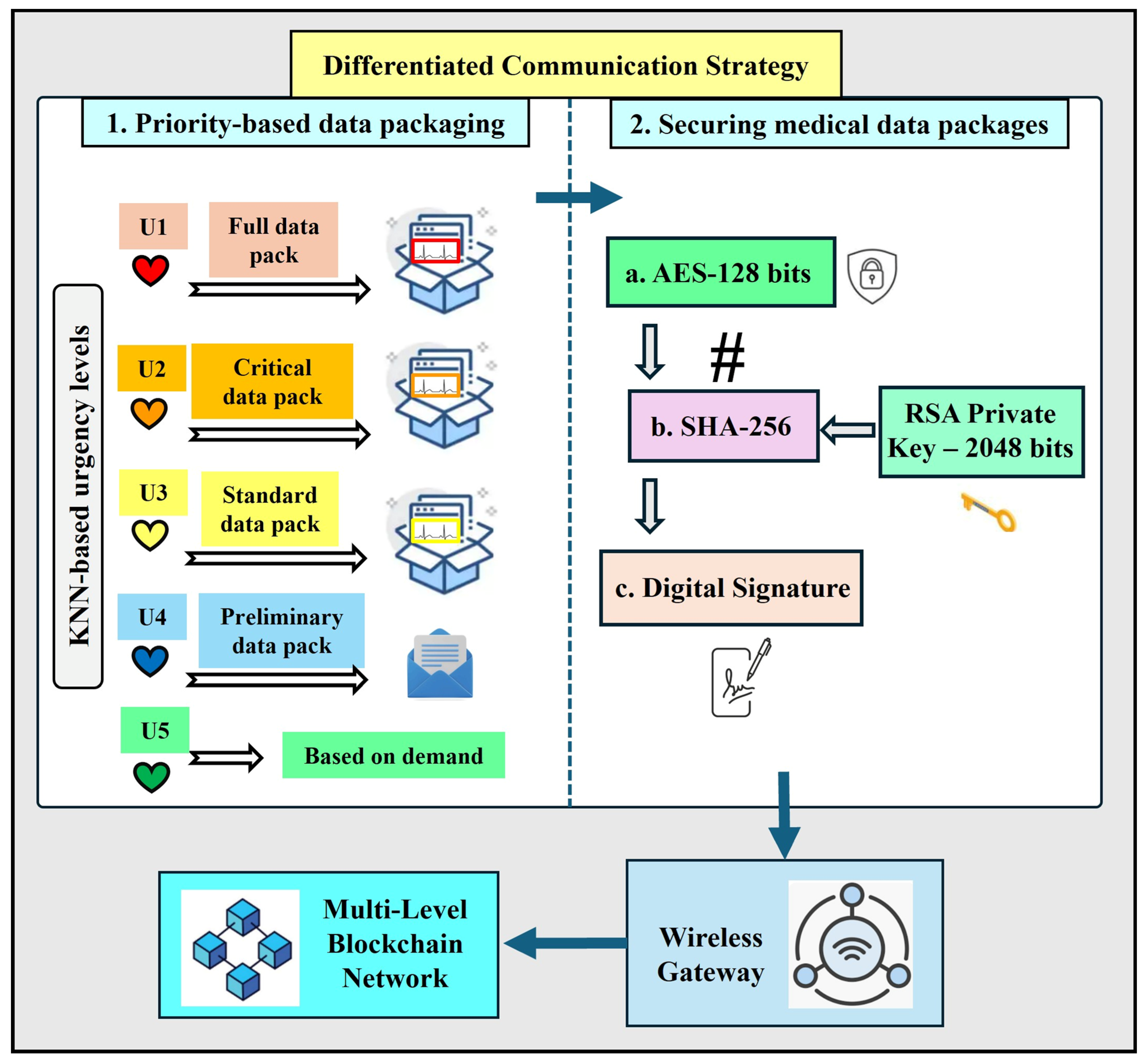
Phase two proposes a differentiated ECG data communication strategy as illustrated in Figure 2, based on their priorities suggested by the KNN model. First, we employ a priority-based ECG data packaging framework which works as follows: if ECG signal is classified under U1, U2 and U3 categories, the respective alerting metadata packages are generated containing an ECG waveform segment indicating the detected abnormality, in addition to other necessary medical parameters defined under the respective data package type. For U4 category, the preliminary data package contains only extracted medical parameters from the feature extraction algorithm, and for normal ECG signals, a data package is generated based on demand, as they hold a lower priority compared to other urgent categories. This framework differentiates and determines the amount of data to be transmitted to the next phase based on their priority level and decides when transmission is necessary. Specially, the real-time ECG signals are transmitted only based on demands raised by healthcare providers. Therefore, this approach significantly reduces the data congestion as data transmission occurs only when necessary. Consequently, it enhances energy conservation in wireless data transmission, extending battery life of the embedded hardware setup at patient node.
The security of these ECG data packages is ensured by multiple security layers. First, the AES-128 symmetric encryption protocol is used to encrypt patient data, ensuring the confidentiality of the original data packages while providing an efficient encryption scheme for protecting real-time ECG signals. Second, the SHA-256 algorithm is used to generate a hash digest, confirming the integrity of the processed data packages through the first security layer. Third, we use 2048-bit private keys with the RSA algorithm to create a digital signature by encrypting the hash digest generated from the second security layer, confirming both the authenticity of the user and the integrity of the data.
Finally, well-secured data packages are transmitted to MLBN via a wireless gateway. Here, we use an existing low-power wireless communication protocol (WCP) as the wireless gateway on top of our DCS. Furthermore, we assume the presence of standard communication infrastructure for wireless data transmission when the proposed DCS is deployed in practice. For instance, the low-power WCP can be one of these options: Narrowband IoT (NB-IoT), LTE-M and Wi-Fi HaLow to directly access internet from the embedded setup as they offer native internet connectivity without intermediate gateways. Additionally, GPS technology is utilized for tracking the location of patient node when it is necessary. The procedure and implementation details of DCS are described in Algorithm 2.
Algorithm 2: Differentiated Communication Strategy
Inputs: ULevel, Real-time data (DRT), Patient RSA private key (KPrv)
Output: Differentiated and secured data package transmission
Step 1: Determine data transmission priority and data volume based on ULevel
 switch (ULevel)
case ‘U1
DFull = {CCRed, U1, ts(Time stamp), TBC_ID(Target blockchain ID), Wα(ECG segment with U1 anomaly), F(t), PHistory(Patient history), PMedications(Recommended medications), PAllergies(Specific allergies), PLocation(Patient location)}
case ‘U2
DCritical = {CCOrange, U2, ts, TBC_ID, Wβ(ECG segment with U2 anomaly), F(t), PHistory, PMedications, PAllergies, PLocation}
case ‘U3
DStandard = {CCYellow, U3, ts, TBC_ID, Wγ(ECG segment with U3 anomaly), F(t), PAllergies, PLocation}
case ‘U4
DMeta = {CCBlue, U4, F(t), ts, TBC_ID}
case ‘U5
Send data on demand (e.g., for routine checkups)
 end
Step 2: Data encryption using AES-128 bits protocol (ENAES)
DEN = ENAES(D); DEN Encrypted data
Step 3: Generate hash digest (H); H = SHA256(DEN)
Step 4: Generate digital signature (S); S = ENRSA(H, KPrv)
Step 5: Transmit to MLBN via wireless gateway (WLGate); WLGate (DEN, H, S, TBC_ID)
Step 6: If access granted, wait for acknowledgment (ABC) from TBC_ID
 while ABC = “Further Inquiry”
DRT_EN = ENAES(DRT): Encrypt real-time (RT) ECG signals
HRT = SHA256(DRT_EN): Generate hash digest
SRT = ENRSA(HRT, KPRV_U): Generate digital signature
WLGate (DRT_EN, HRT, SRT, TBC): Transmit RT data
   ABC Get new acknowledgment
 end

3.3. Multi-Level Blockchain Network (MLBN) Architecture

We propose a multi-layered blockchain network architecture designed to remotely connect a large number of patients with CVDs. This MLBN architecture provides a robust and long-term solution to address the scalability challenges in IoMT systems within the cardiovascular healthcare domain, arising from increasing number of patients. Meanwhile, it offers a secure and decentralized platform to remotely monitor real-time ECG signals, significantly enhancing security against cyberthreats in IoMT systems and safeguarding privacy of patient medical records. The blockchain layers of MLBN architecture are specifically designed to manage complex conditions of cardiac patients by providing timely remote access to progressively advancing healthcare facilities. This approach ensures immediate and personalized medical treatments based on patient requirements, thereby improving outcomes for individuals with CVDs.
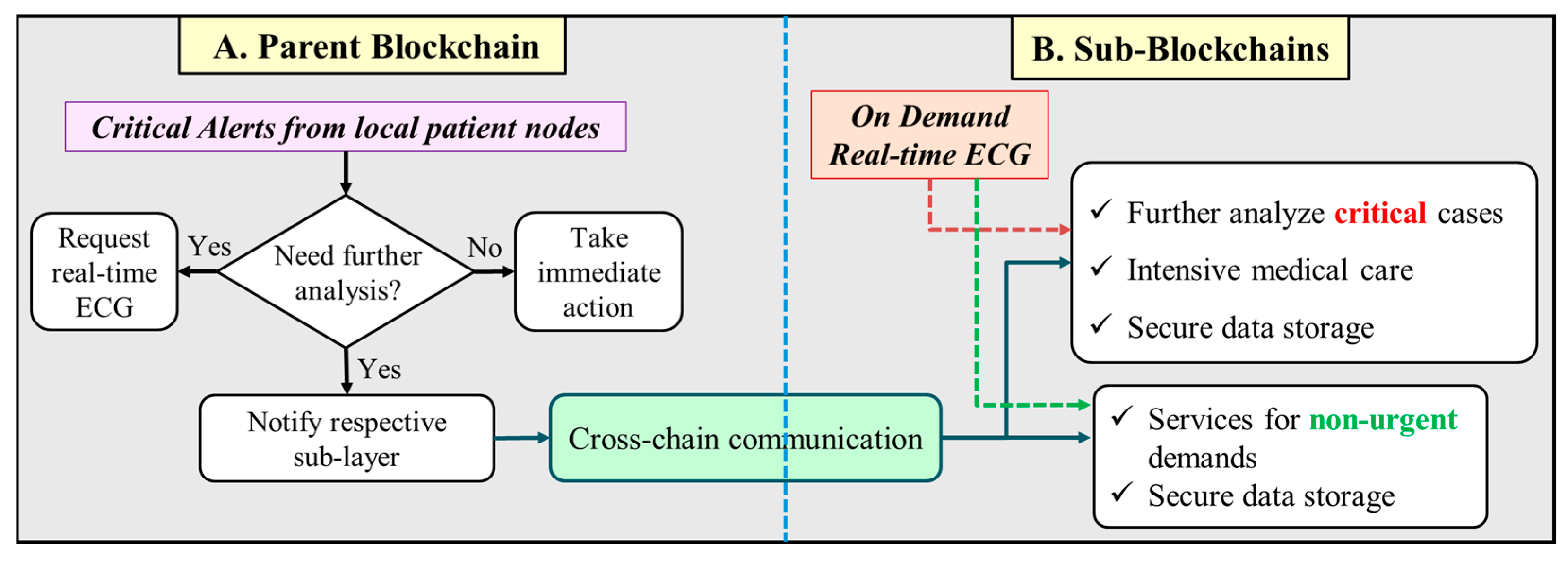
The fundamental structure of the proposed MLBN architecture forms with two main blockchain layers, as illustrated in Figure 3. The first blockchain layer, named the parent blockchain, is dedicated to providing immediate medical care while securely storing and managing metadata packages (i.e., critical alerts) received through the DCS from local patient nodes. Meanwhile, the further analysis of critical cases and remote real-time ECG monitoring is enabled through the interconnected secondary layers, called sub-blockchains, which are dedicated to separately managing different urgency levels while providing secure data storage facilities.
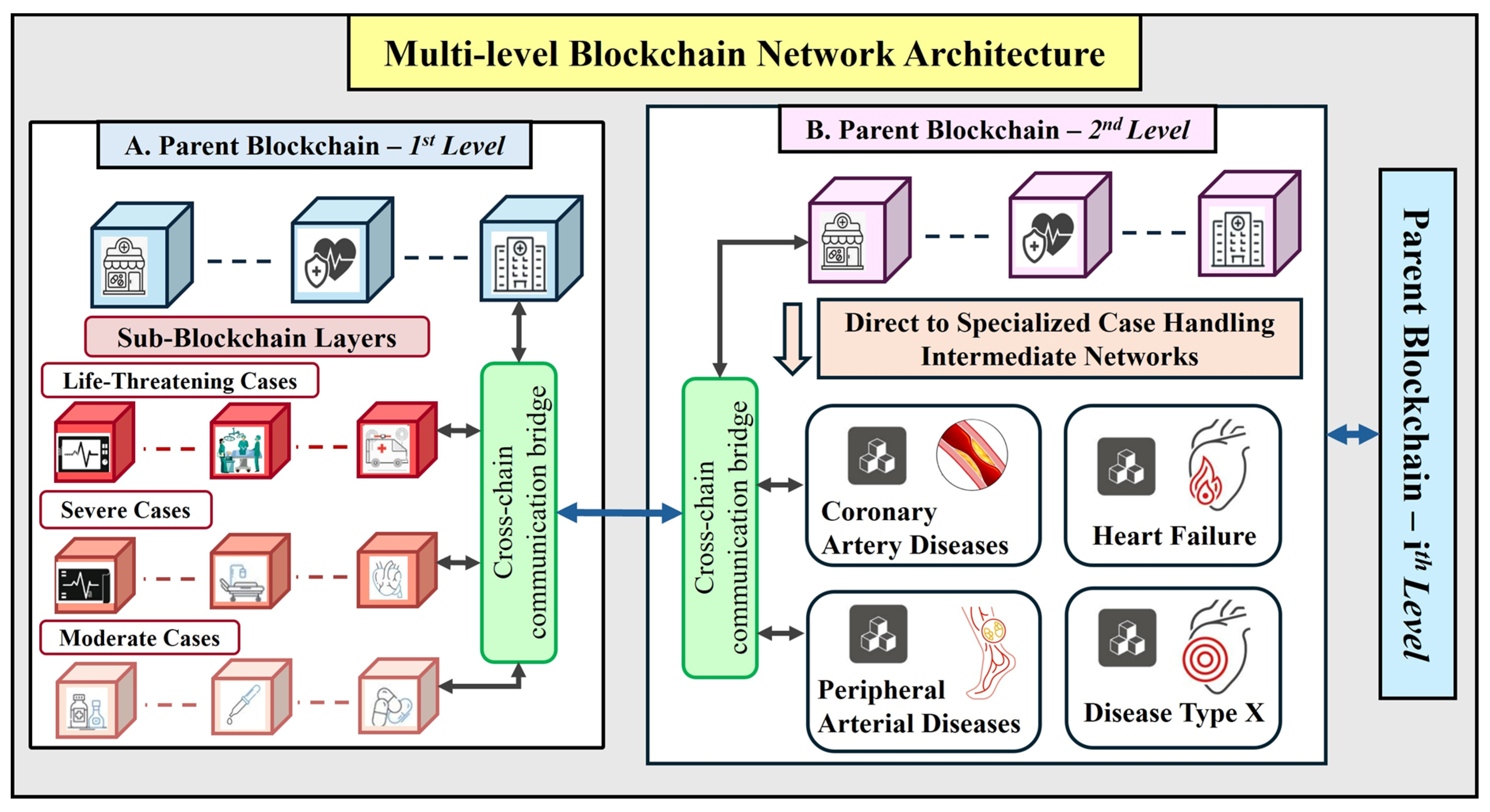
Figure 4 illustrates the proposed extensible MLBN architecture including two main parent blockchains. This architecture can be extended up to ‘i’ number of levels based on the requirements of the population within the deploying region. For instance, when patients require treatments beyond the expertise available at the first level, the next parent layer can be dedicated to facilitating care by navigating through intermediate blockchain layers to provide access to specialized professionals who are proficient in managing specific types of CVDs, consequently enabling personalized healthcare for each case.
Moreover, each blockchain layer defined within this architecture, including intermediate blockchain layers, communicates with one another through a cross-chain communication bridge. Initially, a privileged header account is defined within each blockchain network, which is exclusively authorized to receive and transmit secured ECG data packages between adjacent blockchains when it is mandatory. Meanwhile, other accounts within the respective blockchain are designated to perform regular tasks aimed at addressing patient-related issues. We enable cross-chain communication through a specially designed relay node that monitors events in real-time between adjacent blockchains, ensuring uninterrupted connectivity to meet patient requirements instantly. The simplified implementation details of cross-chain communication bridge are listed in Algorithm 3.
Algorithm 3: Cross-Chain Communication Bridge for Exchanging ECG Data between Blockchain Layers in MLBN
Step 1: Setting up ECG data package to be transmitted at nth Blockchain (BC)
Step 2: Encrypt packaged ECG data using relevant AES encryption key of header
   account in nth BC
Step 3: Generate hash digest
Step 4: Create digital signature
Step 5: Release secured ECG data package from nth BC to (n + 1)th or (n − 1)th BC
Step 6: Activate relevant cross-chain bridge
  Step6.1: Confirm connectivity between adjacent BCs
  Step 6.2: Authorize header accounts in both BCs
  Step 6.3: Continuously monitor for events
  Step 6.4: Detect patient data packs from nth BC
  Step 6.5: Securely record data in (n + 1)th or (n − 1)th BC
Furthermore, the hierarchical design of the proposed system architecture inherently mitigates possible privacy leakages during cross-chain communication. Particularly, the higher blockchain layers provide protection during the cross-chain communication between lower-level blockchain interactions, ensuring secure communication. Additionally, the isolation between each blockchain layer restricts the propagation of any possible breaches across the entire network, enhancing the overall system robustness.
Moreover, this isolation enables different systems to maintain their own data formats and protocols. Therefore, the interoperability between different systems can be facilitated by employing standardized interfacing mechanisms between blockchain layers such as data format conversion protocols. Therefore, our framework offers flexible data communication without requiring overall unified interoperability standards, providing a practical solution for data sharing across different systems.
Overall, the proposed innovative MLBN architecture offers inherent advantages, including: prioritization of patient requirements based on criticality of ECG data facilitated by urgency-driven ECG data packing scheme, provision of progressively advancing healthcare services according to the urgency levels predicted through simple yet efficient KNN-assisted classification approach, and enhanced remote ECG monitoring enabled by the uniquely incorporated communication strategy. Collectively, these next-level advancements elevate remote patient monitoring technology and common critical-care management in the cardiovascular healthcare domain to the next level. Consequently, providing efficient, reliable, and timely management of common CVDs leads to significantly improved patient outcomes.

Adaptive Security Mechanisms Within the MLBN

We propose priority-based, dynamic mechanisms specifically designed for authori-zation, access control, and consensus within each blockchain layer to efficiently process incoming ECG data packages from patient nodes through DCS or from other blockchain layers. These adaptive mechanisms prioritize patient needs, based on urgencies deter-mined by the KNN-based ECG classification procedure at patient locations.
Adaptive Cardiac Authorization Framework
Initially, in each blockchain layer, the arriving priority-oriented ECG data packages are processed through proposed adaptive cardiac authorization framework (ACAF). This framework incorporates adjustable authorization mechanisms to enable prioritized processing of ECG data according to different levels of urgency. As a result, this approach offers a rapid processing environment for critical ECG data packages, minimizing unnecessary processing delays and providing a flexible yet robust mechanism to authorize the relevant patient node. The implementation details of the proposed adaptive authorization framework are given under Algorithm 4.
Algorithm 4: Adaptive Cardiac Authorization Framework
Inputs: ULevel, Incoming ECG data package (DR), Digital Signature (S), RSA public key of patient node (KPub)
Output: Authenticity of patient node
Step 1: Conduct Primary Authorization (PA)
   HR = SHA256(DR): Generate hash digest
   SDE = DERSA(S, KPub): Decrypt digital signature (SDE)
Step 2: Verify authenticity through PA mechanism
   HR = SDE → “Authorized from PA”
   HRSDEUnauthorized from PA”
Step 3: Adaptive authentication rules based on ULevel
switch (ULevel)
  case (U1 & U2)
   PA → True → Immediate Processing (IP)
   PA → False → Secondary Authorization (SA)
   SA → Callback Authorization → True → IP & Notify Security Team (NST)
  case U3
   PA → True → Expedite Processing (EP)
   PA → False → SA → Massage Authorization
   SA → True → EP → NST
  case U4
   PA → True → Standard Processing
  case U5
   PA → True → Routine Processing
 end
Dynamic Healthcare Stakeholder Permission-Granting Mechanism
Following the authorization of user node, patient data is assessed through introducing dynamic healthcare stakeholder permission granting-mechanism, which is uniquely designed for controlling remote accessibility to healthcare services. Additionally, it prioritizes accessibility of each user, based on KNN-driven urgency classification, thereby granting various levels of admission to incrementally advancing healthcare resources through MLBN. The dynamic nature of this mechanism enables secured data processing, safeguarding each blockchain layer of MLBN from intruders while offering an immediate processing path, significantly reducing patient information execution delays when addressing critical patient requirements. The proposed dynamic mechanism for allowing accessibility to MLBN system is presented in Algorithm 5.
Algorithm 5: Dynamic Healthcare Stakeholder Permission-Granting Mechanism for Cardiovascular Care via MLBN
Inputs: ULevel, User information (Ux): [Role (URole), Region (URegion),
Permitted action (UAction), Purpose (UPurpose), License type (ULicence), Consent (UConsent)]
Output: Priority based accessibility
Step 1: Define access control rules (ACR)
   ACRRole {Patient, Physician, Cardiologist, Nurse, Researcher}
   ACRRegion {City, Medical Zone}
   ACRAction {Read, Write, Update, Share}
   ACRPurpose {Classification, Treatment, Checkup, Research}
Step 2: Define access control conditions (ACC)
   ACCLicence {True, False}: Medical license/National ID
   ACCConsent {True, False}: Patient consent for treatments
Step 3: Standard criterion (SC) for access
[(URole∈ ACRRole) (URegion ∈ ACRRegion) (UAction ∈ ACRAction) (UPurpose ∈ ACRPurpose)
(ACCLicence: True ∪ ACCConsent: True)] Access Granted”
Step 4: The dynamic criterions based on patient priority
 switch (ULevel)
case (U1 & U2)
   Assess (UConsent & ACCLicence)
case U3
   Assess (UConsent, ACCLicence & ACRPurpose)
case U4
   Assess (UConsent, ACCLicence, ACRPurpose & ACRRegion)
case U5
   Assess SC
 end
Priority-Driven Voting Mechanism
Subsequently, once authentication and access are granted through aforementioned adaptive mechanisms, critical patient information is broadcast to relevant medical stakeholder nodes within the respective blockchain layer in MLBN architecture to achieve agreement among medical community. Through our architecture, we propose a priority-driven voting mechanism that offers different majority voting criteria based on critical level of ECG data forecasted by KNN-supported classification approach, thereby offering a fast and smooth achievement of network consent, substantially saving time required to reach agreement and adding information to the blockchain layer. As a result, the requirements of patients can be addressed immediately, prioritizing their criticality via the amenities and expertise of the respective blockchain layer in MLBN. The detailed steps of introduced priority-driven voting mechanism are given under Algorithm 6.
Algorithm 6: Priority-Driven Voting Mechanism for Efficient ECG Data Processing and Blockchain Updates
Inputs: ULevel, Total number of medical stakeholder nodes in a blockchain layer (NT), Required majority voting percentage (M)
Output: Medical community agreement
Step 1: Define M for each ULevel
   U1 → M = 10%
   U2 → M = 20%
   U3 → M = 30%
   U4 → M = 40%
   U5 → M = 50%
Step 2: Broadcast patient information to all nodes in nth BC
Step 3: Conduct priority-driven voting mechanism for each medical stakeholder node
in nth BC: V = V + 1: Increment total votes if node accepts patient data
Step 4: Check for majority voting condition
    V N T M ; True → Accept Data, False → Reject Data
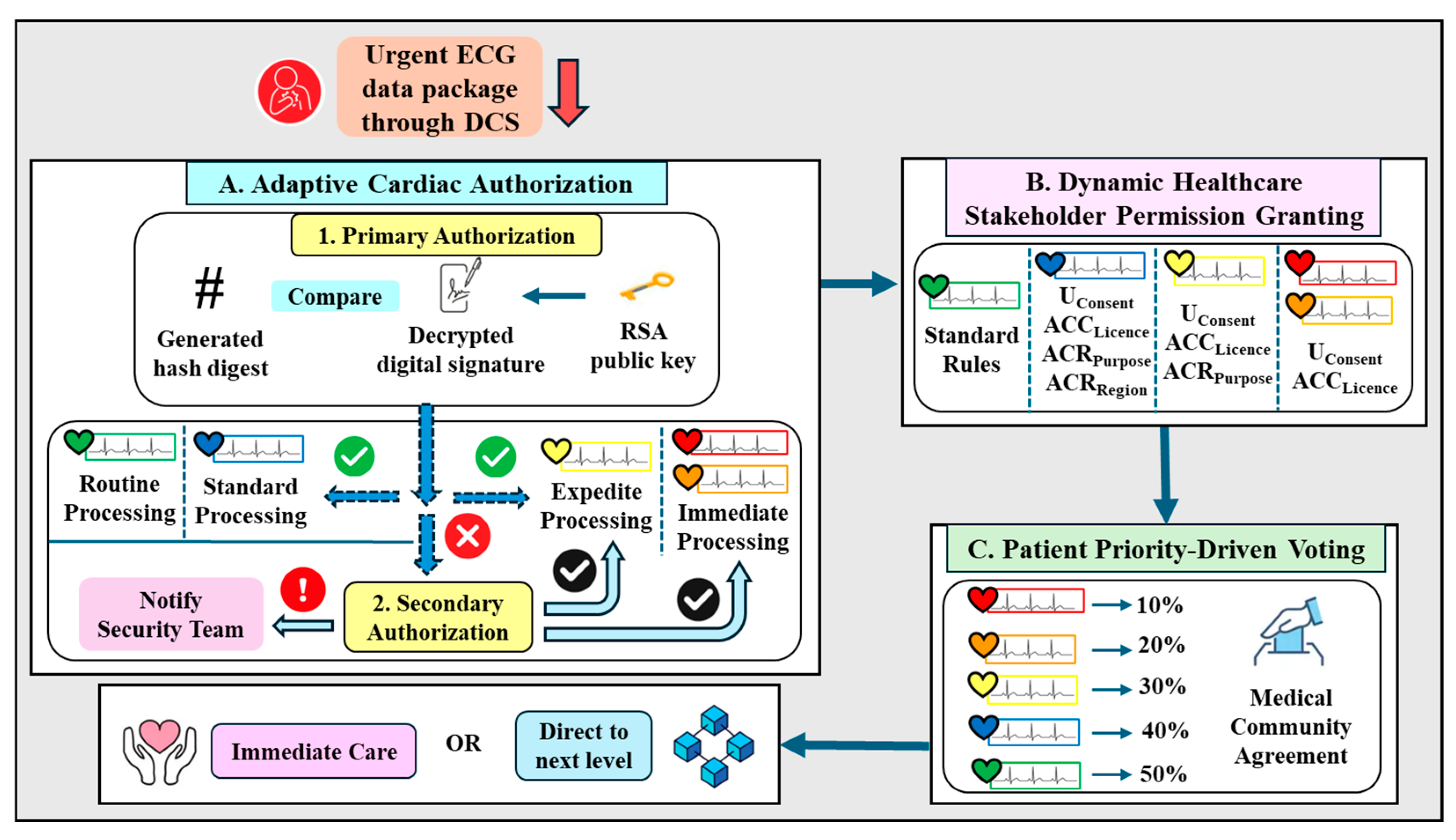
In addition, Figure 5 illustrates a blockchain layer, presenting afore-discussed hierarchical layers of dynamic security mechanisms proposed for priority-based ECG data processing at each blockchain layer.
In summary, the KNN-guided ECG signal urgency classifications, connected to MLBN via DCS, along with collective priority-based processing capabilities of proposed adaptable security mechanisms within MLBN, enable accelerated processing, while prioritizing highly critical ECG data, significantly minimizing data processing delays. Additionally, this approach confirms integrity, confidentiality and authenticity of patient data, thereby offering enhanced security for medical records while they are remotely monitored and stored in MLBN. Furthermore, the inherent nature of the flexibility and extensibility of this proposed system architecture offers the facility to incorporate emerging novel and advanced security mechanisms to provide protection against evolving security threats, without requiring fundamental changes to the overall system architecture. Resultantly, the proposed architecture, together with its intrinsic capabilities, stands out among the capabilities of existing IoMT systems.

4. Simulation Results and Analysis

4.1. ECG Classification and Differentiated Communication Strategy

The simulations for the first two phases are conducted and evaluated on MATLAB R2022b simulation environment using publicly available ECG signals (1000 fragments) dataset [26]. This dataset was used for simulation and validation purposes. However, the proposed framework is designed to support real-time ECG monitoring and analysis, where this dataset serves as a representative input to emulate the physical layer of ECG signal acquisition of our proposed framework.

4.1.1. Dataset Description

The above-mentioned dataset consists of ECG signal recordings from 45 patients (19 females, age: 23–89; and 26 males, age: 32–89). It contains pre-processed (segmented) ECG signals that are categorized into 17 classes, including normal sinus rhythm, pacemaker rhythm, and 15 types of cardiac dysfunctions (e.g., atrial fibrillation, supraventricular tachycardia, and ventricular flutter). Each ECG fragment consists of 3600 samples (10 s) recorded at a sampling frequency of 360 Hz with a gain of 200 mV and derived from a single lead (MLII) configuration [26].

4.1.2. ECG Signal Pre-Processing and Denoising

The ECG signals are first pre-processed to improve signal quality and ensure reliable feature extraction. Initially, the signal offset is removed by subtracting the mean value from the ECG signal, thereby eliminating the DC bias and stabilizing the signal for further analysis. Next, the ECG signal is divided into fixed-length segments of 720 samples (equivalent to 2 s at 360 Hz) to simulate real-time processing of ECG signals in windowed intervals. Subsequently, a bandpass filter with a frequency range of 0.5–40 Hz is applied to remove low-frequency noise and high-frequency artifacts, such as powerline interference. Following that, a moving average filter is applied with a filter size of eight samples to further smooth the ECG signal within each windowed interval, thereby removing residual high-frequency noise components. Consequently, this combined filtering approach provides an efficient yet computationally lightweight preprocessing and denoising, ensuring its suitability for implementation in an embedded environment.

4.1.3. ECG Feature Extraction

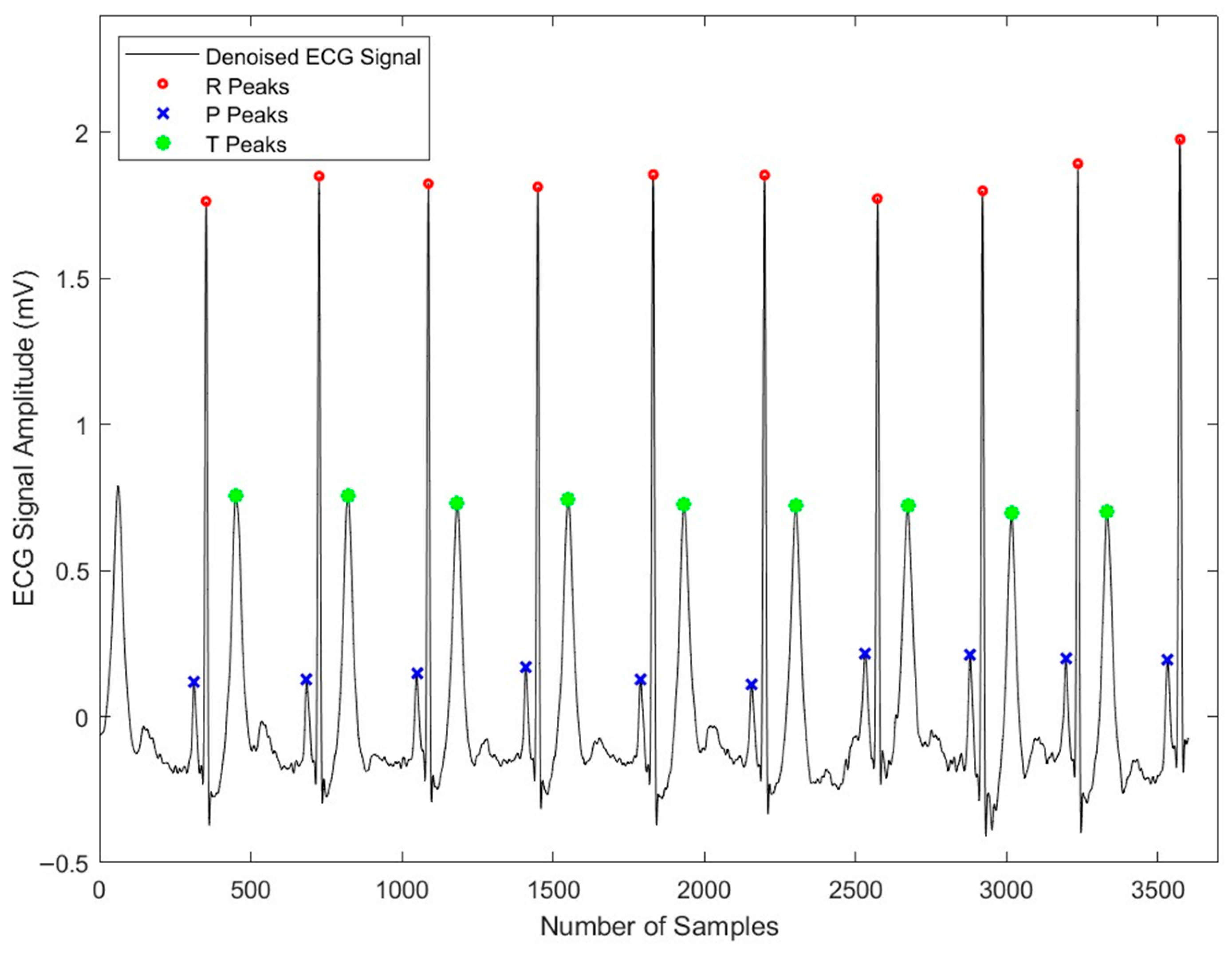
Following the preprocessing and denoising steps, time-domain morphological features are extracted from the clinically relevant ECG waveform’s main components: P wave, QRS complex, and T wave, by employing the developed ECG feature extraction function (FExtract). The main functionality of FExtract is as follows: First, the QRS complex features are extracted by detecting R-Peaks and then directly measuring the R-peak amplitude (AMR). Subsequently, R-wave duration (TDR) is estimated using a half-amplitude method, where the temporal width of the waveform is measured at 50% of the peak amplitude and R-peak-to-R-peak intervals (TDRR) are measured from the time difference between consecutive R-peaks. With the identified TDRR, the heart rate (HR) is derived (HR = 60/TDRR). Furthermore, for each detected R-peak, the corresponding P-wave is identified preceding the R-peak within a search window of 0.08–0.2 s and the T-wave is detected within a search window of 0.15–0.5 s following the R-peak. For both P and T waves, the peak amplitude (AMP, AMT) and duration (TDP, TDT) are computed using the half-amplitude method. The extracted features are accumulated across multiple windows and average values are obtained for robust feature representation. Additionally, Figure 6 presents the reliability and effectiveness of detecting ECG features from the developed FExtract function.
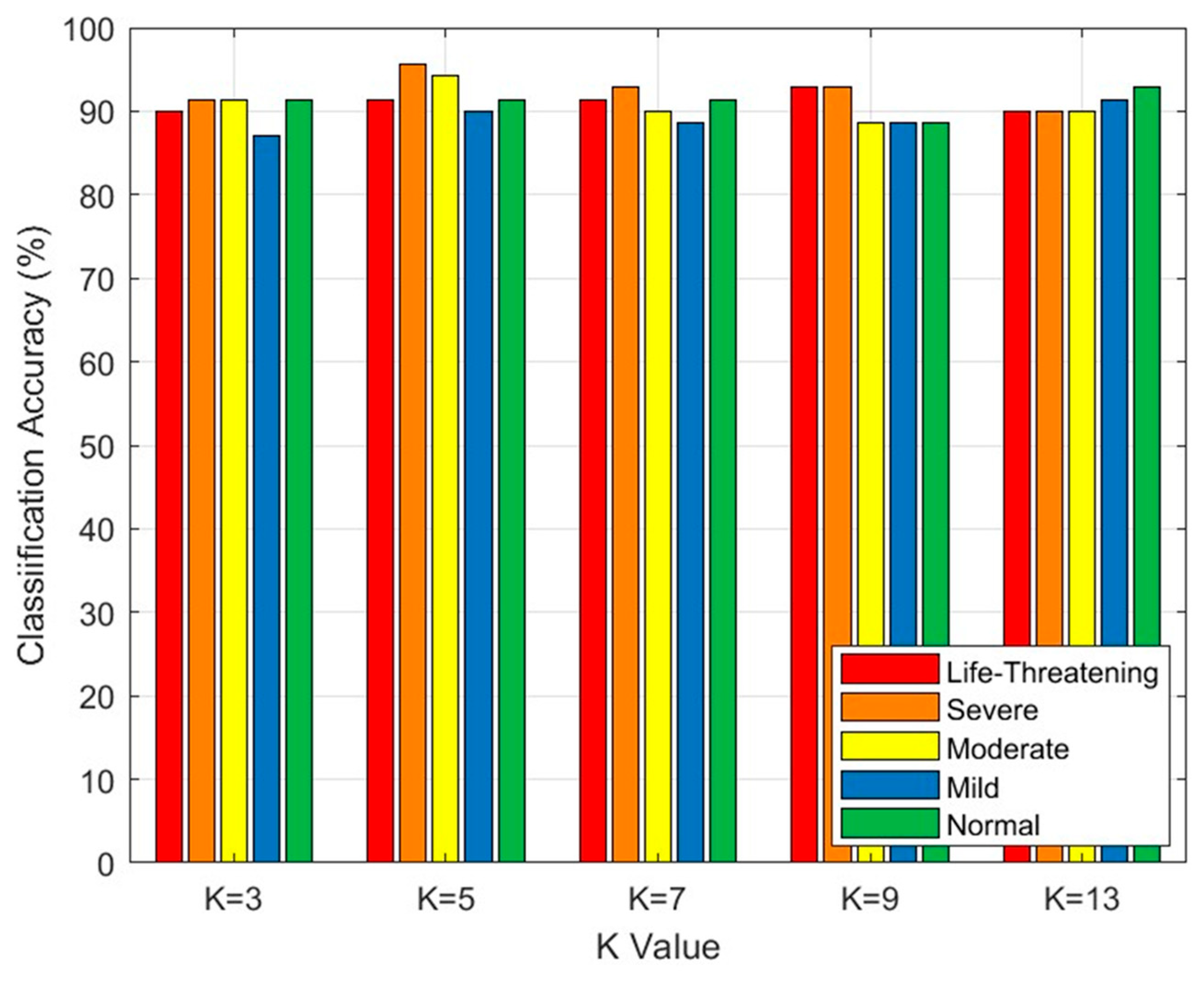
Algorithm 1 is realized by developing above discussed ECG signal denoising function, FExtract and utilizing the KNN model for ECG classification, while ensuring the feasibility for adaptation on embedded hardware. Initially, 233 ECG signals are selected from original dataset, following the guidelines provided in [27], to categorize ECGs representing a diverse range of common heart conditions into five urgency levels. These signals are utilized for training and testing the KNN model with a 7:3 split. The KNN model is tested with different K values (3, 5, 7, 9 and 13) using the testing dataset, with the intention of identifying the most suitable K value for the utilized training dataset.
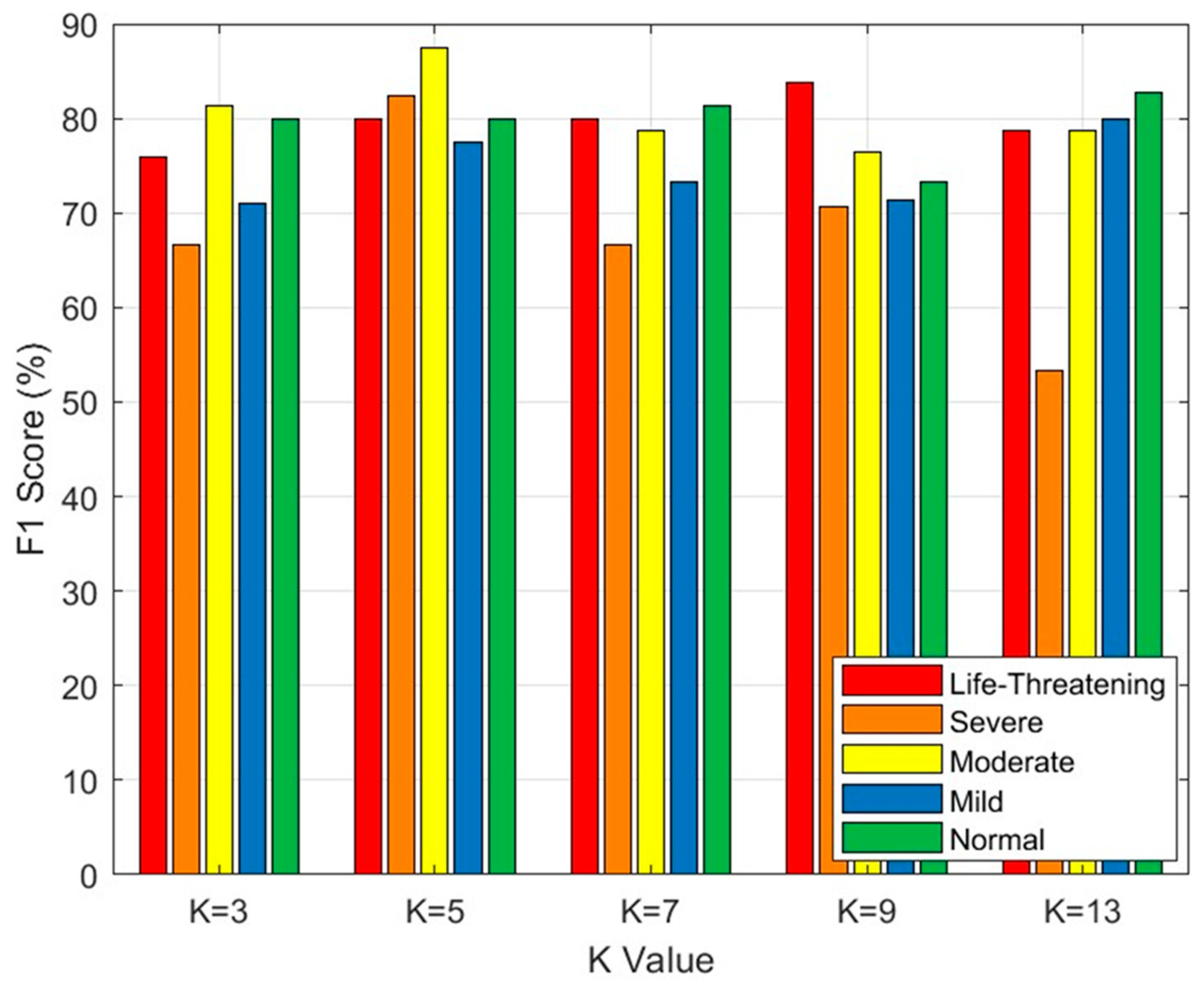
Furthermore, the classification accuracies and F1 scores for each urgency class are compared through a cross-validation process, as illustrated in Figure 7 and Figure 8, as the K value of the KNN model varies. The F1 score is specifically selected in addition to accuracy to compare prediction results, as it provides the harmonic mean of precision and recall, offering a balanced measure of the KNN model’s ability to minimize both false positives and false negatives. By carefully examining these two evaluation matrices, it can be concluded that K = 5 yields the best overall performance for ECG urgency categorization for the utilized training dataset. Moreover, this moderate choice of K offers a favorable balance between classification accuracy and computational efficiency, making it suitable for energy-constrained embedded environments. Furthermore, performance evaluation results of this simple KNN model with K = 5 are presented in Table 1 for each ULevel, demonstrating high performance for evaluation metrics: accuracy, specificity and F1 score, confirming the reliability and effectiveness of the KNN-driven real-time ECG classification method.
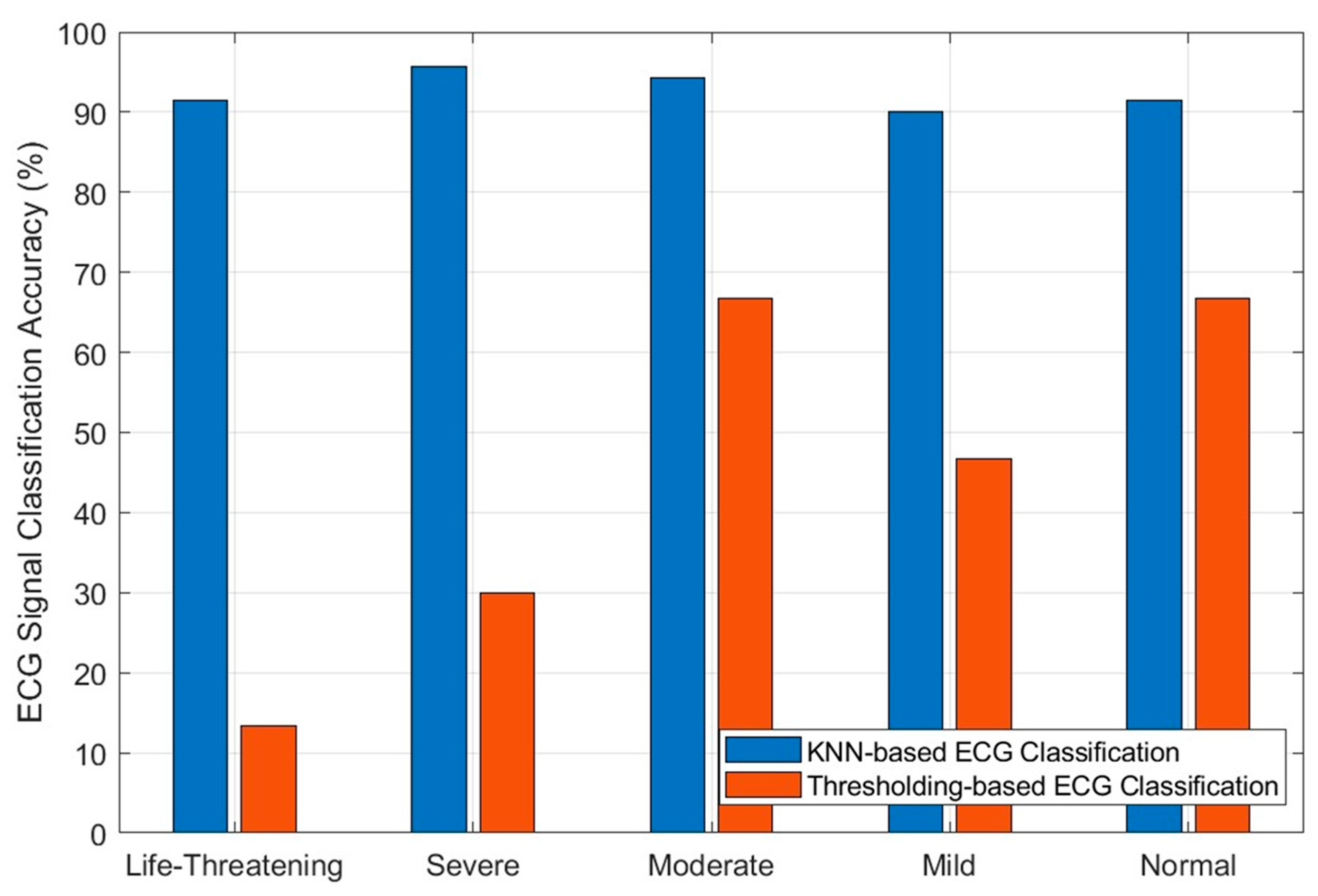
Furthermore, the reliability of classifying ECGs from the proposed KNN-based method is compared with a simple thresholding-based ECG classification method by utilizing testing dataset and the obtained results are shown in Figure 9. The thresholding-based method is conducted by simply examining ranges of two extracted features R-peak-to-R-peak interval and heart rate, according to the approximate ranges uses in clinical practice [28]. The simplified KNN-assisted method achieves over 90% accuracy across all classification classes, ensuring consistent and accurate ECG classification. This outperforms simple thresholding methods, making the proposed KNN-based method more reliable for ECG classification in embedded environments.
The promising performance evaluation results suggest that the simplified FExtract function, together with the KNN model, both specifically designed for implementation on embedded hardware to identify patient urgencies at local stations, are sufficiently accurate for classifying real-time ECG signals in practice. On one hand, the efficient yet simple KNN-based ECG classification phase is crucial due to its inherent ability to identify uncertain ECG patterns, ensuring that true patient emergencies are not missed. Most importantly, the incorporated DCS securely connects KNN-driven classified cases with proposed MLBN architecture, providing healthcare professionals with timely remote access to critical ECG signals in real-time, uplifting remote patient monitoring technology to the next level. Consequently, this enables further analysis of critical ECG signals with sophisticated AI models and testing them with advanced medical instruments, significantly improving patient outcomes. On the other hand, the KNN-based ECG classification procedure substantially reduces the amount of data transmitted to MLBN architecture, extensively conserving the battery power of the embedded setup, as the energy required for local data processing is much lower than that needed for wireless data transmission.
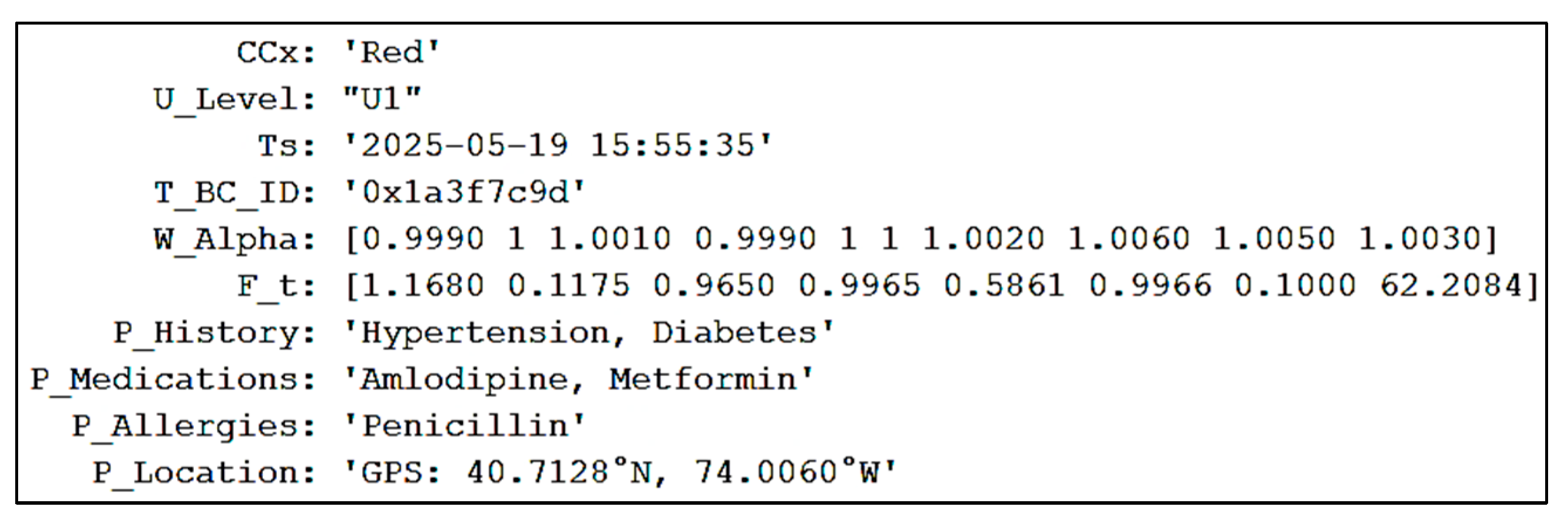
The proposed DCS is realized in MATLAB simulation environment, while maintaining the implementability of Algorithm 2 in the embedded hardware. For instance, Figure 10 illustrates a full data package (DFull) generated by the introduced priority-based ECG data packaging framework when a life-threatening condition is predicted through the simplified KNN-supported ECG classification mechanism. The proposed priority-based ECG data packaging framework determines whether data transmission is necessary, selects the appropriate type of data package and decides the amount of data that needs to be shared with the MLBN architecture, all based on the patient’s urgency level as recommended by the KNN-driven ECG analysis. As a result, this framework not only minimizes the volume of data transmitted but also significantly reduces the number of times that wireless data transmissions are required, thus preventing continuous information exchange with the MLBN. Meanwhile, this approach substantially preserves data transmission energy, consequently saving the battery life of the embedded hardware setup at patient nodes and making it a long-lasting, reliable and promising solution for the remote monitoring of patients with CVDs.
The generated data package by the proposed ECG data packaging framework is subsequently processed through multiple layers of security mechanisms, as detailed in Algorithm 2, within the embedded hardware at the patient’s location. The processed highly secure data package is shown in Figure 11, which is ready to be released to the wireless gateway. The employment of robust yet efficient hierarchical layers of security mechanisms for patient medical records before they are released to open-air transmission ensures confidentiality and integrity, maintaining the privacy of medical records. Also, it verifies the authenticity of the relevant patient, making this approach trustworthy and highly secure, preventing the involvement of unauthorized third parties. The incorporation of the proposed priority-based ECG data packaging framework with multi-layered security architecture forms the introduced DCS, resulting in a novel medical data communication strategy that advances medical data communication to the next stage.

4.2. Simulations for MLBN Architecture and Cross-Chain Communication Bridge

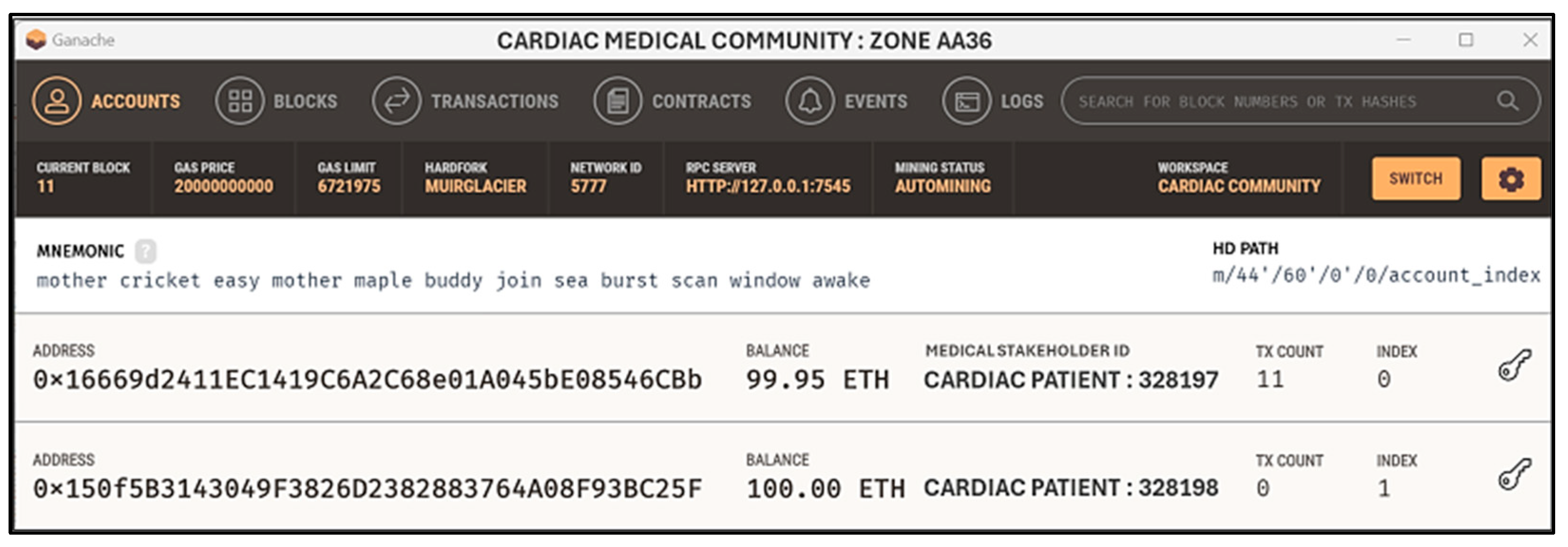
Simulations for innovative MLBN architecture are conducted by utilizing the Ganache UI, a personal blockchain simulation environment that is part of Truffle Suite, which is an Ethereum development framework [29]. Initially, the parent blockchain of MLBN architecture is formed within Ganache UI, as shown in Figure 12. Subsequently, proposed ACAF, which adaptively authorizes incoming data packages through DCS based on their priority, as predicted by KNN-guided classification process described in Algorithm 4, is implemented and tested. The realized ACAF is deployed as a smart contract on the parent chain, as presented in Figure 13.
Similarly, the other two proposed dynamic mechanisms: dynamic smart contracts and priority-based voting mechanism, detailed in Algorithm 5 and Algorithm 6 respectively, can be implemented and deployed to the respective blockchain layers of the MLBN architecture. These novel adaptive mechanisms enable rapid processing of ECG data packages within each blockchain layer of the MLBN framework, while providing multiple layers of security based on criticality of data as determined by KNN-guided analysis at patient nodes. Therefore, this flexible yet efficient and reliable data processing approach prevents unnecessary delays in handling incoming priority-oriented ECG data packages via DCS, enabling prompt attention to patient needs while significantly enhancing the security of medical records. Consequently, the integration of proposed priority-driven adaptive security mechanisms with novel MLBN architecture, revolutionizes the security aspects of the remote patient care experience.
Furthermore, a sub-blockchain layer is defined within the MLBN architecture for simulating the scenario of receiving real-time ECG signals from a patient node that requires further analysis with the facilities in the sub-layer. This layer is dedicated only to receive real-time ECG signals related to a specific critical urgency level like Life-threatening. Additionally, the real-time ECG signals are accepted only upon demands raised from the parent blockchain. In order to simulate this scenario, a smart contract is deployed within the defined sub-blockchain, as shown in Figure 14.
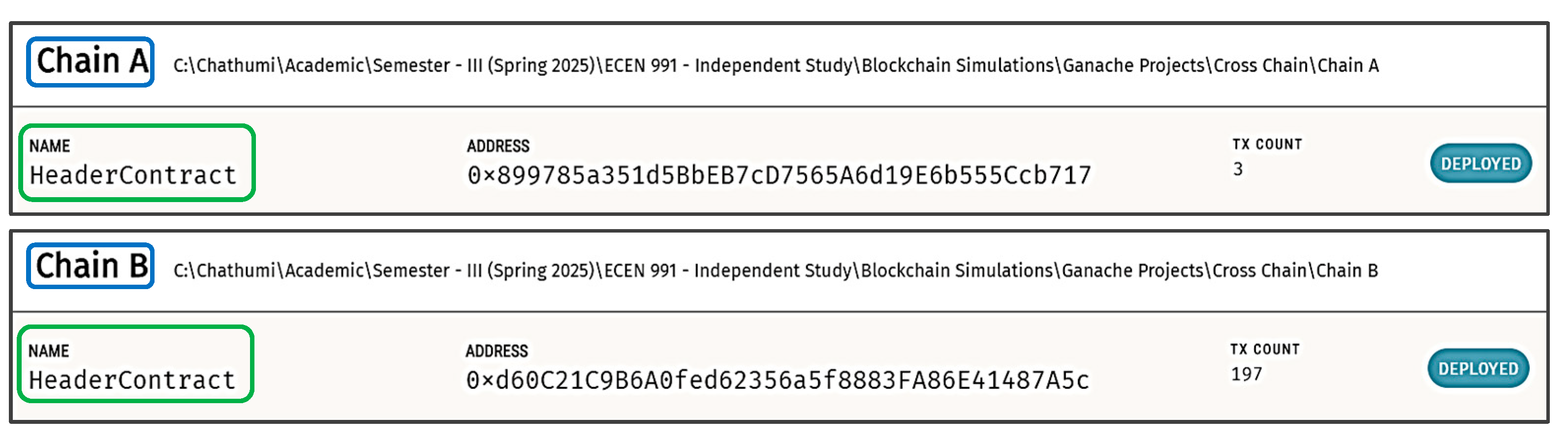
Moreover, as discussed under Algorithm 3, communication between two blockchain layers is established by designing a special relay node, realizing cross-chain communication bridges between each layer of MLBN architecture to exchange ECG data packages in real-time and when it is necessary. In order to simulate this scenario, two separate blockchain networks are configured in Ganache UI, representing two adjacent layers of blockchains in the MLBN system. Within these blockchain networks, two header accounts are defined with the privilege to communicate between adjacent blockchains, and this is achieved by deploying smart contracts containing the functionality of each header account in each blockchain network as shown in Figure 15.
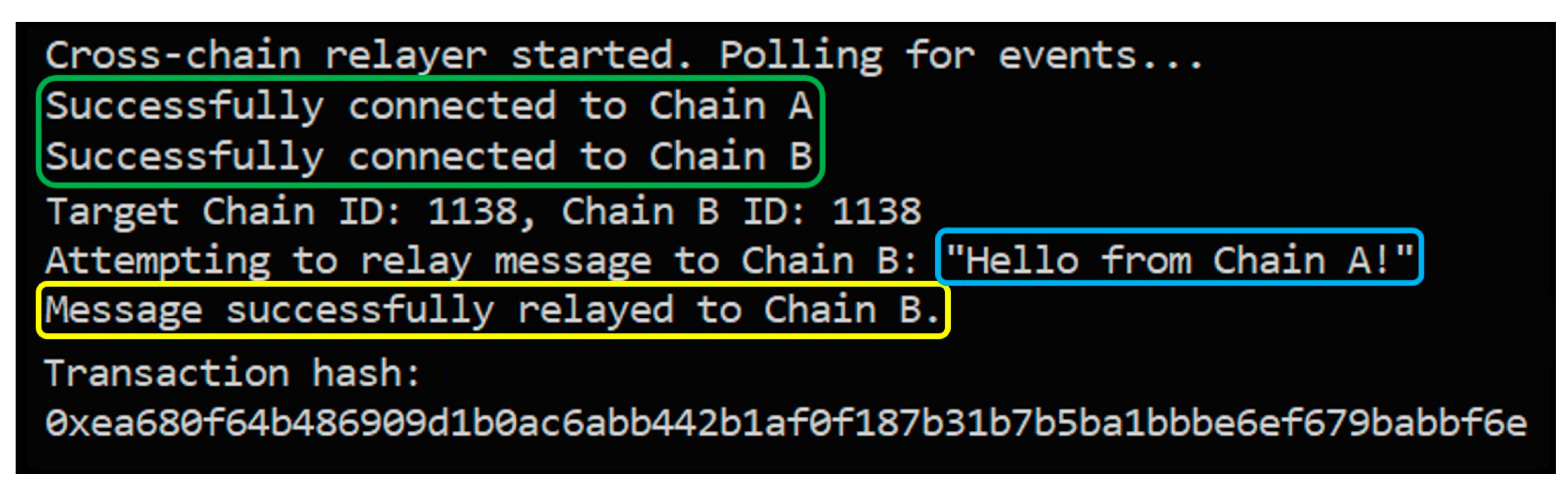
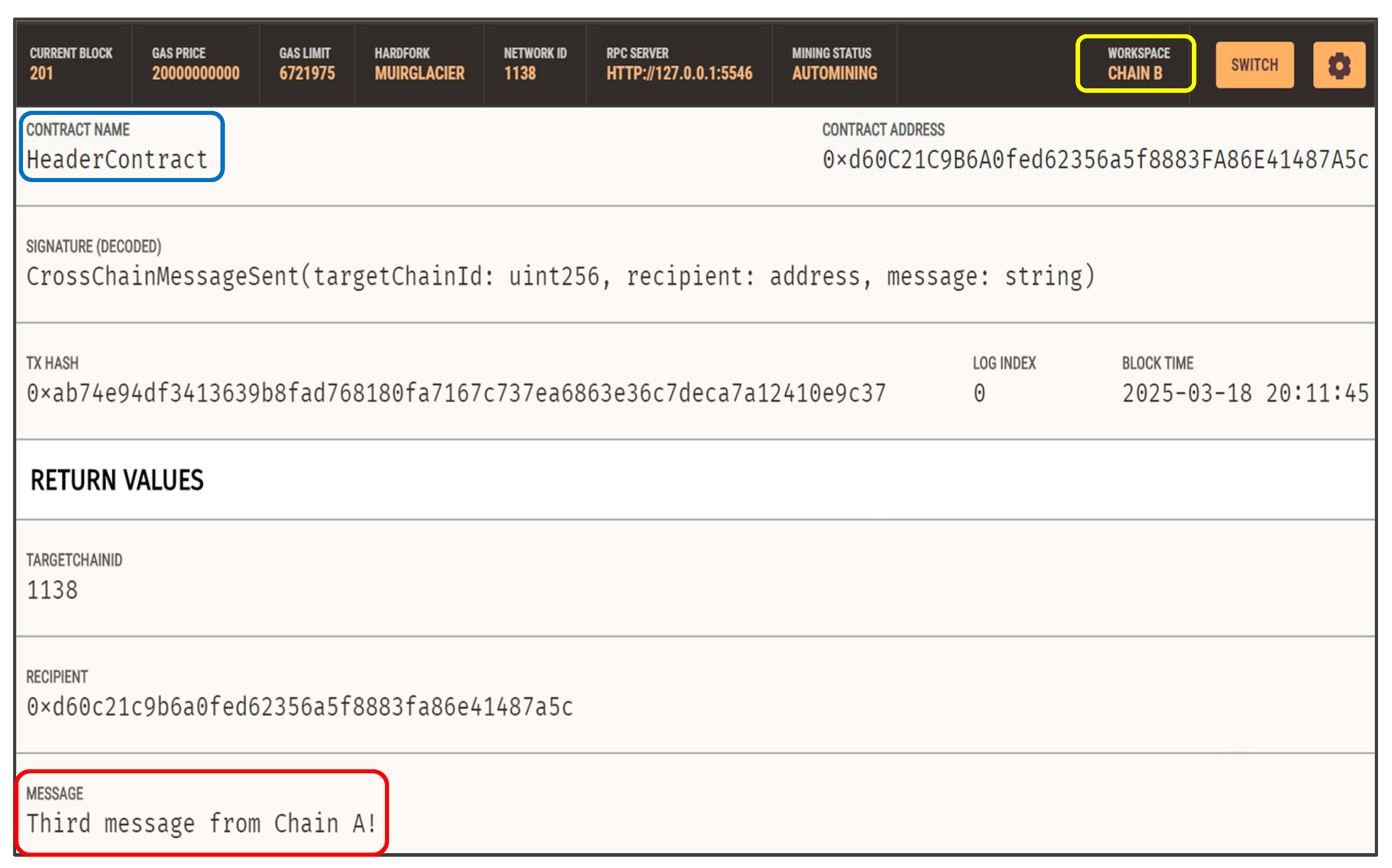
Following this step, the realized cross-chain communication bridge is tested by sending messages from one blockchain to the other to ensure that it can efficiently interchange data packages in real-time. As presented in Figure 16, output messages generated from bridge interface show that on-the-fly link is successfully established for exchanging data between two blockchain networks initiated in Ganache UI. Furthermore, Figure 17 illustrates the event log in Ganache UI for one blockchain after successfully receiving data from the other blockchain via the designed cross-chain communication bridge, demonstrating reliable and efficient data exchange between two blockchain networks, thereby enabling the facility to share priority-based ECG data packages between two layers of blockchains within MLBN architecture.
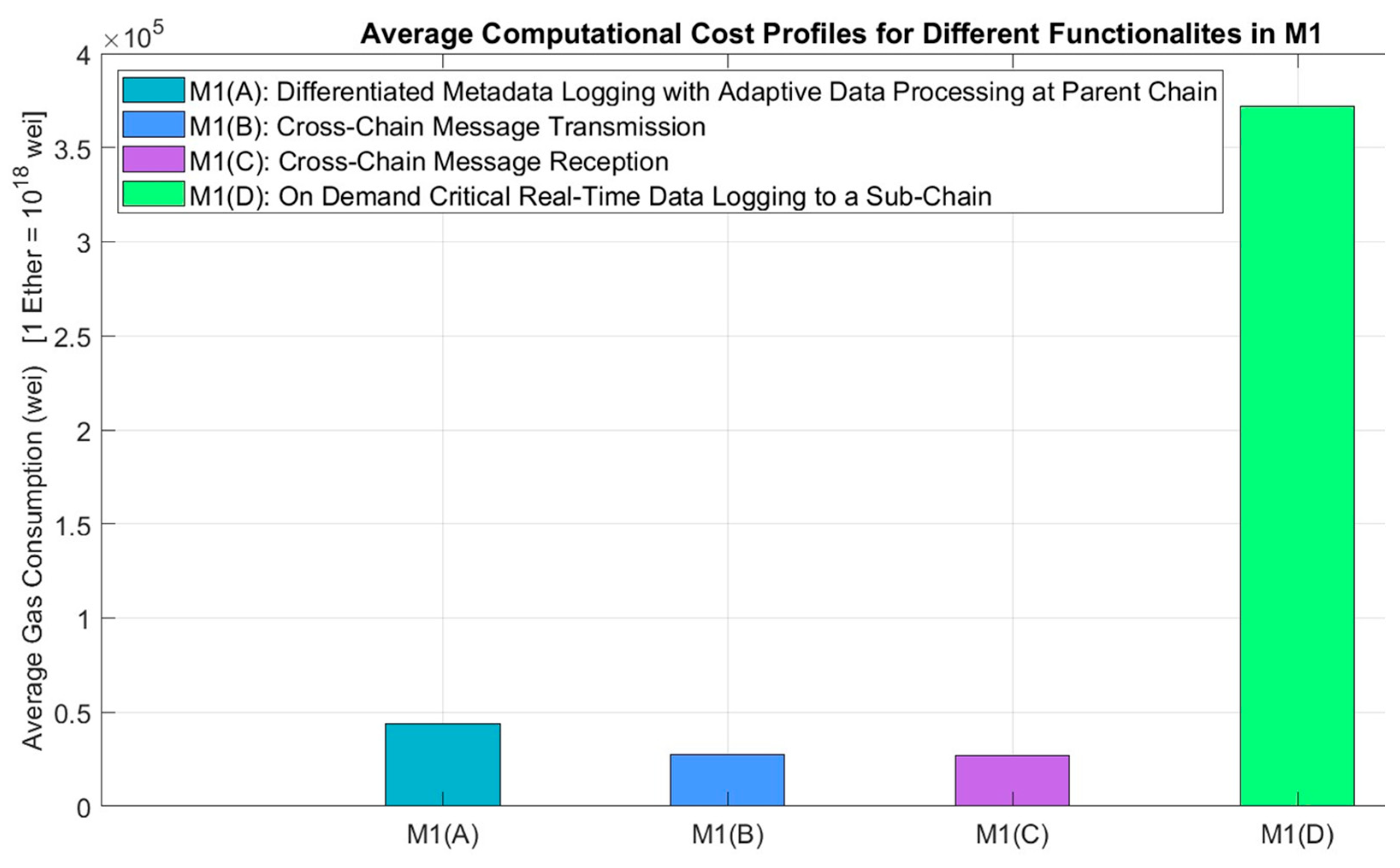
Finally, the average computational cost profiles of the simulations conducted above, representing the main operations within the proposed MLBN architecture, are analyzed. Figure 18 shows the average computational cost profiles of main functionalities in the MLBN architecture which is named Model 1 (M1). The cost profiles for each operation are given in terms of consumed average gas amounts, as they measure the required computational effort and storage within Ethereum virtual machine. Meanwhile, the users/patients need to pay for the resources they use with cryptocurrency from their digital wallets, and the payment amount is directly proportional to the gas consumption. The relationship between consumed gas amount and the total cost is given in the following expression: Total Fee (wei) = Consumed Gas × Gas Price; (1 Ether = 1018 wei). The considered main functionalities are as follows: M1(A): differentiated metadata logging to parent chain with adaptive data processing; M1(B): cross-chain message transmission; M1(C): cross-chain message reception; and M1(D): on demand critical real-time data logging to a sub-chain. M1(A), M1(B) and M1(C) operations are cost-effective while M1(D) operation is comparatively expensive according to the obtained cost analysis results presented in Figure 18. However, our architecture minimizes the number of M1(D) operations by transmitting real-time data only upon demand. As a result, our model provides better computational resource utilization and a cost-effective solution for the users.
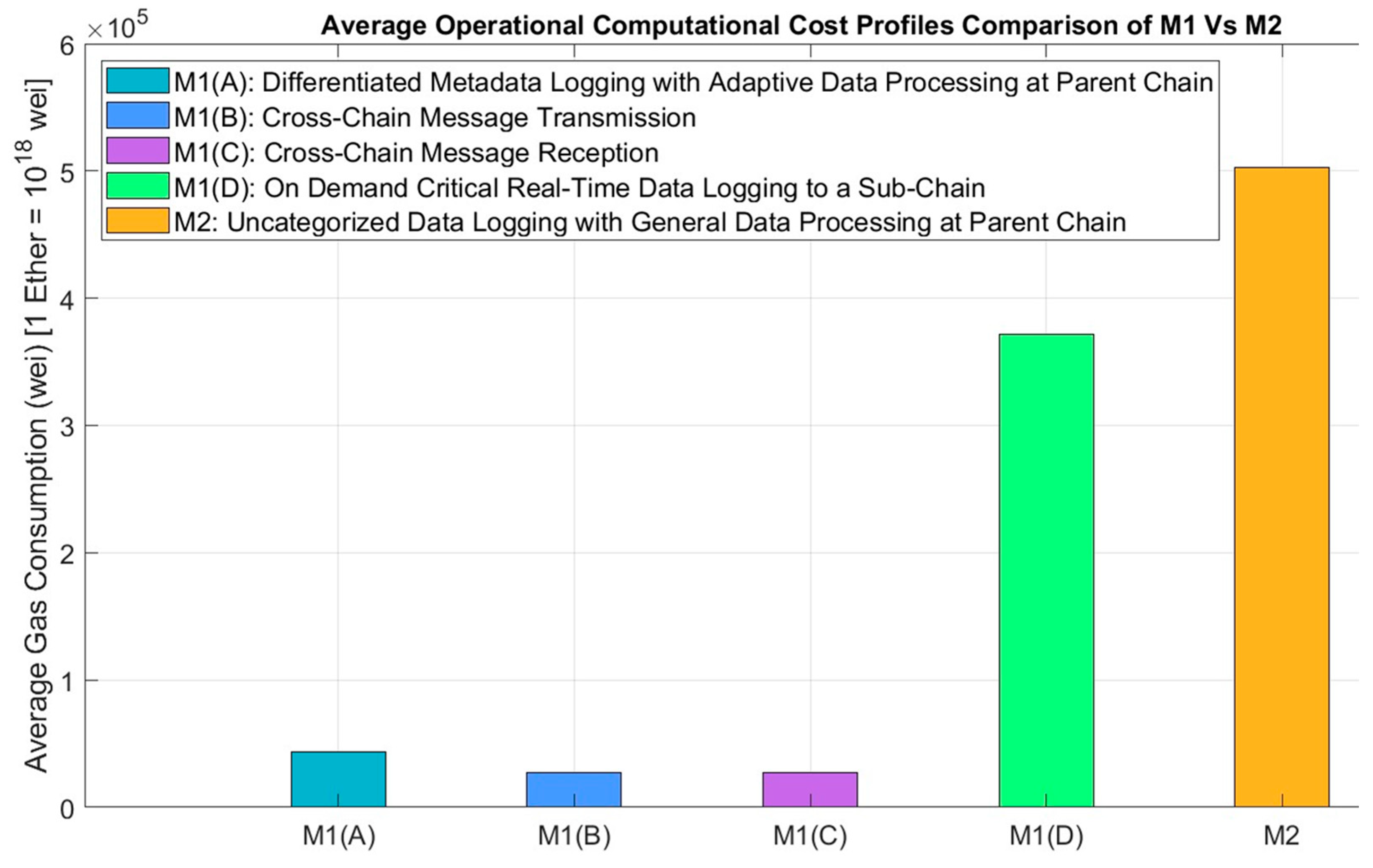
Furthermore, Figure 19 presents the comparison of average operational computation cost profiles of M1 vs. Model 2 (M2). M2 is utilized to demonstrate the operation of uncategorized continuous data logging to the parent chain with a general data processing mechanism. The significant cost difference between M1(A) and M2 accumulates over time as data volumes grow, causing processing delays and making M2 inefficient at larger scales. But via the M1(A) operation within the M1 modellogs only essential data to the parent blockchain through DCS and processes them adaptively based on their priority, enabling faster data processing. Hence, M1 has the feasibility to scale up the system for remote patient monitoring.
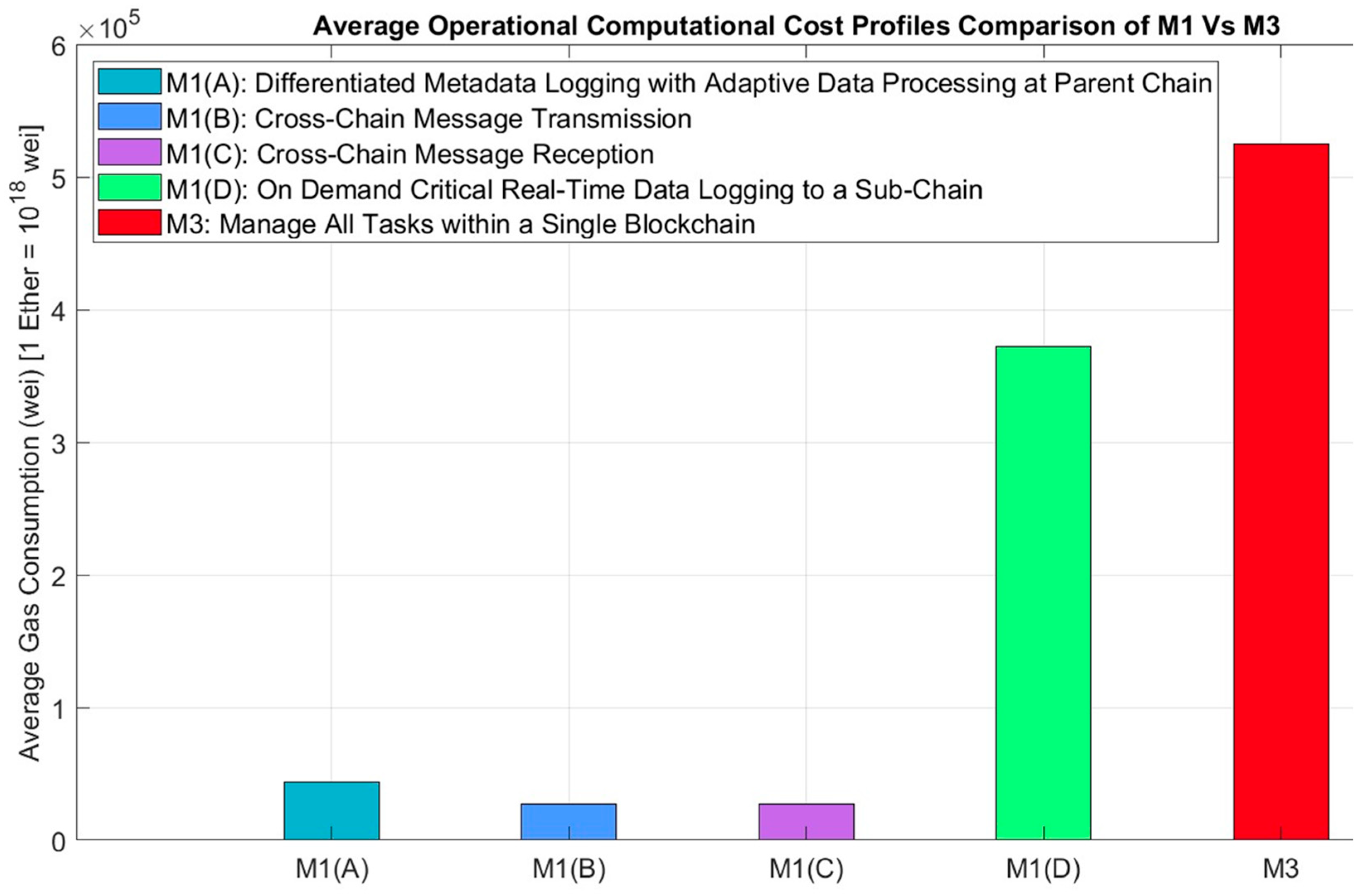
Moreover, Figure 20 presents the comparison of average operational computation cost profiles of M1 vs. Model 3 (M3). M3 is employed to demonstrate the operation of utilizing a single blockchain layer instead of using multiple blockchain layers to handle the following tasks: (1) categorized metadata logging, (2) adaptive data processing, and (3) logging real-time data for different patient cases based on demand. M1 provides remote patient monitoring by distributing the workloads among multiple blockchain layers, but M3 provides the same by managing all the workload within one single blockchain layer causing increased computational cost compared to M1. Consequently, when patient demands grow, M3 tends to struggle managing computational resources within a single blockchain environment. Meanwhile, M1 architecture enables better resource management as it provides services by distributing the tasks across multiple layers, leading to better performance even under increased workloads.
The average operational gas consumption analysis results demonstrate the effectiveness and feasibility of the proposed MLBN (M1) architecture for scaling up to cover a large city area or a small country. Meanwhile, it reduces workload and volume of medical data that needs to be handled by a single blockchain network, offering a realistic solution for data storage challenges. Consequently, our MLBN architecture becomes superior compared to the existing IoMT systems, as it operates in conjunction with multiple layers of adaptive security mechanisms within each blockchain layer, which are dynamically responding based on urgencies classified by KNN-assisted analysis and integrated novel DCS. This forms a robust, efficient and reliable single system, offering seamless remote access to progressively advancing healthcare services while providing high-level security for patient medical records.

5. Conclusions

Through our study, we proposed a three-stage framework to overcome existing unique challenges in remote patient monitoring systems. In the first stage, we designed an embedded hardware-driven KNN-based ECG classification process for accurately and efficiently classify urgency levels of patients with common CVDs at patient locations. The simulation results demonstrated high classification accuracies exceeding 90% across all urgency levels, reaching up to 95.71% for severe cases. Additionally, selecting an optimal K value (K = 5 for the tested dataset) for the KNN model provides a favorable balance between classification accuracy and computational efficiency, making it suitable for resource-constrained embedded environments.
In the second stage, we integrated a novel differentiated communication strategy (DCS) to minimize volume and to determine how often wireless medical data transmissions are required, while securing patient medical records throughout the transmission period. In the third stage, the proposed multi-level blockchain network (MLBN) architecture provides seamless connection between patients and healthcare professionals or services, enabling remote patient monitoring, while offering a practical solution for scalability challenges. Meanwhile, the implanted patient priority-based adaptive security layers and cross-chain communication bridges offer solutions for security challenges and real-time medical data processing delays. Additionally, the cost profile analysis results for the proposed unified architecture confirm the following facts: (1) improved computational resource utilization, (2) cost-effectiveness, and (3) scalability of the system even under increased workloads. With these next-level advancements, the proposed unified three-stage framework uplifts the remote patient monitoring research filed to a new phase while overcoming the current barriers.

Author Contributions

Conceptualization, C.S. and D.P.; methodology, C.S. and D.P.; writing—original draft preparation, C.S. and D.P.; writing—review and editing, C.S., D.P., M.H. and H.S.; supervision, D.P. and H.S.; project administration, D.P., M.H. and H.S.; funding acquisition, D.P., M.H. and H.S. All authors have read and agreed to the published version of the manuscript.

Funding

This research was funded in part by the Nebraska Research Initiative, in part by the Nebraska Collaboration Initiative, and in part by NIH under Grant 1U54GM115458. The content is solely the responsibility of the authors and does not necessarily represent the official views of the NIH.

Institutional Review Board Statement

Not applicable.

Informed Consent Statement

Not applicable.

Data Availability Statement

The datasets presented in this article are not readily available because the data are part of an ongoing research effort. Requests to access the data should be directed to the corresponding author.

Conflicts of Interest

The authors declare no conflicts of interest.

Abbreviations

The following abbreviations are used in this manuscript:
CVDCardiovascular disease
ECGElectrocardiogram 
MLMachine Learning 
DCSDifferentiated Communication Strategy 
MLBNMulti-Level Blockchain Network
AIArtificial Intelligence 
IoTInternet of Things
IoMTInternet of Medical Things 
KNNK-Nearest Neighbor
TinyMLTiny Machine Learning
FPGAField-Programmable Gate Array 
RNNRecurrent Neural Networks
PLCMPiecewise Linear Chaotic Map
IPFSInterplanetary File System 
RDARandom Deoxyribonucleic Acid 
AESAdvanced Encryption Standard
RSARivest Shamir Adleman
SHASecure Hash Algorithm
LBACLattice-Based Access Control
EVMEthereum Virtual Machine 
TMISTelecare Medical Information Systems
OPEOrder-Preserving Encryption
WCPWireless Communication Protocol
NB-IoTNarrowband IoT
ACAFAdaptive Cardiac Authorization Framework

References

  1. Moreno-Sánchez, P.A.; García-Isla, G.; Corino, V.D.; Vehkaoja, A.; Brukamp, K.; Van Gils, M.; Mainardi, L. ECG-based data-driven solutions for diagnosis and prognosis of cardiovascular diseases: A systematic review. Comput. Biol. Med. 2024, 172, 108235. [Google Scholar] [CrossRef] [PubMed]
  2. Medina-Avelino, J.; Silva-Bustillos, R.; Holgado-Terriza, J.A. Are wearable ECG devices ready for hospital at home application? Sensors 2025, 25, 2982. [Google Scholar] [CrossRef] [PubMed]
  3. Hannun, A.Y.; Rajpurkar, P.; Haghpanahi, M.; Tison, G.H.; Bourn, C.; Turakhia, M.P.; Ng, A.Y. Cardiologist-level arrhythmia detection and classification in ambulatory electrocardiograms using a deep neural network. Nat. Med. 2019, 25, 65–69. [Google Scholar] [CrossRef] [PubMed]
  4. Ribeiro, A.H.; Ribeiro, M.H.; Paixão, G.M.; Oliveira, D.M.; Gomes, P.R.; Canazart, J.A.; Ferreira, M.P.; Andersson, C.R.; Macfarlane, P.W.; Meira, W., Jr.; et al. Automatic diagnosis of the 12-lead ECG using a deep neural network. Nat. Commun. 2020, 11, 1760. [Google Scholar] [CrossRef]
  5. Sahu, M.L.; Atulkar, M.; Ahirwal, M.K.; Ahamad, A. IoT-enabled cloud-based real-time remote ECG monitoring system. J. Med. Eng. Technol. 2021, 45, 473–485. [Google Scholar] [CrossRef]
  6. Elangovan, D.; Long, C.S.; Bakrin, F.S.; Tan, C.S.; Goh, K.W.; Yeoh, S.F.; Loy, M.J.; Hussain, Z.; Lee, K.S.; Idris, A.C.; et al. The use of blockchain technology in the health care sector: Systematic review. JMIR Med. Inform. 2022, 10, e17278. [Google Scholar] [CrossRef]
  7. Kiania, K.; Jameii, S.M.; Rahmani, A.M. Blockchain-based privacy and security preserving in electronic health: A systematic review. Multimed. Tools Appl. 2023, 82, 28493–28519. [Google Scholar] [CrossRef]
  8. Serrano, L.P.; Maita, K.C.; Avila, F.R.; Torres-Guzman, R.A.; Garcia, J.P.; Eldaly, A.S.; Haider, C.R.; Felton, C.L.; Paulson, M.R.; Maniaci, M.J.; et al. Benefits and challenges of remote patient monitoring as perceived by health care practitioners: A systematic review. Perm. J. 2023, 27, 100–111. [Google Scholar] [CrossRef]
  9. Tagne, J.F.; Burns, K.; O’Brein, T.; Chapman, W.; Cornell, P.; Huckvale, K.; Ameen, I.; Bishop, J.; Buccheri, A.; Reid, J.; et al. Challenges for remote patient monitoring programs in rural and regional areas: A qualitative study. BMC Health Serv. Res. 2025, 25, 374. [Google Scholar] [CrossRef]
  10. Utsha, U.T.; Morshed, B.I. CardioHelp: A smartphone application for beat-by-beat ECG signal analysis for real-time cardiac disease detection using edge-computing AI classifiers. Smart Health 2024, 31, 100446. [Google Scholar] [CrossRef]
  11. Sadasivuni, S.; Saha, M.; Bhanushali, S.P.; Banerjee, I.; Sanyal, A. In-sensor artificial intelligence and fusion with electronic medical records for at-home monitoring. IEEE Trans. Biomed. Circuits Syst. 2023, 17, 312–322. [Google Scholar] [CrossRef]
  12. Kim, E.; Kim, J.; Park, J.; Ko, H.; Kyung, Y. TinyML-based classification in an ECG monitoring embedded system. Comput. Mater. Contin. 2023, 75, 1751–1764. [Google Scholar] [CrossRef]
  13. Ran, S.; Yang, X.; Liu, M.; Zhang, Y.; Cheng, C.; Zhu, H.; Yuan, Y. Homecare-oriented ECG diagnosis with large-scale deep neural network for continuous monitoring on embedded devices. IEEE Trans. Instrum. Meas. 2022, 71, 2503113. [Google Scholar] [CrossRef]
  14. Falaschetti, L.; Alessandrini, M.; Biagetti, G.; Crippa, P.; Turchetti, C. ECG-based arrhythmia classification using recurrent neural networks in embedded systems. Procedia Comput. Sci. 2022, 207, 3479–3487. [Google Scholar] [CrossRef]
  15. Wang, J.; Fan, S.; Alexandridis, A.; Han, K.; Jeon, G.; Zilic, Z.; Pang, Y. A multistage blockchain-based secure and trustworthy smart healthcare system using ECG characteristic. IEEE Internet Things Mag. 2021, 4, 48–58. [Google Scholar] [CrossRef]
  16. Sanober, A.; Anwar, S. A secure and privacy preserving model for healthcare applications based on blockchain-layered architecture. Int. J. Comput. Appl. 2024, 46, 1206–1218. [Google Scholar] [CrossRef]
  17. Haritha, T.; Anitha, A. Multi-level security in healthcare by integrating lattice-based access control and blockchain-based smart contracts system. IEEE Access 2023, 11, 114322–114340. [Google Scholar] [CrossRef]
  18. Ji, Y.; Zhang, J.; Ma, J.; Yang, C.; Yao, X. BMPLS: Blockchain-based multi-level privacy-preserving location sharing scheme for telecare medical information systems. J. Med. Syst. 2018, 42, 147. [Google Scholar] [CrossRef]
  19. Gaziano, T.A. Cardiovascular diseases worldwide. In Public Health Approach to Cardiovascular Disease Prevention & Management, 1st ed.; CRC Press: Boca Raton, FL, USA, 2022; Volume 1, pp. 8–18. [Google Scholar]
  20. Dalloul, A.H.; Miramirkhani, F.; Kouhalvandi, L. A review of recent innovations in remote health monitoring. Micromachines 2023, 14, 2157. [Google Scholar] [CrossRef]
  21. Shaik, T.; Tao, X.; Higgins, N.; Li, L.; Gururajan, R.; Zhou, X.; Acharya, U.R. Remote patient monitoring using artificial intelligence: Current state, applications, and challenges. WIREs Rev. Data Min. Knowl. Discov. 2023, 13, e1485. [Google Scholar] [CrossRef]
  22. Bhattarai, A.; Peng, D.; Payne, J.; Sharif, H. Adaptive partition of ECG diagnosis between cloud and wearable sensor net using open-loop and closed-loop switch mode. IEEE Access 2022, 10, 63684–63697. [Google Scholar] [CrossRef]
  23. Meder, B.; Asselbergs, F.W.; Ashley, E. Artificial intelligence to improve cardiovascular population health. Eur. Heart J. 2025, 46, 1907–1916. [Google Scholar] [CrossRef]
  24. Samaraweera, C.; Peng, D.; Bhattarai, A.; Liu, Y. Poster: Embedded-Based Differentiated Communication for Remote ECG Monitoring with a Multi-Level Blockchain System. In Proceedings of the 2024 33rd International Conference on Computer Communications and Networks (ICCCN), Honolulu, HI, USA, 29–31 July 2024. [Google Scholar]
  25. Samaraweera, C.; Bhattarai, A.; Peng, D.; Liu, Y.; Wang, H.; Sharif, H. Differentiated communication strategies for remote electrocardiogram monitoring with a multi-level blockchain system. IEEE Internet Things J. 2025, 12, 30507–30517. [Google Scholar] [CrossRef]
  26. Mendeley Data, ECG Signals (1000 Fragments). Available online: https://data.mendeley.com/datasets/7dybx7wyfn/3 (accessed on 28 February 2026).
  27. Joglar, J.A.; Chung, M.K.; Armbruster, A.L.; Benjamin, E.J.; Chyou, J.Y.; Cronin, E.M.; Deswal, A.; Eckhardt, L.L.; Goldberger, Z.D.; Gopinathannair, R.; et al. 2023 ACC/AHA/ACCP/HRS guideline for the diagnosis and management of atrial fibrillation: A report of the American College of Cardiology/American Heart Association Joint Committee on Clinical Practice Guidelines. Circulation 2024, 149, e1–e156. [Google Scholar] [CrossRef]
  28. Nursing CE Central, Emergency Severity Index. Available online: https://nursingcecentral.com/lessons/emergency-severity-index/ (accessed on 28 February 2026).
  29. Truffle Suite, Ganache Documentation. Available online: https://archive.trufflesuite.com/docs/ganache/ (accessed on 28 February 2026).
Figure 1. The proposed step-by-step approach for ECG monitoring and classification on an embedded hardware platform at a patient node, offering low-cost, low-power and user-friendly solution for continuous heart monitoring. In practical deployment, the system is designed to acquire real-time ECG signals via a wireless body sensor network for continuous patient monitoring. The acquired ECG signals are first denoised, followed by feature extraction, and then classified into five urgency categories by using a simplified KNN model.
Information 17 00383 g001
Figure 2. The proposed differentiated communication strategy for categorizing and determining the volume of ECG data packages based on their priority level, and for deciding the necessity of wireless data transmissions, thereby conserving the data transmission energy, consequently extending the battery life of the embedded setup at patient node. (1) The proposed priority-based data packaging framework to determine data volumes according to their priority and to sort package types into: full, critical, standard and preliminary packs. (2) The employed multiple security layers to provide enhanced security for data packages are: (a) encryption using AES-128 scheme, (b) generation of a hash digest using SHA-256 algorithm (pointed by # sign), and (c) generation of a digital signature using RSA algorithm with 2048 bits private keys.
Information 17 00383 g002
Figure 3. The fundamental two-layered architecture of the proposed MLBN system, providing immediate and intensive medical care, secure data storage facilities, and remote real-time ECG monitoring. The fundamental blockchain layers with their main functionalities are: (A) the parent blockchain for handling critical alerts received from local patient nodes through the DCS to provide immediate care, and (B) sub-blockchains for further analyzing, on demand, real-time ECG signals based on their critical level to enable intensive care. (Red and green dashed arrows represent the critical and non-urgent on-demand real-time ECGs, respectively, being received by the relevant sub-blockchain layer).
Information 17 00383 g003
Figure 4. The proposed extensible MLBN architecture presenting two main parent blockchains with the feasibility to extend up to ‘i’ number of levels based on the requirements of the population within the deploying region. (A) First level of parent blockchain for handling general patient cases based on their critical level, and (B) second level of parent blockchain for handling specific CVD types via intermediate blockchain layers, providing access to specialized professionals. (The dashed lines represent the interconnected nodes forming blockchain networks, while the arrows indicate the cross-chain communication links between the blockchain layers.).
Information 17 00383 g004
Figure 5. The proposed priority-based, adaptive security mechanisms within each blockchain layer for efficiently processing ECG data packages, minimizing data processing delays, and prioritizing patient needs while providing enhanced security. The proposed adaptive security mechanisms are: (A) adaptive cardiac authorization mechanism that enables adjustable authorization for prioritized and efficient data processing through primary and secondary authorization methods (Algorithm 4) (# sign: generated hash digest for comparison with the decrypted digital signature; green ticks: authorized by the primary authorization (PA) mechanism; red cross: not authorized by PA; black ticks: authorized by the secondary authorization mechanism; red warning sign: security alerts for the security team), (B) dynamic healthcare stakeholder permission-granting mechanism that enables secure remote access to healthcare services based on priority (Algorithm 5), and (C) priority-driven voting mechanism that achieves fast and smooth network consensus based on the critical level of the data, reducing the time required for network agreement (Algorithm 6).
Information 17 00383 g005
Figure 6. Reliable and effective ECG feature detection from the developed feature extraction function (FExtract). The average feature values for the preprocessed and denoised ECG signal over the analyzed time period (3600 samples) are: AMR: 1.8396 mV, TDR: 0.0275 s, TDRR: 0.9941 s, HR: 60.55 bpm, AMP: 0.1624 mV, TDP: 0.0294 s AMT: 0.7280 mV and TDT: 0.0864 s.
Information 17 00383 g006
Figure 7. The obtained classification accuracies, which reach 90% across all tested values of K (3, 5, 7, and 9) for classifying the five urgency classes using the KNN model, demonstrate the model’s reliability in detecting each urgency category. Among the evaluated K values, K = 5 yields the best overall performance for ECG urgency classification on the utilized training dataset. This moderate choice of K offers a favorable balance between classification accuracy and computational efficiency, making it suitable for energy-constrained embedded environments.
Information 17 00383 g007
Figure 8. The F1 scores for classified five urgency classes using the KNN model across different values of K (3, 5, 7 and 9) are presented. Among the evaluated K values, K = 5 yields the best overall performance for F1 score on the utilized training dataset, indicating the KNN model’s ability to minimize both false positives and false negatives.
Information 17 00383 g008
Figure 9. The accuracy comparison between KNN-based ECG classification method (blue) vs. thresholding-based ECG classification method (orange) across five urgency levels for tested 163 ECG recordings. The KNN-based method has achieved above 90% accuracy outperforming the simple thresholding method, thereby providing more reliable ECG classification from the KNN-based method on embedded devices.
Information 17 00383 g009
Figure 10. A detected Life-Threatening (U1) case from the KNN-based classification method and formed Full data package from the proposed priority-based data packaging framework, containing minimal yet key patient details, thereby reducing the volume of the data package that needs to be transmitted wirelessly to the MLBN, consequently conserving the wireless data transmission energy. The data package contains following details: CCx (color code), ULevel (patient urgency level), Ts (timestamp), T_BC_ID (target blockchain ID), W_Alpha (ECG waveform segment with detected U1 abnormality), F_t (measured average ECG parameter set), P_History (patient history), P_Medications (previously recommended medications), PAllergies (specific allergies), and PLocation (patient location).
Information 17 00383 g010
Figure 11. The deployment of robust yet efficient hierarchical security layers prior to releasing the priority-based critical data package into the open-air transmission, ensuring confidentiality, authenticity, and integrity of data while preserving the privacy of medical records. The secured data package processed through multiple security layers contains: D_EN, encrypted patient data using AES-128 encryption scheme; H, hash digest generated by SHA-256 algorithm; S, digital signature created using patient’s 2048 bits RSA private key; and BC_ID, blockchain ID.
Information 17 00383 g011
Figure 12. The personal blockchain network deployed in Ganache UI, representing a cardiac community at parent chain within the MLBN architecture. This blockchain network is dedicated to receive critical alerts through the DCS, that are identified by the KNN-based classification method.
Information 17 00383 g012
Figure 13. The deployed AdaptiveCardiacAuthorization smart contract (pointed by blue color box), which logs differentiated/categorized metadata and enables priority-based adaptive data processing within the parent chain, thereby providing faster authorization for incoming data packages, minimizing data authorization delays.
Information 17 00383 g013
Figure 14. The deployed CriticalCareChain smart contract (pointed by red color box) on a sub-blockchain layer within the MLBN, enabling on-demand, critical (e.g., Life-threatening case), real-time ECG signal logging for further analysis. The proposed parent and sub-layered structure not only distributes the workload across the overall MLBN system for efficient and fast data processing, but also enables priority-based medical care that improves the patient outcomes.
Information 17 00383 g014
Figure 15. Two independent blockchain networks configured in Ganache UI, representing adjacent layers of blockchains within the MLBN, named as Chain A and Chain B (pointed by blue color boxes). Smart contracts named HeaderContract (pointed by green color boxes) are deployed within the defined header accounts within both chains that are exclusively authorized to enable interchain communication through cross-chain communication bridges when required.Consequently facilitating secure, real-time connectivity between successive blockchain layers within MLBN system.
Information 17 00383 g015
Figure 16. The developed relay node interface realizing the cross-chain communication bridge between Chain A and B. The successfully relayed message from Chain A to Chain B confirms the efficiency of the on-the-fly link between the two blockchains for reliable data sharing. (Green box: successful connectivity between Chain A and B; blue box: relaying message; yellow box: confirmation of successful message reception.).
Information 17 00383 g016
Figure 17. The event log of Chain B (pointed by yellow box) after successfully receiving data from Chain A via the designed on-the-fly cross-chain communication bridge, thereby further confirming the reliability and efficiency in data exchange between the two adjacent blockchains of the MLBN system. (Blue box: deployed smart contract—HeaderContract; red box: successfully recorded message at Chain B.).
Information 17 00383 g017
Figure 18. Comparison of average computational cost profiles of four main functionalities in the proposed MLBN architecture named Model 1 (M1). The evaluated main functionalities in M1 are: M1(A): differentiated metadata logging to parent chain with adaptive data processing, M1(B): cross-chain message transmission, M1(C): cross-chain message reception, and M1(D): on demand critical real-time data logging to a sub-chain. M1(A), M1(B) and M1(C) functionalities are cost-effective compared to M1(D), but the proposed M1 model minimizes the number of M1(D) operations through transmitting real-time data only upon demand. As a result, M1 provides better computational resource utilization and a cost-effective solution for remote health monitoring.
Information 17 00383 g018
Figure 19. Comparison of average computational cost profiles of Model 1 (M1) versus Model 2 (M2). The compared models are: M1: the proposed MLBN architecture, and M2: represents the operation of uncategorized continuous data logging to the parent chain with a general data processing mechanism. M2 has significantly higher average gas consumption compared to the M1(A) operation, which accumulates over time as data volumes grow, thus making M2 inefficient at larger scales, but M1 logs only essential data to the blockchain and process data efficiently via M1(A) operation. This strategy significantly reduces the data accumulation over time, consequently providing a scalable solution for remote patient monitoring by efficiently managing data volumes and processing.
Information 17 00383 g019
Figure 20. Comparison of average computational cost profiles of Model 1 (M1) versus Model 3 (M3). The compared models are: M1: the proposed MLBN architecture, and M3: a single blockchain to handle following multiple tasks: (1) categorized metadata logging, (2) adaptive data processing, and (3) logging real-time data for different patient cases based on demand. M3 has higher computational cost compared to M1 as it manages all the workload within a single blockchain, causing computational resource management challenges upon increased workloads, but M1 offers better resource management by distributing the workload across multiple blockchains, offering better performance even under increased workloads.
Information 17 00383 g020
Table 1. High-performance evaluation results demonstrate the reliability and effectiveness of the KNN-driven ECG classification method. The classification accuracy, specificity, and F1-score obtained from the KNN-driven ECG classification at K = 5 for the 163 tested ECG signal recordings are presented.
Urgency ClassAccuracy (%)Specificity (%)F1 Score (%)
Life-Threatening (U1)91.4394.5480.00
Severe (U2)95.71100.0082.35
Moderate (U3)94.2394.5487.50
Mild (U4)90.0092.7277.42
Normal (U5)91.4394.5480.00
Disclaimer/Publisher’s Note: The statements, opinions and data contained in all publications are solely those of the individual author(s) and contributor(s) and not of MDPI and/or the editor(s). MDPI and/or the editor(s) disclaim responsibility for any injury to people or property resulting from any ideas, methods, instructions or products referred to in the content.