


Abstract
Traditional hydraulic transmission education is often hindered by the subject’s theoretical complexity and abstract nature. To address these challenges, this study introduces the Immersive Hydraulic Transmission Laboratory (IHTL), a virtual teaching system designed to enhance practical learning and theoretical comprehension. The IHTL comprises three key modules: hydraulic components, disassembly experiments, and hydraulic circuits. The system’s effectiveness was evaluated through a comparative study of 80 mechanical engineering students. Results showed that the experimental group exhibited a 20% higher rate of inquiry and achieved average test scores 20.475 points higher than the control group. Statistical analysis confirms that the IHTL significantly outperforms traditional teaching methods in both stimulating student interest and improving learning outcomes.
1. Introduction
Hydraulic transmission is a multidisciplinary field that integrates principles from fluid mechanics, mechanical design, automatic control, and electrical engineering. Recognized as a fundamental component of modern mechanical engineering, it remains one of the most critical forms of power transmission [1]. Its unique technical advantages have driven its widespread adoption across diverse sectors, ranging from aerospace and marine engineering to heavy industry, agriculture, and environmental protection. Consequently, hydraulic transmission has become an indispensable technology in industrial modernization and a core competency for contemporary engineers. To meet the growing demand for expertise in this area, over 3000 universities in China have incorporated hydraulic transmission courses into their curricula.
Ideally, hydraulic transmission education should seamlessly integrate theoretical instruction with experimental practice. However, traditional pedagogical methods in this field currently face significant limitations. Common issues include the use of antiquated teaching materials, obsolete experimental equipment, and a disproportionate emphasis on theory at the expense of hands-on application [2,3]. These constraints not only impede students’ comprehension of complex concepts but also diminish their engagement with the course. Consequently, there is an urgent need to reform the instructional methodology for hydraulic transmission. Innovative approaches must prioritize the development of practical skills and the stimulation of intrinsic motivation. By incorporating interactive and experiential learning paradigms, educators can foster a deeper conceptual understanding and cultivate sustained student interest.
Virtual Reality (VR) technology employs advanced computational simulation to generate immersive three-dimensional environments. Its transformative potential has been demonstrated through extensive application across diverse domains, including medicine, construction, tourism, and education [4,5,6,7,8]. In the pedagogical context, researchers have leveraged VR to construct high-fidelity virtual environments that elucidate complex structural principles and abstract concepts. This technological integration empowers educators to visualize intricate experimental procedures, thereby enhancing student comprehension and learning efficiency.
Therefore, combining VR technology with teaching represents a critical step in the reform of hydraulic transmission education. In this paper, we propose an Immersive Hydraulic Transmission Laboratory (IHTL) that integrates virtual reality technology into hydraulic transmission experimental teaching. Unlike existing VR-based engineering laboratories that primarily focus on system visualization or standalone virtual experiments, this study makes the following contributions.
- (1)
- The proposed IHTL is explicitly designed from a course-oriented pedagogical perspective, targeting the learning difficulties of hydraulic transmission, such as abstract working principles, invisible internal structures, and limited access to physical experimental resources. The VR laboratory is systematically embedded into the instructional process rather than serving as a supplementary demonstration tool.
- (2)
- The IHTL emphasizes interactive and experiment-oriented learning, allowing students to actively operate virtual hydraulic systems, explore system behaviors, and engage in experimental decision-making, thereby promoting learner autonomy and engagement.
- (3)
- Beyond system development, this study evaluates the instructional effectiveness of the proposed laboratory by examining its impact on students’ learning efficiency, learning outcomes, and learning motivation, providing empirical evidence for the educational value of immersive VR-based hydraulic laboratories.
2. Literature Review
2.1. Hydraulic Transmission Course
Hydraulic transmission is a crucial course in the field of engineering. Recognizing the challenge posed by the complex and difficult-to-understand theory of traditional hydraulic transmission courses, numerous scholars have dedicated their research to addressing this issue. They have focused on two primary aspects: increasing the emphasis on experimental teaching to enhance students’ hands-on ability, and innovating the teaching mode to facilitate easier comprehension of the theoretical concepts.
In the traditional hydraulic transmission course, the emphasis is mainly on theoretical teaching, overlooking the significance of experimental learning. Wang proposes constructing an experimental teaching system to complement theoretical aspects, increasing the proportion of practical teaching and deepening students’ understanding [9]. However, traditional experimental teaching methods can be rigid and single-functioned, with students merely following a predetermined sequence of operations without grasping the underlying significance. In modern times, Ruth Megawati and Su have attempted to combine practical projects with students’ course learning to enhance comprehensive abilities [2,10]. Nevertheless, this approach requires students to possess specific hands-on skills and necessitates substantial resources, posing challenges for universities with large student populations to implement effectively. To address these limitations, Ji et al. have developed a Unity3D (4.6.1)-based software for hydraulic transmission experimental teaching. This software ensures flexibility in conducting experiments, resolves the scarcity of physical training platforms in educational institutions, and achieves comparable outcomes to physical experiments [11]. However, it is important to note that Unity3D has technical limitations that may hinder fully immersing students in the learning experience. These various approaches and initiatives highlight the ongoing efforts to strike a balance between theoretical and practical instruction in hydraulic transmission courses. Innovative teaching methods, combining theoretical knowledge, experimentation, and project-based learning, are being explored to provide students with a comprehensive and engaging education in hydraulic transmission engineering.
Meanwhile, transformative approaches to theoretical teaching methods in hydraulic transmission courses have been pioneered by scholars. Evelina Staneviciene [12] explores multimedia teaching as an effective method to enhance teaching quality and learning efficiency. However, due to the limitations of multimedia content, it remains primarily an auxiliary tool. To optimize its utilization, Thomas M. Cavanagh [1] proposes combining multimedia theoretical teaching with practical instruction, creating a new teaching model that enhances students’ learning efficiency. Despite this improvement, the mode still faces challenges in depicting the model’s working principles and internal structure adequately for better student comprehension. In contrast, the increasingly advanced VR technology offers a more realistic showcase of the working principles and internal structure of the model. As a result, within the field of hydraulic transmission teaching, the prominence of multimedia technology is gradually giving way to the growing usage of VR technology.
2.2. VR Technology
VR is a practical technology developed in the 20th century, enabling the creation of realistic virtual worlds where people can perform operations akin to the real world [13]. Initially used in gaming [14], VR technology has seen increasing research for its application in education, driven by equipment updates and technological advancements. Mirauda presented an innovative virtual laboratory to demonstrate drainage measurement technology in open channel flow, enhancing student motivation while reducing costs, time, and potential hazards associated with live experiments [15]. Similarly, Aruanno, Beatrice, et al. proposed a VR-based educational tool to aid students in learning about lattices, enabling users to explore different lattices at their own pace and grasp related concepts [16]. Gorman and Ali conducted an investigation into the influence of virtual reality on education in civil engineering infrastructure management and chemistry laboratory. Through meticulously controlled experiments, Gorman and Ali reached the conclusion that the integration of virtual reality yields a beneficial impact on educational outcomes within this domain [17,18]. Beyond these, VR applications in education encompass diverse areas such as renewable energy introduction [19], pre-service teacher training [20], fetal lies and performance descriptions [21], and midwifery education [22,23,24].
However, despite the widespread use of VR in education, few studies have focused on its application in hydraulic transmission courses. This paper addresses this gap by developing an immersive hydraulic transmission laboratory. This laboratory utilizes VR technology to vividly present difficult-to-understand theoretical teachings and provides highly immersive and diverse experimental content, thereby enhancing students’ learning efficiency, improving learning outcomes, and increasing enthusiasm for learning.
3. System Design
3.1. Hardware Devices and Development Platform
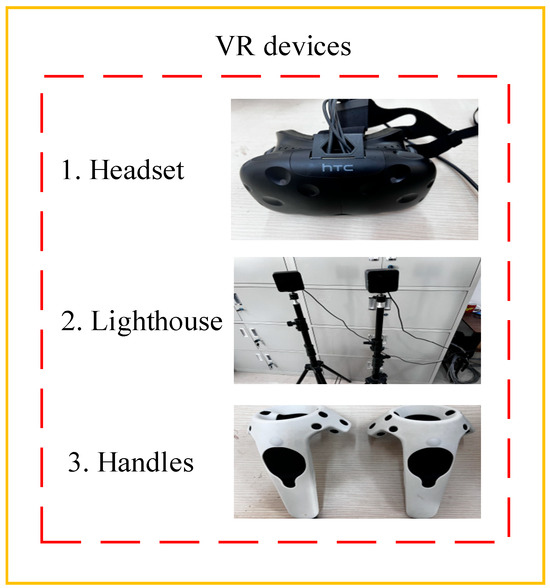
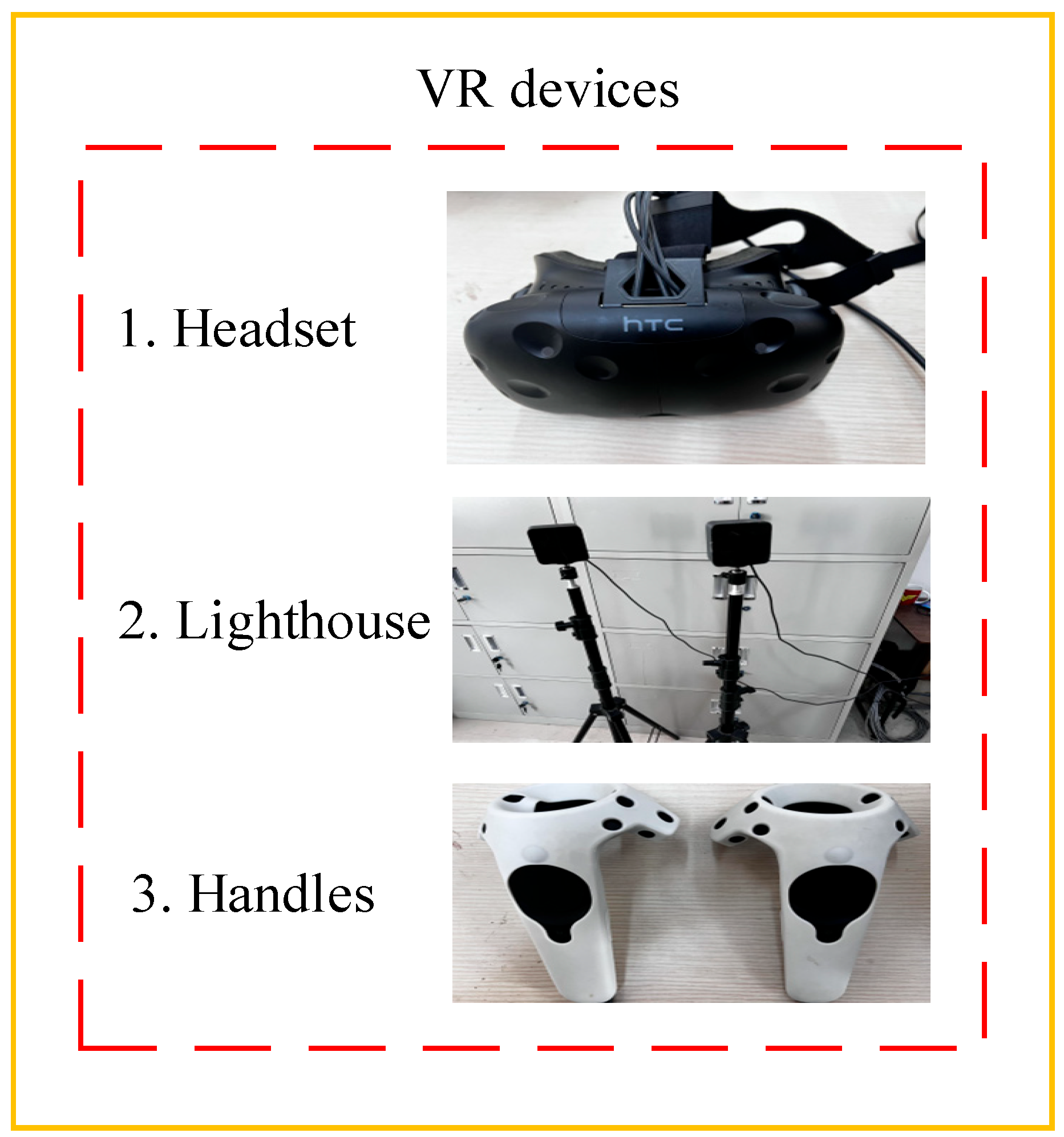
In the development of the IHTL, the hardware device serves as the carrier and manifestation platform. Figure 1 illustrates the hardware device, which consists of VR devices such as a virtual reality headset, two positioning base stations (Lighthouse), and two handles.
Figure 1.
VR devices containing Headset, Lighthouse, and Handles.
The selection of the software development platform for the IHTL is based on four key criteria: open-source availability, compatibility with hardware devices, model operability, and realism in virtual environment rendering. Table 1 presents the chosen development tools, which encompass virtual reality development platforms (Unity 3D (4.6.1), SteamVR (1.17.2)), modeling software (Solidworks (2023), 3Dsmax (2022)), plug-ins (Vuforia (10.28.4), DOTween (1.0.375)), and the programming language C#.
Table 1.
Software development platforms and their roles.
3.2. System Design and Development Process
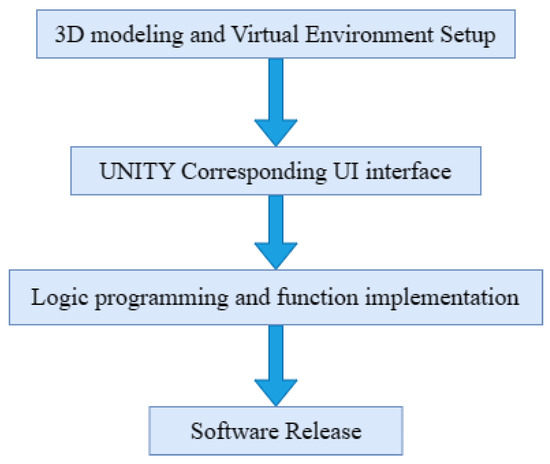
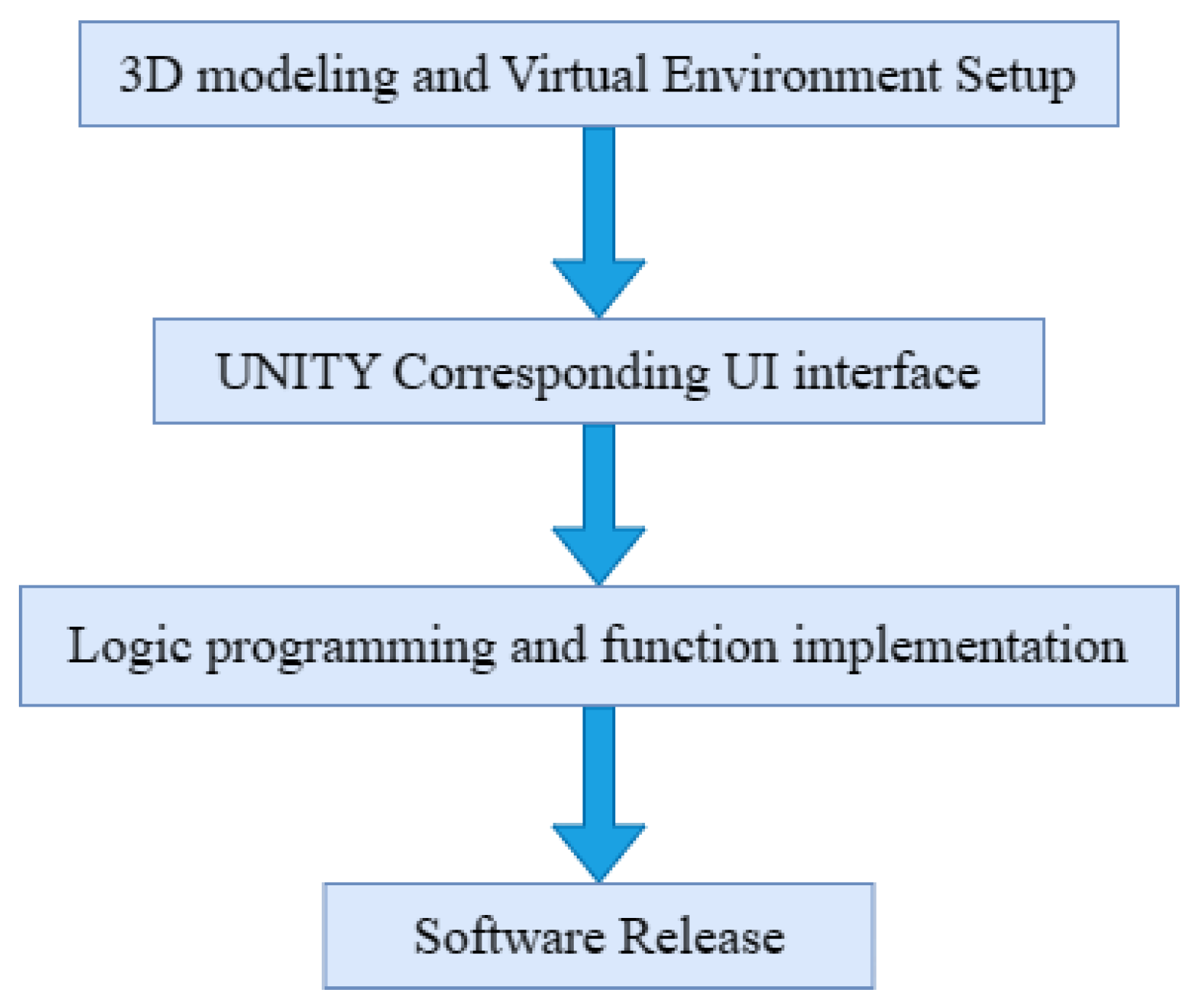
Figure 2 shows the development process of the IHTL system on the hydraulic transmission course. The development process includes 3D modeling and virtual environment configuration, design and creation of corresponding UI interfaces in Unity 3D, logic programming and function implementation, culminating in the final software release.
Figure 2.
The process of system development.
3.3. 3D Modeling and Virtual Environment Setup
In the formulation of the IHTL system, the imperative lies in the three-dimensional modeling of hydraulic components and virtual environments. The authenticity of the virtual realm stands as a pivotal determinant in shaping students’ immersion and overall experience. It is only when the virtual environment faithfully mirrors reality that students can become wholeheartedly engaged, thereby enriching their learning efficiency and cultivating an avid interest in the subject.
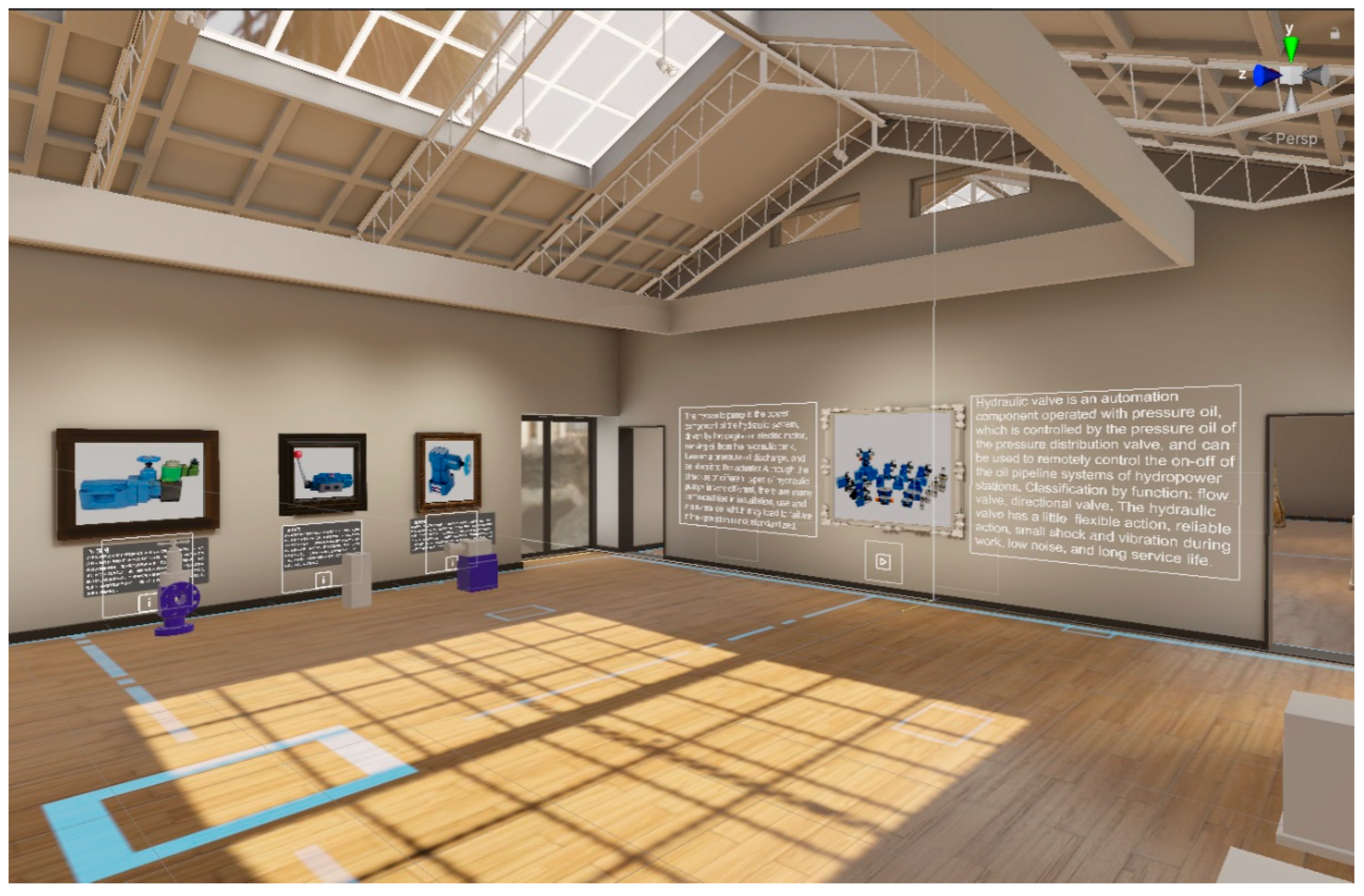
To heighten the realism of this virtual realm, the integration of physically based rendering pipelines is pivotal in constructing virtual teaching laboratory scenes mirroring the tangible world. Taking the foundational hydraulic component knowledge teaching laboratory as an exemplar, the procedural steps are as follows:
- (1)
- Modeling: The initial phase entails utilizing Solidworks to meticulously construct the prototype of the teaching laboratory model.
- (2)
- Optimization: The model is subsequently imported into 3Dsmax, whereby realism is honed through meticulous model rendering optimization.
- (3)
- Light Arrangement: For an added layer of authenticity in the virtual laboratory, the model undergoes importation into Unity 3D. Here, simulation of the authentic teaching laboratory ambiance is achieved by configuring base lighting, lighting probes, reflection probes, and mapping. Notably, the theory mapping of the physics-based rendering pipeline is developed, ensuring precise depiction of object behavior under diverse lighting conditions.
- (4)
- Character Setup: Fundamental aspects such as configuring the initial position of the virtual interactive character, establishing the scope of virtual character movement, and coordinating handle-based interactive functions are meticulously set.
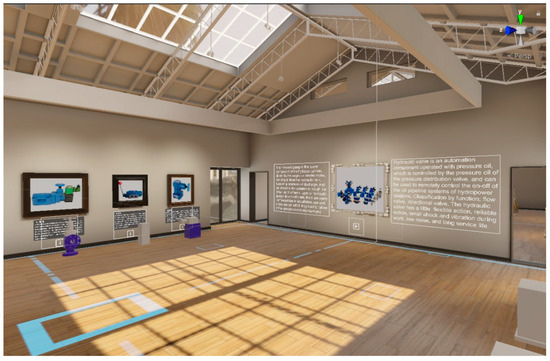
The cumulative outcome following the culmination of these three-dimensional modeling procedures is vividly showcased in Figure 3.
Figure 3.
Effectiveness of enhancing the realism of the hydraulic experiment.
3.4. UI Design
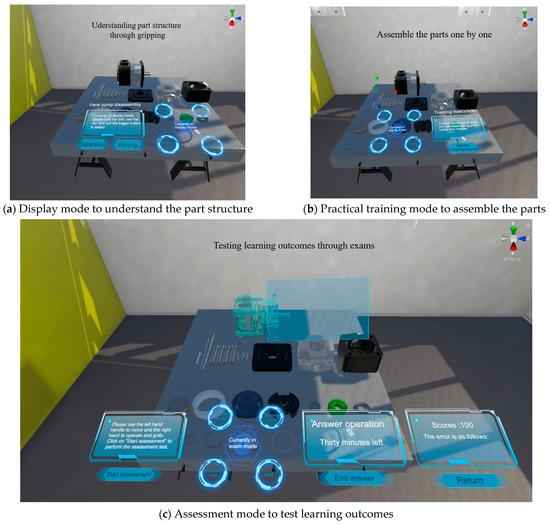
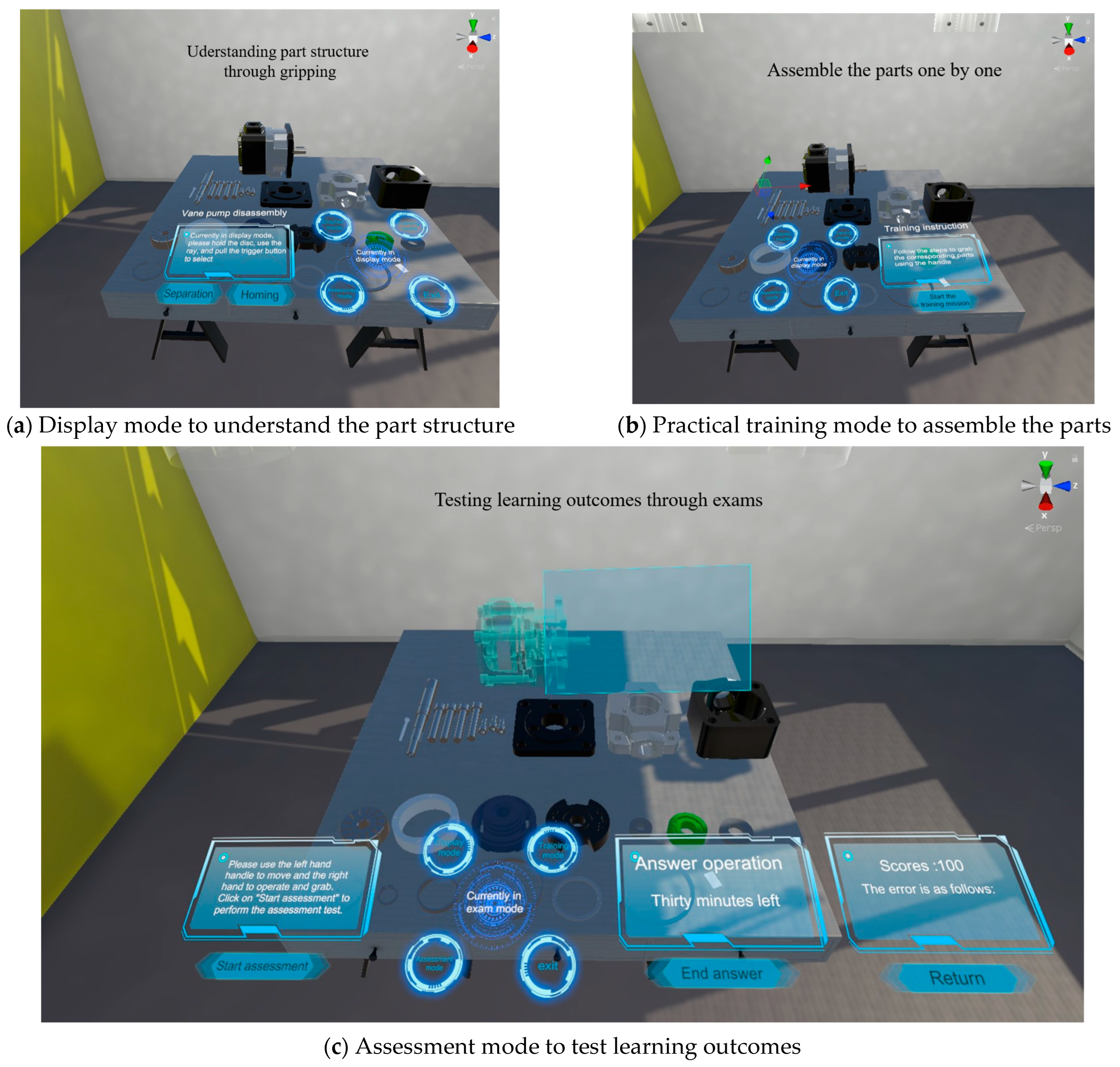
Taking the vane pump disassembly and assembly experiment as an example, the system’s UI design is elucidated. The disassembly process for hydraulic components is structured into three modes: display mode, practical training mode, and assessment mode, each yielding specific outcomes, as depicted in Figure 4.
Figure 4.
Hydraulic component disassembly and assembly interface.
In the display mode, upon the handle’s contact with a part, the part’s voice and text name are automatically initiated, and pressing the handle facilitates the part’s manipulation for observation. The released handle prompts the part to return to its original position. The functionality extends to a one-button disassembly feature, wherein a single click readies all vane pump parts in a predetermined position for learners to observe and learn—illustrated in Figure 4a.
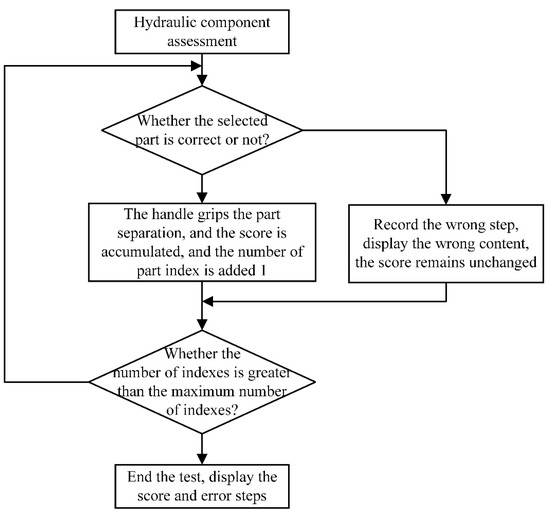
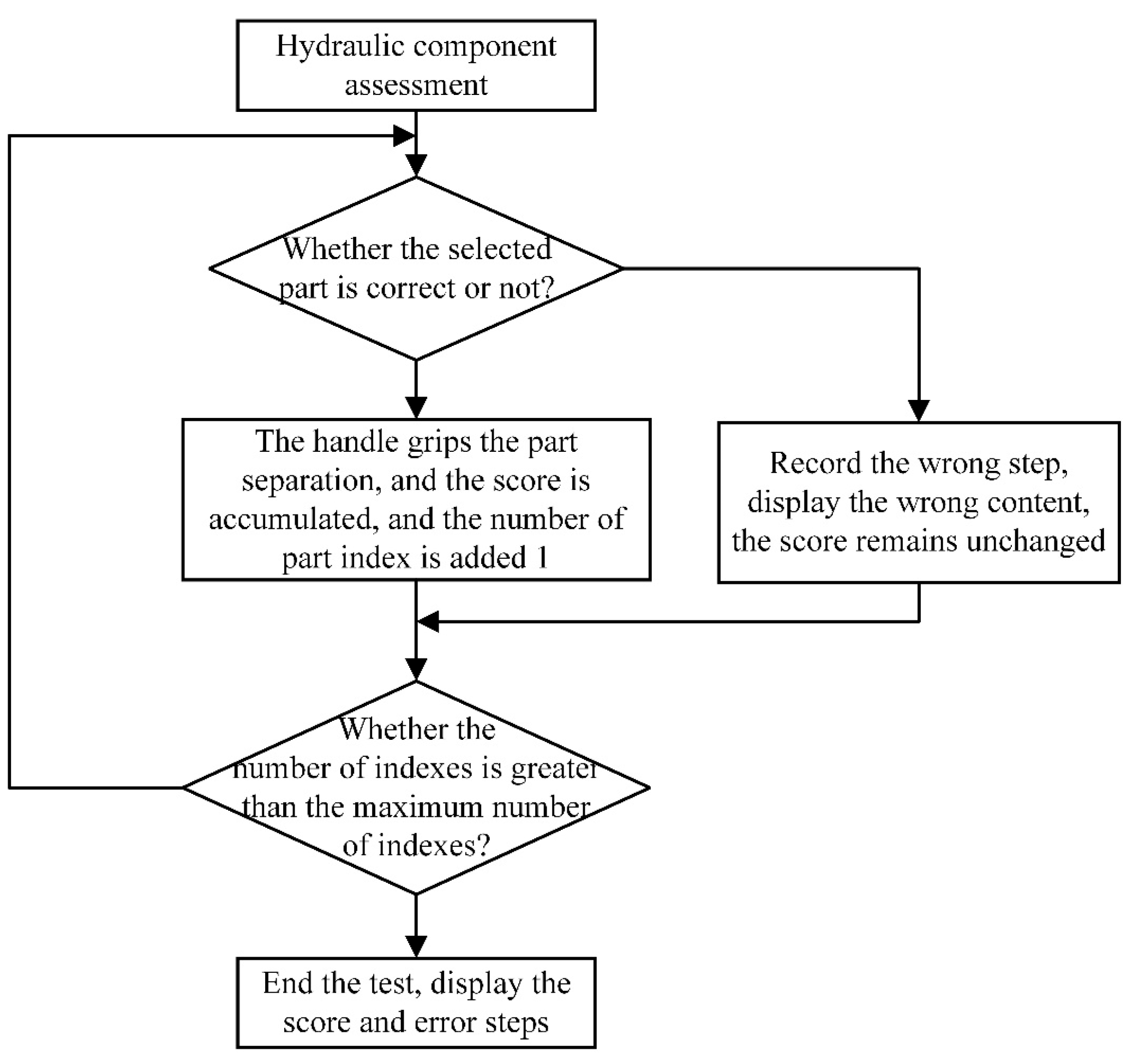
The practical training mode and assessment mode share similar attributes, as presented in Figure 4b,c respectively. As an instance, consider the assessment mode. Its intricate design flow is delineated in Figure 5. A noteworthy challenge in this segment is correlating the interaction sequence between the handle and the part with the score. To surmount this, the strategy adopted is as follows: treating the collision point between the handle and each part as a point of impact, detecting handle–part collisions alongside their sequential order, and subsequently calculating the correct collision points based on the student’s operational sequence. This score calculation is expanded to a 100-point scale for equivalent assessment of the student’s performance.
Figure 5.
Assessment mode design flow chart.
3.5. Function Realization
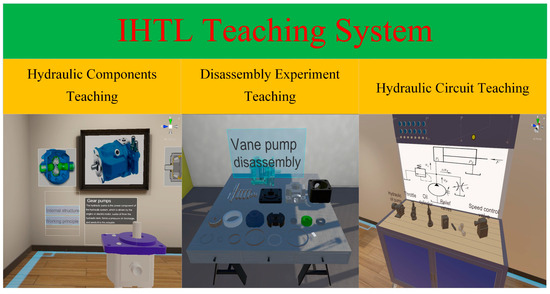
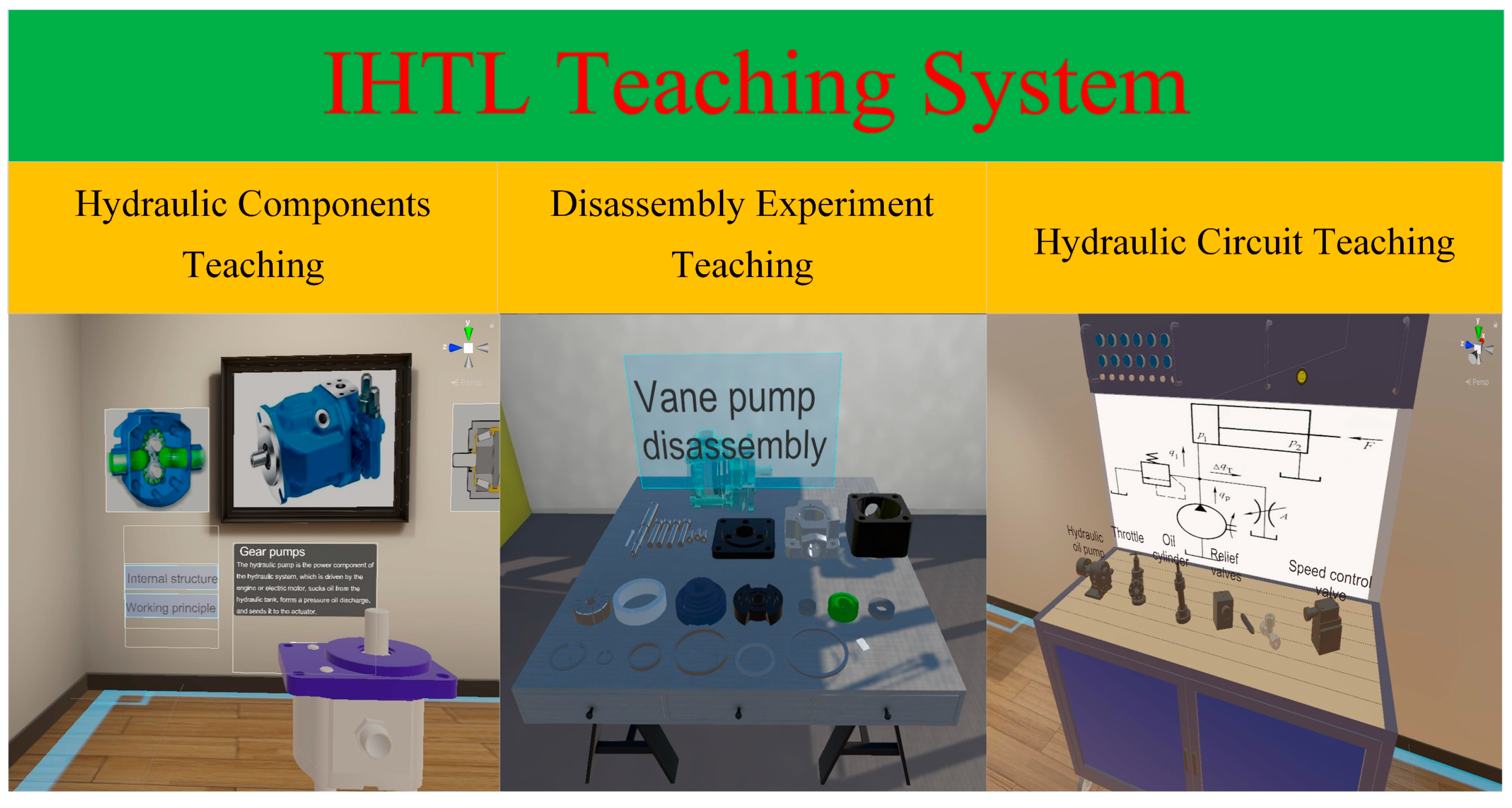
Figure 6 shows the three major functional modules of the IHTL system. The functional modules are the hydraulic component teaching module, disassembly experiment teaching module, and hydraulic circuit teaching module.
Figure 6.
Hydraulic components, disassembly experiment and hydraulic circuit of the IHTL system.
- (1)
- Hydraulic Component Teaching Module
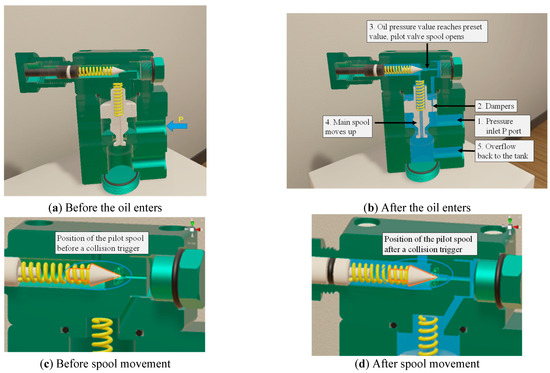
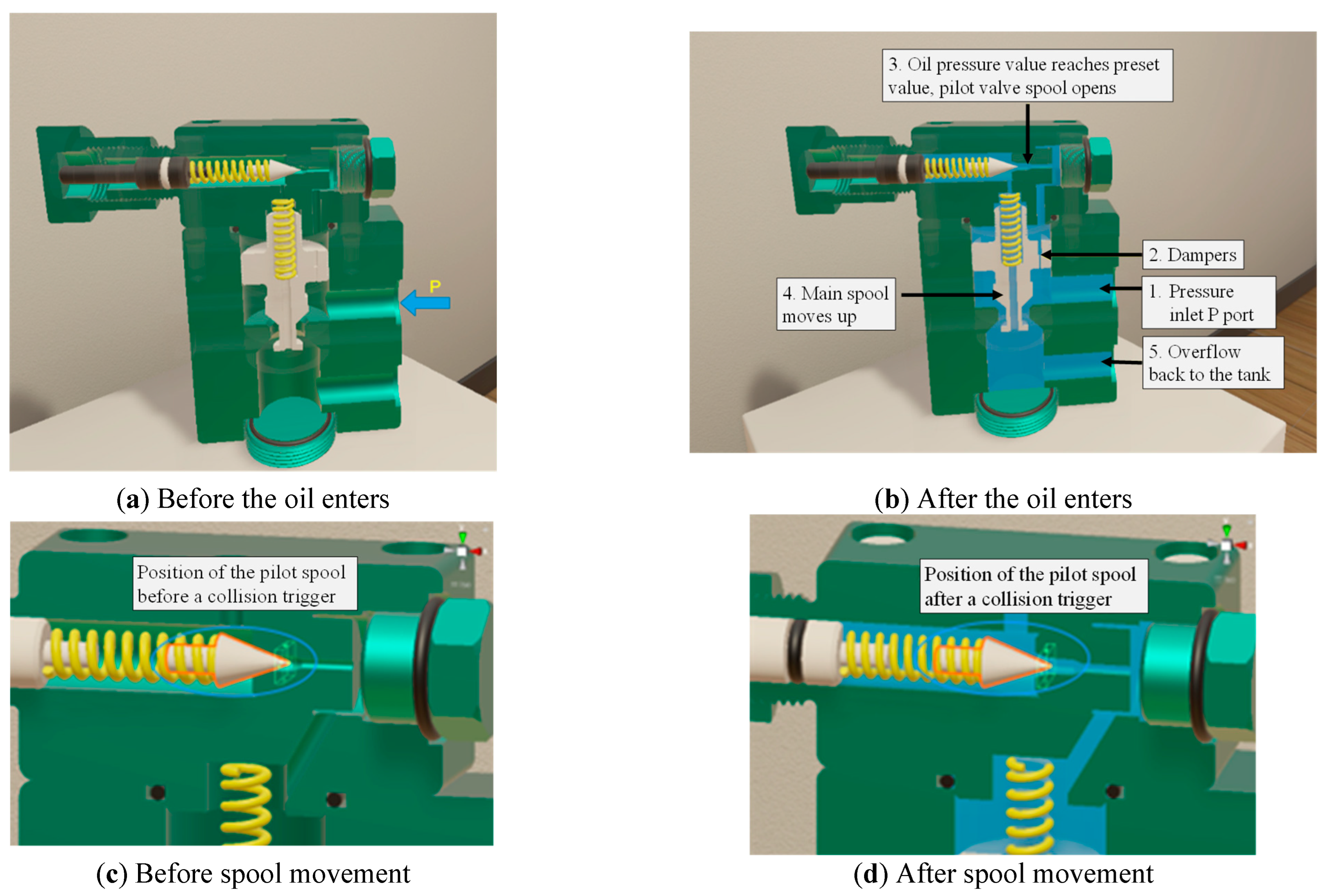
The instruction of hydraulic components encompasses three key facets: fundamental knowledge demonstration, internal structure visualization, and elucidation of operational principles. While basic knowledge and internal structure displays are predominantly activated through handle interaction, elucidating operational principles necessitates a more intricate approach. To illustrate the method of executing liquid flow, consider the example of implementing liquid flow dynamics within the module. Initially, the DOTween plugin is leveraged to construct a fluid-like physical model within the hydraulic component. Subsequently, code governs the direction of fluid movement. Ultimately, detection of whether the fluid model collides with components in the hydraulic element triggers the kinematic model of the pre-configured spool.
Figure 7 encapsulates the progression of fluid flow and spool dynamics within the pilot-operated relief valve. As depicted in Figure 7a, upon the learner’s activation of the pilot relief valve’s working principle within the virtual learning space, fluid simulation initiates, commencing from the P port. The fluid model’s interaction with the set Mesh Collider, represented as the lowermost spool surface, prompts spool movement. Schematic representations before and after the spool movement are respectively delineated in Figure 7c,d. Concurrently with the fluid flow, prompt texts are triggered as the fluid reaches distinct stages, elucidated in Figure 7b.
Figure 7.
The process of fluid flow and spool movement.
- (2)
- Disassembly experiment teaching module
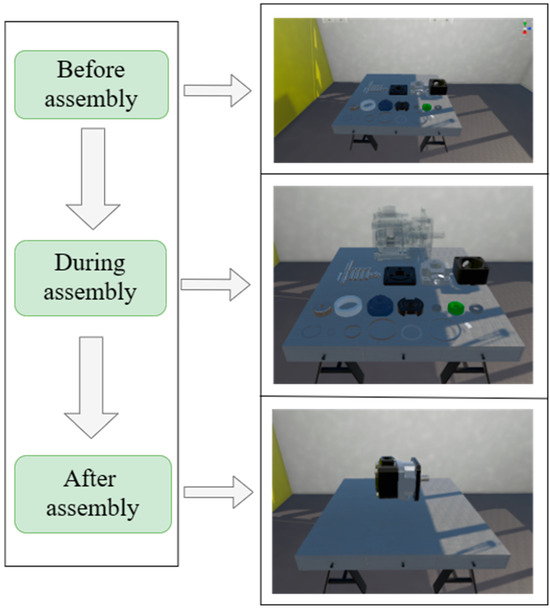
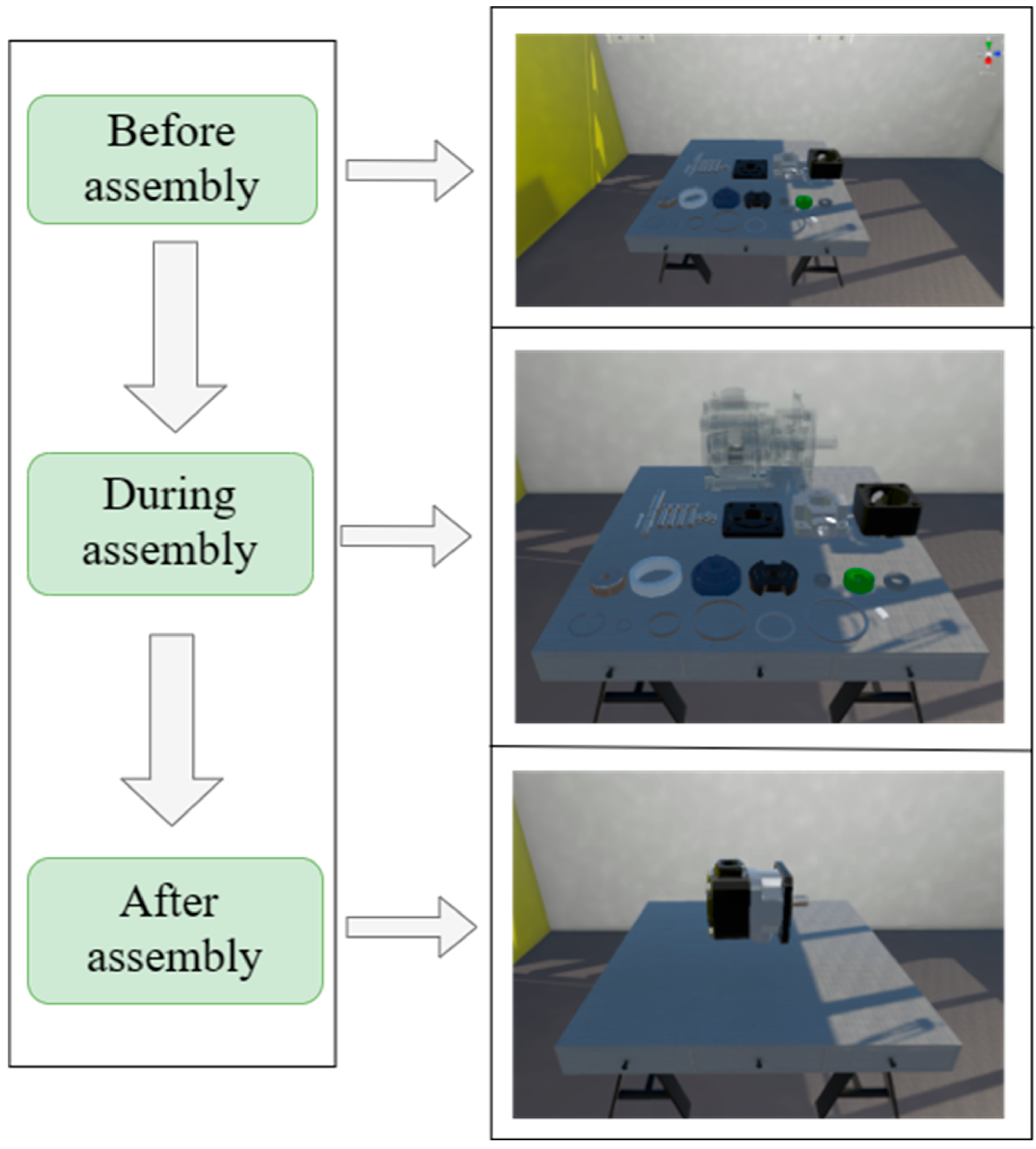
The disassembly experiment stands as a pivotal phase for students to grasp hydraulic components, facilitating an in-depth comprehension of internal structures through iterative disassembly and reassembly. Figure 8 exemplifies the disassembly and reassembly of a vane pump.
Figure 8.
The display of vane pump assembly process.
Before the vane pump assembly, each constituent part is assigned a virtual assembly position. To enhance students’ familiarity with the parts, auditory announcements and interactive gripping features are incorporated. Auditory announcements are triggered when the handle interfaces with a part, automatically vocalizing the part’s name and concurrently displaying the textual counterpart. The gripping functionality permits a hands-on experience—by pressing the handle plate, students can clutch and manipulate the part in various orientations. During the vane pump assembly process, as learners position the vane pump parts in their designated virtual assembly locations, real parts in the assembly slot are substituted by the corresponding components within the transparent virtual position. Upon successful vane pump assembly, a fully formed vane pump materializes in the view, allowing part exploration through tactile interaction.
- (3)
- Hydraulic circuit teaching module
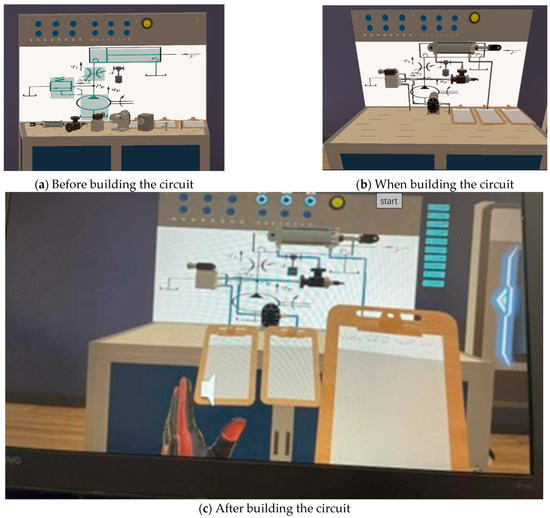
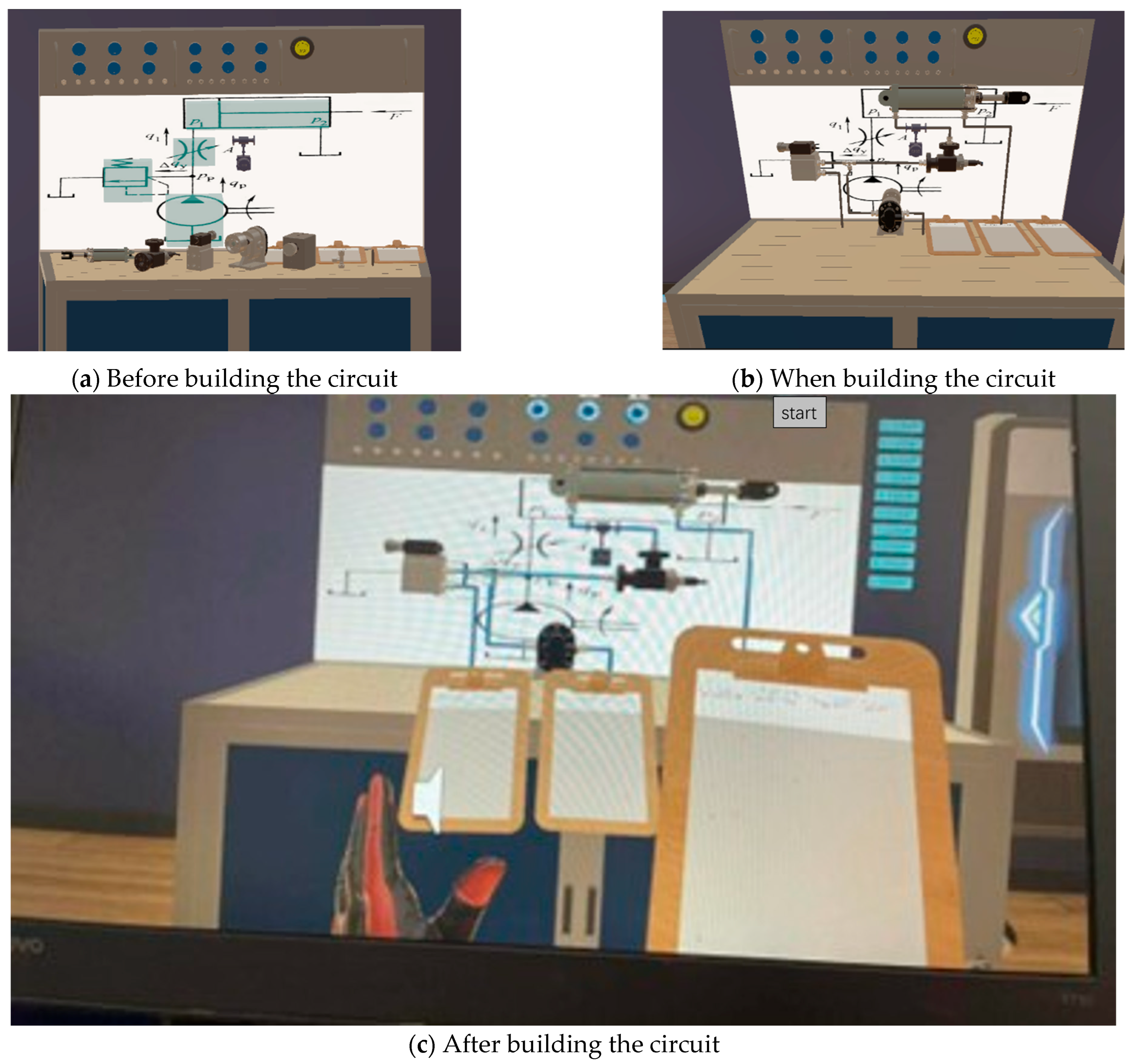
The hydraulic circuit teaching module centers on the assembly and construction of various throttling and speed regulation circuits within the virtual learning environment. In this segment, we illuminate the rudiments of the basic hydraulic circuit teaching module by expounding upon the creation of a constant pressure throttling circuit. The construction process of a constant pressure throttling circuit, divided into three stages—pre-construction, circuit assembly, and post-construction—is showcased in Figure 7.
Before Building the Circuit: Upon selecting the constant pressure throttling circuit, students transition into the circuit building interface, depicted in Figure 9a. In this preparatory phase, students can gain insight into each device’s structure by manipulating the handle to examine and rotate the objects.
Figure 9.
The process of building a constant pressure throttling circuit.
Circuit Assembly: The circuit’s construction primarily hinges on handle ray detection, followed by the implementation of drag-and-drop functionality via trigger–collider interactions. By gripping and moving objects, the hydraulic components within the 2D diagram are identified through collision detection, resulting in their elevation and overlay onto the drawing. The completed circuit is presented in Figure 9b.
After Building the Circuit: To deepen students’ comprehension of hydraulic circuit dynamics, the transition to a 3D coordinate mode is essential. Additionally, predetermining the fluid’s path enhances students’ understanding. The circuit’s 3D assembly is showcased in Figure 9c. Given the varying directions of oil movement within the circuit, GameObject objects are stationed at each corner of the path. These serve as reference points for subsequent ball movement along the pipes. The simulation of hydraulic oil force function is achieved by propelling balls from two launchers at the gear oil pump’s base. The ball’s generated velocity can be adjusted via parameters. The orchestrated motion of the simulated oil is visualized in Figure 9c.
In order to visualize the working principle of the throttling circuit, i.e., to adjust the fluid speed by the cross-sectional area of the flow, we added the function of controlling the cross-sectional area of the flow in the throttling circuit to the hydraulic circuit teaching module.
Finally, the system was released to the computer in the form of software. Nonetheless, owing to constraints imposed by VR glasses, the detailed effects can exclusively be displayed on the computer interface.
4. Experimental Design
To comprehensively assess the impact of the IHTL on students, the experiment was divided into two parts: the interest test and the effect test. The interest test gauged students’ engagement by analyzing the number of inquiries and interactions. Conversely, the effect test measured the students’ performance in the experiment.
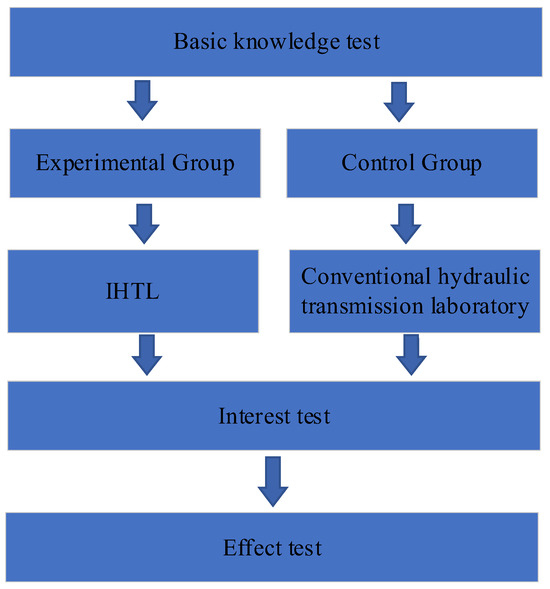
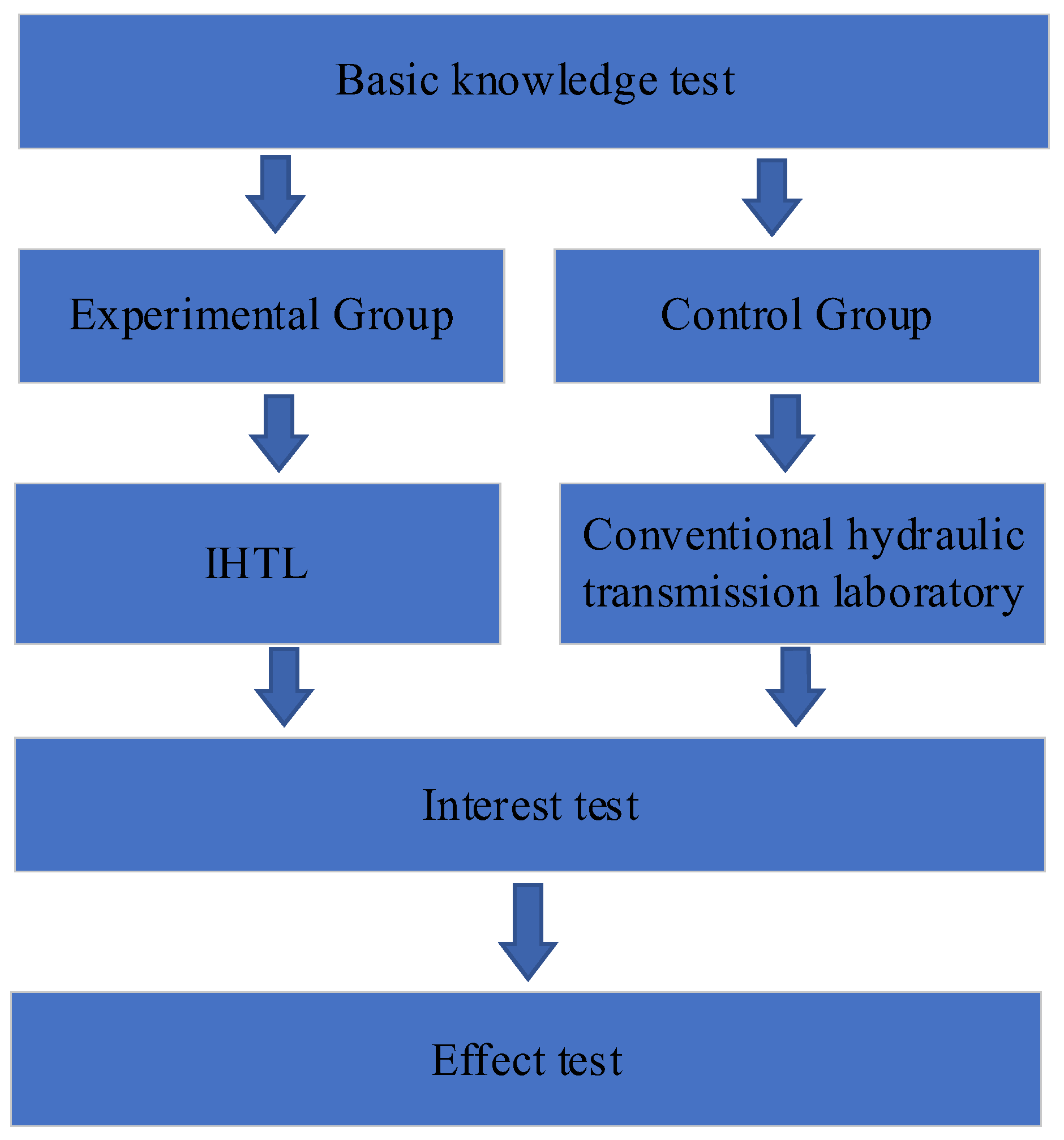
The participants in the study were 80 first-year mechanical engineering undergraduates, consisting of 74 male and 6 female students. Before conducting the hydraulic transmission experiment, all students completed a course on hydraulic transmission theory to ensure a sufficient knowledge foundation. A knowledge test was administered to assess their basic understanding prior to the experiment. Based on their test scores and to maintain a balanced male-to-female student ratio, students were then divided into experimental and control groups, each consisting of 37 male and 3 female students. The experimental group utilized the IHTL. In contrast, the control group participated in a conventional hydraulic transmission laboratory, which consisted of traditional instructor-led experiments using physical hydraulic training equipment. Students followed predefined experimental procedures, operated real hydraulic components, and observed system responses under the guidance of the instructor. No virtual reality or computer-based simulation tools were used in the control condition, and learning was primarily supported by physical hardware demonstrations and printed instructional materials. An overview of the experimental design flow is presented in Figure 10.
Figure 10.
The overall design flow of the experiment.
After grouping, both sets of students were assigned to participate in the immersive hydraulic transmission experiment and the traditional hydraulic transmission experiment. The teaching scheme for each group was kept confidential from both the students and the teacher of the other group. The experiments encompassed hydraulic valve disassembly and assembly, as well as throttling speed regulation circuit construction. Before commencing the experiment, the teacher provided a brief description of the operation steps for each group. Throughout the experiment, the number of questions posed by students (excluding inquiries about how to use equipment) and the number of students were recorded to evaluate their interest in the experiment’s content. To ensure the interest test did not influence the effect test, students remained unaware of the subsequent effect test during the learning process. Upon concluding the experiment, both groups of students were asked to complete the same effect test, which consisted of a theory test and a skills test. A time limit of 40 min was given for completing the test.
5. Results and Discussion
5.1. Results
5.1.1. Analysis of Learning Interest
Table 2 summarizes the number of students who asked questions and the total number of queries in both groups. In the experimental group, 32.5% of students asked questions, totaling 23 queries, with an average of 1.769 questions per student and a maximum of 7. In the control group, 12.5% of students asked questions, resulting in 12 queries, with an average of 2.400 questions per student and a maximum of 5.
Table 2.
Statistics of interest test.
These results highlight a distinction between the breadth and depth of engagement. The higher proportion of students asking questions in the experimental group indicates broader participation, suggesting that the immersive learning environment encouraged more students to engage and explore the material. In contrast, the higher average number of questions per student in the control group reflects deeper inquiry among the fewer students who participated, which may be driven by confusion or difficulties with the traditional materials rather than higher intrinsic motivation. The maximum number of questions per student further supports this interpretation, as the experimental group shows more evenly distributed engagement across students, while the control group’s interactions are concentrated among a small number of highly active participants.
Overall, these findings suggest that the immersive environment fosters wider student involvement and more balanced participation, while the traditional approach may prompt intensive questioning, primarily from students who require clarification. This distinction provides a more nuanced understanding of classroom motivation and highlights the pedagogical benefit of the immersive learning model in promoting inclusive engagement.
5.1.2. Analysis of Learning Effect
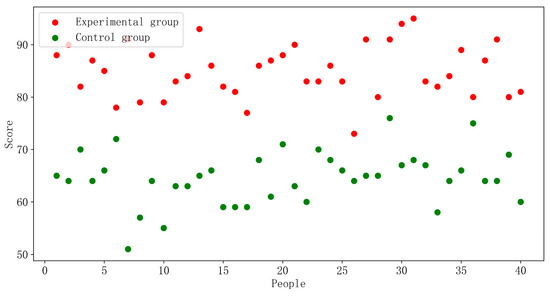
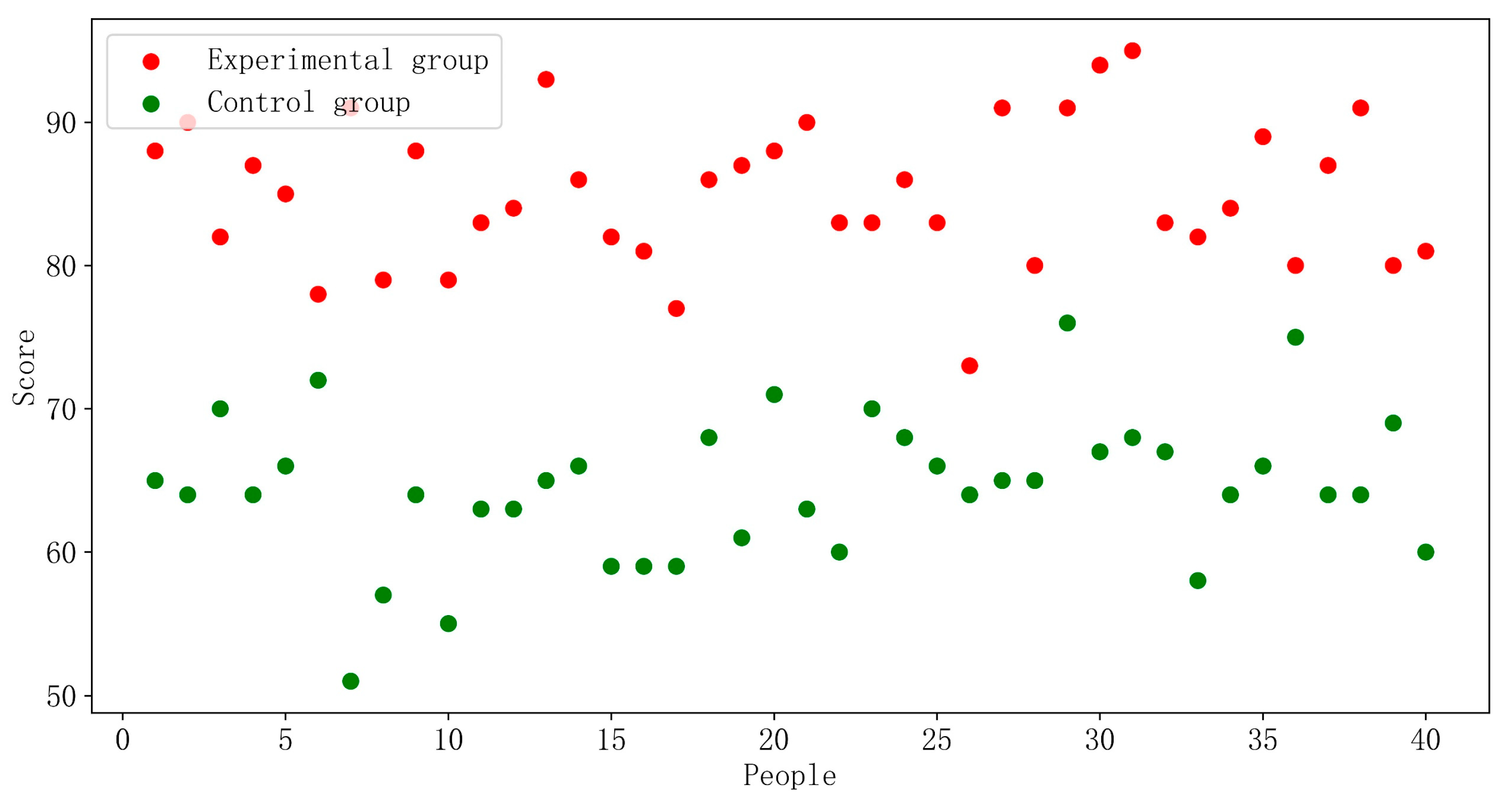
Figure 11 illustrates the score distribution of students in both groups following the completion of the effect test. The statistical insights derived from the analysis of students’ scores are presented in Table 3.
Figure 11.
Distribution of students’ scores.
Table 3.
Statistical analysis of students’ scores.
Table 3 reveals that the experimental group achieved a mean score of 85.000, while the control group attained an average score of 64.525. Moreover, across the minimum, 25th percentile, 50th percentile (median), 75th percentile, and maximum score values, the experimental group consistently outperformed the control group. This compellingly signifies that the IHTL substantially enhances students’ learning outcomes. Additionally, the variance of scores within the experimental group was marginally smaller compared to the control group, indicating greater stability in the experimental group’s scores and a higher degree of assistance from the IHTL for students with lower learning levels.
To conduct a more in-depth analysis of the impact of both teaching methods on student learning outcomes, scores from both experiments were subjected to analysis using Statistical Product and Service Solutions (SPSS (R26.0.0.0)) software. Initially, the Levene test assessed the homogeneity of variance in student learning motivation across both groups. The Levene test yielded a p-value of 0.540 and an F-value of 0.380, indicating non-significant variance differences in learning motivation. As a result, the means of the two groups were considered equal. Subsequently, the T-test was employed to scrutinize whether significant differences existed in student learning outcomes between the experimental and control groups across diverse teaching methods. The outcomes of this analysis are documented in Table 4.
Table 4.
Results of independent t-test.
As evident from Table 2, given the significance level of p < 0.01 (Cohen’s d > 0.8), a notable distinction emerges between the experimental group and the control group. Additionally, the higher mean score in the experimental group in comparison to the control group underscores the superior teaching impact associated with the utilization of IHTL.
5.2. Discussion
5.2.1. Motivation and Interest in Learning
Analysis of learner engagement reveals a critical nuance. A significantly higher proportion of students in the immersive group asked questions (32.5% vs. 12.5% in the control group), indicating broader activation of interest and participation. However, the smaller subset of askers in the control group posed questions more frequently on average (2.400 vs. 1.769 questions per asking student). This pattern is not contradictory but rather illuminates different engagement dynamics. The higher question frequency in the traditional setting may stem from greater cognitive load and confusion when students attempt to mentally visualize complex hydraulic dynamics from static, 2D representations, leading to repeated requests for clarification. Conversely, the immersive VR environment, by providing direct manipulative experience and real-time visual feedback, likely fostered exploratory self-sufficiency. This aligns with the affordances of virtual laboratories for inquiry-based learning, as noted in the literature on their sustainable educational value (Salmerón-Manzano et al., 2018) [25]. Thus, the immersive approach successfully lowered the threshold for initiating inquiry across the cohort while enabling a more self-guided depth of exploration.
5.2.2. Learning Outcomes
The experimental group achieved a significantly higher mean post-test score (85.000) compared to the control group (64.525), with this difference being statistically highly significant (* p < 0.01). Notably, the experimental group also exhibited a smaller score variance. This combined outcome of a higher mean and reduced dispersion is educationally meaningful. It suggests that the immersive learning intervention not only elevated overall achievement but also promoted a more uniform level of understanding across students with varying initial preparedness. This indicates particular effectiveness in supporting learners who might otherwise struggle with the abstract concepts of hydraulic systems, a key practical implication for inclusive engineering education.
5.2.3. Educational Theoretical Foundations of the IHTL
The pedagogical efficacy of the IHTL can be robustly interpreted through established theories. It operationalizes Kolb’s Experiential Learning Cycle, providing concrete experience through virtual interaction, reflective observation via real-time visualization, abstract conceptualization through theory–phenomenon linkage, and active experimentation via parameter modification [26]. Furthermore, from the perspective of Cognitive Load Theory, the IHTL’s integrated 3D environment minimizes extraneous load (e.g., from mentally integrating fragmented views) and optimizes germane load for schema construction [27]. This theoretical framing explains the observed improvements in learning efficiency and outcomes, moving beyond mere description of the results.
5.2.4. Limitations and Considerations
While the IHTL offers clear educational benefits, several limitations must be considered. The study was conducted in a single institution with a limited sample size, and results may not generalize to all student populations or disciplines. The reliance on VR hardware introduces constraints such as potential motion sickness, variations in comfort, and physical space requirements. Furthermore, the measure of learning interest—question-asking—provides an indirect indication of engagement and may be influenced by individual differences or confusion. Long-term retention, sustained motivation, and knowledge transfer were not examined in this study. Despite these limitations, the IHTL demonstrates a promising and scalable framework for immersive, interactive, and student-centered learning, meriting further investigation across disciplines and educational contexts.
6. Conclusions and Future Work
This study demonstrates that the IHTL significantly enhances engineering education by broadening student engagement and improving learning outcomes. Compared to traditional instruction, the IHTL motivated a substantially wider range of students to actively participate in inquiry, while also enabling a deeper, more self-sufficient exploration of complex concepts, as explained through the lens of cognitive load and experiential learning theories. This translated into superior and more consistent academic achievement. The results affirm the value of immersive VR technology as a powerful pedagogical tool for making abstract engineering principles more accessible and comprehensible.
Future research will focus on validating these findings across multiple institutions and disciplines to establish generalizability. We plan to conduct longitudinal studies to assess long-term knowledge retention and transfer to physical laboratories. From a technical perspective, we will enrich the IHTL system with intelligent features such as automated feedback on student errors and explore more cost-effective or scalable deployment models to address practical implementation barriers.
Author Contributions
Methodology, Z.C., A.L. and J.S.; Software, J.S.; Validation, C.W.; Resources, C.W. and A.L.; Writing—original draft, C.W. and Z.C.; Writing—review & editing, J.S. and B.Z.; Supervision, B.Z. All authors have read and agreed to the published version of the manuscript.
Funding
This research received no external funding.
Institutional Review Board Statement
Ethical review and approval were waived for this study because this research utilized strictly anonymous data. According to “National Health Commission of China guidelines: Ethical Review Measures for Life Sciences and Medical Research Involving Human Subjects”, studies involving non-identifiable data are exempt from ethical committee review.
Informed Consent Statement
Informed consent was obtained from all subjects involved in the study.
Data Availability Statement
The original contributions presented in this study are included in the article. Further inquiries can be directed to the corresponding authors.
Conflicts of Interest
The authors declare no conflict of interest.
References
- Cavanagh, T.M.; Kiersch, C. Using commonly-available technologies to create online multimedia lessons through the application of the Cognitive Theory of Multimedia Learning. Educ. Technol. Res. Dev. 2023, 71, 1033–1053. [Google Scholar] [CrossRef] [Scilit] [PubMed]
- Megawati, R. Integration of Project-Based Learning in Science, Technology, Engineering, and Mathematics to Improve Students’ Biology Practical Skills in Higher Education: A Systematic Review. Open Educ. Stud. 2024, 6, 20240049. [Google Scholar] [CrossRef] [Scilit]
- Gutiérrez, J.M.; Domínguez, M.G.; González, C.R. Using 3D Virtual Technologies to Train Spatial Skills in Engineering. Int. J. Eng. Educ. 2015, 31, 323–334. [Google Scholar]
- Javaid, M.; Haleem, A. Virtual reality applications toward medical field. Clin. Epidemiol. Glob. Health 2020, 8, 600–605. [Google Scholar] [CrossRef] [Scilit]
- Wang, C.; Tang, Y.; Kassem, M.A.; Li, H.; Hua, B. Application of VR technology in civil engineering education. Comput. Appl. Eng. Educ. 2022, 30, 335–348. [Google Scholar] [CrossRef] [Scilit]
- Chan, V.S.; Haron, H.N.H.; Isham, M.I.B.M.; Mohamed, F.B. VR and AR virtual welding for psychomotor skills: A systematic review. Multimed. Tools Appl. 2022, 81, 12459–12493. [Google Scholar] [CrossRef] [Scilit] [PubMed]
- Schiavi, B.; Havard, V.; Beddiar, K.; Baudry, D. BIM data flow architecture with AR/VR technologies: Use cases in architecture, engineering and construction. Autom. Constr. 2022, 134, 104054. [Google Scholar] [CrossRef] [Scilit]
- Pham, H.C.; Dao, N.; Pedro, A.; Le, Q.T.; Hussain, R.; Cho, S.; Park, C.S.I.K. Virtual Field Trip for Mobile Construction Safety Education Using 360-Degree Panoramic Virtual Reality. Int. J. Eng. Educ. 2018, 34, 1174–1191. [Google Scholar]
- Wang, C.; Feng, Q.; Zhu, C.; Li, S.; Li, L. Construction and practice of the mechanism for integrating scientific research into experimental teaching. Discover Educ. 2025, 4, 80. [Google Scholar] [CrossRef] [Scilit]
- Meng, S. Practical Research on Interdisciplinary Integrated Teaching in Improving Students’ Comprehensive Abilities. Transform. Pedagog. 2025, 1, 11–15. [Google Scholar] [CrossRef] [Scilit]
- Ji, T.; Ren, B.; Huang, S. Hydraulic and Pneumatic Transmission Three-Dimensional Virtual Training System Research. J. Phys. Conf. Ser. 2022, 2219, 012064. [Google Scholar] [CrossRef] [Scilit]
- Staneviciene, E.; Žekienė, G. The Use of Multimedia in the Teaching and Learning Process of Higher Education: A Systematic Review. Sustainability 2025, 17, 8859. [Google Scholar] [CrossRef] [Scilit]
- Kasapakis, V.; Dzardanova, E.; Nikolakopoulou, V.; Vosinakis, S. Evaluation of a Virtual Reality Learning Enviroment testbed and Non-Verbal Cue Integration. In The 2022 International Conference on Interactive Media, Smart Systems and Emerging Technologies (IMET), Limassol, Cyprus, 4–7 October 2022; IEEE: New York, NY, USA, 2022; pp. 1–2. [Google Scholar]
- Thomas, B.; Close, B.; Donoghue, J.; Squires, J.; De Bondi, P.; Morris, M.; Piekarski, W. ARQuake: An outdoor/indoor augmented reality first person application. In Fourth International Symposium on Wearable Computers, Washington, DC, USA, 18–21 October 2000; IEEE: New York, NY, USA, 2000; pp. 139–146. [Google Scholar]
- Mirauda, D.; Capece, N.; Erra, U. StreamflowVL: A Virtual Fieldwork Laboratory that Supports Traditional Hydraulics Engineering Learning. Appl. Sci. 2019, 9, 4972. [Google Scholar] [CrossRef] [Scilit]
- Aruanno, B.; Tamburrino, F.; Neri, P.; Barone, S. Virtual Reality Laboratory for Engineering and Material Science Immersive Learning. Comput. Appl. Eng. Educ. 2025, 33, e70041. [Google Scholar] [CrossRef] [Scilit]
- Gorman, D.; Hoermann, S.; Lindeman, R.W.; Shahri, B. Using Virtual Reality to Enhance Food Technology Education. Int. J. Technol. Des. Educ. 2022, 32, 1659–1677. [Google Scholar] [CrossRef] [Scilit] [PubMed]
- Ali, N.; Ullah, S.; Khan, D.; Rahman, H.; Alam, A. The effect of adaptive aids on different levels of students’ performance in a virtual reality chemistry laboratory. Educ. Inf. Technol. 2023, 29, 3113–3132. [Google Scholar] [CrossRef] [Scilit]
- Frank, K.; Gardner, A.E.; Ciobanescu Husanu, I.N.; Chiou, R.Y.; Ruane, R. Green STEM: Virtual Reality Renewable Energy Laboratory for Remote Learning. In The ASME 2021 International Mechanical Engineering Congress and Exposition, Online, 1–5 November 2021; American Society of Mechanical Engineers: New York, NY, USA, 2021; Volume 85659, p. V009T09A018. [Google Scholar]
- Cárdenas, M.M.; Álvarez, I.M. Immersive Virtual Reality Environments: A proposal to enhance preservice teacher’s communicative competences. In The 2022 International Conference on Advanced Learning Technologies (ICALT), Bucharest, Romania, 1–4 July 2022; IEEE: New York, NY, USA, 2022; pp. 408–410. [Google Scholar]
- Kane, D.; Ryan, G.; Mangina, E.; McAuliffe, F.M. A randomized control trial of a virtual reality learning environment in obstetric medical student teaching. Int. J. Med. Inform. 2022, 168, 104899. [Google Scholar] [CrossRef] [Scilit] [PubMed]
- Ryan, G.; Callaghan, S.; Rafferty, A.; Murphy, J.; Higgins, M.; Barry, T.; Mangina, E.; Carroll, L.; McAuliffe, F. Virtual reality in midwifery education: A mixed methods study to assess learning and understanding. Nurse Educ. Today 2022, 119, 105573. [Google Scholar] [CrossRef] [Scilit] [PubMed]
- Ryan, G.; Rafferty, A.; Murphy, J.; Higgins, M.; Mangina, E.; McAuliffe, F. 379. Virtual reality learning: A randomised control trial assessing medical student knowledge of fetal development. Eur. J. Obstet. Gynecol. Reprod. Biol. 2022, 270, e43–e44. [Google Scholar] [CrossRef] [Scilit]
- Schott, D.; Kunz, M.; Wunderling, T.; Heinrich, F.; Braun-Dullaeus, R.; Hansen, C. CardioGenesis4D: Interactive Morphological Transitions of Embryonic Heart Development in a Virtual Learning Environment. In IEEE Transactions on Visualization and Computer Graphics; IEEE: New York, NY, USA, 2023; Volume 29, pp. 2615–2625. [Google Scholar]
- Salmerón-Manzano, E.; Manzano-Agugliaro, F. The higher education sustainability through virtual laboratories: The Spanish University as case of study. Sustainability 2018, 10, 4040. [Google Scholar] [CrossRef] [Scilit]
- Kolb, D.A. Experiential Learning: Experience as the Source of Learning and Development; FT Press: New York, NY, USA, 2014. [Google Scholar]
- Sweller, J. Cognitive load theory. In Psychology of Learning and Motivation; Academic Press: Waltham, MA, USA, 2011; Volume 55, pp. 37–76. [Google Scholar]

Disclaimer/Publisher’s Note: The statements, opinions and data contained in all publications are solely those of the individual author(s) and contributor(s) and not of MDPI and/or the editor(s). MDPI and/or the editor(s) disclaim responsibility for any injury to people or property resulting from any ideas, methods, instructions or products referred to in the content. |
© 2026 by the authors. Licensee MDPI, Basel, Switzerland. This article is an open access article distributed under the terms and conditions of the Creative Commons Attribution (CC BY) license.