


Abstract
Artificial intelligence (AI) is transforming customer experience management (CXM) by enabling real-time, data-driven, and personalized interactions across digital touchpoints, including chatbots, voice assistants, generative AI, and immersive platforms. This study presents a PRISMA-based systematic literature review of 59 peer-reviewed studies published between 2021 and 2026, examining how AI-enabled personalization, privacy concerns, and customer value interact within AI-mediated customer experiences. Drawing on the Personalization–Privacy–Value (PPV) framework, the review synthesizes evidence on how AI-driven personalization enhances utilitarian, hedonic, experiential, relational, and emotional value, thereby strengthening satisfaction, engagement, loyalty, and behavioral intentions. At the same time, the findings reveal persistent tensions, as privacy concerns, perceived surveillance, algorithmic bias, and contextual moderators—including generational differences, cultural expectations, and technological literacy—frequently constrain value creation and erode trust. The review highlights that personalization benefits are highly contingent on transparency, perceived control, and ethical alignment, rather than personalization intensity alone. The study contributes by integrating ethical AI considerations into CXM research and clarifying conditions under which AI-enabled personalization leads to value creation versus value destruction. Managerially, the findings underscore the importance of ethical governance, transparent data practices, and customer-centered AI design to sustain trust and long-term customer relationships. Future research should prioritize longitudinal analyses of trust development, demographic heterogeneity, and cross-sector comparisons of AI governance as AI technologies become increasingly embedded in service ecosystems.
1. Introduction
Customer experience management (CXM) has undergone a significant transformation across various sectors, including retail, tourism, banking, and digital platforms. This shift stems from the growing capability of firms to better understand, anticipate, and respond to consumer expectations [1,2,3]. The advancement of Generative Artificial Intelligence (GenAI) has further accelerated this development by supporting more adaptive, conversational, and context-sensitive interactions at multiple customer touchpoints. A wide range of tools, such as chatbots, voice assistants, recommender systems, augmented reality (AR), and virtual fitting technologies, are increasingly influencing how customers perceive value and engage with brands [1]. In retail, for instance, virtual fitting rooms help customers visualize garments and accessories more realistically, resulting in increased confidence and lower return rates [4]. Comparable innovations have emerged in fields such as banking and tourism, where robot-advisory services and smart digital platforms facilitate personalized guidance, thereby improving both decision-making and operational efficiency [5,6]. Collectively, these developments demonstrate a broader shift toward data-driven CXM in which organizations aim to design seamless, personalized, and anticipatory customer journeys [7,8].
At the core of this shift is the expanding role of personalization. Personalized offerings strengthen emotional bonds and enhance perceived value by tailoring content, recommendations, and interactions to individual needs [9,10]. As personalization techniques become more sophisticated, incorporating multimodal cues such as visuals, language, and behavioral patterns, customers are exposed to richer experiential and relational value. However, the same mechanisms also heighten privacy concerns as individuals become increasingly aware of the extent, sensitivity, and commercial application of their personal data. Ambiguous or excessive data practices can erode trust, diminish perceptions of fairness, and negatively affect perceived value [11]. Consequently, the relationship between personalization, privacy, and customer value forms a complex and often paradoxical dynamic in which privacy protection becomes a decisive factor in sustaining customer trust and engagement.
As organizations pursue hyper-personalization more aggressively, emerging challenges become evident. Hyper-personalization has the potential to deepen engagement and loyalty through highly tailored experiences, but it may also overwhelm users, reduce their sense of autonomy, and trigger privacy fatigue or surveillance anxiety [12,13]. Ethical data governance and transparent design principles are therefore essential in mitigating these risks [14]. When ethical safeguards are absent, personalization may shift from generating value to causing harm, as customers experience distrust, discomfort, or negative affect. Conversely, when personalization is delivered responsibly, it can reinforce satisfaction and foster durable customer relationships [15].
This tension is encapsulated in the personalization–privacy paradox, in which customers show a strong preference for tailored experiences while simultaneously expressing concern about data collection, processing, and storage. Context-aware recommendations and predictive content can greatly enhance convenience and satisfaction, yet they also amplify anxieties surrounding visibility, monitoring, and algorithmic profiling [16,17]. The paradox becomes evident when customers continue to engage with AI-enhanced platforms despite heightened privacy concerns, suggesting a conscious trade-off in which perceived benefits outweigh perceived risks [17,18]. Understanding the mechanisms that drive this trade-off is crucial for designing technological solutions that respect privacy while maintaining engagement.
However, despite substantial progress in AI-enabled CXM research, important gaps remain. Existing studies largely emphasize the advantages of personalization but offer limited empirical insight into the conditions under which customers are willing to share data or when perceived privacy risks exceed the perceived benefits of personalization [19,20,21]. Little is known about how customers assess value when facing privacy trade-offs or how demographic, contextual, and technological differences influence these evaluations [16]. Addressing these gaps is crucial for developing more balanced CXM models that can foster trust and loyalty while protecting user rights and expectations [18,19].
Accordingly, this systematic literature review consolidates current knowledge on how AI-enabled personalization shapes customer experience outcomes, with particular attention to privacy concerns, perceived risk, and customer value. Anchored in the emerging Personalization–Privacy–Value (PPV) tension, the review synthesizes evidence on the mechanisms through which personalization both creates and erodes value, examines contextual and individual factors that condition customer responses, and integrates theoretical and methodological developments across the literature. In doing so, the review makes three key contributions: it provides an up-to-date synthesis of AI-enabled CX research (2021–2026) encompassing emerging technologies such as Generative AI and immersive interfaces; it advances the PPV framework as an integrative lens for reconciling fragmented findings on value, privacy, and trust across AI touchpoints; and it clarifies contradictions, boundary conditions, and research gaps, thereby offering a structured agenda for future research on ethical governance and long-term trust development.
2. Materials and Methods
This study employed a systematic literature review (SLR) to synthesize current research on AI-enabled customer experience management (CXM), with emphasis on personalization, privacy, and value. The protocol followed the PRISMA framework to ensure rigor, transparency, and replicability [22,23]. In addition to synthesis, particular attention was paid to identifying recurring methodological patterns and biases in the reviewed literature to support critical evaluation. All search strings, datasets, and screening records are available from the corresponding author upon request.
2.1. Data Sources and Search Strategy
A structured database search was conducted in Scopus, given its extensive coverage of information systems, marketing, consumer behavior, and AI-focused publications. The search strategy adopted Boolean operators and phrase matching, based on prior AI–CX literature [22,24,25]. Core search combinations included:
- “Artificial intelligence” AND “customer experience”;
- “AI” AND “personalization” AND “privacy”;
- “Algorithmic personalization” AND “consumer behavior”;
- “Data privacy” AND “personalized marketing”.
The timeframe (2021–2026) reflects rapid advancements in AI-driven CX innovations such as chatbots, voice assistants, recommender systems, AR/VR interfaces, and GenAI. Backward and forward citation tracking helped identify additional relevant studies [16,26]. No restrictions were imposed on research design at the search stage to avoid excluding studies with non-experimental or survey-based methodologies, which dominate this research stream.
2.2. Eligibility and Exclusion Criteria
Eligibility criteria were defined to ensure methodological rigor and relevance to the research objectives. Inclusion criteria were based on prior systematic reviews in AI and CX [27,28,29]. Studies qualified if they were:
- Peer-reviewed and written in the English language;
- Focused on AI-mediated customer interactions, personalization, privacy, trust, engagement, or value;
- Empirical (quantitative, qualitative, or mixed methods) or conceptual designs;
- Examined customer-facing AI technologies.
Exclusion criteria included conference papers, editorials, and non-empirical commentary [30,31], importantly, studies relying on cross-sectional surveys, self-reported perceptions, and intention-based outcomes were retained, as excluding them would obscure dominant methodological trends and limit the review’s ability to critically assess structural biases in the literature.
2.3. Screening and Selection Process
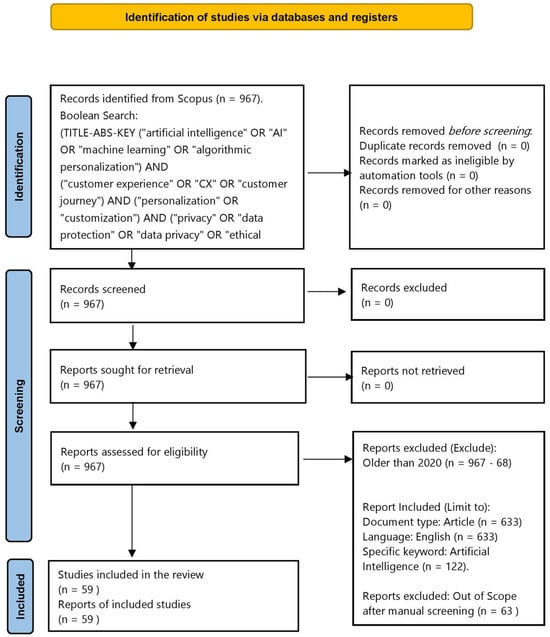
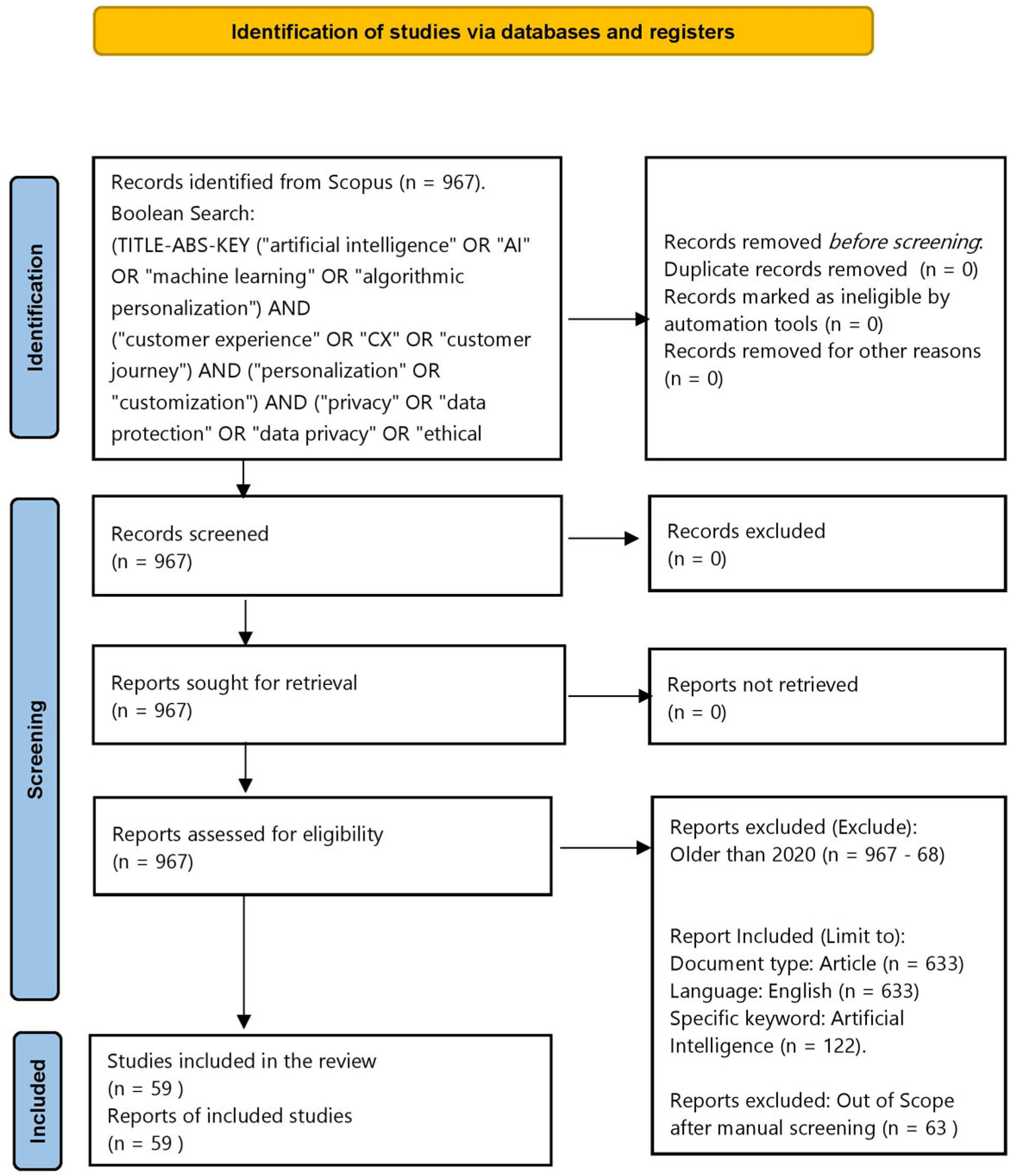
Study screening followed the PRISMA stages of identification, screening, eligibility, and inclusion. Titles and abstracts were screened for relevance to AI-enabled CXM, then full texts were assessed based on predefined criteria. Reviewer discrepancies were resolved through discussion, consistent with prior SLR procedures [29,32]. A PRISMA flow diagram (Figure 1) summarizes the selection stages. During screening, methodological characteristics—such as research design, data source, measurement approach, and temporal scope—were systematically recorded to enable later identification of recurring methodological biases across studies.
Figure 1.
The PRISMA flow diagram detailing the screening and selection process of the literature.
2.4. Analytical Synthesis and Framework Development
To address the heterogeneity of the reviewed studies and to ensure transparency in the development of the conceptual figures, this review adopted a structured qualitative synthesis procedure. Following study selection, all included articles were systematically coded to extract key constructs, mechanisms, moderators, and outcome variables related to AI-enabled personalization, privacy, trust, and customer value.
The synthesis proceeded in four iterative stages. First, core constructs and relationships were identified directly from each study’s theoretical model, hypotheses, or conceptual framework. Second, conceptually overlapping constructs (e.g., trust, perceived credibility, confidence) were grouped into higher-order categories to reduce terminological fragmentation across disciplines. Third, relationships were compared across studies to identify recurring patterns and dominant mechanisms, with particular attention to constructs appearing consistently across multiple contexts, technologies, or empirical settings. Fourth, idiosyncratic or weakly supported relationships—those appearing in isolated studies without theoretical or empirical reinforcement—were excluded from the final conceptual models.
The resulting conceptual frameworks therefore represent convergent and theoretically grounded patterns in the literature rather than exhaustive mappings of all reported variables. The Personalization–Privacy–Value (PPV) tension was used as the primary organizing logic, with supporting theories (e.g., TAM, UTAUT, S–O–R, privacy calculus, ethical AI) incorporated to explain specific cognitive, emotional, and ethical mechanisms. This approach ensured that the conceptual figures reflect dominant evidence-based structures while maintaining analytical parsimony and interpretive clarity.
2.5. Quality Assessment
Quality appraisal drew upon criteria used in previous marketing and information systems reviews. Each study was evaluated for research design clarity, sampling and data procedures, measurement validity and reliability, transparency in describing AI technologies, analytical rigor, and depth of reporting customer experience outcomes [30,31]. Beyond assessing internal validity at the individual study level, the review explicitly examined cumulative methodological patterns across studies. This revealed a strong reliance on cross-sectional survey designs, self-reported outcomes (e.g., intentions, perceptions), and short-term interaction scenarios, with limited use of longitudinal designs, behavioral data, or real-world usage metrics.
These patterns were not treated as exclusion criteria but as analytically relevant characteristics that constrain causal inference, limit insight into trust development over time, and partially explain inconsistencies observed in findings related to privacy, transparency, and personalization effects.
3. Theoretical Background
Artificial intelligence (AI) has become a foundational force in shaping customer experience (CX) research, and its theoretical underpinnings span multiple disciplinary traditions. This section synthesizes the dominant theories, historical evolution, and ongoing debates that characterize AI-enabled customer experience management (CXM), integrating all perspectives cited.
3.1. Relevant Theories and Models
A range of theoretical frameworks has been employed to explain how customers perceive, evaluate, and respond to AI-enabled interactions. Among the most widely used are the Technology Acceptance Model (TAM) and the Unified Theory of Acceptance and Use of Technology (UTAUT). These models emphasize cognitive appraisals of technology—particularly perceived usefulness and perceived ease of use—as primary determinants of customer acceptance [21]. In the context of AI-enabled CX, these constructs help clarify why customers adopt or reject AI systems such as chatbots, virtual assistants, and recommendation engines.
The Stimulus–Organism–Response (S-O-R) framework also plays a central role in AI–CX research. In this model, AI system features (stimuli), such as personalization, anthropomorphism, interactivity, and multimodal cues, influence internal cognitive and emotional states (organism), leading to behavioral outcomes like engagement, satisfaction, or continued use (response). Numerous CX studies apply S-O-R to explain how AI-driven interactions shape customer perceptions and emotional responses [33,34].
Another influential framework is privacy calculus theory, which explains how customers weigh the benefits of personalization against potential privacy risks. Customers typically assess whether the perceived value of tailored AI-driven services outweighs concerns about data use, surveillance, or algorithmic profiling. This calculation is fundamental to understanding AI-mediated interactions, where heightened personalization often necessitates more extensive data collection [35,36]. Complementary theoretical perspectives also inform AI–CX scholarship. For example, mediating processes such as customer satisfaction and emotional engagement are frequently used to explain how AI-driven personalization enhances perceived customer value [37]. Contextual factors highlighted in research (e.g., industry type, technological maturity, cultural norms) demonstrate that the theoretical applicability of AI often varies by setting, underscoring the need to integrate multiple theoretical lenses when interpreting AI’s effects on CX [5].
3.2. Historical Development of AI-Enabled CXM
Customer experience research has undergone a substantial transformation alongside advancements in AI technologies. Early CX systems, including rule-based chatbots and static recommendation engines, relied on predefined scripts and limited data inputs. These systems offered minimal adaptability and were unable to provide meaningful personalization of interactions. The shift from rule-based systems to machine learning (ML) approaches marked a major breakthrough. ML-enabled systems could process larger datasets, recognize behavioral patterns, and refine their outputs over time, significantly improving personalization and responsiveness [29].
More recently, Generative AI (GenAI) has accelerated the evolution of AI-enabled CX. GenAI systems utilize natural language processing (NLP), multimodal processing, and real-time analytics to deliver hyper-personalized, context-aware experiences. These capabilities allow organizations to anticipate customer needs, automate complex interactions, and create seamless omnichannel experiences [38].
Several technological milestones have collectively shaped AI-enabled CXM across industries:
- •
- The rise of predictive analytics and automated engagement platforms enables firms to forecast behavior and optimize customer journeys.
- •
- Advances in NLP, enhancing the conversational sophistication of chatbots and virtual assistants [15,28].
- •
- Shifts toward cloud-based infrastructure, improving the scalability and accessibility of AI systems for organizations of all sizes [29].
These innovations have strengthened AI’s impact across various sectors, including finance, retail, hospitality, and public services, by improving efficiency, reducing operational costs, and delivering more personalized customer experiences [39,40].
3.3. Debates and Controversies
Despite the transformational potential of AI in CXM, scholars have identified critical debates and tensions that require consideration.
3.3.1. Personalization–Privacy Paradox
The personalization–privacy paradox highlights the inherent tension customers face between appreciating personalized services and fearing data misuse. While tailored recommendations may improve convenience or emotional satisfaction, extensive data collection can undermine trust and raise concerns about surveillance [27]. This paradox is particularly pronounced in high-stakes or data-sensitive domains.
3.3.2. Algorithmic Bias and Fairness
Another concern is the emergence of algorithmic bias—systematic discrimination that arises when AI systems reinforce stereotypes or inequities. This issue has been widely documented in empirical and conceptual research and is viewed as a significant threat to ethical and trustworthy AI-mediated CX [41].
3.3.3. Transparency and Explainability
The lack of transparency in how AI systems operate remains a significant challenge. Customers are often unaware of what data are collected, how models make decisions, or how personalization occurs. This opacity increases skepticism and reluctance to engage with AI technologies [42]. Scholars advocate for a clearer communication of AI processes, transparent consent mechanisms, and explainable AI tools to mitigate mistrust.
3.3.4. Automation vs. Human Contact
A further area of debate concerns the degree to which AI should automate customer-facing interactions. While automation can enhance efficiency, reduce costs, and streamline service delivery, excessive reliance on AI may weaken human connection and emotional resonance—elements central to meaningful customer experiences [41,43].
Many scholars suggest a hybrid model that integrates AI capabilities with human intervention to maintain empathy, authenticity, and fairness in customer interactions [44]. Ethical CX design frameworks emphasize the need to balance efficiency with human values, such as fairness, autonomy, transparency, and inclusivity [43].
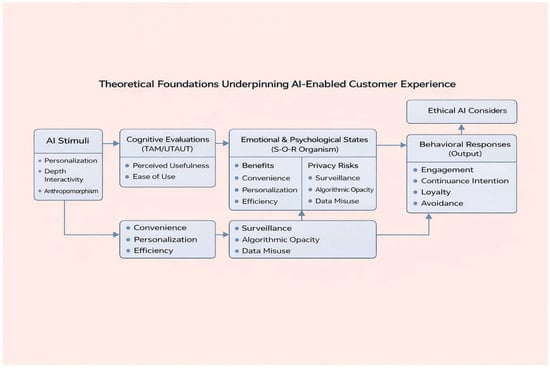
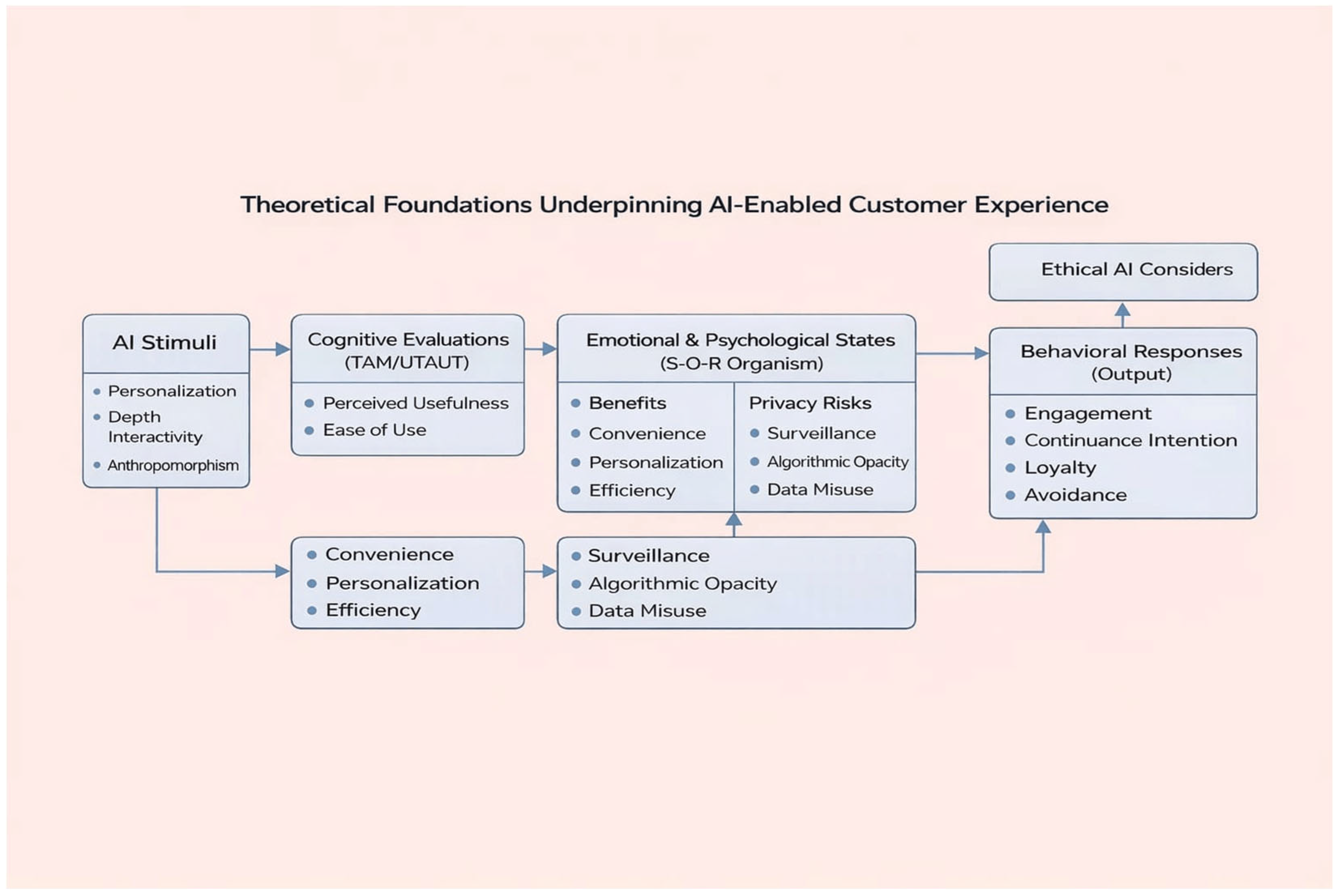
Theoretical research on AI-enabled customer experience management converges on a set of interconnected cognitive, emotional, and ethical processes that determine how customers respond to AI-driven interactions. As visualized in Figure 2, these processes begin with AI stimuli such as personalization depth, interactivity, multimodal cues, and anthropomorphism, which serve as the “stimulus” in the S–O–R framework, activating customer attention and shaping their initial perceptions. These features simultaneously trigger cognitive evaluations grounded in TAM and UTAUT constructs, particularly perceived usefulness, ease of use, and task–technology fit, which function as key determinants of user acceptance. Emotional and psychological states—including trust, engagement, immersion, and perceived creepiness—then emerge as organism-level reactions that reflect both positive and negative interpretations of the quality of AI interaction. Privacy Calculus Theory mediates this appraisal by balancing perceived benefits (convenience, personalization, efficiency) against privacy risks (surveillance, algorithmic opacity, data misuse), highlighting the inherent tension within the personalization–privacy paradox. Ethical AI considerations such as transparency, fairness, explainability, and algorithmic bias further shape customer interpretations by providing—or undermining—confidence in the integrity and accountability of AI systems. Collectively, these theoretical components influence behavioral outcomes, including engagement, continuance intention, loyalty, and avoidance, reinforcing the need for integrative models that capture the full spectrum of customer responses to AI technologies.
Figure 2.
Integrated theoretical framework connecting TAM/UTAUT, S-O-R, Privacy Calculus Theory, and Ethical AI considerations to explain how customers cognitively, emotionally, and ethically evaluate AI-enabled customer experiences.
4. Synthesis of Findings
4.1. AI-Enabled Personalization Mechanisms in Customer Experience Management
Across today’s digital environments, AI-enabled personalization mechanisms have become central in shaping how customers evaluate value, relevance, and engagement. Rather than reiterating the individual study outcomes presented in Table 1, this section synthesizes cross-study patterns to explain how different forms and intensities of personalization systematically influence customer experience outcomes. The findings from the reviewed studies consistently show that personalization improves perceived usefulness, emotional involvement, and the overall experiential value of interactions; however, these effects are not uniform and depend on personalization depth, interaction modality, and customer awareness of data use [33,34].
Table 1.
Overview of AI-Enabled Personalization Mechanisms and CX Outcomes.
A key synthesis emerging across studies is the distinction between subtle and high-intensity personalization. Subtle personalization—such as adaptive navigation, interface customization, or recommendation timing—tends to generate positive affective responses (e.g., awe, enjoyment) with minimal activation of privacy concern [35], thereby strengthening engagement and purchase intention. In contrast, highly contextualized and proactive personalization, particularly in social commerce, conversational AI, and voice-enabled environments, simultaneously amplifies perceived value and perceived intrusiveness, reinforcing the personalization–privacy paradox [36].
Across AI touchpoints, personalization mechanisms activate different experiential pathways. Immersive personalization through AR/VR and virtual try-on technologies primarily enhances hedonic and experiential value by increasing vividness, control, and spatial presence, which in turn stimulates impulsive buying and loyalty [35,36]. Conversely, conversational personalization in GenAI chatbots and voice assistants operates through cognitive and relational pathways, improving usefulness and familiarity while heightening sensitivity to surveillance and data security risks. These contrasts indicate that the same personalization objective produces distinct value–risk configurations depending on interaction modality [37,41].
Importantly, the literature suggests that personalization effectiveness is contingent on perceived appropriateness rather than intensity alone. Studies consistently show that when personalization aligns with customer expectations and task relevance, trust mediates positive engagement outcomes. However, when personalization exceeds perceived boundaries—through excessive prediction, unsolicited recommendations, or opaque data use—it triggers creepiness and avoidance behaviors [42], even when functional benefits remain high. This pattern explains why value creation and value erosion frequently coexist within AI-enabled CXM.
Overall, the synthesized evidence indicates that AI-enabled personalization does not linearly increase customer value. Instead, value emerges from a calibrated balance between personalization depth, transparency, and contextual fit. This synthesis moves beyond descriptive aggregation by demonstrating how personalization mechanisms differentially shape customer experience outcomes across AI technologies [43], reinforcing the need for ethically governed, context-sensitive personalization strategies.
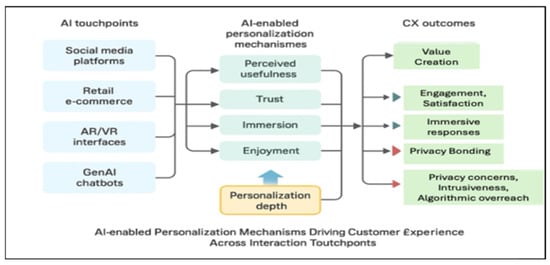
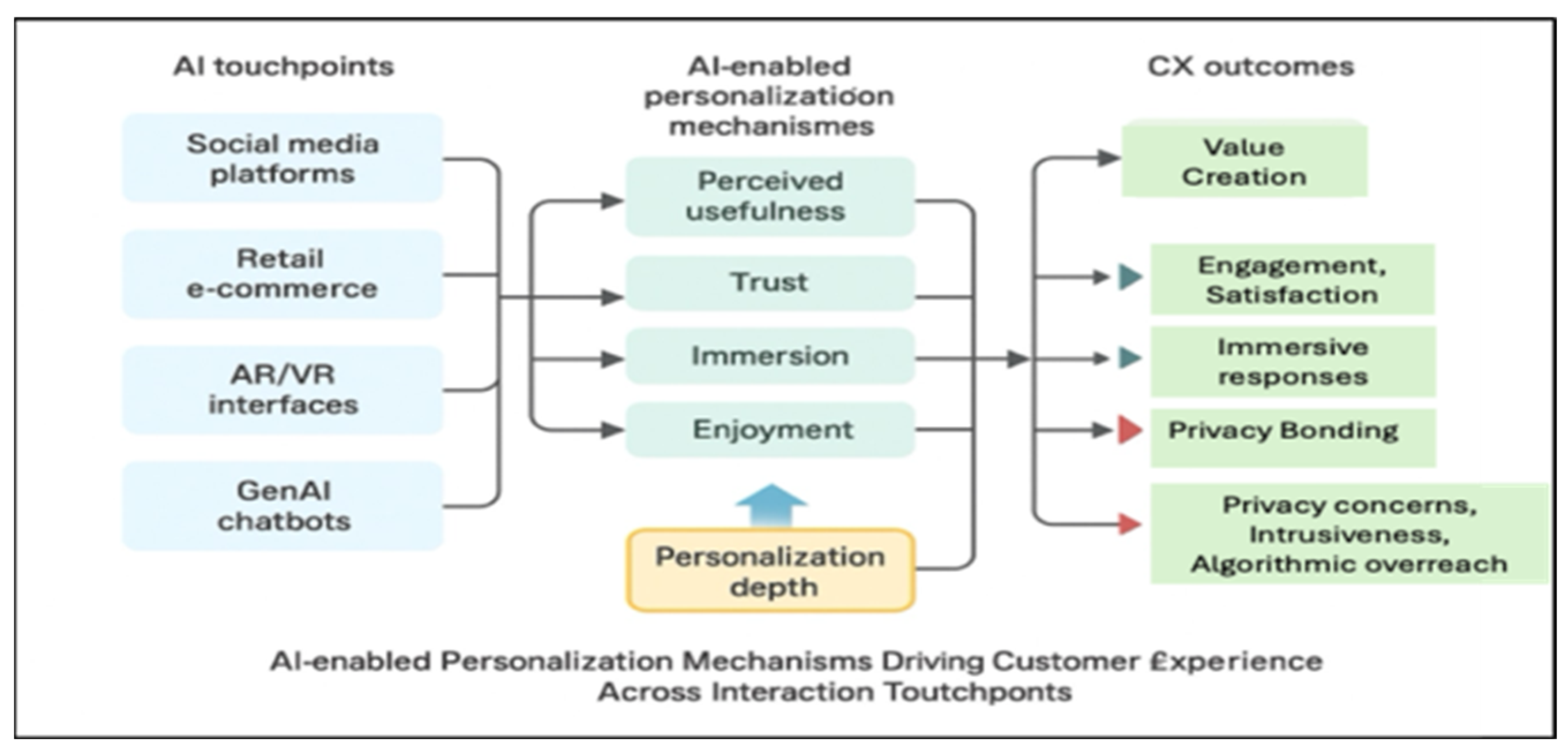
Figure 3 shows how four major AI touchpoints, social media platforms, retail e-commerce, AR/VR interfaces, and GenAI chatbots activate distinct personalization mechanisms that shape customer perceptions and subsequent behavioral outcomes. The central pathways emphasize core cognitive and emotional responses, including perceived usefulness, trust, immersion, and enjoyment, which lead to two contrasting forms of customer experience outcomes: value-creating effects (e.g., engagement, satisfaction, immersive responses) and value-eroding effects (e.g., privacy concerns, intrusiveness, and algorithmic overreach). The personalization depth dimension indicates that as personalization becomes more contextualized and predictive, the intensity of both positive and negative outcomes increases.
Figure 3.
AI-Enabled Personalization Mechanisms Driving Customer Experience Across Interaction Touchpoints.
Overall, empirical evidence suggests that AI-enabled personalization enhances both utilitarian and hedonic aspects of the customer experience, thereby strengthening outcomes such as trust, satisfaction, perceived usefulness, immersion, and loyalty. Nevertheless, as noted previously, these benefits can be sustained only when personalization is balanced with ethical and privacy safeguards to maintain customer trust and long-term value creation.
4.2. Privacy, Risk, Trust, and Transparency in AI-Enabled Customer Experience
The evidence synthesized in this section indicates that privacy, trust, perceived risk, and transparency are central yet theoretically and empirically contested constructs in AI-enabled customer experience research (see Table 2). Rather than presenting uniform effects, the reviewed studies reveal notable contradictions and inconsistencies in how these mechanisms influence customer outcomes across contexts, technologies, and research designs [18].
A prominent inconsistency concerns the role of transparency. While several studies have reported that transparency cues (e.g., AI disclosure, explainability labels) enhance trust and perceived credibility, other studies have demonstrated the opposite effect, showing that explicit AI disclosure reduces purchase intention or credibility, particularly among users with low AI familiarity [48]. This contradiction suggests that transparency does not operate as a universally positive trust signal but functions as a conditional mechanism moderated by prior experience, attitudes toward AI, and cognitive load. Many studies acknowledge this moderation conceptually but fail to empirically test interaction effects, limiting theoretical resolution [43,49].
Similarly, trust is inconsistently positioned across studies as either a mediator, direct predictor, or secondary outcome, often without clear justification. Some models treat trust as the dominant pathway linking personalization to engagement, whereas others find perceived usefulness or hedonic value to outweigh trust effects, particularly in early adoption contexts. These discrepancies are partly attributable to methodological variation, including cross-sectional designs, self-reported intention measures, and short-term interaction scenarios that limit insight into trust formation over time [50,51].
Methodological weaknesses are also evident in the treatment of privacy risk. Although privacy calculus theory assumes rational trade-offs between benefits and risks, many empirical studies operationalize privacy concern as a static perception rather than a dynamic evaluative process, thereby oversimplifying decision-making [52]. In addition, privacy risk is frequently measured at a general level, without distinguishing between data sensitivity, perceived surveillance, or secondary data use, which may explain conflicting findings regarding the strength of privacy effects across studies [53].
Contradictions also emerge in the assessment of personalization intensity. Some studies report that deep contextual personalization increases satisfaction and engagement despite elevated privacy concern, while others show that similar levels of personalization trigger creepiness and avoidance [54]. These opposing results are rarely reconciled, largely because studies differ in platform type, cultural context, and experimental realism. Few studies explicitly compare low- versus high-intensity personalization within the same empirical design, limiting causal inference.
Overall, the literature is characterized by strong internal validity within individual studies but limited cumulative coherence across studies. The absence of longitudinal designs, inconsistent construct operationalization, and overreliance on single-context samples constrain theoretical integration. By explicitly identifying these contradictions and methodological limitations, this review moves beyond aggregation to clarify where evidence converges, where it diverges, and why unresolved tensions persist within the personalization–privacy–value framework [55,56].
Table 2.
Studies on Privacy, Risk, Trust, and Transparency in AI-Enabled Customer Experience.
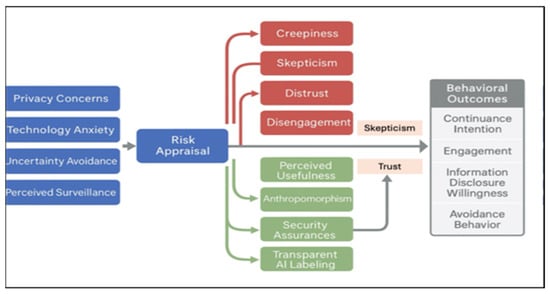
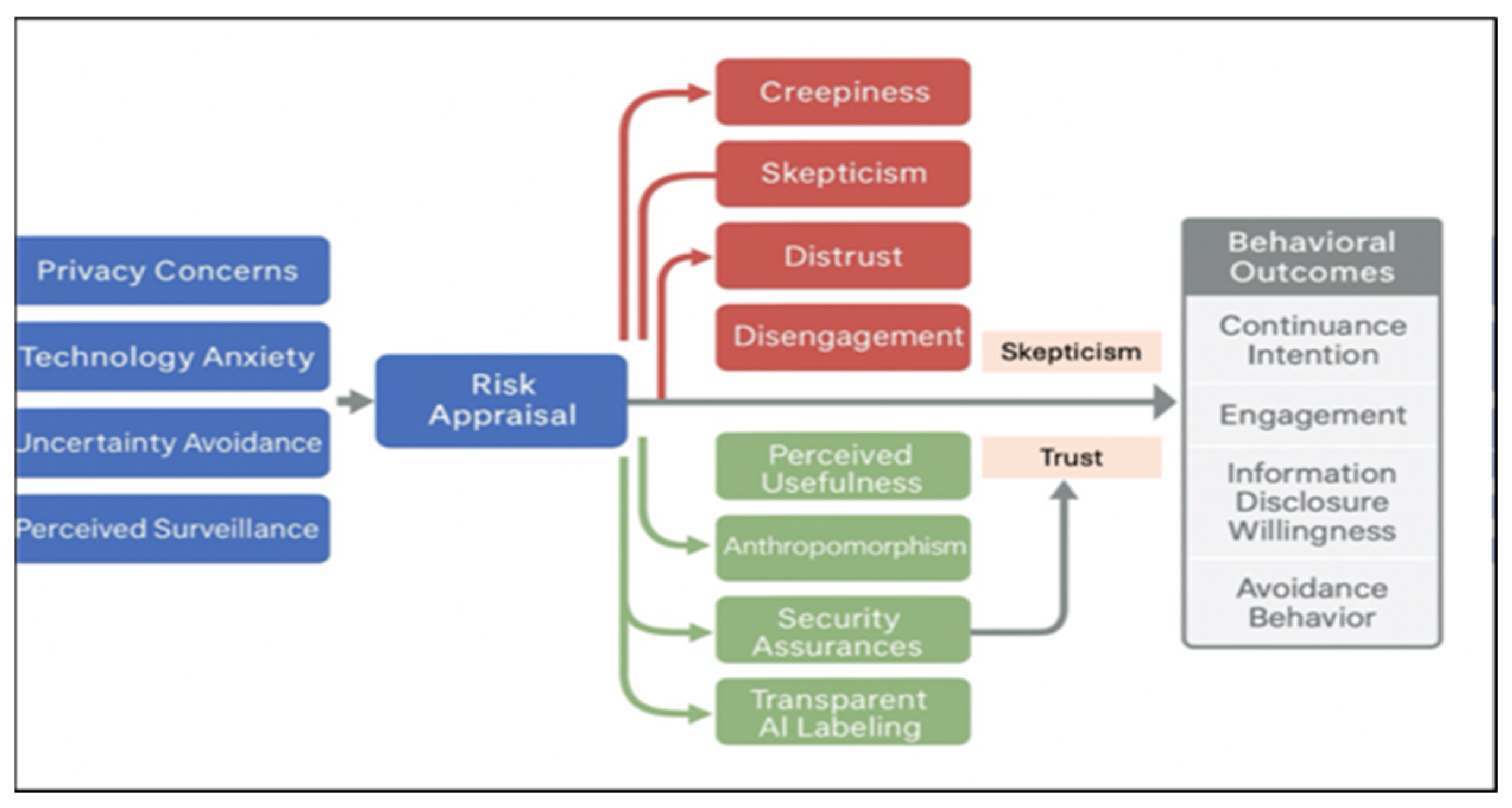
Figure 4 presents the psychological mechanisms underlying customers’ evaluations of AI-enabled interactions. Privacy-related antecedents such as privacy concerns, technology anxiety, uncertainty avoidance, and perceived surveillance feed into a central risk appraisal stage. From this stage, two pathways emerge: a negative pathway involving creepiness, skepticism, distrust, and disengagement, and a positive pathway driven by trust cues such as perceived usefulness, anthropomorphism, security assurances, and transparent AI labelling. The figure also illustrates the ambiguous role of transparency, which can enhance trust in some contexts while eliciting skepticism in others. Moderators, including gender, generational cohort, prior service experience, privacy sensitivity, and user expertise, influence the intensity and direction of these pathways, ultimately shaping behavioral outcomes such as continuance intention, engagement, willingness to disclose information, and avoidance.
Figure 4.
Privacy–Trust Dynamics in AI-Enabled Customer Experience.
4.3. Customer Value, Experience, and Engagement Outcomes
Findings from the expanded Table 3 (20 studies) indicate that AI-enabled customer experiences are driven by utilitarian, hedonic, experiential, relational, and emotional value across various interfaces, including GenAI, chatbots, voice assistants, AR/VR tools, and recommendation systems. Rather than reiterating the individual study outcomes listed in Table 3, this subsection synthesizes how these value dimensions interact to produce contrasting pathways of value creation and value destruction in AI-enabled CX [45,64,65].
Across studies, experiential value emerges as the most consistently robust driver of engagement and behavioral outcomes, particularly in immersive and interactive AI contexts. GenAI responsiveness enhances product involvement and perceived relevance [64], while AR-based virtual try-on technologies intensify immersion, vividness, and control, thereby amplifying both hedonic and utilitarian value and stimulating impulsive buying [45,64,65]. These experiential mechanisms explain why AI systems that simulate realism, interactivity, or emotional presence tend to outperform purely functional personalization in driving engagement [66,67].
A second dominant synthesis pattern is the dual pathway linking personalization to engagement via satisfaction, observed across multiple service contexts. Personalized AI interactions improve satisfaction by enhancing relevance, ease of use, and perceived usefulness, which subsequently drives emotional and behavioral engagement [46,65]. However, this pathway is conditional rather than universal, as its strength varies according to demographic characteristics, service context, and personalization intensity [4,39,45].
Critically, the literature also reveals a persistent tension between value creation and value destruction. While many studies document positive outcomes such as increased trust [35], brand equity [66], loyalty [68], and relational bonding [67], others demonstrate that the same personalization mechanisms can erode value when perceived as intrusive, manipulative, or privacy-threatening. Highly contextualized or proactive AI personalization often produces a paradoxical effect—simultaneously increasing satisfaction and engagement while activating privacy-driven avoidance or reduced willingness to pay [36,69]. This contrast underscores that AI-enabled value is not additive but contingent on ethical alignment, perceived control, and contextual appropriateness.
Relational and emotional value function as amplifiers in both positive and negative directions. Parasocial bonding through virtual influencers [67] and GenAI services such as ChatGPT [66] strengthens engagement and loyalty when authenticity and emotional resonance are perceived as genuine. Conversely, when emotional cues or anthropomorphic features intensify perceptions of surveillance or manipulation, they accelerate value destruction rather than value creation [40,46]. Notably, several studies indicate that emotional value can outweigh trust as a predictor of loyalty, particularly in luxury and experiential consumption contexts [68].
Technological and interaction-quality factors further moderate value outcomes. Adaptive ease-of-use mechanisms and effort-reducing interfaces consistently enhance engagement by generating feelings of fluency and awe [45,70], whereas poorly calibrated AI features weaken value despite functional benefits [65]. Evidence from emerging markets additionally suggests that utilitarian value and service quality dominate early stage AI adoption, while experiential and emotional value gain importance as user familiarity with AI systems increases [4,39].
Overall, the synthesized evidence demonstrates that AI-enabled customer value emerges through a fragile balance rather than a linear accumulation of benefits. Value creation is strongest when personalization is immersive, context-sensitive, and ethically governed [35,36,46,66,67], whereas value destruction occurs when risks overshadow the perceived benefits or when the AI design lacks emotional or cultural resonance [40,68,69]. These contrasting pathways reinforce the personalization–privacy–value (PPV) tension and highlight the need for nuanced, context-aware AI design strategies [68].
Table 3.
AI-Enabled Customer Experience and Customer Value/Engagement Outcomes.
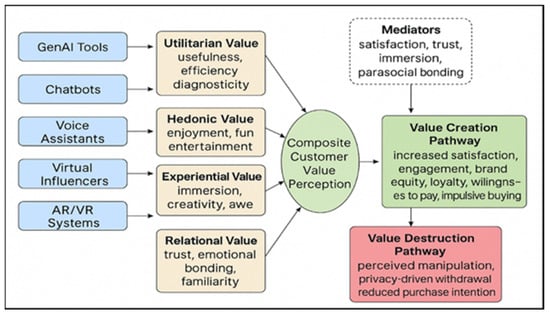
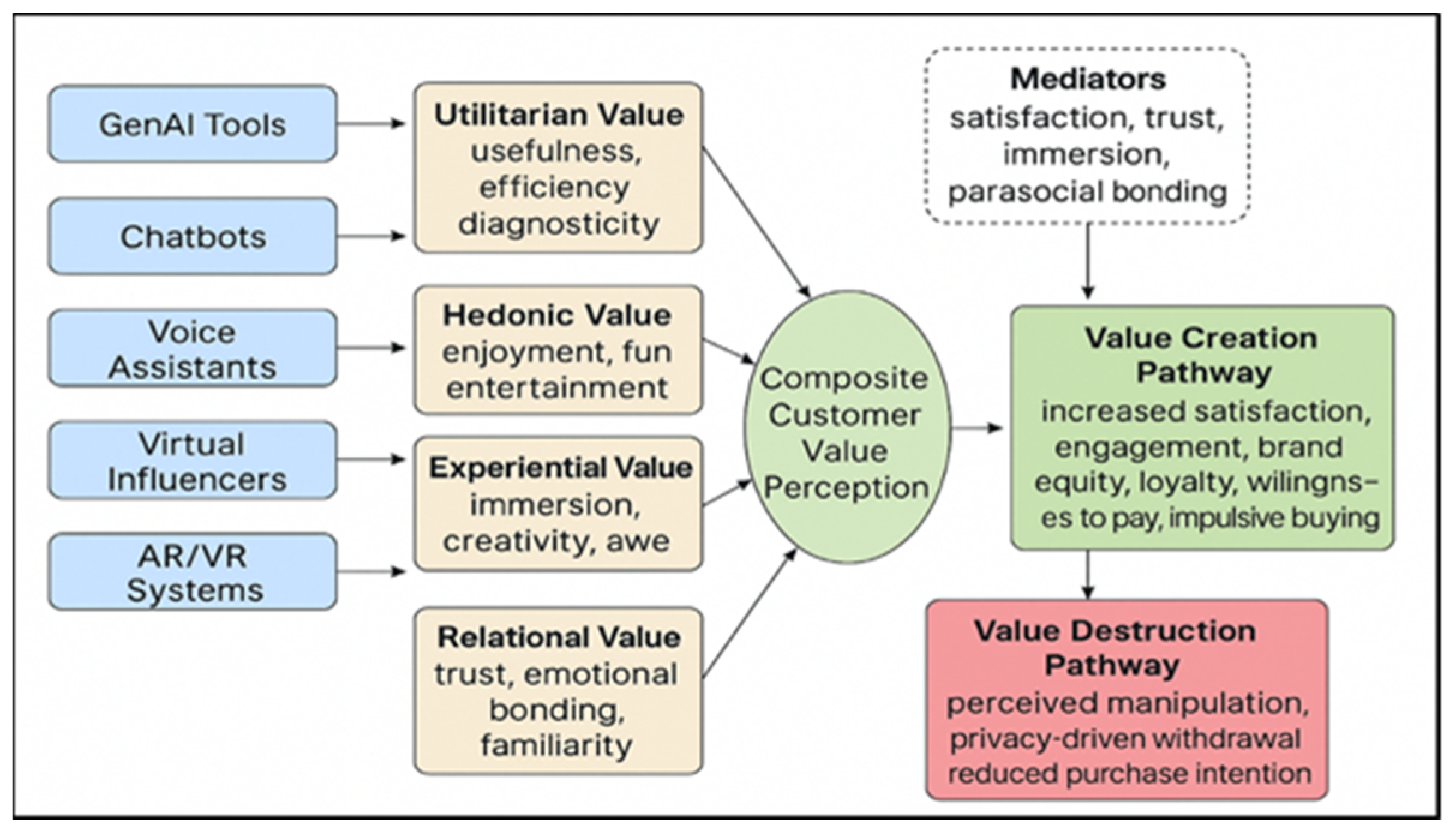
Figure 5 illustrates how AI touchpoints, including GenAI tools, chatbots, voice assistants, virtual influencers, and AR/VR interfaces, generate distinct utilitarian, hedonic, experiential, and relational value streams that combine to form an overall customer value perception. This perception follows two opposing pathways: value creation, which yields satisfaction, engagement, loyalty, brand equity, willingness to pay, and impulsive buying, and value destruction, arising when personalization is perceived as intrusive, manipulative, or privacy-threatening, thereby reducing engagement and purchase intention. Mediating mechanisms, such as satisfaction, trust, immersion, and parasocial bonding, serve as critical links that translate these value streams into final behavioral outcomes in AI-enabled customer experiences.
Figure 5.
AI-Enabled Customer Value Pathways: Utilitarian, Hedonic, Experiential, and Relational Value Streams Shaping Composite Customer Value Perception.
4.4. Boundary Conditions, Segmentation, and Contextual Moderators
Findings from the studies summarized in Table 4 reveal that the effectiveness of AI-enabled customer experience management (CXM) is strongly shaped by boundary conditions and moderating variables. These moderators, ranging from psychological traits (e.g., uncertainty avoidance), demographic differences (e.g., gender, generational cohort), contextual factors (e.g., service experience, localization, regulatory environment), and technological fit (e.g., task–technology fit), determine how personalization, privacy, trust, and value outcomes manifest across customer segments. The pattern across these studies reinforces theoretical arguments that customer responses to AI systems are not uniform but contingent on individual, situational, and technological characteristics.
Across AI-mediated contexts, individual traits are shown to significantly amplify or diminish the impact of AI features on customer outcomes. For example, uncertainty avoidance intensifies the negative effect of privacy concerns and technology anxiety on creepiness and distrust in AI-powered digital assistants [48]. This supports the privacy calculus perspective, which suggests that risk-averse customers place more weight on privacy costs relative to the benefits of personalization. Similarly, past service experience moderates the relationship between perceived value and trust in voice assistants, strengthening the link between utilitarian/hedonic benefits and engagement for customers with positive experience histories [49]. These findings indicate that cognitive appraisals and emotional interpretations of AI are shaped by memory-based expectations and trust anchors.
Cultural and contextual moderators also play a critical role. Localization is shown to influence how users respond to digital voice assistants, enhancing engagement based on service experience but weakening responses to anthropomorphism [40,77]. In travel contexts, generational cohort and gender differences produce distinct pathways from chatbot qualities (e.g., ease of use, security, information quality) to satisfaction and engagement [46,78]. Generational variation is further highlighted in social commerce settings, where Millennials respond more strongly to AI recommendations and AI labels than Gen Z, indicating higher sensitivity to AI cues [38,79]. These findings suggest that personalization strategies cannot be uniformly applied across demographic groups; rather, they require segment-specific calibration.
Taken together, the studies in Table 4 consistently demonstrate that boundary conditions shape the personalization–privacy–value dynamic at the heart of AI-enabled CXM. Effective CX strategies require tailoring AI interactions to user characteristics, contextual demands, and technological readiness in order to maximize value creation and minimize value destruction. Firms that attend to these contingencies—through adaptive personalization, localized design, transparency cues, and segment-specific communication—are best positioned to leverage AI for sustainable customer engagement and trust. The table below details all the included studies on boundary conditions and moderators in AI-enabled customer experience.
Table 4.
Boundary Conditions and Moderators in AI-Enabled Customer Experience Management.
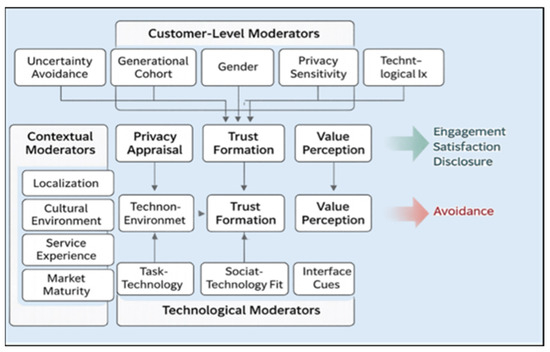
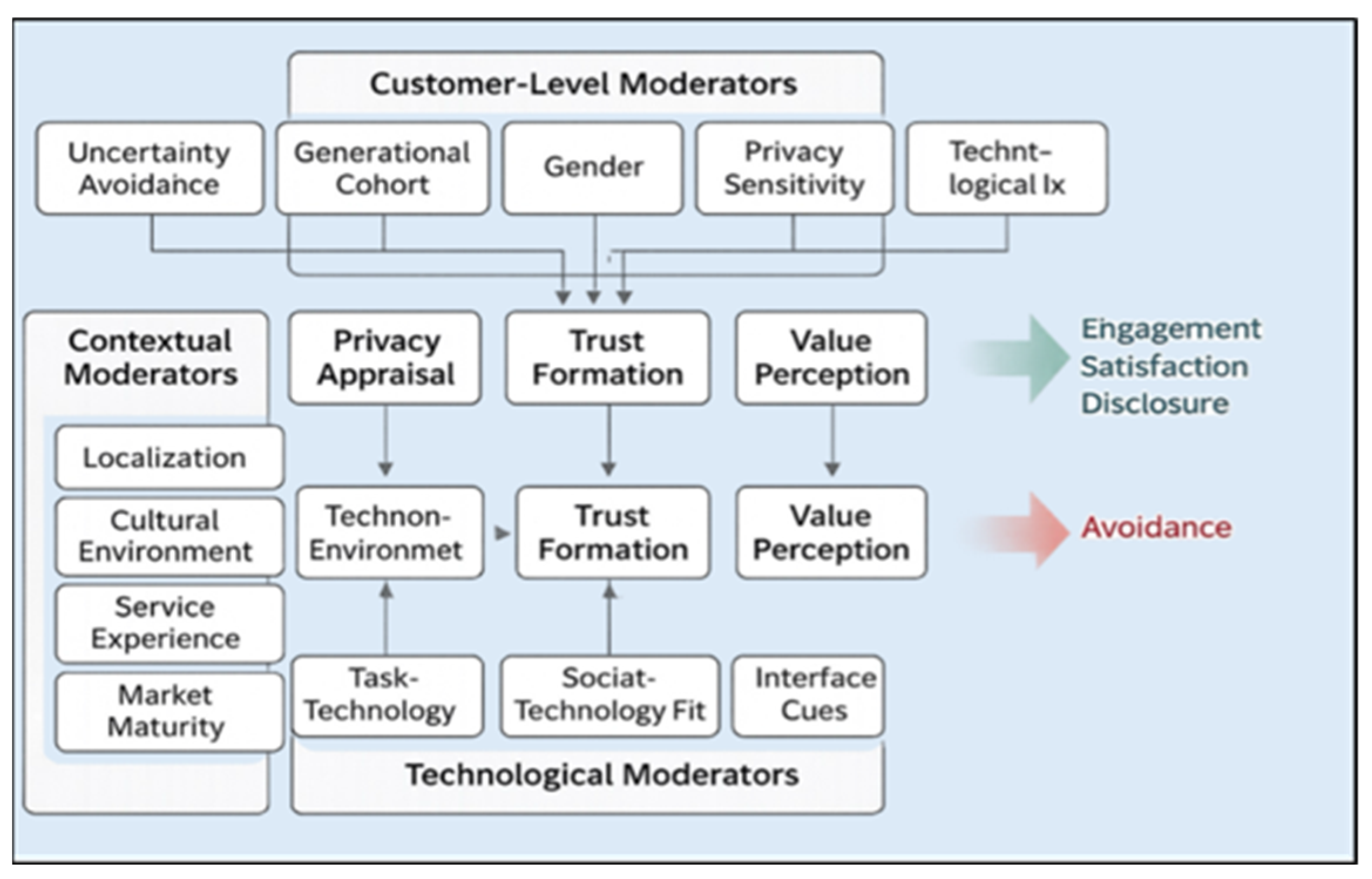
Figure 6 illustrates how customer-level, contextual, and technological moderators jointly shape privacy appraisal, trust formation, and value perception, determining whether AI-enabled interactions drive engagement, satisfaction, and disclosure, or lead to avoidance. Individual factors such as uncertainty avoidance, generational cohort, gender, privacy sensitivity, and technological expertise influence responses to personalization and AI cues. Contextual moderators, including localization, culture, service experience, and market maturity, affect adoption and evaluation conditions. Technological moderators, such as task–technology fit, social–technology fit, interface design, and personalization depth, shape appropriateness, credibility, and emotional resonance. Collectively, these moderators filter risk appraisal, trust, and value perception, directing outcomes toward either positive or negative behavioral responses. The model reinforces the PPV framework, highlighting that effective AI-enabled CX requires alignment with user characteristics, contextual expectations, and technological fit.
Figure 6.
Boundary Conditions and Moderators Shaping AI-Enabled Customer Experience Outcomes.
5. Discussion
The findings across Table 1, Table 2, Table 3 and Table 4 collectively demonstrate that AI-enabled Customer Experience Management (CXM) is shaped by a set of core, interrelated mechanisms—namely personalization intensity, privacy appraisal, trust formation, and customer value perception—rather than an undifferentiated network of influences. Positioning the Personalization–Privacy–Value (PPV) tension as the central organizing framework, this review synthesizes how AI-enabled personalization simultaneously enables value creation and activates privacy-related risk assessments that condition customer responses. Cross-touchpoint analysis confirms that AI applications—including chatbots, voice assistants, GenAI systems, AR/VR tools, and personalized recommendation engines—offer significant opportunities for enhancing customer value; however, these opportunities are highly contingent rather than universal, and depend on how personalization practices interact with privacy expectations, ethical governance, and contextual moderators. Overall, the evidence base is relatively strong for the positive association between AI-enabled personalization and customer value outcomes, mixed and context-dependent for transparency and anthropomorphism effects on trust and engagement, and comparatively underdeveloped for long-term trust formation and observed behavioral outcomes due to the predominance of cross-sectional and short-term study designs.
Consistent with Service-Dominant Logic and Technology Acceptance Model perspectives, prior research indicates that AI-enabled personalization enhances perceived usefulness, experiential value, and satisfaction [70,80]. At the same time, the synthesized evidence indicates that these effects should be interpreted as associative and contingent patterns rather than deterministic causal relationships, given the predominance of cross-sectional and correlational research designs in the literature. Value enhancement through personalization is frequently counterbalanced by heightened privacy concern and perceived surveillance, reinforcing the personalization–privacy paradox that underpins contemporary CXM research.
A comparative synthesis across AI touchpoints highlights that value creation and value erosion operate through distinct but recurring pathways rather than through uniform effects. Chatbots provide immediacy and task efficiency that foster engagement and satisfaction [46], whereas voice AI offers naturalistic interaction while intensifying concerns related to data capture, security, and ambient surveillance [43,48]. Immersive AR/VR environments generate strong hedonic and utilitarian value [37,41]; however, their extensive data requirements amplify sensitivity to privacy intrusion and perceived loss of control [81]. GenAI systems strengthen experiential value and parasocial brand relationships [42,64], but their opacity and susceptibility to algorithmic bias [39] foreground ethical governance as a critical boundary condition rather than a secondary consideration [82]. Collectively, these patterns align with Akbar et al. [39], demonstrating that AI effectiveness depends less on technology type alone and more on how organizations manage transparency, privacy appraisal, and trust formation.
Methodological constraints substantially shape these findings and warrant careful interpretation. Many studies remain concentrated within single industries or technology contexts, limiting generalizability [83,84]. In addition, contextual moderators—such as demographic variation, cultural norms, privacy sensitivity, and prior AI experience—exert strong conditioning effects (Table 4) but are inconsistently modeled or controlled, introducing potential bias into reported relationships [85]. As a result, the synthesized frameworks should be interpreted as integrative conceptual mappings of dominant patterns rather than evidence-weighted causal models.
Across studies, AI consistently emerges as a dual-edged value mechanism. Personalized, efficient, and responsive AI applications strengthen satisfaction, engagement, loyalty, and relational value [86,87,88]. Conversely, privacy violations, opaque algorithms, excessive automation, or perceived manipulation can erode trust and trigger avoidance, resistance, or disengagement [89]. This duality underscores that value creation and value destruction frequently coexist within the same AI-enabled interaction, rather than representing opposing outcomes across different systems. Importantly, the literature suggests that ethical implementation and governance structures function as enabling conditions, shaping whether personalization translates into sustained value or accelerated erosion [90,91].
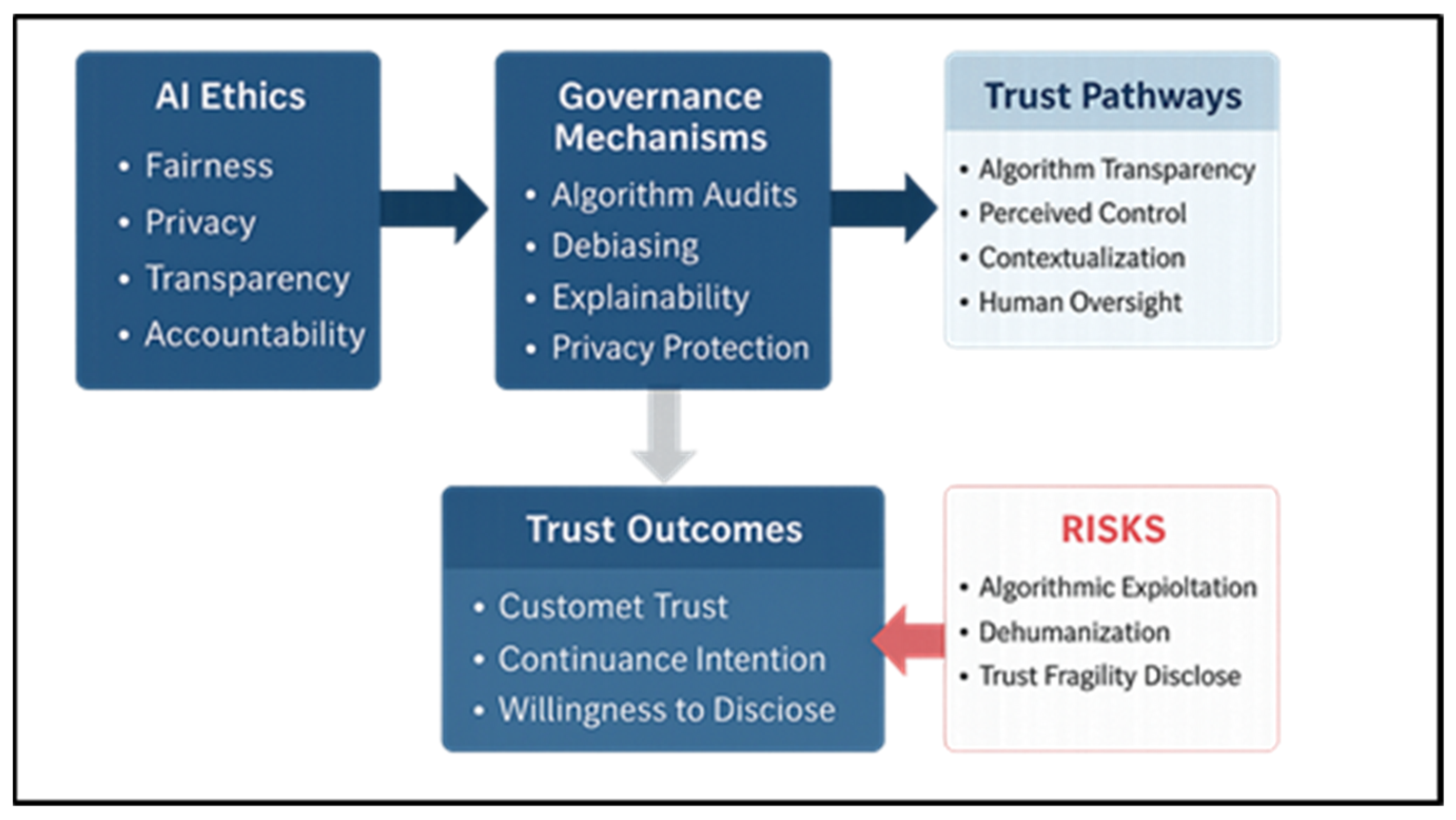
Figure 7 should be interpreted as an interpretive synthesis rather than a causal or predictive model, illustrating how ethical AI governance may influence trust formation and downstream CX outcomes based on recurring patterns in the literature. Beginning with foundational ethical principles—fairness, privacy, transparency, and accountability—the figure maps how these values are operationalized through governance mechanisms such as algorithm audits, debiasing processes, explainability tools, and privacy-protection protocols. These mechanisms support trust enablers, including perceived security, fairness perceptions, transparency cues, contextual explanations, and calibrated anthropomorphism. Trust formation is therefore conceptualized as a dynamic evaluative process rather than a stable outcome, shaped by customers’ ongoing assessments of value relative to risk. Where governance mechanisms are weak or misaligned, the literature indicates activation of a risk pathway characterized by algorithmic exploitation concerns, dehumanization perceptions, trust fragility, and negative behavioral responses [92]. These relationships represent dominant interpretive patterns rather than empirically validated causal chains, reinforcing the need for epistemic caution.
Figure 7.
Ethical Governance and Trust Pathways in AI-Enabled Customer Experience [75,90,93,94,95,96].
From a managerial and policy perspective, the synthesis highlights that ethical governance is not an abstract principle but a design and monitoring challenge. Transparent data practices, participatory design, and regulatory alignment—such as compliance with the EU AI Act—emerge as necessary safeguards rather than optional enhancements [90,93]. The strong moderating influence of individual traits, demographics, and situational context (Table 4) further indicates that segmentation-sensitive AI deployment is essential, requiring firms to adapt personalization depth, transparency cues, and interaction style to user expertise, cultural expectations, generational norms, and privacy sensitivity.
Several conclusions regarding long-term trust dynamics, governance effectiveness, and ethical outcomes should be interpreted as conceptual implications and propositions rather than empirically settled findings, given the predominance of short-term and cross-sectional designs in the reviewed studies. Accordingly, future research directions emphasize longitudinal analyses of AI-mediated trust development [94], deeper examination of demographic variability in AI responses [75], and cross-sectoral comparisons of ethical governance gaps to inform more generalizable frameworks [95]. Emerging technologies—including AR, multimodal AI, and immersive personalization—present further opportunities to examine how experiential intensity interacts with privacy appraisal and trust over time [96].
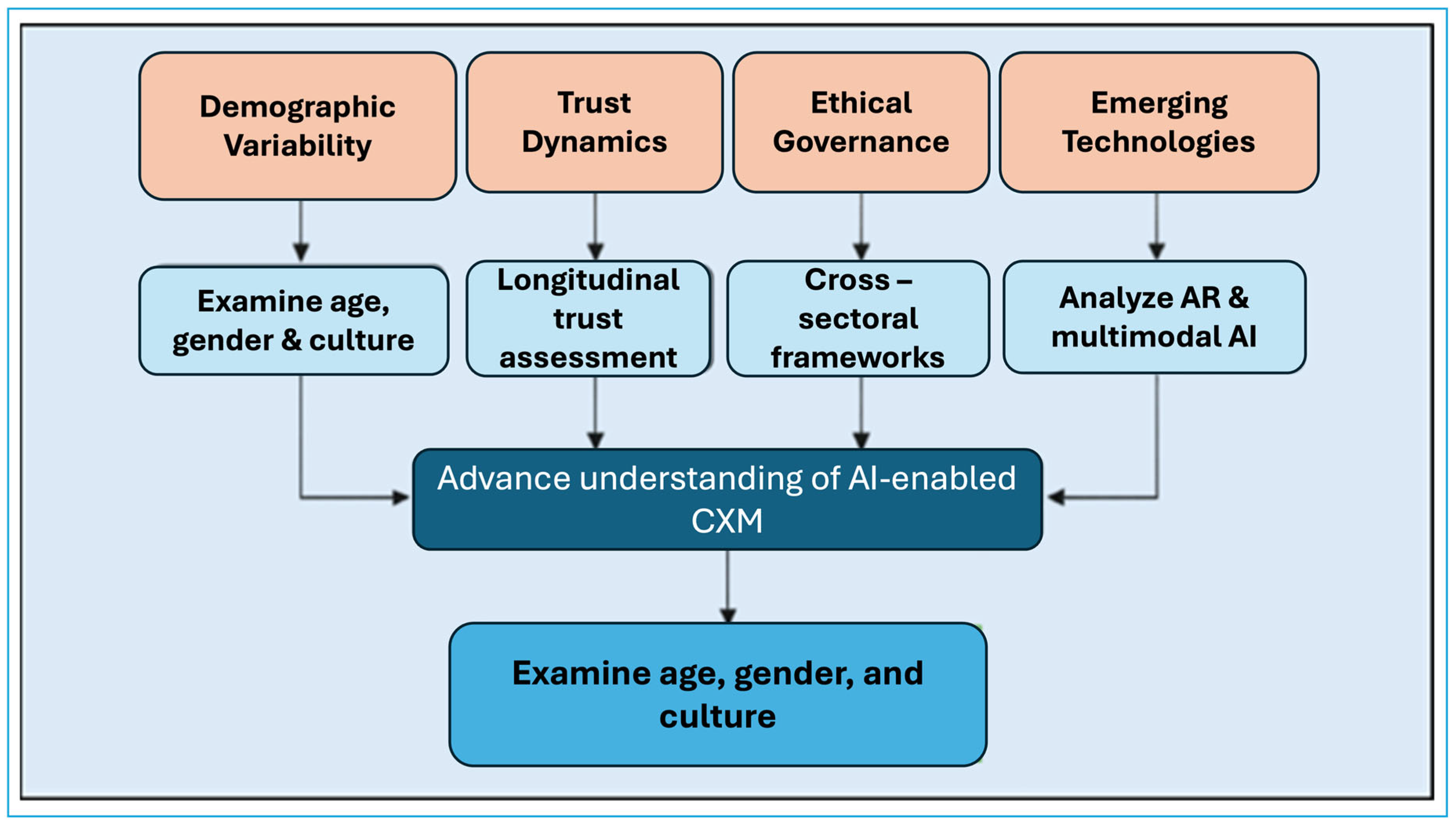
Figure 8 synthesizes these insights into a forward-looking research roadmap, organizing gaps into four priority domains: demographic variability, longitudinal trust dynamics, cross-sector ethical governance, and emerging technologies. Rather than implying consensus, the roadmap explicitly highlights fragmentation and evidentiary limits, reinforcing the need for a more context-sensitive, methodologically rigorous, and ethically grounded research agenda to advance the understanding of AI-enabled customer experience.
Figure 8.
Research Gaps and Future Research Roadmap for Advancing AI-Enabled Customer Experience.
6. Conclusions
This systematic literature review examined how AI-enabled personalization, privacy appraisal, and customer value perception interact to shape customer experience management (CXM) across diverse digital touchpoints. Drawing on evidence from 59 studies synthesized across Table 1, Table 2, Table 3 and Table 4, the review demonstrates that AI technologies—including chatbots, voice assistants, GenAI systems, AR/VR tools, and recommendation engines—are consistently associated with enhanced utilitarian, hedonic, experiential, relational, and emotional value, thereby reshaping how customers engage with firms. At the same time, the synthesis highlights that these associations are contingent rather than universal, as value creation is frequently constrained by privacy concerns, perceived risk, algorithmic opacity, and contextual moderators that shape customer trust and behavioral responses.
Positioned within the Personalization–Privacy–Value (PPV) framework, the findings underscore that personalization remains a powerful mechanism for enhancing engagement and satisfaction, but only when embedded within transparent data practices, perceived user control, and ethically governed AI systems. When these conditions are absent, personalization can shift from a value-creating to a value-eroding force. This reinforces the personalization–privacy paradox as a persistent and unresolved tension rather than a problem with a single optimal solution.
Across contexts, boundary conditions—including uncertainty avoidance, generational cohort, gender, localization, technological expertise, and prior service experience—emerge as critical moderators, explaining why similar AI-enabled personalization practices produce divergent outcomes across users and settings. Rather than implying consensus, the review highlights substantial fragmentation in empirical findings, reflecting variation in technologies, contexts, and research designs. The synthesis also reveals methodological limitations in the existing literature, including limited multi-touchpoint comparisons, heavy reliance on cross-sectional and self-reported data, and insufficient attention to cultural and demographic heterogeneity. These constraints necessitate cautious interpretation of generalized claims, particularly regarding long-term trust dynamics, governance effectiveness, and ethical outcomes.
Accordingly, several conclusions related to long-term trust formation, ethical governance effectiveness, and sustained customer relationships should be interpreted as conceptual implications and propositions rather than empirically established findings. These insights nevertheless provide valuable direction for future inquiry. Future research should prioritize longitudinal designs, cross-cultural comparisons, behavioral and usage-based data, and systematic evaluation of governance mechanisms to better understand how trust and value evolve over time in AI-mediated interactions. A deeper exploration of emerging technologies—such as multimodal AI, immersive personalization, and adaptive GenAI systems—also remains essential as AI becomes increasingly embedded in service ecosystems.
From a practical standpoint, the review suggests that responsible and effective AI-enabled CXM depends less on personalization intensity than on governance quality and contextual fit. Organizations should therefore adopt robust ethical governance frameworks, transparent communication strategies, and customer-centered design principles to monitor trust signals, manage privacy risk, and sustain long-term value creation. Ultimately, balancing personalization, privacy, and value is not a static design choice but an ongoing managerial and ethical challenge, central to the future of AI-driven customer experience management.
Author Contributions
The idea and design of the study were contributed to by all authors. R.D.U. Conducted the data analysis and literature search. R.D.U. wrote the original draft of the manuscript, and W.A. provided feedback on earlier drafts. All authors have read and agreed to the published version of the manuscript.
Funding
No funding was received.
Institutional Review Board Statement
Not applicable.
Informed Consent Statement
Not applicable.
Data Availability Statement
The original contributions presented in this study are included in the article. Further inquiries can be directed to the corresponding authors.
Acknowledgments
We would like to express our sincere appreciation to all individuals who provided valuable academic feedback, technical assistance, and administrative support during the preparation and completion of this journal.
Conflicts of Interest
The authors declare no conflicts of interest.
References
- Arora, R. Leveraging Generative AI in E-Commerce: Enhancing Customer Experience from Conversation to Reviews. Int. J. Multidiscip. Res. 2024, 6, 1–8. [Google Scholar]
- Şahin, O. Generative Artificial Intelligence (GenAI) in Business: A Systematic Review on the Threshold of Transformation. J. Smart Syst. Res. 2024, 5, 156–175. [Google Scholar] [CrossRef] [Scilit]
- Vannam, L.E.; Phung, T.H. The Role of Moderators in Transitioning from GenAI Chatbot Customer Experience to Customer Satisfaction in Digital Marketing. Int. J. Soc. Sci. Econ. Res. 2024, 09, 2511–2532. [Google Scholar] [CrossRef] [Scilit]
- El-Sayad, G.; Mamdouh, H. The Power of AI in Retail E-Commerce: What Drives Online Customer Word-of-Mouth Intention Toward AI-Powered Shopping Applications? Int. J. Hum.-Comput. Interact. 2025, 42, 567–579. [Google Scholar] [CrossRef] [Scilit]
- Alaa, M. Enhancing Customer Experience Through Implementing Process Mining to Discover and Analyze Customer Journey: The Case of Telecom Egypt. J. Inf. Syst. Eng. Manag. 2025, 10, 810–822. [Google Scholar] [CrossRef] [Scilit]
- Shah, M. Effectiveness of Generative AI and Graphic Design in Fostering Consumer Engagement. EEL 2025, 15, 60–66. [Google Scholar] [CrossRef] [Scilit]
- Israfilzade, K. The Role of Generative Artificial Intelligence in E-Commerce: Trends, Challenges and Opportunities. Eurasia Proc. Educ. Soc. Sci. 2025, 42, 1–20. [Google Scholar] [CrossRef] [Scilit]
- Ranieri, A.; Di Bernardo, I.; Mele, C. Serving Customers Through Chatbots: Positive and Negative Effects on Customer Experience. J. Serv. Theory Pract. 2024, 34, 191–215. [Google Scholar] [CrossRef] [Scilit]
- Tulcanaza-Prieto, A.B.; Cortez-Ordoñez, A.; Lee, C.W. Influence of Customer Perception Factors on AI-Enabled Customer Experience in the Ecuadorian Banking Environment. Sustainability 2023, 15, 12441. [Google Scholar] [CrossRef] [Scilit]
- Bhuiyan, M.S. The Role of AI-Enhanced Personalization in Customer Experiences. J. Comput. Sci. Technol. Stud. 2024, 6, 162–169. [Google Scholar] [CrossRef] [Scilit]
- Fan, H.; Han, B.; Gao, W.; Li, W. How AI Chatbots Have Reshaped the Frontline Interface in China: Examining the Role of Sales–service Ambidexterity and the Personalization–privacy Paradox. Int. J. Emerg. Mark. 2022, 17, 967–986. [Google Scholar] [CrossRef] [Scilit]
- Wagh, V.; Ramesh, G. A Study on the Role of AI in Hyper-Personalization Marketing of FMCG Products. Econ. Sci. 2024, 20, 267–278. [Google Scholar] [CrossRef] [Scilit]
- Kunz, W.H.; Wirtz, J. Corporate Digital Responsibility (CDR) in the Age of AI: Implications for Interactive Marketing. J. Res. Interact. Mark. 2023, 18, 31–37. [Google Scholar] [CrossRef] [Scilit]
- Kumari, P.; Gupta, N.; Aeron, P. The Rise of the Phygital Citizens. J. Glob. Inf. Manag. 2025, 33, 1–17. [Google Scholar] [CrossRef] [Scilit]
- Ameen, N.; Tarhini, A.; Reppel, A.; Anand, A. Customer Experiences in the Age of Artificial Intelligence. Comput. Hum. Behav. 2021, 114, 106548. [Google Scholar] [CrossRef] [Scilit]
- Singh, C.; Dash, M.K.; Sahu, R.; Kumar, A. Artificial Intelligence in Customer Retention: A Bibliometric Analysis and Future Research Framework. Kybernetes 2023, 53, 4863–4888. [Google Scholar] [CrossRef] [Scilit]
- Fan, H.; Han, B.; Gao, W. (Im)Balanced customer-oriented behaviors and AI chatbots’ Efficiency–Flexibility performance: The moderating role of customers’ rational choices. J. Retail. Consum. Serv. 2022, 66, 102937. [Google Scholar] [CrossRef] [Scilit]
- Chan-Olmsted, S.M.; Chen, H.; Kim, J. In Smartness We Trust: Consumer Experience, Smart Device Personalization and Privacy Balance. J. Consum. Mark. 2024, 41, 597–609. [Google Scholar] [CrossRef] [Scilit]
- Kronemann, B.; Kizgin, H.; Rana, N.; Dwivedi, Y.K. How AI Encourages Consumers to Share Their Secrets? The Role of Anthropomorphism, Personalisation, and Privacy Concerns and Avenues for Future Research. Span. J. Mark. Esic 2023, 27, 3–19. [Google Scholar] [CrossRef] [Scilit]
- Ramadan, A.M.M.; Khalil, A.T.; Enaba, H.M.L. Customer Experience Antecedents in the Context of AI Chatbot Services. Sci. J. Bus. Environ. Stud. 2024, 15, 590–618. [Google Scholar]
- Said, S. The Role of Artificial Intelligence (AI) and Data Analytics in Enhancing Guest Personalization in Hospitality. J. Mod. Hosp. 2023, 2, 1–13. [Google Scholar] [CrossRef] [Scilit]
- Page, M.J.; McKenzie, J.E.; Bossuyt, P.M.; Boutron, I.; Hoffmann, T.C.; Mulrow, C.D.; Shamseer, L.; Tetzlaff, J.M.; Akl, E.A.; Brennan, S.E.; et al. The PRISMA 2020 Statement: An Updated Guideline for Reporting Systematic Reviews. BMJ 2021, 372, n71. [Google Scholar] [CrossRef] [Scilit] [PubMed]
- Apu, K.U. AI-Driven Data Analytics and Automation: A Systematic Literature Review of Industry Applications. Strat. Data Manag. Innov. 2025, 2, 21–40. [Google Scholar] [CrossRef] [Scilit]
- Nasrudin, N.H.; Ahmad, S.; Salleh, K.A.; Azahari, L.A. A Systematic Review of User Mental Models on Applications Sustainability. Int. J. Sustain. Constr. Eng. Technol. 2023, 14, 376–389. [Google Scholar] [CrossRef] [Scilit]
- Parry, D.; Henderson, B.; Gaschen, P.; Ghanem, D.; Hernandez, E.; Idicula, A.; Hanna, T.; MacKay, B. The Implementation of Artificial Intelligence in Upper Extremity Surgery: A Systematic Review. Front. Artif. Intell. 2025, 8, 1621757. [Google Scholar] [CrossRef] [Scilit]
- Dutta, S.; Sengupta, S.; Arivazhagan, R. Artificial Intelligence Driven Customer Behavior Analytics for Healthcare: A Systematic Review of Patient Experience, Engagement, and Decision-Making Patterns. Acad. Int. J. Eng. Sci. 2025, 3, 12–35. [Google Scholar] [CrossRef] [Scilit]
- Nicolescu, L.; Tudorache, M.T. Human-Computer Interaction in Customer Service: The Experience with AI Chatbots—A Systematic Literature Review. Electronics 2022, 11, 1579. [Google Scholar] [CrossRef] [Scilit]
- Ghesh, N.; Alexander, M.; Davis, A. The Artificial Intelligence-Enabled Customer Experience in Tourism: A Systematic Literature Review. Tour. Rev. 2023, 79, 1017–1037. [Google Scholar] [CrossRef] [Scilit]
- Timimi, H.; Baaddi, M.; Bennouna, A. Impact of Artificial Intelligence on the Personalization of the Customer Experience: A Systematic Literature Review. Multidiscip. Rev. 2025, 8, 2025224. [Google Scholar] [CrossRef] [Scilit]
- A Brereton, T.; Malik, M.M.; Lifson, M.; Greenwood, J.D.; Peterson, K.J.; Overgaard, S.M. The Role of Artificial Intelligence Model Documentation in Translational Science: Scoping Review. Interact. J. Med. Res. 2023, 12, e45903. [Google Scholar] [CrossRef] [Scilit]
- Gabarron, E.; Larbi, D.; Rivera-Romero, O.; Denecke, K. Human Factors in AI-Driven Digital Solutions for Increasing Physical Activity: Scoping Review. JMIR Hum. Factors 2024, 11, e55964. [Google Scholar] [CrossRef] [Scilit] [PubMed]
- Kraus, M.; Anteby, R.; Konen, E.; Eshed, I.; Klang, E. Artificial Intelligence for X-Ray Scaphoid Fracture Detection: A Systematic Review and Diagnostic Test Accuracy Meta-Analysis. Eur. Radiol. 2023, 34, 4341–4351. [Google Scholar] [CrossRef] [Scilit] [PubMed]
- Alqasa, K.M.A. Impact of Artificial Intelligence-Based Marketing on Banking Customer Satisfaction: Examining Moderating Role of Ease of Use and Mediating Role of Brand Image. Transnatl. Mark. J. 2023, 11, 167–180. [Google Scholar]
- Becan, C.; Çeber, B. How Technology Readiness Influences Behavioral and Purchasing Intention: Serial Multiple Mediating Role of Attitude Toward AI and AI-driven Consumer Chatbot Experience. Digit. Transform. Soc. 2025, 1–27. [Google Scholar] [CrossRef] [Scilit]
- Teepapal, T. AI-driven personalization: Unraveling consumer perceptions in social media engagement. Comput. Hum. Behav. 2025, 165, 108549. [Google Scholar] [CrossRef] [Scilit]
- Ding, L.; Antonucci, G.; Venditti, M. Unveiling user responses to AI-powered personalised recommendations: A qualitative study of consumer engagement dynamics on Douyin. Qual. Mark. Res. 2025, 28, 234–255. [Google Scholar] [CrossRef] [Scilit]
- Gao, Y.; Liang, J. The Impact of AI-Powered Try-On Technology on Online Consumers’ Impulsive Buying Intention: The Moderating Role of Brand Trust. Sustainability 2025, 17, 2789. [Google Scholar]
- Amin, A. Artificial intelligence in social media: A catalyst for impulse buying behavior? Young Consum 2025, 26, 765–785. [Google Scholar] [CrossRef] [Scilit]
- Akbar, M.U.; Ibrahim; Nabil, S.J.; Iqbal, K.A.; Islam, A. The Influence of Artificial Intelligence on Consumer Trust in E-Commerce: Opportunities and Ethical Challenges. Eur. J. Theor. Appl. Sci. 2024, 2, 250–259. [Google Scholar] [CrossRef] [Scilit]
- Maduku, D.K.; Rana, N.P.; Mpinganjira, M.; Thusi, P.; Mkhize, N.H.-B.; Ledikwe, A. Do AI-powered digital assistants influence customer emotions, engagement and loyalty? An empirical investigation. Asia Pac. J. Mark. Logist. 2024, 36, 2849–2868. [Google Scholar] [CrossRef] [Scilit]
- Kabir, Z.S.; Kang, K. An Interaction–Engagement–Intention Model: How Artificial Intelligence and Augmented Reality Transform the User–Platform Interaction Paradigm. Electronics 2025, 14, 2499. [Google Scholar] [CrossRef] [Scilit]
- Arce-Urriza, M.; Chocarro, R.; Cortiñas, M.; Marcos-Matás, G. from familiarity to acceptance: The impact of Generative Artificial Intelligence on consumer adoption of retail chatbots. J. Retail. Consum. Serv. 2025, 84, 104234. [Google Scholar] [CrossRef] [Scilit]
- Kowalczuk, P.; Hof, N. The customer’s perceived value-in-use of voice-assisted smart products and its impact on continuance intention: A trade-off between benefits and costs. J. Prod. Brand Manag. 2025, 34, 690–706. [Google Scholar] [CrossRef] [Scilit]
- Perret, J.K.; Schwientek, J. Beauty Tech—Customer Experience and Loyalty of Augmented Reality- and Artificial Intelligence-Driven Cosmetics. Digital 2025, 5, 21. [Google Scholar] [CrossRef] [Scilit]
- Lopes, J.M.; Gomes, S.; Nogueira, E.; Trancoso, T. AI’s invisible touch: How effortless browsing shapes customer perception, experience and engagement in online retail. Cogent Bus. Manag. 2025, 12, 2440628. [Google Scholar] [CrossRef] [Scilit]
- Magano, J.; Quintela, J.A.; Banerjee, N. Driving Consumer Engagement Through AI Chatbot Experience: The Mediating Role of Satisfaction Across Generational Cohorts and Gender in Travel Tourism. Sustainability 2025, 17, 7673. [Google Scholar] [CrossRef] [Scilit]
- Hossain, M.E.; Biswas, S. Technology acceptance model for understanding consumer’s behavioral intention to use artificial intelligence based online shopping platforms in Bangladesh. SN Bus. Econ. 2024, 4, 153. [Google Scholar] [CrossRef] [Scilit]
- Maduku, D.K.; Rana, N.P.; Mpinganjira, M.; Thusi, P. Exploring the ‘Dark Side’ of AI-Powered Digital Assistants: A Moderated Mediation Model of Antecedents and Outcomes of Perceived Creepiness. J. Consum. Behav. 2025, 24, 1194–1221. [Google Scholar] [CrossRef] [Scilit]
- Mpinganjira, M.; Maduku, D.K.; Rana, N.P.; Thusi, P. Drivers of Intentions Towards Continued Use of Digital Voice Assistants: The Moderating Role of Service Experience. J. Glob. Inf. Manag. 2025, 33, 1–32. [Google Scholar] [CrossRef] [Scilit]
- Hao, Z. The Impact of AI-Driven Precision Marketing Strategies on Consumer Purchase Intention. Adv. Soc. Behav. Res. 2025, 16, 53–59. [Google Scholar] [CrossRef] [Scilit]
- Sajili, M.; Kinanti, L.A.B.; Rudhan, A.M. Rise of AI: Transforming Data Analytics in Marketing Strategies. J. Econ. Bus. Account. (Costing) 2024, 7, 7216–7221. [Google Scholar] [CrossRef] [Scilit]
- Moon, J.H.; Kim, S.; Jung, Y.; Bang, J.; Sung, Y. The Effects of Explainability and User Control on Algorithmic Transparency: The Moderating Role of Algorithmic Literacy. Cyberpsychol. Behav. Soc. Netw. 2025, 28, 497–504. [Google Scholar] [CrossRef] [Scilit] [PubMed]
- Nunes, J.R.; Rita, P.; Pinto, D.C.; Gonzalez-Jimenez, H.; Akdim, K.; Wagner, R.L. Moral appraisals of generative AI: How mindset framing shapes moral judgments, emotional appraisals and privacy behavior. Int. J. Inf. Manag. 2025, 84, 102940. [Google Scholar] [CrossRef] [Scilit]
- Dhirani, L.L.; Mukhtiar, N.; Chowdhry, B.S.; Newe, T. Ethical Dilemmas and Privacy Issues in Emerging Technologies: A Review. Sensors 2023, 23, 1151. [Google Scholar] [CrossRef] [Scilit] [PubMed]
- Salem, S.F.; Alanadoly, A.B. Driving Customer Engagement and Citizenship Behaviour in Omnichannel Retailing: Evidence from the Fashion Sector. Span. J. Mark. Esic 2023, 28, 98–122. [Google Scholar] [CrossRef] [Scilit]
- Vy, N.H.T. AI-Chatbot Service Quality and E-Brand Loyalty: A Mediated Model of Functional Benefit, User Experience, and Satisfaction. Int. J. Leadersh. Manag. 2025, 2. [Google Scholar] [CrossRef] [Scilit]
- Bui, H.T. Examining the effect of AI advertising involvement disclosure on advertising value and purchase intentions. J. Res. Interact. Mark. 2025, ahead-of-print, 1–20. [Google Scholar] [CrossRef] [Scilit]
- Mariani, M.M.; Hashemi, N.; Wirtz, J. Artificial intelligence empowered conversational agents: A systematic literature review and research agenda. J. Bus. Res. 2023, 161, 113838. [Google Scholar] [CrossRef] [Scilit]
- Bhatnagr, P.; Rajesh, A.; Misra, R. Continuous intention usage of artificial intelligence enabled digital banks: A review of expectation confirmation model. J. Enterp. Inf. Manag. 2024, 37, 1763–1787. [Google Scholar] [CrossRef] [Scilit]
- Henkens, B.; Schultz, C.D.; De Keyser, A.; Mahr, D. The sound of progress: AI voice agents in service. J. Serv. Manag. 2025, ahead-of-print, 1–32. [Google Scholar] [CrossRef] [Scilit]
- Riaz, H.; Ahmed, H.; Jibril, A.B. Reassessing customer trust and privacy concerns in omnichannel customer experience. Cogent Bus. Manag. 2024, 11, 2410405. [Google Scholar] [CrossRef] [Scilit]
- He, J.; Liang, X.; Xue, J. Unraveling the Influential Mechanisms of Smart Interactions on Stickiness Intention: A Privacy Calculus Perspective. J. Theor. Appl. Electron. Commer. Res. 2024, 19, 2582–2604. [Google Scholar] [CrossRef] [Scilit]
- Wei, Y.; Syahrivar, J.; Simay, A.E. Unveiling the influence of anthropomorphic chatbots on consumer behavioral intentions: Evidence from China and Indonesia. J. Res. Interact. Mark. 2025, 19, 132–157. [Google Scholar] [CrossRef] [Scilit]
- Wang, S.; Yuan, C.; Yin, Y.; Zhang, Z.; Wang, T. The Impact of Generative AI Characteristics on Users’ Experiential Value and Product Involvement. Int. J. Consum. Stud. 2025, 49, e70125. [Google Scholar] [CrossRef] [Scilit]
- Lee, M.C.; Breckon, D. Factors affecting customer engagement in AI marketing. Telemat. Inform. Rep. 2025, 19, 100230. [Google Scholar] [CrossRef] [Scilit]
- Wang, S.; Yuan, C.; Moon, H.; Kim, K.H. Enhancing Parasocial Brand Experience and Brand Equity: Unleashing the Advantages of ChatGPT Service. Int. J. Consum. Stud. 2025, 49, e70029. [Google Scholar] [CrossRef] [Scilit]
- Su, B.C. Navigating the new frontier: The role of AI-driven virtual influencers in consumer engagement. AI Mag. 2025, 46, e70012. [Google Scholar] [CrossRef] [Scilit]
- Sahne, S.S.; Daronkola, H.K. Enhancing loyalty in luxury fashion with AI: The mediation role of customer relationships. Asia-Pac. J. Bus. Adm. 2025, 17, 1441–1479. [Google Scholar]
- Jo, H. Uncovering the Reasons behind Willingness to Pay for ChatGPT-4 Premium. Int. J. Hum.-Comput. Interact. 2025, 41, 994–1009. [Google Scholar] [CrossRef] [Scilit]
- Dixit, R.S.; Choudhary, S.L.; Govil, N. Analyzing the impact of artificial intelligence on the online purchase decision-making process through the lens of the UTAUT 2 model. Discov. Comput. 2025, 28, 88. [Google Scholar] [CrossRef] [Scilit]
- Acikgoz, F.; Perez-Vega, R.; Okumus, F.; Stylos, N. Consumer engagement with AI-powered voice assistants: A behavioral reasoning perspective. Psychol. Mark. 2023, 40, 2226–2243. [Google Scholar] [CrossRef] [Scilit]
- Sharma, N.; Payal, R.; Paul, J. Hello! How Can I Help You? Role of Technology Appetite on AI Adoption in the Post-Pandemic Era. R&D Manag. 2025, 55, 1560–1581. [Google Scholar]
- Shi, W.; Li, L.; Zhang, Z.; Li, M.; Li, J. Research on driving factors of consumer purchase intention of artificial intelligence creative products based on user behavior. Sci. Rep. 2025, 15, 17400. [Google Scholar] [CrossRef] [Scilit] [PubMed]
- Chahal, H.; Mahajan, M. Voice Unbound: The Impact of Localization and Experience on Continuous Personal Voice Assistant Usage and Its Drivers. Int. J. Hum.-Comput. Interact. 2025, 41, 8606–8623. [Google Scholar] [CrossRef] [Scilit]
- Chakraborty, D.; Troise, C.; Bresciani, S. Exploring consumer intentions to continue: Integrating task technology fit and social technology fit in generative AI based shopping platforms. Technovation 2025, 142, 103189. [Google Scholar] [CrossRef] [Scilit]
- Yrjölä, M.; Hautamäki, P.; Ranta, R. Value propositions of artificial intelligence in retailing. Int. Rev. Retail. Distrib. Consum. Res. 2025, 35, 355–382. [Google Scholar] [CrossRef] [Scilit]
- Pizzi, G.; Vannucci, V.; Mazzoli, V.; Donvito, R. I, chatbot! the impact of anthropomorphism and gaze direction on willingness to disclose personal information and behavioral intentions. Psychol. Mark. 2023, 40, 1372–1387. [Google Scholar] [CrossRef] [Scilit]
- Hosseini, S.; Carrasco-Santos, M.J.; Sthapit, E.; Mercadé-Melé, P. Reimagining travel memories: The role of artificial intelligence in shaping tourist experiences. Curr. Issues Tour. 2025, 1–24. [Google Scholar] [CrossRef] [Scilit]
- Bunea, O.-I.; Corboș, R.-A.; Mișu, S.I.; Triculescu, M.; Trifu, A. The Next-Generation Shopper: A Study of Generation-Z Perceptions of AI in Online Shopping. J. Theor. Appl. Electron. Commer. Res. 2024, 19, 2605–2629. [Google Scholar] [CrossRef] [Scilit]
- Sebastián, M.G.d.B.; Guede, J.R.S.; Antonovica, A. Application and extension of the UTAUT2 model for determining behavioral intention factors in use of the artificial intelligence virtual assistants. Front. Psychol. 2022, 13, 993935. [Google Scholar] [CrossRef] [Scilit]
- Berezin, S. Explainable Ai in Customer Experience Management: Personalization Algorithms in CRM Systems. Am. J. Eng. Techonol. 2025, 7, 57–64. [Google Scholar] [CrossRef] [Scilit]
- Shankar, V. Managing the Twin Faces of AI: A Commentary on “Is AI Changing the World for Better or Worse?”. J. Macromarket. 2024, 44, 892–899. [Google Scholar] [CrossRef] [Scilit]
- Ljepava, N. AI-Enabled Marketing Solutions in Marketing Decision Making: AI Application in Different Stages of Marketing Process. TEM J. 2022, 11, 1308–1315. [Google Scholar] [CrossRef] [Scilit]
- Gao, J.; Ren, L.; Yang, Y.; Zhang, D.; Li, L. The Impact of Artificial Intelligence Technology Stimuli on Smart Customer Experience and the Moderating Effect of technology Readiness. Int. J. Emerg. Mark. 2022, 17, 1123–1142. [Google Scholar] [CrossRef] [Scilit]
- Mousavian, S.Y.; Ahmadisharif, M.; Asayesh, F.; Jamshidi, D. Identification of Indicators for Personalized Marketing with an Artificial Intelligence Approach in the Fourth Industrial Revolution. IJIMOB 2025, 5, 1–9. [Google Scholar] [CrossRef] [Scilit]
- Athaide, G.A.; Zhang, J.Q.; Klink, R.R. Customer Experience Management (CXM) and New Product Success: An empirical Investigation. Eur. J. Innov. Manag. 2024, 28, 3648–3660. [Google Scholar] [CrossRef] [Scilit]
- Kumar, R. Analysing the Relation of AI Chatbot on Customer Satisfaction. Int. J. Sci. Res. Eng. Manag. 2025, 9, 1–9. [Google Scholar] [CrossRef] [Scilit]
- Tr, K.L.; Das, J.R.; Verma, S.K.; Traisa, R.; Agarwal, V.; Wadhwa, C. Leveraging Digital Marketing and Artificial Intelligence to Assess Enhanced Customer Experiences. Management 2025, 3, 177. [Google Scholar]
- Dodda, A. The Role of Generative AI in Enhancing Customer Experience and Risk Management in Credit Card Services. Int. J. Sci. Res. Mod. Technol. 2022, 1, 138–154. [Google Scholar] [CrossRef] [Scilit]
- Kumar, D.; Suthar, N. Ethical and Legal Challenges of AI in Marketing: An Exploration of Solutions. J. Inf. Commun. Ethics Soc. 2024, 22, 124–144. [Google Scholar] [CrossRef] [Scilit]
- Scutella, M.; Plewa, C.; Reaiche, C. Small businesses and e-government participation: The role of personalisation preference and intermediaries. Internet Res. 2024, 34, 917–938. [Google Scholar] [CrossRef] [Scilit]
- Farjas, C.; Herrando, C.; Melero-Polo, I. Customer experience and chatbots disruption: Current landscape and research needs. Serv. Ind. J. 2025, 46, 1–34. [Google Scholar] [CrossRef] [Scilit]
- Dharavathu, D.B.R. A Study on “Risk Management in the Era of AI: Predictive Models and Regulatory Challenges”. Int. Sci. J. Eng. Manag. 2025, 4, 1–9. [Google Scholar] [CrossRef] [Scilit]
- Nopas, D.-S. Algorithmic Learning or Learner Autonomy? Rethinking AI’s Role in digital Education. Qual. Res. J. 2025, ahead-of-printing. [Google Scholar] [CrossRef] [Scilit]
- Tadi, V. Navigating Ethical Challenges and Biases in Generative AI: Ensuring Trust and Fairness in B2B Sales Interactions and Decision-Making. J. Artif. Intell. Cloud Comput. 2024, 3, 2–10. [Google Scholar] [CrossRef] [Scilit]
- Ogeawuchi, J.C.; Sharma, A.; Adekunle, B.I.; Abayomi, A.A.; Onifade, O. Ethical Frameworks for AI Deployment in Financial Decision-Making: Balancing Profitability and Social Responsibility. Int. J. Sci. Res. Comput. Sci. Eng. Inf. Technol. 2024, 10, 905–917. [Google Scholar] [CrossRef] [Scilit]

Disclaimer/Publisher’s Note: The statements, opinions and data contained in all publications are solely those of the individual author(s) and contributor(s) and not of MDPI and/or the editor(s). MDPI and/or the editor(s) disclaim responsibility for any injury to people or property resulting from any ideas, methods, instructions or products referred to in the content. |
© 2026 by the authors. Licensee MDPI, Basel, Switzerland. This article is an open access article distributed under the terms and conditions of the Creative Commons Attribution (CC BY) license.