Review

Leveraging Artificial Intelligence for Sustainable Tutoring and Dropout Prevention in Higher Education: A Scoping Review on Digital Transformation


by
Washington Raúl Fierro Saltos
1,
Fabian Eduardo Fierro Saltos
2,
Veloz Segura Elizabeth Alexandra
1,* and
Edgar Fabián Rivera Guzmán
3
1
Facultad de Ciencias de la Educación, Sociales, Filosóficas y Humanísticas, Universidad Estatal de Bolívar, Guaranda 020150, Ecuador
2
Facultad de Ciencias Administrativas, Gestión Empresarial e Informática, Universidad Estatal de Bolívar, Guaranda 020150, Ecuador
3
Carrera de Ingeniería Agroindustrial, Universidad Estatal de Bolívar, Guaranda 020150, Ecuador
*
Author to whom correspondence should be addressed.
Information 2025, 16(9), 819; https://doi.org/10.3390/info16090819
Submission received: 31 July 2025 / Revised: 11 September 2025 / Accepted: 16 September 2025 / Published: 22 September 2025
(This article belongs to the Special Issue Real-World Applications of Machine Learning Techniques)

Abstract

The increasing integration of artificial intelligence into educational processes offers new opportunities to address critical issues in higher education, such as student dropout, academic underperformance, and the need for personalized tutoring. This scoping review aims to map the scientific literature on the use of AI techniques to predict academic performance, risk of dropout, and the need for academic advising, with an emphasis on e-learning or technology-mediated environments. The study follows the Joanna Briggs Institute PCC strategy, and the review was reported following the PRISMA-ScR checklist for search reporting. A total of 63 peer-reviewed empirical studies (2019–2025) were included after systematic filtering from the Scopus and Web of Science databases. The findings reveal that supervised machine learning models, such as decision trees, random forests, and neural networks, dominate the field, with an emerging interest in deep learning, transfer learning, and explainable AI. Academic, behavioral, emotional, and contextual variables are integrated into increasingly complex and interpretable models. Most studies focus on undergraduate students in digital and hybrid learning contexts, particularly in regions with high dropout rates. The review highlights the potential of AI to enable early intervention and improve the effectiveness of tutoring systems, while noting limitations such as lack of model generalization and ethical concerns. Recommendations are provided for future research and institutional integration.

1. Introduction

1.1. Contextualization

In the modern world, where digital transformation and educational effectiveness increasingly depend on the strategic integration of educational technologies, especially in online education, these technological advancements have necessitated a rethinking of traditional pedagogies, promoting more flexible, inclusive, and student-centered approaches [1]. In particular, the use of digital tools has demonstrated a significant impact on personalized learning, access to interactive content, and continuous formative assessment, all of which contribute to more equitable education by allowing institutions to better respond to the diverse needs of students [2,3]. Ongoing educational innovations have expanded possibilities for addressing special education, making materials more adaptable, ensuring accessibility, and enhancing the participation of students with diverse educational needs. These advancements have opened up new pathways for sustainability in education by ensuring that all students, regardless of their background or challenges, have the tools and opportunities to succeed [4]. In this evolving landscape, technology acts as a catalyst for pedagogical change and the improvement of educational quality, enabling institutions to foster environments where students can enhance their learning experiences and ultimately prevent dropouts and improve academic performance.
Student dropout, as well as low academic performance, continue to be structural challenges in higher education, particularly in developing countries. Various studies have shown that dropout rates can reach up to 50% in some university programs in Latin America, negatively impacting the efficiency of the educational system and the professional development of young people [5,6]. According to [7], contributing factors to this phenomenon include low academic performance, lack of guidance, poor institutional integration, and deficiencies in providing personalized attention to at-risk students.
In this context, academic tutoring emerges as an effective strategy for identifying and supporting students struggling with academic performance. By offering personalized guidance, continuous progress monitoring, and academic skills reinforcement, tutoring plays a crucial role in ensuring student success [8]. However, traditional tutoring models are typically reactive, meaning interventions occur after academic problems have already manifested.
To anticipate these situations, artificial intelligence (AI) has demonstrated significant potential in the early prediction of academic risks through techniques such as machine learning (ML), deep learning (DL), and neural networks, among others [9]. These tools allow for modeling students’ future performance based on their historical data, such as grades, participation in virtual platforms, study habits, content interaction, and even motion sensors for students with special needs, thereby issuing alerts that facilitate timely intervention to address academic issues [10].

1.2. Conceptual Framework for AI in Higher Education

Beyond mapping the literature, this review contributes with a conceptual framework that integrates three critical dimensions to guide the development of intelligent tutoring and dropout prevention systems.

1.2.1. AI Techniques

The framework recognizes the continuum of AI approaches, from classical machine learning models (decision trees, logistic regression, random forest), characterized by interpretability and low computational costs, to deep learning architectures (CNN, RNN, transfer learning) with high accuracy but limited transparency and significant resource demands [11]. Additionally, explainable artificial intelligence (XAI) and hybrid models occupy an intermediate position, offering improved interpretability while maintaining predictive power. This taxonomy highlights the trade-offs between accuracy, explainability, and feasibility, guiding institutions in selecting the most appropriate approach.

1.2.2. Predictive Variables

AI-based models rely on diverse categories of student data. Academic variables (grades, GPA, attendance) form the traditional basis for prediction. These are increasingly complemented by behavioral and digital interaction data from learning management systems (LMSs), psychosocial and emotional variables (motivation, anxiety, self-efficacy), and contextual/demographic factors (age, gender, socioeconomic background, type of institution). Integrating these dimensions enhances the ability of AI models to capture the complexity of student learning trajectories while also raising ethical considerations about privacy and fairness [12].

1.2.3. Educational Contexts

The application of AI models occurs in diverse educational environments: virtual and hybrid modalities, which dominate due to digital transformation and post-pandemic dynamics, and face-to-face contexts enhanced with technological mediation, where AI complements traditional tutoring. Recognizing these contexts ensures that AI solutions are not viewed as generic but adapted to the pedagogical, infrastructural, and cultural realities of each institution.

1.3. Justification

Latin American universities, often characterized by limited resources, diverse academic systems, and unequal socioeconomic contexts, face significant challenges in ensuring student retention and timely completion of studies. The integration of AI into e-learning and blended learning platforms presents a strategic opportunity to enhance these institutions’ ability to address such challenges. AI can play a key role in fostering educational equity by offering personalized interventions and targeting at-risk students with timely support. Through predictive models, AI can help identify students who may struggle academically or are at risk of dropout, thus allowing institutions to intervene early, thereby improving retention rates and promoting social sustainability through greater inclusivity [13].
By incorporating AI into institutional academic management systems, universities can monitor a range of relevant variables—such as grades, participation in virtual environments, study habits, and real-time performance—and issue alerts for students who may need academic support [8,9]. This not only helps with optimizing resources and improving academic efficiency but also ensures that interventions are more equitable, offering personalized support to students who need it most. The ability to predict and mitigate academic risks using AI contributes to more inclusive education, particularly for students from marginalized or underrepresented backgrounds, enhancing their opportunities for success.
Moreover, several Latin American institutions already possess digital records of academic performance across various cycles, providing a fertile ground for the development and implementation of AI-driven predictive models [14]. These models can improve both academic tutoring and learning outcomes by addressing students’ needs before they fall behind. However, there is still a significant knowledge gap regarding which AI approaches and models are most effective, what variables are critical, and in what contexts these models have been validated. This gap highlights the need to map the existing evidence on AI applications for predicting tutoring needs, academic performance, and dropout risk in higher education. Such mapping is essential to guide the development of contextualized AI applications that benefit teaching and learning processes, ultimately contributing to the social and economic sustainability of the educational system.
As previously outlined, the primary objective of this study is to explore and map scientific literature on the use of AI for predicting tutoring needs, academic performance, and dropout risk among higher education students, with a focus on e-learning environments or technology-mediated education.
To systematically and coherently structure this scoping review, four specific objectives were formulated to delimit the key dimensions of the study. Each objective has been associated with a specific review question, designed under the methodological approach of population, concept, context (PCC), as recommended by the Joanna Briggs Institute (JBI) for this type of review [15]. This approach facilitates the identification and classification of relevant evidence regarding the use of artificial intelligence techniques to predict academic performance, dropout risk, and tutoring needs in higher education students, especially in technology-mediated or e-learning environments. This review follows the JBI framework for scoping reviews and adheres to the PRISMA-ScR reporting guidelines [16]. Table 1 summarizes the objectives and guiding questions.

2. Materials and Methods

This scoping review was conducted in accordance with the PRISMA-ScR reporting guideline for search reporting following the JBI methodological framework for scoping reviews. The methodological design and reporting process were based on the PRISMA-ScR Checklist and Search Strategies documents developed for this study, ensuring adherence to international standards for transparency and reproducibility [16]. No protocol was registered for this review. The main reason is that, in the field of educational research, scoping reviews are generally considered exploratory and iterative processes, where the refinement of categories and questions often emerges during the analysis itself. Unlike systematic reviews in other domains—where pre-registration is mandatory—educational studies do not have widely recognized registries for this purpose. Therefore, omitting protocol registration in this case does not compromise methodological rigor, but rather provided the necessary flexibility to adapt the scope of the review while maintaining adherence to PRISMA-ScR and JBI guidelines. The purpose of the research is to systematically map scientific literature related to applications of artificial intelligence (AI) for predicting academic tutoring needs, performance, and student dropout in higher education. The methodology aims to identify trends, knowledge gaps, and key characteristics in an emerging and rapidly evolving field such as education mediated by intelligent technologies that utilize AI.
Additionally, this study complements two widely recognized methodological approaches in scoping reviews: the PCC strategy proposed by the Joanna Briggs Institute [15] and the PRISMA-ScR model for structured documentation of the selection process. The PCC strategy helped clearly establish the thematic and contextual criteria that guided study inclusion, ensuring the conceptual relevance of the literature reviewed. Meanwhile, the PRISMA-2020 diagram enhanced methodological transparency and traceability by systematically documenting the flow of articles through the phases of identification, screening, eligibility, and final inclusion [17]. This integration ensures both conceptual rigor in thematic delimitation and operational reproducibility in the review process, thereby strengthening the methodological validity of this work.

2.1. PCC Strategy

This study is methodologically grounded in the guidelines proposed by the Joanna Briggs Institute for scoping reviews, which provide a rigorous framework for mapping the available literature on a specific research topic. In particular, the PCC strategy, recommended by JBI, was adopted to guide the formulation of review questions, the construction of the search equation, and the selection of relevant studies.
The population focused on university students participating in higher education programs, regardless of geographic location. The concept was defined as the use of AI models to predict academic performance, tutoring needs, or dropout risk. Finally, the context included digital education modalities, such as e-learning, hybrid education, or technology-mediated education, with an emphasis on higher education institutions.

2.2. Inclusion and Exclusion Criteria

The definition of inclusion and exclusion criteria is a key stage in scoping reviews as it ensures the relevance, consistency, and methodological quality of the selected studies. The criteria were established based on the PCC strategy and aligned with the research objectives, prioritizing studies that provided empirical evidence on the use of AI for predicting performance, dropout, or tutoring needs in higher education. Additionally, temporal, language, publication type, and full-text access criteria were applied to ensure the relevance and accessibility of the reviewed evidence. Table 2 summarizes the inclusion and exclusion criteria applied.

2.3. Search Equation and Databases

To ensure comprehensive coverage of scientific literature, a search equation was constructed by combining Boolean operators and key descriptors related to AI, academic performance, and higher education. The literature search was performed in two major academic databases: Scopus and Web of Science Core Collection. The search strategies were specifically tailored to each database, incorporating controlled vocabulary and free-text terms covering three key concepts: (1) artificial intelligence and related techniques, (2) academic performance and student support, and (3) higher education and online learning contexts. For Scopus, the search string used was:
“TITLE-ABS-KEY ((“artificial intelligence” OR “AI” OR “machine learning” OR “deep learning” OR “neural networks” OR “data mining” OR “predictive model” OR “learning analytics”) AND (“academic performance” OR “student performance” OR “academic failure” OR “tutoring” OR “student support”) AND (“higher education” OR “tertiary education” OR “university” OR “college” OR “e-learning” OR “online learning” OR “distance education”))”
For Web of Science Core Collection, the query was:
“(“artificial intelligence” OR “AI” OR “machine learning” OR “deep learning” OR “neural networks” OR “data mining” OR “predictive model” OR “learning analytics”) AND (“academic performance” OR “student performance” OR “dropout” OR “academic failure” OR “tutoring” OR “academic advising” OR “student support” OR “retention”) AND (“higher education” OR “tertiary education” OR “university” OR “college” OR “e-learning” OR “online learning” OR “distance education”) (Topic)”
The searches were conducted on 18 April 2025 (Scopus) and 19 April 2025 (WoS) applying limits for publication years 2010–2025 and English language. The formulated equation is detailed in Table 3 using the PCC criteria.

2.4. Article Extraction Using PRISMA

The PRISMA-2020 diagram in Figure 1 illustrates the distinct phases of the process: identification, screening based on eligibility assessment, and final inclusion. It records the number of articles retrieved from each database, those removed as duplicates, those excluded during title/abstract screening for lack of relevance, and those discarded after full-text assessment for not meeting inclusion criteria. In the identification stage, a total of 7623 records were retrieved: Scopus (n = 4908) and WoS (n = 2715). After removing 463 duplicates, 817 records were outside the date range, and 592 documents were classified as systematic reviews or state-of-the-art papers, and 5751 unique records remained for screening.
Discrepancies were resolved through consensus between the two reviewers. Although some protocols recommend three reviewers to facilitate tie-breaking, in this study, consensus was effectively reached through discussion between the two reviewers, and no unresolved cases required escalation. This phase led to the exclusion of 5369 records for not meeting thematic, typological, or population-related criteria. The remaining 382 records proceeded to full-text assessment.
At the eligibility stage, the PCC framework was applied to evaluate alignment with the review objectives. Fifteen articles were unavailable in full text due to access barriers. Of the 368 studies assessed in full text, 115 were excluded for incomplete information or lack of alignment with the objectives, and 190 were excluded for having abstracts or keywords unrelated to the review focus.
Of the 190 articles excluded during the full-text eligibility phase, a more detailed classification revealed the following main reasons:
  • Lack of empirical validation (n = 74): Studies that only presented theoretical debates, conceptual frameworks, or editorials without implemented models.
  • Irrelevant focus (n = 63): Articles that addressed educational contexts unrelated to higher education, such as primary and secondary education and business training; in addition, unrelated topics, such as data science in general, with no application to academic performance.
  • Methodological limitations (n = 32): Studies that did not apply predictive models, lacked sufficient methodological description, or provided incomplete data.
  • Other criteria (n = 21): Inaccessible data, duplicate records not detected in previous phases, and even articles that did not conform to the PCC framework despite their initial inclusion.
Providing this breakdown increases methodological transparency and clarifies the reasons for exclusion decisions, ensuring compliance with PRISMA-2020 standards.
Data extraction was conducted independently by two reviewers using a pre-piloted Excel form to ensure consistency. Extracted variables included author(s), year of publication, country, study design, AI techniques applied, datasets used, academic outcomes measured, and key findings. The structured process enabled rigorous refinement of the scientific literature, resulting in 63 articles meeting all methodological criteria for inclusion in the final synthesis. This structured process allowed for the rigorous refinement of available scientific literature, aligning the selected articles with the stated research objectives.

3. Results

This section presents the results obtained based on categories aligned with the study’s objectives, including:
  • AI techniques applied;
  • Variables used;
  • Educational context/level;
  • Type of outcome addressed;
  • Reported benefits or limitations.

3.1. AI Techniques Applied

The studies analyzed in this review show a wide diversity in the application of AI techniques aimed at predicting academic performance, student dropout, and the early identification of at-risk students. In general terms, the predominant technique remains supervised ML, with frequent use of classical models such as decision trees, support vector machines (SVMs), k-nearest neighbors (KNNs), artificial neural networks (ANNs), and ensemble algorithms like random forest and XGBoost (e.g., [18,19,20,21,22,23,24]). These approaches are typically applied in university settings with structured databases containing grades, pass rates, attendance, and participation in virtual platforms. Their use is common in studies seeking accuracy, moderate interpretability, and institutional scalability.
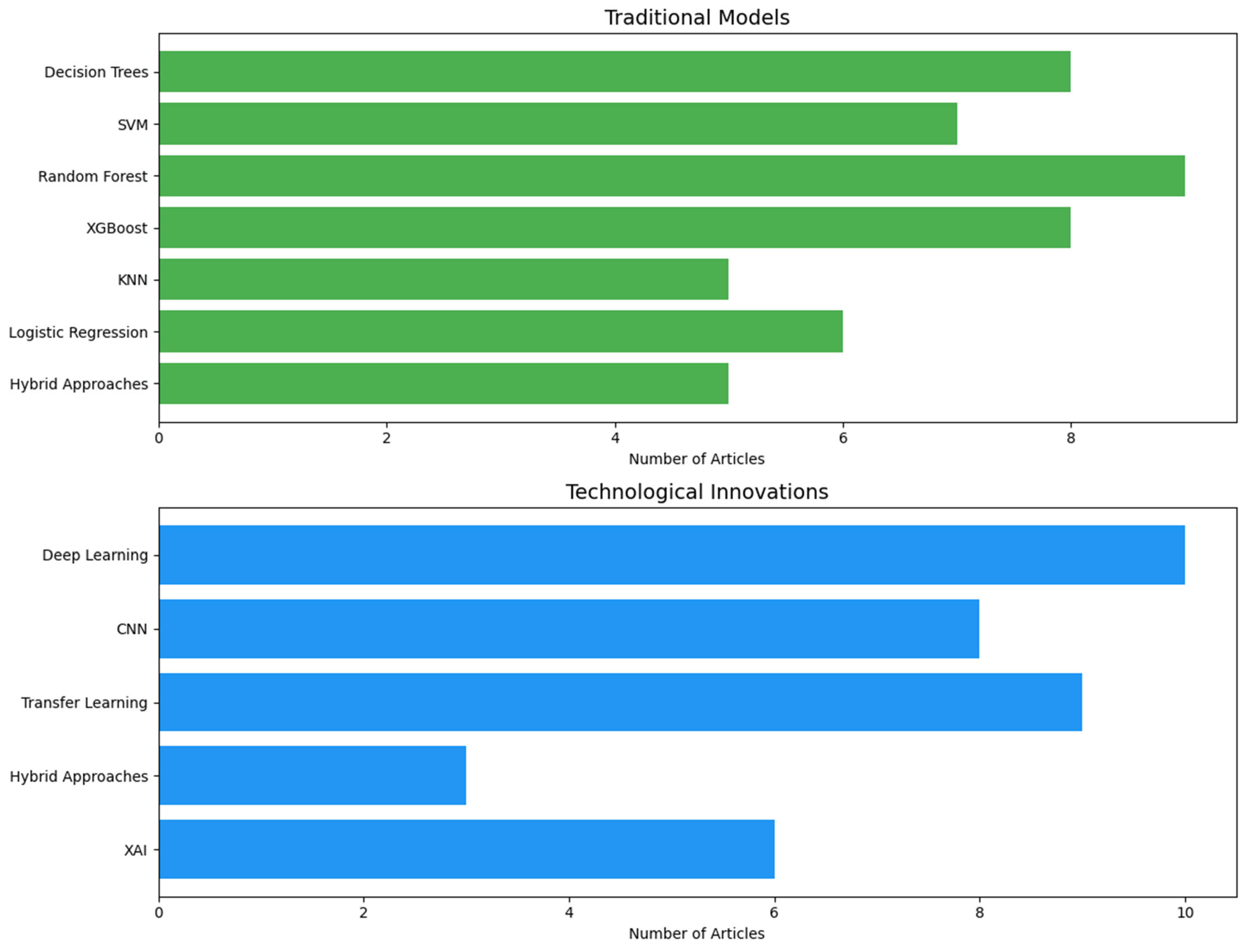
As Figure 2 shows, supervised machine learning remains predominant, followed by more complex architectures such as deep learning and hybrid ensembles. For clarity, we also report the number of studies per technique to communicate relative prevalence across the sample. Beyond traditional models, there is a growing trend toward the use of more complex techniques such as DL, applied through multilayer neural networks, convolutional neural networks, and hybrid models designed to capture more intricate nonlinear patterns from large volumes of data by combining multiple models for enhanced predictive accuracy [25,26,27,28]. Some studies also implement transfer learning and recurrent architectures to support real-time or time-series-based student behavior prediction [26,29]. In many cases, these techniques are combined with hybrid approaches that integrate statistical, heuristic, or bioinspired models, such as genetic algorithms and evolutionary optimization [30,31,32].
One of the most relevant methodological innovations identified in this review is the incorporation of explainable AI (XAI) techniques designed to provide interpretability to traditionally opaque models. These tools allow for greater clarity in identifying variables that influence performance or dropout and generate understandable explanations that support institutional or instructional intervention [33,34,35,36,37,38]. For example, some models use interpretable decision trees, logical rules, or attribute importance visualizations to justify academic risk predictions, which is especially valuable in contexts where trust and ethics are critical for the adoption of educational technologies.
In this context, the literature shows a progressive methodological evolution, ranging from the use of predictive models based solely on numerical data to complex, adaptive, and explainable architectures that integrate diverse data such as academic, psychological, and behavioral data, enabling more precise and timely pedagogical decisions. This diversity of approaches not only demonstrates the technical maturity of AI applied to education but also its growing alignment with the real needs of higher education institutions, as summarized in Table 4.

3.2. Variables Used

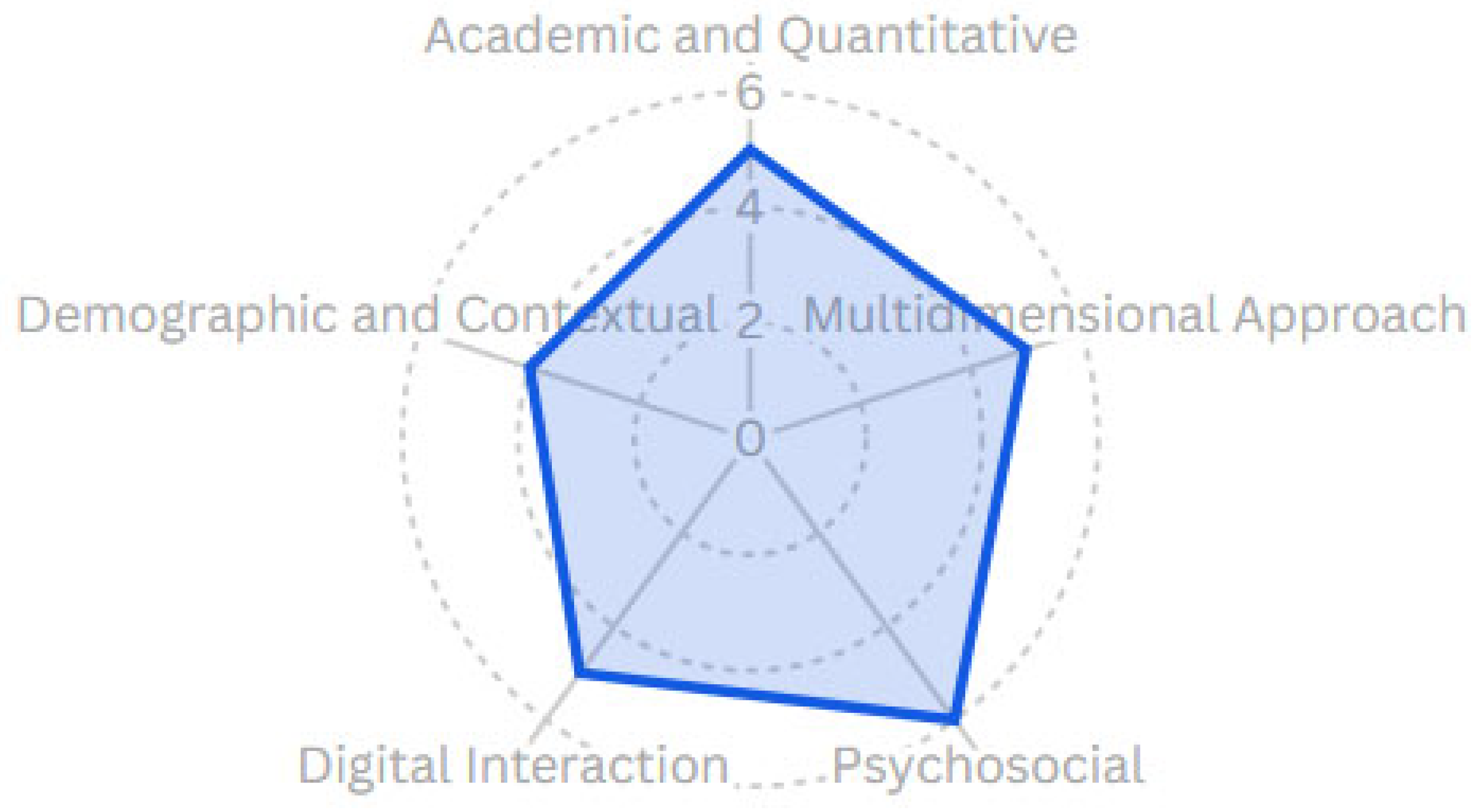
The reviewed studies reveal a marked evolution in the types of variables considered by AI models to predict academic performance, dropout, or the need for tutoring, as summarized in Figure 3 and Table 5. Traditionally, the most frequent variables have been academic and quantitative, such as grade point average (GPA), number of courses passed or failed, class participation frequency, attendance, and scores on midterm or final exams [20,21,22,23,24,39]. These variables are typically easy to extract from institutional systems and are strongly correlated with future performance, forming the standard base of classical supervised models. In Figure 3, the use of shadow and color highlights the different categories of variables (academic, digital interaction, psychosocial/affective, and demographic/contextual), thereby facilitating visual distinction and interpretation.
This academic foundation has been expanded to include variables related to students’ digital interaction, especially in virtual learning environments (LMS). These include metrics such as number of platform logins, connection time, resource view frequency, forum participation, assignment submissions, click history, and navigation patterns [40,41,42,43,44,45]. Such variables have gained importance in remote or hybrid education contexts, as they help build engagement profiles and detect risk patterns before they manifest in grades.
A distinctive feature of recent studies is the inclusion of psychosocial and affective variables such as academic motivation, anxiety, self-efficacy, personality profile, self-reported emotions, and general psychological state, particularly in post-pandemic contexts [46,47,48,49,50,51]. These variables are usually collected through questionnaires or standardized instruments and aim to capture student dimensions that indirectly influence performance but are not captured by administrative systems. In studies reporting psychosocial or affective outcomes, e.g., anxiety, motivation, and self-efficacy, identification typically relies on self-reported questionnaires or standardized instruments, administered alongside academic and digital interaction data. These instruments complement administrative and LMS records by capturing dimensions not observable in transactional logs, thereby enriching predictive modeling with constructs relevant to well-being and engagement.
Studies that integrate demographic and contextual variables, such as age, gender, socioeconomic status, place of residence, access to technology, and type of institution, whether public or private, are also identified. [43,49,52,53]. While these variables do not directly determine performance, they are used to adjust models and improve fairness and generalization, helping to avoid algorithmic biases.
Finally, some studies propose architectures that combine multiple types of variables—academic, behavioral, emotional, and contextual—to achieve a multidimensional, more robust, and realistic approach to the student experience [27,43,52,53,54]. These integrated approaches have demonstrated higher predictive power and superior capacity to personalize interventions, representing an emerging trend in AI-based educational research as shown Table 5.
Table 5. Applied AI variables.
Variable TypeDescriptionExamplesArticles
Academic and Quantitative Traditional variables related to academic performance, easily retrieved from institutional systems.GPA, number of courses passed/failed, attendance, assignments, midterms/final exams.[21,22,23,24,39]
Digital InteractionVariables from student interaction with learning platforms (LMS), especially in remote learning.Variables from student interaction with learning platforms (LMS), especially in remote learning.[40,41,42,44,45]
Psychosocial and AffectiveVariables related to emotional well-being, motivation, and psychological traits.Academic motivation, anxiety, self-efficacy, personality profile, self-reported emotions, and general psychological state.[46,47,48,49,50,51]
Demographic and ContextualVariables describing sociodemographic background or environmental conditions.Age, gender, socioeconomic level, residence, access to technology, institution type (whether public or private).[43,49,52,53]
Multidimensional ApproachIntegration of various variables to create more complex and accurate models.Combination of academic, emotional, behavioral, and demographic variables.[27,54,55,56,57]

3.3. Educational Context/Level

The studies included in this review are framed within the context of higher education, particularly in public or private universities that have implemented digital teaching and learning platforms or hybrid education strategies [19,23,24,52,53,58]. The predominant target population is undergraduate students, although research applied to postgraduate programs and technical university training is also identified [46,47,48,49]. In these settings, AI-based predictive models have been used to anticipate academic outcomes, personalize tutoring, and provide early warnings about potential cases of dropout or poor performance.
A relevant subgroup of investigations takes place in specific institutional contexts of developing countries, especially in Latin America, Asia, and Africa, where challenges such as unequal access to technology, high dropout rates, and structural limitations in student support policies are prevalent [25,43,49,59]. In such cases, AI is not only seen as a predictive tool but also as a strategic instrument for educational management, capable of optimizing limited resources and focusing academic interventions on vulnerable populations.
Regarding learning environments, studies reflect a clear trend toward the use of AI in virtual, remote, or hybrid modalities—either as a direct consequence of the COVID-19 pandemic or as part of a broader digital transformation strategy in universities [27,38,42,60,61]. These modalities have fostered the generation of large volumes of data (educational big data) and boosted the use of learning analytics and prediction tools based on LMS platforms, videoconferencing systems, personalized virtual environments, and intelligent tutoring systems.
Moreover, some studies focus on specific academic disciplines such as programming, mathematics, engineering, or data science, where the nature of the content and assessment dynamics favor the use of AI for automated performance prediction [18,62,63]. Other works extend the approach to microlearning experiences, mobile learning (m-learning), or student-centered adaptive environments, particularly in innovative proposals such as intelligent tutoring systems or AI-based recommendation systems [64,65,66,67].
In addition to the educational modalities, the reviewed literature shows an uneven geographical distribution. Most empirical studies are concentrated in Asia and Latin America, particularly in countries with high student dropout rates and ongoing digital transformation initiatives [41,47,57]. Europe and North America also contribute significantly, especially with advanced methodological approaches and the use of large-scale institutional datasets [32,36]. However, fewer studies were identified in regions such as Africa and Oceania, where research is emerging but remains underrepresented in the scientific literature. This imbalance suggests the existence of unexplored territories where AI-driven predictive models could provide valuable evidence to address local educational challenges and complement the global understanding of dropout prevention and tutoring support.
The educational context in which the reviewed AI models are applied is not limited to a single modality but encompasses a broad spectrum of levels and environments, reflecting the versatility of these tools to adapt both to structured institutional settings and emerging environments that require agile and personalized responses to improve academic performance and student retention, as shown in Table 6.

3.4. Outcomes Addressed

The studies included address a diverse range of educational outcomes related to student performance, with three main categories standing out: academic performance, dropout risk, and the need for tutoring or early intervention. The most frequently analyzed outcome is academic performance, typically measured through indicators such as final grades, cumulative GPA, performance in key subjects, or course progression [23,40,54,68]. This focus enables the construction of supervised models that predict students’ future academic success based on their academic history and digital behavior patterns.
Another key area of interest is student dropout prediction, which is approached through models designed to detect early signs of disengagement or attrition, such as decreased platform activity, sustained poor performance, or lack of interaction in virtual environments [22,24,30,33,35,53]. These models are especially valuable in institutions with high dropout rates, as they help target institutional efforts before students leave the educational system.
Although less frequent, several studies also explore the prediction of tutoring needs or personalized academic intervention. These works aim to identify “at-risk” students, not necessarily based on low performance but on behavioral patterns that may forecast future difficulties unless action is taken [42,48,55,58,67,69]. Some of these studies propose recommendation systems or automated feedback mechanisms based on cognitive weaknesses, while others suggest proactive virtual tutoring models powered by AI.
Additionally, some studies focus on emotional, psychological, or motivational outcomes as prediction targets. These models aim to identify signs of anxiety, academic stress, loss of motivation, or lack of emotional engagement, which—though not direct academic outcomes—significantly influence students’ educational trajectories [46,47,48,49]. Including these dimensions broadens the scope of AI in education toward a more holistic understanding of learning.
Finally, some studies present compound outcomes, with models that predict multiple factors simultaneously, such as performance + dropout or performance + emotions + interaction. These more complex and adaptive models can feed into intelligent institutional academic support systems [26,27,36,54,57]. The literature confirms that AI models are being used not only to anticipate students’ academic outcomes but also to understand their behaviors, well-being, and support needs, thereby enabling a complete and personalized transformation of the educational process, as shown in Table 7.

3.5. Benefits and Limitations Reported

The reviewed studies report several concrete benefits derived from the implementation of AI models in educational settings, especially within technology-mediated university environments. One of the most frequently highlighted advantages is early prediction capability, which allows institutions to identify students at risk of low performance or dropout before such outcomes materialize. This facilitates timely and personalized interventions [22,24,30,33,35,56]. This proactive approach marks a fundamental shift in academic management, moving from reactive interventions to evidence-based and analytics-supported guidance strategies.
Another widely acknowledged benefit is the improvement of institutional efficiency, particularly in resource allocation for tutoring, academic monitoring, and remedial programs [58,66,69,70]. By identifying student profiles with risk or disengagement patterns, universities can prioritize efforts more effectively, optimizing the use of time, personnel, and digital platforms. Additionally, XAI models have proven beneficial in enhancing transparency and trust in automated educational decision-making. These models provide visualizations, interpretable rules, or explanation features that help instructors understand why a student has been classified as “at risk” [34,35,36,37,38].
Furthermore, some studies emphasize the potential of AI to personalize learning through intelligent systems that recommend specific materials, resources, or strategies for each student based on their performance and behavior patterns [55,57]. These adaptive environments can be integrated into LMS or academic management systems to deliver more tailored learning experiences.
However, several significant limitations are also reported. One of the most common is the dependence on high-quality data: many models require complete, clean, and historically traceable datasets to function properly, which are not always available in institutions with fragmented information structures [25,43]. Moreover, numerous studies point to the limited generalizability of locally developed models. While accurate within their institution of origin, these models may not perform effectively in different contexts with distinct characteristics [29,49,53].
Another relevant limitation is the lack of real integration into institutional processes. Many models are developed as proof-of-concept projects but are never fully implemented in universities’ tutoring or academic support systems, limiting their operational impact [20,50,71]. Ethical concerns are also noted, including the potential reinforcement of biases, algorithmic opacity, and the non-consensual use of student data. These concerns underscore the need for governance frameworks and clear institutional policies to ensure the responsible use of AI in education [34,47,48]. Although AI models in higher education have demonstrated their utility for prediction and personalization of learning, their effectiveness greatly depends on data quality, external validation, institutional integration, and ethical considerations.

4. Discussion

This section aims to interpret and contextualize the key findings derived from the studies included in this review. Through the analysis of the 63 selected articles, common trends, emerging methodological approaches, and obtained results were identified in the use of artificial intelligence to predict academic performance, tutoring needs, and dropout risk in higher education. Additionally, this section addresses gaps in the literature, highlighting areas requiring further attention and development in future research.

4.1. Identified Trends

The analysis of the articles reveals clear trends in the use of AI in higher education, especially for predicting academic performance, identifying at-risk students, and personalizing tutoring. Supervised machine learning models, such as random forest, SVM, and XGBoost, have predominated due to their capacity to handle large volumes of structured data and deliver accurate predictions [43,61]. However, more recent studies show a growing adoption of advanced deep learning techniques, such as CNNs and hybrid models that combine multiple algorithms to enhance precision and generalization capabilities [60,72].
An important trend is the incorporation of explainable AI (XAI) techniques, which aim not only to predict outcomes but also to provide clear explanations for algorithmic decisions. This is particularly valuable in education, where transparency and trust are essential for technology acceptance, especially by educators and administrators who make decisions based on these models [72]. XAI models enable the interpretation of results and provide justifications that help educators understand the key factors influencing student performance.
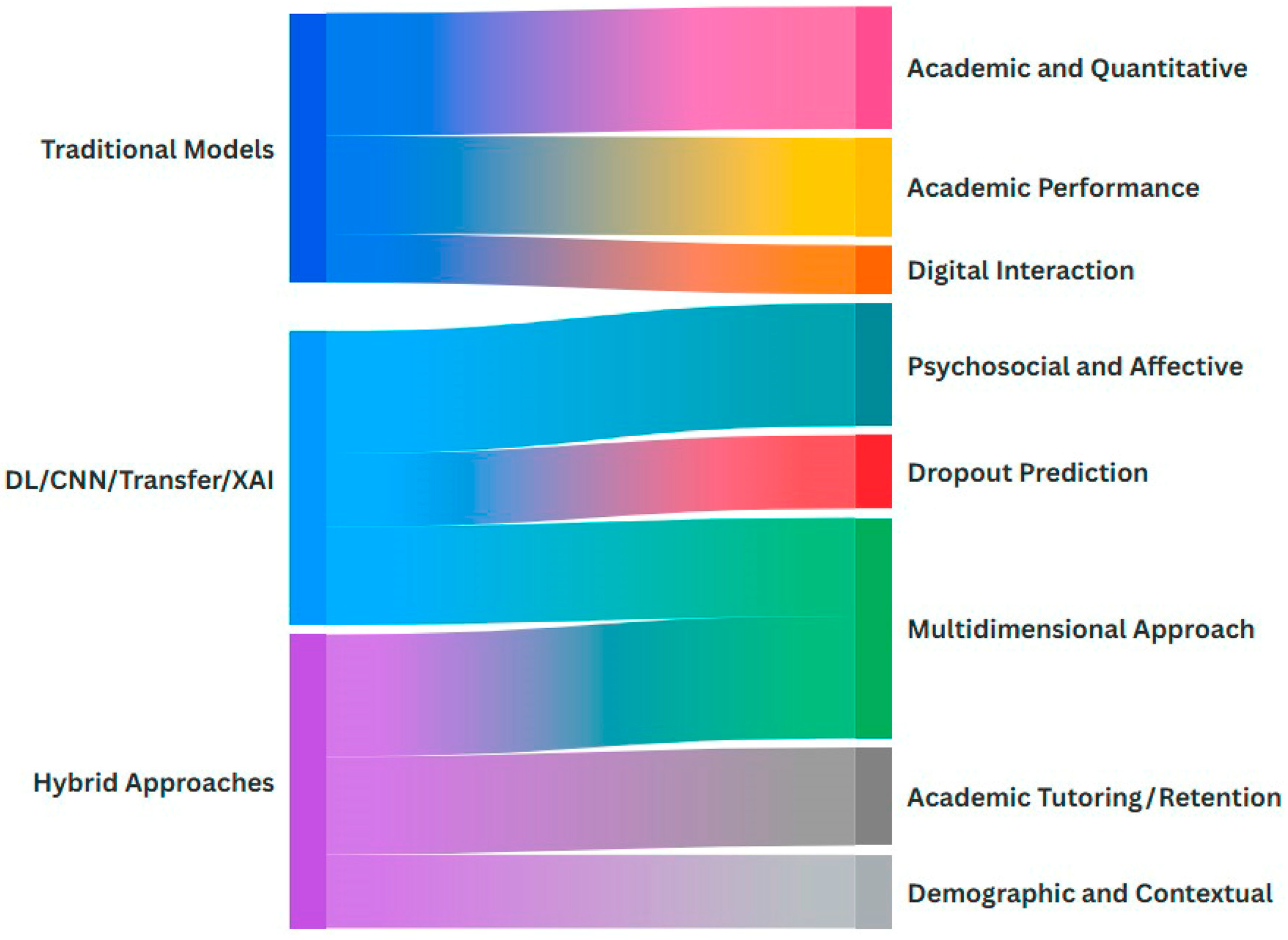
Figure 4 illustrates how different types of AI models applied in higher education relate to the variables used and the intended educational outcomes. Traditional models, such as decision trees or random forest, are mainly linked to academic and quantitative variables, digital interaction, and academic performance prediction. Advanced models (DL, CNN, transfer learning, XAI) incorporate psychosocial and affective variables, support multidimensional approaches, and enable early detection of dropout risk. Finally, hybrid approaches integrate multiple data types—including demographic and contextual—and focus on personalized tutoring systems and student retention strategies. Overall, the diagram highlights how advances in AI techniques enable a more comprehensive and accurate understanding of student performance and support needs.

4.2. Identified Gaps in the Literature

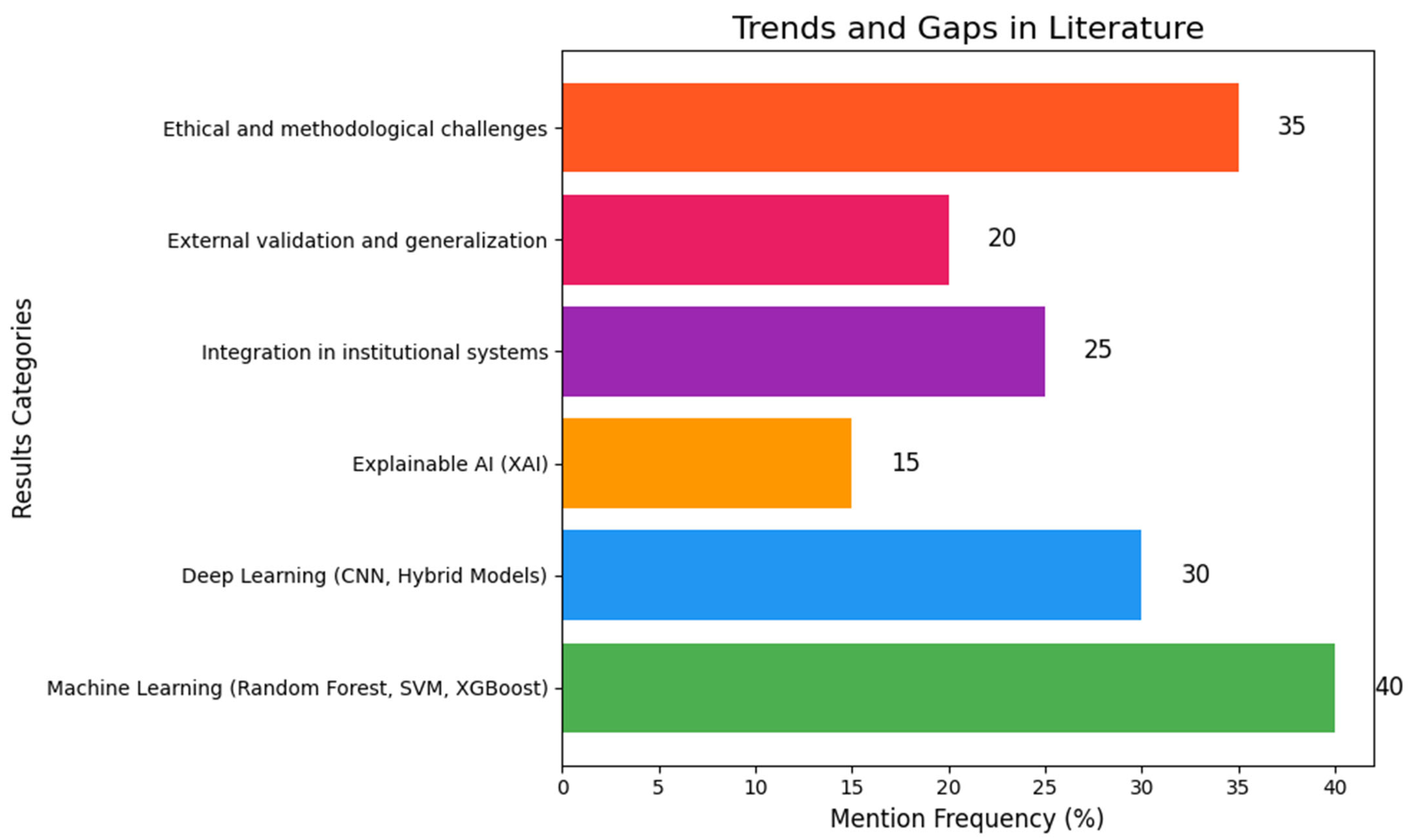
Despite significant advances in the application of AI in education, several gaps persist in the scientific literature. One of the main issues is the limited integration of predictive models with institutional academic tutoring systems. Although many studies accurately predict dropout risk or low performance, few develop or evaluate automated or semi-automated intervention mechanisms that are directly integrated into formal academic support processes [43,60]. This gap limits the practical impact of predictions on effectively improving student retention and personalized learning.
Another important gap is the lack of external validation and generalizability of the proposed models. Most studies are conducted in local or institution-specific environments using proprietary datasets that hinder replicability or application in other institutions with different sociodemographic, technological, or curricular characteristics [73,74]. Furthermore, ethical and methodological challenges are identified regarding the use of sensitive data, the explainability of complex models, and fairness in automated decision-making—topics that are underexplored in the reviewed studies despite being critical for the responsible and sustainable implementation of AI in higher education.
Finally, Figure 5 presents a visual synthesis to provide a clear overview of the main trends and gaps identified in the scientific literature on the use of AI for predicting academic performance, tutoring needs, and dropout risk in higher education. It highlights the predominance of traditional ML approaches in current studies, alongside the emergence of more advanced approaches such as DL and XAI. However, it also reveals important gaps in the practical integration of these models, particularly in institutional application and external validation. These findings suggest that while AI-based educational technology holds great potential, addressing ethical and methodological barriers is essential to ensure its effectiveness and equity in higher education.
Another significant gap identified in the literature is the lack of longitudinal studies capable of assessing the long-term impact of AI-based interventions on both academic success and subsequent professional performance. Most of the studies reviewed focus on short-term prediction of outcomes such as course completion, dropout, or immediate performance indicators. However, the absence of follow-up studies limits our understanding of whether AI-driven interventions translate into sustainable improvements in retention, graduation rates, or employability.
Furthermore, there is an urgent need to move beyond purely predictive approaches toward integrated models that combine prediction, intervention, and evaluation. While current models are effective at identifying at-risk students, few systems propose concrete, personalized pedagogical strategies—such as adaptive tutoring, targeted feedback, or motivational interventions—that include mechanisms for evaluating their effectiveness over time. Addressing this gap would close the prediction-intervention-evaluation loop, turning AI-based systems into not only diagnostic tools but also proactive instruments for educational transformation.

4.3. Practical Barriers and Comparative Analysis of AI Techniques

Beyond methodological gaps, the effective integration of AI models into higher education requires addressing several barriers. At the organizational level, institutions often lack the infrastructure, financial resources, and trained staff to develop and sustain AI-based predictive systems. Ethically, issues related to student data privacy, algorithmic bias, and transparency in decision-making remain unresolved. Pedagogically, aligning predictive analytics with teaching practices poses challenges, since instructors need adequate training to interpret AI results and translate them into meaningful tutoring interventions. While academic and behavioral data dominate the literature, emotional and psychological variables—such as motivation, anxiety, and self-efficacy—remain underrepresented, despite their documented impact on dropout risk. Expanding their inclusion would enrich the predictive and pedagogical value of AI systems.
In parallel, the literature reveals clear trade-offs between different AI techniques. Traditional models such as decision trees or logistic regression provide interpretability, lower computational costs, and ease of deployment but may oversimplify complex student behaviors. Deep learning models, in contrast, achieve higher predictive accuracy and can integrate multimodal data but require significant computational power and often lack transparency. Hybrid approaches and explainable XAI offer a middle ground by enhancing interpretability while maintaining accuracy, although they demand higher technical sophistication and institutional investment. Recognizing these trade-offs is crucial for universities when deciding which AI approach is both feasible and pedagogically valuable for their specific contexts.
The comparative analysis in Table 8 highlights that the choice of AI technique involves balancing trade-offs among accuracy, interpretability, computational feasibility, and data requirements. While classical models remain suitable for institutions with limited resources, deep learning approaches expand predictive capabilities at the expense of higher costs and reduced transparency. Hybrid and XAI approaches offer promising middle-ground solutions but demand significant institutional investment and technical expertise.

4.4. Limitations of the Scoping Review

This scoping review was conducted in accordance with PRISMA-ScR, following a pre-defined protocol and systematically documenting each phase of the process. However, it presents certain limitations. First, the literature search was restricted to two high-impact databases (Scopus and Web of Science), which, although ensuring the inclusion of high-quality and relevant studies, may have excluded pertinent evidence available in other sources, specialized databases, or grey literature. Additionally, the exclusive reliance on Scopus and Web of Science—although justified to ensure methodological rigor and high-quality evidence—may have limited the inclusion of relevant studies available in other specialized databases such as IEEE Xplore, PubMed, ERIC, or repositories focused on social sciences and educational technology. This constraint narrows the scope of the mapping and should be considered when interpreting the comprehensiveness of the review. Another limitation is that the search and reporting process, although compliant with PRISMA-ScR, was limited to studies published in English, which may have excluded relevant evidence in other languages. This linguistic restriction may introduce cultural and regional bias, particularly by underrepresenting research published in Spanish and Portuguese, languages widely used in Latin America, where dropout prevention and tutoring systems are highly relevant. Future reviews could expand the search to include multilingual sources to capture a more diverse range of perspectives and regional contributions.
Furthermore, although the study selection and data extraction processes were carried out in a structured and traceable manner using Excel spreadsheets, no formal assessment of the methodological quality of the included studies was performed, as this is not a mandatory requirement for scoping reviews. This means that the robustness and consistency of the synthesized evidence may vary among the analyzed sources. Finally, it is important to note that, due to the descriptive nature of this design, the results provide a broad mapping of trends, gaps, and patterns in the literature, without aiming to establish causal relationships or measure the effectiveness of the evaluated interventions.
Another relevant gap lies in the geographic scope of existing research. The current literature is heavily concentrated in Asia, Latin America, and Europe, with limited representation from Africa, the Middle East, and Oceania. This lack of geographic diversity restricts the generalizability of findings and highlights the need for future studies that investigate how local cultural, institutional, and socioeconomic conditions may affect the effectiveness of AI-based models in higher education. Addressing these regional blind spots would enrich the global applicability of AI interventions in dropout prevention and academic tutoring.
Although geography was not a primary analytical dimension, data extraction captured the country of origin for each study, revealing an uneven regional distribution in the sample. As a result, most of the empirical evidence is concentrated in a subset of regions, while other areas remain underrepresented; this imbalance should be taken into account when interpreting the generalizability of the findings. Future work could explicitly stratify results by region and investigate how institutional, cultural, and socioeconomic factors condition the performance and adoption of models in higher education.

5. Conclusions

This analysis revealed that artificial intelligence has been successfully applied to predict academic performance, identify students at risk of dropout, and support personalized educational interventions. There is a wide adoption of ML techniques, with a growing trend toward the use of XAI and hybrid approaches that combine accuracy with transparency. Moreover, the most effective models integrate multiple data sources, including not only grades but also emotional, motivational, and digital behavior variables. This multidimensional approach enables more accurate prediction of academic outcomes and the development of more relevant intervention strategies.
However, significant limitations are evident. Although the models exhibit good predictive performance, their practical implementation within institutional processes remains limited. Additionally, most studies lack external validation, restricting the generalizability of their findings. Gaps are also identified regarding the ethical integration of AI in educational environments, the protection of sensitive data, and institutional accountability for automated decisions.
For higher education institutions that share structural, technological, or demographic characteristics with the cases studied—such as Latin American public universities with limited resources and high dropout rates—these findings represent a strategic opportunity. The adoption of AI-based predictive models can substantially improve the efficiency of academic tutoring systems by enabling early identification of students at risk of dropout or low performance.
Furthermore, implementing these solutions does not necessarily require large technological investments, as many of the techniques used are open-source and can be integrated into existing educational platforms. However, institutions must consider regulatory, ethical, and pedagogical frameworks to ensure that the use of AI aligns with principles of equity, transparency, and data protection.

Future Research Agenda

Beyond synthesizing the literature, this review contributes by proposing a conceptual framework that integrates three dimensions:
  • AI techniques (from classical ML to advanced DL and XAI);
  • Predictive variables (academic, behavioral, psychosocial, and contextual);
  • Educational contexts (virtual, hybrid, and face-to-face with technological mediation).
This integrated framework provides a structured foundation to guide the design of intelligent tutoring systems that are both technically robust and pedagogically meaningful.
Based on this framework, we also propose a roadmap for future research, highlighting the following priorities:
  • External validation of predictive models across diverse cultural and institutional contexts to ensure generalizability.
  • Systematic study of ethical and governance frameworks to guarantee the responsible and equitable adoption of AI.
  • Integration of multimodal and affective data (academic, behavioral, emotional, and contextual) to enhance personalization and inclusivity.
  • Comparative analyses that evaluate trade-offs between interpretability, accuracy, and computational costs to inform decision-making in resource-constrained institutions.
By combining a conceptual contribution with a practical research agenda, this review not only maps the current state of knowledge but also outlines a pathway for sustainable, ethical, and impactful AI in higher education tutoring and dropout prevention systems.

Funding

This research received no external funding and APC has been funded by Universidad Estatal de Bolívar as part of the research project entitled “Modelo predictivo de tutorías académicas para estudiantes de la Universidad Estatal de Bolívar”.

Conflicts of Interest

The authors declare no conflict of interest.

References

  1. Alenezi, M. Digital Learning and Digital Institution in Higher Education. Educ. Sci. 2023, 13, 88. [Google Scholar] [CrossRef]
  2. Shevlin, M.; Banks, J. Inclusion at a crossroads: Dismantling ireland’s system of special education. Educ. Sci. 2021, 11, 161. [Google Scholar] [CrossRef]
  3. Rivera, E.F.; Andaluz, V.H. Autonomous Control of an Electric Vehicle by Computer Vision Applied to the Teaching–Learning Process. In Smart Innovation, Systems and Technologies; Springer: Berlin/Heidelberg, Germany, 2022. [Google Scholar] [CrossRef]
  4. Rivera, E.F.; Morales, E.E.; Florez, C.C.; Toasa, R.M. Development of an Augmented Reality System to Support the Teaching-Learning Process in Automotive Mechatronics. In Lecture Notes in Computer Science (Including Subseries Lecture Notes in Artificial Intelligence and Lecture Notes in Bioinformatics); Springer: Berlin/Heidelberg, Germany, 2021. [Google Scholar] [CrossRef]
  5. Ferreyra, M.M.; Avitabile, C.; Álvarez, J.B.; Paz, F.H.; Urzúa, S. At a Crossroads: Higher Education in Latin America and the Caribbean; World Bank: Washington, DC, USA, 2017. [Google Scholar]
  6. UNESCO. Revisión del Panorama Educativo de América Latina y el Caribe: Avances y Desafíos; UNESCO: Santiago, Chile, 2022; Available online: https://unesdoc.unesco.org/ark:/48223/pf0000381748 (accessed on 18 March 2025).
  7. Acevedo, F. Concepts and measurement of dropout in higher education: A critical perspective from latin America. Issues Educ. Res. 2021, 31, 661–678. [Google Scholar]
  8. Da Re, L.; Bonelli, R.; Gerosa, A. Formative Tutoring: A Program for the Empowerment of Engineering Students. IEEE Trans. Educ. 2023, 66, 163–173. [Google Scholar] [CrossRef]
  9. Oqaidi, K.; Aouhassi, S.; Mansouri, K. Towards a Students’ Dropout Prediction Model in Higher Education Institutions Using Machine Learning Algorithms. Int. J. Emerg. Technol. Learn. 2022, 17, 103–117. [Google Scholar] [CrossRef]
  10. Tao, T.; Sun, C.; Wu, Z.; Yang, J.; Wang, J. Deep Neural Network-Based Prediction and Early Warning of Student Grades and Recommendations for Similar Learning Approaches. Appl. Sci. 2022, 12, 7733. [Google Scholar] [CrossRef]
  11. Al-Mughairi, H.; Bhaskar, P. Exploring the factors affecting the adoption AI techniques in higher education: Insights from teachers’ perspectives on ChatGPT. J. Res. Innov. Teach. Learn. 2024. Epub ahead of printing. [Google Scholar] [CrossRef]
  12. Guillén-Gámez, F.D.; Mayorga-Fernández, M.J. Identification of variables that predict teachers’ attitudes toward ict in higher education for teaching and research: A study with regression. Sustainability 2020, 12, 1312. [Google Scholar] [CrossRef]
  13. Salas-Pilco, S.Z.; Yang, Y. Artificial intelligence applications in Latin American higher education: A systematic review. Int. J. Educ. Technol. High. Educ. 2022, 19, 1–20. [Google Scholar] [CrossRef]
  14. Jorge-Vázquez, J.; Alonso, S.L.N.; Saltos, W.R.F.; Mendoza, S.P. Assessment of digital competencies of university faculty and their conditioning factors: Case study in a technological adoption context. Educ. Sci. 2021, 11, 637. [Google Scholar] [CrossRef]
  15. Peters, M.; Godfrey, C.; Mclnerney, P.; Munn, Z.; Tricco, A.; Khalil, H. Chapter 11: Scoping Reviews (2020version). In JBI Manual for Evidence Synthesis; JBI: Adelaide, Australia, 2020. [Google Scholar]
  16. Tricco, A.C.; Lillie, E.; Zarin, W.; O’Brien, K.K.; Colquhoun, H.; Levac, D.; Moher, D.; Peters, M.D.J.; Horsley, T.; Weeks, L.; et al. PRISMA Extension for Scoping Reviews (PRISMA-ScR): Checklist and Explanation. Ann. Intern. Med. 2018, 169, 467–473. [Google Scholar] [CrossRef]
  17. Sohrabi, C.; Franchi, T.; Mathew, G.; Kerwan, A.; Nicola, M.; Griffin, M.; Agha, M.; Agha, R. PRISMA 2020 statement: What's new and the importance of reporting guidelines. Int. J. Surg. 2021, 88, 105918. [Google Scholar] [CrossRef]
  18. Ilić, M.; Keković, G.; Mikić, V.; Mangaroska, K.; Kopanja, L.; Vesin, B. Predicting Student Performance in a Programming Tutoring System Using AI and Filtering Techniques. IEEE Trans. Learn. Technol. 2024, 17, 1891–1905. [Google Scholar] [CrossRef]
  19. Pacheco-Mendoza, S.; Guevara, C.; Mayorga-Albán, A.; Fernández-Escobar, J. Artificial Intelligence in Higher Education: A Predictive Model for Academic Performance. Educ. Sci. 2023, 13, 990. [Google Scholar] [CrossRef]
  20. Huang, S.; Wei, J.; Che, H. Student Performance Prediction in Mathematics Course Based on the Random Forest and Simulated Annealing. Sci. Program. 2022, 2022, 9340434. [Google Scholar] [CrossRef]
  21. Yağcı, M. Educational data mining: Prediction of students’ academic performance using machine learning algorithms. Smart Learn. Environ. 2022, 9, 11. [Google Scholar] [CrossRef]
  22. Latif, G.; Alghazo, R.; Pilotti, M.A.E.; Ben Brahim, G. Identifying “At-Risk” Students: An AI-based Prediction Approach. Int. J. Comput. Digit. Syst. 2022, 11, 1051–1059. [Google Scholar] [CrossRef]
  23. Sekeroglu, B.; Dimililer, K.; Tuncal, K. Student performance prediction and classification using machine learning algorithms. In Proceedings of the CEIT 2019: 2019 8th International Conference on Educational and Information Technology, Cambridge, UK, 2–4 March 2019. [Google Scholar] [CrossRef]
  24. Gonzalez-Nucamendi, A.; Noguez, J.; Neri, L.; Robledo-Rella, V.; García-Castelán, R.M.G. Predictive analytics study to determine undergraduate students at risk of dropout. Front. Educ. 2023, 8, 1244686. [Google Scholar] [CrossRef]
  25. Al Ka’BI, A. Proposed artificial intelligence algorithm and deep learning techniques for development of higher education. Int. J. Intell. Netw. 2023, 4, 68–73. [Google Scholar] [CrossRef]
  26. Masood, J.A.I.S.; Chakravarthy, N.S.K.; Asirvatham, D.; Marjani, M.; Shafiq, D.A.; Nidamanuri, S. A Hybrid Deep Learning Model to Predict High-Risk Students in Virtual Learning Environments. IEEE Access 2024, 12, 103687–103703. [Google Scholar] [CrossRef]
  27. Fazil, M.; Rísquez, A.; Halpin, C. A Novel Deep Learning Model for Student Performance Prediction Using Engagement Data. J. Learn. Anal. 2024, 11, 23–41. [Google Scholar] [CrossRef]
  28. Kannan, S.V.K.R.; Abarna, K.T.M. Enhancing Student Academic Performance Forecasting in Technical Education: A Cutting-edge Hybrid Fusion Method. Int. J. Electron. Commun. Eng. 2024, 11, 146–153. [Google Scholar] [CrossRef]
  29. Wang, L.; Zhang, L.; Wu, H.; Zhang, T.; Qiu, K.; Chen, T.; Qin, H. Multisource-domain regression transfer learning framework for predicting student academic performance considering balanced similarity. Eng. Appl. Artif. Intell. 2025, 156, 111202. [Google Scholar] [CrossRef]
  30. Goran, R.; Jovanovic, L.; Bacanin, N.; Stanković, M.S.; Simic, V.; Antonijevic, M.; Zivkovic, M. Identifying and Understanding Student Dropouts Using Metaheuristic Optimized Classifiers and Explainable Artificial Intelligence Techniques. IEEE Access 2024, 12, 122377–122400. [Google Scholar] [CrossRef]
  31. Bressane, A.; Spalding, M.; Zwirn, D.; Loureiro, A.I.S.; Bankole, A.O.; Negri, R.G.; Junior, I.d.B.; Formiga, J.K.S.; Medeiros, L.C.d.C.; Bortolozo, L.A.P.; et al. Fuzzy Artificial Intelligence—Based Model Proposal to Forecast Student Performance and Retention Risk in Engineering Education: An Alternative for Handling with Small Data. Sustainability 2022, 14, 14071. [Google Scholar] [CrossRef]
  32. Lhafra, F.Z.; Abdoun, O. Integration of evolutionary algorithm in an agent-oriented approach for an adaptive e-learning. Int. J. Electr. Comput. Eng. 2023, 13, 1964–1978. [Google Scholar] [CrossRef]
  33. Zanellati, A.; Zingaro, S.P.; Gabbrielli, M. Balancing Performance and Explainability in Academic Dropout Prediction. IEEE Trans. Learn. Technol. 2024, 17, 2086–2099. [Google Scholar] [CrossRef]
  34. Marco, B.; Keller. Explainable Artificial Intelligence for Academic Performance Prediction. An Experimental Study on the Impact of Accuracy and Simplicity of Decision Trees on Causability and Fairness Perceptions. In Proceedings of the 2024 ACM Conference on Fairness, Accountability, and Transparency, Rio de Janeiro, Brazil, 3–6 June 2024; pp. 1031–1042. [Google Scholar] [CrossRef]
  35. Nagy, M.; Molontay, R. Interpretable Dropout Prediction: Towards XAI-Based Personalized Intervention. Int. J. Artif. Intell. Educ. 2024, 34, 274–300. [Google Scholar] [CrossRef]
  36. Alwarthan, S.; Aslam, N.; Khan, I.U. An Explainable Model for Identifying At-Risk Student at Higher Education. IEEE Access 2022, 10, 107649–107668. [Google Scholar] [CrossRef]
  37. Raji, N.R.; Kumar, R.M.S.; Biji, C.L. Explainable Machine Learning Prediction for the Academic Performance of Deaf Scholars. IEEE Access 2024, 12, 23595–23612. [Google Scholar] [CrossRef]
  38. Adnan, M.; Uddin, M.I.; Khan, E.; Alharithi, F.S.; Amin, S.; Alzahrani, A.A. Earliest Possible Global and Local Interpretation of Students’ Performance in Virtual Learning Environment by Leveraging Explainable AI. IEEE Access 2022, 10, 129843–129864. [Google Scholar] [CrossRef]
  39. Badal, Y.T.; Sungkur, R.K. Predictive modelling and analytics of students’ grades using machine learning algorithms. Educ. Inf. Technol. 2023, 28, 3027–3057. [Google Scholar] [CrossRef]
  40. Gerlache, H.A.M.; Ger, P.M.; Valentín, L.D.l.F. Towards the Grade’s Prediction. A Study of Different Machine Learning Approaches to Predict Grades from Student Interaction Data. Int. J. Interact. Multimedia Artif. Intell. 2022, 7, 196–204. [Google Scholar] [CrossRef]
  41. Borna, M.-R.; Saadat, H.; Hojjati, A.T.; Akbari, E. Analyzing click data with AI: Implications for student performance prediction and learning assessment. Front. Educ. 2024, 9, 1421479. [Google Scholar] [CrossRef]
  42. Mahafdah, R.; Bouallegue, S.; Bouallegue, R. Enhancing e-learning through AI: Advanced techniques for optimizing student performance. PeerJ Comput. Sci. 2024, 10, e2576. [Google Scholar] [CrossRef]
  43. Soriano, K.T.; Caparachin, M.A.; Canturin, F.O.A.; Ninahuaman, J.U.; Avila, M.F.I.; Cangalaya, R.C. Artificial Intelligence Model for the Improvement of the Quality of Education at the National University of Central Peru, Huancayo 2024. In Proceedings of the 2024 International Symposium on Accreditation of Engineering and Computing Education (ICACIT), Bogota, Colombia, 3–4 October 2024; pp. 1–6. [Google Scholar] [CrossRef]
  44. Liu, Y.; Fan, S.; Xu, S.; Sajjanhar, A.; Yeom, S.; Wei, Y. Predicting Student Performance Using Clickstream Data and Machine Learning. Educ. Sci. 2023, 13, 17. [Google Scholar] [CrossRef]
  45. Hamadneh, N.N.; Atawneh, S.; Khan, W.A.; Almejalli, K.A.; Alhomoud, A. Using Artificial Intelligence to Predict Students’ Academic Performance in Blended Learning. Sustainability 2022, 14, 11642. [Google Scholar] [CrossRef]
  46. Alharthi, H. Predicting the level of generalized anxiety disorder of the coronavirus pandemic among college age students using artificial intelligence technology. In Proceedings of the 2020 19th Distributed Computing and Applications for Business Engineering and Science, DCABES 2020, Xuzhou, China, 16–19 October 2020. [Google Scholar] [CrossRef]
  47. Bastos, A.F.; Fernandes, O., Jr.; Liberal, S.P.; Pires, A.J.L.; Lage, L.A.; Grichtchouk, O.; Cardoso, A.R.; de Oliveira, L.; Pereira, M.G.; Lovisi, G.M.; et al. Academic-related stressors predict depressive symptoms in graduate students: A machine learning study. Behav. Brain Res. 2025, 478, 115328. [Google Scholar] [CrossRef] [PubMed]
  48. Ji, H. Psychological Analysis Using Artificial Intelligence Algorithms of Online Course Learning of College Students During COVID-19. J. Knowl. Econ. 2024, 16, 3996–4018. [Google Scholar] [CrossRef]
  49. Bordbar, S.; Mirzaei, S.; Bahmaei, J.; Atashbahar, O.; Yusefi, A.R. Predicting students’ academic performance based on academic identity, academic excitement, and academic enthusiasm: Evidence from a cross-sectional study in a developing country. BMC Med. Educ. 2025, 25, 768. [Google Scholar] [CrossRef]
  50. Zhang, T.; Zhong, Z.; Mao, W.; Zhang, Z.; Li, Z. A New Machine-Learning-Driven Grade-Point Average Prediction Approach for College Students Incorporating Psychological Evaluations in the Post-COVID-19 Era. Electronics 2024, 13, 1928. [Google Scholar] [CrossRef]
  51. Aslam, M.A.; Murtaza, F.; Haq, M.E.U.; Yasin, A.; Azam, M.A. A Human-Centered Approach to Academic Performance Prediction Using Personality Factors in Educational AI. Information 2024, 15, 777. [Google Scholar] [CrossRef]
  52. Jokhan, A.; Chand, A.A.; Singh, V.; Mamun, K.A. Increased Digital Resource Consumption in Higher Educational Institutions and the Artificial Intelligence Role in Informing Decisions Related to Student Performance. Sustainability 2022, 14, 2377. [Google Scholar] [CrossRef]
  53. Arqawi, S.M.; Zitawi, E.A.; Rabaya, A.H.; Abunasser, B.S.; Abu-Naser, S.S. Predicting University Student Retention using Artificial Intelligence. Int. J. Adv. Comput. Sci. Appl. 2022, 13, 315–324. [Google Scholar] [CrossRef]
  54. Zhao, S.; Zhou, D.; Wang, H.; Chen, D.; Yu, L. Enhancing Student Academic Success Prediction Through Ensemble Learning and Image-Based Behavioral Data Transformation. Appl. Sci. 2025, 15, 1231. [Google Scholar] [CrossRef]
  55. Huang, A.Y.Q.; Chang, J.W.; Yang, A.C.M.; Ogata, H.; Li, S.T.; Yen, R.X.; Yang, S.J.H. Personalized Intervention based on the Early Prediction of At-risk Students to Improve Their Learning Performance. Educ. Technol. Soc. 2023, 26, 69–89. [Google Scholar] [CrossRef]
  56. Adnan, M.; Habib, A.; Ashraf, J.; Mussadiq, S.; Raza, A.A.; Abid, M.; Bashir, M.; Khan, S.U. Predicting at-Risk Students at Different Percentages of Course Length for Early Intervention Using Machine Learning Models. IEEE Access 2021, 9, 7519–7539. [Google Scholar] [CrossRef]
  57. Wang, S.; Sun, Z.; Chen, Y. Effects of higher education institutes’ artificial intelligence capability on students’ self-efficacy, creativity and learning performance. Educ. Inf. Technol. 2023, 28, 4919–4939. [Google Scholar] [CrossRef]
  58. Hemachandran, K.; Verma, P.; Pareek, P.; Arora, N.; Kumar, K.V.R.; Ahanger, T.A.; Pise, A.A.; Ratna, R. Artificial Intelligence: A Universal Virtual Tool to Augment Tutoring in Higher Education. Comput. Intell. Neurosci. 2022, 2022, 1410448. [Google Scholar] [CrossRef]
  59. Kannan, K.R.; Abarna, K.T.M.; Vairachilai, S. Open Issues, Research Challenges, and Survey on Education Sector in India and Exploring Machine Learning Algorithm to Mitigate These Challenges. Int. J. Recent Innov. Trends Comput. Commun. 2023, 11, 283–288. [Google Scholar] [CrossRef]
  60. Ouyang, F.; Wu, M.; Zheng, L.; Zhang, L.; Jiao, P. Integration of artificial intelligence performance prediction and learning analytics to improve student learning in online engineering course. Int. J. Educ. Technol. High. Educ. 2023, 20, 4. [Google Scholar] [CrossRef]
  61. Jiao, P.; Ouyang, F.; Zhang, Q.; Alavi, A.H. Artificial intelligence-enabled prediction model of student academic performance in online engineering education. Artif. Intell. Rev. 2022, 55, 6321–6344. [Google Scholar] [CrossRef]
  62. Almarzuki, H.F.; Abu Samah, K.A.F.; Rahim, S.K.N.A.; Ibrahim, S.; Riza, L.S. Enhancement of Prediction Model for Students’ Performance in Intelligent Tutoring System. J. Artif. Intell. Technol. 2024, 4, 247–256. [Google Scholar] [CrossRef]
  63. Almiman, A.; Ben Othman, M.T. Predictive Analysis of Computer Science Student Performance: An ACM2013 Knowledge Area Approach. Ingénierie Systèmes D’information 2024, 29, 169–189. [Google Scholar] [CrossRef]
  64. Shoaib, M.; Sayed, N.; Singh, J.; Shafi, J.; Khan, S.; Ali, F. AI student success predictor: Enhancing personalized learning in campus management systems. Comput. Hum. Behav. 2024, 158, 108301. [Google Scholar] [CrossRef]
  65. Matzavela, V.; Alepis, E. Decision tree learning through a Predictive Model for Student Academic Performance in Intelligent M-Learning environments. Comput. Educ. Artif. Intell. 2021, 2, 100035. [Google Scholar] [CrossRef]
  66. Hooda, M.; Rana, C.; Dahiya, O.; Rizwan, A.; Hossain, S.; Kumar, V. Artificial Intelligence for Assessment and Feedback to Enhance Student Success in Higher Education. Math. Probl. Eng. 2022, 2022, 5215722. [Google Scholar] [CrossRef]
  67. Rahim, K.N.A. Intelligent tutoring systems’ measurement and prediction of students’ performance using predictive function. Int. J. Emerg. Trends Eng. Res. 2020, 8, 187–192. [Google Scholar] [CrossRef]
  68. Ramo, R.M.; Alshaher, A.A.; Al-Fakhry, N.A. The Effect of Using Artificial Intelligence on Learning Performance in Iraq: The Dual Factor Theory. Perspective 2022, 27, 255–265. [Google Scholar] [CrossRef]
  69. Barik, L.; Barukab, O.; Ahmed, A.A. Employing artificial intelligence techniques for student performance evaluation and teaching strategy enrichment: An innovative approach. Int. J. Adv. Appl. Sci. 2020, 7, 10–24. [Google Scholar] [CrossRef]
  70. Khan, I.; Ahmad, A.R.; Jabeur, N.; Mahdi, M.N. An artificial intelligence approach to monitor student performance and devise preventive measures. Smart Learn. Environ. 2021, 8, 17. [Google Scholar] [CrossRef]
  71. Albreiki, B.; Habuza, T.; Zaki, N. Framework for automatically suggesting remedial actions to help students at risk based on explainable ML and rule-based models. Int. J. Educ. Technol. High. Educ. 2022, 19, 49. [Google Scholar] [CrossRef]
  72. Phan, A.; Lu, C.H.; Hoang, L.X.; Nguyen, P.M. The Effect of Investing into Distribution Information and Communication Technologies on Banking Performance the Empirical Evidence from an Emerging Country. J. Distrib. Sci. 2022, 20, 43–56. [Google Scholar] [CrossRef]
  73. Guerra, J.F.; Garcia-Hernandez, R.; Llama, M.A.; Santibañez, V. A Comparative Study of Swarm Intelligence Metaheuristics in UKF-Based Neural Training Applied to the Identification and Control of Robotic Manipulator. Algorithms 2023, 16, 393. [Google Scholar] [CrossRef]
  74. Salazar, R.A.P.; Flores, S.A.C.; Zuñiga, K.M. Brecha Digital Y Su Impacto En La Educación A Distancia. UNESUM Ciencias. Rev. Científica Multidiscip. 2021, 5, 161–168. [Google Scholar] [CrossRef]
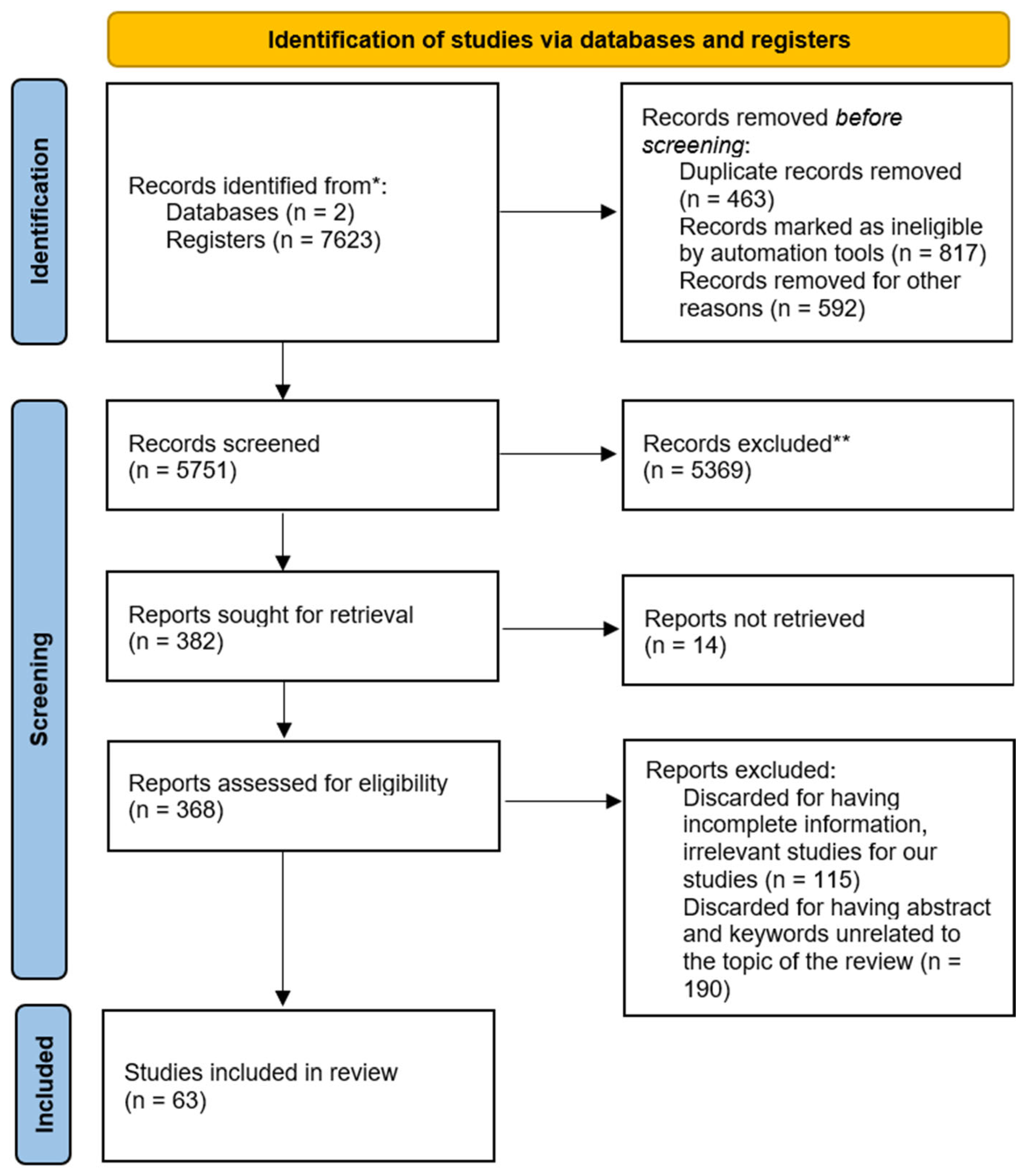
Figure 1. PRISMA diagram [17]. Date search topic: 18 April 2025. Notes: * Databases consulted: [Scopus and Web of Science]. ** Records excluded for not meeting thematic, typological, or population-related criteria defined in the review.
Information 16 00819 g001
Figure 2. Distribution of AI techniques by category.
Information 16 00819 g002
Figure 3. Applied AI variables.
Information 16 00819 g003
Figure 4. Identified trends.
Information 16 00819 g004
Figure 5. Trends and gaps in literature.
Information 16 00819 g005
Table 1. Objectives and guiding questions based on the PCC framework.
Specific ObjectiveReview QuestionPopulation (P)Concept (C)Context (C)
Identify the most used artificial intelligence models in e-learning contexts to predict academic performance, the need for tutoring, or the risk of student dropout in higher education.What algorithms or artificial intelligence techniques have been applied in e-learning or technology-mediated education settings to predict academic performance, the need for tutoring, or dropout among university students?University studentsPredictive AI models (ML, DL, neural networks)Virtual, hybrid, or technology-mediated higher education
Analyze the most frequently used student-related variables in e-learning environments as inputs for academic performance prediction models based on artificial intelligence.What student variables—including grades, interaction in virtual platforms, participation, and digital study habits—are commonly used as inputs for predictive models in higher education?University studentsPredictive variables in AI modelsHigher education is supported by digital platforms
Describe the educational contexts (face-to-face, hybrid, or virtual) where artificial intelligence models are implemented for tutoring and academic performance improvement.In what educational settings (virtual, hybrid, or face-to-face with digital support) have artificial intelligence models been implemented to predict or intervene in tutoring, academic performance, or dropout processes?University studentsContextual application of educational AITechnology-mediated or e-learning environments
Explore the benefits and reported outcomes following the implementation of artificial intelligence models in improving tutoring, student retention, and personalized learning in virtual environments.What positive impacts have been documented from the use of artificial intelligence models in academic tutoring, student retention, or personalized learning within e-learning contexts in higher education?University studentsOutcomes and impact of AI modelsDigital or virtual higher education
Table 2. Inclusion and exclusion criteria.
CriterionInclusionExclusion
Population Undergraduate or graduate university studentsPrimary, secondary, or non-formal education students
ConceptUse of AI models to predict performance, dropout, or tutoring needsStudies that do not implement predictive models or only discuss theory without application
ContextHigher education environments, virtual, hybrid, or technology-mediatedStudies in corporate contexts, non-university technical education, or school settings
Publication typeOriginal articles with empirical validation (quantitative or mixed)Systematic reviews, bibliometric studies, editorials, conference papers without data
LanguageEnglishLanguages other than English
Publication periodYears 2019 to 2025Publications prior to 2019
AccessibilityAvailability of full textRestricted access or summary available only
Thematic relevanceAlignment with the research objectives and questions posedTopics outside the educational scope or not related to academic prediction
Table 3. Search equation.
CategoryConnectorSearch Terms
Population (“academic performance” OR “student performance” OR “dropout” OR “academic failure” OR “tutoring” OR “academic advising” OR “retention”)
ConceptAND(“artificial intelligence” OR “machine learning” OR “deep learning” OR “neural networks” OR “data mining” OR “learning analytics” OR “predictive model”)
ContextAND(“higher education” OR “university” OR “college” OR “tertiary education” OR “e-learning” OR “online learning” OR “distance education” OR “hybrid education”) 
Table 4. AI techniques applied.
CategoryApplied AI TechniquesAI ArchitectureHybrid ApproachesArticlesEducational Application Example
Traditional Models Decision trees, SVM, random forest, XGBoost, KNN, logistic regressionSupervised models based on classification and regressionModel ensembles: random forest + XGBoost[21,22,23,24,39]Random forest used to predict dropout risk from LMS activity logs and attendance records; logistic regression applied to classify students into performance risk categories based on GPA and exam history.
Technological InnovationsDL, CNN, transfer learning, XAIDeep neural networks, CNNs, recurrent networkDL + XAI, hybrid DL + transfer learning[20,25,26,27,28,29]CNN models analyzed time-series learning behaviors (clickstream, session duration) to predict early dropout; transfer learning applied to adapt models across institutions with different student datasets.
Hybrid/Bioinspired ApproachesGenetic algorithms, evolutionary optimization, ensemblesCombination of statistical, heuristic, and AI modelsDL + bioinspired algorithms[28,29,30]Genetic algorithms optimized feature selection for predicting tutoring needs; hybrid ensembles combined decision trees and DL to identify at-risk students more accurately.
Explainable AI (XAI)Interpretable decision trees, attribution methods, rule-based modelsExplainable supervised modelsIntegration of XAI with DL[31,32,33,34,35,36,37]XAI applied to show which variables (e.g., attendance, forum participation) most influence predictions of academic failure, providing transparent insights for instructors.
Table 6. Educational contexts.
CategoryDescriptionExamplesArticles
Educational Level Most studies focus on higher education, covering undergraduate and graduate programs.Undergraduate programs in engineering, computer science, and technical university training [32,36][19,23,24,43,53,58]
Educational ModalityStudies predominantly take place in e-learning and hybrid environments, driven by the COVID-19 pandemic.Distance education, virtual courses, LMS platforms, hybrid classes[25,38,42,60,61]
Type of InstitutionStudies include both public and private universities, mainly in Latin America, Asia, and Europe.Higher education institutions in developing countries, prestigious universities[29,43,49,53,59]
Specific ContextsSome studies focus on specific academic disciplines like programming, mathematics, and science.Courses in programming, mathematics, computer science, adaptive e-learning[18,62,63]
Post-pandemic EducationThe pandemic’s impact has driven digital transitions and AI adoption in education.Predictive models adapted to remote modalities post-pandemic, online support[46,47,48,51]
Table 7. Main outcomes identified.
CategoryDescriptionExamplesArticles
Academic Performance Prediction of students’ academic results based on grades, GPA, and evaluationsFinal grade prediction, GPA estimation, subject-wise performance[20,23,24,28,63,68]
Student DropoutEarly identification of students at risk of leaving or disengagingDropout prediction, attrition rates based on virtual platform interaction[22,24,30,33,35,56]
Personalized Academic TutoringUse of AI to assign tutoring, interventions, or personalized academic supportRecommendation systems based on predictions of low performance or dropout[55,57,58,69]
Retention PredictionEstimation of the likelihood that a student continues in their academic programStudent retention prediction, risk analysis in long-term programs[19,44,53,61]
Emotional and Psychological Well-beingPrediction of psychosocial variables such as anxiety or motivation and their effect on performancePrediction of academic stress, anxiety, and motivation and their academic impact[46,47,48,49,50,51]
Table 8. Comparative analysis of AI techniques applied in higher education.
AI TechniqueAdvantagesLimitationsComputational CostsData RequirementsAI Technique
Classical ML models (decision trees, logistic regression, random forest, SVM, KNN)Moderate accuracy; easy to implement; scalable with institutional databasesLimited capacity to capture complex non-linear patternsLow–ModerateStructured academic data (grades, attendance, LMS logs)[20,23,24,28,63,68]
Deep learning (ANN, CNN, RNN, transfer learning)High predictive accuracy; ability to process large-scale and unstructured data (e.g., behavioral or emotional)High demand for computing power; low interpretability (black-box risk)HighLarge datasets, often multimodal (academic + behavioral + affective)[22,24,30,33,35,56]
Hybrid approaches (ensembles, DL + XAI, bioinspired)Balance between accuracy and generalization; capacity to integrate multiple data sourcesHigher implementation complexity; need for specialized expertiseHigh–Very HighHeterogeneous and multidimensional data (academic, psychosocial, contextual)[55,57,58,69]
Explainable AI (interpretable trees, attribution methods, rule-based models)Enhances transparency and trust; supports pedagogical adoption by educatorsMay reduce predictive accuracy compared to opaque modelsModerate–HighStructured and semi-structured data[19,44,53,61]
Disclaimer/Publisher’s Note: The statements, opinions and data contained in all publications are solely those of the individual author(s) and contributor(s) and not of MDPI and/or the editor(s). MDPI and/or the editor(s) disclaim responsibility for any injury to people or property resulting from any ideas, methods, instructions or products referred to in the content.