
Article

Improved Detection Method for Micro-Targets in Remote Sensing Images
1
Department of Computer Engineering, Taiyuan Institute of Technology, Taiyuan 030008, China
2
School of Computer Science and Technology, Taiyuan Normal University, Jinzhong 030619, China
3
School of Innovation, Design and Engineering, Malardalen University, 72123 Vasteras, Sweden
4
School of Computer and Information Technology, Beijing Jiaotong University, Beijing 100044, China
*
Author to whom correspondence should be addressed.
Information 2024, 15(2), 108; https://doi.org/10.3390/info15020108
Submission received: 11 January 2024 / Revised: 1 February 2024 / Accepted: 7 February 2024 / Published: 12 February 2024

Abstract

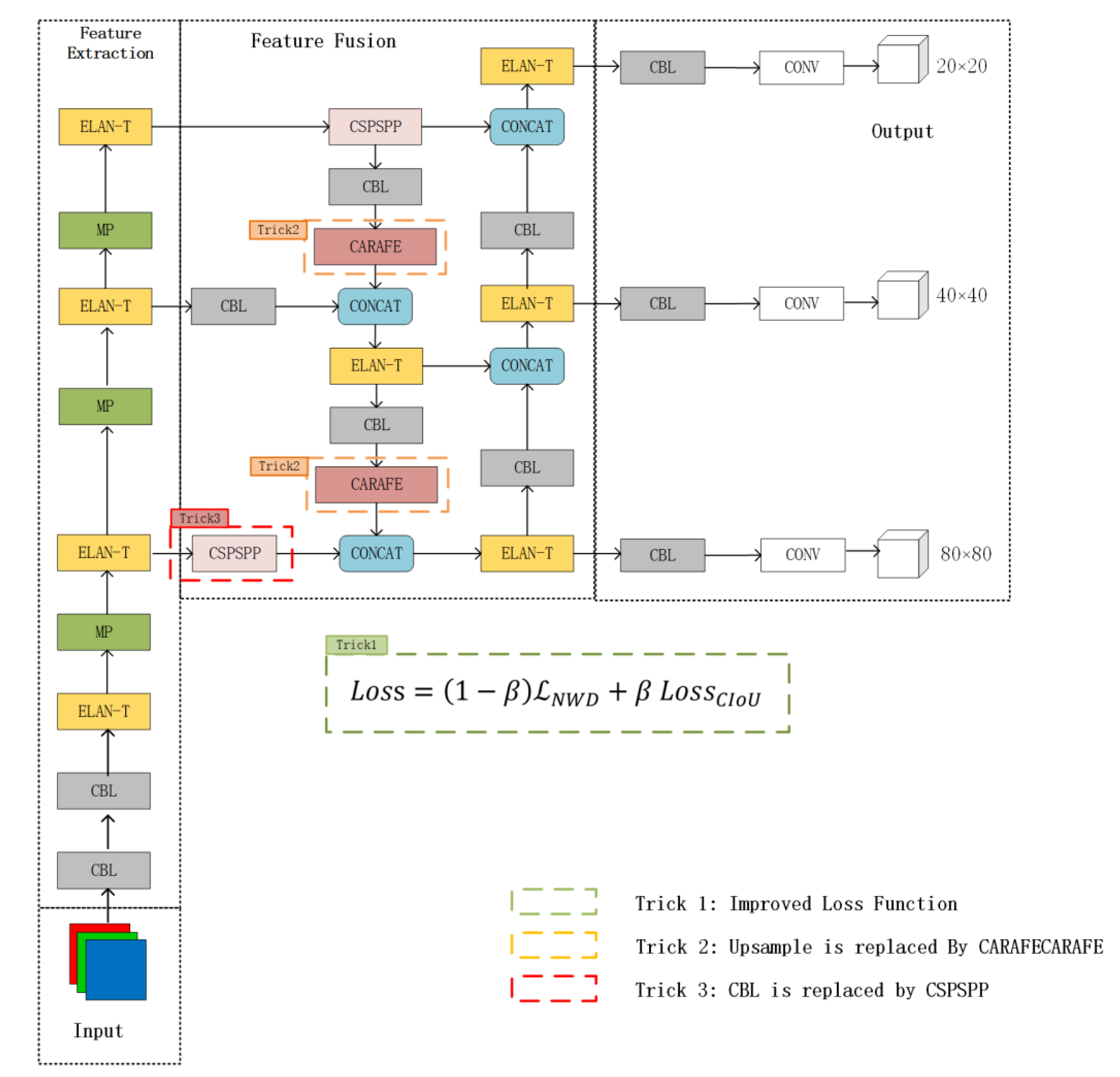
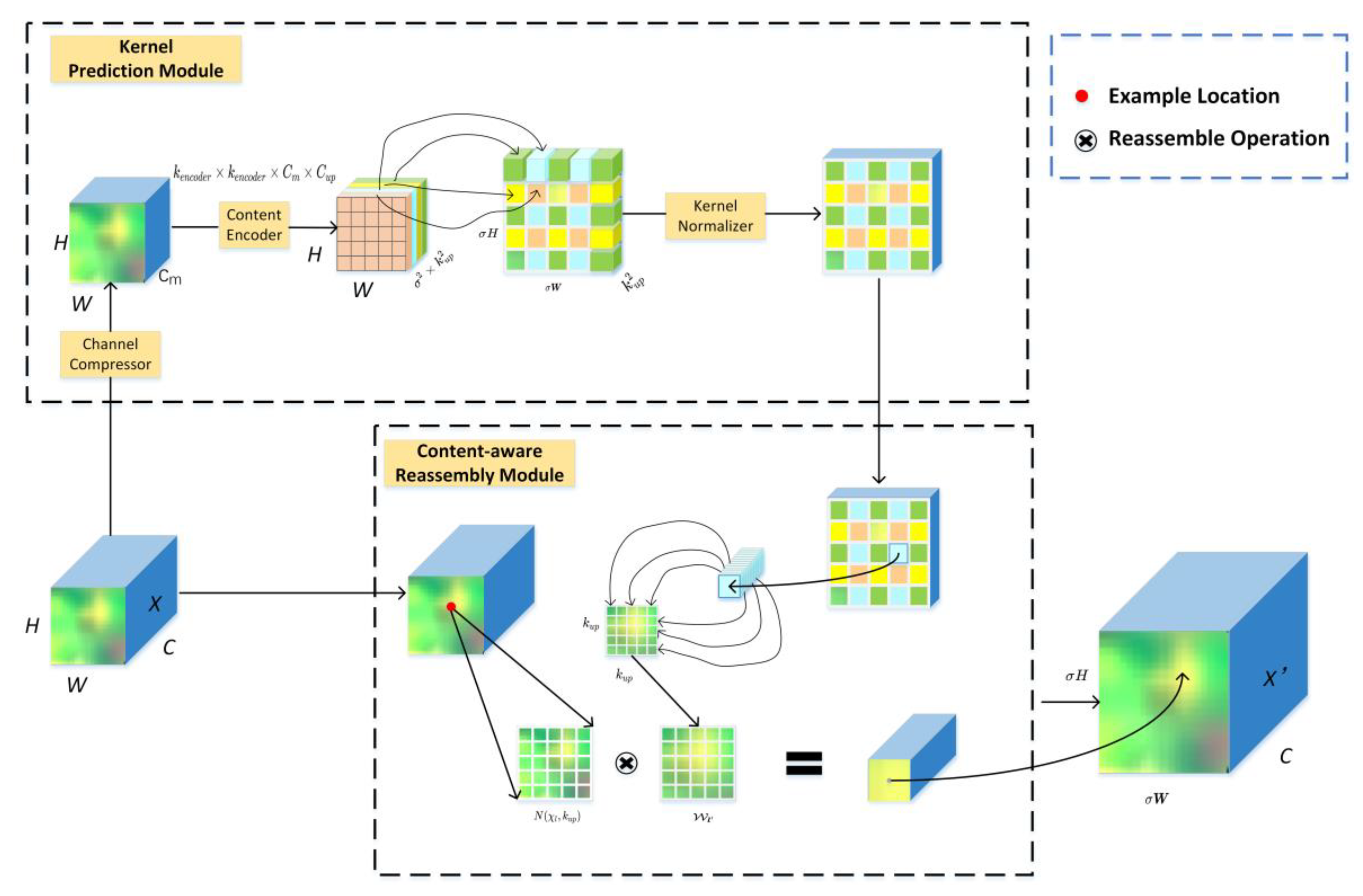
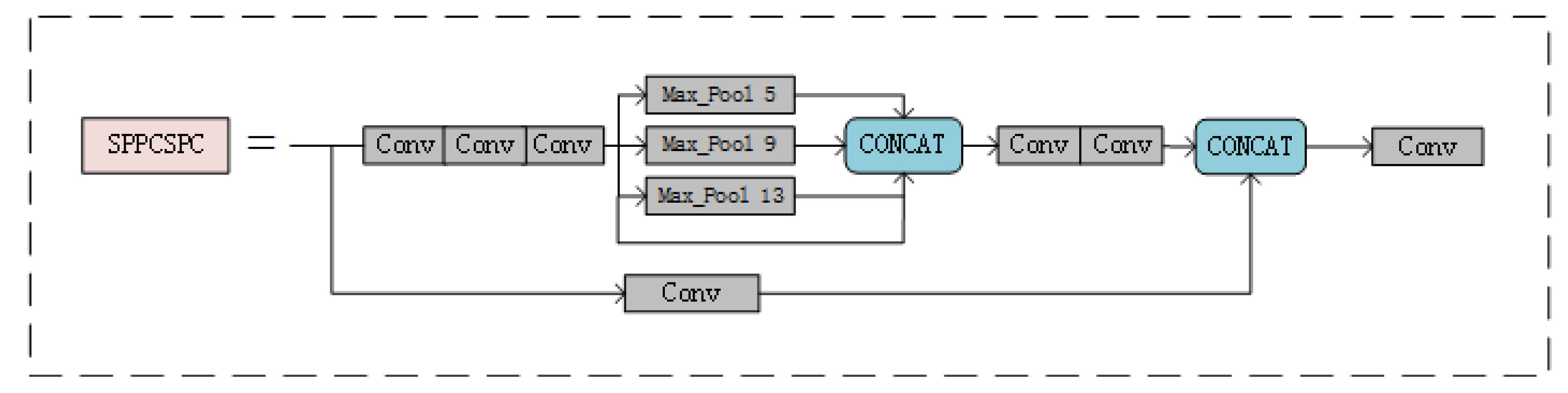
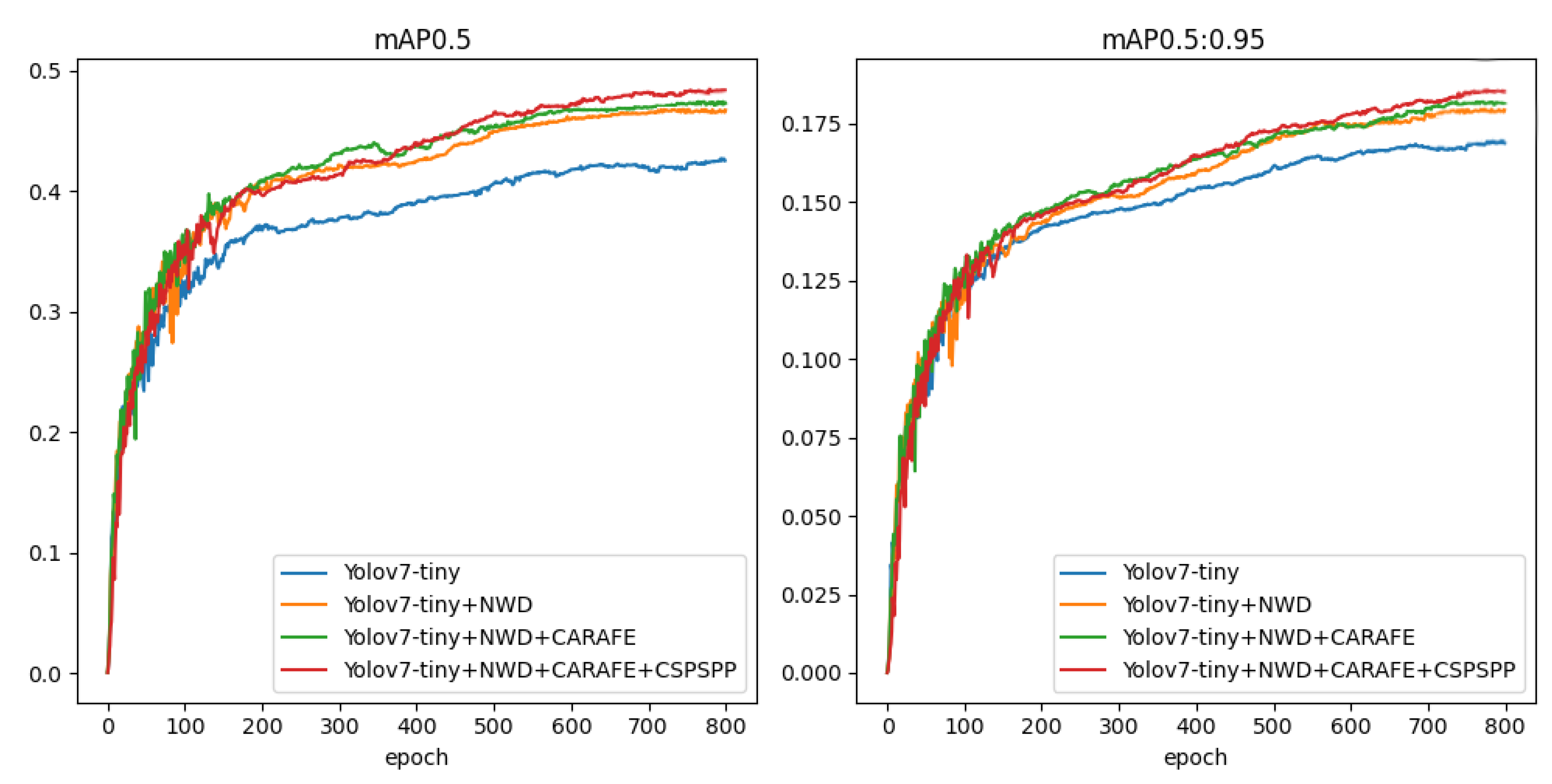
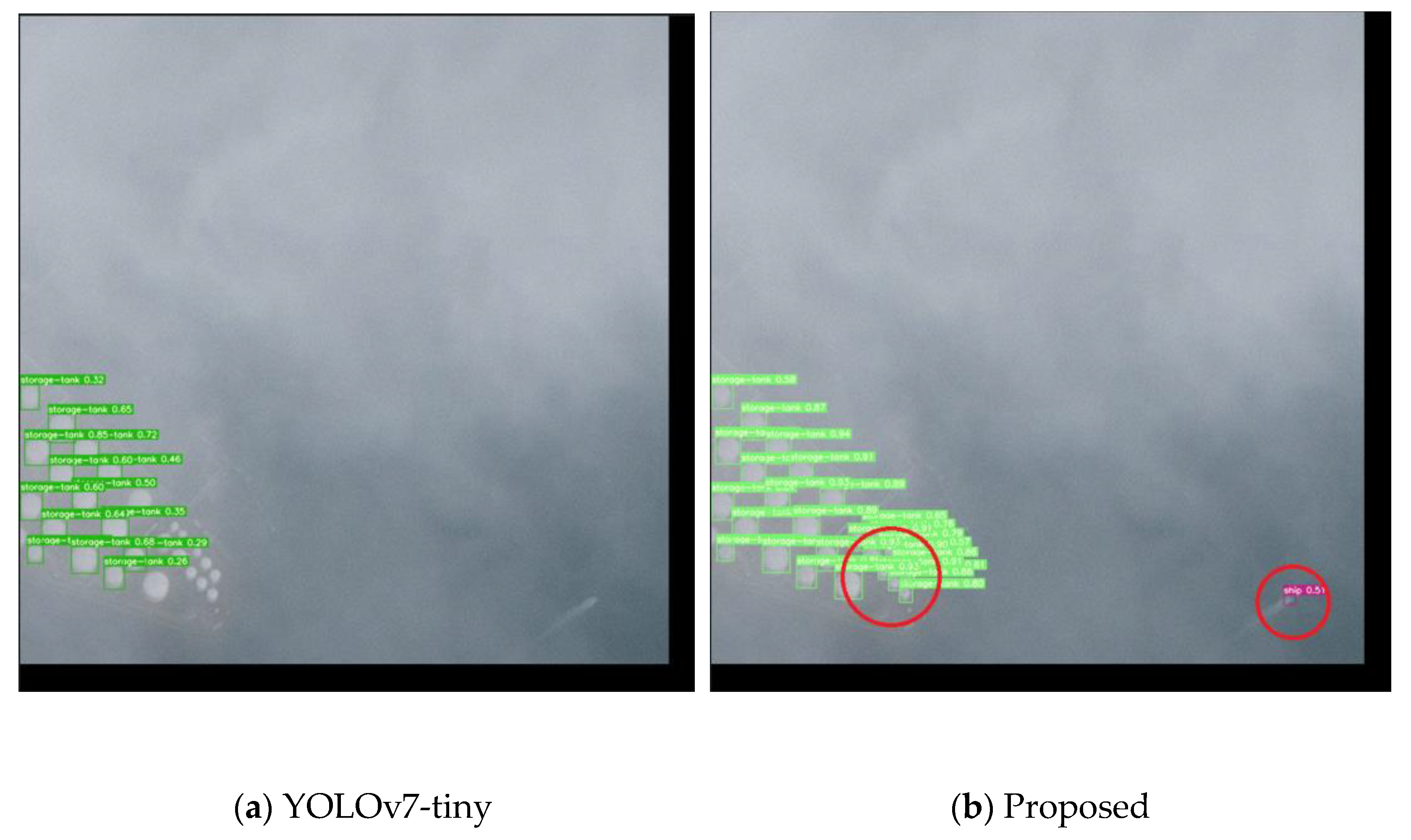
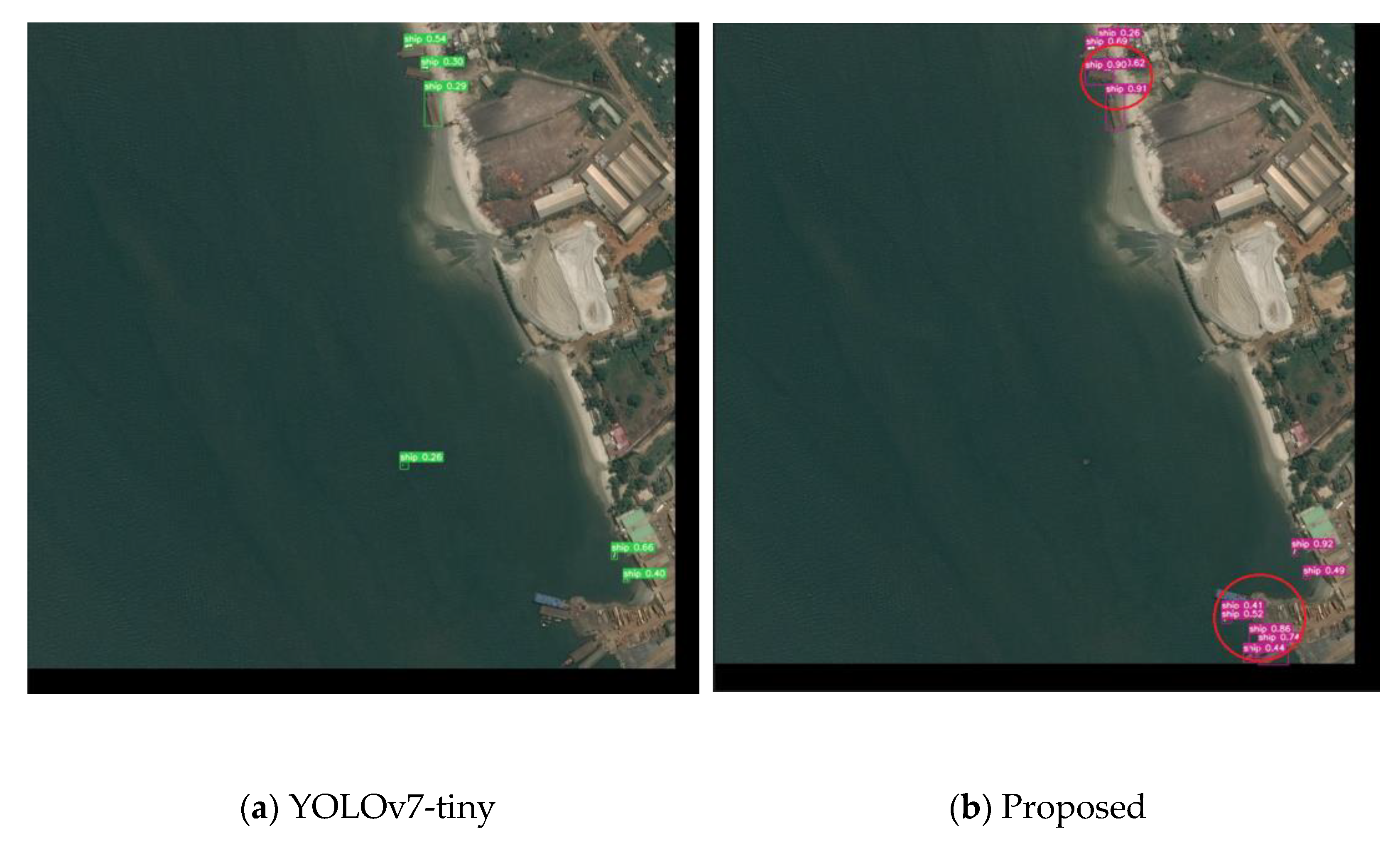
With the exponential growth of remote sensing images in recent years, there has been a significant increase in demand for micro-target detection. Recently, effective detection methods for small targets have emerged; however, for micro-targets (even fewer pixels than small targets), most existing methods are not fully competent in feature extraction, target positioning, and rapid classification. This study proposes an enhanced detection method, especially for micro-targets, in which a combined loss function (consisting of NWD and CIOU) is used instead of a singular CIOU loss function. In addition, the lightweight Content-Aware Reassembly of Features (CARAFE) replaces the original bilinear interpolation upsampling algorithm, and a spatial pyramid structure is added into the network model’s small target layer. The proposed algorithm undergoes training and validation utilizing the benchmark dataset known as AI-TOD. Compared to speed-oriented YOLOv7-tiny, the mAP0.5 and mAP0.5:0.95 of our improved algorithm increased from 42.0% and 16.8% to 48.7% and 18.9%, representing improvements of 6.7% and 2.1%, respectively, while the detection speed was almost equal to that of YOLOv7-tiny. Furthermore, our method was also tested on a dataset of multi-scale targets, which contains small targets, medium targets, and large targets. The results demonstrated that mAP0.5:0.95 increased from “9.8%, 54.8%, and 68.2%” to “12.6%, 55.6%, and 70.1%” for detection across different scales, indicating improvements of 2.8%, 0.8%, and 1.9%, respectively. In summary, the presented method improves detection metrics for micro-targets in various scenarios while satisfying the requirements of detection speed in a real-time system.
Keywords: micro-targets; NWD; CARAFE; spatial pyramid; remote sensing images micro-targets; NWD; CARAFE; spatial pyramid; remote sensing images