Article

Seagrass Transplantation Success After Three Decades in the Ligurian Sea (NW Mediterranean)

by
Chiara Robello
1,2,*,
Monica Montefalcone
1,3,
Giorgio Bavestrello
1,3 and
Alice Oprandi
1
1
Department of Earth, Environment and Life Sciences (DiSTAV), University of Genoa, Corso Europa 26, 16132 Genoa, Italy
2
One Ocean Foundation, Via Gesù 10, 20121 Milan, Italy
3
National Biodiversity Future Center (NBFC), Piazza Marina 61, 90133 Palermo, Italy
*
Author to whom correspondence should be addressed.
J. Mar. Sci. Eng. 2026, 14(9), 783; https://doi.org/10.3390/jmse14090783
Submission received: 5 March 2026 / Revised: 9 April 2026 / Accepted: 21 April 2026 / Published: 24 April 2026
(This article belongs to the Special Issue Seagrass Conservation Blue Carbon and Restoration)

Abstract

Posidonia oceanica meadows are among the most valuable coastal ecosystems in the Mediterranean Sea, providing key ecological functions and socio-economic benefits. Despite conservation efforts, these meadows declined markedly throughout the late 20th century due to cumulative human pressures, although their condition has stabilised more recently under protection, and natural recolonization has even begun in some areas. In this context, active restoration through transplantation has expanded considerably, particularly in response to recent policy initiatives, and is now contributing to the recovery of these ecosystems. However, long-term monitoring to assess active restoration success remains scarce. This study revisits one of the earliest P. oceanica transplantation interventions, initiated in 1996 in front of the tourist harbour of Rapallo (NW Mediterranean), and evaluates its status after nearly 30 years. Surveys conducted in 2019 and 2024 confirmed the persistence of the transplanted meadow. The restored area increased from approximately 20 m2 at establishment to 26.9 m2 in 2024, and shoot density reached values comparable to well-developed natural meadows in the region. The observed long-term structural stability highlights the need to assess restoration outcomes over decadal timescales. This case study also suggests that fine-scale site conditions, including hydrodynamic shelter and adequate light availability, can strongly influence long-term restoration success.

1. Introduction

Posidonia oceanica meadows represent a key structural and functional component of Mediterranean coastal ecosystems, providing multiple ecosystem services, including shoreline protection, long-term carbon sequestration and the provision of habitats for a high diversity of marine species [1,2,3,4,5,6,7,8,9]. Despite their high ecological and socio-economic value [10,11], P. oceanica is characterised by relatively slow growth rates [12,13,14] and high vulnerability [15], resulting in a reduced capacity for a natural recovery following disturbance [16,17,18].
Throughout the late 20th century, P. oceanica meadows have experienced widespread and, in many areas, severe decline [19,20,21,22], although natural recovery has been documented in some regions following the reduction in local anthropogenic pressures [23,24,25]. The combined effects of climate change, biological invasions and cumulative anthropogenic pressures have resulted in substantial habitat degradation [26,27,28,29,30]. Low water quality and increased turbidity, coastal infrastructure development, the installation of submarine cables and pipelines, uncontrolled anchoring and benthic-impacting fishing activities have led to meadow fragmentation and, in some cases, complete loss [19,20,31,32,33].
Considering its high ecological and socio-economic value and in response to this decline, P. oceanica meadows have been recognised as a conservation priority within national, international, and European policy frameworks. In addition to the establishment of a growing number of Marine Protected Areas, several regulatory and policy instruments support its protection, including the European Union Habitats Directive (1992/43/EEC). More recently, ecosystem restoration has gained prominence through global and European initiatives such as the United Nations Decade on Ecosystem Restoration and the European Nature Restoration Law.
This growing political and social attention has been accompanied by a marked rise in active restoration projects, which have proliferated, often implemented under significant temporal and financial constraints [34,35,36]. Experimental seagrass transplantation efforts began in the 1970s, and since then, a wide range of techniques has been developed, differing in anchoring systems, propagule types and handling procedures [34,37,38,39]. More recently, increasing attention has been devoted to improving the sustainability and biodegradability of restoration materials [40,41,42,43].
Most studies have concentrated on optimising transplantation techniques in terms of the type of cuttings, anchoring systems and treatments applied to the plants [38]. Yet, despite the growing number of documented interventions, the literature remains fragmented and methodologically heterogeneous, with no universally adopted criteria for defining restoration “success” [34,35,38,44]. Reported outcomes are highly variable, and long-term performance frequently remains uncertain [34,45,46]. Furthermore, failures are rarely documented explicitly, limiting the ability to identify the factors underlying unsuccessful interventions [44,47].
Short-term funding frameworks further limit the availability of long-term evidence [35,36]. Given the slow growth of P. oceanica, monitoring programs often end before meaningful ecological trends can be observed [34,48].
The lack of long-term datasets constrains our ability to distinguish between initial technical establishment and sustained ecological integration [49]. Revisiting historical transplantation interventions therefore provides a valuable opportunity to evaluate long-term persistence and to reassess the relative role of site-specific conditions in comparison with transplantation technique [43,49].
At a regional scale, the north-western Mediterranean provides a particularly relevant context. Indeed, several coastal areas have experienced particularly intense urban and infrastructural development during the second half of the 20th century, resulting in marked alterations of nearshore habitats [20,50,51,52]. Among these areas, the Ligurian coast represents a paradigmatic example of rapid coastal transformation [50]. In particular, the town of Rapallo (near the city of Genoa, Italy) became emblematic of dense and often unregulated shoreline development, to the extent that the term “Rapallizzazione” was coined in Italy to describe this pattern of concentrated coastal construction [53].
Such rapid coastal expansion profoundly modified hydrodynamic conditions, increased sediment inputs and reduced water transparency in several sectors of the Tigullio Gulf, contributing to the regression of P. oceanica meadows [54,55]. No living meadow has been recorded within the Rapallo Gulf since the first documented mapping in 1995 [51]. The main existing documented meadows in the Tigullio Gulf persisted in adjacent areas, such as Prelo, San Michele di Pagana and Zoagli [51,56].
It is within this historically transformed setting that one of the earliest experimental P. oceanica transplantation interventions was initiated in 1996, aiming to reconstruct a small portion of meadow [57]. The transplantation site itself was located on dead matte within the inner Rapallo Gulf, in front of the tourist harbour of Rapallo. In this area, only scattered patches of dead matte are currently present, indicating the former presence of the meadow [56]. In contrast to other areas of the Ligurian Sea [58], no evidence of natural meadow recovery has been observed in Rapallo over the last decades.
A first long-term assessment of the transplantation site conducted in 2019 confirmed the persistence of the transplanted patch and documented a substantial increase in shoot density after more than 20 years [59]. Nearly three decades after transplantation, the present study provides an updated evaluation of the structural development of the restored patch based on the most recent monitoring survey carried out in 2024. In particular, the study explores whether the long-term persistence of the Rapallo transplantation site may be primarily related to local environmental suitability rather than to the specific transplantation techniques originally applied, contributing to the broader understanding of drivers of restoration success in Posidonia oceanica meadows.

2. Materials and Methods

2.1. Study Area

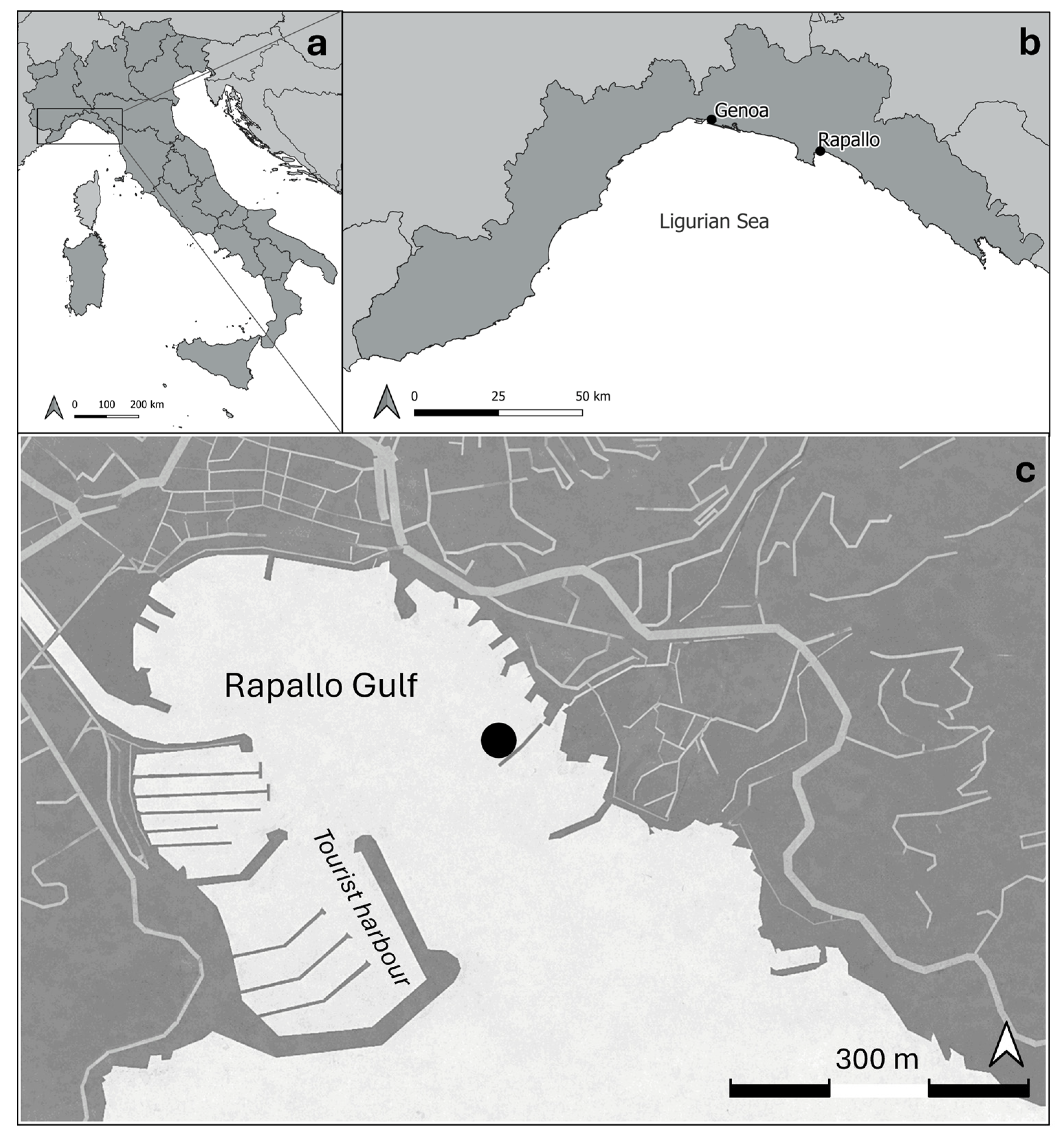
The study was conducted in Rapallo Gulf, in front of the tourist harbour, at approximately 44°20′47″ N, 9°14′09″ E (Tigullio Gulf, North-western Mediterranean Sea, Italy) (Figure 1c). The Gulf is located along the Ligurian coast and is primarily exposed to south-eastern storm events [60], although the transplantation site is positioned within a semi-enclosed sector protected by harbour breakwaters. These structures reduce hydrodynamic energy and limit water exchange with the open sea. The transplantation was carried out at approximately 5 m depth on a seabed primarily composed of dead matte. The area is characterised by intense coastal urbanisation and port-related activities, including periodic dredging operations.

2.2. Historical Transplantation Intervention

In 1996, a pioneering intervention of meadow restoration was planned to reconstruct a small portion of the meadow in front of the tourist harbour area [57].
The first transplantation was carried out in November 1996. A total of 200 cuttings of P. oceanica were collected from the nearby meadow of San Michele di Pagana (located 1 km from Rapallo) at a depth of 12 m. Five plastic grids, covering a surface of 2 m2 each, were anchored at 5 m depth on dead matte substrate using iron U-shaped staples, and cuttings were secured to the grids using plastic ties. A second transplantation was conducted in March 1997 in the same area. A total of 300 cuttings were collected in the nearby Prelo cove (located 1.3 km from Rapallo), at a depth of 5 m. Each cutting was fixed to a metallic stake, and the stakes were inserted into the substrate along six 10 m parallel transects, spaced at 20 cm intervals. Overall, 500 cuttings were transplanted over a surface of about 20 m2, corresponding to an initial mean density of 61.8 shoots m−2. This value was reported in the original monitoring report by Bavestrello & Cattaneo-Vietti [57], where raw data were not available; therefore, standard deviation could not be calculated. The same report estimates shoot loss one year after transplantation at approximately 15% for grid-fixed cuttings and 50% for stake-fixed cuttings. No further monitoring was conducted after the first year.
Figure 1. Geographic location of the transplantation site in the north-western Mediterranean Sea. (a) Italy, with the Liguria region indicated; (b) Ligurian coast showing the position of Genoa and Rapallo (study site); and (c) Rapallo Gulf and Rapallo tourist harbour, the black dot indicating the transplantation site.
Jmse 14 00783 g001

2.3. Long-Term Monitoring

The transplantation site was revisited in October 2019 and subsequently in May 2024 to evaluate long-term persistence and recent temporal changes.
Surveys were conducted by scuba diving. During each monitoring campaign, the transplanted patch was mapped using the closed polygon method [61] (Figure 2a). Field measurements were recorded on underwater slates. Patch dimensions (length, width and diagonal) were measured in situ using a measuring tape, and orientation was determined with a compass. The perimeter of the patch, corresponding to cuttings transplanted with both techniques, was reconstructed from field measurements, and the total area was calculated from the resulting polygon (Figure 2b).
Shoot density was estimated using six non-permanent quadrats (20 cm × 20 cm) randomly positioned within the transplanted area during each survey, to ensure spatial coverage. All shoots within each quadrat were counted and values were expressed as shoots m−2.
For each survey year, mean shoot density (shoots m−2) and standard deviation were calculated from quadrat counts. Total shoot number was estimated by multiplying mean density by the total mapped area.

3. Results

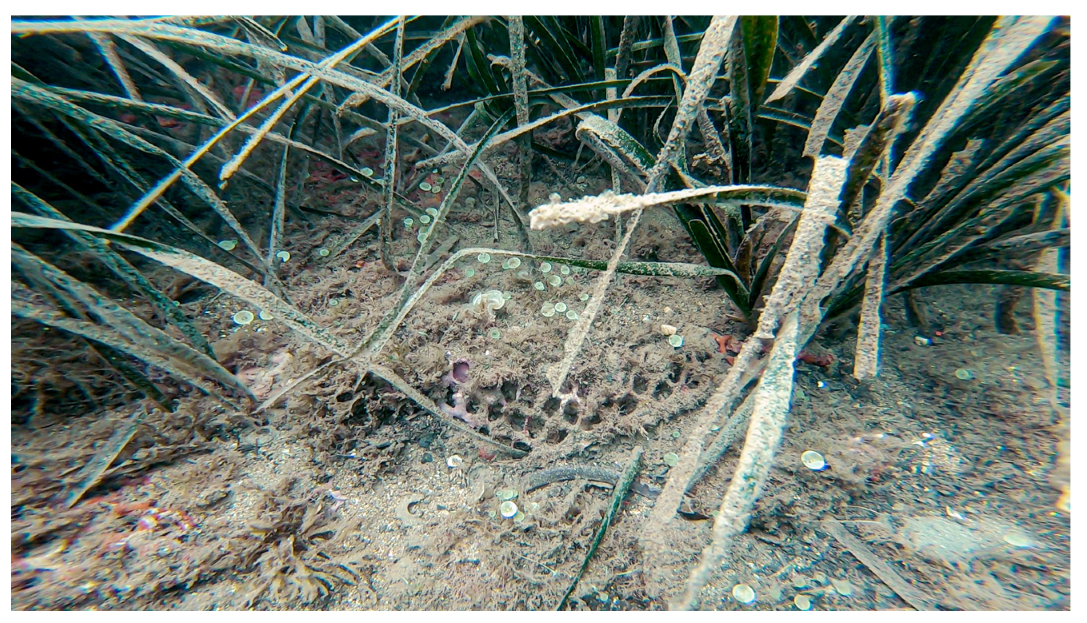
The transplanted meadow was still present during both the 2019 and 2024 surveys. Plastic grids used during the 1996 transplantation remained visible on the seabed (Figure 3), reflecting the use of non-biodegradable materials commonly adopted in early experimental transplantation trials, whereas metallic stakes were no longer detectable.
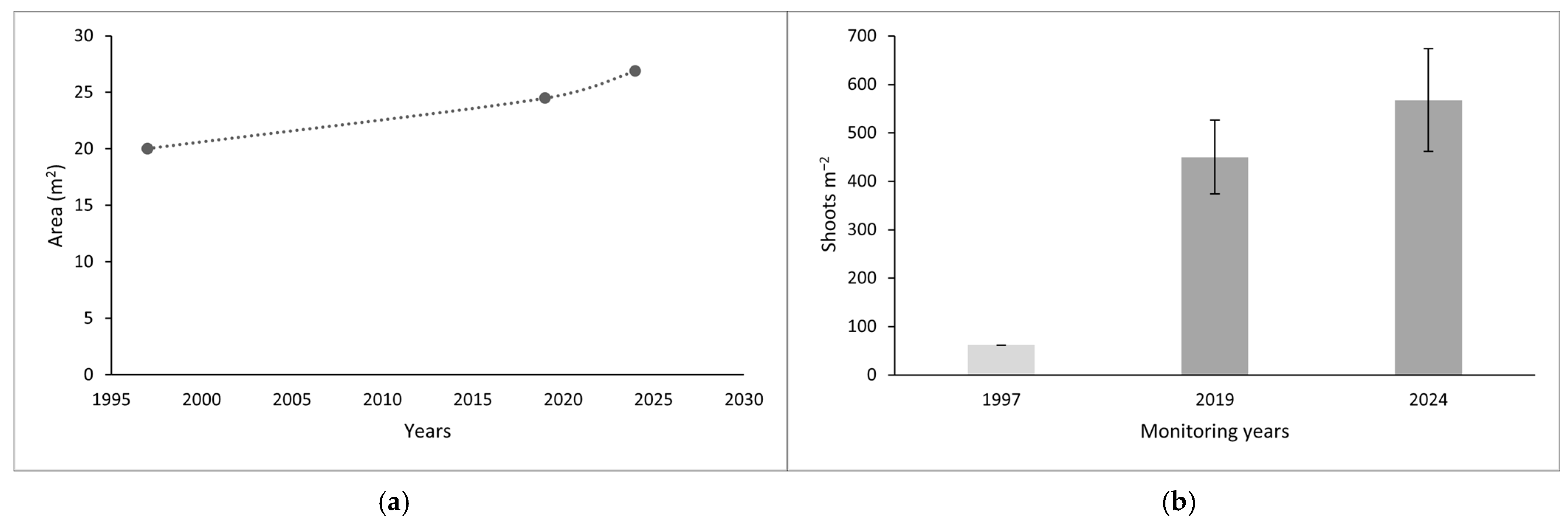
The area covered by the transplanted meadow increased over time and the patch appeared largely continuous, although small internal gaps were observed within the mapped perimeter (Figure 2a). Compared with the 2019 survey, the transplanted patch appeared more continuous in 2024, with fewer visible internal gaps, consistent with the increase in shoot density observed over time. The initial transplantation covered approximately 20 m2 in 1996–1997. In 2019, the mapped area was 24.5 m2 and further increased to 26.9 m2 in 2024 (Figure 4a).
Mean shoot density increased from 61.8 shoots m−2 in 1997 to 450 ± 79 shoots m−2 in 2019 and 567 ± 106 shoots m−2 in 2024 (n = 6 quadrats per survey) (Figure 4b).
Based on mapped area and mean shoot density, the estimated total number of shoots increased from approximately 1218 shoots in 1997 to 11,025 ± 1857 shoots in 2019 and to 15,265 ± 2854 shoots in 2024.

4. Discussion

Long-term monitoring exceeding 20 years is extremely scarce, particularly for Posidonia oceanica, a species characterised by slow growth with delayed structural development [12,20,38,48].
Shoot density increased markedly over time, rising from the initial values reported in 1996–1997 to the substantially higher densities recorded in 2019 and 2024. Although the 2019 and 2024 surveys were conducted in different seasons (October and May, respectively), which may partially influence leaf length and canopy development, the measured parameters (shoot density and total transplanted area) do not fluctuate during the year. The lack of detailed information from the historical transplantation prevents direct statistical comparison; nevertheless, the magnitude of change—corresponding to an increase of nearly 1080%—clearly indicates sustained long-term establishment rather than simple shoot persistence. Current shoot densities are comparable to those reported for well-developed natural meadows in the region [62]. Although the initial transplantation density was relatively high compared to contemporary restoration practices [38,40], present values indicate that the transplanted patch has reached a structurally stable condition rather than remaining a sparse group of surviving shoots. The meadow currently appears relatively continuous, with limited internal gaps and no visible signs of active regression. Comparable long-term trajectories have also been described for naturally recovering Posidonia oceanica meadows in the north-western Mediterranean [63], where structural consolidation may occur over several decades following the reduction in major anthropogenic stressors. In these contexts, recovery often involves progressive increases in shoot density and internal patch infilling rather than rapid lateral expansion of meadow margins. The structural development observed at the Rapallo transplantation site appears consistent with this pattern, suggesting that the restored patch followed a recovery comparable to that of naturally stabilising meadows under favourable local environmental conditions.
The substantial increase in shoot density over nearly three decades likely corresponds to a progressive increase in biomass [1,49]. Given the role of P. oceanica meadows in carbon sequestration and sediment stabilization, such structural consolidation suggests a progressive regeneration of the meadow itself, potentially associated with the gradual recovery of ecological functions that extend beyond simple shoot survival [10,64].
The first monitoring conducted in 1997 mainly assessed technical performance, focusing on survival rates and differences between anchoring methods. This approach remains largely consistent with contemporary monitoring frameworks, which often prioritise early survival and short-term establishment metrics. However, these indicators may reflect technical success rather than true ecological integration.
Given the relatively slow growth dynamics of P. oceanica, meaningful evaluation of restoration outcomes requires decadal-scale observation. Many restoration projects are monitored for only one to three years, a timeframe insufficient to determine whether transplanted shoots develop into a structurally stable meadow comparable to natural systems. In this study, although no monitoring was conducted between 1997 and 2019, the persistence and structural condition of the meadow documented in recent surveys provide robust evidence of its long-term establishment, despite the absence of intermediate data. The closed polygon method proved effective for reconstructing the spatial extent of the transplanted patch and for documenting detailed changes over small spatial and temporal scales [61]. Its consistent application during both survey periods by the same observer ensured a reliable comparison between surveys, although the use of permanent reference markers would be another valuable option for future monitoring activities.
The Rapallo site provides a particularly informative case study for understanding long-term restoration trajectories. The transplantation techniques used in 1996, including direct anchoring using metallic stakes, are conceptually comparable to several anchoring methods still used today [42,65]. The persistence of this meadow therefore offers a rare long-term reference for evaluating the potential durability of similar restoration approaches currently being implemented. Long-term monitoring exceeding two decades remains uncommon for Posidonia oceanica transplantation sites, with only a limited number of comparable case studies available in the literature [38]. Where such observations exist, they generally confirm that structural consolidation of transplanted patches may occur over decadal timescales, with progressive increases in shoot density and spatial development approaching values observed in nearby natural meadows. Within this limited framework of long-term evidence, the Rapallo case provides an additional example supporting the importance of extended monitoring for interpreting restoration trajectories.
Despite its location in front of the tourist harbour of Rapallo and in an area historically affected by intense anthropogenic pressures, the transplanted meadow has demonstrated remarkable persistence. The site experiences elevated turbidity and recurrent dredging activities typical of port environments and is located near a highly frequented beach. Historically, coastal sectors of the Tigullio Gulf, including Rapallo, were affected by intense coastal development and insufficient wastewater treatment during the second half of the 20th century [66], factors known to influence nearshore environmental conditions along several portions of the Ligurian coastline. Wastewater management along the Tigullio coastline has progressively evolved over recent decades, including the activation of a new treatment plant around 2020, serving the Rapallo coastal sector. Such infrastructural improvements likely contributed to environmental conditions different from those characterizing earlier phases of intense human development. At the same time, it benefits from favourable local conditions, including shallow depth, which ensures sufficient light availability, and partial hydrodynamic shelter provided by harbour structures. Indeed, the transplanted meadow survived the severe storm event of October 2018, which caused extensive coastal damage along the Ligurian coastline, including in Rapallo [60]. This further supports the interpretation that the transplantation site is located in a relatively sheltered and environmentally favourable sector of the Gulf. In this case, fine-scale environmental conditions appear to have played a key role in long-term success [35].
In the current European context, characterised by an acceleration of restoration initiatives driven by policies such as the European Nature Restoration Law, projects are increasingly implemented at larger scales and within limited funding cycles [35]. This case study highlights the importance of carefully integrating site selection into project design. While much effort has been devoted to refining transplantation techniques, the experience from Rapallo suggests that local environmental suitability can strongly influence long-term outcomes.
Moreover, restoration success should not be evaluated exclusively through short-term technical metrics such as initial survival rates. Instead, monitoring frameworks should be designed on decadal timescales, particularly for slow-growing species such as P. oceanica, in order to distinguish between temporary establishment and true ecological integration [34,49].
Finally, this case also invites reflection on the growing technological complexity of contemporary restoration practices. The Rapallo transplantation was implemented as an early experimental intervention, without refined protocols or advanced materials. Yet long-term persistence was achieved. This does not diminish the value of methodological improvement. Rather, it suggests that ecological suitability and long-term environmental compatibility remain fundamental drivers of restoration success.

5. Conclusions

Nearly three decades after transplantation, the restored Posidonia oceanica patch in Rapallo remains structurally stable and comparable to natural meadows in terms of density and spatial continuity. This long-term persistence represents a rare example of sustained restoration success for a slow-growing Mediterranean seagrass.
The findings emphasise that meaningful evaluation of transplantation outcomes requires decadal-scale monitoring, as short-term indicators may reflect technical establishment rather than ecological integration.
The Rapallo case also suggests that the environmental suitability of a selected site must be carefully evaluated at the fine spatial scale during preliminary investigations. Although implemented in a historically impacted coastal setting, the transplantation site benefited from favourable local conditions, including hydrodynamic shelter and sufficient light availability. These factors likely contributed to the long-term stability observed at the transplantation site. Successful transplantation outcomes are likely determined by the interaction of multiple factors rather than by any single driver.
In the context of accelerating large-scale restoration initiatives, careful site selection and long-term monitoring should be prioritised alongside technical refinement to ensure durable ecological outcomes.

Author Contributions

Conceptualization, C.R. and A.O.; methodology, C.R. and A.O.; formal analysis, C.R. and A.O.; investigation, C.R. and A.O.; data curation, C.R.; writing—original draft preparation, C.R.; writing—review and editing, C.R., A.O., M.M. and G.B.; supervision, M.M.; project administration, M.M.; historical data and original transplantation intervention, G.B. All authors have read and agreed to the published version of the manuscript.

Funding

C.R. benefits from a Ph.D. fellowship funded in part by One Ocean Foundation.

Data Availability Statement

The data presented in this study are available from the corresponding author upon request.

Acknowledgments

The authors acknowledge Bagni Vittoria (Rapallo) for logistical assistance and for facilitating beach access to the study site during monitoring activities.

Conflicts of Interest

The authors declare no conflicts of interest.

References

  1. Pergent, G.; Romero, J.; Pergent-Martini, C.; Mateo, M.A.; Boudouresque, C.F. Primary Production, Stocks and Fluxes in the Mediterranean Seagrass Posidonia oceanica. Mar. Ecol. Prog. Ser. 1994, 106, 139–146. [Google Scholar] [CrossRef]
  2. Ondiviela, B.; Losada, I.J.; Lara, J.L.; Maza, M.; Galván, C.; Bouma, T.J.; van Belzen, J. The Role of Seagrasses in Coastal Protection in a Changing Climate. Coast. Eng. 2014, 87, 158–168. [Google Scholar] [CrossRef]
  3. Duarte, C.M.; Losada, I.J.; Hendriks, I.E.; Mazarrasa, I.; Marbà, N. The Role of Coastal Plant Communities for Climate Change Mitigation and Adaptation. Nat. Clim. Change 2013, 3, 961–968. [Google Scholar] [CrossRef]
  4. McLeod, E.; Chmura, G.L.; Bouillon, S.; Salm, R.; Björk, M.; Duarte, C.M.; Lovelock, C.E.; Schlesinger, W.H.; Silliman, B.R. A Blueprint for Blue Carbon: Toward an Improved Understanding of the Role of Vegetated Coastal Habitats in Sequestering CO2. Front. Ecol. Environ. 2011, 9, 552–560. [Google Scholar] [CrossRef]
  5. Lima, M.d.A.C.; Bergamo, T.F.; Ward, R.D.; Joyce, C.B. A Review of Seagrass Ecosystem Services: Providing Nature-Based Solutions for a Changing World. Hydrobiologia 2023, 850, 2655–2670. [Google Scholar] [CrossRef]
  6. Pergent-Martini, C.; Pergent, G.; Monnier, B.; Boudouresque, C.F.; Mori, C.; Valette-Sansevin, A. Contribution of Posidonia oceanica Meadows in the Context of Climate Change Mitigation in the Mediterranean Sea. Mar. Environ. Res. 2021, 165, 105236. [Google Scholar] [CrossRef]
  7. Monnier, B.; Pergent, G.; Vallette-Sansevin, A.; Boudouresque, C.-F.; Mateo, M.A.; Pergent-Martini, C. The Posidonia oceanica Matte: A Unique Coastal Carbon Sink for Climate Change Mitigation and Implication for Management. Vie Milieu 2020, 70, 17–24. [Google Scholar]
  8. Scanu, S.; Piazzolla, D.; Bonamano, S.; Penna, M.; Piermattei, V.; Madonia, A.; Frattarelli, F.M.; Mellini, S.; Dolce, T.; Valentini, R.; et al. Economic Evaluation of Posidonia oceanica Ecosystem Services along the Italian Coast. Sustainability 2022, 14, 489. [Google Scholar] [CrossRef]
  9. Hemminga, M.A.; Duarte, C.M. Seagrass Ecology; Cambridge University Press: Cambridge, UK, 2000. [Google Scholar]
  10. Vassallo, P.; Paoli, C.; Rovere, A.; Montefalcone, M.; Morri, C.; Bianchi, C.N. The Value of the Seagrass Posidonia oceanica: A Natural Capital Assessment. Mar. Pollut. Bull. 2013, 75, 157–167. [Google Scholar] [CrossRef]
  11. Costanza, R.; D’Arge, R.; De Groot, R.; Farber, S.; Grasso, M.; Hannon, B.; Limburg, K.; Naeem, S.; O’Neill, R.V.; Paruelo, J.; et al. The Value of the World’s Ecosystem Services and Natural Capital. Nature 1997, 387, 253–260. [Google Scholar] [CrossRef]
  12. Marbà, N.; Duarte, C.M. Interannual Changes in Seagrass (Posidonia oceanica) Growth and Environmental Change in the Spanish Mediterranean Littoral Zone. Limnol. Oceanogr. 1997, 42, 800–810. [Google Scholar] [CrossRef]
  13. De los Santos, C.B.; Krause-Jensen, D.; Alcoverro, T.; Marbà, N.; Duarte, C.M.; van Katwijk, M.M.; Pérez, M.; Romero, J.; Sánchez-Lizaso, J.L.; Roca, G.; et al. Recent Trend Reversal for Declining European Seagrass Meadows. Nat. Commun. 2019, 10, 3356. [Google Scholar] [CrossRef] [PubMed]
  14. Caye, G. Analyse Du Polymorphisme Caulinaire Chez Posidonia oceanica (L.) Del. Bull. Soc. Bot. Fr. Lett. Bot. 1980, 127, 257–262. [Google Scholar] [CrossRef]
  15. Procaccini, G.; Alberte, R.S.; Mazzella, L. Genetic Structure of the Seagrass Posidonia oceanica in the Western Mediterranean: Ecological Implications. Mar. Ecol. Prog. Ser. 1996, 140, 153–160. [Google Scholar] [CrossRef]
  16. Boudouresque, C.; Bernard, G.; Bonhomme, P.; Charbonnel, E.; Diviacco, G.; Meinesz, A.; Pergent, G.; Pergent-Martini, C.; Ruitton, S.; Tunesi, L. Préservation et Conservation des Herbiers à Posidonia oceanica; RAMOGE: Marseille, France, 2006. [Google Scholar]
  17. Ceccherelli, G.; Campo, D.; Milazzo, M. Short-Term Response of the Slow Growing Seagrass Posidonia oceanica to Simulated Anchor Impact. Mar. Environ. Res. 2007, 63, 341–349. [Google Scholar] [CrossRef]
  18. González-Correa, J.M.; Bayle, J.T.; Sánchez-Lizaso, J.L.; Valle, C.; Sánchez-Jerez, P.; Ruiz, J.M. Recovery of Deep Posidonia oceanica Meadows Degraded by Trawling. J. Exp. Mar. Biol. Ecol. 2005, 320, 65–76. [Google Scholar] [CrossRef]
  19. Boudouresque, C.F.; Bernard, G.; Pergent, G.; Shili, A.; Verlaque, M. Regression of Mediterranean Seagrasses Caused by Natural Processes and Anthropogenic Disturbances and Stress: A Critical Review. Bot. Mar. 2009, 52, 395–418. [Google Scholar] [CrossRef]
  20. Telesca, L.; Belluscio, A.; Criscoli, A.; Ardizzone, G.; Apostolaki, E.T.; Fraschetti, S.; Gristina, M.; Knittweis, L.; Martin, C.S.; Pergent, G.; et al. Seagrass Meadows (Posidonia oceanica) Distribution and Trajectories of Change. Sci. Rep. 2015, 5, 12505. [Google Scholar] [CrossRef]
  21. Orth, R.J.; Carruthers, T.J.B.; Dennison, W.C.; Duarte, C.M.; Fourqurean, J.W.; Heck, K.L.; Hughes, R.; Kendrick, G.A.; Kenworthy, J.; Olyarnik, S.; et al. A Global Crisis for Seagrass Ecosystems. Bioscience 2006, 56, 987–996. [Google Scholar] [CrossRef]
  22. Marbà, N.; Díaz-Almela, E.; Duarte, C.M. Mediterranean Seagrass (Posidonia oceanica) Loss between 1842 and 2009. Biol. Conserv. 2014, 176, 183–190. [Google Scholar] [CrossRef]
  23. Boulenger, A.; Chapeyroux, J.; Fullgrabe, L.; Marengo, M.; Gobert, S. Assessing Posidonia oceanica Recolonisation Dynamics for Effective Restoration Designs in Degraded Anchoring Sites. Mar. Pollut. Bull. 2025, 216, 117960. [Google Scholar] [CrossRef] [PubMed]
  24. Fernández-Torquemada, Y.; Díaz-Valdés, M.; Izquierdo-Muñoz, A.; Sánchez-Lizaso, J.L.; Ramos-Esplá, A.A. Spatial and Temporal Variability of Posidonia oceanica Monitoring Indicators, Valencian Community, Spain. Water 2020, 12, 3235. [Google Scholar] [CrossRef]
  25. Pergent-Martini, C.; Pasqualini, V. Seagrass Population Dynamics before and after the Setting up of a Wastewater Treatment Plant. Biol. Mar. Mediterr. 2000, 7, 405–408. [Google Scholar]
  26. Giakoumi, S.; Brown, C.J.; Katsanevakis, S.; Saunders, M.I.; Possingham, H.P. Using Threat Maps for Cost-Effective Prioritization of Actions to Conserve Coastal Habitats. Mar. Policy 2015, 61, 95–102. [Google Scholar] [CrossRef]
  27. Waycott, M.; Duarte, C.M.; Carruthers, T.J.B.; Orth, R.J.; Dennison, W.C.; Olyarnik, S.; Calladine, A.; Fourqurean, J.W.; Heck, K.L.; Hughes, A.R.; et al. Accelerating Loss of Seagrasses across the Globe Threatens Coastal Ecosystems. Proc. Nat. Acad. Sci. USA 2009, 106, 12377–12381. [Google Scholar] [CrossRef]
  28. Unsworth, R.K.F.; Collier, C.J.; Waycott, M.; Mckenzie, L.J.; Cullen-Unsworth, L.C. A Framework for the Resilience of Seagrass Ecosystems. Mar. Pollut. Bull. 2015, 100, 34–46. [Google Scholar] [CrossRef]
  29. Abadie, A.; Lejeune, P.; Pergent, G.; Gobert, S. From Mechanical to Chemical Impact of Anchoring in Seagrasses: The Premises of Anthropogenic Patch Generation in Posidonia oceanica Meadows. Mar. Pollut. Bull. 2016, 109, 61–71. [Google Scholar] [CrossRef]
  30. Abadie, A.; Richir, J.; Lejeune, P.; Leduc, M.; Gobert, S. Structural Changes of Seagrass Seascapes Driven by Natural and Anthropogenic Factors: A Multidisciplinary Approach. Front. Ecol. Evol. 2019, 7, 190. [Google Scholar] [CrossRef]
  31. Nonnis, O.; Maggi, C.; Bacci, T.; Iazzi, A.; Massara, F.; Rende, F.S.; Trabucco, B.; Gabellini, M. An Environmental Monitoring Plan Related to the Laying of Marine Power Cables: The Case Study of SAPEI Project. In Proceedings of the Recent Advances in Environmental Science and Geoscience, Venice, Italy, 15–17 March 2014; pp. 24–29. [Google Scholar]
  32. Bacci, T.; Rende, S.F.; Nonnis, O.; Maggi, C.; Izzi, A.; Gabellini, M.; Massara, F.; Di Tullio, L. Effects of Laying Power Cables on a Posidonia oceanica (L.) Delile Prairie: The Study Case of Fiume Santo (NW Sardinia, Italy). J. Coast. Res. 2013, 65, 868–873. [Google Scholar] [CrossRef]
  33. Milazzo, M.; Badalamenti, F.; Ceccherelli, G.; Chemello, R. Boat Anchoring on Posidonia oceanica Beds in a Marine Protected Area (Italy, Western Mediterranean): Effect of Anchor Types in Different Anchoring Stages. J. Exp. Mar. Biol. Ecol. 2004, 299, 51–62. [Google Scholar] [CrossRef]
  34. Pansini, A.; Bosch-Belmar, M.; Berlino, M.; Sarà, G.; Ceccherelli, G. Collating Evidence on the Restoration Efforts of the Seagrass Posidonia oceanica: Current Knowledge and Gaps. Sci. Total Environ. 2022, 851, 158320. [Google Scholar] [CrossRef] [PubMed]
  35. Fraschetti, S.; McOwen, C.; Papa, L.; Papadopoulou, N.; Bilan, M.; Boström, C.; Capdevila, P.; Carreiro-Silva, M.; Carugati, L.; Cebrian, E.; et al. Where Is More Important Than How in Coastal and Marine Ecosystems Restoration. Front. Mar. Sci. 2021, 8, 626843. [Google Scholar] [CrossRef]
  36. Bayraktarov, E.; Saunders, M.I.; Abdullah, S.; Mills, M.; Beher, J.; Possingham, H.P.; Mumby, P.J.; Lovelock, C.E. The Cost and Feasibility of Marine Coastal Restoration. Ecol. Appl. 2016, 26, 1055–1074. [Google Scholar] [CrossRef] [PubMed]
  37. UNEP/MAP-SPA/RAC. Best Practices, Measures and Lessons Learnt for Biodiversity Restoration, Ensuring Carbon Sink Optimization and Buffering Resilience to Climate Extremes; Montefalcone, M., Ed.; SPA/RAC: Tunis, Tunisia, 2024; 80p. [Google Scholar]
  38. Pergent-Martini, C.; André, S.; Castejon, I.; Deter, J.; Frau, F.; Gerakaris, V.; Mancini, G.; Molenaar, H.; Montefalcone, M.; Oprandi, A.; et al. Guidelines for Posidonia oceanica Restoration; Report Cooperation Agreement Mediterranean Posidonia Network (MPN), French Biodiversity Agency (OFB) & University of Corsica Pasquale Paoli (UCPP) N°OFB-22-1310: 29p. + Appendices; Mediterranean Posidonia Network (MPN): Athens, Greece, 2024. [Google Scholar] [CrossRef]
  39. Maggi, P. Le Probleme de La Disparition Des Herbiers a Posidonies Dans Le Golfe de Giens (Var). Sci. Pêche 1973, 221, 7–20. [Google Scholar]
  40. Piazzi, L.; Acunto, S.; Frau, F.; Atzori, F.; Cinti, M.F.; Leone, L.M.; Ceccherelli, G. Environmental Engineering Techniques to Restore Degraded Posidonia oceanica Meadows. Water 2021, 13, 661. [Google Scholar] [CrossRef]
  41. Bedini, R.; Bedini, M.; Salvadori, E. A New Transplanting Method of Posidonia oceanica (Linnaeus) Delile, 1813 Plants. In Eighth International Symposium “Monitoring of Mediterranean Coastal Areas. Problems and Measurement Techniques”; FUP Best Practice in Scholarly Publishing: Firenze, Italy, 2020; pp. 492–500. [Google Scholar] [CrossRef]
  42. Hernán, G.; Royo, L.; Benjumea, T.; Escaño, J.; Tomas, F. Comparison of Different Anchoring Techniques for Seagrass (Posidonia oceanica) Restoration. Mar. Pollut. Bull. 2026, 222, 118746. [Google Scholar] [CrossRef]
  43. Calvo, S.; Calvo, R.; Luzzu, F.; Raimondi, V.; Assenzo, M.; Cassetti, F.P.; Tomasello, A. Performance Assessment of Posidonia oceanica (L.) Delile Restoration Experiment on Dead Matte Twelve Years after Planting—Structural and Functional Meadow Features. Water 2021, 13, 724. [Google Scholar] [CrossRef]
  44. Zedler, J.B. Success: An Unclear, Subjective Descriptor of Restoration Outcomes. Ecol. Restor. 2007, 25, 162–168. [Google Scholar] [CrossRef]
  45. Boudouresque, C.-F.; Blanfuné, A.; Pergent, G.; Thibaut, T. Restoration of Seagrass Meadows in the Mediterranean Sea: A Critical Review of Effectiveness and Ethical Issues. Water 2021, 13, 1034. [Google Scholar] [CrossRef]
  46. Van Katwijk, M.M.; Thorhaug, A.; Marbà, N.; Orth, R.J.; Duarte, C.M.; Kendrick, G.A.; Althuizen, I.H.J.; Balestri, E.; Bernard, G.; Cambridge, M.L.; et al. Global Analysis of Seagrass Restoration: The Importance of Large-Scale Planting. J. Appl. Ecol. 2016, 53, 567–578. [Google Scholar] [CrossRef]
  47. Suding, K. Understanding Successes and Failures in Restoration Ecology. Annu. Rev. Ecol. Evol. Syst. 2011, 42, 465–487. [Google Scholar] [CrossRef]
  48. Cunha, A.H.; Marbá, N.N.; van Katwijk, M.M.; Pickerell, C.; Henriques, M.; Bernard, G.; Ferreira, M.A.; Garcia, S.; Garmendia, J.M.; Manent, P. Changing Paradigms in Seagrass Restoration. Restor. Ecol. 2012, 20, 427–430. [Google Scholar] [CrossRef]
  49. Bacci, T.; Scardi, M.; Tomasello, A.; Valiante, L.M.; Piazzi, L.; Calvo, S.; Badalamenti, F.; Di Nuzzo, F.; Raimondi, V.; Assenzo, M.; et al. Long-Term Response of Posidonia oceanica Meadow Restoration at the Population and Plant Level: Implications for Management Decisions. Restor. Ecol. 2025, 33, e14360. [Google Scholar] [CrossRef]
  50. Peirano, A.; Bianchi, C.N. Decline of the Seagrass Posidonia oceanica in Response to Environmental Disturbance: A Simulation-like Approach off Liguria (NW Mediterranean Sea). In Proceedings of the 30th European Marine Biological Symposium, Southampton, UK, 18–22 September 1995; pp. 87–96. [Google Scholar]
  51. Bianchi, C.N.; Peirano, A. Atlante Delle Fanerogame Marine Della Liguria; ENEA: Lerici, Italy, 1995. [Google Scholar]
  52. Bianchi, C.N.; Morri, C. Marine Biodiversity of the Mediterranean Sea: Situation, Problems and Prospects for Future Research. Mar. Pollut. Bull. 2000, 40, 367–376. [Google Scholar] [CrossRef]
  53. Brandolini, P.; Faccini, F.; Paliaga, G.; Piana, P. Urban Geomorphology in Coastal Environment: Man-Made Morphological Changes in a Seaside Tourist Resort (Rapallo, Eastern Liguria, Italy). Quaest. Geogr. 2017, 36, 97–110. [Google Scholar] [CrossRef]
  54. Vacchi, M.; Montefalcone, M.; Bianchi, C.N.; Morri, C.; Ferrari, M. Hydrodynamic Constraints to the Seaward Development of Posidonia oceanica Meadows. Estuar. Coast. Shelf Sci. 2012, 97, 58–65. [Google Scholar] [CrossRef]
  55. Ferrari, M.; Carpi, L.; Montefalcone, M. A Rapid Method to Identify the Effects of Coastal Artificialization on Posidonia oceanica Meadows in Coves. Estuaries Coasts 2024, 48, 16. [Google Scholar] [CrossRef]
  56. Diviacco, G.; Coppo, S.; Montepagano, E. Nuovo Atlante Degli Habitat Marini Della Liguria: Cartografia Delle Praterie di Posidonia oceanica e dei Principali Popolamenti Marini Costieri Regione Liguria. 2020. Available online: https://geoportal.regione.liguria.it/ (accessed on 1 June 2024).
  57. Bavestrello, G.; Cattaneo-Vietti, R. Trapianto Sperimentale di Posidonia oceanica Nel Golfo di Rapallo, 1997.
  58. Oprandi, A.; Montefalcone, M.; Ferrari, M.; Morri, C.; Bianchi, C.N. Invasione Della Specie Aliena Caulerpa Racemosa e Cambiamento Di Fase Nella Prateria Di Posidonia oceanica Di Bergeggi. Biol. Mar. Mediterr. 2014, 21, 101–104. [Google Scholar]
  59. Robello, C.; Oprandi, A.; Bavestrello, G.; Mancini, I.; Montefalcone, M. Effectiveness of a Posidonia oceanica (L.) Delile Transplantation in the Gulf of Tigullio (Ligurian Sea) 23 Years Later. Biol. Mar. Med. 2024, 28, 129–132. [Google Scholar]
  60. Oprandi, A.; Mucerino, L.; De Leo, F.; Bianchi, C.N.; Morri, C.; Azzola, A.; Benelli, F.; Besio, G.; Ferrari, M.; Montefalcone, M. Effects of a Severe Storm on Seagrass Meadows. Sci. Total Environ. 2020, 748, 141373. [Google Scholar] [CrossRef]
  61. Alvisi, M. Tecnica Di Rilevamento Subacqueo. In Lezioni del Corso Formativo per Ricercatore Scientifico Subacqueo; Abbiati, M., Ed.; ISSD: Pisa, Italy, 1991; pp. 13–28. [Google Scholar]
  62. Oprandi, A.; Bianchi, C.N.; Karayali, O.; Morri, C.; Rigo, I.; Montefalcone, M. RESQUE: A Novel Comprehensive Approach to Compare the Performance of Different Indices in Evaluating Seagrass Health. Ecol. Indic. 2021, 131, 108118. [Google Scholar] [CrossRef]
  63. Astruch, P.; Boudouresque, C.F.; Ferrando-Demange, J.; Belloni, B.; Charbonnel, É.; Gravez, V.; Schohn, T. Passive Restoration of a Mediterranean Posidonia oceanica Seagrass Meadow: A 40-Year Survey. Mar. Environ. Res. 2026, 217, 107965. [Google Scholar] [CrossRef]
  64. Pansini, A.; Berlino, M.; Mangano, M.C.; Sarà, G.; Ceccherelli, G. Meta-Analysis Reveals the Effectiveness and Best Practices for the Iconic Mediterranean Seagrass Restoration. Sci. Total Environ. 2025, 976, 179325. [Google Scholar] [CrossRef]
  65. Boulenger, A.; Marengo, M.; Boissery, P.; Gobert, S. Comparative Assessment of Transplantation Methods and Donor Sources for the Restoration of Posidonia oceanica Meadows. Sci. Total Environ. 2025, 1000, 180488. [Google Scholar] [CrossRef]
  66. Parravicini, V.; Micheli, F.; Montefalcone, M.; Morri, C.; Villa, E.; Castellano, M.; Povero, P.; Bianchi, C. Conserving Biodiversity in a Human-Dominated World: Degradation of Marine Sessile Communities within a Protected Area with Conflicting Human Uses. PLoS ONE 2013, 8, e75767. [Google Scholar] [CrossRef]
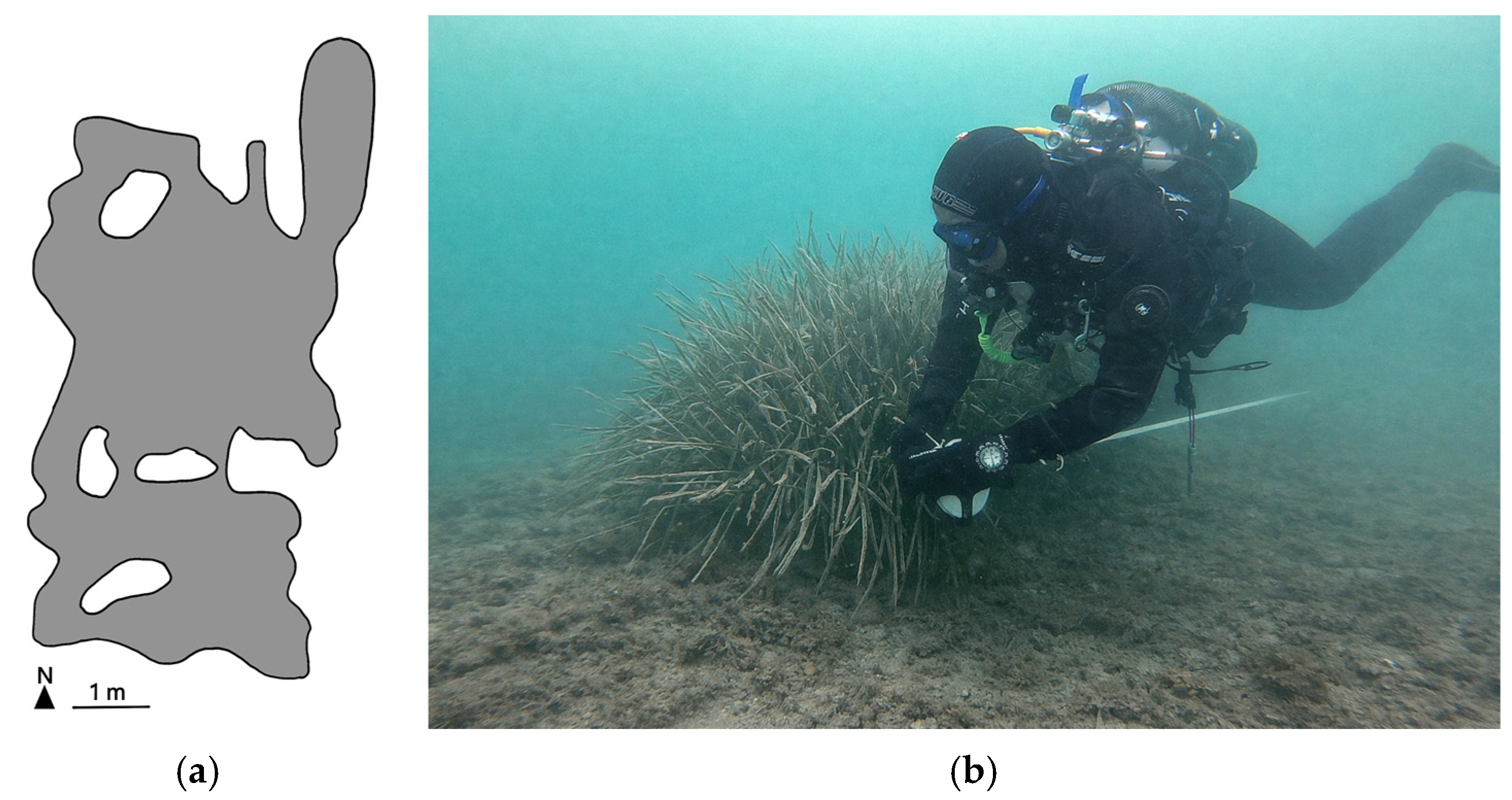
Figure 2. (a) Reconstructed perimeter of the transplanted Posidonia oceanica patch in 2019 derived from in situ measurements and (b) closed polygon method.
Jmse 14 00783 g002
Figure 3. Plastic anchoring grid from the 1996 transplantation, showing long-term persistence and integration within the substrate (photo taken during the 2019 survey).
Jmse 14 00783 g003
Figure 4. (a) Transplanted meadow area over time. The dotted line indicates temporal progression between survey years. (b) Shoot density (mean ± SD) of the transplanted Posidonia oceanica meadow in 1997, 2019 and 2024. The 1997 value is shown in lighter grey to indicate historical data reported in the original monitoring study.
Jmse 14 00783 g004
Disclaimer/Publisher’s Note: The statements, opinions and data contained in all publications are solely those of the individual author(s) and contributor(s) and not of MDPI and/or the editor(s). MDPI and/or the editor(s) disclaim responsibility for any injury to people or property resulting from any ideas, methods, instructions or products referred to in the content.