A Study on the Response of Monopile Foundations for Offshore Wind Turbines Using Numerical Analysis Methods

Abstract
1. Introduction
2. Simulation of Marine Environmental Loads
2.1. Equivalent Wind Loads
2.2. Equivalent Wave Loads
2.3. Current Loads
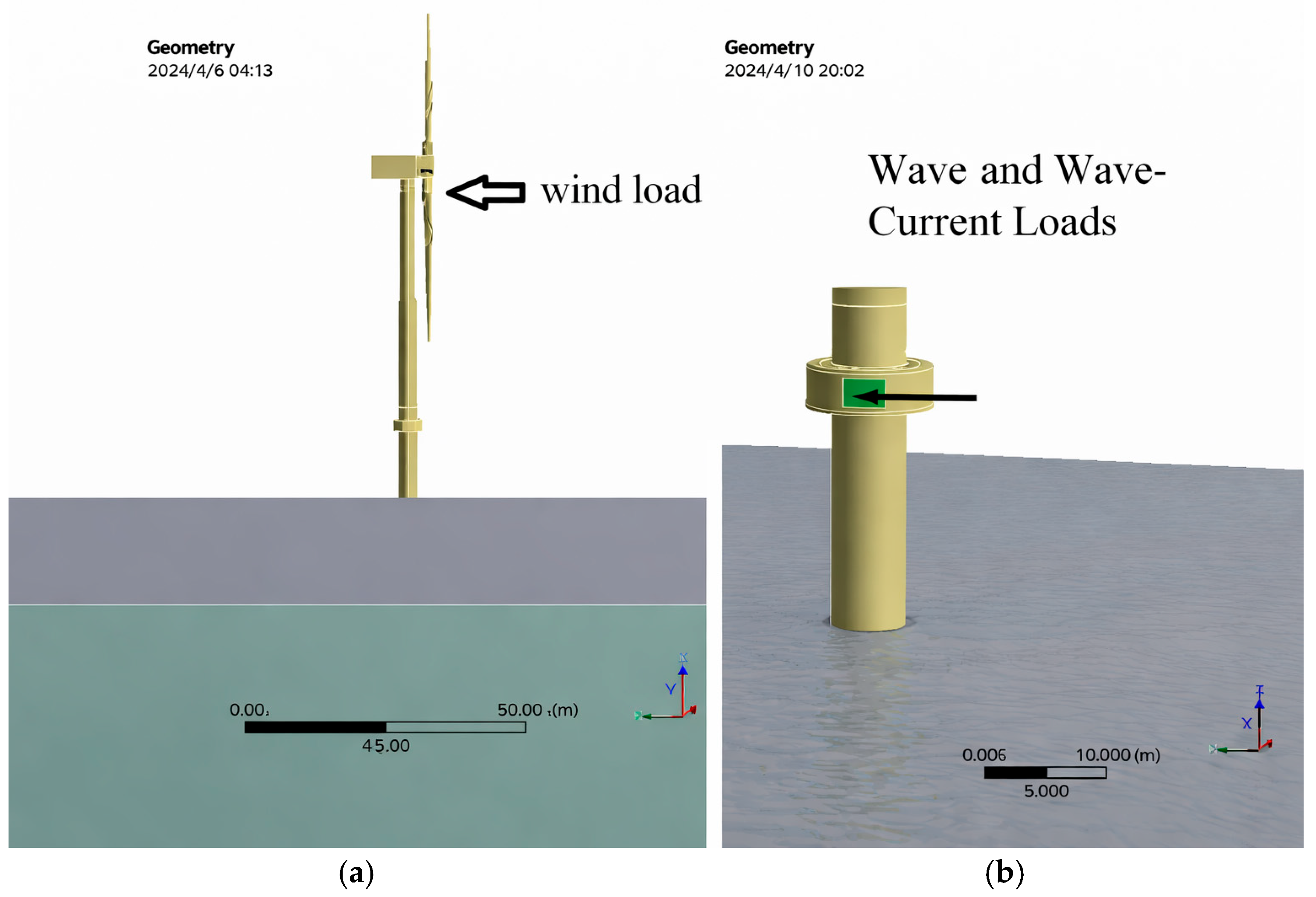
2.4. Application of Equivalent Loads in Complex Marine Environments
3. CFD-FEM Fluid-Structure Interaction Numerical Model
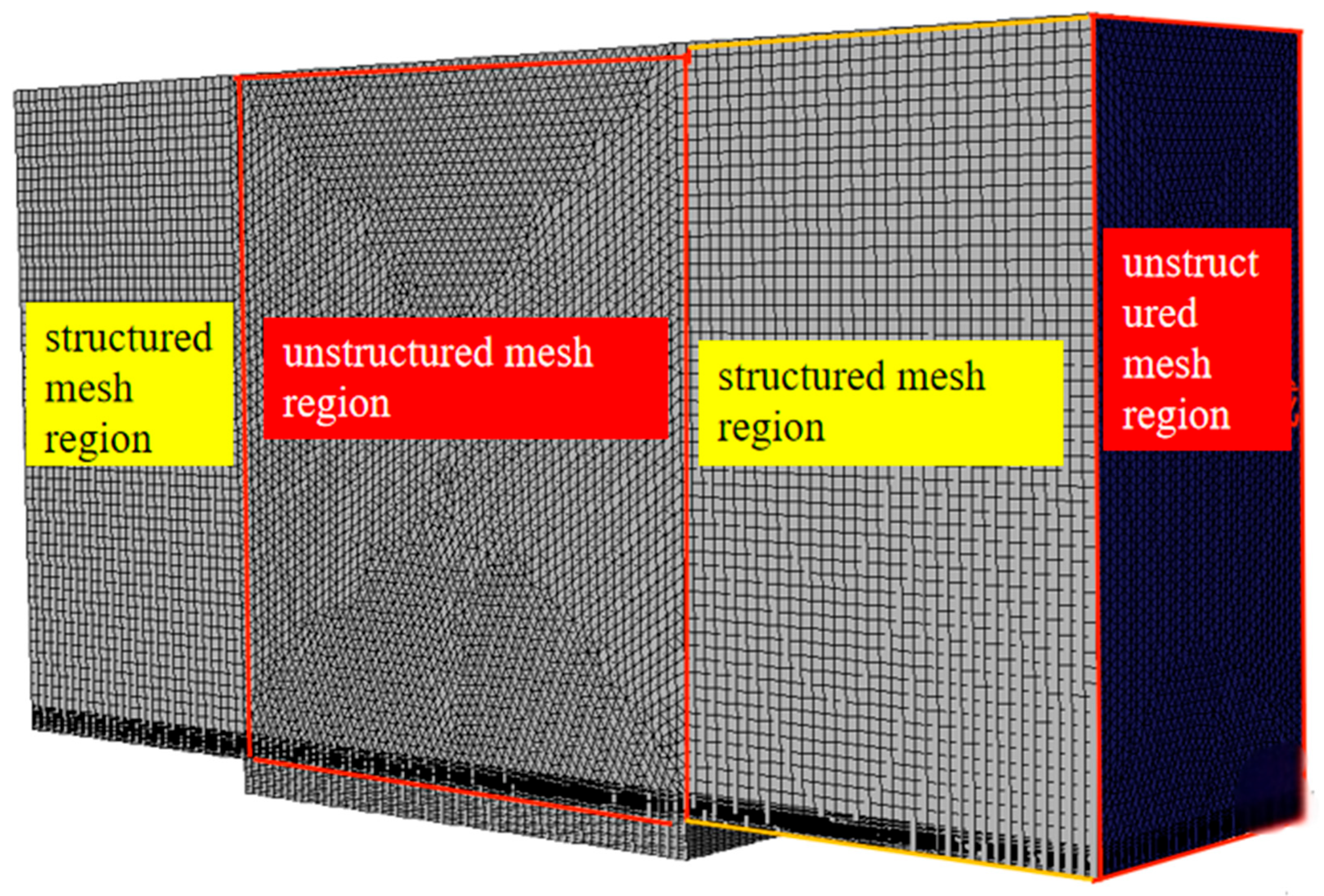
3.1. Establishment of Fluent Fluid Geometric Model
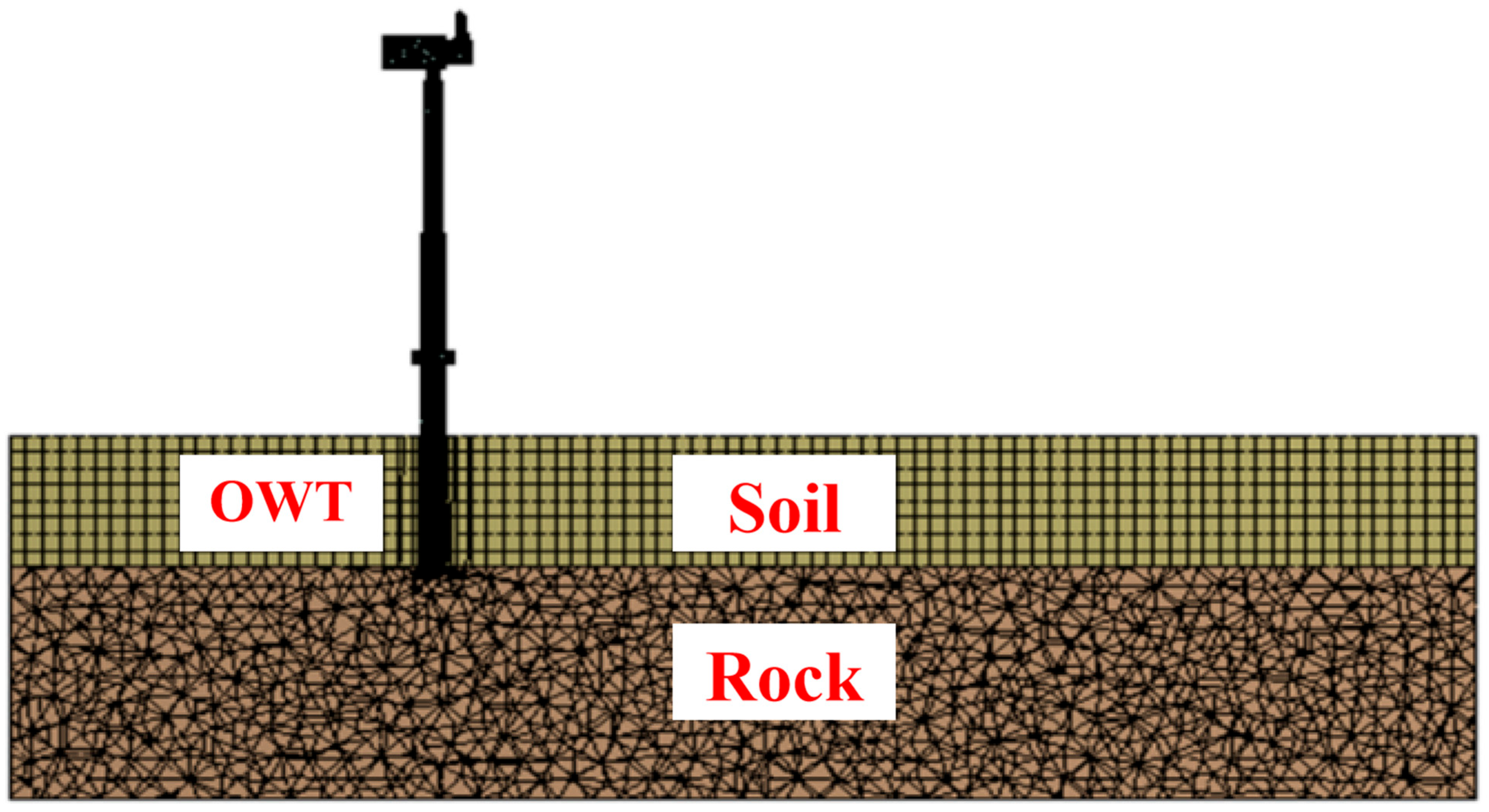
3.2. FEM Numerical Model
3.3. Two-Way Coupling Strategy
3.4. Scaling Laws and Similarity Considerations
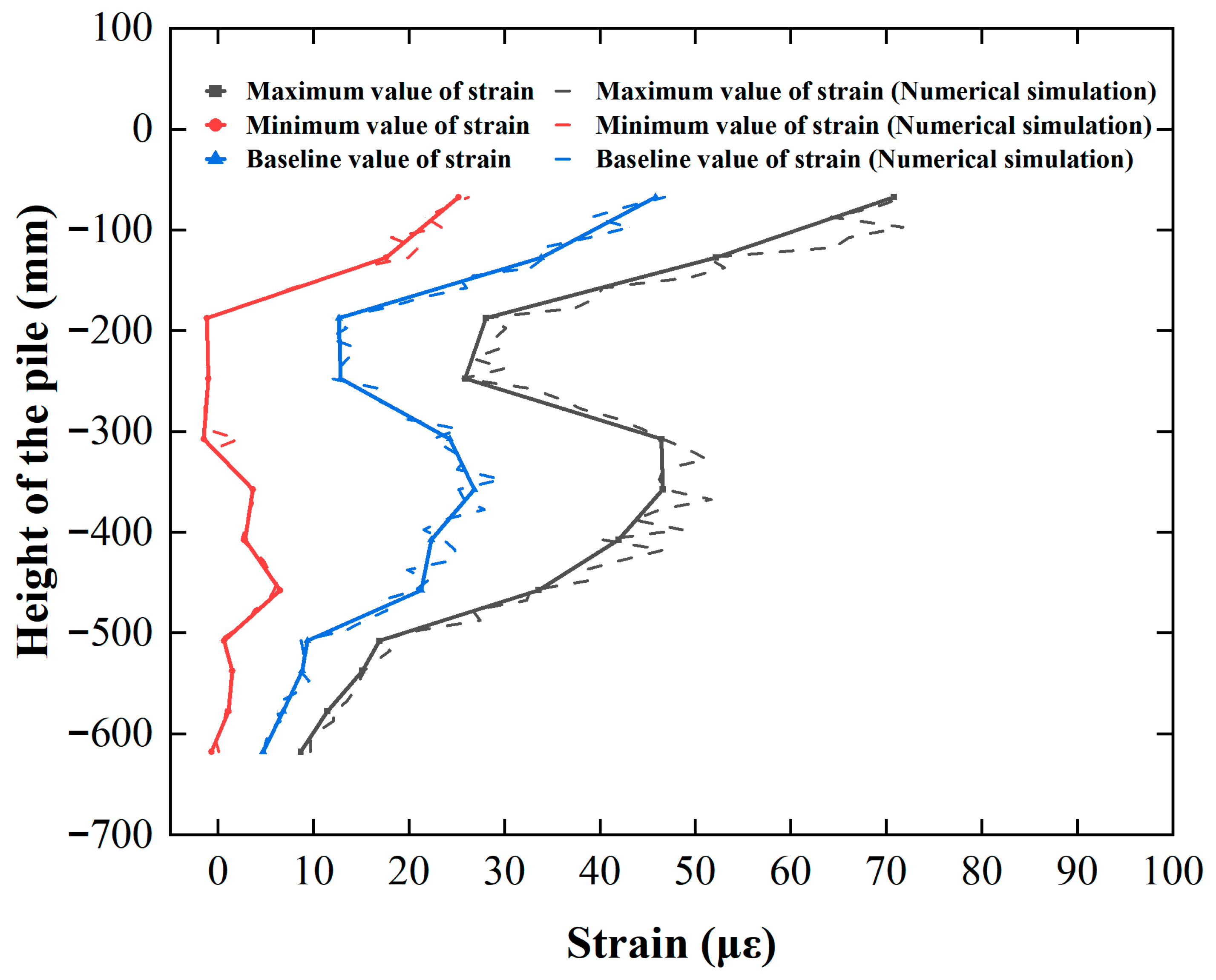
3.5. Verification of Numerical Simulation Calculations
4. Analysis of Wind Turbine Pile-Soil Interaction Under Fluid Loads
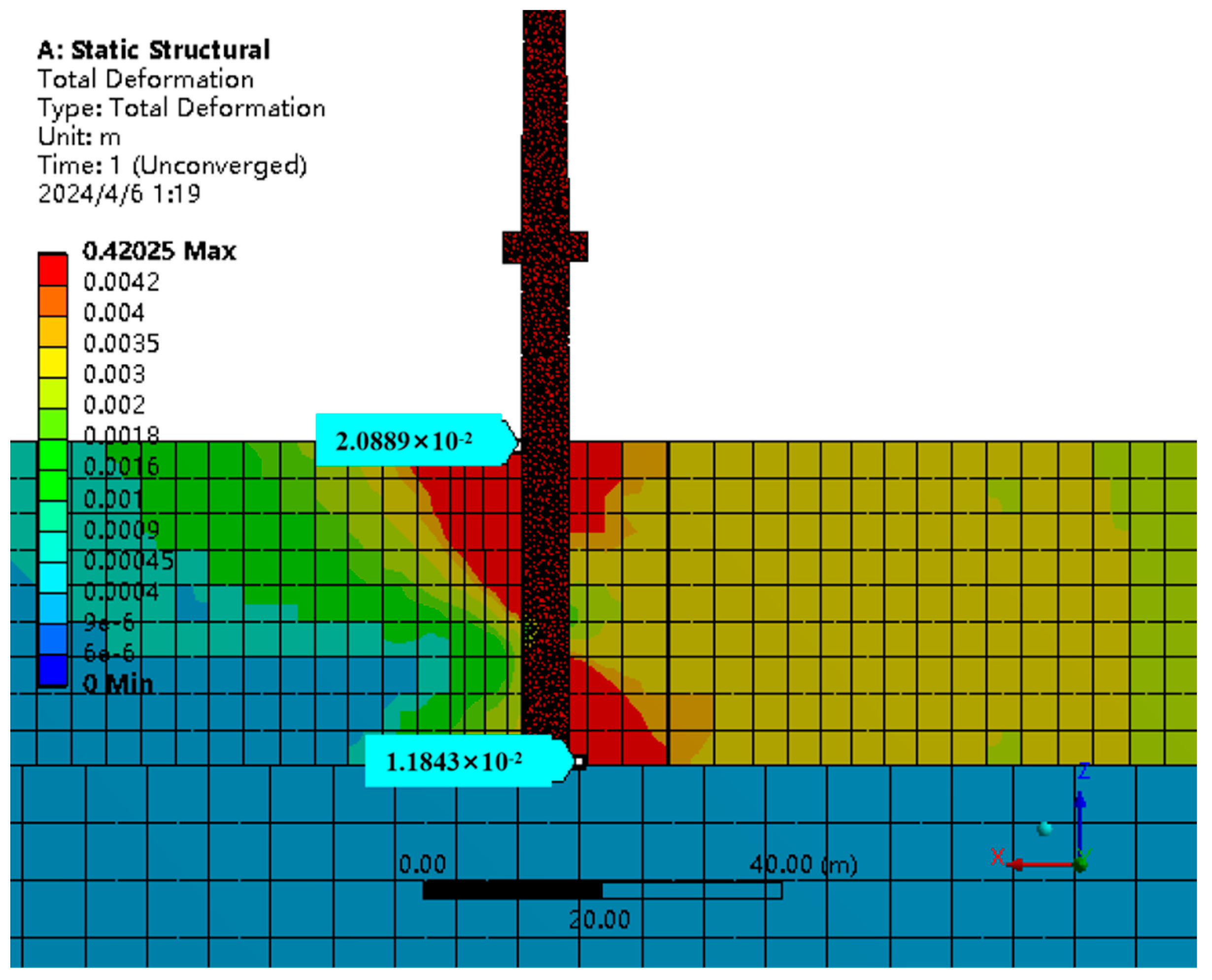
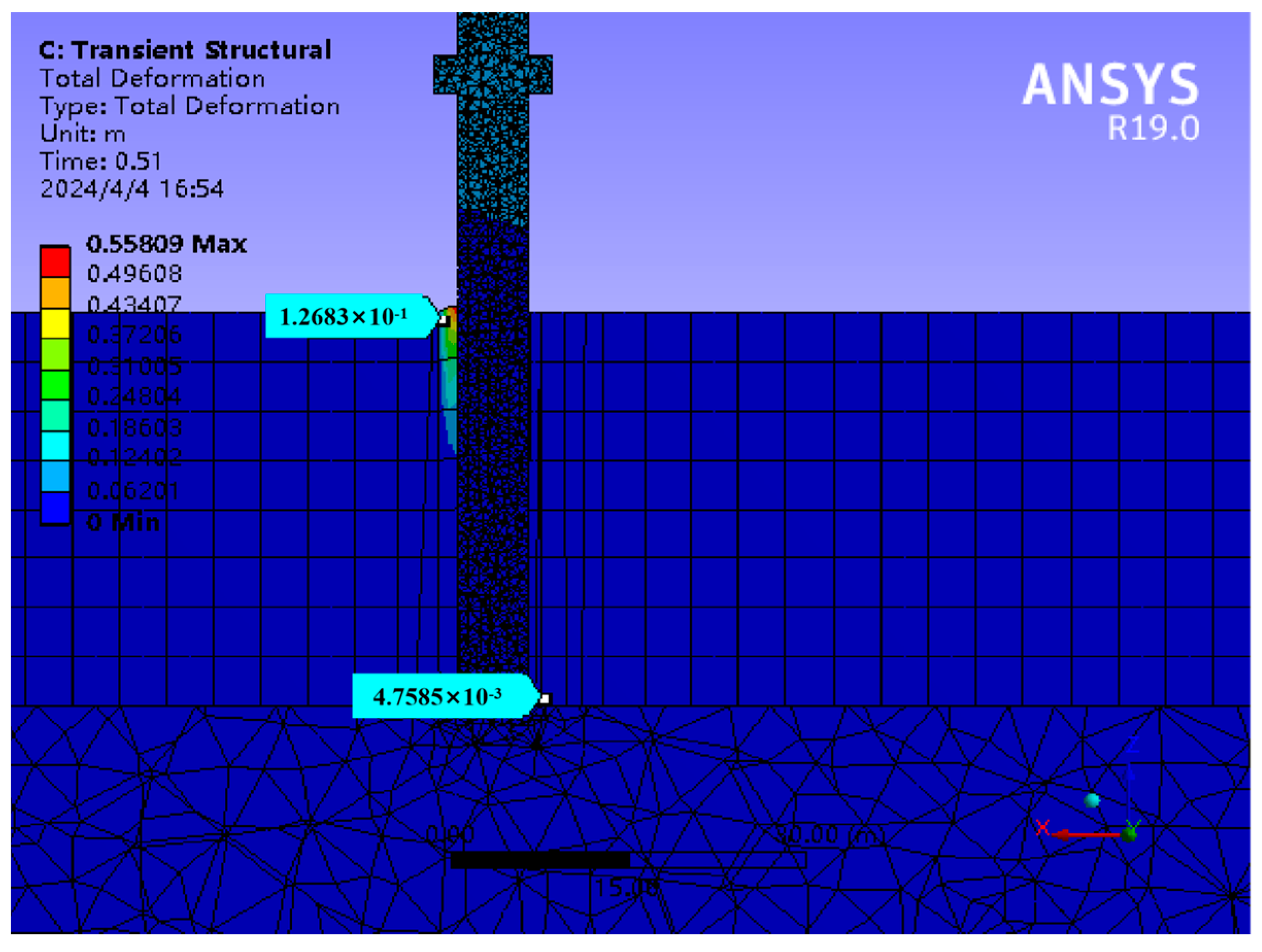
4.1. Displacement Characteristics of the Pile-Soil System
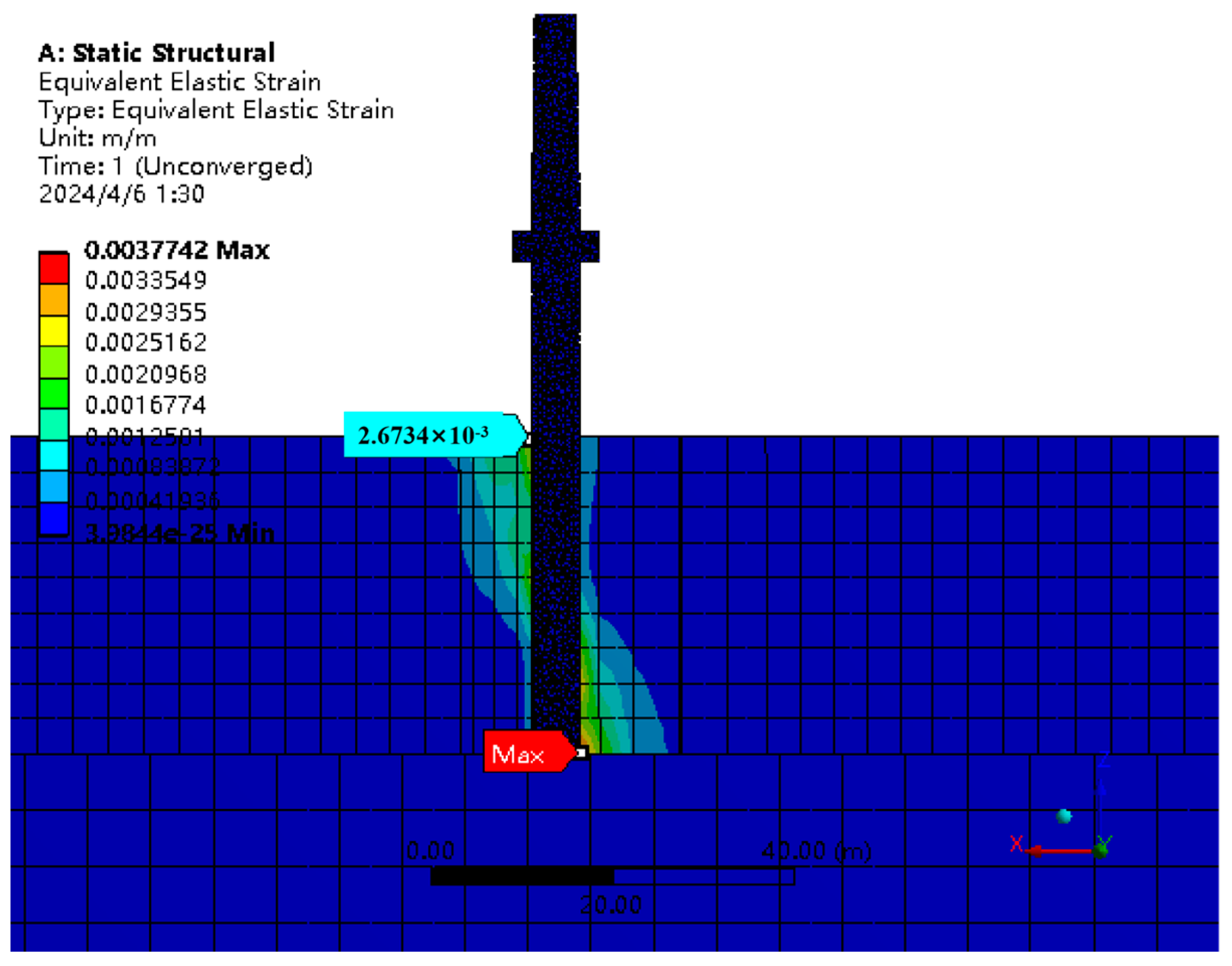
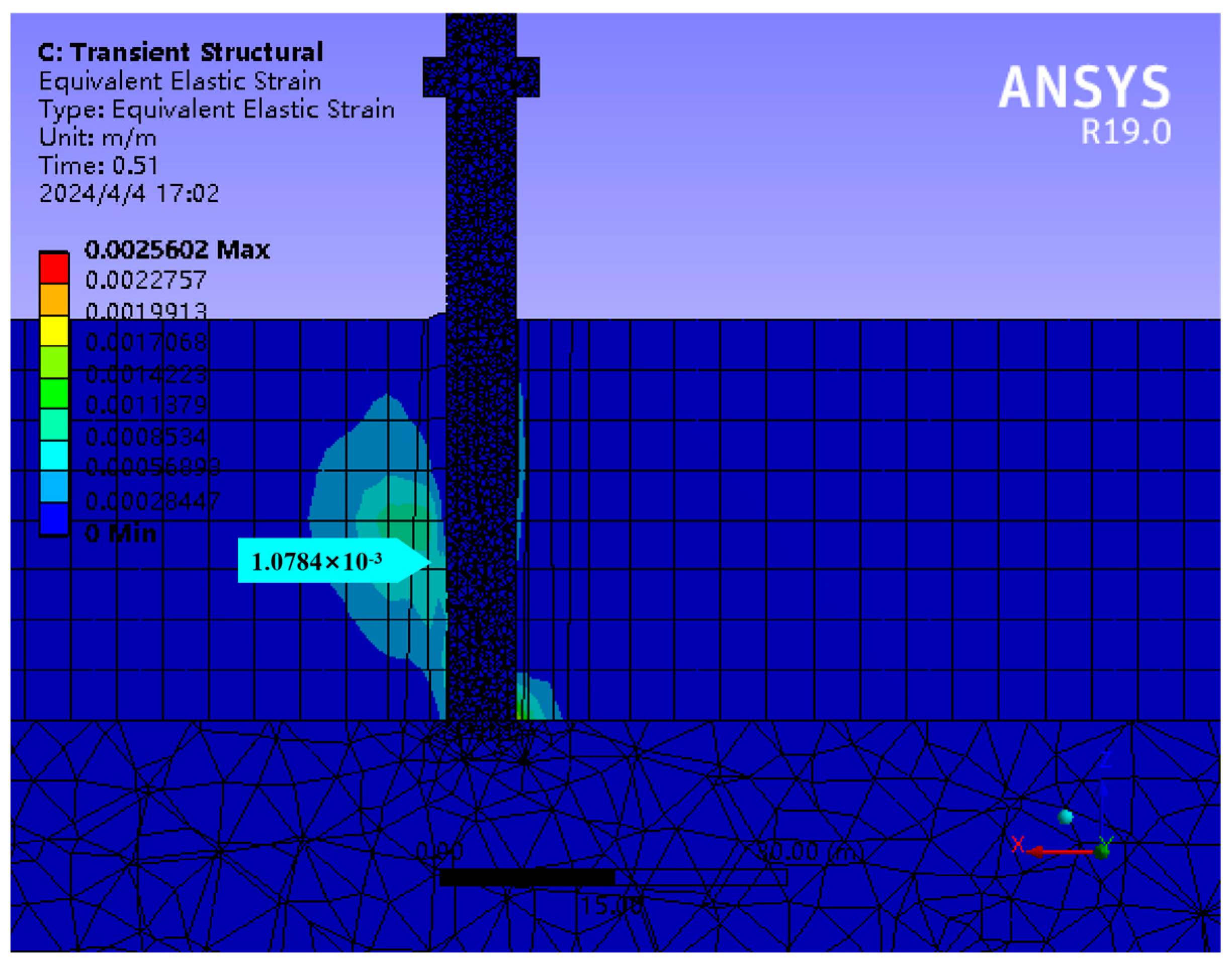
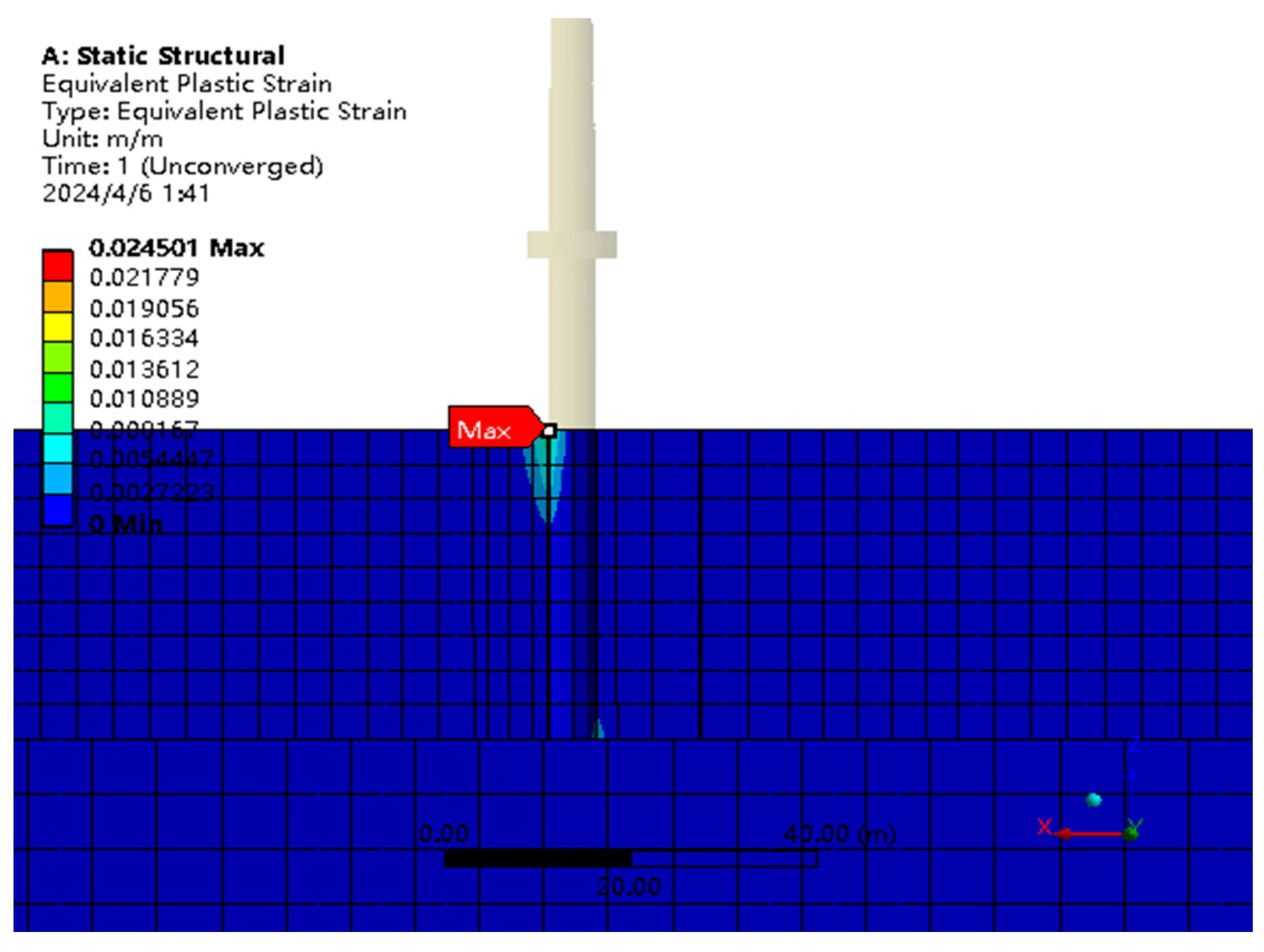
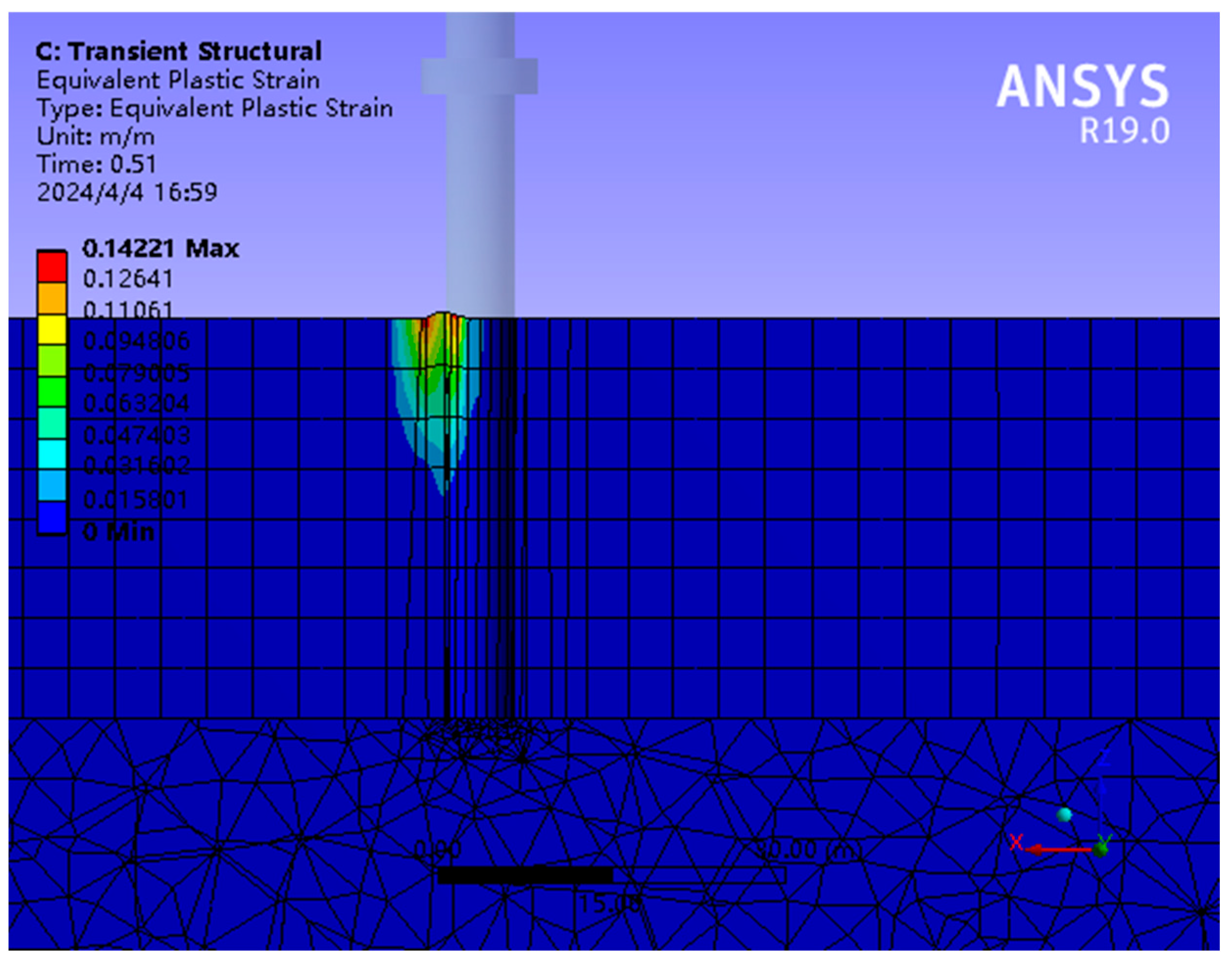
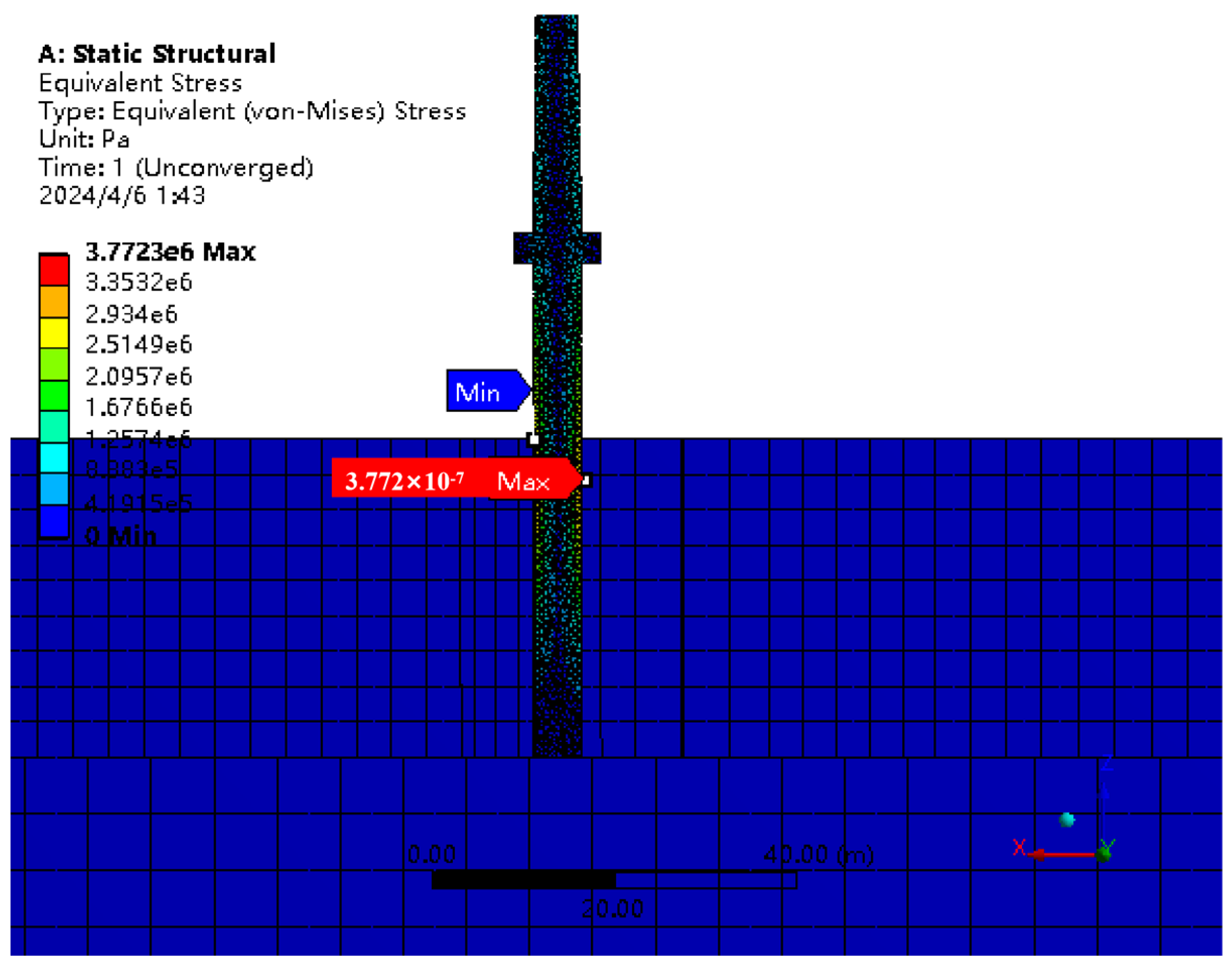
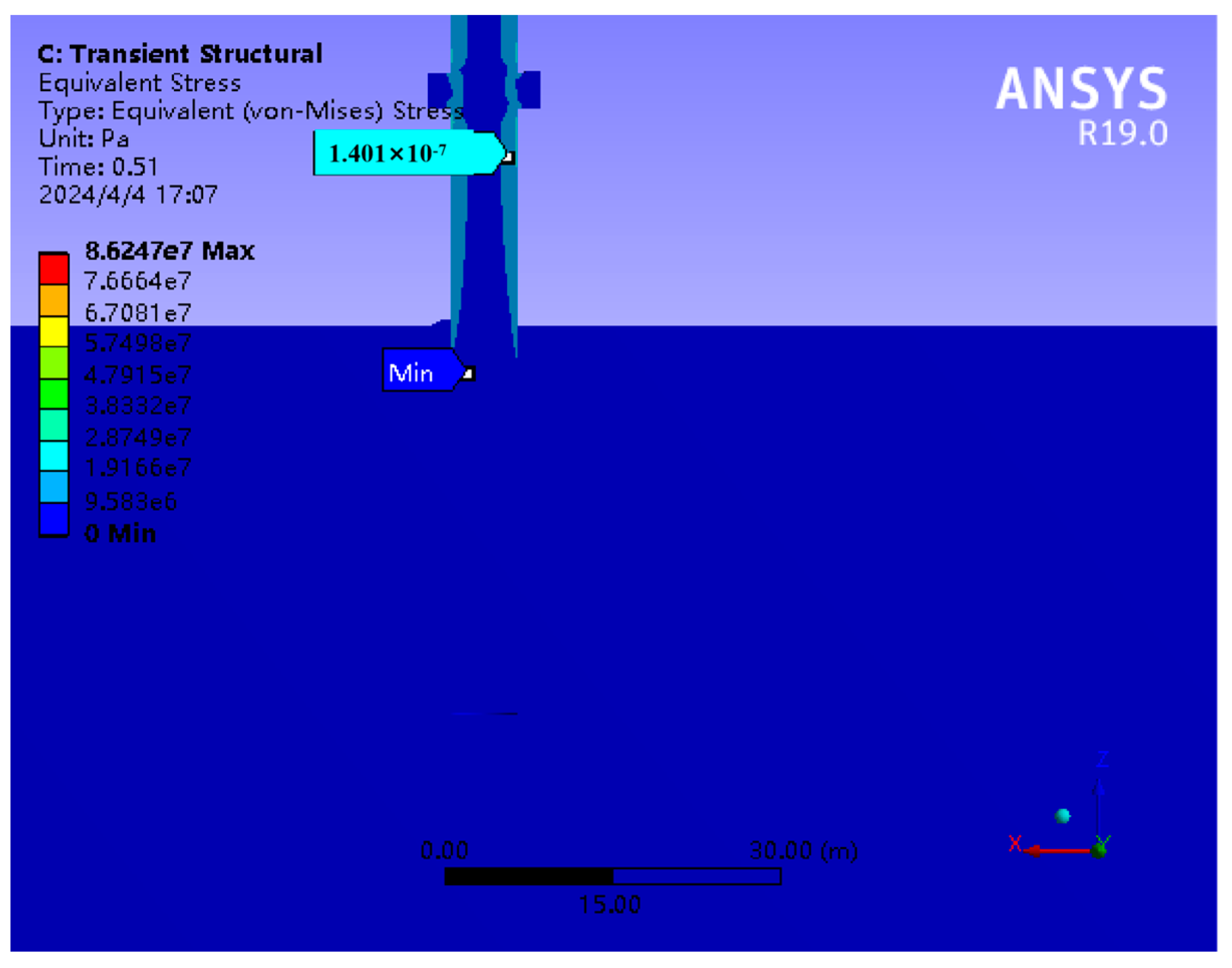
4.2. Stress-Strain Characteristics of the Wind Turbine Foundation
5. Conclusions
- The equivalent static method has systematic prediction deviations: Its simplified load application method leads to an 83.46% underestimation of displacement at the contact point of the seabed on the leeward side, a very high misjudgment deviation in the position and magnitude of the extreme Mises stress, and a serious underestimation of plastic strain by 5.6 times, which significantly affects the reliability of damage assessment.
- The fluid-structure interaction method reveals key physical mechanisms under shutdown conditions: The coupled multiphase flow produces locally intensified aerodynamic/hydrodynamic pressures around the tower–rotor region and the free surface, which increases the bending demand of the monopile foundation compared with the equivalent-static representation. In the seabed modeled by the Mohr–Coulomb criterion, the cyclic environmental loading is reflected by the accumulation of equivalent plastic strain and the expansion of the plastic zone. A pronounced plastic-strain concentration is observed around the leeward side at approximately 20 m below the seabed surface, which is consistent with the formation of a displacement concentration region in the pile–soil system.
- Engineering applications require targeted optimization of design: The equivalent static method can be used for preliminary screening, while extreme marine conditions represented by loading condition (e.g., H = 14 m, d = 30 m) should be checked using the two-way FSI framework to avoid non-conservative response estimation. Design reinforcement should be guided by the predicted critical stress locations and the displacement/rotation demand at the mudline. In addition, when the Mohr–Coulomb-based simulation indicates a persistent plastic-strain concentration zone on the leeward side, targeted ground-improvement measures (e.g., local grouting or densification) may be considered for that plastic zone to enhance lateral resistance and reduce long-term deformation risk.
Author Contributions
Funding
Data Availability Statement
Conflicts of Interest
References
- Tran, T.T.; Kim, D.H. A CFD study of coupled aerodynamic-hydrodynamic loads on a semisubmersible floating offshore wind turbine. Wind Energy 2017, 21, 70–85. [Google Scholar] [CrossRef]
- Barooni, M.; Ale Ali, N.; Ashuri, T. An open-source comprehensive numerical model for dynamic response and loads analysis of floating offshore wind turbines. Energy 2018, 154, 442–454. [Google Scholar] [CrossRef]
- Gücüyen, E. Analysis of offshore wind turbine tower under environmental loads. Ships Offshore Struct. 2016, 12, 513–520. [Google Scholar] [CrossRef]
- Zhang, L.-W.; Li, X. Dynamic analysis of a 5-MW tripod offshore wind turbine by considering fluid–structure interaction. China Ocean. Eng. 2017, 31, 559–566. [Google Scholar] [CrossRef]
- Zhao, Z.; Wang, W.; Shi, W.; Qi, S.; Li, X. Effect of floating substructure flexibility of large-volume 10 MW offshore wind turbine semi-submersible platforms on dynamic response. Ocean. Eng. 2022, 259, 111934. [Google Scholar] [CrossRef]
- Burmester, S.; Vaz, G.; Gueydon, S.; el Moctar, O. Investigation of a semi-submersible floating wind turbine in surge decay using CFD. Ship Technol. Res. 2018, 67, 2–14. [Google Scholar] [CrossRef]
- Chen, Z.; Wang, X.; Guo, Y.; Kang, S. Numerical analysis of unsteady aerodynamic performance of floating offshore wind turbine under platform surge and pitch motions. Renew. Energy 2021, 163, 1849–1870. [Google Scholar] [CrossRef]
- Gao, B.; Ye, G.; Zhang, Q.; Xie, Y.; Yan, B. Numerical simulation of suction bucket foundation response located in liquefiable sand under earthquakes. Ocean Eng. 2021, 235, 109394. [Google Scholar] [CrossRef]
- Shi, W.; Liu, Y.; Wang, W.; Cui, L.; Li, X. Numerical study of an ice-offshore wind turbine structure interaction with the pile-soil interaction under stochastic wind loads. Ocean Eng. 2023, 273, 113984. [Google Scholar] [CrossRef]
- Su, H.; Enrico, Z.; Zhang, J. A method for the risk analysis of energy supply in Integrated Energy Systems. In Proceedings of the 30th European Safety and Reliability Conference and the 15th Probabilistic Safety Assessment and Management Conference, Venice, Italy, 1–5 November 2020. [Google Scholar]
- Li, R.; Ma, J.; Zhang, X.; Shi, X.; Sun, W.; Lu, X. Modeling and analysis of relative fatigue life under 3D mixed lubrication in marine helical gears. Tribol. Int. 2025, 211, 110834. [Google Scholar] [CrossRef]
- Lin, H.; Luan, H.; Uzdin, A.M.; Zhang, S.; Wei, L.; Yang, L. A CFD-FEA coupled model for simulating dynamic response of offshore jacket platform under earthquake considering wind, wave, current and aftershock loads. Ocean Eng. 2024, 300, 117481. [Google Scholar] [CrossRef]
- Cheng, P.; Huang, Y.; Wan, D. A numerical model for fully coupled aero-hydrodynamic analysis of floating offshore wind turbine. Ocean Eng. 2019, 173, 183–196. [Google Scholar] [CrossRef]
- Shi, W.; Jiang, J.; Sun, K.; Ju, Q. Aerodynamic performance of semi-submersible floating wind turbine under pitch motion. Sustain. Energy Technol. Assess. 2021, 48, 101556. [Google Scholar] [CrossRef]
- Xie, S.-Y.; Gao, J.; Li, Y.-R.; Jiang, S.-X.; Zhang, C.-L.; He, J. Aero-Hydro-Elastic-Servo Modeling and Dynamic Response Analysis of A Monopile Offshore Wind Turbine Under Different Operating Scenarios. China Ocean Eng. 2024, 38, 379–393. [Google Scholar] [CrossRef]
- Zhang, P.; Li, C.; Gu, J.; Hu, Y.; Li, Y.; Tang, Y. Development and validation of a fully coupled dynamic analysis tool for an articulated foundation offshore wind turbine. Ocean Eng. 2025, 324, 120677. [Google Scholar] [CrossRef]
- Lee, J.H.; Kim, J.K. Dynamic response analysis of a floating offshore structure subjected to the hydrodynamic pressures induced from seaquakes. Ocean Eng. 2015, 101, 25–39. [Google Scholar] [CrossRef]
- Yu, D.; Ye, J.; Yin, C. Dynamics of offshore wind turbine and its seabed foundation under combined wind-wave loading. Ocean Eng. 2023, 286, 115624. [Google Scholar] [CrossRef]
- He, K.; Ye, J. Dynamics of offshore wind turbine-seabed foundation under hydrodynamic and aerodynamic loads: A coupled numerical way. Renew. Energy 2023, 202, 453–469. [Google Scholar] [CrossRef]
- Liu, S.; Xin, Z.; Wang, L.; Xu, Y.; Cai, Z. Fluid–structure interaction simulation of the effect of static yaw control on the aerodynamic responses and wake characteristics of floating offshore wind turbines. Energy 2025, 330, 136589. [Google Scholar] [CrossRef]
- Zhao, R.; Zhao, W.; Ma, Y.; Tai, B.; Dong, G. Hydrodynamic performance of a monopile offshore wind turbine in extreme wave groups. Ocean Eng. 2024, 312, 119328. [Google Scholar] [CrossRef]
- Seo, J.; Schaffer, W.; Head, M.; Shokouhian, M.; Choi, E. Integrated FEM and CFD Simulation for Offshore Wind Turbine Structural Response. Int. J. Steel Struct. 2019, 19, 1112–1124. [Google Scholar] [CrossRef]
- Huang, S.; Huang, M.; Lyu, Y. Seismic performance analysis of a wind turbine with a monopile foundation affected by sea ice based on a simple numerical method. Eng. Appl. Comput. Fluid Mech. 2021, 15, 1113–1133. [Google Scholar] [CrossRef]
- Pang, J.; Ge, J.; Tao, Y.; Zhou, Q.; Zhou, Z. Simulating cross-scale flow dynamics around offshore monopile foundations with a GFD-CFD coupled model. Ocean Eng. 2024, 312, 119200. [Google Scholar] [CrossRef]
- Elmas, F.; Algin, H.M. Soil-monopile interaction assessment of offshore wind turbines with comprehensive subsurface modelling to earthquake and environmental loads of wind and wave. Soil Dyn. Earthq. Eng. 2025, 192, 109293. [Google Scholar] [CrossRef]
- Li, F.; Fu, J.; Chen, J.; Hu, D. Two-way coupling fluid–structure interaction analysis on dynamic response of offshore wind turbine. Mar. Georesour. Geotechnol. 2024, 42, 1677–1686. [Google Scholar] [CrossRef]
- Zhou, H.; Liu, Z.; Shao, J.; Shen, W.; Essaieb, H. Effects of Stress Direction and Magnitude on Strength and Failure of Weakly Anisotropic Sandstone Under True Triaxial Compression. Rock Mech. Rock Eng. 2026, 59, 3213–3234. [Google Scholar] [CrossRef]
- Zhao, Z.; Wang, J.; Jim, S.; Luo, H.; Yu, D. Probabilistic Analysis of Pile-Reinforced Slopes Considering Anisotropic Spatial Soil Properties. Int. J. Numer. Anal. Methods Geomech. 2026, 50, 1309–1327. [Google Scholar] [CrossRef]
- Wu, M.; Liu, Z.; Wang, H.; Zhou, H.; Wang, X. Cyclic fatigue effect on mechanical property change of hot dry rock in wellbores of enhanced geothermal systems. Int. J. Rock Mech. Min. Sci. 2025, 195, 106303. [Google Scholar] [CrossRef]
- DNV-ST-0437-2016(A2021); Loads and Site Conditions for Wind Turbines. DNV: Oslo, Norway, 2021.
- Arany, L.; Bhattacharya, S.; Macdonald, J.; Hogan, S.J. Simplified critical mudline bending moment spectra of offshore wind turbine support structures. Wind Energy 2015, 18, 2171–2197. [Google Scholar] [CrossRef]
- Morison, J.R.; O’brien, M.P.; Johnson, J.W.; Schaaf, S.A. The force exerted by surface waves on piles. J. Pet. Technol. 1950, 2, 149–154. [Google Scholar] [CrossRef]
- Gebreslassie, M.G.; Tabor, G.R.; Belmont, M.R. Numerical simulation of a new type of cross flow tidal turbine using OpenFOAM—Part II: Investigation of turbine-to-turbine interaction. Renew. Energy 2013, 50, 1005–1013. [Google Scholar] [CrossRef]
- Dai, S.; Yu, X.; Han, B.; Zhang, Z.; He, B.; Lin, M. Failure criterion of submarine completely weathered granite under cyclic loads in rock-based sea area. Ocean Eng. 2024, 313, 119422. [Google Scholar] [CrossRef]
- Aksoy, H.S.; Taher, N.R.; Ozpolat, A.; Gör, M.; Edan, O.M. An Experimental Study on Estimation of the Lateral Earth Pressure Coefficient (K) from Shaft Friction Resistance of Model Piles Under Axial Load. Appl. Sci. 2023, 13, 9355. [Google Scholar] [CrossRef]
- Dhaifullah, M.H.; Jifaturrohman, M.I.; Putranto, T.; Setyawan, D.; Utama, I.K.A.P.; Huang, L. Enhancing Pure Oscillatory Response Motion Performance: Innovative Designs for Semi-Submersible and Catamaran Floating Photovoltaic Systems (FPVs) in Various Sea-State Conditions. In Proceedings of the 2024 International Conference on Sustainable Energy: Energy Transition and Net-Zero Climate Future (ICUE), Pattaya City, Thailand, 21–23 October 2024; pp. 1–6. [Google Scholar]
- Jifaturrohman, M.I.; Utama, I.K.A.P.; Putranto, T.; Setyawan, D.; Huang, L. A Study into the Effect of Hull Configuration on the Performance of Floating Solar PV Structure. J. Adv. Res. Fluid Mech. Therm. Sci. 2024, 124, 124–141. [Google Scholar] [CrossRef]


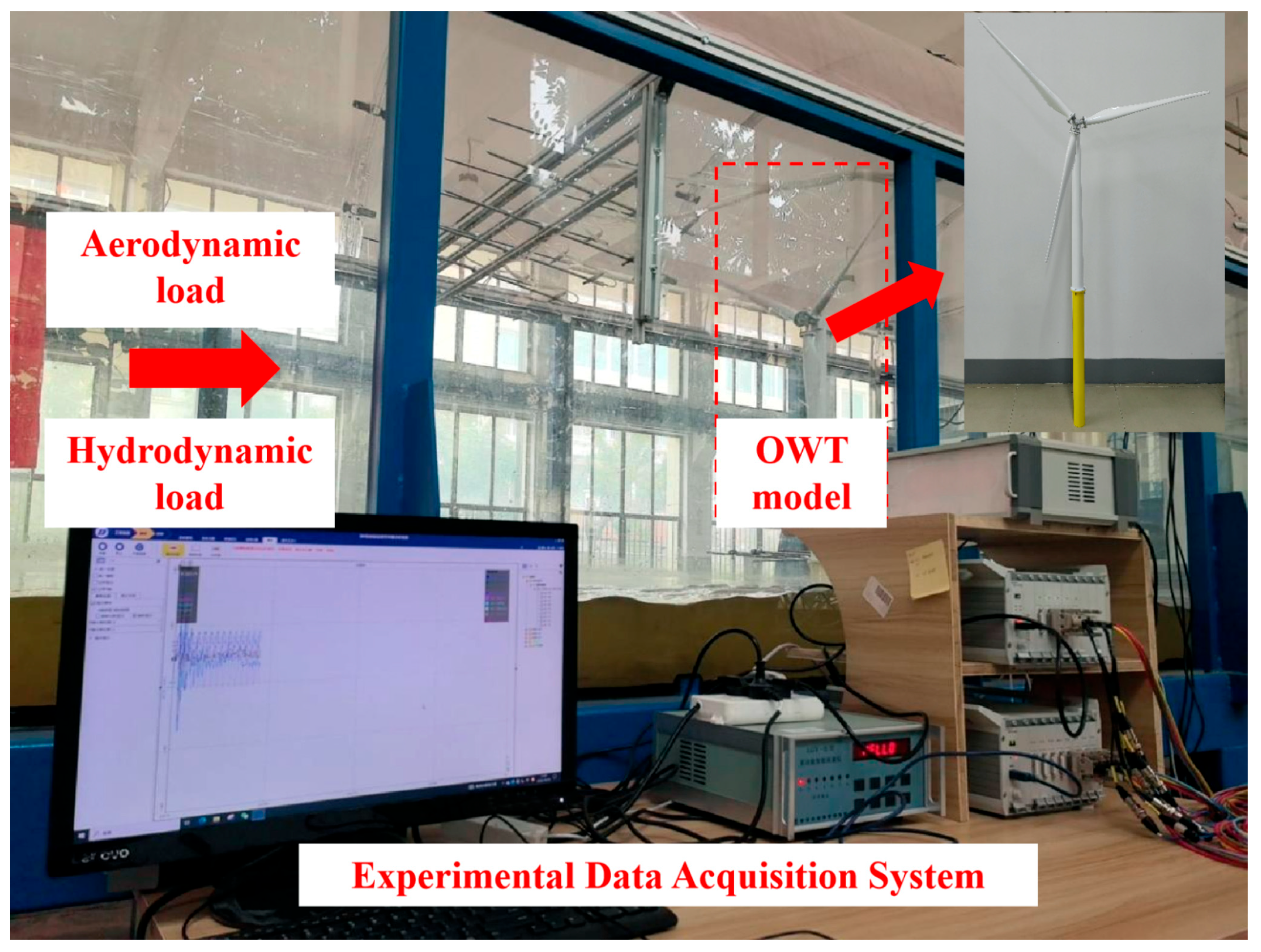
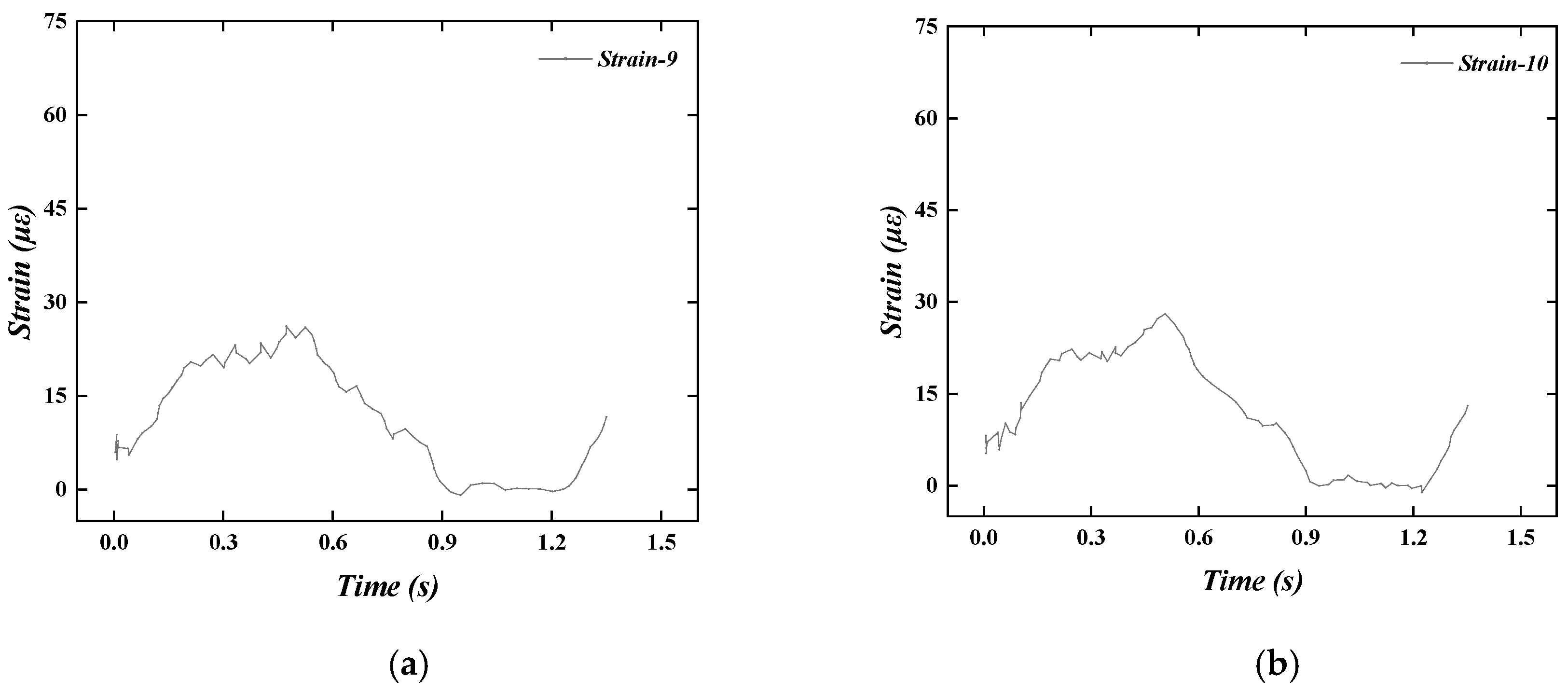


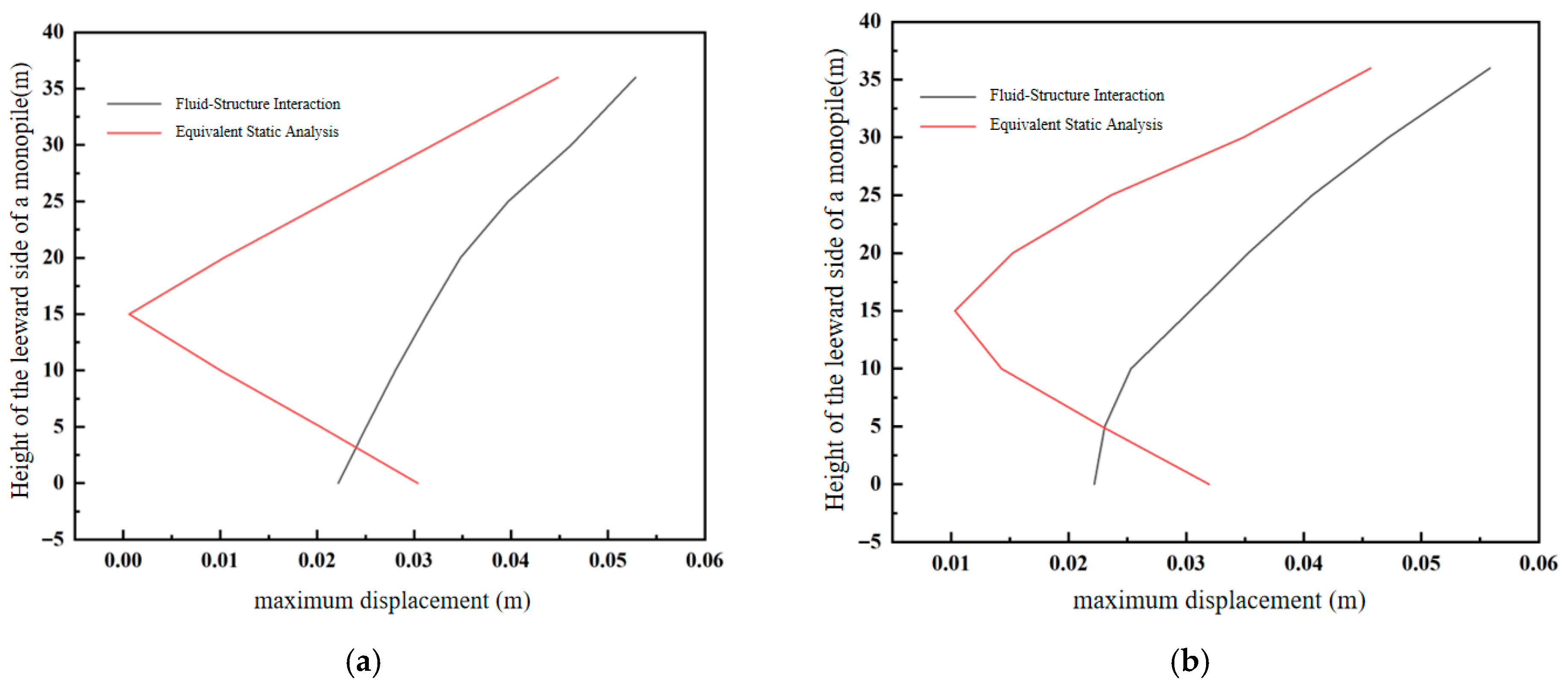



| Wind Turbine Control | Wind Turbine Rotational Speed (rad/min) | Ocean Current (m/s) | Wind Speed (m/s) | Wave Height (m) |
|---|---|---|---|---|
| shutdown | 0 | 1.5 | 45 | 14 |
| Density kg/m3 | Young’s Modulus MPa | Poisson’s Ratio | Shear Modulus Pa | Bulk Modulus Pa | Internal Friction Angle | Cohesion Pa | |
|---|---|---|---|---|---|---|---|
| Soil layer | 1500 | 30 | 0.29 | 1.1719 × 10⁷ | 2.2727 × 10⁷ | 24.5º | 50,000 |
| Rock layer | 2650 | 16,000 | 0.30 | 6.1537 × 10⁹ | 1.3333 × 10¹⁰ | 50º | 3 × 10⁷ |
| Monopile | 7850 | 210,000 | 0.30 | 1.6700 × 10¹¹ |
| Blade | Length: 61.5 m |
|---|---|
| Tower Cylinder | Height: 77.60 m |
| Pile diameter: 3.87 m–6.00 m | |
| Wall thickness: 0.0247 m–0.0351 m | |
| Monopile | Total length: 66.00 m |
| Embedded depth in soil: 36.00 m | |
| Pile diameter: 6.00 m | |
| Wall thickness: 0.06 m |
| Parameter | Adopted Value | Change Amount | Value | Variation |
|---|---|---|---|---|
| Soil Layer Mesh Size | 4 m | ×0.5 | 0.5563 | 1.13% |
| ×0.75 | 0.5468 | 0.16% | ||
| ×1.5 | 0.5402 | −1.42% | ||
| ×2 | 0.5366 | −2.54% |
Disclaimer/Publisher’s Note: The statements, opinions and data contained in all publications are solely those of the individual author(s) and contributor(s) and not of MDPI and/or the editor(s). MDPI and/or the editor(s) disclaim responsibility for any injury to people or property resulting from any ideas, methods, instructions or products referred to in the content. |
© 2026 by the authors. Licensee MDPI, Basel, Switzerland. This article is an open access article distributed under the terms and conditions of the Creative Commons Attribution (CC BY) license.
Share and Cite
Wang, Z.; Liu, D.; Zhao, S.; Huang, N.; Han, B.; Kong, X. A Study on the Response of Monopile Foundations for Offshore Wind Turbines Using Numerical Analysis Methods. J. Mar. Sci. Eng. 2026, 14, 691. https://doi.org/10.3390/jmse14080691
Wang Z, Liu D, Zhao S, Huang N, Han B, Kong X. A Study on the Response of Monopile Foundations for Offshore Wind Turbines Using Numerical Analysis Methods. Journal of Marine Science and Engineering. 2026; 14(8):691. https://doi.org/10.3390/jmse14080691
Chicago/Turabian StyleWang, Zhijun, Di Liu, Shujie Zhao, Nielei Huang, Bo Han, and Xiangyu Kong. 2026. "A Study on the Response of Monopile Foundations for Offshore Wind Turbines Using Numerical Analysis Methods" Journal of Marine Science and Engineering 14, no. 8: 691. https://doi.org/10.3390/jmse14080691
APA StyleWang, Z., Liu, D., Zhao, S., Huang, N., Han, B., & Kong, X. (2026). A Study on the Response of Monopile Foundations for Offshore Wind Turbines Using Numerical Analysis Methods. Journal of Marine Science and Engineering, 14(8), 691. https://doi.org/10.3390/jmse14080691