Hybrid Offshore Wind Farm Wake Optimization with Multi-Type Wind Turbines

 ,
,  and
and
Abstract
1. Introduction
2. Model of Offshore Wind Farms with Multi-Type Wind Turbines
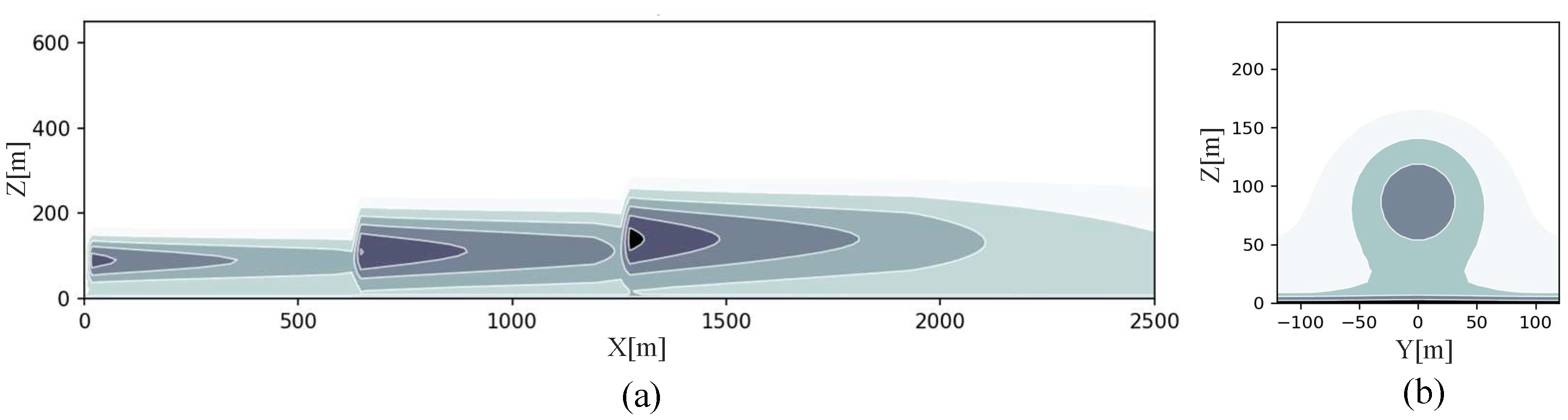
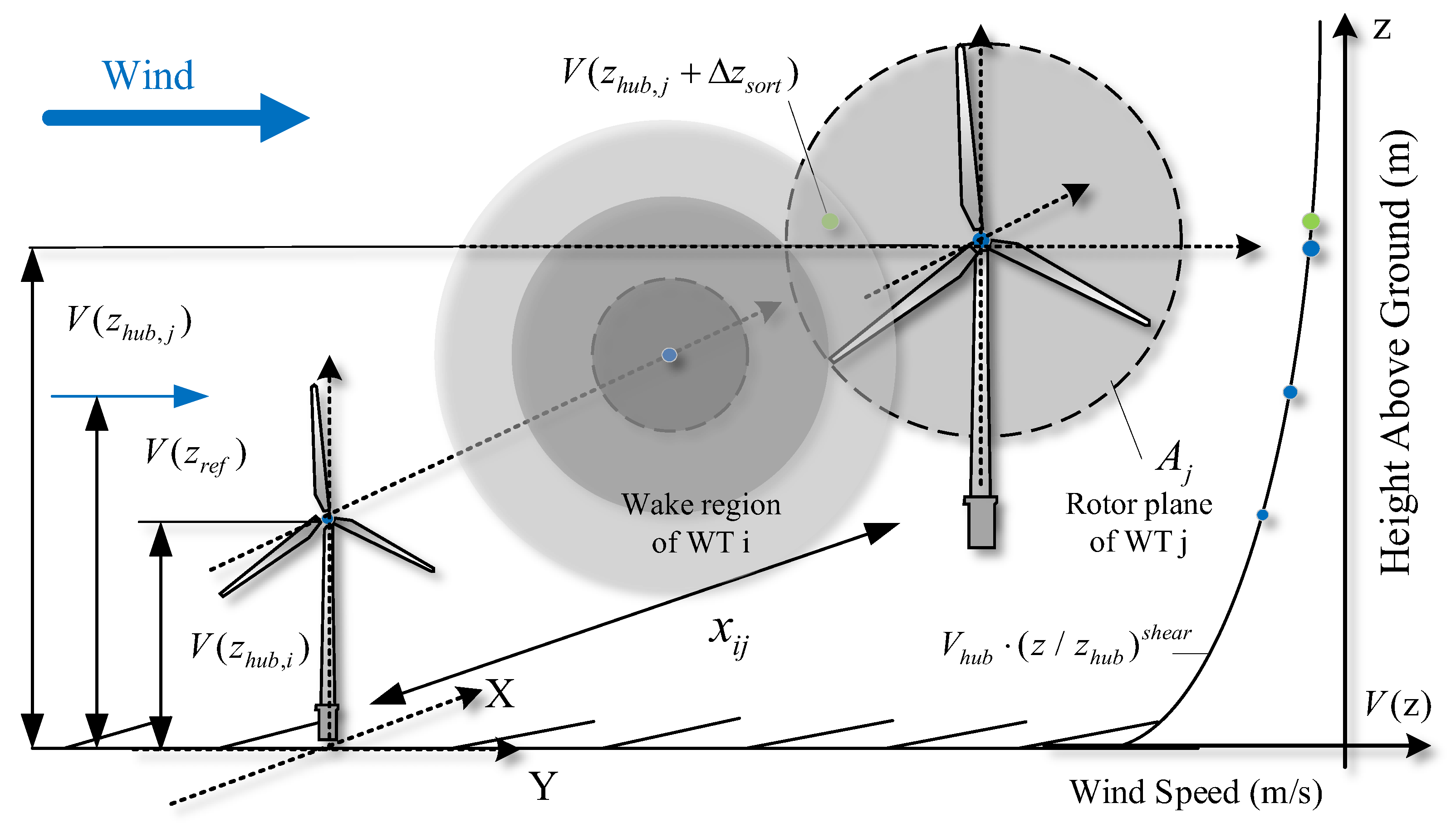
2.1. Wind Shear Calculation for Fixed Wind Turbines with Different Hub Heights
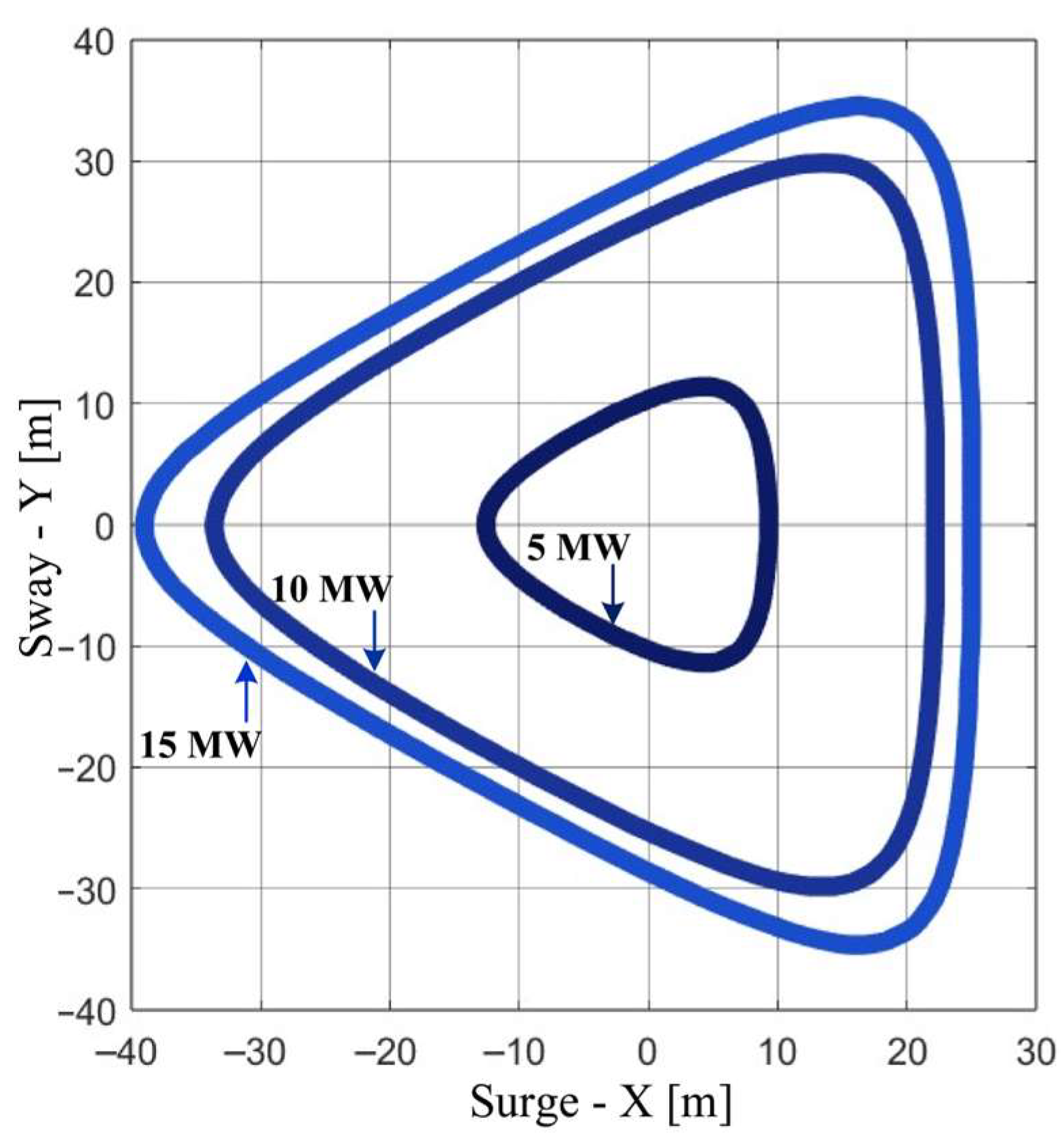
2.2. Floating Reposition for Floating Wind Turbines with Different Motion Ranges
3. Wake Optimization for Hybrid Offshore Wind Farms
3.1. Description of Power Optimization Problem for Hybrid Offshore Wind Farms
3.2. The Gaussian Curl Hybrid Wake Model for Multi-Type Wind Turbines
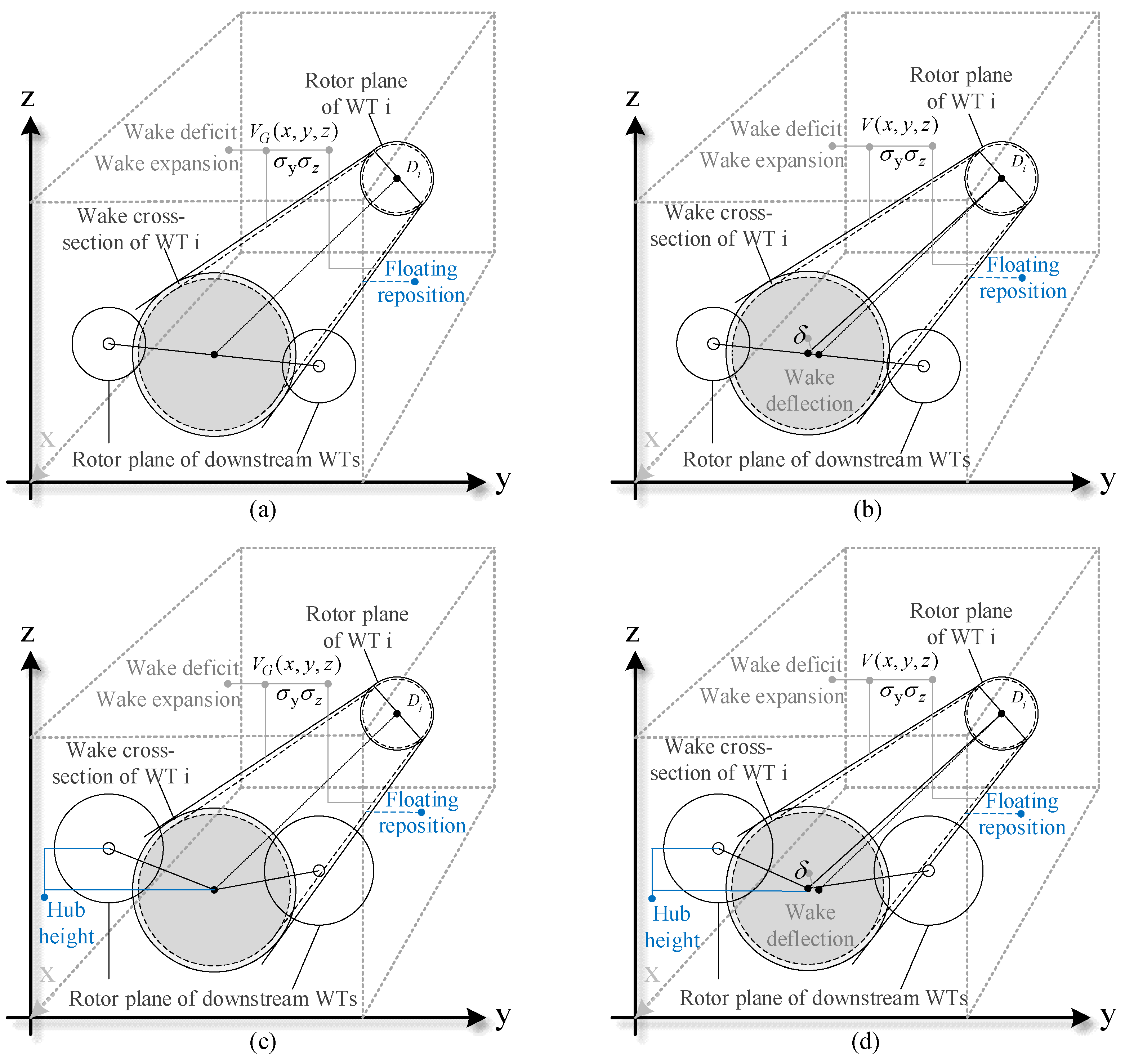
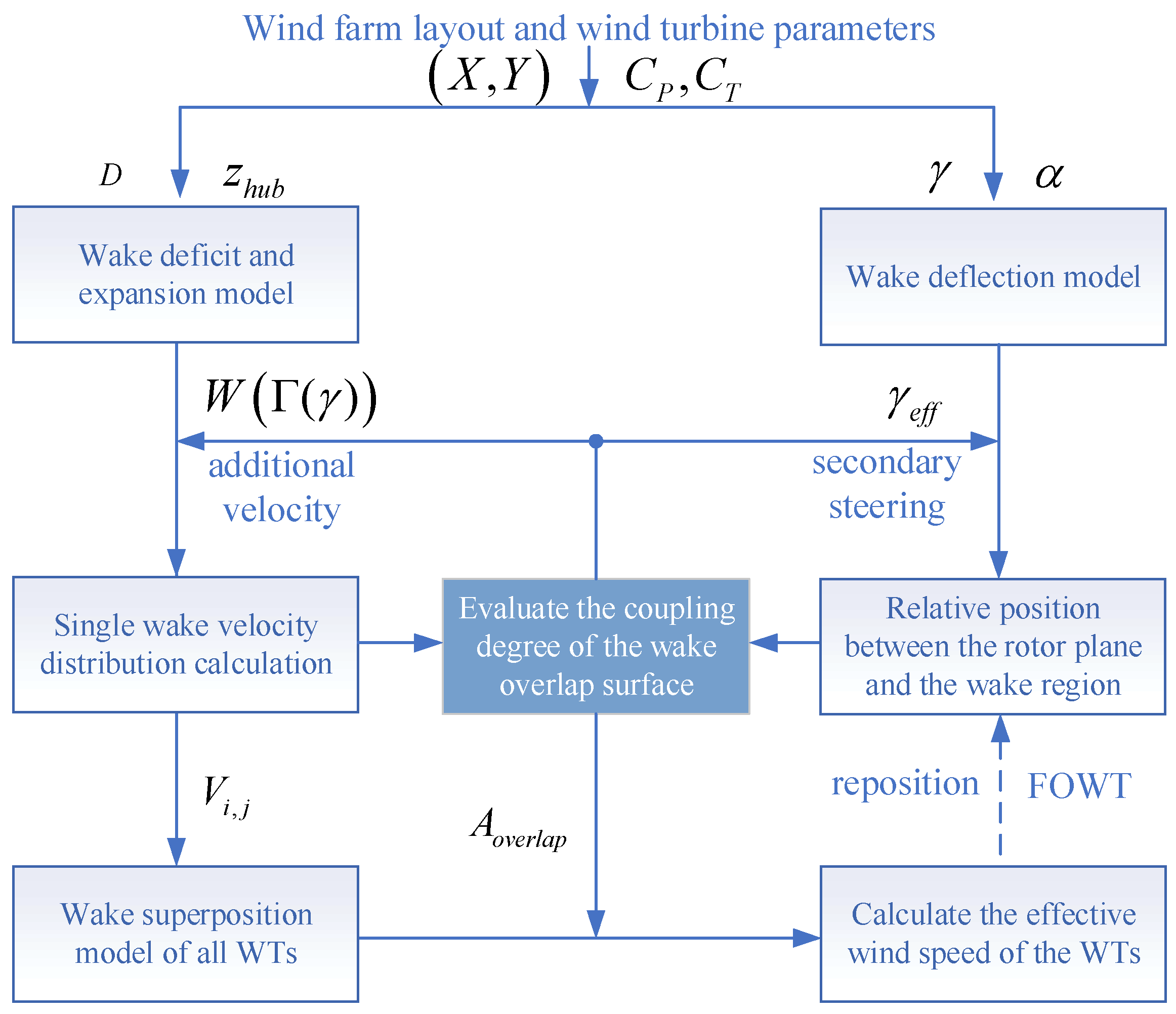
3.3. Wake Regulation Considering Hub Height and Platform Motion
4. Case Study
4.1. Case Design and Parameter Description
4.2. Case A: Large-Scale Fixed Wind Farm with 175 Wind Turbines
4.3. Case B: Regular Array Floating Wind Farm with 5 × 5 Wind Turbines
5. Conclusions
- (1)
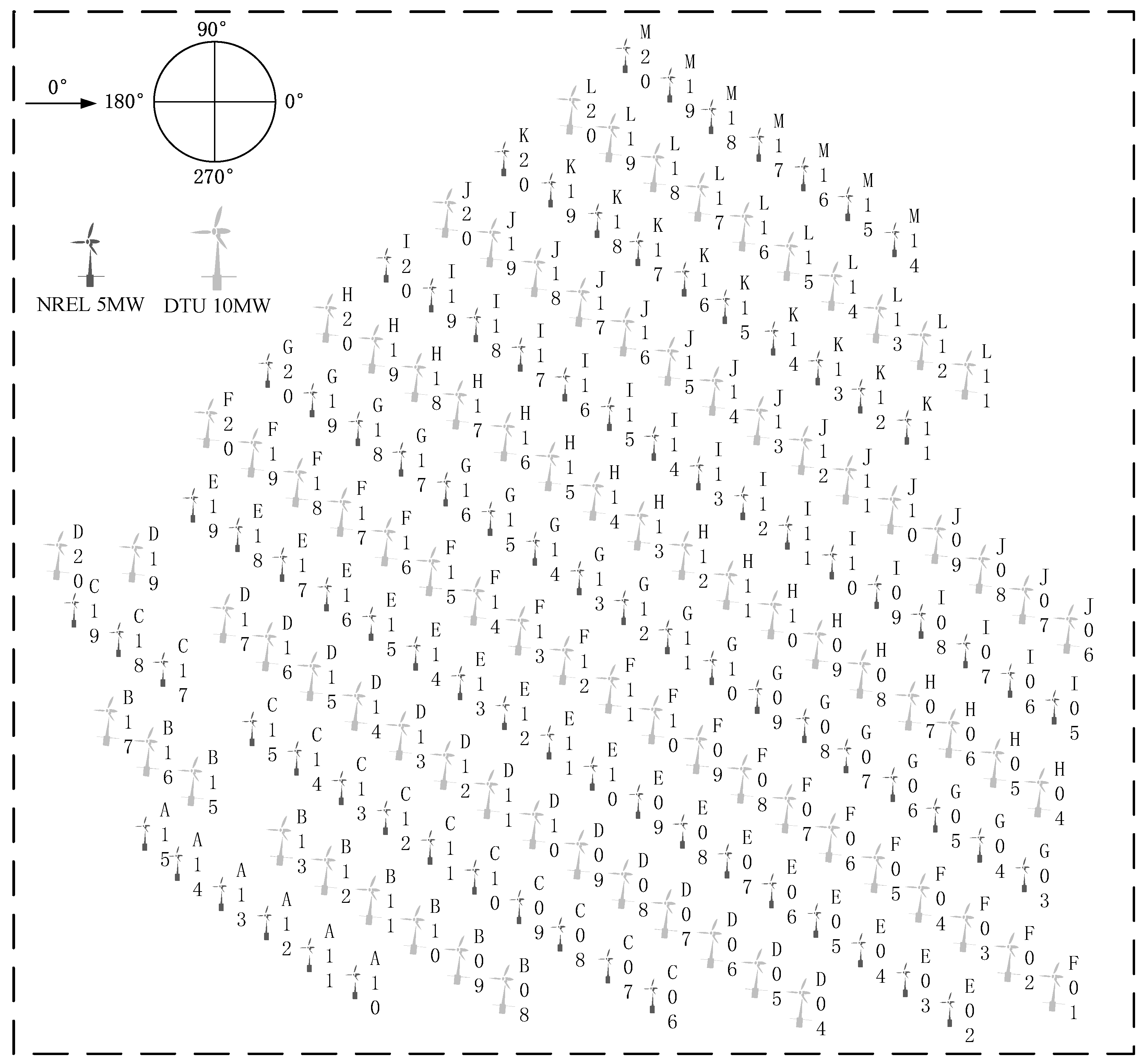
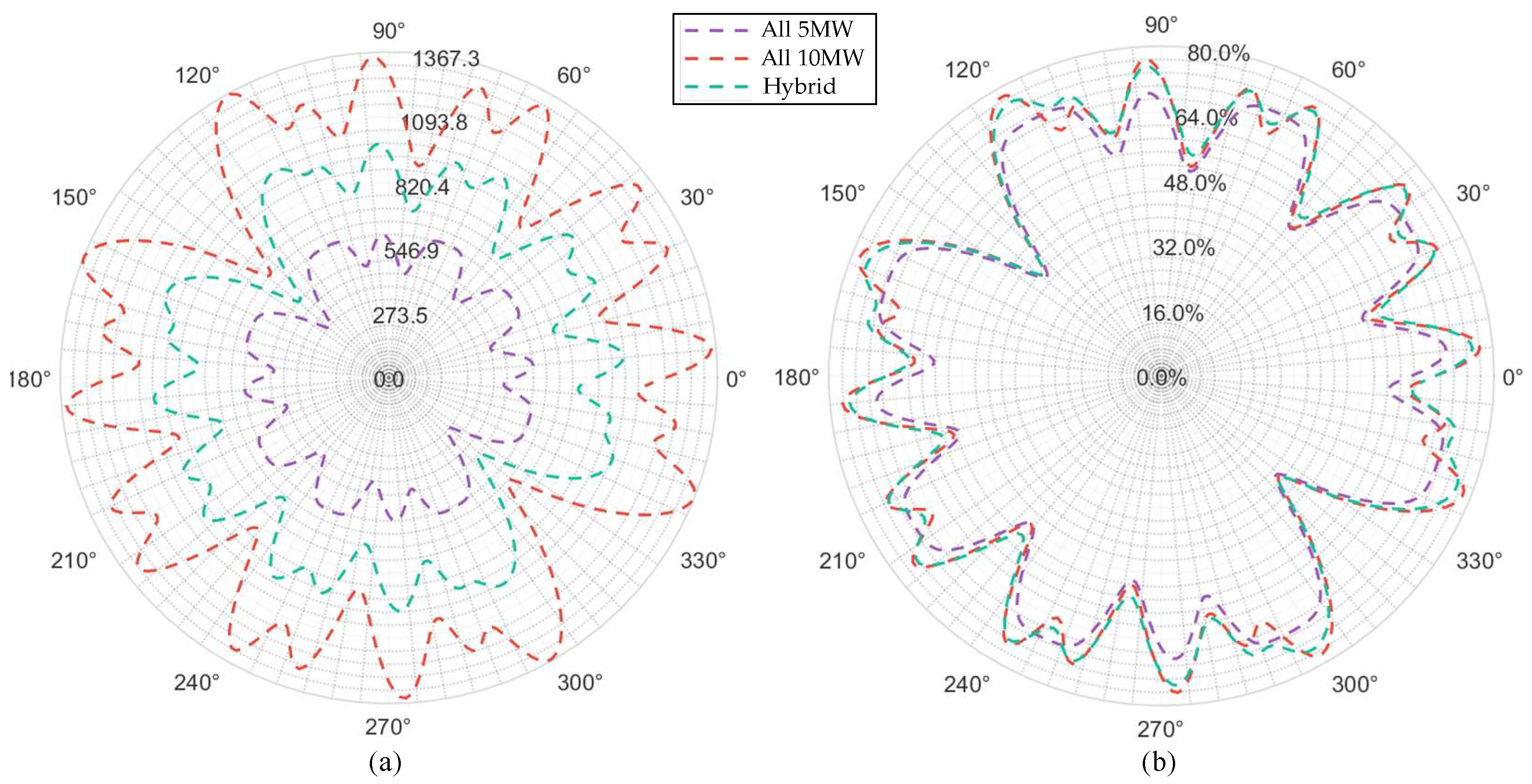
- Compared with the single-type layout, the multi-type hybrid layout already has a wake suppression effect and power generation efficiency advantage without active optimal control. In the large-scale fixed wind farm with 175 wind turbines based on the London Array prototype, the all-wind-direction average power generation efficiency of the hybrid alternating layout of 5 MW and 10 MW wind turbines reaches 65.25%, which is 3.91 and 0.62 percentage points higher than those of the all-5 MW and all-10 MW single-type layouts, respectively. The spatial misalignment of the wake is formed through the difference in turbine-type parameters, which reduces the wake superposition effect from the layout level and realizes the comprehensive improvement of power generation scale and utilization efficiency.
- (2)
- The wind farm with a multi-type hybrid layout has better wake optimization potential, and the improvement range of power generation performance after active optimization is significantly better than that of the single-type layout. After being solved by the optimization method, the power generation efficiency of the hybrid fixed wind farm increases from 65.87% to 69.29%, with an improvement range of 3.42 percentage points, which is 0.36 and 0.75 percentage points higher than those of the all-5 MW and all-10 MW single-type layouts, respectively. Meanwhile, the total power of the whole farm is increased by 44.72 MW, achieving a significant performance gain on the basis of the dominant initial efficiency.
- (3)
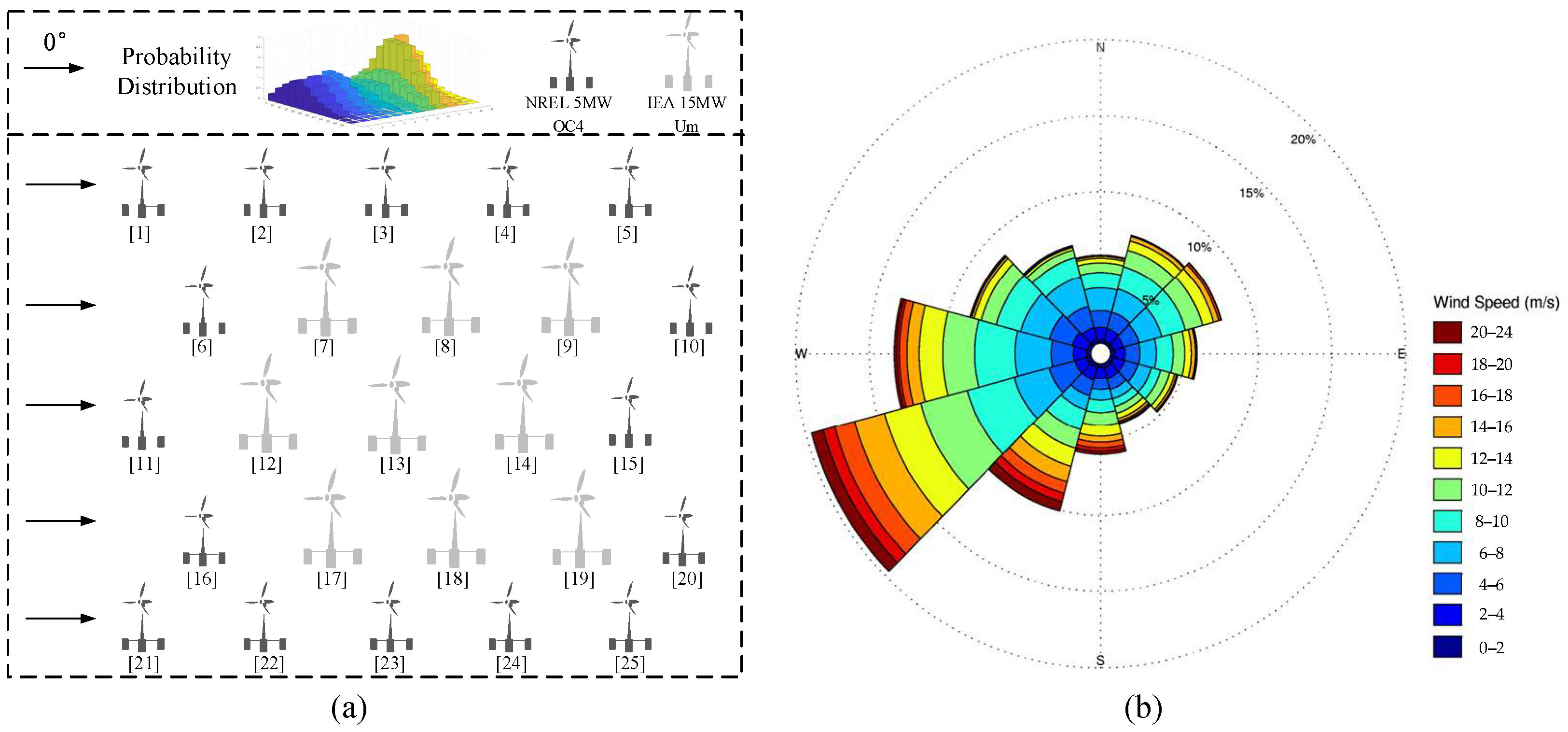
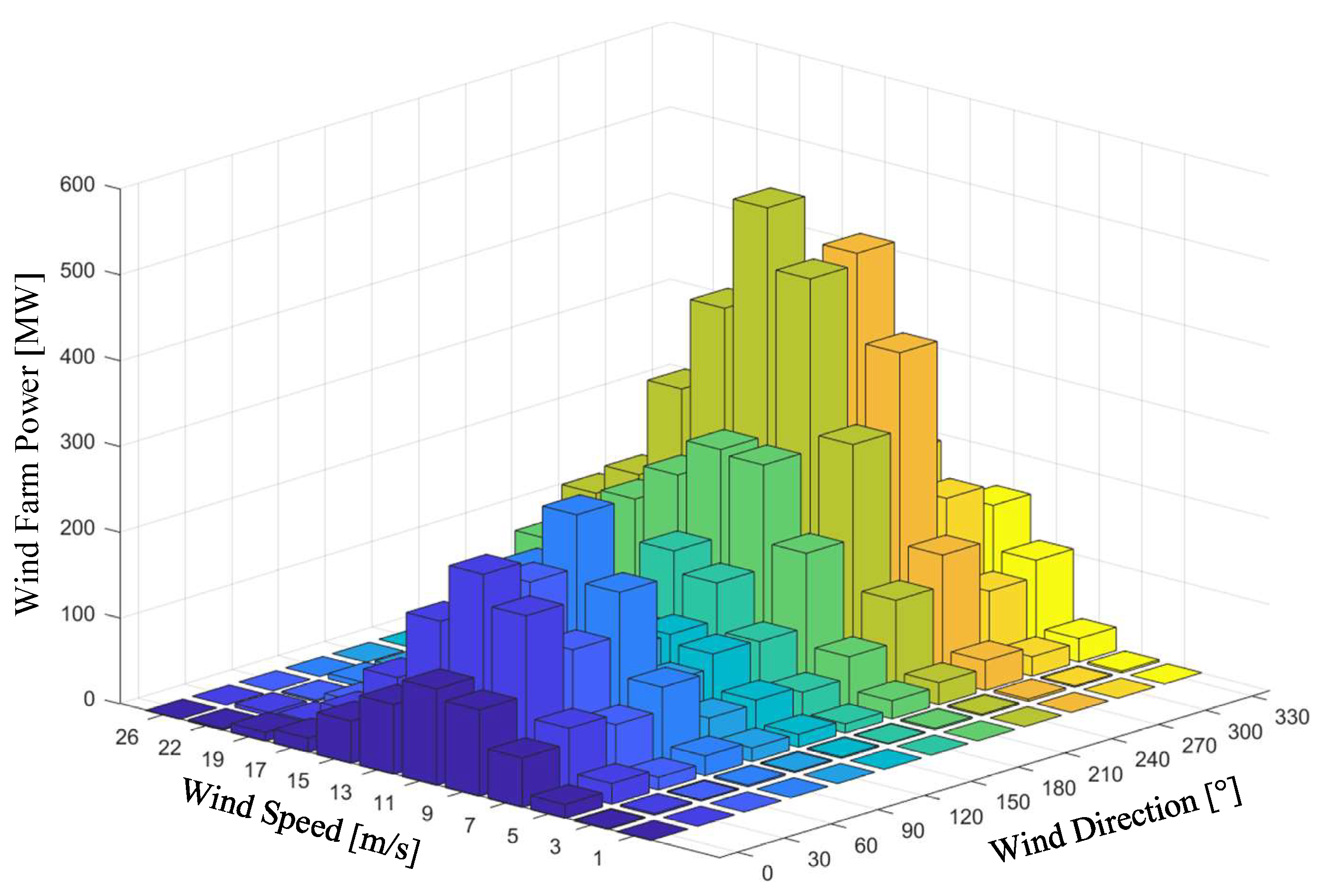
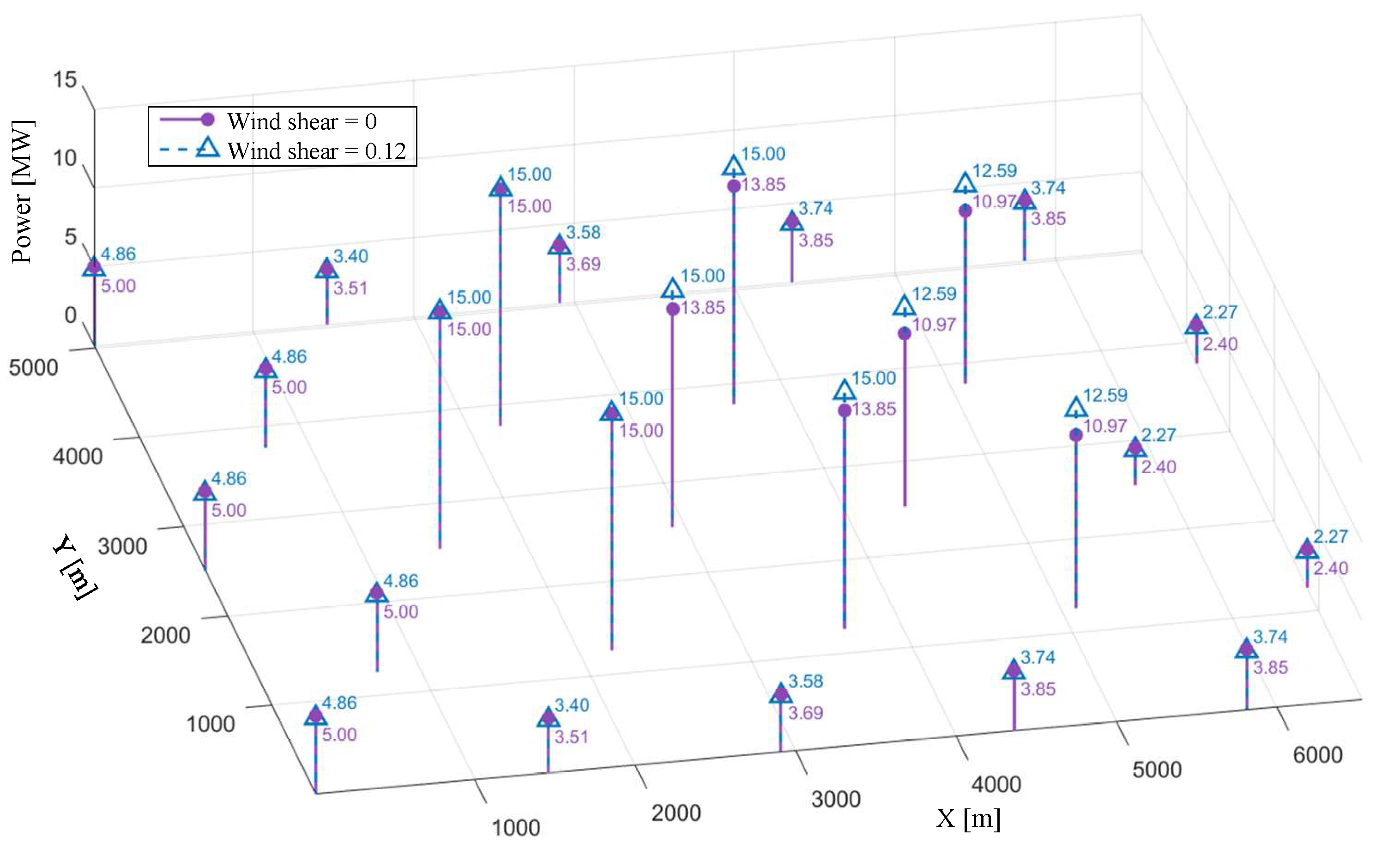
- The multi-type hybrid layout can fully match the wind shear characteristics, and break through the power generation limitation of the traditional same-type array in the FOWF scenario. In the 5 × 5 regular array FOWF with a hybrid layout of 5 MW and 15 MW wind turbines, over 60.80% of the annual energy production is contributed by the 9–13 m/s wind speed range, which is highly consistent with the rated wind speeds of 11.4 m/s (5 MW) and 10.69 m/s (15 MW). The simultaneous full power generation of front- and rear-row units can be realized by using wind shear and turbine-type parameter differences. The total power generation of the whole farm increases from 144.42 MW to 151.29 MW, with an increase of 6.87 MW.
- (4)
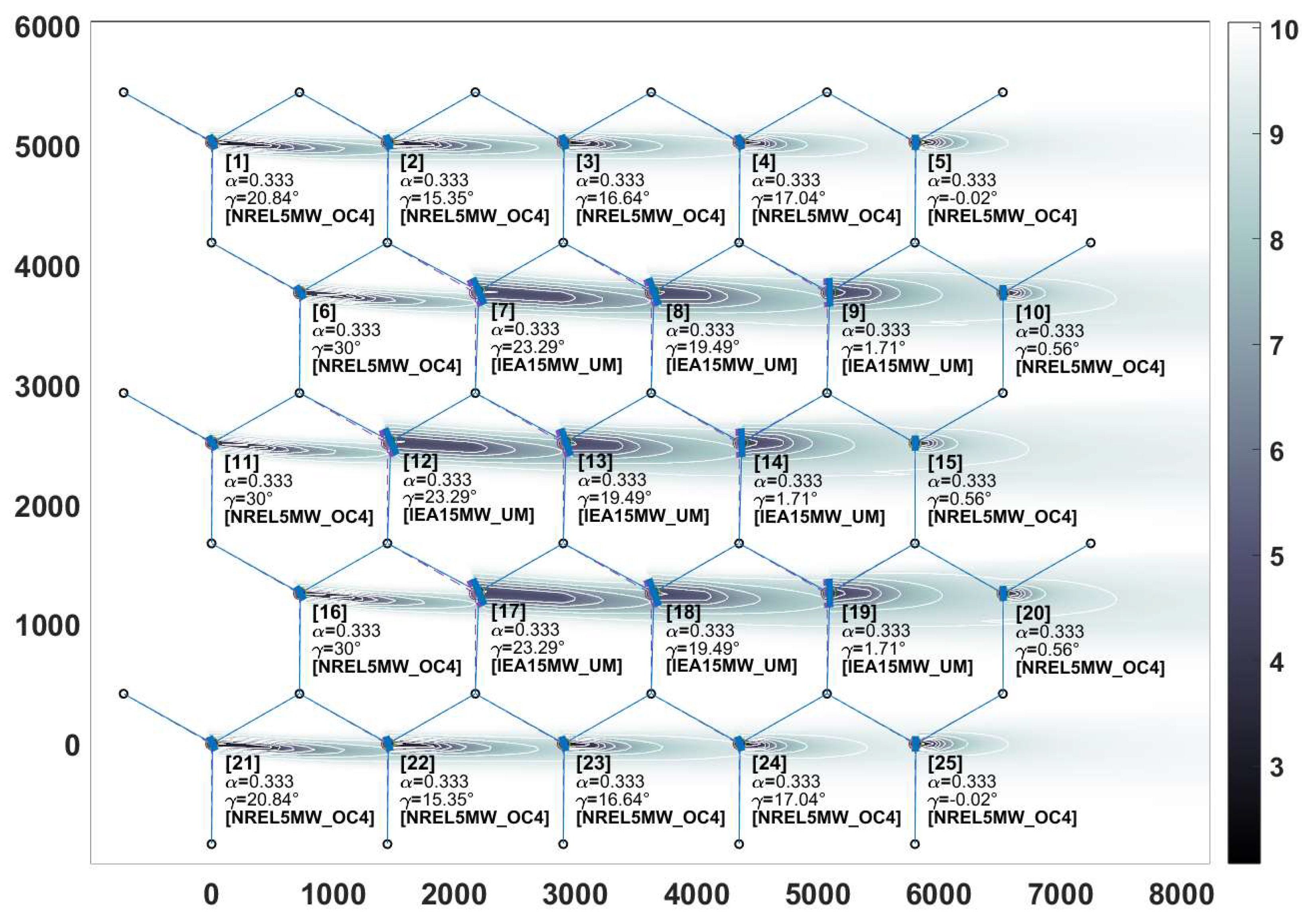
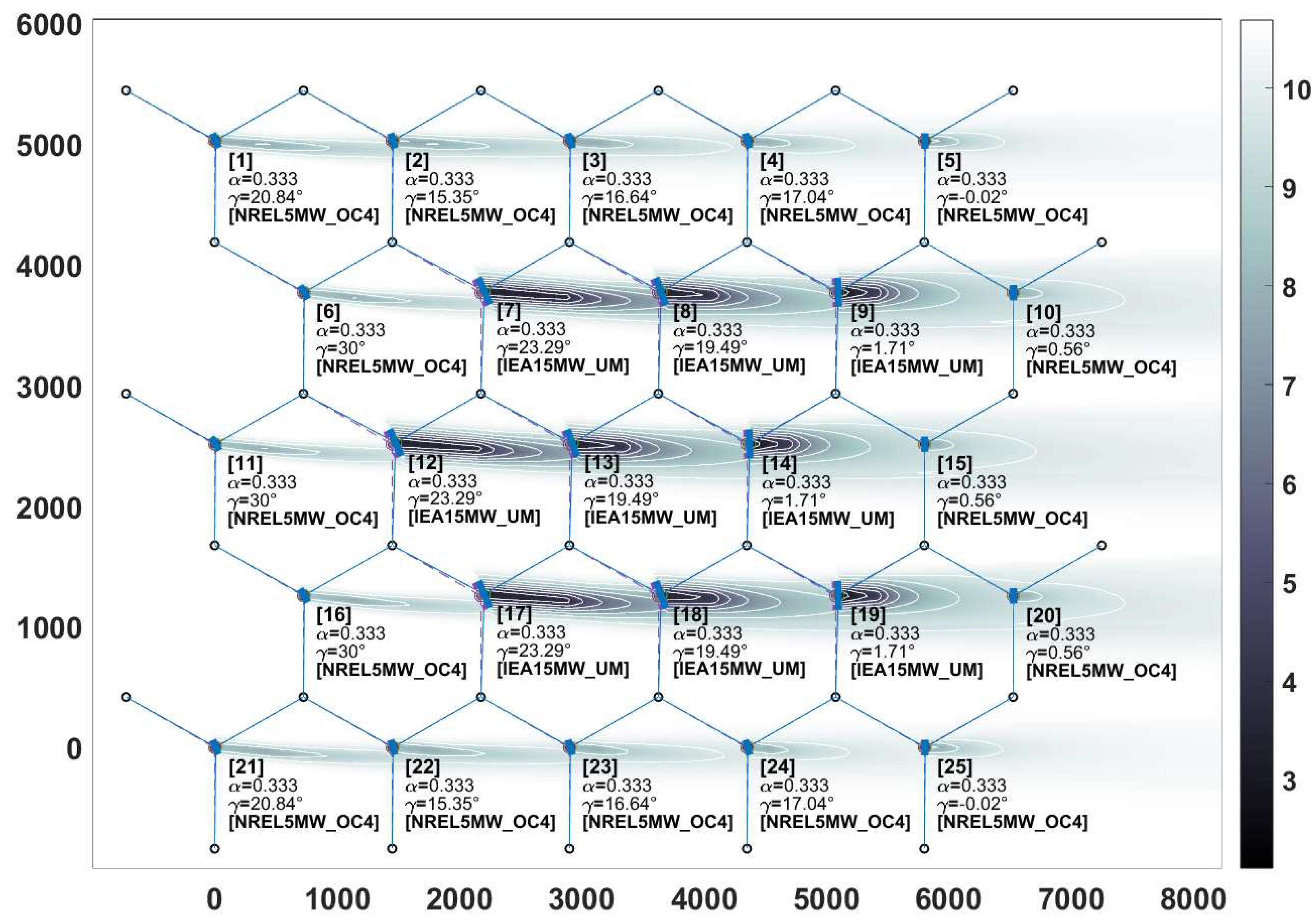
- Significant findings from Case B further demonstrate the superiority of the hybrid layout. Even when affected by upstream wakes, the equivalent wind speed of downstream 15 MW turbines can reach 10.75 m/s to maintain full power generation. Yaw control is adopted as the main optimization method, in which upstream 5 MW turbines apply relatively large yaw angles to mitigate the wake impact on downstream units. The upstream 5 MW turbines adopt yaw angles of 15.35–20.84°, and the first 5 MW turbine uses a maximum yaw angle of 30° for wake suppression, while 15 MW turbines contribute the main power increment after optimization. The combination of preference control and displacement misalignment presents hierarchical characteristics related to turbine types, which provides a new idea for multi-scale wake control of hybrid wind farms.
Author Contributions
Funding
Data Availability Statement
Acknowledgments
Conflicts of Interest
References
- Backwell, B.; Lee, J.; Patel, A.; Hutchinson, M.; Qiao, L.; Nguyen, T.; Lathigara, A.; Liang, W.; Fang, E.; Cheong, J.; et al. Global Offshore Wind Report 2025; Global Wind Energy Council: Brussels, Belgium, 2025. [Google Scholar]
- Su, H.; Chi, L.; Zio, E.; Li, Z.; Fan, L.; Yang, Z.; Liu, Z.; Zhang, J. An integrated, systematic data-driven supply-demand side management method for smart integrated energy systems. Energy 2021, 235, 121416. [Google Scholar] [CrossRef]
- Su, H.; Zio, E.; Zhang, J.; Li, Z.; Wang, H.; Zhang, F.; Chi, L.; Fan, L.; Wang, W. A systematic method for the analysis of energy supply reliability in complex Integrated Energy Systems considering uncertainties of renewable energies, demands and operations. J. Clean. Prod. 2020, 267, 122117. [Google Scholar] [CrossRef]
- Diaconita, A.I.; Rusu, L.; Andrei, G. A Local Perspective on Wind Energy Potential in Six Reference Sites on the Western Coast of the Black Sea Considering Five Different Types of Wind Turbines. Inventions 2021, 6, 44. [Google Scholar] [CrossRef]
- Xu, S.; Yin, G.; Hu, P.; Dong, D.; Qin, Y.; Liu, Y.; Liu, G.; Song, L.; Zhang, C. Substantially lower estimates in China’s offshore wind potential using farm-scale spatial modeling and wake effects. Nat. Commun. 2026, 17, 2043. [Google Scholar] [CrossRef]
- Judge, F.; McAuliffe, F.D.; Sperstad, I.B.; Chester, R.; Flannery, B.; Lynch, K.; Murphy, J. A lifecycle financial analysis model for offshore wind farms. Renew. Sustain. Energy Rev. 2019, 103, 370–383. [Google Scholar] [CrossRef]
- Houck, D.R. Review of wake management techniques for wind turbines. Wind Energy 2022, 25, 195–220. [Google Scholar] [CrossRef]
- Díaz, H.; Guedes Soares, C. Review of the current status, technology and future trends of offshore wind farms. Ocean Eng. 2020, 209, 107381. [Google Scholar] [CrossRef]
- Micallef, D.; Rezaeiha, A. Floating offshore wind turbine aerodynamics: Trends and future challenges. Renew. Sustain. Energy Rev. 2021, 152, 111696. [Google Scholar] [CrossRef]
- Wang, L.; Dong, M.; Yang, J.; Wang, L.; Chen, S.; Duić, N.; Joo, Y.H.; Song, D. Wind turbine wakes modeling and applications: Past, present, and future. Ocean Eng. 2024, 309, 118508. [Google Scholar] [CrossRef]
- Feng, J.; Shen, W.Z. Design optimization of offshore wind farms with multiple types of wind turbines. Appl. Energy 2017, 205, 1283–1297. [Google Scholar] [CrossRef]
- Sun, H.; Yang, H.; Gao, X. Investigation into spacing restriction and layout optimization of wind farm with multiple types of wind turbines. Energy 2019, 168, 637–650. [Google Scholar] [CrossRef]
- Charhouni, N.; Sallaou, M.; Mansouri, K. Realistic wind farm design layout optimization with different wind turbines types. Int. J. Energy Environ. Eng. 2019, 10, 307–318. [Google Scholar] [CrossRef]
- Tao, S.; Feijóo, A.; Zhou, J.; Zheng, G. Topology Design of an Offshore Wind Farm with Multiple Types of Wind Turbines in a Circular Layout. Energies 2020, 13, 556. [Google Scholar] [CrossRef]
- Van Der Hoek, D.; Den Abbeele, B.V.; Simao Ferreira, C.; Van Wingerden, J. Maximizing wind farm power output with the helix approach: Experimental validation and wake analysis using tomographic particle image velocimetry. Wind Energy 2024, 27, 463–482. [Google Scholar] [CrossRef]
- Kheirabadi, A.C.; Nagamune, R. A quantitative review of wind farm control with the objective of wind farm power maximization. J. Wind Eng. Ind. Aerodyn. 2019, 192, 45–73. [Google Scholar] [CrossRef]
- Huang, C.; Li, Z.; Zhang, Z. Wind farm optimization through yaw control considering wake effect. In Proceedings of the 2022 4th International Conference on Electrical Engineering and Control Technologies (CEECT), Shanghai, China, 16–18 December 2022; IEEE: New York, NY, USA, 2022; pp. 835–841. [Google Scholar]
- Li, B.; He, J.; Ge, M.; Ma, H.; Du, B.; Yang, H.; Liu, Y. Study of three wake control strategies for power maximization of offshore wind farms with different layouts. Energy Convers. Manag. 2022, 268, 116059. [Google Scholar] [CrossRef]
- Wang, Q.; Xu, T.; Von Terzi, D.; Xia, W.; Wang, Z.; Zhang, H. Synchronized optimization of wind farm start-stop and yaw control based on 3D wake model. Renew. Energy 2024, 223, 120044. [Google Scholar] [CrossRef]
- Tao, S.; Yang, J.; Jiang, F.; Yang, H.; Zheng, G.; Feijóo-Lorenzo, A.E.; He, R. Active yaw control strategy for a hybrid offshore wind farm under typical wind conditions. Renew. Energy 2026, 259, 125122. [Google Scholar] [CrossRef]
- Rodrigues, S.F.; Teixeira Pinto, R.; Soleimanzadeh, M.; Bosman, P.A.N.; Bauer, P. Wake losses optimization of offshore wind farms with moveable floating wind turbines. Energy Convers. Manag. 2015, 89, 933–941. [Google Scholar] [CrossRef]
- Mahfouz, M.Y.; Cheng, P. A passively self-adjusting floating wind farm layout to increase the annual energy production. Wind Energy 2023, 26, 251–265. [Google Scholar] [CrossRef]
- Tran, T.T.; Kim, D.-H. Fully coupled aero-hydrodynamic analysis of a semi-submersible FOWT using a dynamic fluid body interaction approach. Renew. Energy 2016, 92, 244–261. [Google Scholar] [CrossRef]
- Mendoza, N.; Robertson, A.; Wright, A.; Jonkman, J.; Wang, L.; Bergua, R.; Ngo, T.; Das, T.; Odeh, M.; Mohsin, K.; et al. Verification and Validation of Model-Scale Turbine Performance and Control Strategies for the IEA Wind 15 MW Reference Wind Turbine. Energies 2022, 15, 7649. [Google Scholar] [CrossRef]
- Huang, C.; Wang, L.; Huang, Q.; Song, D.; Yang, J.; Dong, M.; Joo, Y.H.; Duić, N. Bi-level multi-objective optimization framework for wake escape in floating offshore wind farm. Appl. Energy 2025, 377, 124712. [Google Scholar] [CrossRef]
- Schwartz, M.; Heimiller, D.; Haymes, S.; Musial, W. Assessment of Offshore Wind Energy Resources for the United States; National Renewable Energy Laboratory (NREL): Golden, CO, USA, 2010. [Google Scholar] [CrossRef]
- Robertson, A.; Jonkman, J.; Masciola, M.; Song, H.; Goupee, A.; Coulling, A.; Luan, C. Definition of the Semisubmersible Floating System for Phase II of OC4; National Renewable Energy Laboratory (NREL): Golden, CO, USA, 2014. [Google Scholar] [CrossRef]
- Pegalajar-Jurado, A.; Madsen, F.J.; Borg, M.; Bredmose, H. State-of-the-art models for the two LIFES50+ 10 MW floater concepts. Tech. Rep. 2018, 4, 5. [Google Scholar]
- Allen, C.; Viscelli, A.; Dagher, H.; Goupee, A.; Gaertner, E.; Abbas, N.; Hall, M.; Barter, G. Definition of the UMaine VolturnUS-S Reference Platform Developed for the IEA Wind 15-Megawatt Offshore Reference Wind Turbine; National Renewable Energy Laboratory (NREL): Golden, CO, USA; University of Maine: Orono, ME, USA, 2020. [Google Scholar] [CrossRef]
- Hall, M. MoorDyn User’s Guide; Department of Mechanical Engineering, University of Maine: Orono, ME, USA, 2015. [Google Scholar]
- Gou, J.; Sun, L.; Liu, J.; Song, Z.; Guo, G.; Gao, S.-G.; Liu, K.; Matsveichuk, N.; Sotskov, Y. An adaptive differential evolution with deeply informed mutation strategy and historical information for numerical optimization. Inf. Sci. 2026, 739, 123146. [Google Scholar] [CrossRef]
- Jian, Y.; Chaoneng, H.; Dongran, S. Distributed optimization method for operation power of large-scale offshore wind farm based on two-step processing. Autom. Electr. Power Syst. 2023, 47, 94–104. [Google Scholar]
- King, J.; Fleming, P.; King, R.; Martínez-Tossas, L.A.; Bay, C.J.; Mudafort, R.; Simley, E. Controls-Oriented Model for Secondary Effects of Wake Steering. Wind Energy Sci. 2021, 6, 701–714. [Google Scholar] [CrossRef]
- London Array Limited. London Array Operations & Maintenance Base. Available online: https://www.londonarray.com (accessed on 8 February 2026).
- Marine Data Exchange, the Crown Estate. Navitus Bay Report2 Final 2011. Available online: https://www.marinedataexchange.co.uk/details/TCE-2618/2011-met-office-zone-7-navitus-bay-wind-analysis/ (accessed on 8 February 2026).





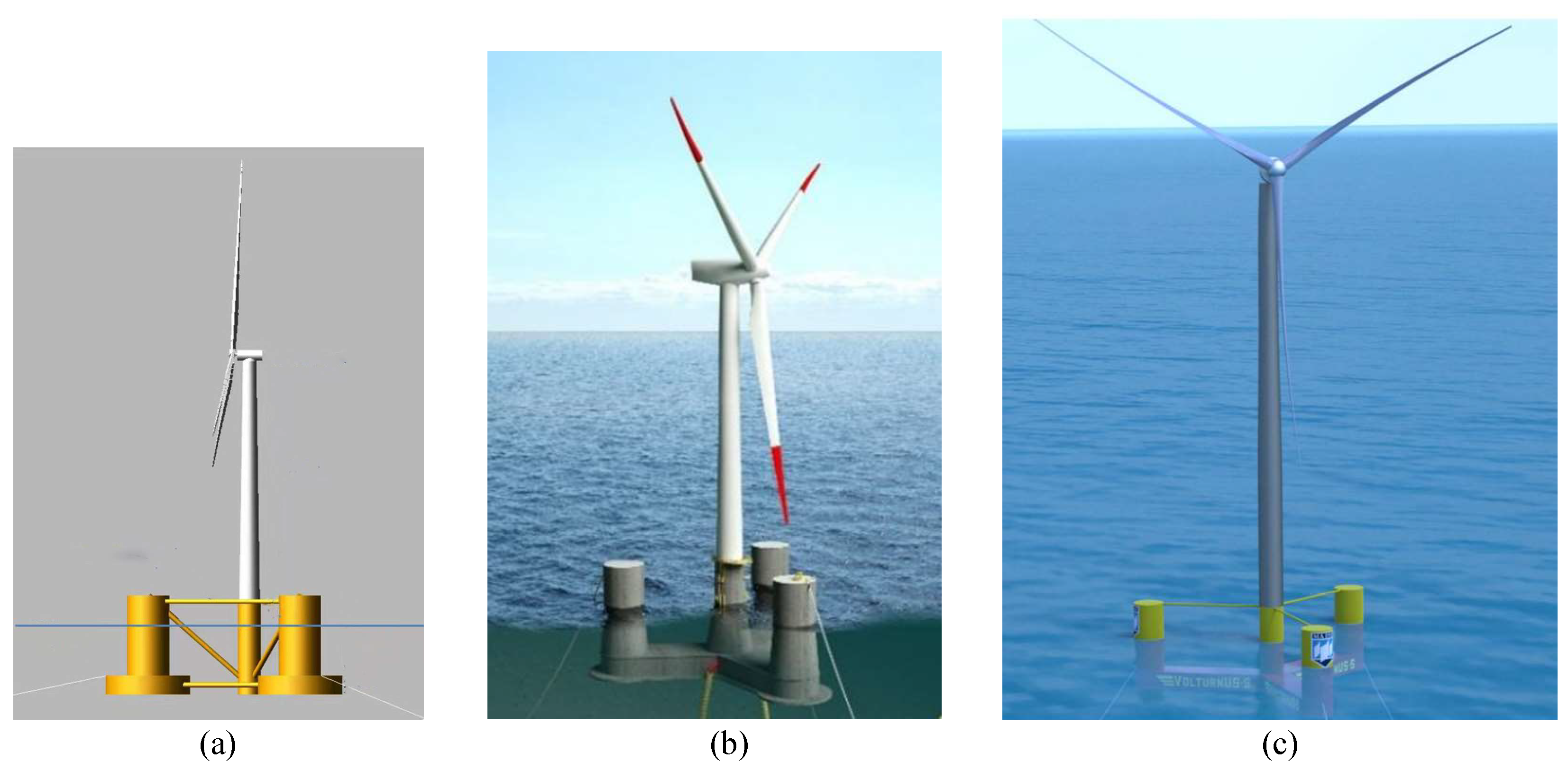
| Parameter | OC4 | OO-Star Semi | UMaine VolturnUS-S |
|---|---|---|---|
| Rated Power | 5 (MW) | 10 (MW) | 15 (MW) |
| Rated Wind Speed | 11.4 (m/s) | 11.4 (m/s) | 10.59 (m/s) |
| Cut-in Wind Speed | 3 (m/s) | 4 (m/s) | 3 (m/s) |
| Cut-out Wind Speed | 25 (m/s) | 25 (m/s) | 25 (m/s) |
| Rotor Diameter | 126 (m) | 178.3 (m) | 240 (m) |
| Hub Height | 90 (m) | 119 (m) | 150 (m) |
| Generator Efficiency | 94.4% | 94.0% | 96.55% |
| Maximum Power Factor | 0.482 | 0.498 | 0.489 |
| Mooring Line Length | 835.5 (m) | 703 (m) | 850 (m) |
| Installation Water Depth | 200 (m) | 130 (m) | 200 (m) |
| AP and FLP of Mooring Line 1 | [−837.600, 0.000, −200.000], [−40.868, 0.000, −14.000]. | [−691.000, 0.000, −130.000], [−44.000, 0.000, 9.500]. | [−837.600, 0.000, −200.000], [−58.000, 0.000, −14.000]. |
| AP and FLP of Mooring Line 2 | [418.800, 725.383, −200.000], [20.434, 35.393, −14.000]. | [345.500, 598.424, −130.000], [22.000, 38.105, 9.500]. | [418.800, 725.383, −200.00], [29.000, 50.229, −14.000]. |
| AP and FLP of Mooring Line 3 | [418.800, −725.383, −200.000], [20.434, −35.393, −14.000]. | [345.500, −598.424, −130.000], [22.000, −38.105, 9.500]. | [418.800, −725.383, −200.00], [29.000, −50.229, −14.000]. |
| Wind Farm Conditions | Wind Condition | Algorithm Settings | ||||||
|---|---|---|---|---|---|---|---|---|
| Case | Wind Farm Type | Wind Farm Scale | Wind Farm Layout Selection | Wind Shear | Wind Direction | Wind Speed | Maximum Iterations | Population Size |
| Case H1 (Initial) | Large-Scale Fixed | 175 wind turbines referring to London Array Wind Farm | All 5 MW/All 10 MW/Hybrid Alternating | 0.12 | All Wind Directions | 10 m/s (90 m) | -- | -- |
| Case H2 (Optimization) | Large-Scale Fixed | 175 wind turbines referring to London Array Wind Farm | All 5 MW/All 10 MW/Hybrid Alternating | 0.12 | 0° | 10 m/s (90 m) | 200 | 175 |
| Case I1 (Distribution) | Regular Floating | 5 × 5 = 25 wind turbines with Shared Mooring | Outer 5 MW, Inner 15 MW | 0.12 | Measured Wind Rose Distribution of Sea Area (100 m) | -- | -- | |
| Case I2 (Wind Shear) | Regular Floating | 5 × 5 = 25 floating wind turbines with Shared Mooring | Outer 5 MW, Inner 15 MW | 0/0.12 | 0° | 11.4 m/s (90 m) | -- | -- |
| Case I3 (Optimization) | Regular Floating | 5 × 5 = 25 floating wind turbines with Shared Mooring | Outer 5 MW, Inner 15 MW | 0.12 | 0° | 10.69 m/s (150 m) | 200 | 25 |
| Scenario | Initial Power | Optimized Power | Initial Efficiency | Optimized Efficiency |
|---|---|---|---|---|
| All 5 MW | 526.38 MW | 553.17 MW | 60.16% | 63.22% |
| All 10 MW | 1151.50 MW | 1198.25 MW | 65.80% | 68.47% |
| Hybrid | 859.54 MW | 904.26 MW | 65.87% | 69.29% |
Disclaimer/Publisher’s Note: The statements, opinions and data contained in all publications are solely those of the individual author(s) and contributor(s) and not of MDPI and/or the editor(s). MDPI and/or the editor(s) disclaim responsibility for any injury to people or property resulting from any ideas, methods, instructions or products referred to in the content. |
© 2026 by the authors. Licensee MDPI, Basel, Switzerland. This article is an open access article distributed under the terms and conditions of the Creative Commons Attribution (CC BY) license.
Share and Cite
Huang, C.; Lin, Z.; Li, Y.; Xie, J.; Wang, L.; Yang, J.; Song, D.; Chen, S. Hybrid Offshore Wind Farm Wake Optimization with Multi-Type Wind Turbines. J. Mar. Sci. Eng. 2026, 14, 674. https://doi.org/10.3390/jmse14070674
Huang C, Lin Z, Li Y, Xie J, Wang L, Yang J, Song D, Chen S. Hybrid Offshore Wind Farm Wake Optimization with Multi-Type Wind Turbines. Journal of Marine Science and Engineering. 2026; 14(7):674. https://doi.org/10.3390/jmse14070674
Chicago/Turabian StyleHuang, Chaoneng, Zhichao Lin, Yuke Li, Jinghang Xie, Li Wang, Jian Yang, Dongran Song, and Sifan Chen. 2026. "Hybrid Offshore Wind Farm Wake Optimization with Multi-Type Wind Turbines" Journal of Marine Science and Engineering 14, no. 7: 674. https://doi.org/10.3390/jmse14070674
APA StyleHuang, C., Lin, Z., Li, Y., Xie, J., Wang, L., Yang, J., Song, D., & Chen, S. (2026). Hybrid Offshore Wind Farm Wake Optimization with Multi-Type Wind Turbines. Journal of Marine Science and Engineering, 14(7), 674. https://doi.org/10.3390/jmse14070674