Article

Evaluation of Offshore Hydrogen Generation Capabilities via Wind Energy Integration Through a Comparative Study of Eight Sites

by
Marius Manolache
,
Alexandra Ionelia Manolache
and
Gabriel Andrei
*
Department of Mechanical Engineering, Faculty of Engineering, “Dunarea de Jos” University of Galati, 800008 Galati, Romania
*
Author to whom correspondence should be addressed.
J. Mar. Sci. Eng. 2026, 14(7), 627; https://doi.org/10.3390/jmse14070627
Submission received: 8 March 2026 / Revised: 24 March 2026 / Accepted: 27 March 2026 / Published: 28 March 2026
(This article belongs to the Special Issue Challenges of Marine Energy Development and Facilities Engineering)

Abstract

The transition to sustainable energy systems requires the effective integration of offshore wind energy with hydrogen production. In this context, the paper assesses the potential for offshore hydrogen production in eight locations, three of which are located in the Black Sea, using data from the ERA5 database (period 2016–2025) at a height of 10 m and then extrapolated to a height of 150 m. The methodology includes estimating the annual energy production for four types of offshore turbines (Siemens Gamesa (Zamudio, Spain) SG 14-236 DD, Vestas (Aarhus, Denmark) V236-15.0, GE (Rotterdam, The Netherlands) Haliade-X 13, and MingYang (Guangdong, China) MySE12-242) and correlating it with six electrolyzer configurations (PEM and AWE) in gross and net scenarios, as well as analyzing the energy compatibility related to the number of electrolyzers. The novelty of the study lies in the integrated multi-site approach and in the direct quantification of the relationship between wind production and electrolysis requirements for different turbine–electrolyzer combinations. The results indicate a variation in gross annual energy production (AEP) in the range of 45.65 to 81.11 GWh/year, while the net scenario, accounting for operational losses, ranged from 37.75 to 67.05 GWh/year, and hydrogen production between 327 and 1075 t/year, highlighting that the optimal performance is determined by the compatibility between turbine and electrolyzer and the specific energy consumption rather than the nominal power. The N net analysis shows that, in most cases, the energy produced by a single turbine is insufficient for the full operation of large capacity electrolyzers, resulting in a sub-unit utilization rate and necessitating the use of multiple turbines to reach the nominal operating regime. The analysis is limited to a technical assessment based on historical climatological data, excluding economic aspects, grid constraints, and variations in equipment performance over time. The results underscore the importance of integrating the sizing of offshore wind–hydrogen systems with local resources and energy conversion efficiency.

1. Introduction

Offshore wind energy has undergone remarkable growth on a global scale in the context of the accelerating energy transition and climate neutrality objectives. The installed offshore capacity worldwide reached approximately 79.43 GW by the end of 2024 [1]. Projections suggest that this figure will rise to 212 GW by 2030 [2]. Several factors have contributed to its rapid expansion, including its high capacity factor, lower susceptibility to land availability limits in contrast to onshore wind generation, and policies and tools that aid in the fight against climate change [3,4].
The integration of increased offshore wind energy into the power systems raises structural challenges related to intermittency and seasonal variability, issues highlighted in studies on offshore system planning and operation [5]. Especially for deep offshore projects, characterized by long distances from shore and transportation constraints, grid connection planning requires robust optimizations of the transmission infrastructure and system architecture [6,7]. Under these conditions, the full absorption of wind production into the grid may become uncertain, especially in contexts with capacity limitations or operational restrictions. Recent literature shows that hydrogen production from offshore wind energy can contribute to increasing energy utilization and mitigating seasonal fluctuations [8].
Water electrolysis, which uses electricity instead of heat, is the most common green hydrogen generation process due to its high conversion efficiency [9,10]. Electricity is used to split water into hydrogen and oxygen in this thermochemical process. Electrolyzers, electrochemical devices with two electrodes for oxidation and reduction half-reactions and an ion-conductive electrolyte, perform the reaction. Reversibly splitting 1 mol of H2O at 298.15 K and 1 bar requires the following reaction and energy [11]:
H 2 O   =   H 2   +   1 2 O 2
The electrolyte’s composition affects the half-reactions at each electrode, as well as the operating temperature and pressure, which results in various types of electrolyzers. Currently, the three main electrolyzer technologies under research are alkaline (AWE), proton-exchange membrane (PEM), and solid oxide (SOEC) [12,13]. AEC has the lowest capital expenditure (CAPEX) and is the most developed technology. Due to its large size and inability to handle rapid thermal transients, AWE is better suited for fixed applications with steady operating conditions and gradual load changes. PEMs are smaller and respond more quickly to load shifts. While PEMs have higher CAPEX than AWE, this is expected to decrease within the next decade. The least developed among the three is SOEC. It requires a significant amount of energy to produce steam at 500–900 °C for this type of electrolyzer, which operates differently from the others [14].
The integration of green hydrogen into offshore wind energy is a hot topic. One of the most studied research areas is economic viability, which the literature shows depends heavily on technological configuration and regional context. In Europe, for the North Sea region, the LCOH for offshore production is estimated to be between 2.25 and 15€/kg, and other studies report ranges of 4.9–7.25 €/kg for offshore configurations using PEM electrolyzers. For Portugal, the estimated costs range from 2.5 to 11.5 €/kg for solutions with onshore electrolysis powered from offshore sources, while in the United Kingdom, for 2025, the reported ranges vary between 4.53 and 268.8 £/kg depending on power and distance from shore. In Poland, the projected costs are €3.59–3.71/kg in 2030 and €2.05–2.15/kg in 2050, indicating a gradual decrease in costs as the technology matures. In Asia, the costs for centralized offshore PEM production are expected to decrease from 7.13 USD/kg in 2025 to 5.28 USD/kg in 2030 and 3.77 USD/kg in 2050 for China [15]. In contrast, in Mexico, LCOH prices range from 10 to 12.83 USD/kg, and LCOE ranges from 65.1 to 241.5 USD/MWh [16], indicating that the cost of electricity has a significant impact on hydrogen competition.
Quantitative evaluations of hydrogen production from offshore wind energy are also emphasized in recent research, indicating that large-scale conversion is feasible. For example, it has been estimated that a 400 MW offshore wind farm in southern China would generate roughly 23,800 tons of hydrogen annually [17], and 510 MW farms in Ireland could produce between 5000 and 14,000 tons of hydrogen each year [18]. Production has been calculated at 131.81 kg/h even in smaller-capacity setups, such as a 16.5 MW farm in Turkey [18], showing the increasing interest in directly converting offshore wind energy into hydrogen.
The optimal sizing of the electrolyzer is, in addition to costs, a key factor. Studies show that the ideal electrolyzer power is approximately seventy percent of the installed capacity for fixed turbines and ninety percent for floating turbines [19]. In addition, the choice of electrolyzer location (onshore or offshore) has a different impact depending on the region; some analyses show that the offshore solution is better [20]. On the other hand, other studies emphasize the logistical advantages of the onshore solution [21].
Numerous investigations into marine renewable resources have been carried out in the Black Sea. These include studies using historical data and reanalysis databases to investigate wind speeds and wind energy densities [22,23,24]. Both the entire Black Sea region and selected areas considered important are included in these simulations. Future research using Regional Climate Models (RCMs) is another focus of several studies [25,26,27]. Additionally, research with a more economic emphasis examines the production of green hydrogen using wave energy converters [28]. In terms of green hydrogen in the Black Sea, there are not many studies that involve the integration of renewable resources. The only study that analyzes these aspects is the one in Ref. [29].
The study aims to assess the technical feasibility of offshore hydrogen production by integrating wind energy and to identify an optimal turbine–electrolyzer configuration for the analyzed locations. The current work will be guided by the following research questions: (a) What type of turbine is most suitable for each site? (b) How much wind energy is available annually and net in each location? (c) What type of electrolyzer most efficiently utilizes the energy produced? (d) How many turbines are needed to efficiently operate an electrolyzer?
The novelty of the study lies in the integrated approach to the wind–hydrogen system by directly correlating wind energy production with the energy requirements of the electrolyzers within a comparative analysis carried out for multiple offshore locations. Unlike existing approaches, which treat the system components separately, the paper proposes simultaneous assessment of the influence of the location, the turbine type and the electrolysis technology. In this way, the study aims to highlight the role of the specific energy profile of each site in the process of selecting the optimal configuration.
The adopted methodology consists of evaluating the wind resource based on climatological data at a height of 10 m and adjusting it to a height of 150 m using the logarithmic wind profile equation, determining the annual energy production for several types of offshore turbines and correlating it with the energy requirements of different electrolyzer configurations (PEM and AWE), both in gross scenarios and in scenarios that include operational losses. The analysis thus highlights the differences between sites and the impact of the choice of technology on the system performance. Based on this direction, the present study also presents some limitations, such as the fact that the analysis is based on historical climatological data (ERA5), without modeling future climate scenarios. The logarithmic profile method provides a simplified estimate of wind speed at turbine height and is frequently used in wind resource assessment studies. However, this approach does not consider the dynamic interactions between wind and turbine. Recent studies, such as the one conducted by Zhang et al. [30], show that turbine performance is influenced by complex aerodynamic phenomena and the dynamic response of the system, which can lead to deviations from estimates based on static models. Therefore, the results presented should be interpreted in the context of these limitations. Also, economic constraints are not included, grid restrictions or energy evacuation limitations are not modeled, and electrolyzers are considered with constant performance.

2. Materials and Methods

The adopted methodology is based on the direct correlation between the available wind resource and the performance of the conversion systems. In the first stage, climatological data are analyzed for each location to characterize the wind regime and determine the annual energy production for different types of turbines. Subsequently, the energy obtained is used as input to evaluate the performance of the electrolyzers by relating the specific energy consumption to hydrogen production. This approach allows for the integrated evaluation of the entire energy chain, from the wind resource to the hydrogen production, highlighting the influence of the location, the turbine type and the characteristics of the electrolyzer on system performance. Details regarding the data used, the types of turbines and electrolyzers analyzed, and the mathematical model for determining energy and hydrogen production are presented in the following section.

2.1. Wind Datasets

The ERA5 database is a global climate reanalysis developed by the European Centre for Medium-Range Weather Forecasts within the Copernicus Climate Change Service. Temporally, ERA5 covers the period from 1940 to the present, with near real-time updates. The data are provided at an hourly temporal resolution, and the horizontal spatial resolution is approximately 31 km, corresponding to a 0.25° × 0.25° grid, with global coverage [31,32].
The ERA5 dataset encompasses a vast array of variables, including wind speed, air temperature, atmospheric pressure, humidity, precipitation, and solar radiation [33].
The ERA5 data are obtained through an advanced reanalysis process, which uses the Integrated Forecast System (IFS) numerical model and a 4D-Var data assimilation scheme [34]. It provides a continuous and coherent description of the state of the atmosphere, land surface, and oceans, obtained by combining meteorological observations with a global numerical model. ERA5 is specifically designed for climatological and research applications and is one of the most advanced databases currently available.
In ERA5, wind is a key variable for explaining atmospheric circulation. Wind is represented by horizontal components u and v, which indicate the movement of air from west to east and from south to north. These components can be found at both 10 m and 100 m above the Earth’s surface.
The ERA5 database is one of the most widely used reanalysis databases. A comparison between the data in this database and real records, such as those from studies [35,36], showed that the database tends to underestimate strong winds, particularly in complex coastal areas. The databases were also compared with each other, and ERA5 was considered to present the best results; however, in certain locations, different databases were considered to have equally good or even better results [37,38].
The ERA5 data used in this study span ten years, from 2016 to 2025. As the data were collected at an hourly interval, 24 values were recorded daily.

2.2. Proposed Wind Turbines

In terms of offshore wind turbine trends, there is a tendency to shift toward turbines with increasing hub heights and greater power. Therefore, prototypes of wind turbines with capacities exceeding 20 MW are currently under development. The DEW-26 MW-310 turbine, for which the first prototype has been installed thus far, is currently the most powerful [39].
Besides this turbine, other turbines are now in the concept or prototype phase, including the Mingyang Wind Power MySE 22 MW and the Siemens Gamesa SG DD-276. In addition to turbines that have a capacity greater than 20 MW, there are also powerful turbines that are being used commercially. For example, the Goldwind (Beijing, China) GWH252-16 MW turbines are part of the Zhangpu Liuao Phase 2 farm located in the South China Sea. Similarly, the Siemens Gamesa SG DD 14-222/236 turbines are utilized in various wind farms, including He Dreiht and Hollandse Kust West in the North Sea, among others. This study selected turbines with large capacities ranging from 12 to 15 MW, which are typical for the leading generation in offshore projects since 2021. Turbines with a power output of less than 10 MW are regarded as mature technology. Another factor that contributes to a less-explored area in the current literature is the implication associated with the selection of these turbines. This includes the modification of rotors that can reach sizes of 220–240 m, which consequently necessitates taller hub heights of 130–150 m.
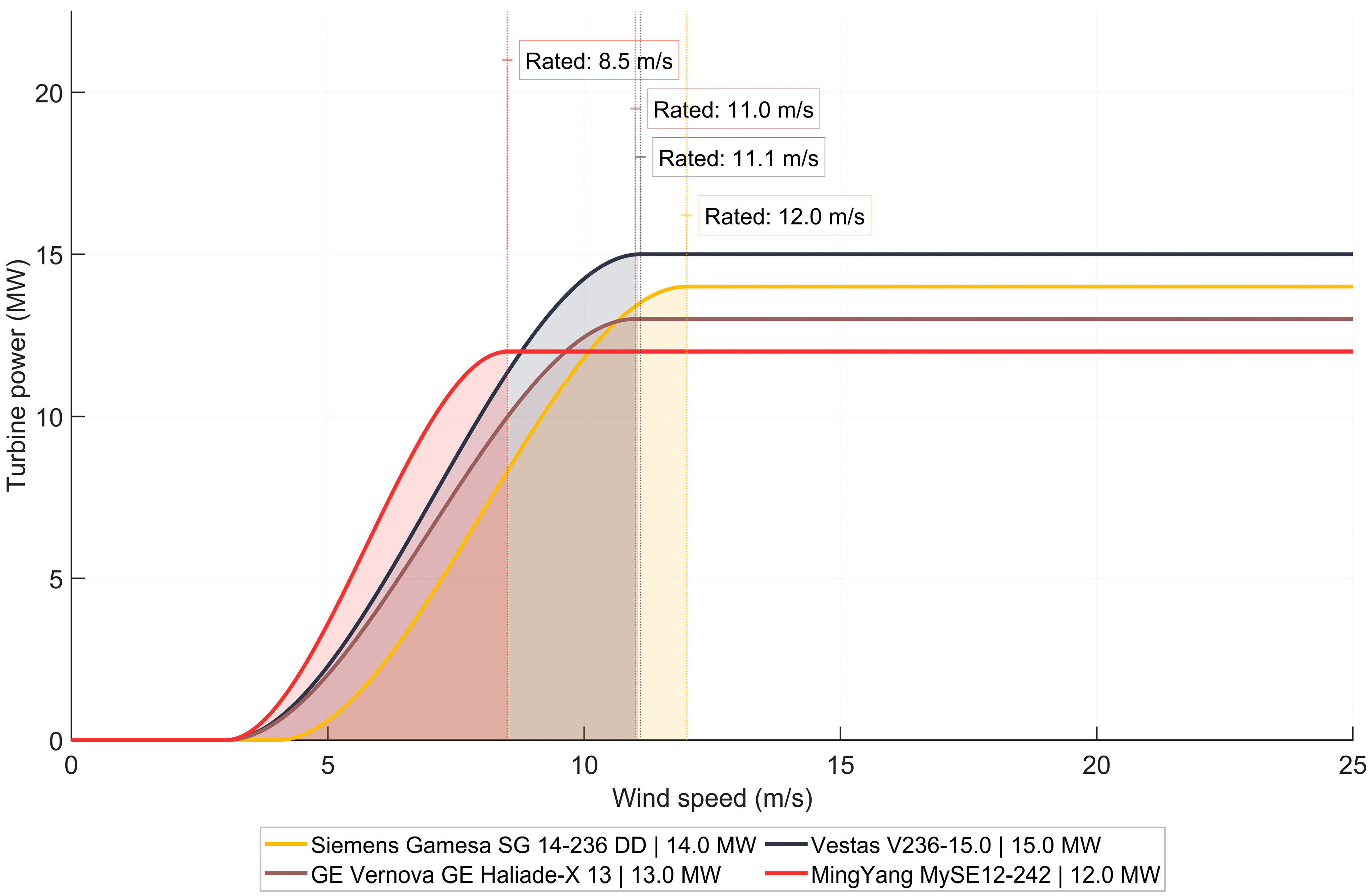
Figure 1 shows the power curves for the 4 turbines chosen, all of which are existing turbines used in recent projects. The figure shows a wide variation in cut-in speed and rated wind speed. The MingYang MySE turbine has the lowest rated wind speed of all turbines, which means that it will prioritize energy capture at moderate winds, while higher-rated designs focus on peak power exploitation. Cut-in differences also strongly affect annual energy yield in low-wind sites; the higher the cut-in, the lower the energy production. By choosing the four turbines, the aim was to obtain as many scenarios as possible that would help to outline an overall picture of the potential of the chosen locations.

2.3. Proposed Electrolyzers

To convert wind energy into hydrogen, it was also necessary to choose an electrolyzer. For this research, we selected two kinds of electrolyzers: PEM and AWE, with three models chosen for each, exhibiting competitive qualities of the two technologies. Table 1 delineates the characteristics of the six electrolyzers. From this data, we see a hydrogen generation rate of around 300 kg per hour, with one device, the Siemens model, dropping below this average, which also exhibits the largest energy usage.

2.4. Target Area

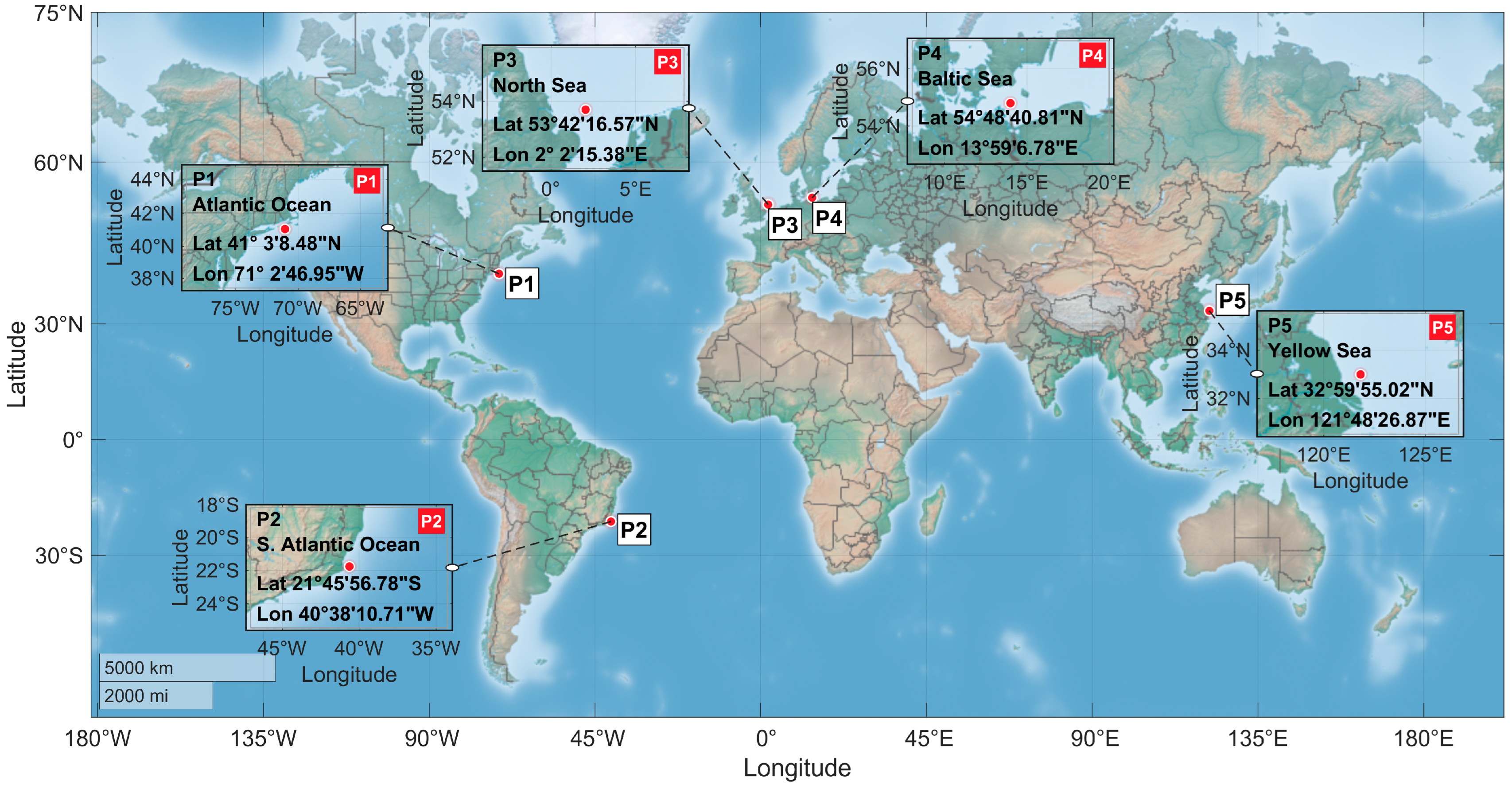
In this study, eight relevant locations were selected to analyze the wind potential, their choice being based on a series of well-defined strategic and methodological criteria. Of these, five locations are located globally and were chosen based on the intensity of wind projects developed in the respective regions, but also with reference to less-exploited areas with emerging potential. This comparative approach allows the differences between mature markets and those in early stages of development to be highlighted. Another essential criterion in the selection of these locations was geographical diversity, targeting areas as far apart as possible, to outline wind profiles as varied and representative as possible on a large scale. The sites chosen for global analysis are presented in Figure 2.
The most developed area is P3, located in the North Sea, which is home to one of the world’s most important offshore hubs, with very large capacity projects such as Hornsea One, Hornsea Two, and Dogger Bank Wind Farm, along with other operational wind farms in the vicinity. This concentration of projects confirms a high level of technological and infrastructural maturity. In contrast, P2, located off the coast of Brazil, is in an early stage, with no operational offshore wind farms and initiatives, such as the Espirito Santo I Offshore Wind Project, only in the planning stage.
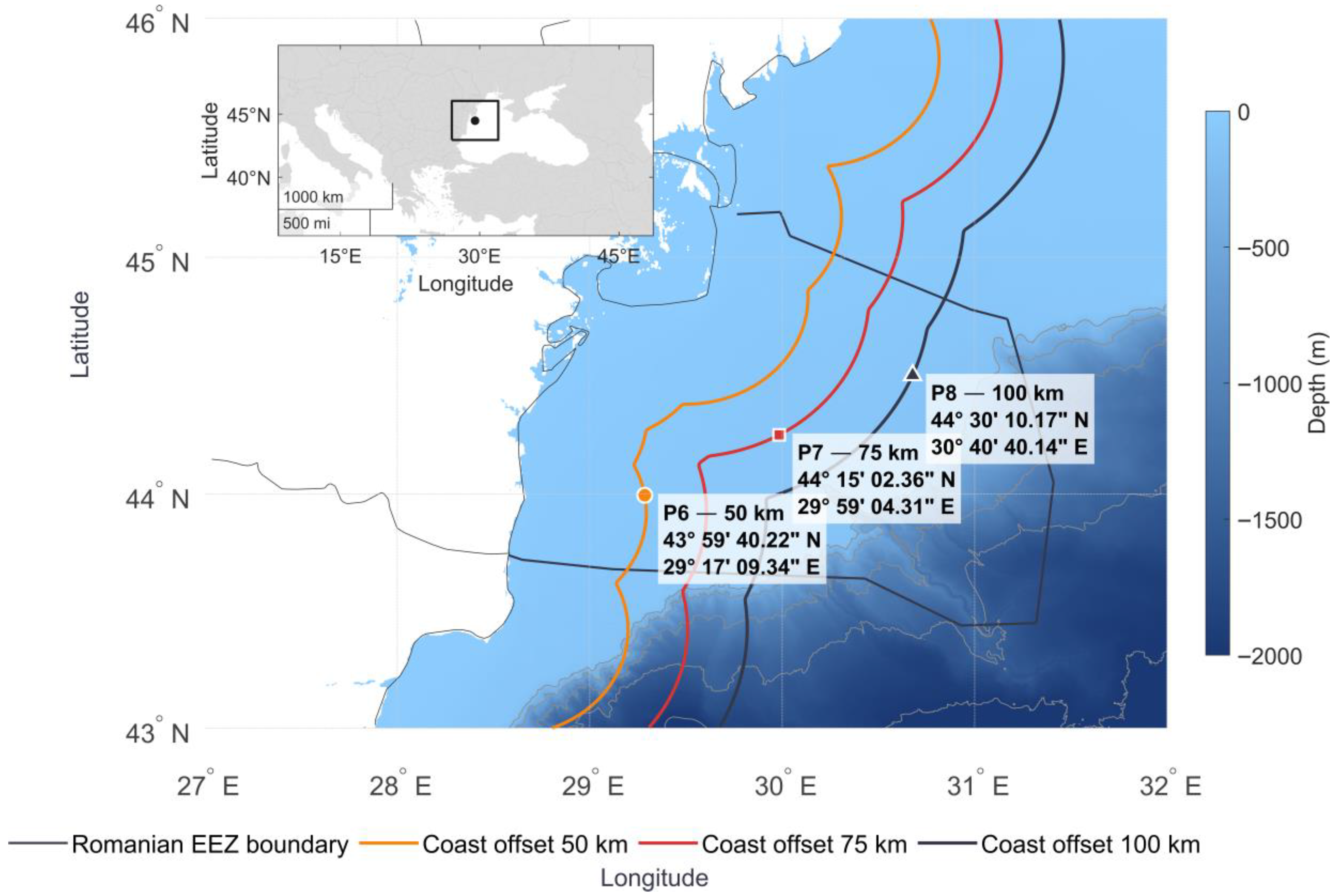
The other three locations are located in the Black Sea (Figure 3), with the distance from the shore being the main difference. Thus, the closest location is approximately 50 km from the coast, and the most distant one is approximately 100 km. All three analyzed points are located within Romania’s exclusive economic zone in the Black Sea, which ensures the direct relevance of the study for the potential development of offshore wind projects at the national level.

2.5. Methods

As mentioned above, each turbine has a certain rotor size, which also implies a certain minimum hub height, and considering that most manufacturers mention an adaptable hub height, for this work, a height of 150 m will be adopted. However, the data taken from the ERA5 database were at an altitude of 10 m. The following logarithmic wind profile formula will be used to modify the starting wind speed [44,45]:
U 150   =   U ERA 5 ( z ref z 0 ) ( z ERA 5 z 0 )
where U 150 (in m/s) is the wind speed adjusted for the height of 150 m, U ERA 5 reflects the starting wind speed at 10 m ( z ERA 5 ), z 0 is the roughness factor (calm sea surface–0.0002 m) [24].
The mean wind speed allows for a preliminary calculation of the annual electricity production (AEP-MWh). This metric enables engineers and operators to measure the anticipated energy output of a particular wind turbine. The annual electricity production may be articulated as [29,46]:
AEP     =     T   ×   cut - in cut - out f ( U ) P ( U ) dU
where T is the annual operating duration of the turbine, which is 8760 h per year. The cut-in wind value is the wind speed at which the wind turbine begins operating; the turbine continues to rotate until it reaches its optimum efficiency at the cut-out wind speed. f ( U ) represents the Weibull distribution function. P ( U ) denotes the power curve of a particular wind turbine.
The power curve of a wind turbine describes the variation of the generated power as a function of the wind speed at the hub height. In this study, the power curves were not taken directly from the manufacturers’ specifications but were generated using an analytical approach based on the characteristic parameters of the turbine. The power curve was defined by:
P ( U )   =   { q ( U ) P r 0 U cut - in   <   U   <   U rated U rated   <   U   <   U cut - out U     U cut - in     and     U     U cut - out q ( U )   =   P r U 2 U cut - in 2 U rated 2 U cut - in 2
where U cut - in (in m/s) is the cut-in wind speed, U (in m/s) is the wind speed at the height of 150 m, U rated (in m/s) is the rated wind speed, U cut - out (in m/s) is the cut-out wind speed, and P r is the rated power in MW.
The capacity factor, or CF , is another metric that aids in assessing the wind turbine’s performance and is expressed as a percentage. It is written as the ratio of the maximum rated power (RP) to the total power in a specific period (P). Its mathematical expression is as follows [47]:
CF   =   P RP
It is possible to determine the amount of renewable hydrogen that is produced by wind energy by using the following formula [48,49]:
M H   =   AEP · η el ec el
where M H represents the quantity of hydrogen produced in a single year, expressed in kilograms per year, AEP represents the annual energy production from offshore wind, ec el represents the electrolysis energy consumption (obtained from Table 1), and η el represents the electrolysis efficiency.
In the literature, the efficiency of electrolyzers is often modeled as a function of variable power supply. Studies show that efficiency is not constant and can vary significantly in part-load conditions, especially in the case of variable renewable sources [50]. In the present study, this dependence was not explicitly modeled, using a constant average efficiency.
To determine electrolysis efficiency ( η el ) , the formula below will be used [51]:
η   =   E H 2 ec el · 100
where E H 2   represents the energy contained in the generated hydrogen, determined using the lower heating value (LHV) or the higher heating value (HHV). The lower heating value (LHV) is around 33.3 kWh kg H 2 , whereas the higher heating value (HHV) is around 39.4 kWh kg H 2 .

3. Results and Discussion

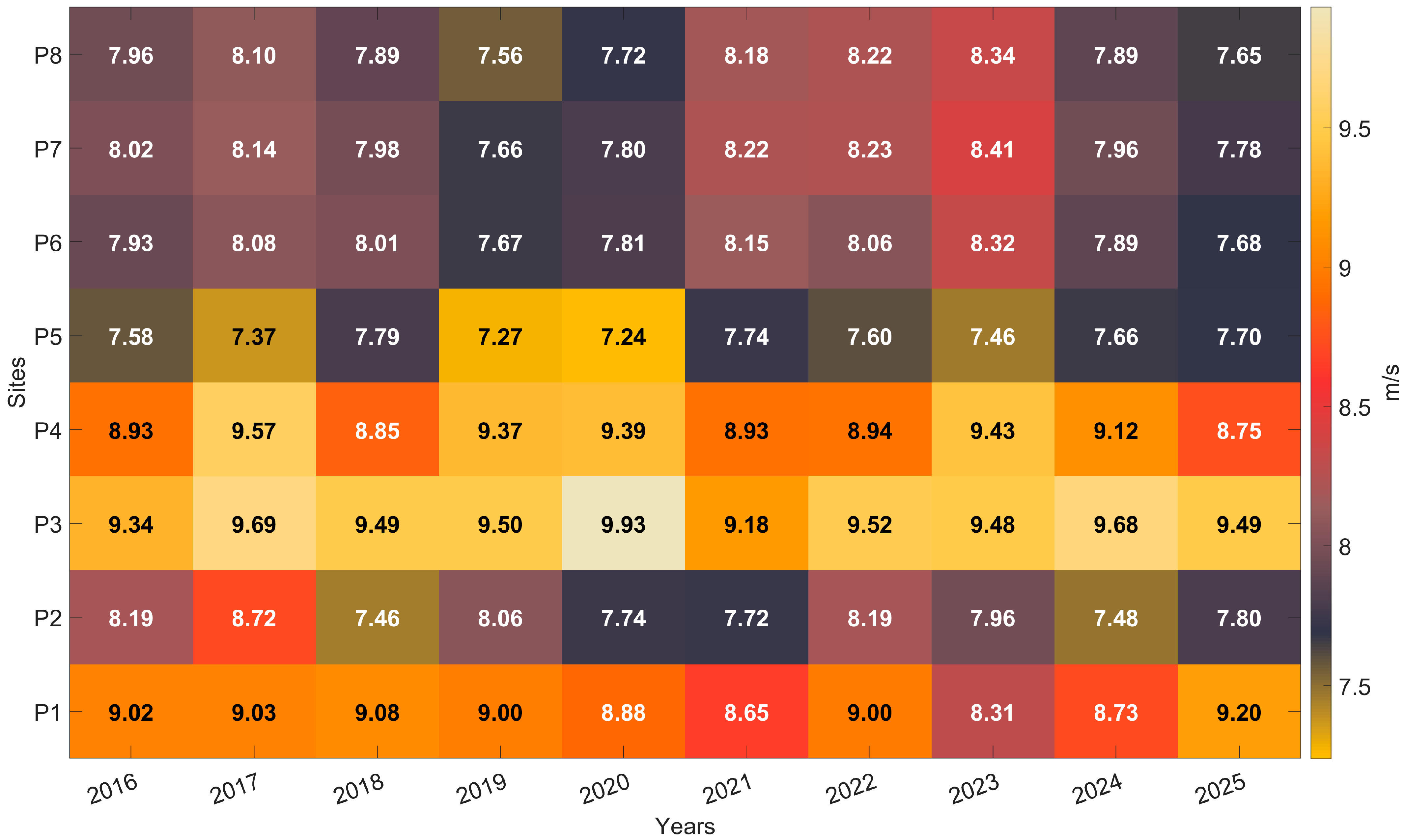
The mean wind speeds for each year are presented in Figure 4. It is observed that the highest average speeds are found in sites P3, followed by P4. Thus, the averages for P3 exceed 9 m/s in each analyzed year, unlike the least efficient site, which is P5, where the mean wind speeds do not exceed 8 m/s in any year. The maximum recorded for P3 is 9.93 m/s in 2020, thus confirming the wind potential of this site as well as that of P4, for which the highest average speed of 9.57 m/s was recorded in 2017, unlike the other sites included in the analysis. The examination of the years in which the maximum values of the annual mean wind speeds are recorded indicates that, across all eight sites, there is no common phenomenon. In contrast, for the three sites located in the Black Sea, a synchronization of the maximum of the annual mean wind speed is observed in the same year (2023), which suggests the possible influence of some common regional climatic factors on the wind regime in this area. Among all the sites in the Black Sea, the site in P7 shows the best results, with a mean wind speed across all the years studied of 8.02 m/s, unlike P6 and P8, which show values of approximately 7.95 m/s.
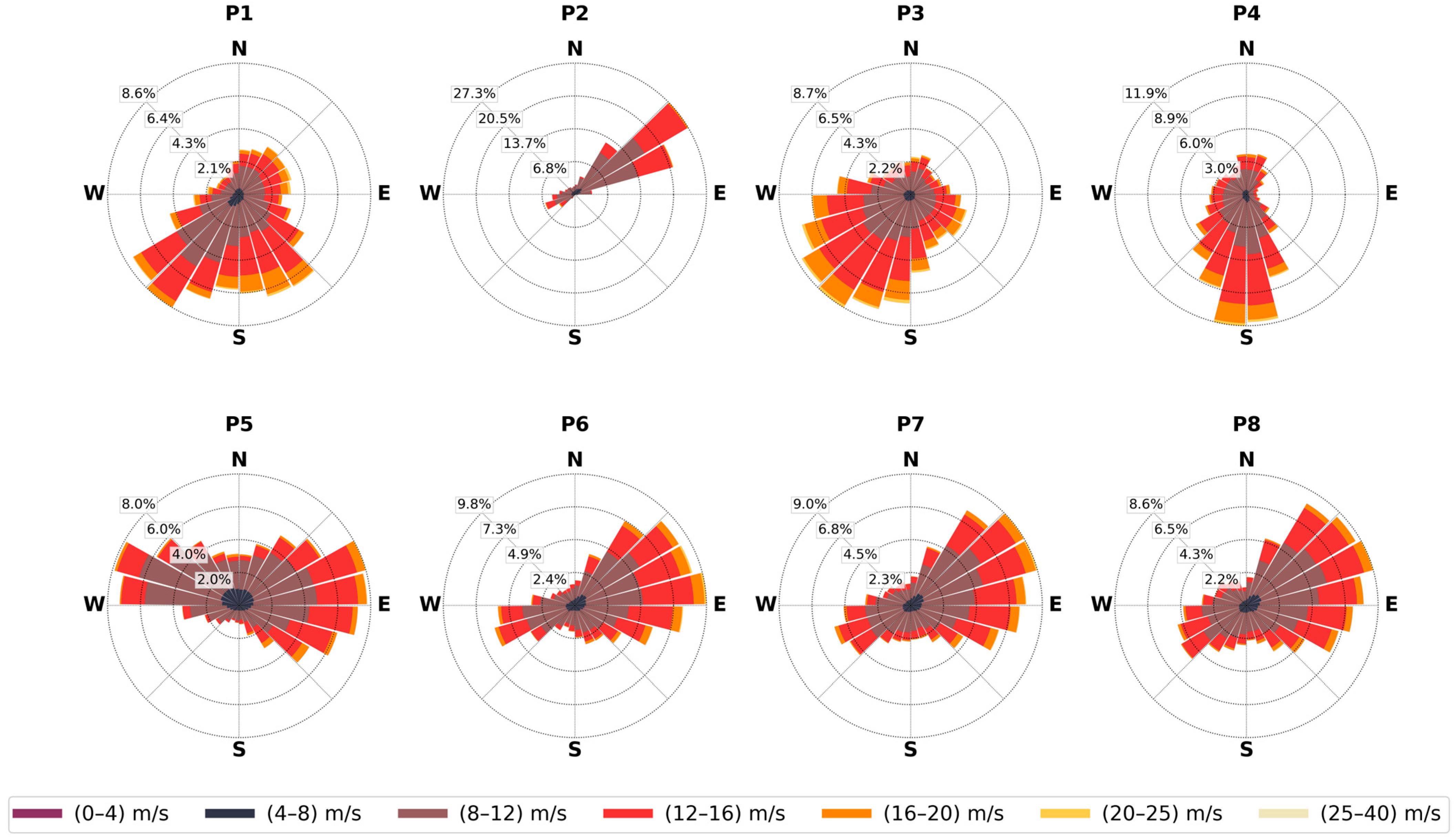
Figure 5 presents a wind rose for each of the eight selected sites; this provides an essential perspective on the prevailing direction from which the wind blows and the prevailing speeds in each direction. Looking at the wind roses, we can see that most of the sites present a dispersed wind distribution, especially P5, which does not have a dominant sector. They show prevailing speeds of up to 20 m/s, with a very small percentage of speeds exceeding this limit, as can be seen from the figure itself. Sites P3 and P4 stand out the most for having the wind speed distribution profile with the highest percentages exceeding speeds of 20 m/s. Site P2 instead stands out due to its clear dominant direction in the NE sector, for which prevailing speeds of up to 16 m/s are observed. Regarding the Black Sea sites (P6, P7, and P8), we can see that they present a similar profile with prevailing directions both towards NE and SW.
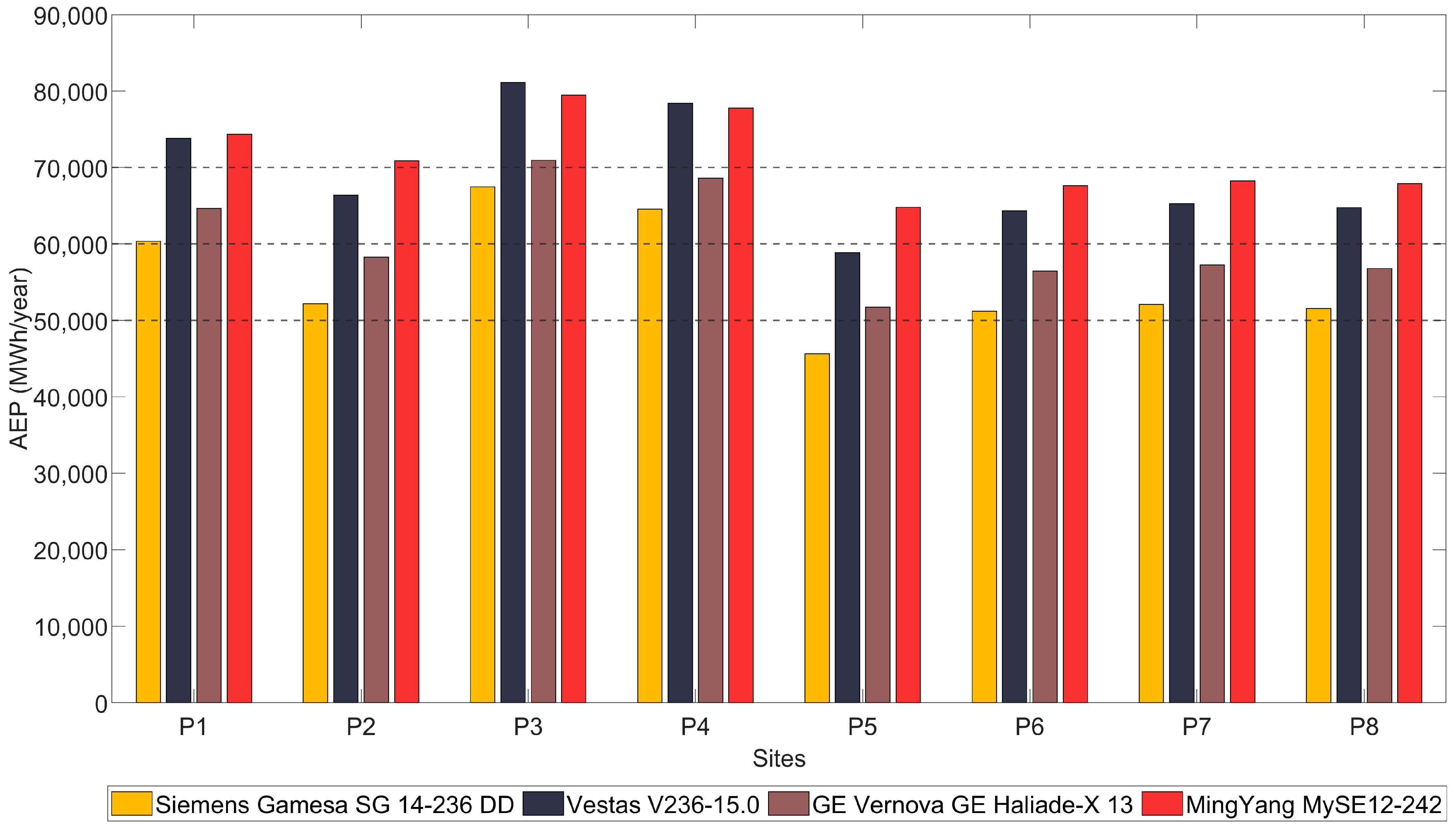
Figure 6 presents the estimated annual energy production for the four types of turbines analyzed, each characterized by a distinct nominal power and power curve (previously presented in Figure 1). The production calculation was performed for all eight studied locations.
As expected from the analysis of the distribution of average wind speeds and power curves, the highest annual energy production, regardless of the type of turbine used, is recorded in sites P3 and P4, confirming the superior wind potential of these locations.
However, the main objective of the figure is to compare the performance of the four turbines under identical site conditions. It is observed that the Siemens Gamesa SG 14-236 DD turbine, although it is the second in terms of nominal power, records the lowest annual production in most locations. This result suggests a possible mismatch between the characteristics of its power curve and the specific wind speed regime of the analyzed sites. If we look at its power curve, we notice that both cut-in speed and rated wind speed have the highest values of all the turbines analyzed, thus leading to lower efficiency in the predominant speed range. The MingYang MySE12-242 turbine obtains the highest annual production values in most sites, indicating a better adaptation to the frequency distribution of wind speeds in the analyzed area due to the low rated wind speed. In two of the sites, the maximum performance is achieved using the Vestas V236-15.0 turbine, which, although it has a lower rated wind speed, still has a higher nominal power. These results are mainly due to the higher speed regime in these areas for which the need for a low-rated wind speed no longer plays such an essential role. Thus, it is evident that the optimization of the turbine choice depends on the local particularities of the wind regime.
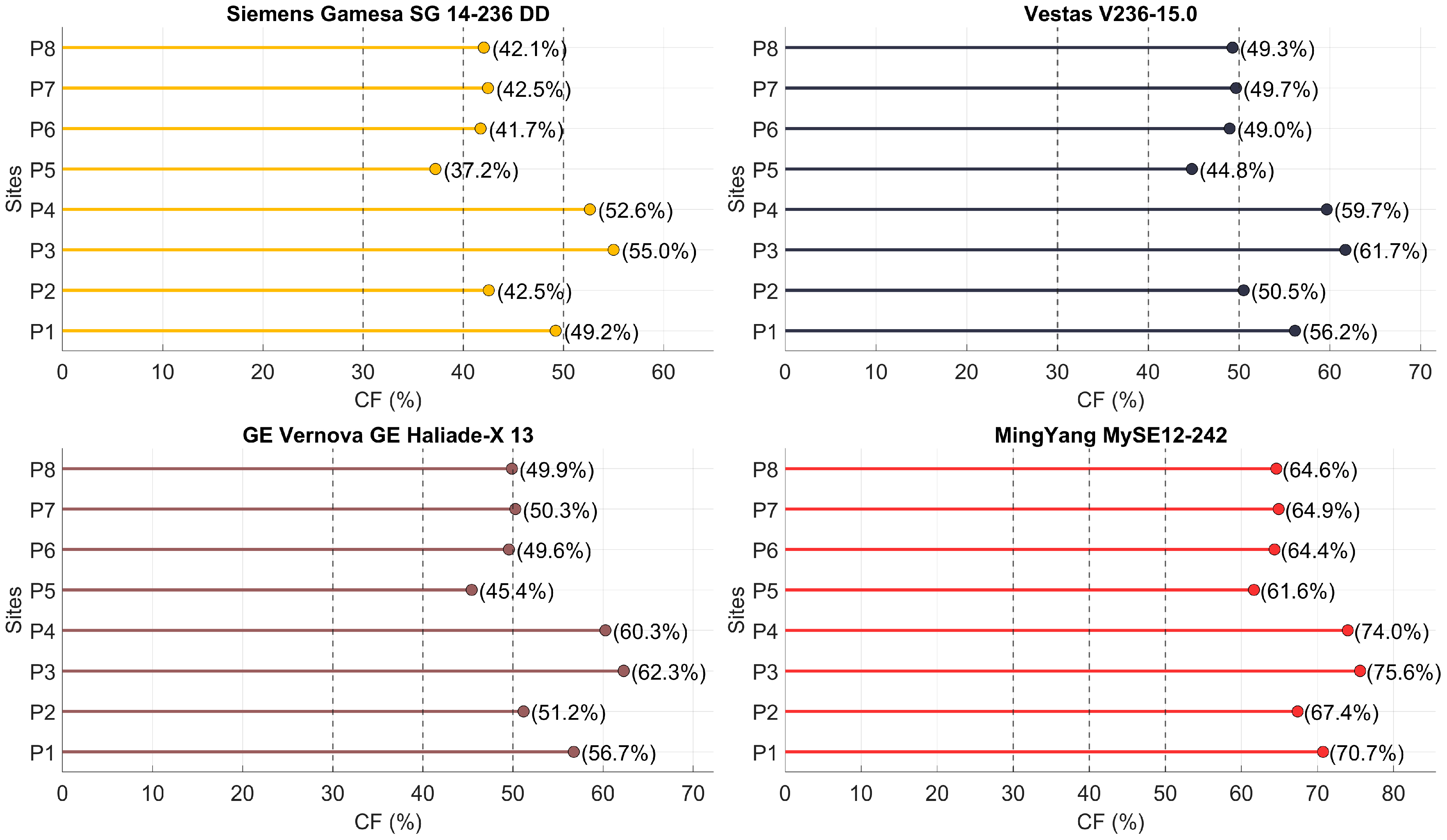
The capacity factor analysis (Figure 7) confirms and explains the differences observed at the annual production level. It is noted that the Siemens Gamesa SG 14-236 turbine records the lowest capacity factor value, reaching a minimum of 37.2% at location P5. It is also important to note that this location presents the lowest capacity factor values for all turbine types analyzed, which indicates a less favorable wind regime compared to the other sites. The value of 37.2% suggests that the turbine operates the equivalent of approximately one-third of the time at nominal power during a year, reflecting a limited use of the installed capacity. In contrast, the MingYang MySE12-242 turbine presents the highest capacity factor values, exceeding 60% in all locations, which indicates a very efficient exploitation of the wind resource and an optimal compatibility between its power curve and the wind speed distribution. These high percentages show that the turbine operates for a significant period of the year close to the nominal power, which explains the higher annual production obtained.
As for the Vestas V236-15.0 turbine, it records considerably higher capacity factor values in the favorable sites (the two locations with superior performances, P3 and P4), clearly exceeding the values obtained in the other locations. This behavior highlights a very good adaptation to the specific conditions of those sites and confirms that the energy performance directly depends on the correlation between the technical characteristics of the turbine and the local wind regime. The sites in the Black Sea also, in this case, present similar wind profile values to each other even when they are positioned at different distances from the shore.
In assessing the annual energy production of an offshore wind farm, several categories of losses must be considered that can significantly reduce the theoretically estimated performance. The annual availability of the farm, which reflects the percentage of time the turbines are operational, is the first essential factor, generally ranging from 95% to 98% [52]. In the case of offshore structures with a fixed foundation, availability can be estimated according to the distance from the port, which influences the time required for maintenance interventions.
Aerodynamic losses (the wake effect) arise from the interaction between the turbines, by generating turbulence that reduces the energy available to the turbines located downstream, typically having values between 5% and 10% [53]. Hysteresis losses, estimated at approximately 1%, are associated with rapid variations in wind direction, which affect the ability of the turbine guidance system to adapt optimally, an aspect that is particularly relevant in areas with variable wind direction, such as the Black Sea.
Added to these are power performance losses (up to 2%) due to dust deposits, corrosion or component degradation, as well as electrical and grid connection losses due to cable resistance and energy transfer to the substation [53]. In addition, there is a gradual decrease in turbine performance over the life of the project, which leads to a progressive decrease in energy production.
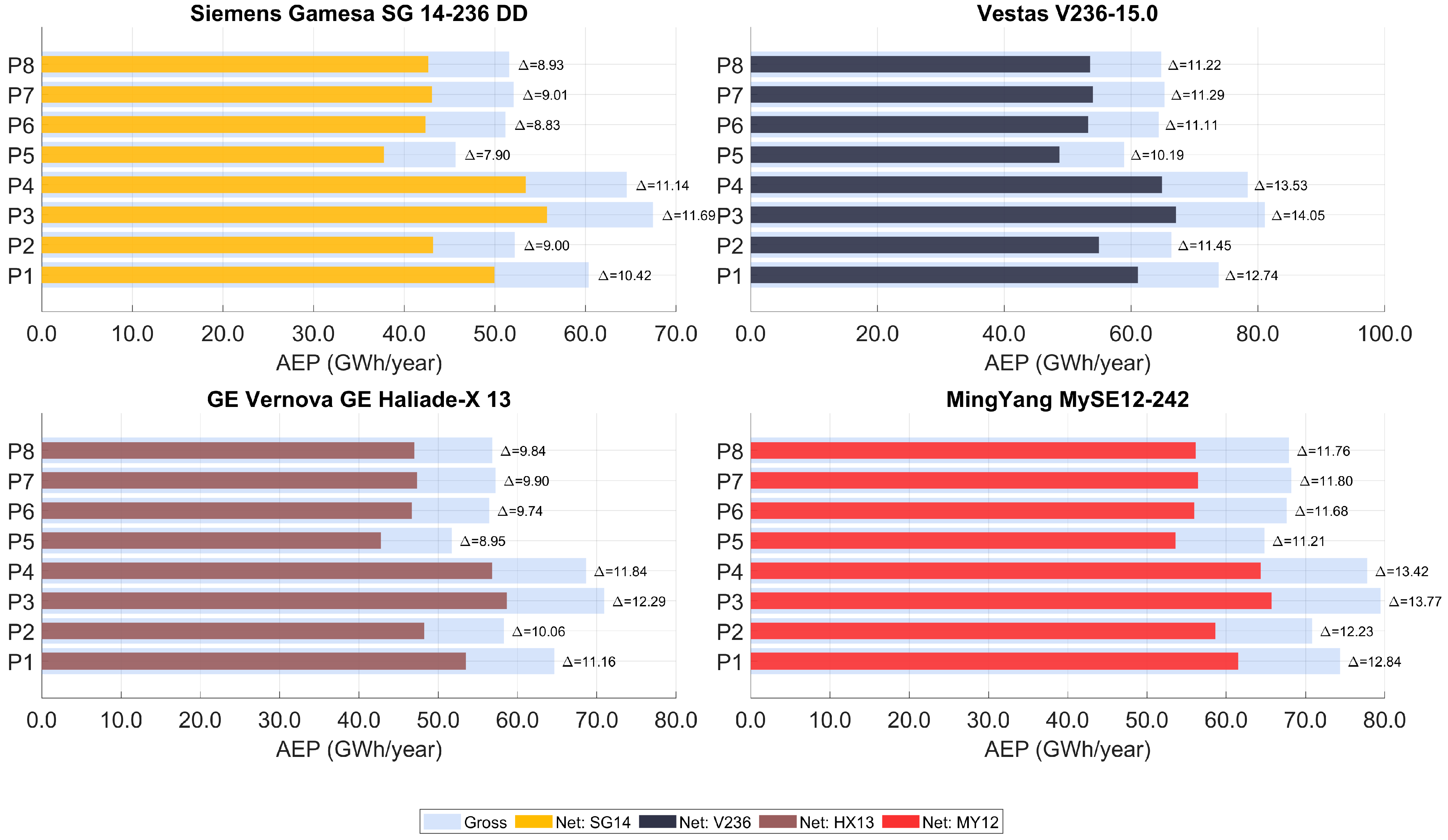
Taking these losses into account, Figure 8 shows the annual energy production both without losses and with losses. As can be seen losses between 7.9 and 14.05 GWh/year are observed, representing a percentage of approximately 17.4%.
Table 2 presents the efficiencies of the electrolyzers chosen for the study, which were determined using Equation (7). From the six devices, we observe a tendency for the efficiency of AWEs to be higher than that of PEMs.
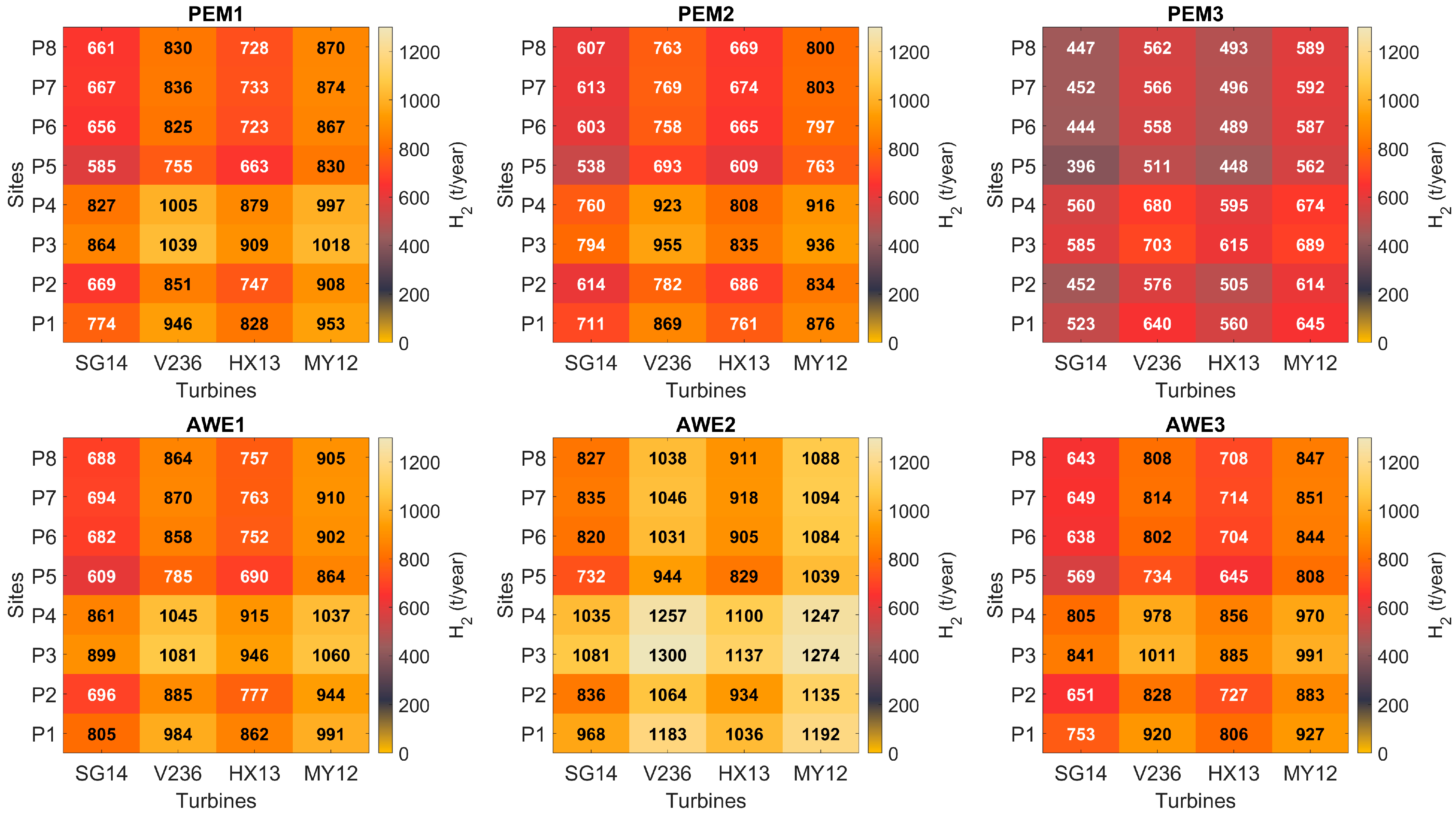
Figure 9 presents the estimated annual hydrogen production (t/year) for the eight sites, considering the four turbine types and, separately, each electrolyzer type (three PEM and three AWE variants). The results indicate that the maximum production is achieved at site P3, using the Vestas V236-15.0 turbine—AWE2 electrolyzer combination. Overall, the annual hydrogen production is in the range of 396–1300 t/year. A relevant aspect highlighted by the figure is that the hierarchy of sites tends to follow the hierarchy of AEP: sites with higher wind production naturally lead to higher hydrogen production. However, the differences between electrolyzers (PEM vs. AWE and between variants in the same class) indicate that not only the amount of available energy controls the outcome, but also the “compatibility” between the power profile delivered by the turbine and the electrolyzer.
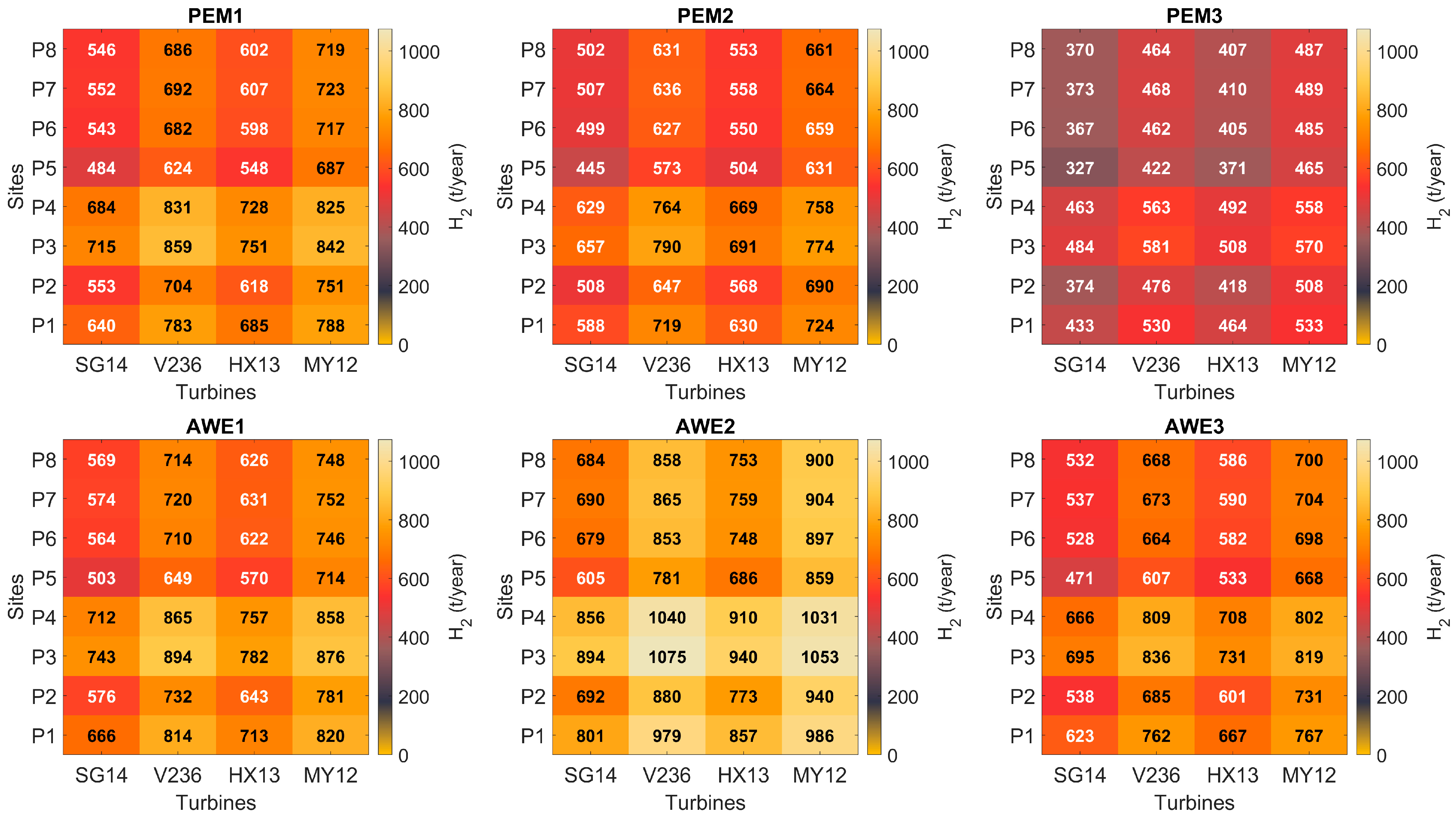
The results indicate that the best performance is not recorded by the device with the highest hydrogen production rate per hour, but by the one characterized by the lowest specific energy consumption (kWh/kgH2). This highlights a trade-off between maximum production flow and energy efficiency: although the installed capacity influences the level of production, the specific consumption becomes a decisive factor in the efficient conversion of the available energy. In the analyzed scenario, the higher energy efficiency led to obtaining of higher annual quantities of hydrogen, even in the case of a comparable or slightly lower nominal flow.
For example, the PEM 1 and AWE 1 electrolyzers, although recording a similar hourly production (360), present differences in the level of specific energy consumption. The device characterized by a slightly lower consumption leads, on an annual level, to a difference of approximately 42 t/year in favor of AWE1 (considering site P3). This difference, apparently modest in terms of technical parameters, becomes significant when integrated over the entire year of operation and on the scale of the entire fleet.
Figure 10 reproduces the same analysis, but using the AEP with losses, which leads to an overall decrease in hydrogen production. Although the same hierarchy of sites and the same optimal combination are broadly maintained (the maximum remains in the P3 site with AWE2), a consistent decrease in production is observed, directly determined by the reductions in available energy. The highest production becomes 1075 t/year, 225 t/year less than in the case without losses, which shows the sensitivity of the wind → energy → hydrogen chain to operational and technical losses and confirms the importance of including them for realistic estimates. The nominal production capacity of the electrolyzers is evidently the primary factor influencing the variations between them in the two figures. The PEM3 electrolyzer with a lower capacity systematically generates the lowest amounts of hydrogen in all locations, which is consistent with its constructive limitation. Thus, the global minimum of production is reached in the P5 site, where approximately 327 t/year is obtained, a value that confirms both the less favorable nature of the site and the fact that an undersized electrolyzer cannot capitalize on the available energy at the same level as the higher capacity variants. At the same time, for the Black Sea sites, the figure indicates relatively consistent production ranges for the optimal configurations in each technological family: for the best AWE, the estimated production falls between 897 and 904 t/year (this time considering the MingYang MySE12-242 turbine which is more preferred for the Black Sea sites), and for the best PEM, between 717 and 723, which shows that, once the best performing variant in each category is chosen, the variation between locations remains within comparable limits and mainly reflects the differences in wind resource between the sites.

4. Discussion

Considering the differences between electrolyzers, a study was conducted to determine the number of turbines required to exploit the entire energy produced by wind turbines. These results are presented in Table 3.
The analysis of the values obtained for N net (the number of turbines determined from the AEP with losses) allows the direct determination of the number of turbines required for the full operation of each type of electrolyzer. For the PEM1 and PEM2 electrolyzers, the values are approximately in the range of 0.23–0.42, which means that a single turbine covers only 23–42% of the annual energy requirement of a unit. Reversing the ratio, it follows that, on average, approximately three to four turbines are required to energetically support a single electrolyzer at nominal annual operation. A similar behavior is observed for AWE1, where the range of values also leads to the need for approximately 3–4 turbines for full operation.
The situation is different for PEM3, where the N net values are much higher (approximately 3.7–6.6), indicating that a single turbine can energetically support several PEM3 units simultaneously.
Therefore, the comparative analysis shows that for most high-capacity electrolyzers, the critical threshold for near-full operation is around three turbines per electrolyzer. The choice of three turbines for the subsequent study of the average daily production is thus aligned with the annual energy results. This number allows for an approximation of the nominal regime for efficient electrolyzers (AWE2/AWE3) while maintaining a realistic dynamic between periods of surplus and energy limitation. The three-turbine configuration positions the system in an optimal range between undersizing and oversizing.
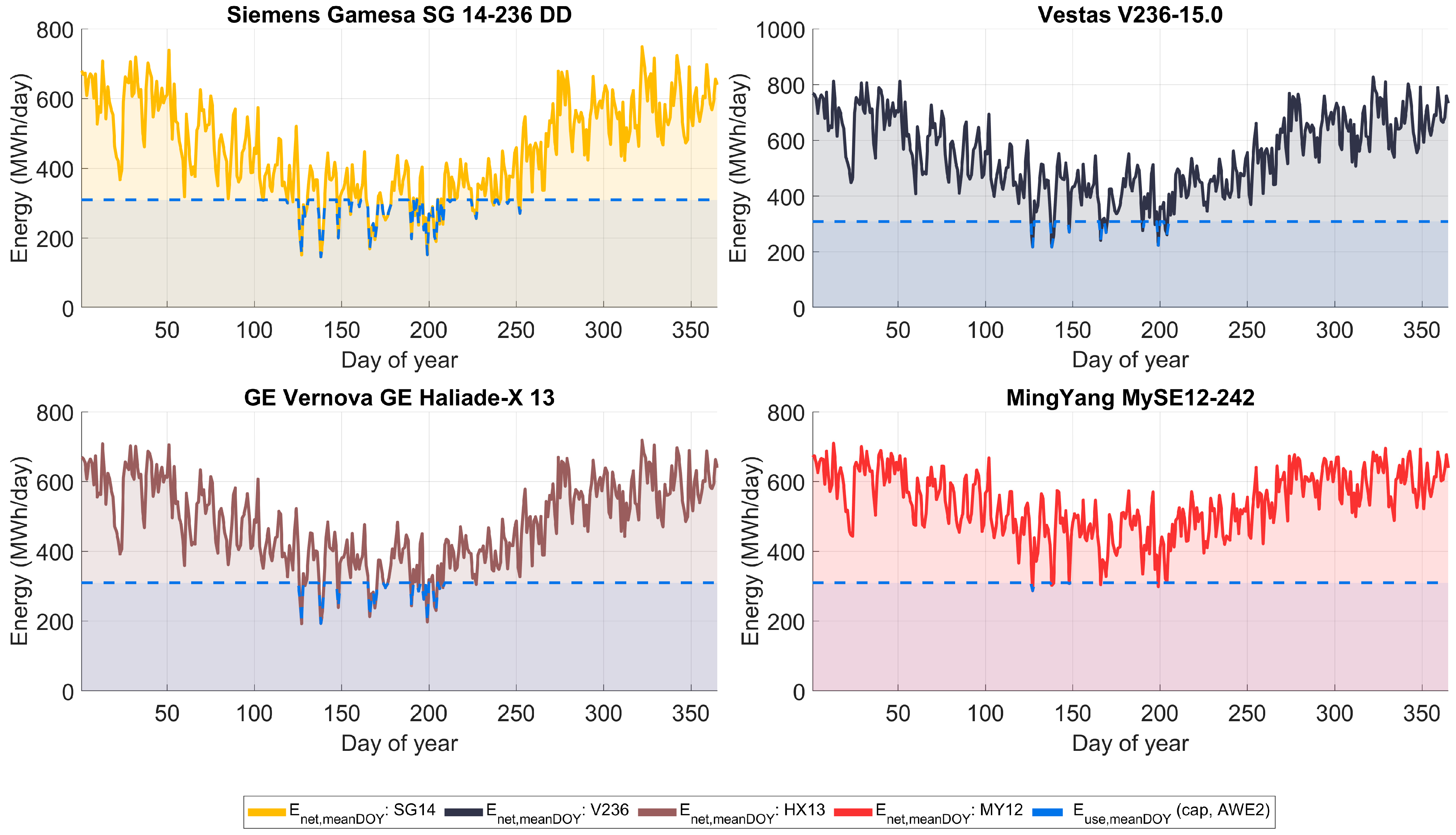
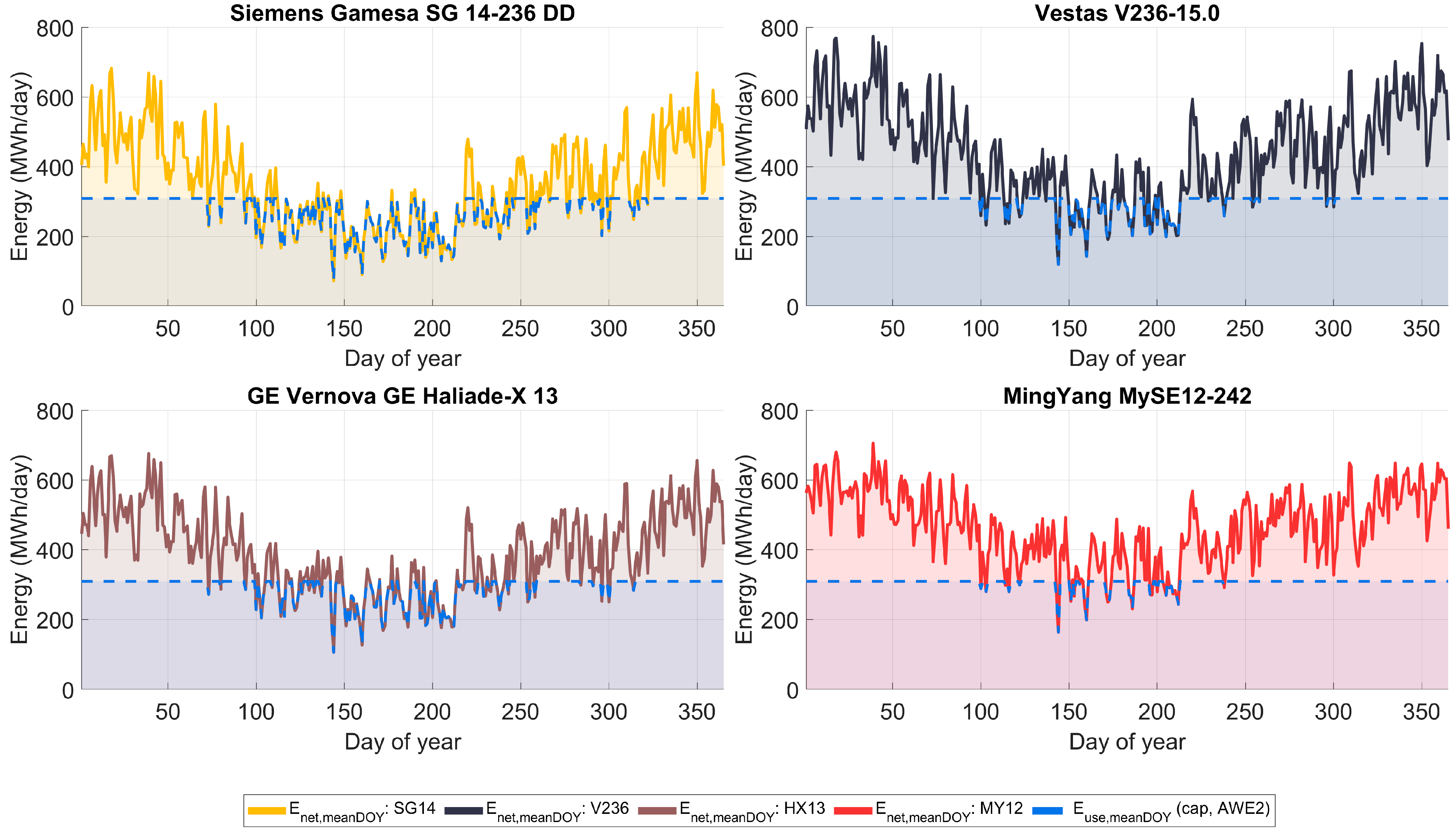
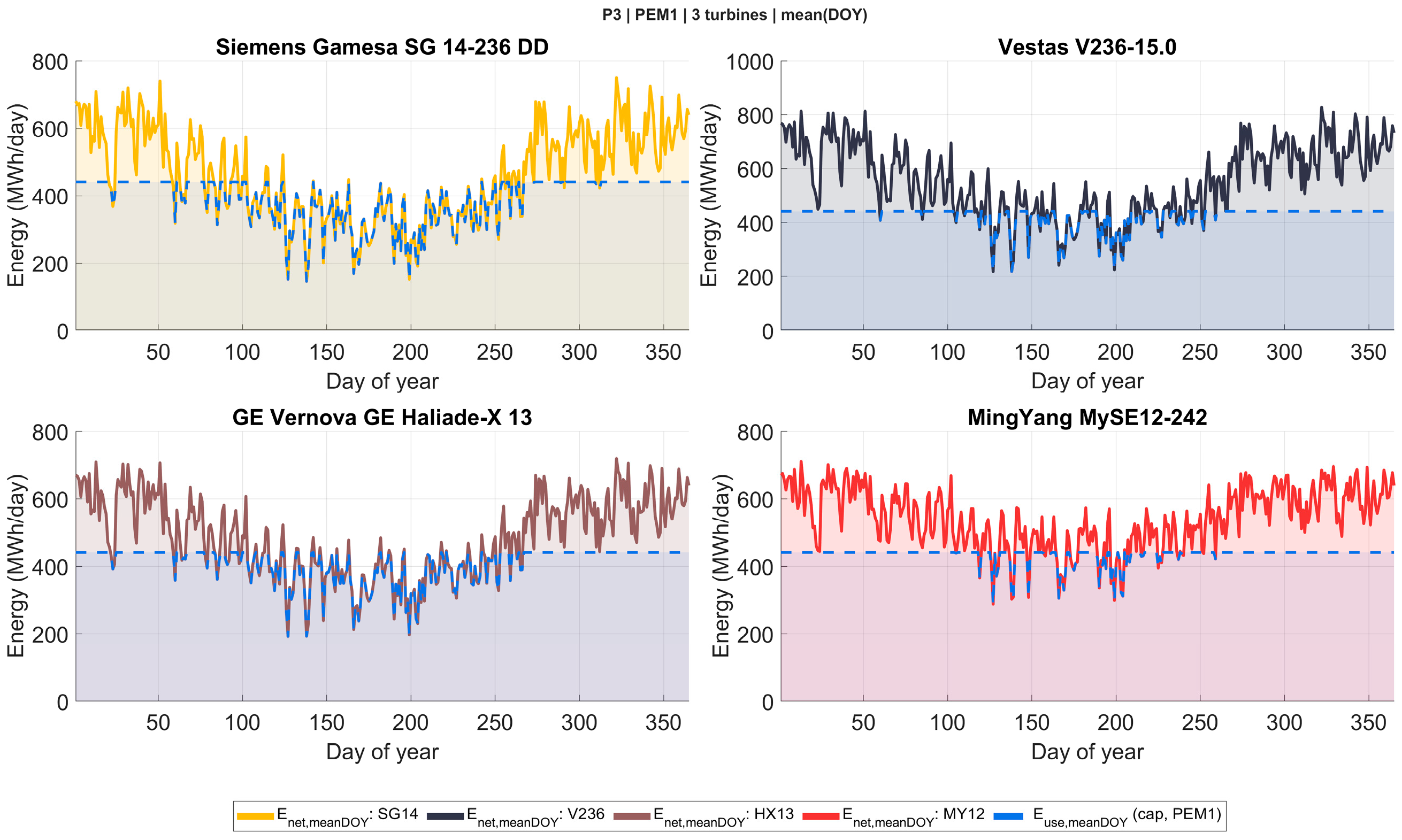
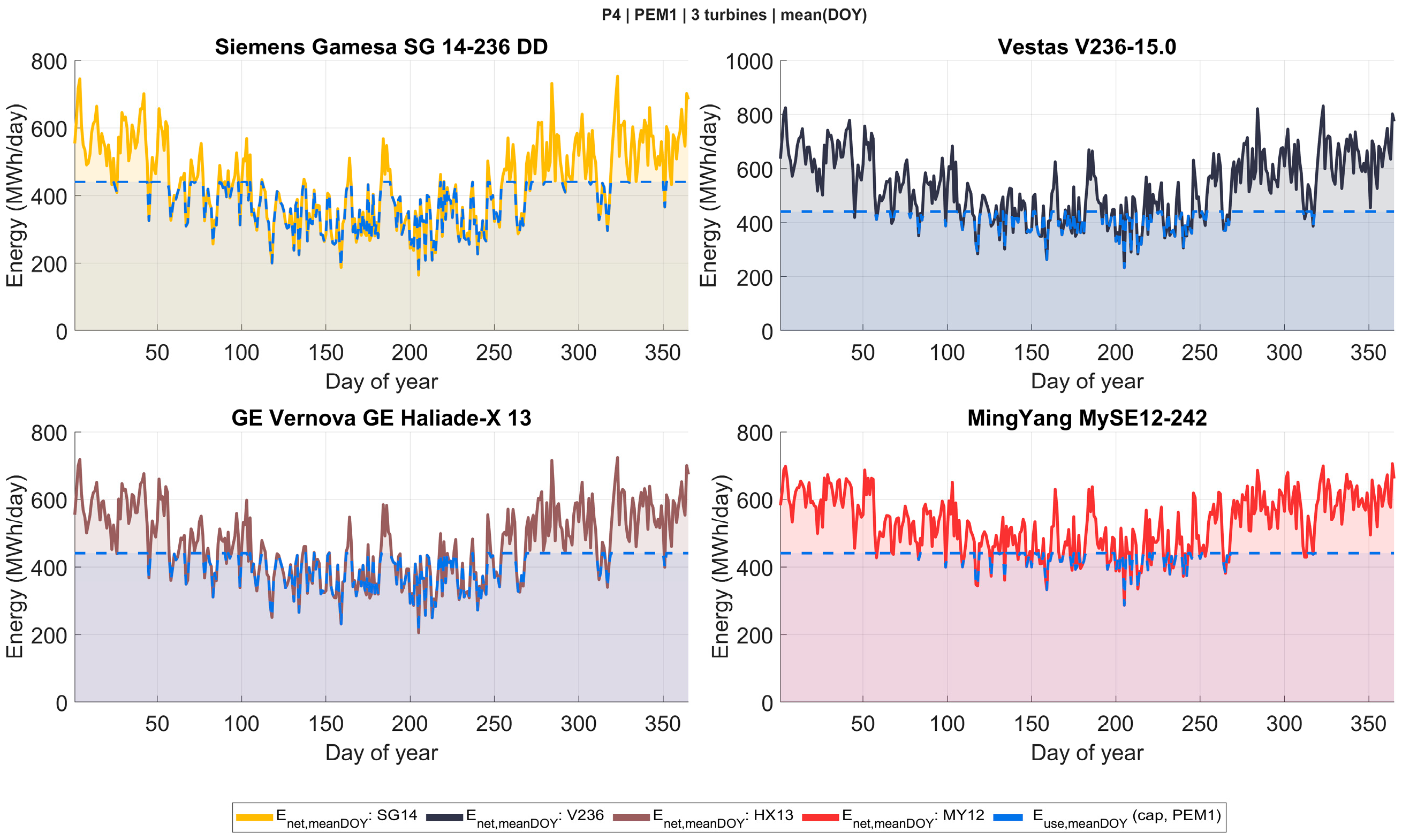
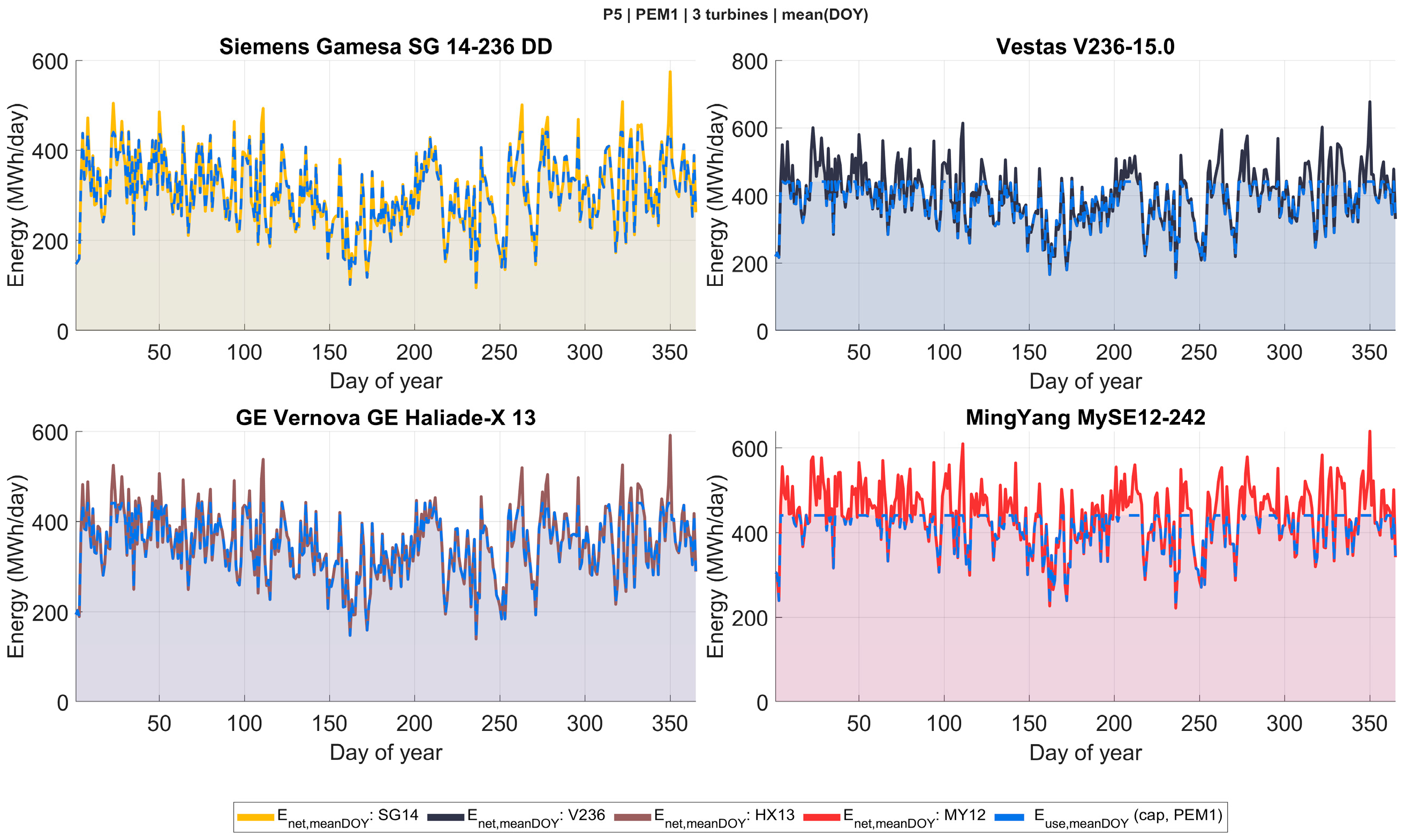
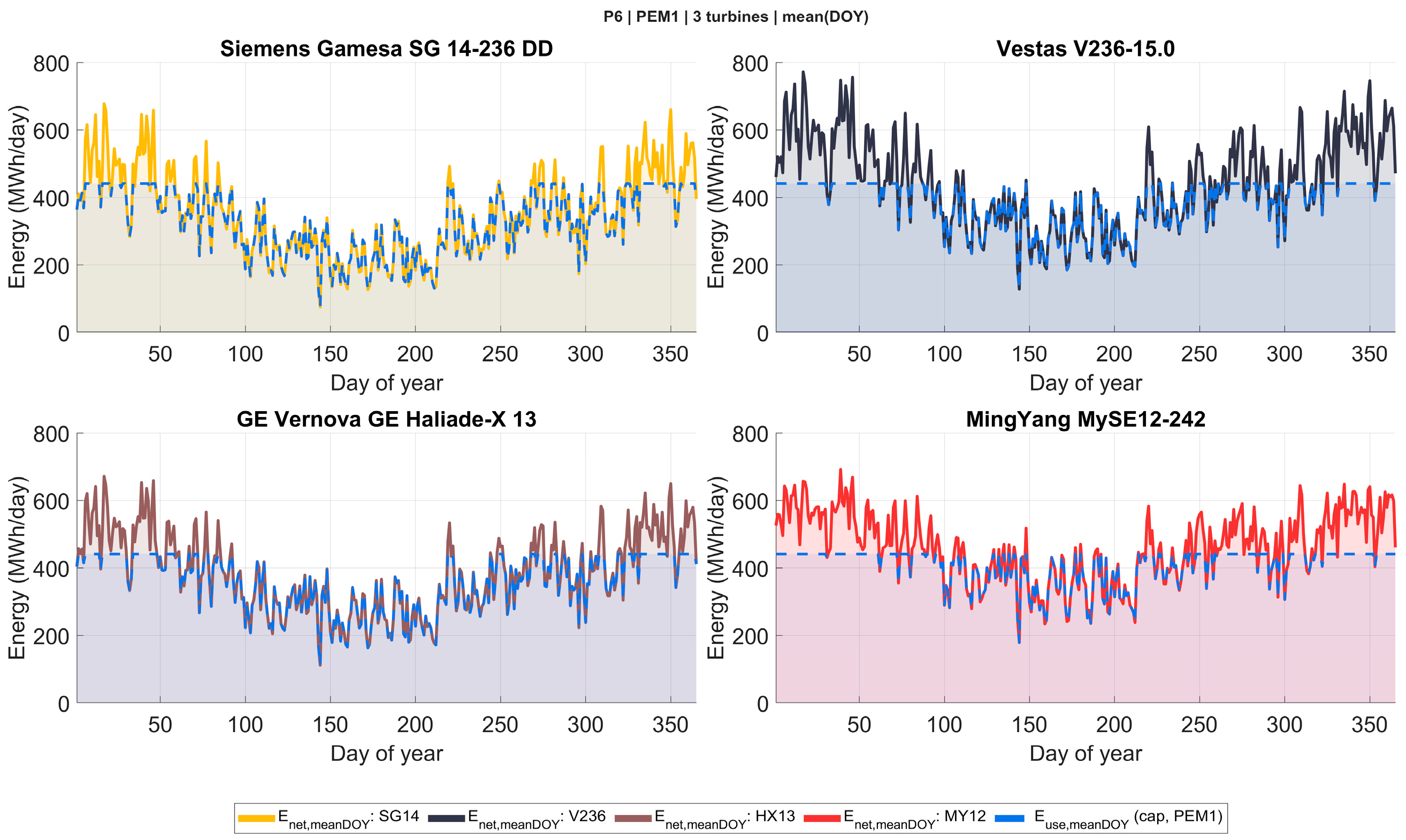
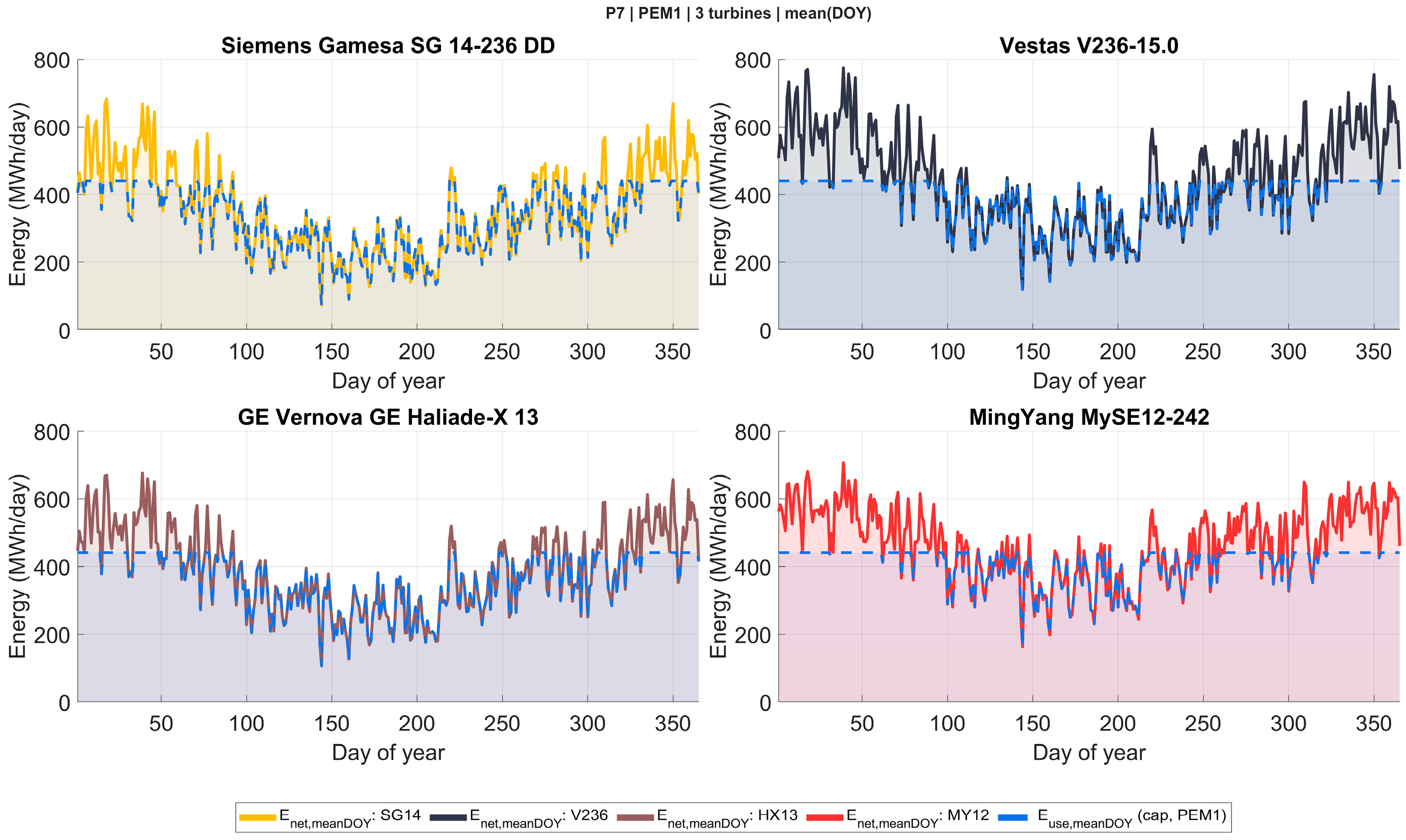
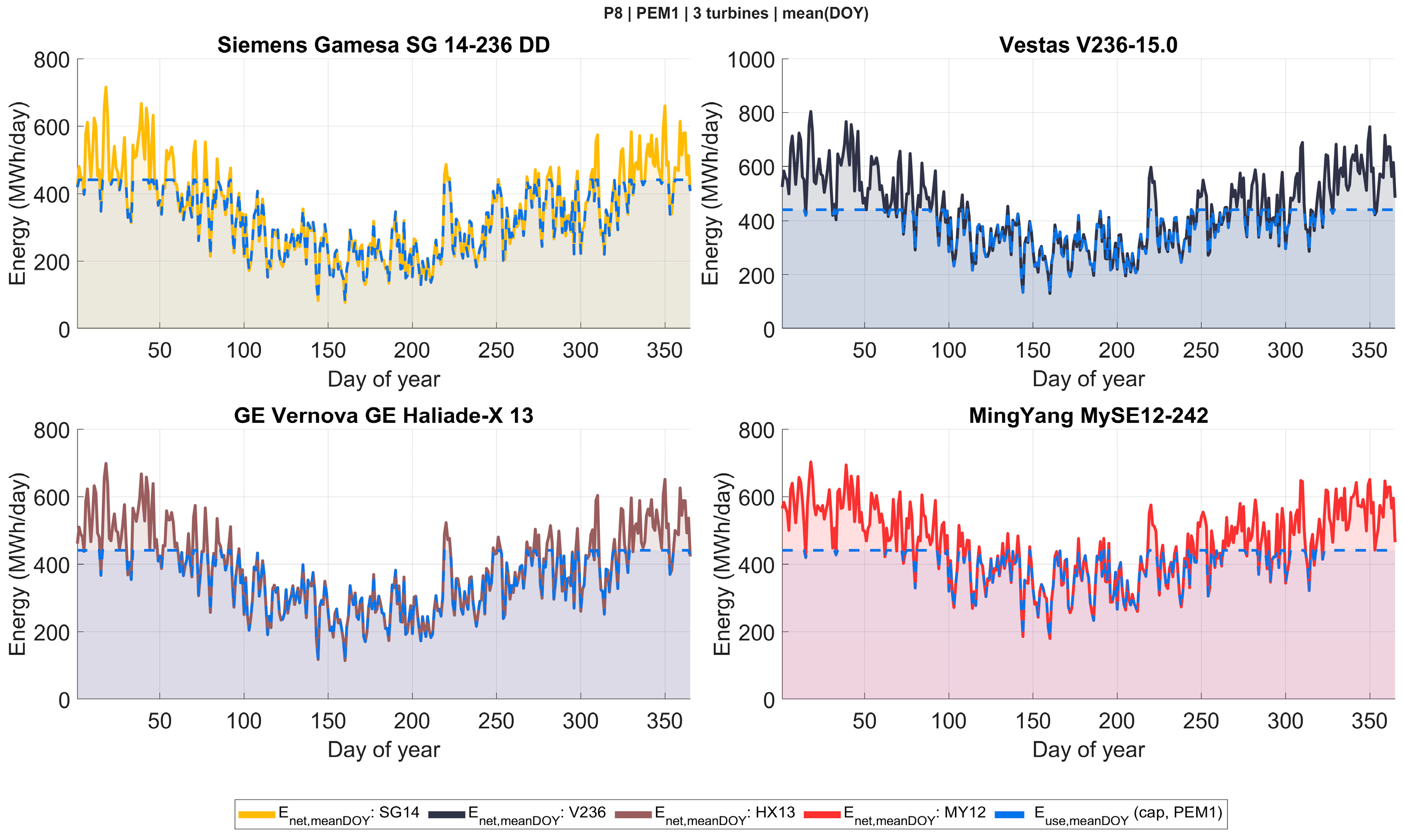
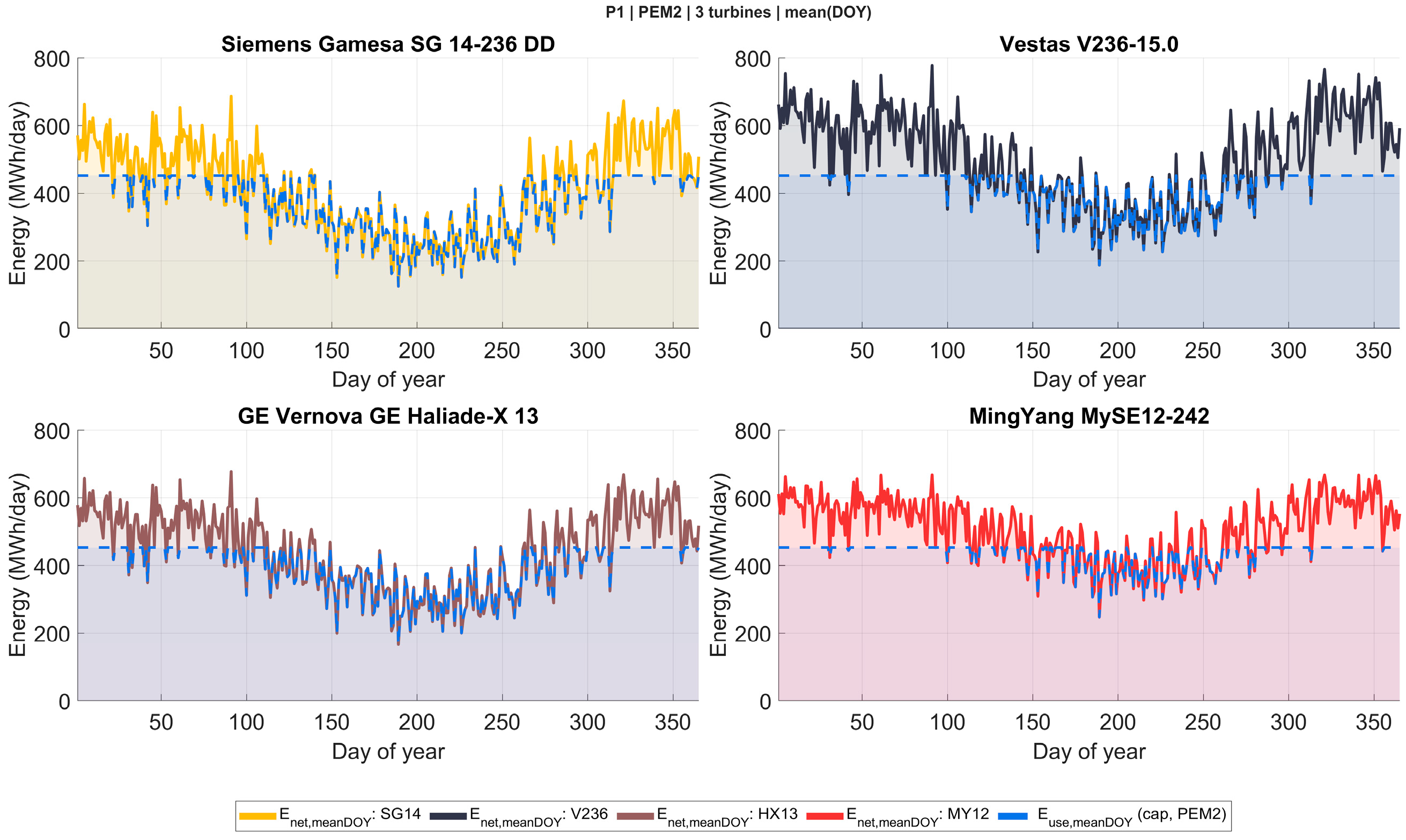
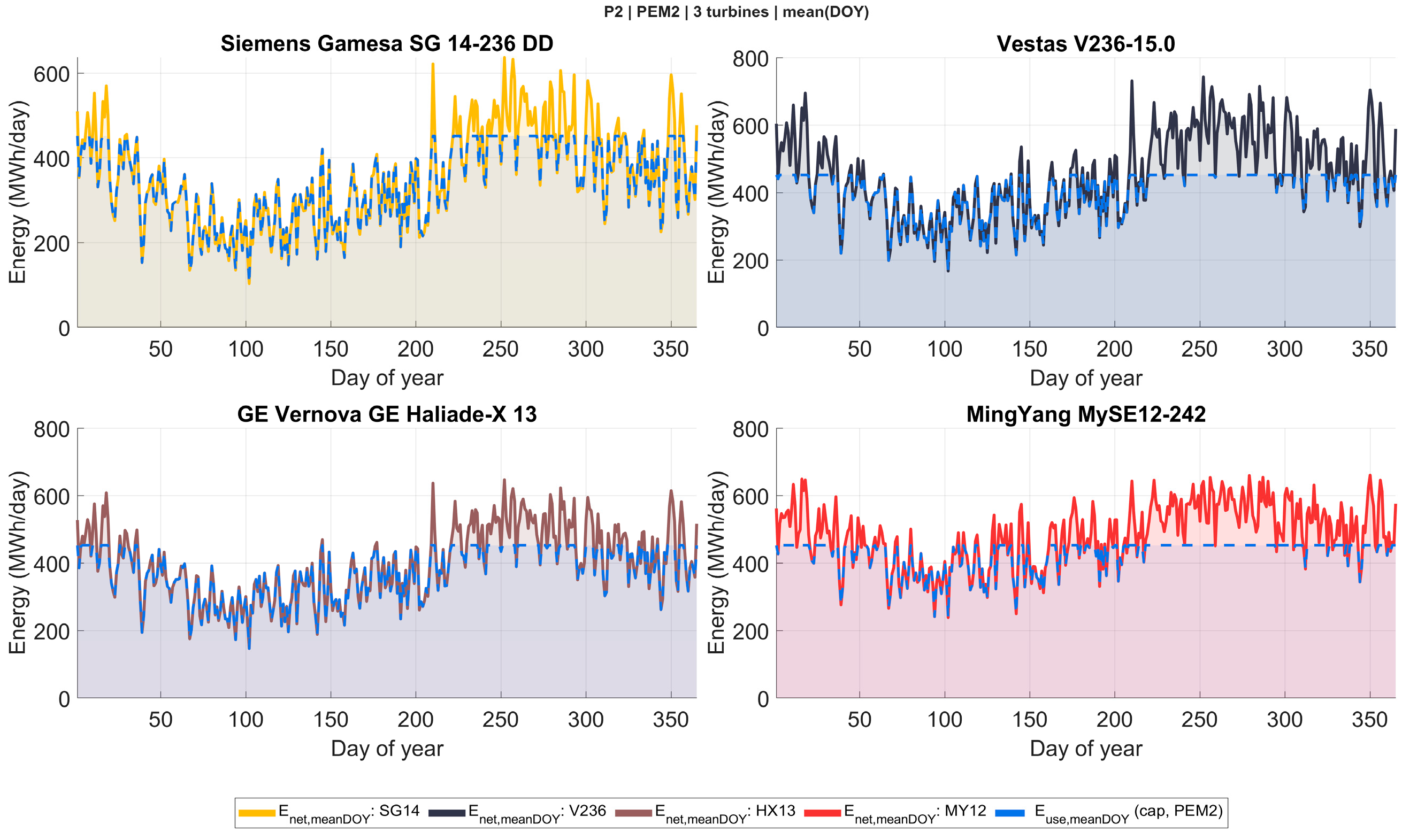
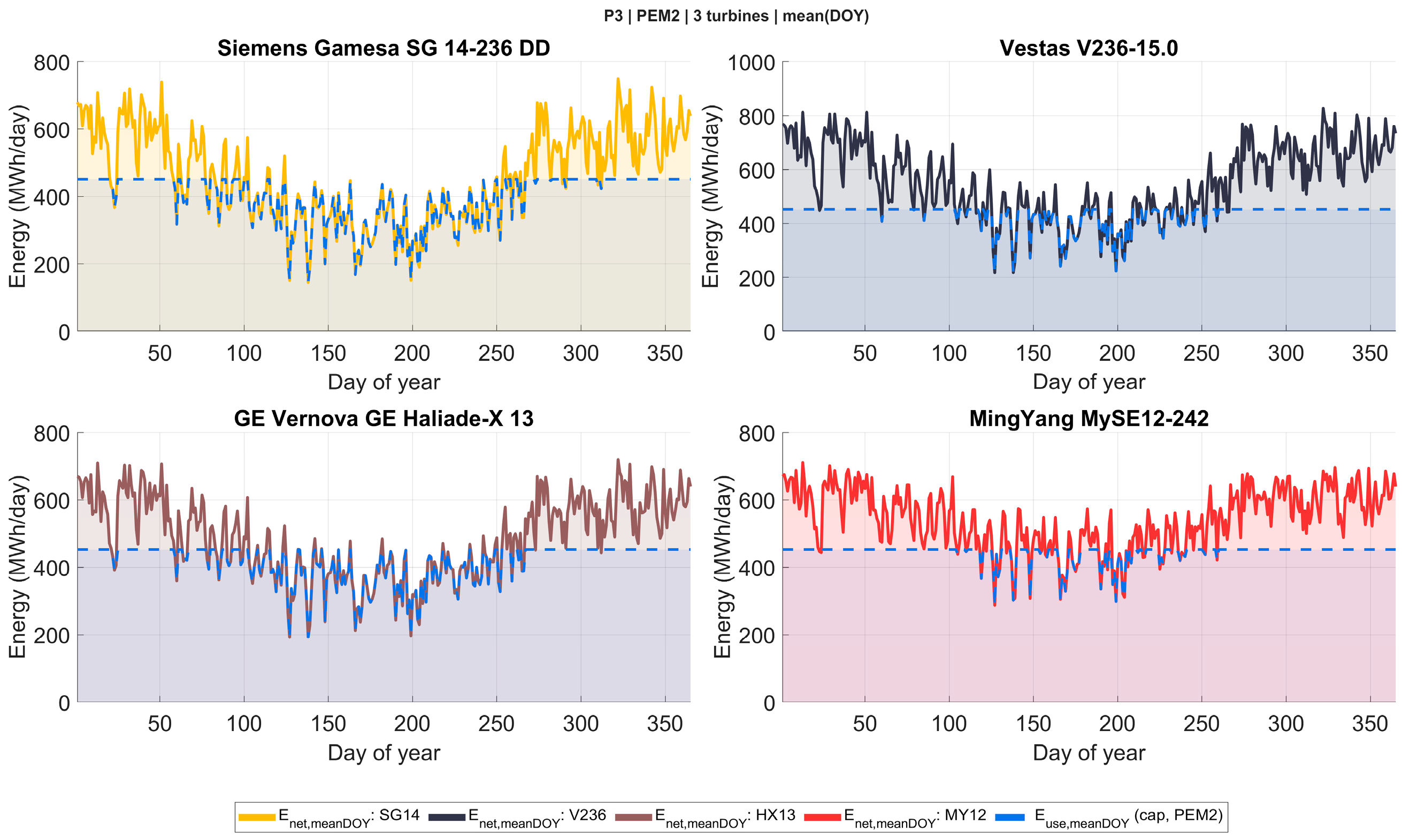
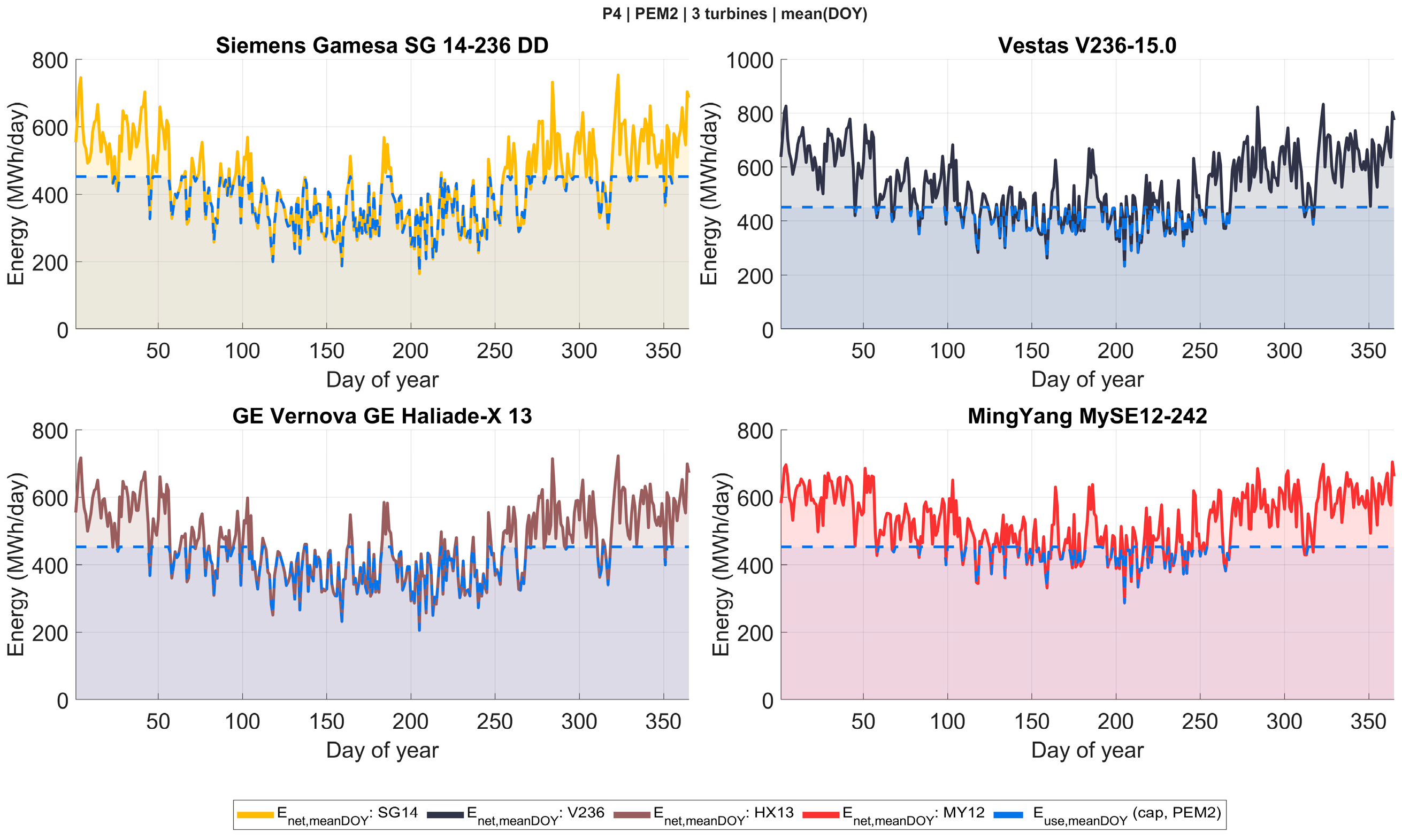
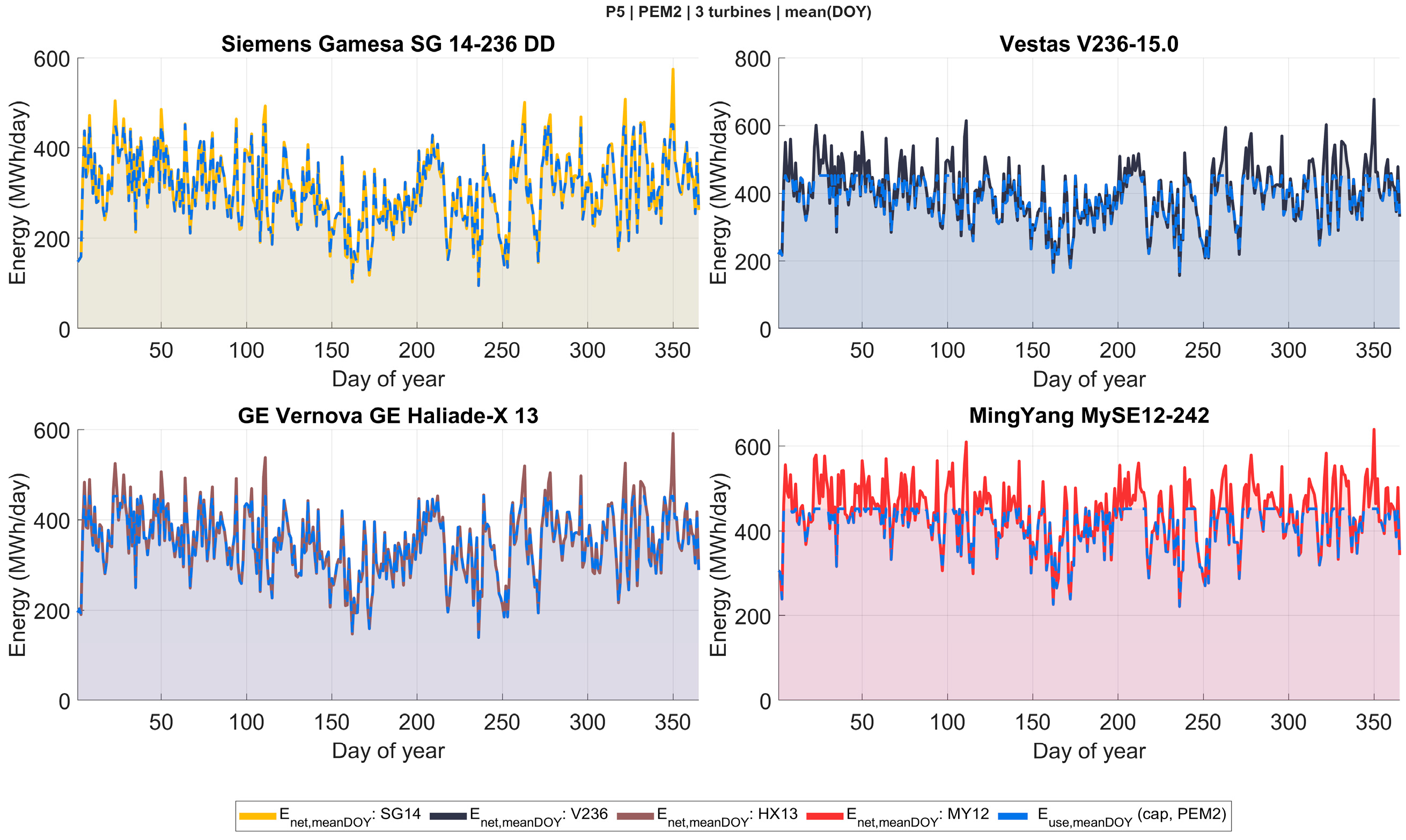
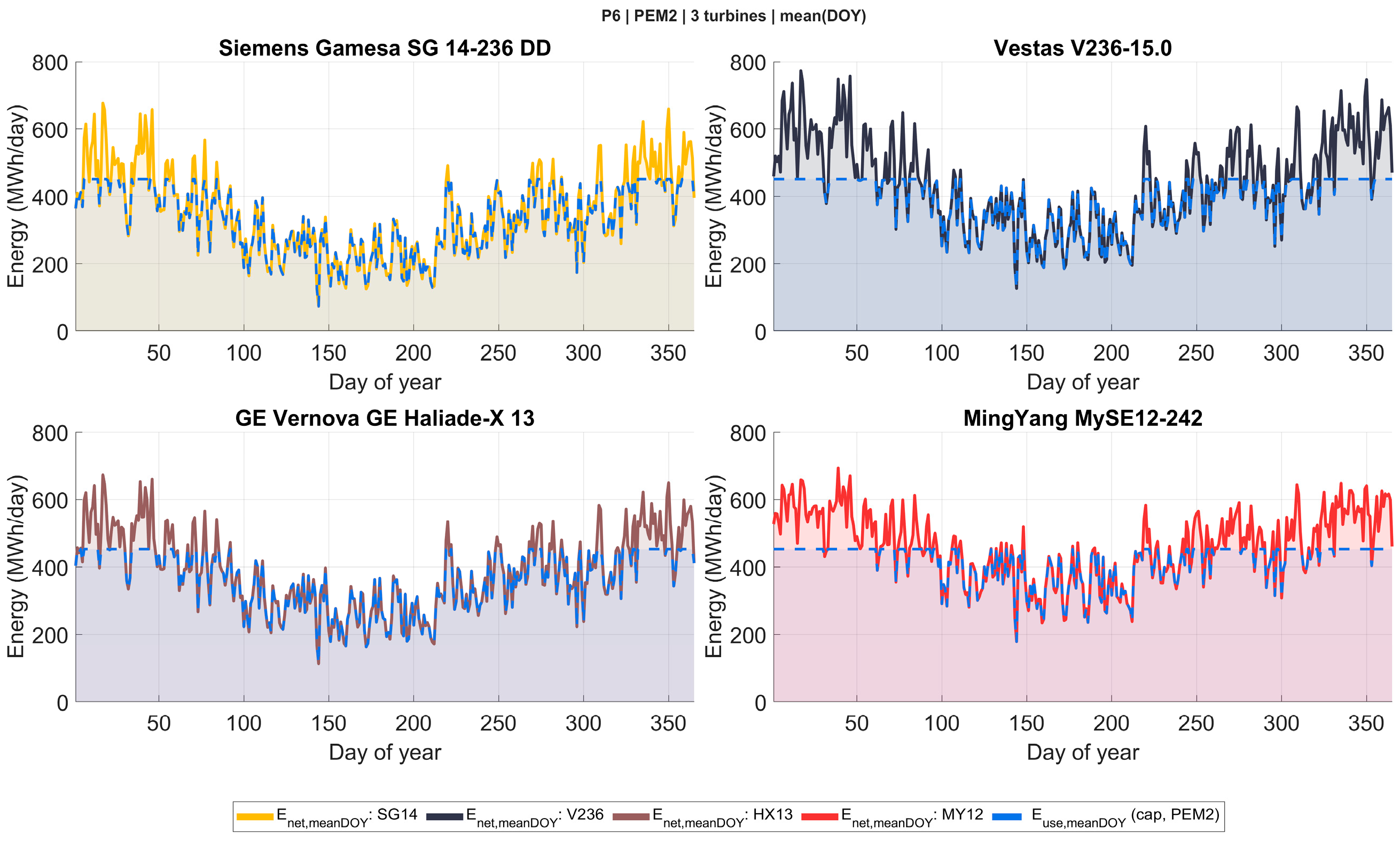
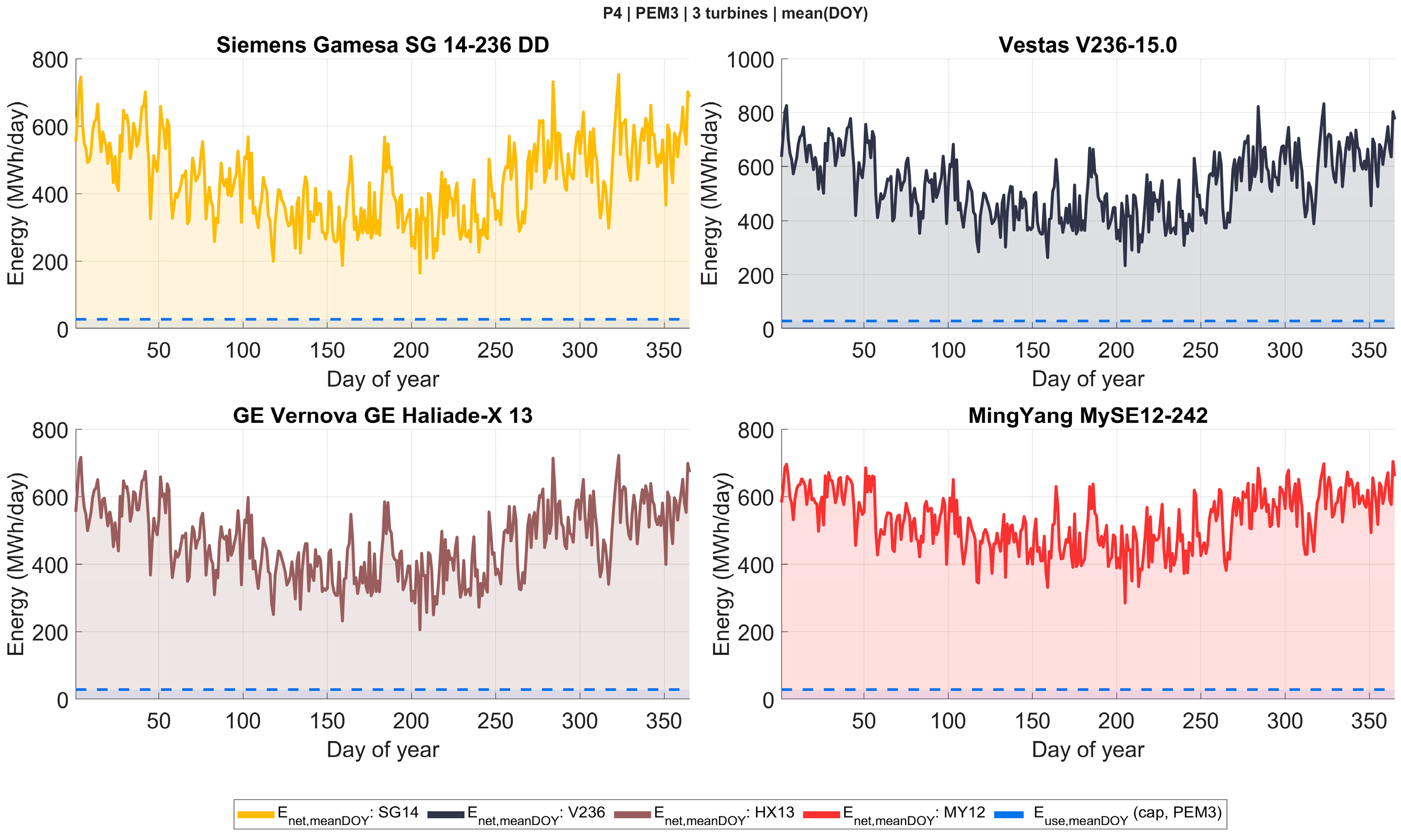
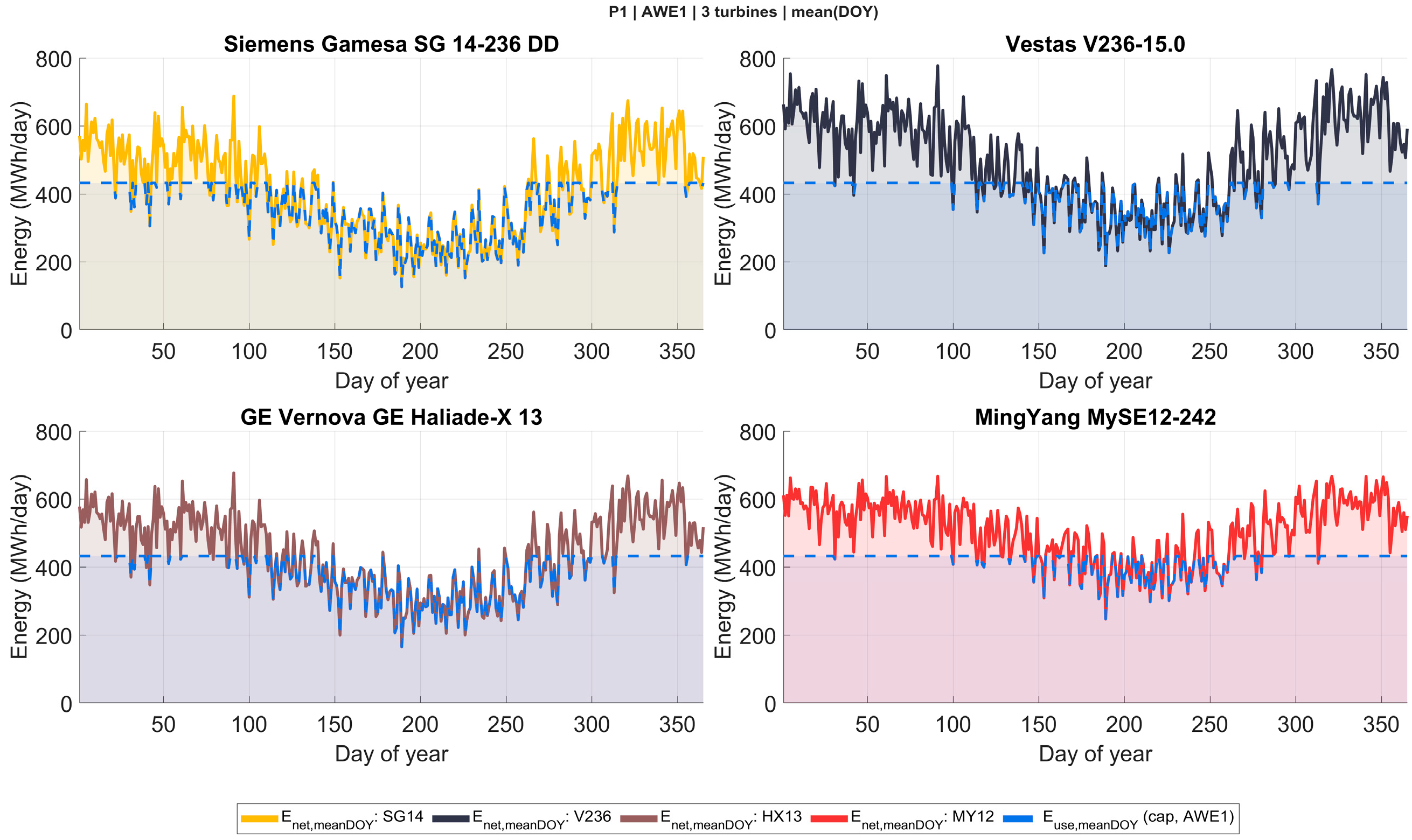
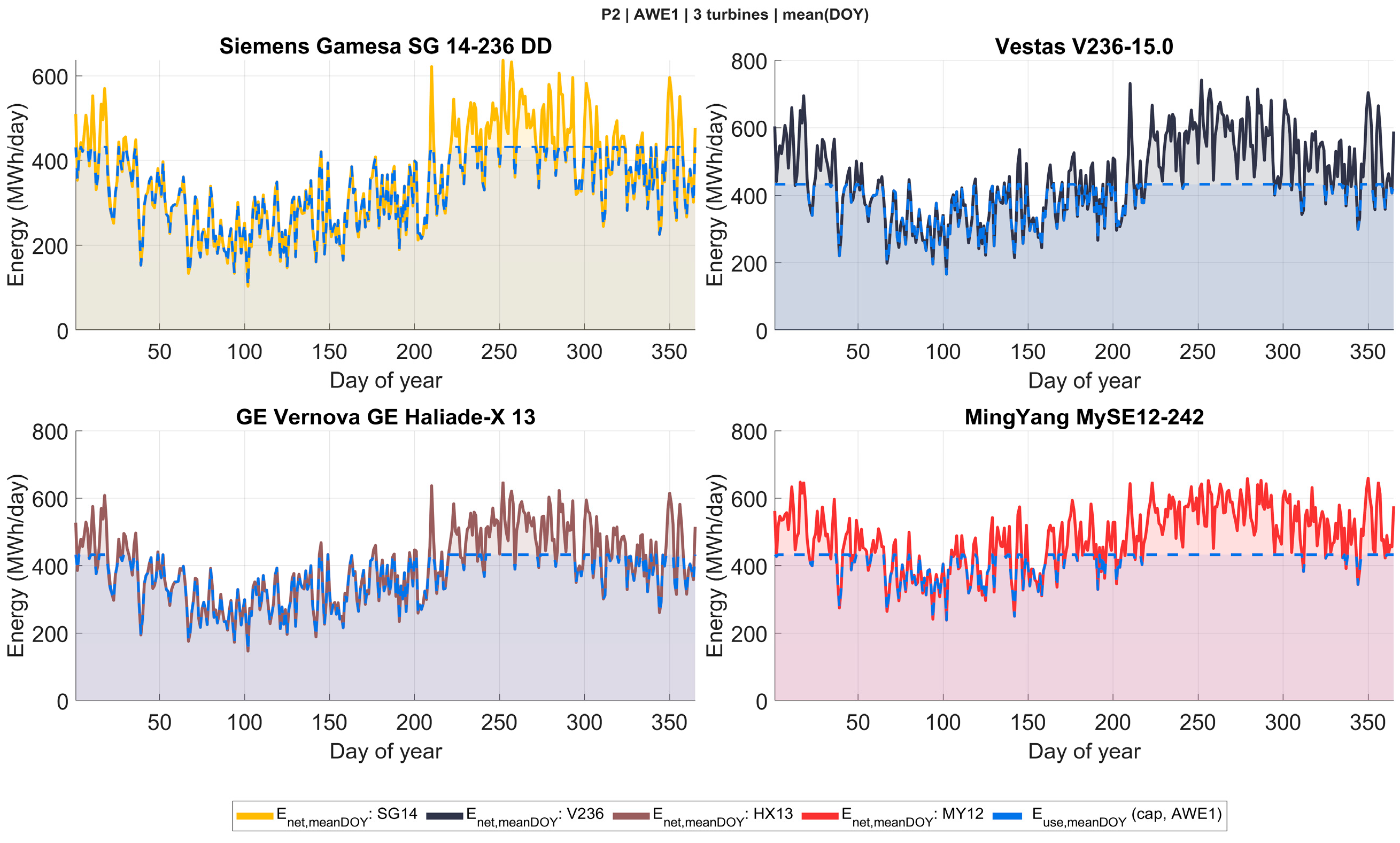
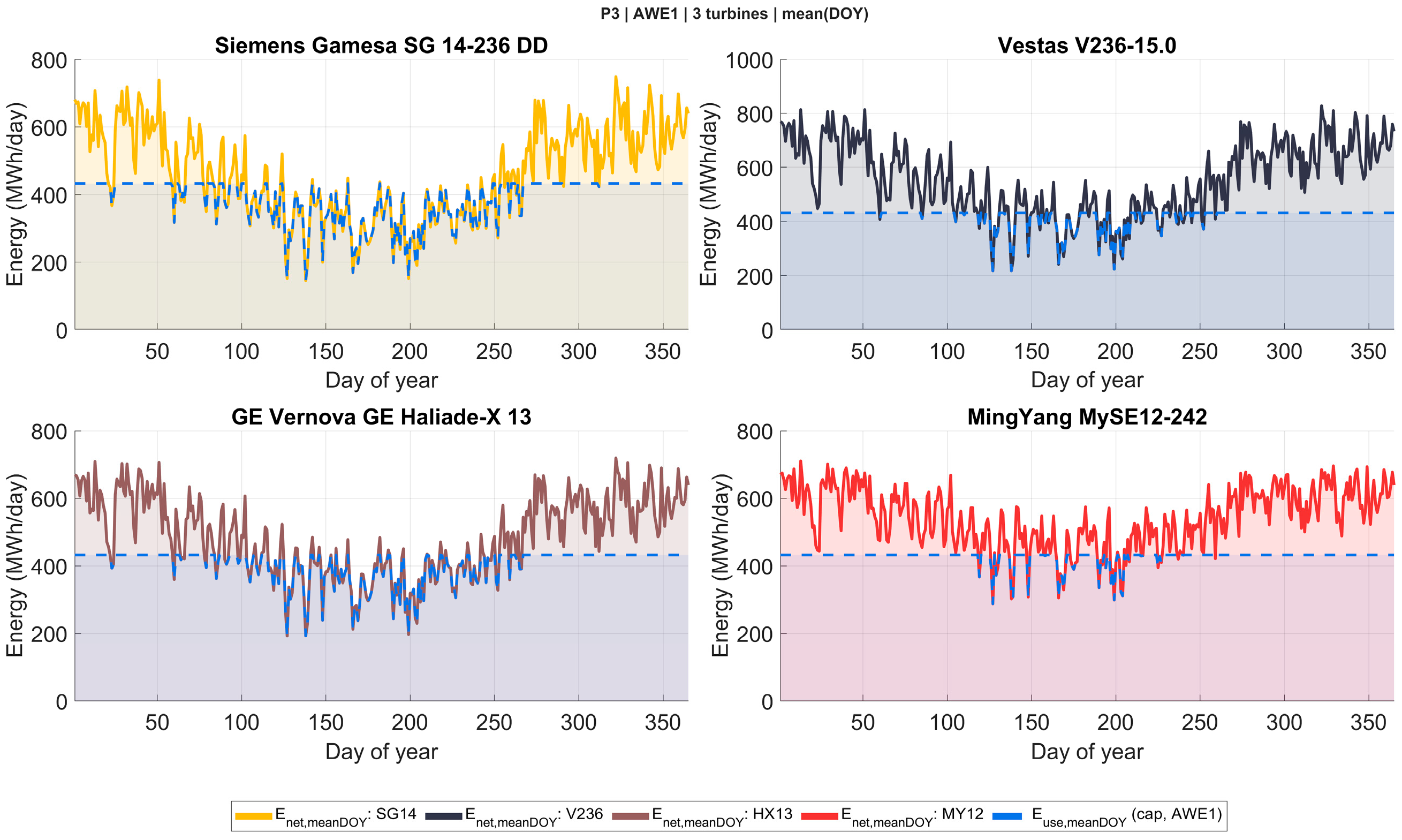
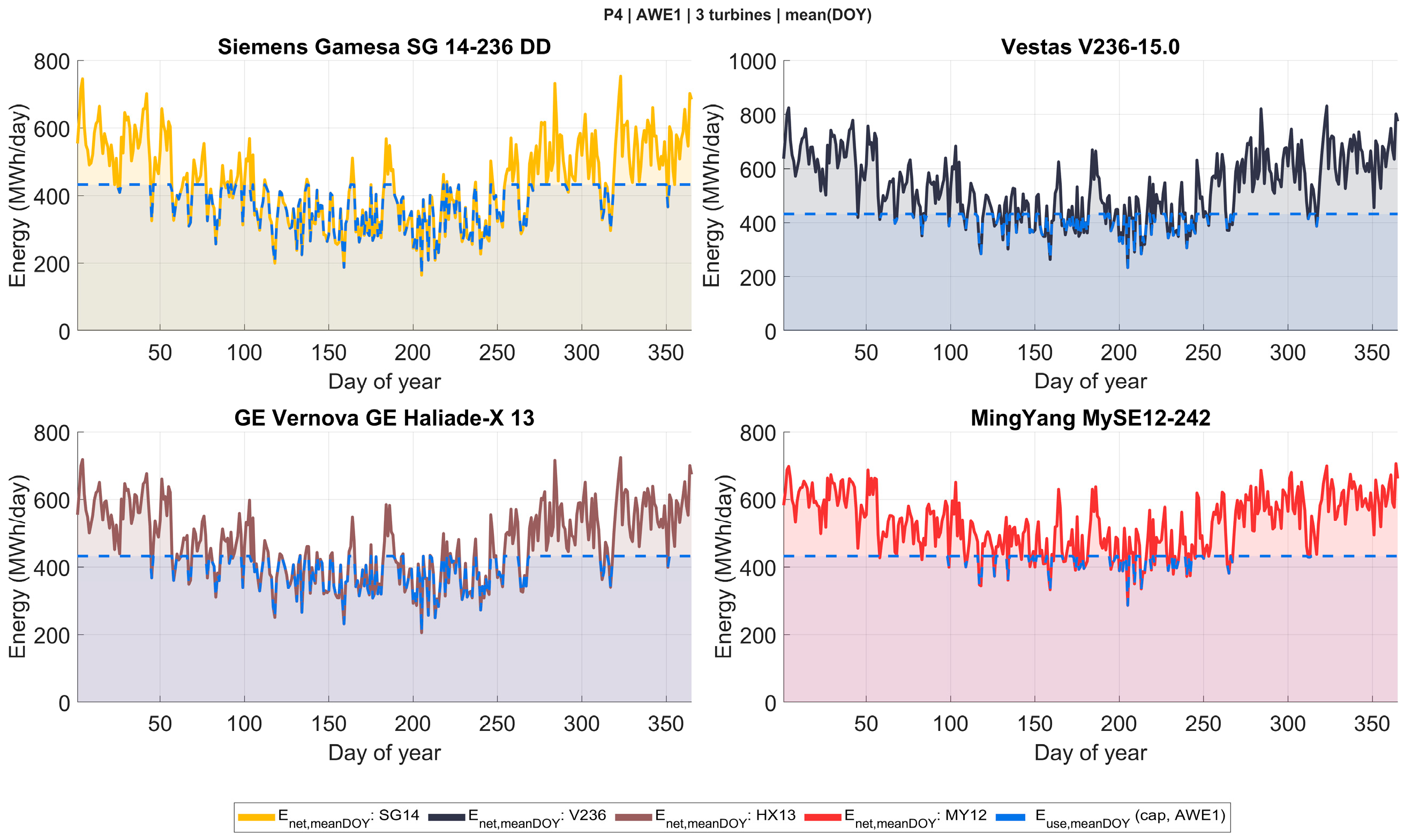
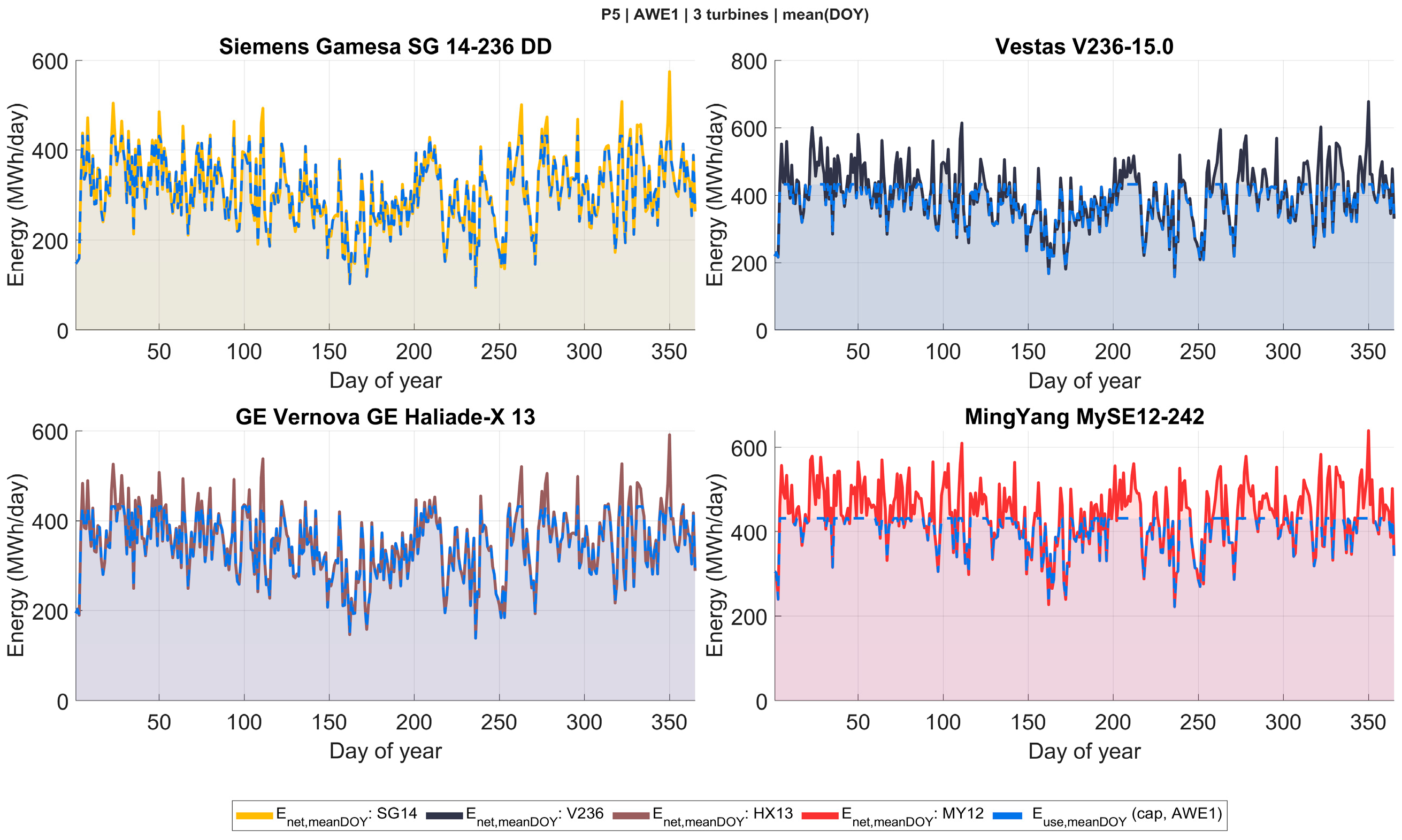
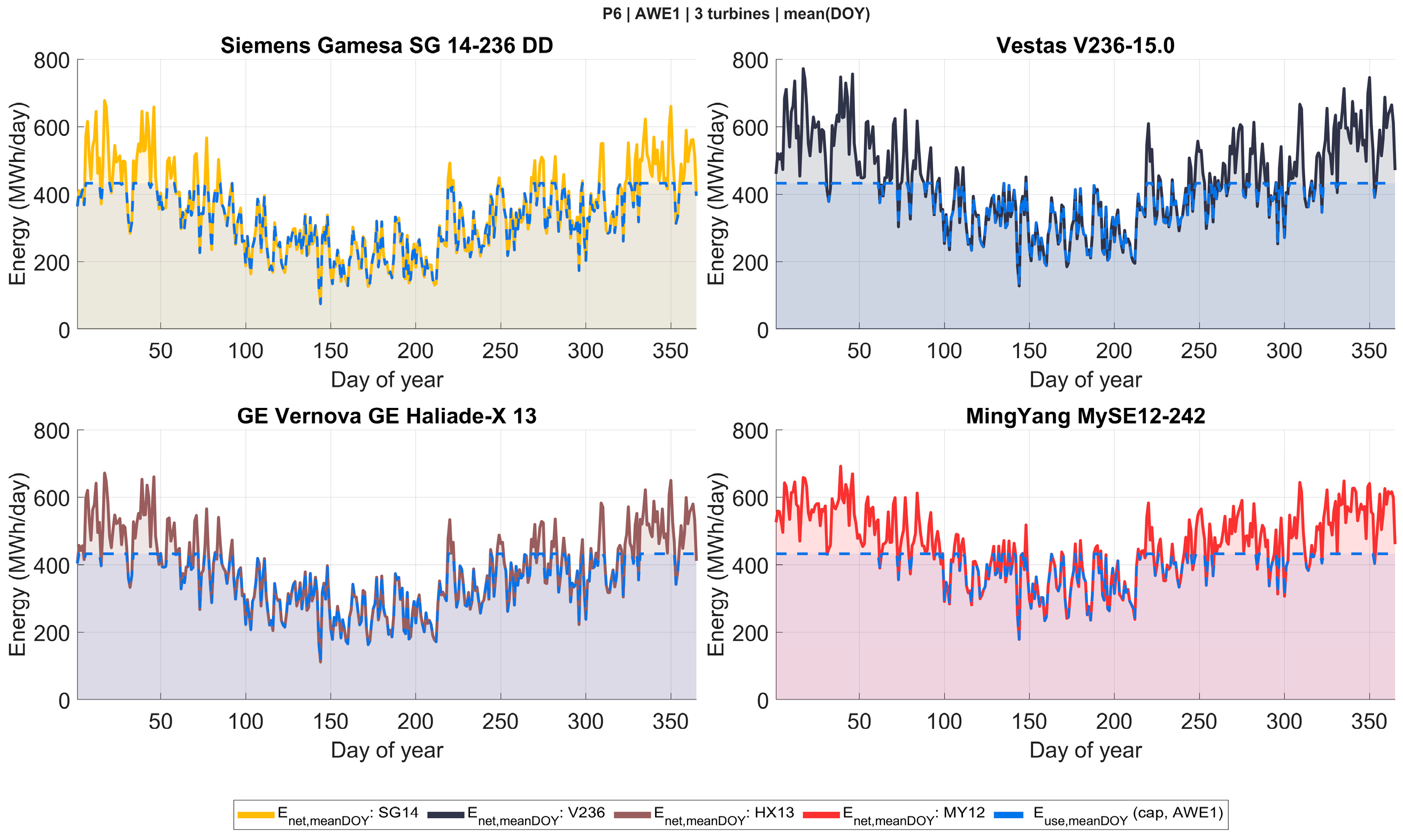
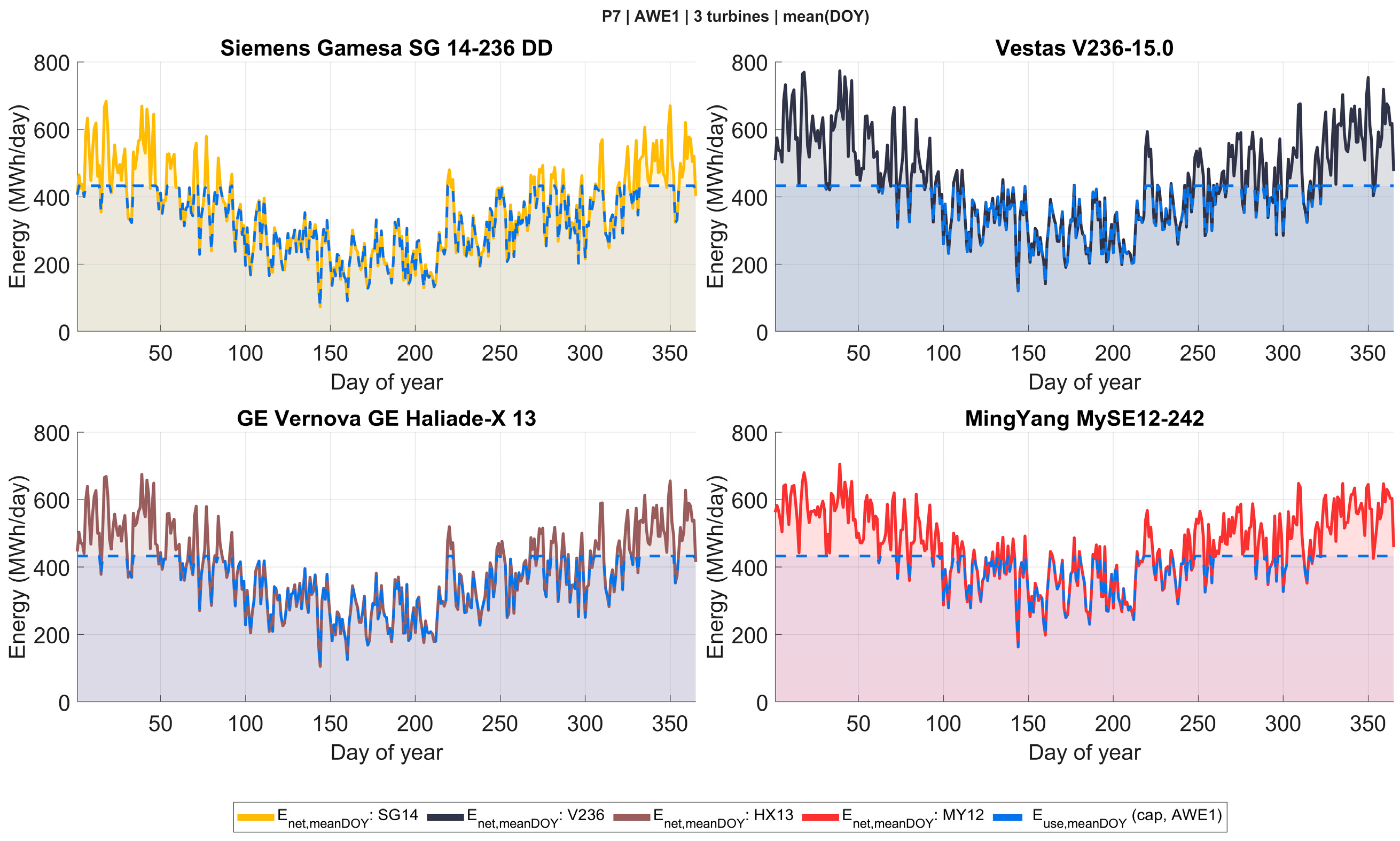
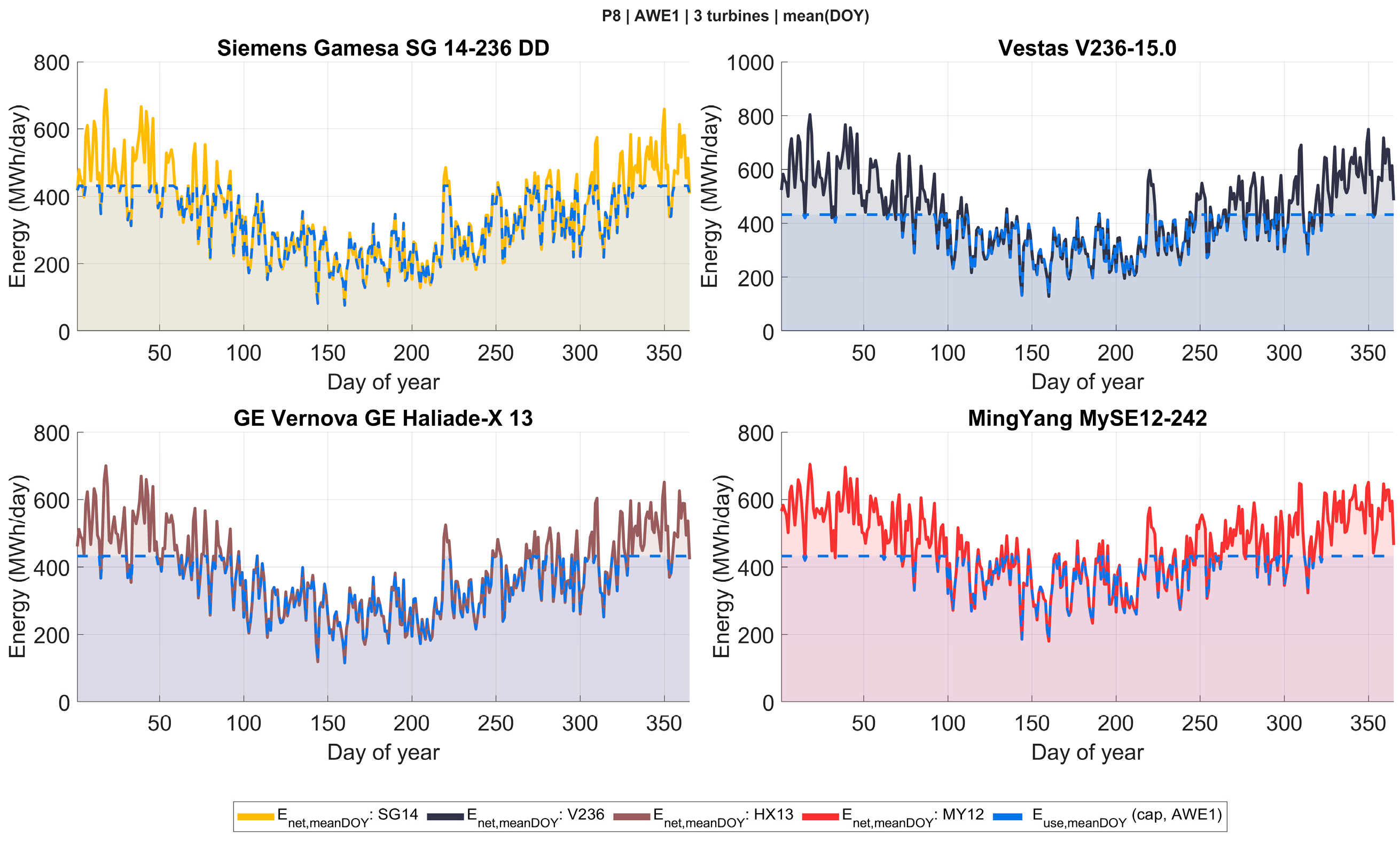
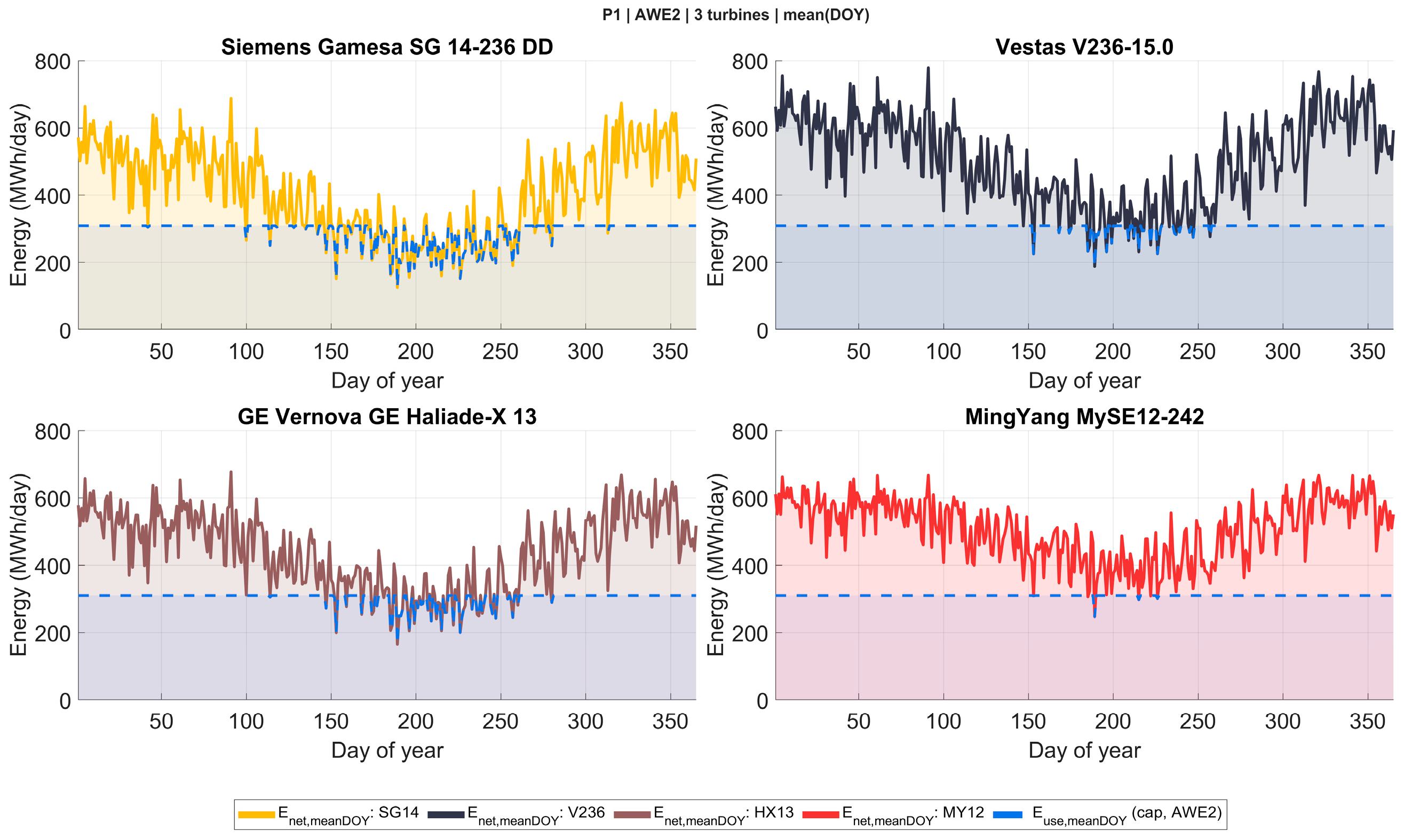
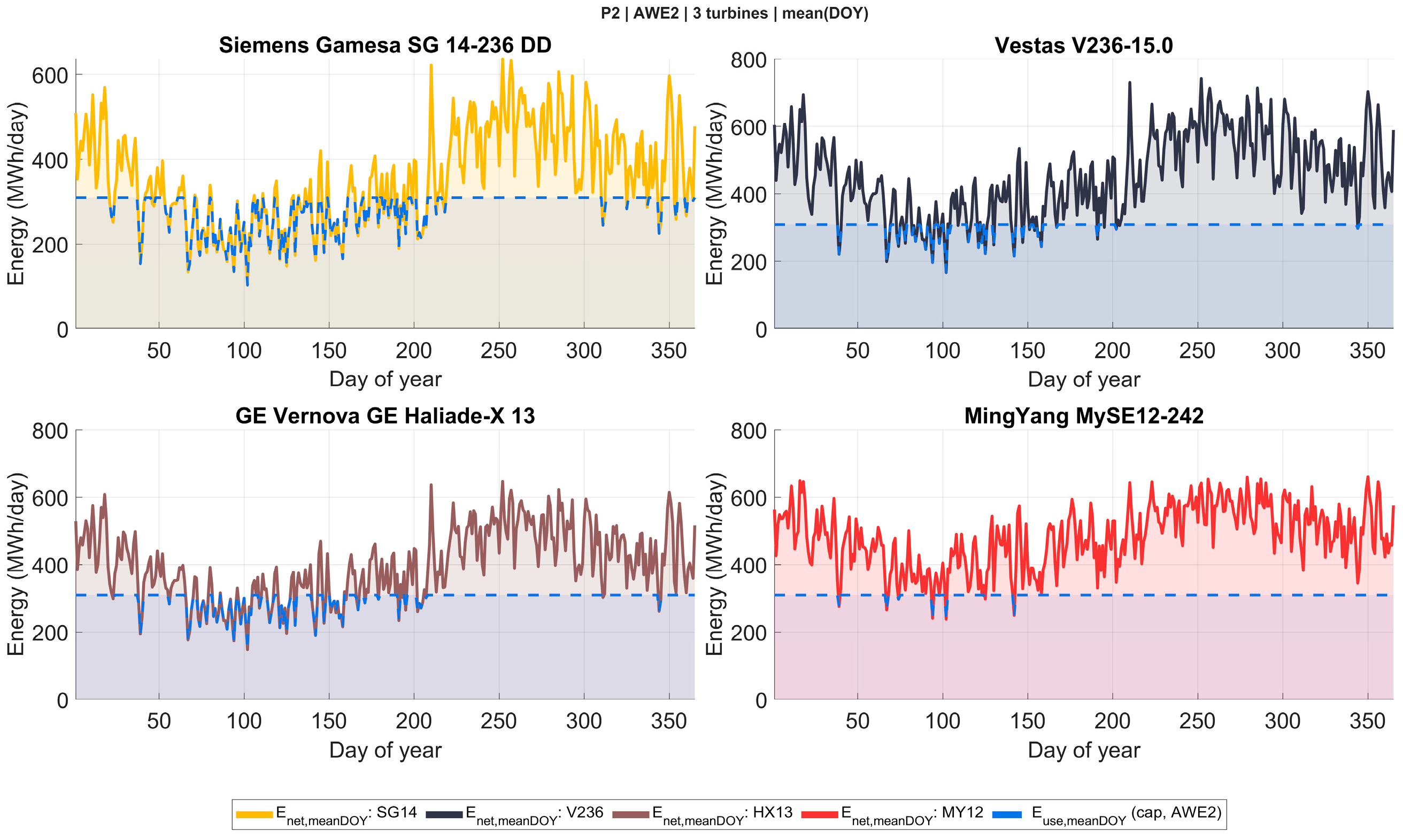
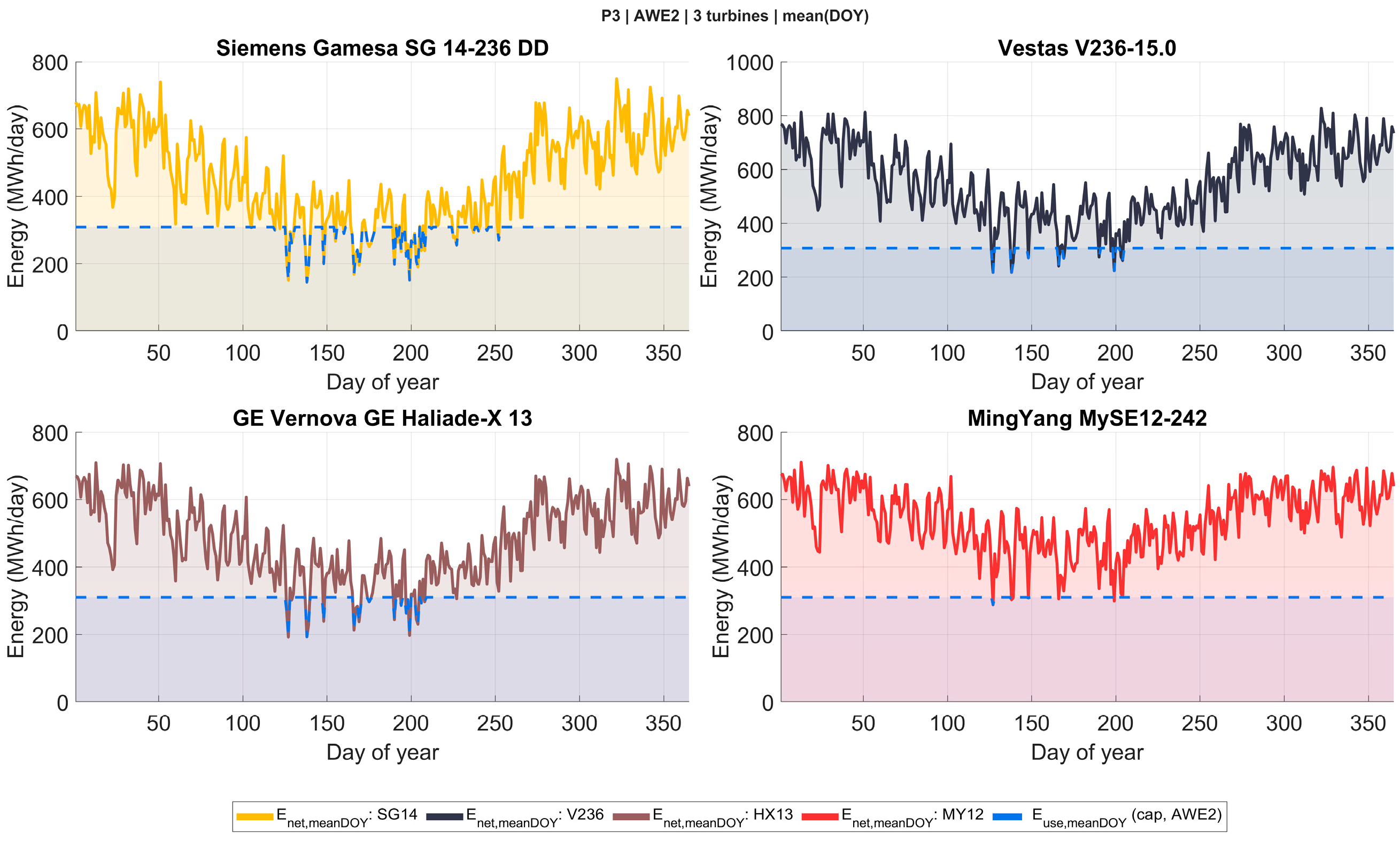
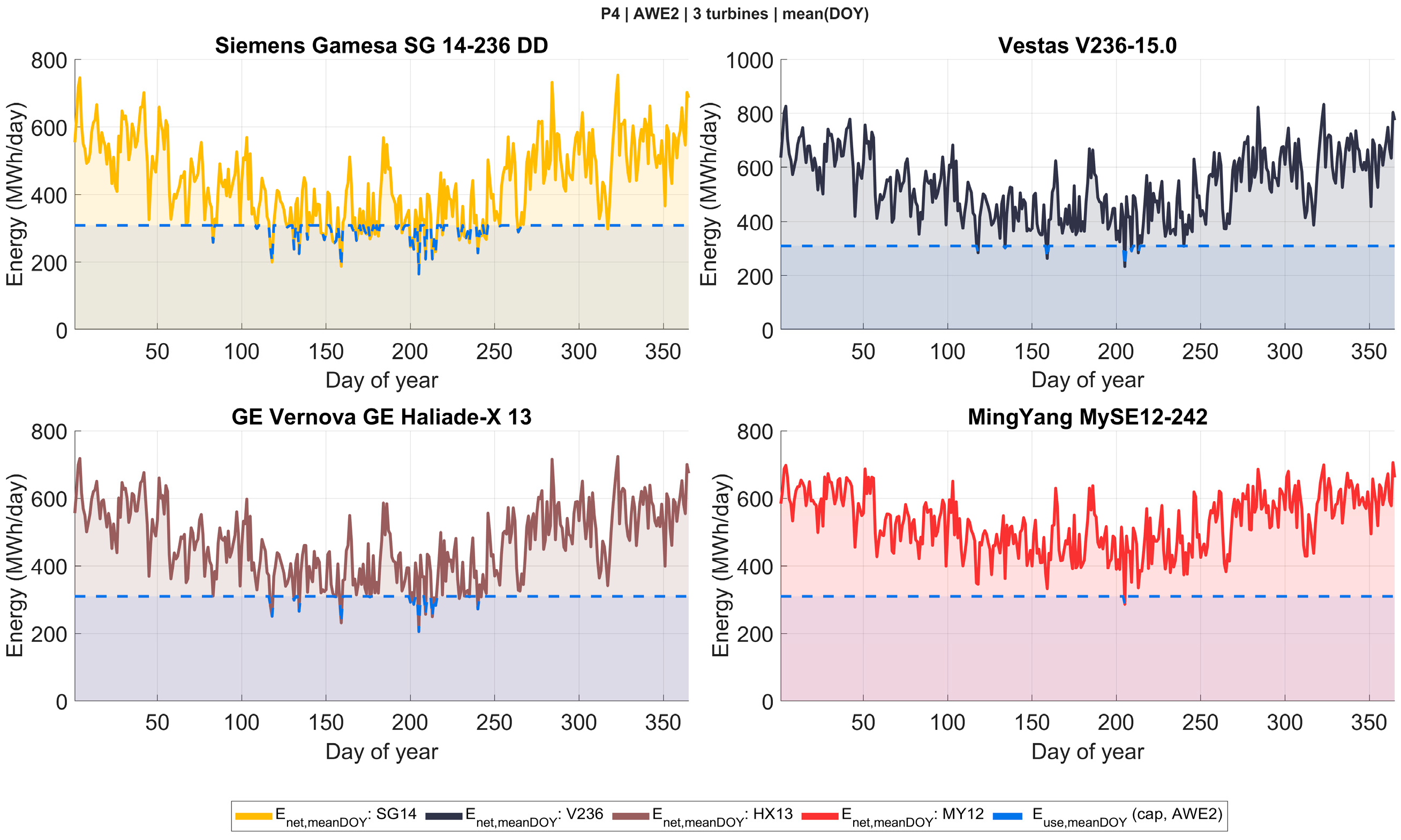
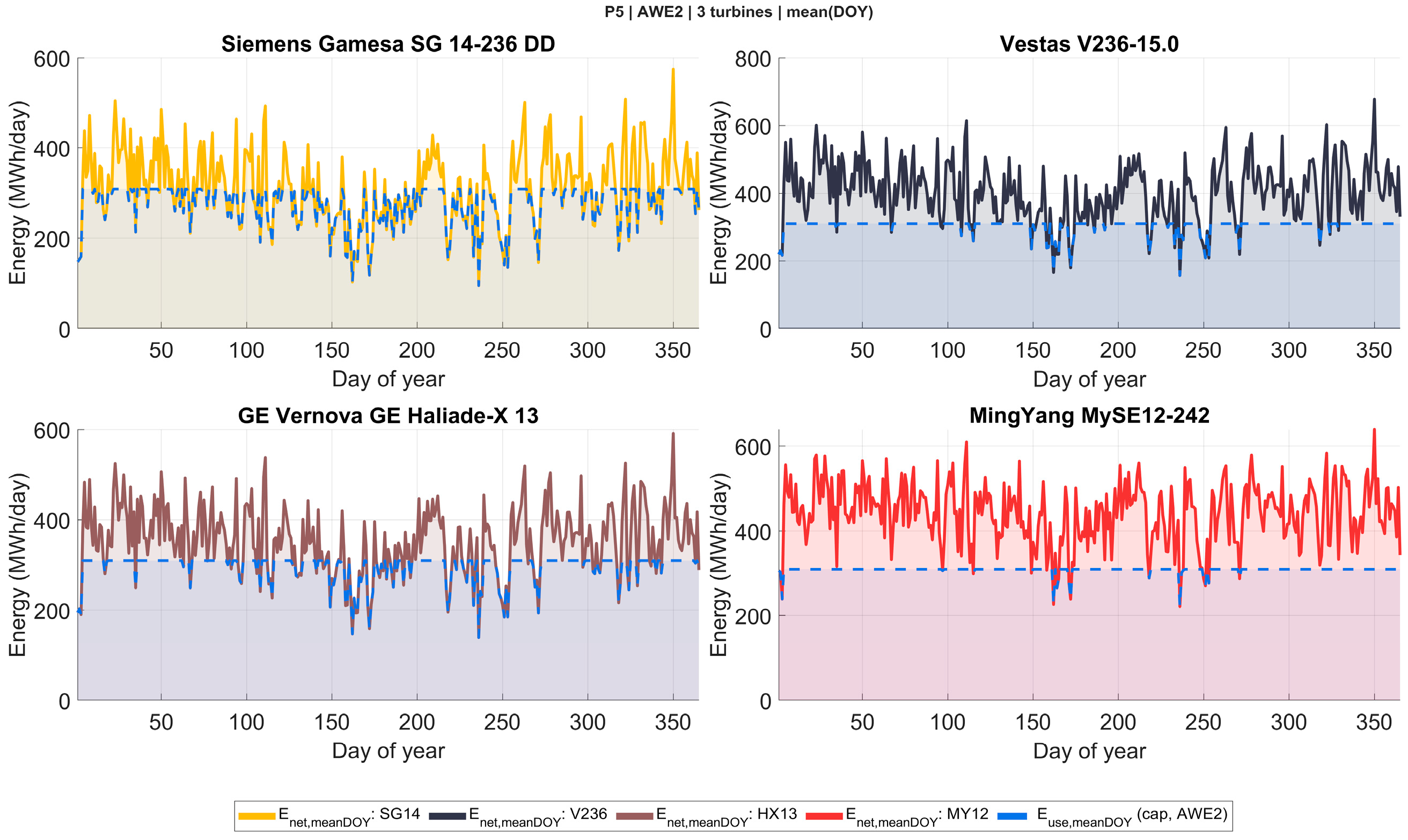
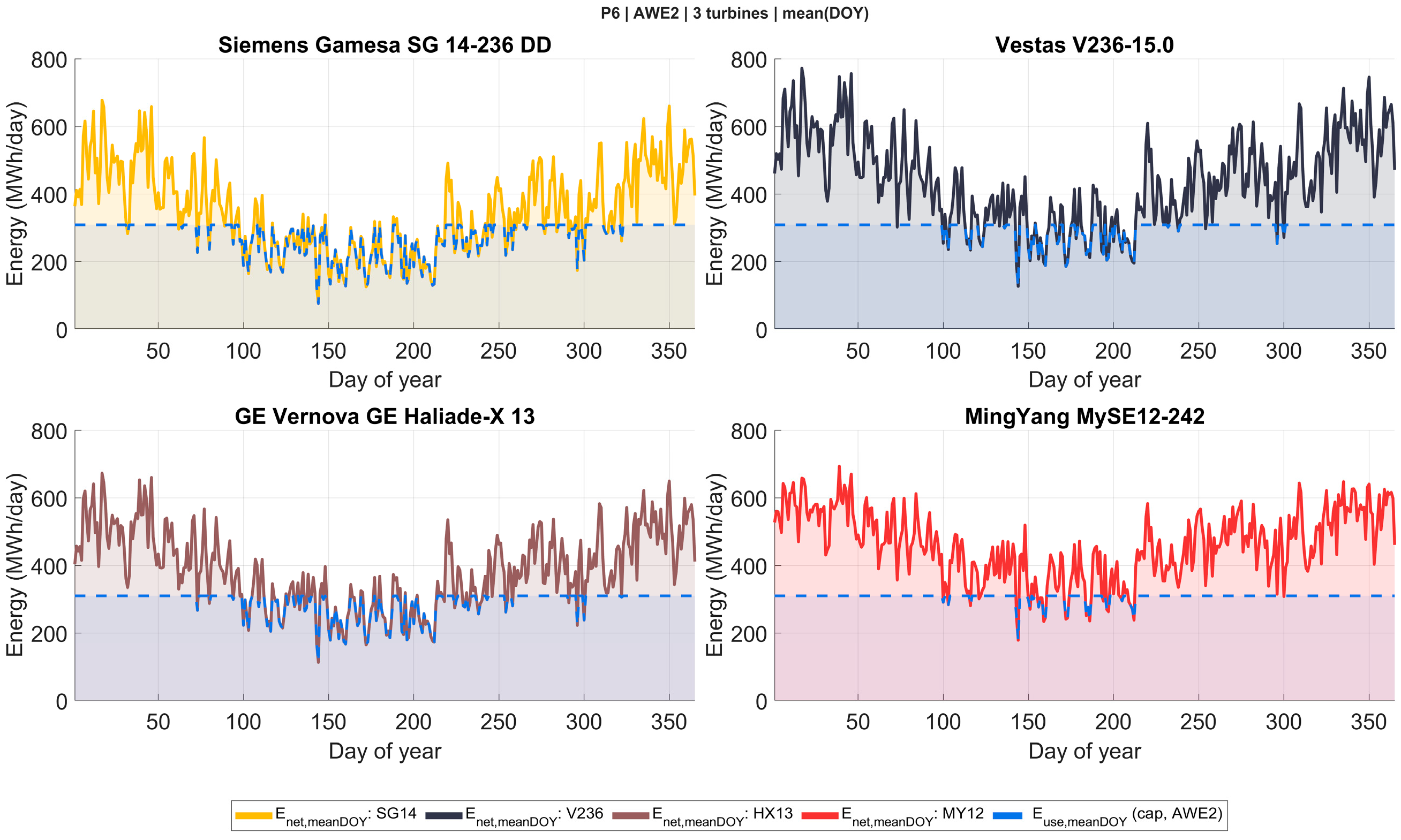
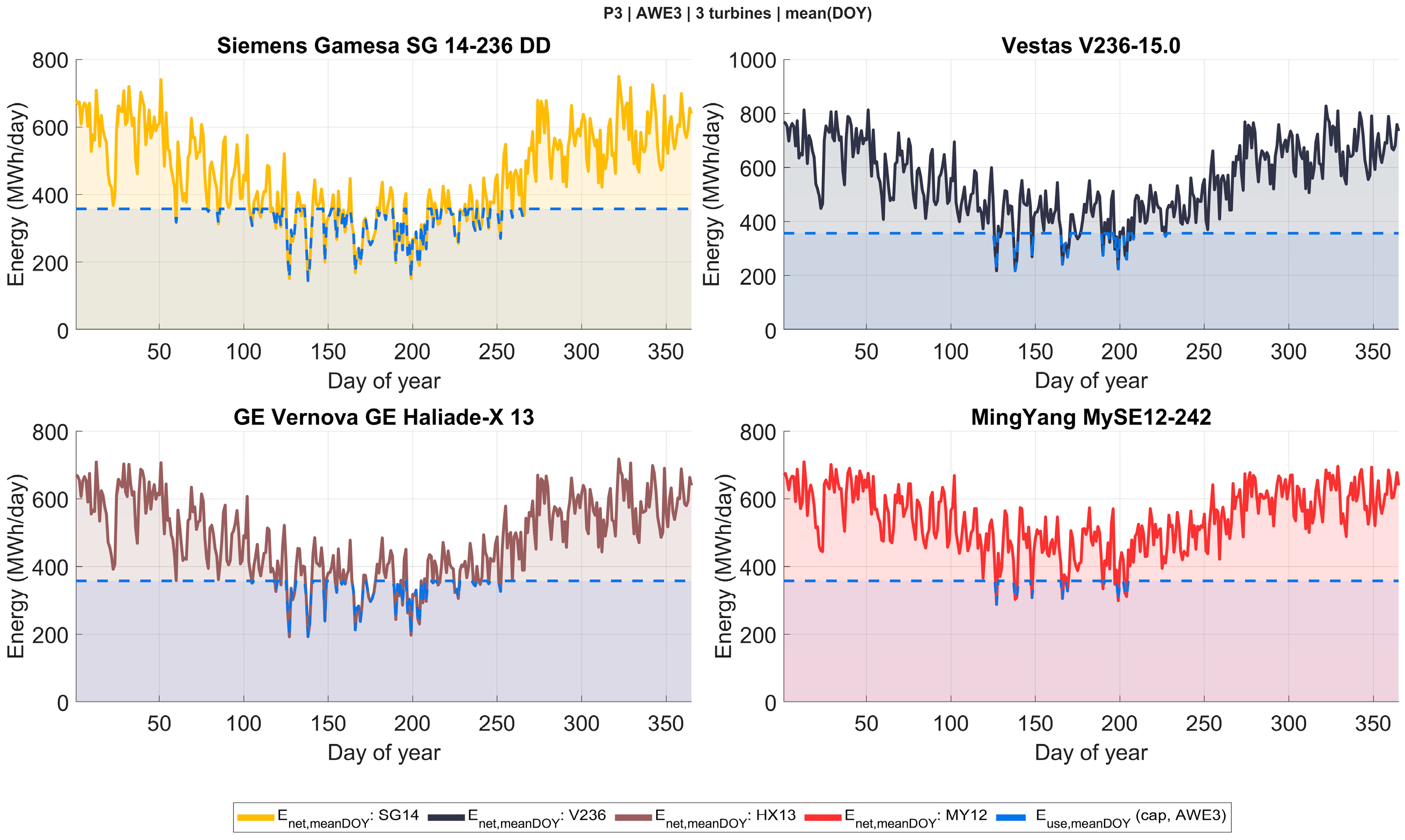
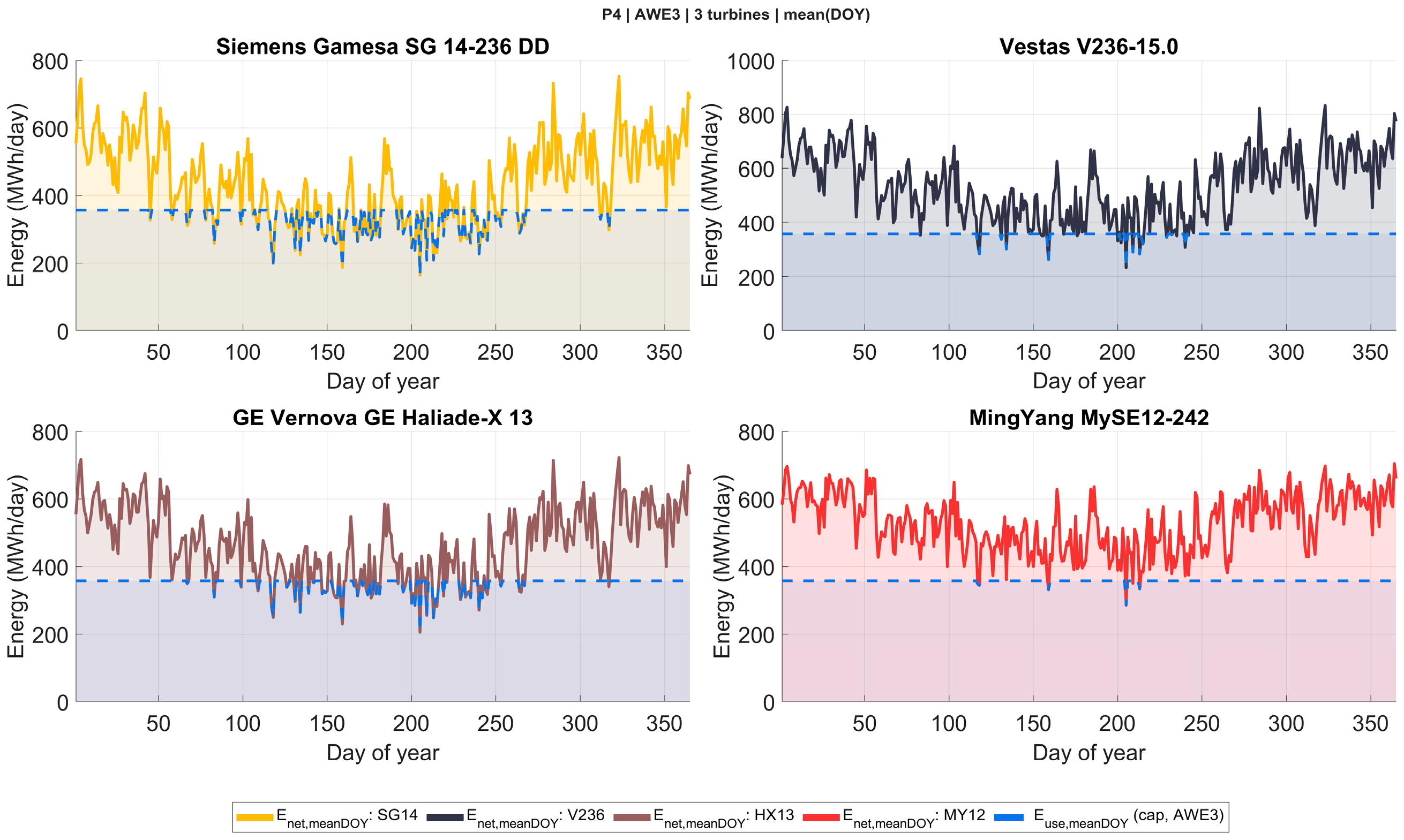
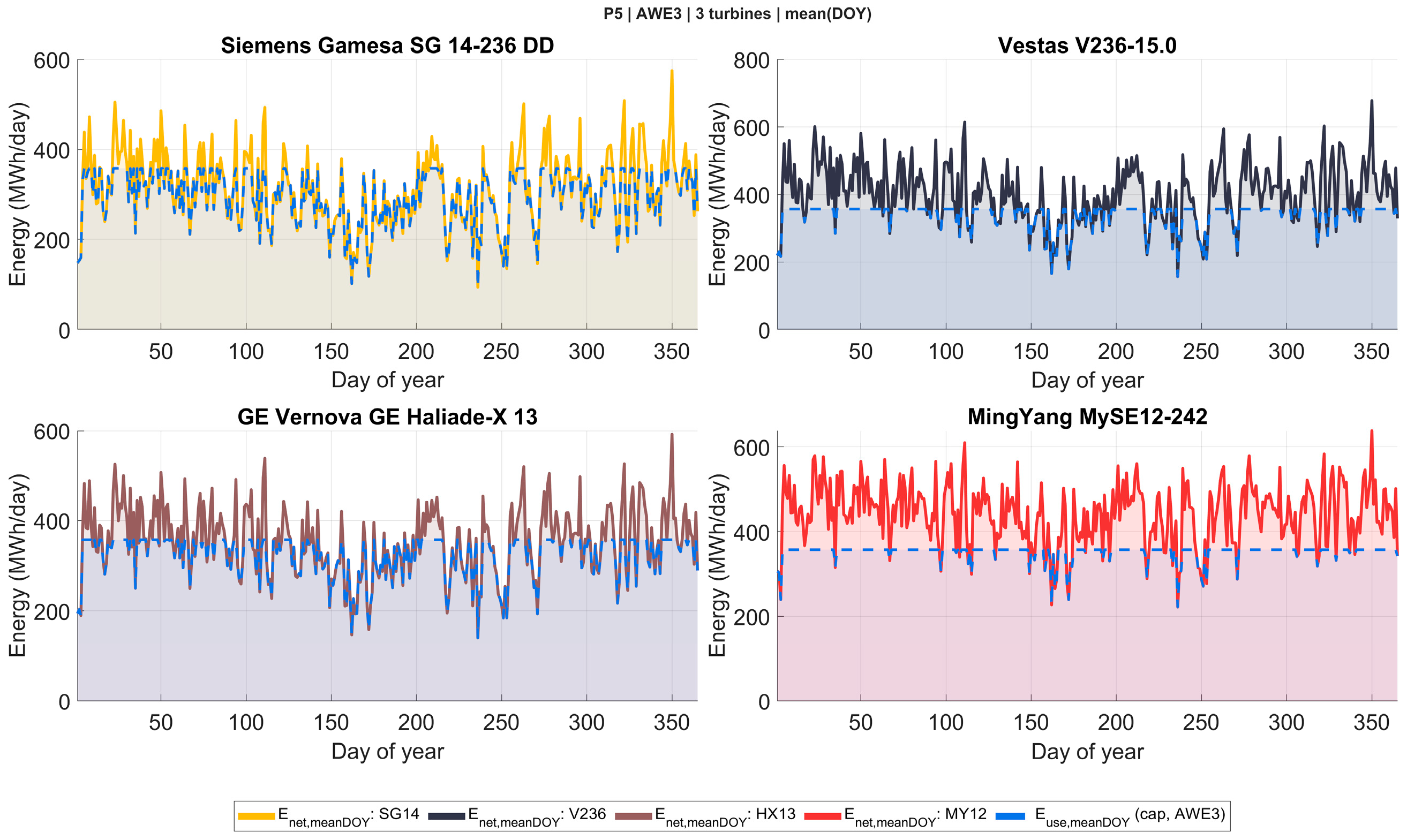
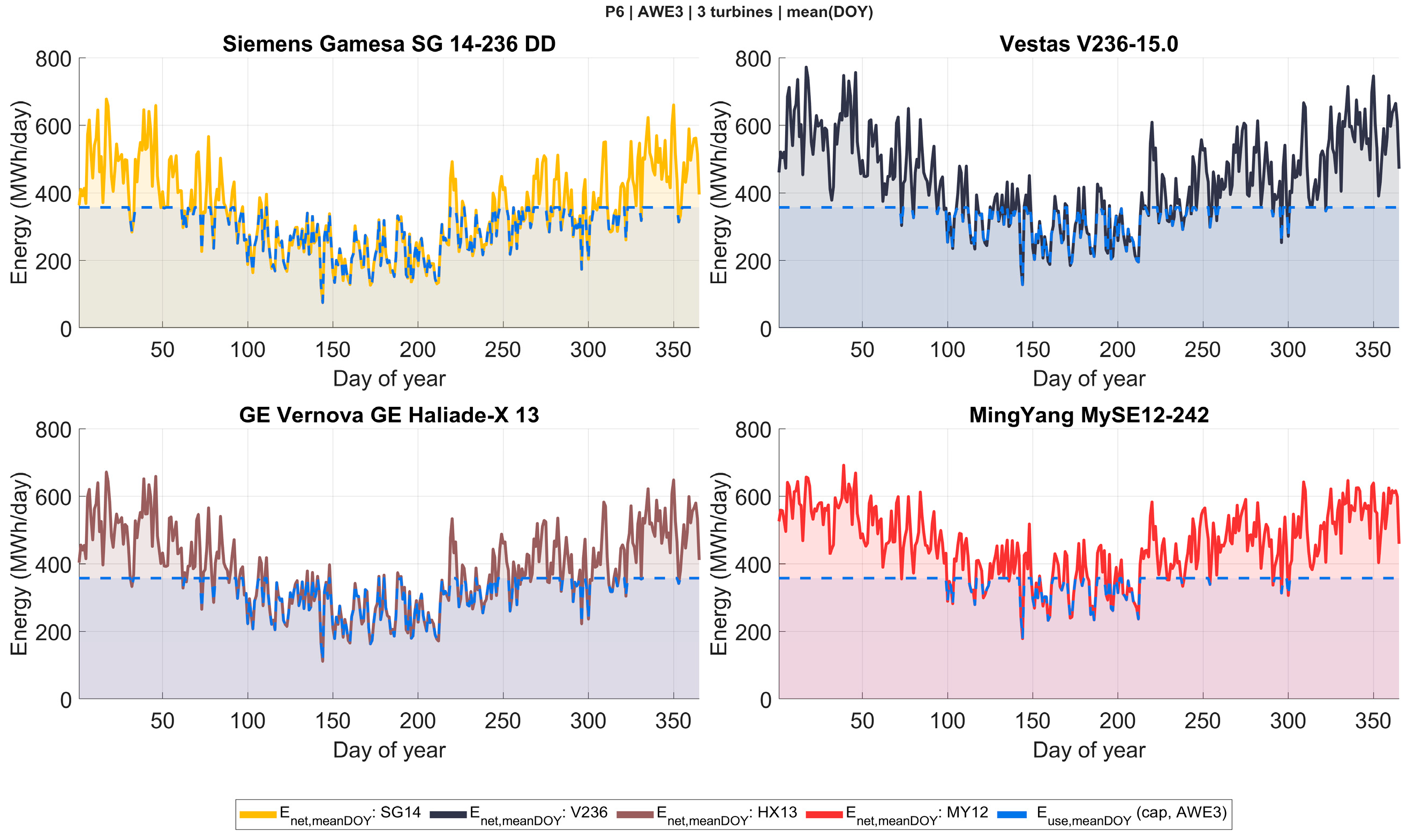
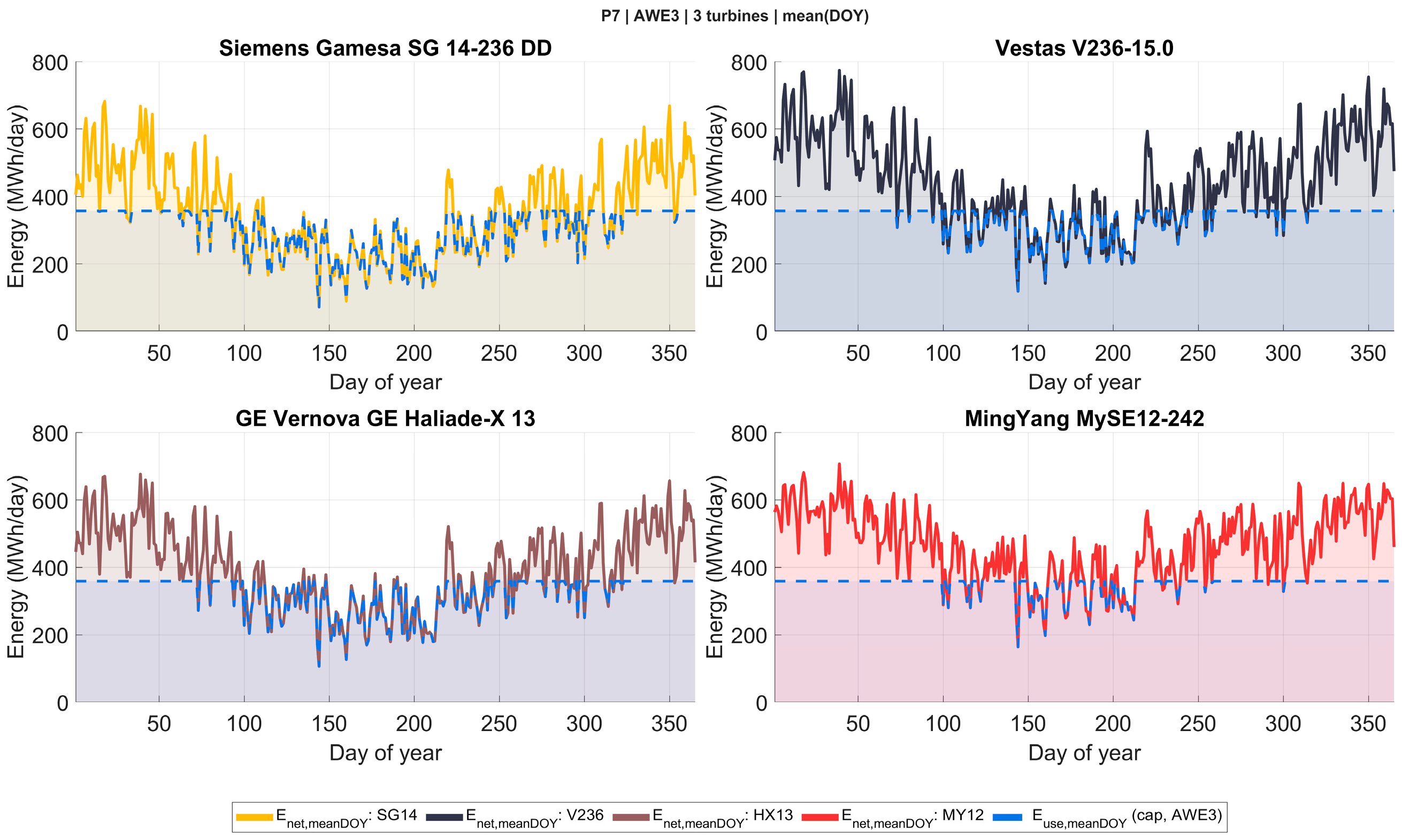
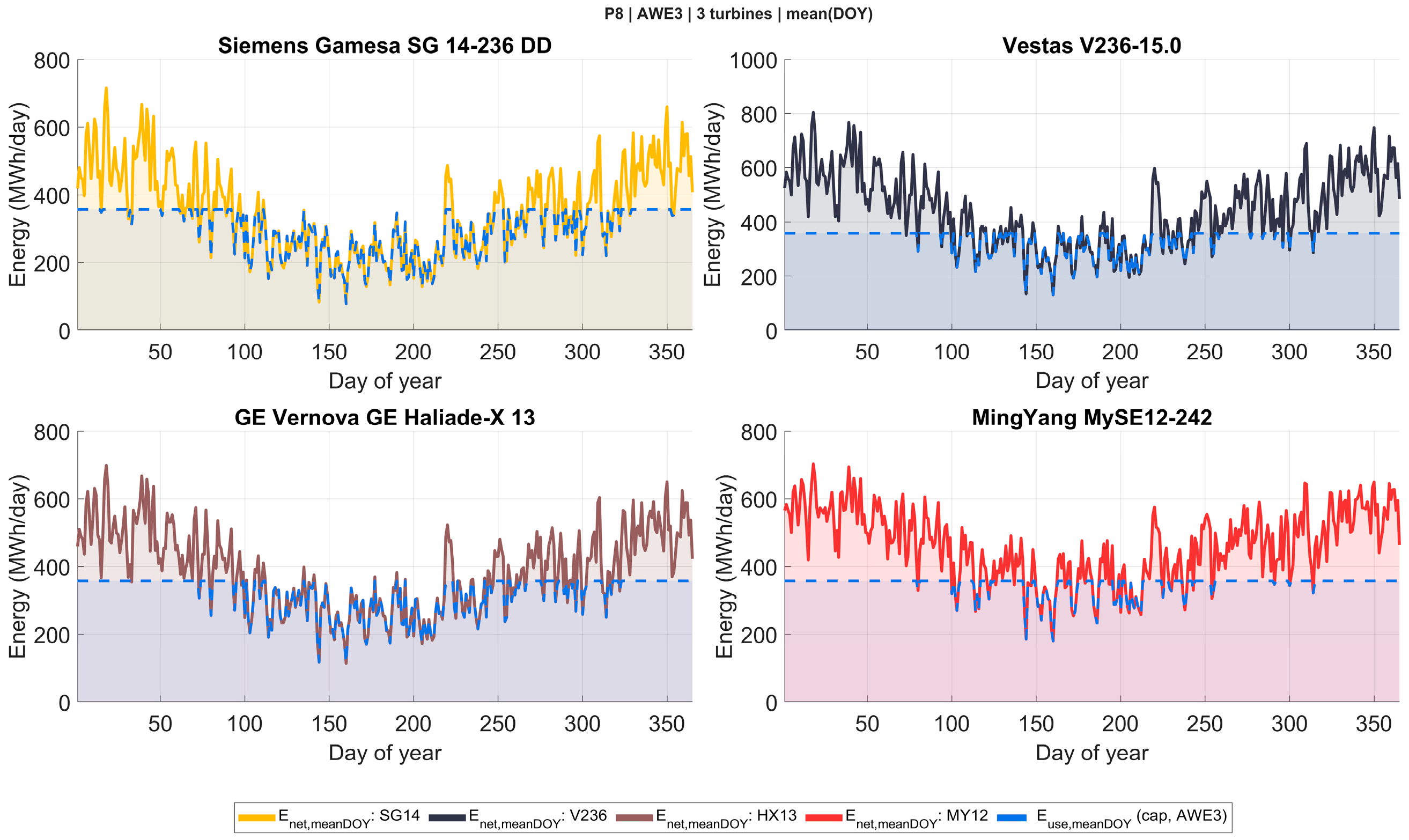
Considering the aspect related to the number of wind turbines required to fully exploit wind energy, Figure 11 and Figure 12 present the average energy production for each year of the analyzed period (2016–2025). This assessment was conducted for each site separately, with particular emphasis on the P3 site, which yielded the most favorable outcomes, and the P7 site, which exhibited the most advantageous findings from the perspective of the Black Sea. The remaining graphical representations for the other points are provided in Appendix A (Figure A1, Figure A2, Figure A3, Figure A4, Figure A5, Figure A6, Figure A7, Figure A8, Figure A9, Figure A10, Figure A11, Figure A12, Figure A13, Figure A14, Figure A15, Figure A16, Figure A17, Figure A18, Figure A19, Figure A20, Figure A21, Figure A22, Figure A23, Figure A24, Figure A25, Figure A26, Figure A27, Figure A28, Figure A29, Figure A30, Figure A31, Figure A32, Figure A33, Figure A34, Figure A35, Figure A36, Figure A37, Figure A38, Figure A39, Figure A40, Figure A41, Figure A42, Figure A43, Figure A44, Figure A45, Figure A46, Figure A47 and Figure A48).
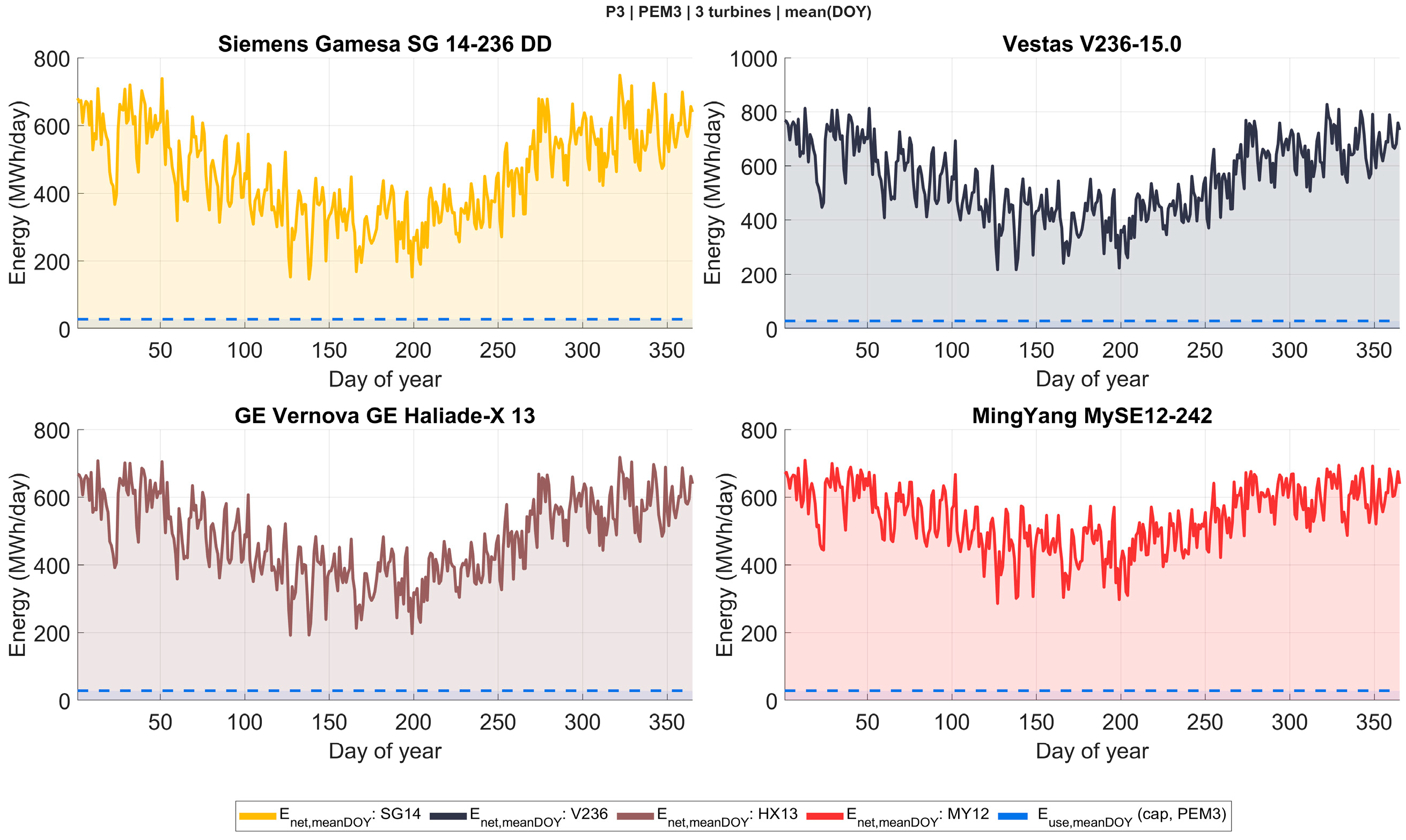
In this representation (average daily net production for the four turbines + AWE2 electrolyzer consumption + remaining energy for the grid), a clear separation between the available energy and the energy absorbed by the electrolyzer is observed. The AWE2 electrolyzer has a relatively capped daily consumption compared to the turbine production peaks, and this explains the fact that, on days with high production, a consistent surplus of energy appears that remains unused for hydrogen and could be directed to the grid. Basically, the figure shows that the main limit for the conversion to hydrogen is no longer wind production on those days, but the effective energy capacity/demand of the AWE2 electrolyzer in relation to the energy delivered by the four turbines. It can also be observed that there are a significant number of days in which the production clearly exceeds the consumption threshold, which indicates a frequent operation at maximum capacity of the electrolyzer, followed by the evacuation of the energy surplus. On days with moderate production, however, the curves tend to come closer together, suggesting more efficient use of the available energy, with minimal losses in the form of exported energy.
Also in Figure 11, the Vestas V236-15.0 turbine reaches the highest daily production thresholds, and this directly leads to the highest amounts of residual energy for the grid. The increase in the amplitude of the peaks implicitly determines an increase in the difference between the daily production and the electrolyzer consumption, which accentuates the intermittent nature of the surplus. At the same time, this behavior highlights the fact that maximizing wind production does not automatically lead to maximizing the conversion into hydrogen, when the absorption capacity of the electrolyzer is limited. For the P3 site, two distinct regimes are thus outlined: periods in which production is close to the electrolyzer’s needs and the conversion is almost complete, and periods in which production significantly exceeds this threshold and a significant part of the energy remains unutilized in the electrolysis process.
In Figure 12 for site P7, the comparison between the turbines is more evident in the stability of production than in the absolute maximums. Even though the Vestas and Siemens turbines reach higher thresholds on certain days, the Ming turbine presents a more uniform profile, with less variation throughout the year. This difference becomes visible in relation to the consumption of the AWE2 electrolyzer, which has a more constant production that more frequently keeps the system in a regime close to the daily energy requirement, reducing the oscillations between surplus and deficit. In contrast, the turbines with pronounced peaks generate more obvious alterations between days with high surplus and days with low production, which leads to greater variability of the energy remaining for the grid.
A pronounced decrease in production for the Vestas turbine is also observed between days 100–200 of the year (April–July), which indicates a clear seasonal component of the wind regime at this location or a greater sensitivity of the turbine to changes in wind conditions during that period. This relatively long-term reduction directly impacts the energy available for electrolysis and leads to a decrease in the energy surplus in that period. In comparison, the more constant profile of the Ming turbine attenuates this seasonal variation, maintaining a more balanced level of daily production.
An additional aspect visible in both figures is that the choice of three turbines leads to a level of daily net production that frequently exceeds the consumption of the BB electrolyzer, which confirms that the dimensioning of the wind system was carried out in such a way that the electrolyzer operates at high capacity on several days.
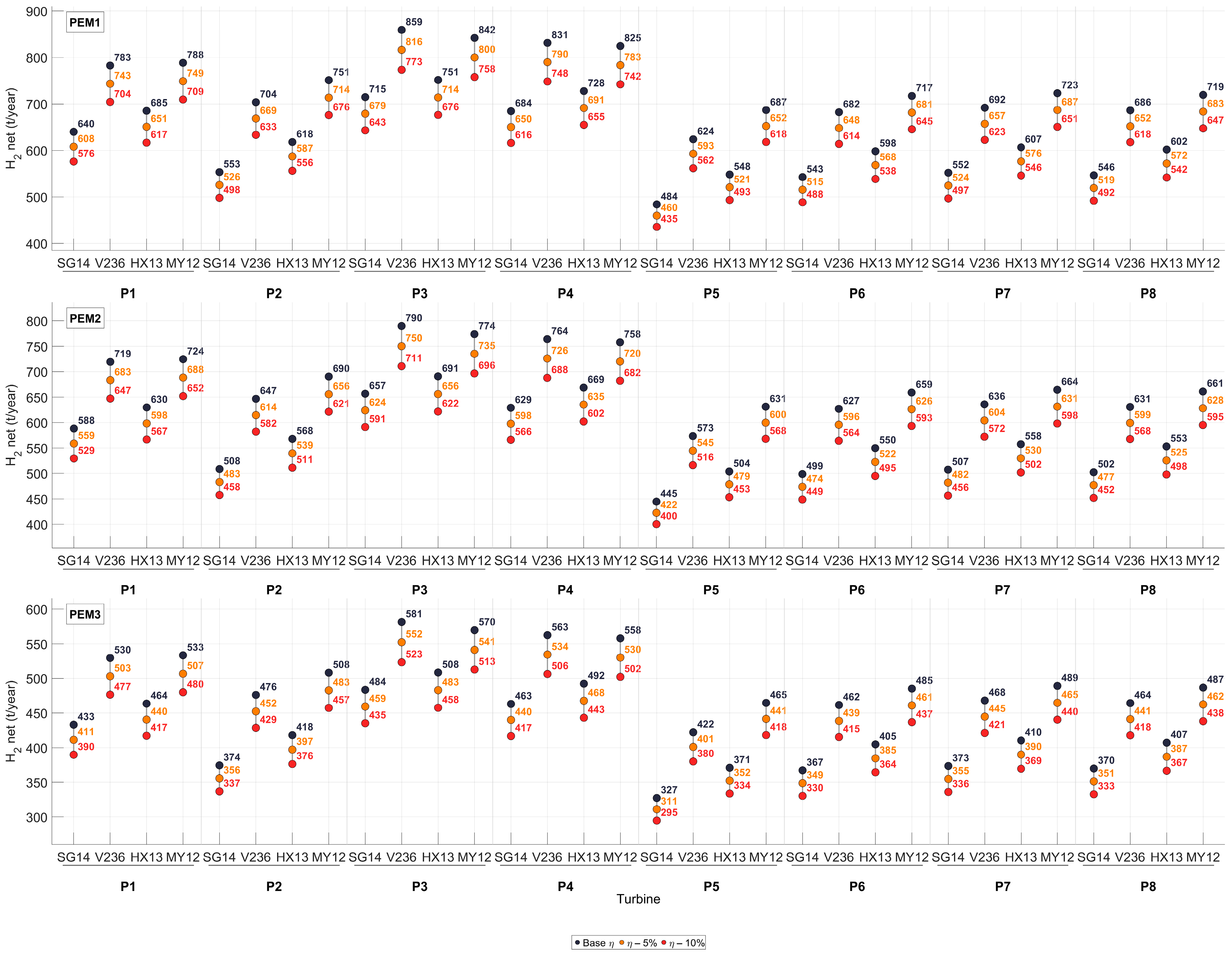
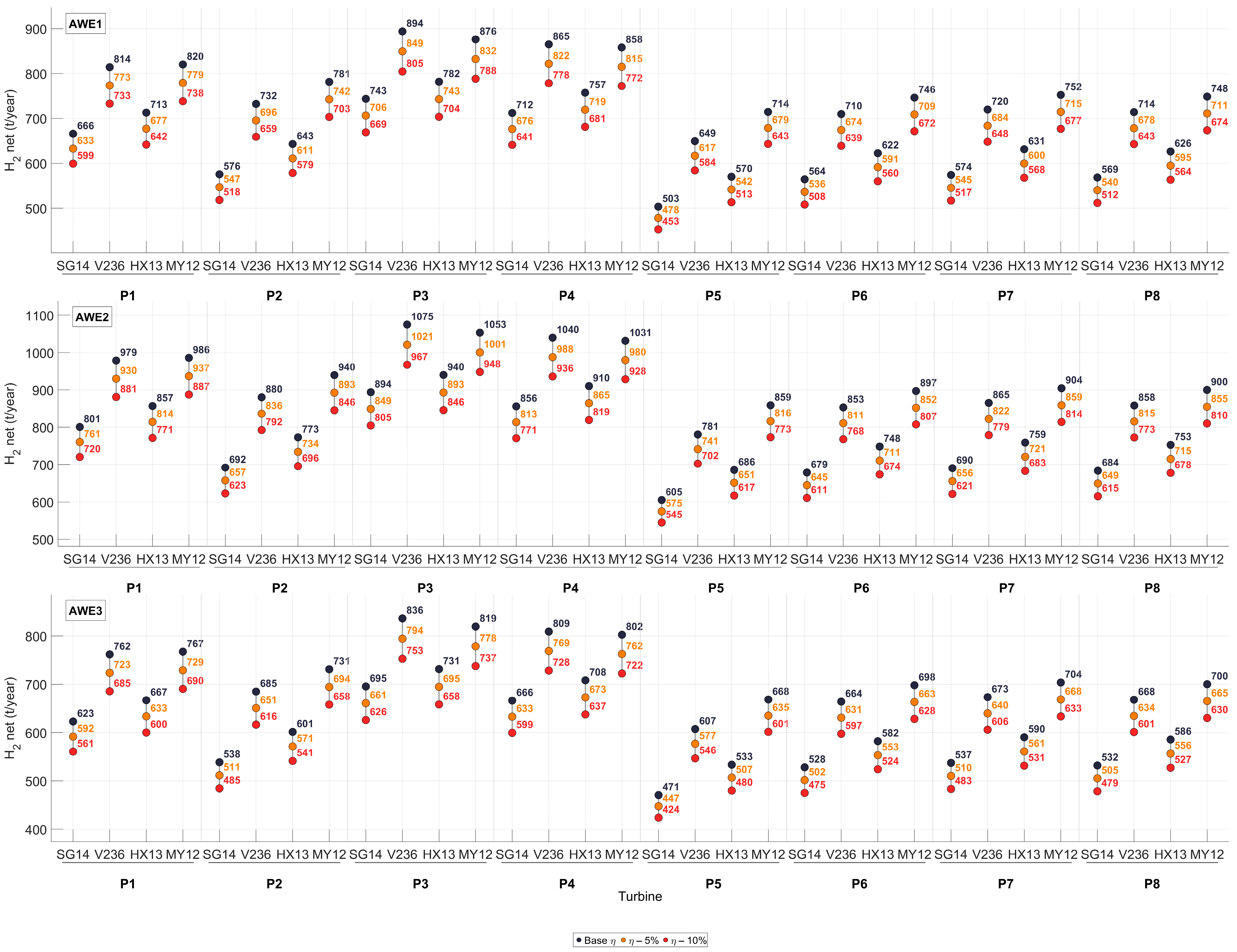
To assess the influence of the uncertainty associated with the electrolyzer efficiency on hydrogen production estimates, a sensitivity analysis was performed, considering three scenarios: the nominal efficiency and its decreases by 5% and 10%. The analysis aims to examine both the change in the absolute values of the net annual hydrogen production and the stability of the comparative conclusions between the locations and technological configurations analyzed.
Figure 13 presents the results obtained for the PEM-type electrolyzers. It is observed that the reduction in efficiency results in a systematic decrease in the net annual hydrogen production for all location–turbine–configuration combinations analyzed, without altering the general hierarchy of the results. In the base scenario, the net hydrogen production for the PEM varies from approximately 327 t/year to 859 t/year, with the maximum values being associated mainly with the P3 site and the minimum ones with the P5 site. A 5% decrease in yield results in a new range of approximately 3101–816 tons per year, and a 10% decrease narrows the range to 295–773 t/year. In terms of absolute decreases, the effect is more pronounced for cases with high initial production. Thus, a 5% decrease generates reductions ranging from approximately 16 t/year to 43 t/year, while for the −10% scenario, the decrease reaches values between 33 t/year and 86 t/year.
Figure 14 highlights the system response in the case of AWE electrolyzers. In contrast to the PEM analysis, a generally higher level of hydrogen production is observed from the start, which also implicitly leads to higher absolute reductions when the yield is decreased. The highest value is observed for the P3—Vestas V236—AWE2 configuration, while the lowest values occur especially for the combinations associated with the P5 site and the configurations with lower initial production. The absolute reductions are between approximately 25 t/year and 54 t/year for the −5% scenario and between 47 t/year and 107 t/year for the −10% scenario. Therefore, in the case of AWE, the absolute sensitivity is higher than in the case of PEM, not because the system is less robust, but because it starts from higher production levels.

5. Conclusions

The study of the eight locations highlights clear differences in wind potential, reflected in AEP, which vary from approximately 45.65 to 81.11 GWh/year for the gross scenario and from 37.75 to 67.05 GWh/year in the net scenario. The Black Sea locations are distinguished by higher values of energy production, with an estimated range of 42.34–56.42 GWh/year (case with losses), confirming the favorable nature of the offshore wind regime. However, a detailed analysis reveals that performance is not uniform across these sites, with significant differences between them in terms of the annual average level and seasonal stability of production.
The comparison of the four turbine types demonstrated that the nominal installed power is not the only determining criterion of performance. In some sites (P3 and P4), the Vestas V236-15.0 turbine recorded the highest annual production values, but in the other sites, its relative performance was surpassed by the MingYang MySE12-242 turbine, which presented a more constant profile and a reduced daily variation. These results indicate that the efficiency of a turbine depends on the compatibility between its power curve and the local distribution of wind speeds, and the optimal choice differs depending on the location. The capacity factor reflects these dynamics, recording values ranging from 37.2 to 75.6% for the analyzed turbines. It is noted that some turbines, although reaching high production peaks, present a pronounced seasonal variability (for example, a reduction in production between days 100–200), while others offer a more uniform regime, favorable to a more constant supply to the electrolyzer.
Regarding hydrogen production (from AEP with losses), the results indicate an annual range of approximately 327–1075 t/year, depending on the turbine–electrolyzer combination and the location. For the Black Sea sites, the estimated production for the best performing AWE2 electrolyzer is between 853 and 865 t/year, and for the most efficient PEM between 682 and 692 t/year, confirming the energy advantage of this region.
A key aspect highlighted by the analysis is that maximum performance is not necessarily associated with the electrolyzer with the highest hourly production capacity, but with the one characterized by the lowest specific energy consumption.
The evaluation of the N net parameter showed that most high-capacity electrolyzers do not exploit their production to the maximum, which implies the need for approximately 3–4 turbines for the full operation of a unit.
In conclusion, the study confirms that the Black Sea presents competitive potential for the integration of offshore wind–hydrogen systems, but the optimal performance depends on the careful correlation between the turbine type, the electrolyzer efficiency, and the sizing of the assembly. The differences between the locations, the seasonality of the production, and the operational losses directly influence the annual and daily production, and the optimization must be achieved through an integrated approach based on the simultaneous analysis of the available energy, the specific consumption, and the degree of utilization of the equipment.
The comparative analysis carried out highlights the fact that there is no universally optimal solution for all locations, as the performance of each turbine is directly influenced by the specific energy profile of each site. The results show that the choice of the optimal turbine–electrolyzer configuration depends on the correlation between the distribution of the wind resource and the technological characteristics of the equipment, which leads to different solutions for each location. Thus, the study highlights the importance of a site-specific approach in the sizing process of offshore wind–hydrogen systems.
The study also presents several limitations. The analysis is carried out from an exclusively technical perspective, without including economic aspects or grid integration constraints. The assessment is also based on historical climatological data and does not consider long-term variability or the effects of climate change. The performance of the electrolyzers is considered constant, without including degradation processes or dynamic behaviors in operation. However, these simplifications allow the fundamental relationship between wind resource and hydrogen production to be clearly highlighted.
As a future research direction, the evaluation of the possibility of implementing and extracting solar energy from the offshore environment, an analysis of AEP based on the wake effect, and an economic analysis are desired.

Author Contributions

Conceptualization, M.M., A.I.M. and G.A.; methodology, M.M.; software, A.I.M.; writing—original draft preparation, M.M., A.I.M. and G.A.; writing—review and editing, M.M. and A.I.M.; visualization, A.I.M.; supervision, G.A. All authors have read and agreed to the published version of the manuscript.

Funding

This research received no external funding.

Data Availability Statement

The datasets presented in this article are not readily available because the data are part of an ongoing study.

Conflicts of Interest

The authors declare no conflicts of interest.

Appendix A

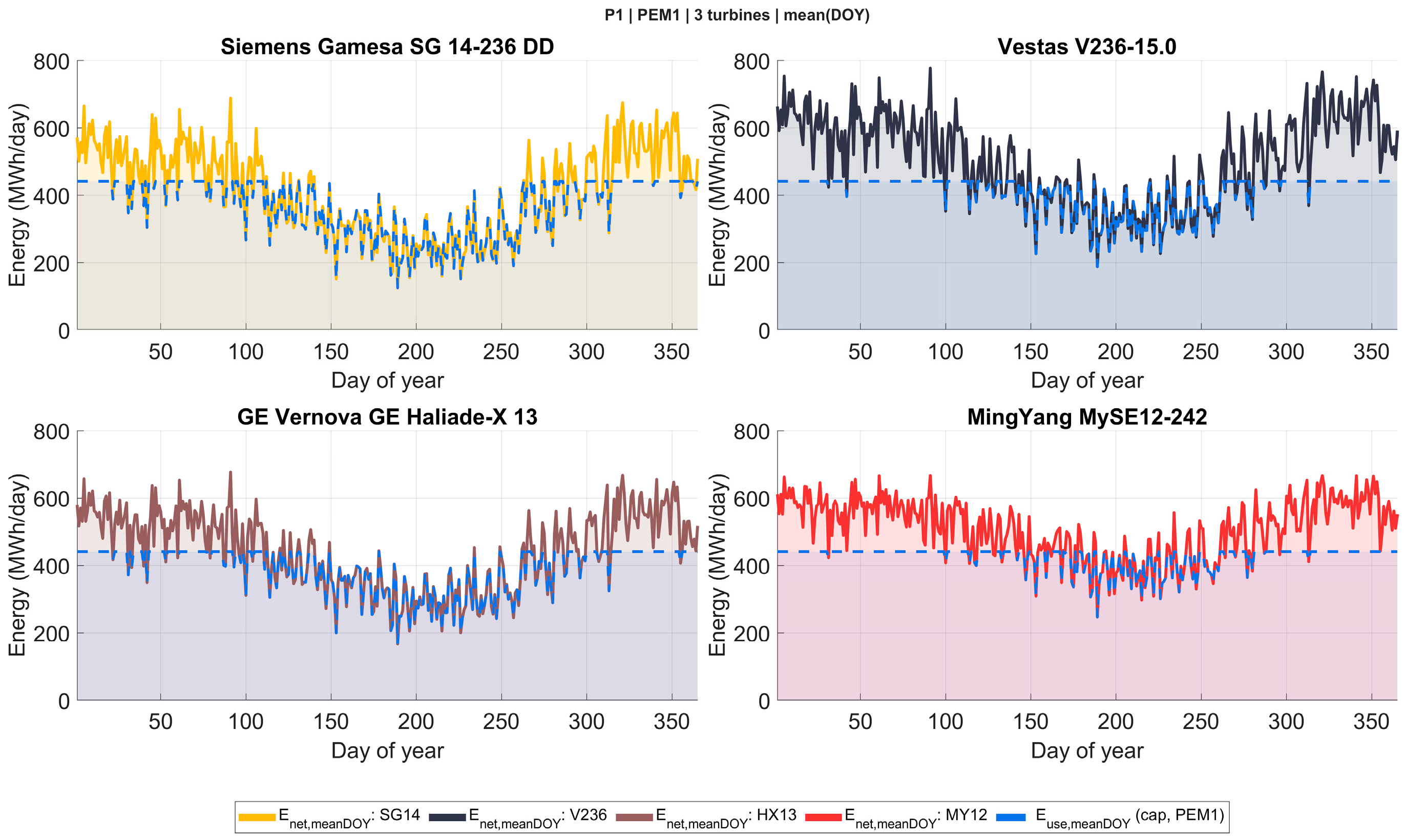
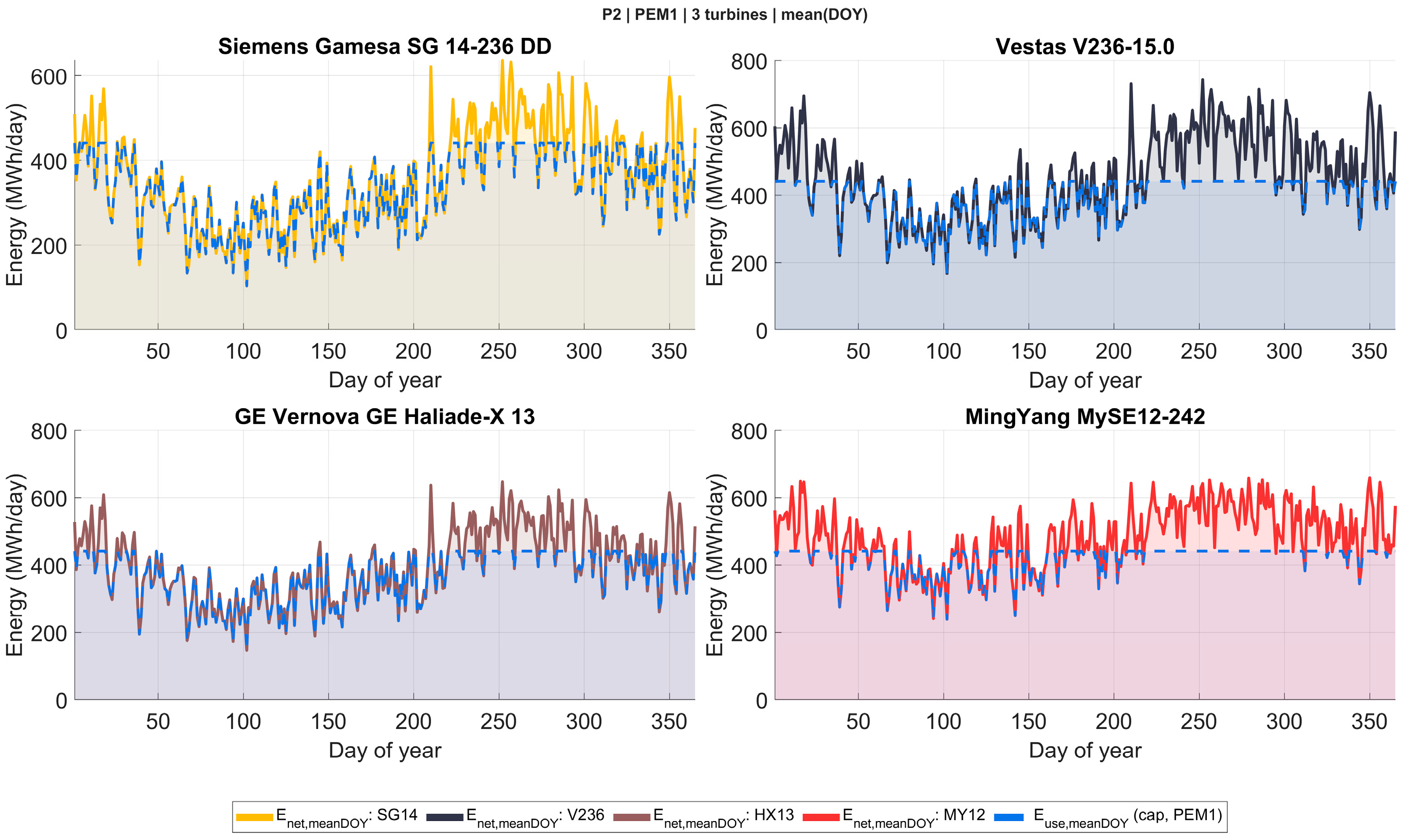
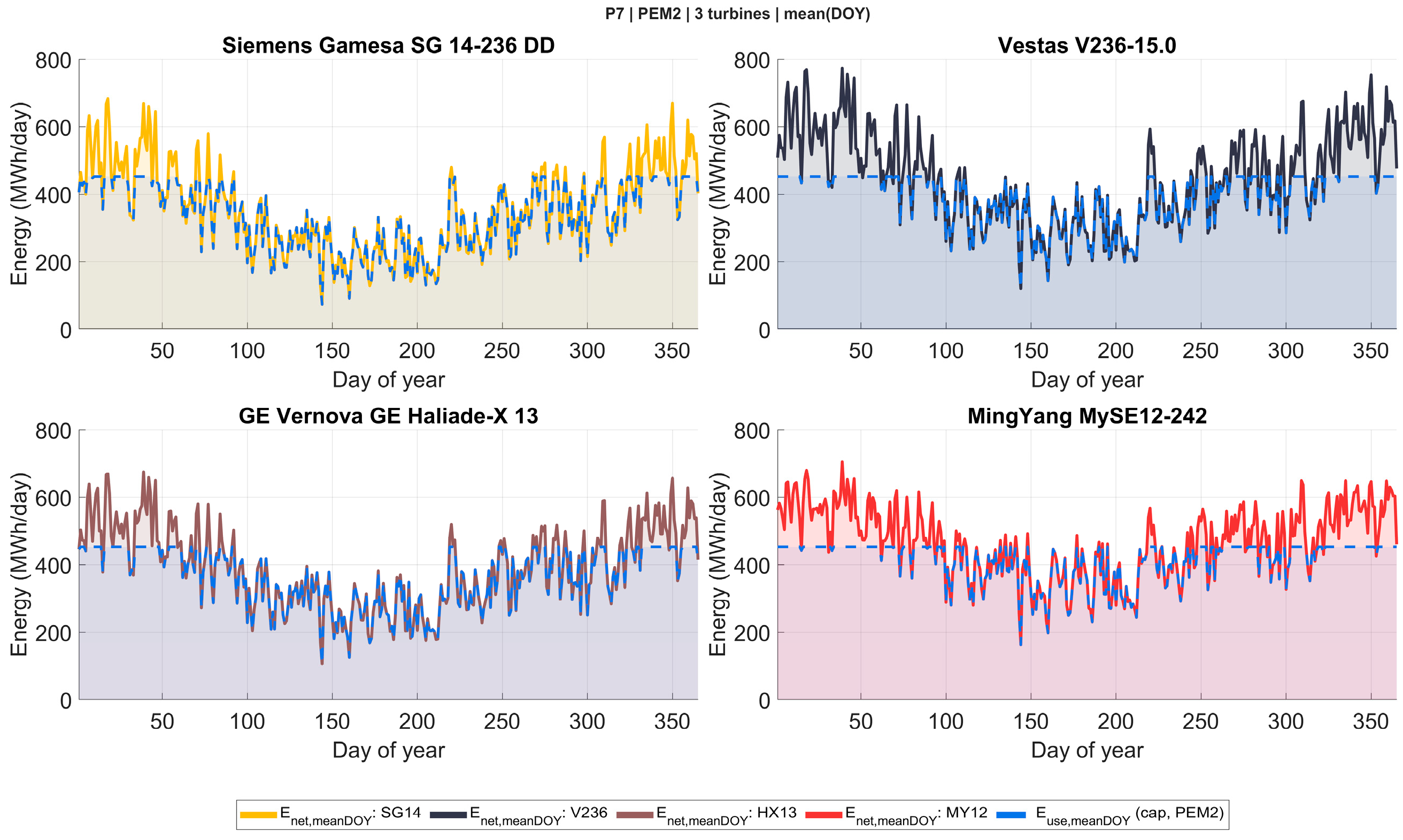
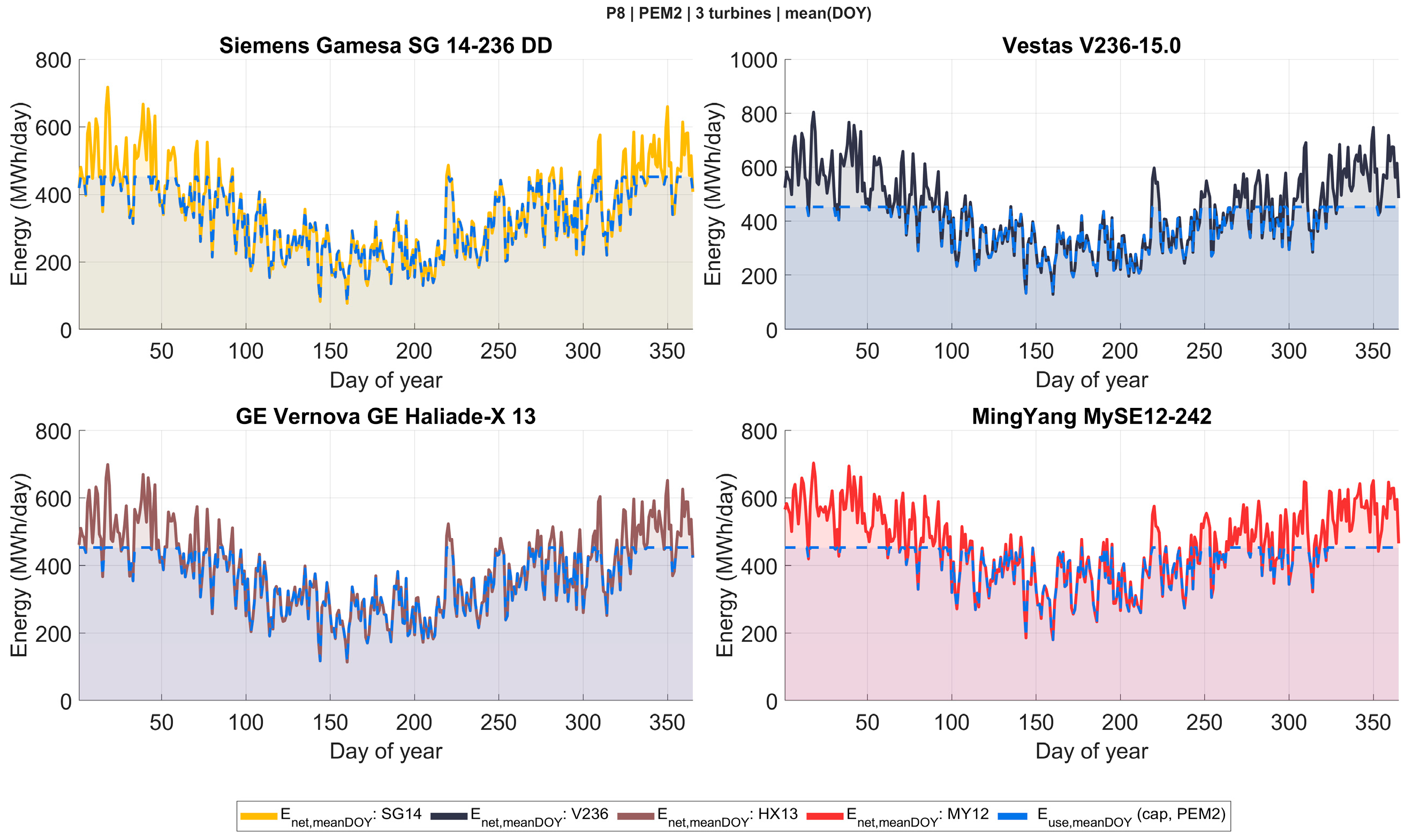
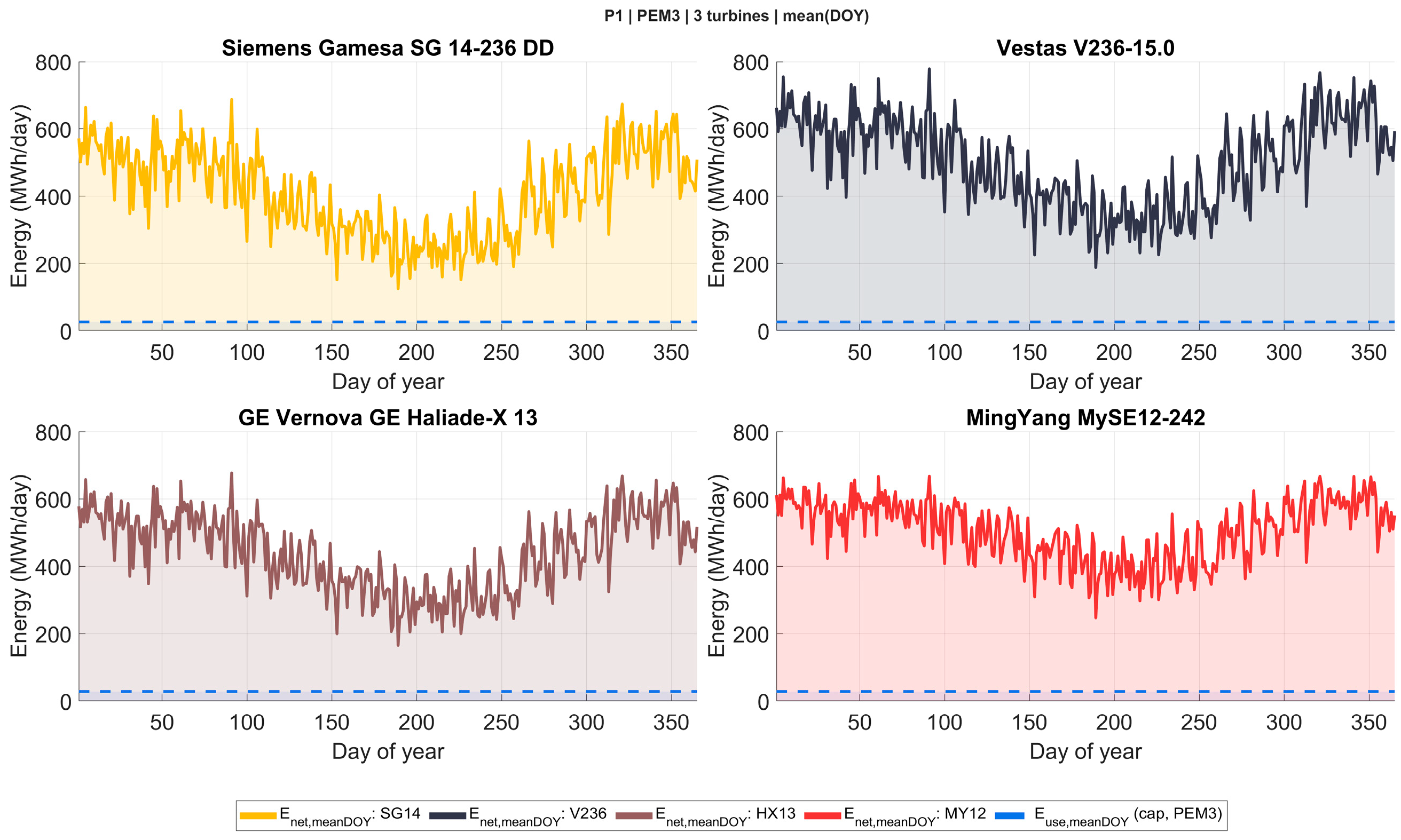
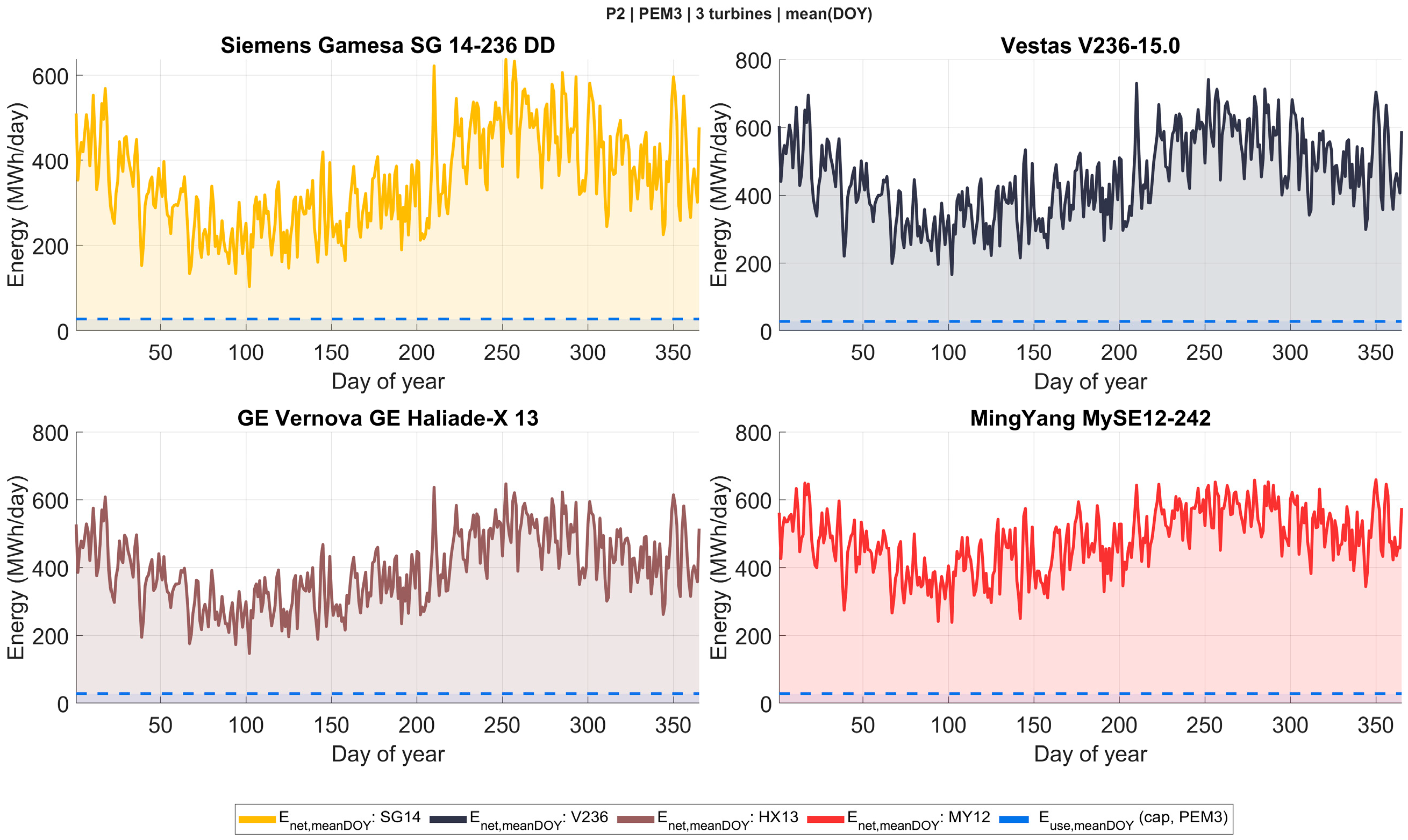
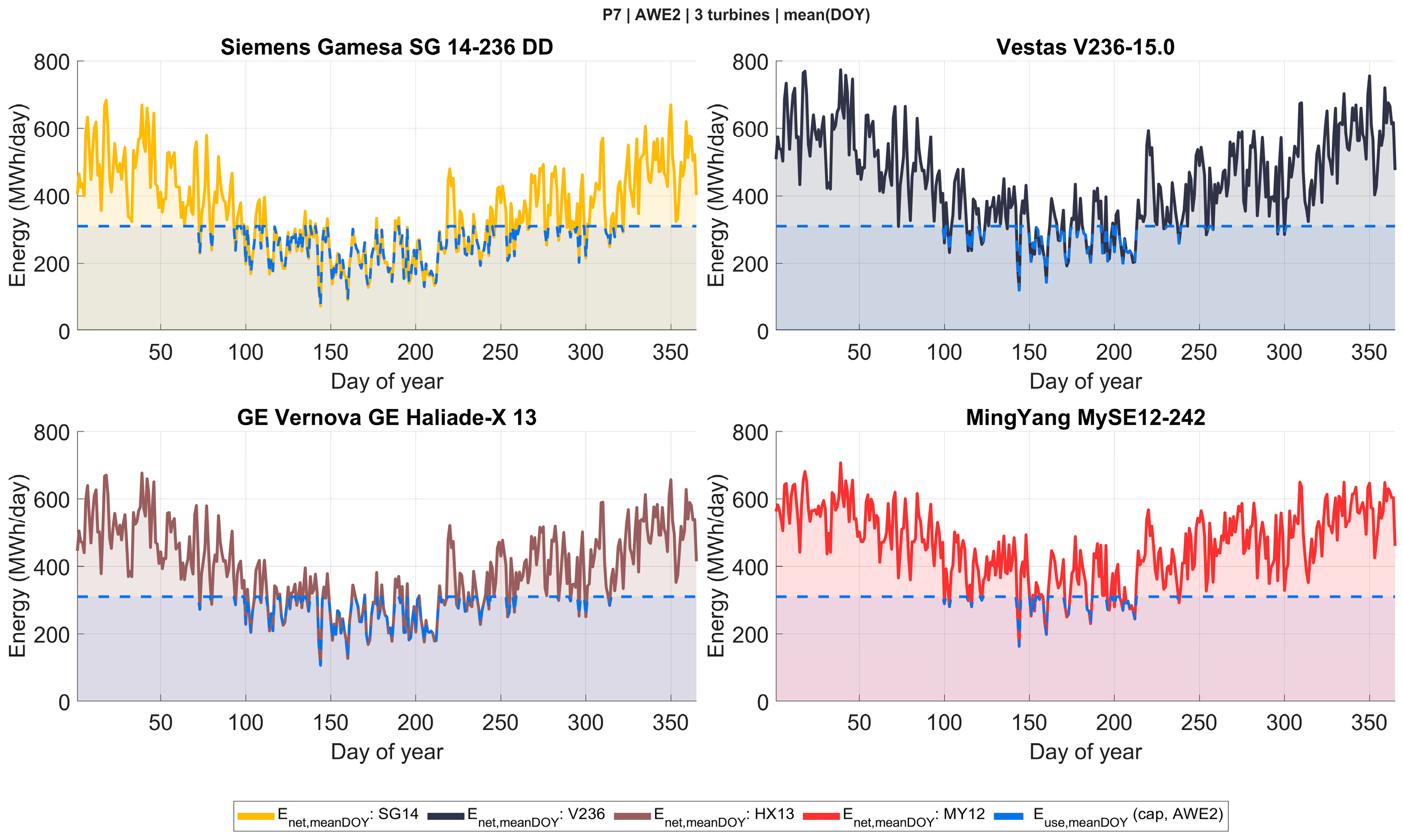
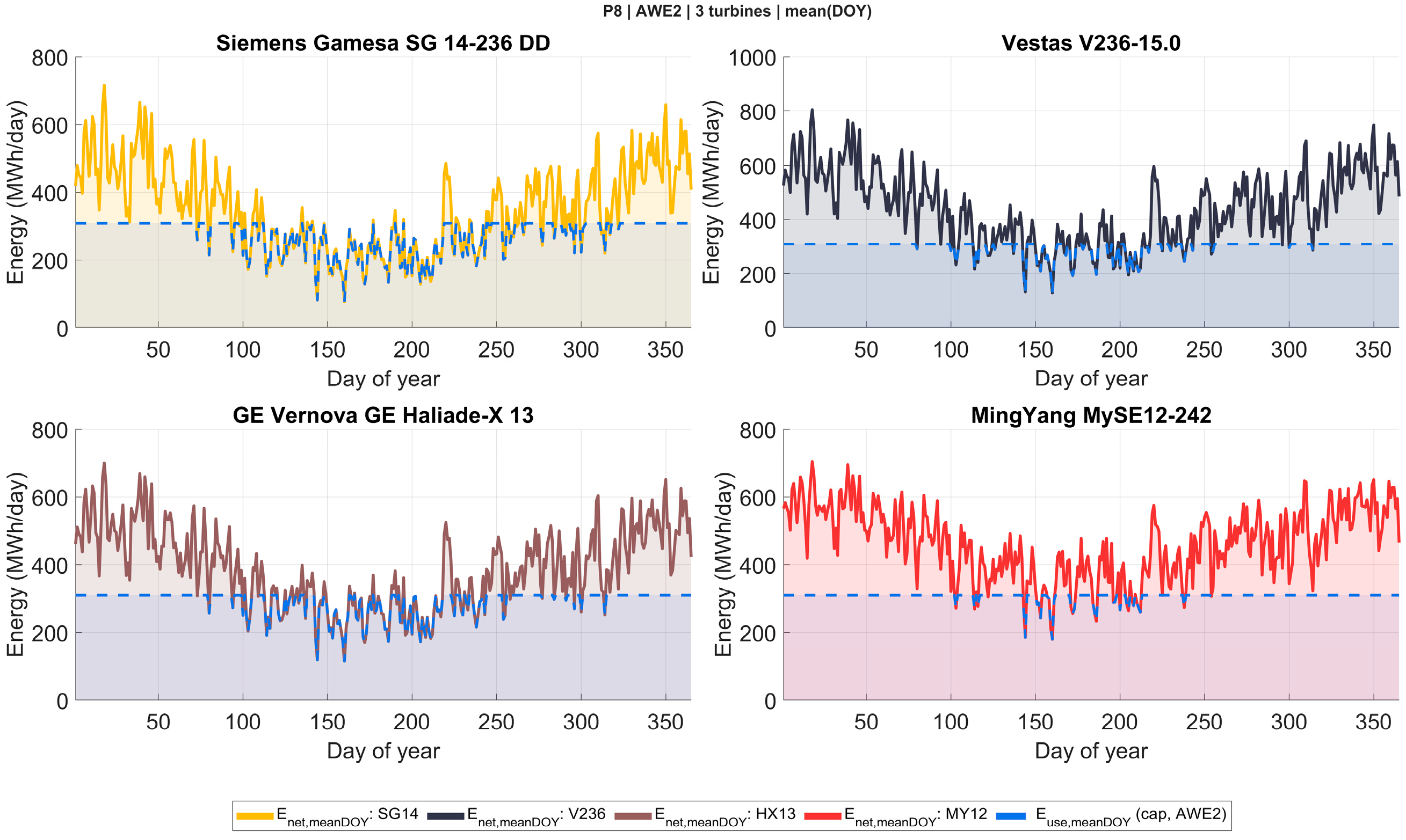
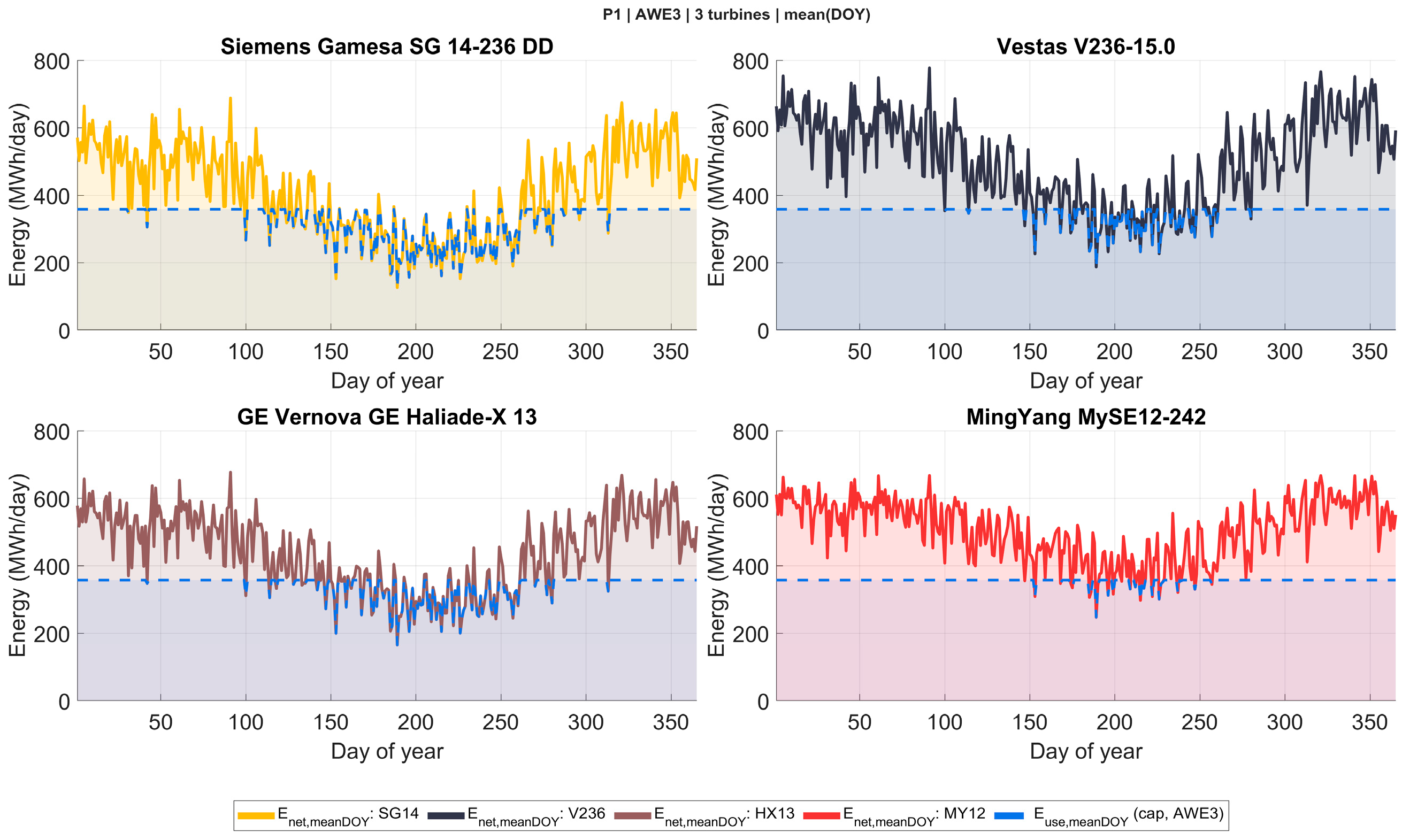
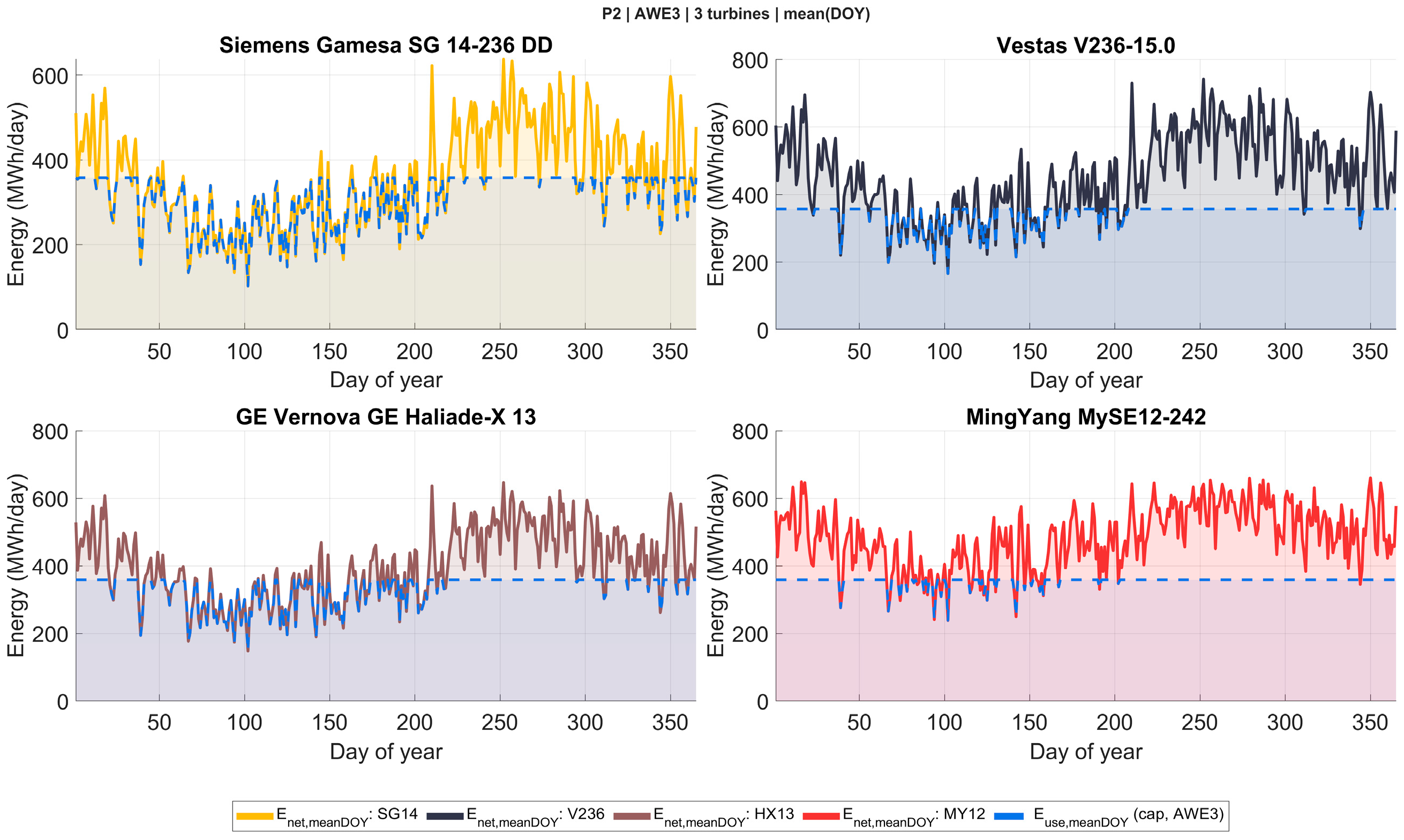
This appendix presents the average daily hydrogen production for each day of the year, considering the four wind turbine types, each evaluated for a total of three turbines, and for each electrolyzer type. The results provide a comparative assessment of hydrogen output under identical turbine capacity conditions, highlighting the influence of both turbine technology and electrolyzer configuration on daily hydrogen production patterns.
Figure A1. Average daily hydrogen production over the 10 years at site P1 for each wind turbine type, considering the PEM1 electrolyzer.
Jmse 14 00627 g0a1
Figure A2. Average daily hydrogen production over the 10 years at site P2 for each wind turbine type, considering the PEM1 electrolyzer.
Jmse 14 00627 g0a2
Figure A3. Average daily hydrogen production over the 10 years at site P3 for each wind turbine type, considering the PEM1 electrolyzer.
Jmse 14 00627 g0a3
Figure A4. Average daily hydrogen production over the 10 years at site P4 for each wind turbine type, considering the PEM1 electrolyzer.
Jmse 14 00627 g0a4
Figure A5. Average daily hydrogen production over the 10 years at site P5 for each wind turbine type, considering the PEM1 electrolyzer.
Jmse 14 00627 g0a5
Figure A6. Average daily hydrogen production over the 10 years at site P6 for each wind turbine type, considering the PEM1 electrolyzer.
Jmse 14 00627 g0a6
Figure A7. Average daily hydrogen production over the 10 years at site P7 for each wind turbine type, considering the PEM1 electrolyzer.
Jmse 14 00627 g0a7
Figure A8. Average daily hydrogen production over the 10 years at site P8 for each wind turbine type, considering the PEM1 electrolyzer.
Jmse 14 00627 g0a8
Figure A9. Average daily hydrogen production over the 10 years at site P1 for each wind turbine type, considering the PEM2 electrolyzer.
Jmse 14 00627 g0a9
Figure A10. Average daily hydrogen production over the 10 years at site P2 for each wind turbine type, considering the PEM2 electrolyzer.
Jmse 14 00627 g0a10
Figure A11. Average daily hydrogen production over the 10 years at site P3 for each wind turbine type, considering the PEM2 electrolyzer.
Jmse 14 00627 g0a11
Figure A12. Average daily hydrogen production over the 10 years at site P4 for each wind turbine type, considering the PEM2 electrolyzer.
Jmse 14 00627 g0a12
Figure A13. Average daily hydrogen production over the 10 years at site P5 for each wind turbine type, considering the PEM2 electrolyzer.
Jmse 14 00627 g0a13
Figure A14. Average daily hydrogen production over the 10 years at site P6 for each wind turbine type, considering the PEM2 electrolyzer.
Jmse 14 00627 g0a14
Figure A15. Average daily hydrogen production over the 10 years at site P7 for each wind turbine type, considering the PEM2 electrolyzer.
Jmse 14 00627 g0a15
Figure A16. Average daily hydrogen production over the 10 years at site P8 for each wind turbine type, considering the PEM2 electrolyzer.
Jmse 14 00627 g0a16
Figure A17. Average daily hydrogen production over the 10 years at site P1 for each wind turbine type, considering the PEM3 electrolyzer.
Jmse 14 00627 g0a17
Figure A18. Average daily hydrogen production over the 10 years at site P2 for each wind turbine type, considering the PEM3 electrolyzer.
Jmse 14 00627 g0a18
Figure A19. Average daily hydrogen production over the 10 years at site P3 for each wind turbine type, considering the PEM3 electrolyzer.
Jmse 14 00627 g0a19
Figure A20. Average daily hydrogen production over the 10 years at site P4 for each wind turbine type, considering the PEM3 electrolyzer.
Jmse 14 00627 g0a20
Figure A21. Average daily hydrogen production over the 10 years at site P5 for each wind turbine type, considering the PEM3 electrolyzer.
Jmse 14 00627 g0a21
Figure A22. Average daily hydrogen production over the 10 years at site P6 for each wind turbine type, considering the PEM3 electrolyzer.
Jmse 14 00627 g0a22
Figure A23. Average daily hydrogen production over the 10 years at site P7 for each wind turbine type, considering the PEM3 electrolyzer.
Jmse 14 00627 g0a23
Figure A24. Average daily hydrogen production over the 10 years at site P8 for each wind turbine type, considering the PEM3 electrolyzer.
Jmse 14 00627 g0a24
Figure A25. Average daily hydrogen production over the 10 years at site P1 for each wind turbine type, considering the AWE1 electrolyzer.
Jmse 14 00627 g0a25
Figure A26. Average daily hydrogen production over the 10 years at site P2 for each wind turbine type, considering the AWE1 electrolyzer.
Jmse 14 00627 g0a26
Figure A27. Average daily hydrogen production over the 10 years at site P3 for each wind turbine type, considering the AWE1 electrolyzer.
Jmse 14 00627 g0a27
Figure A28. Average daily hydrogen production over the 10 years at site P4 for each wind turbine type, considering the AWE1 electrolyzer.
Jmse 14 00627 g0a28
Figure A29. Average daily hydrogen production over the 10 years at site P5 for each wind turbine type, considering the AWE1 electrolyzer.
Jmse 14 00627 g0a29
Figure A30. Average daily hydrogen production over the 10 years at site P6 for each wind turbine type, considering the AWE1 electrolyzer.
Jmse 14 00627 g0a30
Figure A31. Average daily hydrogen production over the 10 years at site P7 for each wind turbine type, considering the AWE1 electrolyzer.
Jmse 14 00627 g0a31
Figure A32. Average daily hydrogen production over the 10 years at site P8 for each wind turbine type, considering the AWE1 electrolyzer.
Jmse 14 00627 g0a32
Figure A33. Average daily hydrogen production over the 10 years at site P1 for each wind turbine type, considering the AWE2 electrolyzer.
Jmse 14 00627 g0a33
Figure A34. Average daily hydrogen production over the 10 years at site P2 for each wind turbine type, considering the AWE2 electrolyzer.
Jmse 14 00627 g0a34
Figure A35. Average daily hydrogen production over the 10 years at site P3 for each wind turbine type, considering the AWE2 electrolyzer.
Jmse 14 00627 g0a35
Figure A36. Average daily hydrogen production over the 10 years at site P4 for each wind turbine type, considering the AWE2 electrolyzer.
Jmse 14 00627 g0a36
Figure A37. Average daily hydrogen production over the 10 years at site P5 for each wind turbine type, considering the AWE2 electrolyzer.
Jmse 14 00627 g0a37
Figure A38. Average daily hydrogen production over the 10 years at site P6 for each wind turbine type, considering the AWE2 electrolyzer.
Jmse 14 00627 g0a38
Figure A39. Average daily hydrogen production over the 10 years at site P7 for each wind turbine type, considering the AWE2 electrolyzer.
Jmse 14 00627 g0a39
Figure A40. Average daily hydrogen production over the 10 years at site P8 for each wind turbine type, considering the AWE2 electrolyzer.
Jmse 14 00627 g0a40
Figure A41. Average daily hydrogen production over the 10 years at site P1 for each wind turbine type, considering the AWE3 electrolyzer.
Jmse 14 00627 g0a41
Figure A42. Average daily hydrogen production over the 10 years at site P2 for each wind turbine type, considering the AWE3 electrolyzer.
Jmse 14 00627 g0a42
Figure A43. Average daily hydrogen production over the 10 years at site P3 for each wind turbine type, considering the AWE3 electrolyzer.
Jmse 14 00627 g0a43
Figure A44. Average daily hydrogen production over the 10 years at site P4 for each wind turbine type, considering the AWE3 electrolyzer.
Jmse 14 00627 g0a44
Figure A45. Average daily hydrogen production over the 10 years at site P5 for each wind turbine type, considering the AWE3 electrolyzer.
Jmse 14 00627 g0a45
Figure A46. Average daily hydrogen production over the 10 years at site P6 for each wind turbine type, considering the AWE3 electrolyzer.
Jmse 14 00627 g0a46
Figure A47. Average daily hydrogen production over the 10 years at site P7 for each wind turbine type, considering the AWE3 electrolyzer.
Jmse 14 00627 g0a47
Figure A48. Average daily hydrogen production over the 10 years at site P8 for each wind turbine type, considering the AWE3 electrolyzer.
Jmse 14 00627 g0a48

References

  1. IRENA. Renewable Capacity Statistics 2025; International Renewable Energy Agency: Abu Dhabi, United Arab Emirates, 2025. [Google Scholar]
  2. International Energy Agency. Renewables 2024—Analysis and Forecasts to 2030. Available online: https://www.iea.org/reports/renewables-2024 (accessed on 24 January 2025).
  3. Desalegn, B.; Gebeyehu, D.; Tamrat, B.; Tadiwose, T.; Lata, A. Onshore versus Offshore Wind Power Trends and Recent Study Practices in Modeling of Wind Turbines’ Life-Cycle Impact Assessments. Clean. Eng. Technol. 2023, 17, 100691. [Google Scholar] [CrossRef]
  4. Bosch, J.; Staffell, I.; Hawkes, A.D. Temporally Explicit and Spatially Resolved Global Offshore Wind Energy Potentials. Energy 2018, 163, 766–781. [Google Scholar] [CrossRef]
  5. Zhang, L.; Hu, Y.; Ye, J.; Qiu, Y. Planning of Far-Offshore Wind Power Considering Nearshore Relay Points and Coordinated Hydrogen Production. Electronics 2026, 15, 508. [Google Scholar] [CrossRef]
  6. Kumar, P.; Paul, S.; Kumar Saha, A.; Yadav, O. Recent Advancements in Planning and Reliability Aspects of Large-Scale Deep Sea Offshore Wind Power Plants: A Review. IEEE Access 2025, 13, 3738–3767. [Google Scholar] [CrossRef]
  7. Shen, X.; Li, S.; Li, H. Large-Scale Offshore Wind Farm Electrical Collector System Planning: A Mixed-Integer Linear Programming Approach. In Proceedings of the 2021 IEEE 5th Conference on Energy Internet and Energy System Integration (EI2), Taiyuan, China, 22–24 October 2021; pp. 1248–1253. [Google Scholar]
  8. Dute, E.F.; Fokkema, J.E.; Land, M.J.; Wortmann, J.C.; Douwes, M. Determining Onshore or Offshore Hydrogen Storage for Large Offshore Wind Parks: The North Sea Wind Power Hub Case. J. Clean. Prod. 2024, 472, 143395. [Google Scholar] [CrossRef]
  9. Shiva Kumar, S.; Lim, H. An Overview of Water Electrolysis Technologies for Green Hydrogen Production. Energy Rep. 2022, 8, 13793–13813. [Google Scholar] [CrossRef]
  10. Hill, S.J.P.; Bamisile, O.; Hatton, L.; Staffell, I.; Jansen, M. The Cost of Clean Hydrogen from Offshore Wind and Electrolysis. J. Clean. Prod. 2024, 445, 141162. [Google Scholar] [CrossRef]
  11. Xu, Y.; Cai, S.; Chi, B.; Tu, Z. Technological Limitations and Recent Developments in a Solid Oxide Electrolyzer Cell: A Review. Int. J. Hydrogen Energy 2024, 50, 548–591. [Google Scholar] [CrossRef]
  12. Vedrtnam, A.; Kalauni, K.; Pahwa, R. Water Electrolysis Technologies and Their Modeling Approaches: A Comprehensive Review. Eng 2025, 6, 81. [Google Scholar] [CrossRef]
  13. Zhang, Y.; Chen, J.; Han, Y.; Gong, Z.; Chen, L.; Wang, X.; Zhang, X.; Yuan, J.; Xue, N.; Zhou, W. Electrolysis of Seawater and Salt-Lake Water for Hydrogen Production: A Review on Technical Challenges, Material Design, and Future Directions. Energy Fuels 2026, 40, 4076–4099. [Google Scholar] [CrossRef]
  14. Aminaho, E.N.; Aminaho, N.S.; Aminaho, F. Techno-Economic Assessments of Electrolyzers for Hydrogen Production. Appl. Energy 2025, 399, 126515. [Google Scholar] [CrossRef]
  15. Zhou, Z.; Cai, G.; Huang, Y.; Bai, R.; Nie, S.; Chen, X. Spatial and Temporal Evolution of Cost-Competitive Offshore Hydrogen in China: A Techno-Economic Analysis. Renew. Sustain. Energy Rev. 2024, 203, 114780. [Google Scholar] [CrossRef]
  16. Juárez-Casildo, V.; Cervantes, I.; González-Huerta, R.D.G. Harnessing Offshore Wind for Decarbonization: A Geospatial Study of Hydrogen Production and Heavy Industry Utilization in Mexico. Int. J. Hydrogen Energy 2024, 83, 701–716. [Google Scholar] [CrossRef]
  17. Luo, Z.; Wang, X.; Wen, H.; Pei, A. Hydrogen Production from Offshore Wind Power in South China. Int. J. Hydrogen Energy 2022, 47, 24558–24568. [Google Scholar] [CrossRef]
  18. Dinh, Q.V.; Dinh, V.N.; Mosadeghi, H.; Todesco Pereira, P.H.; Leahy, P.G. A Geospatial Method for Estimating the Levelised Cost of Hydrogen Production from Offshore Wind. Int. J. Hydrogen Energy 2023, 48, 15000–15013. [Google Scholar] [CrossRef]
  19. Vidas, L.; Castro, R.; Bosisio, A.; Pires, A. Optimal Sizing of Renewables-to-Hydrogen Systems in a Suitable-Site-Selection Geospatial Framework: The Case Study of Italy and Portugal. Renew. Sustain. Energy Rev. 2024, 202, 114620. [Google Scholar] [CrossRef]
  20. Rogeau, A.; Vieubled, J.; de Coatpont, M.; Affonso Nobrega, P.; Erbs, G.; Girard, R. Techno-Economic Evaluation and Resource Assessment of Hydrogen Production through Offshore Wind Farms: A European Perspective. Renew. Sustain. Energy Rev. 2023, 187, 113699. [Google Scholar] [CrossRef]
  21. Song, S.; Lin, H.; Sherman, P.; Yang, X.; Nielsen, C.P.; Chen, X.; McElroy, M.B. Production of Hydrogen from Offshore Wind in China and Cost-Competitive Supply to Japan. Nat Commun 2021, 12, 6953. [Google Scholar] [CrossRef]
  22. Rusu, E. An Evaluation of the Expected Wind Dynamics in the Black Sea in the Context of the Climate Change. e-Prime—Adv. Electr. Eng. Electron. Energy 2023, 4, 100154. [Google Scholar] [CrossRef]
  23. Çarpar, T.; Ayat, B.; Aydoğan, B. Spatio-Seasonal Variations in Long-Term Trends of Offshore Wind Speeds Over the Black Sea; an Inter-Comparison of Two Reanalysis Data. Pure Appl. Geophys. 2020, 177, 3013–3037. [Google Scholar] [CrossRef]
  24. Silion, A.; Rusu, L.; Manolache, A.-I. Assessment of Offshore Wind Potential in the Six Countries with Access to the Black Sea. In Clean Energy Research: Now and in the Future; Chen, L., Ed.; Springer Nature: Cham, Switzerland, 2025; pp. 113–121. ISBN 978-3-031-99312-1. [Google Scholar]
  25. Koletsis, I.; Kotroni, V.; Lagouvardos, K.; Soukissian, T. Assessment of Offshore Wind Speed and Power Potential over the Mediterranean and the Black Seas under Future Climate Changes. Renew. Sustain. Energy Rev. 2016, 60, 234–245. [Google Scholar] [CrossRef]
  26. Islek, F.; Yuksel, Y. Evaluation of Future Wind Power Potential and Their Projected Changes in the Black Sea and Possible Stable Locations for Wind Farms. Ocean Eng. 2022, 266, 112832. [Google Scholar] [CrossRef]
  27. Manolache, A.I.; Chirosca, A.-M.; Rusu, L. Assessment of Wind and Wave Climate Dynamics in the Mediterranean and Black Seas for Renewable Energy Potential Analysis. In Trends in Clean Energy Research: Selected Papers from the 9th International Conference on Advances on Clean Energy Research (ICACER 2024); Chen, L., Ed.; Springer Nature: Cham, Switzerland, 2024; pp. 83–90. ISBN 978-3-031-67987-2. [Google Scholar]
  28. Bekçi, E.; Koca, K.; Bashir, M.F. Design Analysis of a Wave Energy Converter for Hydrogen Generation near Shoreline of Black Sea. Process Saf. Environ. Prot. 2024, 186, 1–9. [Google Scholar] [CrossRef]
  29. Manolache, A.I.; Onea, F. A Spatial Analysis of the Wind and Hydrogen Production in the Black Sea Basin. Energies 2025, 18, 2936. [Google Scholar] [CrossRef]
  30. Zhang, Y.; Li, T.; Yang, Q.; Zhou, X. Prediction of Coupled Dynamic Performance of Floating Offshore Wind Turbine Using Unsteady Aerodynamic Model and Nonlinear Self-Excited Hydrodynamic Model. Energy 2026, 344, 140010. [Google Scholar] [CrossRef]
  31. ERA5|Technical Documentation. Available online: https://docs.meteoblue.com/en/meteo/data-sources/era5 (accessed on 24 May 2025).
  32. Alkhalidi, M.; Al-Dabbous, A.; Al-Dabbous, S.; Alzaid, D. Evaluating the Accuracy of the ERA5 Model in Predicting Wind Speeds Across Coastal and Offshore Regions. J. Mar. Sci. Eng. 2025, 13, 149. [Google Scholar] [CrossRef]
  33. Hu, W.; Scholz, Y.; Yeligeti, M.; Bremen, L.V.; Deng, Y. Downscaling ERA5 Wind Speed Data: A Machine Learning Approach Considering Topographic Influences. Environ. Res. Lett. 2023, 18, 094007. [Google Scholar] [CrossRef]
  34. Bell, B.; Hersbach, H.; Simmons, A.; Berrisford, P.; Dahlgren, P.; Horányi, A.; Muñoz-Sabater, J.; Nicolas, J.; Radu, R.; Schepers, D.; et al. The ERA5 Global Reanalysis: Preliminary Extension to 1950. Q. J. R. Meteorol. Soc. 2021, 147, 4186–4227. [Google Scholar] [CrossRef]
  35. Gandoin, R.; Garza, J. Underestimation of Strong Wind Speeds Offshore in ERA5: Evidence, Discussion and Correction. Wind Energy Sci. 2024, 9, 1727–1745. [Google Scholar] [CrossRef]
  36. Rubio, H.; Hatfield, D.; Hasager, C.B.; Kühn, M.; Gottschall, J. Ship-Based Lidar Measurements for Validating ASCAT-Derived and ERA5 Offshore Wind Profiles. Atmos. Meas. Tech. 2025, 18, 4949–4968. [Google Scholar] [CrossRef]
  37. Ramon, J.; Lledó, L.; Torralba, V.; Soret, A.; Doblas-Reyes, F.J. What Global Reanalysis Best Represents Near-Surface Winds? Q. J. R. Meteorol. Soc. 2019, 145, 3236–3251. [Google Scholar] [CrossRef]
  38. Olauson, J. ERA5: The New Champion of Wind Power Modelling? Renew. Energy 2018, 126, 322–331. [Google Scholar] [CrossRef]
  39. Memija, A. Dongfang Installs ‘World’s Largest Single-Capacity’ Offshore Wind Turbine for Testing. Offshore Wind, 3 September 2025.
  40. Paulino De Azevedo, J.H.; Pradelle, F.; Botelho, V.; Torres Serra, E.; Nohra Chaar Pradelle, R.; Leal Braga, S. An Integrated Geospatial Model for Evaluating Offshore Wind-to-Hydrogen Technical and Economic Production Potential in Brazil. Int. J. Hydrogen Energy 2025, 100, 800–815. [Google Scholar] [CrossRef]
  41. PEM Electrolyser—MC Series. Available online: https://nelhydrogen.com/product/mc-series-electrolyser/ (accessed on 14 February 2026).
  42. Green Hydrogen Solutions. Available online: https://www.thyssenkrupp-nucera.com/green-hydrogen-solutions/ (accessed on 14 February 2026).
  43. Pressurised Alkaline Electrolysers—John Cockerill. Available online: https://hydrogen.johncockerill.com/en/products/electrolysers/ (accessed on 14 February 2026).
  44. Onea, F.; Rusu, E. The Expected Efficiency and Coastal Impact of a Hybrid Energy Farm Operating in the Portuguese Nearshore. Energy 2016, 97, 411–423. [Google Scholar] [CrossRef]
  45. Diaconita, A.I.; Andrei, G.; Rusu, L. An Overview of the Offshore Wind Energy Potential for Twelve Significant Geographical Locations across the Globe. Energy Rep. 2022, 8, 194–201. [Google Scholar] [CrossRef]
  46. Onea, F.; Diaconita, A.; Ganea, D. Assessment of the Black Sea High-Altitude Wind Energy. J. Mar. Sci. Eng. 2022, 10, 1463. [Google Scholar] [CrossRef]
  47. Diaconita, A.I.; Rusu, L.; Andrei, G. A Local Perspective on Wind Energy Potential in Six Reference Sites on the Western Coast of the Black Sea Considering Five Different Types of Wind Turbines. Inventions 2021, 6, 44. [Google Scholar] [CrossRef]
  48. AlZohbi, G.; AlShuhail, L.; Almoaikel, A. An Estimation of Green Hydrogen Generation from Wind Energy: A Case Study from KSA. Energy Rep. 2023, 9, 262–267. [Google Scholar] [CrossRef]
  49. Douak, M.; Settou, N. Estimation of Hydrogen Production Using Wind Energy in Algeria. Energy Procedia 2015, 74, 981–990. [Google Scholar] [CrossRef]
  50. Virah-Sawmy, D.; Beck, F.J.; Sturmberg, B. Ignore Variability, Overestimate Hydrogen Production—Quantifying the Effects of Electrolyzer Efficiency Curves on Hydrogen Production from Renewable Energy Sources. Int. J. Hydrogen Energy 2024, 72, 49–59. [Google Scholar] [CrossRef]
  51. Safari, F.; Dincer, I. Assessment and Optimization of an Integrated Wind Power System for Hydrogen and Methane Production. Energy Convers. Manag. 2018, 177, 693–703. [Google Scholar] [CrossRef]
  52. Beiter, P.; Musial, W.; Smith, A.; Kilcher, L.; Damiani, R.; Maness, M.; Sirnivas, S.; Stehly, T.; Gevorgian, V.; Mooney, M. A Spatial-Economic Cost-Reduction Pathway Analysis for US Offshore Wind Energy Development from 2015–2030; National Renewable Energy Lab. (NREL): Golden, CO, USA, 2016.
  53. Liang, Y.; Ma, Y.; Wang, H.; Mesbahi, A.; Jeong, B.; Zhou, P. Levelised Cost of Energy Analysis for Offshore Wind Farms—A Case Study of the New York State Development. Ocean Eng. 2021, 239, 109923. [Google Scholar] [CrossRef]
Figure 1. Power curves of the selected offshore wind turbines.
Jmse 14 00627 g001
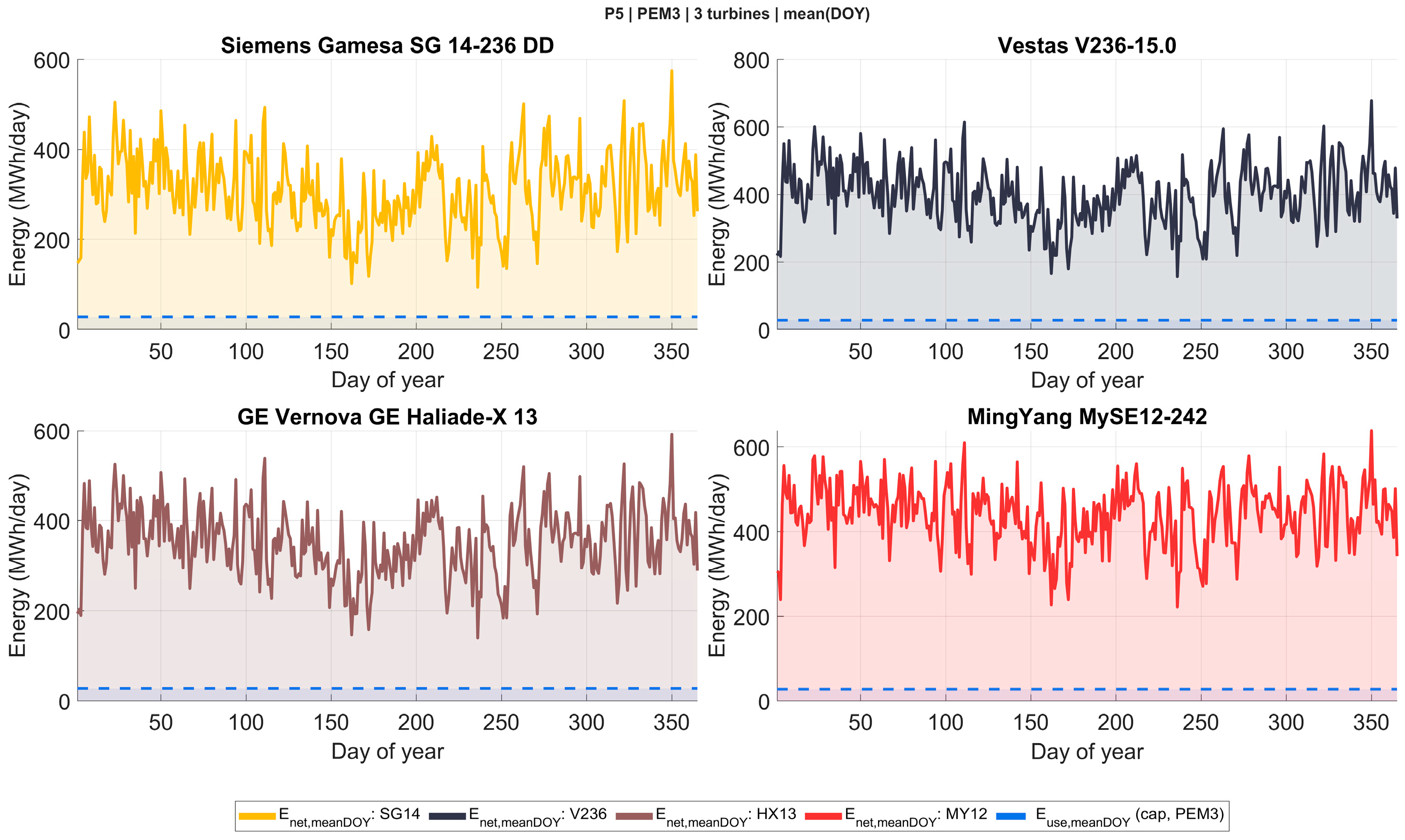
Figure 2. Spatial distribution of the five selected sampling points.
Jmse 14 00627 g002
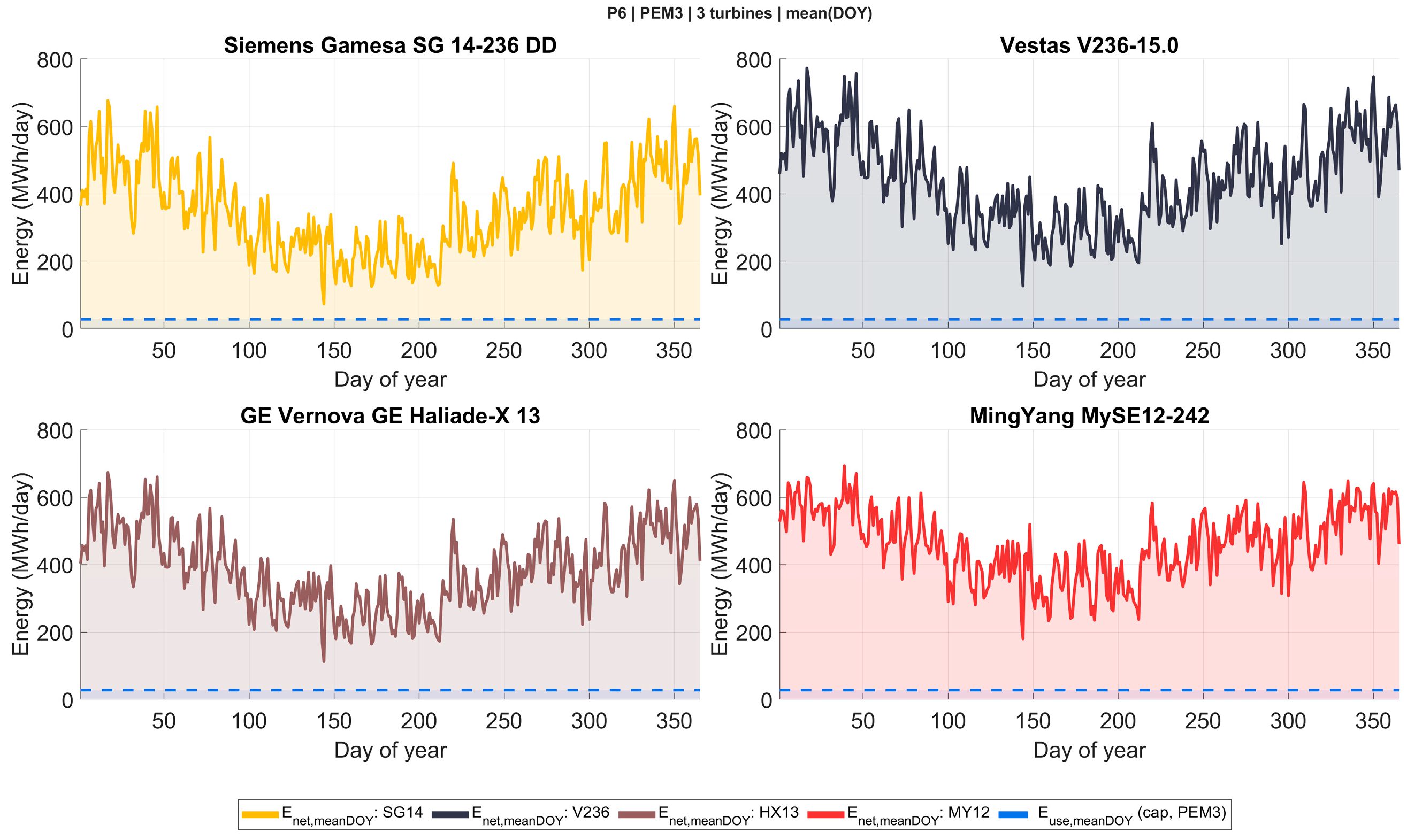
Figure 3. Map showing the remaining three sampling points in the Black Sea, each positioned at a different distance.
Jmse 14 00627 g003
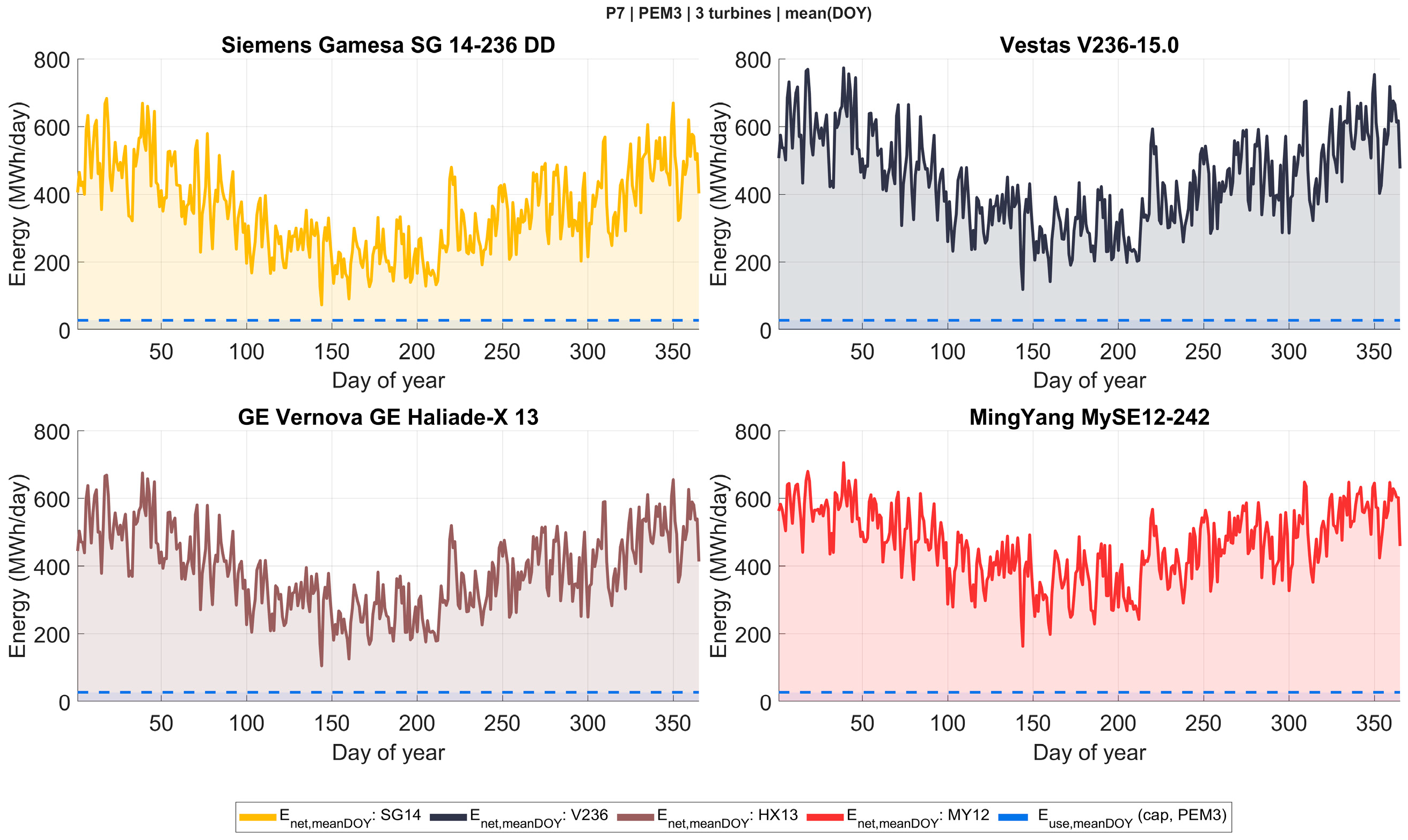
Figure 4. Mean wind speed at 150 m above sea level derived from ERA5 data for the analyzed 10-year period.
Jmse 14 00627 g004
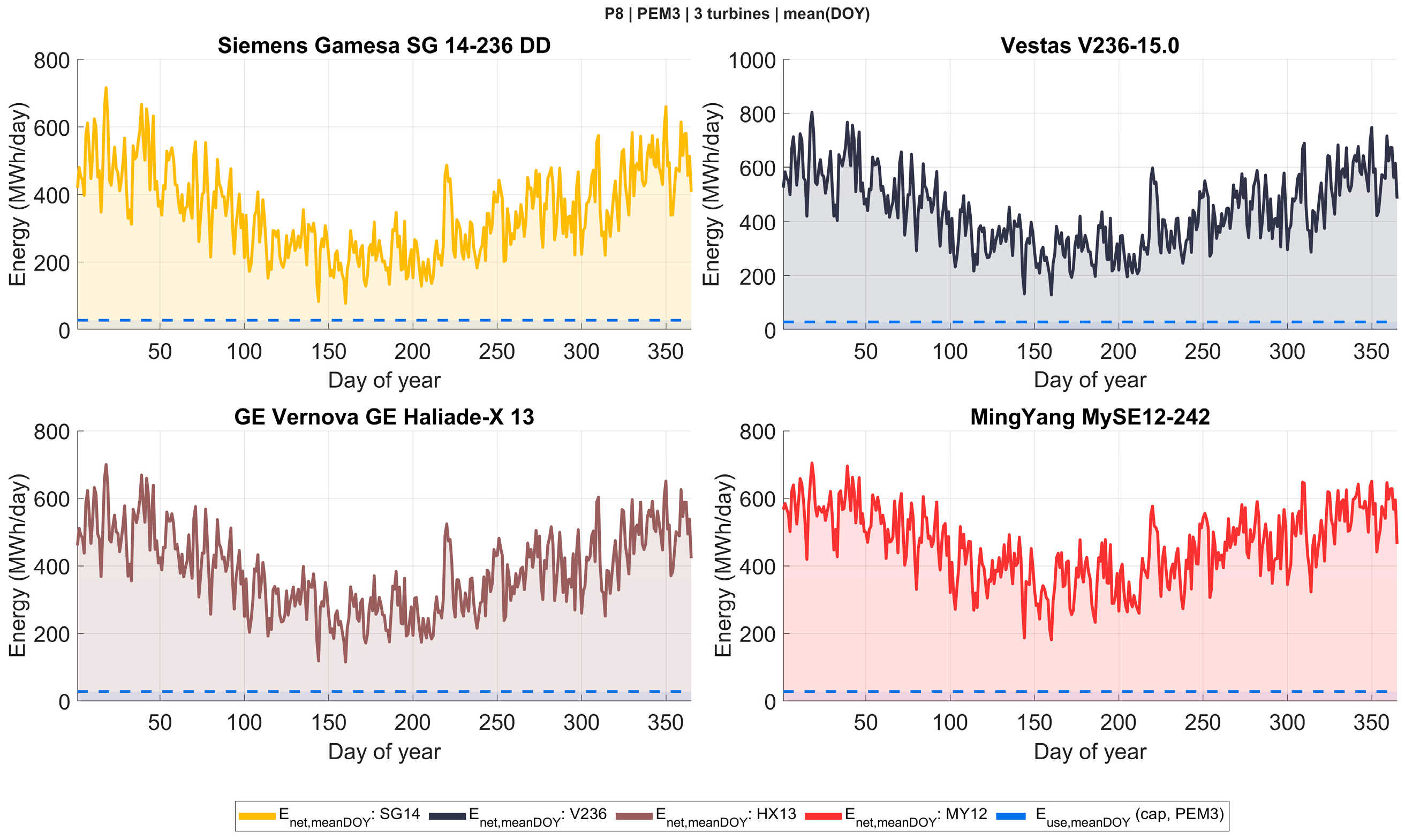
Figure 5. Wind roses illustrating wind direction and speed distribution at the eight locations.
Jmse 14 00627 g005
Figure 6. Comparison of annual energy production across eight sites using four wind turbine models.
Jmse 14 00627 g006
Figure 7. Site-specific capacity factor values for the four wind turbine models.
Jmse 14 00627 g007
Figure 8. Difference between gross and net annual energy production for the four wind turbine types across the eight selected sites.
Jmse 14 00627 g008
Figure 9. Hydrogen production derived from the gross annual energy production for all turbine types across the eight sites.
Jmse 14 00627 g009
Figure 10. Hydrogen production derived from the net annual energy production for all turbine types across the eight sites.
Jmse 14 00627 g010
Figure 11. Average daily hydrogen production over the 10 years at site P3 for each wind turbine type, considering the AWE2 electrolyzer.
Jmse 14 00627 g011
Figure 12. Average daily hydrogen production over the 10 years at site P7 for each wind turbine type, considering the AWE2 electrolyzer.
Jmse 14 00627 g012
Figure 13. Effect of a 5–10% reduction in PEM electrolyzer efficiency on net annual hydrogen production.
Jmse 14 00627 g013
Figure 14. Effect of a 5–10% reduction in AWE electrolyzer efficiency on net annual hydrogen production.
Jmse 14 00627 g014
Table 1. Technical and performance parameters of PEM and AWE electrolyzers obtained from [40,41,42,43].
Electrolyzer IDSystemProduction Capacity (kg/h)Energy Consumption (kWh/kgH2)
PEM1Cummins (Columbus, IN, USA) HyLYZER® 400036051.0
PEM2Nel Hydrogen (Oslo, Norway) Nel M400035453.2
PEM3Siemens SiLYZER 30018.662.0
AWE1Thyssenkrupp Nucera (Dortmund, Germany) Scalum® 20 MW36050
AWE2Nel Hydrogen Nel A4000216–34942.3–48.9
AWE3McPhy (Belfort, France) McLyzer 320028851.7
Table 2. Performance efficiency of each electrolyzer unit.
ID η ID η
PEM165.35%AWE166.66%
PEM262.65%AWE268.16–78.79%
PEM353.76%AWE364.47%
Table 3. Number of wind turbines required for maximum utilization of the electrolyzer capacity.
Site Turbine Code PEM1 PEM2 PEM3 AWE1 AWE2 AWE3
N net
P1HX133.0083.0860.1892.9492.1112.439
P1MY122.6142.6820.1642.5631.8342.12
P1SG143.223.3030.2023.1572.2592.612
P1V2362.6342.7010.1652.5821.8482.136
P2HX133.3353.4210.2093.272.342.705
P2MY122.7442.8150.1722.691.9252.225
P2SG143.7253.8210.2343.6522.6143.021
P2V2362.9293.0040.1842.8712.0552.375
P3HX132.7432.8130.1722.6891.9242.224
P3MY122.4482.5110.1542.41.7171.985
P3SG142.8842.9580.1812.8272.0242.339
P3V2362.3992.460.1512.3521.6831.945
P4HX132.8322.9050.1782.7771.9872.297
P4MY122.4992.5640.1572.451.7542.027
P4SG143.0113.0890.1892.9522.1132.442
P4V2362.4792.5430.1562.431.7392.01
P5HX133.763.8570.2363.6872.6383.05
P5MY123.0013.0780.1882.9422.1062.434
P5SG144.264.370.2684.1772.9893.455
P5V2363.3033.3880.2073.2382.3172.679
P6HX133.4453.5340.2163.3772.4172.794
P6MY122.8742.9480.182.8172.0162.33
P6SG143.7993.8960.2393.7242.6653.081
P6V2363.0213.0990.192.9622.122.45
P7HX133.3973.4850.2133.3312.3842.755
P7MY122.852.9240.1792.79522.312
P7SG143.7343.8310.2353.6612.623.029
P7V2362.9793.0560.1872.9212.092.416
P8HX133.4243.5130.2153.3572.4032.777
P8MY122.8652.9390.182.8092.012.323
P8SG143.7713.8690.2373.6982.6463.059
P8V2363.0033.0810.1892.9442.1072.436
Disclaimer/Publisher’s Note: The statements, opinions and data contained in all publications are solely those of the individual author(s) and contributor(s) and not of MDPI and/or the editor(s). MDPI and/or the editor(s) disclaim responsibility for any injury to people or property resulting from any ideas, methods, instructions or products referred to in the content.