Article

Simulation-Based Structural Optimization of Composite Hulls Under Slamming Loads: A Transferable Methodology for Resilient Offshore Applications

by
Giovanni Maria Grasso
,
Ludovica Maria Oliveri
and
Ferdinando Chiacchio
*
Dipartimento di Ingegneria Elettrica, Elettronica ed Informatica (D.I.E.E.I.), University of Catania, Via Santa Sofia 64, 95123 Catania, Italy
*
Author to whom correspondence should be addressed.
J. Mar. Sci. Eng. 2026, 14(3), 254; https://doi.org/10.3390/jmse14030254
Submission received: 30 December 2025 / Revised: 18 January 2026 / Accepted: 20 January 2026 / Published: 26 January 2026

Abstract

The growing demand for floating offshore structures calls for lightweight, impact-resilient, and sustainable design approaches. This study explores the optimization of composite fibree layup in a 30 m hull subjected to slamming-type hydrodynamic loads. Although based on a recreational vessel, the model serves as a transferable case for offshore applications such as wave energy devices, offshore wind platforms, and floating PV systems. A finite element method (FEM) model was developed using shell elements and a sinusoidal time-dependent pressure to simulate slamming events on the wet surface of the hull. The response was evaluated under different fiber orientation schemes, aiming to reduce structural mass while maintaining stress levels within safety margins. Results showed that strategic layup optimization led to a measurable reduction in total material usage, without compromising structural integrity. These outcomes suggest multiple advantages, including an approximately 14% reduction in raw material demand, which in turn facilitates for potential downsizing of propulsion systems and transportation energy due to lighter structures. Such improvements contribute indirectly to reduced emissions and operational costs. The methodology presented offers a replicable approach to composite optimization under transient marine loads, with relevance for sustainable offshore structural design.

1. Introduction

The global push toward clean energy production and sustainable marine operations is reshaping offshore engineering practices. Floating marine structures, such as offshore wind turbines, wave energy converters (WECs), floating photovoltaic parks, and aquaculture installations, must now meet increasingly stringent requirements in terms of structural resilience, durability, and environmental performance. These demands are closely aligned with the United Nations Sustainable Development Goals (SDGs), particularly SDG 7 (Affordable and Clean Energy), SDG 9 (Industry, Innovation, and Infrastructure), SDG 12 (Responsible Consumption and Production), and SDG 13 (Climate Action) [1,2,3].
In this context, structural mass and material efficiency become critical design drivers. Lightweight marine structures reduce energy consumption during fabrication, transportation, and installation, while enabling smaller propulsion and anchoring systems. These advantages lead to lower fuel usage and emissions during operation, which is essential for both economic viability and climate mitigation strategies [4,5,6,7].
Composite laminates, particularly those made of glass or carbon fibres in polymeric matrices, have emerged as promising materials for marine structures due to their high strength-to-weight ratio, resistance to corrosion, and tailorability. Their use has long been established in the recreational boating sector and is now expanding toward offshore engineering, where they offer significant benefits for floating and modular systems [8,9,10].
Several studies have demonstrated the expanding role of fibre-reinforced polymer (FRP) composites in offshore structures beyond recreational vessels. Applications now include floating pontoons, mooring systems, tidal and wave energy converters, and modular deck elements for offshore platforms. These systems benefit from composites’ high corrosion resistance, favourable fatigue behaviour, and adaptability to complex geometries. Recent works have reported successful implementation of sandwich structures with PVC or PET cores for offshore load-bearing applications, as well as the use of glass-fibree and carbon-fiber laminates in platforms exposed to cyclical wave loading and splash zones [11,12,13,14]. Nevertheless, concerns remain about long-term durability in saltwater environments, delamination under repeated impacts, and limited standardization in offshore composite design codes [15,16,17,18]. Recent investigations have further emphasized the effects of long-term environmental exposure on marine-grade composite materials. Sandwich structures made with E-glass face sheets, and PVC foam cores, widely used in hull and deck applications, exhibit degradation mechanisms after moisture uptake, especially under out-of-plane loading. Recent studies have explored modern approaches such as acoustic emission (AE) and machine learning (ML) to detect and classify damage evolution in such structures, achieving prediction accuracies of over 90% even for seawater-exposed samples [19]. Additional experimental campaigns have shown that GFRP laminates and I-beams exposed to simulated and natural marine conditions undergo tensile and compressive strength reductions of up to 30%, highlighting the relevance of laboratory ageing protocols for predicting field performance [20]. Complementary results on composite tidal turbine blades confirm that hygrothermal ageing leads to significant matrix degradation and strength losses, underscoring the importance of selecting moisture-resistant matrices and protective coatings [21]. These insights are essential for the long-term safety and reliability of composite offshore structures and highlight the need to complement design-phase optimization with durability-oriented material selection.
However, design methodologies for composite structures in offshore environments must be adapted to account for dynamic, localized loads—most notably slamming. Slamming loads are impulsive hydrodynamic pressures generated when a hull or surface re-enters the water after partial emergence, often due to wave interactions. These events can lead to localized stress peaks, rapid energy transfer, and complex structural responses. While slamming has been extensively studied in metallic hulls using analytical, experimental, and numerical approaches, fewer studies have addressed its effects on composite shells, particularly with regard to optimization of fibre orientation and layup [22,23].
The modelling of slamming events in marine structures has been extensively addressed using a range of theoretical and numerical approaches. Classical formulations such as Wagner’s theory and von Karman’s flat-plate impact model have laid the foundation for understanding hydrodynamic impact pressures. These models are often incorporated into finite element analyses either through empirical pressure distributions or simplified time-dependent functions. More recent studies have explored fluid–structure interaction (FSI) models and coupled CFD–FEM (computational fluid dynamics–finite element method) approaches to capture transient behaviour more realistically, although at significantly higher computational costs [24,25,26]. While most of the literature has focused on metallic hulls and naval vessels, the optimization of composite laminate layup under slamming or impulsive loads remains an underdeveloped area. In particular, few works offer frameworks that integrate transient load simulations with mass-minimization objectives tailored to offshore applications [27,28,29].
Finite element method (FEM) modelling has proven to be a valuable tool in this context, allowing for detailed analysis of stress distributions, dynamic responses, and failure modes under simulated slamming conditions. Recent advances have enabled the integration of composite layup optimization algorithms into FEM workflows, including multi-objective approaches based on surrogate models and evolutionary algorithms such as NSGA-II [30]. Other methods combine artificial neural networks with genetic algorithms to identify optimal configurations under aerodynamic and structural constraints, demonstrating promising results in naval applications [31]. These strategies not only improve structural performance but also reduce material usage, an essential consideration for cost control and environmental impact [32,33,34].
This study presents a simulation-based approach to evaluate and optimize a composite hull subjected to slamming-type loads. Although the case study is based on a 30 m pleasure-classed vessel, the structural configuration and load scenarios are representative of offshore platforms and marine energy systems operating under similar hydrodynamic conditions. A time-dependent sinusoidal pressure profile is applied to mimic slamming impacts, and different fibre orientations are tested to identify mass-efficient configurations without compromising safety.
The main aim of this work is to demonstrate a transferable FEM-based methodology for composite layup optimization under transient marine loading, with implications for sustainable design. By reducing structural mass, the proposed approach indirectly supports raw material conservation, energy efficiency, and emissions reduction, key targets in the development of next-generation offshore infrastructure.
In this framework, the present work offers three main innovative contributions with respect to existing research on composite marine structures under slamming loads. First, instead of focusing on simplified panels, wedges, or localized bottom panels as in previous experimental and numerical investigations of composite slamming, a full-scale 30 m composite hull is modelled with a detailed representation of the actual structural layout (bottom, keel, sides, bulkheads, transverse frames, longitudinal stiffeners, deck), thus capturing the interaction between global and local stiffness in slamming conditions. Second, whereas most contributions in the literature either use slamming loads to validate high-fidelity FSI models [25] or to characterize the dynamic response of 2D/3D test articles without an explicit design loop [35,36], the present study embeds the slamming scenario directly into a finite element framework tailored to structural mass minimization, so that impact loads become the primary driver of a systematic hull-level layup optimization. Third, the study introduces a transferable methodology that combines industrial-grade FEM modelling, realistic composite layups derived from shipyard practice, and a mass-reduction strategy constrained by strength and displacement limits, providing design guidelines that can be readily extended from the reference yacht to offshore applications such as wave energy converters, floating wind platforms, and floating PV systems. These elements distinguish the proposed approach from prior slamming and hydroelasticity studies on composite structures that rarely link full-hull composite modelling with optimization-driven, slamming-oriented structural design.
To guide the reader through the proposed methodology and findings, the paper is structured as follows. Section 2 describes the materials and methods employed, including hull geometry, composite materials, FEM setup, and applied loading conditions. Section 3 presents the results of the finite element analysis, focusing on stress and displacement distributions for the two loading scenarios. Section 4 details the structural optimization process, including its underlying assumptions and the mass reduction achieved in various structural components. Section 5 provides a broader discussion of the implications of the proposed approach, including its applicability to vessels operating in harsh marine environments, and concludes with final considerations.

2. Materials and Methods

2.1. Hull Structure Overview

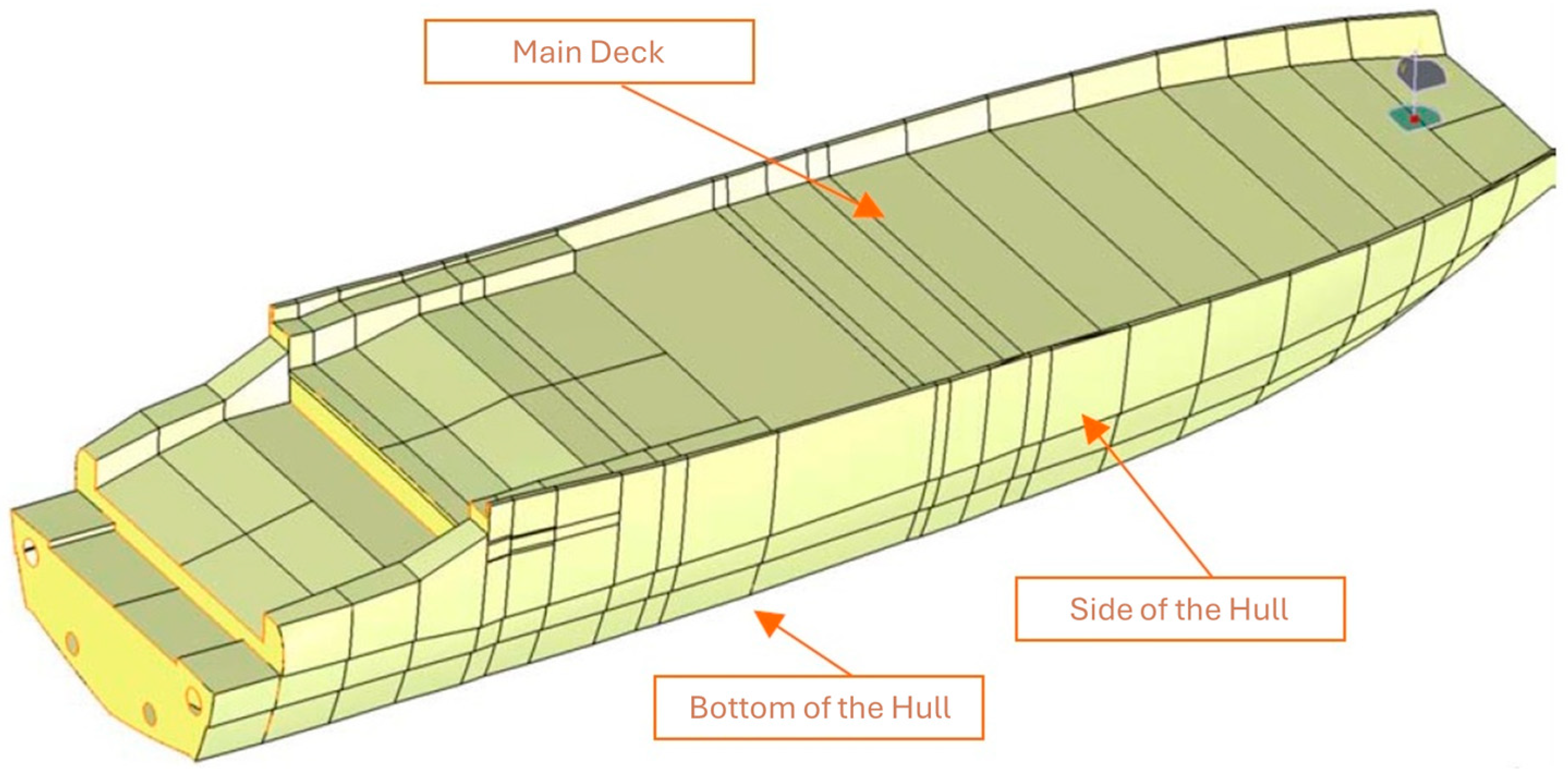
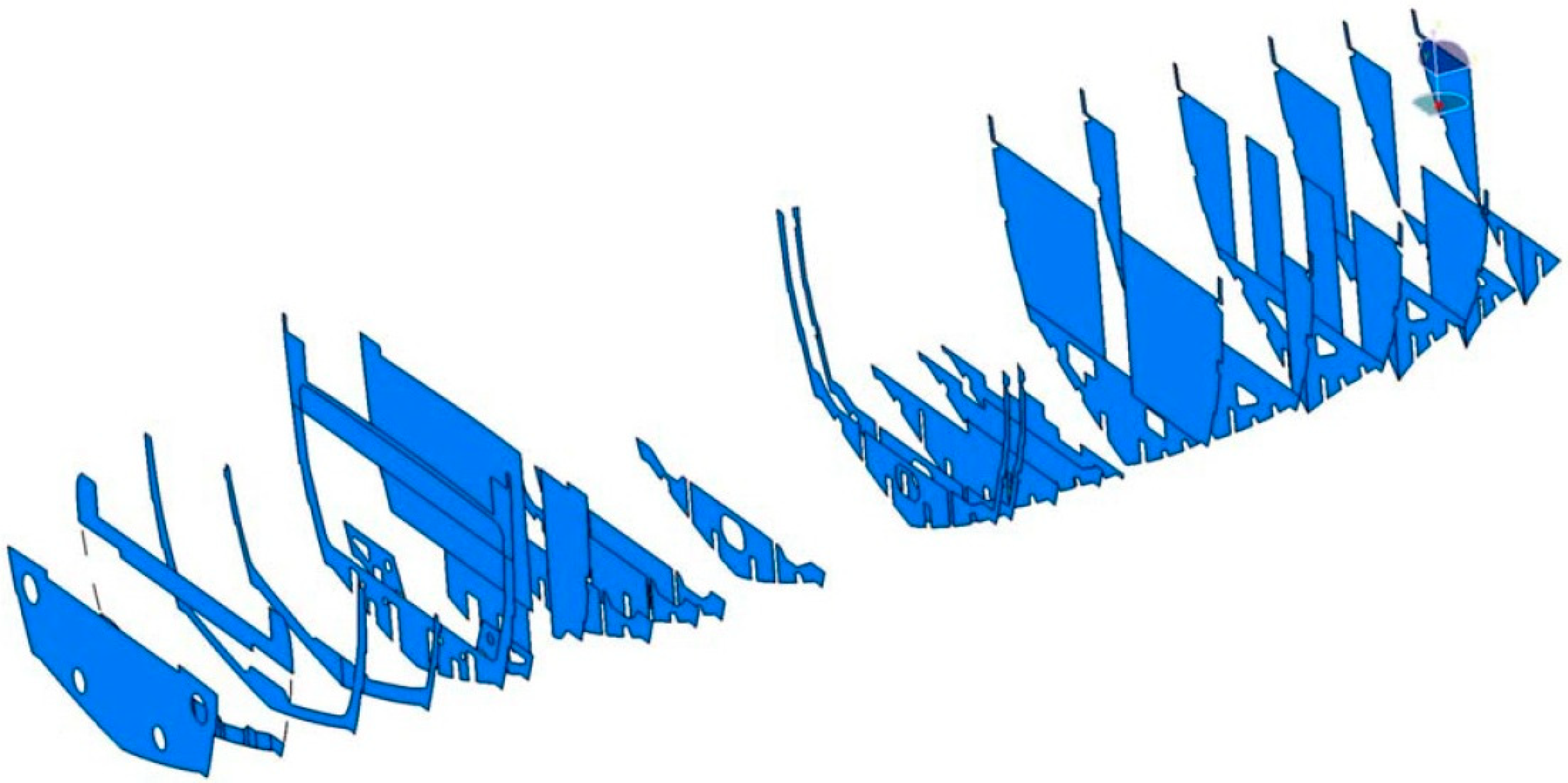
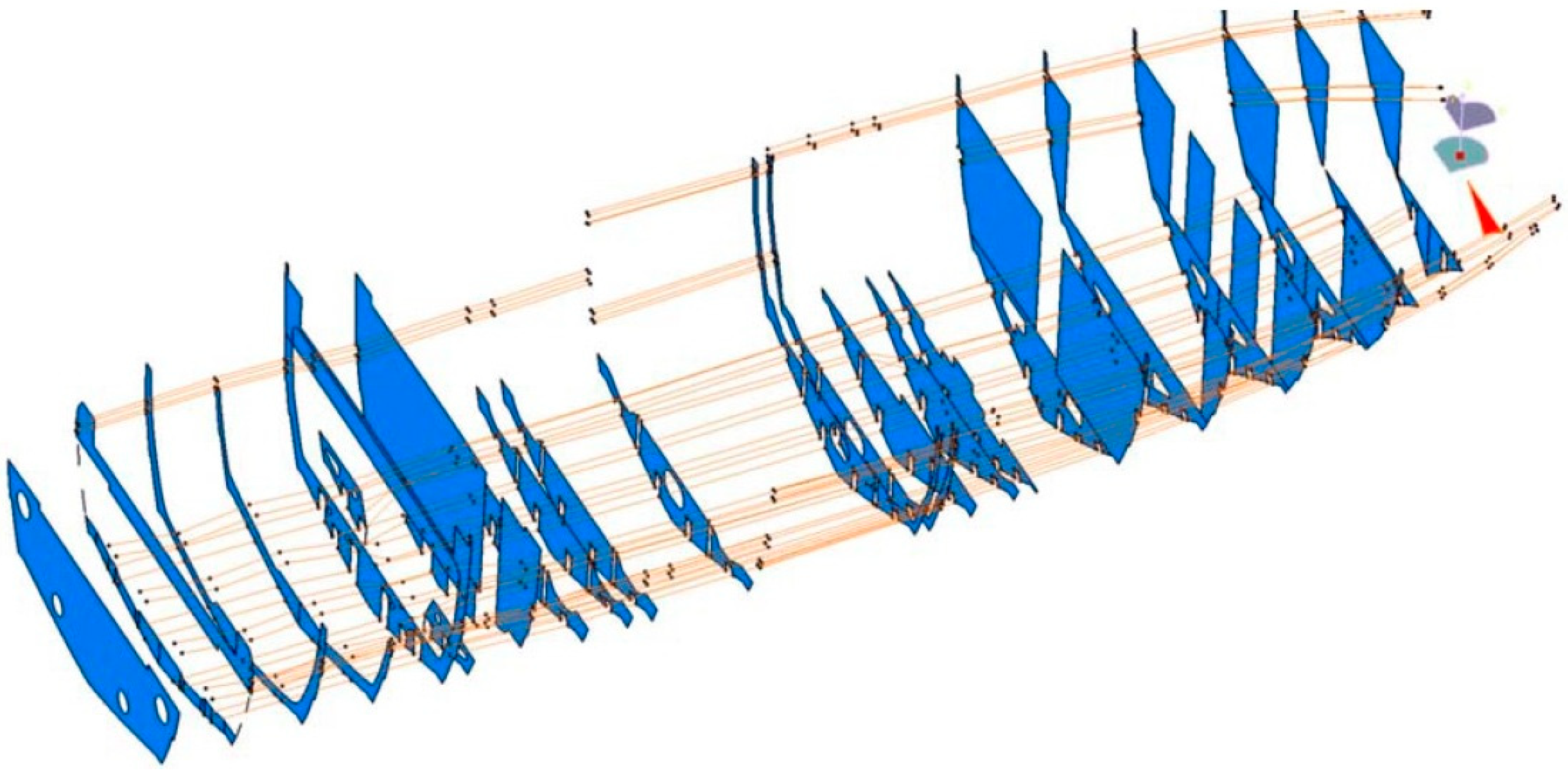
The vessel analyzed in this study is a 30 m long composite yacht (Table 1). Its structural layout is based on a monocoque hull stiffened by an internal framework composed of longitudinal elements (stringers and girders) and transverse reinforcements (floors, ribs, and bulkheads) (Figure 1, Figure 2 and Figure 3). Within the central hold, there are compartments for the fuel tank and two additional tanks for freshwater and wastewater. The engine room, located aft, houses two engines and is separated from the central hold by a watertight bulkhead. The deck panels serve to enclose both the hull and the crew/passenger cabins. Notably, some elements such as the command bridge, aft platform, and sunbathing deck are not included in the analyzed CAD models.

2.2. Composite Materials and Laminate Properties

The structural components of the yacht are manufactured using glass fibre-reinforced composite laminates. E-glass fibres are combined with a vinylester-based resin matrix, offering a good balance between mechanical performance, corrosion resistance, and cost-effectiveness [37]. Sandwich structures are employed in various parts of the hull, where the core materials consist of either PVC or PE foam, selected for their lightweight properties and adequate shear strength (Table 2) [38,39]. The fibre volume fraction reported in Table 3 is based on typical values from manufacturers’ datasheets; the impregnation percentage may vary depending on shipyard technology, and the values reported correspond to the case-study application.
The mechanical properties of the laminates, such as the elastic moduli in the principal directions (E11, E22), shear modulus (G12), Poisson’s ratio (ν12), and tensile and compressive strengths (Xt, Xc, Yt, Yc, S), were derived from the material specifications provided by the manufacturers. The materials were pre-characterized and selected based on their compatibility with marine environments, mechanical performance, and ease of processing.
Table 4 introduces the standard layup types employed in the vessel’s composite structure. Each layup type defines a unique combination of layer thickness and fibre orientation and serves as a modular element in the composite stack-up.
Table 5 details the application of layup configurations across the vessel’s main structural components. Each PCOMP element is associated with a specific location, total thickness, orientation, and sequence of standard layup types previously defined in Table 4.

2.3. Design Loads

The vessel is analyzed under static and dynamic load conditions, all considered at full-load displacement (70 tons), with a draft of 1.21 m. Three load categories are applied:
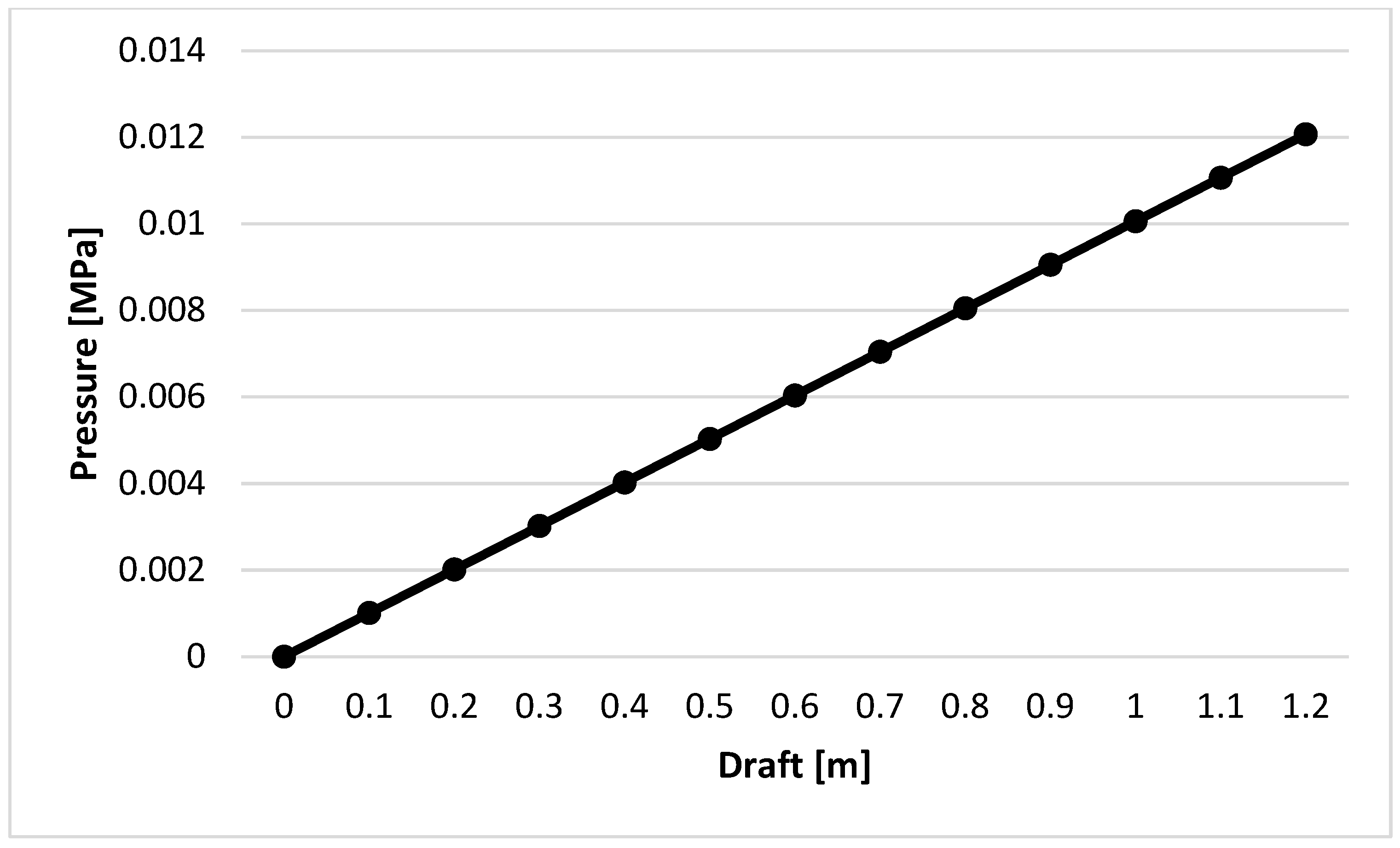
  • Hydrostatic pressure below the waterline, linearly varying with depth and peaking at the keel (Figure 4). Assuming seawater density ρ = 1025 kg/m3 and g = 9.81 m/s2, the peak pressure at the keel for a full-load draft of 1.21 m is ≈0.012 MPa.
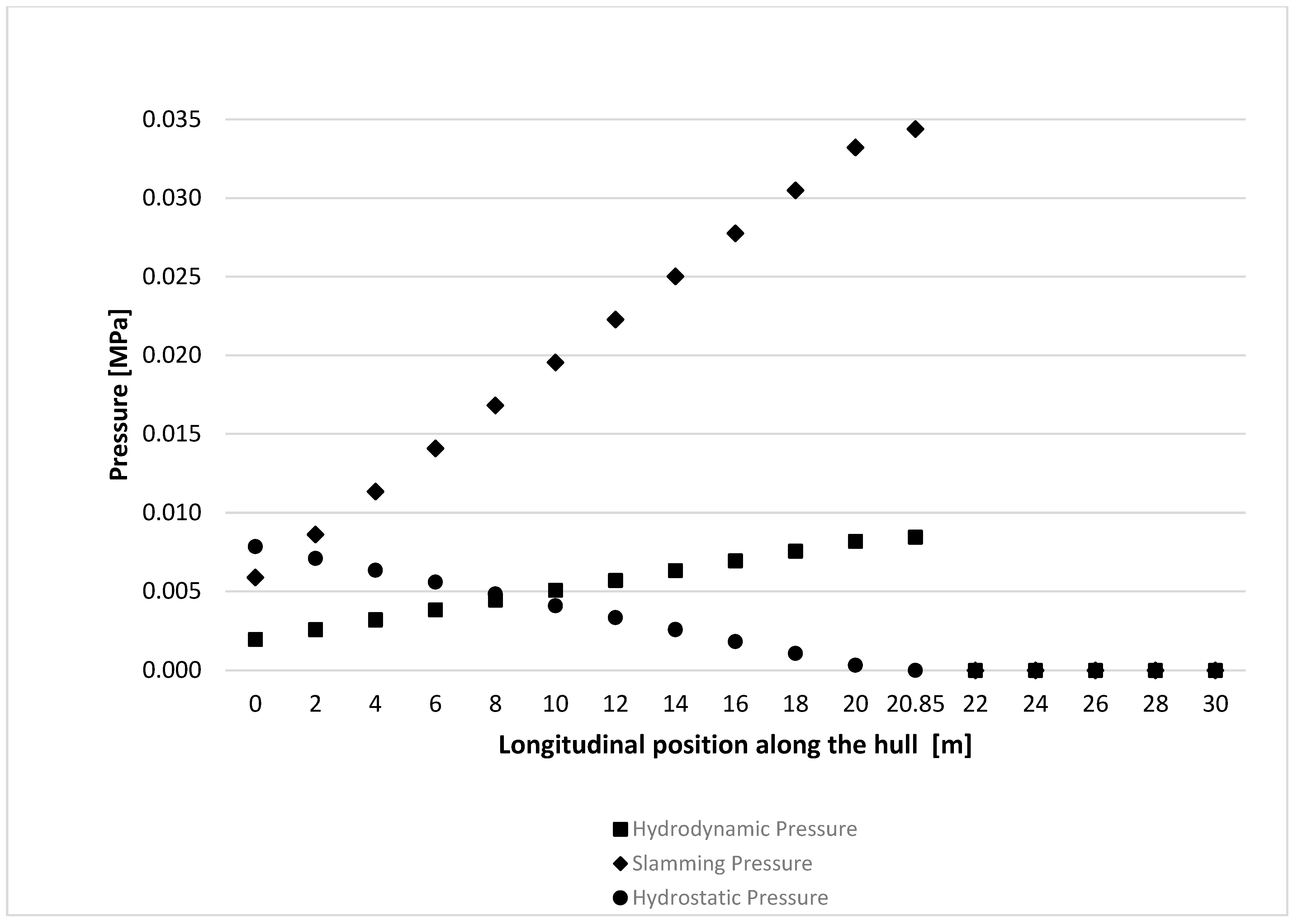
  • Hydrodynamic pressure (cruise conditions), modelled with a longitudinal linear variation (Table 6).
  • Slamming pressure, representing impulsive loads at the bow during high-speed impact (Table 6).
In planing conditions, the portion of the hull in contact with water is reduced. The draft varies linearly from a maximum of 0.78 m at the aft (x = 0) to 0 m at the bow (x = 20.85 m), which represents the end of the wetted length. As a result, the hydrostatic pressure distribution along the hull was modelled as linearly decreasing, reaching zero at the forward limit of the wetted area (Figure 5).
To represent the transient nature of the slamming load over time, a sinusoidal pressure variation was adopted. This approach, although simplified, is widely employed in the preliminary design of planing vessels to approximate the dynamic interaction between the hull and the incident waves [40,41]. The assumed sea state consists of regular waves 2 m high and 40 m long, propagating at 1.5 m/s, while the vessel moves at 30 kn (≈15.5 m/s) in the opposite direction. The resulting relative velocity is therefore about 17 m/s.
Given the wavelength of 40 m, the corresponding wave period is
T = 40 17.0 = 2.35   s
and the angular frequency is
ω = 2 π T = 2.67   s 1 .
The pressure variation can thus be expressed as
P ( x , t ) = P ( x )   s i n ( ω t )
where negative values of sin(ωt) are discarded as they correspond to non-physical phases when the hull emerges from the water. Although this model does not capture the full complexity of slamming peaks, it provides a physically consistent and conservative representation of the transient loading envelope, suitable for the optimization analyses conducted in this study.
Thermal effects were not considered significant in this analysis, and all simulations were conducted assuming a reference temperature of 20 °C.

2.4. FEM Model Setup

The finite element model was developed using predominantly QUAD4 shell elements, with TRIA3 elements in transitional areas. Spring elements were used to connect longitudinal reinforcements with the bottom hull where nodes are contiguous. A summary of the finite element entities used in the numerical model is provided in Table 7.
The mesh density was determined through preliminary analyses to ensure stable stress and displacement fields, while balancing accuracy with computational efficiency within the optimization framework. In fact, initial tests with increased mesh resolution did not yield significant improvements in the results; therefore, the mesh resolution was limited to the one adopted in this study [42]. The final discretization, consisting of approximately 19,000 elements (Table 7), provides adequate accuracy for the structural analysis under slamming loads.
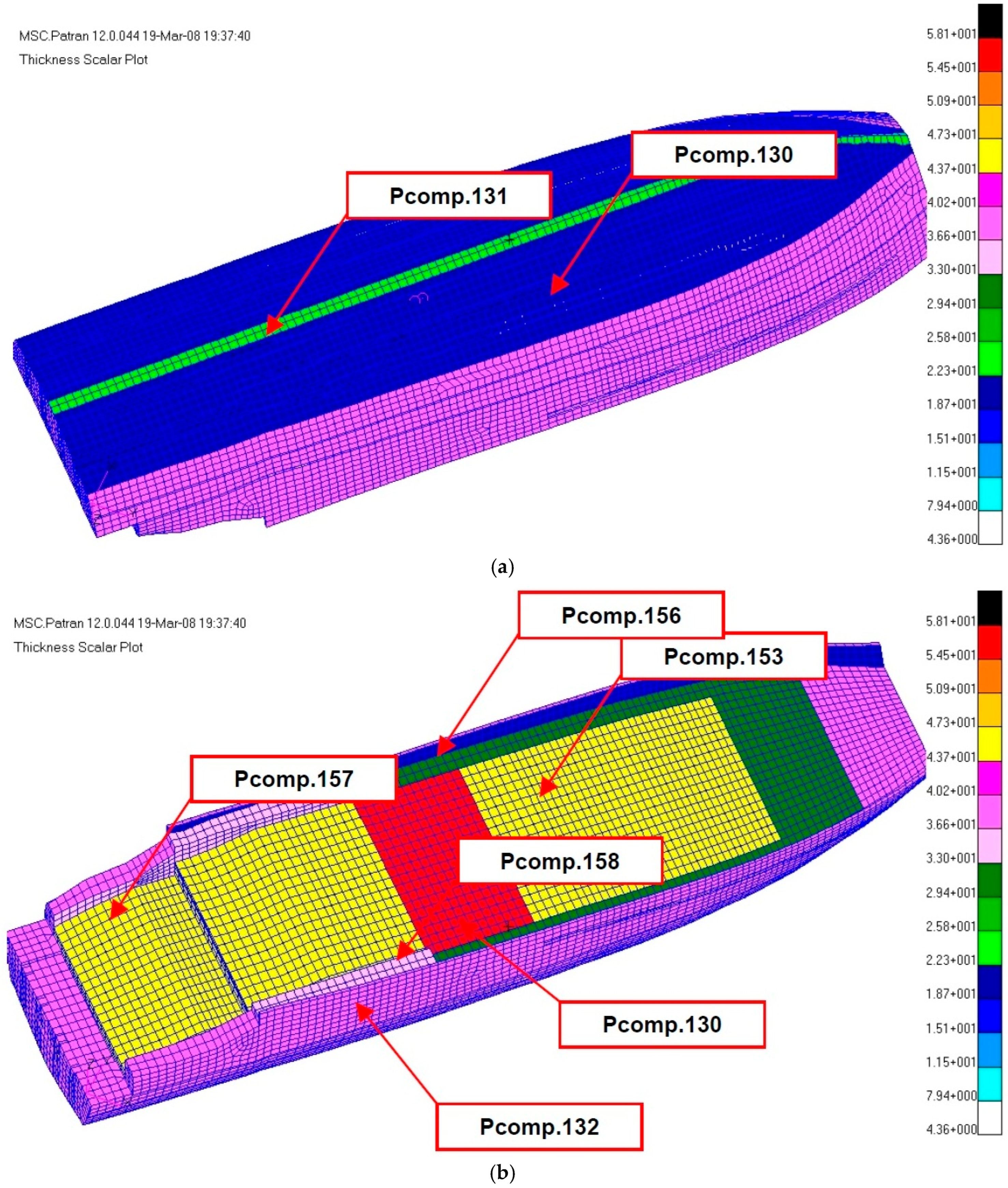
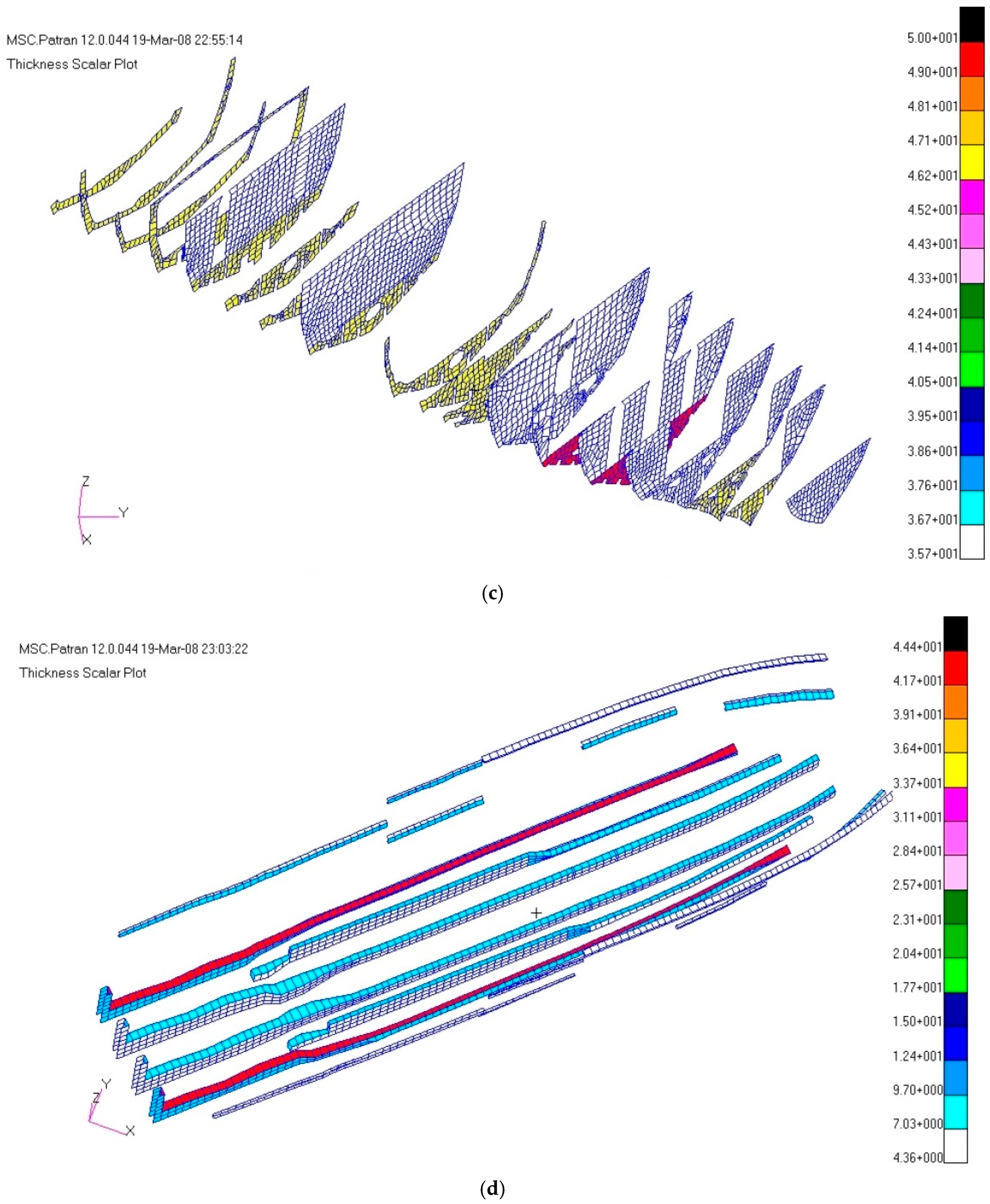
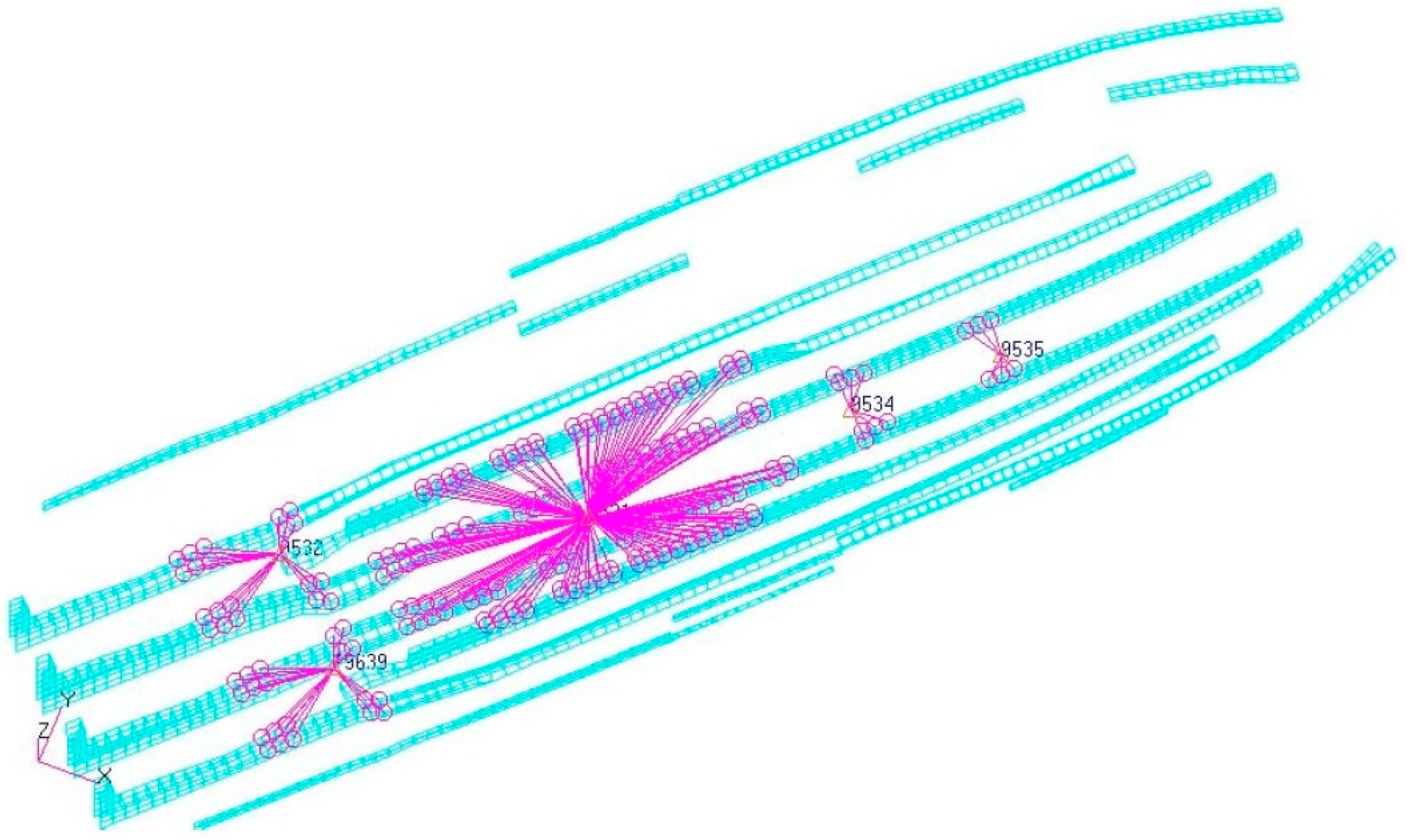
Following Table 4, Figure 6a–d illustrate the distribution of PCOMP shell elements across the vessel’s structure. Each figure highlights the main components where the composite layups are applied, matching the configurations listed in Table 4. The colour scale represents the total laminate thickness, which results from the combination of fibre layers and core materials. Figure 7 illustrates the spatial distribution of the concentrated masses (CONM2 elements), while Table 8 reports their details, including coordinates, total weight, and the associated node and element identifiers.
To match the total displacement of 70 tons in full-load conditions, a non-structural mass distribution was applied to selected shell elements of the hull (bottom, side, and keel).
These masses were spread proportionally to the area of the shell components, based on the volume and thickness of each PCOMP group.
The applied non-structural mass fraction per unit area is shown in Table 9.

2.5. Applied Loads

The loads were applied simultaneously in the simulation through different load cases, combining static and dynamic effects representative of the vessel’s operational conditions. Two primary load cases were considered:
  • Load Case 1—Hydrostatic Pressure + Gravity:
    This scenario simulates the vessel at rest in calm water conditions, accounting for gravitational acceleration (1 g) and the hydrostatic pressure acting on the hull below the waterline.
    • Gravity load:
      Applied using the commands GRAV (8; 0; 9810.0; 0.0; 0.0; −1.0) (standard Earth gravity, downward along the Z-axis)
    • Hydrostatic pressure:
      Applied using the commands PLOAD3, PLOAD4, PLOAD5, and PLOAD6, depending on the element type and location.
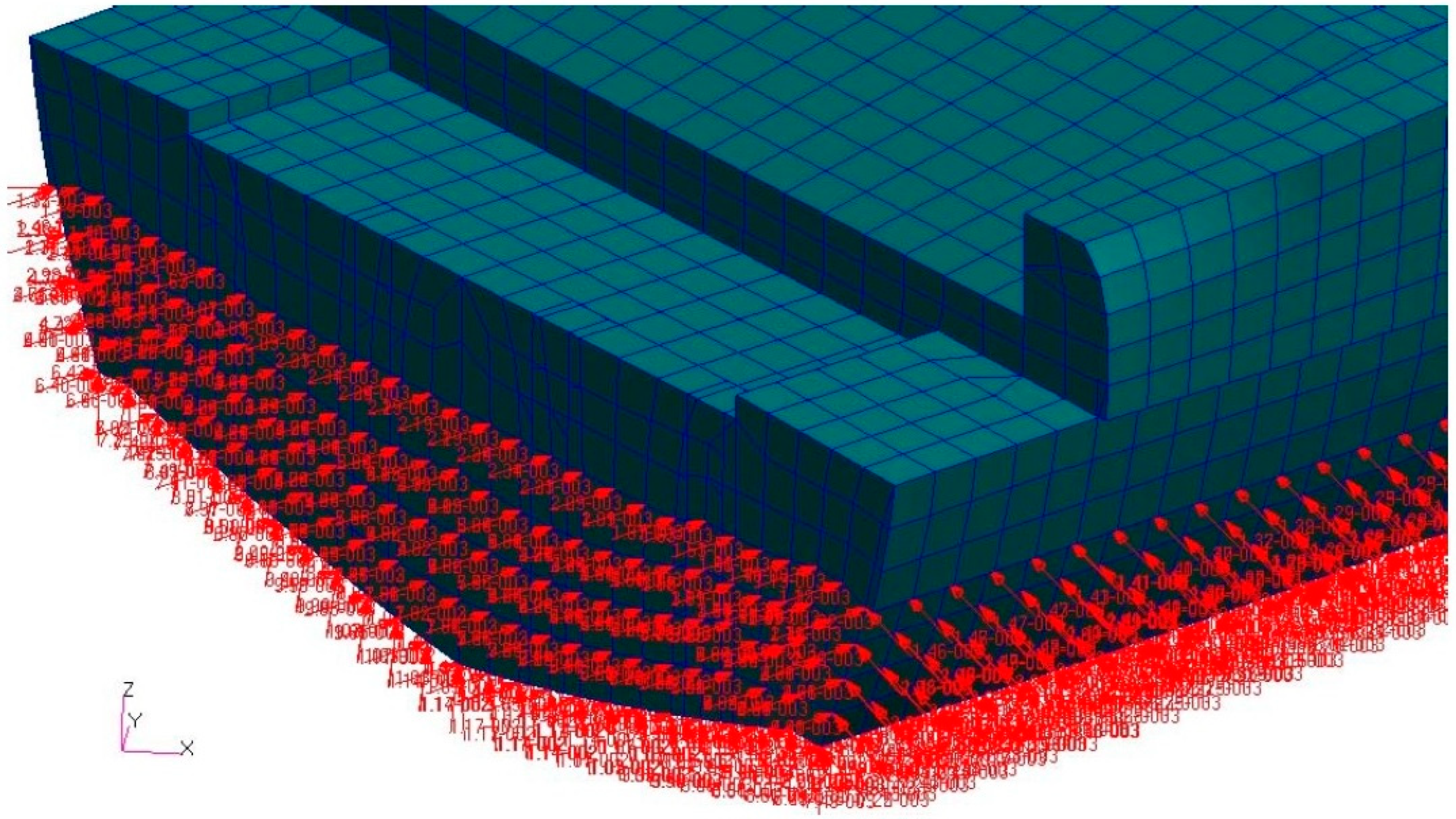
Figure 8 shows the hydrostatic pressure distribution mapped onto the hull shell elements, while Figure 9 presents a close-up view of the hydrostatic loads applied to the transom.
  • Load Case 2—Hydrodynamic Pressure + Slamming + Gravity + Propulsion Acceleration:
    This case includes the inertial forces due to engine thrust during planing conditions, combined with hydrodynamic and slamming pressures.
    • Gravity load:
      GRAV (8; 0; 9810.0; 0.0; 0.0; −1.0)
    • Engine thrust acceleration:
      GRAV (12; 0; 1.0; 459.0; 575.0; −2358.0)
      (This simulates the thrust-induced acceleration vector applied globally in the X, Y, and Z directions.)
    • Dynamic pressures:
      Hydrodynamic and slamming pressure fields were applied using commands PLOAD28 and PLOAD29, with spatial variation along the hull based on linear equations (as shown in Figure 4).
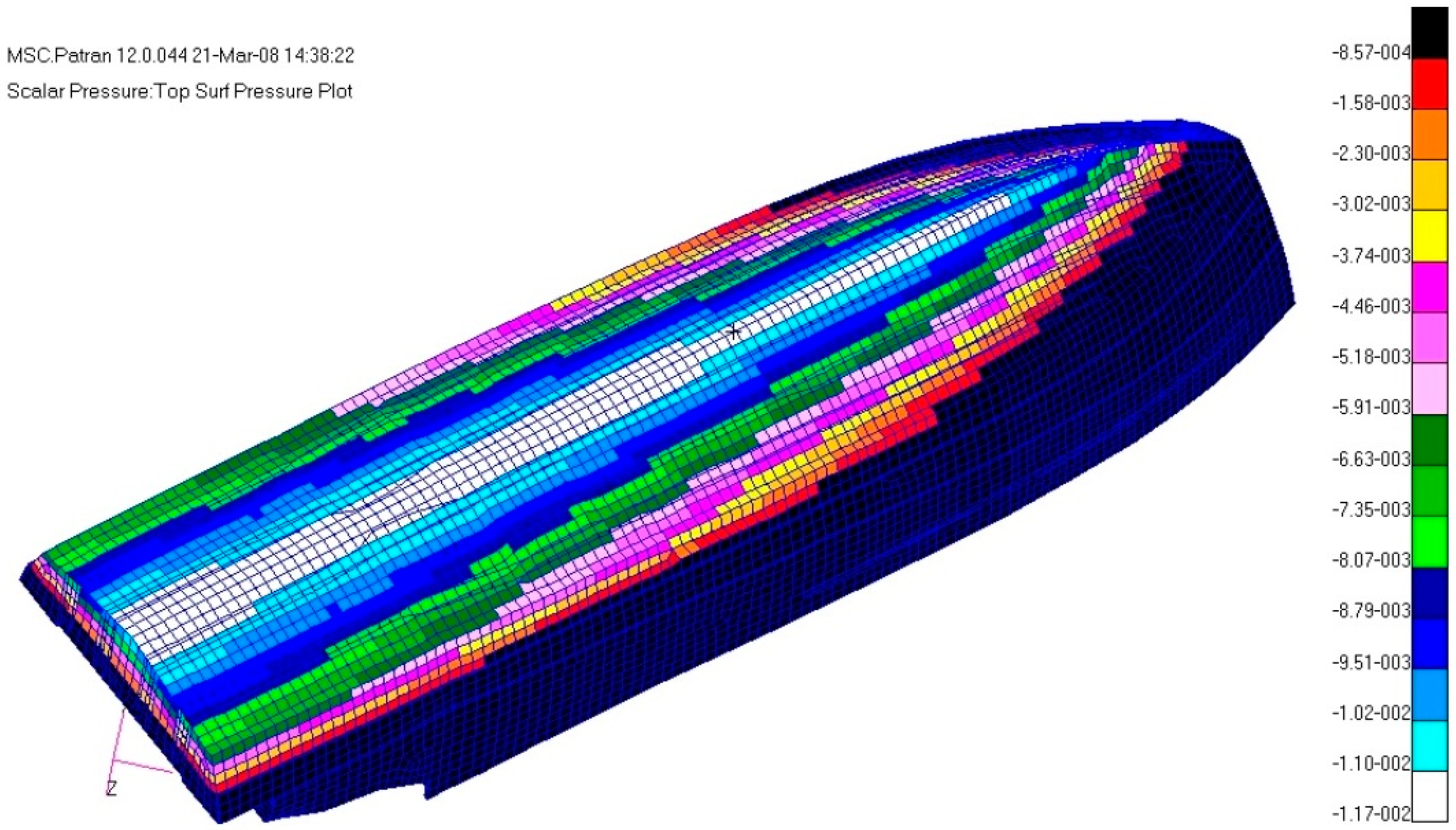
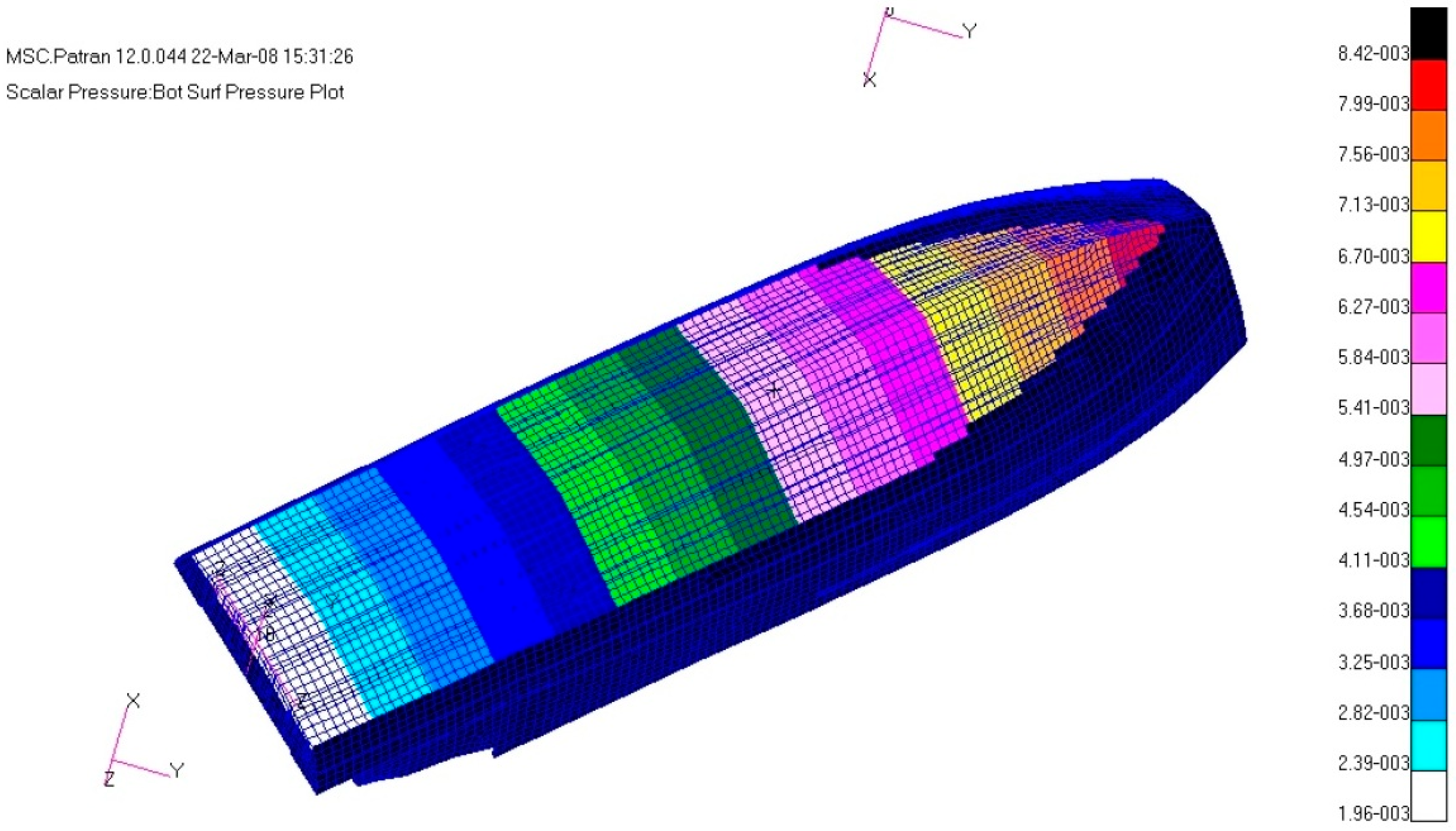
The hydrodynamic pressure distribution applied to the hull under cruise conditions is illustrated in Figure 10.

2.6. Verification of the FEM Model Equilibrium

To ensure the correct setup of the numerical model, a verification was carried out by comparing the total weight of the vessel with the resultant hydrostatic pressure forces.
The model was divided into distinct regions (starboard and port hull sides, bottom panel, and transom) and the hydrostatic pressure was integrated separately on each. The sum of the Z-components of the resulting forces was then compared to the gravitational force acting on the model.
From Table 10, the total weight of the vessel at full load condition is approximately 70 tons, which corresponds to a downward gravitational force of approximately 689.5 kN. Table 11 reports the reaction forces at the model’s global reference point (OLOAD resultant), showing a Z-component residual of only 1.96 kN.
A threshold of 1% of the total applied vertical load was adopted as the acceptance criterion for verifying global equilibrium. The observed Z-direction residual (1.96 kN) is significantly lower than the total applied weight of approximately 689.5 kN, resulting in an error of less than 0.3%, which confirms the validity of the numerical setup.
This small discrepancy, well below 1%, confirms that the hydrostatic pressures applied over the hull surfaces correctly balance the vessel’s weight, thereby validating the equilibrium and consistency of the finite element model under static loading conditions.
The verification of the equilibrium between the applied hydrostatic loads and the vessel’s weight was also supported by the data generated using the MSC NASTRAN (version 2023) Grid Point Weight Generator. In particular, Table 10 reports the detailed breakdown of force components resulting from pressure loads applied on the submerged surfaces of the hull in static conditions.
The values labelled T1, T2, and T3 refer to the applied loads along the X, Y, and Z axes of the global reference system. Although the label “T” (for translational) might suggest displacements, these values are expressed in newtons (N), not metres, and represent distributed force components.
The columns R1, R2, and R3 contain the resultant force components for each axis, computed as the sum of all distributed loads applied to the model.
The Z-direction resultant (R3) is approximately 1.96 × 10³ N, which is a residual value and not the total hydrostatic force. In a perfectly balanced static condition, this residual should ideally be zero. The fact that it remains well below 1% of the total weight force confirms the accurate application of the hydrostatic loads and validates the model’s equilibrium.
Thus, the comparison between the total applied hydrostatic pressures and the vessel’s gravitational force, verified across both tabular outputs and model setup, provides solid confirmation of the correct implementation of the loading conditions in the numerical model.
Additionally, the residuals in the X and Y directions, as well as the moment components, were verified to be negligible. This further confirms that the model is in static equilibrium not only in the vertical direction but also in terms of lateral stability and rotational balance.

3. Stress and Displacement Results

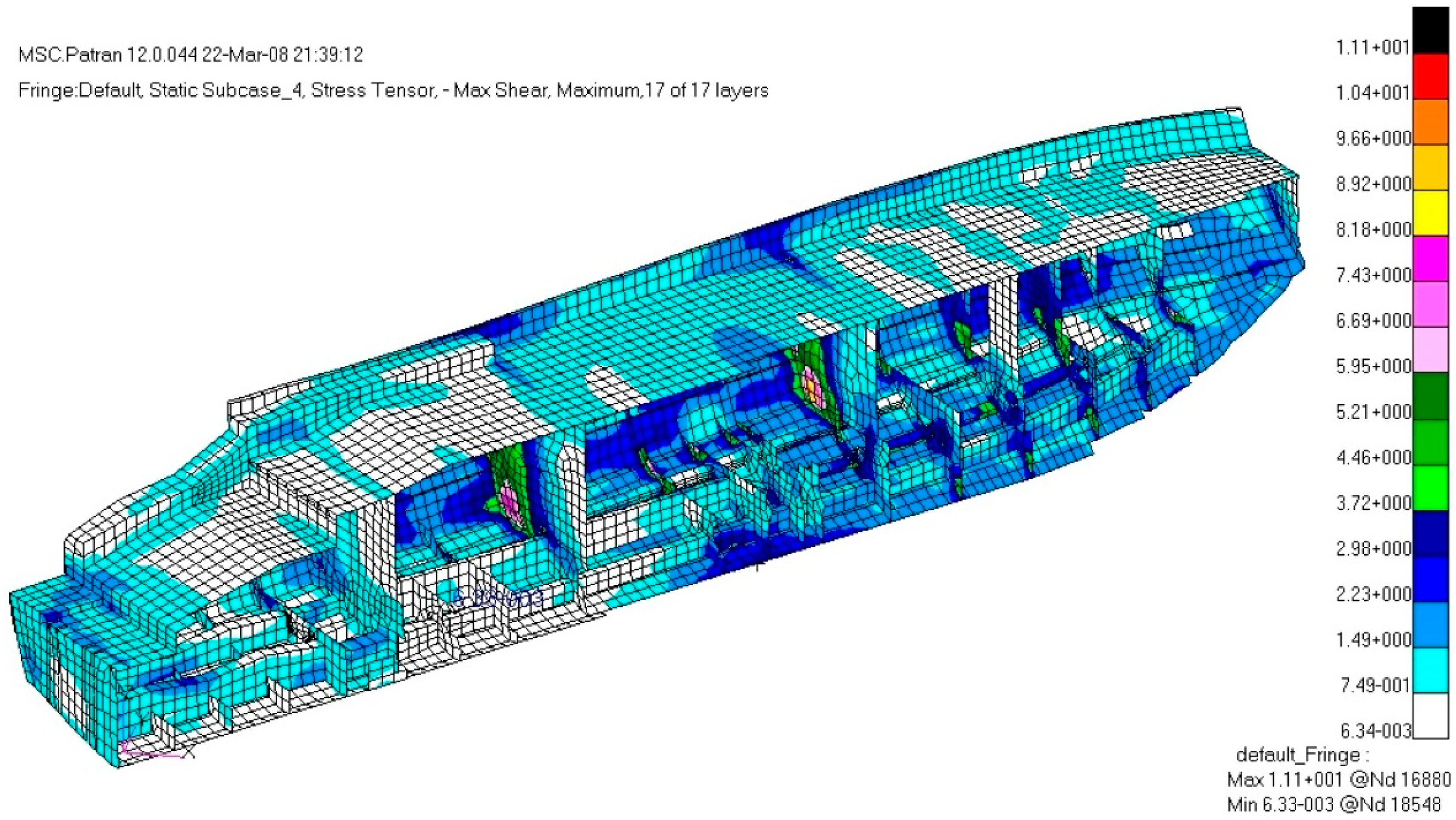
The structural analysis performed on the numerical model described in the previous section was static and aimed at evaluating the stress and displacement fields under different load conditions. Specifically, the analysis included Von Mises stress, maximum and minimum principal stresses (tensile and compressive), and maximum shear stress.
The evaluation of stress and deformation was carried out at the ply level, particularly focusing on critical structural areas. The simulation employed the NASTRAN parameter (PARAM,INREL,-1), which enables inertial relief. This option allows the model to remain in equilibrium under applied loads without requiring SPC constraints, thus avoiding the introduction of artificial reactions and enabling a more realistic estimation of displacements and stresses.
In this setup, the inertial relief procedure associates the equilibrium condition with a single node (node 1, located at the stern), which is constrained in all six degrees of freedom through the SUPORT card.

3.1. Load Case 1

For Load Case 1 (gravity + hydrostatic pressure), the inertial forces automatically calculated to maintain global equilibrium are reported in Table 12. These values represent the translational forces and moments that counterbalance the applied loads without introducing additional stresses in the structure.
These applied forces confirm that the model is in static equilibrium under the defined loading scenario.
The following Figure 11, Figure 12, Figure 13, Figure 14 and Figure 15 illustrate the main results for displacements and stresses under Load Case 1:

3.2. Load Case 2

For Load Case 2, the same approach based on inertial relief (PARAM,INREL,-1) was adopted. The structure remains unconstrained by SPCs, and the system automatically applies the balancing forces needed to maintain static equilibrium. These inertial forces are applied to Node 1.
The resulting force components applied by the solver to maintain equilibrium are reported in Table 13 for clarity.
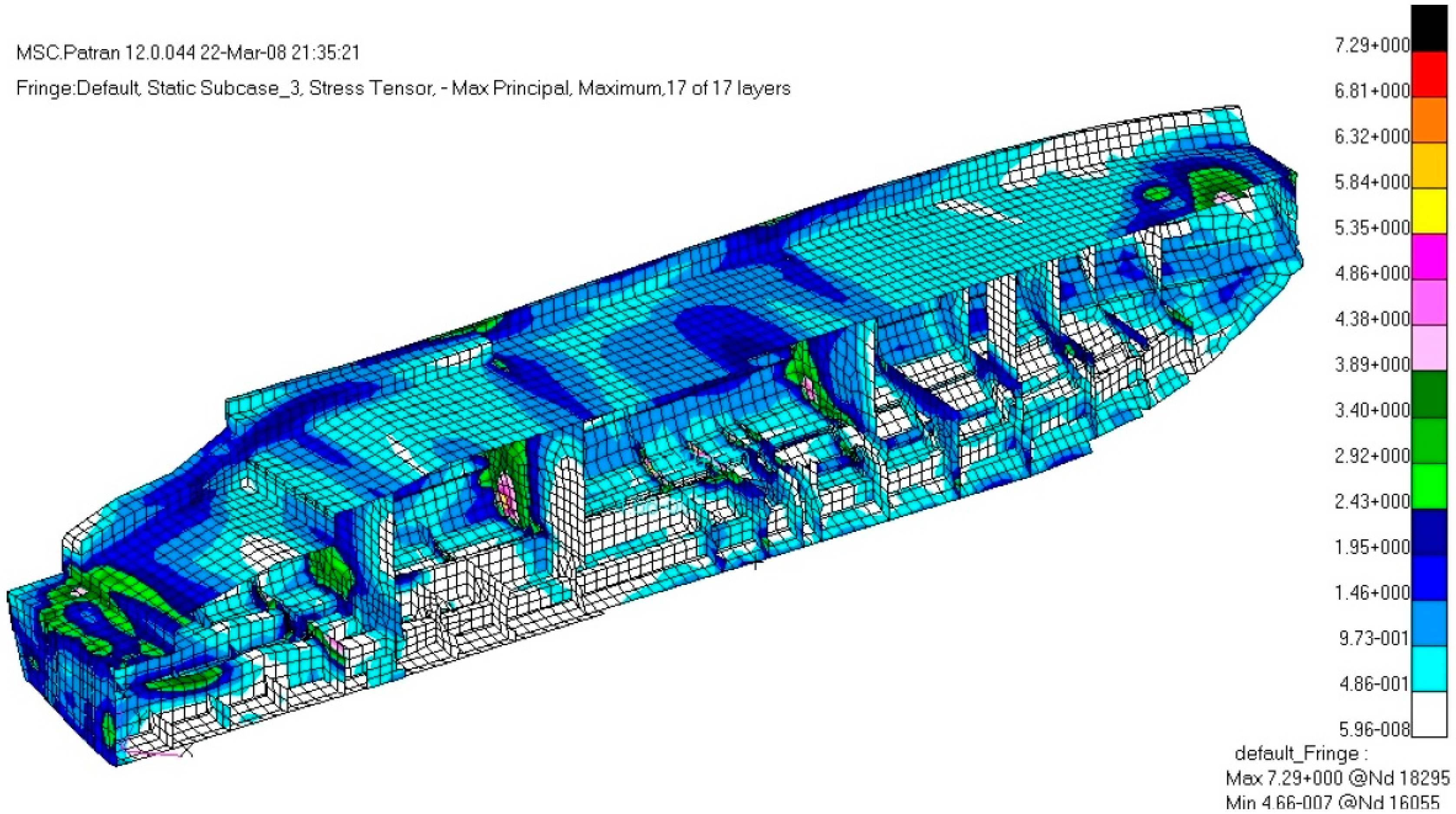
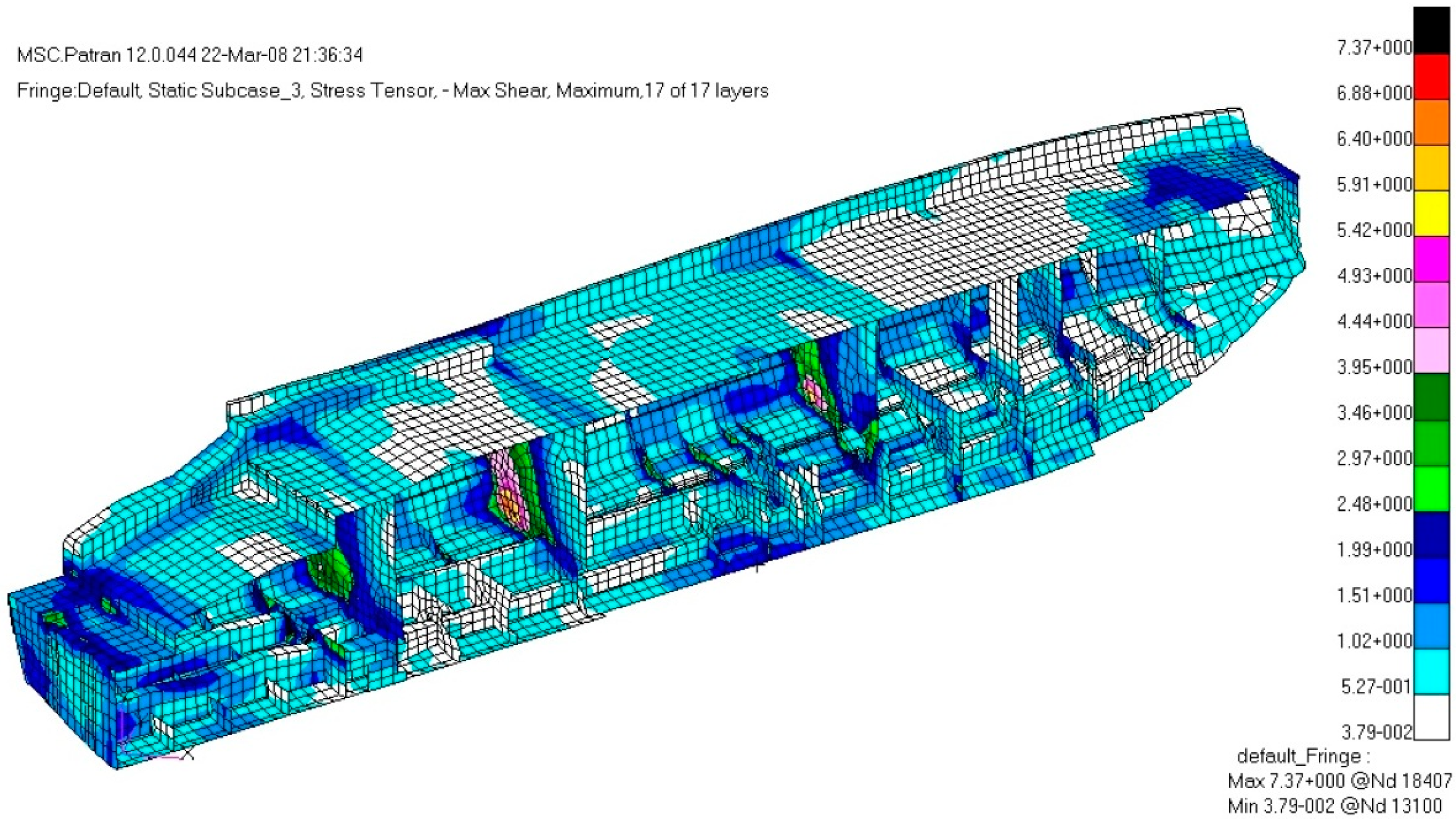
The corresponding displacement and stress maps for Load Case 2 are shown below (Figure 16, Figure 17, Figure 18, Figure 19 and Figure 20).

4. Structural Optimization

4.1. Hypotheses and Assumptions

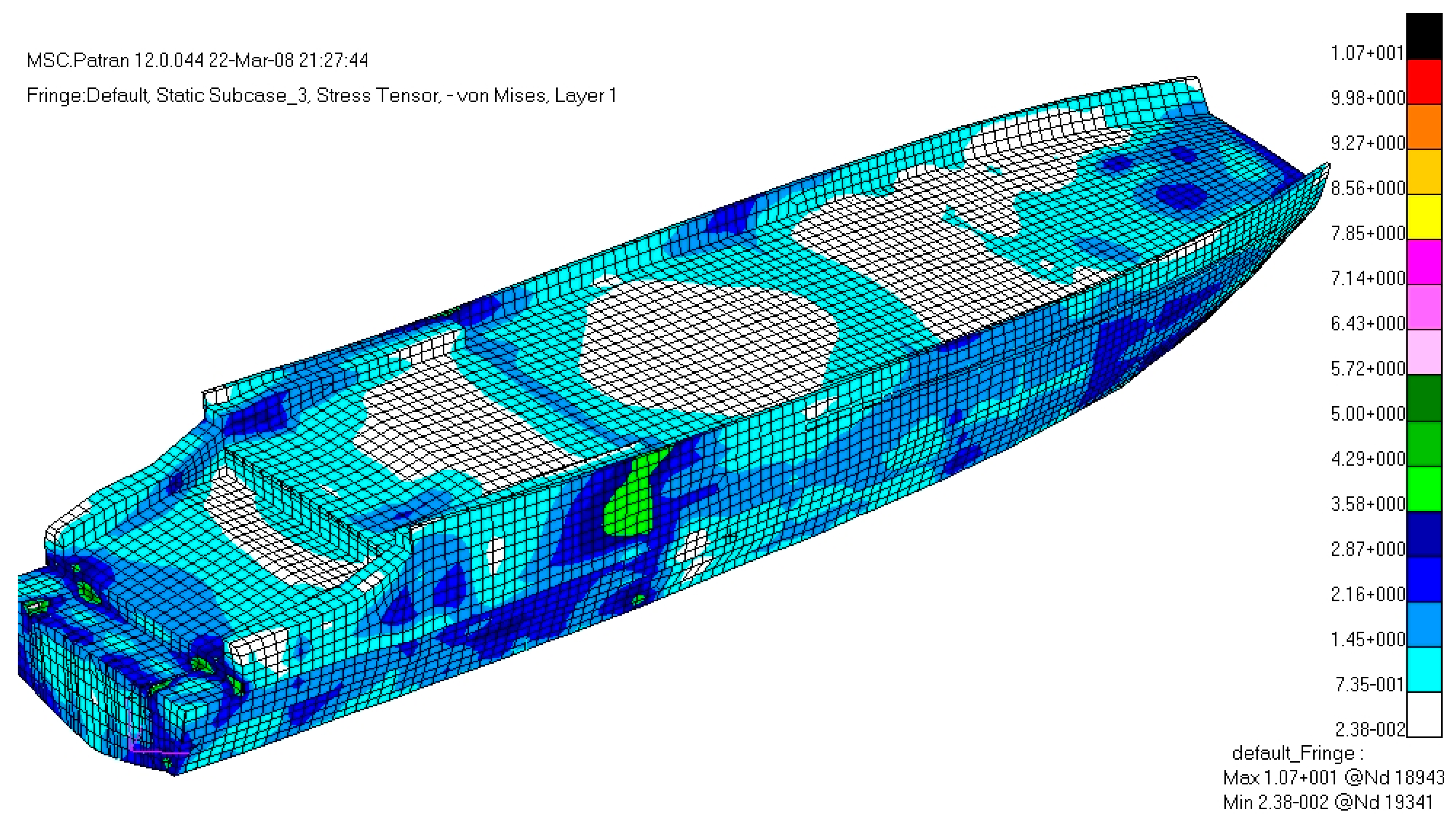
The structural optimization was conducted based on the Von Mises stress distribution observed in the numerical analysis. Among the evaluated loading scenarios, Load Case 2, representing hydrodynamic pressure, was identified as the most critical, as it induced the highest stress values in the structure. The main objective of the optimization process was to reduce the overall mass of the structure, targeting a maximum 15% weight saving, while ensuring structural integrity and compliance with the allowable stress limits. The removed layers corresponded to those regions where the previously conducted FEM analysis showed stress levels below 70 N/mm2. The threshold was conservatively selected as ~10–20% of typical compressive/tensile failure stress allowable for the E-glass/vinylester laminates considered (Table 2), ensuring safety margins > 2x while enabling effective mass reduction in low-stress regions. Following optimization, a verification step confirmed that none of the remaining layers experienced stress values exceeding 150 N/mm2, thereby validating the effectiveness and safety of the optimized configuration [43]. To streamline the optimization, the structure was divided into three subsystems:
  • Hull;
  • Deck;
  • Longitudinal and transverse stiffeners (stringers, frames, and bulkheads).
For each subsystem, the most stressed areas were analyzed, and localized layup reductions were proposed in regions where the stress levels were significantly below the allowable threshold.

4.2. Hull Optimization

The first intervention focused on the hull. Laminate plies were selectively reduced in regions exhibiting low stress under Load Case 2 conditions. The following Table 14 summarizes the initial and optimized mass properties of the composite layups used in the hull substructures:
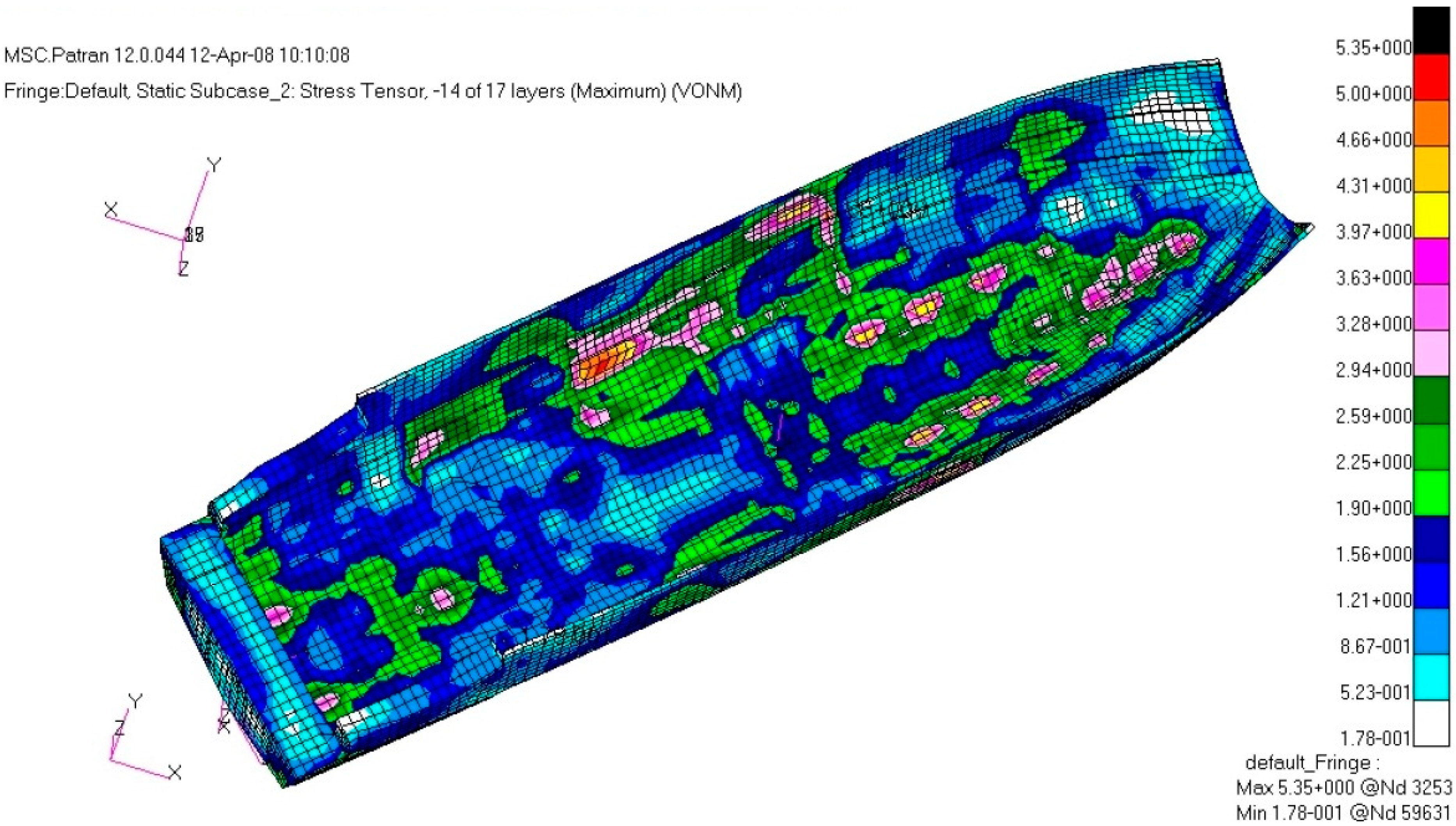
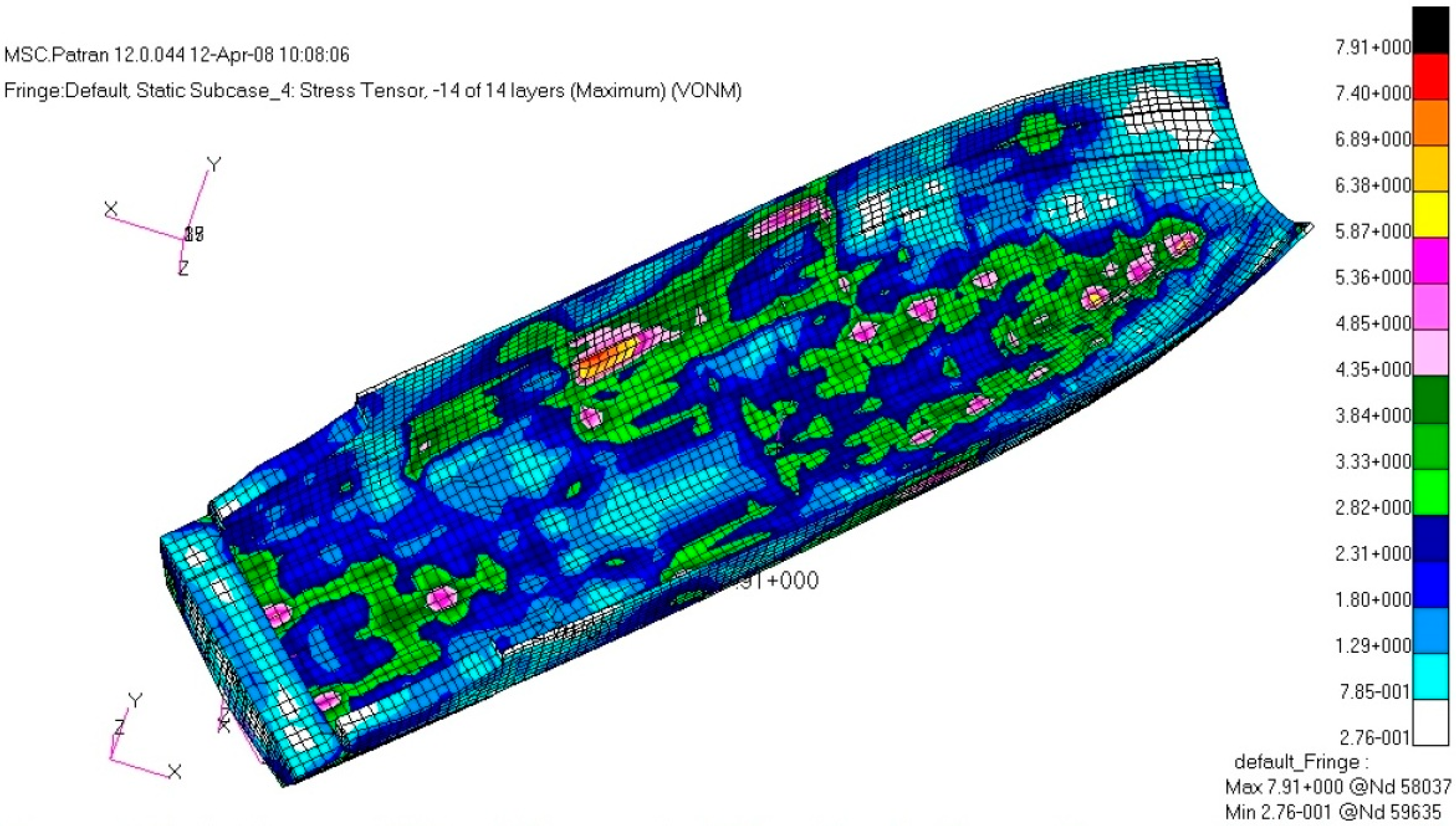
This optimization led to a total mass reduction of approximately 14% for the hull composite structures. The comparative analysis of Von Mises stress distributions (Figure 21 and Figure 22) highlights that the overall stress pattern remains substantially unchanged after the optimization. Although the peak stress slightly increases (from 5.35 N/mm2 to 7.91 N/mm2), the stress levels across the structure remain well within safe limits. This confirms that the layer reduction did not compromise the load distribution or structural integrity of the hull panels.

4.3. Girders and Floors Optimization

The second optimization of the optimization process focused on the structural components of the internal framing system, specifically floors and longitudinal stiffeners. As for the hull, laminate plies were selectively removed from areas exhibiting relatively low stress under Load Case 2. The objective was to reduce structural weight while preserving mechanical performance within acceptable stress thresholds.
Table 15 summarizes the mass variation resulting from the optimization of these components.
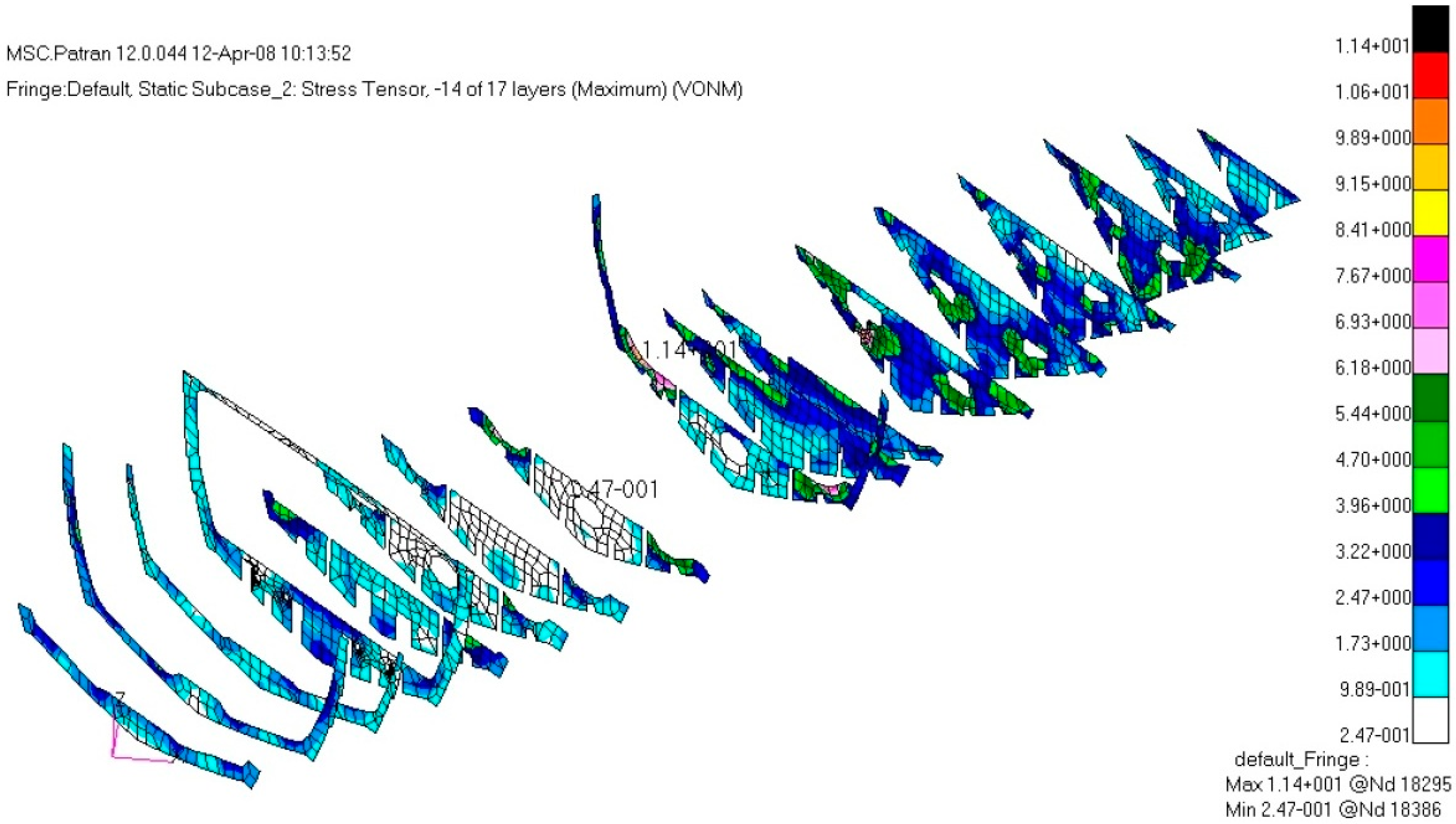
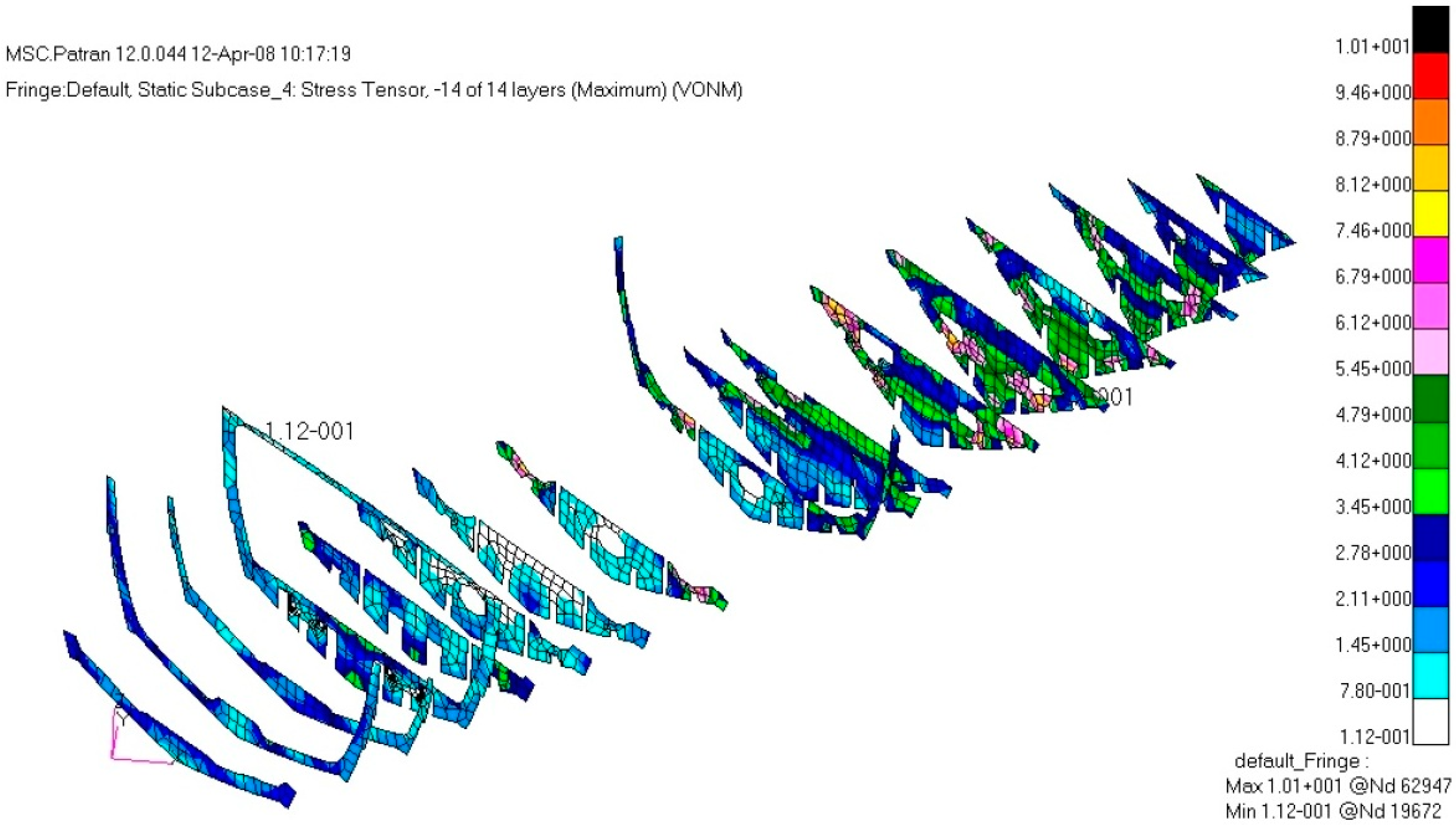
The figures below illustrate the Von Mises stress distribution for the floor and frame panels before (Figure 23) and after the optimization (Figure 24). A slight decrease in the maximum Von Mises stress is observed after optimization, from approximately 11.4 N/mm2 to 10.1 N/mm2. This outcome is attributed to the selective removal of low-stressed layers, which results in a more uniform stress distribution across the structure. A numerical comparison confirms that the stress distribution remains largely unchanged, despite the material removal. This validates the effectiveness of the optimization strategy.

4.4. Deck Panel Optimization

The final phase of the structural optimization involved the composite panels forming the deck. As with previous subsystems, ply reductions were applied in areas experiencing lower stress levels under Load Case 2. The primary goal remained a mass reduction without compromising structural integrity.
Table 16 summarizes the initial and optimized mass values for each substructure within the deck panel system.
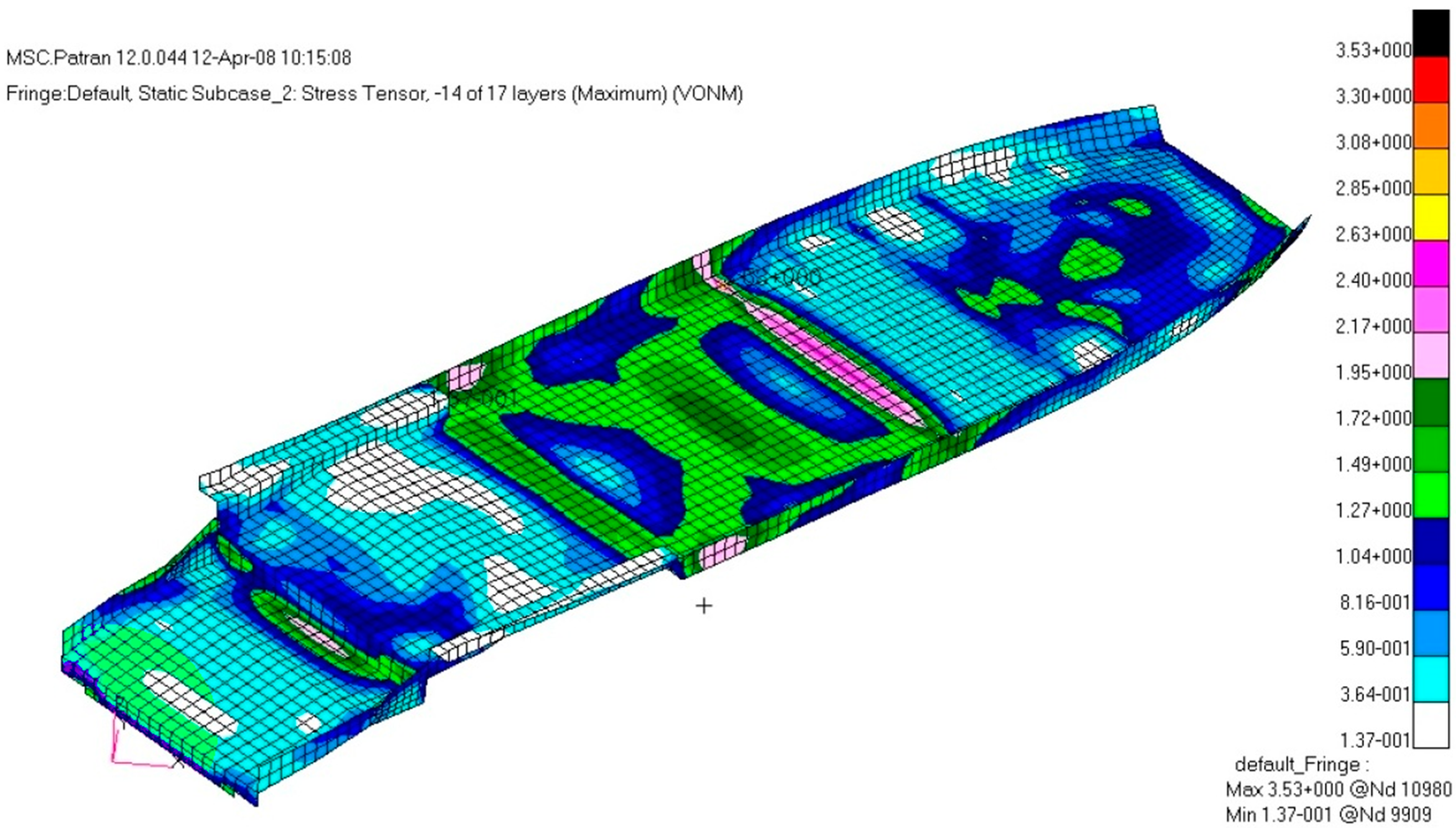
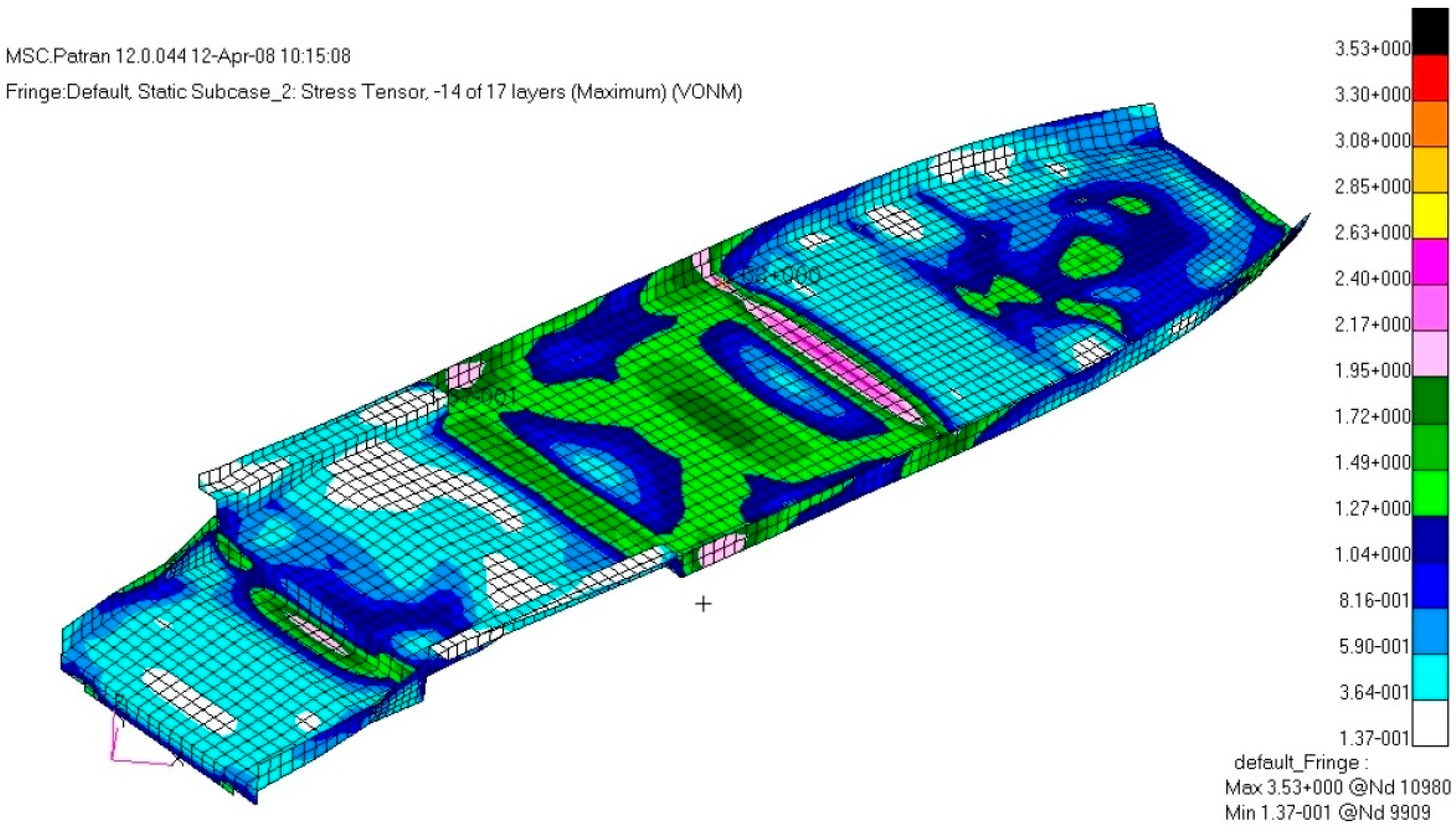
Figure 25 and Figure 26 below compare the Von Mises stress distributions for the deck panel structure before and after the optimization process. Despite the reduction in material, the post-optimization stress distribution remains consistent with the original, confirming the effectiveness of the ply removal strategy and the preservation of structural performance.

4.5. Overall Optimization

The overall structural optimization process has led to a significant reduction in the total mass of the vessel while maintaining acceptable levels of stress and deformation. The cumulative mass savings for the main substructures, hull, stiffeners, and deck panels, are summarized in Table 17. The total weight reduction achieved is approximately 14.7%, corresponding to 1.07 tons less than the initial configuration.
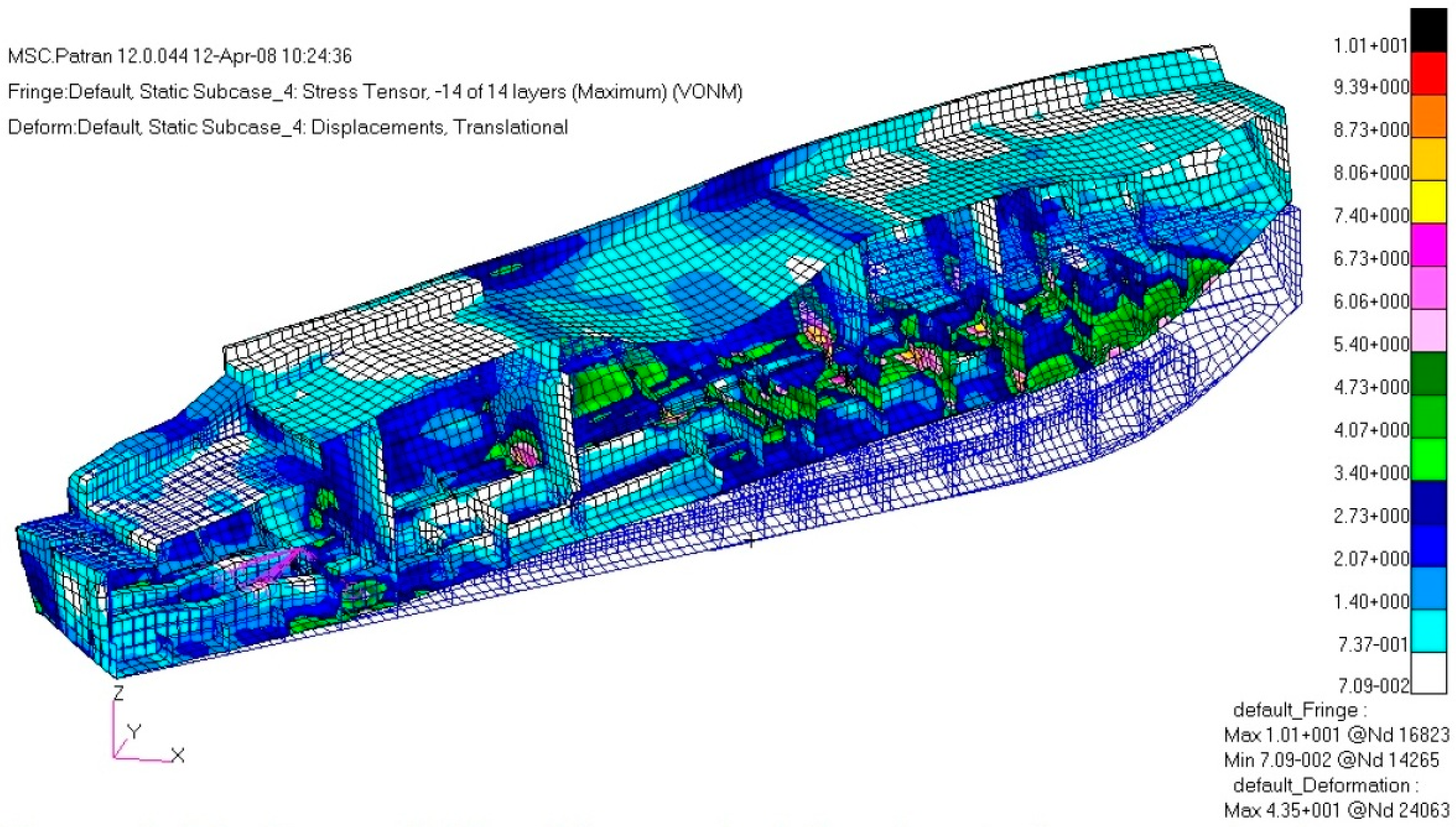
These results demonstrate the effectiveness of the optimization strategy, which relied on reducing laminate plies in regions subjected to low stress, as identified through FEM analysis. In particular, layers were removed in areas where the Von Mises stress remained below 70 MPa, and after optimization, the maximum stress values were verified to remain below 150 MPa throughout the structure.
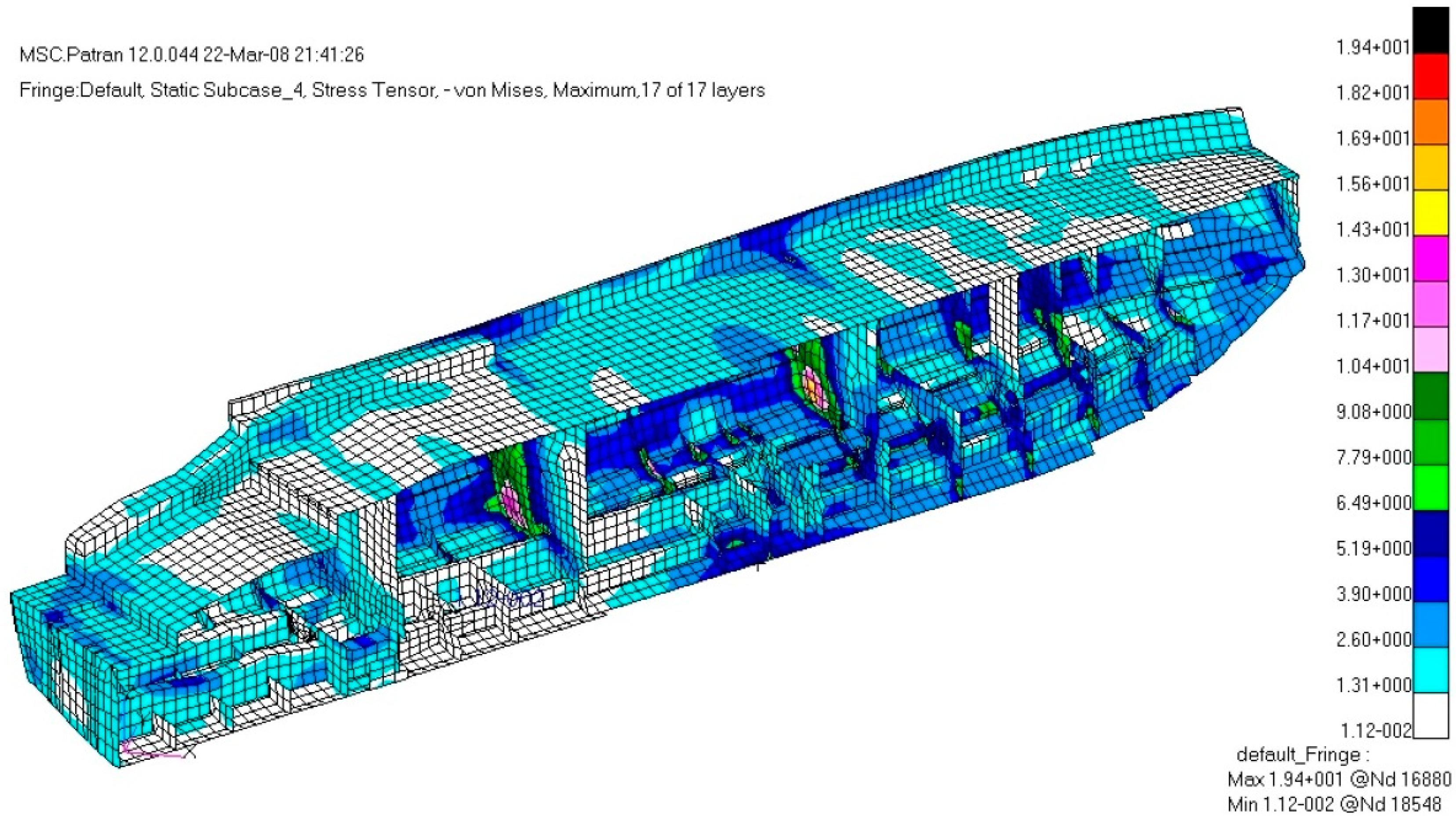
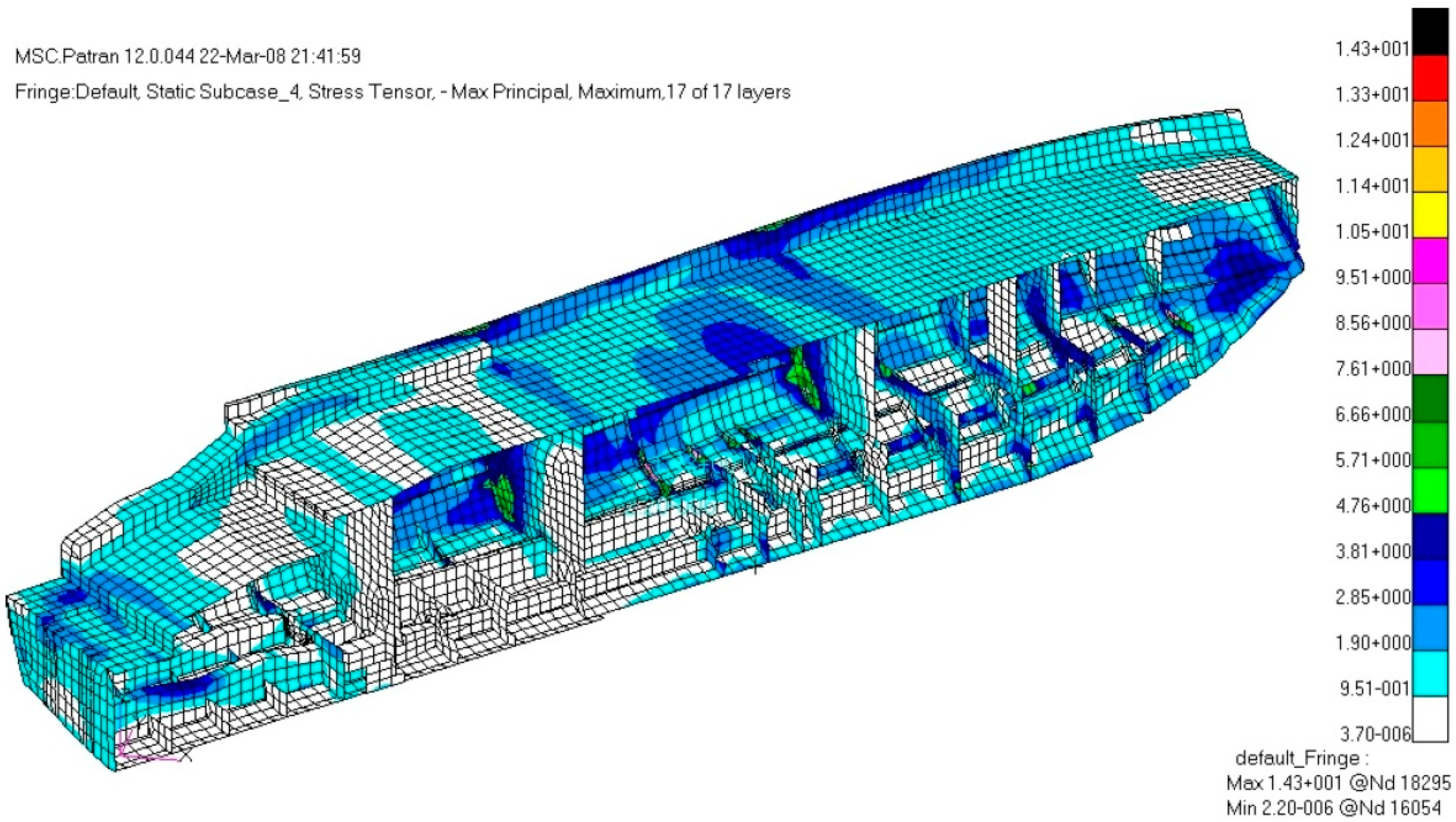
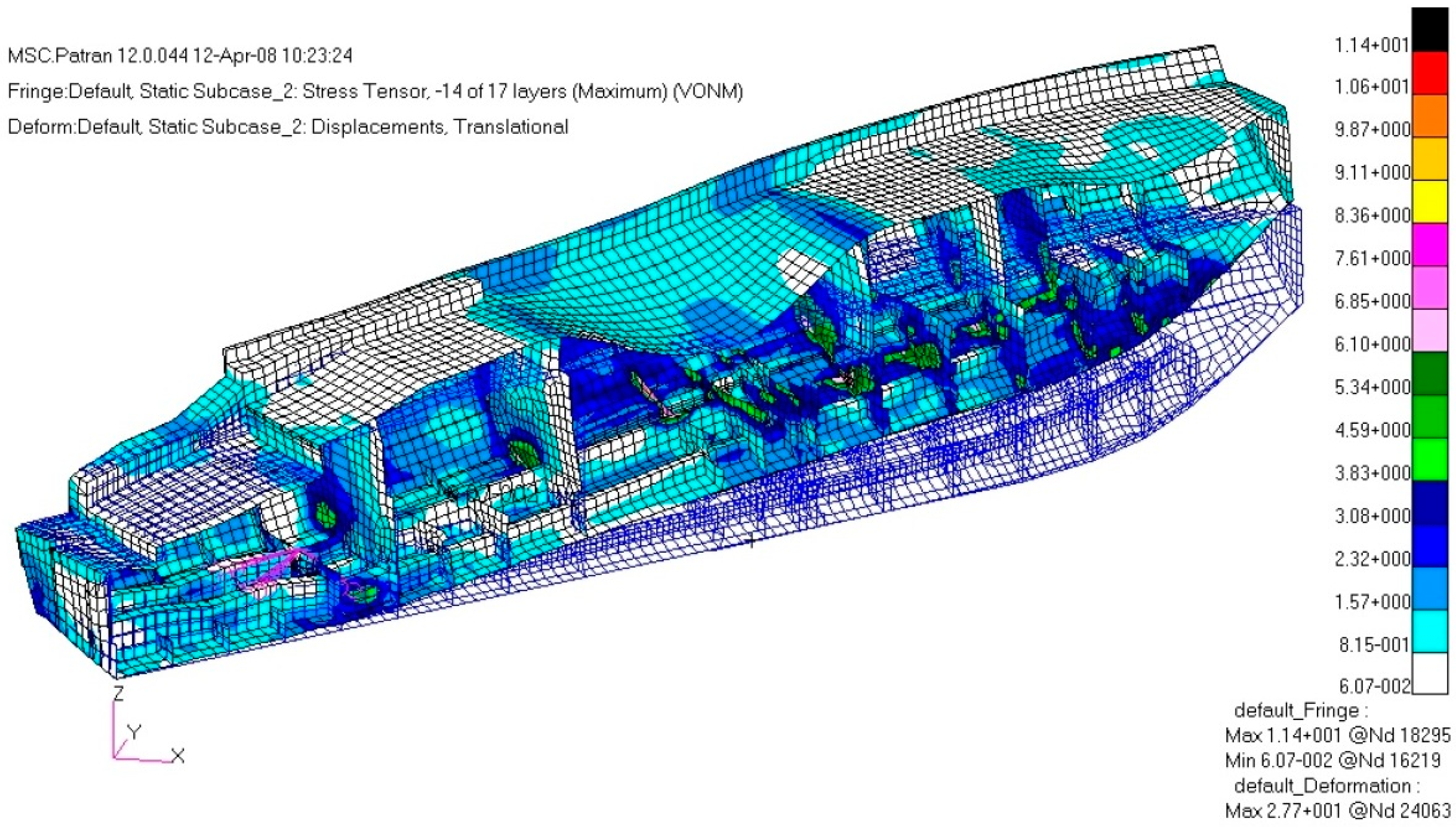
Figure 27 and Figure 28 show the comparison of Von Mises stress distribution before and after the optimization. Despite the reduction in composite material, the overall stress pattern remains similar, indicating that the structural performance has been preserved.
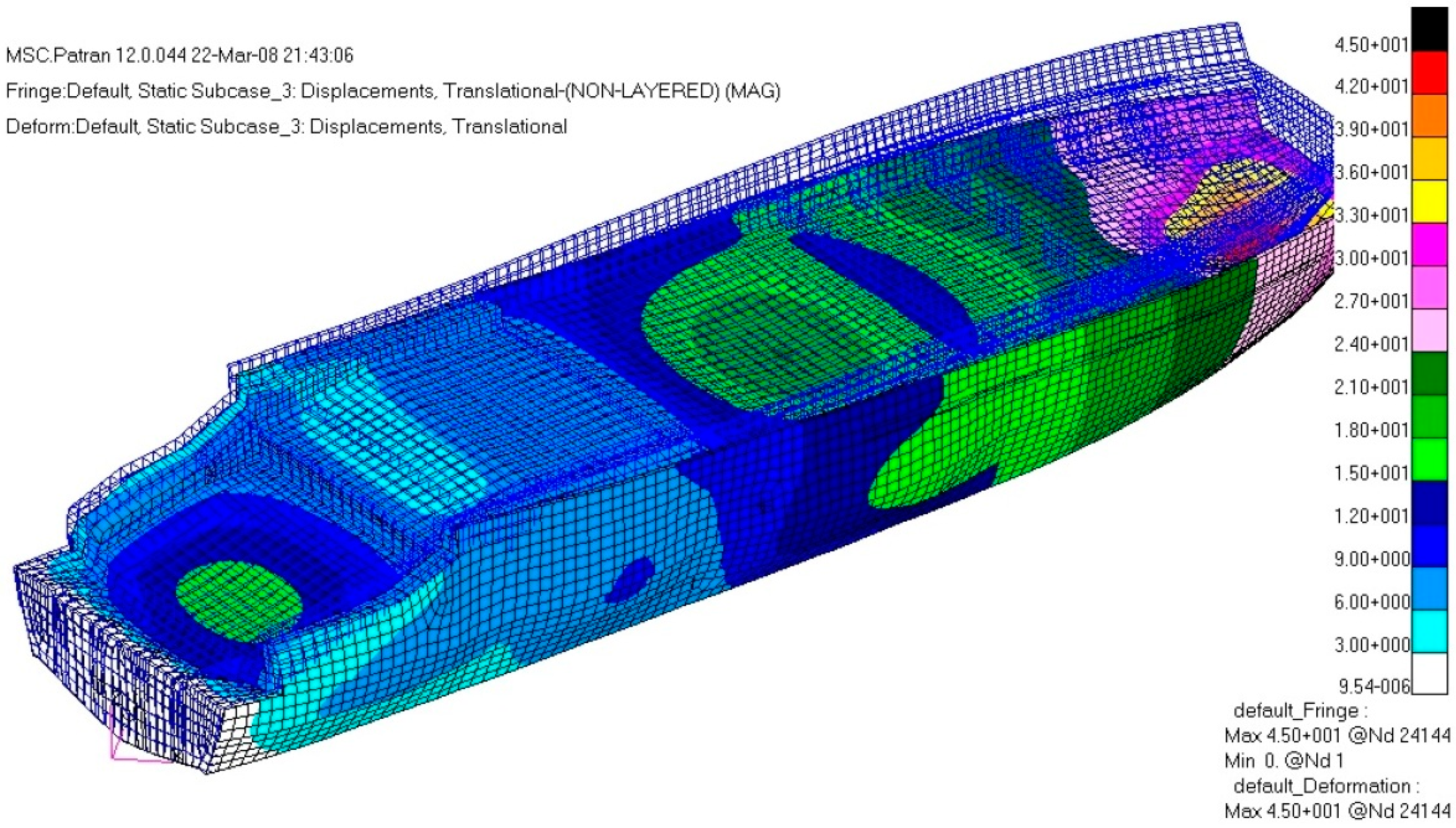
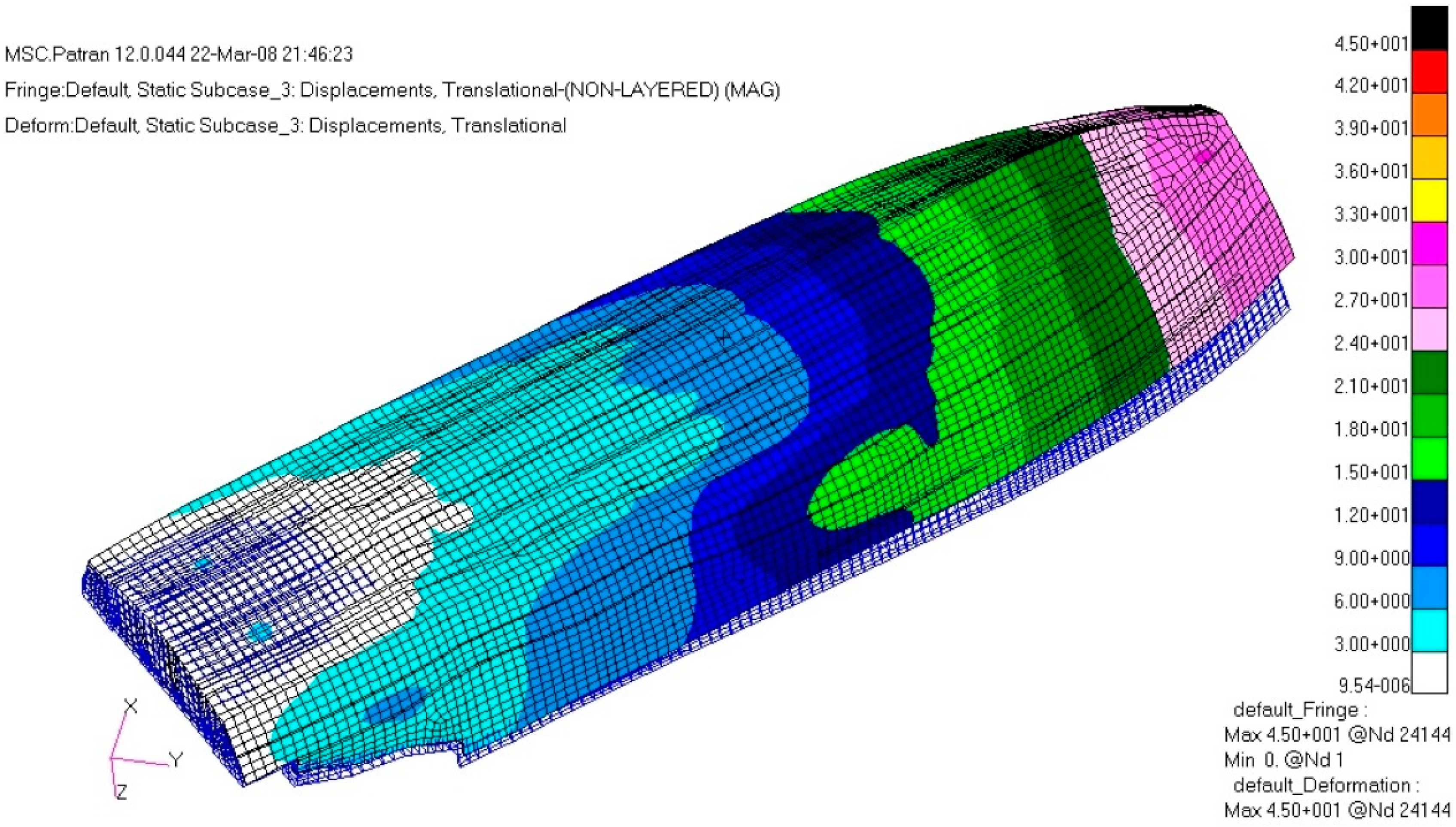
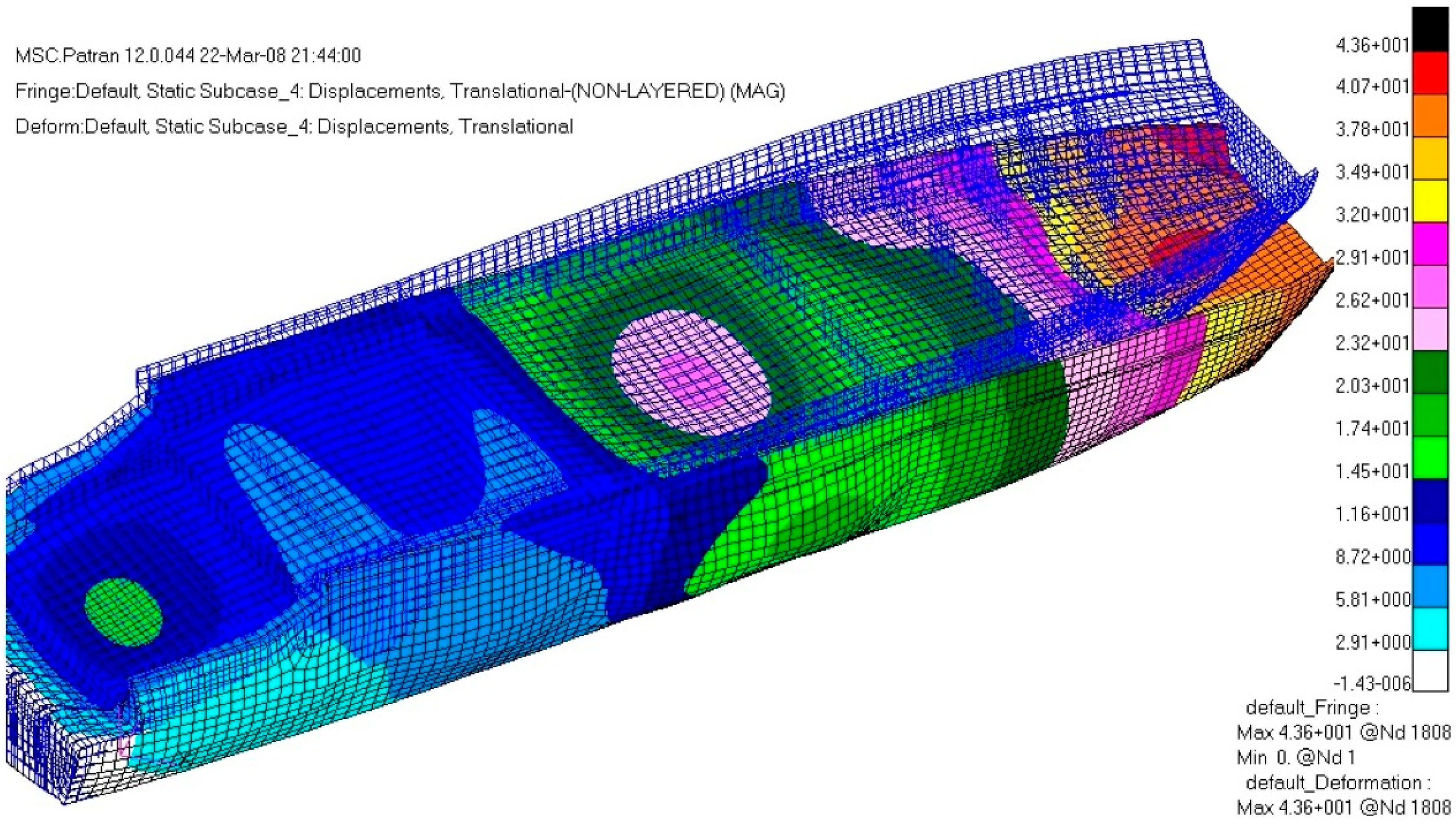
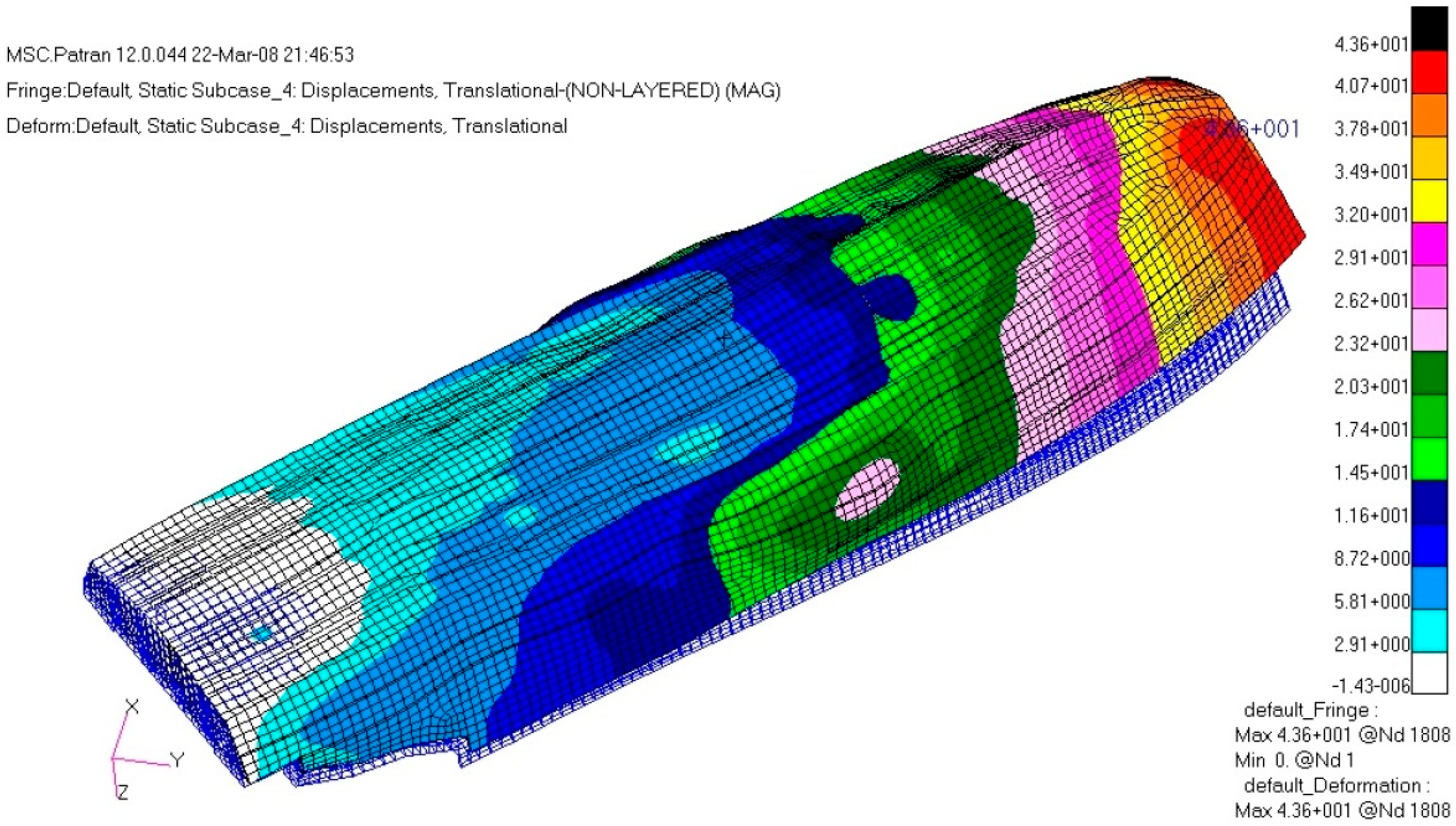
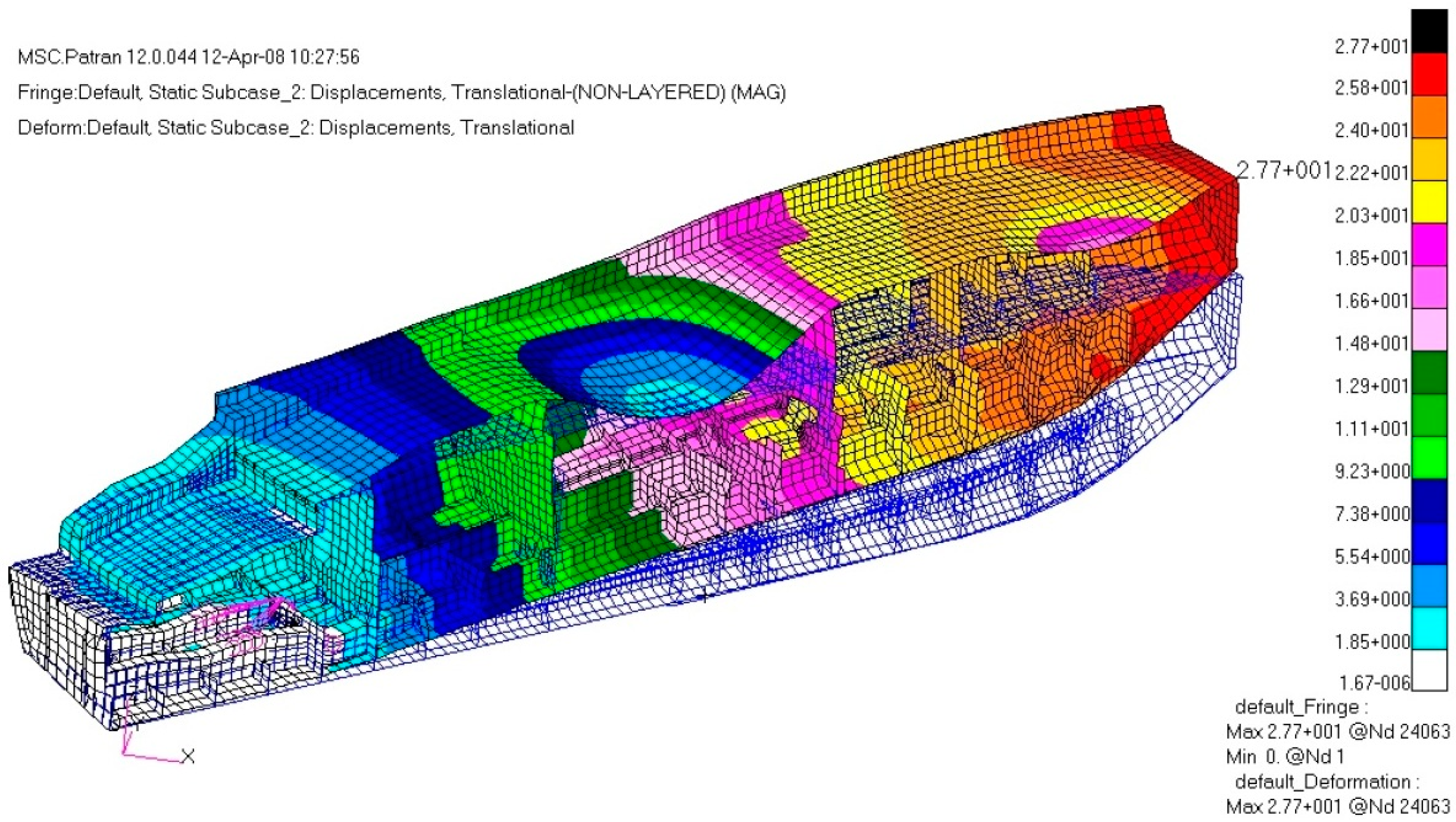
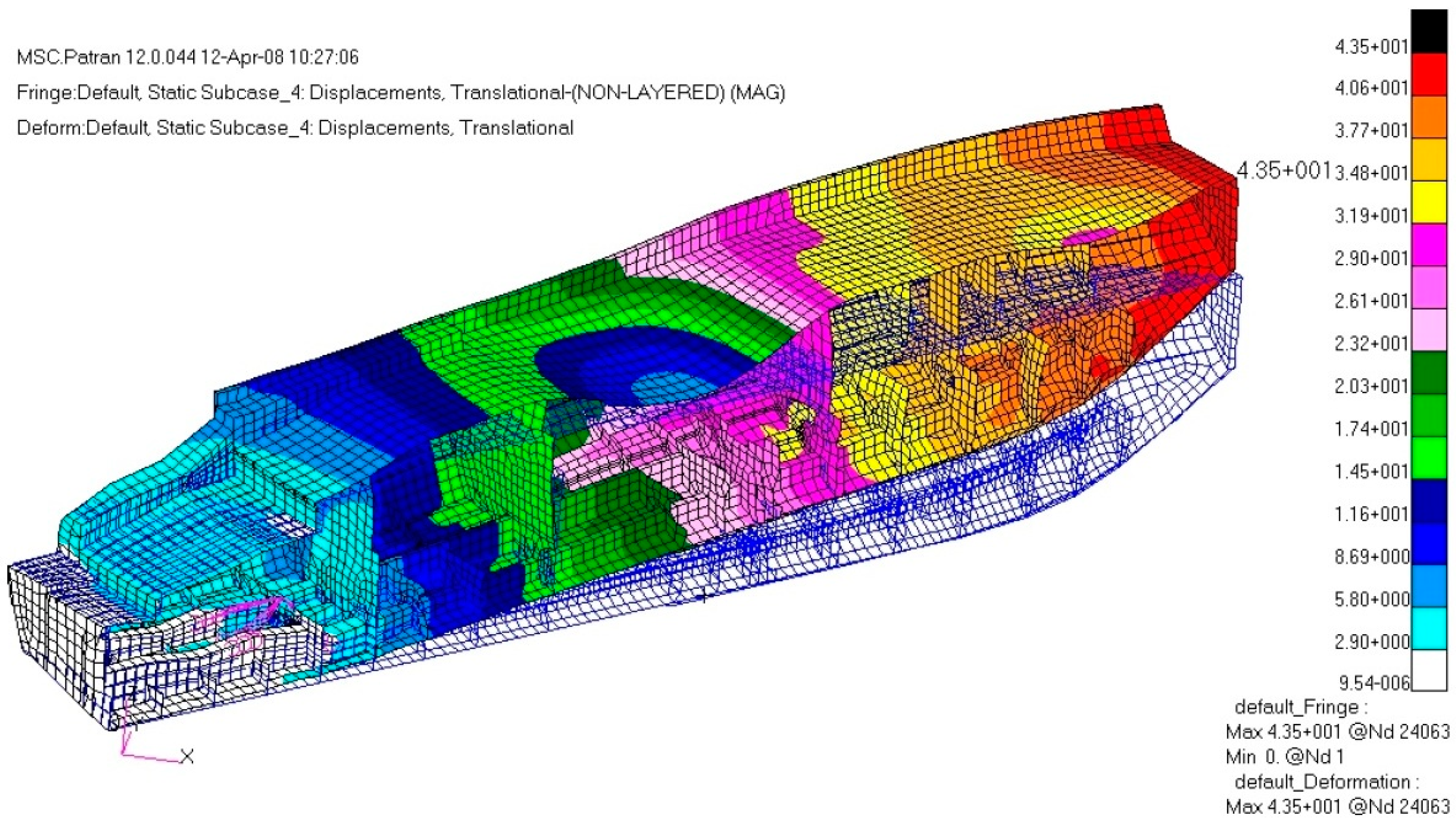
To better visualize the overall deformation trend, the magnitude plots for the entire structure are also provided (Figure 29 and Figure 30). These highlight the areas where deformation increased most significantly following the optimization.
Despite the moderate increase in deformations (from 27.7 mm to 43.5 mm), all maximum displacement values remain within acceptable design limits. The structure maintains sufficient stiffness to satisfy functional and safety requirements, while benefiting from a substantial reduction in structural weight.

5. Conclusions

The structural optimization process carried out in this study led to a significant weight reduction, approximately 14.7%, across the composite hull structure, without exceeding allowable stress levels under the critical loading conditions. These findings confirm the effectiveness of a layer-removal approach based on stress distribution, particularly when applied to regions exhibiting low mechanical demand, as identified by FEM analysis.
While slight increases in global deformation were observed, the stress levels remained well-within the material limits, confirming the structural soundness of the optimized configuration. This trade-off, moderate flexibility in exchange for substantial weight savings, is acceptable in many marine engineering contexts, especially when performance and efficiency are primary design drivers.
Similar strategies have been successfully applied in the design of composite marine structures, where finite element analysis supports ply tailoring and structural mass reduction while ensuring regulatory compliance and structural integrity [44,45]. Research has also demonstrated the importance of local stress mapping and material distribution in enhancing the stiffness-to-weight ratio of sandwich and monolithic composite laminates [46,47].
From a broader perspective, the optimization strategy adopted here can be extended beyond the specific case of a pleasure craft hull. Vessels operating in harsh marine environments, such as patrol boats, offshore service vessels, or high-speed craft, can greatly benefit from similar optimization techniques. Reducing structural mass in such vessels contributes not only to enhanced speed and fuel efficiency, but also to lower dynamic loads, improved seakeeping, and reduced operational costs over the vessel’s lifecycle.
Moreover, applying this approach during the early design phases can guide decisions on laminate architecture, material placement, and reinforcement strategies. The methodology is compatible with various composite fabrication techniques and could be coupled with automated optimization algorithms or AI-based design tools to explore larger design spaces [30,31,48].
However, this study presents some limitations that should be acknowledged.
First, the optimization process was conducted under static load conditions, with dynamic phenomena represented as equivalent pressure distributions. Although effective for early-stage design, this simplification does not capture transient effects such as slamming impacts or wave-induced resonances.
Second, the optimization relied on stress-based ply removal. More advanced strategies, such as topology optimization, damage tolerance analysis, or fatigue-based approaches, could further improve structural performance, especially for long-term durability.
Third, model validation was limited to numerical equilibrium checks under hydrostatic loading. Experimental testing or real-sea trials would be necessary to confirm numerical accuracy and verify performance under operational conditions.
Fourth, no formal mesh convergence or independence study was performed due to computational constraints of the multi-run optimization framework. While preliminary analyses confirmed result stability with the adopted discretization (≈19,000 elements), systematic mesh sensitivity analysis on representative hull regions is recommended for future work to quantify discretization uncertainties.
Fifth, the analysis focuses exclusively on ultimate static strength and does not address fatigue performance under cyclic slamming or operational wave loading. While sufficient for preliminary design optimization, fatigue life assessment and damage tolerance analysis under repeated impact cycles represent essential considerations for long-term structural durability in marine applications.
Lastly, material data were obtained from technical datasheets under standard laboratory conditions. The influence of manufacturing variability, degradation over time, and environmental exposure (e.g., UV, saltwater) was not explicitly considered in the model.
Future developments should also include experimental validation, both through laboratory tests and, ideally, full-scale sea trials, especially to assess local stiffness and damage tolerance in the optimized zones, dynamic simulations, optimization under multi-criteria objectives, and the inclusion of probabilistic approaches to account for variability in loads and material properties. Coupling structural optimization with CFD analysis could further enhance performance evaluation in seaway conditions, supporting broader implementation in the design of next-generation marine structures.

Author Contributions

Conceptualization, G.M.G.; methodology, G.M.G., F.C. and L.M.O.; formal analysis, investigation, data curation, G.M.G.; writing—original draft preparation, G.M.G.; writing—review and editing, F.C. and L.M.O.; visualization, L.M.O.; supervision, G.M.G. and F.C. All authors have read and agreed to the published version of the manuscript.

Funding

This research received no external funding.

Data Availability Statement

The original contributions presented in this study are included in the article. Further inquiries can be directed to the corresponding author.

Acknowledgments

During the preparation of this manuscript, the authors used ChatGPT, an AI model developed by OpenAI (GPT-4o, 2024), for the purposes of language and editing assistance. The authors have reviewed and edited the output and take full responsibility for the content of this publication.

Conflicts of Interest

The authors declare no conflicts of interest.

Abbreviations

The following abbreviations are used in this manuscript:
C.G.Centre of Gravity
CFDComputational Fluid Dynamics
FEMFinite Element Method
FRPFibre-Reinforced Polymer
FSIFluid–Structure Interaction
PCOMPComposite Property Card (used in NASTRAN models)
SDGsSustainable Development Goals
SUPORTNASTRAN command defining global degrees of freedom
WECsWave Energy Converters

References

  1. Coenen, J.; Glass, L.-M.; Sanderink, L. Two Degrees and the SDGs: A Network Analysis of the Interlinkages between Transnational Climate Actions and the Sustainable Development Goals. Sustain. Sci. 2022, 17, 1489–1510. [Google Scholar] [CrossRef]
  2. Fuso Nerini, F.; Tomei, J.; To, L.S.; Bisaga, I.; Parikh, P.; Black, M.; Borrion, A.; Spataru, C.; Castán Broto, V.; Anandarajah, G.; et al. Mapping Synergies and Trade-Offs between Energy and the Sustainable Development Goals. Nat. Energy 2017, 3, 10–15. [Google Scholar] [CrossRef]
  3. Xing, L.; Udemba, E.N.; Tosun, M.; Abdallah, I.; Boukhris, I. Sustainable Development Policies of Renewable Energy and Technological Innovation toward Climate and Sustainable Development Goals. Sustain. Dev. 2023, 31, 1178–1192. [Google Scholar] [CrossRef]
  4. Martínez Casanovas, M. Exploring Design Thinking Methodologies: A Comprehensive Analysis of the Literature, Outstanding Practices, and Their Linkage to Sustainable Development Goals. Sustainability 2025, 17, 7142. [Google Scholar] [CrossRef]
  5. Collette, M.; Caridis, P.; Georgiev, P.; Hørte, T.; Jeong, H.K.; Kurt, R.E.; Ilnytskiy, I.; Okada, T.; Randall, C.; Sekulski, Z.; et al. Committee IV.1: Design Principles and Criteria. In Proceedings of the 21st International Ship and Offshore Structures Congress, Vancouver, BC, Canada, 11 September 2022; SNAME: Alexandria, VA, USA, 2022; Volume 1, p. D011S001R008. [Google Scholar]
  6. Mollaoglu, M.; Yazar Okur, I.G.; Gurturk, M.; Doganer Duman, B. Review on Sustainable Development Goals in Maritime Transportation: Current Research Trends, Applications, and Future Research Opportunities. Environ. Sci. Pollut. Res. 2024, 31, 8312–8329. [Google Scholar] [CrossRef]
  7. Amaechi, C.V.; Reda, A.; Butler, H.O.; Ja’e, I.A.; An, C. Review on Fixed and Floating Offshore Structures. Part II: Sustainable Design Approaches and Project Management. J. Mar. Sci. Eng. 2022, 10, 973. [Google Scholar] [CrossRef]
  8. Wijewickrama, L.; Jeewantha, J.; Perera, G.I.P.; Alajarmeh, O.; Epaarachchi, J. Fiber-Reinforced Composites Used in the Manufacture of Marine Decks: A Review. Polymers 2025, 17, 2345. [Google Scholar] [CrossRef] [PubMed]
  9. Davies, P. Evaluation of New Composite Materials for Marine Applications. Appl. Compos. Mater. 2024, 31, 1933–1954. [Google Scholar] [CrossRef]
  10. Okuma, S.O.; Okiemute Ofuyekpone, D.; Endurance Ashibudike, O. A Review Assessment of Fiber-Reinforced Polymers for Maritime Applications. J. Adv. Ind. Technol. Appl. 2023, 4, 17–28. [Google Scholar] [CrossRef]
  11. Ma, Q.; Rejab, M.; Siregar, J.; Guan, Z. A Review of the Recent Trends on Core Structures and Impact Response of Sandwich Panels. J. Compos. Mater. 2021, 55, 2513–2555. [Google Scholar] [CrossRef]
  12. Kueh, A.B.H.; Abo Sabah, S.H.; Qader, D.N.; Drahman, S.H.; Amran, M. Single and Repetitive Low-Velocity Impact Responses of Sandwich Composite Structures with Different Skin and Core Considerations: A Review. Case Stud. Constr. Mater. 2023, 18, e01908. [Google Scholar] [CrossRef]
  13. Avachat, S.; Zhou, M. Compressive Response of Sandwich Plates to Water-Based Impulsive Loading. Int. J. Impact Eng. 2016, 93, 196–210. [Google Scholar] [CrossRef]
  14. Balıkoğlu, F.; Demircioğlu, T.K.; Ataş, A. An Experimental Study on the Flexural Behaviour of Symmetric and Asymmetric Marine Composite Sandwich Beams. J. Compos. Mater. 2022, 56, 2311–2325. [Google Scholar] [CrossRef]
  15. Islami, D.P.; Muzaqih, A.F.; Adiputra, R.; Prabowo, A.R.; Firdaus, N.; Ehlers, S.; Braun, M.; Jurkovič, M.; Smaradhana, D.F.; Carvalho, H. Structural Design Parameters of Laminated Composites for Marine Applications: Milestone Study and Extended Review on Current Technology and Engineering. Results Eng. 2024, 24, 103195. [Google Scholar] [CrossRef]
  16. Han, Z.; Jang, J.; Souppez, J.-B.R.G.; Seo, H.-S.; Oh, D. Comparison of Structural Design and Future Trends in Composite Hulls: A Regulatory Review. Int. J. Nav. Archit. Ocean Eng. 2023, 15, 100558. [Google Scholar] [CrossRef]
  17. Mourad, A.-H.I.; Idrisi, A.H.; Wrage, M.C.; Abdel-Magid, B.M. Long-Term Durability of Thermoset Composites in Seawater Environment. Compos. Part B Eng. 2019, 168, 243–253. [Google Scholar] [CrossRef]
  18. Ku, A.; Zwerneman, F.; Gunzelman, S.; Chen, J. The Adoption of AISC 360 for Offshore Structural Design Practices. Eng. J. 2024, 61, 71–90. [Google Scholar] [CrossRef]
  19. Osa-uwagboe, N.; Udu, A.G.; Silberschmidt, V.V.; Baxevanakis, K.P.; Demirci, E. Effects of Seawater on Mechanical Performance of Composite Sandwich Structures: A Machine Learning Framework. Materials 2024, 17, 2549. [Google Scholar] [CrossRef]
  20. Xi, X.; Zhang, S.; Hao, Z.; Feng, P.; Zhao, F. Durability Assessment of Vacuum-Infused GFRP Laminates and I-Beams in Marine Environments. Case Stud. Constr. Mater. 2025, 22, e04743. [Google Scholar] [CrossRef]
  21. Murdy, P.; Murray, R.E.; Barnes, D.; Lusty, A.F.; Rognerud, E.G.; Creveling, P.J.; Samborsky, D. Hygrothermal Aging and Thermomechanical Characterization of As-Manufactured Tidal Turbine Blade Composites. J. Mar. Sci. Eng. 2025, 13, 1790. [Google Scholar] [CrossRef]
  22. Ferreira, L.M.; Coelho, C.A.C.P.; Reis, P.N.B. Numerical Predictions of Intralaminar and Interlaminar Damage in Thin Composite Shells Subjected to Impact Loads. Thin-Walled Struct. 2023, 192, 111148. [Google Scholar] [CrossRef]
  23. Her, S.-C.; Liang, Y.-C. The Finite Element Analysis of Composite Laminates and Shell Structures Subjected to Low Velocity Impact. Compos. Struct. 2004, 66, 277–285. [Google Scholar] [CrossRef]
  24. Chen, Z.; Jiao, J.; Wang, Q.; Wang, S. CFD-FEM Simulation of Slamming Loads on Wedge Structure with Stiffeners Considering Hydroelasticity Effects. J. Mar. Sci. Eng. 2022, 10, 1591. [Google Scholar] [CrossRef]
  25. Volpi, S.; Diez, M.; Sadat-Hosseini, H.; Kim, D.-H.; Stern, F.; Thodal, R.S.; Grenestedt, J.L. Composite Bottom Panel Slamming of a Fast Planing Hull via Tightly Coupled Fluid-Structure Interaction Simulations and Sea Trials. Ocean Eng. 2017, 143, 240–258. [Google Scholar] [CrossRef]
  26. Jiao, J.; Huang, S.; Wang, S.; Guedes Soares, C. A CFD–FEA Two-Way Coupling Method for Predicting Ship Wave Loads and Hydroelastic Responses. Appl. Ocean Res. 2021, 117, 102919. [Google Scholar] [CrossRef]
  27. Amaechi, C.V.; Gillet, N.; Ja’e, I.A.; Wang, C. Tailoring the Local Design of Deep Water Composite Risers to Minimise Structural Weight. J. Compos. Sci. 2022, 6, 103. [Google Scholar] [CrossRef]
  28. Choi, Y.; Moon, J.; Park, J.; Song, S.; Dai, M.D.; Kim, K.; Ma, S.J.; Kim, C.-W. Optimization of Laminated Composite Structures under Nonlinear Dynamic Loading Using the Equivalent Static Load Method. J. Mech. Sci. Technol. 2021, 35, 4105–4113. [Google Scholar] [CrossRef]
  29. Leimeister, M.; Collu, M.; Kolios, A. A Fully Integrated Optimization Framework for Designing a Complex Geometry Offshore Wind Turbine Spar-Type Floating Support Structure. Wind Energy Sci. 2022, 7, 259–281. [Google Scholar] [CrossRef]
  30. Liu, B.; Zhang, L.; Liu, A.; Guedes Soares, C. Integrated Design Method of Marine C/GFRP Hat-Stiffened Panels towards Ultimate Strength Optimisation. Ocean Eng. 2025, 317, 120052. [Google Scholar] [CrossRef]
  31. Hadavi, M.; Akbarivakilabadi, K.; Nikabadi, S.; Ghasri, M. Data-Driven Structural and Aerodynamic Optimization of Ship Masts Using ANNGA Framework Integrated with FEA and CFD Analysis. Eng. Rep. 2025, 7, e70362. [Google Scholar] [CrossRef]
  32. David Müzel, S.; Bonhin, E.P.; Guimarães, N.M.; Guidi, E.S. Application of the Finite Element Method in the Analysis of Composite Materials: A Review. Polymers 2020, 12, 818. [Google Scholar] [CrossRef]
  33. Nirmalkar, L. Modelling and Analysis the Structures by Finite Element Methods. Int. J. Sci. Res. Eng. Manag. 2025, 9, 1–9. [Google Scholar] [CrossRef]
  34. Chiu, L.N.S.; Falzon, B.G.; Boman, R.; Chen, B.; Yan, W. Finite Element Modelling of Composite Structures under Crushing Load. Compos. Struct. 2015, 131, 215–228. [Google Scholar] [CrossRef]
  35. Wang, Y.; Wang, M.; Zheng, C.; Yang, L.; Zhang, H.; Li, Y.; Ruan, X. Experimental Investigation of Slamming Impact on Fiber-Reinforced Composite Sandwich Bow Structure. Ocean Eng. 2025, 319, 120162. [Google Scholar] [CrossRef]
  36. Hassoon, O.H.; Tarfaoui, M.; El Moumen, A.; Benyahia, H.; Nachtane, M. Numerical Evaluation of Dynamic Response for Flexible Composite Structures under Slamming Impact for Naval Applications. Appl. Compos. Mater. 2018, 25, 689–706. [Google Scholar] [CrossRef]
  37. Agarwal, B.D.; Broutman, L.J.; Chanshekhara, K. Analysis and Performance of Fiber Composites, 4th ed.; Wiley: Hoboken, NJ, USA, 2018; ISBN 978-1-119-38998-9. [Google Scholar]
  38. Gibson, R.F. Principles of Composite Material Mechanics; CRC Press: Boca Raton, FL, USA, 2016; ISBN 978-0-429-19058-2. [Google Scholar]
  39. Carlsson, L.A.; Kardomateas, G.A. Structural and Failure Mechanics of Sandwich Composites; Solid Mechanics and Its Applications; Springer: Dordrecht, The Netherlands, 2011; Volume 121, ISBN 978-1-4020-3224-0. [Google Scholar]
  40. Zhao, R.; Faltinsen, O. Water Entry of Two-Dimensional Bodies. J. Fluid Mech. 1993, 246, 593–612. [Google Scholar] [CrossRef]
  41. Faltinsen, O.M. Hydrodynamics of High-Speed Marine Vehicles, 1st ed.; Cambridge University Press: Cambridge, UK, 2006; ISBN 978-0-521-84568-7. [Google Scholar]
  42. Grasso, G.M.; Bonfanti, M.; Lo Savio, F.; Alizzio, D.; Chiacchio, F. Structural Analysis and Redrawing of a Sailing Catamaran with a Numerical and Experimental Approach. J. Mar. Sci. Eng. 2025, 13, 1270. [Google Scholar] [CrossRef]
  43. Gay, D. Composite Materials: Design and Applications, 4th ed.; CRC Press: Boca Raton, FL, USA, 2022; ISBN 978-1-003-19578-8. [Google Scholar]
  44. Noor, A.K.; Burton, W.S. Computational Models for High-Temperature Multilayered Composite Plates and Shells. Appl. Mech. Rev. 1992, 45, 419–446. [Google Scholar] [CrossRef]
  45. Putra, G.; Fahryansyah, M.; Riadi, A.; Budiyanto, M.; Nugroho, F. Simplifying Ship Structural Optimization through Stress-Based Material Selection. J. Appl. Eng. Sci. 2025, 23, 191–197. [Google Scholar] [CrossRef]
  46. Ion, A.; Ticu, I. The Finite Element Method for Calculating the Marine Structural Design. IOP Conf. Ser. Mater. Sci. Eng. 2015, 95, 012073. [Google Scholar] [CrossRef]
  47. Jarcă, O.M.; Perijoc, D.S. Comparative Static FEA of Equipment Foundations on Marine Vessels: Standard, Stiffened, and Structural Integrated. Ann. Dunarea Univ. Galati. Fascicle XI Shipbuild. 2023, 46, 125–132. [Google Scholar] [CrossRef]
  48. Rothwell, A. Optimization with Finite Element Analysis. In Optimization Methods in Structural Design; Solid Mechanics and Its Applications; Springer International Publishing: Cham, Switzerland, 2017; Volume 242, pp. 283–296. ISBN 978-3-319-55196-8. [Google Scholar]
Figure 1. External hull and deck view.
Jmse 14 00254 g001
Figure 2. Bulkheads, ribs, and floors of the internal structure.
Jmse 14 00254 g002
Figure 3. Longitudinal reinforcement layout.
Jmse 14 00254 g003
Figure 4. Hydrostatic pressure distribution versus hull depth (draft = 1.21 m).
Jmse 14 00254 g004
Figure 5. Hydrostatic, hydrodynamic, and slamming pressure distributions along the hull in dynamic planing conditions (see Table 6 for profiles).
Jmse 14 00254 g005
Figure 6. (a) Shell elements of the hull bottom and keel. (b) Shell elements of the deck and hull sides. (c) Shell elements of the bulkheads and transverse frames. (d) Shell elements of the longitudinal reinforcements. All the units are in [mm].
Jmse 14 00254 g006aJmse 14 00254 g006b
Figure 7. Spatial distribution of concentrated masses (CONM2 elements, Table 8). The magenta vectors represent the direction and magnitude of applied point masses. The cyan mesh shows the structural elements where the masses are assigned.
Jmse 14 00254 g007
Figure 8. Plot of P(x) generated in Load Case 1 applied on the hull, showing hydrostatic pressure distribution (units in MPa). The “+” symbol indicates the reference origin (global coordinate system) used during model setup.
Jmse 14 00254 g008
Figure 9. Detail of hydrostatic pressure acting on the transom elements.
Jmse 14 00254 g009
Figure 10. Plot of P(x) generated in Load Case 2 applied on the hull, showing hydrodynamic pressure distribution (units in MPa). The “+” symbol indicates the reference origin (global coordinate system) used during model setup.
Jmse 14 00254 g010
Figure 11. Maximum displacement under Load Case 1.
Jmse 14 00254 g011
Figure 12. Maximum displacement, bottom hull view, Load Case 1. The “+” symbol indicates the reference origin (global coordinate system) used during model setup.
Jmse 14 00254 g012
Figure 13. Von Mises stress distribution Load Case 1.
Jmse 14 00254 g013
Figure 14. Maximum tensile stress, sectional view, Load Case 1.
Jmse 14 00254 g014
Figure 15. Maximum shear stress, sectional view, Load Case 1.
Jmse 14 00254 g015
Figure 16. Maximum displacement for Load Case 2.
Jmse 14 00254 g016
Figure 17. Maximum displacement for Load Case 2, bottom view of the hull. The “+” symbol indicates the reference origin (global coordinate system) used during model setup.
Jmse 14 00254 g017
Figure 18. Maximum Von Mises stress for Load Case 2, hull cross-sectional view.
Jmse 14 00254 g018
Figure 19. Maximum tensile stress for Load Case 2, hull cross-sectional view.
Jmse 14 00254 g019
Figure 20. Maximum shear stress for Load Case 2, hull cross-sectional view.
Jmse 14 00254 g020
Figure 21. Von Mises stress distribution on the hull panel structure before optimization.
Jmse 14 00254 g021
Figure 22. Von Mises stress distribution on the hull panel structure after optimization.
Jmse 14 00254 g022
Figure 23. Von Mises stress in the frames and floors before optimization.
Jmse 14 00254 g023
Figure 24. Von Mises stress in the frames and floors after optimization.
Jmse 14 00254 g024
Figure 25. Von Mises stress on the deck panel structure before optimization. The “+” symbol indicates the reference origin (global coordinate system) used during model setup.
Jmse 14 00254 g025
Figure 26. Von Mises stress on the deck panel structure after optimization. The “+” symbol indicates the reference origin (global coordinate system) used during model setup.
Jmse 14 00254 g026
Figure 27. Von Mises stress on the full structure before optimization.
Jmse 14 00254 g027
Figure 28. Von Mises stress on the full structure after optimization.
Jmse 14 00254 g028
Figure 29. Displacement magnitude, global view before optimization.
Jmse 14 00254 g029
Figure 30. Displacement magnitude, global view after optimization.
Jmse 14 00254 g030
Table 1. Main geometric parameters of the vessel used in the simulation model.
ParameterValueDescription
Hull length28 mLength of the hull at waterline
Beam6.25 mMaximum width of the hull
Length overall (LOA)30 mTotal length from bow to stern
Draft1.21–1.80 m (including propellers)Vertical distance from waterline to keel
Displacement70.288 tonsTotal mass of vessel at full load
Table 2. Mechanical properties of E-glass/vinylester laminates and core materials (PVC, PE) from datasheets (±5% tolerance).
MaterialE11 [MPa]E22 [MPa]ρ [t/mm3]Rt11 [MPa]Rt22 [MPa]Rc11 [MPa]Rc22 [MPa]Th [mm]MAT ID
MAT 150850085004.90 × 10−1038.338.333.333.3MAT1.MAT150
MAT 300850085009.80 × 10−1076.776.766.766.70.75MAT1.MAT300
MAT 400850085001.31 × 10−9102.2102.288.988.9MAT1.MAT400
MAT 450850085001.47 × 10−9115.0115.0100.0100.01.08MAT1.MAT450
QUADRIX 150010,88376951.77 × 10−9147104128911.78MAT8.QUAD1500
BIAX 600318831881.667 × 10−9434337.538MAT8.BIAX600
BIAX 1200637563751.762 × 10−9868675751.43MAT8.BIAX1200
UDR 100010,6250.11.600 × 10−91440.0011250.0011.00MAT8.UDR1000
UDR 30031880.11.579 × 10−9430.00137.50.001MAT8.UDR300
PVC 7583307.50 × 10−11variableMAT1.PVC75
PVC 3007001373.00 × 10−10MAT1.PVC300
PE98359.10 × 10−11variableMAT1.PE91
Table 3. Fibre volume fraction and density for the sheet configurations used in the layups; fibre volume fractions are based on manufacturers’ datasheets (case study).
Materialg/m2 per LayerLayer Thickness [mm][Kg/mm3][t/mm3]% Fibre
UDR 100016001.001.600 × 10−61.600 × 10−963%
UDR 3006000.381.579 × 10−61.579 × 10−950%
QUADRIX 150031501.781.770 × 10−61.770 × 10−948%
BIAX 60012500.751.667 × 10−61.667 × 10−948%
BIAX 120025201.431.762 × 10−61.762 × 10−948%
MAT 3007350.759.800 × 10−79.800 × 10−1041%
MAT 4501587.61.081.470 × 10−61.470 × 10−928%
Table 4. Composite layup types used in the vessel’s structural components (number of layers, ply thickness, and fibre orientation).
Layup TypeLayer’s Thickness [mm]Orientation [°]
10.750
21.7890
31.080
41.4390
51.080
930.000
Table 5. Composite layup configurations applied to the vessel’s main structural components (PCOMP elements).
Element NameLocationTotal Thickness [mm]OrientationNo. of LayersLayup Type Sequence
PCOMP 130bottom hull plating18.990°/90°141–2–3–2–3–2–3–4–3–3–2–3–2–4
PCOMP 131Keel22.420°/90°181–3–3–3–2–3–2–4–4–2–2–3–2–3–2–3–2–4
PCOMP 132side hull plating36.8971–3–9–2–1–2–1
PCOMP 133bulkhead n°1 (bow]35.7252–9–3–3–2
PCOMP 134bulkhead n°2 (bow]35.7252–9–3–3–2
PCOMP 135transverse frame n°1 (bow]46.4262–9–4–4–2–2
PCOMP 136bulkheads n°3–435.7252–9–3–3–2
PCOMP 138bulkheads n°5–6–735.7252–9–3–3–2
PCOMP 139transverse frame n°349.9872–4–4–2–2–2–2
PCOMP 140transverse frame n°3.549.9872–4–4–2–2–2–2
PCOMP 141longitudinal stiffener n°14.3644–4–1–1
PCOMP 142reinforcement of stiffener n°15.3654–4–1–4–4
PCOMP 145window frame reinforcement4.3644–4–1–1
PCOMP 146window frame girder7.3664–1–1–3–4–2
PCOMP 151longitudinal girders4.3644–4–1–1
PCOMP 152reinforcement of girders7.3664–2–1–3–4–2
PCOMP 160longitudinal girder n°28.9841–3–3–4
PCOMP 161reinforcement of longitudinal girder n°244.410°/90°/±45°131–3–2–3–3–5–4–4–4–3–3–3–4
PCOMP 162transverse frame n°5 and 746.4262–9–4–4–2–2
PCOMP 163transverse frames n°6–1746.4262–9–4–4–2–2
PCOMP 168bulkhead n°1 (fore]35.7252–9–3–3–2
PCOMP 173transverse frame n°3.549.9872–4–4–2–2–2–2
PCOMP 194engine room bulkhead35.7252–9–3–3–2
Table 6. Pressure profiles and loading functions applied to the hull surface.
ParameterHydrodynamic PressureSlamming Pressure
P_min [MPa]0.001961330.00588399
P_max [MPa]0.0084337190.034323275
Variation Coefficient [MPa/mm]3.11097 × 10−71.36694 × 10−6
Wetted Length [mm]20,80520,805
Pressure DistributionP(x) = P_min + coeff·xP(x) = (P_min + coeff·x) sin (ωt)
Table 7. Summary of the FEM model entities used in the structural discretization.
EntityCount
Nodes18,862
Elements19,148
MPCs5
Materials89
Loads4
Element Properties69
Groups77
Points1191
Table 8. List of concentrated masses (CONM2).
ComponentCoordinates [mm]Mass [kg]Mass [t]Node IDCONM2 ID
Fuel tank[13,325.84; 0; 3132.3616]45004.512,496conm2.9531
Left engine[17,858; 1050; 2456.36]23002.312,499conm2.9532
Right engine[17,858; −1050; 2456.36]23002.325,555conm2.19639
Freshwater tank[9078.08; 0; 3035.24]12001.212,497conm2.9534
Greywater tank[6638.72; 0; 3305.7]3500.3512,498conm2.9535
Table 9. Distribution of non-structural mass.
ComponentPCOMP IDsThickness [mm]Volume [mm3]Area [mm2]
Bottom131–16618.991.81 × 10995,068,878
Side132–16736.895.69 × 109154,184,228
Keel131–16622.421.99 × 1088,894,981.4
Total 258,148,087
Table 10. Mass and centre of gravity coordinates of the FEM model.
Mass [kg]X-C.G. [mm]Y-C.G. [mm]Z-C.G. [mm]
70,288.3115,937.6126,888.32,891,965.0
Table 11. Resultant force components from applied loads in Load Case 1.
Load TypeT1T2T3R1R2R3
FX−6.112411 × 101--------−5.764082 × 1045.742345 × 104−1.824437 × 10⁶
FY----−6.085210 × 101------------1.826397 × 10⁶
FZ--------−3.955426 × 10³−9.355199 × 1088.766676 × 108----
MX------------0--------
MY----------------0----
MZ--------------------0
TOTALS−6.112411 × 101−6.085210 × 101−3.955426 × 10³−9.355776 × 1088.767250 × 1081.960375 × 103
Table 12. Inertial relief forces applied at node 1 for Load Case 1 (all the units are in Newtons).
Load TypeT1T2T3R1R2R3
FX6.100739 × 102--------−3.108243 × 1072.165745 × 1074.217882 × 107
FY----7.835031 × 10²------------−6.127992 × 10⁵
FZ--------−3.124426 × 1033.991753 × 108−3.502486 × 10⁸----
MX------------0.000000 × 100--------
MY----------------0.000000 × 100----
MZ--------------------0.000000 × 100
TOTALS6.100739 × 1027.835031 × 102−3.124426 × 1033.680929 × 108−3.285912 × 1084.156602 × 107
Table 13. Resultant inertia relief forces from SPCFORCE in Load Case 2 (All the units are in [N]).
Load TypeT1T2T3R1R2R3
FX−3.637979 × 10⁻¹²------------0.000000 × 1000.000000 × 100
FY----−1.818989 × 10⁻¹²----0.000000 × 100----0.000000 × 100
FZ--------−3.304442 × 10−110.000000 × 1000.000000 × 100----
MX------------−1.844019 × 10⁻⁷--------
MY----------------3.892928 × 10⁻⁷----
MZ--------------------0.000000 × 100
TOTALS−3.637979 × 10⁻¹²−1.818989 × 10⁻¹²−3.304442 × 10⁻¹¹−1.844019 × 10−73.892928 × 10−70.000000 × 100
Table 14. Mass variation due to layup optimization of the hull.
SubstructurePCOMPInitial Mass [t]Optimized Mass [t]ΔMass [t]Reduction [%]
Bottom130_opt2.952.500.4515%
Side132_opt1.801.570.2313%
Keel131_opt0.330.280.0413%
Total5.084.360.7314%
Table 15. Mass variation due to layup optimization of floors and internal frames.
SubstructurePcomp.Initial Mass [t]Optimized Mass [t]ΔMass [t]ΔMass [%]
Total0.640.500.1422%
Table 16. Mass variation of laminate configurations in the deck panel structure.
SubstructurePcomp.Initial Mass [t]Optimized Mass [t]ΔMass [t]Reduction [%]
Deckpcomp_132_2_opt0.100.090.01312.90%
pcomp_153_opt0.590.520.07112.00%
pcomp_155_opt0.150.130.02214.40%
pcomp_156_opt0.270.230.04015.10%
pcomp_157_opt0.310.280.03611.50%
pcomp_158_opt0.150.130.02114.60%
Total 1.571.360.2013.00%
Table 17. Weight variation of the composite layups for the complete structure.
SubstructureInitial Mass [t]Optimized Mass [t]ΔMass [t]ΔMass [%]
Hull5.084.360.72814.3%
Stiffeners0.640.500.14021.9%
Deck1.571.360.20313.0%
Total7.296.221.0714.7%
Disclaimer/Publisher’s Note: The statements, opinions and data contained in all publications are solely those of the individual author(s) and contributor(s) and not of MDPI and/or the editor(s). MDPI and/or the editor(s) disclaim responsibility for any injury to people or property resulting from any ideas, methods, instructions or products referred to in the content.