Simulating Evacuation on Inclined Offshore Platforms with an Improved Social Force Model


Abstract
1. Introduction
- An improved SFM for evacuations on inclined platforms is proposed, incorporating inclination and attraction forces. The model can be used to simulate offshore employees behavior on inclined platform. It demonstrates that evacuation times increase significantly when inclination angles exceed 15°.
- Simulation results indicate that inclination angles substantially affect evacuation speed. Longitudinal forces have a stronger impact on stairway evacuations than heel forces, while trimming by the bow results in the longest evacuation times.
- Both simple and complex evacuation scenarios are simulated, showing that single-deck offshore employees distributions reduce the evacuation efficiency, while double-deck distributions improve it. Higher evacuation speeds significantly shorten evacuation times, especially under extreme inclination conditions.
2. Related Works
3. Methodology
3.1. Social Force Model
3.2. Improved SFM for Evacuation Analysis
4. Verification of the Improved SFM
4.1. Validation Against IMO Benchmark Test 6
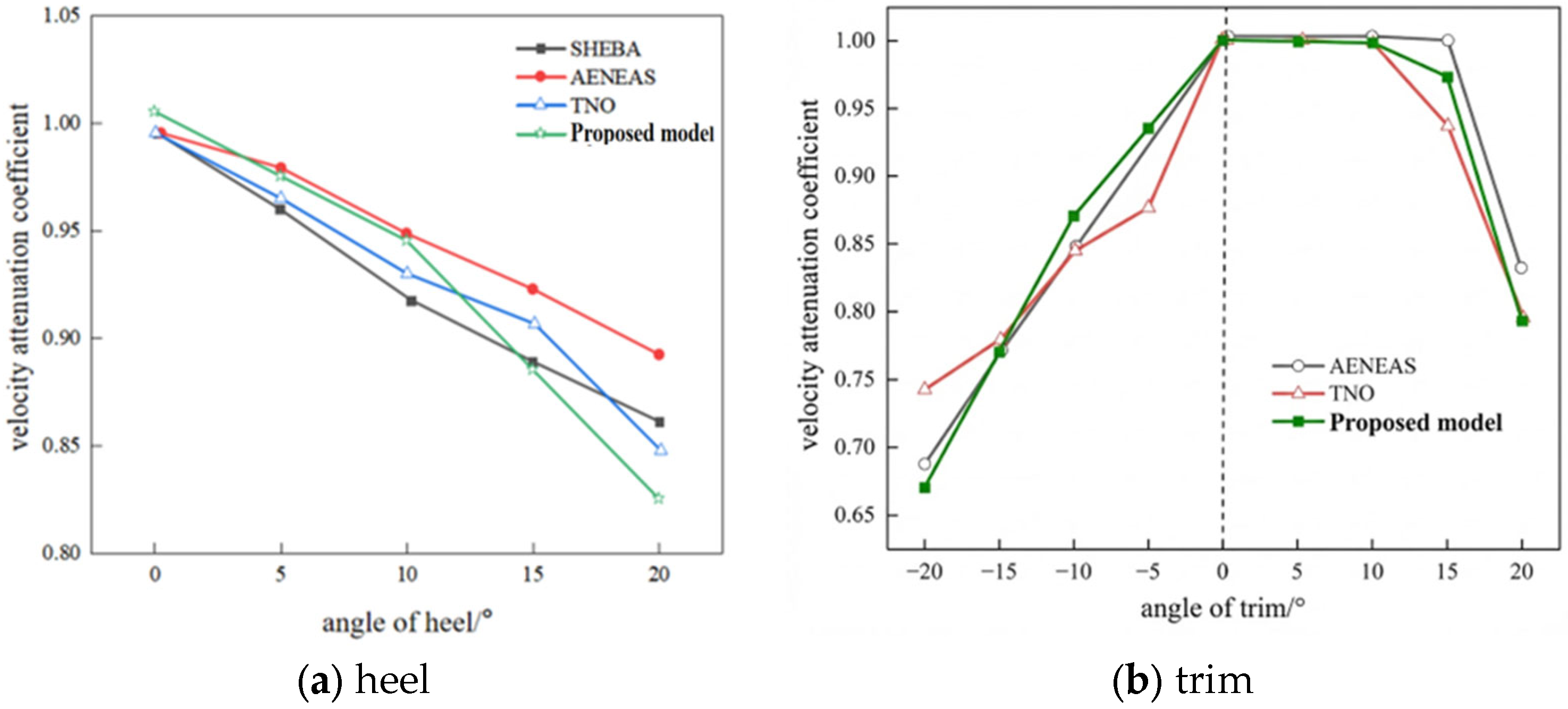
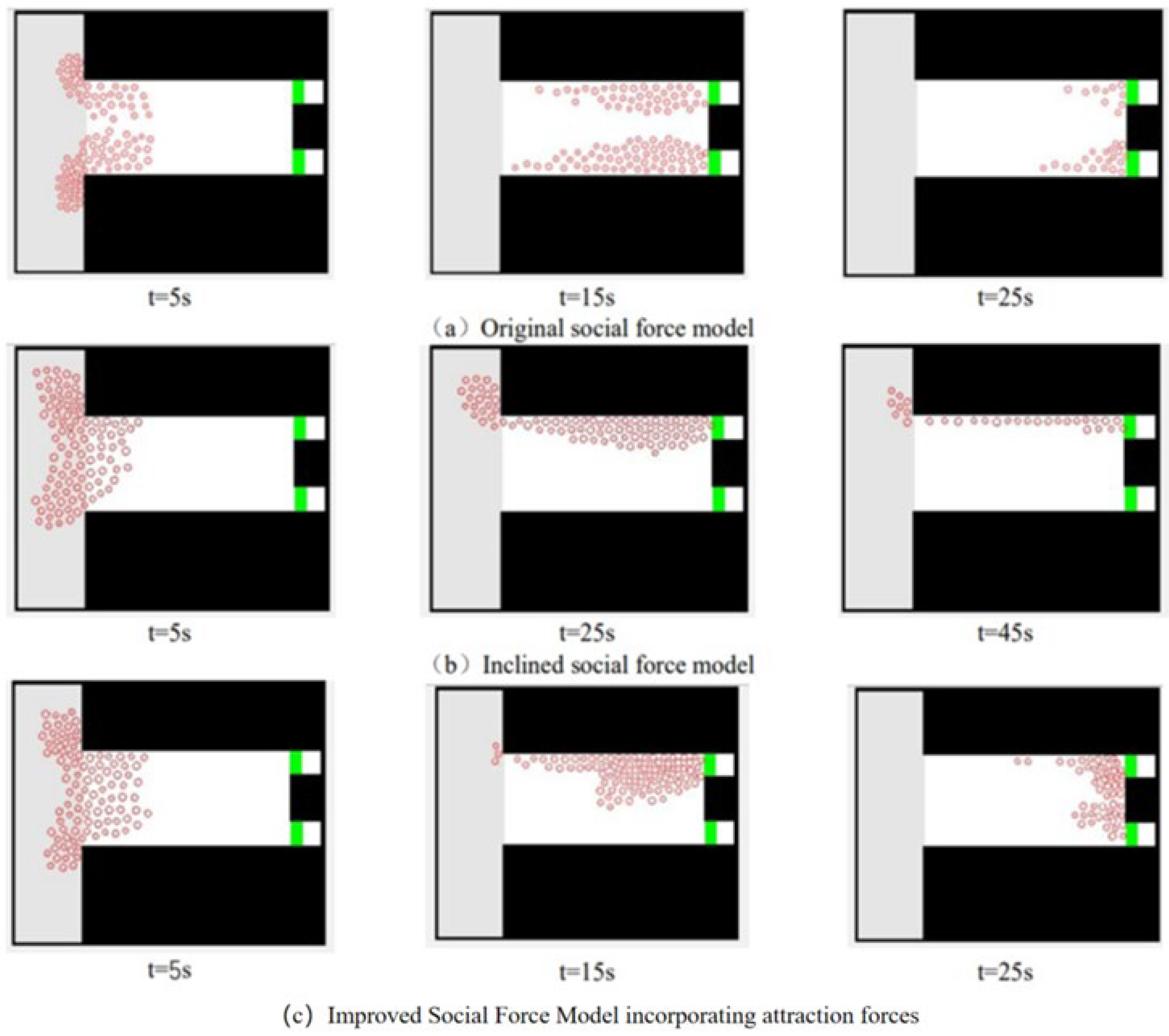
4.2. Qualitative Sensibility Analysis Under Inclination
5. Evacuation Simulation on Offshore Platform
- To analyze evacuation patterns under varying inclination angles and assess how platform inclination affects accessibility and evacuation efficiency.
- To investigate how desired evacuation speeds and offshore employees distribution influence overall evacuation outcomes.
5.1. Dual-Exit Corridor Scenarios
5.2. Stairway Evacuation Scenarios
5.2.1. Evacuation Speed Settings
5.2.2. Simulation Results
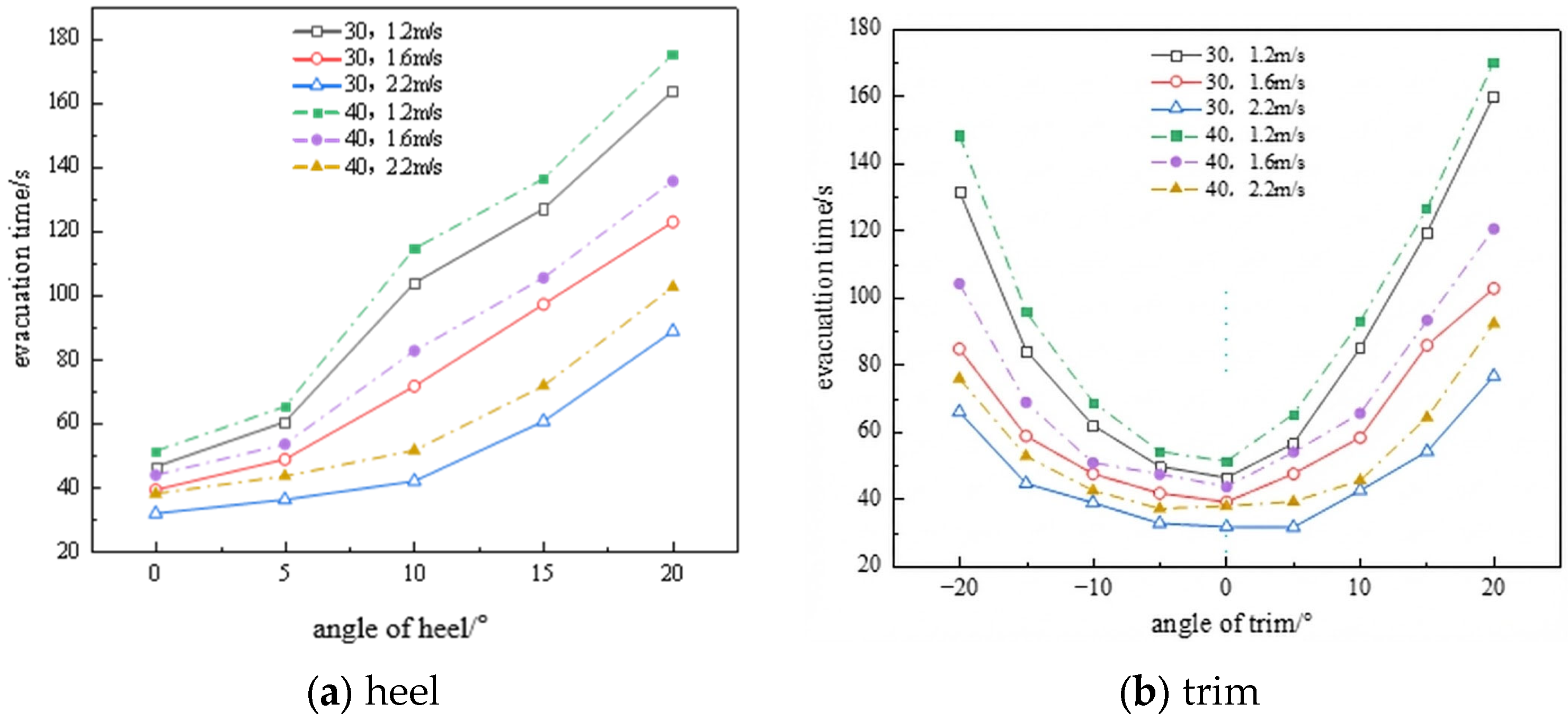
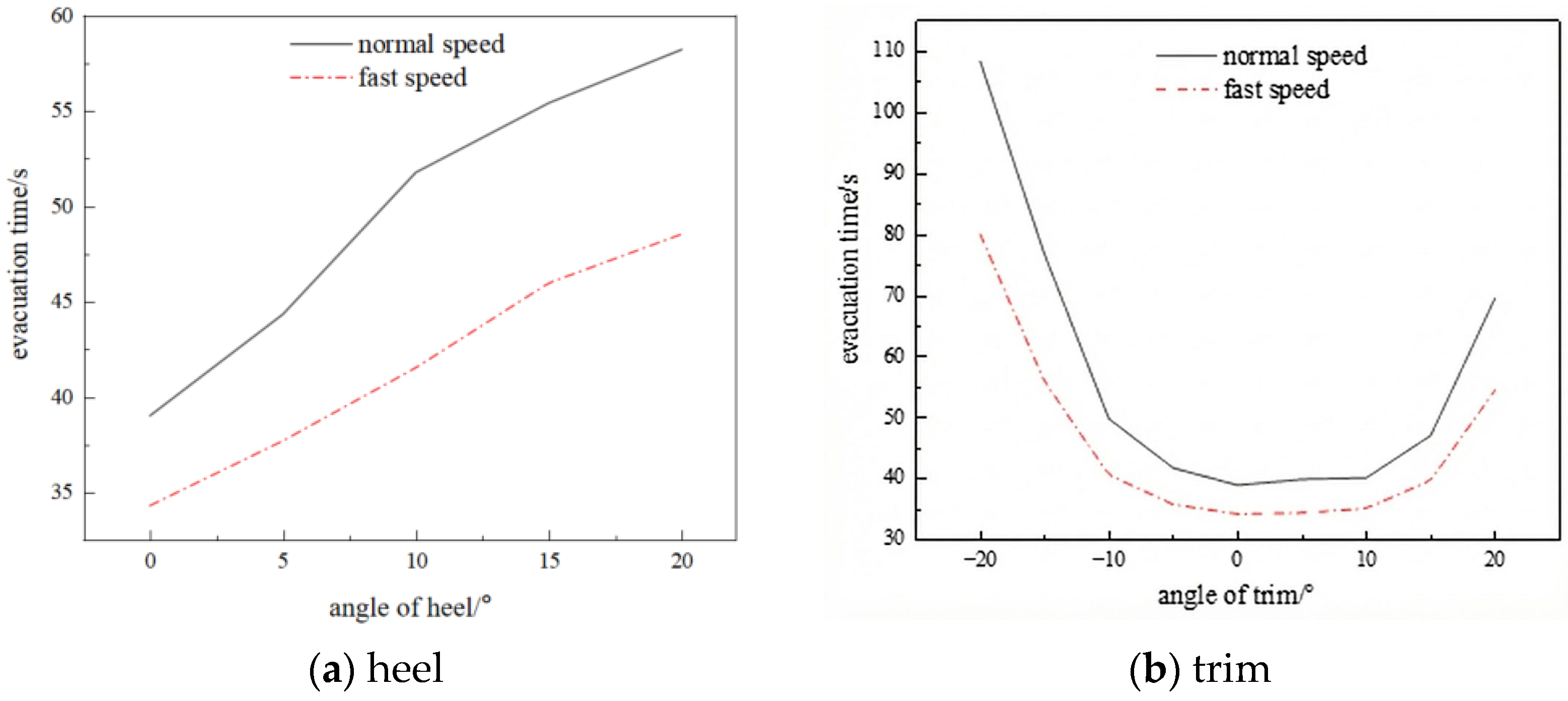
- Trimming by the bow produced the longest evacuation times due to the combined inclines of the platform and stairs.
- Heel angle increases linearly extended evacuation times, reflecting greater lateral forces.
- Trim angle ≤ 10° had little effect, but evacuation time increased sharply beyond 15°.
- Faster speeds reduced delays, improving evacuation times by 15–27% within ±20° inclination range.
5.2.3. Speed Variation Modeling
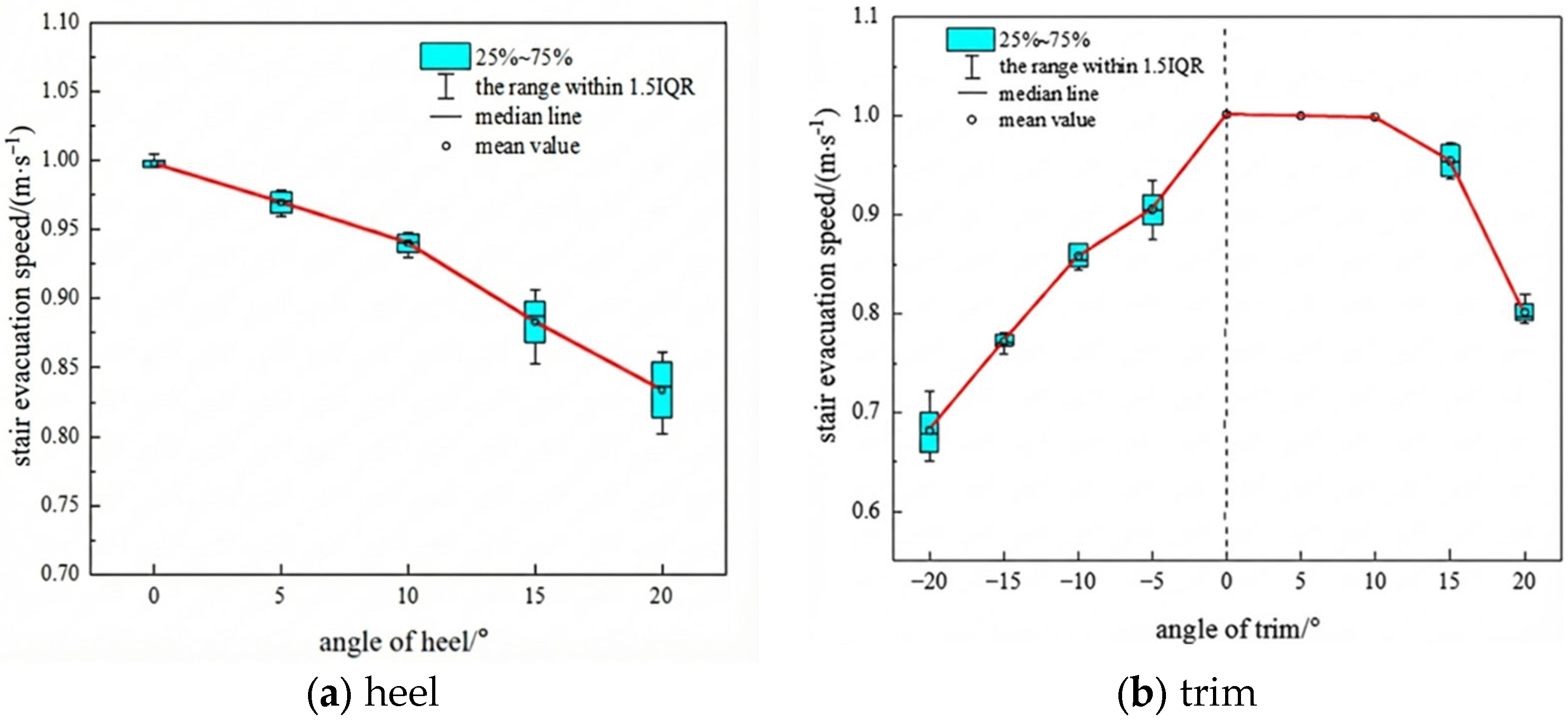
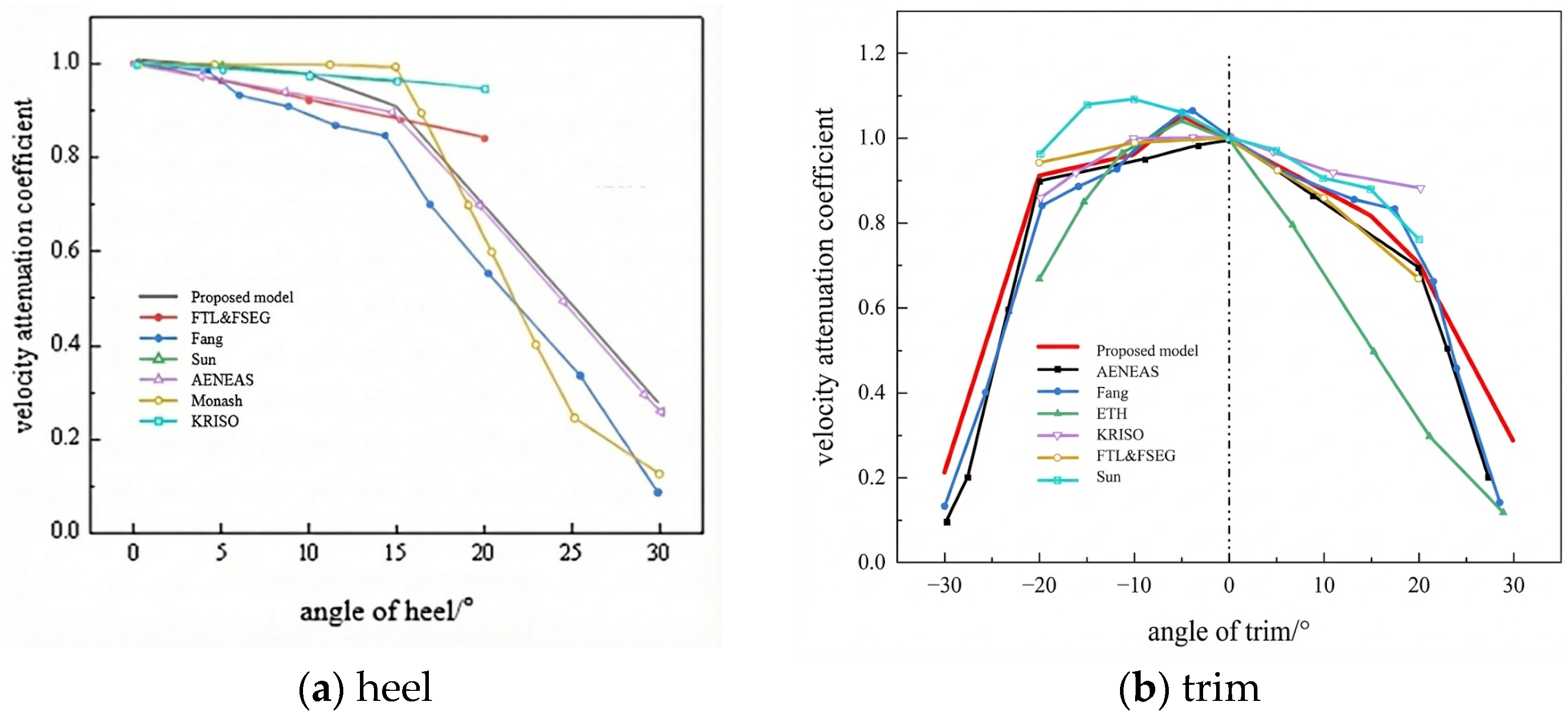
- When the heel angle is less than or equal to 10°, its effect on evacuation speed is minimal, resulting in only a slight decrease in movement speed.
- For heel angle larger than 10°, the effect becomes more pronounced as evacuees must continually adjust balance.
- Trim angle within 0–10° has little effect on evacuation speed.
- Trim by the bow results in a clear decrease in evacuation speed due to the combined effects of inclination and stair slope.
- Speed variability exhibits at larger inclination angles (15–20°), as shown by the boxplot analysis.
5.3. Evacuation Simulation of Complex Living Quarters
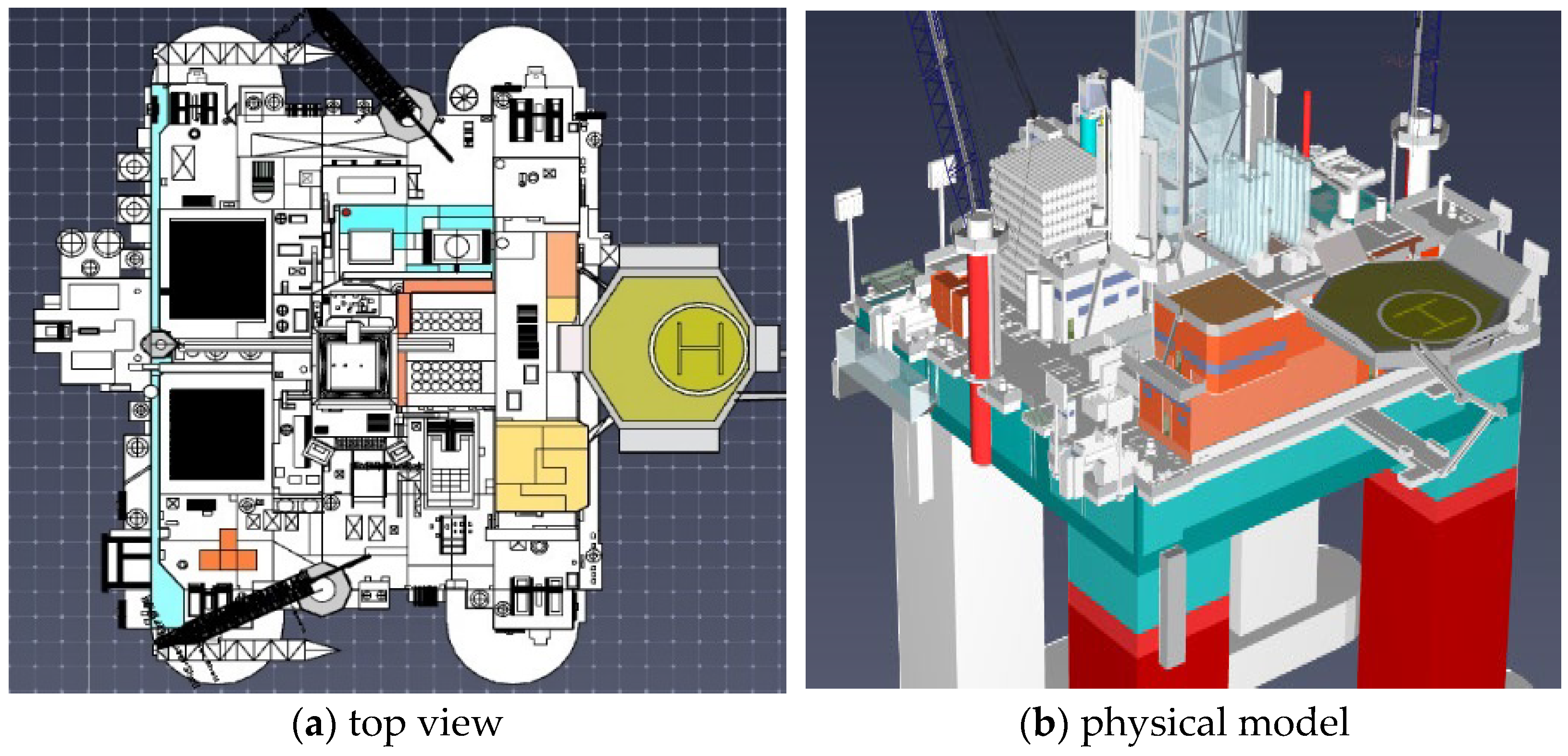
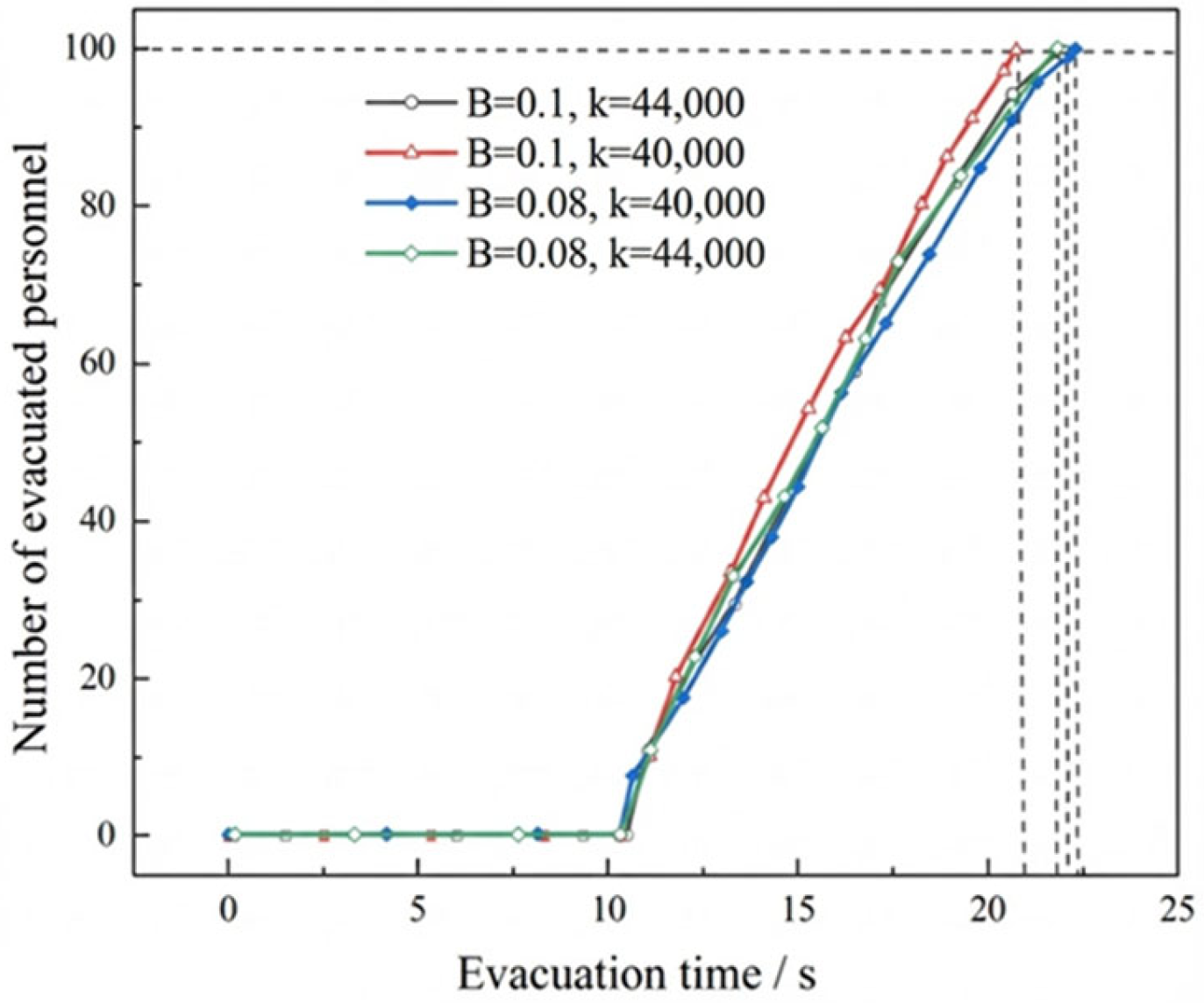
5.3.1. Scenario Design and Parameters
- (1).
- A = 2000, B = 0.08, k = 44,000, κ = 60,000
- (2).
- A = 2000, B = 0.08, k = 40,000, κ = 60,000
- (3).
- A = 2000, B = 0.1, k = 44,000, κ = 60,000
- (4).
- A = 2000, B = 0.1, k = 40,000, κ = 60,000
5.3.2. Simulation Results of Evacuation Time
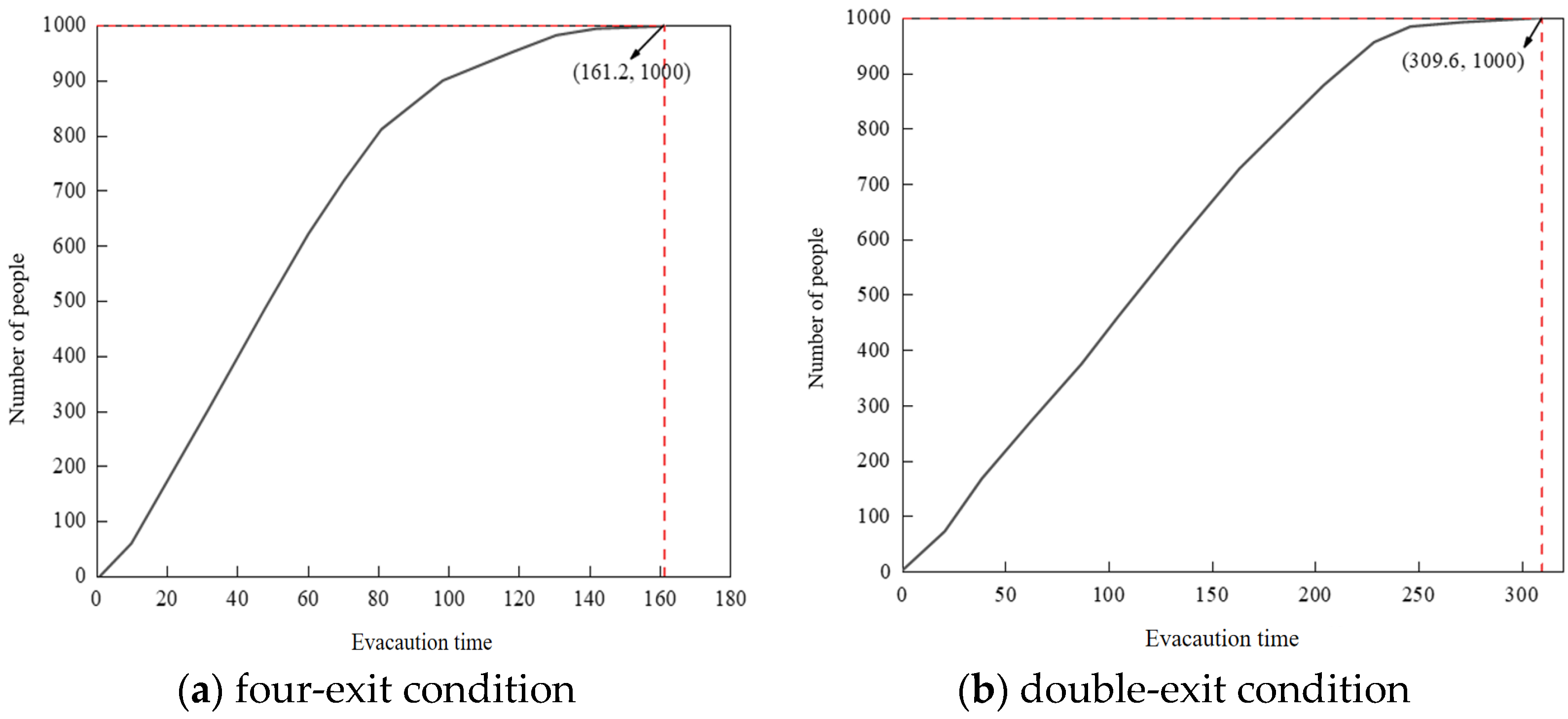
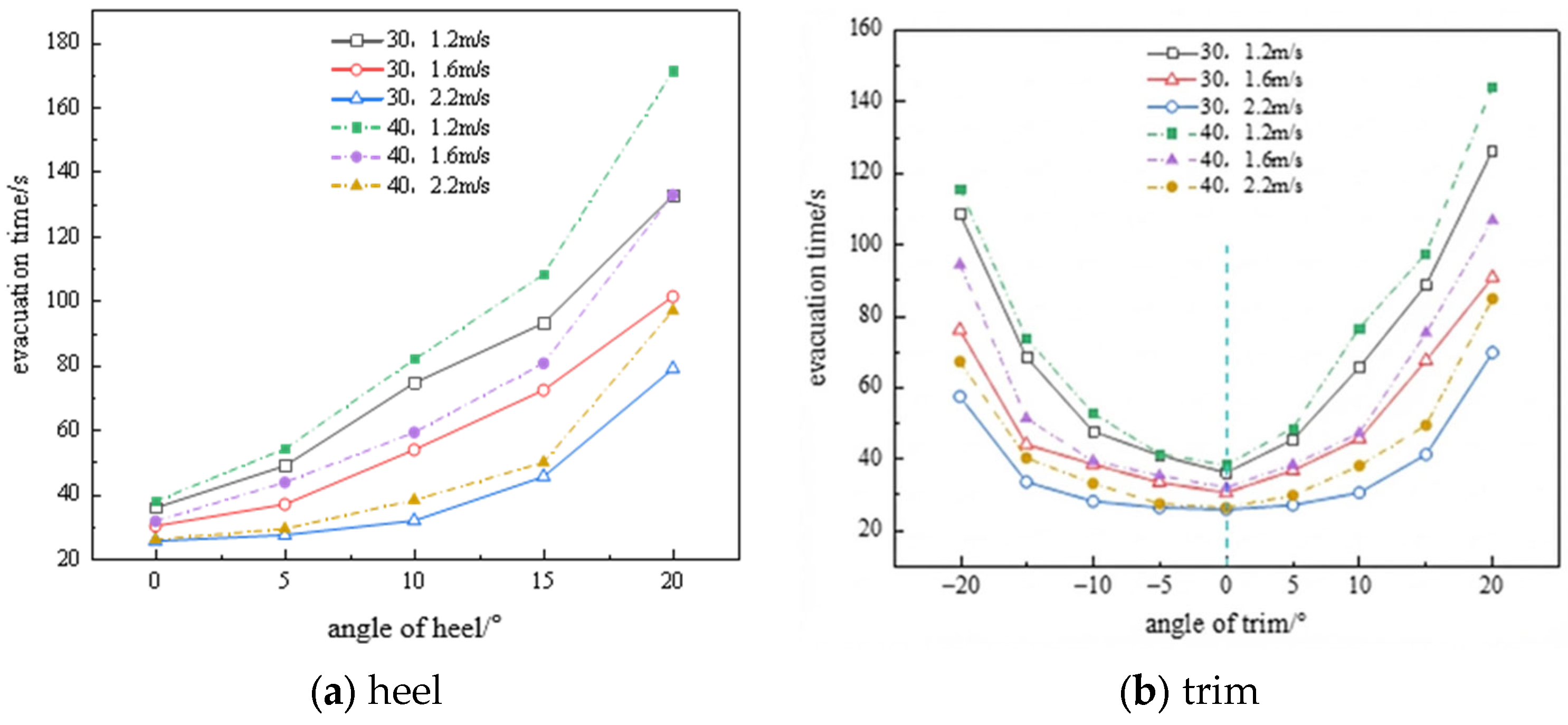
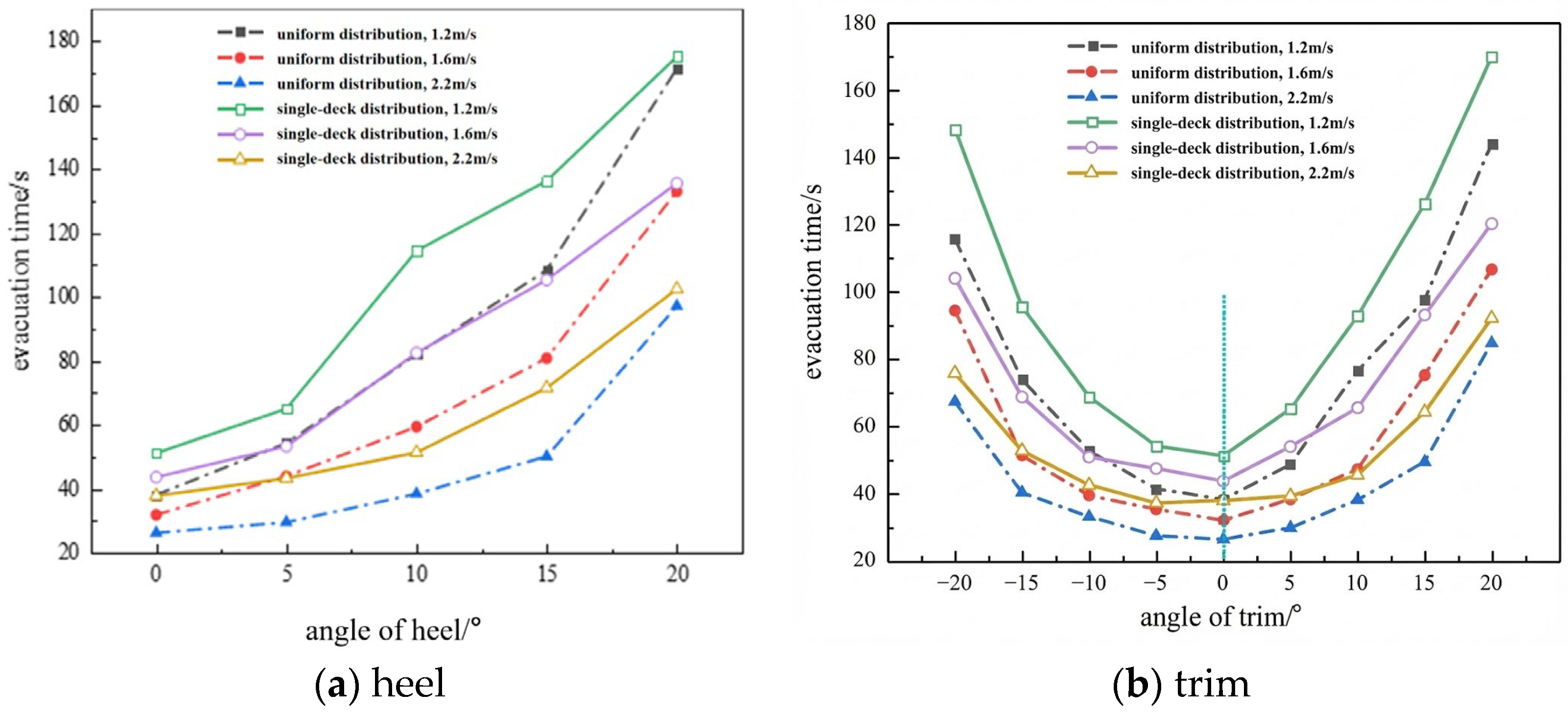
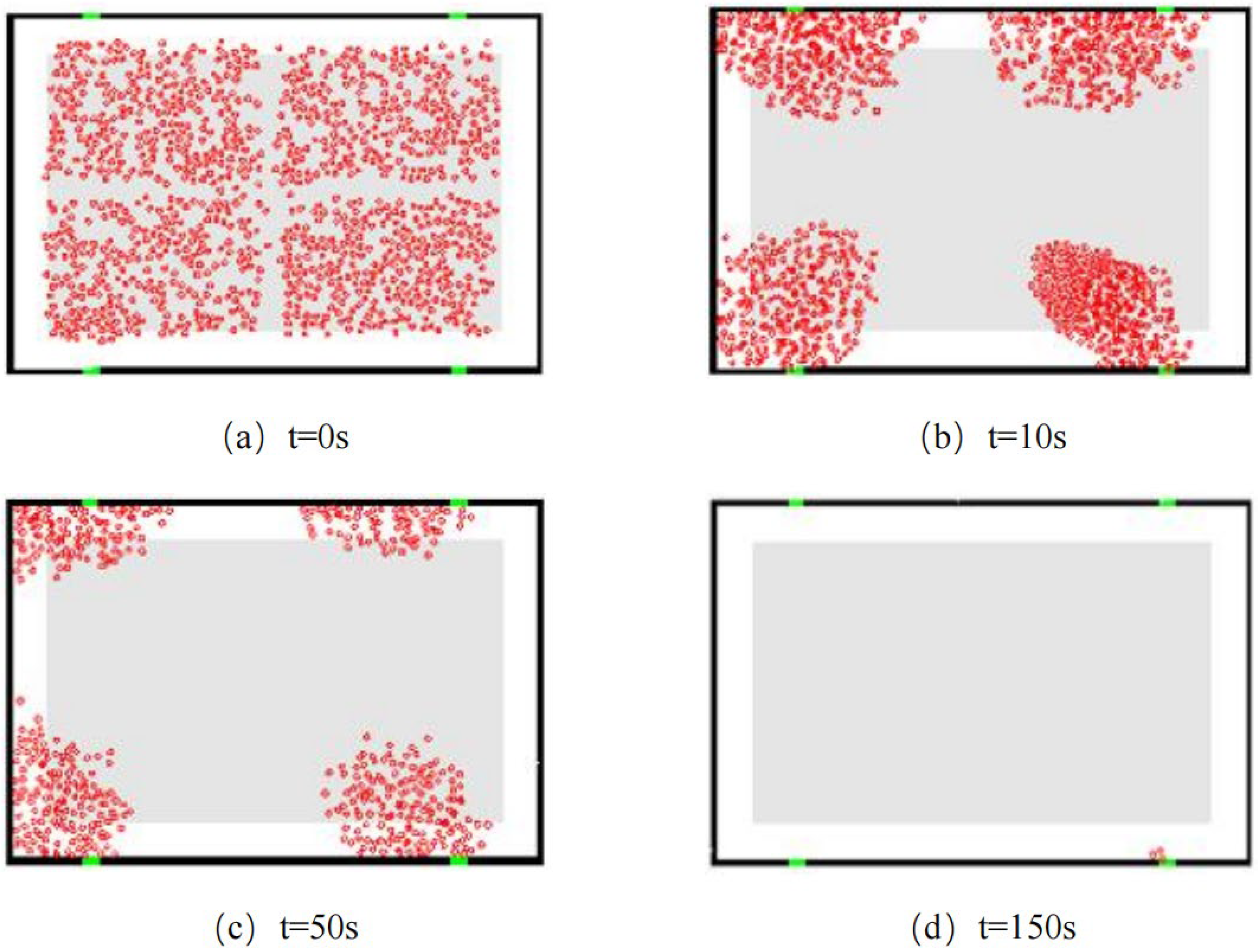
- Evacuation efficiency deteriorates as platform inclination increases. The impact is negligible below 5°, becomes noticeable between 5° and 15°, and accelerates significantly beyond 15°.
- Evacuation efficiency decreases sharply once the heel angle exceeds 10° or the trim angle exceeds 15°. Heel angles primarily affect lateral balance and congestion at corners, while trim angles exert a stronger influence on stair use and inter-floor movement.
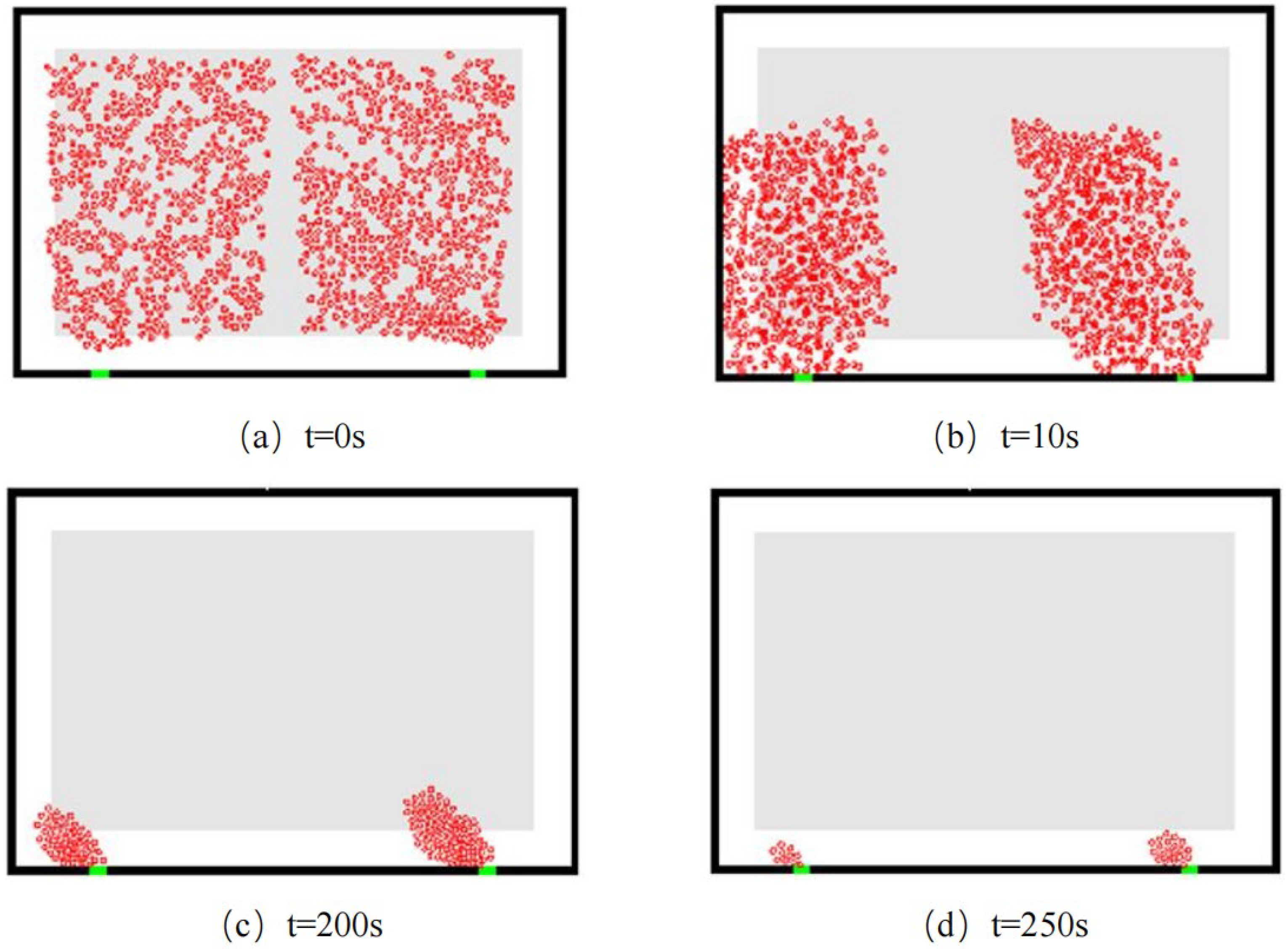
- Resting conditions, where offshore employees are concentrated on a single deck, consistently lead to longer evacuation times due to higher density and congestion, and are more sensitive to platform inclination. By contrast, double-deck distributions improve flow separation and overall evacuation efficiency.
- In single deck resting conditions, evacuation times exhibit relatively low variability across heel and trim angles. High density reduces individual behavioral differences.
- Higher expected speeds (walking: 1.2 m/s, fast walking: 1.6 m/s, running: 2.2 m/s) substantially reduce evacuation times by about 15–27%, even under severe inclinations. However, for steep inclines and high desired speeds, these evacuation times should be considered optimistic lower-bound estimates, as the model does not explicitly account for slips, falls, injuries, incapacitation, or the secondary delays they may cause.
- When stairways are involved, longitudinal trims directly alter the effective slope of steps, creating a disproportionately large impact on both stair climbing and going down stair speeds. This effect is more severe than that of heel conditions.
5.3.3. Speed Characteristics Analysis on Inclined Platform
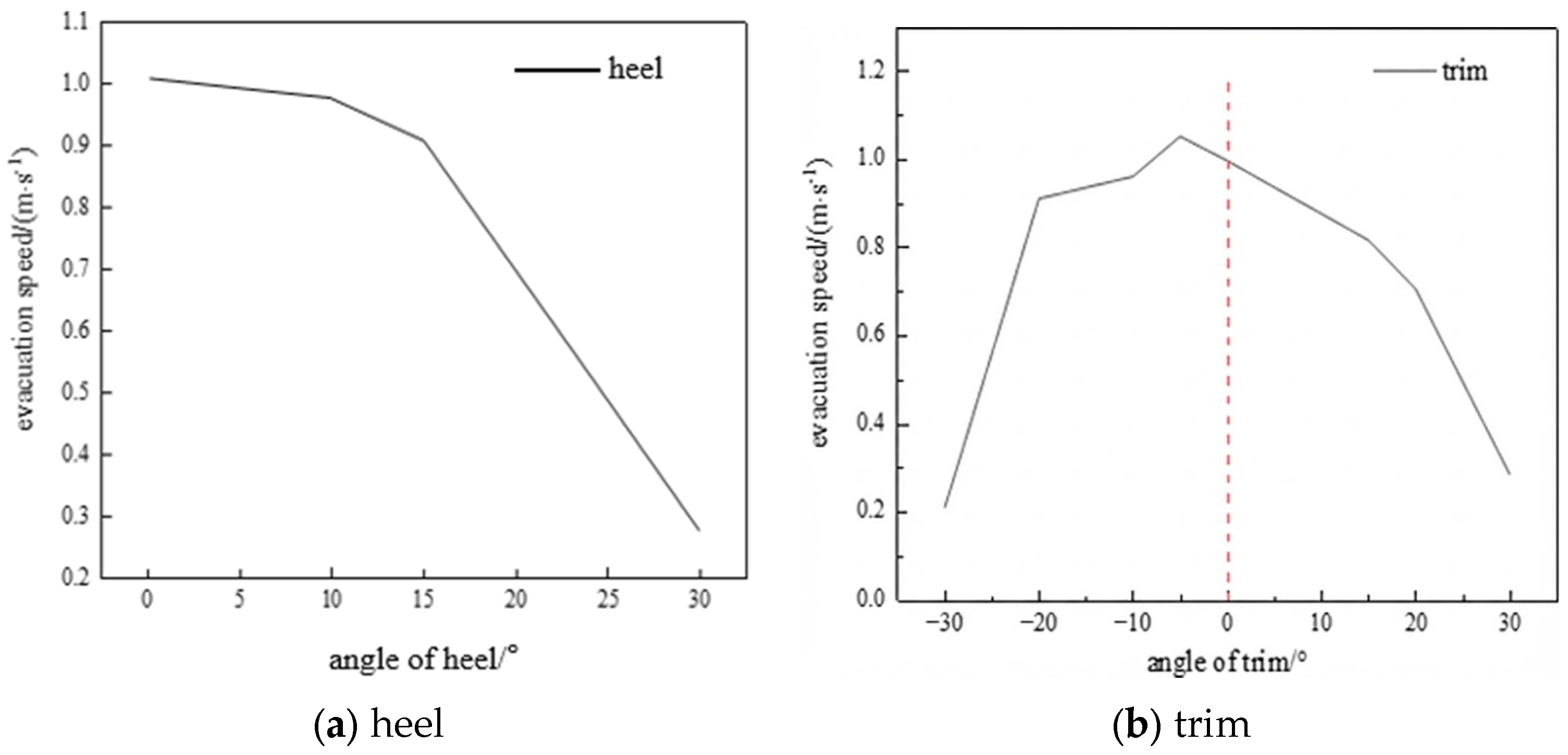
- Evacuation speed is only slightly affected when inclination is less than 10°, leading to negligible reductions in evacuation efficiency.
- When heel angles exceed 15°, evacuation speed decreases markedly, as evacuees struggle to maintain balance and adapt to the slope.
- At moderate inclinations, trim angles result in greater speed reductions compared to heel angles. At higher inclinations, increased swaying leads to more significant deceleration.
- Trim by the bow initially increases movement speed, but larger trim angles cause speed deceleration as evacuees must slow down to prevent falls or collisions. This observation does not contradict the stairway case discussed earlier (Section 5.2.3), where trim by the bow always reduces speed because it combines with the stair slope to create a steeper effective gradient.
6. Conclusions and Future Work
6.1. Conclusions
- (1)
- By integrating inclination-induced forces with attraction forces, the improved SFM is better equipped to simulate evacuation on tilted platforms. The simulation results corroborate the model’s validity and reliability for scenarios involving platform inclinations.
- (2)
- Evacuation time increases with the steepness of inclination. When the inclination angle exceeds 15°, platform inclination leads to a 20–50% increase in predicted evacuation duration. Timely evacuation before this threshold is therefore critical to prevent capsizing risks and casualties.
- (3)
- Longitudinal trim exerts a greater influence than lateral heels because stairways are usually aligned with the platform’s longitudinal axis. Trim directly increases the effective slope of stair treads, increasing gravitational resistance during stair climbing and slip risk while going downstairs. Heel primarily causes lateral imbalance, which evacuees can partially mitigate by using handrails or leaning against walls. As a result, longitudinal trims produce more severe delays than lateral heels of comparable magnitude do.
- (4)
- In complex living quarters, evacuation efficiency is strongly affected by population density and spatial distribution. Resting conditions, where offshore employees are concentrated on a single deck, consistently lead to longer evacuation times and higher sensitivity to inclination compared with working conditions.
- (5)
- The study identifies 15° as a conservative critical threshold for safe evacuation. This finding supports the development of platform-specific evacuation guidelines and highlights the need for design strategies that minimize stair bottlenecks, reduce single-deck crowding, and provide accessible muster routes.
6.2. Future Works
- Extending the model to account for panic propagation, group cohesion, and heterogeneous behavioral thresholds during evacuation.
- Investigating the combined impacts of fire, explosion, and platform inclination to provide more comprehensive risk assessments under multi-hazard scenarios.
- Calibrating and validating the model with data from offshore evacuation drills and real incidents to strengthen its practical relevance with empirical validation.
- Incorporating behaviors such as handrail usage, crawling, or adaptive movement strategies under severe inclinations to improve simulation accuracy.
Author Contributions
Funding
Data Availability Statement
Conflicts of Interest
References
- Johannessen, S.; Andreassen, S.M.H.; Haavik, T.K.; Taarup, J.; Kruke, B.I. Co-creation of risk in evacuation settings—A risk governance approach to natural hazards risks. Saf. Sci. 2025, 185, 106780. [Google Scholar] [CrossRef]
- Ismail, Z.; Kong, K.K.; Othman, S.Z.; Law, K.H.; Khoo, S.Y.; Ong, Z.C.; Shirazi, S.M. Evaluating accidents in the offshore drilling of petroleum: Regional picture and reducing impact. Measurement 2014, 51, 18–33. [Google Scholar] [CrossRef]
- Ping, P.; Wang, K.; Kong, D. Analysis of emergency evacuation in an offshore platform using evacuation simulation modeling. Phys. A Stat. Mech. Its Appl. 2018, 505, 601–612. [Google Scholar] [CrossRef]
- Norazahar, N. Risk Management of Human and Organizational Factors for the Escape and Evacuation of Offshore Installations. Ph.D. Thesis, Memorial University of Newfoundland, St. John’s, NL, Canada, 2017. [Google Scholar]
- Nasso, C.; Bertagna, S.; Mauro, F.; Marinò, A.; Bucci, V. Simplified and advanced approaches for evacuation analysis of passenger ships in the early stage of design. Brodogradnja 2019, 70, 43–59. [Google Scholar] [CrossRef]
- Sun, J.; Guo, Y.; Li, C.; Lo, S.; Lu, S. An experimental study on individual walking speed during ship evacuation with the combined effect of heeling and trim. Ocean Eng. 2018, 166, 396–403. [Google Scholar] [CrossRef]
- Wang, X.; Liu, Z.; Zhao, Z.; Wang, J.; Loughney, S.; Wang, H. Passengers’ likely behaviour based on demographic difference during an emergency evacuation in a Ro-Ro passenger ship. Saf. Sci. 2020, 129, 104803. [Google Scholar] [CrossRef]
- Fang, S.; Liu, Z.; Wang, X.; Cao, Y.; Yang, Z. Dynamic analysis of emergency evacuation in a rolling passenger ship using a two-layer social force model. Expert Syst. Appl. 2024, 247, 123310. [Google Scholar] [CrossRef]
- Fang, S.; Liu, Z.; Wang, X.; Matellini, B.; Wang, J.; Yang, Z.; Ni, S. Experimental study on human evacuation onboard passenger ships considering heeling angle and opposite directions. Ocean Eng. 2024, 308, 118256. [Google Scholar] [CrossRef]
- Hu, M.; Cai, W.; Zhao, H. Simulation of passenger evacuation process in cruise ships based on a multi-grid model. Symmetry 2019, 11, 1166. [Google Scholar] [CrossRef]
- Fang, S.; Liu, Z.; Wang, X.; Wang, J.; Yang, Z. Simulation of evacuation in an inclined passenger vessel based on an improved social force model. Saf. Sci. 2022, 148, 105675. [Google Scholar] [CrossRef]
- Helbing, D.; Molnar, P. Social force model for pedestrian dynamics. Phys. Rev. E 1995, 51, 4282. [Google Scholar] [CrossRef] [PubMed]
- Ma, S.; Guo, Y.; Wei, F.; Li, Q.; Wang, Z. An improved social force model of pedestrian twice–crossing based on spatial–temporal trajectory characteristics. Sustainability 2022, 14, 16615. [Google Scholar] [CrossRef]
- Ma, J.; Lo, S.M.; Song, W.G. Cellular automaton modeling approach for optimum ultra high-rise building evacuation design. Fire Saf. J. 2012, 54, 57–66. [Google Scholar] [CrossRef]
- Peng, C.; Ma, C.; Dong, Y. Unravelling the formation mechanism of sustainable underground pedestrian systems: Two case studies in Shanghai. Sustainability 2023, 15, 11819. [Google Scholar] [CrossRef]
- Helbing, D.; Farkas, I.; Vicsek, T. Simulating dynamical features of escape panic. Nature 2000, 407, 487–490. [Google Scholar] [CrossRef]
- Balakhontceva, M.; Karbovskii, V.; Sutulo, S.; Boukhanovsky, A. Multi-agent simulation of passenger evacuation from a damaged ship under storm conditions. Procedia Comput. Sci. 2016, 80, 2455–2464. [Google Scholar] [CrossRef]
- Liu, Q. A social force model for the crowd evacuation in a terrorist attack. Physica A 2018, 502, 315–330. [Google Scholar] [CrossRef]
- Cao, R.F.; Lee, E.W.M.; Yuen, A.C.Y.; Chan, Q.N.; Xie, W.; Shi, M.; Yeoh, G.H. Development of an evacuation model considering the impact of stress variation on evacuees under fire emergency. Saf. Sci. 2021, 138, 105232. [Google Scholar] [CrossRef]
- Zheng, Z.; Zhu, G.; Sun, Z.; Wang, Z.; Li, L. Improved social force model based on emotional contagion and evacuation assistant. IEEE Access 2020, 8, 195989–196001. [Google Scholar] [CrossRef]
- Fang, S.; Liu, Z.; Feng, S.; Wang, X. Numerical analysis of influence of ship listing on evacuation efficiency of different pedestrian flows. J. Transp. Syst. Eng. Inf. Technol. 2021, 21, 201–206. [Google Scholar]
- Valanto, P. Time-Dependent Survival Probability of a Damaged Passenger Ship II—Evacuation in Seaway and Capsizing; HSVA Report; HSVA: Hamburg, Germany, 2006; Volume 1661. [Google Scholar]
- Kobes, M.; Helsloot, I.; de Vries, B.; Post, J. Exit choice, (pre-) movement time and (pre-) evacuation behaviour in hotel fire evacuation—Behavioural analysis and validation of the use of serious gaming in experimental research. Procedia Eng. 2010, 3, 37–51. [Google Scholar] [CrossRef]
- IMO. Guidelines for Evacuation Analysis for New and Existing Passenger Ships; MSC.1/Circ.1238; International Maritime Organization: London, UK, 2007. [Google Scholar]
- Zhang, J.; Zhao, J.; Song, Z.; Gao, J. Evacuation performance of participants in an offshore platform under smoke situations. Ocean Eng. 2020, 216, 107739. [Google Scholar] [CrossRef]
- Li, J.; Zhang, H.; Ni, Z. Improved social force model based on navigation points for crowd emergent evacuation. J. Inf. Process. Syst. 2020, 16, 6. [Google Scholar]








| Working Condition | Flat Surfaces/(m/s) (Mean) | Stair Climbing Speed/(m/s) (Mean) | Going Downstairs Speed/(m/s) (Mean) |
|---|---|---|---|
| Walking speed [24] | 1.11~1.85 (1.48) | 0.5~0.84 (0.67) | 0.76~1.26 (1.01) |
| Running speed [25] | 1.91~2.3 (2.11) | 0.95~1.03 (1.0) | 1.26~1.27 (1.26) |
| Parameters | Symbol | Value |
|---|---|---|
| Human force strength | 2000 N | |
| The range of human force | 0.1 m | |
| Human elasticity coefficient | 40,000 kg·s−2 | |
| Coefficient of sliding friction | 60,000 kg·m−1·s−1 | |
| Gravity acceleration | 10 m·s−2 | |
| Strength of attraction | −2000 N | |
| The range of attraction | 0.2 m | |
| The exit attraction constant | 100 N |
| Comparative Dataset | Effective Range (°) | MAE | RMSE | Max Dev |
|---|---|---|---|---|
| AENEAS | 0–30 | 0.021 | 0.027 | 0.050 |
| Fang | 0–30 | 0.096 | 0.114 | 0.119 |
| Monash | 0–20 | 0.083 | 0.116 | 0.240 |
| KRIASH | 0–20 | 0.015 | 0.019 | 0.025 |
| FTL&FSEG | 0–20 | 0.052 | 0.063 | 0.075 |
| Comparative Dataset | Effective Range (°) | MAE | RMSE | Max Dev |
|---|---|---|---|---|
| AENEAS | −30–30 | 0.050 | 0.068 | 0.150 |
| Fang | −30–30 | 0.051 | 0.073 | 0.160 |
| Sun | −20–20 | 0.058 | 0.076 | 0.130 |
| ETH | −20–30 | 0.168 | 0.211 | 0.400 |
| KRIASH | −20–20 | 0.053 | 0.074 | 0.180 |
Disclaimer/Publisher’s Note: The statements, opinions and data contained in all publications are solely those of the individual author(s) and contributor(s) and not of MDPI and/or the editor(s). MDPI and/or the editor(s) disclaim responsibility for any injury to people or property resulting from any ideas, methods, instructions or products referred to in the content. |
© 2026 by the authors. Licensee MDPI, Basel, Switzerland. This article is an open access article distributed under the terms and conditions of the Creative Commons Attribution (CC BY) license.
Share and Cite
Wang, Y.; Ma, Z.; Li, F.; Wang, J. Simulating Evacuation on Inclined Offshore Platforms with an Improved Social Force Model. J. Mar. Sci. Eng. 2026, 14, 155. https://doi.org/10.3390/jmse14020155
Wang Y, Ma Z, Li F, Wang J. Simulating Evacuation on Inclined Offshore Platforms with an Improved Social Force Model. Journal of Marine Science and Engineering. 2026; 14(2):155. https://doi.org/10.3390/jmse14020155
Chicago/Turabian StyleWang, Yanfu, Zhicheng Ma, Fei Li, and Jin Wang. 2026. "Simulating Evacuation on Inclined Offshore Platforms with an Improved Social Force Model" Journal of Marine Science and Engineering 14, no. 2: 155. https://doi.org/10.3390/jmse14020155
APA StyleWang, Y., Ma, Z., Li, F., & Wang, J. (2026). Simulating Evacuation on Inclined Offshore Platforms with an Improved Social Force Model. Journal of Marine Science and Engineering, 14(2), 155. https://doi.org/10.3390/jmse14020155