1. Introduction
Compared with conventional cylindrical configurations, BWBUG offers comprehensive advantages such as higher lift-to-drag ratio, improved gliding efficiency, increased spatial utilization, and enhanced maneuverability. These features render the BWBUG highly valuable for large-scale marine monitoring and exploration [
1,
2,
3]. Given these advantages, the structural design of the BWBUG constitutes one of its key technologies, primarily comprising the skeletal framework and the hull structure. Among these, the skeleton serves as the internal supporting architecture, responsible for transmitting loads from the pressure hull, skin, and buoyancy materials. Consequently, it plays a critical role in maintaining the external shape, ensuring structural strength, and providing stability [
4,
5]. Furthermore, constrained by spatial and weight limitations, lightweight design remains a central challenge. Therefore, an effective design must minimize space and mass occupancy while satisfying mechanical requirements, thereby enhancing payload capacity and overall performance.
Existing studies on underwater lightweight design have primarily relied on parametric modeling and optimization methods to achieve structural weight reduction and performance enhancement. In the context of BWBUG skeleton optimization, researchers have developed parametric models via secondary development in UG NX 11.0 software, integrated them with ANSYS 17.0 finite element analysis and surrogate models for multi-objective optimization [
6]. Other investigations have adopted discrete parametric modeling combined with surrogate-assisted discrete optimization algorithms to further reduce skeleton weight and improve mechanical properties [
7]. To more explicitly address the lightweight requirements specific to BWBUG skeletons, a multi-source data-driven optimization framework has been established, enabling collaborative optimization under strength, stiffness, and stability constraints, ultimately achieving a mass reduction of 70.3% [
8]. Beyond BWBUG-related research, similar methodologies have been extended to other types of underwater gliders and vehicles. For instance, through foldable wing design and local structural optimization, impact stress during water entry of an airdropped glider has been effectively reduced [
9]. In the case of wave gliders, systematic optimization of square hydrofoils has led to marked improvements in lift-to-drag characteristics [
10]. Additionally, in the field of flapping-wing underwater vehicles, structural parameter analysis has elucidated their influence on propulsion force, providing a theoretical foundation for subsequent design efforts [
11].
Note that most of the aforementioned studies rely heavily on either empirical analogy or parametric dimensional optimization. The former struggles to transcend existing topological configurations, whereas the latter remains confined to predefined geometries. Therefore, more advanced design methodologies are urgently required. Topology optimization offers a promising alternative. By autonomously determining the optimal material distribution within a given design domain under specified constraints, it can generate innovative and efficient structural topologies, thereby providing new perspectives for BWBUG skeleton design. Mainstream techniques include the density-based method, the level set method, and the moving morphable component method [
12,
13,
14,
15,
16,
17,
18], all of which have demonstrated broad applicability across mechanics, acoustics, and engineering structures [
19,
20,
21,
22,
23]. In marine engineering, topology optimization has emerged as an important tool for achieving high performance, lightweight characteristics, and structural reliability. For instance, in ship double-bottom structures, optimizing stiffener configurations reduced self-weight while ensuring buckling strength [
24]. For deep-sea pressure hulls, integration with multi-objective genetic algorithms enabled optimization of non-uniform-stiffness internal ribs, enhancing stability and resistance to structural instability, with a mass reduction exceeding 17% [
25]. Furthermore, in the design of contra-rotating motors for underwater vehicles, electromagnetic–structural co-optimization via topology optimization improved power density and operational efficiency [
26]. Collectively, these achievements demonstrate that topology optimization can effectively address multi-physics interactions and complex loading conditions in marine environments, establishing itself as a core technology for lightweight, high-performance equipment design.
Introducing topology optimization into the conceptual design of BWBUG skeletal structures enables the generation of innovative load transfer paths that align with complex geometries and diverse operational load cases. This approach transcends the limitations of traditional empirical design, yielding novel topologies with high lightweight potential. Consequently, it lays a solid foundation for subsequent design stages and enhances overall development efficiency. However, topology optimization often produces structurally intricate organic forms that pose significant manufacturability challenges. Their irregular geometric features increase fabrication complexity and cost. Moreover, because process-related constraints are not adequately considered, substantial manual redesign is frequently required, which may compromise the optimality of the inherent performance [
27]. To address these shortcomings, collaborative design integrating data-driven optimization can be employed. By leveraging surrogate models and machine learning algorithms, this method efficiently handles multivariable, nonlinear, and computationally expensive optimization problems, rapidly identifying optimal solutions under multiple constraints, such as strength, stiffness, and stability. In the context of complex BWBUG structures, studies utilizing dual-surrogate models, Kriging-assisted discrete global optimization, and multi-objective Bayesian optimization have achieved significant mass reduction while improving design efficiency [
28,
29,
30,
31,
32]. Collectively, these findings suggest that integrating topology optimization with data-driven optimization establishes a coherent technical pathway, spanning from topological innovation to parametric refinement. This integration effectively reconciles the competing demands of lightweight design, high performance, and engineering feasibility.
Based on the foregoing analysis, topology optimization and data-driven optimization achieve complementary strengths and progressive synergy in structural design. Specifically, topology optimization focuses on macroscopic material distribution, generating innovative primary load transfer paths for the structure. Building upon these results, data-driven optimization performs fine adjustments on microscopic parameters, such as cross-sectional dimensions, thereby ensuring engineering feasibility while preserving optimal performance. In this way, the integration of both approaches, termed as the TD-Method, provides a systematic means of resolving the inherent trade-offs among lightweight design, high performance, and manufacturability in BWBUG skeletal structures. By establishing a two-stage framework in which topology optimization precedes data-driven optimization, a complete design loop is realized, spanning from configurational innovation to parametric refinement. Consequently, this integrated methodology offers a systematic and reliable foundation for the structural design of BWBUG systems.
The remainder of this paper is organized as follows.
Section 2 presents the structural topology optimization process.
Section 3 then details the data-driven optimization procedure.
Section 4 provides comparative case studies to validate the effectiveness and advancement of the proposed method. Finally,
Section 5 summarizes the main conclusions and outlines directions for future research.
2. Structural Topology Optimization
2.1. Analysis of Typical Operating Conditions
The optimization design in this study is primarily based on the static analysis results of the BWBUG structure to ensure the strength requirements of the skeletal framework. To substantiate the selection of the most critical scenario, a comparative analysis of the loading characteristics across different phases is conducted. During stationary conditions on land, the structure is subjected solely to self-weight under stable boundary constraints, resulting in minimal stress levels. In the underwater navigation phase, although the structure withstands hydrostatic pressure and hydrodynamic forces, the load distribution is relatively uniform and predictable due to stable diving depths and postures. In contrast, the deployment and retrieval phases involve significantly higher complexity. The structure is located at the air–sea interface and must withstand a combination of distributed forces from equipment bays, gravitational self-weight, and stochastic wave impacts. Furthermore, the suspended configuration induced by the lifting cable introduces substantial constraint instability, making the structure prone to swinging and torsional deformation. This multi-physics coupling effect, which involves the superposition of gravitational, concentrated payload, wave slamming, and cantilever-like forces, induces stress concentrations far exceeding those observed in other phases. Consequently, the deployment and retrieval stages are identified as the governing design conditions.
Given the dynamic nature of the marine environment, we first justify the rationale behind adopting a static assumption. Although waves induce dynamic loads, the deployment and retrieval phases involve low-velocity, controlled motions, rendering them quasi-static processes. Furthermore, as a large-scale spatial truss structure, the BWBUG skeleton exhibits high overall stiffness and a natural frequency significantly higher than the dominant frequency of wave excitations. According to structural dynamics theory, when the excitation frequency is far lower than the structural natural frequency, the dynamic amplification factor approaches unity, allowing the effects of inertial and damping forces to be neglected. Therefore, static analysis provides a conservative and valid approach for evaluating structural strength.
Consequently, it is necessary to conduct an operating condition analysis to identify the most critical scenario and its specific characteristics throughout the entire operational cycle. In chronological order, the operational process of the glider can be divided into four principal states: stationary on land, deployment into water, underwater navigation, and retrieval from water. By evaluating the complexity of loading and the environmental stability associated with each state, the deployment and retrieval phases are identified as the most critical operating conditions. During these phases, the glider experiences the most complex loading conditions while situated at the air–sea interface, where environmental instability is further intensified by factors such as wave action. A detailed analysis is subsequently conducted for the deployment and retrieval conditions.
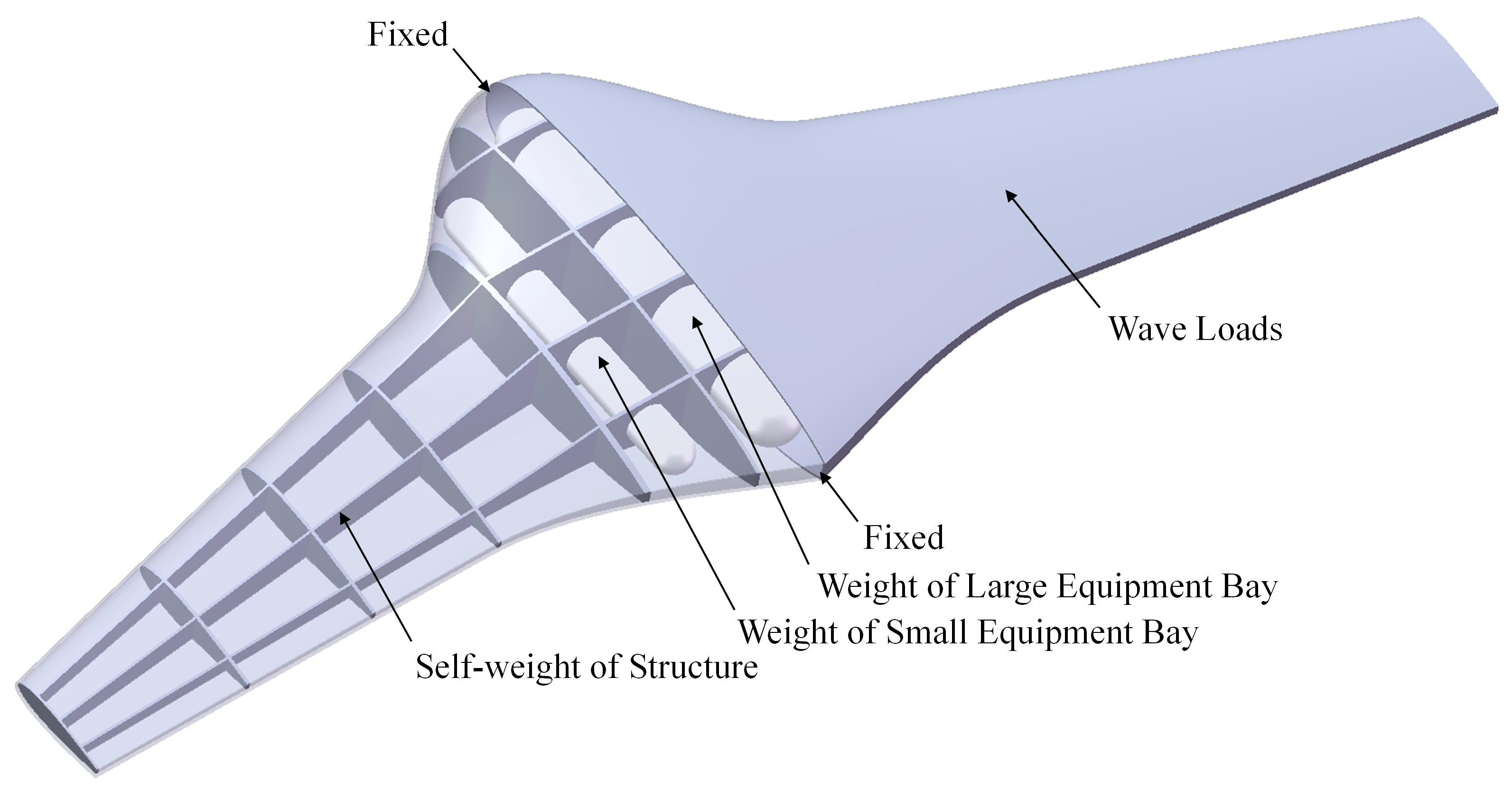
Figure 1 illustrates the schematic representation of load application and constraint configuration for the glider structure under these conditions.
Based on the analysis presented in
Figure 1, the specific conditions of the glider structure during deployment and retrieval can be described as follows. (1) Stability in air. The glider is stabilized by the lifting cable. At any given moment during analysis, the longitudinal symmetry plane of the fuselage can be treated as fixed. (2) Distributed forces from equipment bays. The three equipment bays located along the fuselage exert distributed forces on the structural framework. The direction of these forces corresponds to the normal direction of the contact surface between each bay and the fuselage structure. The magnitude depends on the weight of the equipment housed within each bay. Based on estimations of glider dimensions and functional requirements, combined with an appropriate safety factor, the total force applied by the large equipment bay is determined to be 800 N, while that applied by a small equipment bay is 400 N. (3) Gravitational self-load. The glider structure is subjected to its own weight. This force acts vertically downward, with magnitude determined by the structural volume. The value is calculated as the product of the material density and the total volume of the glider structure. (4) Wave impact during deployment and retrieval. The marine environment exhibits considerable instability during these phases. Wave impacts against the glider structure pose a significant threat, potentially causing wing fracture. The nature of these forces is complex, as both the orientation of the glider and the variation in waves affect their direction and magnitude.
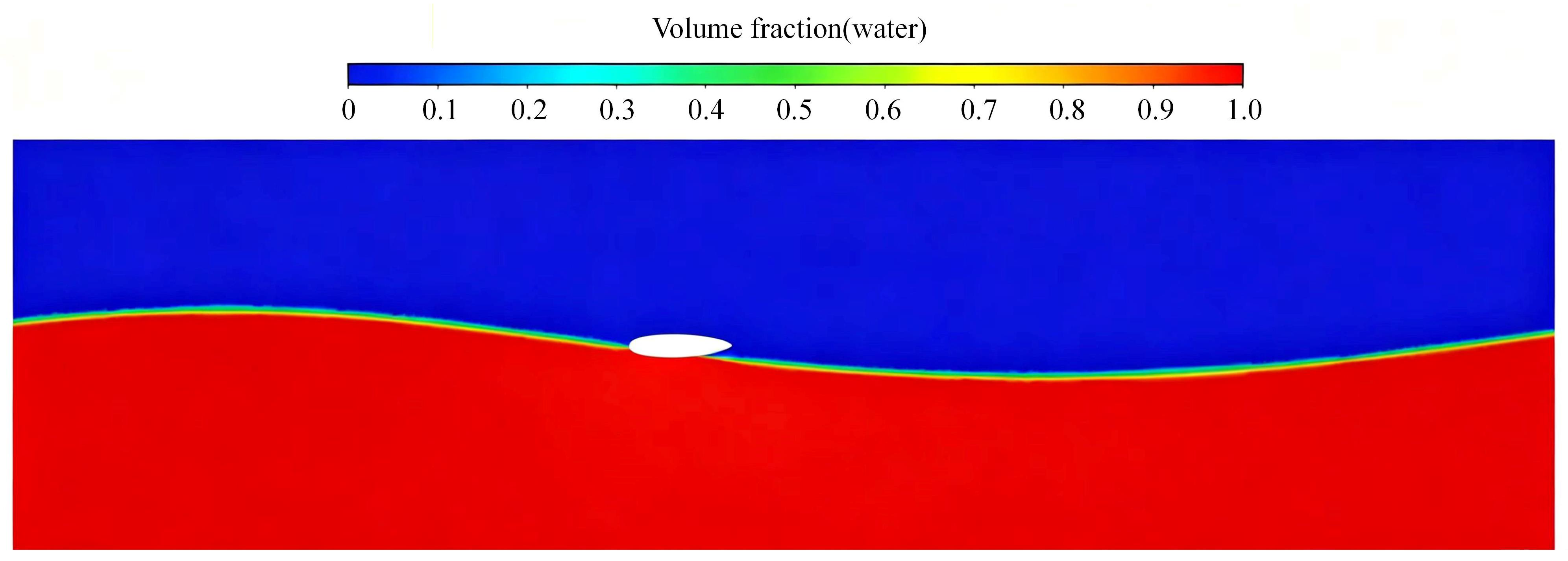
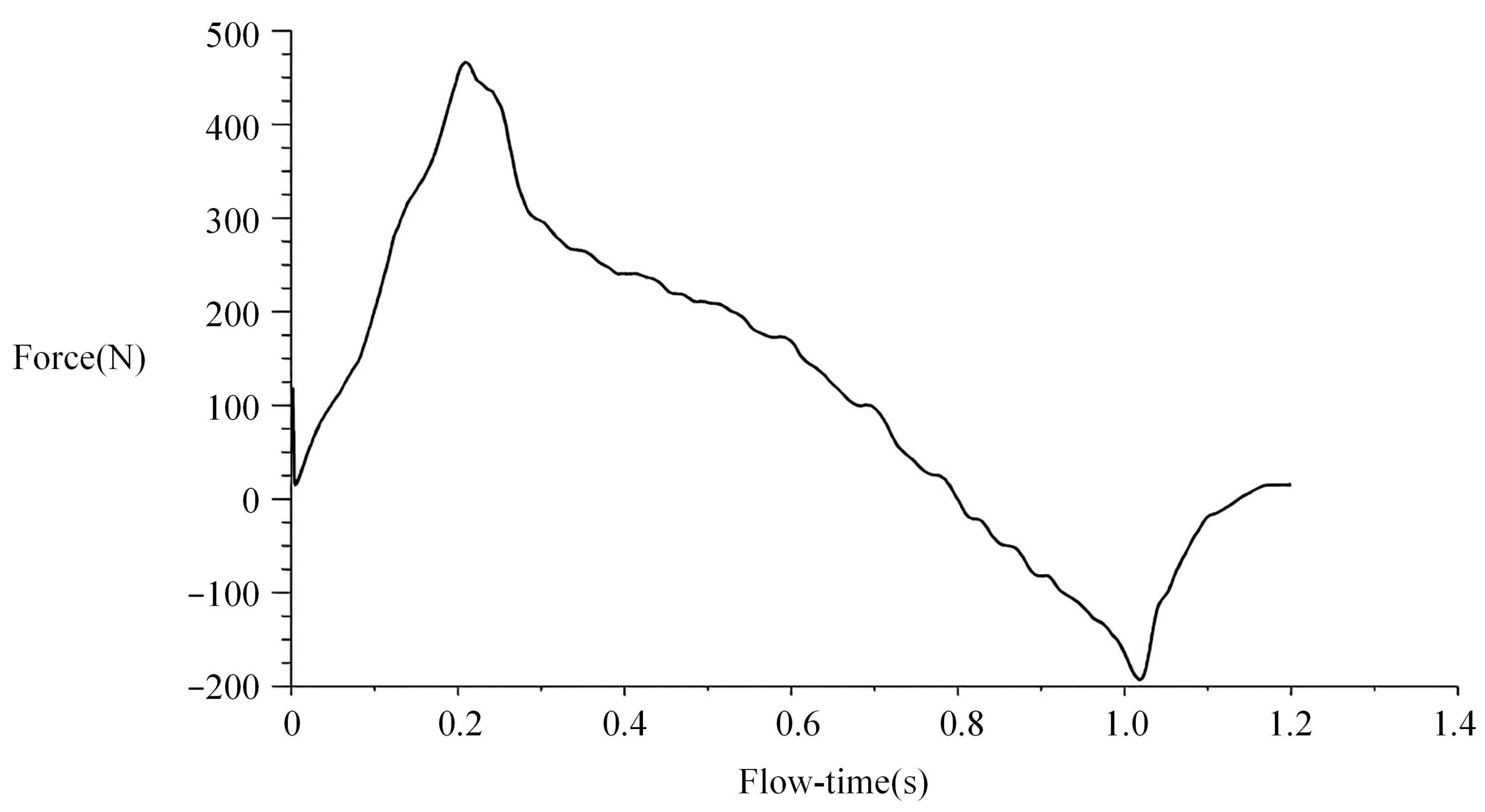
Among all forces acting on the glider during deployment and retrieval, the influence of waves is particularly complicated. To improve the accuracy of structural simulation, a dedicated wave simulation is conducted for this component. The wave simulation adopts a numerical model corresponding to sea state level three. A second-order Stokes wave is selected, with a wavelength of 15.83 m, a wave height of 0.64 m, a period of 3.18 s, and a velocity of 5 m/s. The initial condition of the wave simulation is shown in
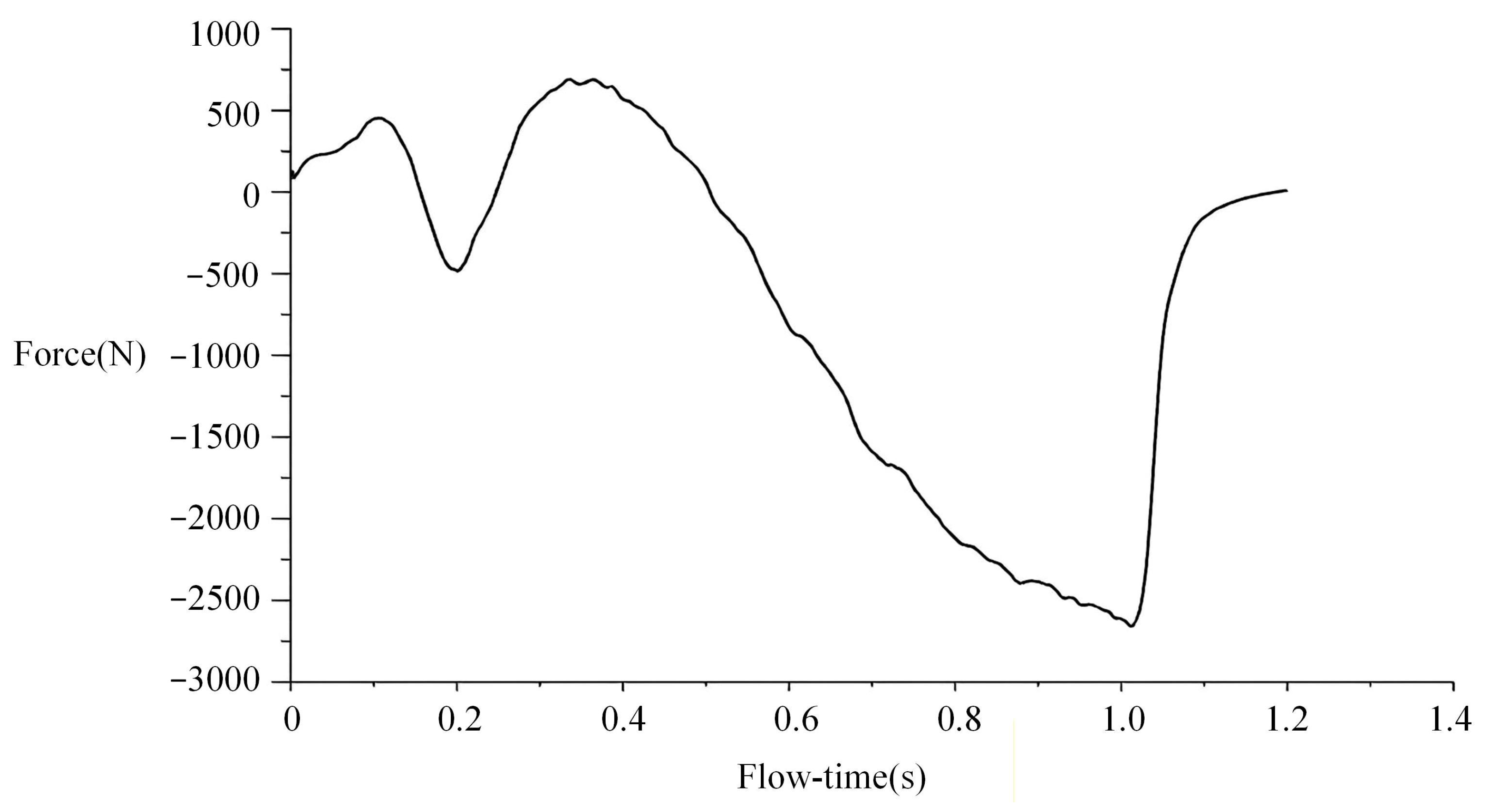
Figure 2, where the glider is positioned at the air–sea interface. The total forces in the horizontal and vertical directions are monitored, and the simulation results are presented in
Figure 3 and
Figure 4. Based on these results, the total horizontal force is set to 500 N and the total vertical force to 2500 N in the subsequent structural analysis of the glider.
2.2. Definition of the Topology Optimization Problem
Given the unique flattened wide-body geometry of the BWBUG and its demanding operational environment, the skeletal structure must achieve maximum structural stiffness, equivalently minimum compliance, and minimum mass under complex loading scenarios such as concentrated internal equipment loads and wave impacts. This section formulates the topology optimization problem using the Solid Isotropic Material with Penalization (SIMP) method [
33,
34]. The mathematical formulation of the optimization problem is expressed as follows.
where
ρ denotes the vector of relative densities for all
N finite elements,
C(
ρ) represents the total structural compliance,
K is the global stiffness matrix,
U is the displacement vector, and
F is the load vector. In the volume fraction constraint,
V(
ρ) is the total material volume after optimization,
V0 is the initial design domain volume, and
f is the allowable material volume fraction. In this study, the SIMP material interpolation model is adopted, relating the element elastic modulus to the relative density as below.
where
E0 is the elastic modulus of the solid material,
Emin is a very small positive value introduced to avoid numerical singularity, here taken as 10 × 10
−9 ×
E0, and
p is the penalty factor, chosen as 3 to drive intermediate densities toward 0 or 1.
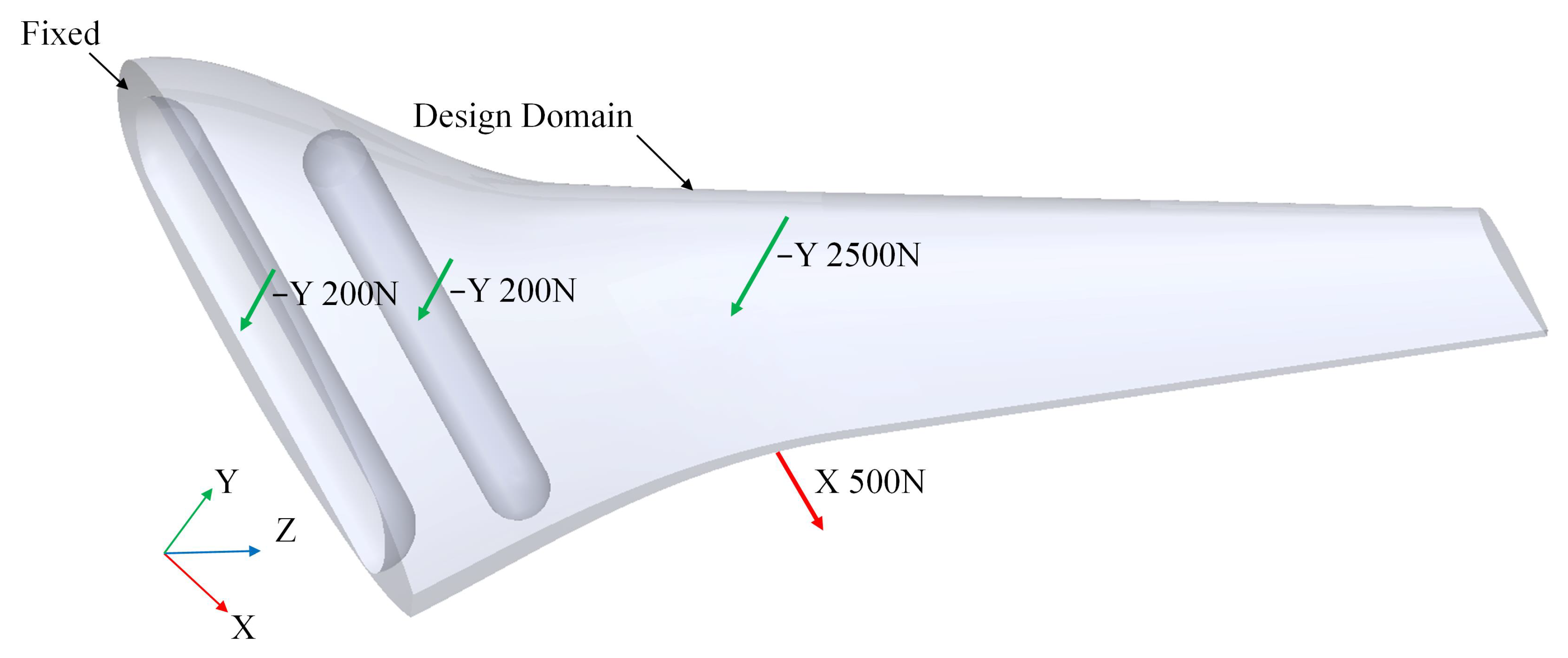
In the present optimization problem, the skeletal structure of the BWBUG is constructed from aluminum alloy 6061, which has an elastic modulus of 71 GPa, a yield strength of 280 MPa, and a Poisson’s ratio of 0.33. To simplify computation, the design domain and boundary conditions are configured as illustrated in
Figure 5. Half of the BWBUG model is defined as the design domain, with the symmetry plane assigned fixed constraints. A cylindrical surface corresponding to the small equipment bay is subjected to a 200 N load in the Y-direction, while half of the cylindrical surface of the large equipment bay is subjected to a 200 N load in the Y-direction. The external surface of the BWBUG is loaded with forces of 500 N in the X-direction and 2500 N in the Y-direction.
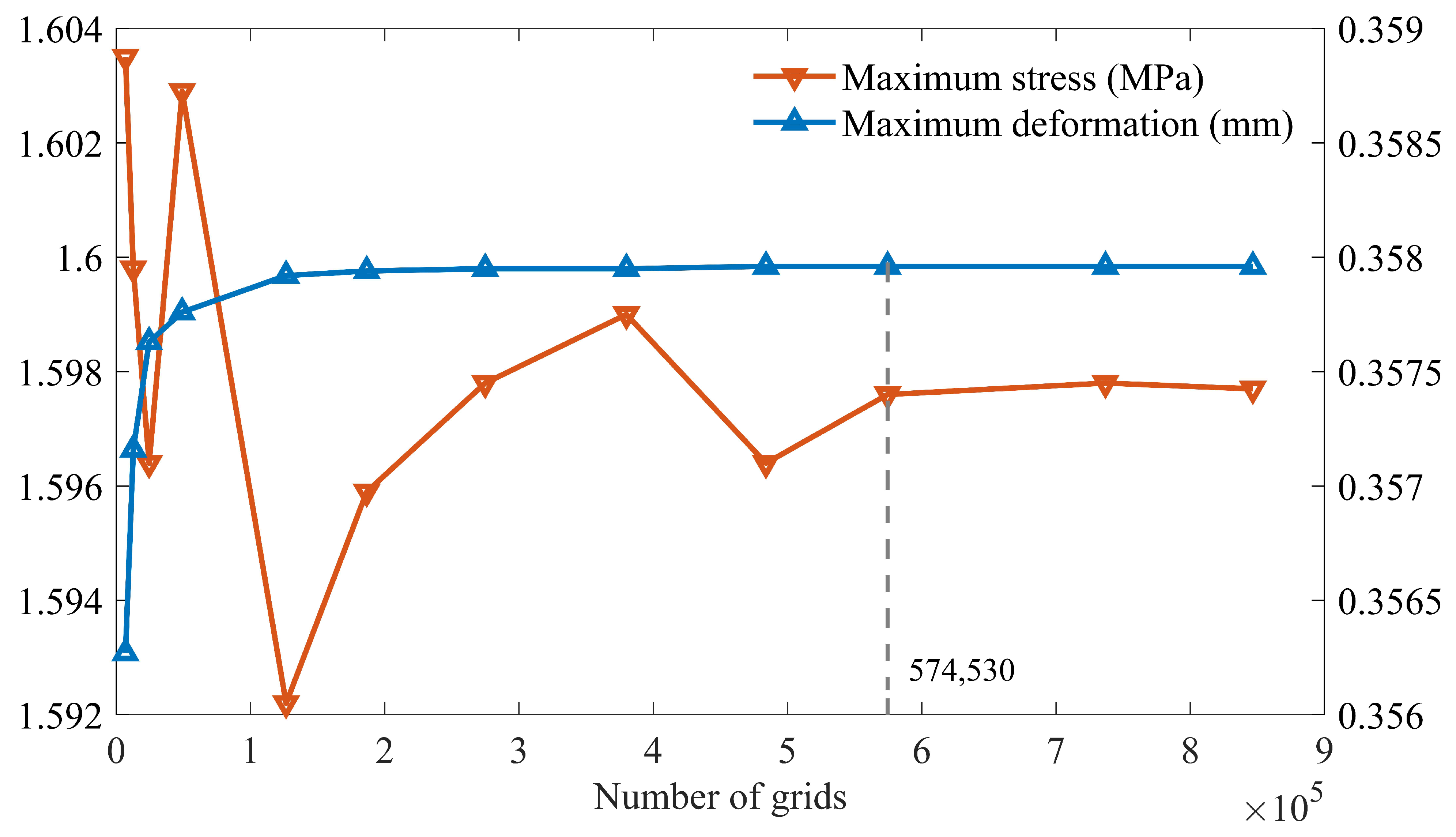
The BWBUG model is discretized using tetrahedral elements.
Figure 6 presents the simulated maximum stress and maximum deformation of the initial model under varying mesh densities. As mesh refinement progresses, both the maximum stress and maximum deformation stabilize when the number of elements reaches 574,530. Considering the simulation results across different mesh densities and the meshing requirements of topology optimization for the BWBUG model, a mesh count of 574,530 is selected for this study.
2.3. Topology Optimization Design
Topology design for the BWBUG is conducted based on the SIMP method described above. Considering the significant differences in load magnitudes and geometric dimensions between the X-direction and Y-direction operating conditions, separate topology optimization procedures are performed for each loading case.
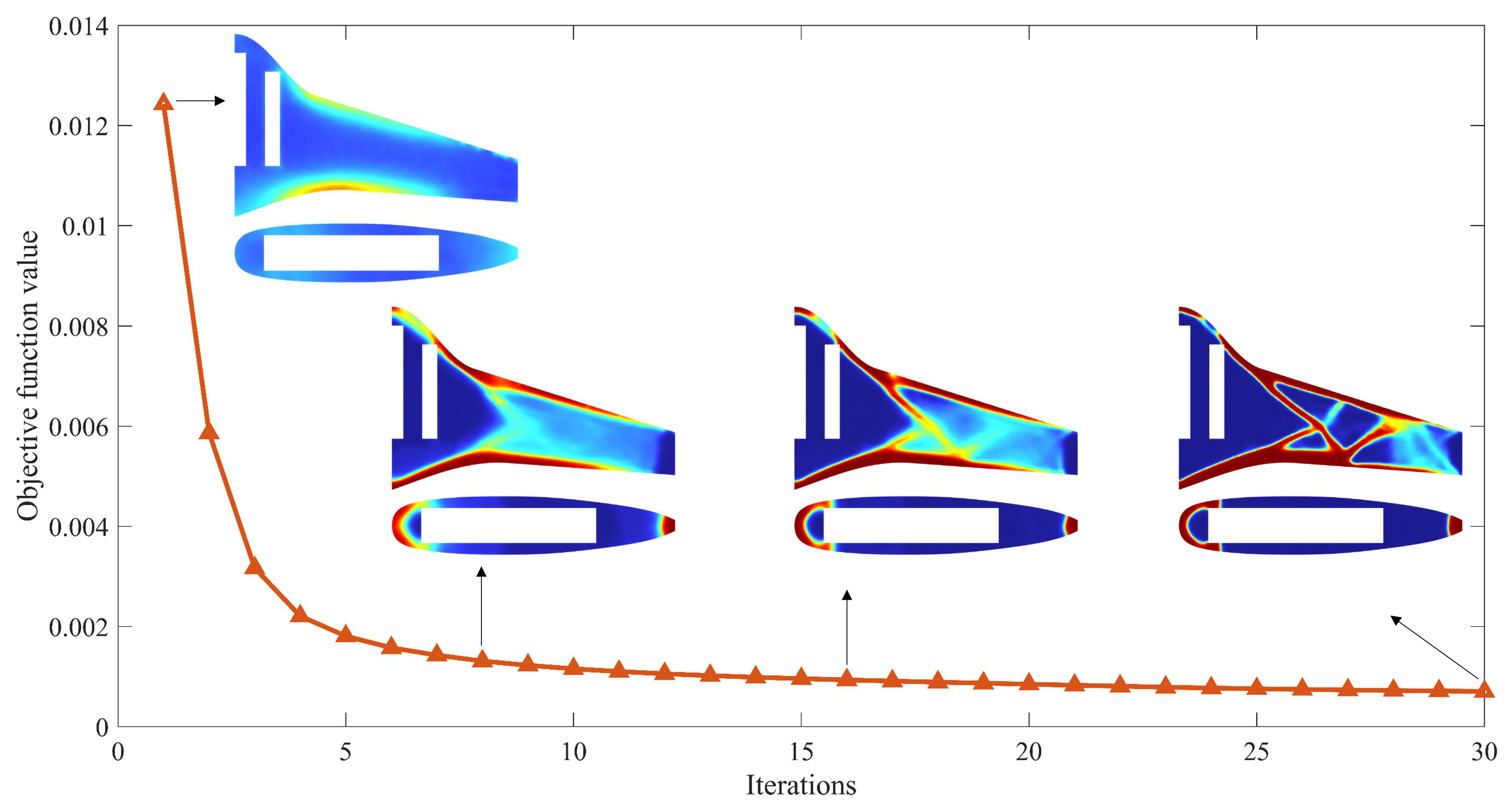
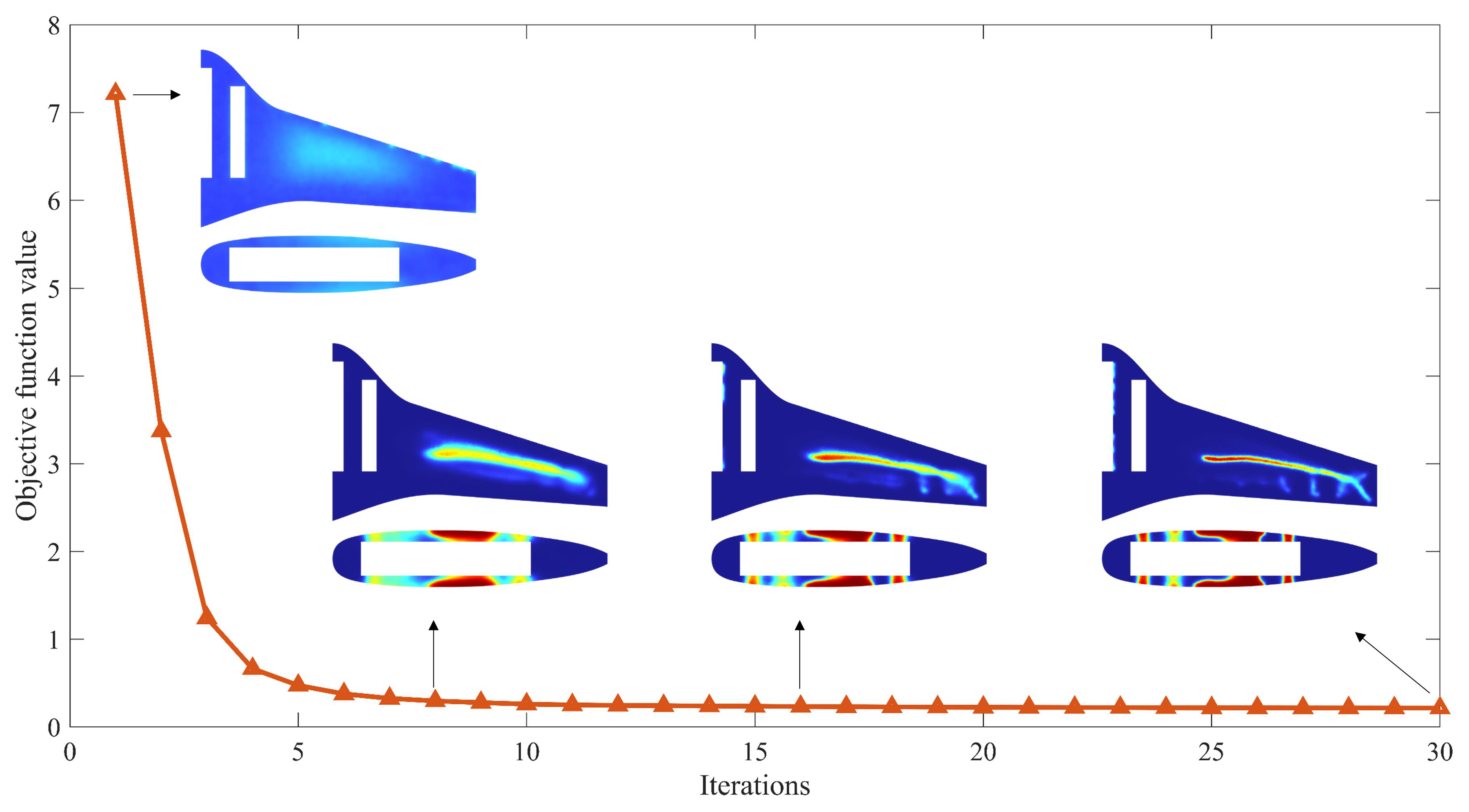
To suppress numerical checkerboard patterns in the density model, the Helmholtz filter equation is applied, with the filter radius set to the average edge length of the mesh elements. The total structural compliance is defined as the objective function to be minimized, while the volume fraction constraint is set to 0.2. The optimization solver employs the Method of Moving Asymptotes, with a maximum of 30 iterations.
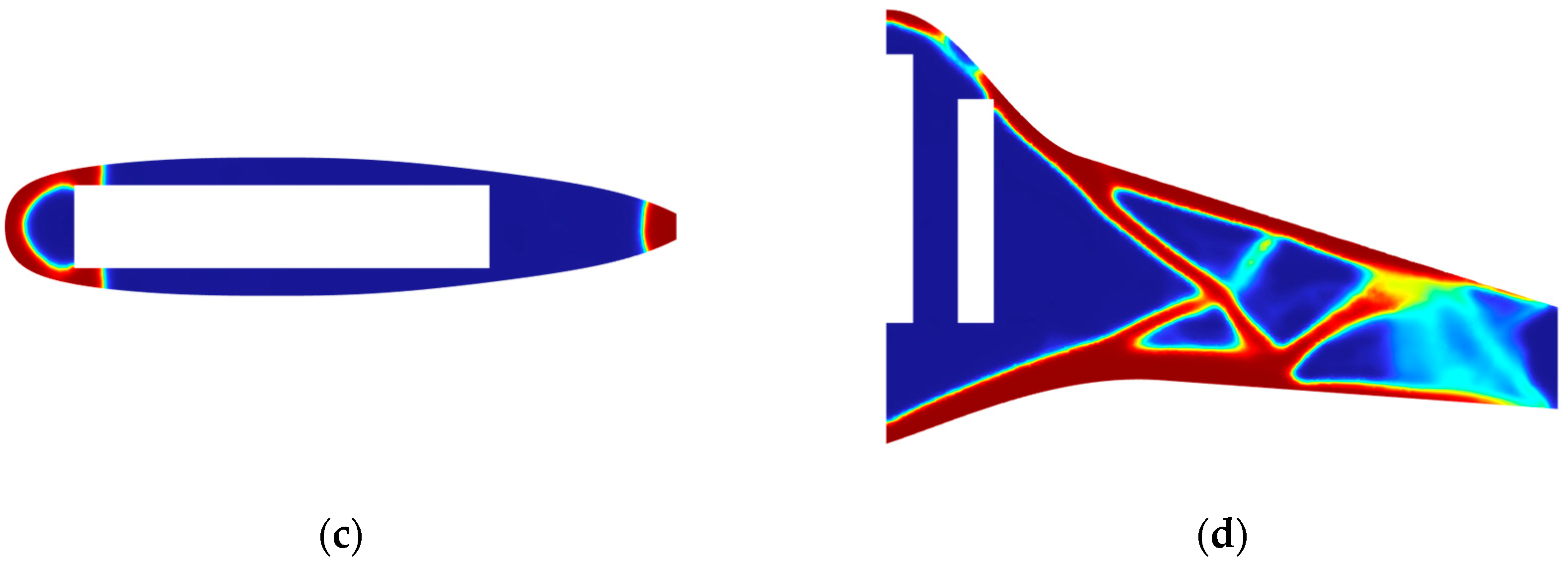
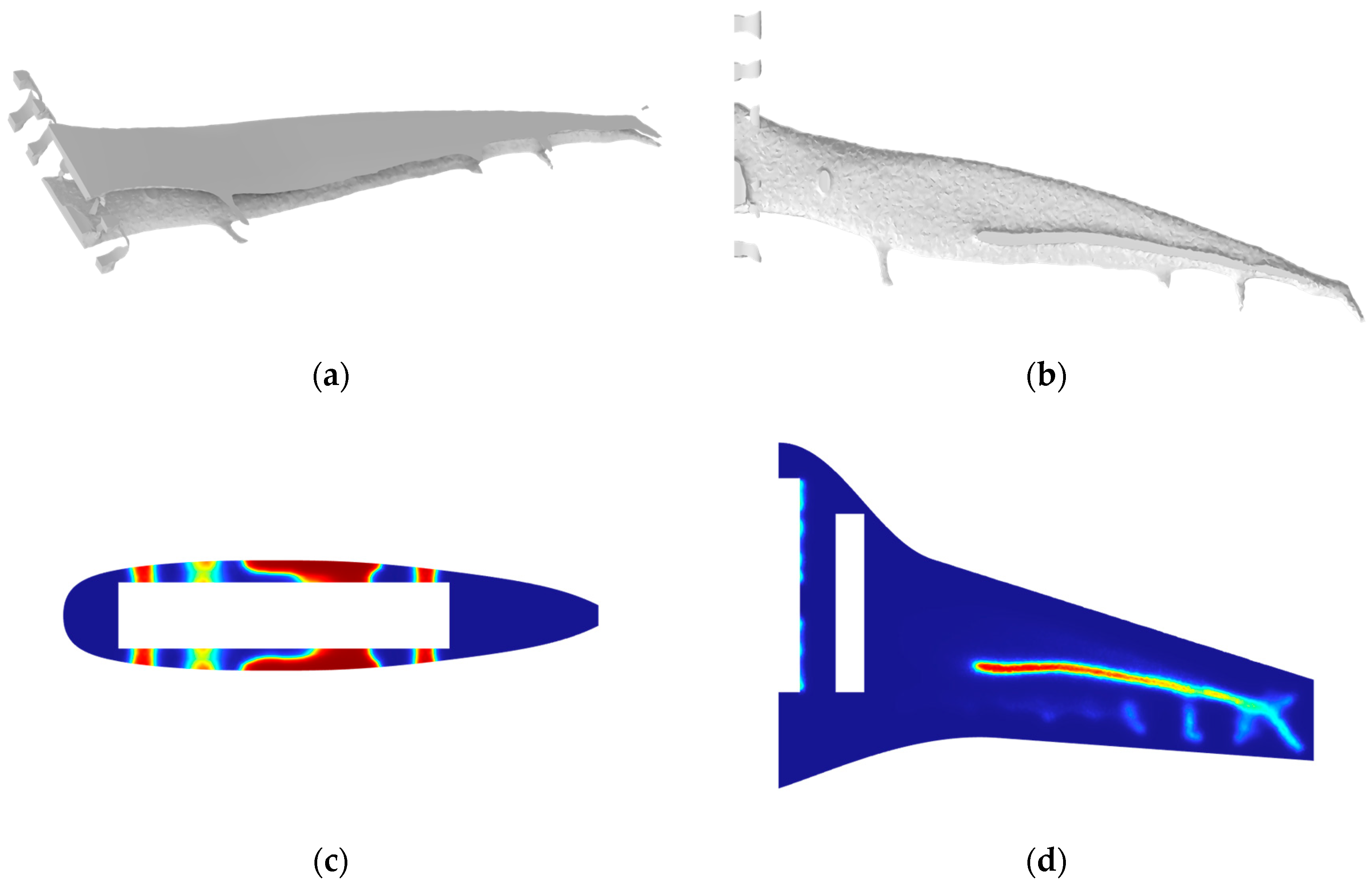
Figure 7 and
Figure 8 illustrate the convergence histories of the topology optimization process for the respective loading cases. The figures also present the material volume fraction contours for two representative cross-sections.
2.4. Analysis of Topology Results and Structural Extraction
The topology optimization results reveal the optimal load transfer paths under specific loading conditions. By analyzing the distribution of material in the optimized topology, the underlying structural configuration can be extracted to guide subsequent parametric optimization.
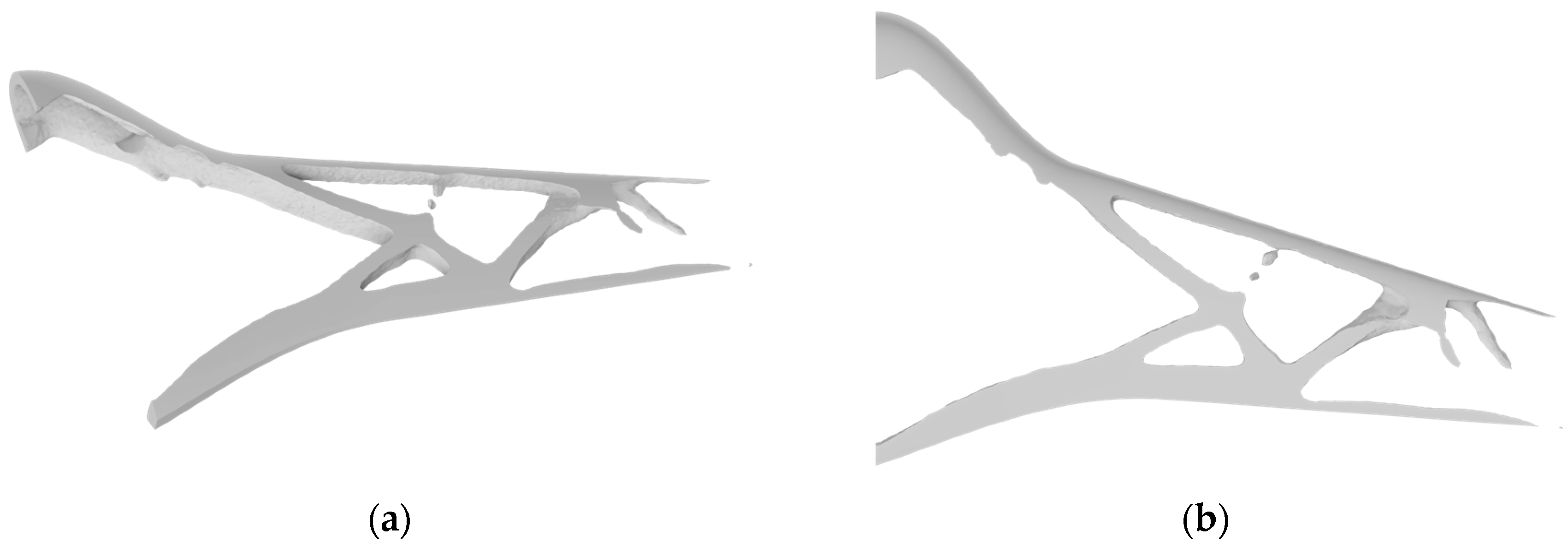
Figure 9 and
Figure 10 illustrate the topology optimization results for the BWBUG under X-direction and Y-direction loading cases, respectively, where solid regions correspond to material with a volume fraction equal to or greater than 0.5.
During the structural extraction process, the topology optimization results presented in
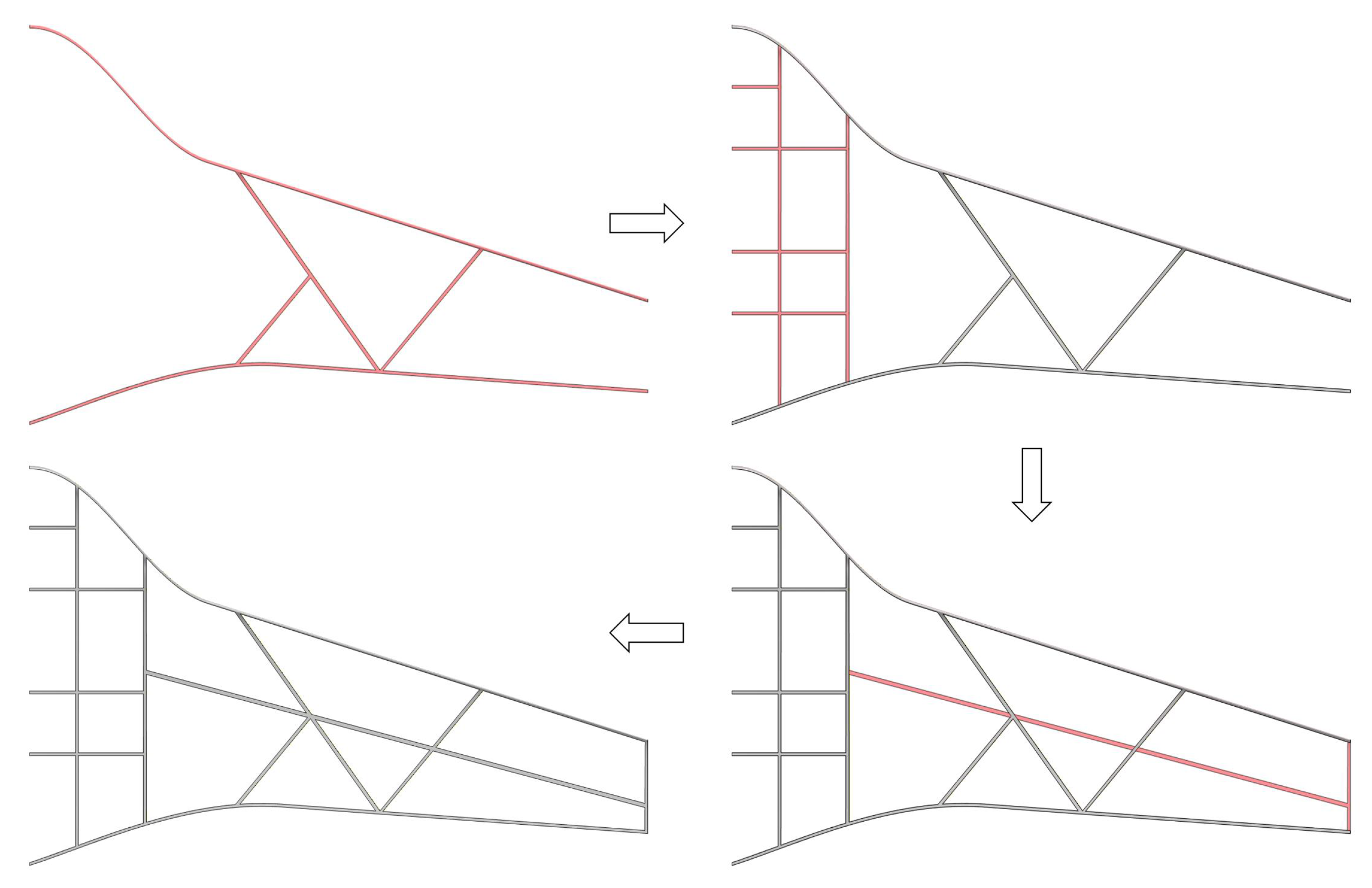
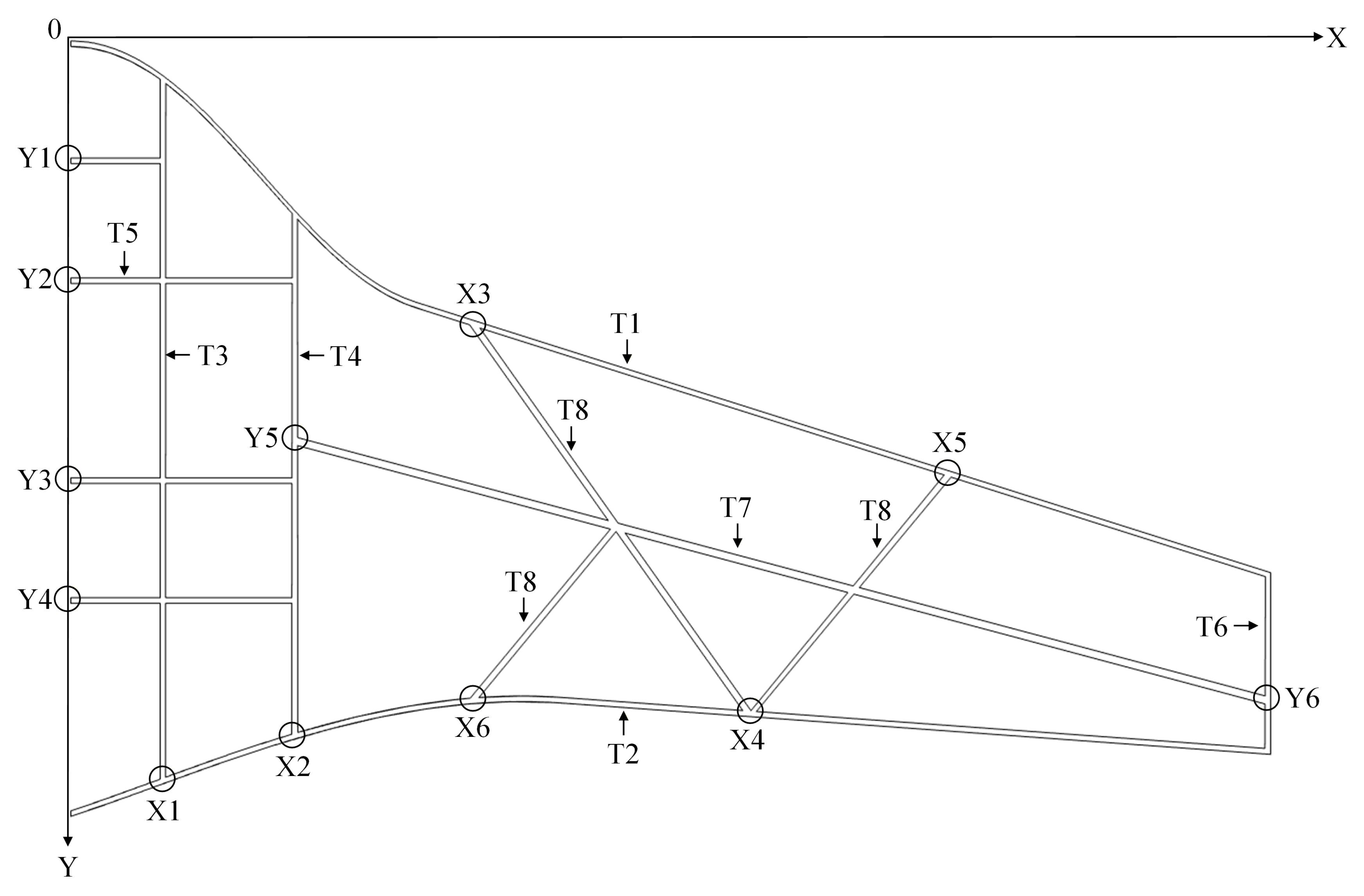
Figure 10 are manually processed to derive the parametric model of the BWBUG. By abstracting the optimized structure into straight beams and determining the relative coordinates of their endpoints with respect to the BWBUG outer profile, this endpoint information is utilized for parametric modeling. Furthermore, the connectivity between individual beams is ensured through shared endpoints or intersecting nodes.
Under the X-direction loading case, the final material distribution consists of two transverse beams at the front and rear, interconnected by three diagonal braces in the central region. The arrangement forms multiple triangular units that enhance structural stability. Extracting the relative positions of these beams and braces within the initial design domain provides a reference for defining the parametric model in later design stages.
Under the Y-direction loading case, the optimized structure can be divided into a fuselage assembly and a wing assembly. The fuselage assembly primarily supports the large and small equipment bays, forming four supporting members beneath the large bay and a single support beneath the small bay. During structural extraction, considering the interrelation between the supports for both bays, four transverse beams are allocated beneath the large bay, with three of them also serving as supports for the small bay. These transverse beams are connected to other structural components via two longitudinal beams.
In the wing assembly, the topology result reveals a continuous diagonal beam extending from the fuselage toward the wing tip, demonstrating that this material distribution effectively resists the Y-direction loads acting on the BWBUG. During extraction, the wing material distribution is represented by a diagonal beam linking the fuselage to the wing, supplemented by a longitudinal beam at the wing tip to connect with the diagonal member. The complete structural extraction process for the BWBUG is presented in
Figure 11.
4. Comparative Study
To validate the effectiveness of the proposed TD-Method, a comparative analysis is conducted against existing BWBUG structural design approaches documented in the literature. Conventional studies predominantly rely on parametric dimensional optimization based on predefined skeletal configurations derived from empirical analogy. This study reproduces the skeletal configuration and parameterization strategy reported in the literature, referred to as the Empirical-Based Method (EB-Method), with details available in reference [
7].
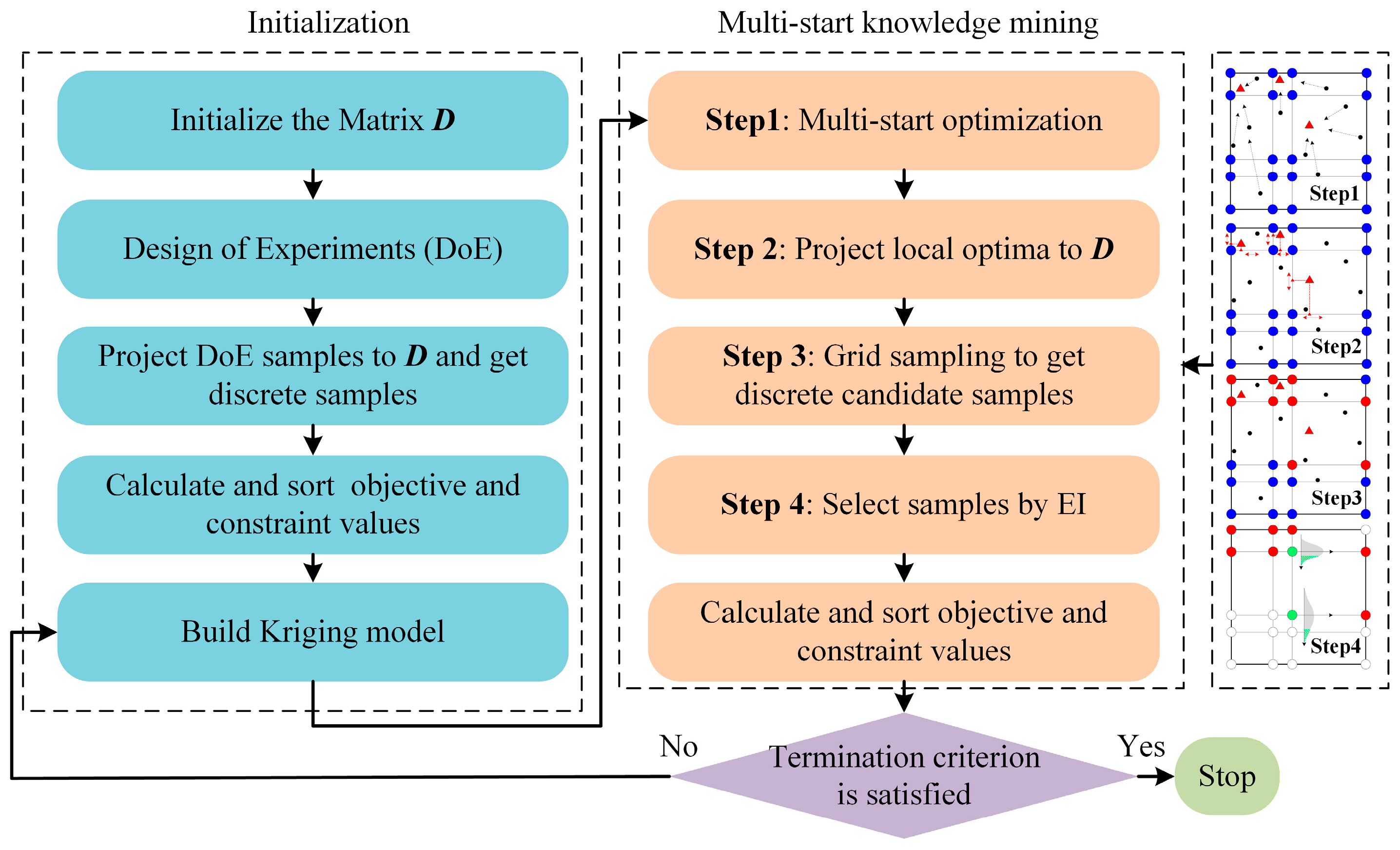
The structural design problem in the EB-Method is formulated as a ten-dimensional discrete black-box problem. Both the EB-Method and the proposed TD-Method are solved using the KDGO algorithm with identical parameter settings.
Both the EB-Method and TD-Method undergo 10 independent runs.
Table 2 and
Table 3 present the statistical results of the two methods, respectively. The statistical results indicate that the EB-Method consistently converges to the same optimal solution across all 10 runs, primarily due to the relatively simple configuration derived from empirical knowledge. In contrast, the TD-Method fails to converge to a uniform solution owing to the high dimensionality of the problem. However, the skeletal structures obtained by the TD-Method exhibit a lower mass than those from the EB-Method, demonstrating the superior lightweighting efficiency of the TD-Method. Regarding computational time, the average runtime for the EB-Method is 6.58 h, whereas the TD-Method requires 18.89 h. Although the integration of the topology optimization phase increases the computational cost, the resulting superior performance is deemed acceptable.
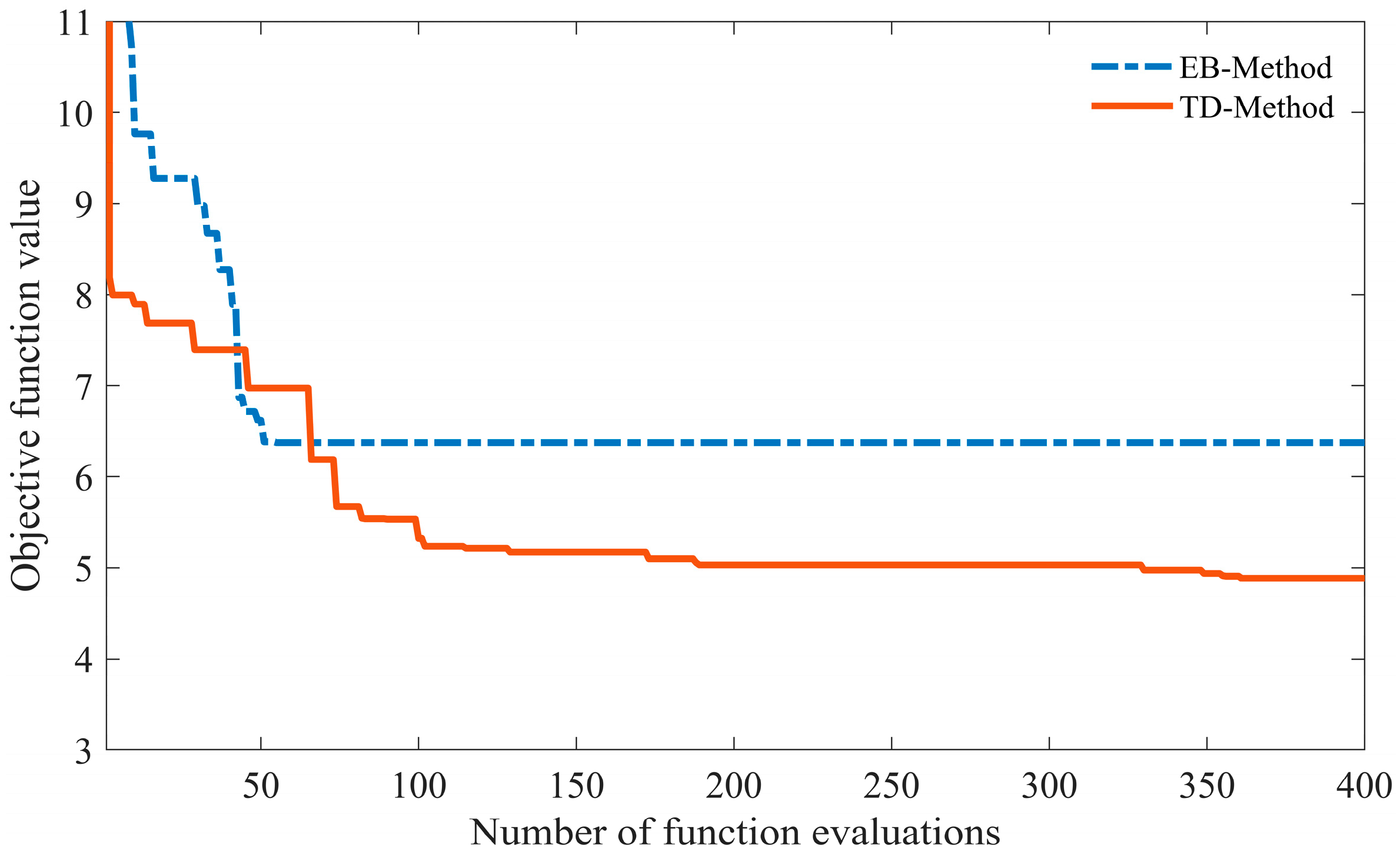
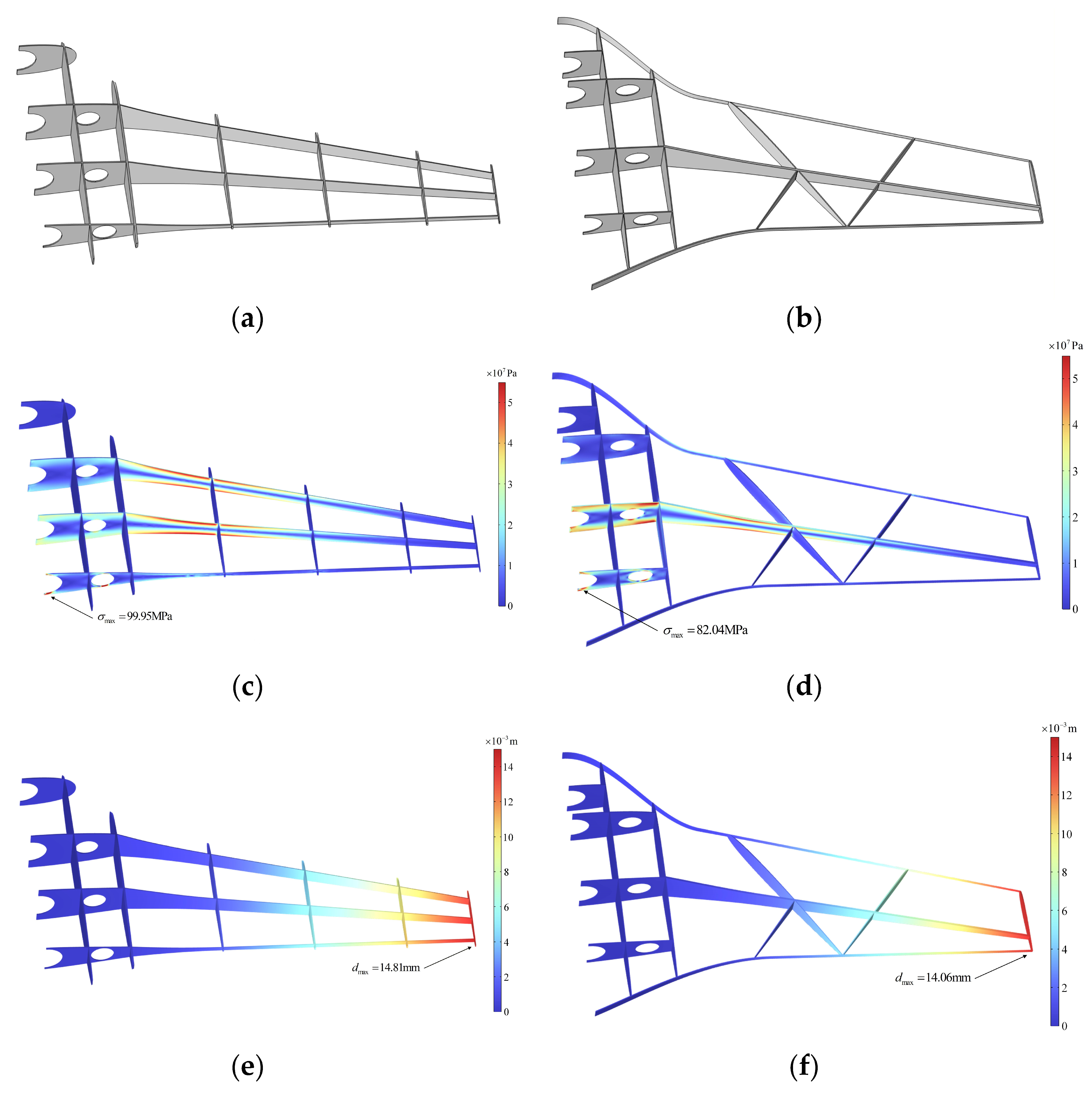
To further compare the two methods, one run from each is selected, and their respective results are compared. The comparative results, including the optimization iteration curves, are presented in
Figure 14 and
Figure 15, and
Table 4.
Analysis of the optimization convergence curves indicates that the EB-Method converges earlier than the TD-Method. However, the EB-Method yields a larger objective function value. This outcome is attributed to the simplicity of the empirically derived BWBUG skeletal configuration and its limited design space, which restricts the potential of the optimization process. In contrast, the TD-Method utilizes an initial configuration derived from topology optimization, which inherently accounts for load transfer paths. When coupled with data-driven optimization, this approach fully exploits structural performance, resulting in a skeletal structure that satisfies all constraints with a significantly reduced mass. These comparative results highlight the distinct advantages of integrating topology optimization with data-driven optimization for BWBUG structural design.
The optimization results from the TD-Method offer significant insights for the design and manufacturing of the BWBUG skeleton. Casting remains the standard process for such large-scale structures. While the parameterization of the TD-Method simplifies beam joints as nodes for simulation efficiency, this does not hinder manufacturing feasibility. The optimized design is readily fabricated by decomposing it into finite, uniform-wall-thickness beams, which are then bolted together using connectors to form a high-performance, engineering-ready skeleton.