Climate change and geopolitical issues are posing immense threats to civilization more than ever before. “Carbon neutrality by 2050” is currently the global urgent mission [
1]. Key to achieving this goal is empowering the global renewable energy resources [
2]. Other than commercially viable renewables such as solar (PV) and wind, “wave energy” shows great prospective in covering the gap between carbon reduction and increasing energy demand, being a relatively untapped resource [
3]. In contrast to aforementioned two forms of renewable energy, solar and wind power, wave power offers numerous benefits: (i) wave power boasts a high-energy density, surpassing that of wind and solar power by more than ten (10) times; (ii) availability of wave power is notably high, reaching 90%, whereas wind and solar range from 20% to 30%; (iii) it imposes minimal environmental impact; (iv) wave energy output can be seamlessly integrated into existing wind or solar power facilities, serving as a complementary resource to stabilize power output and mitigate variability; (v) wave power exhibits greater predictability, enhancing flexibility in regional or national power management and planning [
4]. Ocean waves accumulate a substantial renewable energy source, in particular wave power, that constitutes a significant global wave resource of 1–10 TW from the ocean energy domain [
5]. Theoretical assessment shows that global wave power accumulates 32,000 TWh/year (with a mean power of 3.65 TW) [
6]. For usable wave resources, excluding areas with wave power levels < 5 kW/m, the global estimate is around 3 TW [
7]. This dense wave resource is found in off-shore locations [
8]. Wave energy converters (WECs) are designed to transform wave energy into electrical or mechanical power by extracting energy from incoming waves [
9]. K. Rezanejad et al. (2017) [
10] reported that over a thousand WEC patents were registered by 1980 and this number has been steadily rising, with the Oscillating Water Column (OWC) being a popular choice due to its simple design and construction. This popularity is further confirmed by the prevalence of OWCs among deployed full-scale WECs (Refer A. H. Samitha Weerakoon et al. (2021) [
11]), where they constitute a large portion of operational prototypes [
11]. However, with increasing interest in deploying WECs, they play a major role in near-shore environments (water depths < 30 m), as shown in the EU 2023 report on Ocean Energy about the EU and Global [
12]. But the opposite is seen with offshore WEC deployment [
13], especially due to severe and hash ocean conditions prevailing in deep sea states [
14]. But this common excuse and misconception acts as a drought for the progress of active research and development of offshore WECs. Off-shore wave energy harnessing is a challenging process, at initial stages of Technology Readiness Levels of 0~2 (TRL), but with TRL offshore technology is expected to be uplifted (>4) [
6,
15,
16,
17,
18,
19], and thus offshore WEC technology is expected to gain exponential growth in the near future combined with offshore oil rigs and retrofitted platforms [
20,
21], with deep sea mining soon becoming the global active project [
22,
23,
24]. Maturity of offshore floating WEC types for elevated TRL growth were further identified in Refs. [
25,
26] as the Floating Oscillating Water Column (FOWC) [
27] devices through numerical and real-world testing (tank tests, scale down prototype…, etc.) [
28,
29,
30].
To facilitate the development and serve as benchmarks for wave energy converters, the National Renewable Energy Laboratory (NREL) and Sandia National Laboratory, with financial support from the U.S Department of Energy (DoE), have established reference models for marine renewable energy, encompassing wave and tidal energy [
31]. Among these, a BBDB has been designated as one of the 03 reference wave energy converters, denoted as RM6 [
32]. The other two reference models include the floating-point absorber, RM3, and the bottom-fixed oscillating surging wave energy converter, RM5 [
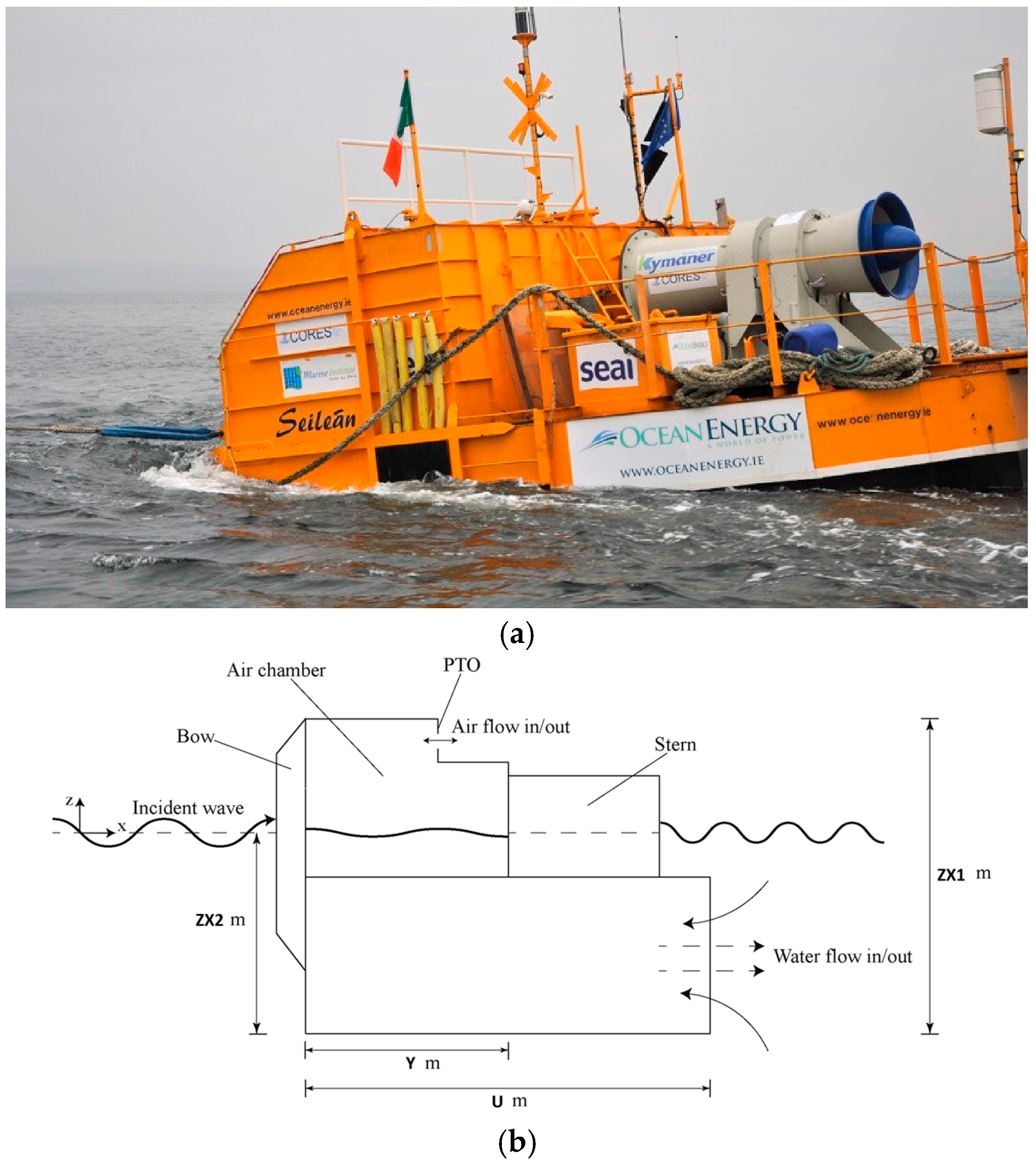
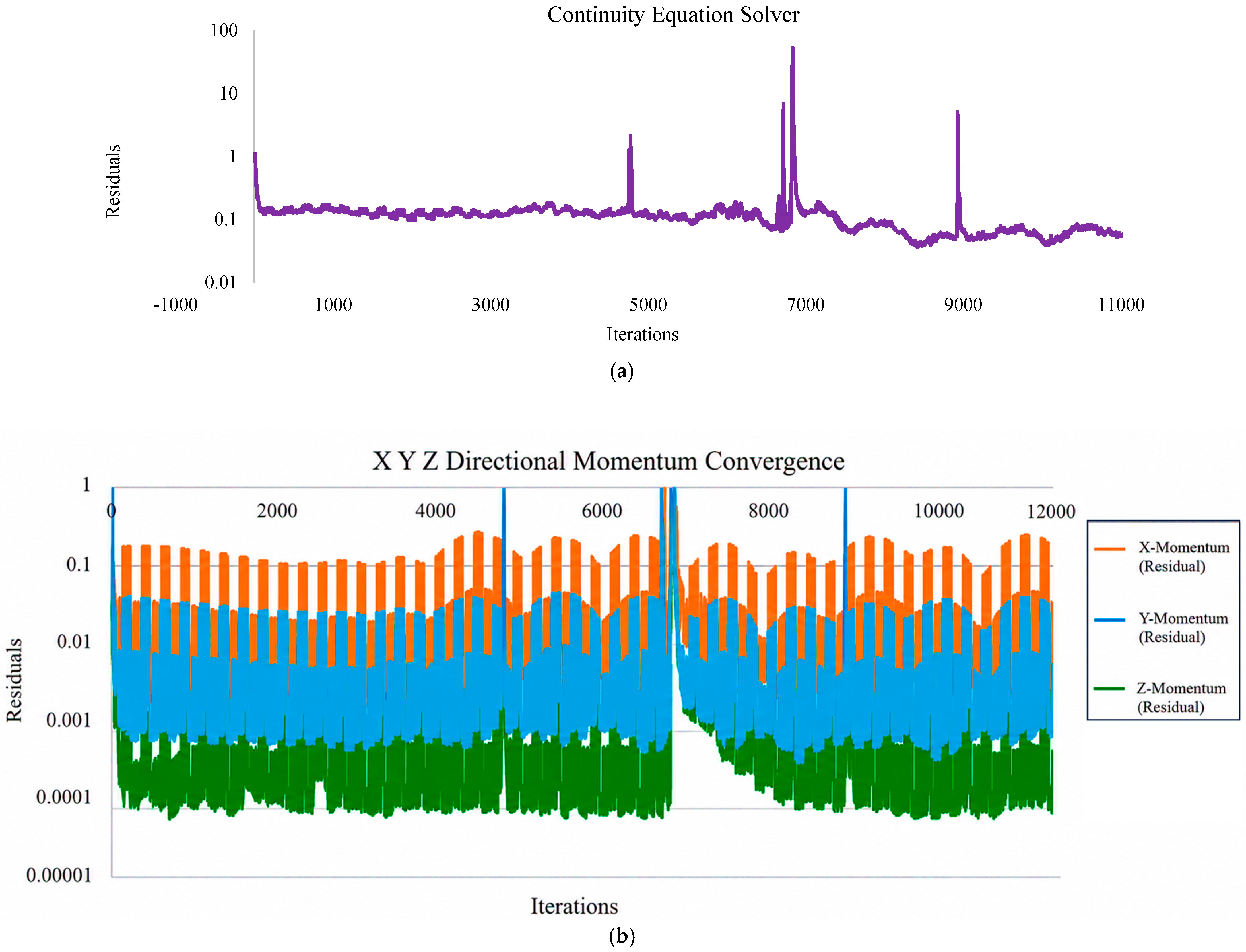
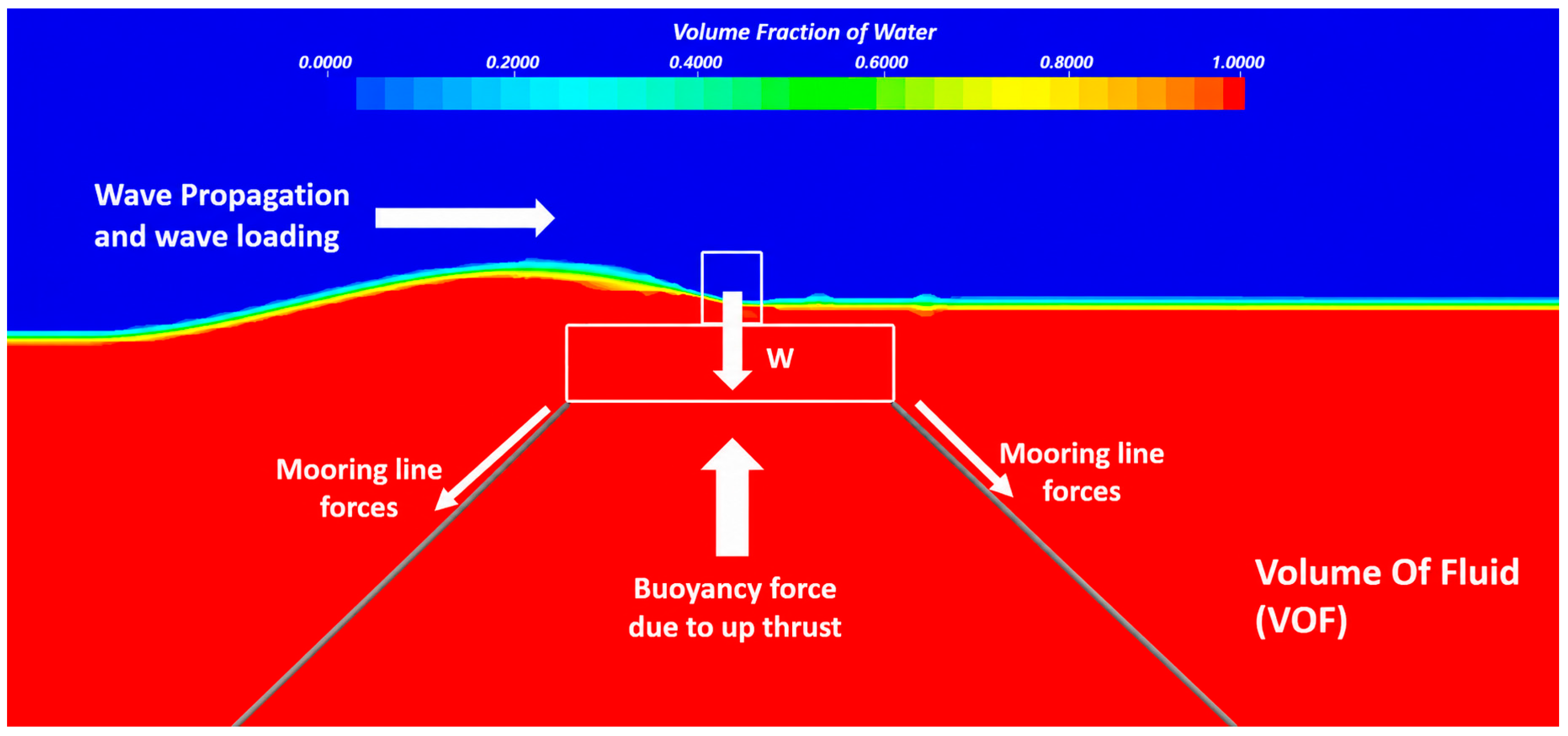
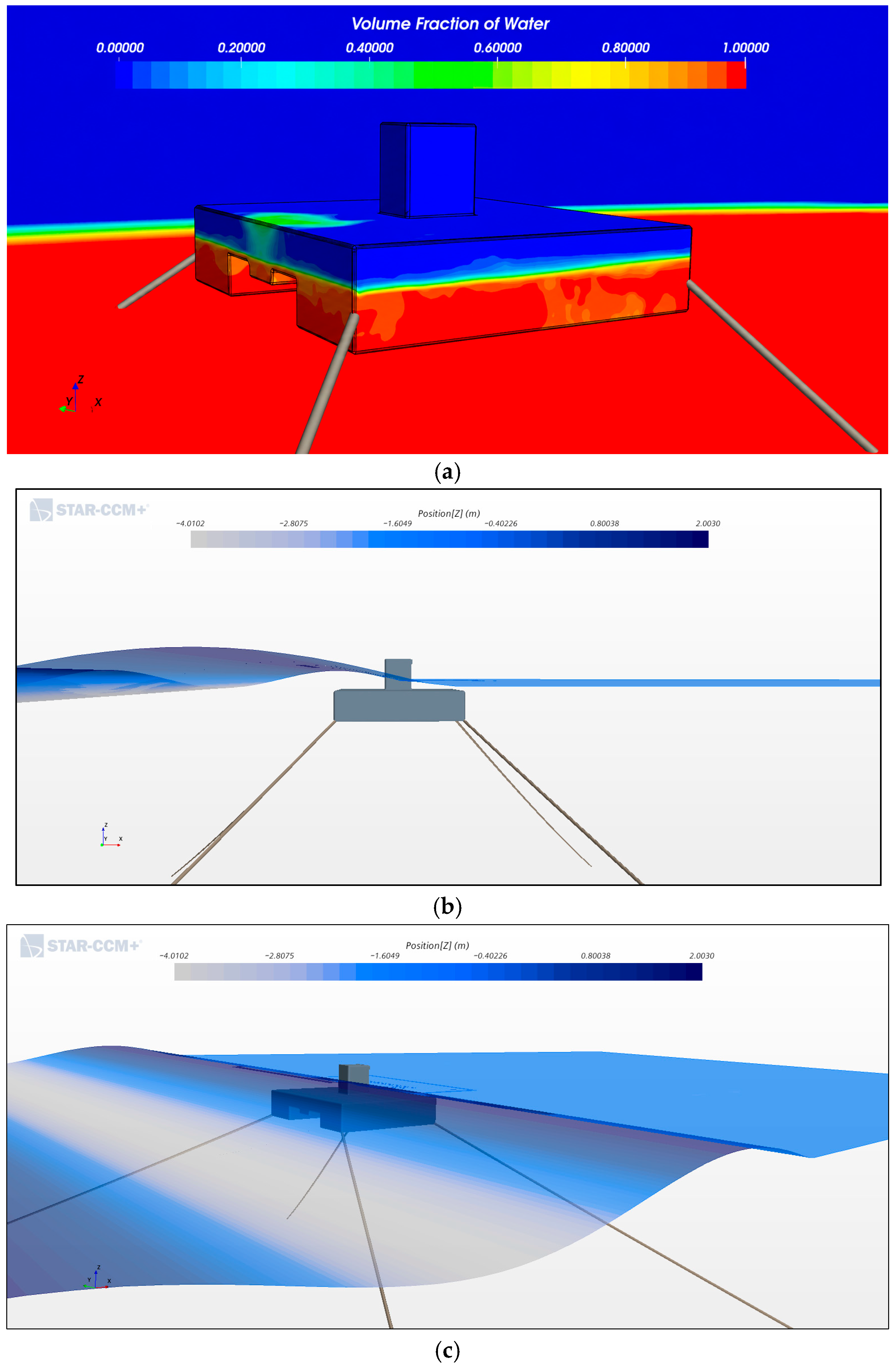
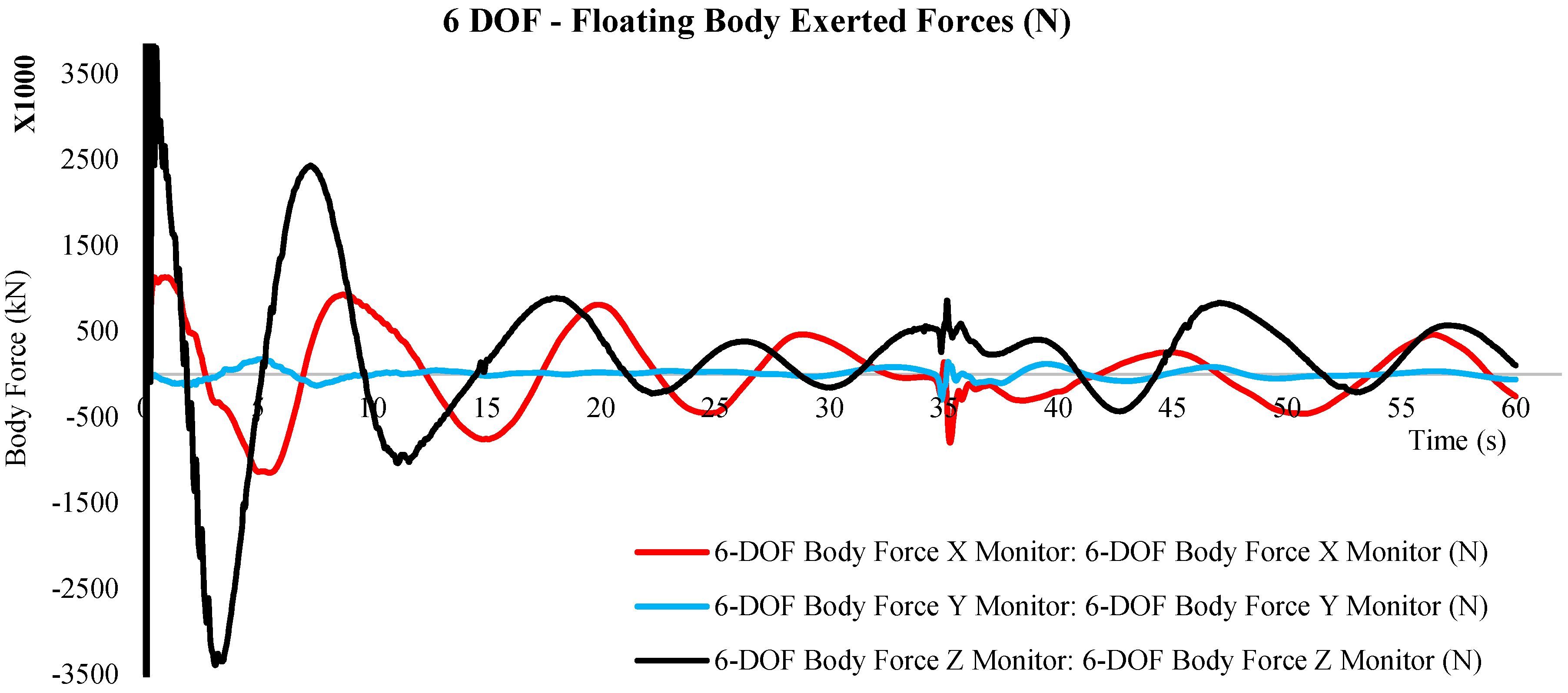
33]. This research focuses on conducting a systematic examination of the reference BBDB-FOWC-WEC to enhance understanding of its hydrodynamic and power performance by modifying the fluid column to evaluate the wave hydro power extraction capability under simulated off-shore sea states. The primary emphasis of this work lies in the hydrodynamics of the RM6 BBDB as FOWC, addressing fundamental issues such as numerical convergence, motion coupling and decoupling, and crucially, methods for identifying and optimizing the device to enhance motion performance for more efficient wave energy conversion.
1.1. Literature Survey
Wave energy conversion has continued to evolve toward more integrated, offshore-capable, and hydrodynamically sophisticated systems. Among the major WEC classes, OWC devices remain one of the most extensively investigated due to their structural simplicity, survivability, and adaptability to both fixed and floating applications. Recent research has expanded from conventional fixed OWCs toward floating OWCs, hybrid platforms, array configurations, and wave-to-wire frameworks, with increasing emphasis on hydrodynamic coupling, PTO control, and numerical fidelity. In this context, the BBDB has emerged as a particularly important floating OWC concept due to its ability to exploit both rigid-body motion and internal water-column oscillation for wave energy capture. Recent review work has further shown that BBDB research has grown sufficiently to justify dedicated meta-analysis, with one review compiling 102 publications, identifying an optimal wavelength-to-device-length ratio of about 2.2, an 32% average reduction in efficiency under irregular waves, and nozzle opening ratios clustering near 1.0% [
28].
A first major research direction concerns high-fidelity hydrodynamic modeling of floating and moored WEC systems. Oronzo Dell’Edera et al. (2024) [
34] developed a coupled high-fidelity framework integrating STAR-CCM+ and MoorDyn to simulate wave interaction with moored floating bodies and validated the model against experimental data for ISWEC and PeWEC devices. Their work demonstrated that CFD–mooring coupling can reproduce kinematics, mooring tensions, and pressure loads with good accuracy, highlighting the importance of resolving fluid–structure–mooring interactions in floating WEC design. Yong Cheng et al. (2024) [
35] extended this perspective to a system of multiple OWCs integrated with a very long floating breakwater, showing that hydroelastic coupling, gap resonance, and spatial chamber interaction strongly affect both wave attenuation and energy conversion. Their parametric study showed that the highest energy conversion occurred near the end OWCs for medium-period waves and near the middle OWCs for long-period waves, while the constructive resonant gap effect amplified conversion peaks but could also trigger sudden deterioration in transmission-coefficient curves. Yinong Hu et al. (2026) [
36] likewise examined a multi-module flexible pontoon breakwater integrated with OWCs and identified favorable design ranges such as a chamber width ratio of b/h = 0.4, 4–5 OWC chambers, a chamber spacing ratio of l
0/h = 2.0, and a bottom-opening ratio of c/h = 0.2–0.3. These studies collectively demonstrate that floating WEC performance is governed by strong coupling between hydrodynamics, structural response, hydroelasticity, and station-keeping.
A second research stream focuses on hybrid offshore systems combining WECs with other marine structures, especially offshore wind platforms and breakwaters. Yu Zhou et al. (2023) [
37] experimentally investigated an OWC integrated into a floating offshore wind turbine (FOWT) foundation and reported that the OWC improved heave stability by up to 54.1%, while an air-chamber opening ratio of 3.0% yielded the maximum relative capture width. Zhao Liu et al. (2024) [
38] proposed an annular OWC integrated with a bottom-standing offshore wind turbine and showed that piston-mode resonance could yield wave-power absorption exceeding 80% of the incident wave energy over a width of 2B, when the chamber breadth and draft were set to 1.0 and 1.5 times the monopile radius, respectively. Dahai Zhang et al. (2022) [
39] established a coupled dynamic framework for FOWT–OWC hybrid platforms and showed that PTO control can simultaneously affect wave power production and platform motion suppression; for example, one control strategy reduced platform pitch by 15%, while another reduced tower-base fatigue loads by 6%. More recently, G. S. Machado et al. (2026) [
40] assessed a semi-submersible FOWT integrated with OWCs and found that OWC integration increased pitch motion by approximately 28–70% near rated wind speed, while the additional wave-energy contribution at low wind speeds remained relatively small, around 0.65% of wind-turbine output. These studies confirm that hybridization can improve functionality, but they also reveal that wave energy conversion, body motion, and platform stability must be treated as a strongly coupled design problem.
A third major body of literature addresses OWC chamber design, geometry optimization, and hydrodynamic performance enhancement. Lixian Wang et al. (2024) [
41] investigated a dual-chamber OWC with a horizontal bottom plate and showed that the added plate enhanced energy extraction, with an optimal plate length of 1.5 times the total chamber breadth and an optimal slot opening ratio of 1.0%. T.A. Harikrishnan et al. (2025) [
42] experimentally studied an L-OWC integrated with cylindrical floating breakwaters and reported a maximum efficiency of approximately 30% under optimal model-scale conditions (wave period ≈ 1.8 s, wave height = 0.06 m) using three breakwaters. S. Sohrabi et al. (2024) [
43] considered a hybrid floating breakwater–WEC based on overtopping and showed that a 30° slope provided the best balance between overtopping power and wave attenuation, producing a maximum power of 1.98 kW/m and a hydraulic efficiency of 11.2%. Z. Liu et al. (2024) I [
44] investigated a multi-level CROWN overtopping device and found that the optimal slope ratio was 1:2.00, with 12 guide vanes providing the best overtopping performance. M.M. Goulart et al. (2024) [
45] experimentally studied an onshore overtopping device using construtal design and confirmed that lower ramp aspect ratios maximized water accumulation in the reservoir, with numerical predictions validated to within a maximum relative error of 3.92%. These studies show that geometry optimization remains central to WEC development, but the optimum configuration is highly device-specific and often depends on the targeted wave regime and power conversion pathway.
A fourth research direction is the continued development of BBDB-specific hydrodynamics and performance analysis. Z. Liu et al. (2024) II [
46] experimentally studied a BBDB OWC under different motion constraints and demonstrated that pitching and heaving motions affect energy capture differently; the peak capture width ratios (CWR) for fixed, pitch-only, heave-only, and combined heave–pitch conditions were 0.57, 0.51, 0.10, and 0.26, respectively, while their corresponding average values were 0.19, 0.19, 0.03, and 0.11. H. Xu et al. (2025) I [
47] numerically investigated the contribution of individual and combined motion modes to floating pneumatic BBDB performance and showed that yaw, sway, and roll have minimal influence compared with surge, heave, and pitch. Their work also showed that the dominant contributor to energy conversion shifts from surge at short wave periods (about 4 s) to heave at longer periods (up to 9 s). H. Xu et al. (2025) II [
48] further examined BBDB arrays and found that lateral spacing has a stronger influence than longitudinal spacing, with array CWR increasing by up to 15.6% relative to isolated devices and reaching a maximum of 1.405 in a 3 × 3 array. W. Zhu et al. (2026) [
49] experimentally enhanced a floating BBDB by adding a damping plate and demonstrated that selective attenuation of heave and pitch can improve pneumatic power output and broaden the capture bandwidth, with a maximum CWR of 1.43 for a damping-plate ratio of d
1/d
2 = 0.10, at a wave amplitude of 0.015 m and a period of 1.3 s. Meng Li et al. (2019) [
50] earlier showed that a pentagonal BBDB with reciprocating airflow could reach a mean CWR of 121.91% in regular waves, while a unidirectional-airflow version still achieved 100.94% in regular waves and 62.83% under irregular waves. Huanbin Yang et al. (2026) [
51] later reviewed 102 BBDB-related publications and identified several general design trends, including an optimal wavelength-to-device-length ratio near 2.2, nozzle opening ratios clustering near 1.0%, and clear discrepancies between turbine- and orifice-based assessments. These findings are particularly relevant to the present study because they confirm that BBDB performance depends strongly on coupled motion, damping, and PTO representation.
A fifth important area concerns PTO systems, wave-to-wire modeling, and control strategies. Zhen-yu Ding et al. (2025) [
52] developed a wave-to-wire numerical model coupling an OWC chamber, an impulse turbine, and a permanent magnet synchronous generator, and showed that full system coupling can accurately predict power output and stage-wise conversion efficiency; under one experimental condition with an incident wave height of 0.075 m, the average electrical output reached 11.2 W and the reported wave-to-wire efficiency reached 98% for that specific scaled configuration. A. T. Asiikkis et al. (2024) [
53] optimized hydraulic PTO designs for a dense point-absorber array and showed that distributed accumulator placement can significantly improve power production. Ben McGilton et al. (2025) [
54] investigated optimal PTO sizing across different WEC archetypes and concluded that near-optimal PTO sizing may reduce costs substantially without significant energy loss, and that this trend may even be partly independent of device type and deployment location. A.A.D. Carrelhas et al. (2026) [
55] introduced a complete floating OWC model in WEC-Sim with turbine-generator performance and mooring integration, demonstrating that a meaningful floating OWC can be simulated in a reduced-order wave-to-wire environment. Bo Yang et al. (2024) [
56] provided a broad review of PTO systems and control strategies, while MD. Shajratul Alam Towhid et al. (2026) [
57] reviewed recent advances in OWC chamber design, turbines, and adaptive control, highlighting unresolved challenges in turbine–chamber interaction, airflow losses, and nonlinear control under irregular waves. Hao Qin et al. (2025) [
58] extended this direction further by coupling CFD and deep reinforcement learning for latching control of a point absorber, achieving more than 30% conversion efficiency under irregular waves. Together, these studies show that PTO representation and control are now central to WEC research, but most such work remains device-specific and often separated from full offshore CFD treatment.
A sixth strand of literature focuses on hybrid and non-conventional WEC concepts. M. Masoomi et al. (2023) [
59] investigated a hybrid OWC–point absorber configuration and showed that, although efficiency decreased in some conditions, several cases produced improved performance relative to standalone systems. Wenbin Lai et al. (2024) [
60] proposed a built-in WEC integrated into a floating platform and demonstrated dual resonance frequencies and favorable conversion behavior, with an experimentally measured average mechanical efficiency of 49.17% and a total conversion efficiency of 36.43%. Yang Yi et al. (2025) [
61] developed a fully coupled wave-to-wire model for a floating point-absorber array with a hydraulic system and permanent magnet synchronous motor, reporting efficiencies up to 62.86% after optimization, while active motor-displacement control raised high-frequency efficiency to 55.1% at 1.5 rad/s. S.K Dash et al. (2026) [
62] studied a nearshore hybrid WEC combining a piezoelectric device with a pile-supported OWC and showed that the hybrid system outperformed standalone devices under both regular and irregular waves, especially in long and intermediate wave regimes. Xiangyu Zhang et al. (2026) [
63] numerically studied arrayed OWCs adjacent to an improved parabolic breakwater and showed that while a single OWC did not always benefit significantly from the enhanced focal wave amplitude, an array configuration could achieve pronounced performance gains, including a maximum increase of 46% for the primary chamber and 37% for the secondary chambers. These studies confirm that current WEC development increasingly favors hybridization and integration, but they also reinforce the complexity of simultaneously resolving hydrodynamics, PTO behavior, and structural response.
At the review level, the recent literature has also clarified the numerical-methodological landscape. Ming Zhao et al. (2024) [
64] reviewed analytical, potential-flow, CFD, and SPH approaches for OWC hydrodynamics and concluded that potential-flow methods remain useful for preliminary studies, while CFD is necessary for detailed nonlinear analysis. They also highlighted that artificial damping coefficients commonly introduced in simplified OWC models are typically calibrated for specific experimental cases and are not generally transferable to other devices or conditions. This observation is highly relevant to floating BBDB concepts, where motion-induced coupling and nonlinear chamber dynamics make it difficult to rely on overly simplified PTO representations. Y. Sasahara et al. (2025) [
65] reinforced this point by applying the moving particle simulation (MPS) method to floating OWCs and explicitly accounting for PTO damping in estimating natural period, damping ratio, and added mass.
Although recent studies have substantially advanced floating OWC hydrodynamics, BBDB performance analysis, PTO control, and hybrid offshore integration, most investigations remain focused on either hydrodynamic response or PTO behavior separately rather than resolving their mutual interaction within a unified CFD framework. Previous BBDB and floating OWC studies have mainly emphasized chamber geometry optimization, rigid-body motion effects, hydro-elastic interaction, array behavior, or wave-to-wire control strategies [
34,
35,
36,
37,
38,
39,
40,
41,
42,
43,
44,
45,
46,
47,
48,
49,
50,
51,
52,
53,
54,
55,
56,
57,
58,
59,
60,
61,
62,
63,
64,
65]. Similarly, several PTO-focused investigations have implemented reduced-order turbine models, empirical damping coefficients, or external control representations [
52,
53,
54,
55,
56,
57,
58], while recent reviews have highlighted the limited transferability of simplified damping approaches across different OWC configurations [
51,
64]. In particular, turbine-equivalent surrogate modeling using an oscillatory-flow hydraulic orifice within a fully coupled 6-DOF offshore CFD environment remains largely unexplored for modified BBDB systems.
Table 1 therefore summarizes the key differences between representative previous studies and the present work, highlighting that the current study uniquely combines floating-body hydrodynamics, mooring effects, oscillatory hydraulic PTO resistance, and CFD-resolved coupling within a single integrated numerical framework.
1.2. Research Gap, Motivation, and Novelty
Recent WEC research has advanced significantly in hydrodynamic modeling, PTO development, and hybrid offshore system integration. However, three important gaps remain. First, most floating WEC studies still treat hydrodynamic response and PTO behavior in a partially decoupled manner, rather than resolving them within a unified high-fidelity CFD framework. Second, although BBDB-based systems have received growing attention, the majority of existing studies remain focused on conventional pneumatic BBDB operation, with very limited investigation of modified hydraulic BBDB concepts. Third, while simplified damping models and reduced-order PTO representations are widely used, turbine-equivalent hydraulic surrogate modeling under oscillatory offshore flow conditions remains largely underexplored, particularly for floating systems with strong motion–fluid coupling. These limitations are especially significant for emerging floating OWC concepts, where the device response is governed by the combined effects of wave–structure interaction, six-degree-of-freedom body motion, hydrodynamic damping, mooring restraint, and PTO-induced flow resistance. For such systems, simplified or decoupled approaches are often insufficient to capture the actual system-level behavior, especially when the intended PTO concept involves bidirectional hydraulic flow under realistic offshore conditions.
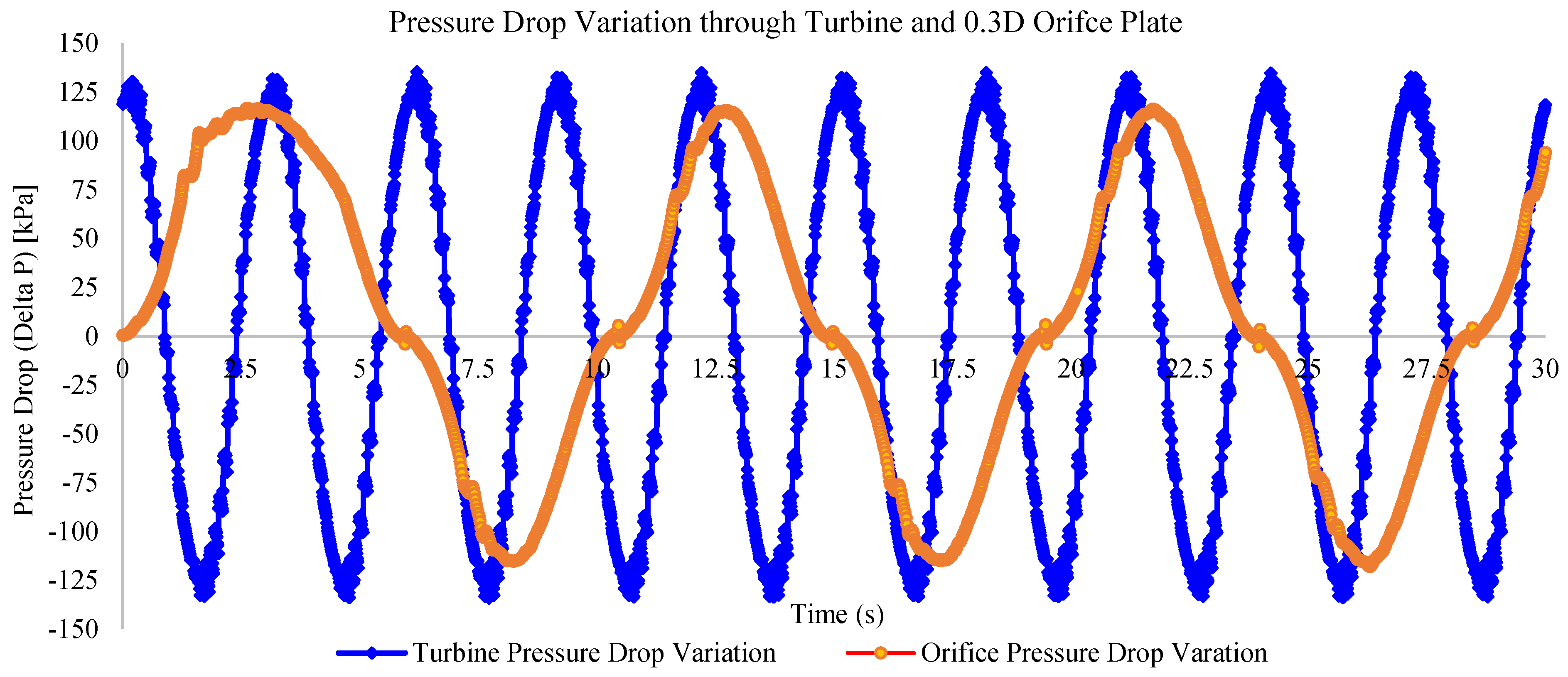
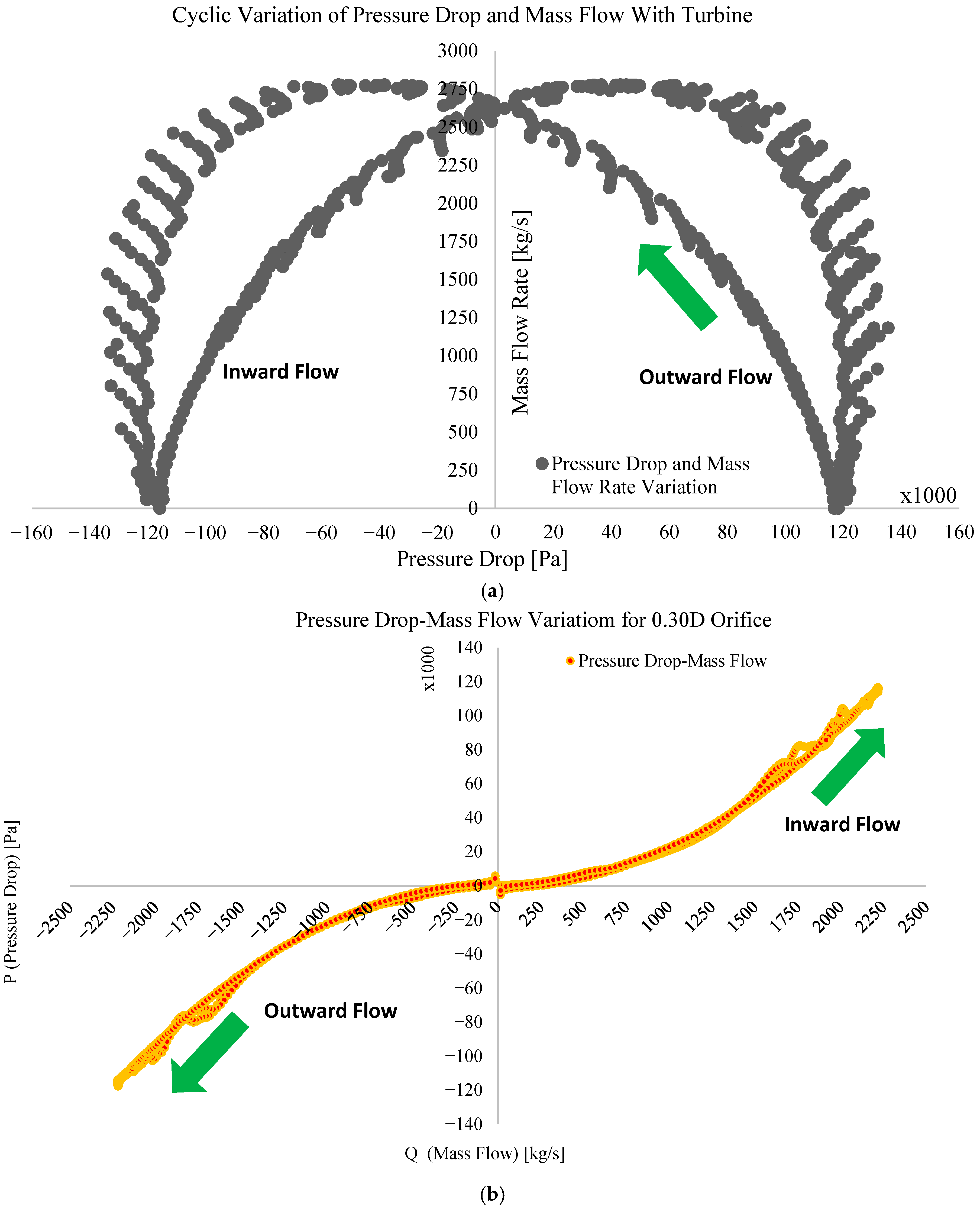
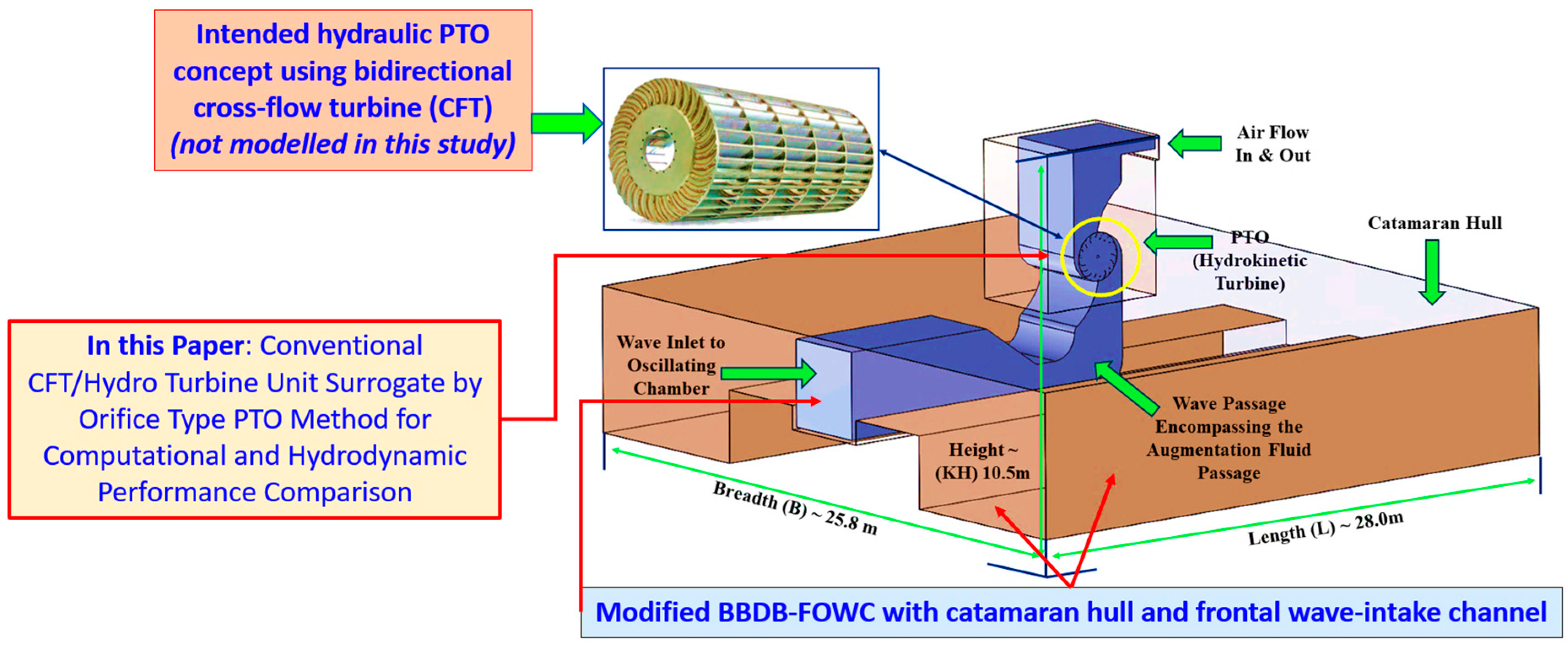
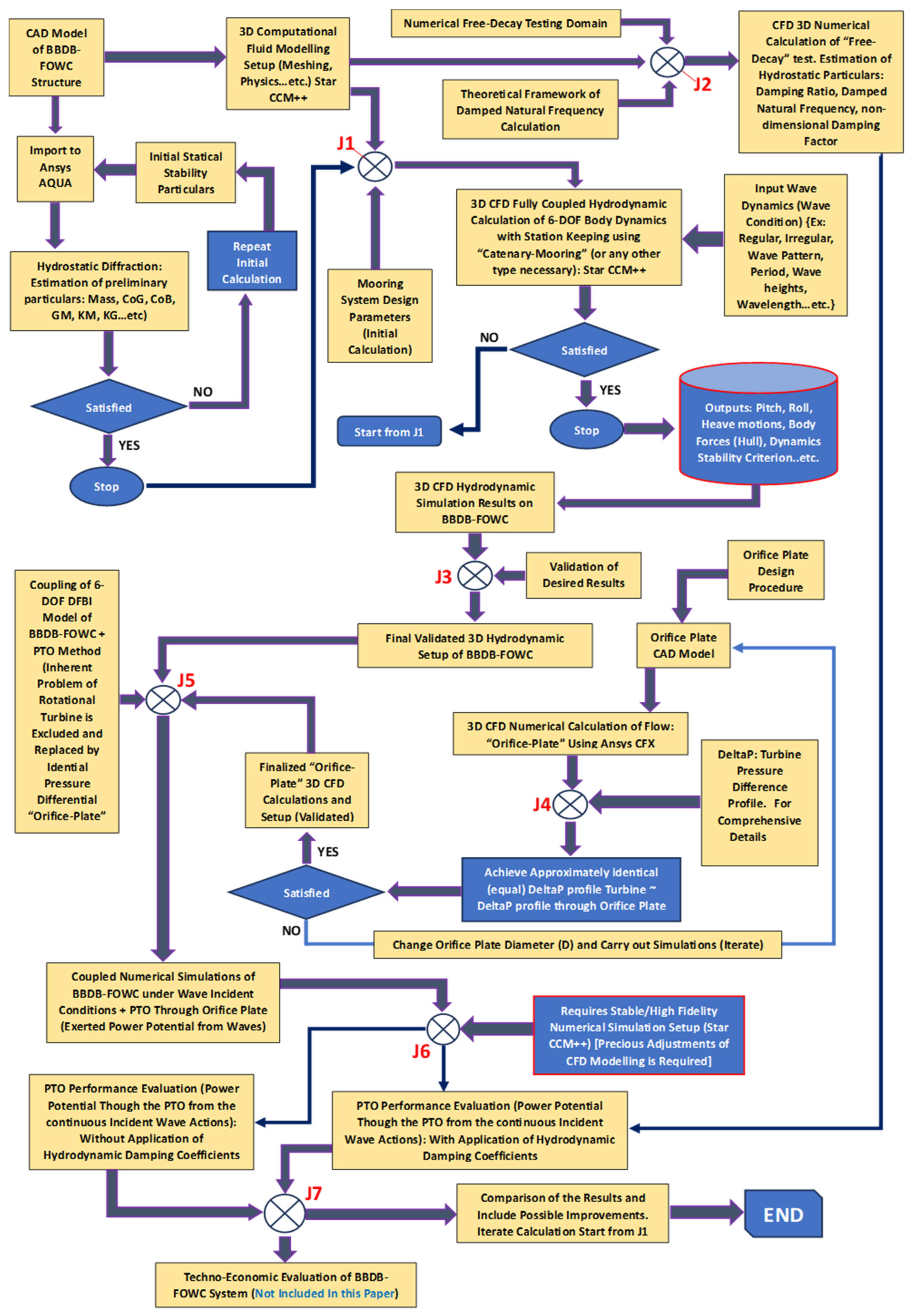
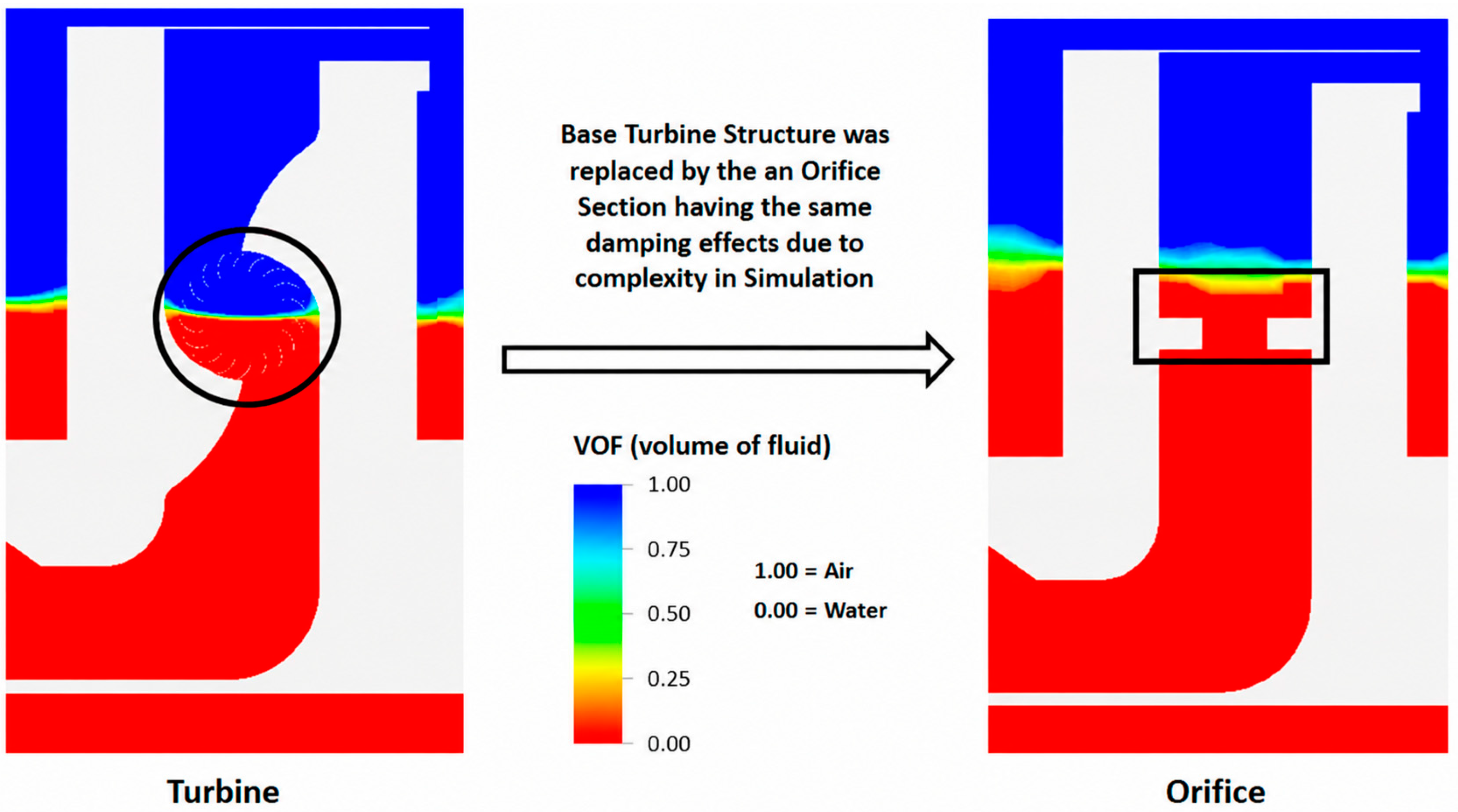
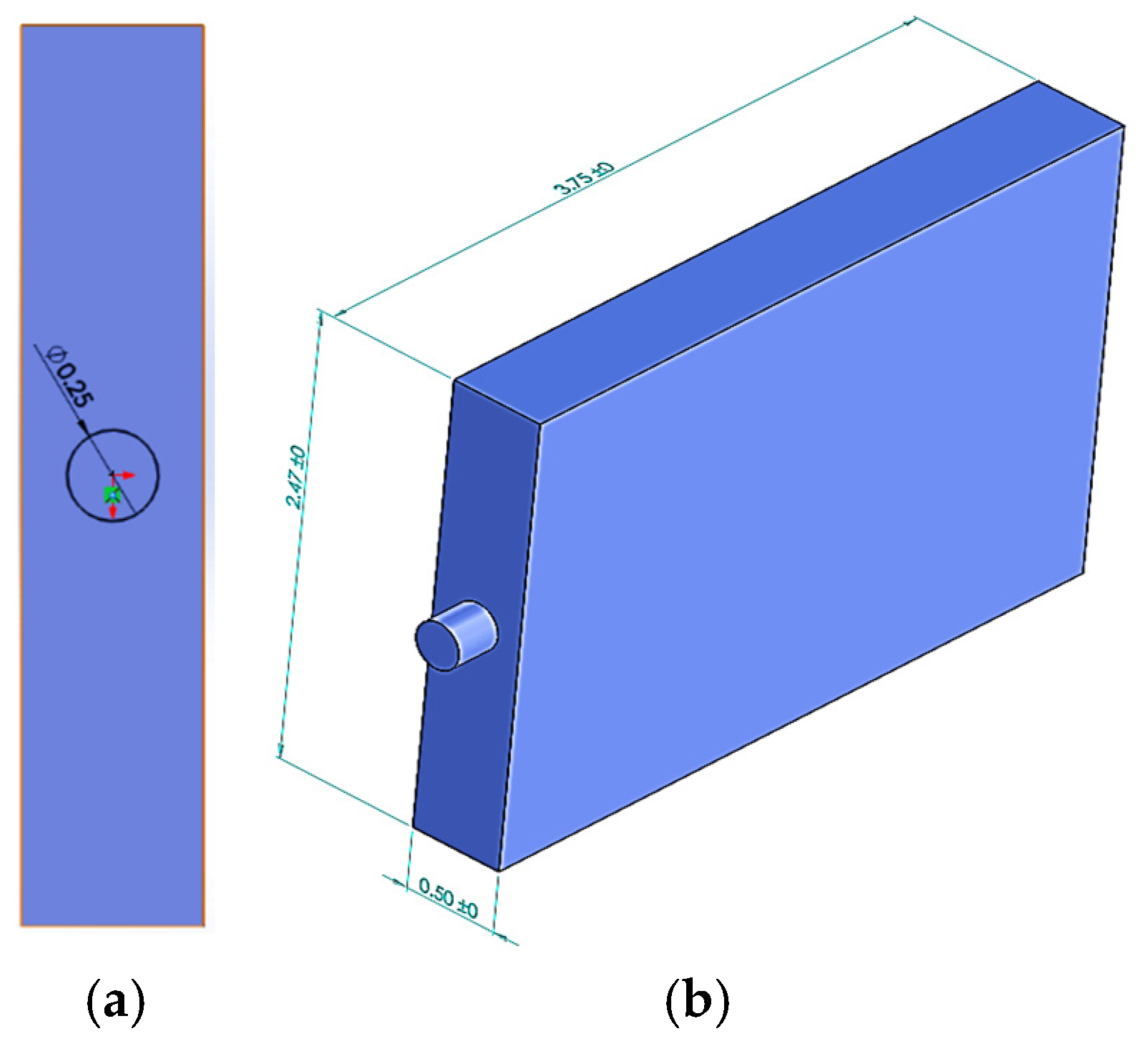
The present study addresses this gap by introducing and assessing a modified BBDB-FOWC concept featuring a catamaran hull and a hydraulic oscillatory-flow pathway, departing from the conventional pneumatic BBDB architecture. Instead of explicitly resolving the intended cross-flow turbine within a fully coupled offshore CFD model, which would impose substantial computational complexity, the study adopts a calibrated orifice-based PTO surrogate to reproduce turbine-equivalent pressure–flow behavior while maintaining numerical tractability.
The main novelty of this work therefore lies in the development of a fully coupled, physics-consistent CFD framework that integrates (Refer
Section 2.1.2 and
Section 2.1.3):
Hydrostatic stability assessment;
Free-decay-based damping identification;
6-DOF floating-body hydrodynamics under offshore wave forcing;
Turbine-equivalent PTO resistance modeling through an orifice surrogate;
Within a single simulation and evaluation strategy.
Accordingly, this paper does not aim to resolve blade-scale turbine physics. Instead, it establishes a first-order system-level understanding of the modified BBDB-FOWC concept and its coupled hydrodynamic–PTO behavior at an early technology readiness level. In doing so, it provides an underexplored but necessary step toward the realistic assessment, optimization, and future development of next-generation floating wave energy converters.