Oil Slick Detection in X-Band Marine Radar Imagery: Leveraging a Boundary-Aware SBR Feature and an Improved Whale Optimization Algorithm

 , , ,
, , ,
Abstract
1. Introduction
2. Materials and Methods
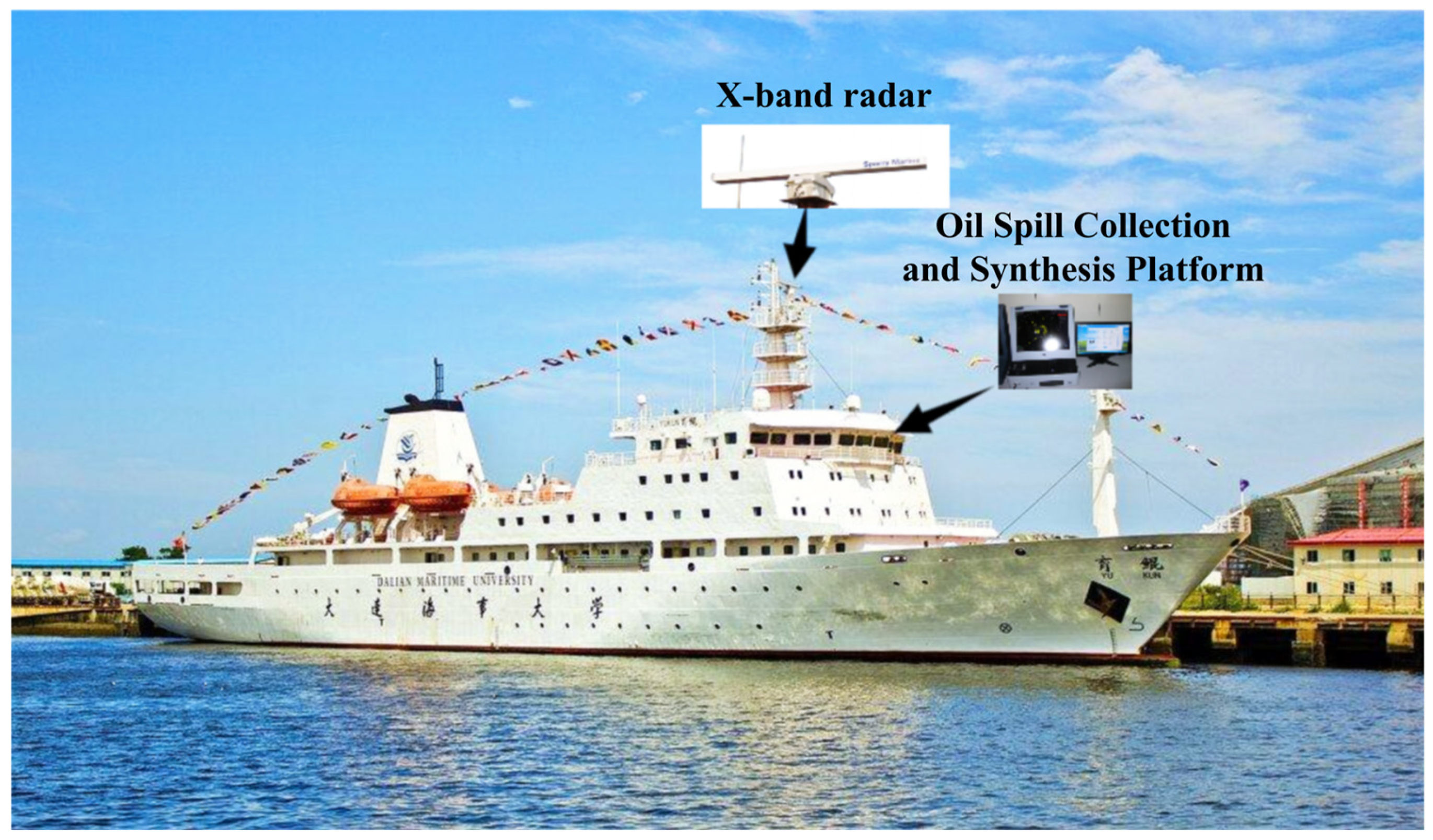
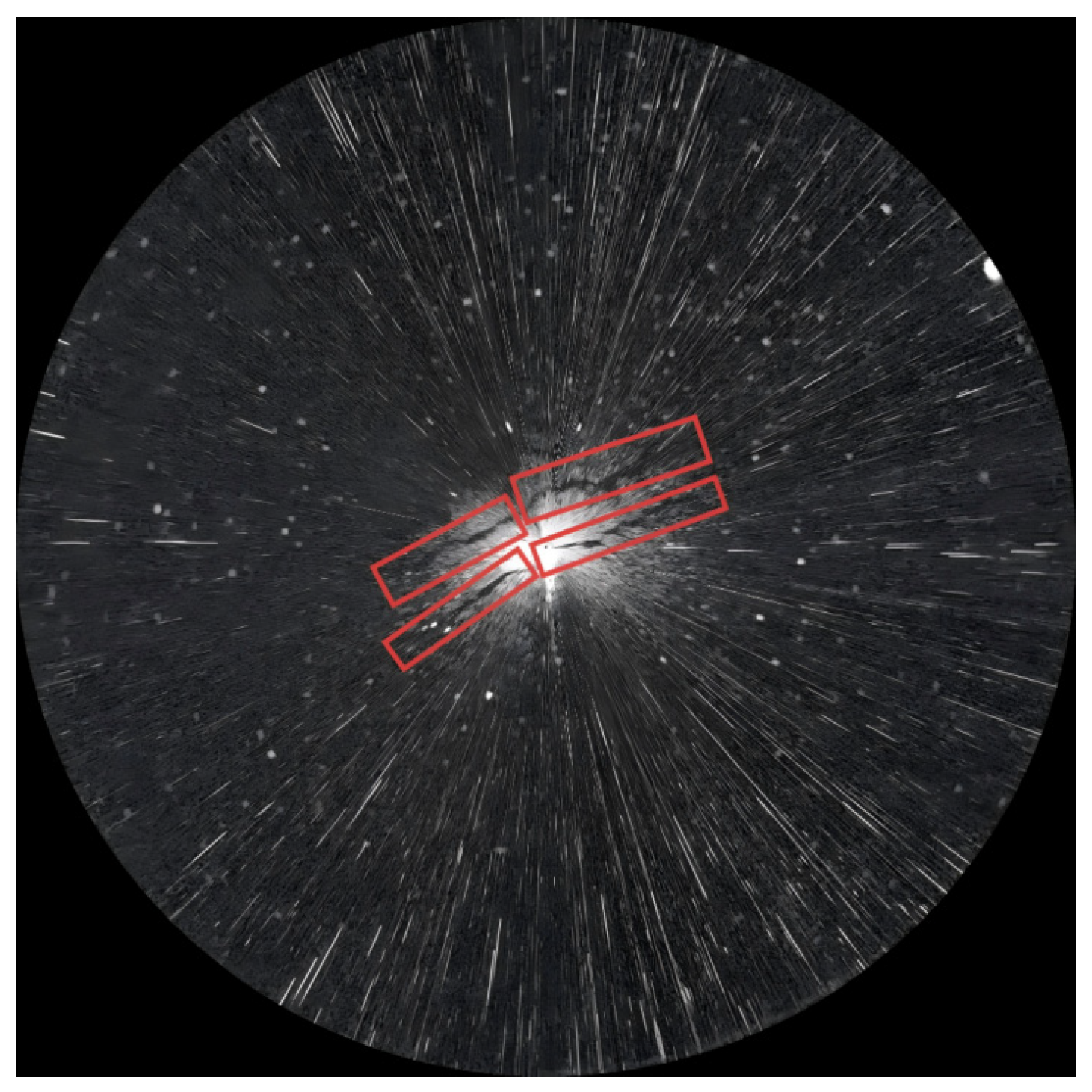
2.1. Materials
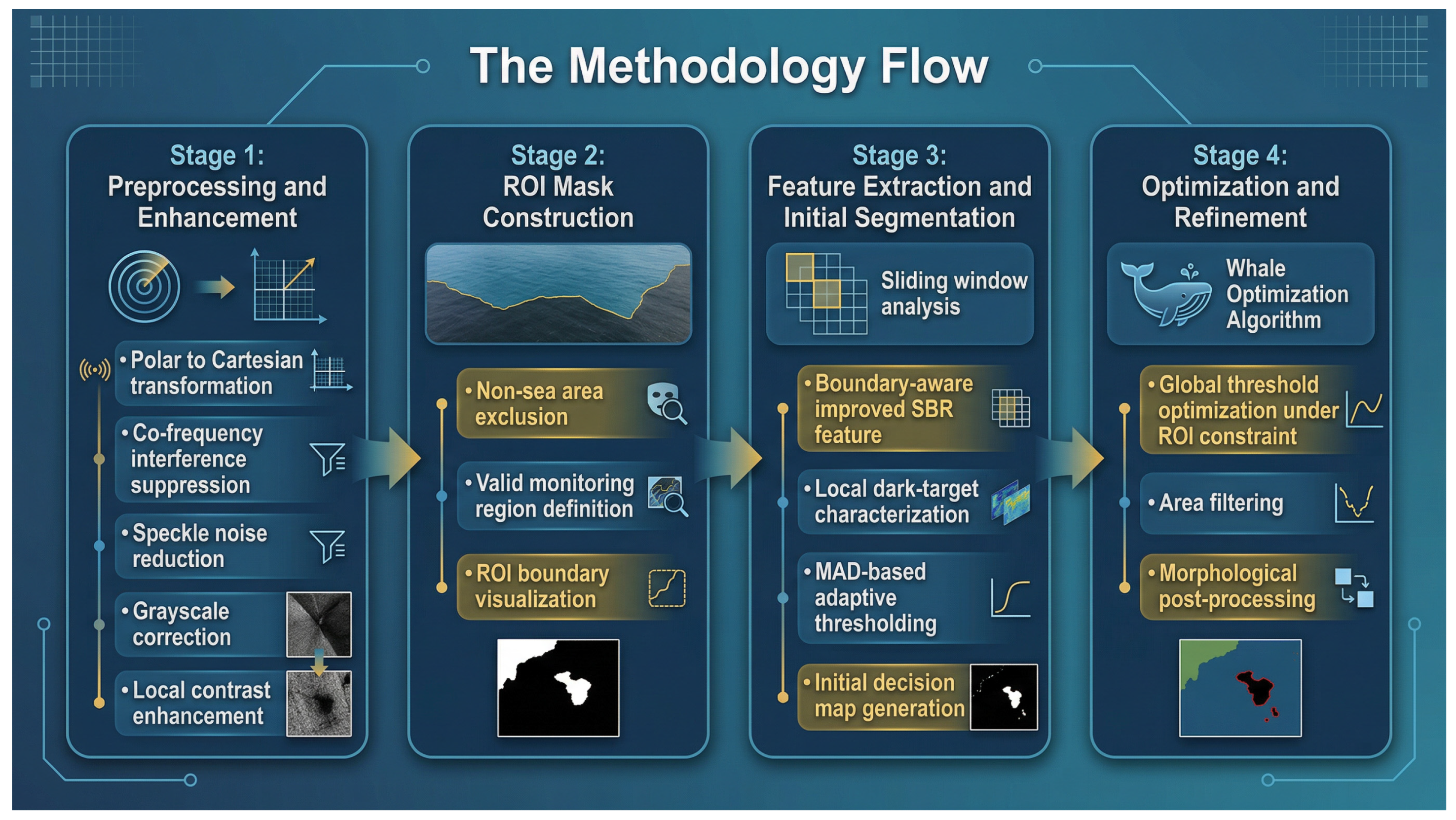
2.2. Overall Workflow of the Proposed Method
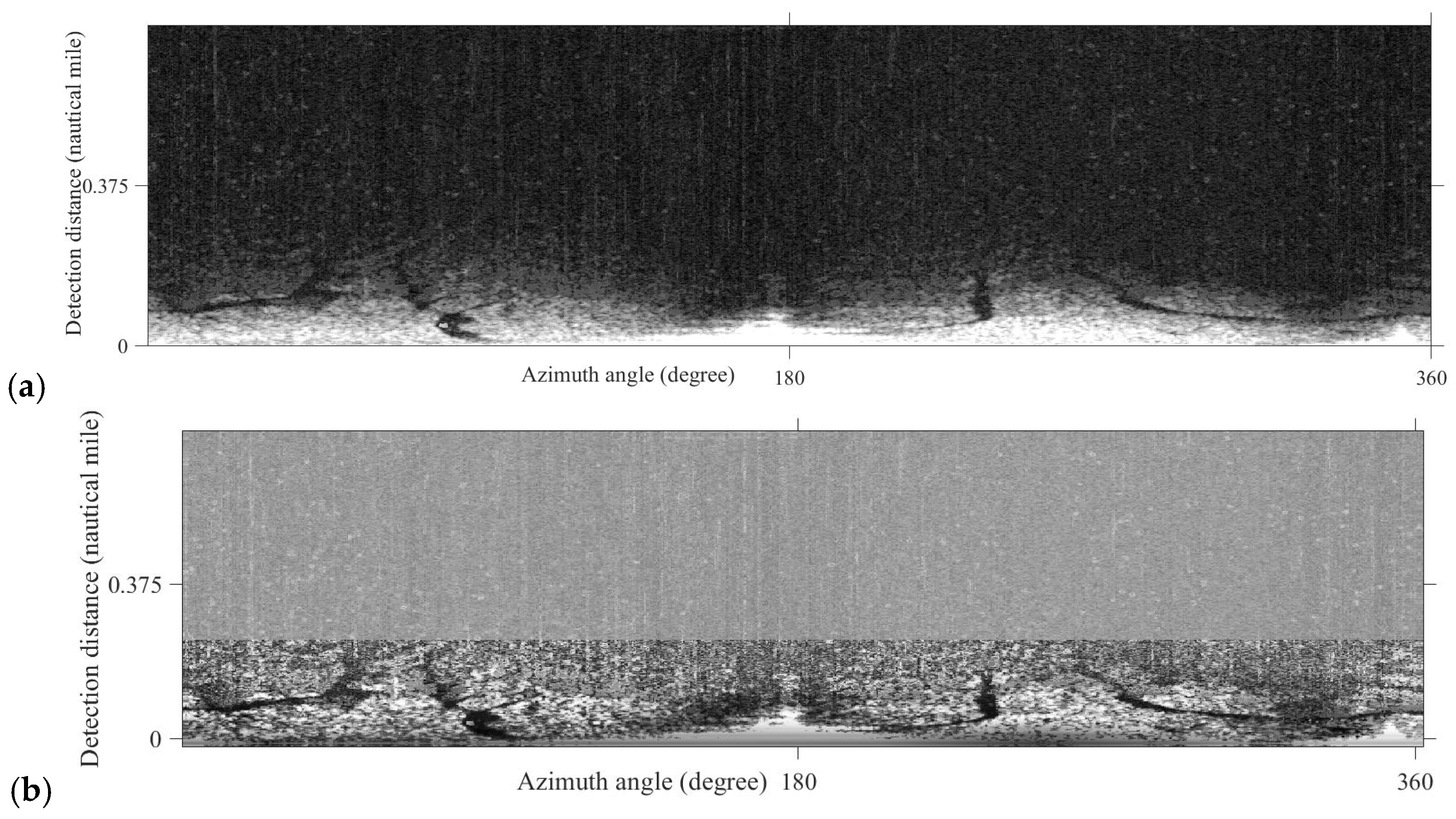
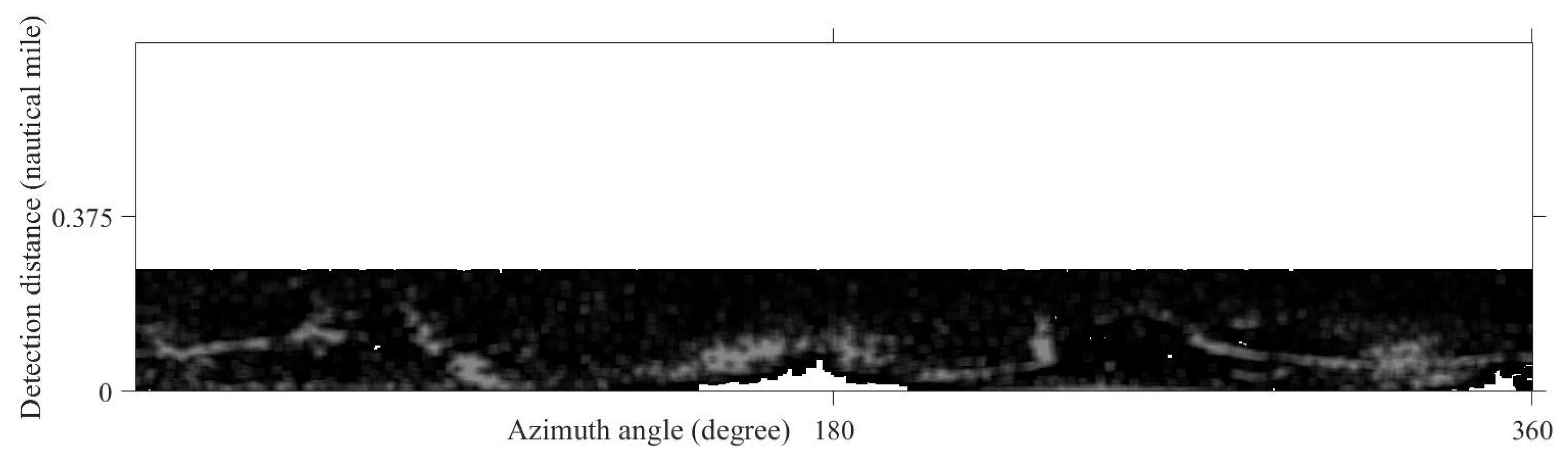
2.3. Data Preprocessing
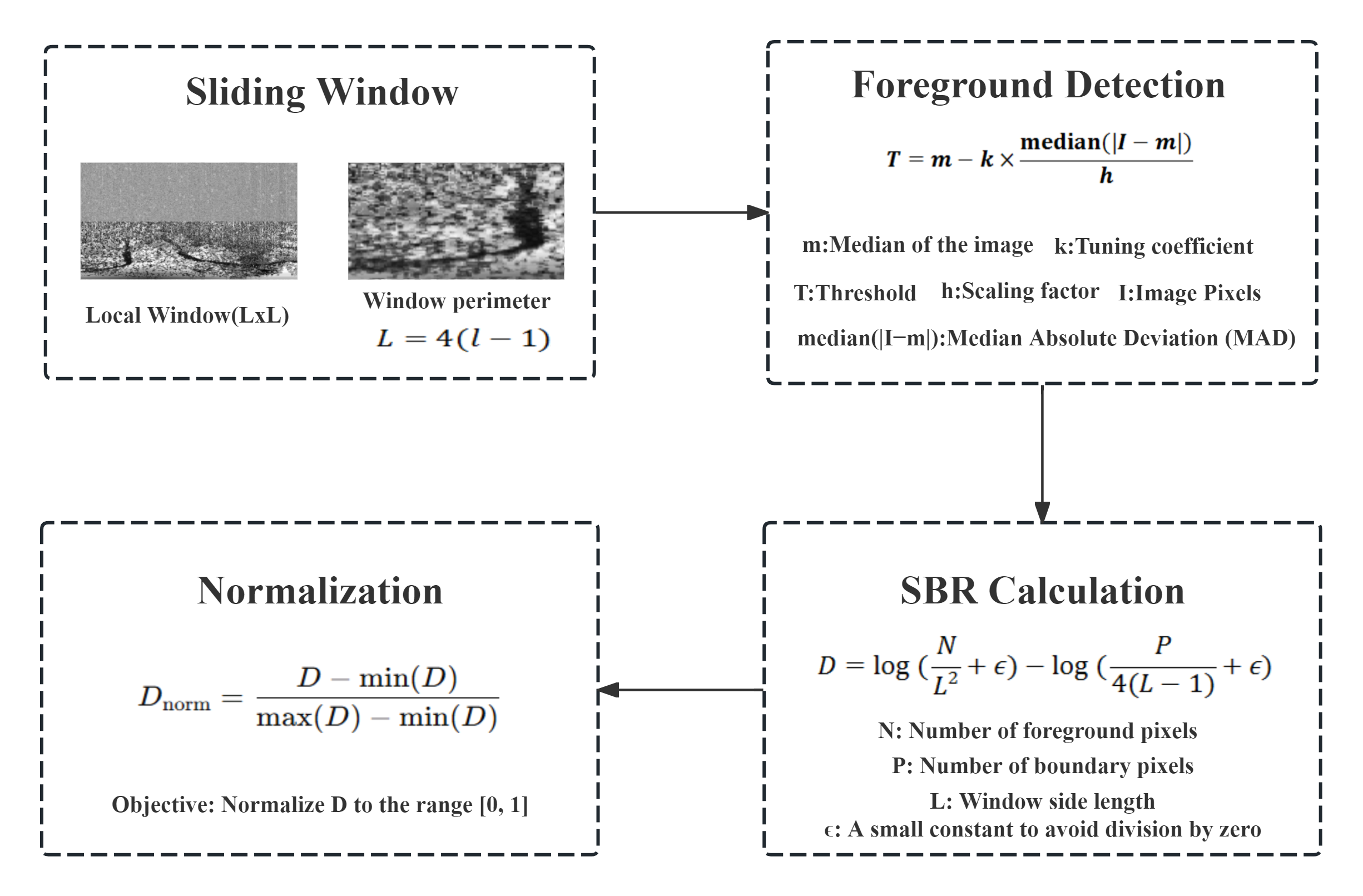
2.4. Boundary-Aware Improved SBR Model
- (1)
- Image binarization
- (2)
- The improved SBR feature extraction
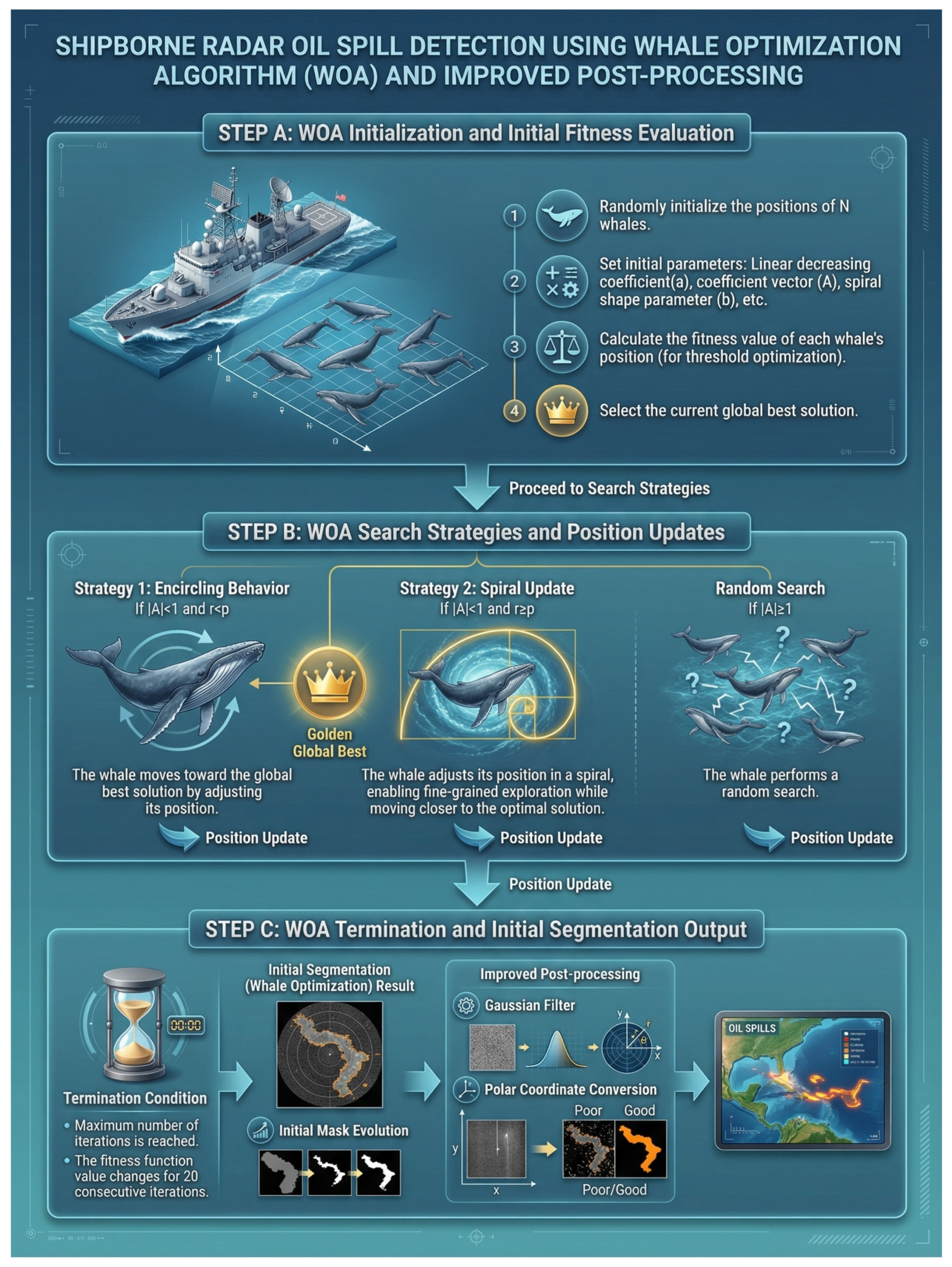
2.5. The Improved Whale Optimization Algorithm for Oil Spill Segmentation
- (1)
- Initialization
- (2)
- Perform fitness evaluation
- (3)
- The procedure terminates when either the maximum number of iterations tmax is reached or a convergence condition is satisfied. In the initial implementation of the improved WOA, tmax = 200 was used as a conservative upper bound to ensure sufficient iterations for convergence during algorithm design. However, the maximum iteration number is not a fixed theoretical parameter of WOA and is commonly adjusted according to the specific optimization task and convergence behavior. In this study, the convergence condition was defined as the fitness value remaining unchanged for 10 consecutive iterations, and the best solution X* was then returned.
- (4)
- Fitness Function
3. Results
3.1. ROI Extraction and Refinement
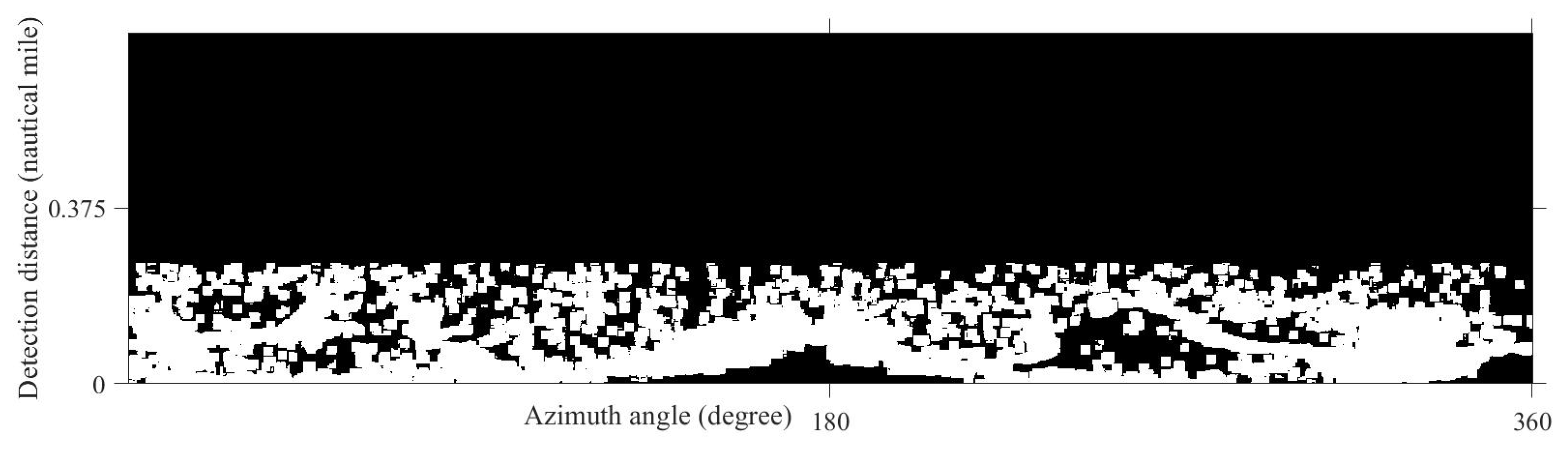
3.2. WOA-Based Global Threshold Optimization and Post-Processing
3.3. Quantitative Evaluation Metrics
4. Discussion
4.1. Performance Validation and Spatial Error Analysis
4.2. Validation of the Improved SBR Feature
4.3. Parameter Sensitivity of the ROI-Gating Thresholds
4.4. Validation of the Improved WOA Strategy
4.5. Overall Comparison with Competitive Baseline Methods
4.6. Environmental Limitations and System Deployment Constraints
5. Conclusions
Author Contributions
Funding
Data Availability Statement
Conflicts of Interest
References
- Lovindeer, R.; Mynott, S.; Porobic, J.; Fulton, E.A.; Hook, S.E.; Pethybridge, H.; Allen, S.E.; Latornell, D.; Morzaria-Luna, H.N. Ecosystem-level impacts of oil spills: A review of available data with confidence metrics for application to ecosystem models. Environ. Model. Assess. 2023, 28, 939–960. [Google Scholar] [CrossRef] [Scilit]
- Yang, Y.; Yan, J.; Xu, J.; Zhong, X.; Huang, Y.; Rui, J.; Cheng, M.; Huang, Y.; Wang, Y.; Liang, T.; et al. Oil film detection for marine radar image using SBR feature and adaptive threshold. J. Mar. Sci. Eng. 2025, 13, 1178. [Google Scholar] [CrossRef] [Scilit]
- Ji, H.; Wang, Y.; Wang, T.; Yang, K.; Xing, Z. The influence of a key indicator kv on the diffusion range of underwater oil spill. Processes 2023, 11, 2332. [Google Scholar] [CrossRef] [Scilit]
- Wang, Z.; Fan, Z.; Chen, X.; Li, Y.; Fan, Z.; Wei, Q.; Peng, Y.; Liu, B.; Yue, W.; Wang, X.; et al. Global oil and gas development situation, trends and enlightenment in 2023. Pet. Explor. Dev. 2024, 51, 1536–1555. [Google Scholar] [CrossRef] [Scilit]
- Chen, J.; Fei, Y.; Wan, Z. The relationship between the development of global maritime fleets and GHG emission from shipping. J. Environ. Manag. 2019, 242, 31–39. [Google Scholar] [CrossRef] [Scilit]
- Guo, S.; Lu, J.; Qin, Y. Analysis of the coupled spatial and temporal development characteristics of global liner shipping connectivity driven by trade. Ocean Coast. Manag. 2024, 251, 107071. [Google Scholar] [CrossRef] [Scilit]
- Zhao, J.; He, Y.; Xiao, J.; Su, Z.; Ma, H.; Zhai, X. Experimental investigation of the spread and burning behaviors of diesel spill fires on a water surface. Fire 2024, 7, 402. [Google Scholar] [CrossRef] [Scilit]
- Vankayalapati, K.; Dasari, H.P.; Langodan, S.; El Mohtar, S.; Sanikommu, S.; Asfahani, K.; Desamsetti, S.; Hoteit, I. Multi-mission satellite detection and tracking of October 2019 Sabiti oil spill in the Red Sea. Remote Sens. 2022, 15, 38. [Google Scholar] [CrossRef] [Scilit]
- Malhas, R.; Al-Ibrahim, Y.; Al-Meraj, A.; Abdullah, H.; Alshatti, A. Application of magnetic separation for oil spill remediation and recovery in Kuwait sea water. Desalin. Water Treat. 2021, 209, 114–120. [Google Scholar] [CrossRef] [Scilit]
- Lan, G.-X.; Dong, K.-X.; Lin, J.-J. Study on Temporary Resolution for Offshore Marine Oil Spill Emergencies Based on Remote Sensing System. J. Environ. Biol. 2016, 37, 1177–1180. [Google Scholar]
- Kuang, C.; Chen, J.; Wang, J.; Qin, R.; Fan, J.; Zou, Q. Effect of wind-wave-current interaction on oil spill in the Yangtze River Estuary. J. Mar. Sci. Eng. 2023, 11, 494. [Google Scholar] [CrossRef] [Scilit]
- Espinosa, R.P.; Uebe, J.; Katarzyte, M.; Paulauskiene, T. Influence of starch cross-linking on the performance of cellulose aerogels for oil spills sorption. Gels 2025, 11, 386. [Google Scholar] [CrossRef] [Scilit] [PubMed]
- Lavrova, O.Y.; Mityagina, M.I. Satellite monitoring of oil slicks on the Black Sea surface. Izv. Atmos. Ocean. Phys. 2013, 49, 897–912. [Google Scholar] [CrossRef] [Scilit]
- Guo, J.; Jiang, Z.; Chu, X.; Feng, X.; Yu, C. Impacts of meteorological conditions on water quality: Case study of Dalian Port, China. Reg. Stud. Mar. Sci. 2025, 85, 104164. [Google Scholar] [CrossRef] [Scilit]
- Rikka, S.; Pleskachevsky, A.; Jacobsen, S.; Alari, V.; Uiboupin, R. Meteo-marine parameters from Sentinel-1 SAR imagery: Towards near real-time services for the Baltic Sea. Remote Sens. 2018, 10, 757. [Google Scholar] [CrossRef] [Scilit]
- Rathour, S.S.; Kato, N.; Tanabe, N.; Senga, H.; Hirai, Y.; Yoshie, M.; Tanaka, T. Spilled oil autonomous tracking using autonomous sea surface vehicle. Mar. Technol. Soc. J. 2015, 49, 102–116. [Google Scholar] [CrossRef] [Scilit]
- Zakzouk, M.; Abdulaziz, A.M.; El-Magd, I.A.; Dahab, A.S.; Ali, E.M. Automated oil spill detection using deep learning and SAR satellite data for the northern entrance of the Suez Canal. Sci. Rep. 2025, 15, 20107. [Google Scholar] [CrossRef] [Scilit]
- Solberg, A.H.S.; Storvik, G.; Solberg, R.; Volden, E. Automatic detection of oil spills in ERS SAR images. IEEE Trans. Geosci. Remote Sens. 1999, 37, 1916–1924. [Google Scholar] [CrossRef] [Scilit]
- Brekke, C.; Solberg, A.H.S. Oil Spill Detection by Satellite Remote Sensing. Remote Sens. Environ. 2005, 95, 1–13. [Google Scholar] [CrossRef] [Scilit]
- Nirchio, F.; Sorgente, M.; Giancaspro, A.; Biamino, W.; Parisato, E.; Ravera, R.; Trivero, P. Automatic detection of oil spills from SAR images. Int. J. Remote Sens. 2005, 26, 1157–1174. [Google Scholar] [CrossRef] [Scilit]
- Topouzelis, K.N. Oil Spill Detection by SAR Images: Dark Formation Detection, Feature Extraction and Classification Algorithms. Sensors 2008, 8, 6642–6659. [Google Scholar] [CrossRef] [Scilit]
- Topouzelis, K.; Singha, S. Oil Spill Detection Using Space-Borne Sentinel-1 SAR Imagery. In Oil Spill Science and Technology; Elsevier: Amsterdam, The Netherlands, 2017; pp. 387–394. [Google Scholar] [CrossRef] [Scilit]
- Krestenitis, M.; Orfanidis, G.; Ioannidis, K.; Avgerinakis, K.; Vrochidis, S.; Kompatsiaris, I. Oil Spill Identification from Satellite Images Using Deep Neural Networks. Remote Sens. 2019, 11, 1762. [Google Scholar] [CrossRef] [Scilit]
- Krestenitis, M.; Orfanidis, G.; Ioannidis, K.; Avgerinakis, K.; Vrochidis, S.; Kompatsiaris, I. Early identification of oil spills in satellite images using deep CNNs. In International Conference on Multimedia Modeling; Springer International Publishing: Cham, Switzerland, 2018; pp. 424–435. [Google Scholar]
- Li, C.; Kim, D.-J.; Park, S.; Kim, J.; Song, J. A self-evolving deep learning algorithm for automatic oil spill detection in Sentinel-1 SAR images. Remote Sens. Environ. 2023, 299, 113872. [Google Scholar] [CrossRef] [Scilit]
- Yang, Y.-J.; Singha, S.; Goldman, R. A near real-time automated oil spill detection and early warning system using Sentinel-1 SAR imagery for the Southeastern Mediterranean Sea. Int. J. Remote Sens. 2024, 45, 1997–2027. [Google Scholar] [CrossRef] [Scilit]
- Cheng, P.; Qi, Y.; Zhao, J. Automated oil spill detection using deep learning and SAR satellite data: A case study of the Lower Congo Basin. Front. Earth Sci. 2025, 13, 1667450. [Google Scholar] [CrossRef] [Scilit]
- Cai, Y.; Su, J.; Song, J.; Xu, D.; Zhang, L.; Shen, G. LRA-UNet: A Lightweight Residual Attention Network for SAR Marine Oil Spill Detection. J. Mar. Sci. Eng. 2025, 13, 1161. [Google Scholar] [CrossRef] [Scilit]
- Yagüe-Martínez, N.; Prats-Iraola, P.; Gonzalez, F.R.; Brcic, R.; Shau, R.; Geudtner, D.; Eineder, M.; Bamler, R. Interferometric processing of Sentinel-1 TOPS data. IEEE Trans. Geosci. Remote Sens. 2016, 54, 2220–2234. [Google Scholar] [CrossRef] [Scilit]
- Colesanti, C.; Wasowski, J. Investigating landslides with space-borne Synthetic Aperture Radar (SAR) interferometry. Eng. Geol. 2006, 88, 173–199. [Google Scholar] [CrossRef] [Scilit]
- Zhu, C.; Zhou, H.; Wang, R.; Guo, J. A novel hierarchical method of ship detection from spaceborne optical image based on shape and texture features. IEEE Trans. Geosci. Remote Sens. 2010, 48, 3446–3456. [Google Scholar] [CrossRef] [Scilit]
- Milillo, P.; Perissin, D.; Salzer, J.T.; Lundgren, P.; Lacava, G.; Milillo, G.; Serio, C. Monitoring dam structural health from space: Insights from novel InSAR techniques and multi-parametric modeling applied to the Pertusillo dam Basilicata, Italy. Int. J. Appl. Earth Obs. Geoinf. 2016, 52, 221–229. [Google Scholar] [CrossRef] [Scilit]
- Isoguchi, O.; Shimada, M. An L-band ocean geophysical model function derived from PALSAR. IEEE Trans. Geosci. Remote Sens. 2009, 47, 1925–1936. [Google Scholar] [CrossRef]
- Lang, P. Recent Advances in Deep Learning Based SAR Image Targets Detection and Recognition. IEEE J. Sel. Top. Appl. Earth Obs. Remote Sens. 2025, 18, 6884–6915. [Google Scholar] [CrossRef] [Scilit]
- Liu, P.; Liu, B.; Li, Y.; Chen, P.; Xu, J. Oil spill detection on X-band marine radar images based on sea clutter fitting model. Heliyon 2023, 9, e21084. [Google Scholar] [CrossRef] [Scilit]
- Asihene, E.; Desmond, D.S.; Harasyn, M.L.; Landry, D.; Veenaas, C.; Mansoori, A.; Fuller, M.C.; Stern, G.; Barber, D.G.; Gilmore, C.; et al. Toward the Detection of Oil Spills in Newly Formed Sea Ice Using C-Band Multipolarization Radar. IEEE Trans. Geosci. Remote Sens. 2022, 60, 4302615. [Google Scholar] [CrossRef] [Scilit]
- Naz, S.; Iqbal, M.F.; Mahmood, I.; Allam, M. Marine Oil Spill Detection Using Synthetic Aperture Radar over Indian Ocean. Mar. Pollut. Bull. 2021, 162, 111921. [Google Scholar] [CrossRef] [Scilit] [PubMed]
- Ivonin, D.; Brekke, C.; Skrunes, S.; Ivanov, A.; Kozhelupova, N. Mineral Oil Slicks Identification Using Dual Co-Polarized Radarsat-2 and TerraSAR-X SAR Imagery. Remote Sens. 2020, 12, 1061. [Google Scholar] [CrossRef] [Scilit]
- Kaur, G.; Arora, S. Chaotic Whale Optimization Algorithm. J. Comput. Des. Eng. 2018, 5, 275–284. [Google Scholar] [CrossRef] [Scilit]



| Accuracy (%) | Precision (%) | Recall (%) | F1-Score (%) | IoU (%) | ||
|---|---|---|---|---|---|---|
| 0.01 | 0.1 | 97.83 | 0 | 0 | 0 | 0 |
| 0.01 | 0.2 | 97.85 | 74.80 | 1.61 | 3.14 | 1.60 |
| 0.01 | 0.3 | 98.01 | 74.69 | 12.70 | 21.71 | 12.18 |
| 0.01 | 0.4 | 98.63 | 80.07 | 48.77 | 60.62 | 43.49 |
| 0.01 | 0.5 | 99.14 | 83.96 | 74.84 | 79.14 | 65.48 |
| 0.01 | 0.6 | 99.34 | 85.20 | 83.95 | 84.57 | 73.27 |
| 0.01 | 0.7 | 99.34 | 85.20 | 83.95 | 84.57 | 73.27 |
| 0.01 | 0.8 | 99.34 | 85.20 | 83.95 | 84.57 | 73.27 |
| 0.01 | 0.9 | 99.34 | 85.20 | 83.95 | 84.57 | 73.27 |
| 0.01 | 0.99 | 99.34 | 85.20 | 83.95 | 84.57 | 73.27 |
| 0 | 0.9 | 99.34 | 85.20 | 83.95 | 84.57 | 73.27 |
| 0.005 | 0.9 | 99.34 | 85.20 | 83.95 | 84.57 | 73.27 |
| 0.02 | 0.9 | 99.34 | 85.20 | 83.95 | 84.57 | 73.27 |
| 0.05 | 0.9 | 99.34 | 85.32 | 83.91 | 84.61 | 73.32 |
| Accuracy (%) | Precision (%) | Recall (%) | F1-Score (%) | IoU (%) | |
|---|---|---|---|---|---|
| Improved WOA | 99.36 | 85.73 | 84.42 | 85.07 | 74.01 |
| Traditional WOA | 82.19 | 10.85 | 99.98 | 19.58 | 10.85 |
| Accuracy (%) | Precision (%) | Recall (%) | F1-Score (%) | IoU (%) | |
|---|---|---|---|---|---|
| Our Method | 99.36 | 85.73 | 84.42 | 85.07 | 74.01 |
| SVM | 96.94 | 41.36 | 98.43 | 58.24 | 41.08 |
| Otsu Method | 81.76 | 10.06 | 100.00 | 18.27 | 10.06 |
| K-Means (K = 2) | 82.41 | 10.39 | 99.96 | 18.82 | 10.38 |
| GWO | 82.19 | 10.86 | 99.98 | 19.59 | 10.86 |
| SBR + Sauvola | 99.30 | 80.99 | 67.50 | 73.63 | 58.27 |
| BP Neural Network | 96.63 | 38.81 | 96.24 | 55.32 | 38.23 |
| Random Forest | 97.62 | 47.64 | 98.14 | 64.14 | 47.21 |
Disclaimer/Publisher’s Note: The statements, opinions and data contained in all publications are solely those of the individual author(s) and contributor(s) and not of MDPI and/or the editor(s). MDPI and/or the editor(s) disclaim responsibility for any injury to people or property resulting from any ideas, methods, instructions or products referred to in the content. |
© 2026 by the authors. Licensee MDPI, Basel, Switzerland. This article is an open access article distributed under the terms and conditions of the Creative Commons Attribution (CC BY) license.
Share and Cite
Rui, J.; Xu, J.; Yuan, J.; Guo, Z.; Zhang, S.; Zhang, Y.; Fu, Q.; Yao, B.; Yang, Y.; Li, W. Oil Slick Detection in X-Band Marine Radar Imagery: Leveraging a Boundary-Aware SBR Feature and an Improved Whale Optimization Algorithm. J. Mar. Sci. Eng. 2026, 14, 935. https://doi.org/10.3390/jmse14100935
Rui J, Xu J, Yuan J, Guo Z, Zhang S, Zhang Y, Fu Q, Yao B, Yang Y, Li W. Oil Slick Detection in X-Band Marine Radar Imagery: Leveraging a Boundary-Aware SBR Feature and an Improved Whale Optimization Algorithm. Journal of Marine Science and Engineering. 2026; 14(10):935. https://doi.org/10.3390/jmse14100935
Chicago/Turabian StyleRui, Jianxun, Jin Xu, Jianbin Yuan, Zekun Guo, Shuo Zhang, Yiteng Zhang, Qiuyu Fu, Boxi Yao, Yulong Yang, and Wenhui Li. 2026. "Oil Slick Detection in X-Band Marine Radar Imagery: Leveraging a Boundary-Aware SBR Feature and an Improved Whale Optimization Algorithm" Journal of Marine Science and Engineering 14, no. 10: 935. https://doi.org/10.3390/jmse14100935
APA StyleRui, J., Xu, J., Yuan, J., Guo, Z., Zhang, S., Zhang, Y., Fu, Q., Yao, B., Yang, Y., & Li, W. (2026). Oil Slick Detection in X-Band Marine Radar Imagery: Leveraging a Boundary-Aware SBR Feature and an Improved Whale Optimization Algorithm. Journal of Marine Science and Engineering, 14(10), 935. https://doi.org/10.3390/jmse14100935