1. Introduction
For the safe and efficient operation of a ship, proper alignment of the propulsion shafting system is essential, requiring precision work from the design phase through to the installation phase [
1,
2,
3,
4]. Ships load various types of cargo depending on their purpose, and the ship’s draft changes based on the cargo loading condition, which results in structural deformation of the hull. Such deformations directly affect the alignment of the propulsion shafting system [
5,
6]. In recent years, ships have become increasingly larger to maximize cargo capacity, and as the output of the main engine increases, the diameter of the shaft also increases. Meanwhile, the hull structure is being made lighter to improve fuel efficiency and reduce costs. This leads to an increase in the stiffness of the shafting system, but a reduction in the stiffness of the lower hull structure, increasing the risk that the propulsion shafting system may not fully withstand the deformation of the hull and the main engine. In such situations, when the spacing between bearings decreases, the sensitivity to changes in shaft alignment increases, raising concerns about potential damage to intermediate shaft bearings, stern tube bearings, and main engine bearings [
7,
8,
9,
10,
11]. Hull deformation, which is a crucial factor influencing the offsets of the bearings supporting the propulsion shafting system, varies depending on cargo loading conditions and operating conditions [
12]. Furthermore, hull deformation analysis based on the finite element method (FEM) requires substantial time and effort, which is why it is generally not considered during the shaft system design phase.
Kim et al. compared the measured bearing reaction forces caused by hull deformation under the ship’s cargo loading conditions, using the jack-up method and strain gauges, with theoretical methods [
13]. Lee et al. studied a method to indirectly calculate hull deformation by using measured bearing reaction forces and shaft bending moments [
14]. Sun et al. proposed a method to evaluate the flexibility of shaft alignment by implementing an approximation curve that represents qualitative hull deformation trends based on hull deformation data obtained by the reverse calculations [
15]. Vlachos et al. conducted a study on the changes in bearing offsets and reaction forces due to hull deformation in a 320 K VLCC and found that the variation in reaction forces at the afterward stern tube bearing showed a maximum deviation of about 5% under different cargo loading conditions [
16]. Seo et al. quantitatively analyzed the amount of hull deformation due to draft changes in a 173 K CBM LNG carrier [
17] and studied the characteristics of hull deformation due to draft changes in a 300 K crude oil tanker [
18], confirming that such hull deformation significantly affects the offsets of the bearings supporting the propulsion shafting system [
19]. Zhou et al. researched the effects of hull deformation on bearing torsion and offset changes, and their impact on shaft alignment [
20]. Kim et al. analyzed the characteristics of shaft alignment and whirling vibration when the forward stern tube bearing was removed to enhance shaft alignment flexibility and proposed an optimal arrangement plan for the propulsion shafting system [
21].
These studies have considered hull deformation as a major parameter in shaft system design and alignment analysis, focusing on ensuring the stability of stern tube bearings from a safety design perspective. However, for enhanced flexibility in shaft alignment, further research is needed on securing the stability of main engine bearings, which have shorter spans due to structural limitations, in addition to stern tube bearings.
Recently, several studies have incorporated hull deformation and related external factors into shaft alignment design and evaluation. Zhang [
22] developed an optimization model for ship shafting alignment that explicitly accounts for hull deformation under ballast and full-load conditions, demonstrating that adjusting the intermediate bearing position can significantly improve the uniformity of bearing loads. Cheng et al. [
23] proposed a real-time shaft alignment monitoring method that adapts to hull deformation, highlighting the necessity of continuous alignment assessment during ship operation.
While previous studies have mainly focused on the effect of hull deformation on stern tube bearings, the resulting load changes at the main engine bearings have received little attention. In actual operation, however, hull deformation can produce unexpected unloading at the aft-most main engine bearings, a phenomenon not fully reflected in conventional alignment procedures. This study analyzes how such unloading occurs and presents an alignment approach that uses the Intermediate Shaft Bearing as an effective control point, based on the sensitivity identified through the Reaction Influence Number (RIN) analysis. In this study, various hull deformations that may occur under different cargo loading and operational conditions were examined for a Suezmax-class crude oil tanker. The effects of hull deformation on the bearing reaction forces under various operating conditions were reviewed, and an optimal shaft alignment plan for the propulsion shafting system was proposed.
2. Characteristics of Hull Deformation Based on Ship Operating Conditions
Hull deformation analysis methods are primarily divided into finite element analysis (FEA) and reverse analysis methods based on measured data [
5,
6,
9,
10,
16,
20]. In this study, hull deformation analysis was conducted using the finite element method (FEM), with MSC/PATRAN used as the pre and postprocessing tool and MSC/NASTRAN used for numerical analysis. The finite element model consisted of a combination of 1D beam and 2D shell elements to represent the global hull structure. The propulsion shaft was modeled using 1D beam elements, while 3D solid elements were applied to the stern casting to accurately capture the stiffness characteristics around the bearing support region. A refined mesh with an element size of approximately 100 mm to 200 mm was applied to the stern and propulsion shafting region to ensure sufficient accuracy.
Table 1 shows the general specifications of the subject ship and
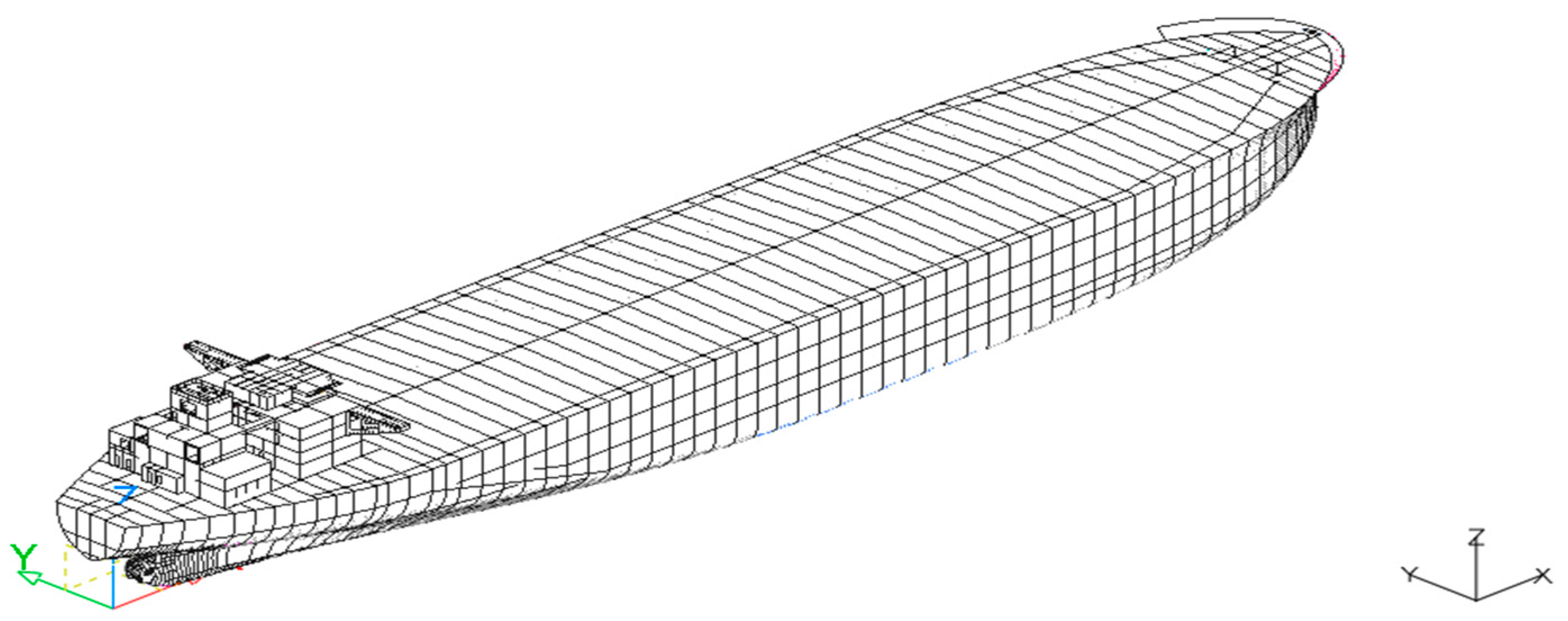
Figure 1 shows the finite element model of the overall hull structure.
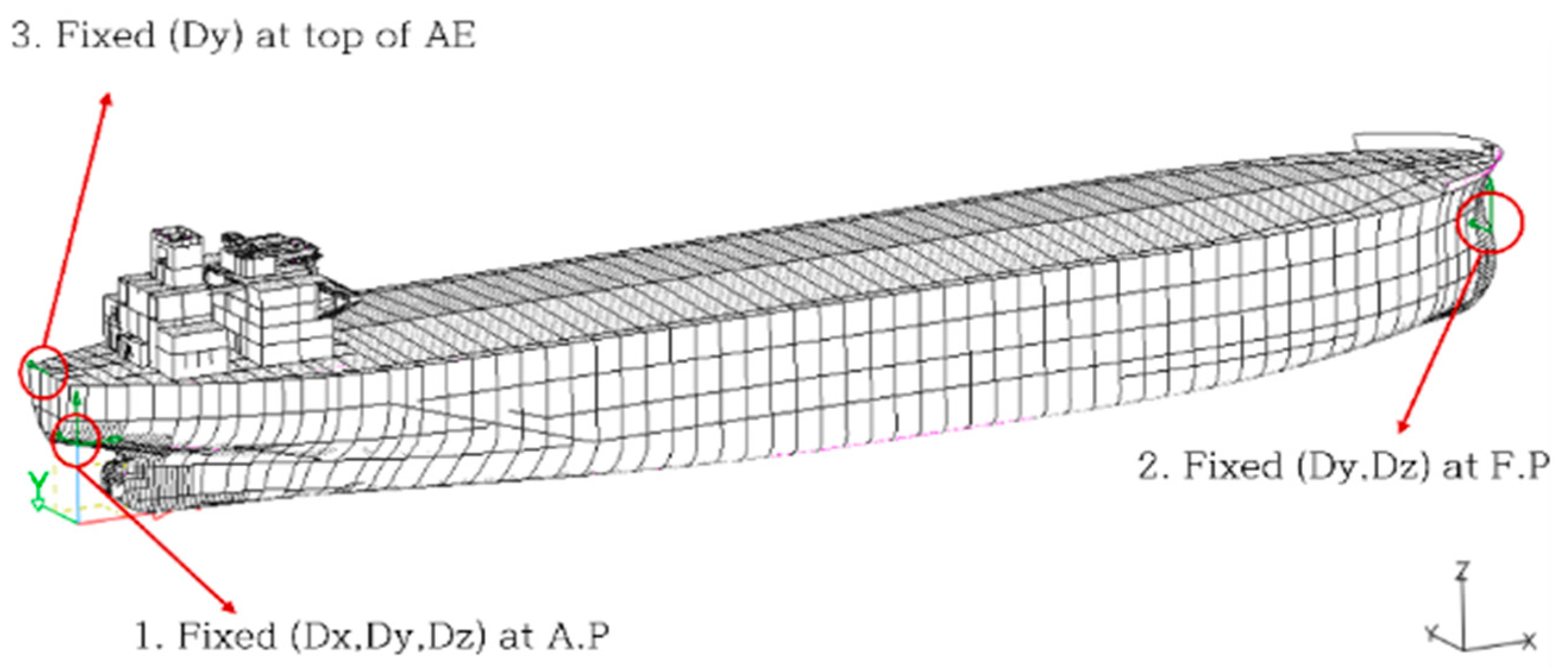
Figure 2 shows the boundary conditions applied in the analysis of the global structure of a ship’s hull. At the afterward peak point, translational displacements in the longitudinal (Dx), transverse (Dy), and vertical (Dz) directions were constrained. At the forward peak point, translational displacements in the transverse (Dy) and vertical (Dz) directions were constrained, and at the after-end point, the vertical translational displacement (Dz) was constrained. These boundary conditions were applied solely to suppress rigid-body motion in the numerical solver and do not represent physical supports such as shipyard blocks.
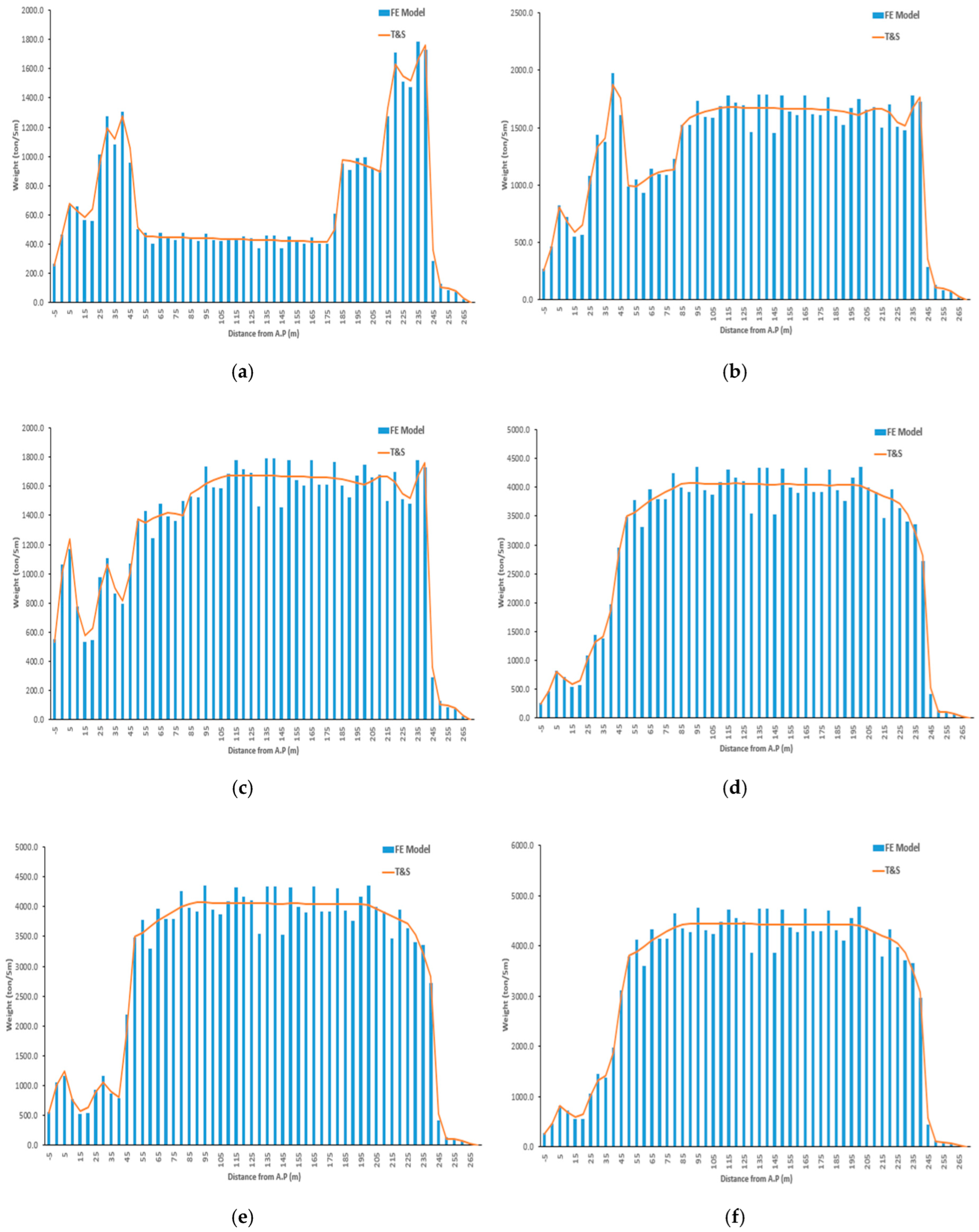
Table 2 shows the loading conditions considered in the hull deformation analysis for the subject ship, with each condition classified according to the cargo loading state the ship may experience during actual operation. For each loading condition, weight distributions and hydrostatic pressures were derived from the ship’s Trim and Stability (T&S) data. The weight distribution was implemented as a target mass, considering the density distribution assigned to each element in the FE model, as illustrated in
Figure 3. Hydrostatic pressure loads were applied based on draught information from the T&S data, explicitly reflecting the trim associated with each loading case. To ensure the reliability of the established finite element model, the displacement and Longitudinal Center of Gravity (L.C.G) calculated from the FE analysis were compared with the reference values from the T&S data, confirming the consistency of the loading conditions.
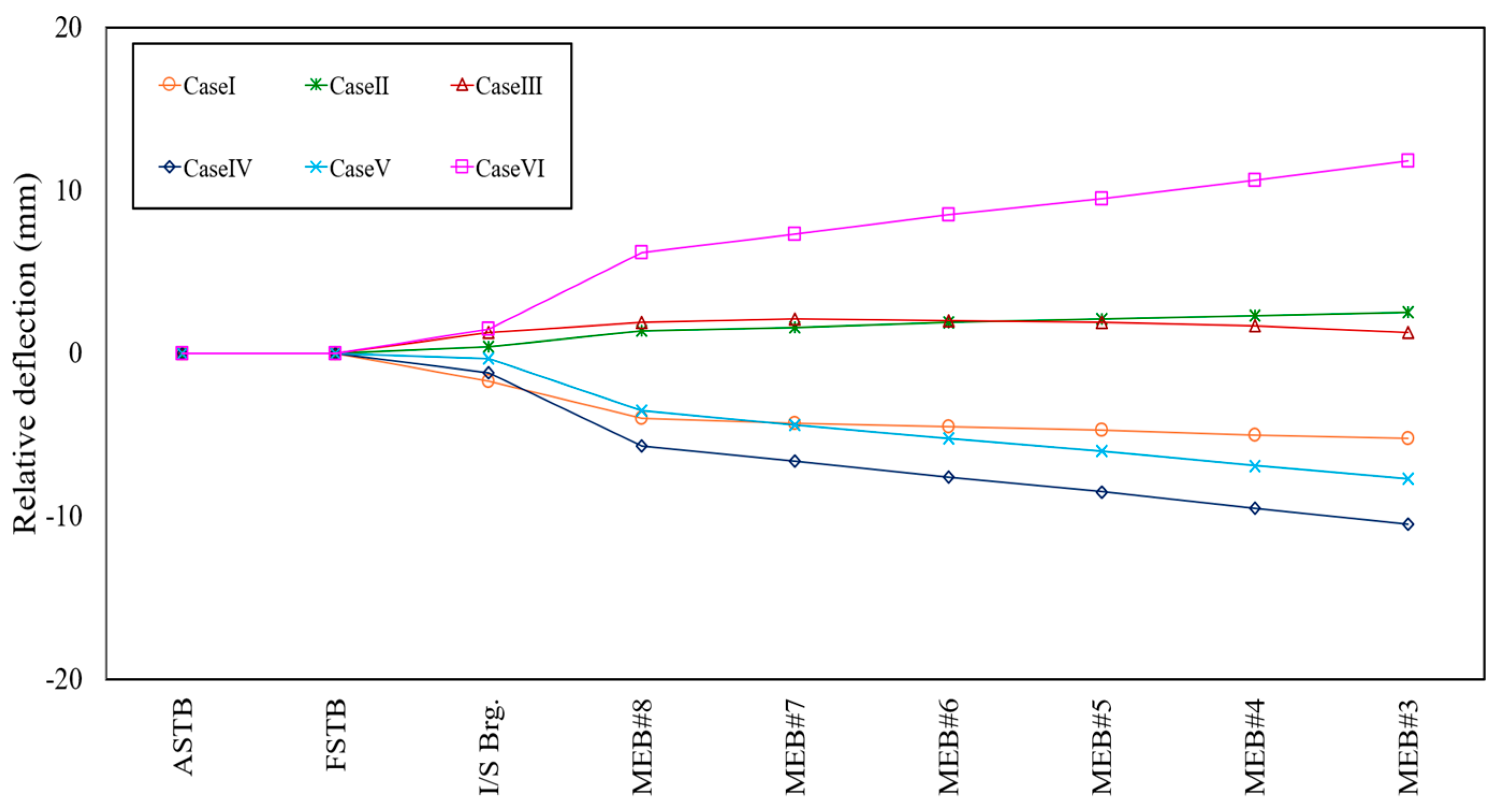
Figure 4 shows the results of the hull deformation analysis based on the stern tube bearings. An examination of the hull deformation analysis results reveals that the impact of hull deformation is concentrated at the aft main engine bearings. Consequently, the influence of hull deformation is most significant at the main engine bearing locations.
To incorporate these findings into the shaft alignment procedure, the relative vertical displacements (Dz) at each bearing position were extracted from the FEA results and are summarized in
Table 3. The deflection values for the Aft Stern Tube (ASTB) and Forward Stern Tube (FSTB) bearings are presented as 0.00 mm, as the straight line connecting the geometric centers of these two bearings serves as the reference datum for the alignment analysis. Consequently, the values listed for the remaining bearings represent relative displacements with respect to this stern tube baseline. These values were then applied as vertical offset inputs for the shaft alignment analysis, establishing a direct data transfer from the structural analysis to the shafting system model.
3. Results
3.1. General Specifications of Shaft Alignment Analysis
Shaft alignment analysis was conducted using a general-purpose software program, Nauticus Machinery-Shaft Alignment module, developed and distributed by Det Norske Veritas. The analysis was performed using the Finite Element Method (FEM). In the numerical model, the shafting system was discretized into a series of finite beam elements. For each element, geometric properties such as the outer diameter, inner diameter, and element length were defined to accurately represent the sectional property variations in the crankshaft, intermediate shaft, and propeller shaft.
The primary input parameters included the bearing vertical offsets, bearing stiffness values, bearing clearances, and the bearing configuration along the propulsion shafting system. Material and environmental properties were defined using a Young’s modulus (E) of 2.1 × 10⁵ N/mm2, a Poisson’s ratio (ν) of 0.3, and a steel density (ρsteel) of 7850 kg/m3. Buoyancy effects were incorporated by applying a seawater density (ρseawater) of 1025 kg/m3 to the propeller region and a lubricating oil density (ρoil) of 920 kg/m3 to the stern tube. Furthermore, bearing diametric clearances were explicitly input to evaluate potential shaft lift-off or top-contact phenomena within the bearings. Thermal deformation was also accounted for by applying a vertical thermal expansion of 0.35 mm to the main engine bearings to simulate the engine’s operating temperature of 55 °C.
The support characteristics of the propulsion shafting system were represented by applying bearing stiffness values that reflect standard practices widely adopted by major shipyards. A stiffness of 2 109 N/mm was assigned to the afterward stern tube bearing, forward stern tube bearing, and intermediate shaft bearing, while a higher stiffness of 5 109 N/mm was applied to the main engine bearings. These stiffness distributions represent the typical contrast between stern tube supports and bedplate-mounted engine bearings in conventional commercial ships.
The main output quantities obtained from the analysis included the bearing reaction forces and the Reaction Influence Numbers (RINs), which were essential for evaluating the sensitivity of the shafting system to vertical displacement at each support. Other quantities, such as shaft deflection curves and bending moment distributions, were computed internally by the program but were not included in this paper, as they did not directly affect the interpretation of the alignment behavior or the comparative evaluation between undeformed and hull-deformed conditions. The RIN matrix, which represents the change in bearing reaction resulting from a unit vertical displacement at each support, provided a quantitative basis for assessing alignment sensitivity.
To examine the characteristics of shaft alignment in response to hull deformation, shaft alignment analysis was performed both before and after hull deformation, and the technical limitations of the current shaft alignment analysis methods were identified. Based on these findings, design plans for optimal shaft alignment were proposed.
Table 4 shows the main specifications of the subject ship, and
Table 5 shows the specifications of the bearings for the propulsion shafting system.
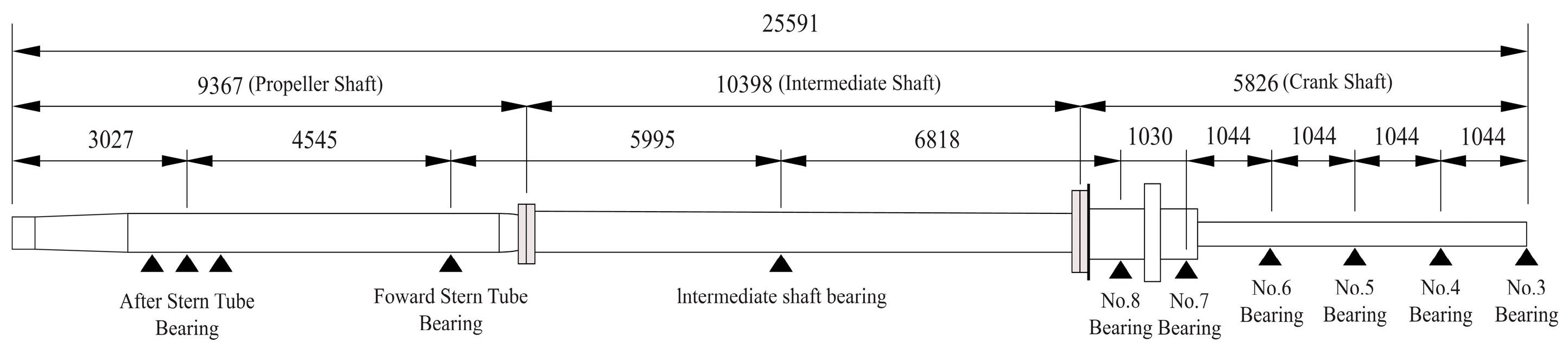
Figure 5 shows the arrangement of the propulsion shafting system and
Figure 6 presents the model used for the alignment analysis. For the afterward stern tube bearing, a double slope boring was applied to optimize the contact surface, and the support points of the afterward stern tube bearing were divided into three points, labeled ASTB1, ASTB2, and ASTB3, starting from the stern. The other bearings were considered to have single support points, as shown in
Figure 5, which includes the forward stern tube bearing (FSTB), intermediate shaft bearings (I/S BRG), and main engine bearings (MEB#8 to MEB#3).
3.2. Shaft Alignment Analysis Without Considering Hull Deformation
In order to understand the changes in bearing reaction characteristics of the propulsion shafting system when hull deformation is considered, shaft alignment analysis was conducted based on the offset values of a reference ship of the same type, where the shaft alignment design of the propulsion shafting system was performed without considering hull deformation.
Table 6 shows the offset values of the bearings supporting each shaft, and since the forward and afterward bearings of the stern tube correspond to the reference points during shaft installation, they were set to “0”. The shaft alignment analysis conditions were classified into four categories based on the immersion level of the propeller and the operating condition of the main engine, as shown in
Table 7. These conditions were classified because changes in the states of the main components, the propeller and the main engine, affect the alignment analysis of the propulsion shafting system. For the propeller, the effect of buoyancy needs to be considered since it is submerged in seawater, and for the main engine, thermal expansion of the main engine bearings must be considered due to operating temperature. For the subject ship’s main engine, thermal expansion of 0.35 mm in the upward vertical direction occurs at a main engine bearing operating temperature of 55 °C.
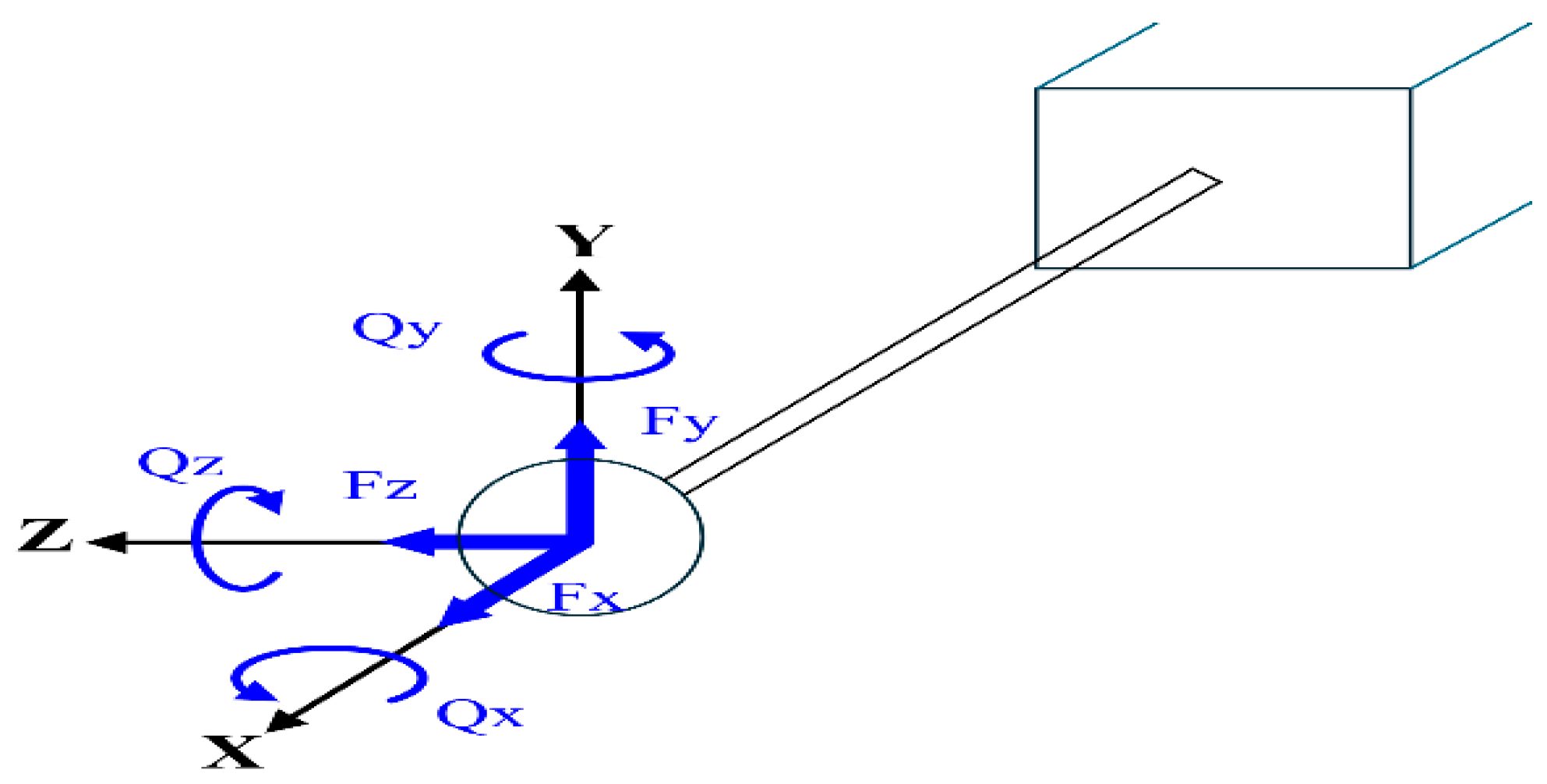
Figure 7 and
Table 8 show the dynamic forces and bending moments generated by the propeller when the ship is moving forward at maximum speed [
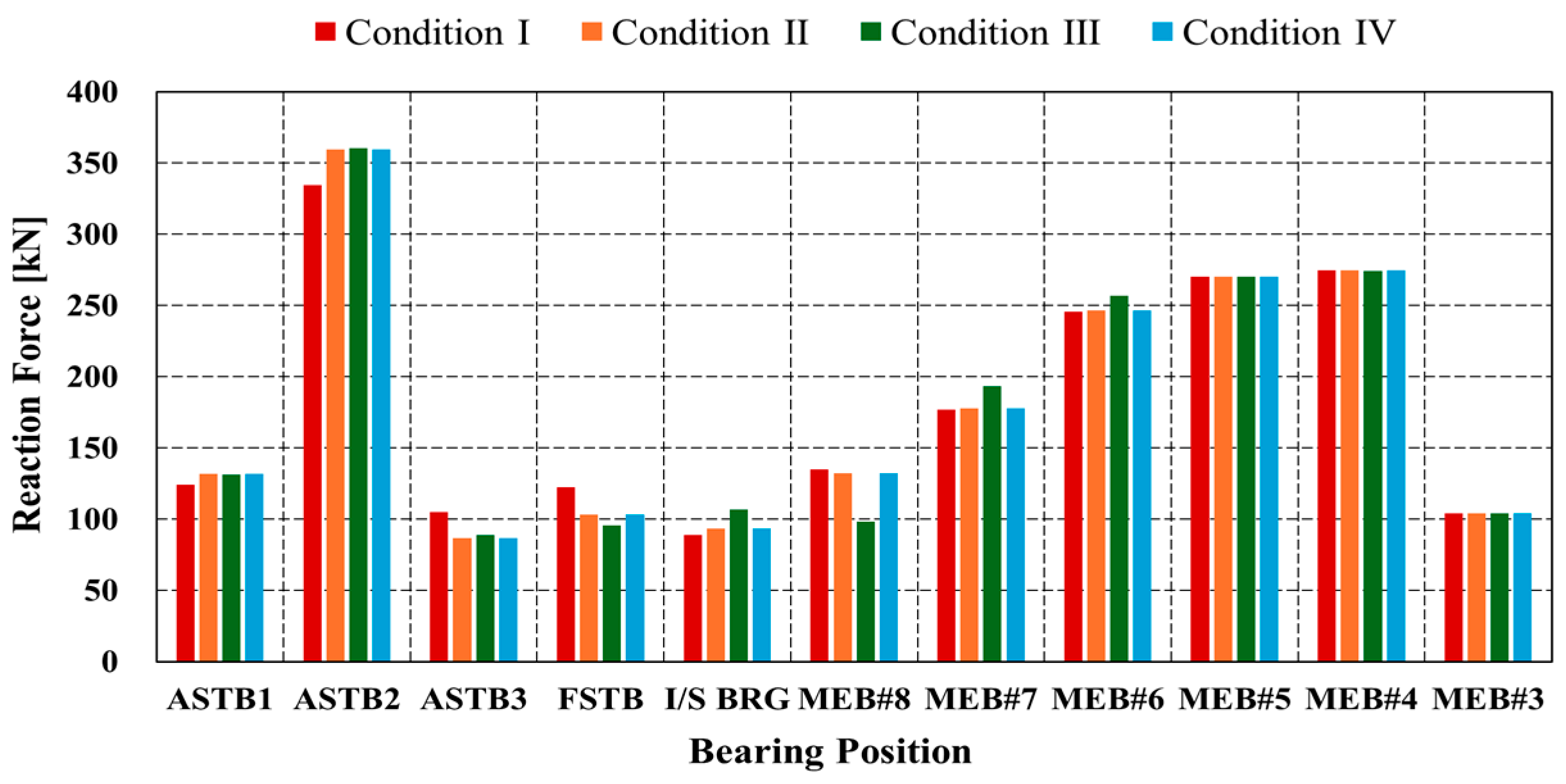
24]. Based on these conditions, the shaft alignment analysis without considering hull deformation was performed, and the results are shown in
Figure 8. Upon review, it is found that under Condition I, the load acting on the afterward stern tube bearing is the largest, at 564.7 kN, and particularly the highest load occurs at the middle part of the afterward stern tube bearing, designated as ASTB2. However, this is below the allowable reaction force for the afterward stern tube bearing (823.0 kN), with a design margin of 257.3 kN. The reaction forces from the forward stern tube bearing to the main engine bearings are within the standard values, showing trends similar to most general propulsion shaft alignment analysis results and satisfying classification and design standards [
25,
26,
27,
28,
29].
3.3. Shaft Alignment Analysis Considering Hull Deformation
In traditional shaft alignment analysis, the major lower structures of the propulsion shafting system were assumed to be rigid bodies, meaning the effects of hull deformation were not considered. This assumption may yield reasonable results when the propulsion shafting system is relatively flexible, but it could lead to significant errors when the system is stiff. If relative displacement occurs at any bearing, the resulting reaction forces at each bearing are referred to as the “influence number.” When this influence number is relatively small, the shaft is considered flexible, and when it is large, the shaft is considered stiff.
Table 9 shows the bearing reaction influence numbers for the propulsion shafting system of the vessel under study. Upon reviewing this, the main engine bearing is quite stiff. When a displacement of 1 mm occurs, the bearing reaction force changes within a range of 18.4 t to 186.6 t, especially at the aft end of the main engine bearing, where this tendency is more pronounced. This characteristic shows that hull deformation could have a significant impact on the propulsion shafting system.
To examine the characteristics of bearing reaction forces due to hull deformation, shaft alignment was conducted by applying the offset values reflecting the hull deformation at each bearing location of the propulsion shafting system, as shown in
Table 10.
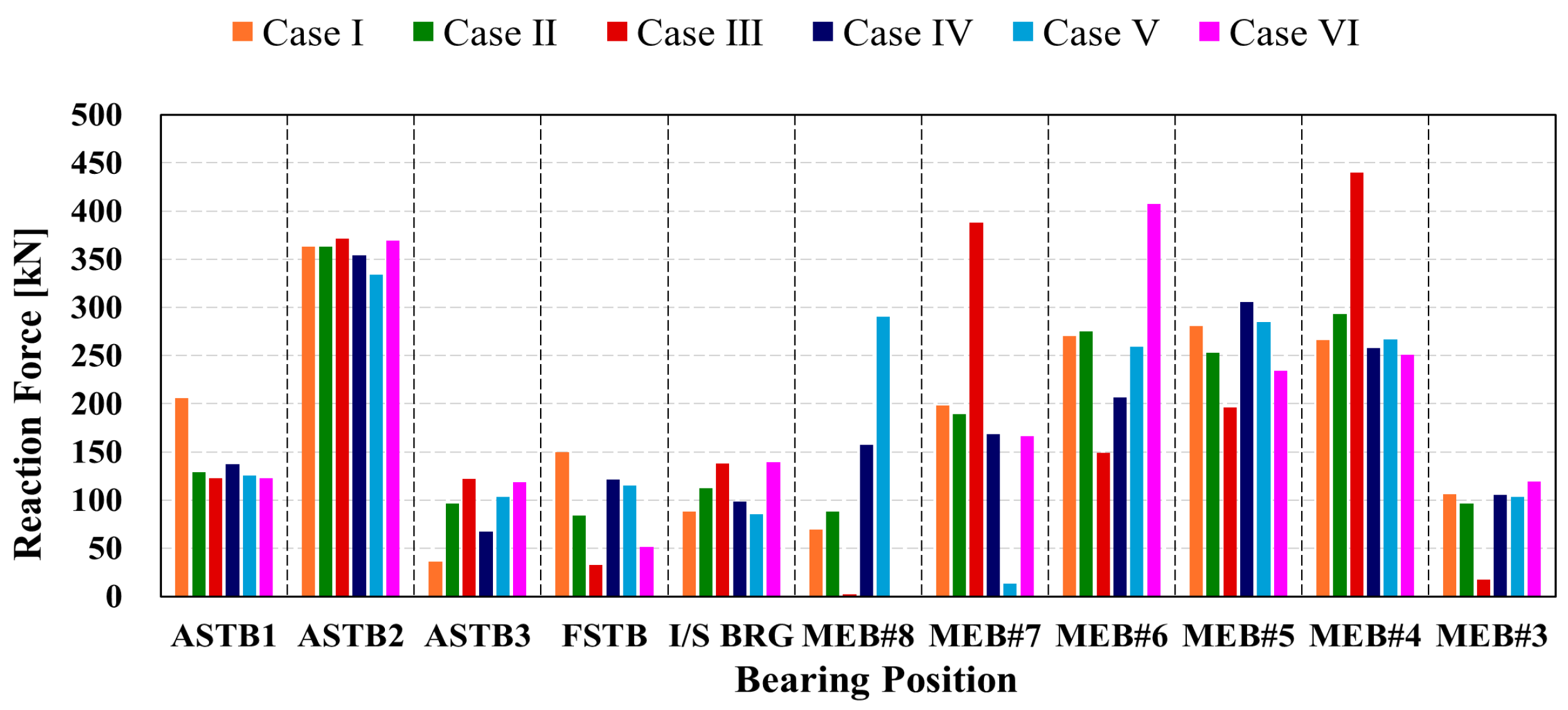
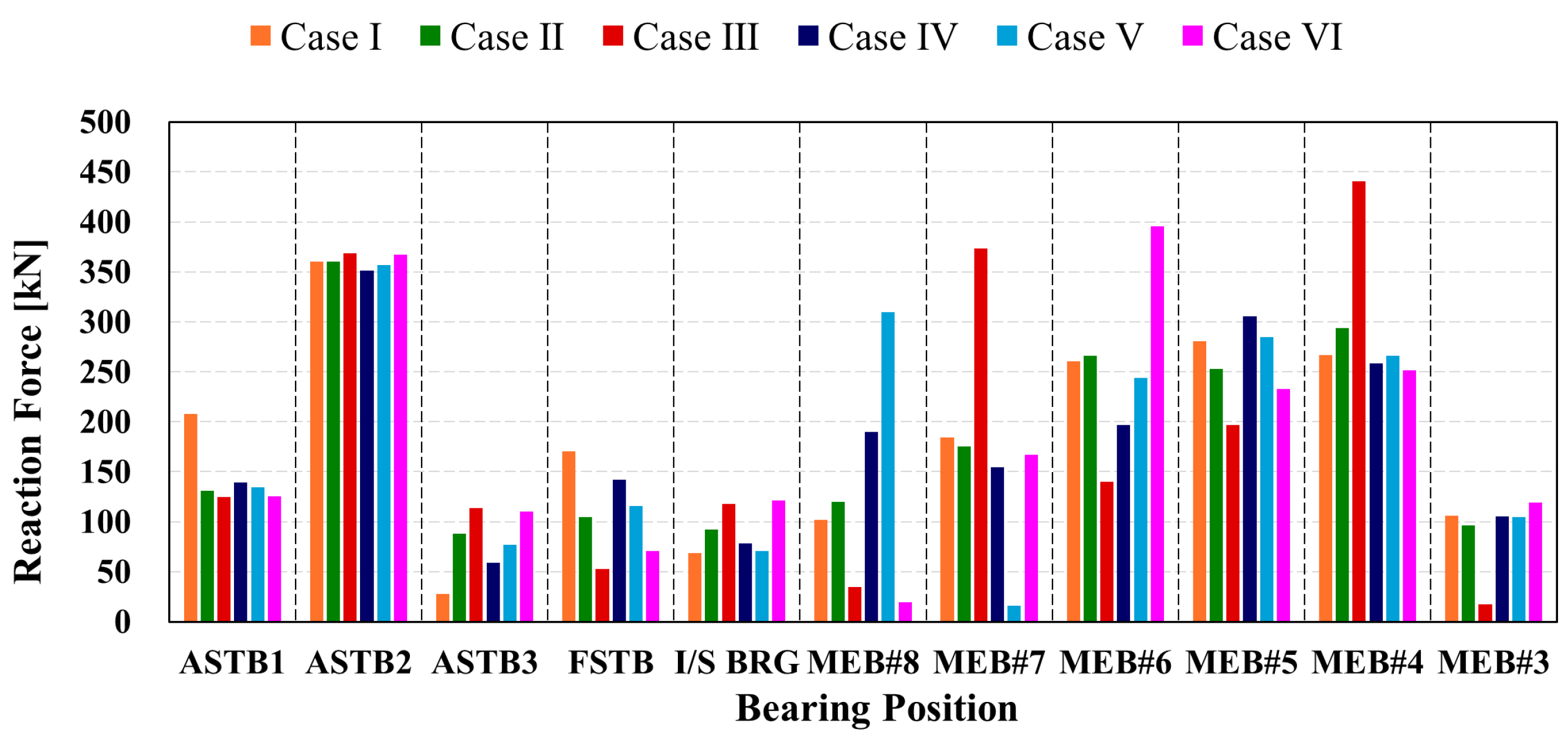
Figure 9 shows the results of the analysis. In this analysis, under Condition I (Cold static—0% immersion), Case I was analyzed, and for Conditions II (Cold static—100% immersion), Cases II, IV, and VI were analyzed, while for Condition III (Hot static—100% immersion), Cases III and V were analyzed. Upon review, it was found that under the conditions of Case VI, the reaction force at the aft-most main engine bearing (MEB#8) became zero-load, and under the conditions of Case V, the reaction force at the second aft-most bearing (MEB#7) was very low, at 13.31 kN. According to the engine manufacturer, under any operating condition, the aft-most main engine bearing (MEB#8) should have a minimum reaction force of more than 0 kN, and the second aft-most bearing (MEB#7) should have a reaction force of at least 25 kN. Therefore, the reaction forces of main engine bearings (MEB#8 and MEB#7) do not meet the specified values.
In general, when there is no load or only a very small load on white metal bearings, they cannot perform their functional role properly. In such cases, the gap between the shaft and the bearing becomes larger than the original design value, preventing adequate lubrication between the shaft and the bearing, which accelerates wear on the white metal bearings and could also lead to thermal damage. Additionally, when a specific bearing becomes unloaded, there is a risk of excessive load concentration on nearby bearings. For this subject ship’s engine, it was found that under Case III, load concentration occurred at the seventh main engine bearing (MEB#7) and the fourth main engine bearing (MEB#4). Specifically, under the operational conditions of Case III, the reaction force at the fourth main engine bearing (MEB#4) was 440.06 kN, which is 87.5% of the allowable reaction force value of 503 kN provided by the engine manufacturer, leaving a safety margin of less than 20%. Similarly, under the operational conditions of Case VI, the reaction force at the sixth main engine bearing (MEB#6) was 407.64 kN, which is 81.1% of the allowable reaction force value of 503 kN, also leaving a safety margin of less than 20%. At the shipyard during ship construction, the jack-up method is used to verify the reaction forces of each bearing at the dock and during sea trials, with an allowable error of ±20%. Therefore, in the design stage of the vessel, a design margin of more than 20% is applied to the bearing reaction forces of the main engine during shaft alignment analysis. Consequently, it is found that when hull deformation is considered, the main engine bearings may not meet the design standards.
In conclusion, this study reveals that when considering hull deformation under various ship operating conditions, the traditional shaft alignment methods fail to meet the design standards in some cases. Specifically, it was found that the aft-most main engine bearing (MEB#8) becomes unloaded, and excessive load concentration occurs at the sixth main engine bearing (MEB#6) and the fourth main engine bearing (MEB#4). This could cause significant damage to the propulsion shafting system, such as excessive wear or damage to the main engine bearings. Therefore, it is critical to ensure that the bearing reaction forces are properly distributed under all conditions.
3.4. Optimal Shaft Alignment Analysis After Adjusting Bearing Offset
As ships have become larger, propulsion shafting systems are now designed in a free-curve arrangement, rather than in a straight-line configuration where the shaft is supported in a straight line by all bearings. This free-curve arrangement allows the reaction forces at each bearing supporting the shaft to be evenly distributed, making the system less sensitive to incorrect shaft alignment. Generally, reducing the number of bearings and increasing the distance between them makes the system less sensitive to changes in shaft arrangement, thus improving stability. The most important consideration in shaft arrangement is ensuring flexibility in the system, which is determined by the ratio of the bearing spacing to the shaft diameter. The flexibility between the stern tube bearing, the intermediate shaft bearing, and the aft-most main engine bearing can be ensured by appropriately adjusting the position of the intermediate shaft bearings. However, due to the structural characteristics of the engine, it is difficult to ensure flexibility in the main engine bearings. Therefore, the engine is often installed at an incline toward the stern to ensure proper reaction forces at the main engine bearings. However, when there is significant hull deformation due to changes in cargo loading conditions, this method has limitations.
Thus, this study examines safe and efficient alignment methods for propulsion shafting systems based on the analysis of alignment characteristics influenced by hull deformation due to cargo loading conditions. One possible measure to address this is to further increase the inclination of the engine’s main engine bearing section, and another is to adjust the height of the intermediate shaft bearings. However, the feasibility analysis based on the Reaction Influence Number (RIN) in
Table 8 demonstrated that the main engine bearings exhibit excessive stiffness. Consequently, increasing the inclination is ineffective as it induces drastic load changes with minimal displacement, failing to secure the required flexibility. Therefore, instead of modifying the engine inclination, this study applied a method of adjusting the offset of the intermediate shaft bearing, which is the least sensitive to changes in main engine bearing load, based on the Reaction Influence Number (RIN) characteristics of the bearings in the propulsion shafting system of the subjected ship.
Considering that the aft-most main engine bearing (MEB#8) was in a no-load state under the Case VI condition and nearly in a no-load state with a reaction force of 2.55 N under the Case III condition, the offset of the intermediate shaft bearing (which is located before the aft-most main engine bearing) was changed from −3.7 mm to −3.95 mm to ensure that the reaction force of the aft-most main engine bearing (MEB#8) exceeds 10 kN. The height of the intermediate shaft bearing was lowered by 0.25 mm compared to the previous value, while the offsets of the other bearings were kept the same. The shaft alignment was then reconducted.
Figure 10 shows the results of the alignment analysis, where only the offset of the intermediate shaft bearing was lowered by 0.25 mm, based on the bearing offset values shown in
Table 10. Upon review, it was confirmed that, even when considering hull deformation, a stable propulsion shaft alignment was achieved under all six operating conditions of the ship. In particular, in Case III, where the aft-most main engine bearing had been in a no-load state, the reaction force increased from 2.57 kN to 34.63 kN, and in Case VI, the reaction force increased from 0 kN to 19.63 kN, indicating stable bearing reaction forces.
4. Conclusions
In this study, the hull deformation under different cargo loading conditions was quantitatively analyzed for a Suezmax-class crude oil tanker, which experiences significant changes in draft due to cargo loading. By reflecting these results into the offset values of the bearings, the correlation between hull deformation and bearing reaction forces was systematically examined. Based on this research, the influence of hull deformation on shaft alignment was quantitatively evaluated, and an effective alignment approach was identified through adjustment of the intermediate shaft bearing offset. The following conclusions were derived from this study.
In order to quantitatively analyze the hull deformation characteristics under different operational conditions, a full ship structural analysis was performed. The analysis revealed that the relative deformation patterns between the hull structure and the engine room varied significantly depending on the loading conditions. This mismatch between global hull deformation and the deformation of the engine room structure was identified as a key factor affecting the alignment behavior.
Based on the alignment analysis considering the hull deformation due to cargo loading, in Case VI, it was found that the reaction force of the aft-most main engine bearing (MEB#8) of the main engine became a no-load state, and in Case V, the reaction force of the second aft-most main engine bearing (MEB#7) was found to be very low at 13.31 kN. These findings show that specific operating conditions can produce unloading phenomena that are not accounted for in conventional cold-static alignment procedures.
Due to the low flexibility of the main engine bearings, when the aft-most main engine bearings (MEB#8 & MEB#7) are in a no-load state, the load tends to shift significantly to the adjacent bearings. In particular, in Case III, the load concentrated on the 7th main engine bearing (MEB#7) and the 4th main engine bearing (MEB#4). As a result, the load at these bearings approached the allowable load values specified by the engine manufacturer, reducing the safety margin to less than 20%. This raised concerns about excessive wear or damage to the main engine bearings, potentially causing critical damage, highlighting the structural vulnerability of the propulsion shafting system against hull deflection.
Based on the analysis of the alignment characteristics influenced by hull deformation due to cargo loading, adjusting the offset of the intermediate shaft bearings was identified as the most effective solution. By lowering the offset of the intermediate shaft bearing by 0.25 mm compared to the original value, it was confirmed that the reaction forces at each bearing were properly distributed under various ship operating conditions. The Reaction Influence Number (RIN) analysis verified that this offset adjustment produces a measurable redistribution of bearing loads, demonstrating that the Intermediate Shaft Bearing serves as an effective control point for stabilizing the load response of the main engine bearings.
The most important factor in the alignment of the propulsion shafting system is ensuring the flexibility of the shaft system. However, due to the structural characteristics of the main engine bearings, it is difficult to secure sufficient flexibility, making them sensitive to hull deformation. In such cases, the proposed methodology of adjusting the intermediate shaft bearings, which exhibits lower sensitivity to load changes, offers an optimal shaft alignment strategy for large crude oil tanker ships.
Although this study was conducted using a single Suezmax-class tanker, the methodology can be applied to ships with similar structural and machinery arrangements. Future work will extend the analysis to additional ship types to improve its general applicability.
Author Contributions
Conceptualization, Y.K.; Methodology, Y.K.; Software, J.L.; Formal analysis, J.L. and Y.K.; Investigation, J.L.; Resources, J.L.; Data curation, J.L.; Writing—original draft, J.L.; Writing—review & editing, Y.K.; Visualization, Y.K.; Supervision, Y.K.; Project administration, Y.K.; Funding acquisition, Y.K. All authors have read and agreed to the published version of the manuscript.
Funding
This research was supported by the Ministry of Oceans and Fisheries, Republic of Korea (Project No. RS-2025-02220459).
Data Availability Statement
The data presented in this study are available on request from the corresponding author.
Conflicts of Interest
The authors declare no conflict of interest.
References
- Low, K.H.; Lim, S.H. Propulsion shaft alignment method and analysis for surface crafts. Adv. Eng. Softw. 2004, 35, 45–58. [Google Scholar] [CrossRef]
- Mann, G. Analysis of shafting problems using fair curve alignment theory. Nav. Eng. J. 1965, 77, 117–133. [Google Scholar] [CrossRef]
- Mann, G. Shipyard alignment of propulsion shafting using fair curve alignment theory. Nav. Eng. J. 1965, 77, 651–659. [Google Scholar] [CrossRef]
- Avgouleas, K.; Sarris, E.; Gougoulidis, G. Practical aspects of propulsion shaft alignment, a virtual event. In SNAME International Symposium on Ship Operations, Management and Economics; SNAME: Pavonia Ave, NJ, USA, 2021. [Google Scholar]
- Murawski, L. Shaft line alignment analysis taking ship construction flexibility and deformations into consideration. Mar. Struct. 2005, 18, 62–84. [Google Scholar] [CrossRef]
- Shi, L.; Xue, D.; Song, X. Research on shafting alignment considering ship hull deformations. Mar. Struct. 2010, 23, 103–114. [Google Scholar] [CrossRef]
- Mourelatos, Z.; Papalambros, P. A mathematical model for optimal strength and alignment of a marine shafting system. J. Ship Res. 1985, 29, 212–222. [Google Scholar] [CrossRef]
- Larsen, O.C. Some considerations of marine shafting design. Ind. Lubr. Tribol. 1981, 33, 204–237. [Google Scholar] [CrossRef]
- Šverko, D. Design concerns in propulsion shafting alignment. In Proceedings of the ICMES Conference, Helsinki, Finland, 19–21 May 2003. [Google Scholar]
- Šverko, D. Hull deflections shaft alignment interaction, a case study. In Proceedings of the 7th International Symposium on Marine Engineering, Tokyo, Japan, 24–28 October 2005; pp. 245–251. [Google Scholar]
- DNV. Shaft Alignment and Propeller Shaft Aft Bearing Performance: Recent Trends Call for Action; DNV: Oslo, Norway, 2018. [Google Scholar]
- Zhou, W.; Zhao, Y.; Yuan, H.; Wang, X. Study of the hull structural deformation calculation using the matrix displacement method and its influence on the shaft alignment. J. Mar. Sci. Eng. 2023, 11, 1495. [Google Scholar] [CrossRef]
- Choi, S.P.; Lee, J.U.; Park, J.B. Application of deep reinforcement learning to predict shaft deformation considering hull deformation of medium-sized oil/chemical tanker. J. Mar. Sci. Eng. 2021, 9, 767. [Google Scholar] [CrossRef]
- Kim, C.W.; Lee, Y.J.; Cho, K.H.; Kim, U.K. A study on the measurement and analysis of bearing reaction forces of marine propulsion shafting system using strain-gauge. J. Korean Soc. Mar. Eng. 2008, 32, 33–41. (In Korean) [Google Scholar] [CrossRef]
- Lee, Y.J.; Kim, U.K. A study on hull deflection and shaft alignment in VLCC. J. Korean Soc. Mar. Eng. 2005, 29, 785–794. [Google Scholar]
- Sun, J.S.; Lee, Y.J.; Kim, U.K. The flexibility estimation of alignment for propulsion shaft system using the approximated hull deflection curve. J. Korean Soc. Mar. Eng. (In Korean). 2009, 33, 28–36. (In Korean) [Google Scholar] [CrossRef]
- Korbetis, G.; Vlachos, O.; Charitopoulos, A.G.; Papadopoulos, C.I. Effects of hull deformation on the static shaft alignment characteristics of VLCCs: A case study. In Proceedings of the 13th International Conference on Computer Applications and Information Technology in the Maritime Industries, Redworth, UK, 12–14 May 2014; pp. 546–557. [Google Scholar]
- Seo, C.O.; Lee, J.U.; Kim, J.H.; Kim, J.R. A study on the hull deflection affecting propulsion shafting alignment for a 173,000 CBM liquefied natural gas carrier. J. Korean Soc. Mar. Eng. 2018, 42, 258–264. (In Korean) [Google Scholar] [CrossRef]
- Seo, C.O.; Jeong, B.; Kim, J.R.; Song, M.; Noh, J.H.; Lee, J.U. Determining the influence of ship hull deformations caused by draught change on shaft alignment application using FE analysis. Ocean Eng. 2020, 210, 107488. [Google Scholar] [CrossRef]
- Zhou, W.; Zhao, Y.; Yuan, H.; Ren, Z. Experimental study on the effect of hull deformation on the relative attitude between shaft and bearing. J. Mar. Sci. Eng. 2023, 11, 1992. [Google Scholar] [CrossRef]
- Kim, Y.G.; Kim, U.K. Design and analysis of the propulsion shafting system in a ship with single stern tube bearing. J. Mar. Sci. Technol. 2020, 25, 536–548. [Google Scholar] [CrossRef]
- Zhang, D. Ship shafting alignment technology and hull deformation based on improved genetic algorithm and shipbed calibration. J. Vibroeng 2024, 26, 948–960. [Google Scholar] [CrossRef]
- Cheng, J.W.; Bu, W.J.; Shi, L.; Fu, J.Q. A real-time shaft alignment monitoring method adapting to ship hull deformation for marine propulsion system. Mech. Syst. Signal Process. 2023, 197, 110366. [Google Scholar] [CrossRef]
- DH Shipbuilding. Calculation of Shaft Alignment (DWG No.: 8R2820201); DH Shipbuilding: Haenam, Republic of Korea, 2023. [Google Scholar]
- American Bureau of Shipping. Rules for Building and Classing: Steel Vessels; ABS: Houston, TX, USA, 2024. [Google Scholar]
- Lloyd’s Register. Rules and Regulations for the Classification of Naval Ships; Lloyd’s Register: London, UK, 2024. [Google Scholar]
- DNVGL. DNV Rules for Classification: Ships (RU-SHIP); DNVGL: Oslo, Norway, 2024. [Google Scholar]
- Korean Register. Rules for the Classification of Steel Ships; Korean Register: Pusan, Republic of Korea, 2024. [Google Scholar]
- MAN Energy Solutions. Data for Shaft Alignment. ID No. 5969414-2; MAN Energy Solutions: Copenhagen, Denmark, 2022. [Google Scholar]
Figure 1.
Overall view of full ship.
Figure 1.
Overall view of full ship.
Figure 2.
Boundary conditions.
Figure 2.
Boundary conditions.
Figure 3.
Comparison between T&S data and applied loading in the FE model for each loading condition: (a) dry docking condition (Case I), (b) ballast departure condition (Case II), (c) ballast arrival condition (Case III), (d) homo. design departure (Case IV), (e) homo. design arrival (Case V), (f) homo. scantling departure (Case VI).
Figure 3.
Comparison between T&S data and applied loading in the FE model for each loading condition: (a) dry docking condition (Case I), (b) ballast departure condition (Case II), (c) ballast arrival condition (Case III), (d) homo. design departure (Case IV), (e) homo. design arrival (Case V), (f) homo. scantling departure (Case VI).
Figure 4.
Relative deformation at each bearing position.
Figure 4.
Relative deformation at each bearing position.
Figure 5.
Arrangement of the propulsion shafting system.
Figure 5.
Arrangement of the propulsion shafting system.
Figure 6.
Propulsion shafting model used for the alignment analysis.
Figure 6.
Propulsion shafting model used for the alignment analysis.
Figure 7.
Direction of propeller force and bending moment.
Figure 7.
Direction of propeller force and bending moment.
Figure 8.
Analysis results of bearing reaction forces of the propulsion shafting system.
Figure 8.
Analysis results of bearing reaction forces of the propulsion shafting system.
Figure 9.
Analysis results of bearing reaction forces of the propulsion shafting system considering hull deflection.
Figure 9.
Analysis results of bearing reaction forces of the propulsion shafting system considering hull deflection.
Figure 10.
Analysis results of bearing reaction forces of the propulsion shafting system after adjusting I/S bearing offset, considering hull deflection.
Figure 10.
Analysis results of bearing reaction forces of the propulsion shafting system after adjusting I/S bearing offset, considering hull deflection.
Table 1.
Main particulars of ship.
Table 1.
Main particulars of ship.
| Items | Detail |
|---|
| Kind of ship | 157 K oil tanker |
| Type of main engine | 6G70ME-C10.5 |
| Ship speed at design draft | 14.5 knots |
| Length over all (m) | 274.0 |
| Breadth (m) | 48.0 |
| Depth (m) | 23.6 |
| Design draft (m) | 16.0 |
| Scantling draft (m) | 17.2 |
Table 2.
Loading conditions.
Table 2.
Loading conditions.
| Case | Description | Displacement
(mt) | Aft. Draft
(m) | Fwd. Draft
(m) | L.C.G
(m) |
|---|
| Case I | Dry Docking | 34,604 | 3.9 | 3.9 | 12.035 |
| Case II | Ballast Departure | 74,171 | 6.2 | 9.5 | 9.515 |
| Case III | Ballast Arrival | 75,053 | 9.8 | 6.0 | 9.318 |
| Case IV | Homo. Design Departure | 168,075 | 16.6 | 15.5 | 13.578 |
| Case V | Homo. Design Arrival | 166,486 | 16.2 | 15.5 | 13.501 |
| Case VI | Homo. Scantling Departure | 182,528 | 17.3 | 17.1 | 13.576 |
Table 3.
Hull deformation values at bearing position (unit: mm).
Table 3.
Hull deformation values at bearing position (unit: mm).
| Bearing | Case I | Case II | Case III | Case IV | Case V | Case VI |
|---|
| ASTB | 0.00 | 0.00 | 0.00 | 0.00 | 0.00 | 0.00 |
| FSTB | 0.00 | 0.00 | 0.00 | 0.00 | 0.00 | 0.00 |
| I/S Brg | −1.70 | 0.38 | 1.33 | −1.24 | −0.31 | 1.48 |
| MEB#8 | −4.03 | 1.42 | 1.94 | −5.69 | −3.52 | 6.15 |
| MEB#7 | −4.28 | 1.63 | 2.08 | −6.62 | −4.41 | 7.25 |
| MEB#6 | −4.51 | 1.86 | 1.96 | −7.85 | −5.19 | 8.45 |
| MEB#5 | −4.73 | 2.08 | 1.85 | −8.52 | −6.01 | 9.52 |
| MEB#4 | −4.96 | 2.32 | 1.72 | −9.52 | −6.86 | 10.64 |
| MEB#3 | −5.18 | 2.53 | 1.26 | −10.51 | −7.71 | 11.81 |
Table 4.
Specifications of the propulsion shafting system.
Table 4.
Specifications of the propulsion shafting system.
| Items | Detail |
|---|
| Main engine | |
| Type | 6G70ME-C10.5 |
| MCR (kW × rpm) | 13,340 × 66.5 |
| Cylinder bore (mm) | 700 |
| Stroke (mm) | 3256 |
| Weight of flywheel (kg) | 16,664 |
| Dia. of journal (mm) | 417/236 |
| Dia. of crankpin (mm) | 417 |
| Shaft | |
| Dia. of intermediate shaft (mm) | 535 |
| Length of intermediate shaft (mm) | 10,398 |
| Dia. of propeller shaft (mm) | 705 |
| Length of propeller shaft (mm) | 9367 |
| Propeller | |
| Number of blades | 4 |
| Diameter (m) | 9.0 |
| Weight in air (kg) | 40,169 |
| Weight of propeller cap (kg) | 1122 |
| Material | Ni-Al-Bronze |
Table 6.
Bearing offset.
| Bearing | Vertical Offset (mm) |
|---|
| Afterward stern tube bearing | 0.00 |
| Forward stern tube bearing | 0.00 |
| Intermediate shaft bearing | −3.50 |
| Main engine bearing | |
| Without thermal expansion | −7.20 |
| With thermal expansion | −6.85 |
Table 5.
Specifications of bearings.
Table 5.
Specifications of bearings.
| Items | Detail |
|---|
| Afterward stern tube bearing | |
| Type | White metal |
| Inner diameter (mm) | 705 |
| Effective length (mm) | 1460 |
| Clearance (mm) | 1.1 |
| Forward stern tube bearing | |
| Type | White metal |
| Inner diameter (mm) | 707 |
| Effective length (mm) | 530 |
| Clearance (mm) | 1.1 |
| Intermediate shaft | |
| Type | White metal |
| Inner diameter (mm) | 535 |
| Effective length (mm) | 360 |
| Clearance (mm) | 0.45 |
| Main engine bearing | |
| Type | White metal |
| Clerance (mm) | 0.45 |
Table 7.
Shaft alignment analysis conditions.
Table 7.
Shaft alignment analysis conditions.
| Bearing | Propeller Immersion | Engine Condition |
|---|
| Condition I | 100% | Hot Dynamic |
| Condition II | 100% | Hot Static |
| Condition III | 100% | Cold Static |
| Condition IV | 0% | Cold Static |
Table 8.
Propeller force and bending moment.
Table 8.
Propeller force and bending moment.
| Bearing | Vertical Offset (mm) |
|---|
| Load in vertical direction | |
| Force, Fy (kN) | −2 |
| Moment, Qz (kNm) | 79 |
| Load in horizontal direction | |
| Force, Fz (kN) | 15 |
| Moment, Qy (kNm) | 347 |
Table 9.
Reaction force influence number. (unit: kN/mm).
Table 9.
Reaction force influence number. (unit: kN/mm).
| | ASTB1 | ASTB2 | ASTB3 | FSTB | I/S Brg. | MEB#8 | MEB#7 | MEB#6 | MEB#5 | MEB#4 | MEB#3 |
|---|
| ASTB1 | 659 | −651 | −144 | 143 | −8.6 | 3.3 | −1.2 | −0.9 | −0.002 | 0.48 | −0.001 |
| ASTB2 | −651 | −1270 | −607 | −23.8 | 11.5 | −5.7 | 2.1 | 1.5 | 0.003 | −0.083 | 0.002 |
| ASTB3 | −144 | −607 | 962 | −240 | 34.9 | −15.9 | 5.8 | 4.3 | 0.009 | −0.23 | 0.006 |
| FSTB | 143 | −23.8 | −240 | 180 | −80.9 | 55.6 | −20.6 | −15.0 | −0.03 | 0.82 | −0.02 |
| I/S Brg. | −8.6 | 11.5 | 34.9 | −80.9 | 79.4 | −128.0 | 56.4 | 37.9 | −0.16 | −2.08 | 0.064 |
| MEB#8 | 3.3 | −5.7 | −15.9 | 55.6 | −128.0 | 830.0 | −976.0 | 181.0 | 64.5 | −4.99 | −3.22 |
| MEB#7 | −1.2 | 2.1 | 5.8 | −20.6 | 56.4 | −976.0 | 1830.0 | −1040.0 | 89.3 | 63.8 | −6.3 |
| MEB#6 | −0.9 | 1.5 | 4.3 | −15.0 | 37.9 | 181.0 | −1040.0 | 1530.0 | −860.0 | 125.0 | 41.1 |
| MEB#5 | −0.002 | 0.003 | 0.009 | −0.03 | −0.16 | 64.5 | 89.3 | −860.0 | 1410.0 | −912.0 | 211.0 |
| MEB#4 | 0.048 | −0.083 | −0.23 | 0.82 | −2.08 | −4.99 | 63.8 | 125.0 | −912.0 | 1230.0 | −505.0 |
| MEB#3 | −0.001 | 0.002 | 0.006 | −0.002 | 0.064 | −3.22 | −6.3 | 41.1 | 211.0 | −505.0 | 262.0 |
Table 10.
Vertical offset of bearings for shaft alignment analysis.
Table 10.
Vertical offset of bearings for shaft alignment analysis.
| Bearing | Case
I | Case
II | Case
III | Case
IV | Case
V | Case
VI |
|---|
| ASTB | 0.0 | 0.0 | 0.0 | 0.0 | 0.0 | 0.0 |
| FSTB | 0.0 | 0.0 | 0.0 | 0.0 | 0.0 | 0.0 |
| I/S Brg. | −5.4 | −3.3 | −2.4 | −4.9 | −4.0 | −2.2 |
| MEB#8 | −11.4 | −6.0 | −5.5 | −13.1 | −10.9 | −1.3 |
| MEB#7 | −11.7 | −5.8 | −5.3 | −14.0 | −11.8 | −0.2 |
| MEB#6 | −11.9 | −5.5 | −5.4 | −15.0 | −12.6 | 1.1 |
| MEB#5 | −12.1 | −5.3 | −5.6 | −15.9 | −13.4 | 2.1 |
| MEB#4 | −12.4 | −5.1 | −5.7 | −16.9 | −14.3 | 3.2 |
| MEB#3 | −12.6 | −4.9 | −6.1 | −17.9 | −15.1 | 4.4 |
| Disclaimer/Publisher’s Note: The statements, opinions and data contained in all publications are solely those of the individual author(s) and contributor(s) and not of MDPI and/or the editor(s). MDPI and/or the editor(s) disclaim responsibility for any injury to people or property resulting from any ideas, methods, instructions or products referred to in the content. |