Article

Research on a Fully Parameterized Geometric Modeling Method for an Air Cavity Planing Hull

1
Department of Naval Architecture, Naval University of Engineering, Wuhan 430033, China
2
Special Vehicle Research Institute, AVIC, Jingmen 448035, China
3
School of Naval Architecture, Ocean and Energy Power Engineering, Wuhan University of Technology, Wuhan 430033, China
*
Author to whom correspondence should be addressed.
J. Mar. Sci. Eng. 2025, 13(3), 476; https://doi.org/10.3390/jmse13030476
Submission received: 16 January 2025 / Revised: 25 February 2025 / Accepted: 27 February 2025 / Published: 28 February 2025
(This article belongs to the Section Ocean Engineering)

Abstract

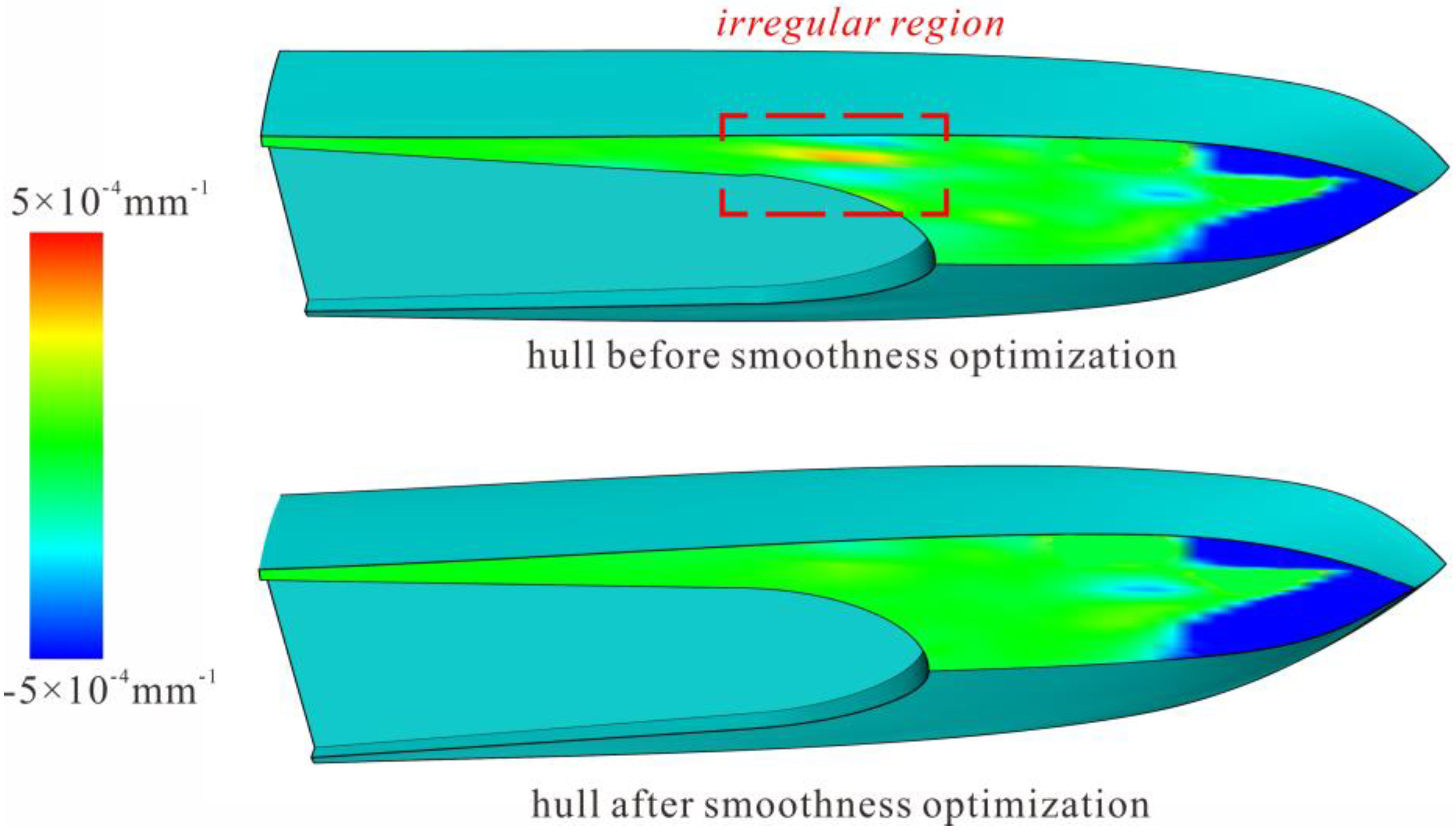
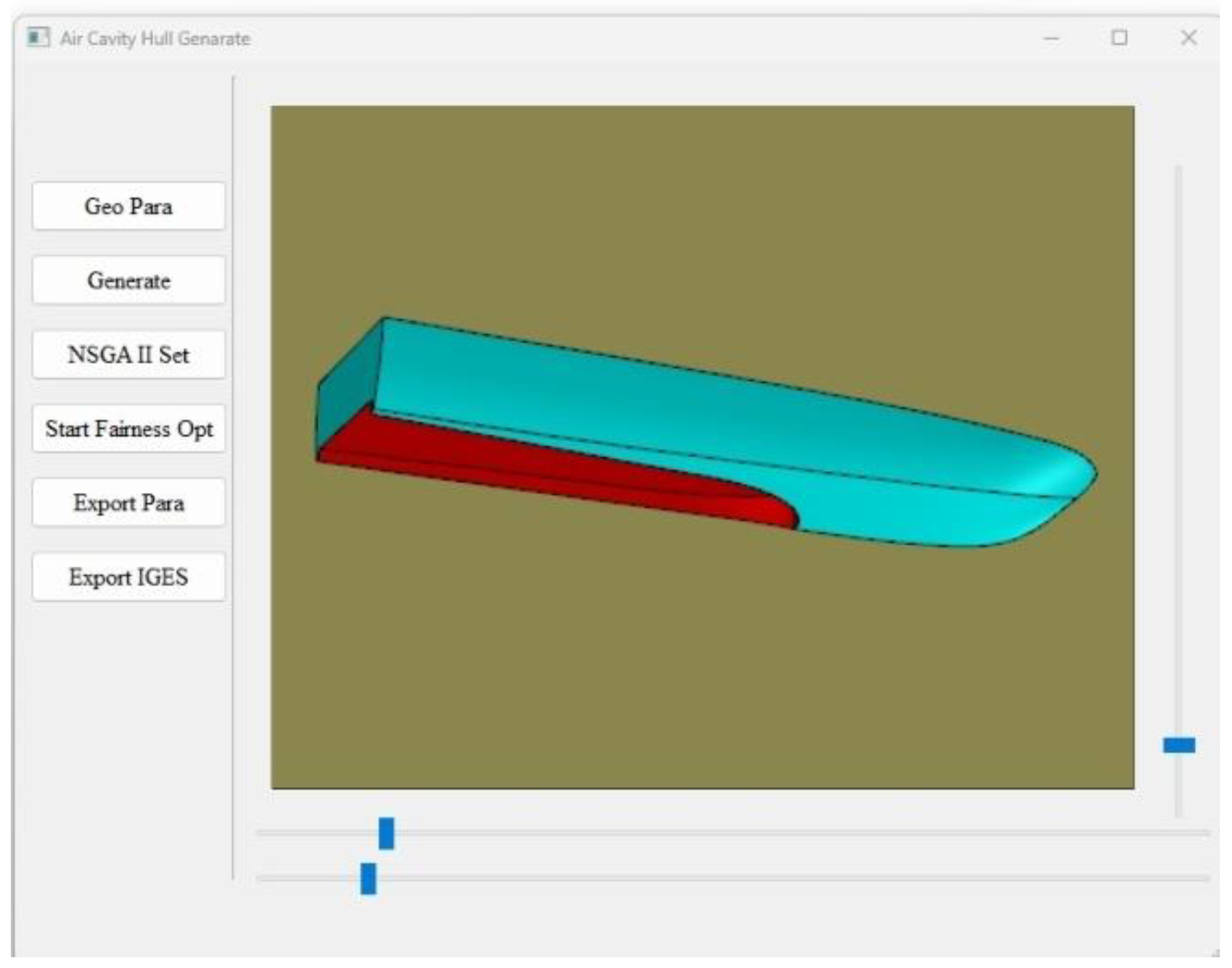
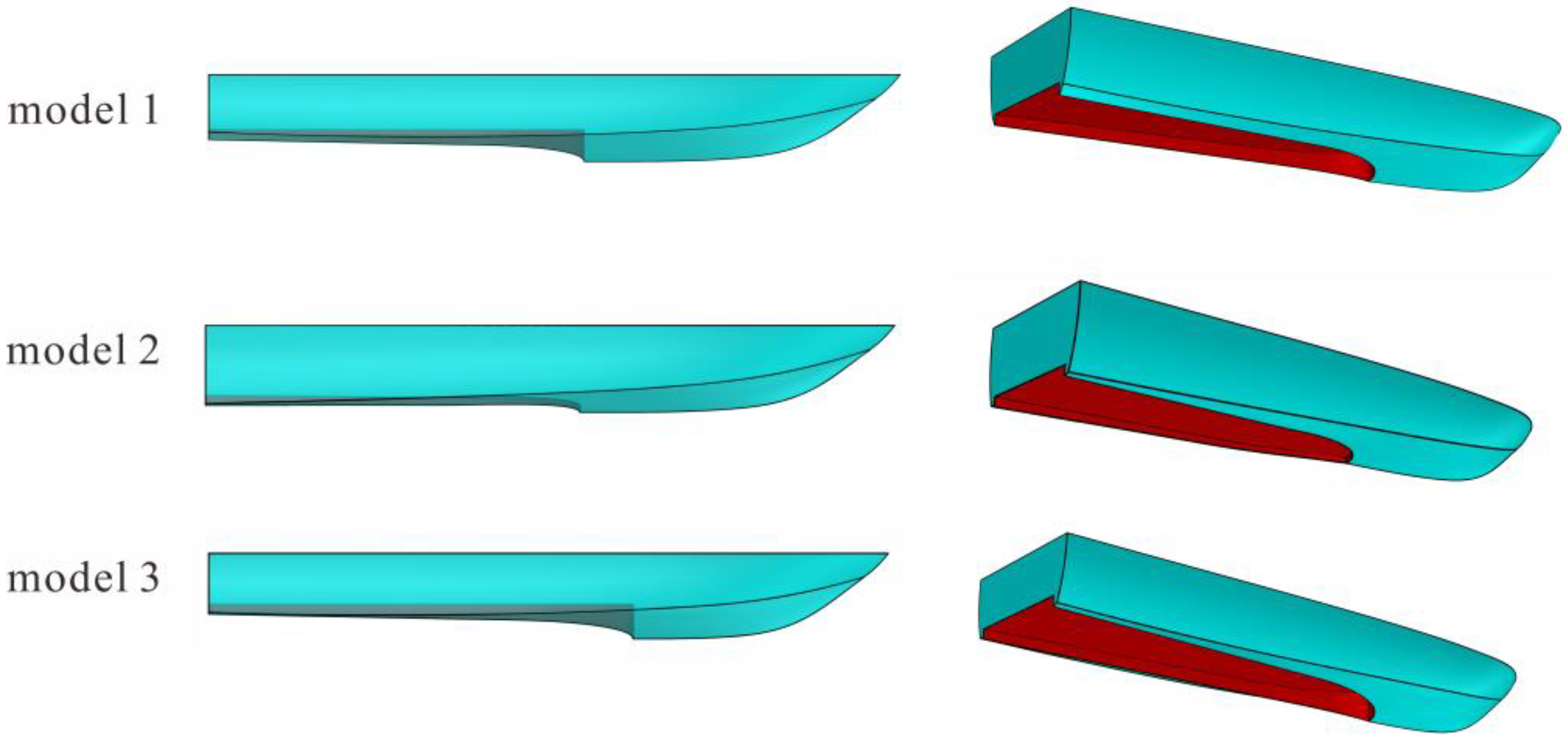
An air-lubricated planing hull with integrated air channels presents a transformative approach for enhancing marine vessel performance by significantly reducing hydrodynamic resistance. Within the framework of air-layer drag reduction research, the precise definition and optimization of geometric design parameters are critical, as they directly influence the formation and stability of the air layer and the hydrodynamic characteristics of the hull. Applying a fully parameterized modeling approach to the air-lubricated planing hull is highly relevant and pivotal for advancing systematic, performance-driven hull design and optimization in modern naval architecture. This study proposes a fully parameterized modeling method specifically designed for such crafts. The method utilizes B-spline curves to represent the planar projections of the primary hull contours and the sectional lines of key hull surfaces. The hull surfaces are fitted using non-uniform rational B-Spline (NURBS) surfaces, and the design parameters are smoothed according to the principle of minimum strain energy, leading to fair and smooth hull surfaces. A dedicated program is developed based on this method. It facilitates the rapid generation of smooth hull forms for an air-lubricated planing hull solely from design parameters without depending on parent hull forms. This approach provides geometric hull samples for optimizing the hydrodynamic performance of the air-lubricated planing hull.
Keywords: fully parameterized modeling; air-lubricated planing hull; air cavity; NURBS; surface smoothing optimization; minimized strain energy fully parameterized modeling; air-lubricated planing hull; air cavity; NURBS; surface smoothing optimization; minimized strain energy