Article

A High-Resolution Mirror Migration Framework for Ocean Bottom Cable Seismic Data
1
Hubei Subsurface Multi-Scale Imaging Key Laboratory, School of Geophysics and Geomatics, China University of Geosciences, Wuhan 430074, China
2
Innovation Academy for Precision Measurement Science and Technology, Chinese Academy of Sciences, Wuhan 430077, China
3
R&D Center, Sinopec Geophysical Corporation, Nanjing 211106, China
*
Author to whom correspondence should be addressed.
J. Mar. Sci. Eng. 2025, 13(12), 2254; https://doi.org/10.3390/jmse13122254
Submission received: 12 October 2025 / Revised: 24 November 2025 / Accepted: 25 November 2025 / Published: 27 November 2025
(This article belongs to the Special Issue Modeling and Waveform Inversion of Marine Seismic Data)

Abstract

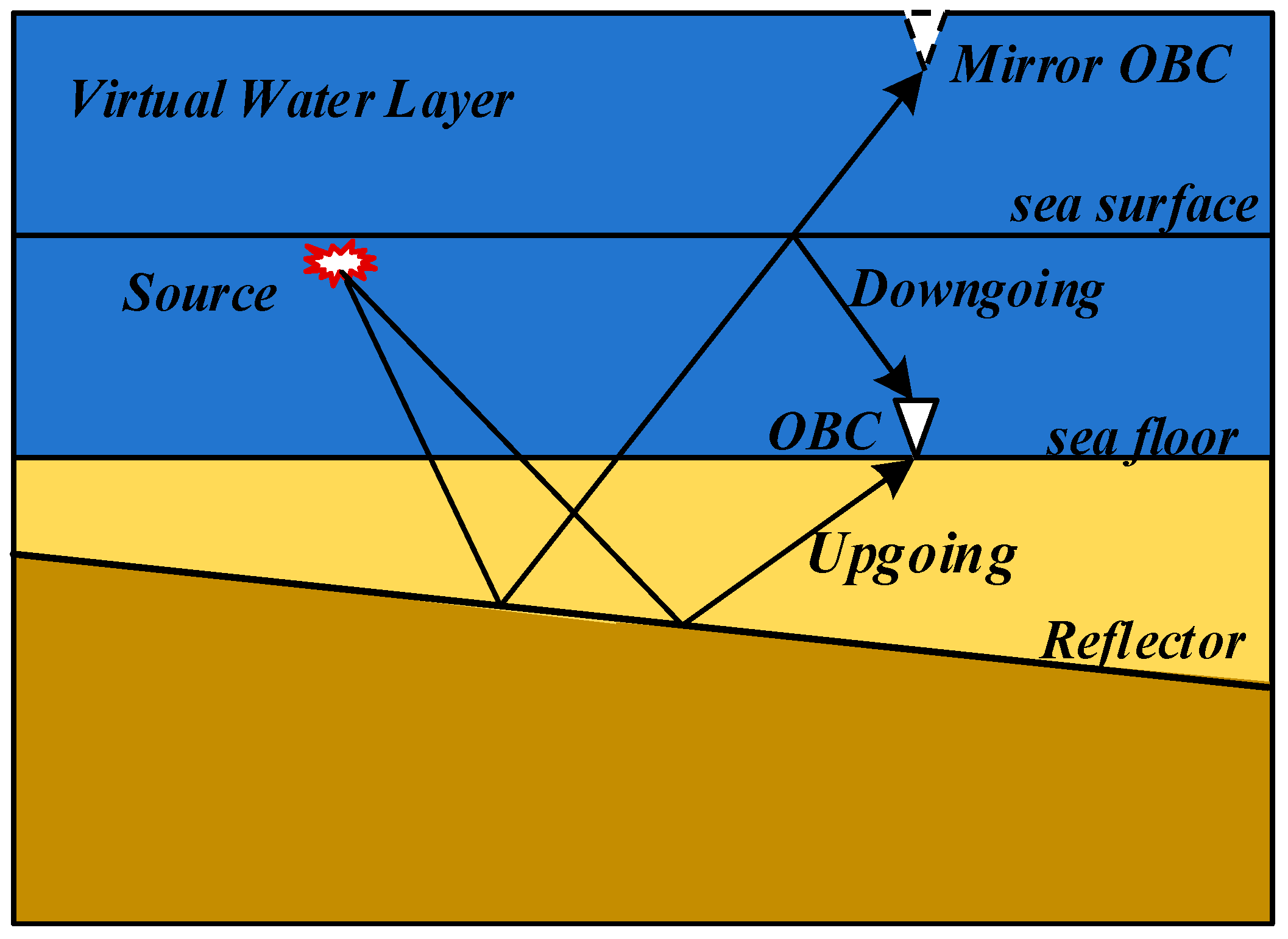
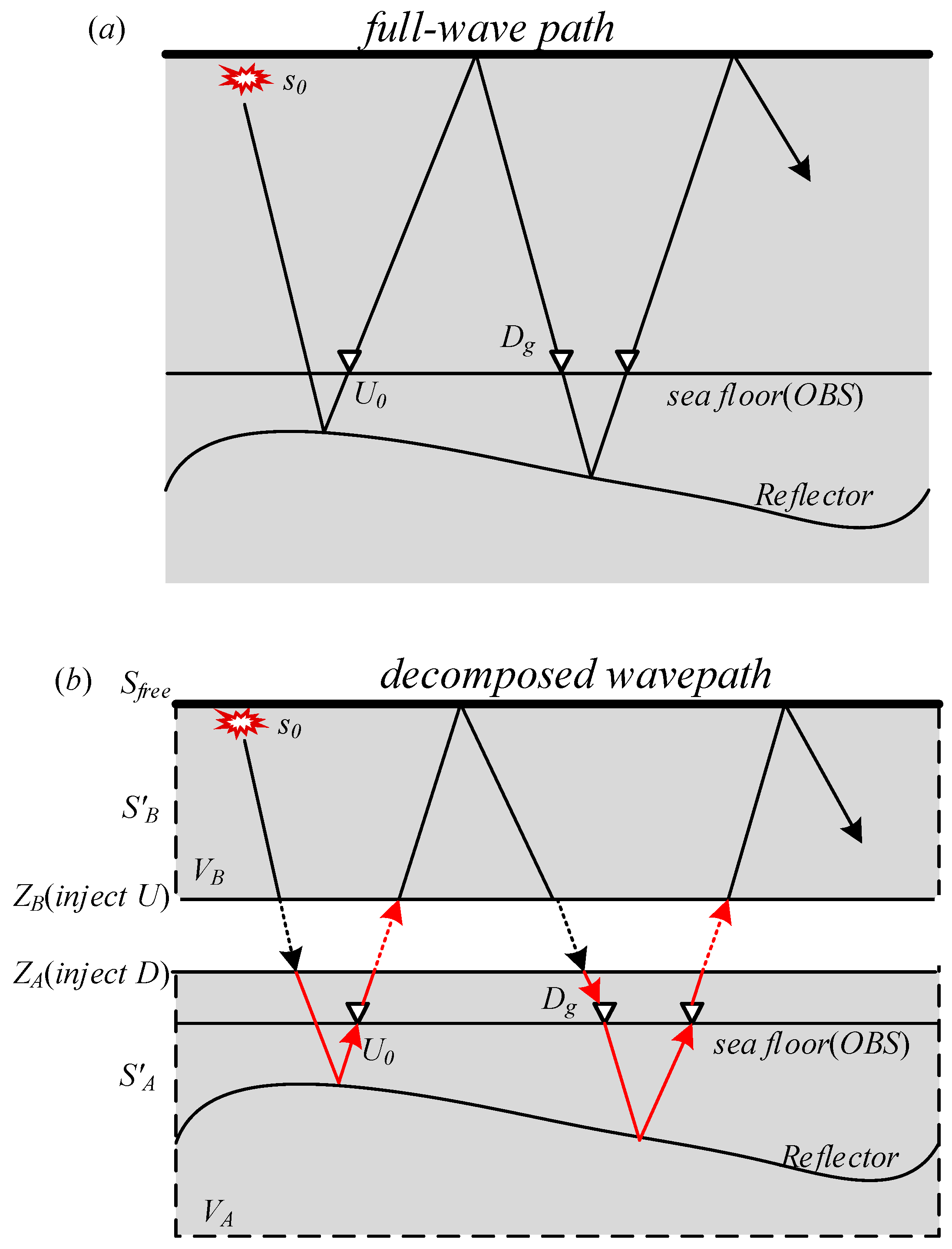
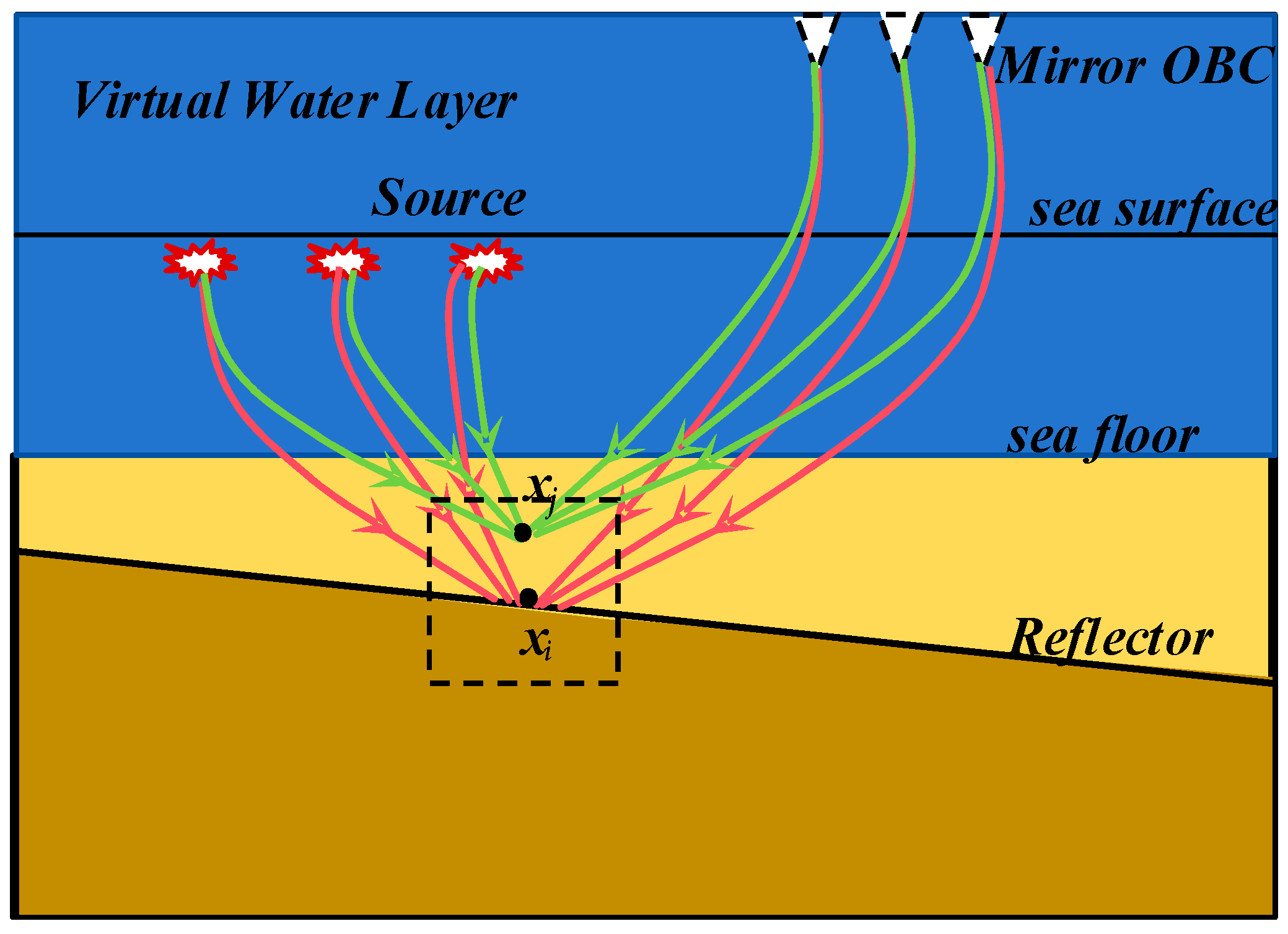
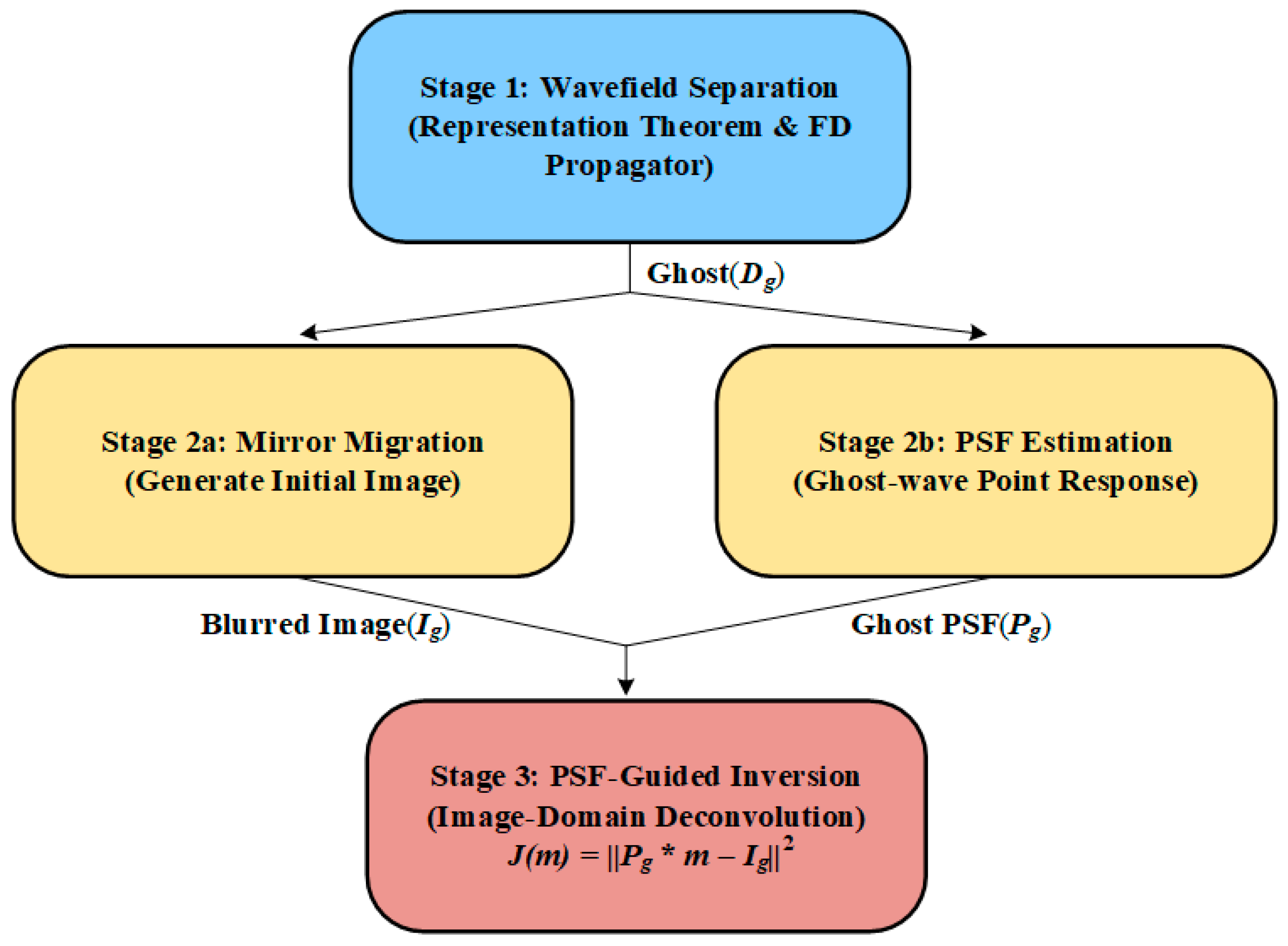
Seismic data migration is a critical step for accurate subsurface imaging. While Ocean Bottom Cable (OBC) surveys provide high-quality seismic data, reliance on primary reflections alone leads to significant illumination gaps. Receiver-side ghost waves can mitigate these gaps; however, conventional mirror migration suffers from low resolution and amplitude inaccuracy. To address these limitations, this study introduces a high-resolution mirror migration framework based on Point Spread Function (PSF)-guided inversion imaging. The methodology involves first separating the OBC wavefield to isolate ghost-wave components, followed by applying standard mirror migration to produce an initial, blurred image. Subsequently, the PSFs of down-going ghost waves are estimated to characterize imaging distortions, and image-domain least squares migration (LSM) is implemented via PSF deconvolution to reconstruct high-resolution reflectivity. Numerical experiments on complex models demonstrate that the proposed method preserves the additional illumination provided by this wavefield, substantially improves the spatial resolution of imaging targets, and enhances lateral continuity. Quantitative analysis confirms this enhancement through a significant extension of the effective vertical wavenumber bandwidth and the recovery of higher-frequency content. The framework provides a robust and computationally efficient solution for high-fidelity OBC imaging, enabling more reliable subsurface interpretation.
Keywords: high-resolution mirror migration; ocean bottom cable; wavefield separation; point spread function high-resolution mirror migration; ocean bottom cable; wavefield separation; point spread function