Article

Excessive Ship Exhaust Emissions Monitoring and Matching Using a Hybrid Method

1
School of Network &Communication Engineering, Jinling Institute of Technology, Nanjing 211169, China
2
School of Transportation, Southeast University, Nanjing 211189, China
3
Business School, Jinling Institute of Technology, Nanjing 211169, China
4
School of Transportation Management, Nanjing Vocational Institute of Railway Technology, Nanjing 210031, China
*
Author to whom correspondence should be addressed.
J. Mar. Sci. Eng. 2025, 13(12), 2252; https://doi.org/10.3390/jmse13122252
Submission received: 2 November 2025 / Revised: 25 November 2025 / Accepted: 25 November 2025 / Published: 27 November 2025
(This article belongs to the Special Issue Maritime Traffic Engineering)

Abstract

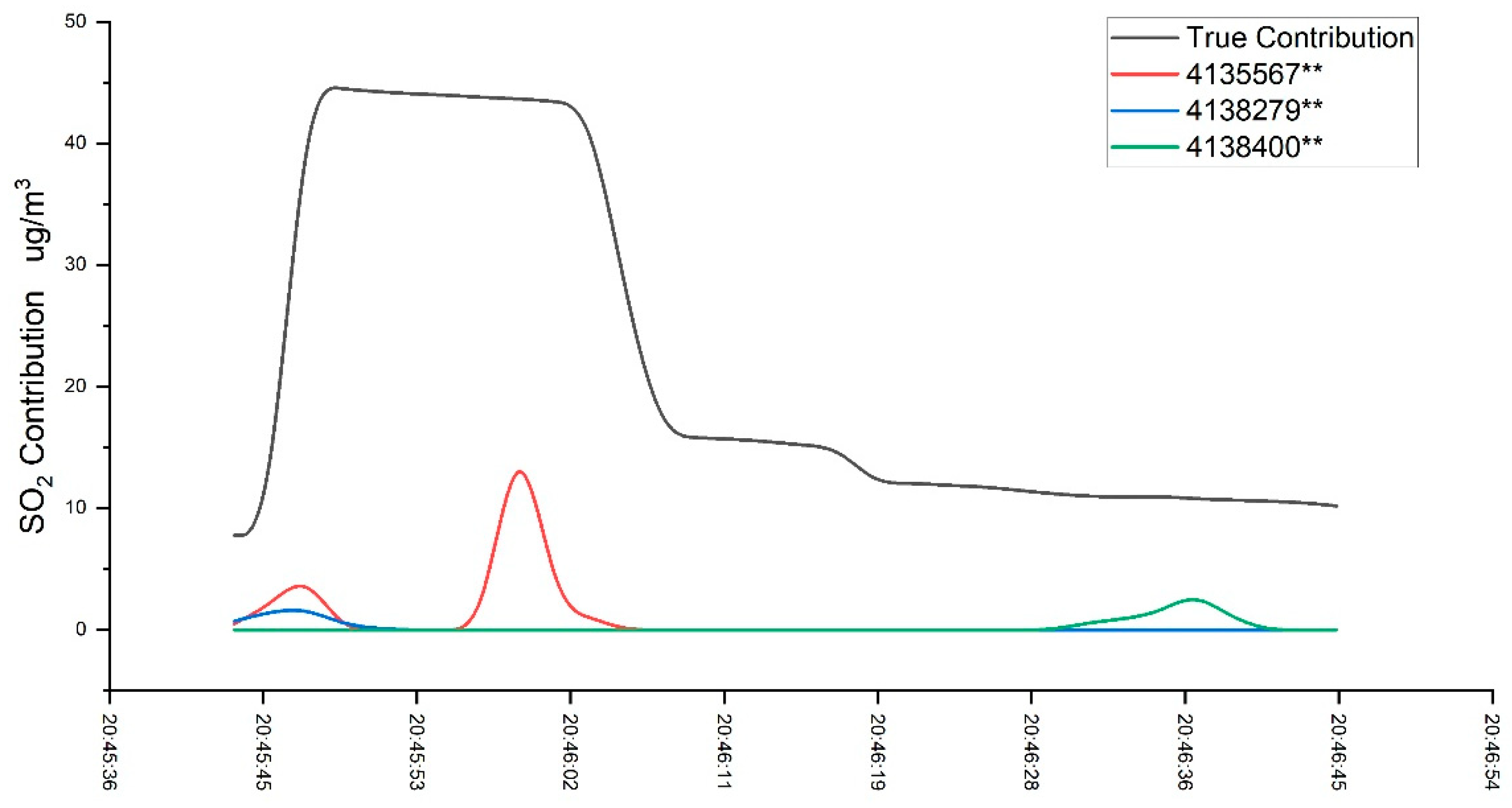
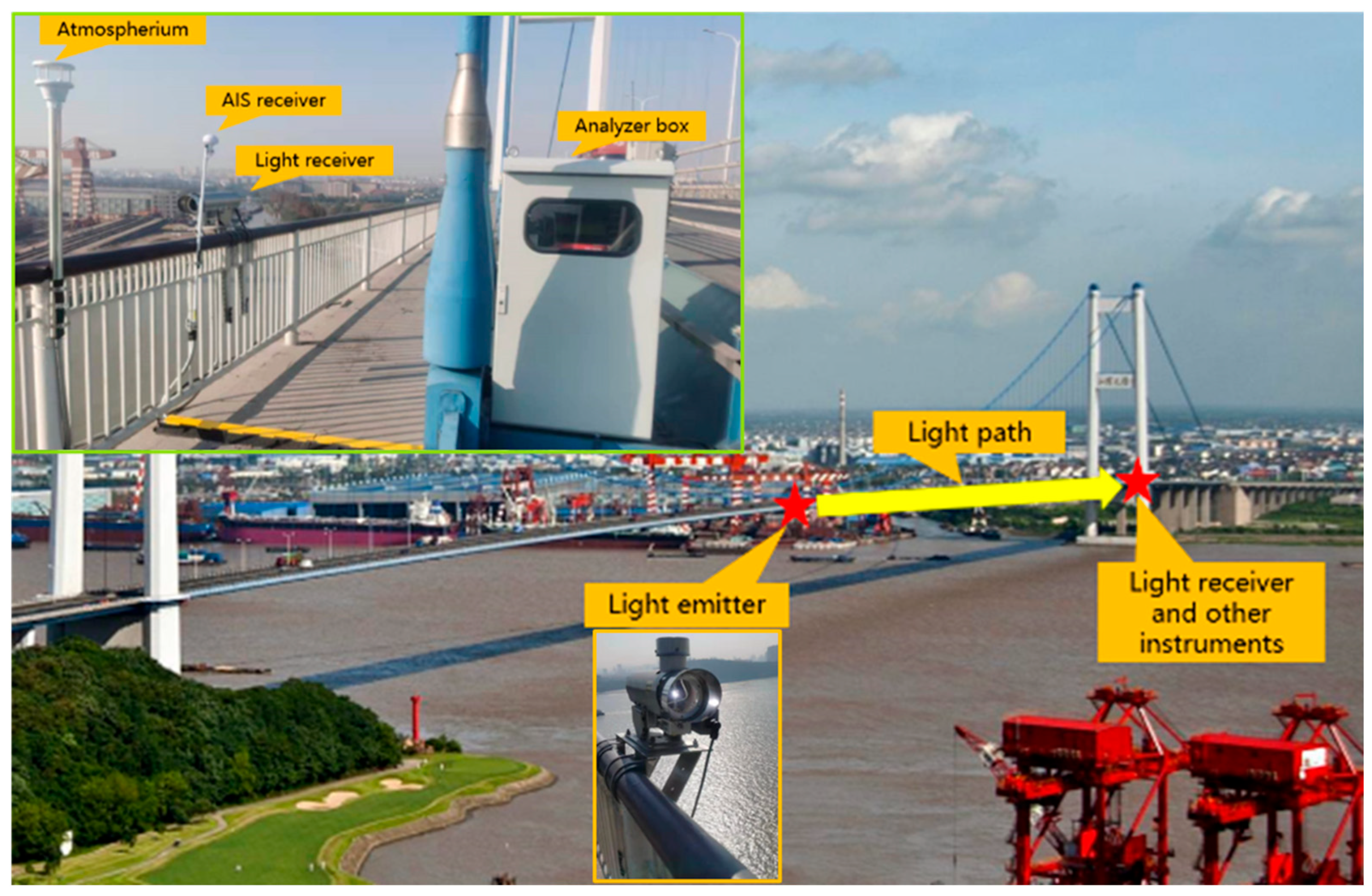
With increasingly stringent requirements for fuel sulfur content in ship emission control areas, traditional manual onboard inspection methods struggle to meet the demands for real-time supervision. This study proposes a hybrid method for monitoring and matching excessive exhaust emissions from ships underway using Automatic Identification System (AIS) data. A ship emission calculation model is applied to obtain the real-time SO2 emission source strength for each vessel. Then, an improved Gaussian puff model, considering the moving characteristics of ships, is established to calculate time-series SO2 diffusion concentrations at monitoring points for each ship within the study area. Finally, a matching algorithm for identifying ships with excessive emissions, based on grey relational analysis, is designed. This algorithm matches the computed time-series diffusion concentration of each ship with the monitored concentration, enabling precise traceability of ships using fuel with excessive sulfur content under multi-ship conditions. This study uses the Nanjing Dashengguan Yangtze River Bridge area as the experimental region and employs measured SO2 data from monitoring points to verify the method’s feasibility and effectiveness. The results demonstrate that this method can effectively identify ships with excessive emissions, providing crucial technical support for the green development of shipping and for the prevention and control of air pollution.
Keywords: ship emissions; AIS data; Gaussian puff model; grey relational analysis; matching of ships with excessive emissions ship emissions; AIS data; Gaussian puff model; grey relational analysis; matching of ships with excessive emissions