Article

Modelling the Longevity of Beach Nourishment and the Influence of a Detached Breakwater

Laboratório Nacional de Engenharia Civil, Av. do Brasil 101, 1700-066 Lisboa, Portugal
*
Author to whom correspondence should be addressed.
J. Mar. Sci. Eng. 2025, 13(12), 2251; https://doi.org/10.3390/jmse13122251
Submission received: 5 October 2025 / Revised: 20 November 2025 / Accepted: 23 November 2025 / Published: 27 November 2025
(This article belongs to the Section Coastal Engineering)

Abstract

This study addresses the longevity of beach nourishment in a high-energy coastal environment. It focuses on a site along the Northern Portuguese Atlantic coast, characterized by intense littoral drift, in the order of 1 million m3 and N–S oriented. The region undergoes an erosion process, and some localities are protected by groynes and frontal defense structures. The longevity of beach nourishment is evaluated through a coastline evolution model (previously calibrated and validated), compared for three scenarios: the absence of nourishment, i.e., the “do nothing” scenario; a (one-shot) 4 million m3 of sand nourishment intervention; and a detached breakwater combined with nourishment. The recent morphological evolution of the study site is evaluated through the results of a four-year (2018–2021) topobathymetric monitoring program implemented by the Portuguese Environment Agency. The lifespan of the nourishment ranges from 4.5 to 7.5 years. While the detached breakwater significantly increases the beach width to the north, it also exacerbates sediment loss to the south, regardless of its position. However, after 10 years, the cumulative sediment balance for the combined scenario closely mirrors that of the nourishment-only approach. The discussion of these results includes reflections on the longer-term impacts of using coarser sediments (relative to native material) on coastline evolution and on the influence of the breakwater’s layout on nourishment longevity.

1. Introduction

1.1. Framework and Objectives

Beach nourishment has become common practice against erosion worldwide, despite the uncertainties associated with the evolution of interventions and the resulting longevity [1,2,3,4,5,6,7,8]. In Europe, an estimated total of 27.5 × 10⁶ m3 of sediment was added each year to the shores at the beginning of the 21st century [9]. The annual rate of nourishment varied greatly from one country to the other, with Spain alone accounting for more than one third [10]. These discrepancies are explained by the different physical and socioeconomic contexts from the Atlantic shores to those of the Baltic and Adriatic seas, across the North and Mediterranean seas, with coastal management strategies that may shift over time [11].
In Portugal, a strategy shift occurred around 1990, with beach nourishment becoming the dominant practice compared to hard coastal structures [8]. Along the highly energetic Portuguese coast, about 33 × 106 m3 of sand was added to the shore after 1960, and, since 2000, the average rate of nourishment has risen to nearly 1 × 10⁶ m3 per year. In these operations, sand primarily originated from channel and harbor dredging (about 88%) and from offshore borrow areas (about 10%) [8]. In terms of the deposition zone strategy, sediments were deposited on the subaerial beach [12] or on the shoreface [13]. Additionally, new nourishment interventions often occur in locations that have been eroding for several decades and where hard structures (groynes and/or frontal defense structures) are already in place [13,14].
This study addresses the estimated longevity (period for which the artificially supplied sediment remains on the deposition site before natural coastal processes redistribute it or erode it away) of beach nourishment under different scenarios, including the presence of a detached breakwater, being a valuable contribution to the support of beach management measures, framed by the recommendations of the Working Group for the Coast in Portugal [15]. It aims at assessing the longevity of a 4 × 10⁶ m3 nourishment intervention in the coastal zone of Furadouro (Figure 1) and its updrift (i.e., northern) on adjacent beaches. Furadouro’s urban front is currently being protected by a combination of frontal defense structures, groynes, and eroded beaches. The intervention aims at replenishing these beaches to reduce or suppress exposure to flooding and increase the beach width for bathing and recreational use on this popular maritime frontage. The nourishment borrow area, whose sediments (median grain diameter, D50, equal to 0.84 mm—unpublished information) are slightly coarser than the native beach sediments (D50 equal to 0.3 mm [16]), is located offshore, which implies an added cost associated with the displacement of this limited resource.
The present model-based assessment is a contribution to optimizing the longevity of the nourishment. Compared to recent work resolving the full-scale of processes for the hindcasting of a past intervention (e.g., [17]), it presents a methodology by which to obtain management insights from the application of a one-line-type model [18]. It was designed to account for both shoreface and subaerial beach nourishment placed at different locations along a coastal stretch of about 10 km, as well as to account for the grain size mismatch. Given the high energy and littoral drift of the area (i.e., estimated 1.1 × 10⁶ m3 of annual littoral drift), mixed solutions, in which the nourishment was coupled with the construction of an emerged detached breakwater (EDB), were tested, aiming to increase the nourishment’s longevity and provide further protection from coastal overtopping and flooding. EDBs can reduce the wave energy reaching the shore, thereby decreasing erosion rates and promoting sediment retention [19]. However, their efficacy in such an energetic environment remains to be documented. For each scenario, results are presented in terms of the relative longevity of the nourishment, ultimately fostering the optimization of management strategies in such high-energy environments.
This paper is organized as follows. In Section 1, the study site is characterized within the context of the physiographic unit and the problem is generally described. The recent morphological data are presented in Section 2, together with a description of the methodological approach and the numerical model applied. The results are presented in Section 3 and include the following: an analysis of the recently observed coastline evolution and beach volumetric evolution; predictions of coastline evolution under the three intervention scenarios; and the calculation of the retained nourishment volumes within various cells of the study site for each scenario. In Section 4, the results are discussed by broadening the assumptions made—specifically, with regard to the impact of the differences between native and borrow sediments on coastline evolution and with regard to the impacts of the variation in the EDB’s position on the longevity of the nourishment. The conclusions are summarized in Section 5.

1.2. Study Site

The coastal zone under analysis is Furadouro (40°52″ N; 8°40″ W), located on the Northern Atlantic Portuguese coast (Figure 1a,b). It is integrated into the physiographic unit (i.e., an autonomous coastal stretch from a sedimentary perspective) that has the largest morphological imbalance across the Portuguese coast [15]. This unit has about 120 km of coastline and is limited by the Douro river mouth in the north and the Mondego cape in the south (Figure 1c). It has undergone a long-lasting erosion process (fewer sedimentary sources than sinks) for more than half a century [15]. Between 1958 and 2010, the long-term (decades—on an engineering scale) average erosion rates on two stretches of this physiographic unit (one stretch with a 30 km length, centered on Furadouro; the other stretch, with a 18 km length, located 30 km south of Furadouro) reached the maximum values of 5.6 m/year and 5.8 m/year, respectively [20]. The average potential sediment drift of this physiographic unit is about 1.1 × 10⁶ m3/year, being N–S oriented [15]. However, according to [16], the magnitude of the sediment input at the northern boundary (Douro river mouth) is considerably lower, at approximately 2 × 10⁵ m3/year. Consequently, this imbalance leads to erosion. Despite the erosive effects of the sea level rise, it is apparently a minor cause of coastline retreat along the sand shores in Portugal, being responsible for 10–15% of the observed erosion [21].
Regardless of the interventions implemented to protect Furadouro’s coastal community, such as the construction of rock armor groynes and frontal defense structures, initiated in 1959 [22], the remaining narrow beach width is not immune to the overtopping and inundation effects of maritime storm episodes, which have increased in frequency in the last decade [23,24], causing damage to maritime frontage infrastructure and endangering people.
Furadouro’s beach is a low-lying sandy coast with an NNE–SSW coastline orientation and medium sand (sediment diameter size range: 0.25–0.5 mm) on the subaerial beach. This coast is exposed to a mesotidal regime (tidal range between 1.4 and 3.6 m at neap and spring tides, respectively) and a high-energy wave regime, with a mean significant wave height (Hs) of 2.2 m, mean wave period (Tm) of 7.2 s, and mean peak period (Tp) of 11.4 s [25]. The prevailing incoming wave directional sector associated with the peak period is NW [25]. Presently, the urban maritime frontage is protected by a rock armor frontal defense structure with a total alongshore extension of 1300 m and two rock armor groynes with lengths of 140 m and 120 m (Figure 1d). Besides its vulnerability to coastal overtopping, the highly reflective nature of the frontal defense structures limits the retention of sand between the groynes, thus contributing to a reduction in beach width [26] and the continued persistence of the problem in the absence of interventions.
In addition to the rehabilitation of existing coastal structures (presently in progress), the Portuguese Environment Agency aims to intervene through 4 × 10⁶ m3 of (one-shot) sand nourishment in the near future. Despite its increasing popularity as a coastal management strategy against both acute and chronic erosion (caused by storms and longshore transport imbalances) [27], the longevity of beach nourishment—specifically, the retention of the sand volume at the deposition site—remains a major source of uncertainty [3]. On one hand, this uncertainty stems from the spatial variability in the environmental conditions intrinsic to each site. On the other hand, it is due to uncertainties related to prediction models, either because of the spatiotemporal constraints of process-based models and the consequent need to simplify physical phenomena or due to uncertainties in the site-specific (free) parameters or uncertainties in the input data used for model calibration [28]. Furthermore, it is important to acknowledge the evolution of the deposited sand volume, because its remainder in the vicinity of the deposited location can still influence the evolution of the critical zone, e.g., delaying the reappearance of the erosive process in the critical zone.

2. Data and Methods

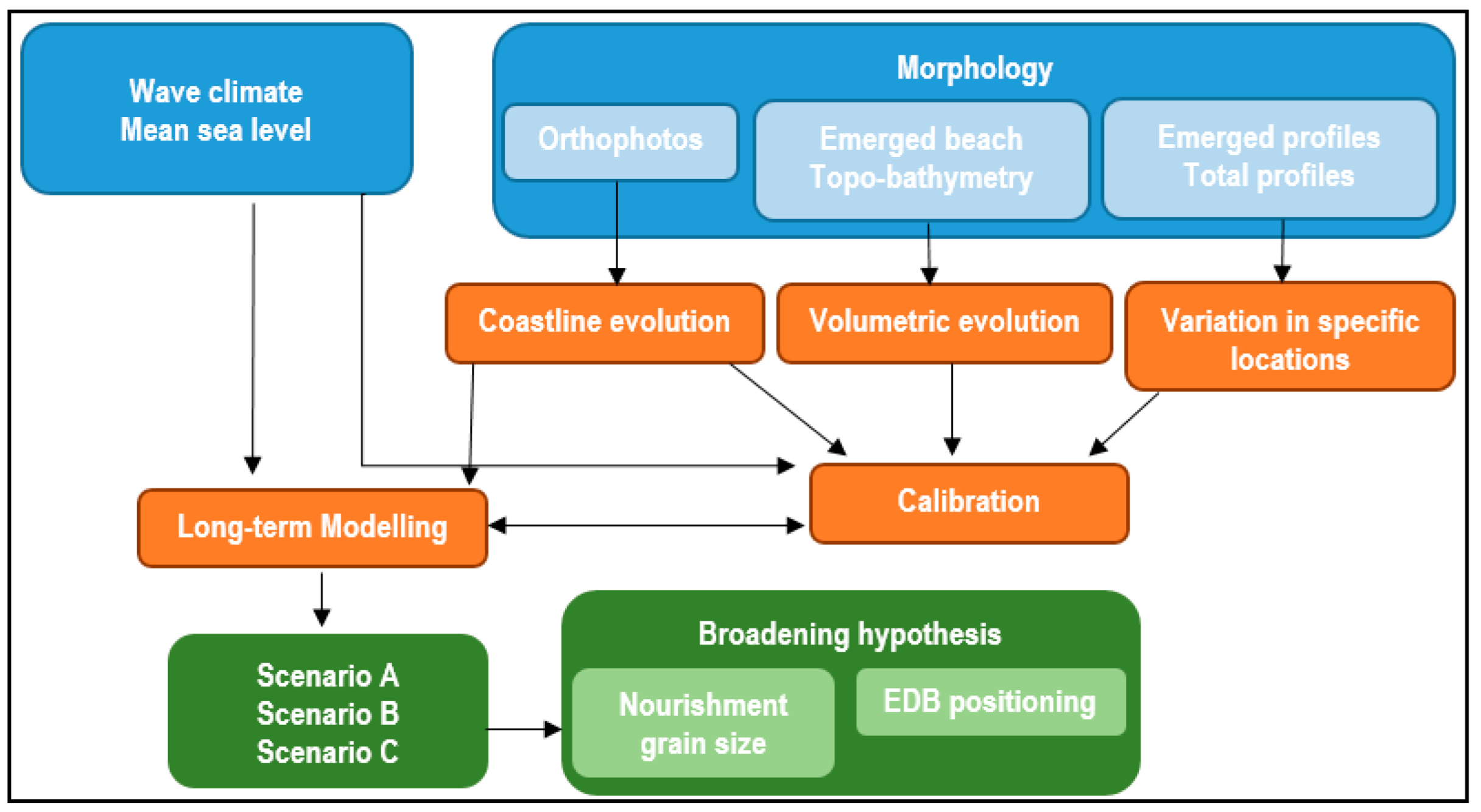
The methodological approach comprised three main components: the analysis and characterization of the morphological evolution of the study site and surroundings based on data provided by the thorough COSMO Monitoring Program [29]; the conceptualization of the intervention scenarios (and absence of intervention), developed in collaboration with the Portuguese Environment Agency (APA); and the numerical modeling at large spatial and medium to long-term scales of the established scenarios and further hypotheses (Figure 2).

2.1. Morphological Evolution Analysis

The analysis and characterization of the recent morphological evolution of the studied coastal stretch was based on data provided by the COSMO Monitoring Program for the period of 2018–2021 [29]. The data and a detailed description of the technology and methodology applied to acquire them are freely available online [29]. It comprised four types of coastal morphological surveys.
(i)
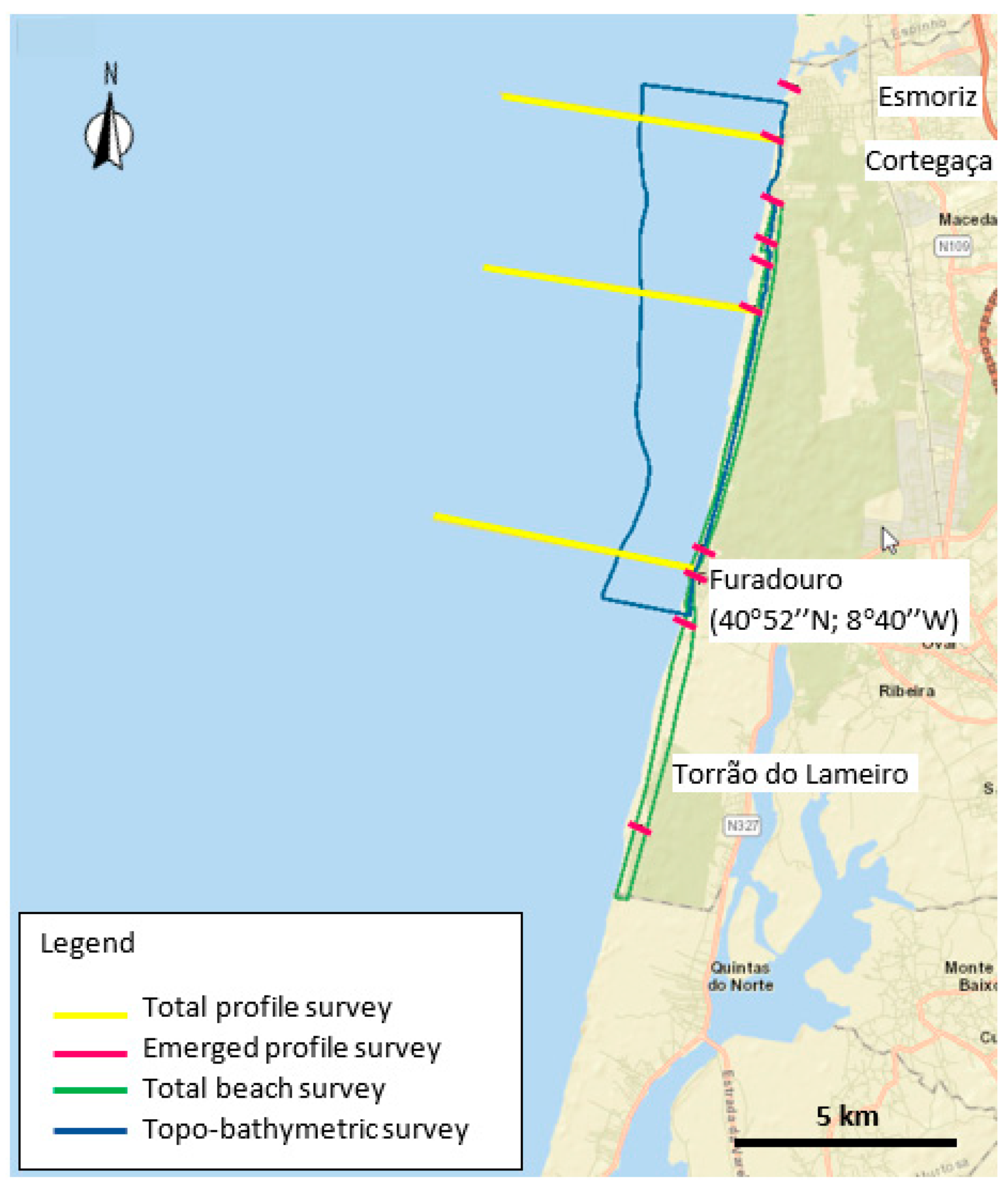
The total beach surveys consisted of acquiring terrain surface data on emerged beaches (from the −1 m ALTH38, where ALTH38 is the vertical datum, where zero refers to the approximate mean sea level) and dunes using airborne methods through aerial photogrammetry. The frequency of execution was annual, resulting in 5 surveys (Table 1). The surveys’ areas had an alongshore length of 14 km (Figure 3).
(ii)
The topobathymetric surveys consisted of the combination of the surveys of the emerged and submerged beach, creating a single surface, which ensured continuity and seamless connection between these two domains. The bathymetric surveys were carried out using a specific multi-beam echosounder, providing full coverage from the −14 m ALTH38 to the −5 m ALTH38. A single-beam echosounder was used in areas closer to the shore (from the −5 m ALTH38 to the −3 m ALTH38). The horizontal resolution of the surveys was 0.3 m. The largest vertical uncertainty associated with these data is approximately 0.05 m, and the digital elevation models (DEMs) derived from the complete surveys have a 0.1 m spatial resolution. The frequency of execution was annual, resulting in 3 surveys (Table 1). The surveys’ areas had an alongshore length of 10 km (Figure 3).
(iii)
The total profile surveys consisted of integrating an emerged beach and submerged profile, yielding a unique topobathymetric profile, starting from a fixed point on land (beyond the high beach) and extending to the sea (−14 m ALTH38). These surveys were carried out using GPS/RTK on land and a single-beam echosounder at sea. The frequency of execution was semiannual, resulting in 5 surveys (Table 1). The study site includes 3 total profiles (Figure 3).
(iv)
The emerged profile surveys consisted of acquiring a cross-shore profile of the aerial beach, originating from a fixed point on land (beyond the high beach) and ending at sea (low-tide limit). The surveys were carried out using GPS/RTK. The frequency of execution was quarterly, resulting in 12 surveys (Table 1). The study site includes 5 emerged profiles (Figure 3).
The coastline evolution along the 14 km stretch between Cortegaça and Torrão do Lameiro was analyzed through the comparison of the orthophotos taken between 2018 and 2021 (Table 1). The position of the coastline was outlined using a set of criteria for structures and coastal morphologies, applied for each of the orthophotos. In the cases of artificialized areas with groynes, the outline was created excluding the groyne and using the same line position for all dates. In cases of frontal defense structures, as a reference, the outline used the base of the structure, and this line position was held constant for all dates, except in cases where this line showed an advance. Finally, in cases of natural areas (i.e., dunes and dunes with sand retention fences), the outline was created using the vegetation limit line criterion.
The comparison of the coastlines and the calculation of the evolution rate were performed using the Digital Shoreline Analysis System (DSAS), version 6.0 [30]. The baseline, extending approximately 16 km and covering the entire study sector, was established with transects positioned 100 m apart. The positional uncertainty of the coastlines was calculated based on [20,31], which consider three uncertainty components: uncertainty due to the orthophotos’ spatial resolution (in this case, 0.03 m), uncertainty due to the orthophotos’ georeferencing procedures (in this particular case, it was considered zero, because the images were already georeferenced), and uncertainty due to the digitization process (in this case, it was considered 7 m—this value was obtained in [20] after a digitization test with three operators, and it was considered adequate for the present work). The position uncertainty for each coastline was obtained by the square root of the sum of the squares of each uncertainty component [20]. The uncertainties related to the evolution rate depend on the positional uncertainty associated with each image (composed of the three above-mentioned components) and the time elapsed between the two images (Table 2). These uncertainties are equal to the square root of the sum of the squares of the two coastline positional uncertainty values calculated previously, divided by the elapsed time [20]. This value becomes smaller as the images become further apart in time.
The volumetric evolution of the emerged and submerged monitored areas (indicated in Figure 3) between different dates was assessed using a digital terrain model, enabling us to generate and compare the maximum common areas of the terrain surfaces built from the respective surveys. Regarding the volumetric evolution (per linear meter of alongshore beach) of the emerged and submerged profiles, the comparison among them allowed for the acquisition of complementary information (at additional dates, relative to the aforementioned type of survey).

2.2. Intervention Scenarios

To support a comprehensive management decision from the Portuguese Environment Agency and to provide the most effective and long-lasting solution, the following three scenarios (A, B and C) were assessed.
A.
The absence of nourishment or any other type of intervention, i.e., the “do nothing” scenario.
B.
A one-shot 4 × 10⁶ m3 sand nourishment intervention, divided into three locations:
B1.
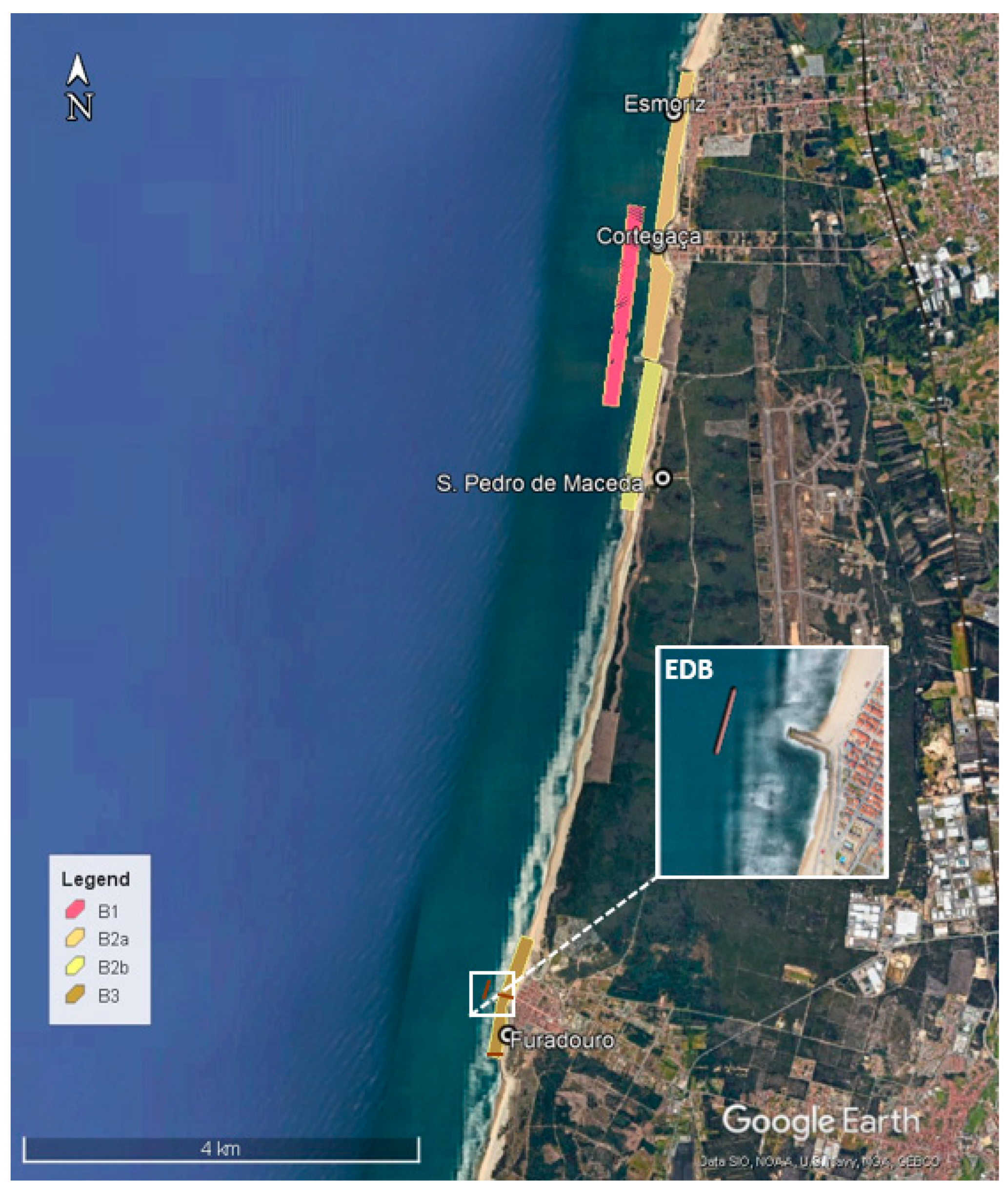
A 1 × 10⁶ m3 shoreface nourishment (submerged), between the topobathymetric isolines −6 m ALTH38 and −10 m ALTH38, along a 2000 m stretch, between 1500 m north of the Maceda groyne and 500 m south of the Maceda groyne (Figure 4);
B2.
A 2 × 10⁶ m3 beach nourishment (emerged) along two stretches: 0.9 × 10⁶ m3 in the 2950 m long stretch, between the north groyne of Esmoriz and the groyne of Maceda (B2a), and 1.1 × 10⁶ m3 in the 1500 m long stretch south of the Maceda groyne (B2b) (Figure 4);
B3.
A 1 × 10⁶ m3 beach nourishment (emerged) along a 1250 m stretch, between the cross-shore section 700 m north of the North Furadouro groyne and the South Furadouro groyne (Figure 4).
C.
The combination of the previous scenario, B—i.e., the nourishment interventions—with a single EDB located in front of the northern groyne of Furadouro (Figure 4).
Concerning scenario A, it provides a reference evolution representing the maintenance of the trends observed over roughly the last two decades. For scenario B, the three nourishment interventions, B1, B2 (a and b), and B3, are performed simultaneously on all stretches, at a constant rate of sand deposition, for a period of 3 months. For scenario C, the EDB positioning was based on information supplied by the Portuguese Environment Agency concerning the locations of the 83 coastal overtopping events that occurred in Furadouro from January 2018 to March 2024. The structure is 200 m long, normally aligned and centered with the northern groyne of Furadouro, located at a distance of 350–400 m from the frontal defense structure, at a depth of approximately −12 m ALTH38.

2.3. Numerical Modeling

The prediction of the morphological evolution of the Furadouro beach for the three studied scenarios requires the application of a numerical model capable of simulation at geospatial and temporal scales in the order of kilometers and decades, respectively. The process-based medium- to long-term coastline evolution model LITMOD [32] meets these requirements, among others. It is an exploratory and operational model, based on the conceptual one-line model, i.e., on the calculation of the wave-induced longshore sediment transport rates and on the application of a mass continuity equation to the displaced sediment volumes. It assumes that the cross-shore beach profile remains constant during the erosion or accretion process, meaning that the modification of the beach morphology is described by the parallel displacement of the beach profile. Such simplification implies that the model is applicable in cases where the alongshore gradients of the bathymetry are small. For this reason, bidimensional processes such as diffraction around jetties, groynes, and detached breakwaters can only be considered empirically and approximately in the model [32]. Frontal defense structures, beach nourishments, and sand mining are also considered, either individually or combined. The model has shown excellent potential as a supporting tool for various coastal dynamics studies, particularly in determining the causes of imbalances and in the functional evaluation of beach rehabilitation and improvement alternatives [14,33].
The model was previously calibrated and validated for the physiographic unit using topobathymetric data from the 1948 to 2005 period and wave data (a series of the significant wave height, peak period, and mean direction parameters) from the 1952 to 2010 period, obtained by wave hindcasting calculations [34]. The calibration was enhanced through (i) the adjustment of the magnitude of longshore sediment transport, specifically by reducing the Kamphuis formula coefficient [35], and (ii) refining the local wave climate (near the depth of closure) along the physiographic unit. A total of 20 climates (wave series), regularly distributed along a coastal length of nearly 40 km, were considered at the topobathymetric line −15 m ALTH38, which is seaward of the depth of closure for this coastal sector [36,37,38]. This exhaustive placement of wave climate inputs greatly improved the model’s calibration and ensures the full operation of the model for new applications in the physiographic unit.
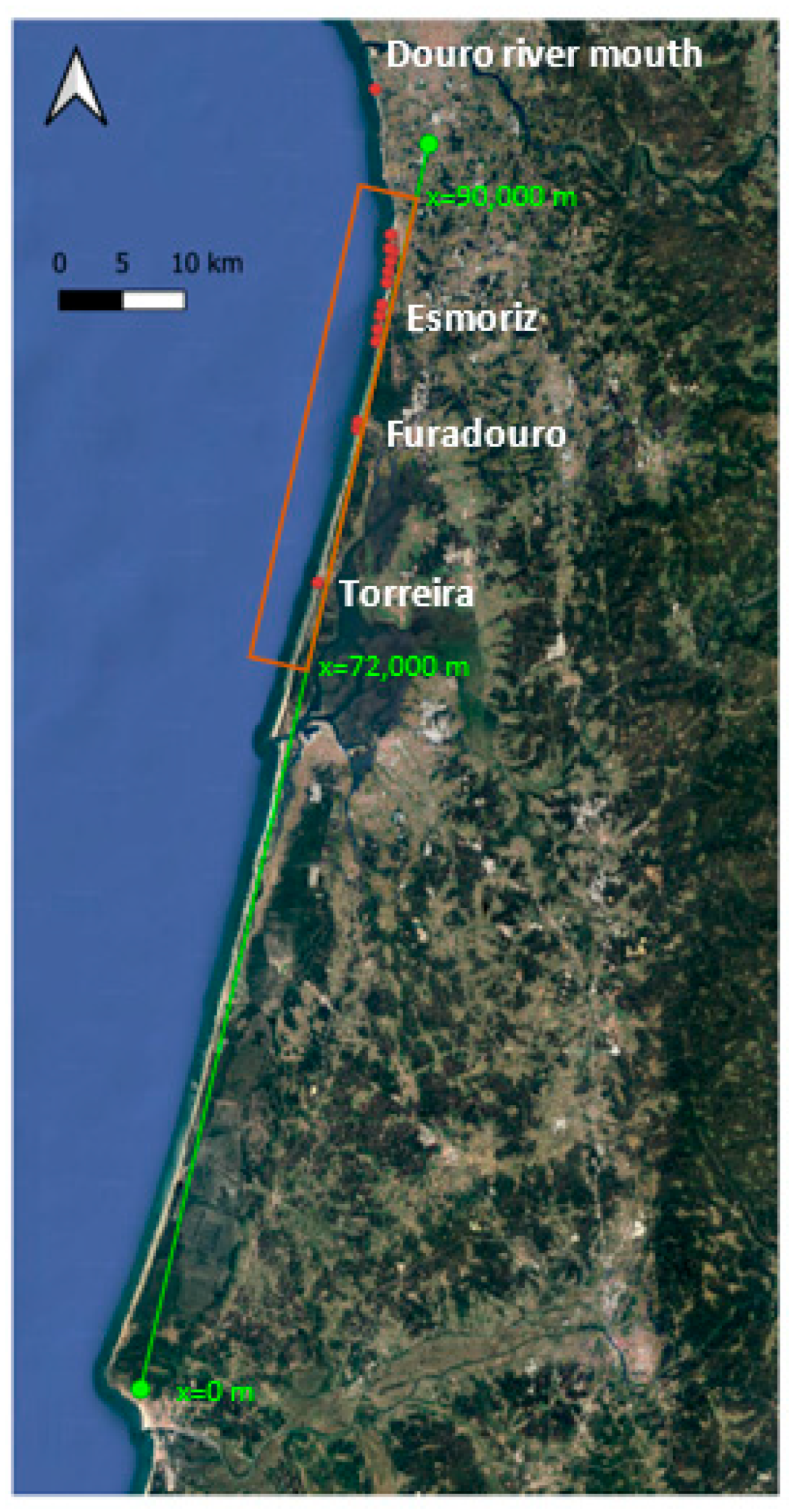
Despite the interventions (nourishment and EDB) focused between Esmoriz and Furadouro, the analysis of the simulation scenarios required the extension of the study area to the northern limit of the physiographic unit (the Douro river mouth) and to the south of Furadouro to ensure a sufficiently large distance to cover the potential impacts of the interventions (the Torreira beach), over a total length of 40 km. The model was applied using the 100 km long baseline (X-axis of reference) with an N-13°-E orientation (Figure 5) that comprised the physiographic unit along most of its extension (the northern extreme sector was excluded due to the abrupt curvature of the coastline and, therefore, the violation of the model’s requirements). For this reason, the origin of the model simulations was cell x = 60,300 m, positioned at Torreira beach. The main, locally dependent model parameters adopted are presented in Table 3. All existing structures, including frontal defense structures and groynes, were included. Regarding the former, they prevent the retreat of the coastline at the implementation site; regarding the latter, the effects of the retention and transposition of sediments are included, as well as the effects of wave diffraction. The nourishment locations and deposition rates were considered as indicated in Section 2.2. Newman boundary conditions were considered at the north and south numerical boundaries, meaning that the coastline displacements at the boundaries were allowed to vary parallel to the initial position.

3. Results

3.1. Recent Morphological Evolution

3.1.1. Coastline Evolution

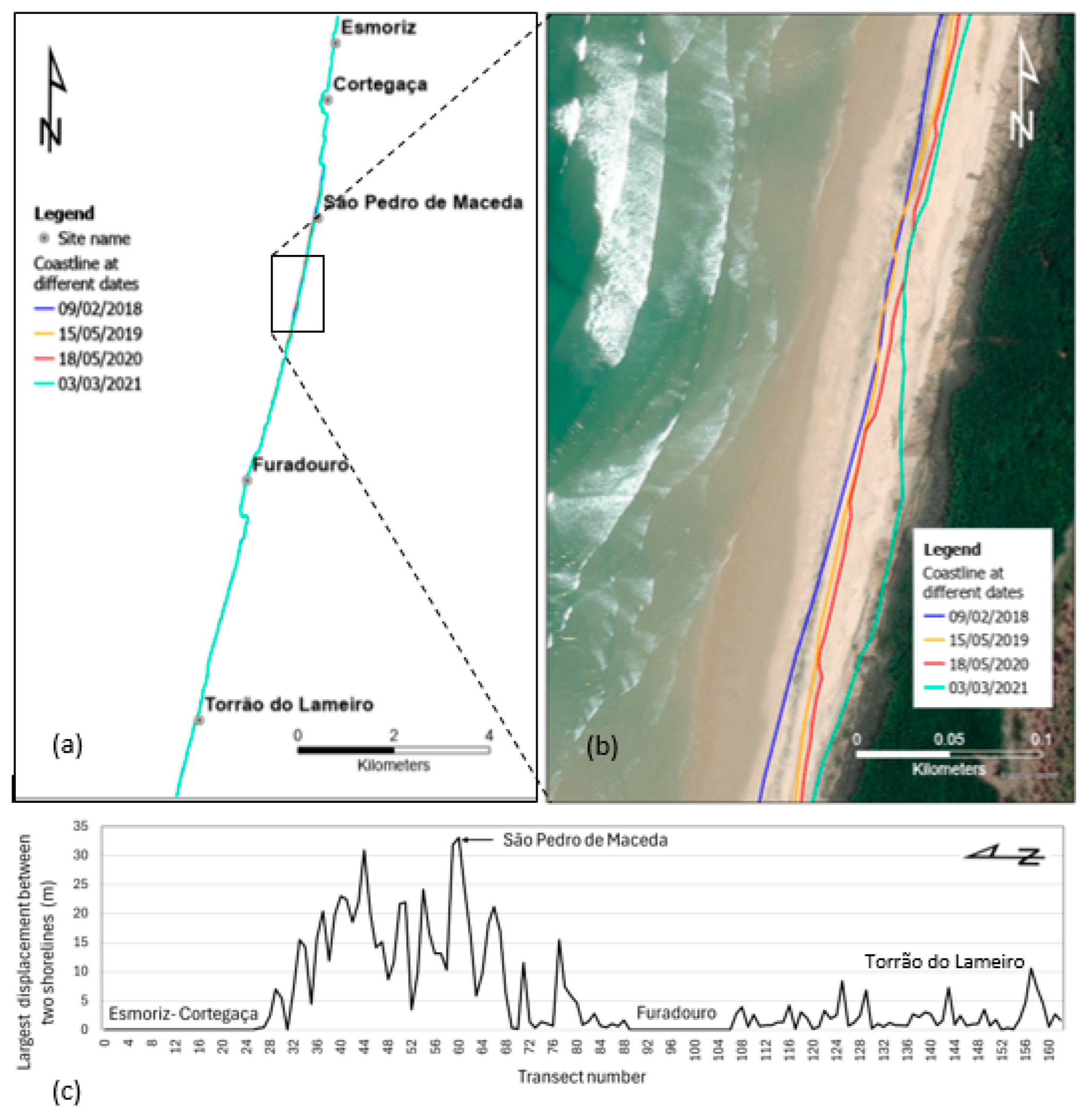
Between 2018 and 2021, the coastline showed a maximum displacement of 33.1 m south of São Pedro da Maceda (Figure 6c). In general, for this period, the area located south of Furadouro (transect numbers > 100) presented maximum coastline displacements that were lower than in the area located in the north (transect numbers < 100).
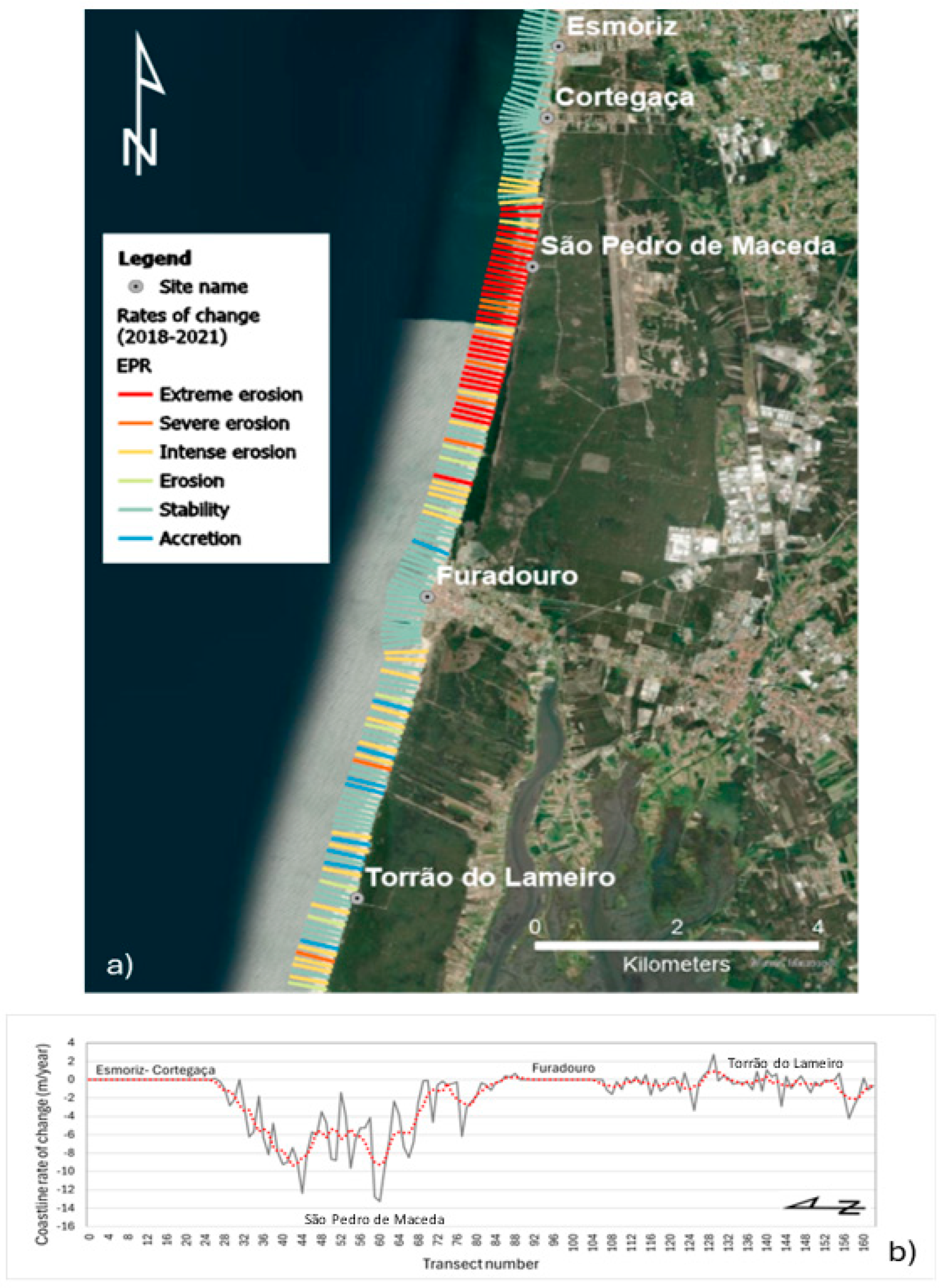
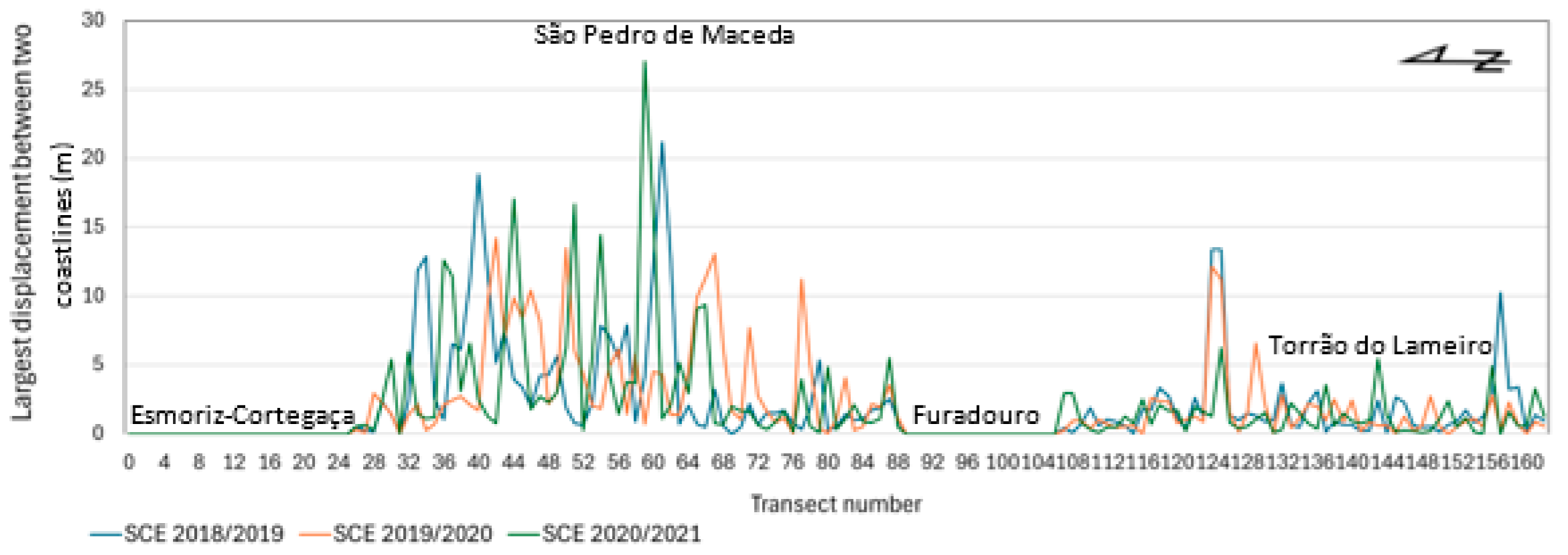
The coastline north of Furadouro presents a general trend of retreat, with a maximum rate of change of −13.25 m/year, at São Pedro de Maceda, which characterizes the section as under extreme erosion (Figure 7). On the other hand, the coastline section between Furadouro and Torrão do Lameiro presents a maximum retreat value of −4.25 m/year and a maximum accretion rate of +2.73 m/year, showing a general trend towards stability, albeit with retreat (Figure 7). In line with previous studies [40,41], the erosion scale is as follows: values lower than −5 m/year correspond to extreme erosion; values between −5 m/year and −3 m/year correspond to severe erosion; values between −3 m/year and −1 m/year correspond to intense erosion; values between −1 m/year and −0.5 m/year correspond to erosion; values between −0.5 m/year and +0.5 m/year correspond to stability; and values higher than +0.5 m/year correspond to accretion. The annual coastline displacement showed the same trend as in the 2018–2021 period (Figure 8). Specifically, the maximum displacement values for the Esmoriz–Furadouro sector and the sector located south of Furadouro were 27.05 m (2020–2021) and 13.4 m (2018–2019), respectively.

3.1.2. Volumetric Evolution

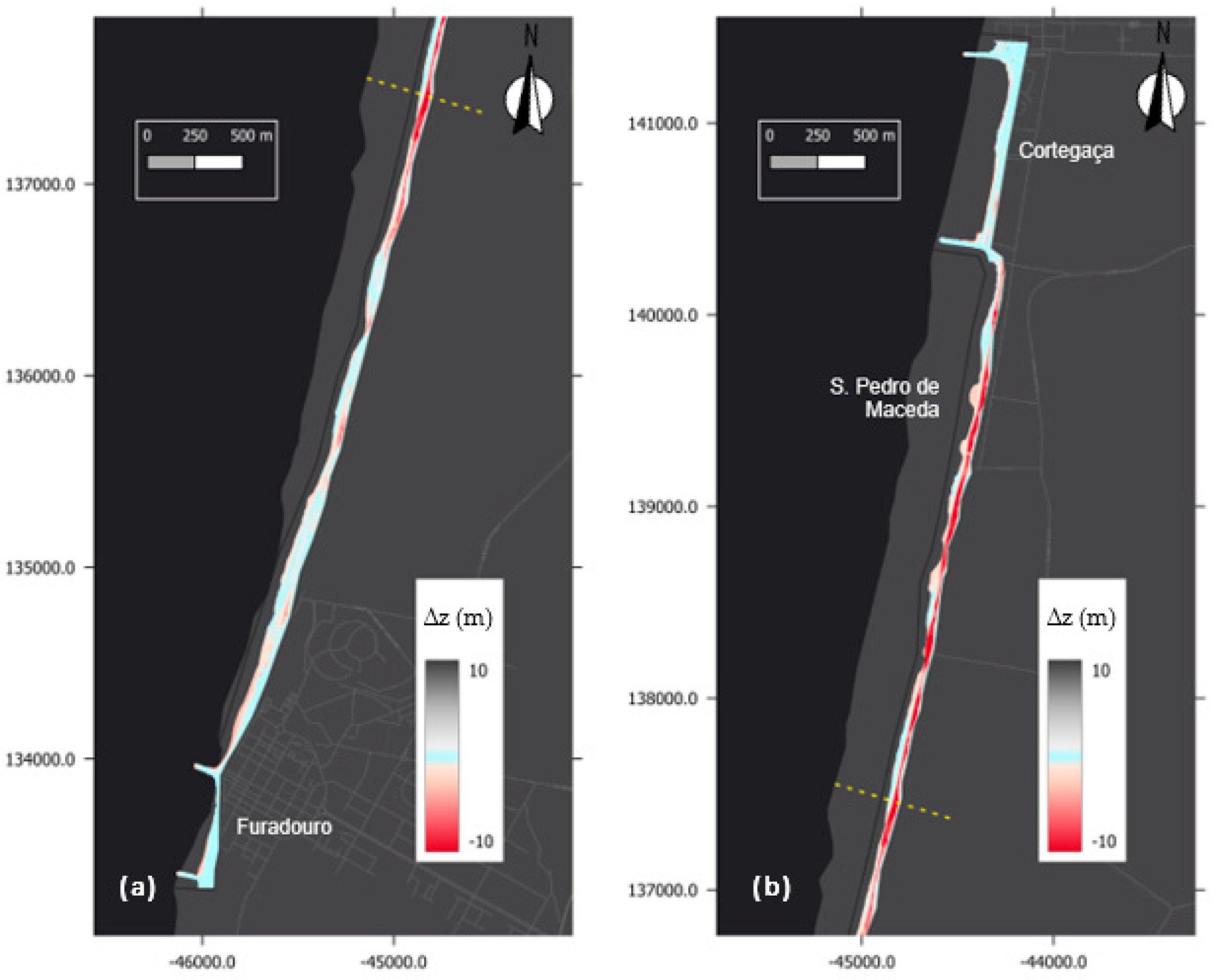
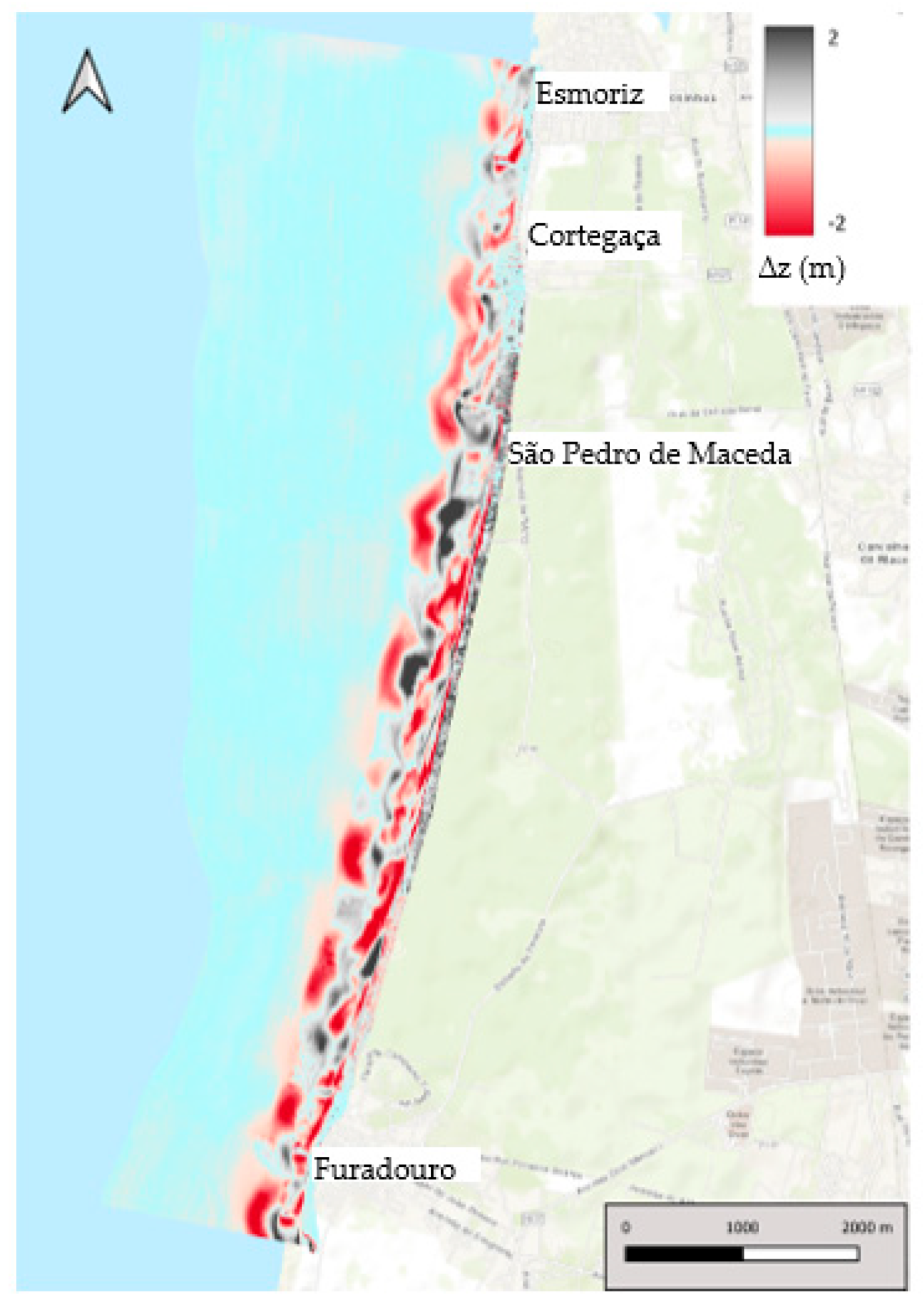
During the period between September 2018 and April 2021 (2 years and 8 months), the aerial beach between Furadouro and Cortegaça eroded by approximately 700 × 103 m3 (Figure 9 and Table 4), which corresponds to an erosion rate of 261 × 103 m3/year. This evolution is equivalent to the average lowering of the beach of 1.25 m, within the area of 557 ×103 m2, during this period. The erosion scarp located south of S. Pedro de Maceda, clearly distinguishable in Figure 9, largely contributed to the erosion volume observed.
When assessing the variation in the beach surface level in the areas covered by the three topobathymetric surveys from September 2018 to July 2020 (22 months), the results showed a total erosion amount of 1484 × 103 m3 (Table 4 and Figure 10). The irregular pattern observed in Figure 10 is due to the high intensity of the beach cross-shore sedimentary exchanges. This evolution corresponds to an average erosion rate of 810 × 103 m3/year and the average lowering of the topobathymetric surface level of 0.07 m within the area of 21,617 × 103 m2 during this period (Table 4). These results, along with the ones obtained for the emerged beach, reveal that, although the largest loss of sediment per square meter occurs on the emerged beach, there is still significant displacement of sediments in the submerged zone, where the volumetric balance is negative, i.e., where sediment loss prevails.
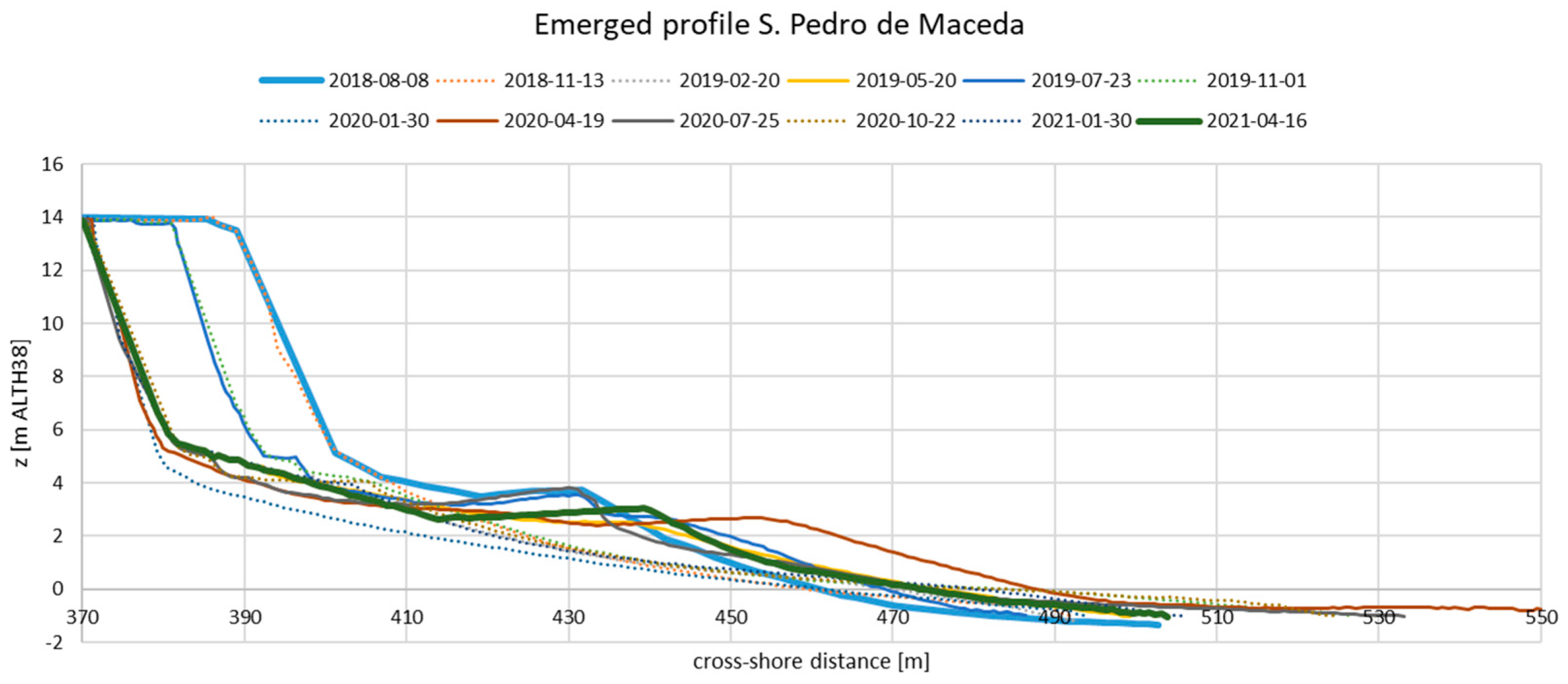
The main findings from the assessment of the volumetric evolution (per linear meter of alongshore beach) of the three total profiles and five emerged profiles (Figure 3 and Table 1) were as follows: (i) during the period of almost 2.5 years (between the first and final surveys), there was a volumetric loss of sediment ranging from 90 to 290 m3/m in the total profiles; (ii) the emerged profile of S. Pedro de Maceda had the largest retreat of the frontal dune crest, namely 20 m (corresponding to sediment loss of almost 180 m3/m from the primary dune face), during a 2-year period (Figure 11).

3.2. Coastline Evolution Under Intervention Scenarios

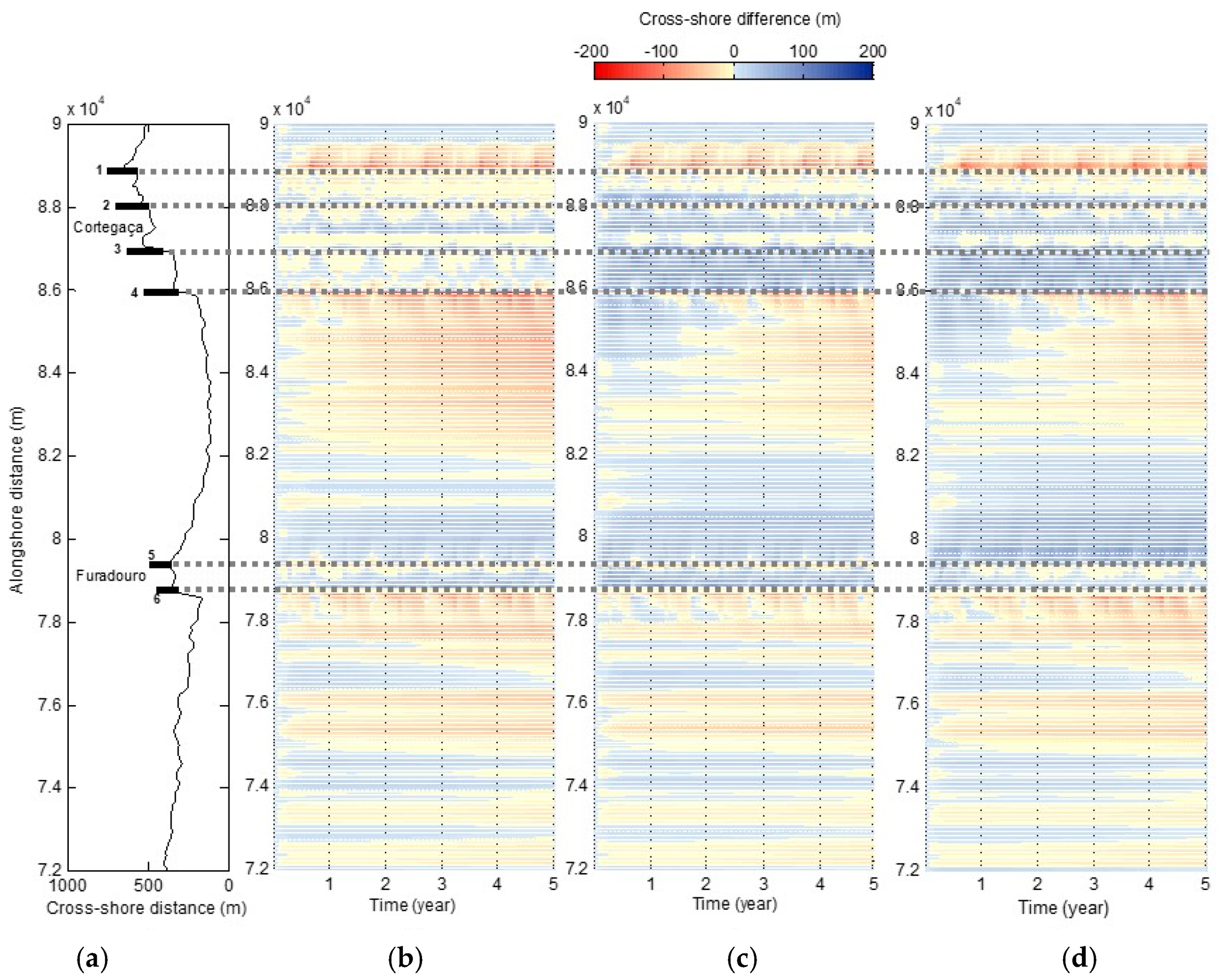
The coastline position’s evolution (over time), past the initial condition, is depicted in Figure 12b,c,d for scenarios A, B, and C, respectively. Each subfigure represents, for each alongshore coordinate, in the region 72,000 ≤ x ≤ 90,000 m, the difference between the coastline cross-shore distance at a given instant and that of the initial position, both referring to the model baseline (Figure 5). The figures were constructed with coastline positions at every 30 days over 5 years.
For scenario A, with no intervention (Figure 12b), the coastline remains relatively stable at the coastal-armored stretches, between groynes, with a seasonal erosive/accretive pattern. Expectedly, continuous erosion (represented by intensifying red colors) occurs downdrift (southward) of the Cortegaça and Furadouro southern groynes (4 and 6, respectively), continuing the historical trend. These erosive stretches extend approximately 4 km southwards and are followed by a relatively stable or mildly accretive (or erosive) beach state.
For the beach nourishment in scenario B (nourishment in Figure 4; results in Figure 12c), beach accretion is visible between groynes 2 and 4 and northward of groyne 5 for an extension of circa 2.5 km, even after 5 years. However, despite the nourishment of 3 × 10⁶ m3 near Cortegaça, the coast starts receding southward of groyne 4 after 2.5 years. Erosion also occurs southward of Furadouro in 5 years, despite an initial weak benefit from the 1 × 10⁶ m3 nourishment, which retarded the natural erosive trend and induced an initial seasonal erosive/accretive pattern.
The simulation under scenario C (nourishment plus breakwater in front of Furadouro), seen in Figure 12d, shows that, north of position x = 8.25 × 10⁴ m, the coastline’s evolution equals that of scenario B. In fact, the only noticeable differences between these two scenarios is around Furadouro, where, north of the area, greater accumulation occurs for scenario C than for scenario B, and, to the south, correspondingly, erosion is greater for scenario C than for scenario B.
Overall, the most striking differences between scenarios A and B or C are the beneficial effects of the nourishment between groynes 2 and 4 and the retarded erosion southward of groynes 4 and 6. Moreover, the construction of an EDB in addition to nourishment has no noticeable effect over a longer coastal scale, being effective only along a local 4 km stretch centered at Furadouro.

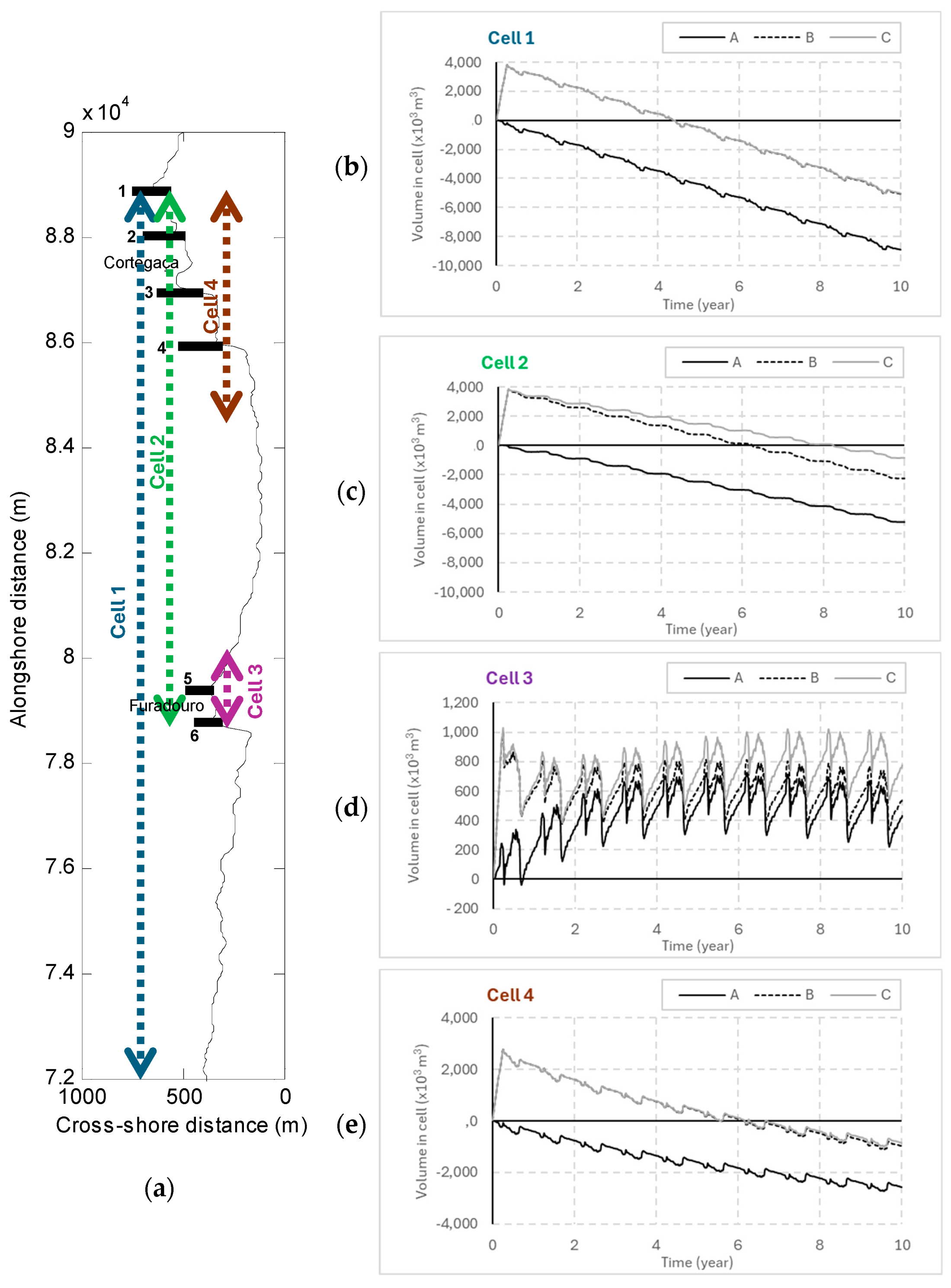
3.3. Retained Nourishment Volume Under Intervention Scenarios

The time evolution (for up to ten years) of the sediment balance retained in each of the littoral cells depicted in Figure 13a is represented in Figure 13b–e. For each cell, the net sediment balance is calculated as the difference between the net sediment fluxes at each cell extremity, added to the initial nourishment volume (when existing). For Cell 1 (Figure 13b), comprising the whole relevant coastal sector analyzed, one observes similar behavior between scenarios B and C, and these compare equally in terms of the decaying trend to scenario A (without intervention). The longevity of the nourishment for this longest stretch—that is, the time until the gain in volume in the cell reduces to zero—is circa 4.5 years. On the other hand, if one considers the potential benefit of the nourishment within a smaller cell, between Furadouro and Esmoriz (Cell 2, Figure 13c), the longevity is increased to 6 years for scenario B and 8 years for scenario C. In other words, the construction of an EDB (in addition to nourishment) would locally allow more sand to be retained than in the case of nourishment only. This is confirmed by the results in Figure 13d, which show a greater local net gain (of the order of 2 × 10⁵ m3 after 5 years) in sand in Cell 3 (comprising only the length of the nourishment intervention around Furadouro) for scenario C relative to B. This figure further shows that the initial sediment supply in Furadouro almost vanishes completely after 3 to 4 years, despite case B retaining circa 1 × 10⁵ m3 more sediment in this cell than for case A. In fact, even without nourishment, the simulation suggests a net gain in sediment in this cell, which is likely a result of the simulation uncertainty in the vicinities of coastal structures associated with one-line models [42], because the shoreline along the Furadouro beach has stabilized in the past few years (see Figure 6b). Interestingly, Figure 13d indicates also a strong seasonal pattern in the retained volume in this 1300 m long stretch, which repeats periodically due to the use of a repeated series of 1-year hindcast data for forcing. It is thus posited that, if a longer hindcast time series had been used, this periodicity would not have been so marked. Lastly, Figure 13e indicates that the longevity of the nourishment for Cell 4 (comprising the length of the nourishment intervention between Esmoriz and Cortegaça) is 6 years.
Overall, it can thus be concluded that the longevity of the (simulated) nourishment intervention depends on the extension of the coastal stretch that one considers that would benefit from the intervention.
Finally, comparing the sediment balances in Figure 13b,c for scenario A, after 10 years, Cell 1 loses circa 4 × 10⁶ m3 more sediment than Cell 2. This difference arises from the erosion south of Furadouro, over a stretch that is 6750 m long (corresponding to the length difference between Cells 1 and 2). According to the model inputs, and considering a 17 m thickness for the profile’s movable layer, this volume loss would correspond to an average shoreline retreat of 35 m. This result is confirmed by averaging the modeled shoreline position (at the ten-year instant) along this sector and comparing it with the initial shoreline.

4. Discussion

The predictions of the evolution of the coastline and the volume of the active beach obtained for scenario A (“do nothing”) are in agreement with the trends of the recent morphological evolution observed. In particular, the extreme erosion observed south of S. Pedro de Maceda and the severe erosion observed south of Furadouro will continue to endanger the maritime frontage of the coastal stretch, including infrastructure and, ultimately, people. In zones where frontal defense structures prevent coastline retreat, erosion may still occur and be aggravated by the frontal structure [26]. With the lowering of the beach adjacent to the structure, wave overtopping is also likely to increase. The applied process-based LITMOD model, as with all similar one-line models, does not account for such lowering. Thus, in these specific locations, the model may underestimate erosion. This hypothesis is particularly worrying for scenario A, as the lowering will occur earlier. The monitoring of this local phenomenon prior to nourishment should provide an additional local calibration factor for the LITMOD model, allowing improvements in the predictions.
According to the model-based assessment, the nourishment is expected to promote an initial advance in the coastline in the order of 40 to 50 m, and it has longevity of approximately 7.5 years in the intervention zone. If a wider cell is considered (extended southward, in the direction of the drift), the longevity decreases to 4.5 years. This longevity estimate is consistent with the values reported in other beach nourishment projects of this type (implemented on the United States Atlantic coast and European Atlantic coast): in most cases, these are values of up to 5 years [3,4,5] but, in exceptional cases, values up to 10 years [6]. The variation in these values is primarily determined by the hydrodynamic and geomorphologic characteristics of the site—in particular, the incident storm regime. However, the design and scale of the nourishment project are also key factors that influence its longevity, as in the Sand Motor, Netherlands case [7], with estimated longevity of 20 years. The model-based assessment also indicates that, at the lee side of the groynes, the medium-term erosion rate was not improved by the nourishment, i.e., erosion remained as in the absence of nourishment.
With the combined implementation of the artificial beach nourishment and the EDB, the model predicted considerable gains in beach width north of Furadouro and greater losses to the south. In terms of the cumulative sediment balance, and if the wider cell (as aforementioned) is considered, after 10 years, the performance of the combined solution would be very similar to that of beach nourishment only. This phenomenon is attributed to the fact that, although the EDB does not induce the formation of a tombolo or a salient in front of Furadouro, the structure modifies the wave-induced currents and longshore sediment transport within its localized shadow zone. Consequently, the EDB effectively promotes sediment retention to the north. Conversely, by retaining sediments of the littoral drift in the northern section, the EDB severely decreases the natural sediment supply to the south of the structure’s beach section.
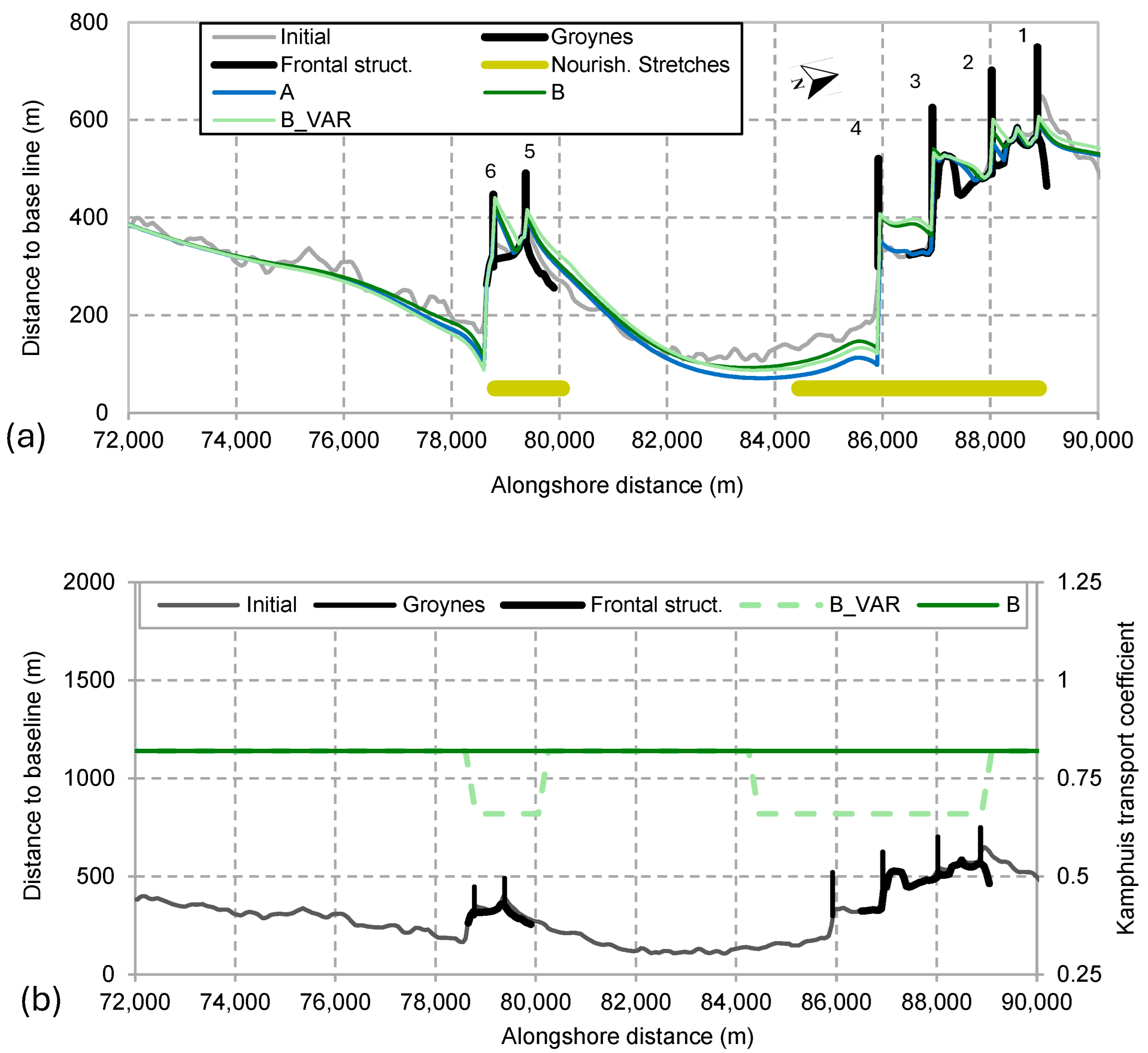
The nourishment sediments should be borrowed from an offshore pit and have a median grain size diameter (D50) of 0.84 mm, which is larger than that of the beach’s native sediments (D50 = 0.30 mm). How the presence of these coarser sediments affects the longshore sediment transport capacity, Q, and the medium- to long-term coastline evolution in the study site was addressed. The variability, by stretch, of D50 was considered through the Kamphuis formulation [43], which is used in the model to estimate the sediment transport capacity ( Q = f D 50 0.25 ). For the nourished stretches, the calibration factor was nearly 80% of the value adopted in the remaining stretches, where there is no direct (or immediate) influence of sediment deposit. In other words, the longshore sediment transport capacity was reduced by 20% due to the coarser sand. In these nourished stretches, the Dean’s profile coefficient [39] assumes the value A = 0.193 (for A = 0.21   D 50 0.48 ), instead of A = 0.125. It corresponds to a steeper and shorter profile until the depth of closure, thus affecting the sediment transposition capacity permitted by the groynes.
To assess the impact of the coarser sediments on the coastline’s evolution, an additional numerical simulation, referred to as BVAR, was performed. This new simulation considered the coefficient of the Kamphuis formulation variable alongshore, distinguishing the nourished from the native sediment stretches. In the previous simulation (scenario B), the Kamphuis coefficient was considered uniform (alongshore) and equal to 0.82. For simulation BVAR, the Kamphuis coefficient was equal to 0.66 on the nourished stretches.
From the modeling, it is found that, after 5 years, the nourishment leads to the slight accretion of the coastline north of Furadouro and between the groynes, when compared with scenario A (“do nothing”), in both simulations (Figure 14a). However, at the lee side of groyne 6, at Furadouro, where the coastline retreat is intense, the retreat is larger (up to circa 25 m) for scenario BVAR. This is explained by the alongshore change in the coefficient of the Kamphuis formulation (Figure 14b) slightly updrift: indeed, the greater retention of sediments at the updrift side of groyne 6 (where the sand is coarser and therefore the sediment transport capacity is lower) and the locally higher sediment transport capacity at the lee side of the groyne cause this effect relative to the case of a constant coefficient (scenario B).
It is thus expected that, immediately after nourishment, the assumptions of the BVAR simulation are the most realistic. However, after a few years, with the fading of the nourishment, due to sand redistribution and transport away from the initial depositional site, the assumptions of simulation B become more realistic. Therefore, the B and BVAR simulations should be interpreted as an envelope of the evolutionary behavior of the coastline, due to the effects of different grain sizes between the native sands and those from the borrow area.
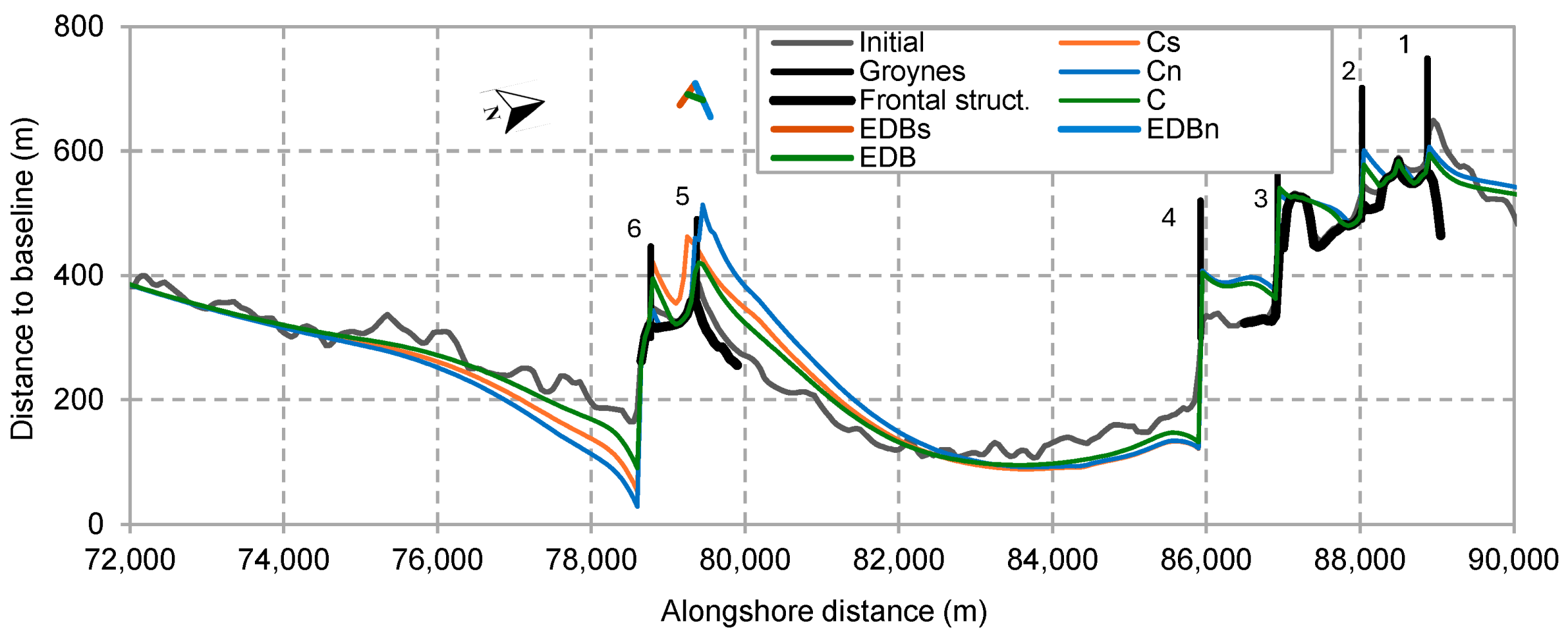
The effect of the EDB on the lifespan of the nourishment was found to be exclusively local. Indeed, differences were restricted to a stretch of about 4 km and centered at Furadouro. However, the EDB’s positioning relative to the existing groyne might be relevant to the nourishment’s longevity; thus, it was assessed. Simulations of the coastline’s evolution for two new layouts of the EDB combined with the nourishment intervention were performed. The lengths of the EDBs, i.e., 200 m, and their distances to the coastal defense structure, i.e., 350–400 m, were equal to the ones of the EDB in scenario C, but two new positions were tested. The structure in scenario C was displaced 100 m towards the south in scenario Cs and 100 m towards the north in scenario Cn. The alongshore-axis alignment for each new EDB matched the −12 m ALTH38 contour (closely parallel to the shore) at this specific location.
In 5 years’ time, the displacement of the EDB towards the north (in the Cn scenario) will cause gains in the beach width updrift of the northern groyne of Furadouro. These gains are greater than 80 m compared to scenarios Cs and C and greater than 120 m compared to the initial situation (Figure 15). However, these beach gains remain limited to 2 to 3 km north of Furadouro. At greater distances, the erosion relative to the initial situation remains. Conversely, the erosion south of the southern groyne of Furadouro is greater for scenario Cn, by over 20 and 60 m, than for scenarios Cs and C, respectively. The latter two scenarios result in similar coastline configurations north of Furadouro and the largest differences from scenario Cn at the beach located between the groynes at Furadouro, with greater gains for scenario Cs. The gains at this location are counterbalanced by greater losses downdrift of the southern groyne. Hence, the position of the EDB may have impacts on the coastline configuration over roughly a 5 km stretch, centered at Furadouro.

5. Conclusions

This study assessed strategies to optimize the lifespan of artificial beach nourishment (with a sand volume of 4 × 10⁶ m3) on a high-energy coastal stretch subjected to intense sediment drift (average of 1.1 × 10⁶ m3/year) and erosion. Medium- to long-term numerical modeling indicated several key findings.
  • The most pronounced erosional impact was recorded in the area north of Furadouro, which was formally classified as extreme erosion. The maximum volume loss of sediment occurred on the emerged beach face, although substantial volumetric changes were also observed across the nearshore and upper shoreface, extending down to the depth of closure.
  • The implemented nourishment’s longevity is approximately 7.5 years within the intervention area. However, considering a larger affected stretch in the direction of the littoral drift, this longevity reduces to 4.5 years due to sediment redistribution.
  • Introducing an emerged detached breakwater alongside the nourishment yielded notable increases in beach width north of Furadouro but also aggravated sediment loss to the south. Despite varying the breakwater positions, the cumulative sediment balance over a decade for the combined approach was comparable to that with nourishment alone, and no tombolo or pronounced salient was developed.
  • Overall, the breakwater’s impact is local and it does not significantly alter the broader pattern of erosion or accretion established by nourishment alone. Its principal advantage is providing more persistent local benefits compared to periodic nourishment, but further consideration of environmental impacts, cost-effectiveness, long-term maintenance, and operational feasibility is required.
  • Importantly, the study revealed that the nourishment lifespan is strongly influenced by the grain size of borrowed sediments; coarser sand may reduce longshore sediment transport and modify profile stability.
In summary, coastal managers should balance the limited, localized advantages of constructing a detached breakwater with the broader, yet temporary, protection provided by beach nourishment and account for sediment characteristics when designing intervention strategies.

Author Contributions

Conceptualization, F.S.B.F.O., F.S., A.R. and A.N.; methodology, F.S.B.F.O., F.S., A.R. and A.N.; software, F.S. and A.R.; validation, F.S. and A.R.; formal analysis, F.S.B.F.O., F.S., A.R. and A.N.; investigation, F.S. and A.R.; resources, F.S. and A.R.; data curation, F.S.B.F.O., F.S., A.R. and A.N.; writing—original draft preparation, F.S.B.F.O.; writing—review and editing, F.S., A.R., and A.N.; visualization, F.S.B.F.O., F.S., A.R. and A.N.; supervision, F.S.B.F.O., F.S., A.R. and A.N.; project administration, F.S.; funding acquisition, F.S. All authors have read and agreed to the published version of the manuscript.

Funding

This research was funded by the Portuguese Environment Agency (APA: Agência Portuguesa do Ambiente).

Data Availability Statement

The morphological data of the COSMO Monitoring Program are available online at https://cosmo.apambiente.pt/ (accessed on 12 June 2025).

Acknowledgments

The authors thank Vítor Pisco, a retired member of Laboratório Nacional de Engenharia Civil, for the technical support.

Conflicts of Interest

The authors declare no conflicts of interest.

References

  1. De Schipper, M.A.; Ludka, B.C.; Raubenheimer, B.; Luijendijk, A.P.; Schlacher, T.A. Beach nourishment has complex implications for the future of sandy shores. Nat. Rev. Earth Environ. 2020, 2, 70–84. [Google Scholar] [CrossRef]
  2. Saengsupavanich, C.; Pranzini, E.; Ariffin, E.H.; Yun, L.S. Jeopardizing the environment with beach nourishment. Sci. Total Environ. 2023, 868, 161485. [Google Scholar] [CrossRef] [PubMed]
  3. Staudt, F.; Gijsman, R.; Ganal, C.; Mielck, F.; Wolbring, J.; Hass, H.C.; Goseberg, N.; Schüttrumpf, H.; Schlurmann, T.; Schimmels, S. The sustainability of beach nourishments: A review of nourishment and environmental monitoring practice. J. Coast. Conserv. 2021, 25, 34. [Google Scholar] [CrossRef]
  4. Shek, K. Relationship Analysis Between Beach Nourishment Longevity and Design Aspects. A Study of the Central Holland Coast Using a Multiple Linear Regression. Master’s Thesis, Delft UniversityofTechnology, Delft, The Netherlands, 2012. Available online: https://repository.tudelft.nl/record/uuid:7991a9b8-c6f6-41d4-a8c2-dac71c3a685d (accessed on 12 September 2025).
  5. Krafft, D.R.; McFall, B.C.; Melby, J.A.; Johnson, B.D. Lifecycle analyses of subaerial beach nourishments with concurrent nearshore placement of dredged sediment and the role of alongshore transport. J. Waterw. Port Coast. Ocean. Eng. 2025, 151, 05024002. [Google Scholar] [CrossRef]
  6. Putsy, N.P.; Moreira, M.E.S.A. Characteristics and longevity of beach nourishment at Praia da Rocha, Portugal. J. Coast. Res. 1992, 8, 660–676. [Google Scholar]
  7. Stive, M.J.F.; de Schipper, M.A.; Luijendijk, A.P.; Aarninkhof, S.G.J.; van Gelder-Maas, C.; van Thiel de Vries, J.S.M.; de Vries, S.; Henriquez, M.; Marx, S.; Ranasinghe, R. A new alternative to saving our beaches from sea-level rise: The sand engine. J. Coast. Res. 2013, 29, 1001–1008. [Google Scholar] [CrossRef]
  8. Pinto, C.A.; Silveira, T.M.; Teixeira, S.B. Beach nourishment practice in mainland Portugal (1950–2017): Overview and retrospective. Ocean. Coast. Manag. 2020, 192, 105211. [Google Scholar] [CrossRef]
  9. Hamm, L.; Capobianco, M.; Dette, H.H.; Lechuga, A.; Spanhoff, R.; Stive, M.J.F. A summary of European experience with shore nourishment. Coast. Eng. 2002, 47, 237–264. [Google Scholar] [CrossRef]
  10. Hanson, H.; Brampton, A.; Capobianco, M.; Dette, H.H.; Hamm, L.; Laustrup, C.; Lechuga, A.; Spanhoff, R. Beach nourishment projects, practices, and objectives—A European overview. Coast. Eng. 2002, 47, 81–111. [Google Scholar] [CrossRef]
  11. Pranzini, E.; Wetzel, L.; Williams, A.T. Aspects of coastal erosion and protection in Europe. J. Coast. Conserv. 2015, 19, 445–459. [Google Scholar] [CrossRef]
  12. Pinto, C.A.; Gomes, E.; Rodrigues, A. Dredging and beach nourishment: A sustainable sediment management approach in Costa da Caparica beach (Portugal). In Proceedings of the Dredging 2015 Conference in Moving and Managing Sediments, Savannah, GA, USA, 19–22 October 2015; pp. 19–22. [Google Scholar]
  13. Mendes, D.; Pais-Barbosa, J.; Baptista, P.; Silva, P.A.; Bernardes, C.; Pinto, C. Beach response to a shoreface nourishment (Aveiro, Portugal). J. Mar. Sci. Eng. 2021, 9, 1112. [Google Scholar] [CrossRef]
  14. Sancho, F. Evaluation of coastal protection strategies at Costa da Caparica (Portugal): Nourishments and Structural Interventions. J. Mar. Sci. Eng. 2023, 11, 1159. [Google Scholar] [CrossRef]
  15. Santos, F.D.; Lopes, A.M.; Moniz, G.; Ramos, L.; Taborda, R. Coastal Zone Management. The Challenge of Changing. Report of the Littoral Task Force. Lisboa, Portugal. 2014. Available online: https://conselhonacionaldaagua.weebly.com/uploads/1/3/8/6/13869103/relatrio_final_gtl_20_11_2014.pdf (accessed on 11 June 2025). (In Portuguese).
  16. Vicente, C.M.; Clímaco, M. Trecho de Costa do Douro ao Cabo Mondego: Caracterização Geral do Processo Erosivo; LNEC-Proc. 0604/011/17744. Report 253/2012–DHA/NEC; LNEC: Lisboa, Portugal, 2012. (In Portuguese) [Google Scholar]
  17. van Westen, B.; Luijendijk, A.P.; de Vries, S.; Cohn, N.; Leijnse, T.W.B.; de Schipper, M.A. Predicting marine and aeolian contributions to the Sand Engine’s evolution using coupled modelling. Coast. Eng. 2024, 188, 104444. [Google Scholar] [CrossRef]
  18. Thomas, R.C.; Frey, A.E. Shoreline Change Modeling Using One-Line Models: General Model Comparison and Literature Review. US Army Corps of Engineeres (No. CHETN-II-55). 2013. Available online: https://apps.dtic.mil/sti/tr/pdf/ADA591362.pdf (accessed on 11 June 2025).
  19. Cantasano, N.; Boccalaro, F.; Ietto, F. Assessing of detached breakwaters and beach nourishment environmental impacts in Italy: A review. Environ. Monit. Assess. 2022, 195, 127. [Google Scholar] [CrossRef] [PubMed]
  20. Lira, C.P.; Silva, A.N.; Taborda, R.; Andrade, C.F. Coastline evolution of Portuguese low-lying sandy coast in the last 50 years: An integrated approach. Earth Syst. Sci. Data 2016, 8, 265–278. [Google Scholar] [CrossRef]
  21. Ferreira, O.; Matias, A. Portugal. In Coastal Erosion and Protection in Europe; Pranzini, E., Williams, A., Eds.; Routledge: London, UK, 2013; p. 457. [Google Scholar]
  22. Lima, M.; Coelho, C.; Jesus, A.; Alves, F.; Marto, M. Data Base #4–Coastal Defense Interventions-Case Study (Ovar); Project INCCA-Integrated Climate Change Adaptation for Resilient Communities (POCI-01-0145-FEDER-030842); University of Aveiro: Aveiro, Portugal, 2021; Available online: https://incca.web.ua.pt/index.php/base-de-dados-4/ (accessed on 3 June 2025).
  23. Tavares, A.O.; Barros, J.L.; Freire, P.; Santos, P.O.; Perdiz, L.; Fortunato, A.B. A coastal flooding database from 1980 to 2018 for the continental Portuguese coastal zone. Appl. Geogr. 2021, 135, 102534. [Google Scholar] [CrossRef]
  24. Carneiro-Barros, J.E.; Plomaritis, T.A.; Fazeres-Ferradosa, T.; Rosa-Santos, P.; Taveira-Pinto, F. Coastal flood mapping with two approaches based on observations at Furadouro, Northern Portugal. Remote Sens. 2023, 15, 5215. [Google Scholar] [CrossRef]
  25. Costa, M.; Silva, R.; Vitorino, J. Contribuição para o estudo do clima de agitação marítima na costa portuguesa. In Proceedings of the 2as Jornadas Portuguesas de Engenharia Costeira e Portuária, Sines, Portugal, 17−19 October 2001; Associação Nacional de Navegação: Sines, Portugal, 2001. CD-ROM. p. 20. (In Portuguese). [Google Scholar]
  26. Oliveira, F.S.B.F.; Fortunato, A.B.; Freire, P. Beach nourishment protection against storms for contrasting backshore typologies. J. Mar. Sci. Eng. 2024, 12, 1465. [Google Scholar] [CrossRef]
  27. Atkinson, A.L.; Baldock, T.E. Laboratory investigation of nourishment options to mitigate sea level rise induced erosion. Coast. Eng. 2020, 161, 103769. [Google Scholar] [CrossRef]
  28. Kroon, A.; Christiaanse, J.C.; Luijendijk, A.P.; Schipper, M.A.; Ranasinghe, R. Parameter uncertainty in medium-term coastal morphodynamic modeling. Sci. Rep. 2025, 15, 18471. [Google Scholar] [CrossRef]
  29. Agência Portuguesa do Ambiente. Programa COSMO. Available online: https://cosmo.apambiente.pt (accessed on 12 June 2025).
  30. Himmelstoss, E.A.; Henderson, R.E.; Farris, A.S.; Kratzmann, M.G.; Bartlett, M.K.; Ergul, A.; Mcan-Drews, J.; Cibaj, R.; Zichichi, J.L.; Thieler, E.R. Digital Shoreline Analysis System Version 6.0: U.S. Geological Survey Software Release. 2024. Available online: https://www.usgs.gov/centers/whcmsc/science/digital-shoreline-analysis-system-dsas (accessed on 22 November 2025).
  31. Fletcher, C.H.; Romine, B.M.; Genz, A.S.; Barbee, M.M.; Dyer, M.; Anderson, T.R.; Lim, C.S.; Vitousek, S.; Bochicchio, C.; Richmond, B.M. National Assessment of Shoreline Change: Historical Shoreline Changes in the Hawaiian Islands. U.S. Geological Survey Open-File Report 2011-1051. 2012. Available online: https://pubs.usgs.gov/of/2011/1051/pdf/ofr2011-1051_report_508_rev052512.pdf (accessed on 22 November 2025).
  32. Vicente, C.; Címaco, M. Shoreline Evolution. Development and Application of a Numerical Model; Report ICT/ITH-42; Laboratório Nacional de Engenharia Civil: Lisboa, Portugal, 2003; 167p. (In Portuguese) [Google Scholar]
  33. Oliveira, F.S.B.F.; Freire, P.; Sancho, F.; Vicente, C.M.; Clímaco, C. Rehabilitation and protection of Colwyn Bay beach: Case study. J. Coast. Res. 2011, II, 1272–1276. [Google Scholar]
  34. Dodet, G.; Bertin, X.; Taborda, R. Wave climate variability in the North-East Atlantic Ocean over the last six decades. Ocean Model. 2010, 31, 120–131. [Google Scholar] [CrossRef]
  35. Kamphuis, J.W. Incipient wave breaking. Coast. Eng. 1991, 15, 185–203. [Google Scholar] [CrossRef]
  36. Vicente, C.M.; Clímaco, M.; Bertin, X. Agitação Marítima e Transporte Sólido Litoral na Costa de Aveiro; LNEC-Proc. 0604/011/17744. Rel. 164/2013–DHA/NEC; LNEC: Lisboa, Portugal, 2013. (In Portuguese) [Google Scholar]
  37. Vicente, C.M.; Clímaco, M. Trecho de Costa a sul de Espinho: Simulação Numérica do Processo Erosivo e de Alternativas de Intervenção; LNEC-Proc. 0604/011/17744. Relatório 101/2014–DHA/NEC; LNEC: Lisboa, Portugal, 2014. (In Portuguse) [Google Scholar]
  38. Vicente, C.M.; Clímaco, M. Evolução Costeira do Douro ao Cabo Mondego: Proposta de uma Metodologia de Estudo; LNEC-Proc. 0604/112/20285. Relatório 380/2015–DHA/NEC; LNEC: Lisboa, Portugal, 2015. (In Portuguese) [Google Scholar]
  39. Dean, R.G. Equilibrium Beach Profiles: U.S. Atlantic and Gulf Coasts; Ocean Engineering Report, No. 12; University of Delaware: Newark, NJ, USA, 1977. [Google Scholar]
  40. Esteves, L.S.; Finckl, C.W. The problem of critically eroded areas (CEA): An evaluation of Florida beaches. J. Costal Res. 1998, 11–18. Available online: https://www.jstor.org/stable/25736114 (accessed on 22 November 2025).
  41. Luijendijk, A.; Hagenaars, G.; Ranasinghe, R.; Baart, F.; Donchyts, G.; Aarninkhof, S. The State of the World’s Beaches. Sci. Rep. 2018, 8, 6641. [Google Scholar] [CrossRef] [PubMed]
  42. Teixeira-Canelas, S.; Sancho, F.; Trigo-Teixeira, A. A coastal defense work plan 40 years later: Review and evaluation of the Espinho case study in Portugal. J. Waterw. Port Coast. Ocean. Eng. 2022, 148, 05022004. [Google Scholar] [CrossRef]
  43. Kamphuis, J.W. Alongshore sediment transport rate. J. Waterw. Port Coast. Ocean. Eng. 1991, 117, 624–640. [Google Scholar] [CrossRef]
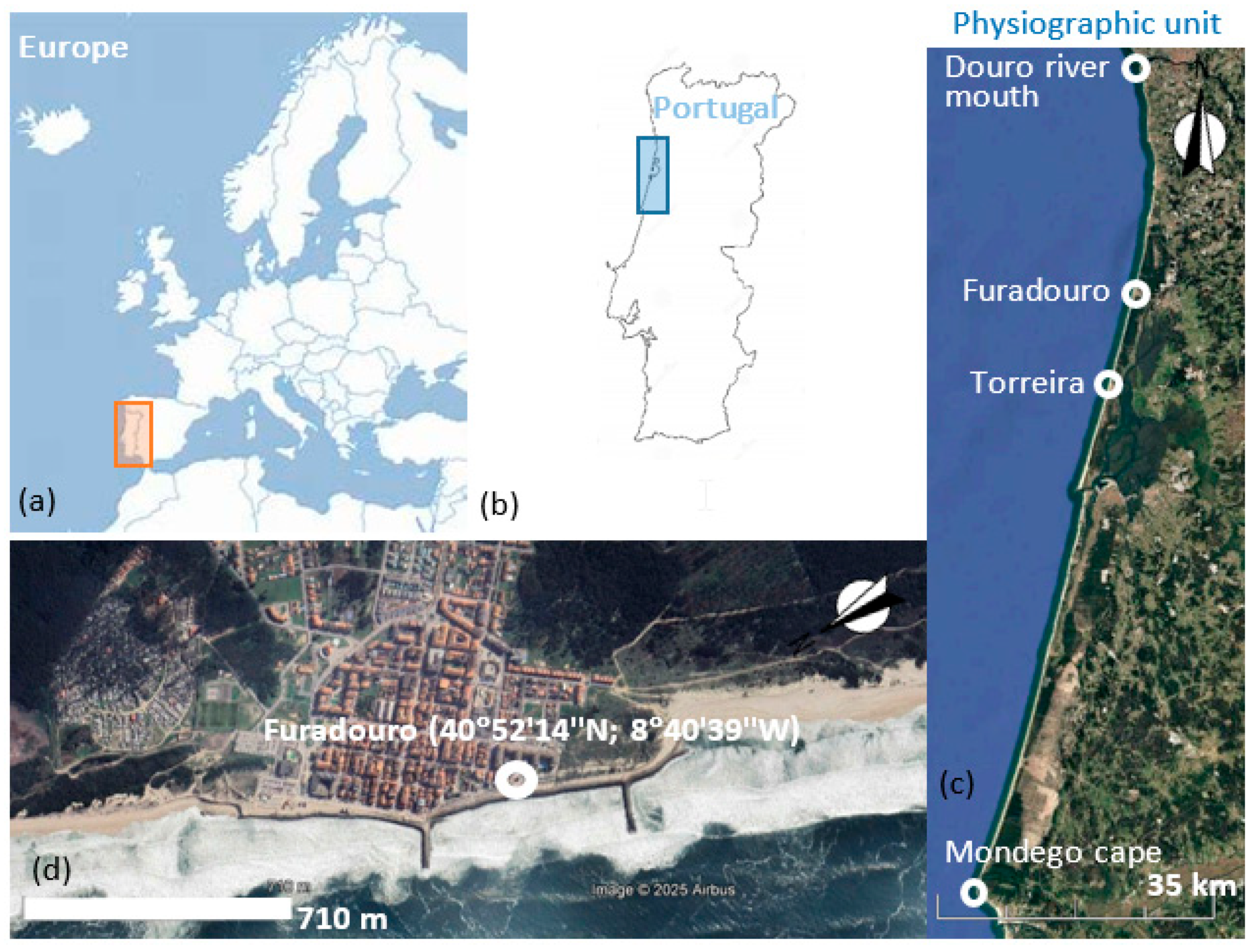
Figure 1. Location of the study site (Furadouro, 40°52″ N; 8°40″ W): (a) Portugal in the context of Europe; (b) physiographic unit of Furadouro (between Douro river mouth and Mondego cape) in the context of the Portuguese coast; (c) detail of the physiographic unit (background image © Google Earth, 2025); (d) detail of the Furadouro maritime frontage (background image © Google Earth, 2025).
Jmse 13 02251 g001
Figure 2. Methodological and conceptual approach: input data (hydrodynamic and morphologic; in blue), methodological procedures (in orange), and main results (in green).
Jmse 13 02251 g002
Figure 3. Locations of areas and profiles of the COSMO Monitoring Program (adapted from https://cosmo.apambiente.pt/data, accessed on 11 June 2025).
Jmse 13 02251 g003
Figure 4. Locations of the nourishment components (B1, B2a, B2b, and B3) for scenarios B and C and a magnified image of the location of the emerged detached breakwater (EDB) for scenario C (background image © Google Earth, 2024).
Jmse 13 02251 g004
Figure 5. Location of the LITMOD model baseline (green), the numerical domain (orange rectangle), and the groyne heads north of Torreira beach (red circles) (background image © Google Earth, 2024).
Jmse 13 02251 g005
Figure 6. Coastline positions between 2018 and 2021: (a) along the study site; (b) detail south of São Pedro de Maceda (background image: World Imagery ESRI basemap. Sources: Esri, DigitalGlobe, GeoEye, i-cubed, USDA FSA, USGS, AEX, Getmapping, Aerogrid, IGN, IGP, swisstopo, and the GIS User Community); (c) largest displacement between two coastlines that intersect a given transect (DSAS designation: Shoreline Change Envelope—SCE).
Jmse 13 02251 g006
Figure 7. Coastline evolution rates in the sector Esmoriz–Torrão do Lameiro between 2018 and 2021: (a) graphical form, in transects located every 100 m: values < −5 m/year correspond to extreme erosion; ≥−5 m/year and <−3 m/year correspond to severe erosion; ≥−3 m/year and <−1 m/year correspond to intense erosion; ≥−1 m/year and <−0.5 m/year correspond to erosion; ≥−0.5 m/year and <+0.5 m/year correspond to stability; and ≥+0.5 m/year correspond to accretion (background image: World Imagery ESRI Basemap. Sources: Esri, DigitalGlobe, GeoEye, i-cubed, USDA FSA, USGS, AEX, Getmapping, Aerogrid, IGN, IGP, swisstopo, and the GIS User Community); (b) numerical form and trendline (in red, obtained through 5-point moving average).
Jmse 13 02251 g007
Figure 8. Largest distances among the annual coastlines that intersect a given transect (DSAS designation: Shoreline Change Envelope—SCE) between 2018 and 2021.
Jmse 13 02251 g008
Figure 9. Variation in the vertical level (∆z in m; red corresponds to erosion) between the emerged surveys of 2 September 2018 and 27 April 2021: (a) southern area and (b) northern area (reference profile location in yellow dashed line). (Background image: ESRI Dark Grey basemap. Sources: Esri, HERE, Garmin, OpenStreetMap contributors, and the GIS user community).
Jmse 13 02251 g009
Figure 10. Variation in the vertical level (∆z in m; red corresponds to erosion) between the topobathymetric surveys of September 2018 and July 2020. (Background image: ESRI Topographic basemap. Sources: Esri, HERE, Garmin, Intermap, Increment P Corp., GEBCO, USGS, FAO, NPS, NRCAN, GeoBase, IGN, Kadaster NL, Ordnance Survey, Esri Japan, METI, Esri China (Hong Kong), OpenStreetMap contributors, and the GIS User Community).
Jmse 13 02251 g010
Figure 11. Evolution of the S. Pedro de Maceda quarterly emerged profiles, between 8 August 2018 and 16 April 2021 (blue and green solid and thick lines, respectively—the solid lines correspond to the six maritime summer months between April and September; of these, the two thick lines correspond to the initial and final profiles).
Jmse 13 02251 g011
Figure 12. (a) Initial coastline positions and groyne locations for the coastal stretch 71,400 ≤ x ≤ 89,800 m (horizontal to vertical scales distorted); (b) timestack of coastline position differences for scenario A; (c) timestack of coastline position differences for scenario B; (d) timestack of coastline position differences for scenario C.
Jmse 13 02251 g012
Figure 13. (a) Map showing the littoral cell’s locations and extensions; (be) time evolution of the net volume of sediment balance (in thousands of m3) in each of the cells indicated in the map at the left (vertical axis limits vary between some subfigures).
Jmse 13 02251 g013
Figure 14. (a) Evolution of the coastline after 5 years for scenarios A, B, and BVAR; (b) coefficient of the Kamphuis formulation across the study site for scenarios B and BVAR (horizontal scale distorted in both (a,b)).
Jmse 13 02251 g014
Figure 15. Evolution of the coastline after 5 years for scenarios C, Cn, and Cs (EDB, EDBn, and EDBs are the designations of the emerged detached breakwater for the respective scenario). Note: horizontal scale distorted.
Jmse 13 02251 g015
Table 1. COSMO data applied: type, zone, and date.
Data Type and ZoneDate [yyyy-mm-dd] or [yyyy-mm]
Total beach surveys and orthophotos; from Cortegaça to Torrão do Lameiro beaches2018-09-02, 2019-05-15, 2020-05-18, 2021-03-03, 2021-04-27
Topo-bathymetric surveys; from Esmoriz to Furadouro beaches2018-09, 2019-07, 2020-07
Total profile surveys; between Esmoriz and Furadouro beaches2019-01, 2019-05, 2020-01, 2021-01, 2021-04(/5)
Emerged profile surveys; between Esmoriz and Torrão do Lameiro beaches2018-08, 2018-11, 2019-02, 2019-05, 2019-07, 2019-11, 2020-01, 2020-04, 2020-07, 2020-10, 2021-01, 2021-04
Table 2. Uncertainties related to the coastline evolution rate.
Dates of Coastline Position
[dd/mm/yyyy–dd/mm/yyyy]
Elapsed Time [Years]Uncertainty of Evolution Rate [m/year]
09/02/2018–15/05/20191.257.9
15/05/2019–18/05/202019.9
18/05/2020–03/03/20210.8311.9
09/02/2018–03/03/20213.083.2
Table 3. LITMOD model’s locally dependent parameters.
Parameter 1Value [Unit]
Cell alongshore length50 [m]
Total number of cells795 [-]
Initial X-axis cell60,300 [m]
Final X-axis cell100,000 [m]
Time step0.05 [day]
Simulation period20 [year]
Initial shoreline date21 August 2021
Wave climate input frequency1 [day]
Angle between cross-shore and geographic north (clockwise)283 [°]
Sea level: mean sea level (MWL)0 [m ALTH38]
Number of wave climates (at −15 m ALTH38)20 [-]
Beach sediment median grain diameter (D50)0.3 [mm]
Bottom slope at breaking zone 21:70 [-]
Kamphuis formulation coefficient 20.82 [-]
Dean’s beach profile coefficient (A) 30.125
Thickness of profile’s erodible layer (between berm crest, at 4 m ALTH38, and sea limit of active profile, at −13 m ALTH38)17 [m]
1 LITMOD model [32]. 2 Used for the alongshore sediment transport rate’s calculation through the Kamphuis formulation [35]. 3 Dean’s beach profile: h = A y n , where h is the depth, y is the horizontal distance from the origin (at the waterline), and A and n are the adjustment coefficients [39].
Table 4. Volumetric balance between the initial and final beach (emerged) and topobathymetric (emerged and submerged) COSMO surveys (negative volume values correspond to erosion and negative ∆z values correspond to lowering of the terrain surface).
Data Type and ZoneErosionAccretionBalance
Area
[m2]
Volume [m3]Area
[m2]
Volume [m3]Area
[m2]
Volume [m3]Average ∆z
[m]
Beach surveys; from Cortegaça to Furadouro337,681−839,761219,490142,458557,171−697,303−1.25
Topobathymetric surveys; from Esmoriz to Furadouro12,472,854−3,191,3329,144,0071,707,10221,616,861−1,484,230−0.07
Disclaimer/Publisher’s Note: The statements, opinions and data contained in all publications are solely those of the individual author(s) and contributor(s) and not of MDPI and/or the editor(s). MDPI and/or the editor(s) disclaim responsibility for any injury to people or property resulting from any ideas, methods, instructions or products referred to in the content.