Article

An Underwater Low-Light Image Enhancement Algorithm Based on Image Fusion and Color Balance


1
Donghai Laboratory, Zhoushan 316021, China
2
Research Institute of Underwater Vehicles and Intelligent Systems, University of Shanghai for Science and Technology, Jungong Road 516, Shanghai 200093, China
*
Author to whom correspondence should be addressed.
J. Mar. Sci. Eng. 2025, 13(11), 2049; https://doi.org/10.3390/jmse13112049
Submission received: 2 October 2025 / Revised: 21 October 2025 / Accepted: 24 October 2025 / Published: 26 October 2025
(This article belongs to the Section Ocean Engineering)

Abstract

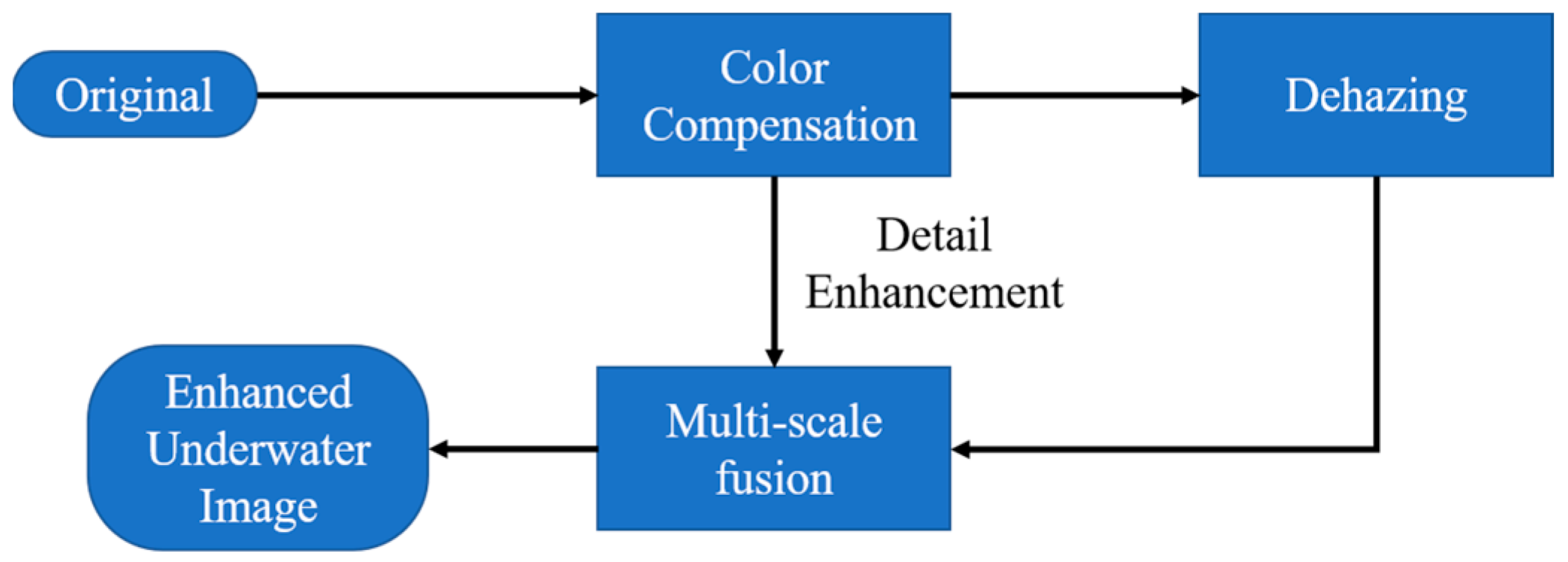
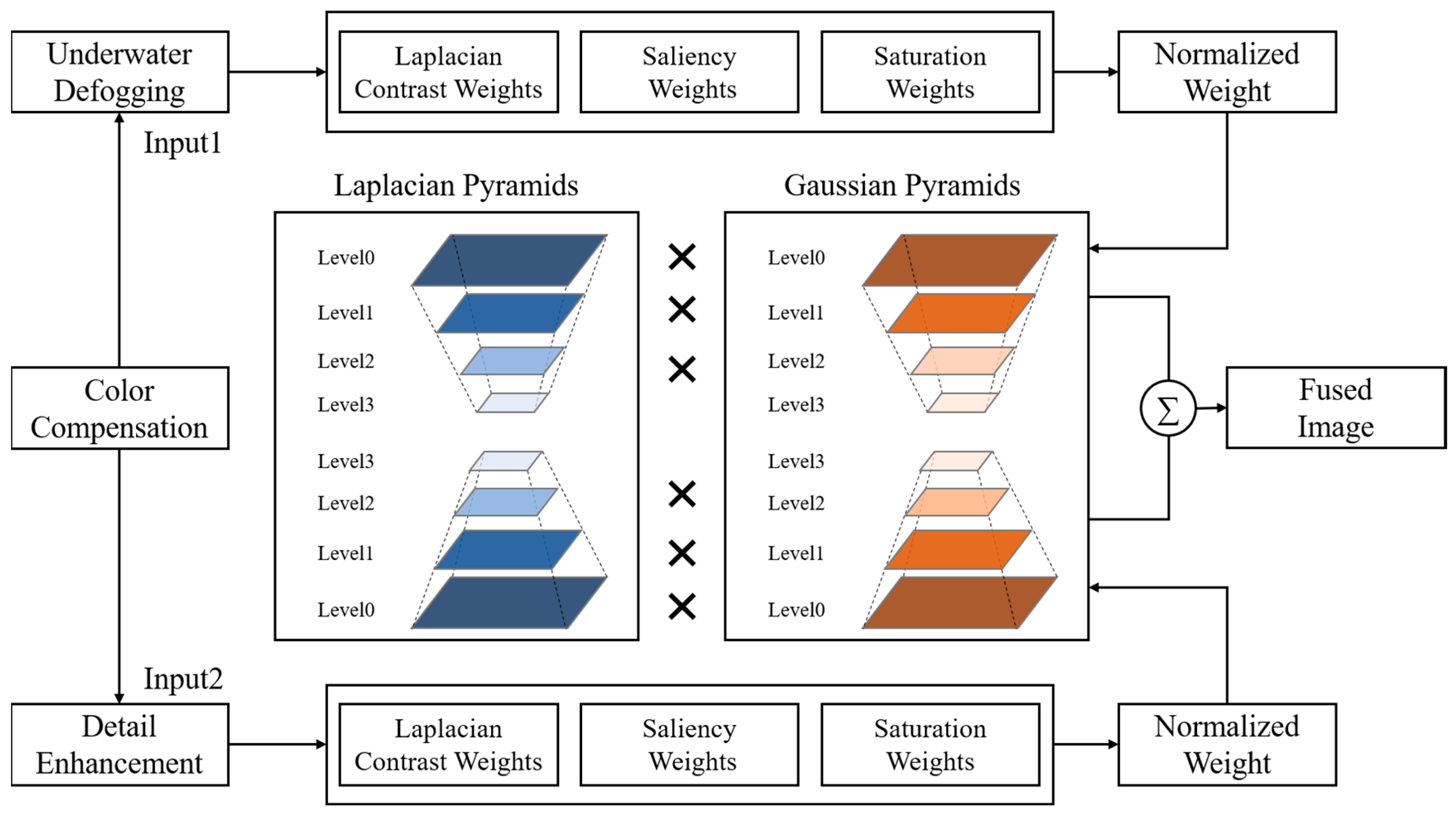
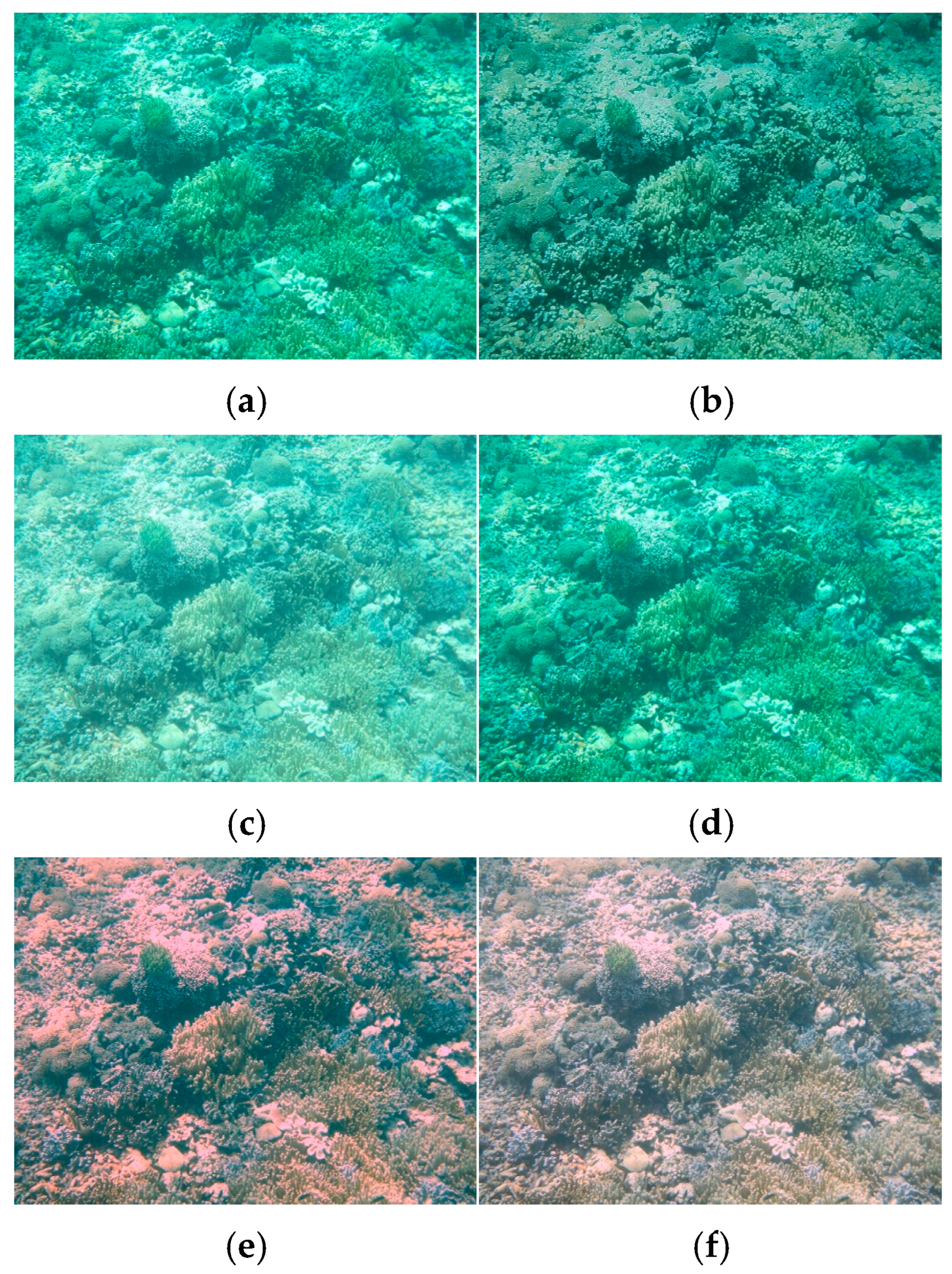
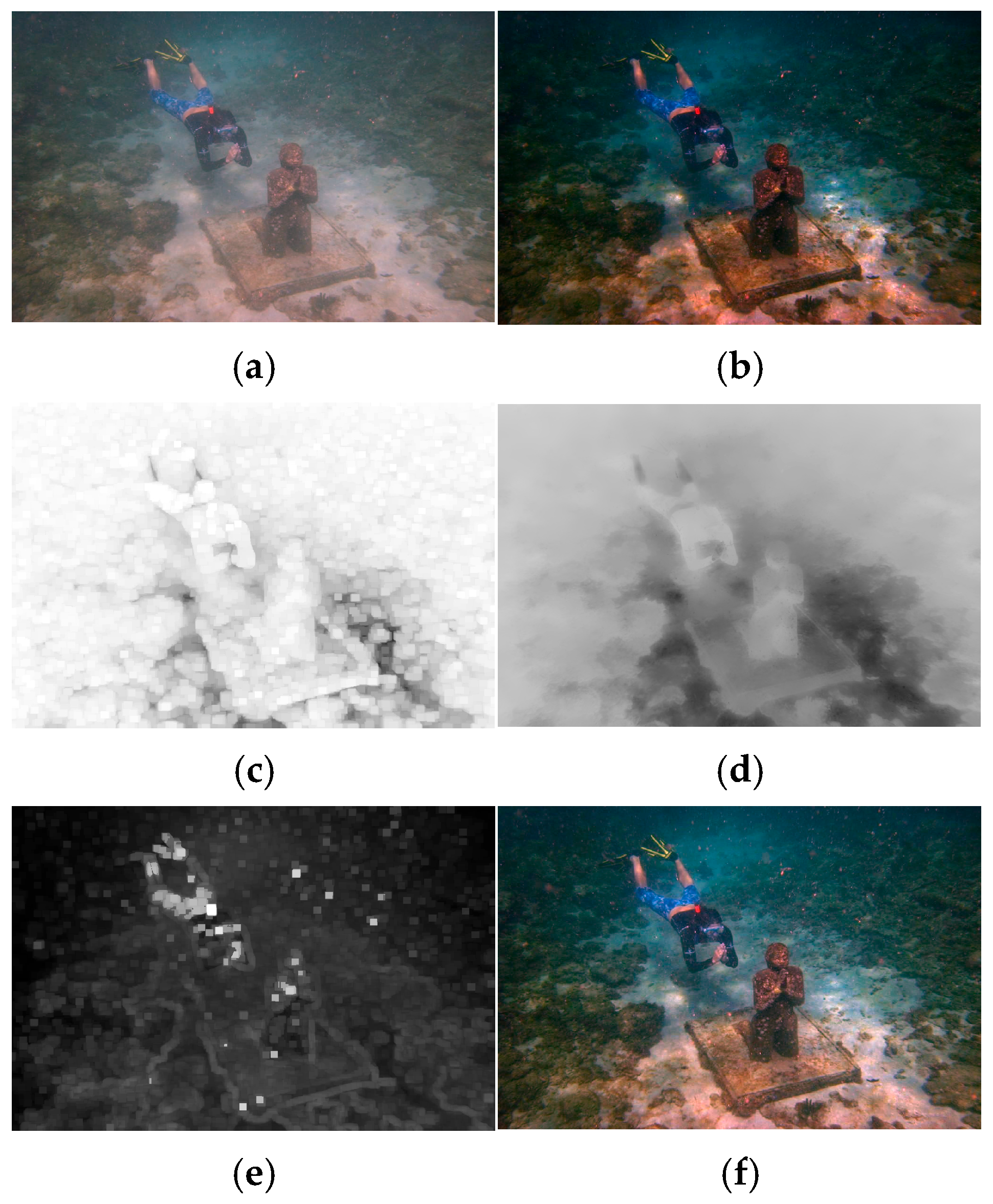
Underwater vehicles are widely used in underwater salvage and underwater photography. However, the processing of underwater images has always been a significant challenge. Due to low light conditions in underwater environments, images are often affected by color casts, low visibility and missing edge details. These issues seriously affect the accuracy of underwater object detection by underwater vehicles. To address these problems, an underwater low-light image enhancement method based on image fusion and color balance is proposed in this paper. First, color compensation and white balance algorithms are employed to restore the natural appearance of the images. The texture characteristics of these white-balanced images are then enhanced using unsharp masking (USM) technology. Subsequently, a dual channel dehazing is applied, the image visibility is improved and the blocking artifacts common in traditional dark channel dehazing is avoided. Finally, through multi-scale fusion, the sharpened and dehazed image are combined to obtain the final enhanced image. In quantitative analysis, PSNR (Peak Signal-to-Noise Ratio), SSIM (Structural Similarity index), UIQM (Underwater Image Quality Measurement) and UCIQE (Underwater Color Image Quality Evaluation) were 28.62, 0.8753, 0.8831 and 0.5928, respectively. The results show that the images generated by this enhancement technique have higher visibility compared with other methods. It also produces images with more details while preserving edge information.
Keywords: underwater vehicle; image enhancement; color compensation; dark channel dehazing; multi-scale fusion underwater vehicle; image enhancement; color compensation; dark channel dehazing; multi-scale fusion