


Abstract
Owing to its origin in tropical and subtropical areas, rice is susceptible to cold stress. Low temperatures at the germination and seedling stages can result in seed loss, a delayed transplanting period, and lower final yield. In this study, 181 rice varieties from around the world were investigated for cold tolerance at the germination and seedling stages. At the germination stage, the responses of different rice varieties were examined based on the germination index, coleoptile length, and radicle length at low (13 °C) and control temperatures (25 °C). Significant variations in the germination index, coleoptile length, and radicle length were observed among varieties. Low temperature significantly decreased germination ability, and coleoptile and radicle growth in the studied varieties. At the seedling stage, cold tolerance of the rice varieties was evaluated based on the leaf color score under natural low temperature. Similar to the germination stage, at the seedling stage, significant variation in root and shoot growth was observed in the response of rice varieties to low temperature conditions. Based on the results from both the germination and seedling stages, two varieties (Hei-Chiao-Chui-Li-Hsiang and Ta-Mao-Tao) were selected as the best cold-tolerant varieties. Our results also indicate the benefits of warming treatments to protect rice seedlings from low temperature conditions.
1. Introduction
Rice (Oryza sativa L.) is one of the most important staple food crops globally and the most important one in Vietnam [1,2]. Although Vietnam is one of the world’s major rice exporters, in some mountainous areas, particularly the northwest provinces, it is difficult to maintain food security due to low rice productivity caused by unfavorable environmental conditions. Owing to its origin in tropical and subtropical regions, rice is sensitive to cold stress [3], particularly at the germination and seedling stages [4,5]. In the northern regions of Vietnam, rice cultivation in the spring season (February to June) is usually affected by low temperatures at the germination and seedling stages [6], which results in seed loss and delay in the transplanting period. Breeding and cultivation techniques offer potential ways to overcome these negative effects of cold stress. However, cold tolerance in rice is a complex trait [7].
In northern Vietnam, rice is normally cultivated using the transplanting method. With this method, cold stress at the seedling stage represents one of the most severe abiotic stresses early in the cropping season. However, in recent years, the proportion of direct sowing has been increasing owing to the reduced time and labor required by this method. With the direct sowing method, cold stress can result in severe damage to the sown seeds. To address the problem of cold tolerance, new varieties are required that can resist cold stress at both the germination and seedling stages.
Currently, screening experiments for cold tolerance in rice are generally conducted under controlled conditions, such as in growth chambers. Although screening under controlled conditions provides useful information, it is no substitute for natural conditions. In this study, we performed experiments under both natural and controlled conditions. At the germination stage, screening was performed in a controlled growth chamber. At the seedling stage, rice plants were exposed to a natural condition (low temperature) to elucidate their response to actual conditions encountered during agricultural practice. This study was conducted from 2014 to 2017 at the Faculty of Agriculture, Kyushu University, Japan. Based on the results, we selected specific cold-tolerant varieties for further study. Our results also indicated the beneficial effects of warming treatment on the growth of rice seedlings under cold stress conditions.
2. Materials and Methods
2.1. Plant Materials
Rice genotypes from the Kyushu University Core Collection (KCR), which covers the global distribution of varieties provided by the Plant Breeding Laboratory, Faculty of Agriculture, Kyushu University, Japan, were used in this study. In total, 181 rice varieties were investigated (Table 1 and Table 2).
Table 1.
Rice varieties used in this study.
Table 2.
Rice varieties used in this study (continued).
2.2. Evaluation of Cold Tolerance at Germination Stage
2.2.1. Experimental Design and Seed Sowing
The experiment to examine cold tolerance at the germination stage was conducted in growth chambers at the Faculty of Agriculture, Kyushu University, using a randomized complete block design with four replications and 10 seeds/variety/replication.
Seeds were sterilized using 10% ethanol for 3 min and 5% sodium hypochlorite for 30 min, followed by rinsing in distilled water. The seeds were then sown in seedbeds (52.5 × 28 × 4 cm; 8 rows × 16 columns) containing commercial soil (Kokuryu Baido, Seisin Sangyo Co., Kitakyushu, Japan). Water was supplied to the beds to provide suitable moisture for seed germination. The seedbeds were then placed in controlled growth chambers, each with the same photoperiod of 16:00 h light/8:00 h darkness per day. The light intensity inside the growth chambers was 25,000 lx, equivalent to 230 pmol photons m−2 s−1. The sown seeds were germinated under two treatments: 21 days at 13 °C (cold stress) and 7 days at 25 °C (control).
2.2.2. Measurement for Parameters
To evaluate the germination ability of the rice varieties under the control and cold stress treatments, the number of germinated seeds was counted daily until 7 days after sowing for the control (25 °C) condition and 21 days after sowing for the cold stress (13 °C) condition. Based on the number of germinated seeds, the germination index (GI%) was calculated using the following formula: GI% = ((G14 + G21)/10) × 100 [8], where G14 and G21 are the number of germinated seeds at 14 and 21 days, respectively, after sowing under 13 °C, and 10 is the number of seeds per variety counted for each replication.
The coleoptile and radicle length of the germinated seeds were measured at 7 days (at 25 °C, control) and 21 days (at 13 °C, cold stress) after sowing [8]. The percentage decrease in coleoptile and radicle length under cold stress compared to the control condition was calculated based on the cold stress-to-control ratio.
2.3. Evaluation of Cold Tolerance and Warming Treatment at Seedling Stage
2.3.1. Effect of Cold Stress to Leaf Color of Rice Varieties at Seedling Stage
The effect of cold stress at the seedling stage was investigated in a net house at the Faculty of Agriculture, Kyushu University. The experiment was conducted using a randomized complete block design with four replications and four plants/variety/replication. Seeds were sterilized following the method described above for the germination stage, followed by incubation at 30 °C for 72 h for germination. Uniformly germinated seeds of each variety were sown in seedbeds (52.5 × 28 × 4 cm; 8 rows × 16 columns) containing moist sand. The seedbeds were placed on plastic trays (56.5 × 30.0 × 16.7 cm) containing commercial soil (Kokuryu Baido, Seisin Sangyo Co., Kitakyushu, Japan). Seedlings of varieties were nurtured in a net house without plastic cover, and the conditions inside the net house (temperature, humidity) were the same as outside (natural condition). At 3 weeks after sowing time, temperature was decreased to lower 15 °C and remained at this low temperature for 1 month. After 1 month of exposure to low temperature, the leaf color of seedlings was recorded and scored based on the Standard Evaluation System for Rice of the International Rice Research Institute (IRRI) (2002) [9]. This evaluation scale ranges from 1 to 9 based on changes in leaf color, as follows: Seedlings dark green (score = 1; considered the most cold-tolerant genotype); seedlings light green (score = 3); seedlings yellow (5); seedlings brown (7); and seedlings dead (9; considered the most cold-susceptible genotype).
In this experiment, air temperature and air humidity inside the net house were measured by TR-72wf Thermo Recorder (T&D Corporation, Japan). Soil temperature was recorded by TR-71U Thermo Recorder (T&D Corporation, Japan).
2.3.2. Effect of Warming Treatment to Rice Varieties at Seedling Stage
We investigated 50 rice varieties with different leaf color scores to evaluate the effect of warming on rice growth compared to natural conditions (low temperature) at the seedling stage between, March and April 2015. The experiment was conducted following a randomized complete block design with four replications and four plants/variety/replication. The seed sterilization and seed sowing methods were the same as those described above for leaf color screening. During the first week after sowing, seedlings of all varieties were nurtured at 25 °C in a phytotron room. Subsequently, the rice seedlings were transferred to a net house and treated under two different conditions for 2 weeks: Natural low temperature (control) and warming treatment. For the warming treatment, a warming sheet (0.9 × 1.8 m) equipped with an electric thermostat (ND-610, Tukuba Denki Co., LTD., Ibaragi, Japan) was set at 25 °C and placed under the seedling trays.
The shoot length, root length, shoot dry weight, and root dry weight of the different rice varieties were measured. Subsequently, the ratios of these values under the warming treatment to those under the control condition were calculated to evaluate the effect of the warming treatment on the rice varieties compared to the control condition.
2.4. Selection for Cold-Tolerant Varieties
Based on the results of the experiments at both the germination and seedling stages, we selected varieties more tolerant to cold stress conditions.
2.5. Statistical Analysis
Analysis of variance was used to test for differences, followed by Tukey’s Honestly Significant Difference test, both using the Statistical Tool for Agricultural Research (STAR) software program (IRRI, Version 2.0.1, Los Baños, Philippines, 2014).
3. Results
3.1. Effects of Cold Stress on Rice Varieties at Germination Stage
3.1.1. Germination Index at Low Temperature
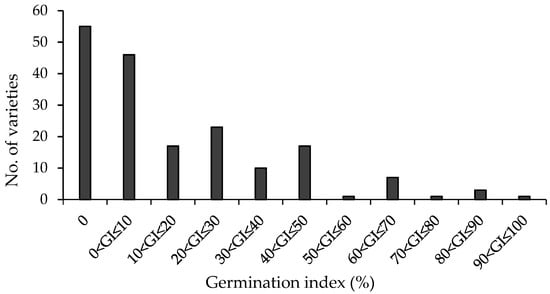
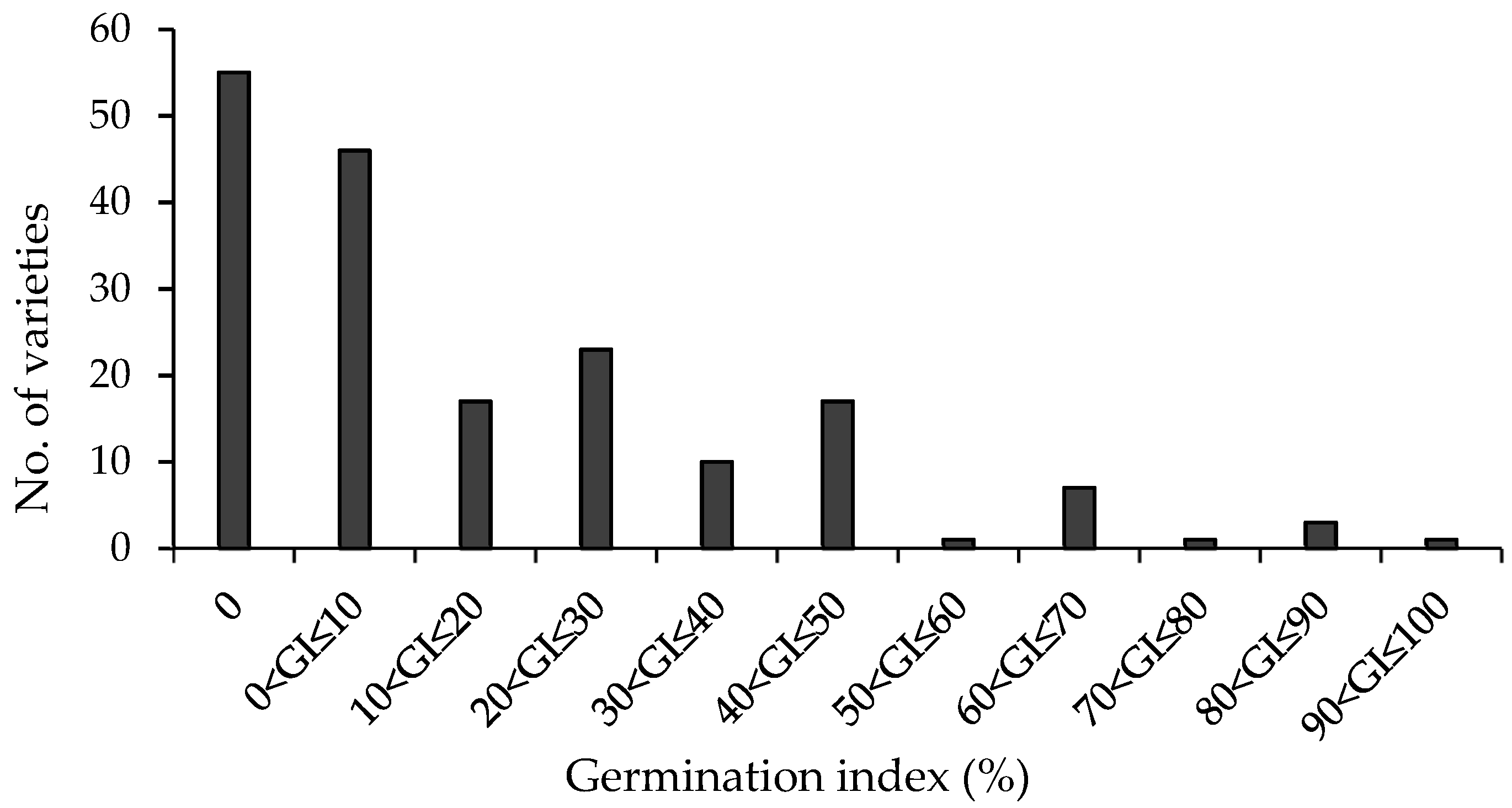
The distribution of the germination index of the studied rice varieties is shown in Figure 1. We observed a marked variation in germination index, ranging from 0 to 95%. Among the 181 varieties studied, 55 varieties (30.4%) had a germination index of 0 (did not germinate under 13 °C), and 46 varieties (25.4%) had a germination index between 0 and 10%. Among 126 germinated varieties, the average germination index was 26.7%, with only 13 varieties having a germination index higher than 50%. Variety KCR 246 (Tumo-tumo) had the highest germination index, 95.0%, followed by KCR 242 (Bengiza, GI = 90.0%).
Figure 1.
Frequency distribution of germination index of experimental varieties under the cold stress condition.
3.1.2. Coleoptile Length of Rice Varieties
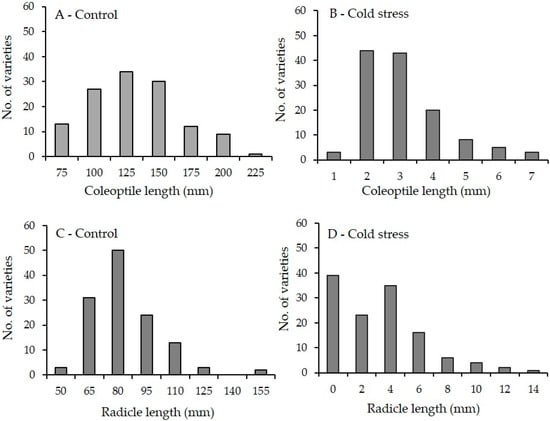
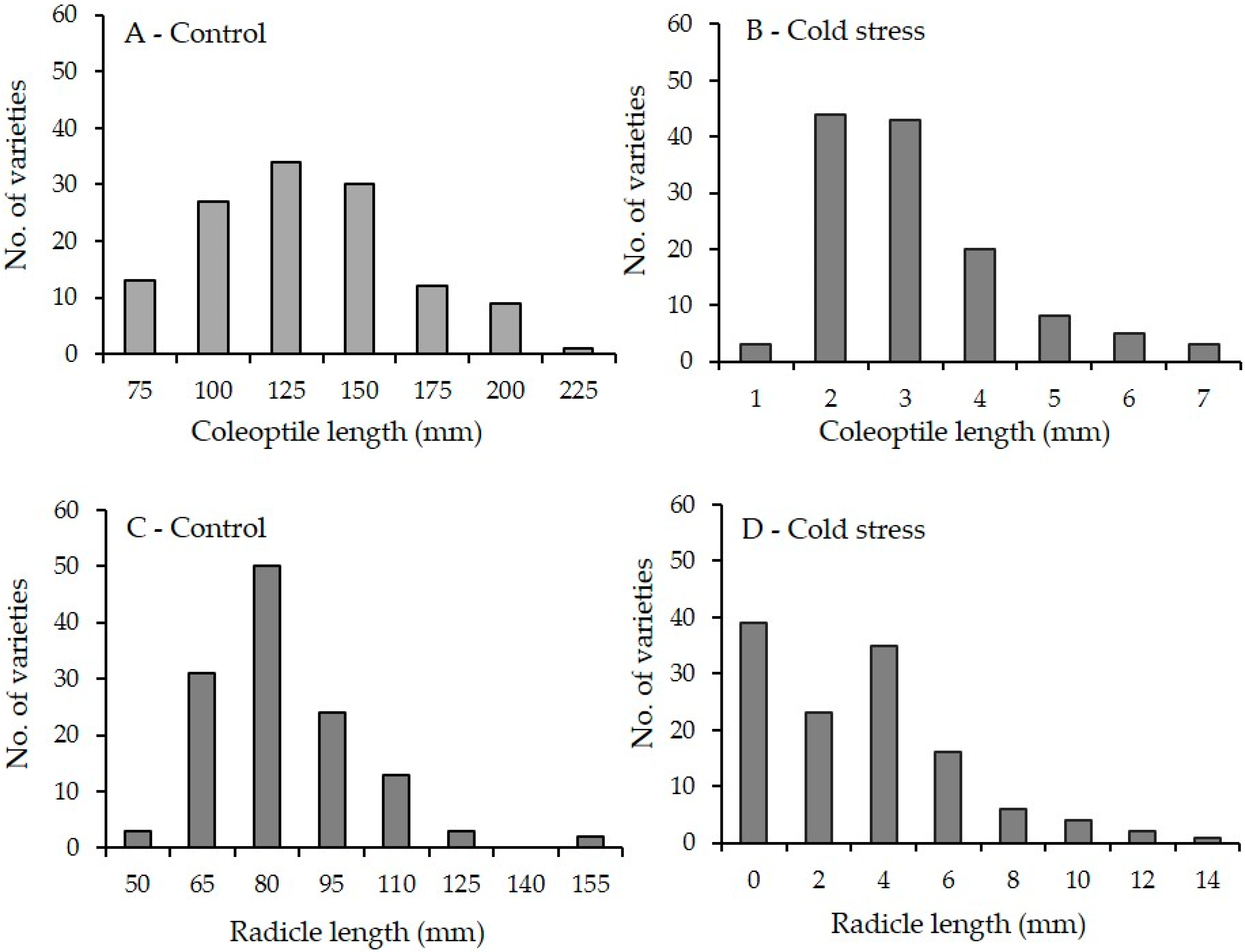
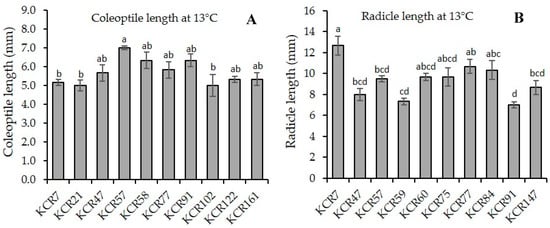
The frequency distribution indicated a large variation in coleoptile lengths of the rice varieties under the control and cold stress conditions (Figure 2A,B). The development of the coleoptile was significantly inhibited under cold stress in comparison to the control condition (Table S1), with the range decreasing from 93.38–99.37% (Table 3). On average, the percentage decrease in the coleoptile length under cold stress, relative to that under the control condition, was 97.72% (Table 3). In comparison to other varieties, KCR 117 (ARC 10352) had the lowest percentage decrease in coleoptile length, 93.38% (Table S1). The coleoptile length of rice varieties under cold stress ranged from 0.33 to 7.0 mm, with the average for all varieties at 2.7 mm. Among all varieties, KCR 57 (Ta-mao-tao) had the longest coleoptile lengths (7.00 mm) under cold stress, followed by KCR 58 (Kun-Min-Tsieh-Hunan, 6.3 mm) and KCR 91 (TD 2, 6.3 mm) (Figure 3).
Figure 2.
Frequency distribution of coleoptile length (A,B) and radicle length (C,D) of rice varieties under the control (25 °C) and cold stress (13 °C) conditions.
Table 3.
Summary of coleoptile length and radicle length of rice varieties under the control (25 °C) and cold stress (13 °C) conditions.
Figure 3.
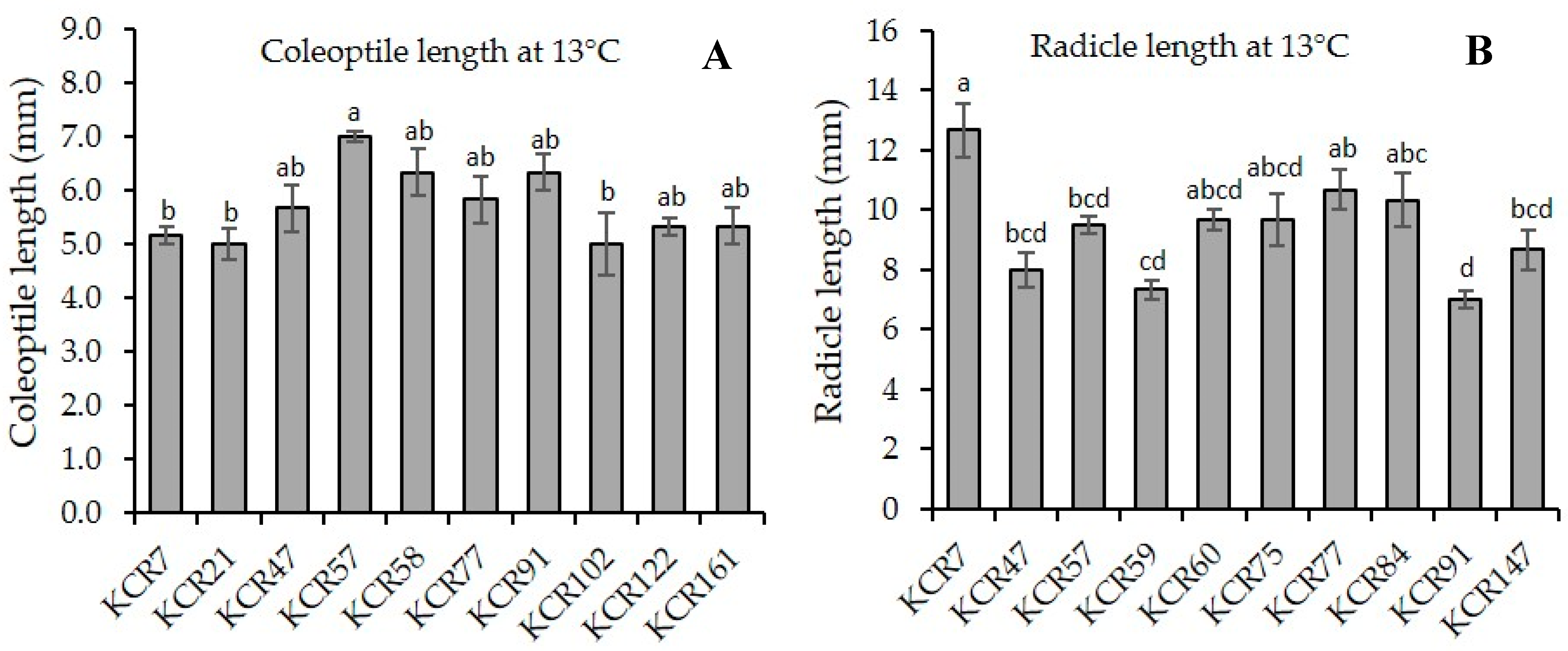
Top ten varieties that had the highest coleoptile length (A) and radicle length (B) under the cold condition. Means with same letters have no significant difference between varieties (n = 4; p < 0.05). Values are mean ± SE (n = 4).
3.1.3. Radicle Lengths of Rice Varieties
Figure 2C,D shows the frequency distribution of the radicle length of varieties under the cold stress and control conditions. We observed large variations in the radicle length among the rice varieties under control (with a range from 46.3 to 144.3 mm) and cold stress (with a range from 0.00 to 12.7 mm). KCR 7 (Hei-chiao-chui-li-hsiang-keng) expressed the longest radicle among all varieties (12.7 mm), followed by KCR 77 (Peh-pi-nuo, 10.7 mm) and KCR 84 (JC 149, 10.3 mm) (Figure 3). Similar to the coleoptile, radicle growth was significantly reduced by cold stress compared to the control condition (Table S2), with an average percentage decrease of 96.73% (Table 3). KCR 7 (Hei-chiao-chui-li-hsiang-keng) had the lowest percentage decrease at 81.37%, followed by KCR 84 (JC 149, reduction percentage decrease = 86.45%), and KCR 47 (Madael, percentage decrease = 86.96%) (Table S2).
3.2. Effects of Cold Stress and Warming Treatment at the Seedling Stage
3.2.1. Environmental Temperature during the Cold Stress Experiment
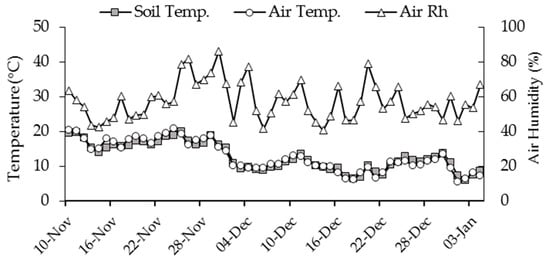
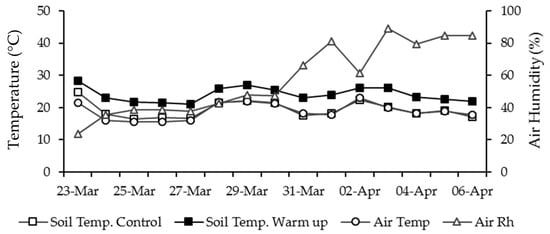
The environmental conditions, including temperature and humidity, of the experiment are shown in Figure 4. From 1 December 2014 (approximately 3 weeks after sowing), the air and soil temperatures were decreased to below 15 °C and remained at this low temperature for one month, until the time of leaf color score evaluation. We observed no significant difference between the air and soil temperature during the experiment. The relative humidity of the air fluctuated between 40% and 86% during the experiment.
Figure 4.
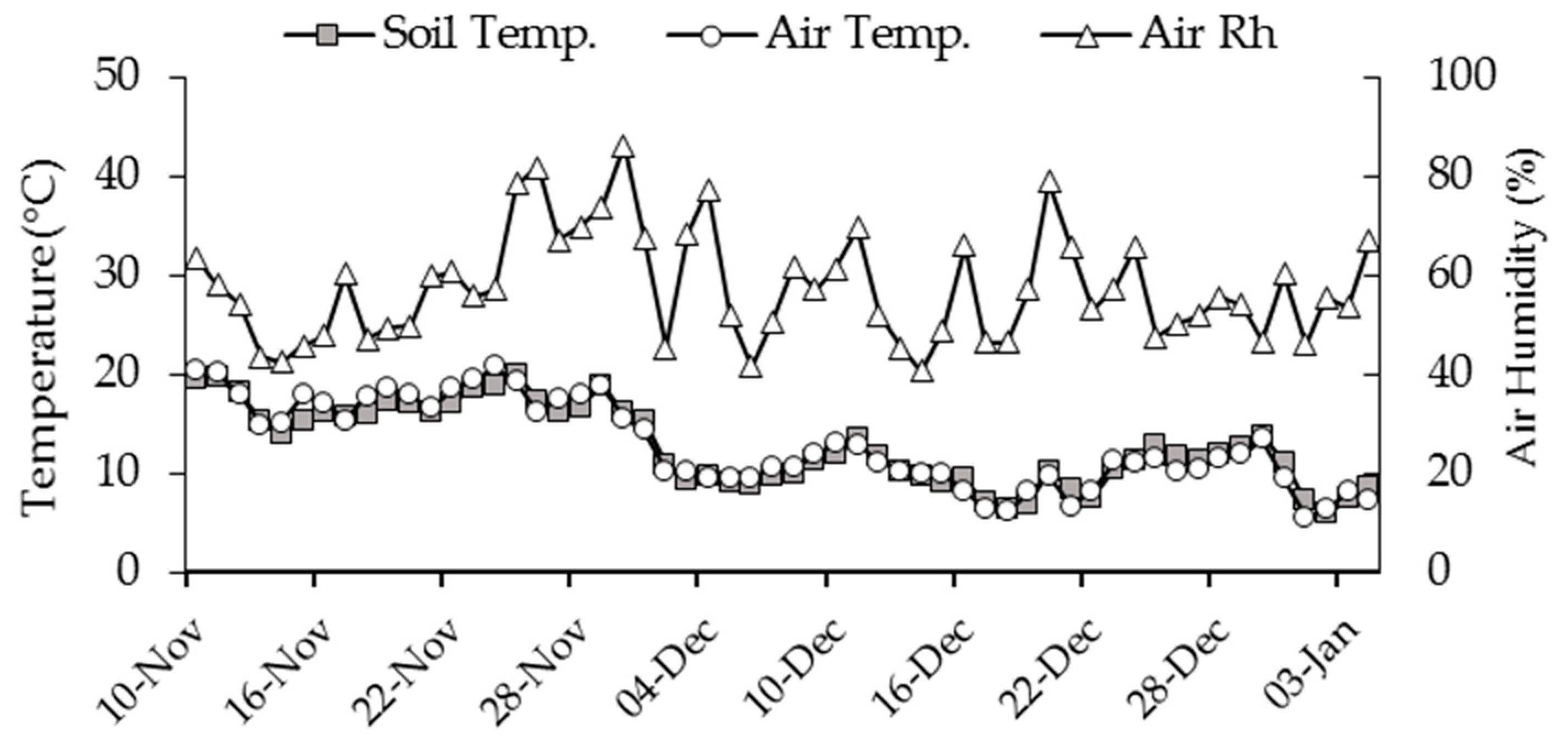
Environmental condition during cold experiment at seedling stage.
3.2.2. Effects of Cold Stress on Seedling Growth
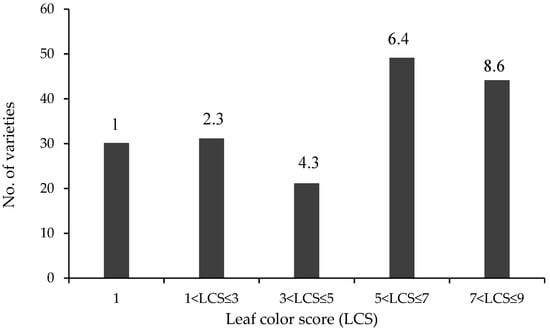
Among 181 varieties used in this experiment, six varieties showed poor growth and were discarded before the cold stress period. Consequently, 175 rice varieties were evaluated under cold stress conditions at the seedling stage. The response of the rice varieties to cold stress was evaluated based on their leaf color score following the IRRI standard. We observed a marked variation in leaf color score among the studied varieties, with scores ranging from 1 to 9 (Figure 5). After the cold stress period, 30 varieties had a leaf color score of 1 (dark green; defined as the cold-tolerant group, CTG), and 26 varieties had a score of 9 (seedling dead, defined as the cold-sensitive group, CSG) (Figure 5).
Figure 5.
Frequency distribution of leaf color score of varieties under the cold stress condition. Numbers in the top of each column indicate the average leaf color score in each group.
3.2.3. Effect of Warming Treatment on Shoot Growth Compared to Cold Stress
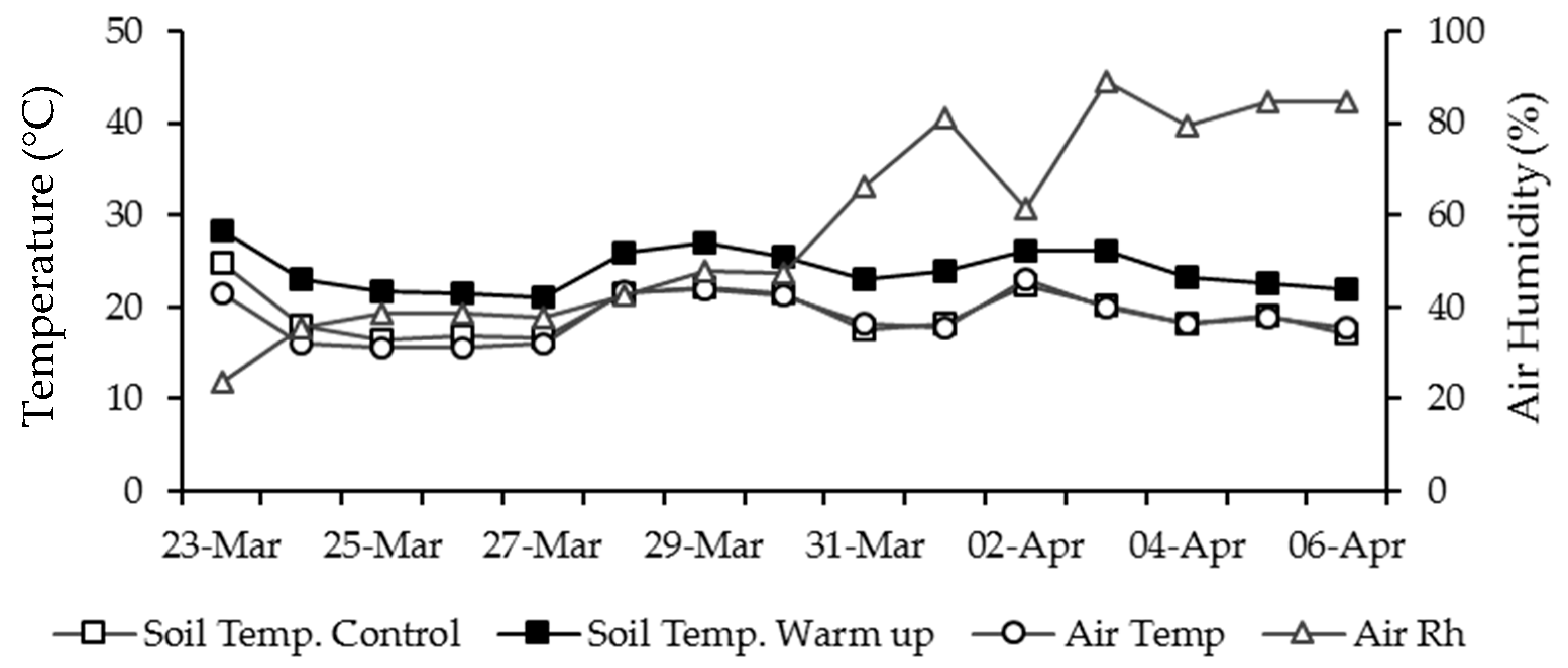
A list of the rice varieties investigated in this experiment is presented in Table 4. The temperature and humidity conditions during the warming treatment period are shown in Figure 6. The soil temperature in the warming treatment generally remained at 5 °C higher than the air and soil temperature under the control condition (cold stress). The results indicate that the warming treatment enhanced shoot growth, increasing the shoot length (average 129.29%) and shoot dry weight (average 142.41%) of the seedlings compared to the control condition (Table 5 and Table 6).
Table 4.
Rice varieties used in the warming experiment.
Figure 6.
Environmental condition in warming treatment period.
Table 5.
Shoot length of varieties under the control (cold) condition and warming treatment.
Table 6.
Shoot dry weight of varieties under the control (cold) condition and warming treatment.
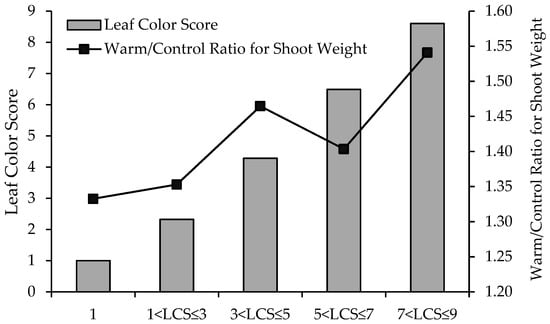
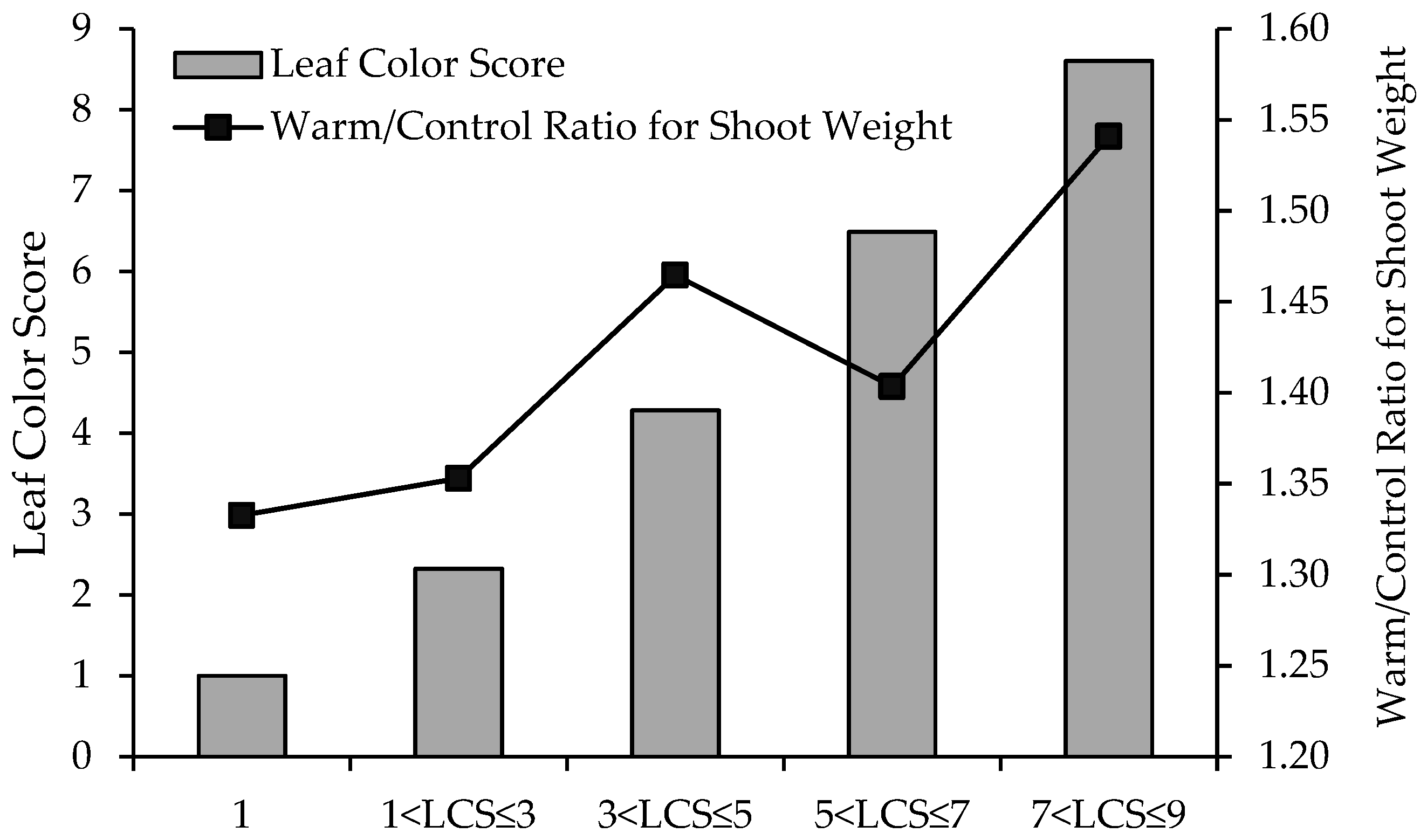
The combination of the warm/control ratio for shoot weight and leaf color score of rice varieties (Figure 7) shows that varieties with lower leaf color score (higher cold tolerance at seedling stage) also expressed the lower warm/control ratio for shoot weight. This suggests that although warming treatment positively affected dry weight accumulation of rice varieties, this method, however, retained a higher effect for cold sensitive varieties than cold tolerant varieties.
Figure 7.
The combination of the average warm/control ratio for shoot weight and leaf color score of rice varieties in the warming treatment experiment.
3.2.4. Effect of Warming Treatment on Root Growth of Rice Varieties
The warming treatment increased root length and root dry weight accumulation, but to a lesser degree than shoot growth (Table 7 and Table 8). The average warm/control ratios for root length and root dry weight were 127.83% and 101%, respectively. On average, the CTG had lower warm treatment/control ratios for root length (117.09%) and root weight (86.34%) than did the CSG (warm treatment/control ratios for root length and root weight of 129.01% and 101.78%, respectively).
Table 7.
Root length of varieties under the control (cold) condition and warming treatment.
Table 8.
Root dry weight of varieties under the control (cold) condition and warming treatment.
3.3. Selection for Cold-Tolerant Varieties at the Germination and Seedling Stages
Cold-tolerant varieties were selected based on their response to cold stress at both the germination and seedling stages. At the germination stage, KCR 7 had the longest radicle length (12.7 mm) and the eighth-longest coleoptile length (5.2 mm) under cold stress. KCR 57 had the longest coleoptile length (7.0 mm) and the sixth-longest radicle length (9.5 mm) under cold stress (Figure 3). At the seedling stage, the leaf color scores of both KCR 7 and KCR 57 were 1 (Table 4), classified as the highest cold tolerance by the IRRI standard. Based on these results, KCR 7 (Hei-chiao-chui-li-hsiang) and KCR 57 (Ta-mao-tao) were selected as the best cold-tolerant varieties.
4. Discussion
In the north of Vietnam, low temperatures are common during both the germination and seedling stages of rice cultivation. Previous studies have indicated that low temperatures (below 15 °C) severely affect the growth and development of rice during the early growth stages [10,11], and significantly decrease grain yield [12] at harvesting time. In this study, we investigated the responses of 181 rice varieties from around the world to low temperatures. Wang et al. [13] and Farzin et al. [8] reported that the germination ability of rice varieties was depressed under the cold stress condition. Our results confirmed that low temperatures at the germination stage significantly inhibited germination ability (Figure 1), as well as coleoptile (Table 3 and Table S1) and radicle (Table 3 and Table S2) growth, in the studied rice varieties. We observed significant variation in response to cold stress at the germination stage among the studied varieties (Figure 2). Our results are consistent with a previous study by Ñanculao et al. [14]. Shakiba et al. suggested a wide range of variation in germination index among experimental rice varieties [15]. For all varieties, the average percentage decrease in coleoptile length under cold stress compared to the control treatment was 97.72% (Table 3). The average coleoptile length of all varieties under cold stress (13 °C) was 2.7 mm. The radicle length of all varieties was significantly decreased under the cold stress compared to the control condition, with an average percentage decrease of 96.73%. A previous study also reported that cold stress inhibited the elongation and division of cells [16].
The cold tolerance of the rice varieties at the seedling stage was evaluated based on the leaf color score under the natural cold condition (in a net house). In general, low temperature negatively affected the development of the rice varieties at the seedling stage. Among the 175 varieties evaluated at the seedling stage, 26 varieties died under cold stress conditions (with the leaf color score = 9) (Table S3). However, 30 varieties showed no signs of cold damage (leaf color score = 1); we defined these as cold-tolerant varieties (Figure 5 and Table S3). The results suggest a significant variation among the rice populations in response to cold stress at the seedling stage. These results were consistent with a previous study that reported that cold stress inhibited chlorophyll synthesis and chloroplast formation in rice leaves [17]. Donoso et al. [18] also found that cold tolerant genotypes showed lower leaf color scores compared to susceptible ones.
To test the effect of warming treatment on the growth of rice seedlings compared to low temperature, a warming sheet was used to increase the soil temperature to 5 °C higher than the natural temperature. The warming treatment significantly increased the shoot dry weight, shoot length, and root length of the rice varieties compared to these values under the natural condition. However, the effect of the warming treatment differed among varieties. The warming sheet had a more beneficial effect on the cold-sensitive than on the cold-tolerant varieties (Figure 7). These results indicate that the combination of cold-tolerant varieties and warming treatments offers a promising approach to overcoming the negative effects of cold stress during the early growth stages of rice.
5. Conclusions
Breeding for cold-tolerant varieties and using a warming treatment method are promising ways to overcome the negative effects of cold stress on rice during the germination and seedling stages. Germination index and leaf color scores are simple and useful parameters for evaluation of the cold tolerance in rice during germination and seedling stages, respectively. Based on the results of our study at both the germination and seedling stages, two varieties—Hei-Chiao-Chui-Li-Hsiang and Ta-Mao-Tao—were selected as the best cold-tolerant varieties. These varieties are good candidates for further studies on plant breeding for cold stress conditions.
Supplementary Materials
The following are available online at https://www.mdpi.com/2077-0472/9/8/162/s1, Table S1: Coleoptile length of germinated varieties in germination experiment, Table S2. Radicle length of varieties in germination experiment, Table S3. Leaf color score of varieties under cold temperature at seedling stage.
Author Contributions
D.C.D. performed the experiments, analyzed the data, interpreted the results, and wrote the whole manuscript. T.Y. supervised this research, suggested the data analysis, reviewed the manuscript, and gave valuable comments.
Funding
This study was supported by a Monbukagakusho Scholarship from the Japanese Ministry of Education, Culture, Sports, Science and Technology (MEXT).
Acknowledgments
The authors thank the Plant Breeding Laboratory, Faculty of Agriculture, Kyushu University, for providing the materials for this study.
Conflicts of Interest
We have disclosed that there is no conflict of interest regarding the publication of this article.
References
- Samuel, S.G. Rice and its importance to human life. In: Biological control of rice diseases. Prog. Biol. Control 2009, 8, 1–11. [Google Scholar]
- Nguyen, H.D.M.; Ellen, J.V.L.; Pieter, R.; Tran, H.T.; Wim, V. Consumer valuation of quality rice attributes in a developing economy. Br. Food J. 2018, 5, 1059–1072. [Google Scholar] [CrossRef] [Scilit]
- Zhang, Q.; Chen, Q.; Wang, S.; Hong, Y.; Wang, Z. Rice and cold stress: Methods for its evaluation and summary of cold tolerance-related quantitative trait loci. Rice 2014, 7, 24. [Google Scholar] [CrossRef] [Scilit] [PubMed]
- Han, L.Z.; Zhang, Y.Y.; Qiao, Y.L.; Cao, G.L.; Zhang, S.Y.; Kim, J.H.; Koh, H.J. Genetic and QTL analysis for low temperature vigor of germinationn in rice. Acta Genet. Sin. 2006, 3, 998–1006. [Google Scholar] [CrossRef] [Scilit]
- Cruz, R.P.; Milach, S.C.K. Cold tolerance at the germination stage of rice: Methods of evaluation and characterization of genotypes. Sci. Agric. 2004, 61, 1–8. [Google Scholar] [CrossRef] [Scilit]
- Doan, V.D.; Nguyen, T.B.; Tran, D.H.; Le, Q.V. Agricultural Meteorology; Agricultural Publishing House: Hanoi, Vietnam, 1997; p. 157. [Google Scholar]
- Maruyama, K.; Urano, K.; Yoshiwara, K.; Morishita, Y.; Sakurai, N.; Suzuki, H.; Kojima, M.; Sakakibara, H.; Shibata, D.; Saito, K. Integrated analysis of the effects of cold and dehydration on rice metabolites, phytohormones, and gene transcripts. Plant Physiol. 2014, 164, 1759–1771. [Google Scholar] [CrossRef] [Scilit] [PubMed]
- Farzin, P.D.; Mohammad, K.H.; Masoud, E. Methods for rice genotypes cold tolerance evaluation at germination stage. Int. J. Agric. Crop Sci. 2013, 5, 2111–2116. [Google Scholar]
- IRRI (International Rice Research Institute). Standard Evaluation System for Rice (SES); International Rice Research Institute: Los Baños, Philippine, 2002; p. 40. [Google Scholar]
- Jiang, L.; Xun, M.M.; Wang, J.L.; Wan, J.M. QTL analysis of cold tolerance at seedling stage in rice (Oryza sativa L.) using recombination inbred lines. Cereal Sci. 2008, 48, 173–179. [Google Scholar] [CrossRef] [Scilit]
- Sharifi, P. Evaluation on sixty-eight rice germplasms in cold tolerance at germination. Rice Sci. 2000, 17, 77–81. [Google Scholar] [CrossRef] [Scilit]
- Sava, S. Cold tolerance of temperate and tropical rice varieties. In Proceedings of the 2013 Agribusiness Crop Updates, Crown Perth, Australia, 25–26 February 2013; pp. 1–4. [Google Scholar]
- Wang, Z.F.; Wang, J.F.; Wang, F.H.; Bao, Y.M.; Wu, Y.Y.; Zhang, H.S. Genetic control of germination ability under cold stress in rice. Rice Sci. 2009, 16, 173–180. [Google Scholar] [CrossRef] [Scilit]
- Ñanculao, G.D.; Parades, M.; Santos, O.A.; Valásquez, V.B. Cold tolerance evaluation in Chilean rice genotypes at the germination stage. Chil. J. Agric. Res. 2013, 73, 3–8. [Google Scholar] [CrossRef] [Scilit]
- Shakiba, E.; Edwards, J.D.; Jodari, F.; Duke, S.E.; Baldo, A.M.; Korniliev, P.; McCouch, S.R. Genetic architecture of cold tolerance in rice (Oryza sativa) determined through high resolution genome-wide analysis. PLoS ONE 2017, 12, e0172133. [Google Scholar] [CrossRef] [Scilit] [PubMed]
- Lyons, J.M. Chilling injury in plants. Annu. Rev. Plant Physiol. 1973, 24, 445–446. [Google Scholar] [CrossRef] [Scilit]
- Sharma, P.; Sharma, N.; Deswal, R. The molecular biology of the low temperature response in plants. BioEssays 2005, 27, 1048–1059. [Google Scholar] [CrossRef] [Scilit] [PubMed]
- Donoso, G.; Cabas, P.; Paredes, M.; Becerra, V.; Balzarini, M. Cold tolerance evaluation of temperate rice (Oryza sativa L. ssp. japonica) genotypes at seedling stage. Gayana Bot. 2015, 72, 1–13. [Google Scholar] [CrossRef] [Scilit]

© 2019 by the authors. Licensee MDPI, Basel, Switzerland. This article is an open access article distributed under the terms and conditions of the Creative Commons Attribution (CC BY) license (http://creativecommons.org/licenses/by/4.0/).