Article

Regulatory Effects of Nitrogen Fertilization on Soil Extracellular Enzyme Activity and Greenhouse Gas Emissions in Paddy Fields with Straw Return

1
College of Medicine, Yanbian University, Yanji 133002, China
2
College of Plant Science, Jilin University, Changchun 130062, China
3
College of Agronomy, Yanbian University, Yanji 133002, China
*
Authors to whom correspondence should be addressed.
Agriculture 2026, 16(9), 964; https://doi.org/10.3390/agriculture16090964
Submission received: 21 March 2026 / Revised: 14 April 2026 / Accepted: 24 April 2026 / Published: 28 April 2026
(This article belongs to the Section Agricultural Soils)

Abstract

Straw return improves paddy soil quality and nutrient cycling, but its combined effects with nitrogen application on extracellular enzyme activities and greenhouse gas emissions in cold-region paddies remain unclear. A field experiment was conducted in Northeast China under full straw return (8.8 t ha−1) with six nitrogen rates (0, 110, 120, 130, 140, and 150 kg ha−1); conventional nitrogen application without straw return (130 kg ha−1) was the control (CK), while N0 distinguished straw input from nitrogen effects. Soil properties, extracellular enzyme activities, and CO2, CH4, and N2O emissions were measured 20, 50, 80, 110, and 140 days after straw return. At 140 days, compared with CK, straw return increased the NH4+-N and organic matter in the 0–15 cm soil layer by 41.75% and 28.69%, respectively, and reduced pH by 4.34%. Under N110–N150, straw return enhanced the carbon- and nitrogen-acquiring enzymes and oxidative enzymes by 15.88–162.23%. In particular, β-glucosidase, phenol oxidase, and peroxidase activities were significantly higher under N130–N140 than under CK. Compared with N150, N130–N140 maintained organic matter turnover without further increasing greenhouse gas emissions. Overall, under full straw incorporation in the Mollisol paddies of cool Northeast China, N130–N140 sustained high yield while balancing nutrient cycling, enzyme activity, and greenhouse gas mitigation.

1. Introduction

Rice straw is an important by-product of rice production, accounting for approximately 50% of total biomass, and is rich in organic carbon and mineral nutrients, making it a crucial renewable resource within agricultural systems [1,2]. As one of the world’s major rice-producing countries, rice straw resources are abundant in China, with an annual production of approximately 230 million tons [3], and its rational utilization not only contributes to food security but also provides a solid foundation for advancing sustainable agriculture [4]. Straw incorporation into soils can markedly improve the soil structure and fertility while supplying abundant substrates for soil microorganisms, thereby promoting nutrient cycling and maintaining ecosystem functions [5]. The C/N ratio of rice straw is approximately 60.70; due to the relatively slow decomposition rate of straw, its high carbon-to-nitrogen (C/N) ratio and uneven nutrient release may induce nitrogen competition between soil microbes and rice during the early growth stages, potentially affecting seedling development and tillering [6]. Moreover, straw incorporation may stimulate the activity of methanogenic and denitrifying microbes, leading to increased emissions of greenhouse gases such as methane (CH4) and nitrous oxide (N2O) [2]. How to effectively control greenhouse gas emissions while promoting soil nutrient cycling remains an urgent issue in paddy field management.
Straw decomposition is a complex process predominantly driven by soil microorganisms, with extracellular enzymes serving as key mediators for the acquisition of carbon, nitrogen, and other nutrients. These enzymes play a critical role in straw degradation and nutrient release [7]. Research has shown that nitrogen fertilization can significantly influence the rate of organic matter decomposition and nitrogen mineralization by altering the microbial community structure and extracellular enzyme activities [8,9]. Appropriate nitrogen application can alleviate nitrogen limitation in microorganisms and optimize the carbon–nitrogen balance, thereby enhancing straw decomposition efficiency and promoting crop growth [10]. However, excessive nitrogen application may accelerate microbial metabolism, disrupt nutrient cycling, and increase the risk of greenhouse gas emissions [8,11].
In flooded paddy systems, straw incorporation increases the input of soil organic carbon, providing ample substrates for anaerobic microorganisms, which strengthens anaerobic decomposition processes and promotes the production and release of CH4 and N2O [12,13]. Since paddy field ecosystems account for approximately 48% of global agricultural land-based greenhouse gas emissions [12], nitrogen application levels under straw return conditions play a key role in regulating greenhouse gas emission intensity and their global warming potential (GWP). Rational nitrogen application helps sustain organic matter turnover while reducing greenhouse gas emissions, while excessive nitrogen application may significantly amplify CH4, CO2 and N2O emissions, thereby intensifying climate effects [14,15]. However, it is still unclear whether under full straw return in paddy fields of the cool region of Northeast China, there is an appropriate range of nitrogen application rates that can simultaneously sustain soil nutrient transformation and control greenhouse gas emissions, and whether this regulatory effect is closely associated with extracellular enzyme-mediated processes.
Although previous studies have assessed the impact of straw return on soil nutrients, extracellular enzyme activities, and greenhouse gas emissions [16,17], studies on paddy fields with full straw incorporation in the cool region of Northeast China remain limited. This region is characterized by lower temperatures, slower straw decomposition rates, and distinctive carbon and nitrogen transformation dynamics following high straw input, which may lead to different patterns of nutrient release, extracellular enzyme responses, and CO2, CH4, and N2O emissions compared with other rice-growing regions. Nevertheless, under multiple nitrogen application rates, the relationships among soil nutrient changes, extracellular enzyme activities, and CO2, CH4, and N2O emissions remain unclear, which limits a systematic understanding of how nitrogen application regulates the ecological effects of straw incorporation. Therefore, this study hypothesized that under full straw return, different nitrogen application rates would affect greenhouse gas emissions through their regulation of soil extracellular enzyme activities and nutrient dynamics, and that an appropriate nitrogen application range may exist to balance nutrient utilization and low-carbon emissions. To address these knowledge gaps, this study aimed to: (1) clarify the regulatory effects of different nitrogen application rates on soil extracellular enzyme activities and nutrient dynamics; (2) quantify the effects of different nitrogen application rates on CO2, CH4, and N2O emissions and global warming potential; and (3) elucidate the pathway relationships among soil nutrients, extracellular enzyme activities, and greenhouse gas emissions.

2. Materials and Methods

2.1. Study Sites

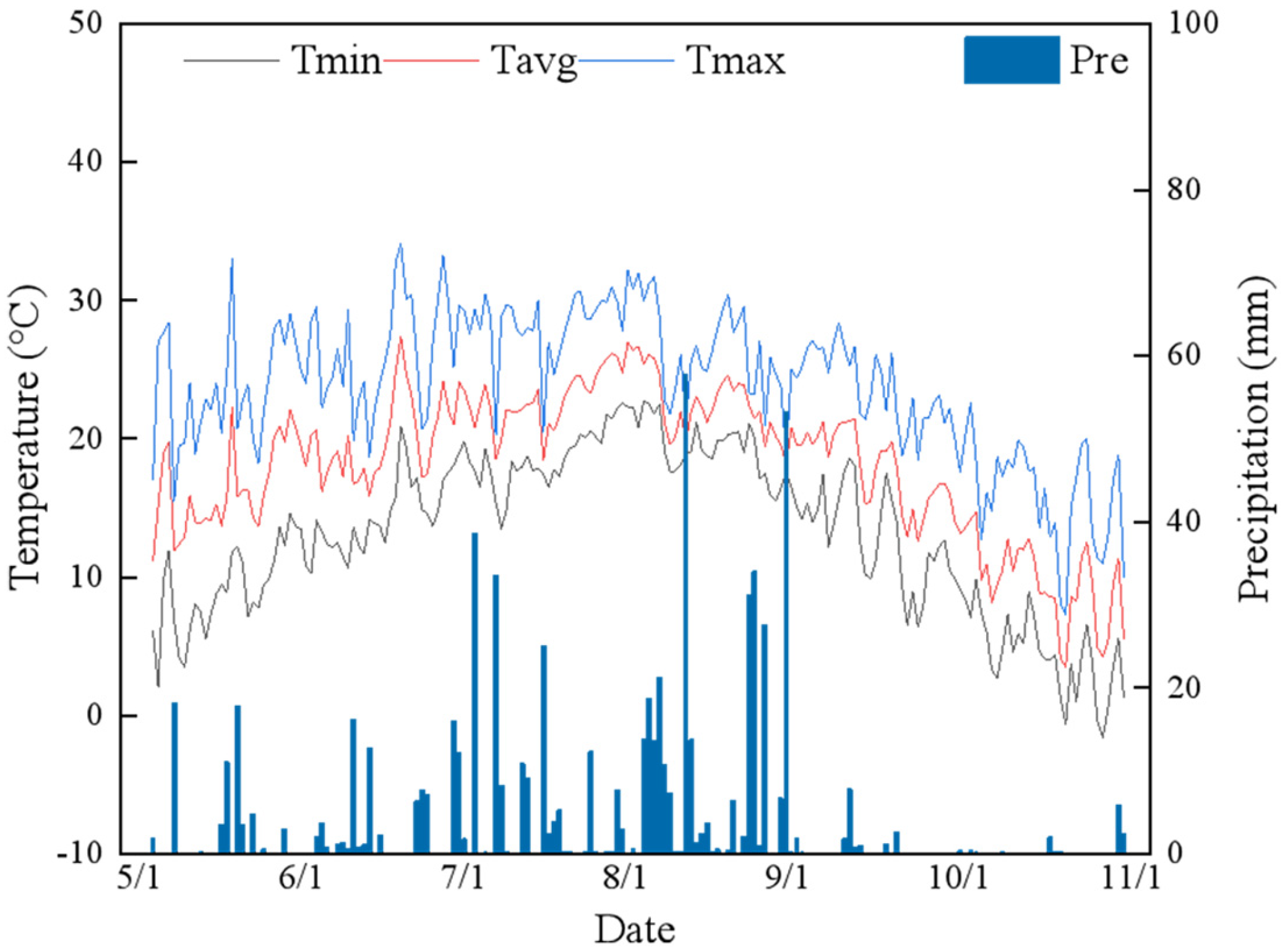
The experiment was conducted in 2023 at the Yanbian University Experimental Station in Longjing City, Jilin Province (42°18′ N, 129°23′ E). The region belongs to the temperate continental monsoon climate zone, with an annual average temperature of 5.6 °C, a minimum temperature of −34.8 °C, and an annual precipitation of 549.3 mm. The accumulated temperature is approximately 2700 °C d−1, characteristic of the cool region of Northeast China. The cropping system is a single cropping cycle per year, with continuous rice cultivation as the main practice. The experimental field has paddy soil derived from black soil (Mollisol-derived paddy soil). The meteorological data during the study period are shown in Figure 1. According to the USDA soil classification system, this soil type is classified as Mollisols, which have favorable tillage conditions and are suitable for rice cultivation. The initial soil physical and chemical properties for each treatment are shown in Table S1.

2.2. Experimental Design

The experiment was conducted under full straw return, with a straw incorporation rate of 8.8 t ha−1. Under the low-temperature conditions of this region, a relatively high nitrogen application rate (N150) tends to increase the risk of rice lodging, whereas a relatively low nitrogen application rate (N110) is often insufficient to ensure an ideal yield. Therefore, small incremental nitrogen gradients were established within the locally common range of nitrogen application in this study to more accurately identify the optimal nitrogen application interval and to more precisely compare the responses of soil nutrients, enzyme activities, yield, and greenhouse gas emissions to different nitrogen levels. A total of six nitrogen application levels were set in the experiment: N0 (0 kg ha−1), N110 (110 kg ha−1), N120 (120 kg ha−1), N130 (130 kg ha−1), N140 (140 kg ha−1), and N150 (150 kg ha−1). The control (CK) consisted of the local conventional fertilization without straw return (N130 kg ha−1, P2O5 70 kg ha−1, K2O 80 kg ha−1). Phosphorus and potassium application rates were kept consistent across all treatments (P2O5 70 kg ha−1, K2O 80 kg ha−1). The mineral fertilizers used were urea [CO(NH2)2, 46% N], diammonium phosphate [(NH4)2HPO4, 18% N and 46% P2O5], and potassium sulfate (K2SO4, 50% K2O). Nitrogen fertilizer was split-applied at the basal, tillering, and panicle stages at a ratio of 4:4:2. Phosphorus fertilizer was applied once as basal fertilizer, whereas potassium fertilizer was split-applied at the basal, tillering, and panicle stages at a ratio of 5:4:1. Water management during the experimental period followed local conventional rice cultivation practices: a water layer of 3–5 cm was maintained during the seedling establishment and tillering stages, followed by one week of midseason drainage after the end of tillering; a water layer of 6–7 cm was maintained during the booting stage, and a shallow water layer of 2–3 cm was maintained from the full heading stage until maturity. Pest and disease control was carried out uniformly according to local conventional management practices. In the autumn of the previous year, rice straw was crushed and returned to the field after harvest, and in spring, rotary tillage was performed to thoroughly mix the straw with the soil. The experiment followed a randomized complete block design with three replicates per treatment, and each plot covered an area of 59.09 m2. The long-term experimental platform was established in 2018, and the fertilization regime for each treatment was kept consistent from year to year, with continuous field surveys, sample collection, and analyses conducted from early May 2023 at transplanting until harvest.

2.3. Soil Nutrient Analysis

Soil samples were collected every 30 days after rice transplanting, totaling five sampling events, corresponding to 20, 50, 80, 110, and 140 days after straw incorporation. Sampling depths were 0–15 cm (upper layer) and 15–30 cm (lower layer). For each plot, a five-point sampling method was used and the subsamples were thoroughly mixed to ensure representativeness and accurate stratification. The collected soil samples were placed in sealed bags and transported to the laboratory in a cooled container. A portion of the 0–15 cm topsoil fresh samples was stored at 4 °C for a short period and used for extracellular enzyme activity assays within 24 h of sampling; the 0–15 cm and 15–30 cm soil samples designated for inorganic nitrogen determination were stored under cooled conditions and analyzed promptly, whereas the remaining 0–15 cm and 15–30 cm soil samples were air-dried for soil pH and organic matter analyses. Soil pH was measured using a portable pH meter (Hanna Instruments, Woonsocket, RI, USA). Ammonium nitrogen (NH4+-N) and nitrate nitrogen (NO3-N) were extracted with potassium chloride solution and analyzed using an AA3 continuous flow analyzer (SEAL Analytical GmbH, Norderstedt, Germany). Soil organic matter (SOM) was determined using the potassium dichromate oxidation method [18].

2.4. Soil Extracellular Enzyme Activity Measurement

In this study, eight soil extracellular enzymes closely associated with carbon, nitrogen cycling, and redox processes were measured. Hydrolytic enzymes related to carbon acquisition included β-glucosidase (βG), α-glucosidase (αG), cellobiohydrolase (CBH), and β-xylosidase (βX); hydrolytic enzymes associated with nitrogen acquisition included N-acetylglucosaminidase (NAG) and leucine aminopeptidase (LAP). All hydrolytic enzyme activities were determined using a microplate fluorometric assay [19,20,21], A fresh soil sample equivalent to 0.2 g dry weight was suspended in 50 mL of 50 mM CH3COONa buffer and homogenized by shaking. The control solution, substrate, buffer, and soil suspension were then added sequentially into 96-well microplates, followed by incubation at 25 °C in the dark for 4 h. Fluorescence was measured at an excitation wavelength of 365 nm and an emission wavelength of 450 nm [19,20,21]. Oxidoreductases, including phenol oxidase (Phox) and peroxidase (Perox), were determined spectrophotometrically [22]. Briefly, a fresh soil sample equivalent to 0.2 g dry weight was suspended in 50 mL of 50 mM CH3COONa buffer and thoroughly homogenized. Subsequently, L-DOPA, 0.3% H2O2, buffer, and the soil suspension were added sequentially to the reaction system, incubated at 25 °C in the dark for 20 h, and the absorbance was measured at 450 nm [22].

2.5. Greenhouse Gas Sampling and Measurement

Greenhouse gases (CO2, CH4, and N2O) were sampled using the static closed chamber method and analyzed by Agilent 7890 gas chromatography (Agilent Technologies, Santa Clara, CA, USA). PVC chambers measured 60 cm in length, 35 cm in width, and 40 cm in height, and were equipped with an internal fan and thermometer. During the mid-to-late growth stages of rice, chamber height was increased to accommodate normal rice growth. Three replicate chambers were installed per treatment. Gas sampling was conducted weekly from rice transplanting to harvest (corresponding to 22–127 days after straw incorporation), totaling 16 sampling events. Sampling began at 09:00 and lasted 45 min, with 50 mL of gas collected every 15 min (four times in total) and transferred into sampling bags. Samples were transported to the laboratory on the same day and analyzed by gas chromatography within 24 h of collection.
Gas fluxes were calculated according to the following formula [23]:
F = ρ V A P 0 P T T 0 d c d t
where F represents the flux (per unit time and area), ρ is the gas density, V is the chamber volume, A is the covered soil area, P and T are the sampling pressure and temperature, respectively, P 0 and T 0 are the standard pressure and temperature, respectively, and d c / d t is the rate of change in gas concentration.
Cumulative emissions were calculated as follows [24]:
CE = i = 1 n F i · D n
where CE is the cumulative emissions of CO2, CH4, or N2O; F i is the daily mean flux of CO2, CH4, or N2O for each sampling period; and D n is the number of days in the sampling period.
Global warming potential (GWP) [25] and greenhouse gas emission intensity (GHGI) [26] were calculated as:
GWP = C E C O 2 + 25 × C E C H 4 + 298 × C E N 2 O
GHGI = GWP Y
where CE represents the cumulative emissions of CO2, CH4, or N2O, and Y is the rice yield.

2.6. Rice Yield Measurement

At maturity, 20 consecutive hills were harvested from each of the three replicates per treatment. The grains were manually threshed, air-dried, and weighed. Grain moisture content was determined, and grain yield was adjusted to a standard moisture content of 14% [27].
Y = W × 100 M 86 × 10000 1000 × A
where Y is the actual grain yield, W is the grain weight of the harvested sample, M is the grain moisture content, and A is the net harvested area.

2.7. Statistical Analysis

Data were organized using Microsoft Office Excel 2019 (Microsoft Corporation, Redmond, WA, USA), and statistical analysis was performed using GraphPad Prism 10.1.2 (GraphPad Software, San Diego, CA, USA). Treatment effects were evaluated using two-way analysis of variance (Two-way ANOVA), and multiple comparisons were conducted using the Bonferroni method. Pearson correlation analysis was used to assess relationships between soil parameters and greenhouse gas emissions. Partial least squares path modeling (PLS-PM) was performed in R 4.5.2 (R Foundation for Statistical Computing, Vienna, Austria)using the “Plspm” package to determine the pathway relationships among soil properties, extracellular enzyme activities, and greenhouse gas fluxes.

3. Results

3.1. Effect of Nitrogen Application on Soil Properties Under Full Straw Incorporation

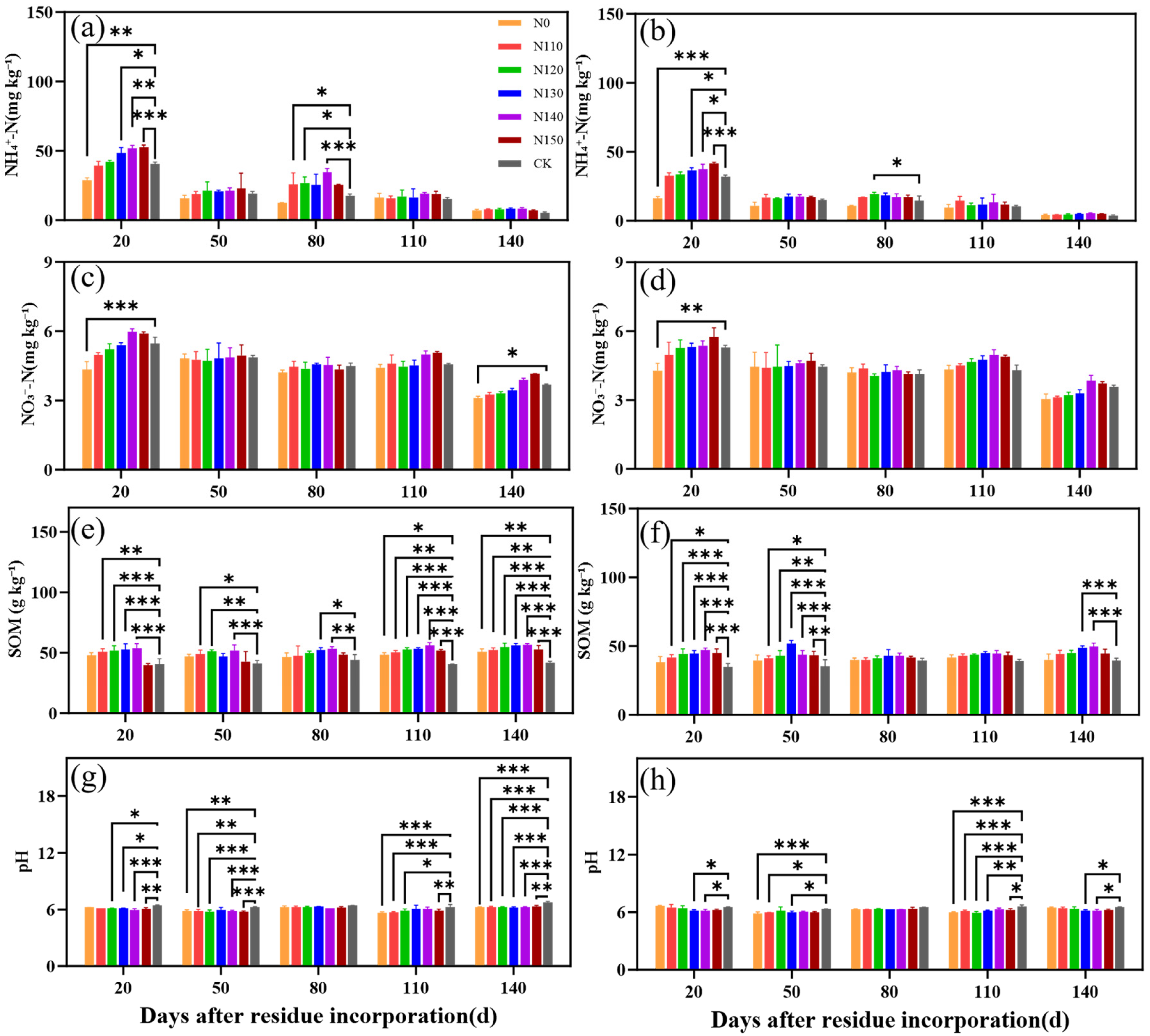
Under full straw incorporation, soil NH4+-N decreased significantly during the early stage of straw return (20–50 days), showed a transient recovery between 50 and 80 days, and then declined continuously from 80 to 140 days, reaching the lowest value at harvest (Figure 2a,b). At 140 days after straw incorporation, all nitrogen treatments increased NH4+-N compared with CK. In the 0–15 cm layer, increases ranged from 29.58% to 55.97, with N130 and N140 showing the most pronounced effects, increasing NH4+-N by 49.56% and 55.97% (p ≥ 0.05), respectively. When nitrogen application was further increased to N150, the enhancement was markedly reduced to 30.79%. In the 15–30 cm layer, NH4+-N also increased by 5.80–39.75%, with N130 and N140 increasing NH4+-N by 32.73% and 39.75%, respectively, while the increase under N150 declined to 35.77%.
Soil NO3-N decreased continuously from 20 to 80 days, slightly recovered between 80 and 110 days, and declined again from 110 to 140 days (Figure 2c,d), showing a pattern of relatively high initial content and lowest levels at harvest. The response of NO3-N to nitrogen application was only evident at 20 days after straw incorporation, increasing with higher nitrogen rates; no significant differences were observed among treatments at other growth stages or soil depths. At 140 days, most nitrogen treatments decreased NO3-N compared with CK, except for higher nitrogen levels N140 and N150, which showed slight increases. In the 0–15 cm layer, NO3-N increased by 5.57% and 12.82% under N140 and N150 (p < 0.05), respectively; in the 15–30 cm layer, the corresponding increases were 7.58% and 4.27% (p < 0.05).
SOM exhibited minor fluctuations under different nitrogen treatments, showing a slight decline followed by recovery over time, and reached relatively high levels at 140 days after straw incorporation (Figure 2e,f). At 140 days, all nitrogen treatments increased SOM compared with CK, with differences between soil layers: increases in the 0–15 cm layer ranged from 21.54% to 35.45%, and in the 15–30 cm layer from 1.82% to 26.27%, with N130 and N140 showing the largest increases in both layers (p < 0.05). Soil pH under all nitrogen treatments initially slightly decreased and then increased as the growing season progressed (Figure 2g,h). Compared with CK, straw incorporation significantly reduced the soil pH. At 140 days after straw return, the pH decreased by 3.31–5.24% in the 0–15 cm layer and by 4.92–6.34% in the 15–30 cm layer.

3.2. Nitrogen-Driven Shifts in Soil Extracellular Enzyme Activities Under Full Straw Incorporation

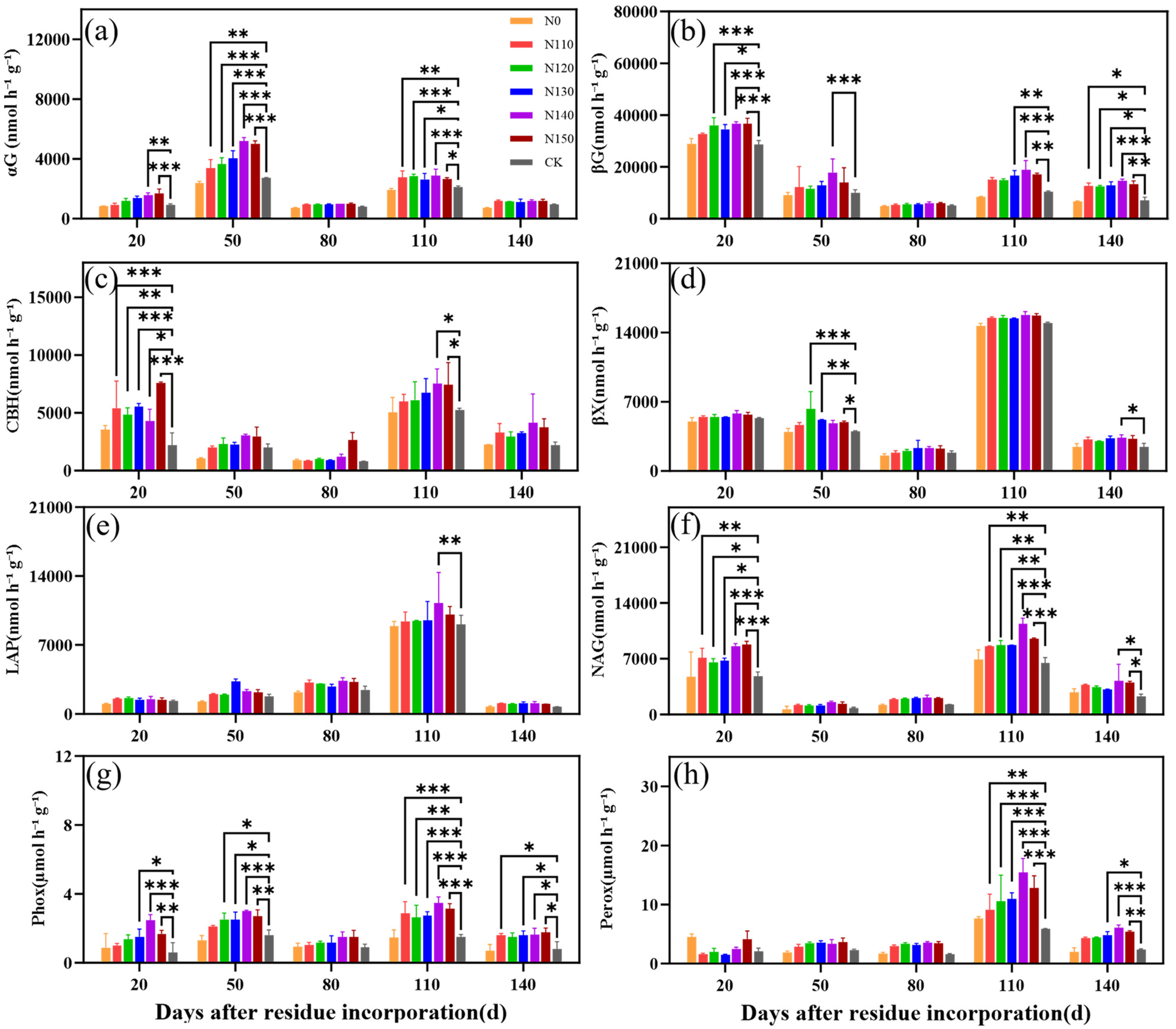
Under different nitrogen application levels, the temporal dynamics of eight soil extracellular enzymes under straw incorporation exhibited distinct patterns (Figure 3). Activities of αG and Phox increased during the early stage of straw return (20–50 days), fluctuated in the mid-stage (80–110 days), and declined at the late stage (140 days). In contrast, βG, CBH, βX, and NAG decreased in the early stage, recovered in the mid-stage, and declined again at the late stage, while LAP and Perox reached peak activity in the mid-stage before decreasing. Except for αG and βG, the remaining six enzymes attained their maximum activities at 110 days after straw incorporation.
At 140 days after straw return, the stimulatory effects of nitrogen levels on hydrolytic and oxidative enzymes varied. Compared with CK, αG activity increased by 17.91–24.89% under the N110–N150 treatments; βX increased by 24.65–37.95%; βG increased by 75.39–107.56%; CBH increased by 35.01–88.96%; LAP increased by 41.41–56.69%; and NAG increased by 41.05–87.33%. Oxidative enzyme activities were also significantly enhanced, with Phox increasing by 91.92–123.41% and Perox by 85.84–162.23%. Overall, compared with CK, all nitrogen treatments under straw incorporation (N110–N150) enhanced extracellular enzyme activities, with N130–N140 showing relatively higher stimulatory effects across most enzymes.

3.3. Responses of Greenhouse Gas Emissions to Nitrogen Application Under Full Straw Incorporation

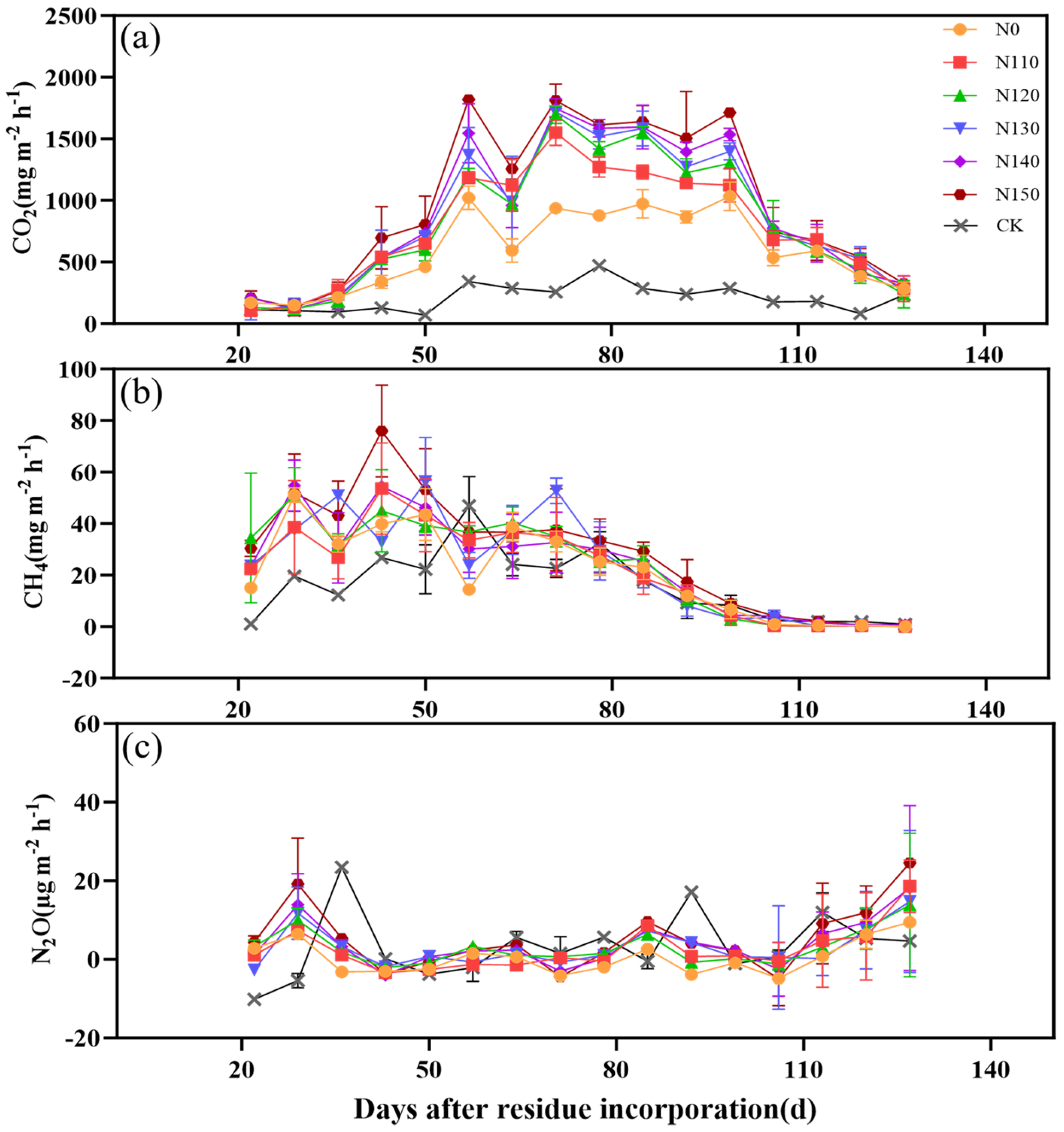
As shown in Figure 4, CO2 fluxes were consistently positive throughout the rice growing season and exhibited multiple peaks. During the early stage after transplanting, fluxes were relatively low. Under straw incorporation, the first peak occurred at 57 days after straw return (active tillering stage), with fluxes ranging from 1020.90 to 1818.65 mg m−2 h−1, highest under N150. The second peak appeared at 71 days (panicle initiation), with fluxes of 935.91–1811.29 mg m−2 h−1, and the final peak occurred at 99 days (wax ripening stage), with fluxes of 1033.82–1712.51 mg m−2 h−1, followed by a rapid decline. In CK, the peak occurred at 78 days (panicle stage) with a flux of 470.31 mg m−2 h−1, markedly lower than in the straw incorporation treatments. The mean CO2 flux over the growing season followed the order: N150 > N140 > N130 > N120 > N110 > N0 > CK, with emissions concentrated from tillering to wax ripening.
CH4 fluxes showed an initial increase followed by a decline, but the timing of peaks differed. In straw incorporation treatments, the first peak occurred at 29 days after straw return (6 days after tillering fertilizer application), the second at 43 days (early tillering), and the fluxes gradually decreased thereafter, approaching zero by 106 days. In CK, peaks occurred at 57 days (46.94 mg m−2 h−1) and 78 days (32.32 mg m−2 h−1), with mean CH4 fluxes during the growing season significantly lower than in the straw incorporation treatments. Overall, CH4 emissions were primarily concentrated in the early to mid-growth stages, declining to very low levels in the later stages.
N2O fluxes showed similar trends among treatments during the early stage but diverged at the later stage (113–127 days after straw return). During this period, all straw incorporation treatments exhibited increasing fluxes, whereas CK showed a decline. The first peak occurred at 29 days (6 days after tillering fertilizer), and the second peak at 85 days (7 days after panicle fertilizer). The final peak in straw incorporation treatments occurred at 127 days (harvest), while CK peaked at 113 days (yellow maturity stage). Over the growing season, the mean N2O flux followed the order: N150 > N140 > CK > N120 > N130 > N110 > N0, with emissions mainly concentrated within one week after fertilizer application and at late growth stages, while multiple negative fluxes were observed during mid-growth.
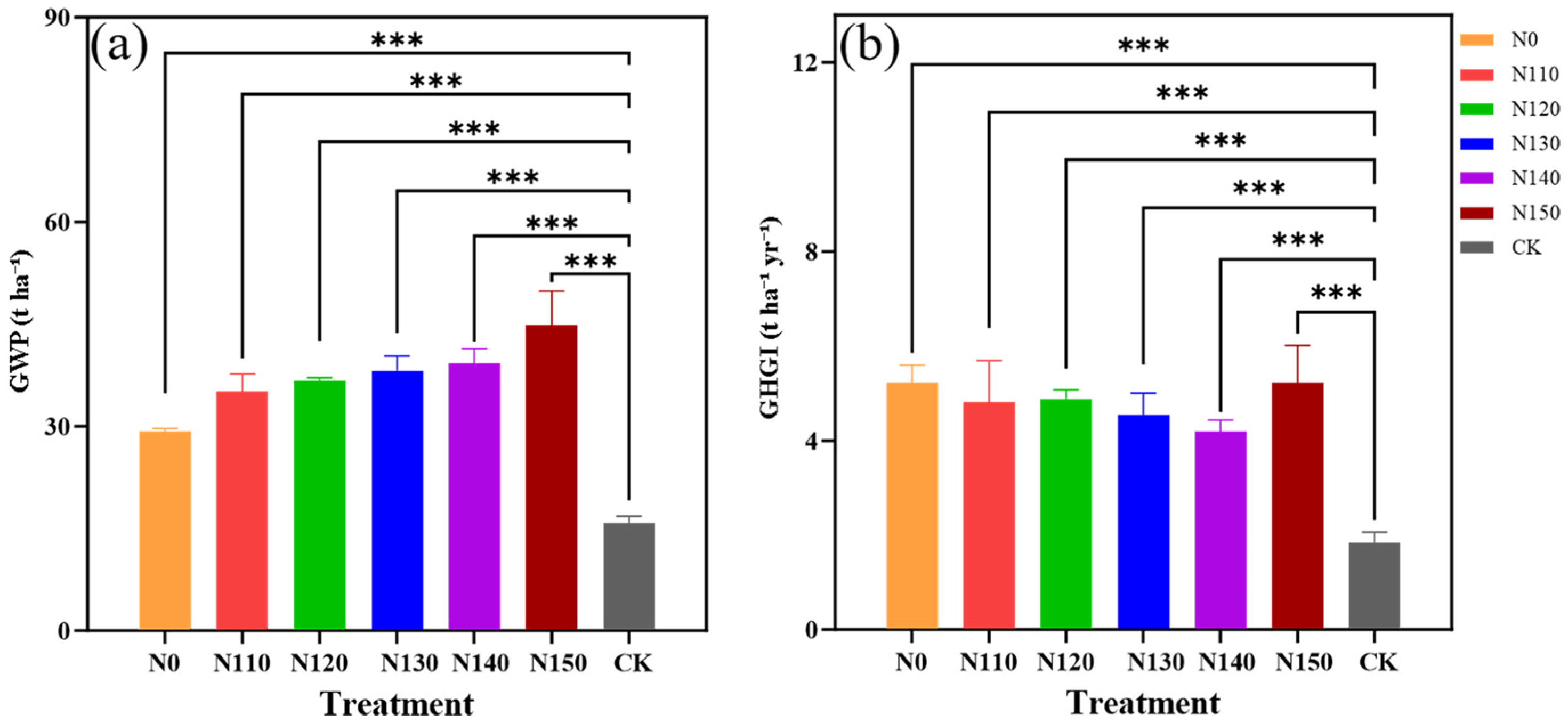
Under straw incorporation, all nitrogen treatments exhibited significantly higher GWP compared with CK (p < 0.05; Figure 5a), indicating that straw return markedly enhanced the overall warming potential of paddy fields. GWP increased significantly with nitrogen application, with N0, N110, N120, N130, N140, and N150 increasing by 85.00%, 121.31%, 132.04%, 141.01%, 147.93%, and 182.71% relative to CK, respectively, with the largest increase observed under N150.
For GHGI, all nitrogen treatments under full straw incorporation were also significantly higher than CK (p < 0.05; Figure 5b). However, except for N150, GHGI showed an overall decreasing trend with increasing nitrogen application. Compared with CK, GHGI under N0, N110, N120, N130, N140, and N150 increased by 183.41%, 160.88%, 164.57%, 146.43%, 127.02%, and 183.25%, respectively, with N140 exhibiting relatively lower emission intensity, whereas N150 reversed this trend.

3.4. Analysis of the Relationship Between Soil Properties, Soil Extracellular Enzyme Activity, and Greenhouse Gas Emissions

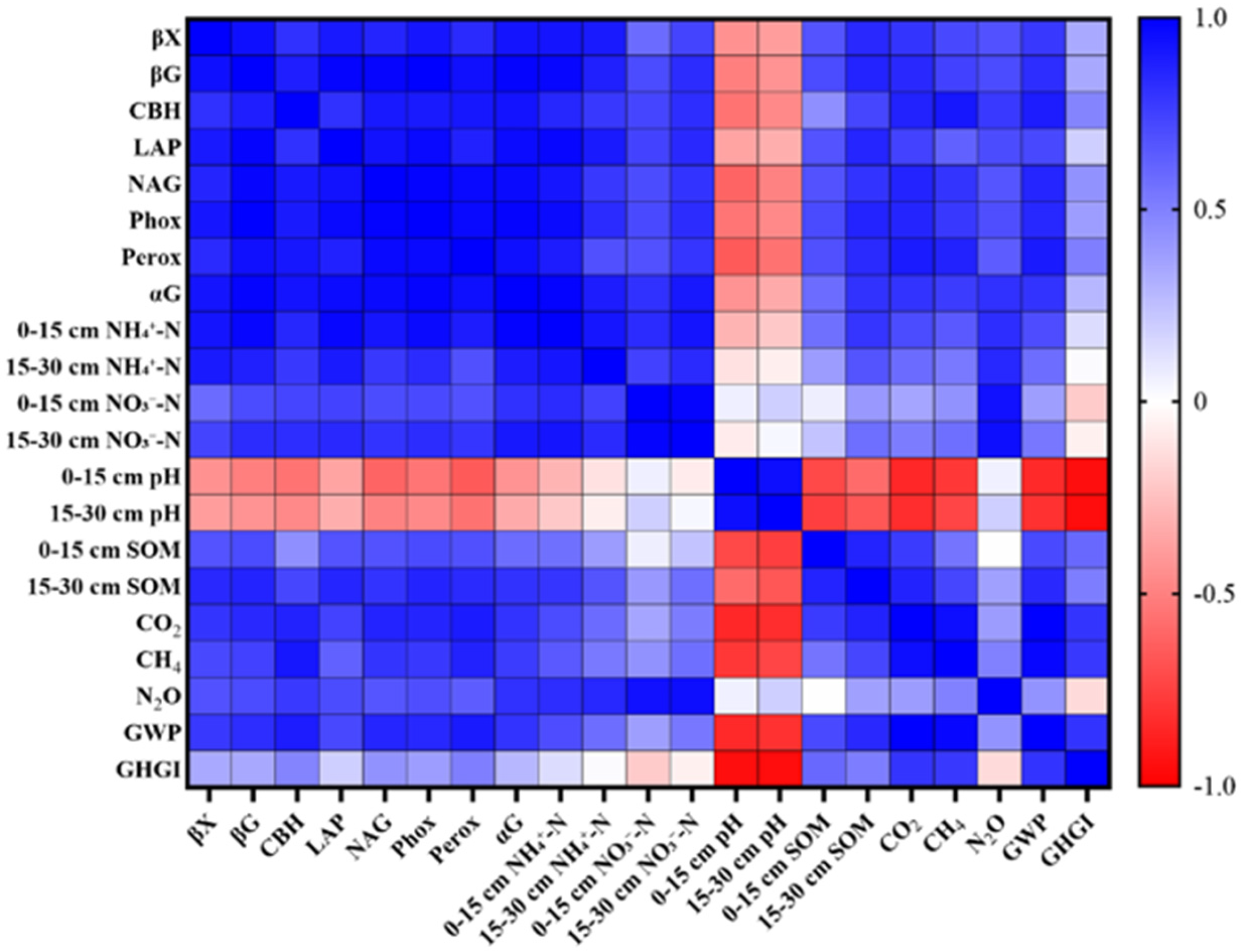
Correlation analysis (Figure 6) revealed significant relationships between the soil extracellular enzyme activities and soil properties. Activities of carbon-acquiring enzymes (βG, αG, CBH, βX), nitrogen-acquiring enzymes (NAG, LAP), and oxidative enzymes (Phox, Perox) were positively correlated with NH4+-N, NO3-N, and SOM in both the 0–15 cm and 15–30 cm soil layers, whereas they were negatively correlated with soil pH at the same depths.
CO2 and CH4 fluxes, as well as GWP, exhibited consistent positive correlations with soil inorganic N, SOM, and the activities of all eight extracellular enzymes in both soil layers, but were negatively correlated with soil pH. GHGI was significantly positively correlated with the eight extracellular enzymes and SOM content. Moreover, N2O flux was closely associated not only with soil inorganic N and enzyme activities, but also showed synergistic variation with CO2 and CH4 fluxes and GWP.
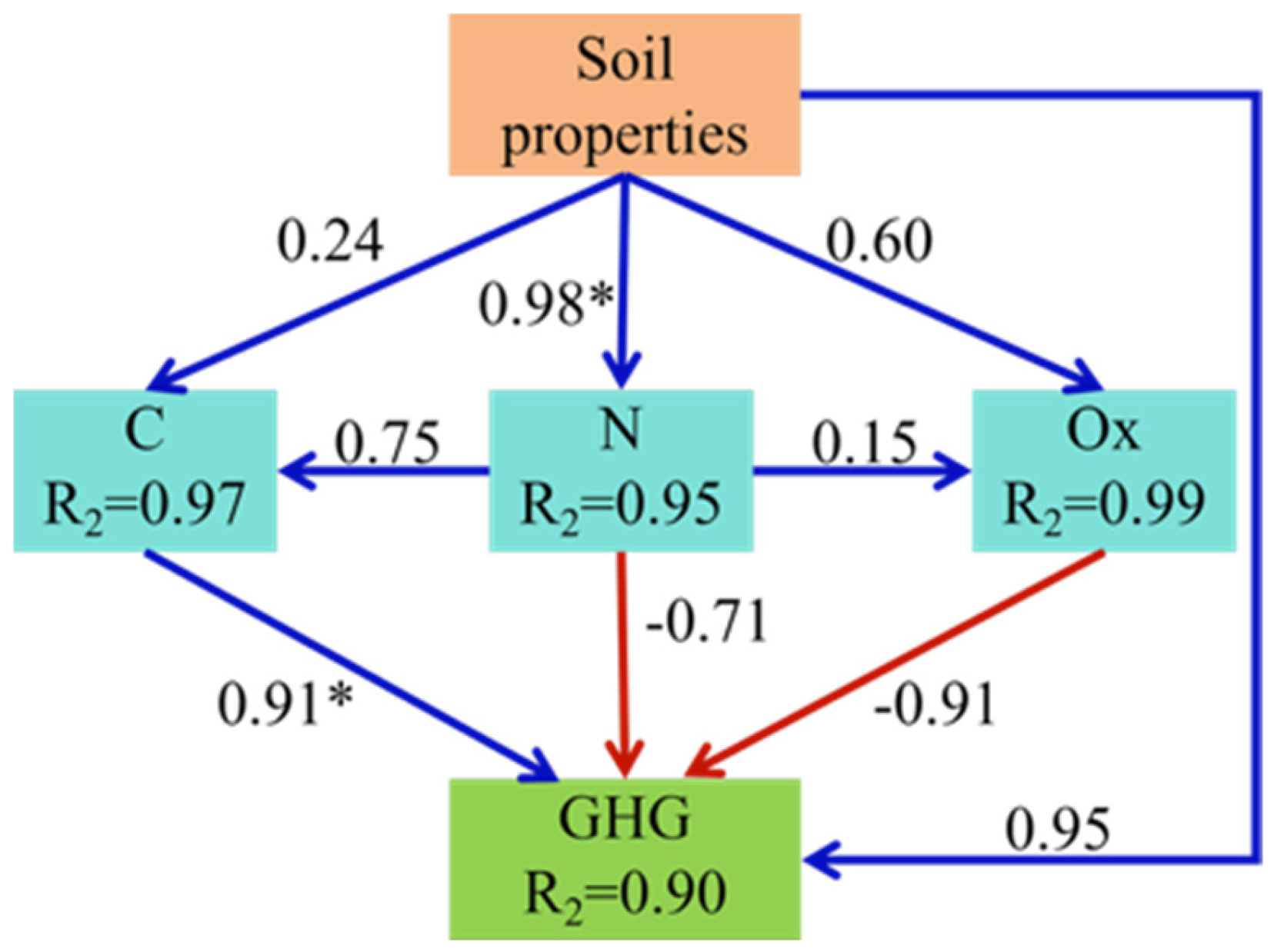
To systematically investigate the interactions among soil properties, extracellular enzyme activities, and greenhouse gas emissions, a partial least squares path model (PLS-PM) was constructed (Figure 7). The results indicated that the soil properties were positively associated with C-acquiring, N-acquiring, and oxidoreductive enzyme activities, with path coefficients of 0.24, 0.98, and 0.60, respectively, indicating that higher soil nutrient and organic matter levels were generally accompanied by higher extracellular enzyme activities. C-acquiring enzymes were positively correlated with greenhouse gas emissions (coefficient = 0.91), suggesting that higher activities of microbial C-metabolism-related enzymes were associated with higher CO2, CH4, and N2O emissions. In contrast, N-acquiring and oxidoreductive enzyme activities were negatively correlated with greenhouse gas emissions, with standardized path coefficients of −0.71 and −0.91, respectively, indicating that higher activities of N-metabolism-related and oxidoreductive enzymes generally corresponded to lower greenhouse gas emission levels. In addition, the soil properties were positively associated with greenhouse gas emissions (coefficient = 0.95), indicating that soil nutrient status was closely related to greenhouse gas emissions, and that this relationship may be expressed both as enzyme-related indirect associations and as direct associations.
Correlation analysis showed that greenhouse gas emissions were positively correlated with soil organic matter and extracellular enzyme activities, while path analysis further indicated that soil properties had positive effects on C-acquiring, N-acquiring, and oxidative-reductive enzyme activities, suggesting that soil organic matter may indirectly influence greenhouse gas emissions through the regulation of extracellular enzyme activities. The PLS-PM results further showed that when the soil properties and correlations among different enzyme groups were simultaneously taken into account, the path coefficients of N-acquiring enzymes and redox enzymes to greenhouse gas emissions were negative. This suggests that although these two enzyme groups were positively associated with greenhouse gas emissions at the bivariate level, their conditional direct associations may become negative after controlling for other related factors.

4. Discussion

4.1. Mechanisms of Soil Property Responses to Nitrogen Application Under Full Straw Incorporation

Under full straw incorporation, variations in soil physicochemical properties are influenced not only by N application rates but also by the combined effects of straw decomposition, microbial assimilation, and crop uptake [28]. In this study, NH4+-N and NO3-N exhibited pronounced stage-specific dynamics during the rice growing season, reflecting the continuous adjustment of soil N under a “fixation–transformation–consumption” sequence following straw incorporation [29]. In the early stage (20–50 d), NH4+-N content declined markedly, likely due to rapid microbial immobilization of mineral N in response to the high C/N ratio of incorporated straw, resulting in substantial short-term depletion of soil mineral N [30]. During the mid-stage (50–80 d), the transient increase in NH4+-N may be attributed to N topdressing, enhanced mineralization of organic N, and accelerated microbial turnover [31]. In the late stage (80–140 d), NH4+-N continued to decrease, reaching a minimum at harvest, possibly due to intensified crop N uptake and accelerated nitrification–denitrification processes [29]. In this experiment, N110–N140 were more effective in maintaining sustained NH4+-N supply, whereas N150 did not confer additional benefit, indicating that moderate N application better balances soil N release with biological demand [32,33].
NO3-N exhibited a dynamic pattern of continuous decline—transient recovery—subsequent decrease during straw decomposition, with its response to N levels mainly observed in the early stage. This may result from exogenous N input initially elevating the soil NO3-N content, followed by progressive uptake by crops and microbial assimilation as growth and microbial activity intensified, thereby diminishing differences among N treatments [29,34]. At 140 d after straw incorporation, most N treatments showed lower NO3-N than CK in both the 0–15 cm and 15–30 cm layers, with an increasing trend only under higher N levels (N140 and N150), and the vertical patterns were generally consistent. This suggests that moderate N application under straw incorporation may enhance NO3-N utilization by crops and microbes, whereas excessive N input can lead to relative NO3-N accumulation [35,36].
SOM generally exhibited a “decline–rebound” pattern, likely reflecting an initial priming effect that accelerated native organic C mineralization, followed by gradual accumulation of organic residues [37,38]. At 140 d, all N treatments increased SOM, with N130 and N140 showing the largest gains, whereas N150 did not display a concurrent enhancement, indicating that moderate N application may promote microbial growth and organic matter transformation, thereby stabilizing soil organic C [31]. Soil pH exhibited a slight decline followed by an increase over the growing season, with all N treatments under straw incorporation lower than CK. This trend likely resulted from organic acid release during straw decomposition and proton generation induced by nitrification following N fertilization [16]. The decrease in pH not only affects nutrient availability but also provides an important environmental context for subsequent extracellular enzyme activities and microbial processes, indirectly influencing greenhouse gas production pathways [39,40].

4.2. Nitrogen-Driven Shifts in Extracellular Enzyme Activities

The dynamics of extracellular enzyme activity reflect microbial adjustments in substrate acquisition strategies [27]. In this study, different functional enzymes exhibited distinct stage-specific patterns during straw incorporation, indicating that microbial nutrient demands vary across decomposition stages [41]. In the early stage of straw incorporation, the activities of α-glucosidase (αG) and phenol oxidase (Phox) increased, whereas β-glucosidase (βG), cellobiohydrolase (CBH), and β-xylosidase (βX) declined, suggesting that microbes preferentially utilized soluble carbon sources while structural carbon had not yet become a limiting factor [42]. As decomposition progressed, the activities of multiple hydrolytic and oxidative enzymes were synchronously enhanced in the mid-stage, reflecting a gradual strengthening of microbial capacity to degrade cellulose, hemicellulose, and complex organic matter [43].
At 140 d after straw incorporation, most enzyme activities under the N0 treatment showed limited increases or even slight declines, indicating that in the absence of exogenous N input, microbial straw decomposition may be N-limited, thereby constraining metabolic potential [44]. In contrast, N application (N110–N150) generally enhanced the activities of C-acquiring, N-acquiring, and oxidative enzymes, suggesting that N fertilization alleviates microbial nutrient limitations under high C/N substrate conditions [45,46]. The pronounced increase in βG, CBH, and βX activities indicates that N addition promoted structural carbon degradation, while the simultaneous enhancement of leucine aminopeptidase (LAP) and N-acetylglucosaminidase (NAG) activities reflects increased microbial capacity for organic N acquisition, achieving a coordinated response in C and N acquisition [27,47].
Although N150 reached relatively high activity levels for some enzymes, the magnitude of enhancement did not increase proportionally with N input. This suggests that excessive N application may alter the microbial community composition, favoring the utilization of relatively labile substrates and thus affecting soil C and N cycling processes [48,49]. In contrast, N130–N140 treatments generally exhibited stronger stimulatory effects across most enzymes, indicating that under full straw incorporation, moderate N application is more favorable for maintaining coordinated microbial acquisition of multiple nutrient elements, whereas excessive N input does not confer proportional benefits [50,51].

4.3. Joint Effects of Nitrogen Fertilization and Full Straw Incorporation on Greenhouse Gas Emissions

The dynamic patterns of greenhouse gas emissions reflect the integrated effects of soil organic matter decomposition and microbial metabolic activities [32,52]. In this study, the peak emissions of CO2, CH4, and N2O predominantly occurred from the tillering to the wax ripening stages, coinciding with the timing of staged N fertilization and periods of enhanced extracellular enzyme activity and increased availability of organic substrates. This suggests that the multi-peak greenhouse gas emission (GHG) release is not only driven by the labile substrates provided through straw incorporation and microbial activity, but is also significantly influenced by the timing of N application, with enzyme-mediated organic matter decomposition acting as a key driver of GHG emissions [53,54,55].
CO2 emissions increased with N application, with peak fluxes progressively rising, reflecting that N fertilization enhances microbial metabolic activity and accelerates organic matter decomposition, thereby promoting soil respiration [56]. The N150 treatment consistently showed higher peak fluxes, indicating that excessive N further intensified organic matter mineralization [57]. In contrast, N130–N140 treatments maintained relatively high CO2 release without exhibiting abnormally large emission peaks, suggesting that moderate N application promotes soil carbon decomposition in a more balanced manner without excessive GHG release [58]. CH4 emissions were relatively high during the early stages of the rice growing season, likely due to the abundant carbon supply from straw incorporation and the reductive environment under flooding, which facilitates methane production [59]. Under N150, CH4 peaks occurred earlier and with greater magnitude, possibly reflecting the inhibitory effects of N on methane oxidation [60]. As the season progressed, substrate depletion led to a rapid decline in CH4 emissions, indicating that carbon availability is the primary limiting factor for mid-to-late season methane production [61]. N2O emissions exhibited a clear fertilization effect, gradually increasing during the later growth stages [62]. Peak emissions under moderate-to-high N treatments (N130–N150) were higher, demonstrating that N availability enhances nitrification–denitrification processes, thereby increasing N2O production potential [63]. However, N130–N140 treatments did not reach the same emission intensity as N150, indicating that moderate N application can promote nutrient transformation while maintaining relatively low N2O emissions [52].
Under full straw incorporation, all N treatments significantly increased global warming potential compared to the no-straw control, with the global warming potential (GWP) rising progressively with increasing N levels, indicating a synergistic enhancement of GHG emissions by straw incorporation and N fertilization [15]. In this study, increasing N from N0 to N150 led to a GWP increase from 85.00% to 182.71%, with N150 showing the most pronounced rise, suggesting that excessive N exacerbates the overall warming effect in rice systems by enhancing microbial activity and modulating soil N cycling, thereby amplifying CH4 and N2O contributions to GWP [64]. Unlike GWP, greenhouse gas emission intensity (GHGI) generally decreased with increasing N, except under the highest N rate (N150), indicating a dilution effect of yield on per-unit GHG emissions within a certain N application range [65]. When N inputs exceed the crop uptake thresholds, surplus N is converted to N2O via nitrification and denitrification, resulting in increased GHGI [66]. Overall, these results suggest that under full straw incorporation, N130–N140 optimizes the balance between rice yield and GHG emissions, maintaining relatively low GHGI while ensuring high productivity, whereas N150 substantially increases the warming potential and environmental costs [67].

4.4. Coupling Between Enzyme-Mediated Organic Matter Decomposition and Greenhouse Gas Emissions

Soil extracellular enzyme activity is an important indicator of microbial-mediated organic matter decomposition and nutrient cycling and plays a key role in regulating GHG emissions [68,69]. In this study, all eight soil extracellular enzymes were significantly positively correlated with SOM, NH4+-N, and NO3-N in both the 0–15 cm and 15–30 cm soil layers, indicating that under full straw incorporation, increased substrate availability and N accessibility promoted microbial investment in C- and N-acquiring enzymes, thereby accelerating organic matter decomposition [43]. Meanwhile, the negative correlation between enzyme activity and surface soil pH further suggests that a suitable chemical environment enhances microbial metabolic activity [70].
Regarding GHG emissions, CO2 and CH4 fluxes and GWP were positively associated with soil nutrient levels and extracellular enzyme activity, indicating that enzyme-mediated organic matter decomposition not only accelerates C mineralization but also provides more available substrates for CH4 production under flooded paddy conditions [71,72]. Notably, GHGI was generally negatively correlated with extracellular enzyme activity and soil nutrient indicators, suggesting that enhanced organic matter decomposition and nutrient turnover improve microbial functioning while simultaneously increasing crop productivity, thereby reducing the per-unit yield GHG emissions [73,74].
Overall, enzyme-driven organic matter decomposition is closely coupled with GHG emissions. Combined with the PLS-PM results, soil properties positively regulated C-acquiring, N-acquiring, and redox enzyme activities and also exerted a direct effect on GHG emissions, demonstrating a multi-layered soil–microbe–GHG regulatory mechanism. Under full straw incorporation, N130–N140 treatments enhanced microbial functioning and organic matter turnover while avoiding the emission-amplifying effects of excessive N, showing superior integrated regulatory potential.

5. Conclusions

Under full straw incorporation in paddy fields of the cool region of Northeast China, nitrogen application rate significantly affected the soil nutrient characteristics, extracellular enzyme activities, and greenhouse gas emissions. Compared with the control, straw incorporation generally increased the soil ammonium nitrogen and soil organic matter contents while decreasing the soil pH. Among the different nitrogen treatments, N130 and N140 showed more pronounced effects on improving the soil nutrient status, whereas the additional benefits of N150 were relatively limited. Meanwhile, the nitrogen application rates from N110 to N150 all enhanced the activities of carbon-acquiring, nitrogen-acquiring, and oxidative enzymes. In particular, the activities of β-glucosidase, phenol oxidase, and peroxidase were higher under N130–N140, indicating a greater potential for straw decomposition and soil organic matter turnover. Full straw incorporation significantly increased greenhouse gas fluxes, global warming potential, and greenhouse gas emission intensity, with the greatest increases observed under N150. However, N130–N140 maintained relatively high soil nutrient levels and enzyme activities without further aggravating greenhouse gas emissions. Overall, N130–N140 can be regarded as an optimal nitrogen application range for balancing high yield, nutrient cycling, and emissions reduction under full straw incorporation in paddy fields of the cool region of Northeast China. Further multi-year field experiments and coordinated water–fertilizer management are still needed to clarify the underlying mitigation mechanisms and regional applicability.

Supplementary Materials

The following supporting information can be downloaded at: https://www.mdpi.com/article/10.3390/agriculture16090964/s1, Table S1: Basic physicochemical properties of the test soil.

Author Contributions

L.Z.: Writing—original draft, Methodology. J.W.: Investigation, Methodology. C.Z.: Investigation, Methodology. J.L.: Investigation, Methodology. Q.Y.: Investigation, Methodology. M.F.: Writing—review & editing, Funding acquisition, Conceptualization. Y.W.: Writing—review & editing, Project administration, Conceptualization. All authors have read and agreed to the published version of the manuscript.

Funding

This research was funded by the Natural Science Foundation of Jilin Province (Project No. YDZJ202201ZYTS527) and the National Natural Science Foundation of China (Project No. 32460317).

Data Availability Statement

The data presented in this study are available on request from the corresponding authors.

Conflicts of Interest

The authors declare no conflicts of interest.

Abbreviations

The following abbreviations are used in this manuscript:
NH4+-NAmmonium nitrogen
NO3-NNitrate nitrogen
SOMSoil organic matter
αGα-Glucosidase
βGβ-Glucosidase
CBHCellobiohydrolase
βXβ-Xylosidase
LAPLeucine aminopeptidase
NAGN-acetylglucosaminidase
PhoxPhenol oxidase
PeroxPeroxidase
GHGGreenhouse gas emission
GWPGlobal warming potential
GHGIGreenhouse gas emission intensity

References

  1. Singh, S.; Kaur, G.; Singh, D.P.; Arya, S.K.; Krishania, M. Exploring rice straw’s potential from a sustainable biorefinery standpoint: Towards valorization and diverse product production. Process Saf. Environ. Prot. 2024, 184, 314–331. [Google Scholar] [CrossRef]
  2. Cui, Z.; Wei, J.; Pan, Y.; Zhang, W.; Lv, J.; Yang, Y. Straw return enhances the global warming potential in paddy soil under the regulation of functional genes. Environ. Technol. Innov. 2025, 39, 104293. [Google Scholar] [CrossRef]
  3. Alengebawy, A.; Ran, Y.; Ghimire, N.; Osman, A.I.I.; Ai, P. Rice straw for energy and value-added products in China: A review. Environ. Chem. Lett. 2023, 21, 2729–2760. [Google Scholar] [CrossRef] [PubMed]
  4. Zhang, R.; Yu, H.; Zhang, W.; Li, W.; Su, H.; Wu, S.; Xu, Q.; Li, Y.; Yao, H. Straw return enhances grain yield and quality of three main crops: Evidence from a meta-analysis. Front. Plant Sci. 2024, 15, 1433220. [Google Scholar] [CrossRef]
  5. Ninkuu, V.; Liu, Z.; Qin, A.; Xie, Y.; Song, X.; Sun, X. Impact of straw returning on soil ecology and crop yield: A review. Heliyon 2025, 11, e41651. [Google Scholar] [CrossRef]
  6. Wu, M.; Nuo, M.; Jiang, Z.; Xu, R.; Zhang, H.; Lu, X.; Yao, L.; Dou, M.; Xing, X.; Meng, X.; et al. Successive years of rice straw return increased the rice yield and soil nutrients while decreasing the greenhouse gas intensity. Plants 2024, 13, 2446. [Google Scholar] [CrossRef]
  7. Chen, X.; Cao, J.; Sinsabaugh, R.L.; Moorhead, D.L.; Bardgett, R.D.; Fanin, N.; Nottingham, A.T.; Zheng, X.; Chen, J. Soil extracellular enzymes as drivers of soil carbon storage under nitrogen addition. Biol. Rev. 2025, 100, 1716–1733. [Google Scholar] [CrossRef]
  8. Ullah, S.; Ai, C.; Huang, S.; Zhang, J.; Jia, L.; Jia, J.; Zhou, W.; He, P. The responses of extracellular enzyme activities and microbial community composition under nitrogen addition in an upland soil. PLoS ONE 2019, 14, e0223026. [Google Scholar] [CrossRef]
  9. Guo, T.; Wang, M.; Chen, Y.; Yue, K.; Long, M.; Huang, S.; Xu, X.; Song, X.; Su, S.; Zhang, Z. Nitrogen addition accelerated straw in-situ decomposition by promoting specific microbial taxa growth and straw decomposing enzyme activities. Front. Plant Sci. 2025, 16, 1703916. [Google Scholar] [CrossRef]
  10. Huang, S.; Gao, X.; Zeng, L.; Zhang, M.; Zhang, L.; Wang, S.; Zhao, Y.; Zhou, W.; Ai, C. Microbial role in enhancing transfer of straw-derived nitrogen to wheat under nitrogen fertilization. Soil Tillage Res. 2024, 239, 106037. [Google Scholar] [CrossRef]
  11. Zheng, Y.; Jin, J.; Wang, X.; Kopittke, P.M.; O’Sullivan, J.B.; Tang, C. Disentangling the effect of nitrogen supply on the priming of soil organic matter: A critical review. Crit. Rev. Environ. Sci. Technol. 2024, 54, 676–697. [Google Scholar] [CrossRef]
  12. Qian, H.; Zhu, X.; Huang, S.; Linquist, B.; Kuzyakov, Y.; Wassmann, R.; Minamikawa, K.; Martinez-Eixarch, M.; Yan, X.; Zhou, F. Greenhouse gas emissions and mitigation in rice agriculture. Nat. Rev. Earth Environ. 2023, 4, 716–732. [Google Scholar] [CrossRef]
  13. Jiang, Y.; Qian, H.; Huang, S.; Zhang, X.; Wang, L.; Zhang, L.; Shen, M.; Xiao, X.; Chen, F.; Zhang, H.; et al. Acclimation of methane emissions from rice paddy fields to straw addition. Sci. Adv. 2019, 5, eaau9038. [Google Scholar] [CrossRef] [PubMed]
  14. Zhang, X.; Yin, S.; Li, Y.; Zhuang, H.; Li, C.; Liu, C. Comparison of greenhouse gas emissions from rice paddy fields under different nitrogen fertilization loads in Chongming Island, Eastern China. Sci. Total Environ. 2014, 472, 381–388. [Google Scholar] [CrossRef]
  15. Bankole, O.O.; Danso, F.; Zhang, N.; Zhang, J.; Zhang, K.; Dong, W.; Lu, C.; Zhang, X.; Li, G.; Raheem, A.; et al. Integrated effects of straw incorporation and N application on rice yield and greenhouse gas emissions in three rice-based cropping systems. Agronomy 2024, 14, 490. [Google Scholar] [CrossRef]
  16. Jing, Z.; Zhang, S.; Sun, Z.; Liu, Z.; Liu, S.; Ding, X. Straw incorporation and nitrogen fertilization enhance soil organic carbon sequestration by promoting aggregate stability and iron oxide transformation. Agronomy 2025, 15, 871. [Google Scholar] [CrossRef]
  17. Li, W.; Qu, J.; Gao, J.; Yu, X.; Ma, D.; Hu, S.; Borjigin, Q.; Lu, K. Long-term nitrogen management strategies based on straw return improve soil carbon and nitrogen fractions and nitrogen use efficiency of maize in the Tumochuan Plain Irrigation District. Front. Plant Sci. 2025, 16, 1620311. [Google Scholar] [CrossRef]
  18. Bao, S. Soil Agrochemical Analysis, 3rd ed.; China Agriculture Press: Beijing, China, 2000; pp. 30–34. [Google Scholar]
  19. DeForest, J.L. The influence of time, storage temperature, and substrate age on potential soil enzyme activity in acidic forest soils using MUB-linked substrates and L-DOPA. Soil Biol. Biochem. 2009, 41, 1180–1186. [Google Scholar] [CrossRef]
  20. Bell, C.W.; Fricks, B.E.; Rocca, J.D.; Steinweg, J.M.; McMahon, S.K.; Wallenstein, M.D. High-throughput fluorometric measurement of potential soil extracellular enzyme activities. J. Vis. Exp. 2013, 81, e50961. [Google Scholar]
  21. Saiya-Cork, K.; Sinsabaugh, R.; Zak, D. The effects of long term nitrogen deposition on extracellular enzyme activity in an Acer saccharum forest soil. Soil Biol. Biochem. 2002, 34, 1309–1315. [Google Scholar] [CrossRef]
  22. Ai, C.; Zhang, S.; Zhang, X.; Guo, D.; Zhou, W.; Huang, S. Distinct responses of soil bacterial and fungal communities to changes in fertilization regime and crop rotation. Geoderma 2018, 319, 156–166. [Google Scholar] [CrossRef]
  23. Song, C.; Xu, X.; Tian, H.; Wang, Y. Ecosystem-atmosphere exchange of CH4 and N2O and ecosystem respiration in wetlands in the Sanjiang Plain, Northeastern China. Glob. Change Biol. 2009, 15, 692–705. [Google Scholar] [CrossRef]
  24. Cai, Y.; Ding, W.; Luo, J. Nitrous oxide emissions from Chinese maize-wheat rotation systems: A 3-year field measurement. Atmos. Environ. 2013, 65, 112–122. [Google Scholar] [CrossRef]
  25. Peichl, M.; Arain, A.M.; Moore, T.R.; Brodeur, J.J.; Khomik, M.; Ullah, S.; Restrepo-Coupe, N.; McLaren, J.; Pejam, M.R. Carbon and greenhouse gas balances in an age sequence of temperate pine plantations. Biogeosciences 2014, 11, 5399–5410. [Google Scholar] [CrossRef]
  26. Mosier, A.R.; Halvorson, A.D.; Reule, C.A.; Liu, X.J. Net global warming potential and greenhouse gas intensity in irrigated cropping systems in northeastern Colorado. J. Environ. Qual. 2006, 35, 1584–1598. [Google Scholar] [CrossRef] [PubMed]
  27. Yussif, I.S.; Addai, I.K.; Lamptey, S.; Mustapha, M.-u.; Abdulai, H.; Abdul Aziz, A.L. Effects of variety, spacing, and amendment on the growth and yield of rice (Oryza sativa L.) in the northern region of Ghana. Front. Sustain. Food Syst. 2026, 9, 1744084. [Google Scholar] [CrossRef]
  28. Duan, Y.; Cao, M.; Zhong, W.; Wang, Y.; Ni, Z.; Zhang, M.; Li, J.; Li, Y.; Meng, X.; Wu, L. Moderate N fertilizer reduction with straw return modulates cropland functions and microbial traits in a meadow soil. Soil 2024, 10, 779–794. [Google Scholar] [CrossRef]
  29. Jia, C.; Zhou, G.; Qiu, X.; Zhang, C.; Wang, J.; Zhang, J.; Chen, L.; Ma, D.; Zhao, Z.; Xue, Z. Straw addition promotes the nitrification process and the wheat yield linked to trophic interactions among microbes. Eur. J. Soil Sci. 2024, 75, e13467. [Google Scholar] [CrossRef]
  30. Meng, X.; Zhang, X.; Li, Y.; Jiao, Y.; Fan, L.; Jiang, Y.; Qu, C.; Filimonenko, E.; Jiang, Y.; Tian, X.; et al. Nitrogen fertilizer builds soil organic carbon under straw return mainly via microbial necromass formation. Soil Biol. Biochem. 2024, 188, 109223. [Google Scholar] [CrossRef]
  31. Wang, X.; Wang, L.; Ren, J.; Tao, Y.; Zhang, Y. Nitrogen availability regulates the effects of straw incorporation on soil organic carbon functional pools. Soil Biol. Biochem. 2026, 212, 110017. [Google Scholar] [CrossRef]
  32. Wang, Z.; Shang, J.; Wang, X.; Ye, R.; Zhao, D.; Li, X.; Yang, Y.; Zhang, H.; Gong, X.; Jiang, Y.; et al. Soil greenhouse gas emissions and nitrogen dynamics: Effects of maize straw incorporation under contrasting nitrogen fertilization levels. Agronomy 2024, 14, 2996. [Google Scholar] [CrossRef]
  33. Liu, L.; Cheng, M.; Jin, J.; Fu, M. Effects of different nitrogen applications and straw return depth on straw microbial and carbon and nitrogen cycles in paddy fields in the cool zone. Sci. Rep. 2024, 14, 6424. [Google Scholar] [CrossRef] [PubMed]
  34. He, C.; Li, K.; Li, J.; Fan, P.; Ruan, Y.; Jia, Z. Rice straw increases microbial nitrogen fixation, bacterial and nifH genes abundance with the change of land use types. Front. Microbiol. 2024, 14, 1283675. [Google Scholar] [CrossRef] [PubMed]
  35. Yang, S.; Wang, Y.; Liu, R.; Xing, L.; Yang, Z. Improved crop yield and reduced nitrate nitrogen leaching with straw return in a rice-wheat rotation of Ningxia irrigation district. Sci. Rep. 2018, 8, 9458. [Google Scholar] [CrossRef] [PubMed]
  36. Yin, C.; Li, L.; Zhao, J.; Yang, J.; Zhao, H. Impacts of returning straw and nitrogen application on the nitrification and mineralization of nitrogen in saline soil. Water 2023, 15, 564. [Google Scholar] [CrossRef]
  37. Lin, H.; Zheng, J.; Zhou, M.; Xu, P.; Lan, T.; Kuang, F.; Li, Z.; Yao, Z.; Zhu, B. Crop straw incorporation increases the soil carbon stock by improving the soil aggregate structure without stimulating soil heterotrophic respiration. J. Integr. Agric. 2025, 24, 1542–1561. [Google Scholar] [CrossRef]
  38. Wang, S.; Zhao, Y.; Wang, J.; Zhu, P.; Cui, X.; Han, X.; Xu, M.; Lu, C. The efficiency of long-term straw return to sequester organic carbon in Northeast China’s cropland. J. Integr. Agric. 2018, 17, 436–448. [Google Scholar] [CrossRef]
  39. Cui, S.; Xu, S.; Cao, G.; Zhu, X. The long-term straw return resulted in significant differences in soil microbial community composition and community assembly processes between wheat and rice. Front. Microbiol. 2025, 16, 1533839. [Google Scholar] [CrossRef]
  40. Du, M.; Yao, Y.; Liu, S.; Li, G.; Yuan, J. Reducing nitrogen application rates and straw mulching can alleviate greenhouse gas emissions from wheat field soil and improve soil quality. Agronomy 2024, 14, 2087. [Google Scholar] [CrossRef]
  41. Liu, M.; Gan, B.; Li, Q.; Xiao, W.; Song, X. Effects of nitrogen and phosphorus addition on soil extracellular enzyme activity and stoichiometry in Chinese fir (Cunninghamia lanceolata) forests. Front. Plant Sci. 2022, 13, 834184. [Google Scholar] [CrossRef]
  42. Zhu, Y.; Zhang, H.; Wang, Q.; Zhu, W.; Kang, Y. Soil extracellular enzyme activity linkage with soil organic carbon under conservation tillage: A global meta-analysis. Eur. J. Agron. 2024, 155, 127135. [Google Scholar] [CrossRef]
  43. Li, Y.; Liu, X.; Lu, J.; Feng, H.; Chen, J.; Yang, Q.; Li, N.; Siddique, K.H.M.; Liang, J. Soil extracellular enzymes, soil carbon and nitrogen storage under straw return: A data synthesis. Ind. Crops Prod. 2025, 228, 120884. [Google Scholar] [CrossRef]
  44. Xiao, H.; Yang, H.; Zhao, M.; Monaco, T.A.; Rong, Y.; Huang, D.; Song, Q.; Zhao, K.; Wang, D. Soil extracellular enzyme activities and the abundance of nitrogen-cycling functional genes responded more to N addition than P addition in an Inner Mongolian meadow steppe. Sci. Total Environ. 2021, 759, 143541. [Google Scholar] [CrossRef] [PubMed]
  45. Shi, F.; Meng, X.; Li, J.; Yang, D.; Liu, J.; Liu, X.; Xiang, M.; Zhu, Y. Impact of nitrogen fertilization on soil microbial diversity, its mediated enzyme activities, and stem nematode population in sweet potato fields. Front. Microbiol. 2025, 16, 1528575. [Google Scholar] [CrossRef] [PubMed]
  46. Shi, J.; Khashi U Rahman, M.; Ma, R.; Li, Q.; Huang, Y.; Li, G. Effects of nitrogen enrichment on soil enzyme activities in grassland ecosystems in China: A multilevel meta-analysis. Pedosphere 2025, 35, 84–96. [Google Scholar] [CrossRef]
  47. Yao, B.; Wang, X.; Li, Y.; Lian, J.; Li, Y.; Luo, Y.; Li, Y. Soil extracellular enzyme activity reflects the change of nitrogen to phosphorus limitation of microorganisms during vegetation restoration in semi-arid sandy land of northern China. Front. Environ. Sci. 2023, 11, 1298027. [Google Scholar] [CrossRef]
  48. Li, X.; Su, L.; Jing, M.; Wang, K.; Song, C.; Song, Y. Nitrogen addition restricts key soil ecological enzymes and nutrients by reducing microbial abundance and diversity. Sci. Rep. 2025, 15, 5560. [Google Scholar] [CrossRef]
  49. Wu, X.; Liu, Y.; Zhang, H.; Dong, L.; Zuo, Y.; Li, X.; Wang, W. 12-year N addition enhances soil organic carbon decomposition by mediating microbial community composition in temperate plantations. Appl. Soil Ecol. 2025, 206, 105856. [Google Scholar] [CrossRef]
  50. He, Y.; Xing, Y.; Yan, G.; Liu, G.; Liu, T.; Wang, Q. Long-term nitrogen addition could modify degradation of soil organic matter through changes in soil enzymatic activity in a natural secondary forest. Forests 2023, 14, 2049. [Google Scholar] [CrossRef]
  51. Zhou, J.; Pan, W.; Tang, S.; Ma, Q.; Mi, W.; Wu, L.; Liu, X. Optimizing nitrogen fertilization rate to achieve high yield and high soil quality in paddy ecosystems with straw incorporation. J. Environ. Manag. 2025, 375, 124158. [Google Scholar] [CrossRef]
  52. Yang, L.; Muhammad, I.; Chi, Y.X.; Liu, Y.X.; Wang, G.Y.; Wang, Y.; Zhou, X.B. Straw return and nitrogen fertilization regulate soil greenhouse gas emissions and global warming potential in dual maize cropping system. Sci. Total Environ. 2022, 853, 158370. [Google Scholar] [CrossRef]
  53. Song, J.; Song, J.; Xu, W.; Gao, G.; Bai, J.; Zhang, Z.; Yu, Q.; Hao, J.; Yang, G.; Ren, G.; et al. Straw return with fertilizer improves soil CO2 emissions by mitigating microbial nitrogen limitation during the winter wheat season. Catena 2024, 241, 108050. [Google Scholar] [CrossRef]
  54. Kang, J.; Machado, P.V.F.; Hooker, D.; Grant, B.; Smith, W.; Wagner-Riddle, C.; Nasielski, J. Combining measurements and modelling to reveal long-term effects of nitrogen fertilizer application timing on N2O emissions in corn. Field Crops Res. 2025, 322, 109708. [Google Scholar] [CrossRef]
  55. Ansari, J.; Davis, M.P.; Li, C.; Bansal, S. Agronomic practices vs. climate factors: A meta-analysis of influences on nitrous oxide emissions from corn and soybean fields. Agronomy 2025, 15, 2358. [Google Scholar] [CrossRef]
  56. Huang, T.; Wen, S.; Zhang, M.; Pan, Y.; Chen, X.; Pu, X.; Zhang, M.; Dang, P.; Meng, M.; Wang, W.; et al. Effect on greenhouse gas emissions (CH4 and N2O) of straw mulching or its incorporation in farmland ecosystems in China. Sustain. Prod. Consum. 2024, 46, 223–232. [Google Scholar] [CrossRef]
  57. Hu, M.; Qu, Z.; Li, Y.; Xiong, Y.; Huang, G. Contrasting effects of different straw return modes on net ecosystem carbon budget and carbon footprint in saline-alkali arid farmland. Soil Tillage Res. 2024, 239, 106031. [Google Scholar] [CrossRef]
  58. Huang, R.; Liu, J.; He, X.; Xie, D.; Ni, J.; Xu, C.; Zhang, Y.; Ci, E.; Wang, Z.; Gao, M. Reduced mineral fertilization coupled with straw return in field mesocosm vegetable cultivation helps to coordinate greenhouse gas emissions and vegetable production. J. Soils Sediments 2020, 20, 1834–1845. [Google Scholar] [CrossRef]
  59. Huang, J.; Nie, T.; Li, T.; Chen, P.; Zhang, Z.; Zhu, S.; Sun, Z.; Li, E. Effects of straw incorporation years and water-saving irrigation on greenhouse gas emissions from paddy fields in cold region of Northeast China. Agriculture 2022, 12, 1878. [Google Scholar] [CrossRef]
  60. Wu, Q.; Lou, R.; He, Y.; Li, Y.; Qi, Z.; Xu, J.; Liu, J.; Rastgou, M.; Jiang, Q. Meta-analysis of GHG emissions stimulated by crop residue return in paddy fields: Strategies for mitigation. J. Environ. Manag. 2024, 370, 122519. [Google Scholar] [CrossRef]
  61. He, Z.; Cao, H.; Qi, C.; Hu, Q.; Liang, J.; Li, Z. Straw management in paddy fields can reduce greenhouse gas emissions: A global meta-analysis. Field Crops Res. 2024, 306, 109218. [Google Scholar] [CrossRef]
  62. Wu, L.; Hu, R.; Tang, S.; Shaaban, M.; Zhang, W.; Shen, H.; Xu, M. Nitrous oxide emissions in response to straw incorporation is regulated by historical fertilization. Environ. Pollut. 2020, 266, 115292. [Google Scholar] [CrossRef]
  63. Wu, L.; Tang, S.; Hu, R.; Wang, J.; Duan, P.; Xu, C.; Zhang, W.; Xu, M. Increased N2O emission due to paddy soil drainage is regulated by carbon and nitrogen availability. Geoderma 2023, 432, 116422. [Google Scholar] [CrossRef]
  64. Fudjoe, S.K.; Li, L.; Anwar, S.; Shi, S.; Xie, J.; Wang, L.; Xie, L.; Zhou, Y. Nitrogen fertilization promoted microbial growth and N2O emissions by increasing the abundance of nirS and nosZ denitrifiers in semiarid maize field. Front. Microbiol. 2023, 14, 1265562. [Google Scholar] [CrossRef] [PubMed]
  65. Zhang, L.; Zhang, F.; Zhang, K.; Wang, Y.; Agathokleous, E.; Fang, C.; Zhang, Z.; Wei, H.; Huo, Z. Nitrogen and organic matter managements improve rice yield and affect greenhouse gas emissions in China’s rice-wheat system. Field Crops Res. 2025, 326, 109838. [Google Scholar] [CrossRef]
  66. Zhang, G.; Wang, D.; Yu, Y. Investigation into the effects of straw retention and nitrogen reduction on CH4 and N2O emissions from paddy fields in the Lower Yangtze River region, China. Sustainability 2020, 12, 1683. [Google Scholar] [CrossRef]
  67. Shaaban, M.; Khalid, M.S.; Wu, L.; Wu, Y.; Hu, R. Impact of soil moisture, rice straw, and nitrogen fertilizer on greenhouse gas emissions from agricultural soils. J. Environ. Qual. 2025, 55, e70113. [Google Scholar] [CrossRef]
  68. Cao, Y.; Shan, Y.; Wu, P.; Zhang, P.; Zhang, Z.; Zhao, F.; Zhu, T. Mitigating the global warming potential of rice paddy fields by straw and straw-derived biochar amendments. Geoderma 2021, 396, 115081. [Google Scholar] [CrossRef]
  69. Li, D.; He, H.; Zhou, G.; He, Q.; Yang, S. Rice yield and greenhouse gas emissions due to biochar and straw application under optimal reduced N fertilizers in a double season rice cropping system. Agronomy 2023, 13, 1023. [Google Scholar] [CrossRef]
  70. Duan, F.; Zhan, H.; Ge, S.; Wang, Z.; Liu, Y.; Xiao, Z.; Tan, F.; Wang, J.; Shu, Y. Bacillus thuringiensis (Bt) rice straw mulching and earthworms mediated changes in soil N2O and CO2 emissions driven by N-cycling and C-utilizing microbial communities. Appl. Soil Ecol. 2025, 206, 105814. [Google Scholar] [CrossRef]
  71. Hua, L.; Yang, Z.; Li, W.; Zhao, Y.; Xia, J.; Dong, W.; Chen, B. Effects of different straw return modes on soil carbon, nitrogen, and greenhouse gas emissions in the semiarid maize field. Plants 2024, 13, 2503. [Google Scholar] [CrossRef]
  72. Serrano-Grijalva, L.; van der Putten, W.H.; Ochoa-Hueso, R.; Margenot, A.J.; van Rijssel, S.Q.; Koorneef, G.J.; Veen, G.F. Soil extracellular enzyme activity increases during the transition from conventional to organic farming. Agric. Ecosyst. Environ. 2024, 375, 109202. [Google Scholar] [CrossRef]
  73. Amirahmadi, E.; Ghorbani, M. Assessing the trade-offs: A meta-analysis of soil fertility, crop yield, and greenhouse gas emissions across fertilizer types (organic vs. mineral) and cropping systems. Plants 2025, 14, 3005. [Google Scholar] [CrossRef]
  74. Pao, S.; Wu, H.; Hsieh, H.; Chen, C.; Lin, H. Effects of modulating probiotics on greenhouse gas emissions and yield in rice paddies. Plant Soil Environ. 2025, 71, 21–35. [Google Scholar] [CrossRef]
Figure 1. The average daily maximum temperature (Tmax), average daily minimum temperature (Tmin), average daily temperature (Tavg), and precipitation (Pre) during the rice planting season.
Agriculture 16 00964 g001
Figure 2. Effects of nitrogen application rates on soil properties under full straw incorporation. Panels (a,c,e,g) show ammonium nitrogen (NH4+-N), nitrate nitrogen (NO3-N), soil organic matter (SOM), and pH in the 0–15 cm soil layer, respectively, while panels (b,d,f,h) show NH4+-N, NO3-N, SOM, and pH in the 15–30 cm soil layer, respectively. Data are presented as mean ± SD (n = 3). Significant differences are indicated by asterisks: * p < 0.05, ** p < 0.01, and *** p < 0.001. Comparisons that did not reach statistical significance (p ≥ 0.05) are not shown in the figures.
Agriculture 16 00964 g002
Figure 3. Effects of nitrogen application rates on soil extracellular enzyme activities under full straw incorporation. (a) α-glucosidase (αG); (b) β-glucosidase (βG); (c) cellobiohydrolase (CBH); (d) β-xylosidase (βX); (e) leucine aminopeptidase (LAP); (f) N-acetylglucosaminidase (NAG); (g) phenol oxidase (Phox); (h) peroxidase (Perox). Significant differences are indicated by asterisks: * p < 0.05, ** p < 0.01, and *** p < 0.001. Comparisons that did not reach statistical significance (p ≥ 0.05) are not shown in the figures.
Agriculture 16 00964 g003
Figure 4. Effects of nitrogen application rates on greenhouse gas emission fluxes under full straw incorporation. (a) CO2 flux; (b) CH4 flux; (c) N2O flux.
Agriculture 16 00964 g004
Figure 5. Effects of nitrogen application rates on the comprehensive effect of greenhouse gas emissions under full straw incorporation. (a) global warming potential (GWP); (b) greenhouse gas emission intensity (GHGI). Significant differences are indicated by asterisks: *** p < 0.001. Comparisons that did not reach statistical significance (p ≥ 0.05) are not shown in the figures.
Agriculture 16 00964 g005
Figure 6. Correlation analysis between the soil extracellular enzyme activities, soil properties, and greenhouse gas emissions.
Agriculture 16 00964 g006
Figure 7. Path analysis of the soil properties, soil extracellular enzyme activities, and greenhouse gas fluxes. C, N, and Ox represent carbon-acquiring, nitrogen-acquiring, and oxidative enzyme activities, respectively; GHG denotes greenhouse gas fluxes. Blue and red arrows indicate positive and negative relationships, respectively. Statistical significance is indicated by * (p < 0.05).
Agriculture 16 00964 g007
Disclaimer/Publisher’s Note: The statements, opinions and data contained in all publications are solely those of the individual author(s) and contributor(s) and not of MDPI and/or the editor(s). MDPI and/or the editor(s) disclaim responsibility for any injury to people or property resulting from any ideas, methods, instructions or products referred to in the content.