Article

Seasonal and Genotypic Variability in Wheat Antioxidant Response to Fusarium Infection Under Different Nitrogen Treatments


by
Rosemary Vuković
1,
Ana Vuković Popović
1,*,
Magdalena Matić
2,
Karolina Vrandečić
2,
Ivna Štolfa Čamagajevac
1,
Jasenka Ćosić
2,
Matej Horvatović
1,
Krešimir Dvojković
3 and
Dario Novoselović
3
1
Department of Biology, Josip Juraj Strossmayer University of Osijek, Cara Hadrijana 8/A, 31000 Osijek, Croatia
2
Faculty of Agrobiotechnical Sciences, Josip Juraj Strossmayer University of Osijek, Vladimira Preloga 1, 31000 Osijek, Croatia
3
Department for Cereal Breeding and Genetics, Agricultural Institute Osijek, Južno predgrađe 17, 31000 Osijek, Croatia
*
Author to whom correspondence should be addressed.
Agriculture 2026, 16(8), 865; https://doi.org/10.3390/agriculture16080865 (registering DOI)
Submission received: 9 March 2026 / Revised: 3 April 2026 / Accepted: 10 April 2026 / Published: 14 April 2026
(This article belongs to the Section Crop Production)

Abstract

Wheat production worldwide is significantly threatened by phytopathogenic fungi of the genus Fusarium, while inadequate nitrogen fertilization can contribute to the development of Fusarium head blight (FHB), ultimately leading to reduced yield and grain quality. This study aimed to elucidate the individual and interactive effects of genotype, Fusarium inoculation and different nitrogen treatments on the antioxidant response of wheat spikes across two growing seasons. The study was conducted under field conditions on four winter wheat genotypes differing in FHB susceptibility. Oxidative stress was assessed by lipid peroxidation, and antioxidant responses by glutathione content and antioxidant enzyme activities. The results showed that wheat antioxidant responses to Fusarium infection were mainly shaped by genotype and seasonal conditions, with significant genotype-dependent interactions with nitrogen supply. FHB-susceptible genotypes, Srpanjka and Sofru, showed consistently lower basal glutathione levels and glutathione S-transferase activity than the resistant genotypes Apache and Graindor in both growing seasons. In both seasons, Fusarium inoculation increased guaiacol peroxidase activity in most genotypes, suggesting a consistent association with infection response. These findings improve understanding of wheat defence responses under varying nitrogen levels and may support more effective FHB management. Overall, the results indicate that antioxidant responses reflect both defence activation and stress intensity, depending on genotype and environmental conditions.

1. Introduction

Wheat (Triticum aestivum L.) is one of the most globally important plant species, playing a major role in agriculture, food security, and the global economy. Throughout its life cycle, wheat is frequently exposed to various abiotic and biotic stresses, which can significantly affect crop productivity [1,2]. Among biotic stresses, fungal pathogens pose a major threat, with the genus Fusarium being the principal causal agent of the most dangerous disease, Fusarium head blight (FHB), in wheat [3]. FHB is caused by more than sixteen Fusarium species. Among these, F. graminearum and F. culmorum are the dominant pathogen species in Europe, including Croatia [4]. The critical period for infection is during flowering, when the anthers and other floral structures are most susceptible [5]. FHB symptoms appear several weeks after flowering as premature spikelet bleaching and poor grain development. Under high humidity and warm weather, infected tissues, especially the base of spikelets and glumes, may develop a pinkish-red coating due to pathogen sporulation [3].
FHB causes major economic losses in crop production, affecting not only wheat but also other cereals such as barley, oats, and maize [6,7]. Under high disease pressure, significant yield reductions have been observed, with some seasons experiencing losses exceeding 50% [8]. In addition to yield losses, the main concern with FHB is mycotoxin contamination of grain. Fusarium species produce and accumulate these secondary metabolites during infection, making grain unsafe for human and animal consumption even at low concentrations [9]. The most important FHB-associated mycotoxins in wheat are deoxynivalenol and zearalenone [10], though other toxins such as T-2, HT-2, and fusarenone-X may also occur [11]. High humidity, prolonged wetting from rain, and elevated air temperatures create favourable conditions for infection and mycotoxin contamination [12]. Resistant genotypes and fungicides can reduce disease severity and mycotoxin accumulation, although fully resistant wheat genotypes are not available and fungicide efficacy may be limited under epidemic conditions [13].
Nitrogen is an essential element for plant growth, but its availability in soil is often limited, representing a major challenge in agricultural production. Even though it is involved in all stages of plant growth and development, plants have the highest nitrogen demand during early growth stages, when an adequate supply promotes vigorous vegetative development, enhances leaf and stem formation, and ensures optimal protein synthesis and yield [14,15]. In contrast, nitrogen deficiency results in reduced tillering, pale coloration, impaired cell division, and ultimately lower productivity [16]. To prevent these effects and maintain stable yields, nitrogen fertilization has become standard practice [17,18].
Beyond growth, nitrogen availability and its chemical form also influence plant defence mechanisms and plant-pathogen interactions [19]. However, its role in disease development is complex and not fully understood. For several decades, it has been hypothesized that high nitrogen levels provide more favourable conditions for pathogen development, resulting in greater plant susceptibility to infection [20,21]. On the other hand, evidence shows that nitrogen addition can also reduce disease severity by enhancing host plant resistance, as observed in tomatoes infected with the fungi F. oxysporum and Botrytis cinerea [22].
Many studies have investigated the influence of nitrogen fertilization on disease incidence, severity, and mycotoxin accumulation [23,24]. However, reported effects of nitrogen fertilization on FHB development and mycotoxin contamination are often inconsistent and appear to depend on genotype and environmental conditions. Lemmens et al. [23] found that raising N from 0 to 80 kg ha−1 increased FHB severity and deoxynivalenol content, while higher rates had no further effect. Furthermore, Vrandečić et al. [25] demonstrated that reduced nitrogen fertilization resulted in significantly lower grain infection compared with optimal or elevated nitrogen rates. In contrast, Chai et al. [26] reported that the pathogenicity of F. graminearum strongly depends on nitrogen availability and that nitrogen deficiency may promote more severe disease development. Furthermore, Maširević et al. [27] reported inconsistent effects of nitrogen supplementation on the intensity of FHB infection, with no clear positive correlation with the dose, except in one variety. Similarly, our previous field study showed that high nitrogen increased visual FHB symptoms in some genotypes (Ficko, Galloper, Felix), while in U-1 the opposite trend was observed, confirming a strong genotype-specific response [28]. This further confirms the complexity of the relationship between nitrogen supply and FHB intensity, as disease development and plant response are shaped by multiple interacting factors, including environmental conditions, plant genotype, and agronomic practices [29,30].
Both nitrogen deficiency and excessive nitrogen supply can be regarded as nutritional stress conditions that disturb carbon-nitrogen balance and cellular redox homeostasis, thereby influencing plant defence responses to pathogen attack [31]. Following pathogen infection, plants activate several defence mechanisms, among which the antioxidant system plays an important role in maintaining redox balance [32]. Oxidative stress occurs when reactive oxygen species (ROS) are produced in excess within a cell and the antioxidant system cannot neutralize them. Excessive ROS accumulation often leads to oxidative damage to biologically important macromolecules, such as lipids, proteins, and nucleic acids [33,34]. The antioxidant system, comprising both enzymatic and non-enzymatic components, acts coordinately to limit ROS accumulation and protect plant cells from oxidative damage. Non-enzymatic components are a diverse group of molecules, such as glutathione (GSH), that primarily participate in the direct scavenging of ROS or in the regeneration of other antioxidants [35]. Enzymatic components, in addition to their role in regenerating antioxidants, also act as biocatalysts in the ROS neutralization, which includes a large number of enzymes such as guaiacol peroxidase (GPOD), ascorbate peroxidase (APX), catalase (CAT), glutathione reductase (GR), and glutathione S-transferase (GST).
Despite increasing evidence that nitrogen availability influences disease development, the crosstalk between nitrogen nutrition and antioxidant defence mechanisms in wheat under Fusarium infection remains insufficiently understood. The aim of this study was to elucidate the individual and interactive effects of genotype, Fusarium inoculation and different nitrogen treatments on the antioxidant response of wheat spikes across two growing seasons, with a focus on glutathione-dependent and peroxidase-mediated redox regulation. Since both nitrogen imbalance and Fusarium infection affect ROS production and detoxification, antioxidant parameters provide a mechanistic link between nutrition and disease outcome. Understanding these defence mechanisms may contribute to breeding and cultivation of wheat genotypes with improved resistance and support more effective FHB management strategies.

2. Materials and Methods

2.1. Field Trial

The field experiment was part of a previously established trial described in detail by Matić et al. [36]. Briefly, the study was conducted during two consecutive growing seasons (2018/2019 and 2019/2020) at the Agricultural Institute Osijek (45°32′ N, 18°44′ E) using a split-split-plot factorial design. Nitrogen treatments were assigned to the main plots. Four winter wheat genotypes (Srpanjka, Sofru, Apache and Graindor), differing in FHB susceptibility, were arranged in subplots, and Fusarium inoculation was applied at the sub-sub-plot level.
In the previous assessment of disease development conducted within the same field experiment [36], FHB severity expressed as the area under the disease progress curve (AUDPC), a measure of general resistance, differed markedly among genotypes. Across the two growing seasons, average AUDPC values ranged from 257 to 155 in Sofru, from 136 to 64 in Srpanjka, and from 30–31 to 5–6 in Apache and Graindor. These results confirmed clear differences in FHB susceptibility among the genotypes, with Sofru identified as the most susceptible, Srpanjka as moderately susceptible, and Apache and Graindor classified as partially resistant.
The experiment included four nitrogen treatments: 0 (N-0), 35 (N-35), 70 (N-70), and 140 kg N ha−1 (N-140), applied at the tillering (Zadoks 23–25) and stem extension (Zadoks 33–35) growth stages. Basic fertilization and other agronomic practices were performed as previously described [36]. The soil type was Eutric Cambisol, and the plot size was 7.56 m2.
Meteorological data for both growing seasons were obtained from the Croatian Meteorological and Hydrological Service (DHMZ). The two seasons differed in precipitation patterns, particularly during the anthesis stage, which represents a critical period for Fusarium infection. During May, corresponding to the pre-anthesis and anthesis stage, total precipitation was substantially higher in 2019 (150.8 mm) compared to 2020 (53.3 mm), while mean daily air temperatures were 14.0 °C and 15.3 °C, respectively. In June, during grain development, both precipitation (112.8 mm vs. 73.5 mm) and mean daily temperature (23.1 °C vs. 20.2 °C) were higher in 2019 than in 2020. These differences were expected to influence infection pressure between seasons. Detailed climatic data are presented in Supplementary Figure S1.

2.2. Inoculum Production, Inoculation and Sampling

The inoculum consisted of conidial suspensions of Fusarium graminearum and Fusarium culmorum, prepared following a modified method of Snijders and Van Eeuwijk [37], as described previously [36]. Briefly, conidia of F. graminearum and F. culmorum were produced separately on a sterilized wheat and oat grain mixture (2:1). Cultures were incubated for two weeks at 25 °C and subsequently stored at 4 °C to promote conidia formation. Conidia were adjusted to a final concentration of 1 × 10⁶ mL−1 using a Bürker-Türk counting chamber.
In each subplot, 50 spikes were randomly selected for artificial inoculation at the anthesis stage (Zadoks 65), while 50 spikes were left to natural infection. Inoculations were performed using hand-held sprayers and repeated after 48 h. To ensure high humidity and successful infection, spikes were enclosed in plastic bags for 48 h after inoculation. Bags were applied to both inoculated and uninoculated (control) spikes to ensure comparable microenvironmental conditions. Although relative humidity inside the bags was not measured, the enclosed conditions were intended to maintain high humidity conducive to Fusarium infection.
Wheat spikes were collected seven days after inoculation, immediately frozen in liquid nitrogen, and stored at −80 °C until analysis. Spikes were macerated in 10 mL stainless steel jars containing a grinding ball (Ø 20 mm) for 1 min at 30 Hz using a Tissue-LyserII bead mill (Qiagen, Germantown, MD, USA). Proteins and metabolites were isolated from powdered tissue aliquots by homogenization in a suitable extraction buffer.

2.3. Determination of Lipid Peroxidation Level

The level of lipid peroxidation (LPO) was measured following the method of Verma and Dubey [38], based on spectrophotometric measurement of thiobarbituric acid reactive substances (TBARS), mainly malondialdehyde.
An aliquot of approximately 200 mg tissue powder was homogenized in a 0.1% (w/v) trichloroacetic acid (TCA) solution. Following a brief extraction on ice, the homogenates were centrifuged, and the resulting supernatant was combined with 0.5% (w/v) thiobarbituric acid (TBA) in 20% (w/v) TCA. The reaction mixture was incubated in a water bath at 95 °C for 30 min, followed by centrifugation. The reaction produced a red-coloured product, and its absorbance was measured at 532 nm and 600 nm. The amount of TBARS was calculated using the extinction coefficient (ε = 155 mM−1 cm−1) and it was expressed in nmol per g of fresh weight (FW).

2.4. Antioxidant Response

2.4.1. Determination of Glutathione Concentration

The concentration of GSH was determined using a kinetic method described by Akerboom and Sies [39]. GSH was extracted from 100 mg of frozen spike powder by homogenization in 1 mL of 5% sulfosalicylic acid. Homogenates were incubated shortly on ice, and centrifuged at 16,000× g for 10 min at 4 °C. The resulting supernatant was used for analysis. The reaction mixture contained 100 mM potassium phosphate buffer (pH 7.0), 1 mM EDTA, 1.5 mg mL−1 DTNB, and 6 U mL−1 GR. An aliquot of 50 µL extract was equilibrated with 750 µL of reaction mixture for 5 min, and the reaction was initiated by adding 250 µL of NADPH solution (0.16 mg mL−1). The increase in absorbance at 412 nm was monitored every 30 s for 5 min. All measurements were performed in two technical replicates to ensure analytical precision. Total GSH concentration was calculated from a standard curve and expressed as nmol g−1 of FW.

2.4.2. Protein Extraction and Assays of Enzymes

Proteins were extracted from aliquots of spike powder by homogenization in 100 mM potassium phosphate buffer (pH 7.5) containing 1 mM EDTA and 0.2% polyvinylpyrrolidone, in a 1:5 (w/v) ratio. Homogenates were incubated on ice and centrifuged at 21,000× g for 15 min at 4 °C. The resulting supernatants were stored at −80 °C and subsequently used for spectrophotometric determination of enzyme activities, including CAT, GPOD, APX, GR, and GST, as well as for protein estimation. All measurements were performed in 2–3 technical replicates under controlled assay conditions to ensure analytical precision and reproducibility. Enzyme activities were calculated from the linear portion of the reaction curves.
Total protein concentration in wheat protein extracts was determined by the Bradford method [40] adapted for microplate assays. For the assay, 5 µL of diluted protein extract was mixed with 250 µL of Bradford reagent and incubated at room temperature for 5 min. Absorbance was measured at 595 nm, and protein content was quantified using a bovine serum albumin standard curve, ranging from 0.1 to 1.4 mg mL−1.
GST (EC 2.5.1.13) activity was determined using the method of Habig et al. [41], which monitors the formation of the conjugate between GSH and 1-chloro-2,4-dinitrobenzene (CDNB) spectrophotometrically. The reaction mixture contained 100 mM potassium phosphate buffer with 1 mM EDTA (pH 6.5), 75 mM GSH, 30 mM CDNB, and 100 μL of protein extract in a final volume of 1.5 mL. The increase in absorbance due to the conjugate formation was monitored at 340 nm every 10 s for 3 min. Enzyme activity was expressed as μmol of GSH-CDNB conjugate formed per minute per gram of protein (U g−1 protein; U = μmol min−1).
GR (EC 1.6.4.2) activity was determined according to the method described by Racker [42], based on the spectrophotometric monitoring of NADPH oxidation during GSSG reduction. The reaction mixture contained 100 mM potassium phosphate buffer with 1 mM EDTA (pH 7.5), 2 mM GSSG, 2 mM NADPH, and 50 μL of diluted protein extract in the final volume of 1 mL. The decrease in absorbance at 340 nm was recorded for 4 min every 30 s. Enzyme activity was expressed as units per gram of total protein (U g−1 protein; U = μmol min−1).
APX (EC 1.11.1.11) activity was determined according to Nakano and Asada [43] by measuring the decrease in absorbance at 290 nm due to enzymatic ascorbate oxidation. The reaction mixture contained 930 µL of 50 mM potassium phosphate buffer with 0.1 mM EDTA (pH 7.0), 10 µL of 50 mM ascorbic acid, and 50 µL of protein extract. After a short incubation at room temperature, the reaction was initiated by adding 10 µL of 12 mM H2O2. Absorbance was recorded every 10 s for 3 min. Enzyme activity was expressed as micromoles of oxidized ascorbate per minute per milligram of protein (U mg−1 protein; U = µmol min−1).
CAT (EC 1.11.1.6) activity was determined spectrophotometrically by monitoring the decrease in absorbance due to the enzymatic decomposition of H2O2 [44]. The assay was conducted using a reaction mixture (1.5 mL) containing enzyme extract and 0.036% H2O2 prepared in 50 mM potassium phosphate buffer (pH 7.0). The decrease in absorbance was recorded at 240 nm every 10 s for 2 min. Enzyme activity was expressed as μmol of H2O2 decomposed per minute per milligram of protein (U mg−1 protein; U = μmol min−1).
GPOD (EC 1.11.1.7) activity was measured following the microplate-adapted method of Siegel and Galston [45]. The assay monitors the increase in absorbance at 470 nm resulting from the enzymatic oxidation of guaiacol in the presence of H2O2. The reaction was initiated by adding 190 µL of reaction mixture (50 mM potassium phosphate buffer, pH 7.0, 18 mM guaiacol, 5 mM H2O2) to wells containing 10 µL of protein extract. Absorbance was measured every 15 s for 3 min. Enzyme activity was expressed as micromoles of product formed per minute per milligram of protein (U mg−1 protein; U = µmol min−1).

2.5. Statistical Analysis

The experiment was established as a split-split-plot design, with nitrogen applied to main plots, genotype to subplots, and Fusarium treatment to sub-subplots. All statistical analyses were performed separately for each growing season to account for environmental variability and to allow clearer interpretation of treatment effects under field conditions. Prior to analysis, assumptions of normality and homogeneity of variance were checked. Data were analysed using three-way analysis of variance (ANOVA), with genotype, Fusarium treatment (uninoculated control vs. inoculated plants), and nitrogen treatment (N-0, N-35, N-70, N-140) treated as fixed factors. This approach was used to evaluate the main effects of treatments and their interactions (genotype × nitrogen, genotype × Fusarium, nitrogen × Fusarium, and genotype × nitrogen × Fusarium) on the measured redox-related parameters. In addition, effect sizes were estimated using partial eta squared (ηp2) to assess the relative contribution of each factor to the observed variability. Although the experiment had a hierarchical field structure, the analysis focused on treatment effects, and block and plot levels were not explicitly included as random factors in the model. This should be taken into account when interpreting the results. Each biological replicate consisted of a single spike collected from different plants within each treatment combination. A total of eight biological replicates were analysed per treatment, with four spikes sampled from each of two independent plots, ensuring field-level replication. When significant effects were detected (p ≤ 0.05), differences among means were further analyzed within each genotype separately using Duncan’s multiple range test. These analyses were carried out using STATISTICA software (version 14, TIBCO Software Inc., Palo Alto, CA, USA).
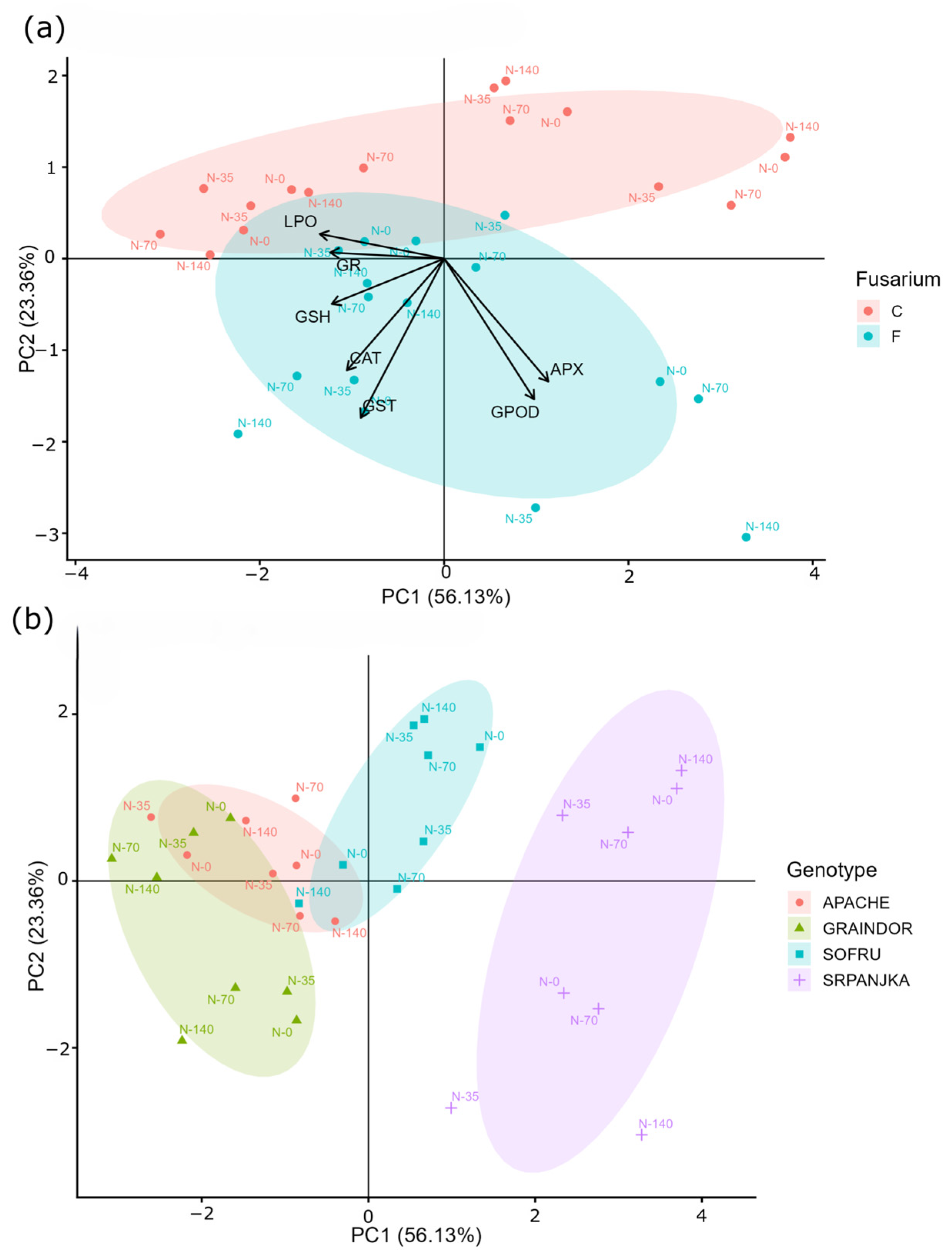
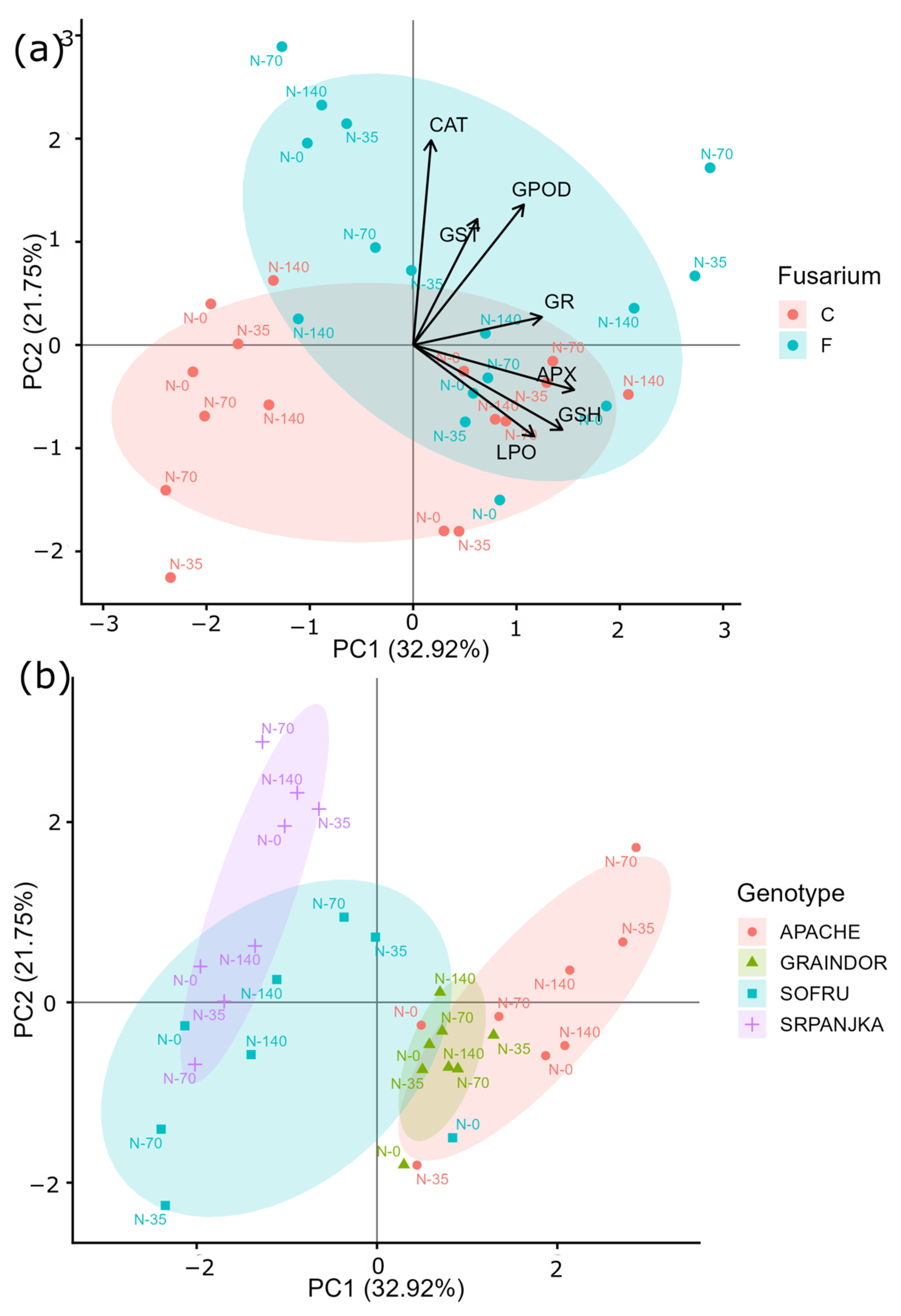
Multivariate relationships among redox-related parameters were investigated using principal component analysis (PCA) in R statistical software (R version 4.5.2) within the RStudio (version 2026.01.0+392) environment using the prcomp function. Before PCA, variables were centred and scaled to unit variance (z-transformed) to eliminate differences in measurement units and ranges. PCA was performed separately for each growing season using mean values of genotype × Fusarium × nitrogen combinations. Loadings were extracted to determine the contribution and direction of individual redox-related variables to the principal components. PCA biplots were constructed using the first two principal components (PC1 and PC2) and generated using the ggplot2 and ggrepel packages. Ellipses represent 68% confidence regions based on multivariate dispersion.
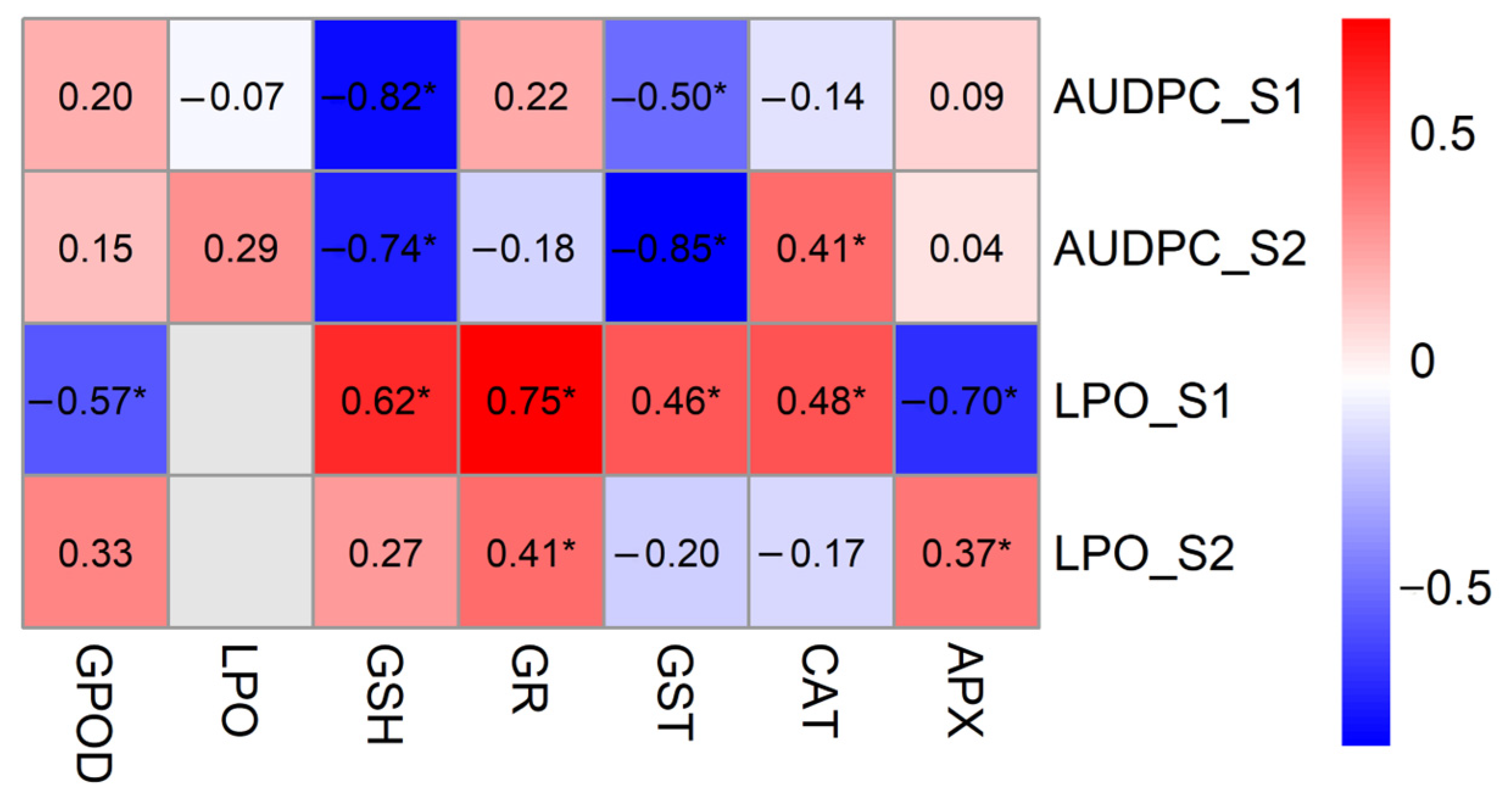
To further examine relationships between biochemical parameters and disease-related indicators, pairwise Pearson correlation analysis was performed separately between (i) AUDPC and redox-related parameters (LPO, GSH, GR, GST, APX, CAT, and GPOD), and (ii) LPO and antioxidant parameters for each growing season. Correlation coefficients were visualised using heatmaps generated in R (package pheatmap), with statistically significant correlations (p ≤ 0.05) indicated by asterisks (*).

3. Results

3.1. Three-Way ANOVA of Antioxidant Responses to Genotype, Fusarium spp. and Nitrogen

In the two growing seasons, three-way ANOVA showed that LPO, GSH content, and the activities of GR, GST, APX, CAT, and GPOD were significantly affected by at least one of the examined factors (Table 1 and Table 2). In 2018/2019, genotype exerted a highly significant effect (p ≤ 0.001) on all measured redox-related parameters (Table 1). Fusarium inoculation significantly affected (p ≤ 0.001) antioxidant enzyme activities (GST, APX, CAT and GPOD), while nitrogen significantly modulated all antioxidant enzyme activities. The genotype × Fusarium interaction was significant for all parameters, indicating differential infection responses among genotypes. A significant genotype × nitrogen interaction was observed for most parameters, whereas GPOD activity did not show a significant interaction effect. Fusarium × nitrogen treatment interaction was significant only for the CAT (p ≤ 0.01) and GPOD activities (p ≤ 0.001). Furthermore, significant three-way interactions (genotype × Fusarium × nitrogen) were detected for GSH content, GST, and GPOD activities, all at a high level of significance (p ≤ 0.001).
In the second growing season (2019/2020), three-way ANOVA showed that genotype was the predominant source of variation for all parameters (all p ≤ 0.001) (Table 2). Fusarium inoculation significantly affected LPO (p ≤ 0.05) and antioxidant enzymes GST, APX, CAT and GPOD (all p ≤ 0.001), while nitrogen influenced LPO, GSH, CAT and GPOD. The genotype × Fusarium interaction was significant for all parameters. A significant genotype × nitrogen interaction was observed for most parameters (p ≤ 0.001), except CAT. Also, the Fusarium × nitrogen interaction significantly affected LPO, GR, GST, APX, CAT and GPOD activities at different levels of significance, whereas GSH remained unaffected by this interaction. Significant three-way interactions (genotype × Fusarium × nitrogen) were observed for all parameters (p ≤ 0.01–0.001), indicating non-additive effects of combined biotic and nutritional factors across genotypes.
Effect size analysis (partial η2) further confirmed that genotype represented the dominant source of variation in both growing seasons (ηp2 = 0.70 in 2018/2019 and 0.79 in 2019/2020), followed by Fusarium treatment (ηp2 = 0.64 and 0.69, respectively), whereas nitrogen effects were comparatively small (ηp2 = 0.08 and 0.16). Interaction effects were moderate.

3.2. Lipid Peroxidation

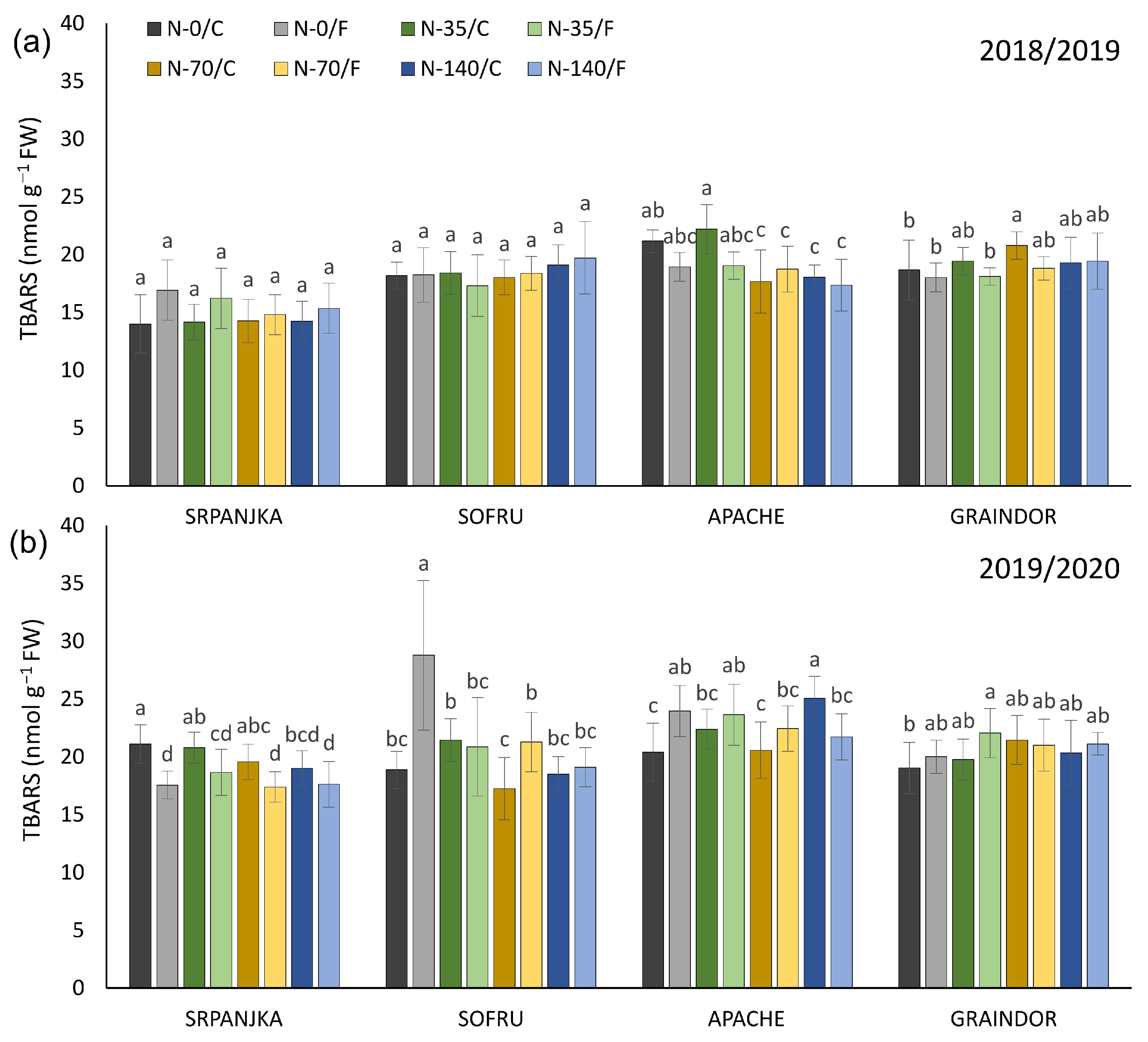
According to three-way ANOVA, in the first growing season (2018/2019), LPO levels were significantly affected only by genotype (p ≤ 0.001) (Table 1). No significant changes in LPO levels were observed in any of the four investigated genotypes following inoculation with Fusarium spp. under different nitrogen treatments, compared with the respective uninoculated controls (Figure 1a). Similarly, nitrogen fertilization alone did not significantly affect LPO in most genotypes, except for genotype Apache, in which LPO was significantly higher under lower nitrogen treatments (N-0 and N-35) compared to higher nitrogen treatments (N-70 and N-140) (Figure 1a).
In the 2019/2020 growing season, LPO was significantly influenced by genotype, Fusarium and nitrogen (Table 2). In the genotype Srpanjka, Fusarium inoculation induced a decreasing trend in LPO under all nitrogen treatments. LPO significantly decreased under N-0, N-35, and N-70 (20%, 11%, and 11%, respectively) (Figure 1b). In contrast, genotype Sofru exhibited a significant increase in LPO following Fusarium infection under N-0 (53%) and N-70 (23%). The Apache genotype displayed a dual response: a significant increase in LPO under N-0 (17%) and a significant decrease under N-140 (13%) compared to corresponding controls. Additionally, N-140 treatment significantly increased LPO in this genotype irrespective of infection (Figure 1b). Unlike the other genotypes, Graindor showed no statistically significant changes in LPO under any nitrogen treatment following Fusarium inoculation.

3.3. Glutathione Content

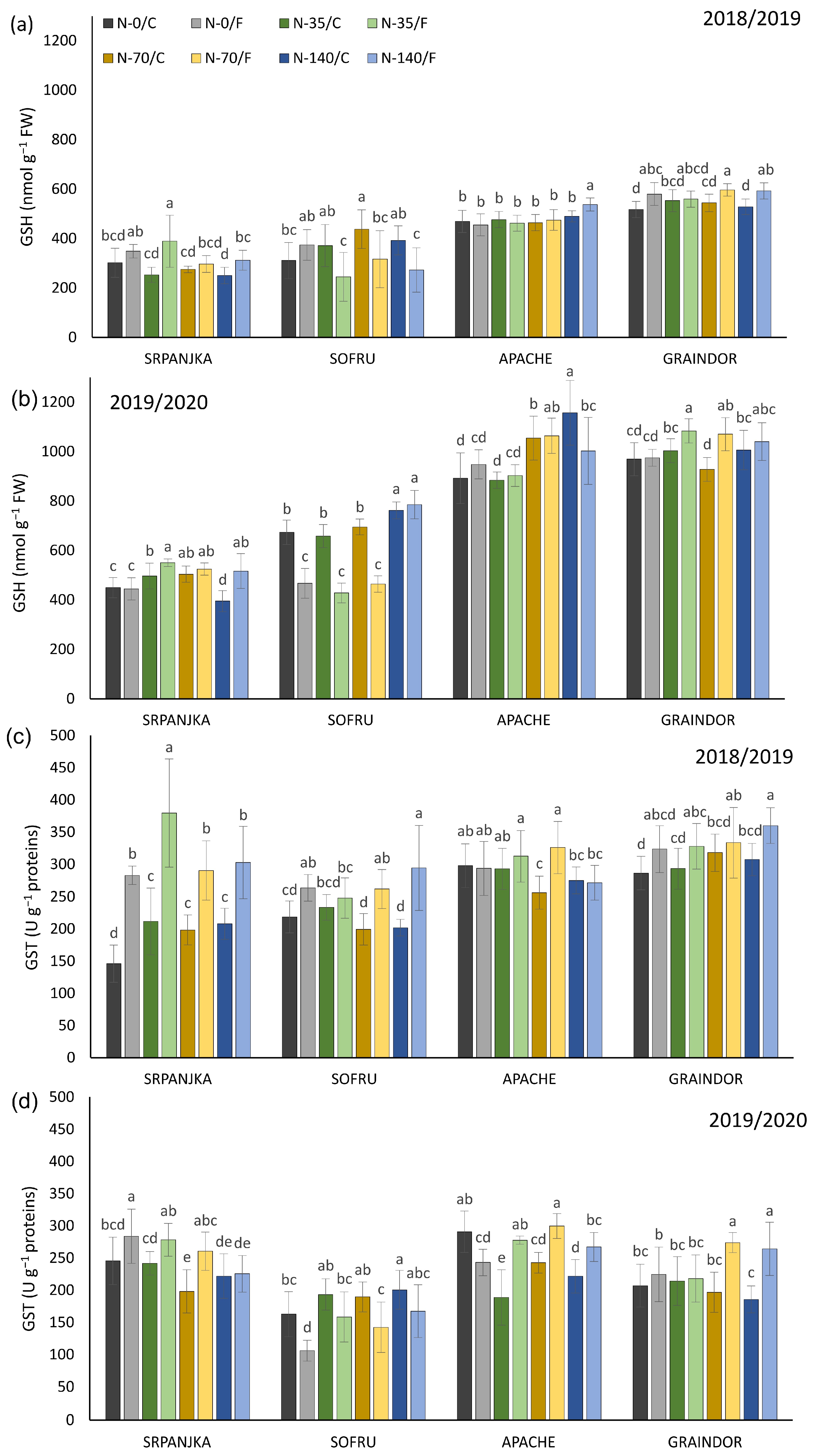
In the 2018/2019 season, three-way ANOVA revealed that GSH content was significantly affected only by genotype (p ≤ 0.001) (Table 1). Although the main effect of Fusarium was not significant, differences were observed within genotypes, reflecting significant interaction effects. In genotype Srpanjka, Fusarium inoculation induced an overall increasing trend in GSH content across all nitrogen treatments. However, a statistically significant increase was observed only under N-35 (54%) and N-140 (25%) compared to the corresponding uninoculated controls (Figure 2a). Conversely, in genotype Sofru, Fusarium infection decreased GSH concentration by 34%, 28%, and 30% under the N-35, N-70, and N-140 regimes, respectively, compared to the uninoculated controls (Figure 2a). In the genotype Apache, a significant increase in GSH was detected only under N-140 (10%), whereas in Graindor, inoculation resulted in a significant increase in GSH concentration under the N-0 (12%), N-70 (10%), and N-140 (12%) regimes compared to the uninoculated controls. Basal GSH levels were lower in Srpanjka and Sofru compared to Apache and Graindor genotypes.
In 2019/2020, three-way ANOVA indicated that GSH content was significantly affected by genotype (p ≤ 0.001) and nitrogen supply (p ≤ 0.001) (Table 2). Although the main effect of Fusarium was not significant, differences were observed within genotypes, reflecting significant interaction effects. Fusarium inoculation significantly increased GSH in Srpanjka under N-35 and N-140, by 11% and 31%, respectively, compared to the uninoculated controls. Also, nitrogen treatments N-0 and N-140 independently reduced GSH levels in this genotype (Figure 2b). In genotype Sofru, Fusarium inoculation significantly reduced GSH concentration under the N-0, N-35, and N-70 fertilization regimes by 31%, 35%, and 33%, respectively, compared to the uninoculated controls. In addition, the N-140 treatment significantly increased GSH concentration in this genotype, irrespective of infection, compared to the other nitrogen treatments (Figure 2b). In genotype Apache, Fusarium inoculation reduced GSH only under N-140 (13%), whereas higher nitrogen treatments (N-70 and N-140) increased GSH levels irrespective of infection, compared with lower nitrogen treatments (Figure 2b). In genotype Graindor, Fusarium inoculation increased GSH concentration under the N-35 (8%) and N-70 (15%) regimes compared to the uninoculated controls (Figure 2b). Genotypes Srpanjka and Sofru exhibited lower basal GSH levels compared to the more FHB-resistant genotypes Apache and Graindor (Figure 2b).

3.4. Glutathione S-Transferase Activity

In the 2018/2019 growing season, GST activity was significantly influenced by genotype, Fusarium infection and nitrogen supply (all p ≤ 0.001) (Table 1). In genotypes Srpanjka and Sofru, infection led to a consistent increase in GST activity across almost all nitrogen treatments (Figure 2c). In Srpanjka, GST activity increased from 31% at N-140 to 48% at N-0, while in genotype Sofru, it ranged from 21% at N-0 to 31% at N-140, relative to the corresponding uninoculated controls. However, in Srpanjka, GST activity under the N-0 regime was lower compared to other nitrogen treatments, irrespective of infection (Figure 2c). In the genotype Apache, a significant increase in GST activity (21%) was observed under the N-70 treatment (Figure 2c). Moreover, N-70 treatment itself reduced GST activity in this genotype compared to other nitrogen treatments. In Graindor, Fusarium inoculation increased GST activity; however, statistical significance was observed only under the highest nitrogen treatment (N-140) (Figure 2c).
In the 2019/2020 season, GST activity was significantly affected by genotype and Fusarium infection (p ≤ 0.001) (Table 2). In genotype Srpanjka, Fusarium inoculation significantly enhanced GST activity under N-0 (16%), N-35 (15%), and N-70 (32%) compared to the respective controls (Figure 2d). Conversely, in genotype Sofru, a decreasing trend in GST activity was observed under Fusarium infection, with a significant decrease under N-0 (35%) and N-70 (25%), indicating a season-dependent shift (Figure 2d). The Apache genotype displayed a dual response pattern: Fusarium inoculation significantly reduced GST activity under N-0 (16%), whereas significant increases were observed under N-35, N-70, and N-140 (47%, 23%, and 20%, respectively). Additionally, GST activity under the N-35 treatment was reduced independently of infection, indicating a direct nitrogen effect in this genotype (Figure 2d). In the Graindor genotype, Fusarium inoculation significantly increased GST activity under the highest nitrogen treatments, N-70 (39%) and N-140 (42%), relative to uninoculated controls (Figure 2d). Genotype Sofru generally exhibited lower basal GST activity than the other genotypes (Figure 2d).

3.5. Glutathione Reductase Activity

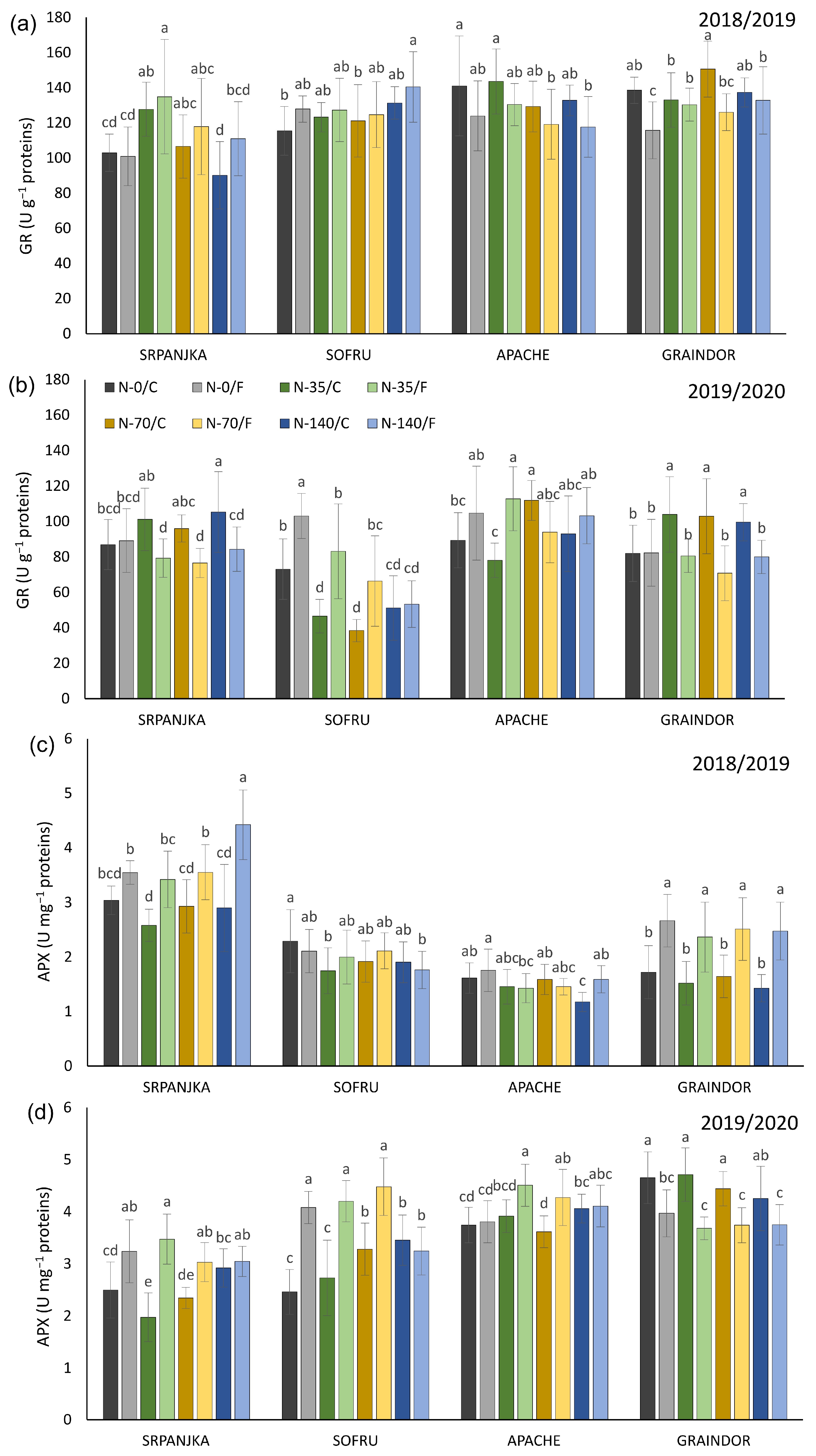
In the first growing season (2018/2019), three-way ANOVA indicated that GR activity was significantly affected by genotype (p ≤ 0.001) and nitrogen supply (p ≤ 0.01) (Table 1). Despite non-significant main effects, genotype-specific differences reflected strong interaction effects. In Apache and Graindor, a decreasing trend in GR activity following infection was observed; however, a statistically significant reduction (16%) was recorded only in Graindor at N-0 and N-70 (Figure 3a). In genotypes Srpanjka and Sofru, Fusarium inoculation did not significantly affect GR activity under any nitrogen treatment.
In the 2019/2020 growing season, three-way ANOVA revealed that GR activity was primarily genotype-dependent (p ≤ 0.001) (Table 2). Although the main effects of Fusarium and nitrogen were not significant, differences were observed within specific genotypes, reflecting the strong interaction effects. In genotype Srpanjka, Fusarium inoculation significantly reduced GR activity under N-35 (22%), N-70 (20%), and N-140 (20%) compared to controls (Figure 3b). Conversely, genotype Sofru showed a marked increase in GR activity following infection under N-0 (41%), N-35 (79%), and N-70 (73%). Moreover, in this genotype, the N-0 regime itself significantly increased GR activity (Figure 3b). In Apache, infection significantly increased GR activity only under N-35 (45%). In the Graindor genotype, as in Srpanjka, infection significantly reduced GR activity under N-35 (22%), N-70 (31%), and N-140 (20%) compared to the respective uninoculated controls (Figure 3b). Additionally, the N-0 regime independently reduced GR activity in this genotype. The Sofru genotype generally exhibited lower basal GR activity than the other genotypes.

3.6. Ascorbate Peroxidase Activity

In the 2018/2019 growing season, APX activity was significantly affected by genotype (p ≤ 0.001), Fusarium infection (p ≤ 0.001) and nitrogen supply (p ≤ 0.01) (Table 1). In genotype Srpanjka, Fusarium inoculation induced an increasing trend in APX activity under nitrogen fertilization. A significant increase was observed at N-35, N-70, and N-140 (35%, 21%, and 52%, respectively) (Figure 3c). No significant changes in APX activity were detected in the genotype Sofru following Fusarium inoculation (Figure 3c). In the genotype Apache, a significant increase in APX activity was observed only under the highest nitrogen treatment (N-140), where activity increased by 35% relative to the control (Figure 3c). A more pronounced response was observed in Graindor, where Fusarium inoculation significantly enhanced APX activity across all nitrogen treatments, with increases ranging from 53% (N-70) to 73% (N-140) (Figure 3c). Among the investigated genotypes, Srpanjka exhibited the highest basal APX activity during this season.
In the 2019/2020 growing season, APX activity was influenced by genotype and Fusarium infection (p ≤ 0.001) (Table 2). In both Srpanjka and Sofru, Fusarium inoculation resulted in significant increases in APX activity under N-0, N-35, and N-70 (Figure 3d). In Srpanjka, the increases ranged from 29% to 76%, whereas in Sofru they ranged from 37% to 66% relative to the respective controls. In the Apache genotype, Fusarium inoculation led to a moderate but significant increase in APX activity under N-35 (15%) and N-70 (18%) (Figure 3d). In contrast, the Graindor genotype displayed an opposite response to the previous season, with infection causing a significant reduction in APX activity across nitrogen treatments, ranging from 12% (N-140) to 22% (N-35) (Figure 3d). In the 2019/2020 season, genotypes Srpanjka and Sofru exhibited lower mean basal APX activity than the more resistant genotypes Apache and Graindor. Additionally, overall basal APX activity was higher in 2019/2020 than in 2018/2019.

3.7. Catalase Activity

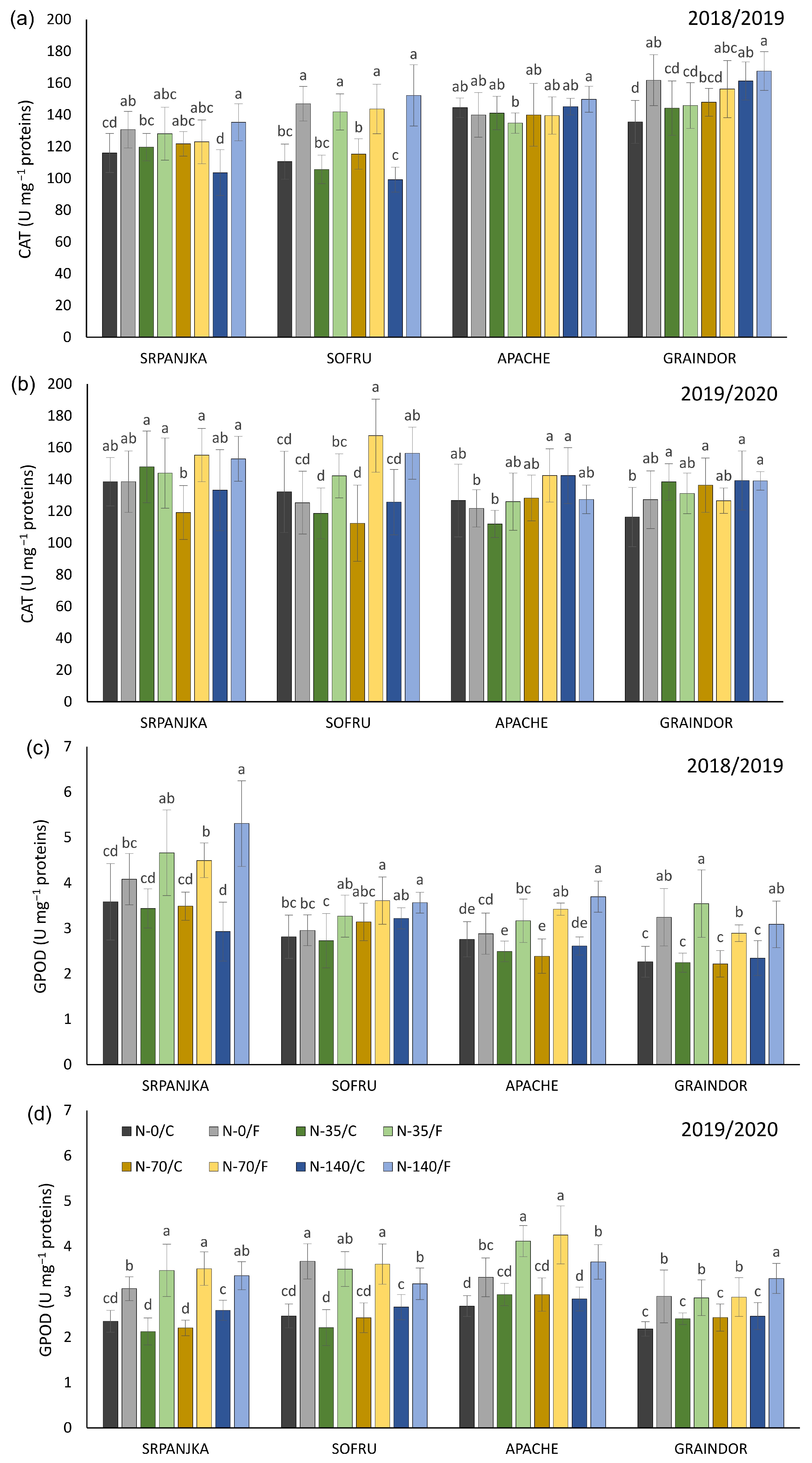
In the growing season 2018/2019, CAT activity was significantly influenced by genotype (p ≤ 0.001), Fusarium infection (p ≤ 0.001) and nitrogen supply (p ≤ 0.05) (Table 1). In genotype Srpanjka, Fusarium inoculation significantly increased CAT activity under N-0 (13%) and N-140 (31%) (Figure 4a). In Sofru, CAT activity was significantly enhanced at all nitrogen treatments, with increases ranging from 25% (N-70) to 54% (N-140), relative to controls (Figure 4a). In contrast, no significant inoculation-induced changes were detected in the Apache genotype, while Graindor exhibited a significant increase in CAT activity only under N-0 (19%) (Figure 4a).
In the 2019/2020 season, CAT activity was significantly affected by genotype, Fusarium infection and nitrogen treatment (p ≤ 0.001) (Table 2). Fusarium infection significantly increased CAT activity in genotype Srpanjka only under N-70 (30%) (Figure 4b). In the Sofru genotype, CAT activity increased by 20%, 49%, and 25% under the treatments N-35, N-70, and N-140, respectively, relative to controls (Figure 4b). In contrast, Fusarium inoculation did not significantly affect CAT activity in Apache or Graindor (Figure 4b). However, in genotype Graindor, CAT activity was lower at N-0 than at the other nitrogen treatments, irrespective of infection.

3.8. Guaiacol Peroxidase Activity

In 2018/2019, GPOD activity was significantly affected by genotype, Fusarium infection and nitrogen supply (all p ≤ 0.001) (Table 1). Fusarium inoculation increased GPOD activity across all genotypes and nitrogen treatments (Figure 4c). In Srpanjka, Fusarium inoculation significantly increased GPOD activity by 36%, 30%, and 81% under N-35, N-70, and N-140, respectively, compared with uninoculated plants (Figure 4c). In the Sofru genotype, a significant increase was observed only under N-35 (20%) (Figure 4c). In the Apache genotype, Fusarium infection significantly increased GPOD activity under the N-35, N-70, and N-140 regimes by 27%, 43%, and 42%, respectively, compared to the uninoculated controls (Figure 4c). A similar response was observed in Graindor, where infection led to a significant increase in GPOD activity across all nitrogen treatments, with increases ranging from 30% (N-70) to 57% (N-35) relative to the respective uninoculated plants (Figure 4c).
In the 2019/2020 season, GPOD activity was significantly affected by genotype (p ≤ 0.001), Fusarium infection (p ≤ 0.001) and nitrogen supply (p ≤ 0.01) (Table 2). Fusarium inoculation significantly increased GPOD activity across all genotypes and nitrogen treatments (Figure 4d). In genotype Srpanjka, the inoculation-induced increase in GPOD activity ranged from 30% (N-140) to 63% (N-35) relative to the uninoculated controls (Figure 4d). In genotype Sofru, the increase ranged from 20% (N-140) to 58% (N-35) (Figure 4d). In the Apache genotype, the increase in GPOD activity ranged from 23% (N-0) to 45% (N-70), whereas in Graindor, the increase varied from 19% (N-35 and N-70) to 34% (N-140) compared to the respective controls (Figure 4d).
To facilitate comparison of genotype-specific responses across seasons, a summary of redox-related response patterns is provided in Table 3.

3.9. Correlation Analysis

Correlation analysis revealed distinct relationships between disease severity, LPO, and antioxidant responses, with notable differences between growing seasons (Figure 5). In both seasons, AUDPC showed strong negative correlations with GSH and GST. LPO exhibited predominantly positive correlations with antioxidant enzymes, especially GR, GST, and CAT. These relationships were more pronounced in the first growing season, while in the second season, correlations were generally weaker and more variable.

3.10. Principal Component Analysis

In season 2018/2019, PCA explained 79.49% of the total variance, with PC1 and PC2 accounting for 56.13% and 23.36%, respectively (Figure 6). PC1 was primarily defined by moderate negative loadings of LPO, GSH, GR, and CAT, while APX and GPOD showed positive contributions (Table 4). PC2 was associated with strong negative loadings of GST and GPOD and moderate negative loadings of APX and CAT (Table 4). A clear separation between the Fusarium-inoculated (F) and uninoculated control (C) treatments was observed mainly along PC2 (Figure 6a).
Fusarium treatments were positioned in the negative PC2 region, corresponding to higher contributions of GST, GPOD, APX, and CAT (Figure 6a). In contrast, uninoculated control treatments were shifted toward the positive PC2 space. Genotypes showed pronounced separation along PC1 (Figure 6b). Srpanjka was distinctly separated in the positive PC1 region, characterized by a higher APX and GPOD association. Apache and Graindor clustered in the negative PC1 space, aligned with LPO, GSH, and GR. Sofru occupied an intermediate position. Nitrogen treatments did not show clear separation, indicating a limited contribution of nitrogen treatments to the overall multivariate structure.
In the 2019/2020 growing season, PCA explained 54.67% of the total variance, with PC1 and PC2 accounting for 32.92% and 21.75%, respectively (Figure 7). PC1 was mainly defined by strong positive loadings of APX and moderate loadings of GSH, GR, LPO, and GPOD (Table 4). PC2 was more strongly associated with CAT, GPOD, and GST (Table 4).
Unlike the 2018/2019 season, the separation between Fusarium-inoculated plants (F) and the uninoculated control (C) was less pronounced and occurred mainly along PC2 (Figure 7a). Fusarium treatments were predominantly positioned in the positive PC2 region, associated with higher CAT, GPOD, and GST contributions (Figure 7a). Control plants occupied the negative PC2 space and were more aligned with the LPO and GSH directions (Figure 7a). Genotype-driven separation was more distinct than the Fusarium effect and occurred primarily along PC1 (Figure 7b). The Apache genotype clustered in the positive PC1 region, associated with higher APX, GSH, GR, and LPO. Genotypes Sofru and Srpanjka were positioned toward negative PC1 values. The Graindor genotype occupied an intermediate position. Nitrogen treatments did not form discrete clusters, suggesting that genotype-related redox patterns structured variability more strongly than nitrogen supply.

4. Discussion

Wheat production worldwide is significantly threatened by phytopathogenic fungi of the genus Fusarium, where inadequate nitrogen fertilization can contribute to disease development and ultimately lead to reduced yields and impaired grain quality [6,19]. However, the effect of nitrogen supply on FHB development remains complex and not fully understood. Moreover, both imbalanced nitrogen nutrition and Fusarium infection can disturb cellular redox homeostasis and influence antioxidant defence mechanisms [28,36,46]. In the present study, the individual and interactive effects of genotype, Fusarium inoculation and different nitrogen fertilization levels on the antioxidant response of wheat spikes across two growing seasons were investigated. This study suggests that wheat antioxidant responses to Fusarium infection were mainly shaped by genotype and seasonal conditions, whereas the influence of nitrogen supply was inconsistent and strongly dependent on genotype and growing season. Across both seasons, three-way ANOVA consistently identified genotype as the predominant source of variation for all measured parameters, and PCA confirmed that genotype differences in redox status explained a larger proportion of the multivariate structure than nitrogen treatments. In addition to the main effects, significant two-way (genotype × Fusarium, genotype × nitrogen) and three-way (genotype × Fusarium × nitrogen) interactions were detected, indicating that the effects of infection and nitrogen supply were strongly genotype-dependent. This is in line with the broader concept that plant defence capacity and its redox control are strongly genotype-dependent, while nutritional inputs can shift defence outcomes depending on the host background and environment [19,47,48].
Membrane LPO is one of the most evident manifestations of oxidative stress in plants [49]. Accordingly, the measurement of TBARS, as end products of LPO, is commonly used as an indicator of membrane damage and the intensity of oxidative stress [49,50]. In the present study, LPO did not increase uniformly following Fusarium inoculation, particularly in 2018/2019 when genotype was the only significant main effect. Enhanced antioxidant enzyme activity may have contributed to limiting excessive ROS accumulation and reducing LPO [47,51]. Correlation analysis in this season revealed contrasting relationships between LPO and antioxidant components. LPO showed positive associations with GSH content and the activities of GR, GST, and CAT, suggesting induction of antioxidant responses under increased oxidative stress. In contrast, LPO was negatively associated with APX and GPOD activities, which may indicate a more efficient H2O2 detoxification under conditions where oxidative damage remained limited. In 2019/2020, LPO responded to Fusarium treatment in a genotype- and nitrogen-dependent manner, with responses in opposite directions among genotypes. This is consistent with correlation analysis, which in this season revealed less consistent and more variable relationships between LPO and antioxidant parameters, indicating a stronger influence of genotype and environmental conditions. In the susceptible genotype Sofru, Fusarium inoculation increased LPO at N-0 and N-70, suggesting that antioxidant defence was insufficient to counteract infection-induced ROS. This response is consistent with previous findings showing that FHB-susceptible genotypes frequently exhibit enhanced LPO and oxidative damage [28,52,53,54]. The elevated LPO observed in Sofru was accompanied by reduced GSH content and lower GST activity, which may indicate impaired detoxification capacity, particularly in the conjugation of cytotoxic LPO products [55]. In contrast, the moderately susceptible genotype Srpanjka exhibited reduced LPO following inoculation under most nitrogen treatments, consistent with the results of Spanic et al. [56], who also reported decreased LPO levels in the susceptible genotype Golubica after Fusarium infection. This response coincided with increased GST activity, elevated GSH levels, and enhanced GPOD, APX and CAT activities, suggesting activation of coordinated antioxidant mechanisms and efficient H2O2 detoxification [55,57]. In the partially resistant genotype Apache, infection under nitrogen deficiency (N-0) increased LPO, suggesting reduced defence capacity under limited nutrient availability [28,58]. High nitrogen alone (N-140) also increased LPO, confirming that excessive fertilization can also function as an abiotic stress factor [59]. However, under combined infection and high nitrogen supply, LPO decreased, accompanied by increased GST and GPOD activities, suggesting enhanced defensive activation. In Graindor, inoculation did not significantly alter LPO, suggesting a stable antioxidant system and partial resistance. This response is consistent with the findings of Spanic et al. [52], who reported no significant increase in LPO in the resistant genotypes Vulkan and Kraljica following infection. These findings suggest that ROS dynamics during FHB are not determined solely by the level of ROS production, but rather reflect a regulated balance between oxidative signalling and defence activation. Depending on antioxidant capacity and the timing of responses, this may or may not lead to detectable membrane LPO. Studies in wheat similarly indicate that resistant or partially resistant genotypes can maintain more efficient ROS detoxification, thereby limiting excessive LPO [28,48,53].
An important aspect of this study is the field-based analysis of glutathione-related responses (GSH, GR, GST) in wheat spikes under Fusarium infection and different nitrogen treatments across two seasons. GSH is a central non-enzymatic redox buffer and a key metabolite in antioxidant defence, particularly through the ascorbate-glutathione cycle and detoxification reactions, acting directly or indirectly as an enzymatic cofactor [60]. Across both growing seasons, the more FHB-resistant genotypes (Apache, Graindor) displayed higher basal GSH levels than susceptible genotypes (Srpanjka, Sofru). This is consistent with previous studies showing that elevated constitutive antioxidant capacity may contribute to basal resistance, as resistant and susceptible wheat genotypes exhibit differences in both enzymatic and non-enzymatic antioxidant components [28,48,61]. Notably, the susceptible genotype Sofru frequently showed infection-associated reductions in GSH, which may reflect either increased GSH consumption during detoxification reactions or limited capacity to maintain GSH levels under Fusarium stress. In contrast, other genotypes more often maintained or increased GSH levels upon inoculation under specific nitrogen conditions. An increase in the GSH content in the Srpanjka and Graindor genotypes was associated with increased GST activity. This pattern suggests that enhanced GSH availability and GST-mediated conjugation may contribute to more efficient detoxification of reactive oxygen species and LPO products, thereby supporting redox homeostasis under infection. On the other hand, decreased GR activity in Srpanjka and Graindor may suggest a reduced capacity for GSH recycling during Fusarium infection, which could indicate that maintenance of GSH levels relies more on de novo synthesis in these genotypes. The contrasting GSH responses among genotypes may reflect the oxidative burst and secondary metabolite production triggered by Fusarium infection, which increases the demand for GSH pools and their recycling. However, it should be noted that biochemical analyses were performed at a single sampling time point (7 days after inoculation). Redox responses to Fusarium infection are dynamic, and depending on the stage of sampling, the measured parameters may reflect early defence responses, transient adjustments, or later stress-induced damage. Therefore, the observed patterns should be interpreted within the context of this specific time point, which may also contribute to the differences observed between genotypes and growing seasons.
GST activity showed strong genotype- and season-dependence. GST functions not only as a component of the antioxidant system but also as a key detoxification enzyme that catalyzes the conjugation of electrophilic substrates to GSH [62,63]. Increased GST activity has been reported in response to multiple stress factors, including Fusarium infection of plants [63,64]. Across both growing seasons, Fusarium infection predominantly induced GST activity, although a contrasting pattern was observed in Sofru, where GST increased in 2018/2019 but decreased under certain nitrogen treatments in 2019/2020. The season-dependent differences in response patterns observed in genotype Sofru support the idea that the balance between GSH availability and GST-mediated conjugation can shift depending on environmental conditions and infection intensity, potentially altering whether GST induction is sustained or constrained by GSH depletion. In the 2019/2020 season, reduced GST activity under N-0 and N-70 in the susceptible genotype Sofru coincided with increased oxidative stress, whereas in Srpanjka and Apache, higher GST activity was generally associated with more stable membrane status under comparable nitrogen treatments. Together, these patterns are consistent with a role of GSH-dependent detoxification processes in the neutralization of stress-induced cytotoxic products and the maintenance of membrane integrity [65]. Lower GST activity in Apache under nitrogen deficiency (N-0) may reflect reduced antioxidant capacity under nutrient stress. Similarly, Matić et al. (2021) reported that insufficient nitrogen supply decreased antioxidant enzyme activities in wheat spikes, likely due to limited amino acid and protein synthesis, thereby constraining defence under combined stresses [28].
GR activity patterns further point to genotype-specific redox recycling capacity. Because GR catalyzes the reduction of GSSG back to its reduced form (GSH), its induction, as observed in Sofru in 2019/2020 across multiple nitrogen treatments, may represent a compensatory response to increased oxidative stress or enhanced GSH turnover during infection. Similar stress-induced modulation of GR and related detoxification components has been described in wheat lines under Fusarium challenge, including systemic antioxidant/detoxification adjustments [66,67]. Despite increased GR activity, the Sofru genotype still exhibited signs of oxidative imbalance, indicating that enzymatic activation alone may not be sufficient to prevent oxidative damage. A similar pattern was reported by Matić et al. [28], where the susceptible genotype Galloper showed concurrent increases in GR activity and LPO under low nitrogen and Fusarium infection, further indicating that elevated enzyme activity does not necessarily translate into effective defence, as presented in Gallé et al. [66] and Sunic et al. [67]. In the 2019/2020 season, the moderately susceptible Srpanjka and partially resistant Graindor showed the opposite pattern, with Fusarium inoculation significantly reducing GR activity under most nitrogen treatments. This suggests that these genotypes may rely on alternative antioxidant mechanisms beyond GSH recycling to maintain redox balance.
It is well known that APX, CAT, and GPOD play an important role in protecting cells against oxidative stress by degrading ROS such as H2O2 [68]. In both growing seasons, all three main factors (genotype, Fusarium treatment, and nitrogen) affected the activities of these three enzymes.
APX plays a central role in H2O2 detoxification as a key enzyme of the ascorbate-glutathione cycle [69,70]. In the 2018/2019 season, Srpanjka, Apache and Graindor showed increased APX activity following inoculation, whereas in 2019/2020 this response was observed in Srpanjka, Sofru and Apache. These findings are consistent with Matić et al. [28], who also reported APX induction in response to F. culmorum infection in certain wheat genotypes. In contrast, Sunic et al. [67] observed decreased APX activity in susceptible genotypes after infection, differing from our results and further emphasizing the genotype-specific and complex nature of antioxidant responses. Notably, APX activity declined in the partially resistant genotype Graindor; however, LPO remained unchanged, suggesting reliance on other antioxidant enzymes. A similar pattern was described by Spanic et al. [52] in the FHB-resistant genotype Olimpija, where APX activity also decreased following infection. The authors concluded that, in this case, another enzyme, such as GPOD, played the primary role in H2O2 removal [52].
Among the measured enzymes, GPOD emerged as the most consistent marker of Fusarium infection, as inoculation increased its activity across genotypes and nitrogen treatments in both seasons. PCA supported these findings, showing that GPOD contributed strongly to the separation of Fusarium-inoculated treatments, while genotypes differed in their overall antioxidant responses. In both seasons, GPOD activity increased in the moderately susceptible genotype Srpanjka and in the partially resistant genotypes Apache and Graindor, which may be associated with improved defence responses and maintenance of membrane integrity. In contrast, although GPOD activity also increased in the susceptible genotype Sofru during the second season, this response was insufficient to prevent LPO or to ensure effective protection against pathogen attack. A similar increase in GPOD activity following FHB infection was also reported by Spanic et al. [52] in most tested wheat genotypes. These findings highlight a potential role of peroxidase activity in spike defence. Beyond ROS detoxification, peroxidases contribute to cell wall strengthening and phenolic oxidation, processes that can limit pathogen spread and are commonly associated with resistance [71,72,73].
Considering the increased GPOD and APX activities observed in most genotypes (Srpanjka, Apache and Graindor) and treatments, particularly in the second season, the largely unchanged CAT activity after infection is not unexpected. CAT is an enzyme specialized for degrading high concentrations of H2O2 primarily in peroxisomes, while peroxidases such as APX and GPOD have a higher affinity for H2O2, remove it more efficiently at lower concentrations, and function in different cellular compartments. This allows for a more localized and rapid defense response [74,75,76]. Increased CAT activity in response to Fusarium infection was particularly pronounced in the susceptible genotype Sofru during both growing seasons and under most nitrogen regimes. This response may reflect an attempt to control excessive H2O2 accumulation; however, it was insufficient to prevent LPO in the second season. A similar trend was reported by Gherbawy et al. [77], who observed increased CAT activity in wheat shoots following infection with several Fusarium species.
Across all measured parameters, the contrasting genotype-dependent trends further suggest that genotypes may rely on different defence strategies. The partially resistant genotypes (Apache and Graindor) maintained higher basal glutathione-based protection, whereas the susceptible genotype Sofru exhibited more pronounced inducible responses under stress conditions. This indicates that elevated antioxidant enzyme activity does not necessarily correspond to higher resistance but may instead reflect a response to increased oxidative stress. Taken together, these findings suggest that genotype-specific resistance is more closely associated with constitutive redox capacity than with inducible antioxidant responses.
Both the three-way ANOVA and PCA analyses confirmed that Fusarium inoculation significantly altered the antioxidant metabolism in wheat spikes. The infection was primarily associated with increased antioxidant enzyme activities, particularly GPOD and, depending on the genotype and season, APX and GST, suggesting activation of antioxidant defence mechanisms. Such responses are consistent with the well-known oxidative burst accompanying pathogen colonization, during which increased ROS production triggers enzymatic detoxification systems aimed at maintaining redox balance [56,78,79]. In the PCA ordination, Fusarium treatments were mainly associated with higher contributions of GPOD and, in some cases, GST and CAT, suggesting that peroxidase-mediated ROS detoxification may represent a key component of the defence response during infection.
To further link these biochemical responses with disease outcomes, correlation analysis with disease severity (AUDPC) was performed using data from inoculated plants only. Across both growing seasons, GSH content and GST activity were generally negatively associated with AUDPC, suggesting that higher glutathione-related antioxidant capacity was linked to lower disease severity. These relationships were consistent with the observed genotype-dependent patterns, where genotypes with higher basal and, to a lesser extent, inducible GSH-related responses exhibited reduced susceptibility to Fusarium infection. In contrast, some enzyme activities, such as CAT, were positively associated with disease severity, indicating that increased antioxidant activity may also reflect higher stress intensity rather than effective resistance. Overall, these results indicate that antioxidant responses reflect both defence activation and stress intensity, depending on genotype and environmental conditions.
Although nitrogen fertilization is often hypothesized to enhance FHB risk by increasing canopy density, prolonged greenness, and creating a more humid microclimate, published evidence remains inconsistent, with positive, neutral, or negative relationships reported depending on genotype, management practices, and weather conditions [36,80,81]. In our previous study conducted within the same field experiment [36], nitrogen supply did not exert a consistent effect on FHB severity; instead, disease intensity was primarily determined by genotype and growing season. Nitrogen should not be considered solely as a yield-determining factor but also as a central regulator of defence-related metabolism and signalling, including nitric oxide-associated pathways and the allocation of resources between growth and defence [19]. From this perspective, both nitrogen deficiency and excess may represent nutritional stress conditions that disturb the balance between carbon and nitrogen metabolism and redox homeostasis, thereby modulating the outcome of host–pathogen interactions [19,36]. In the present study, three-way ANOVA revealed that nitrogen significantly affected selected parameters in a season-specific manner. In 2018/2019, nitrogen effects were mainly observed in enzyme activities (GST, APX, CAT and GPOD), whereas in 2019/2020 they were evident for LPO, GSH, CAT and GPOD. However, nitrogen supply did not result in a clear separation of treatments in the PCA and did not show a consistent pattern across genotypes or growing seasons. This indicates that nitrogen was not the primary factor determining antioxidant response but rather acted as a modifying factor whose influence depended on genotype and seasonal conditions. This is consistent with previous findings showing that nitrogen may influence FHB indirectly through changes in crop architecture and microclimate [82], as well as directly through metabolic and defence-related processes [19], without producing a consistent dose–response relationship [36].
Although genotype consistently represented the dominant source of variation across both seasons, the magnitude and pattern of interaction effects differed between 2018/2019 and 2019/2020, suggesting a potential influence of environmental conditions on stress responses. The 2018/2019 season was characterized by increased precipitation during late spring and early summer, conditions that favor Fusarium development and enhance pathogen pressure. High humidity during anthesis and grain filling is well known to promote Fusarium head blight severity [12,83]. This is consistent with previously reported disease severity data from the same field experiment, where higher AUDPC values were observed in the 2018/2019 growing season compared to 2019/2020, reflecting increased infection pressure under more humid conditions [36]. Under such conditions, oxidative perturbations induced by pathogen colonization may intensify, leading to activation of the antioxidant response [56]. In that season, genotype effects were predominant, while interaction effects (genotype × Fusarium, genotype × nitrogen, Fusarium × nitrogen, genotype × Fusarium × nitrogen) were less pronounced, suggesting that genetic background determined the capacity to buffer pathogen-induced ROS accumulation. In contrast, during 2019/2020, when precipitation was more evenly distributed and climatic fluctuations were less extreme, a broader spectrum of significant two-way and three-way interactions was detected, meaning that the influence of Fusarium infection and nitrogen supply depended on genotype and vice versa. Such non-additive responses are characteristic of complex stress crosstalk systems, where metabolic pathways intersect [84,85,86].
The strong genotype effect detected by three-way ANOVA was further supported by PCA, which clearly separated the wheat genotypes according to their antioxidant profiles, while nitrogen treatments did not form distinct groupings. This separation corresponded well with their previously reported differences in FHB susceptibility, where Sofru was identified as highly susceptible, Srpanjka as moderately susceptible, and Apache and Graindor as partially resistant [36]. The distinct clustering of genotypes in the PCA space therefore reflects inherent differences in redox regulation and defence capacity among genotypes. Such genotype-dependent patterns are consistent with earlier studies showing that antioxidant regulation and stress responses in wheat are strongly genotype-specific [48,51]. These results highlight that, although genotype represents the primary source of variation, the presence of significant interaction effects indicates that the influence of nitrogen supply and Fusarium infection is genotype-dependent and non-additive. The dominant role of genotype is further supported by both effect size analysis (partial η2) and PCA, which consistently showed clear separation of genotypes, while nitrogen effects are comparatively minor and strongly context-dependent. Taken together, these findings indicate that wheat genotypes employ distinct redox regulation strategies under Fusarium infection, where resistance is more closely associated with constitutive antioxidant capacity than with inducible responses, while nitrogen acts as a context-dependent modifier rather than a primary driver of the response.
The pronounced seasonal differences observed in this study, evident in both the ANOVA interactions and the proportion of variance explained by PCA (higher in 2018/2019 than in 2019/2020), underline the sensitivity of wheat redox regulation to environmental conditions. This is expected given that the weather around anthesis and early grain development determines infection pressure and physiological status, thereby shaping ROS generation and antioxidant demand. Although meteorological differences between seasons were described, no formal analysis was performed to directly relate environmental variables (e.g., air temperature or rainfall) to the measured biochemical responses. Therefore, the influence of seasonal conditions should be interpreted as suggested rather than demonstrated. Studies examining wheat antioxidant dynamics during grain development and Fusarium stress similarly emphasize that environmental conditions interact with genotype to determine whether antioxidant responses are protective or reflect stress overload [52,56]. The observed seasonal differences likely reflect not only variation in pathogen pressure but also changes in plant physiological status and redox balance driven by environmental conditions. Increased humidity and prolonged wetness periods may enhance ROS production during infection and intensify oxidative stress, thereby amplifying genotype-specific differences in antioxidant responses and disease progression.

5. Conclusions

This study demonstrates that wheat antioxidant responses to Fusarium infection are primarily governed by genotype and growing season, whereas nitrogen fertilization exerts a context-dependent and genotype-specific modifying effect. Results indicate that wheat genotypes differ in constitutive GSH status and enzymatic capacity. Higher basal GSH levels and enhanced GST activity were associated with increased FHB tolerance, suggesting a potential role of glutathione-dependent redox regulation in disease resistance. Fusarium infection was consistently associated with increased peroxidase-driven antioxidant responses in spikes, and among the measured parameters, GPOD displayed the most stable and consistent response to Fusarium inoculation across growing seasons and genotypes, suggesting its potential as a consistent indicator of infection. These findings provide field-based evidence that antioxidant responses are not solely indicative of resistance but reflect a balance between defence activation and stress intensity. Moreover, the observed relationships between glutathione-related parameters and disease severity (AUDPC) support the association between redox regulation and disease outcomes. Overall, the results highlight that genotype-specific redox capacity is an important determinant of resistance, while nitrogen acts as a context-dependent modifier rather than a primary driver of the response. The identified biochemical patterns may serve as a basis for future validation of redox-related markers in breeding and disease management.

Supplementary Materials

The following supporting information can be downloaded at: https://www.mdpi.com/article/10.3390/agriculture16080865/s1, Figure S1: Climatic conditions during the 2018/2019 and 2019/2020 growing seasons at the experimental site in Osijek, Croatia (monthly precipitation and mean monthly air temperature).

Author Contributions

Conceptualization, R.V., A.V.P., I.Š.Č., M.M., K.V., J.Ć., K.D. and D.N.; methodology, R.V., I.Š.Č., K.V., J.Ć., K.D. and D.N.; validation, R.V., I.Š.Č., A.V.P. and M.M.; formal analysis, R.V., A.V.P. and M.H.; investigation, R.V., A.V.P., M.M., I.Š.Č., M.H. and D.N.; resources, R.V., K.V., I.Š.Č. and D.N.; data curation, R.V., A.V.P., M.H. and M.M.; writing—original draft preparation, R.V. and A.V.P.; writing—review and editing, K.V., I.Š.Č., J.Ć., K.D., M.M. and D.N.; visualization, R.V. and M.H.; supervision, R.V., K.V. and D.N.; project administration, D.N.; funding acquisition, D.N. All authors have read and agreed to the published version of the manuscript.

Funding

This research was funded by the Croatian Science Foundation, grant number IP-2016-06-2178, partly by a grant from the EU project K.K. 01.1.1.01.0005 Biodiversity and Molecular Plant Breeding, Centre of Excellence for Biodiversity and Molecular Plant Breeding (CoE CroP-BioDiv), Zagreb, Croatia, and partly by the European Union—Next Generation EU: Project Clim-Cereals-Quant.

Institutional Review Board Statement

Not applicable.

Data Availability Statement

The data presented in this study are available from the corresponding author upon reasonable request.

Acknowledgments

The authors thank the Croatian Meteorological and Hydrological Service (DHMZ) for providing meteorological data.

Conflicts of Interest

The authors declare no conflicts of interest. The funders had no role in the design of the study; in the collection, analyses, or interpretation of data; in the writing of the manuscript; or in the decision to publish the results.

References

  1. Shahzadi, A.; Noreen, Z.; Alamery, S.; Zafar, F.; Haroon, A.; Rashid, M.; Aslam, M.; Younas, A.; Attia, K.A.; Mohammed, A.A.; et al. Effects of biochar on growth and yield of Wheat (Triticum aestivum L.) under salt stress. Sci. Rep. 2024, 14, 20024. [Google Scholar] [CrossRef]
  2. Afzal, F.; Chaudhari, S.K.; Gul, A.; Farooq, A.; Ali, H.; Nisar, S.; Sarfraz, B.; Shehzadi, K.J.; Mujeeb-kazi, A. Bread wheat (Triticum aestivum L.) under biotic and abiotic stresses: An overview. In Crop Production and Global Environmental Issues; Springer: Berlin/Heidelberg, Germany, 2015. [Google Scholar] [CrossRef]
  3. Alisaac, E.; Mahlein, A. Fusarium head blight on wheat: Biology, modern detection and diagnosis and integrated disease management. Toxins 2023, 15, 192. [Google Scholar] [CrossRef]
  4. Spanic, V.; Dvojkovic, K.; Babic, J.; Drezner, G.; Zdunic, Z. Fusarium Head Blight Infestation in Relation to Winter Wheat End-Use Quality—A Three-Year Study. Agronomy 2021, 11, 1648. [Google Scholar] [CrossRef]
  5. Pritsch, C.; Muehlbauer, G.J.; Bushnell, W.R.; Somers, D.A.; Vance, C.P. Fungal development and induction of defense response genes during early infection of wheat spikes by Fusarium graminearum. Mol. Plant-Microbe Interact. 2000, 13, 159–169. [Google Scholar] [CrossRef] [PubMed]
  6. Dweba, C.C.; Figlan, S.; Shimelis, H.A.; Motaung, T.E.; Sydenham, S.; Mwadzingeni, L.; Tsilo, T.J. Fusarium head blight of wheat: Pathogenesis and control strategies. Crop Prot. 2017, 91, 114–122. [Google Scholar] [CrossRef]
  7. Munkvold, G.P. Epidemiology of Fusarium diseases and their mycotoxins in maize ears. Eur. J. Plant Pathol. 2003, 109, 705–713. [Google Scholar] [CrossRef]
  8. Mawcha, K.T.; Yang, W.; Ndolo, D. Identification of sources of Fusarium head blight and deoxynivalenol resistance in Ethiopian wheat cultivars. J. Plant Pathol. 2026, 108, 661–676. [Google Scholar] [CrossRef]
  9. Buerstmayr, M.; Steiner, B.; Buerstmayr, H. Breeding for Fusarium head blight resistance in wheat—Progress and challenges. Plant Breed. 2020, 139, 429–454. [Google Scholar] [CrossRef]
  10. Bottalico, A.; Perrone, G. Toxigenic Fusarium species and mycotoxins associated with head blight in small-grain cereals in Europe. Eur. J. Plant Pathol. 2002, 108, 611–624. [Google Scholar] [CrossRef]
  11. Mesterhazy, A. What Is Fusarium head blight (FHB) resistance and what are its food safety risks in wheat? problems and solutions—A review. Toxins 2024, 16, 31. [Google Scholar] [CrossRef]
  12. Marzec-Schmidt, K.; Börjesson, T.; Suproniene, S.; Jędryczka, M.; Janavičienė, S.; Góral, T.; Karlsson, I.; Kochiieru, Y.; Ochodzki, P.; Mankevičienė, A.; et al. Modelling the effects of weather conditions on cereal grain contamination with deoxynivalenol in the Baltic sea region. Toxins 2021, 13, 737. [Google Scholar] [CrossRef]
  13. D’Angelo, D.L.; Bradley, C.A.; Ames, K.A.; Willyerd, K.T.; Madden, L.V.; Paul, P.A. Efficacy of Fungicide applications during and after anthesis against Fusarium head blight and deoxynivalenol in soft red winter wheat. Plant Dis. 2014, 98, 1387–1397. [Google Scholar] [CrossRef]
  14. Saleem, M.; Hussain, A.; Ali, K.; Ali, N.; Ullah, H.; Ali, S.; Wang, C.; Feng, M.; Gujar, A.; Sun, H.; et al. Saudi Journal of Biological Sciences Optimizing nitrogen supply promotes biomass, physiological characteristics and yield components of soybean (Glycine max L. Merr.). Saudi J. Biol. Sci. 2021, 28, 6209–6217. [Google Scholar] [CrossRef]
  15. Euring, D.; Bai, H.; Janz, D.; Polle, A. Nitrogen-driven stem elongation in poplar is linked with wood modification and gene clusters for stress, photosynthesis and cell wall formation. BMC Plant Biol. 2014, 14, 391. [Google Scholar] [CrossRef] [PubMed]
  16. Sun, Z.; Yang, R.; Wang, J.; Zhou, P.; Gong, Y.; Gao, F.; Wang, C. Effects of nutrient deficiency on crop yield and soil nutrients under winter wheat–Summer maize rotation system in the North China plain. Agronomy 2024, 14, 2690. [Google Scholar] [CrossRef]
  17. Wang, Q.; Li, S.; Li, J.; Huang, D. The utilization and roles of nitrogen in plants. Forests 2024, 15, 1191. [Google Scholar] [CrossRef]
  18. Ali, A.; Jabeen, N.; Farruhbek, R.; Chachar, Z.; Laghari, A.A.; Chachar, S.; Ahmed, N.; Ahmed, S.; Yang, Z. Enhancing nitrogen use efficiency in agriculture by integrating agronomic practices and genetic advances. Front. Plant Sci. 2025, 16, 1543714. [Google Scholar] [CrossRef]
  19. Mur, L.A.J.; Simpson, C.; Kumari, A.; Gupta, A.K.; Gupta, K.J. Moving nitrogen to the centre of plant defence against pathogens. Ann. Bot. 2016, 119, 703–709. [Google Scholar] [CrossRef]
  20. Bi, J.; Song, A.; Li, S.; Chen, M.; Wang, Y.; Wang, S.; Si, Z.; Wang, E.; Zhang, J.; Asante-Badu, B.; et al. Plant physiology, microbial community, and risks of multiple fungal diseases along a soil nitrogen gradient. Appl. Soil Ecol. 2022, 175, 104445. [Google Scholar] [CrossRef]
  21. Huber, D.M.; Watson, R.D. Nitrogen form and plant disease. Annu. Rev. Phytopathol. 1974, 12, 139–165. [Google Scholar] [CrossRef]
  22. Hoffland, E.; Jeger, M.J.; Van Beusichem, M.L. Effect of nitrogen supply rate on disease resistance in tomato depends on the pathogen. Plant Soil 2000, 218, 239–247. [Google Scholar] [CrossRef]
  23. Lemmens, M.; Buerstmayr, H.; Krska, R.; Schuhmacher, R.; Grausgruber, H.; Ruckenbauer, P. The effect of inoculation treatment and long-term application of moisture on Fusarium head blight symptoms and deoxynivalenol contamination in wheat grains. Eur. J. Plant Pathol. 2004, 110, 299–308. [Google Scholar] [CrossRef]
  24. Krnjaja, V.; Mandi, V.; Levi, J.; Obradovi, A. Influence of N-fertilization on Fusarium head blight and mycotoxin levels in winter wheat. Crop. Prot. 2015, 67, 251–256. [Google Scholar] [CrossRef]
  25. Vrandečić, K.; Jug, D.; Ćosić, J.; Ilić, J.; Jug, I. The impact of different conservation soil tillage and nitrogen fertilization on wheat grain infection with Fusarium sp. Poljoprivreda 2019, 25, 26–31. [Google Scholar] [CrossRef]
  26. Chai, X.; Zhou, T.; Liu, Y. Effects of nitrogen deficiency induced by straw decomposition after incorporation into soil on the autophagy and pathogenicity of Fusarium graminearum based on an off-line simulation. J. Phytopathol. 2021, 169, 239–246. [Google Scholar] [CrossRef]
  27. Maširević, S.; Radujkov, D.; Jevtić, R.; Stajković, N. Occurence of Fusarium head blight on some wheat varieties in different plant population and nitrogen fertilisation during 2011 in Serbia. Res. J. Agric. Sci. 2013, 45, 181–187. [Google Scholar]
  28. Matić, M.; Vuković, R.; Vrandečić, K.; Štolfa Čamagajevac, I.; Ćosić, J.; Vuković, A.; Sabljić, K.; Sabo, N.; Dvojković, K.; Novoselović, D. Oxidative status and antioxidative response to Fusarium attack and different nitrogen levels in winter wheat varieties. Plants 2021, 10, 611. [Google Scholar] [CrossRef]
  29. Mengesha, G.G.; Abebe, S.M.; Tsakamo, Y.T.; Issa, B.T.; Lera, Z.T.; Shertore, M.M.; Fedilu, K.B.; Tadesse, Y.B.; Mekonnen, A.A.; Esho, A.G.; et al. Genotype by environment interaction analysis for Fusarium head blight response and yield performance of bread wheat (Triticum aestivum L.) in southern Ethiopia. Phytopathol. Res. 2022, 4, 45. [Google Scholar] [CrossRef]
  30. Scala, V.; Aureli, G.; Cesarano, G.; Incerti, G.; Fanelli, C.; Scala, F.; Reverberi, M.; Bonanomi, G. Climate, soil management, and cultivar affect Fusarium head blight incidence and deoxynivalenol accumulation in durum wheat of Southern Italy. Front. Microbiol. 2016, 7, 1014. [Google Scholar] [CrossRef] [PubMed]
  31. Ding, S.; Shao, X.; Li, J.; Jalal, G.; Yao, Y.; Ding, J.; Hu, Z.; Yu, J.; Shi, K. Nitrogen forms and metabolism affect plant defence to foliar and root pathogens in tomato. Plant Cell Environ. 2021, 44, 1596–1610. [Google Scholar] [CrossRef]
  32. Liu, Z.; Wang, J.; Yue, Z.; Wang, J.; Dou, T.; Chen, T.; Li, J.; Dai, H.; Yu, J. Study of cabbage antioxidant system response on early infection stage of Xanthomonas campestris pv. campestris. BMC Plant Biol. 2024, 24, 324. [Google Scholar] [CrossRef]
  33. Núñez, M.E.; Hall, D.B.; Barton, J.K. Long-range oxidative damage to DNA: Effects of distance and sequence. Chem. Biol. 1999, 6, 85–97. [Google Scholar] [CrossRef]
  34. Reznick, A.Z.; Packer, L. Oxidative damage to proteins: Spectrophotometric method for carbonyl assay. Methods Enzymol. 1994, 233, 357–363. [Google Scholar] [CrossRef] [PubMed]
  35. Hasanuzzaman, M.; Bhuyan, M.H.M.; Zulfiqar, F.; Raza, A.; Mohsin, S.; Mahmud, J.; Fujita, M.; Fotopoulos, V. Reactive oxygen species and antioxidant defense in plants under abiotic stress: Revisiting the crucial role of a universal defense regulator. Antioxidants 2020, 9, 681. [Google Scholar] [CrossRef]
  36. Matić, M.; Vuković, R.; Vrandečić, K.; Štolfa Čamagajevac, I.; Ćosić, J.; Vuković, A.; Dvojković, K.; Novoselović, D. Defense response to Fusarium infection in winter wheat varieties, varying in FHB susceptibility, grown under different nitrogen levels. Agronomy 2022, 12, 1746. [Google Scholar] [CrossRef]
  37. Snijders, C.H.A.; Van Eeuwijk, F.A. Genotype x strain interactions for resistance to Fusarium head blight caused by Fusarium culmorum in winter wheat. Theor. Appl. Genet. 1991, 81, 239–244. [Google Scholar] [CrossRef]
  38. Verma, S.; Dubey, R.S. Lead toxicity induces lipid peroxidation and alters the activities of antioxidant enzymes in growing rice plants. Plant Sci. 2003, 164, 645–655. [Google Scholar] [CrossRef]
  39. Akerboom, T.P.M.; Sies, H. [48] Assay of glutathione, glutathione disulfide, and glutathione mixed disulfides in biological samples. Methods Enzymol. 1981, 77, 373–382. [Google Scholar] [CrossRef] [PubMed]
  40. Bradford, M.M. A rapid and sensitive method for the quantitation of microgram quantities of protein utilizing the principle of protein-dye binding. Anal. Biochem. 1976, 72, 248–254. [Google Scholar] [CrossRef] [PubMed]
  41. Habig, W.H.; Pabst, M.J.; Jakoby, W.B. Glutathione S-transferases. The first enzymatic step in mercapturic acid formation. J. Biol. Chem. 1974, 249, 7130–7139. [Google Scholar] [CrossRef]
  42. Racker, E. Glutathione reductase from bakers’ yeast and beef liver. J. Biol. Chem. 1955, 217, 855–865. [Google Scholar] [CrossRef]
  43. Nakano, Y.; Asada, K. Hydrogen peroxide is scavenged by ascorbate-specific peroxidase in spinach chloroplasts. Plant Cell Physiol. 1981, 22, 867–880. [Google Scholar] [CrossRef]
  44. Aebi, H. [13] Catalase in vitro. Methods Enzymol. 1984, 105, 121–126. [Google Scholar] [CrossRef]
  45. Siegel, B.Z.; Galston, A.W. The Isoperoxidases of Pisum sativum. Plant Physiol. 1967, 42, 221–226. [Google Scholar] [CrossRef] [PubMed]
  46. Zheng, Y.; Zhang, J.; Guo, Y.; Lv, J.; Dong, Y. Intercropping and appropriate nitrogen application control faba bean Fusarium wilt by improving physiological and biochemical resistance and protein expression of faba bean. Plant Pathol. 2024, 73, 613–629. [Google Scholar] [CrossRef]
  47. Gill, S.S.; Tuteja, N. Reactive oxygen species and antioxidant machinery in abiotic stress tolerance in crop plants. Plant Physiol. Biochem. 2010, 48, 909–930. [Google Scholar] [CrossRef] [PubMed]
  48. Khaledi, N.; Taheri, P.; Falahati-rastegar, M. Reactive oxygen species and antioxidant system responses in wheat cultivars during interaction with Fusarium species. Australas. Plant Pathol. 2016, 45, 653–670. [Google Scholar] [CrossRef]
  49. Sharma, P.; Jha, A.B.; Dubey, R.S.; Pessarakli, M. Reactive oxygen species, oxidative damage, and antioxidative defense mechanism in plants under stressful conditions. J. Bot. 2012, 2012, 217037. [Google Scholar] [CrossRef]
  50. Heath, R.L.; Packer, L. Photoperoxidation in isolated chloroplasts: I. Kinetics and stoichiometry of fatty acid peroxidation. Arch. Biochem. Biophys. 1968, 125, 189–198. [Google Scholar] [CrossRef]
  51. Foyer, C.H.; Noctor, G. Redox homeostasis and antioxidant signaling: A metabolic interface between stress perception and physiological responses. Plant Cell 2005, 17, 1866–1875. [Google Scholar] [CrossRef]
  52. Spanic, V.; Viljevac Vuletic, M.; Horvat, D.; Sarkanj, B.; Drezner, G.; Zdunic, Z. Changes in antioxidant system during grain development of wheat (Triticum aestivum L.) and relationship with protein composition under FHB stress. Pathogens 2019, 9, 17. [Google Scholar] [CrossRef]
  53. Sorahinobar, M.; Niknam, V.; Ebrahimzadeh, H.; Soltanloo, H.; Moradi, B.; Bahram, M. Lack of association between Fusarium graminearum resistance in spike and crude extract tolerance in seedling of wheat. Eur. J. Plant Pathol. 2016, 144, 525–538. [Google Scholar] [CrossRef]
  54. Marček, T.; Vuletić, M.V.; Španić, V. Biochemical changes in ears of wheat genotypes subjected to Fusarium spp. attack. Acta Biol. Hung. 2018, 69, 493–504. [Google Scholar] [CrossRef]
  55. Hernández Estévez, I.; Rodríguez Hernández, M. Plant glutathione S-transferases: An overview. Plant Gene 2020, 23, 100233. [Google Scholar] [CrossRef]
  56. Spanic, V.; Viljevac Vuletic, M.; Abicic, I.; Marcek, T. Early response of wheat antioxidant system with special reference to Fusarium head blight stress. Plant Physiol. Biochem. 2017, 115, 34–43. [Google Scholar] [CrossRef]
  57. Sairam, R.K.; Srivastava, G.C. Induction of oxidative stress and antioxidant activity by hydrogen peroxide treatment in tolerant and susceptible wheat genotypes. Biol. Plant. 2000, 43, 381–386. [Google Scholar] [CrossRef]
  58. Dordas, C. Role of nutrients in controlling plant diseases in sustainable agriculture. A review. Agron. Sustain. Dev. 2008, 28, 33–46. [Google Scholar] [CrossRef]
  59. Kong, L.; Xie, Y.; Hu, L.; Si, J.; Wang, Z. Excessive nitrogen application dampens antioxidant capacity and grain filling in wheat as revealed by metabolic and physiological analyses. Sci. Rep. 2017, 7, 43363. [Google Scholar] [CrossRef]
  60. Foyer, C.H.; Noctor, G. Ascorbate and glutathione: The heart of the redox hub. Plant Physiol. 2011, 155, 2–18. [Google Scholar] [CrossRef]
  61. Zhao, Y.; Vlasselaer, L.; Ribeiro, B.; Terzoudis, K.; Van den Ende, W.; Hertog, M.; Nicolaï, B.; De Coninck, B. Constitutive defense mechanisms have a major role in the resistance of woodland strawberry leaves against Botrytis cinerea. Front. Plant Sci. 2022, 13, 912667. [Google Scholar] [CrossRef] [PubMed]
  62. Dixon, D.P.; Lapthorn, A.; Edwards, R. Plant glutathione transferases. Genome Biol. 2002, 3, 3004. [Google Scholar] [CrossRef]
  63. Gullner, G.; Komives, T.; Király, L.; Schröder, P. Glutathione S-transferase enzymes in plant-pathogen interactions. Front. Plant Sci. 2018, 9, 1836. [Google Scholar] [CrossRef]
  64. Wang, R.; Ma, J.; Zhang, Q.; Wu, C.; Zhao, H.; Wu, Y.; Yang, G.; He, G. Genome-wide identification and expression profiling of glutathione transferase gene family under multiple stresses and hormone treatments in wheat (Triticum aestivum L.). BMC Genom. 2019, 20, 986. [Google Scholar] [CrossRef]
  65. Hayes, J.D.; McLellan, L.I. Glutathione and glutathione-dependent enzymes represent a co-ordinately regulated defence against oxidative stress. Free Radic. Res. 1999, 31, 273–300. [Google Scholar] [CrossRef] [PubMed]
  66. Gallé, Á.; Pelsőczi, A.; Benyó, D.; Podmaniczki, A.; Szabó-Hevér, Á.; Poór, P.; Tóth, B.; Horváth, E.; Erdei, L.; Csiszár, J. Systemic response to Fusarium graminearum and culmorum inoculations: Changes in detoxification of flag leaves in wheat. Cereal Res. Commun. 2022, 50, 1055–1063. [Google Scholar] [CrossRef]
  67. Sunic, K.; Brkljacic, L.; Vukovic, R.; Katanic, Z.; Salopek-Sondi, B.; Spanic, V. Fusarium head blight infection induced responses of six winter wheat varieties in ascorbate–glutathione pathway, photosynthetic efficiency and stress hormones. Plants 2023, 12, 3720. [Google Scholar] [CrossRef]
  68. Mittler, R. Oxidative stress, antioxidants and stress tolerance. Trends Plant Sci. 2002, 7, 405–410. [Google Scholar] [CrossRef]
  69. Asada, K. Ascorbate peroxidase—A hydrogen peroxide-scavenging enzyme in plants. Physiol. Plant. 1992, 85, 235–241. [Google Scholar] [CrossRef]
  70. Li, S. Novel insight into functions of ascorbate peroxidase in higher plants: More than a simple antioxidant enzyme. Redox Biol. 2023, 64, 102789. [Google Scholar] [CrossRef] [PubMed]
  71. Zondo, S.N.N.; Mafa, M.S. Peroxidase and β-1,3-glucanase synergistic functions strengthen plant cell wall and protect wheat against Diuraphis noxia infestation. Planta 2025, 262, 41. [Google Scholar] [CrossRef]
  72. Lionetti, V.; Giancaspro, A.; Fabri, E.; Giove, S.L.; Reem, N.; Zabotina, O.A.; Blanco, A.; Gadaleta, A.; Bellincampi, D. Cell wall traits as potential resources to improve resistance of durum wheat against Fusarium graminearum. BMC Plant Biol. 2015, 15, 6. [Google Scholar] [CrossRef]
  73. Passardi, F.; PenelL, C.; Dunand, C. Performing the paradoxical: How plant peroxidases modify the cell wall. Trends Plant Sci. 2004, 9, 534–540. [Google Scholar] [CrossRef]
  74. Gechev, T.S.; Van Breusegem, F.; Stone, J.M.; Denev, I.; Laloi, C. Reactive oxygen species as signals that modulate plant stress responses and programmed cell death. BioEssays 2006, 28, 1091–1101. [Google Scholar] [CrossRef]
  75. Anjum, N.A.; Sharma, P.; Gill, S.S.; Hasanuzzaman, M.; Devi, G.D.; Vasudhevan, P.; Sofo, A.; Khan, N.A.; Misra, A.N.; Lukatkin, A.S. Catalase and ascorbate peroxidase—Representative H2O2-detoxifying heme enzymes in plants. Environ. Sci. Pollut. Res. 2016, 23, 19002–19029. [Google Scholar] [CrossRef]
  76. Mhamdi, A.; Queval, G.; Chaouch, S.; Vanderauwera, S.; Van Breusegem, F.; Noctor, G. Catalase function in plants: A focus on Arabidopsis mutants as stress-mimic models. J. Exp. Bot. 2010, 61, 4197–4220. [Google Scholar] [CrossRef]
  77. Gherbawy, Y.; El-Tayeb, M.; Maghraby, T.; Shebany, Y.; El-Deeb, B. Response of antioxidant enzymes and some metabolic activities in wheat to Fusarium spp. Infections. Acta Agron. Hung. 2012, 60, 319–333. [Google Scholar] [CrossRef]
  78. Hernández, J.A.; Gullner, G.; Clemente-Moreno, M.J.; Künstler, A.; Juhász, C.; Díaz-Vivancos, P.; Király, L. Oxidative stress and antioxidative responses in plant–virus interactions. Physiol. Mol. Plant Pathol. 2016, 94, 134–148. [Google Scholar] [CrossRef]
  79. Yao, Y.; Kan, W.; Su, P.; Zhu, Y.; Zhong, W.; Xi, J.; Wang, D.; Tang, C.; Wu, L. Hydrogen sulphide alleviates Fusarium head blight in wheat seedlings. PeerJ 2022, 10, e13078. [Google Scholar] [CrossRef]
  80. van der Burgt, G.J.H.M.; Timmermans, B.G.H.; Scholberg, J.M.S.; Osman, A.M. Fusarium head blight and deoxynivalenol contamination in wheat as affected by nitrogen fertilization. NJAS Wagening. J. Life Sci. 2011, 58, 123–129. [Google Scholar] [CrossRef]
  81. El Chami, E.; El Chami, J.; Tarnawa, A.; Kassai, K.M.; Kende, Z.; Jolánkai, M. Influence of growing season, nitrogen fertilisation and wheat variety on Fusarium infection and mycotoxin production in wheat kernel. Acta Aliment. 2022, 51, 282–289. [Google Scholar] [CrossRef]
  82. Lemmens, M.; Haim, K.; Lew, H.; Ruckenbauer, P. The effect of nitrogen fertilization on Fusarium head blight development and deoxynivalenol contamination in wheat. J. Phytopathol. 2004, 152, 1–8. [Google Scholar] [CrossRef]
  83. Parry, D.W.; Jenkinson, P.; McLeod, L. Fusarium ear blight (scab) in small grain cereals—A review. Plant Pathol. 1995, 44, 207–238. [Google Scholar] [CrossRef]
  84. Nadeem, H.; Khan, A.; Gupta, R.; Hashem, M.; Alamri, S.; Siddiqui, M.A.; Ahmad, F. Stress combination: When two negatives may become antagonistic, synergistic or additive for plants? Pedosphere 2023, 33, 287–300. [Google Scholar] [CrossRef]
  85. Pandey, P.; Ramegowda, V.; Senthil-Kumar, M. Shared and unique responses of plants to multiple individual stresses and stress combinations: Physiological and molecular mechanisms. Front. Plant Sci. 2015, 6, 723. [Google Scholar] [CrossRef] [PubMed]
  86. Chojak-Koźniewska, J.; Kuźniak, E.; Zimny, J. The effects of combined abiotic and pathogen stress in plants: Insights from salinity and Pseudomonas syringae pv lachrymans interaction in cucumber. Front. Plant Sci. 2018, 9, 1691. [Google Scholar] [CrossRef] [PubMed]
Figure 1. Lipid peroxidation expressed in terms of thiobarbituric acid reactive substances (TBARS) content in spikes of four wheat genotypes under different Fusarium treatments (F—inoculated, C—uninoculated control) and nitrogen levels (N-0, N-35, N-70 and N-140, corresponding to 0, 35, 70, and 140 kg N ha−1, respectively) in the 2018/2019 (a) and 2019/2020 (b) growing seasons. Values represent means of eight biological replicates ± standard deviation (SD). Different letters above the bars indicate significant differences among treatments within each genotype according to Duncan’s multiple range test (p ≤ 0.05).
Agriculture 16 00865 g001
Figure 2. Glutathione (GSH) content (a,b) and glutathione S-transferase (GST) activity (c,d) in spikes of four wheat genotypes under different Fusarium treatments (F—inoculated, C—uninoculated control) and nitrogen levels (N-0, N-35, N-70 and N-140 corresponding to 0, 35, 70, and 140 kg N ha−1, respectively) in 2018/2019 (a,c) and 2019/2020 (b,d) growing seasons. Values represent means of eight biological replicates ± standard deviation (SD). Different letters above the bars indicate significant differences among treatments within each genotype according to Duncan’s multiple range test (p ≤ 0.05).
Agriculture 16 00865 g002
Figure 3. Glutathione reductase (GR) activity (a,b) and ascorbate peroxidase (APX) activity (c,d) in spikes of four wheat genotypes under different Fusarium treatments (F—inoculated, C—uninoculated control) and nitrogen levels (N-0, N-35, N-70 and N-140 corresponding to 0, 35, 70, and 140 kg N ha−1, respectively) in 2018/2019 (a,c) and 2019/2020 (b,d) growing seasons. Values represent means of eight biological replicates ± standard deviation (SD). Different letters above the bars indicate significant differences among treatments within each genotype according to Duncan’s multiple range test (p ≤ 0.05).
Agriculture 16 00865 g003
Figure 4. Catalase (CAT) activity (a,b) and guaiacol peroxidase (GPOD) activity (c,d) in spikes of four wheat genotypes under different Fusarium treatments (F—inoculated, C—uninoculated control) and nitrogen levels (N-0, N-35, N-70 and N-140 corresponding to 0, 35, 70, and 140 kg N ha−1, respectively) in 2018/2019 (a,c) and 2019/2020 (b,d) growing seasons. Values represent means of eight biological replicates ± standard deviation (SD). Different letters above the bars indicate significant differences among treatments within each genotype according to Duncan’s multiple range test (p ≤ 0.05).
Agriculture 16 00865 g004
Figure 5. Correlation heatmap between disease severity (AUDPC), lipid peroxidation (LPO), and antioxidant parameters (GSH, glutathione; GR, glutathione reductase; GST, glutathione S-transferase; APX, ascorbate peroxidase; CAT, catalase; GPOD, guaiacol peroxidase) in wheat spikes across two growing seasons, 2018/2019 (S1) and 2019/2020 (S2). Values represent Pearson correlation coefficients. Significant correlations (p ≤ 0.05) are indicated by asterisks (*). Positive and negative correlations are shown in red and blue, respectively.
Agriculture 16 00865 g005
Figure 6. Principal component analysis (PCA) biplot of redox-related parameters (LPO, lipid peroxidation; GSH, glutathione; GR, glutathione reductase; GST, glutathione S-transferase; APX, ascorbate peroxidase; CAT, catalase; GPOD, guaiacol peroxidase) in wheat spikes showing the effect of Fusarium inoculation (F, inoculated; C, uninoculated control) (a) and genotype effect (b) in the 2018/2019 growing season. Points represent mean values of genotype × Fusarium × nitrogen combinations, with nitrogen treatments (N-0, N-35, N-70 and N-140 corresponding to 0, 35, 70, and 140 kg N ha−1, respectively) indicated next to each point. Arrows represent variable loadings. Ellipses indicate multivariate dispersion of groups (68% confidence level).
Agriculture 16 00865 g006
Figure 7. Principal component analysis (PCA) biplot of redox-related parameters (LPO, lipid peroxidation; GSH, glutathione; GR, glutathione reductase; GST, glutathione S-transferase; APX, ascorbate peroxidase; CAT, catalase; GPOD, guaiacol peroxidase) in wheat spikes showing the effect of Fusarium inoculation (F, inoculated; C, uninoculated control) (a) and genotype effect (b) in the 2019/2020 growing season. Points represent mean values of genotype × Fusarium × nitrogen combinations, with nitrogen treatments (N-0, N-35, N-70 and N-140 corresponding to 0, 35, 70, and 140 kg N ha−1, respectively) indicated next to each point. Arrows represent variable loadings. Ellipses indicate multivariate dispersion of groups (68% confidence level).
Agriculture 16 00865 g007
Table 1. Analysis of variance (three-way ANOVA) for measured redox-related parameters in spikes of four winter wheat genotypes inoculated with Fusarium spp. under different nitrogen treatments in the 2018/2019 growing season.
Mean Sum of Squares
Source of
Variation
dfLPOGSHGRGSTAPXCATGPOD
Genotype (G)3247.80 ***911,488 ***5790 ***82,935 ***37.60 ***12,356 ***19.95 ***
Fusarium (F)11.20 ns7798 ns474 ns215,087 ***14.93 ***15,113 ***43.68 ***
Nitrogen (N)32.28 ns1609 ns1242 **5975 ***0.83 **469 *0.79 ***
G × F327.47 ***63,553 ***2603 ***33,028 **3.74 ***4543 ***2.27 *
G × N915.34 ***10,034 **1200 ***6051 ***0.44 *375 *0.41 ns
F × N34.10 ns7147 ns303 ns133 ns0.42 ns781 **1.39 ***
G × F × N96.53 ns14,426 ***235 ns5051 ***0.29 ns297 ns0.78 ***
df, degrees of freedom; LPO, lipid peroxidation; GSH, glutathione; GR, glutathione reductase; GST, glutathione S-transferase; APX, ascorbate peroxidase; CAT, catalase; GPOD, guaiacol peroxidase. ns—not significant; *, ** and ***—significant at the level of probability p ≤ 0.05, 0.01, and 0.001, respectively.
Table 2. Analysis of variance (three-way ANOVA) for measured redox-related parameters in spikes of four winter wheat genotypes inoculated with Fusarium spp. under different nitrogen treatments in the 2019/2020 growing season.
Mean Sum of Squares
Source of VariationdfLPOGSHGRGSTAPXCATGPOD
Genotype (G)3135.41 ***446,7271 ***13,549 ***101,682 ***23.29 ***1904 ***5.17 ***
Fusarium (F)134.35 *16,793 ns5 ns20,905 ***7.75 ***6147 ***54.20 ***
Nitrogen (N)321.27 *136,608 ***531 ns471 ns0.13 ns1478 **0.51 **
G × F390.39 ***169,245 ***6775 ***26,829 ***9.53 ***2417 ***0.67 **
G × N929.84 ***75,434 ***1565 ***6896 ***0.73 ***453 ns0.45 ***
F × N335.85 ***5109 ns1831 ***7191 ***1.79 ***1657 **0.47 *
G × F × N931.84 ***38,931 ***754 **5190 ***0.97 ***1171 ***0.35 **
df, degrees of freedom; LPO, lipid peroxidation; GSH, glutathione; GR, glutathione reductase; GST, glutathione S-transferase; APX, ascorbate peroxidase; CAT, catalase; GPOD, guaiacol peroxidase. ns—not significant; *, ** and ***—significant at the level of probability p ≤ 0.05, 0.01, and 0.001, respectively.
Table 3. Summary of redox-related response patterns in spikes of four winter wheat genotypes (Srpanjka, Sofru, Apache, Graindor) under Fusarium inoculation and nitrogen treatments (N-0, N-35, N-70, and N-140, corresponding to 0, 35, 70, and 140 kg N ha−1, respectively) across the 2018/2019 and 2019/2020 growing seasons. Arrows indicate statistically significant increases (↑) or decreases (↓) compared to the uninoculated control.
Growing Season 2018/2019
SrpanjkaSofruApacheGraindor
TreatmentN-0N-35N-70N-140N-0N-35N-70N-140N-0N-35N-70N-140N-0N-35N-70N-140
LPO----------------
GSH-------
APX--------
GPOD-----
CAT---------
GR--------------
GST-------
Growing season 2019/2020
SrpanjkaSofruApacheGraindor
TreatmentN-0N-35N-70N-140N-0N-35N-70N-140N-0N-35N-70N-140N-0N-35N-70N-140
LPO---------
GSH--------
APX----
GPOD
CAT------------
GR------
GST-----
LPO, lipid peroxidation; GSH, glutathione; GR, glutathione reductase; GST, glutathione S-transferase; APX, ascorbate peroxidase; CAT, catalase; GPOD, guaiacol peroxidase.
Table 4. Loadings (correlation coefficients) of redox-related parameters on the first two principal components (PC1 and PC2), obtained by principal component analysis (PCA) in the 2018/2019 and 2019/2020 growing seasons.
Season 2018/2019Season 2019/2020
VariablePC1PC2PC1PC2
LPO−0.450.090.39−0.30
GSH−0.41−0.170.48−0.27
GR−0.410.020.420.09
GST−0.30−0.580.210.41
APX0.38−0.450.52−0.15
CAT−0.35−0.410.060.66
GPOD0.32−0.520.360.45
LPO, lipid peroxidation; GSH, glutathione; GR, glutathione reductase; GST, glutathione S-transferase; APX, ascorbate peroxidase; CAT, catalase; GPOD, guaiacol peroxidase.
Disclaimer/Publisher’s Note: The statements, opinions and data contained in all publications are solely those of the individual author(s) and contributor(s) and not of MDPI and/or the editor(s). MDPI and/or the editor(s) disclaim responsibility for any injury to people or property resulting from any ideas, methods, instructions or products referred to in the content.