Article

Construction of Discrete Element Model for Individual Sugarcane Roots and Calibration of Contact Parameters

School of Engineering, South China Agricultural University, Guangzhou 510642, China
*
Author to whom correspondence should be addressed.
Agriculture 2026, 16(8), 864; https://doi.org/10.3390/agriculture16080864
Submission received: 10 March 2026 / Revised: 7 April 2026 / Accepted: 7 April 2026 / Published: 14 April 2026
(This article belongs to the Section Agricultural Technology)

Abstract

Sugarcane is an important economic crop in southern China. Affected by typhoons, it is prone to lodging, which not only increases the difficulty and loss rate of mechanical harvesting but also reduces the sugar content. The mechanical properties of the sugarcane root–soil system are crucial to its lodging resistance. However, accurate discrete element parameters are still lacking for DEM-based research on the mechanical properties of this system. Therefore, this study adopts a method combining the angle of repose test, shear force test, and discrete element simulation of single roots to calibrate DEM parameters. Using the angle of repose and maximum shear force of a single root as response values, Plackett–Burman, steepest ascent, and Box–Behnken tests are sequentially carried out with Design-Expert 13 software to calibrate the contact and bonding parameters of individual sugarcane roots. The relative errors between the physical and simulation test results for the angle of repose and shear force are 1.29% and 0.66%, respectively. This study provides a reference for the establishment of discrete element simulation models for sugarcane roots and for the subsequent development of sugarcane root–soil composite models.

1. Introduction

Sugarcane is an important economic crop in southern China. In the main producing regions, such as Guangxi, Guangdong, and Hainan, it is significantly affected by typhoons, resulting in severe lodging [1,2]. Lodging increases the difficulty of mechanical harvesting, raises the harvest loss rate, and reduces the sugar content [3]. Lodging resistance is closely governed by the mechanical interaction between sugarcane roots and the surrounding soil. A comprehensive understanding of the mechanical properties of the sugarcane root–soil complex is therefore critical for enhancing lodging resistance and optimizing the design of harvesting machinery.
At present, studies examining sugarcane lodging mainly focus on the mechanical properties of sugarcane stems and agronomic regulation, with those examining the mechanical behavior of the sugarcane root system being relatively scarce. With the rapid development of numerical methods, the discrete element method (DEM) has been widely applied in studies examining soil–structure interaction issues. The DEM is a numerical computation method used to analyze complex, dynamic, discontinuous mechanical discrete systems [4]. Previous studies have explored DEM applications for various crops. For instance, Gao et al. [5] established DEM models for the roots and stems of facility vegetables and used them to investigate their pull–out mechanical properties. Yuan et al. [6] combined EDEM and physical experiments to calibrate the parameters of spinach roots and constructed a spinach root–soil composite model. Bourrier et al. [7] established numerical models to conduct direct shear tests on rootless and rooted granular soil using the discrete element method (DEM) and analyzed the mechanical properties of roots under different soil conditions. Despite these advancements, studies on the discrete element model of sugarcane roots, especially the calibration of model parameters, are still severely lacking. The lack of reliable parameters significantly affects the accuracy of numerical simulations of the sugarcane root–soil system, restricting fundamental mechanism studies and engineering applications.
To address this critical gap, this study focuses on the characterization and parameter acquisition of the mechanical properties of the sugarcane root system during the growth period. The main objectives are as follows:
  • Model construction: To establish both rigid and flexible discrete element models for individual sugarcane roots, based on the Hertz–Mindlin (no slip) and Hertz–Mindlin with Bonding V2 contact models, respectively.
  • Physical parameter measurement: To measure the key physical parameters of sugarcane roots, such as the angle of repose and shear force, through physical experiments.
  • Parameter calibration: To determine the key contact parameters and bonding parameters through a combination of physical experiments and numerical simulations.
This study aims to provide reliable parameters for discrete element modeling of the sugarcane root–soil complex in the future. The results will lay a solid foundation for in–depth analyses of lodging resistance and the optimization of sugarcane harvesting equipment design.

2. Materials and Methods

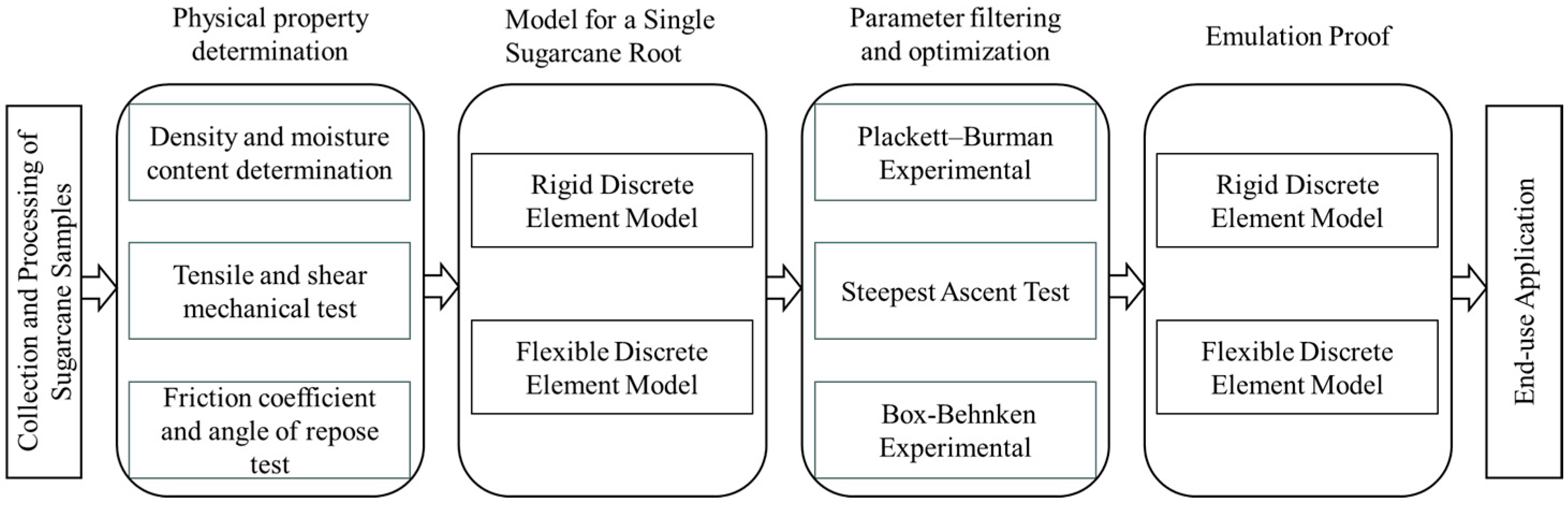
Figure 1 presents a flowchart of the entire research process, including sample preparation, physical property testing, establishment of the discrete element model, parameter selection and optimization, and simulation verification, aiming to obtain reliable discrete element parameters for the sugarcane root–soil composite model.

2.1. Experimental Materials

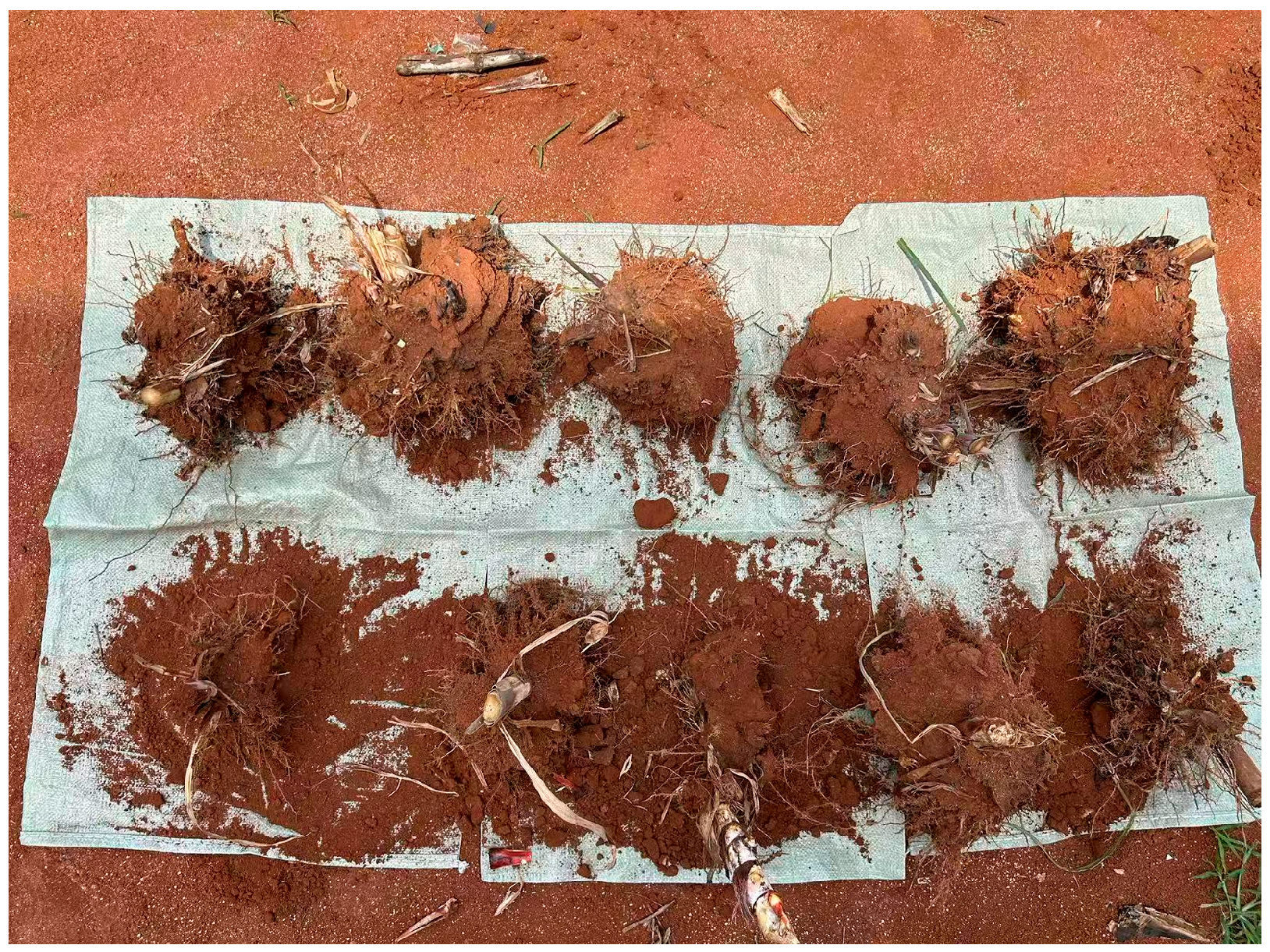
Sugarcane root samples were collected from the sugarcane experimental field at the South Subtropical Plants Research Institute in Zhanjiang City, Guangdong Province. The sampled sugarcane variety was Guitang 49. As shown in Figure 2, using the five–point sampling method, ten vigorously growing and disease-free sugarcane root–soil composite samples were collected from the field. After collection, they were cleaned and sieved. Intact individual roots without damage were selected for subsequent experiments.

2.2. Measurement of the Intrinsic Parameters of Sugarcane Roots

All tests were carried out in the soil tank laboratory of South China Agricultural University at an ambient temperature of 28 °C and a relative humidity of 60%.

2.2.1. Poisson’s Ratio of Sugarcane Roots

As it is difficult to directly measure the Poisson’s ratio of sugarcane roots, it was determined to be in the range of 0.2 to 0.4 based on the existing literature [8,9,10].

2.2.2. Density and Moisture Content of Sugarcane Roots

(1)
Root density
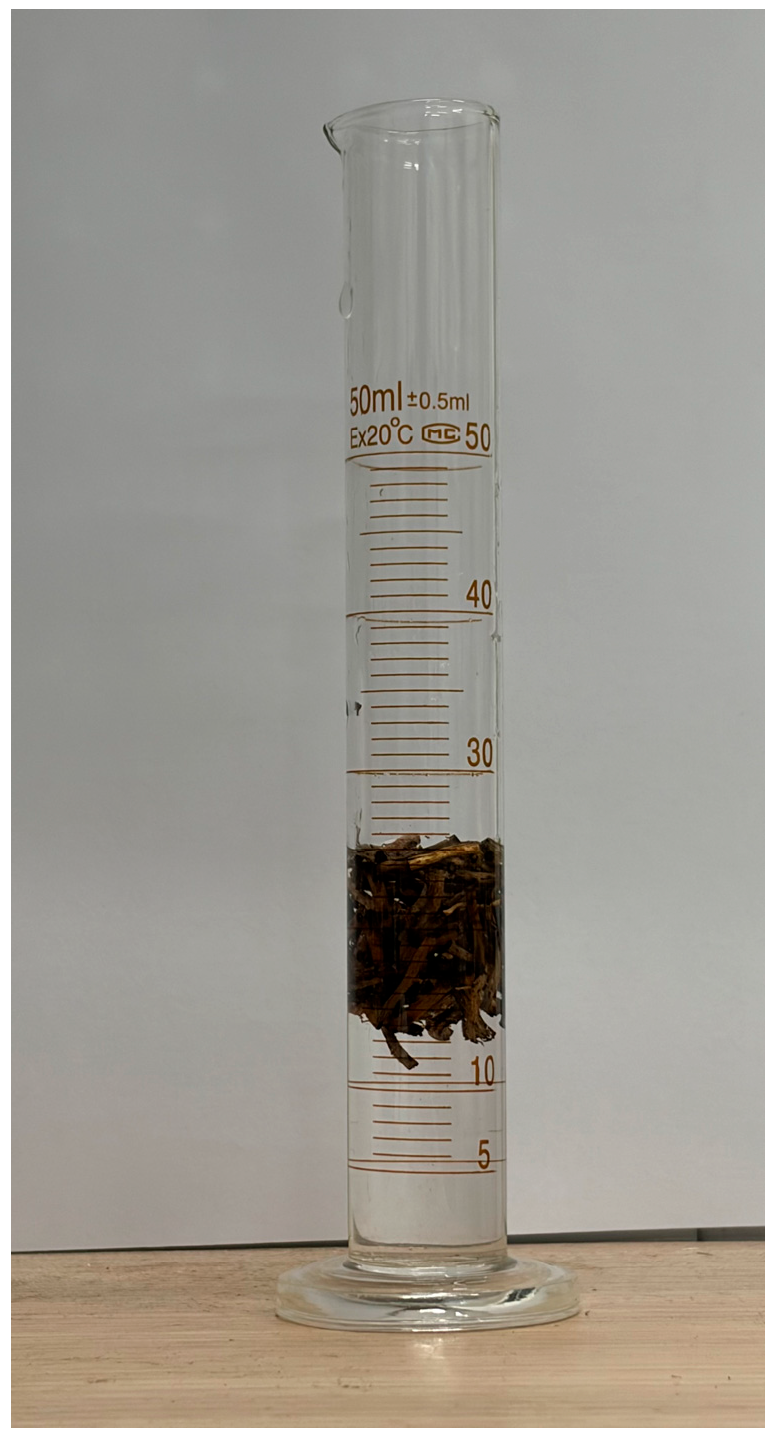
Density was measured using the water displacement method. After cleaning the surface of the roots and allowing them to dry, 2 g of a single root was weighed using an electronic balance (with an accuracy of 0.01 g). As shown in Figure 3, the volume of the root system was determined by observing the change in the liquid level in the graduated cylinder. The experiment was repeated five times. The formula used to calculate the density is as follows:
ρ p = m p V p ,
where ρ p is the density of the sugarcane root, in g/cm3; m p is the mass of the sugarcane root, in g; and V p is the volume of the sugarcane root, in cm3.
(2)
Root moisture content
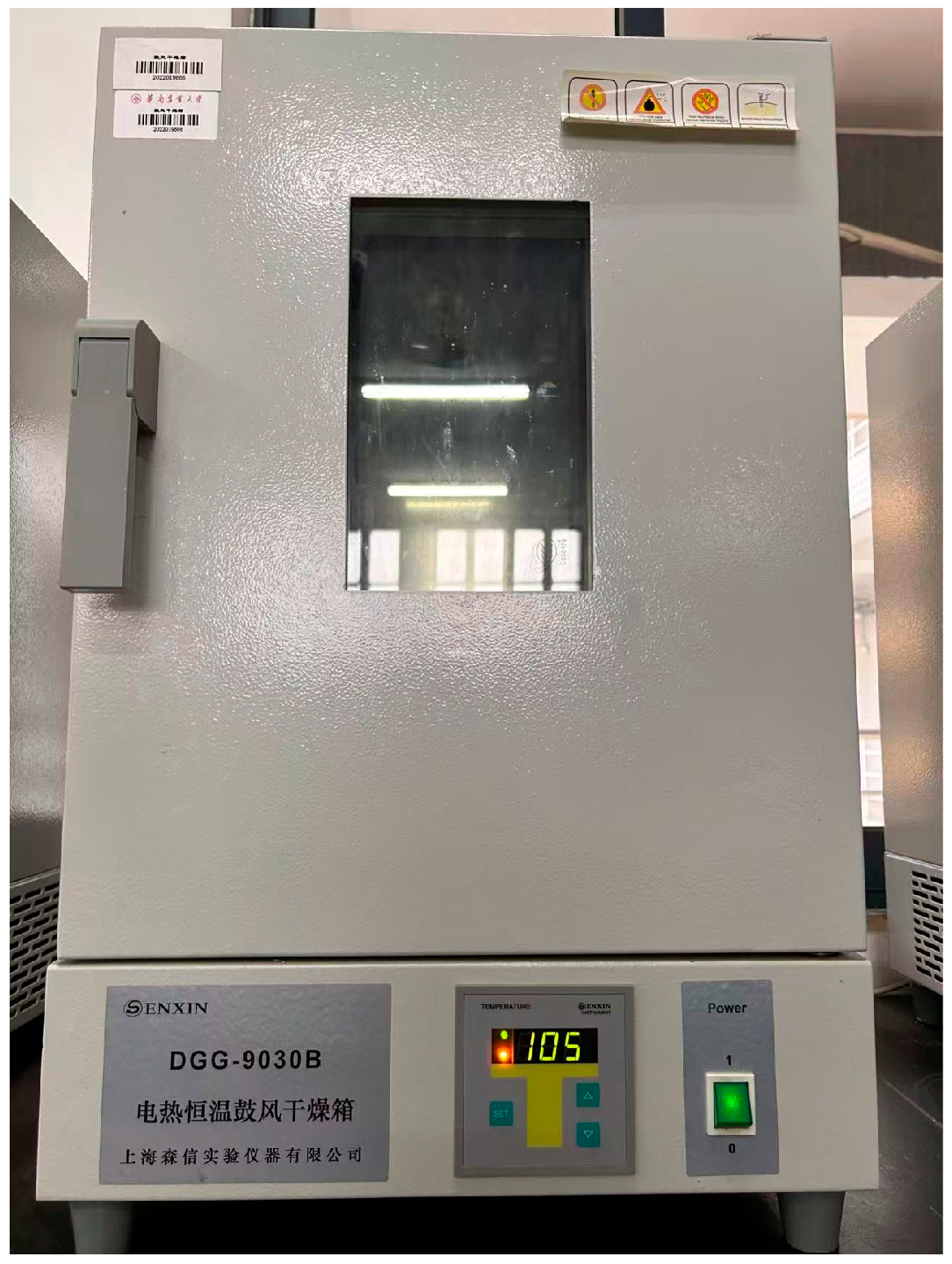
The moisture content of the root system was determined using the oven drying method. First, 2 g of the root was weighed to determine the dry weight of the sample. Then, the sample was dried at a temperature of 105 °C until a constant weight was reached, and the weight was recorded again as the dry weight of the sample. The test is shown in Figure 4. Five samples were used in the experiment. The formula used to calculate the moisture content is as follows:
ω   = 1 m a m b × 100 %
where ω is the moisture content of the sugarcane roots; m a is the dry weight of the samples, in g; and m b is the wet weight of the samples, in g.

2.2.3. Mechanical Properties of Sugarcane Roots

Ten intact sugarcane roots were selected as the test sample. This sample size is consistent with that typically used in related studies on the mechanical properties of crop roots (for example, in existing root tensile and shear tests, each group consists of 6–12 roots), because the mechanical properties of sugarcane roots are relatively uniform within the same variety and growth period. Then, they were divided into 20 samples, each with a length of 70 mm. Before the test, the diameters of the roots were measured.
(1)
Root Tensile Test
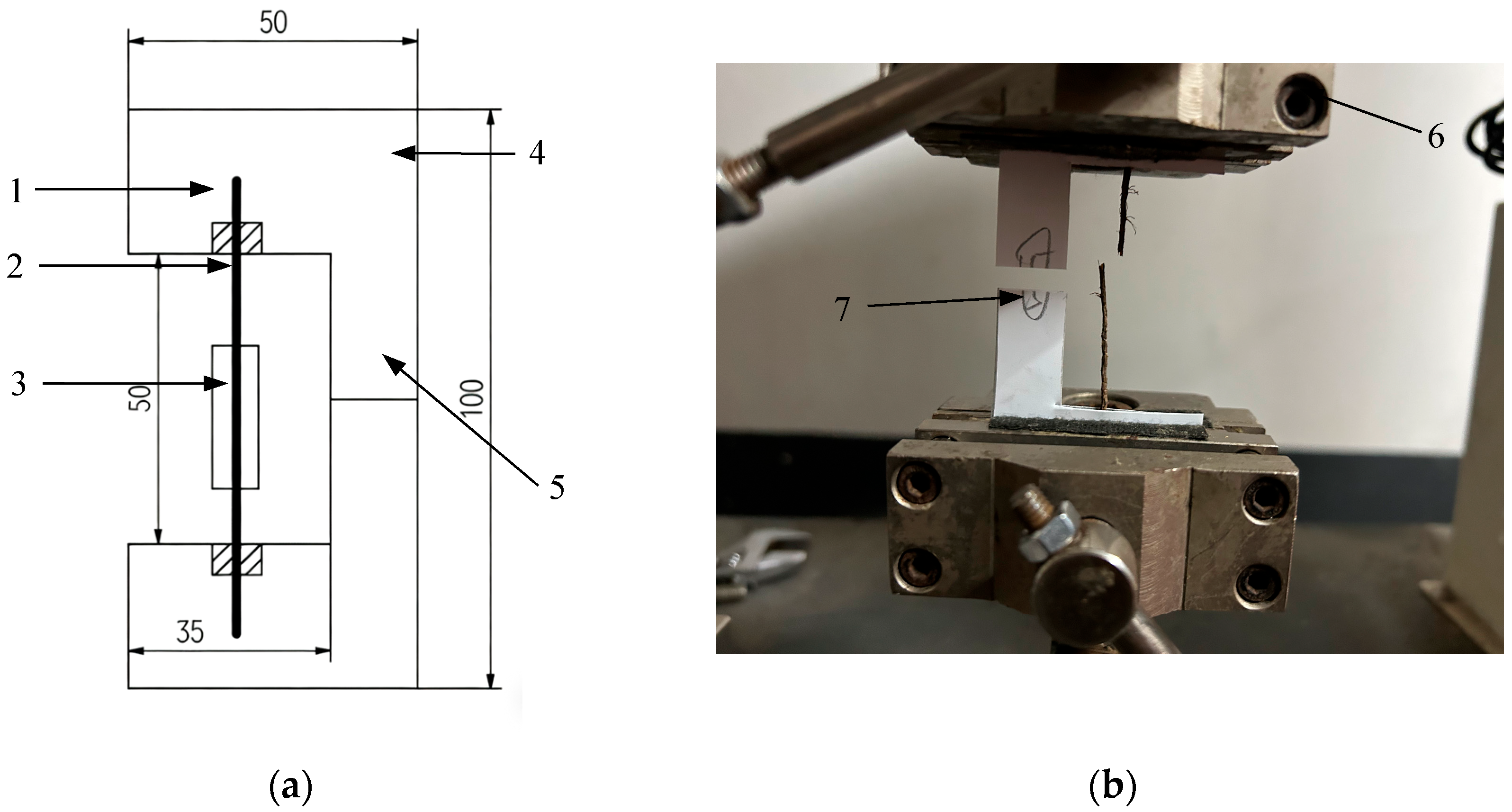
To ensure the validity of the tensile fracture test results, as shown in Figure 5a, a 2 mm thick PVC board was used to fix the root sample, and the effective measurement length for tensile testing was 50 mm. To prevent the root from fracturing at the adhesive interface during the tensile test, a mixture of wood glue and instant adhesive (502 cyanoacrylate glue) was employed for bonding. This ensured that the single root was maintained in a relatively straight state, and the tensile test was conducted only after the adhesive had completely cured.
The test was conducted using a computer–controlled universal material testing machine equipped with a load cell with a measurement range of 0.0001 to 100 N. As shown in Figure 5b, the tensile specimen was first securely clamped in the grips of the universal testing machine. The central section of the plastic plate was then cut through, and the tensile test was initiated. The test was performed at a constant crosshead speed of 5 mm/min. The maximum tensile force, tensile force, and displacement changes were recorded in real–time via the interface of the universal testing machine’s system.
The fracture surface of a root is typically irregular and jagged, making it difficult to accurately measure. Therefore, the diameter measured prior to fracture was used to calculate the effective cross–sectional area at fracture. The elastic modulus of the sugarcane root system is calculated based on the linear elastic stage of the stress–strain curve. The slope of this stage represents the longitudinal elastic modulus e. The formulas used to calculate the effective fracture area, elastic modulus, and shear modulus are as follows:
A = π   ×   D 2 4 ,
E = σ ε = F A ε = F A ε ,
G = E 2 ( 1 + v ) ,
where D is the diameter of the sugarcane root, in mm; E is the elastic modulus of the sugarcane root, in MPa; F is the maximum tensile stress, in N; A is the stressed cross–sectional area, in mm2; ε is the strain; G is the shear modulus of the sugarcane root, in MPa; and v is Poisson’s ratio.
(2)
Root Shear Test
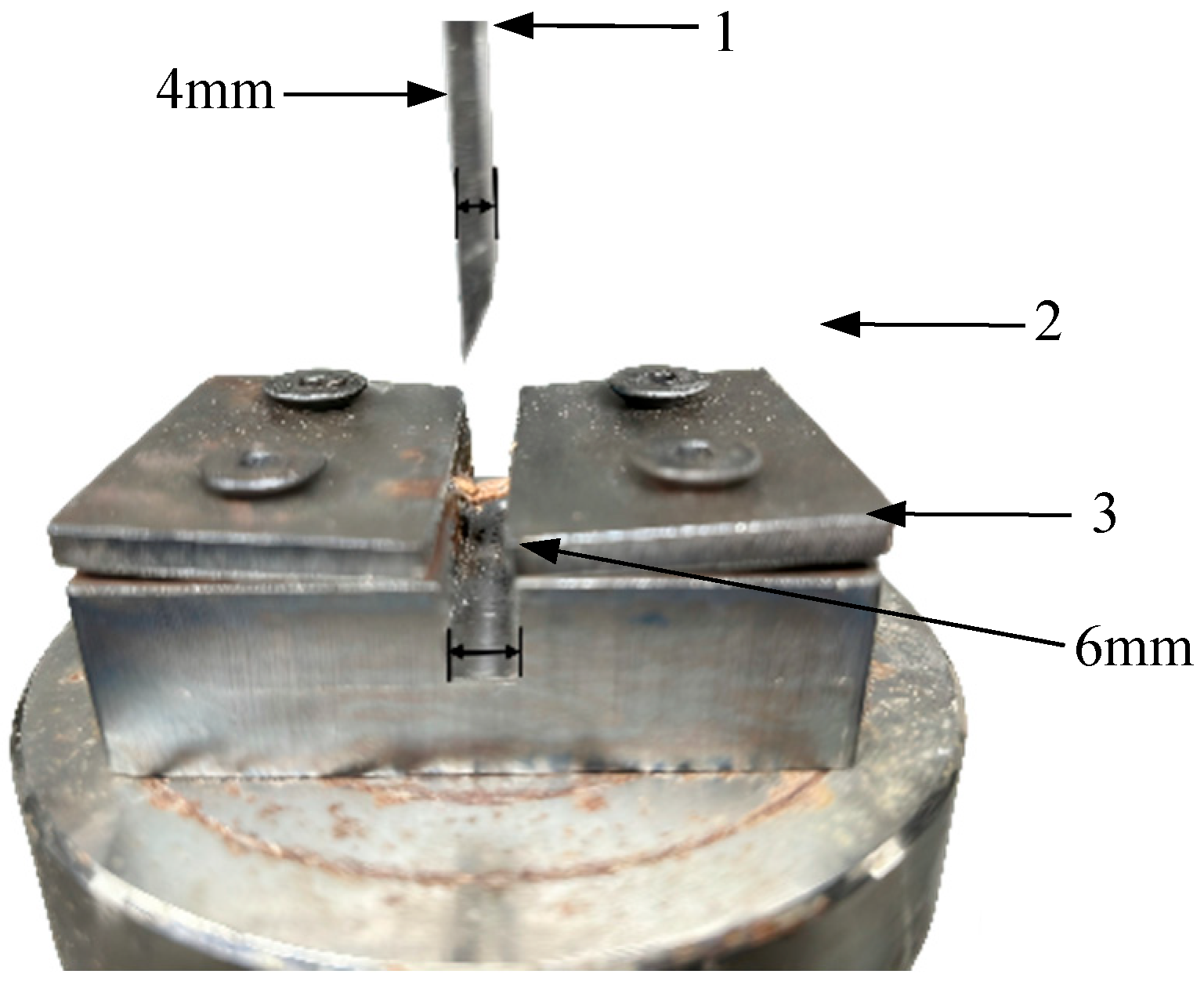
A self–made clamping fixture was attached to the universal testing machine for the shear test. The roots were divided into two groups: one group contained those with diameters ranging from 1 to 2 mm, and the other group contained those with diameters greater than 2 mm. The root was fixed between the base plate and the cover plate, and the cutting tool moved downward at a speed of 5 mm per minute. The system recorded the shear force–displacement curve. A total of 10 valid samples were tested. The experimental setup is shown in Figure 6.

2.2.4. Contact Parameters of Sugarcane Roots

(1)
Determination of Friction Parameter
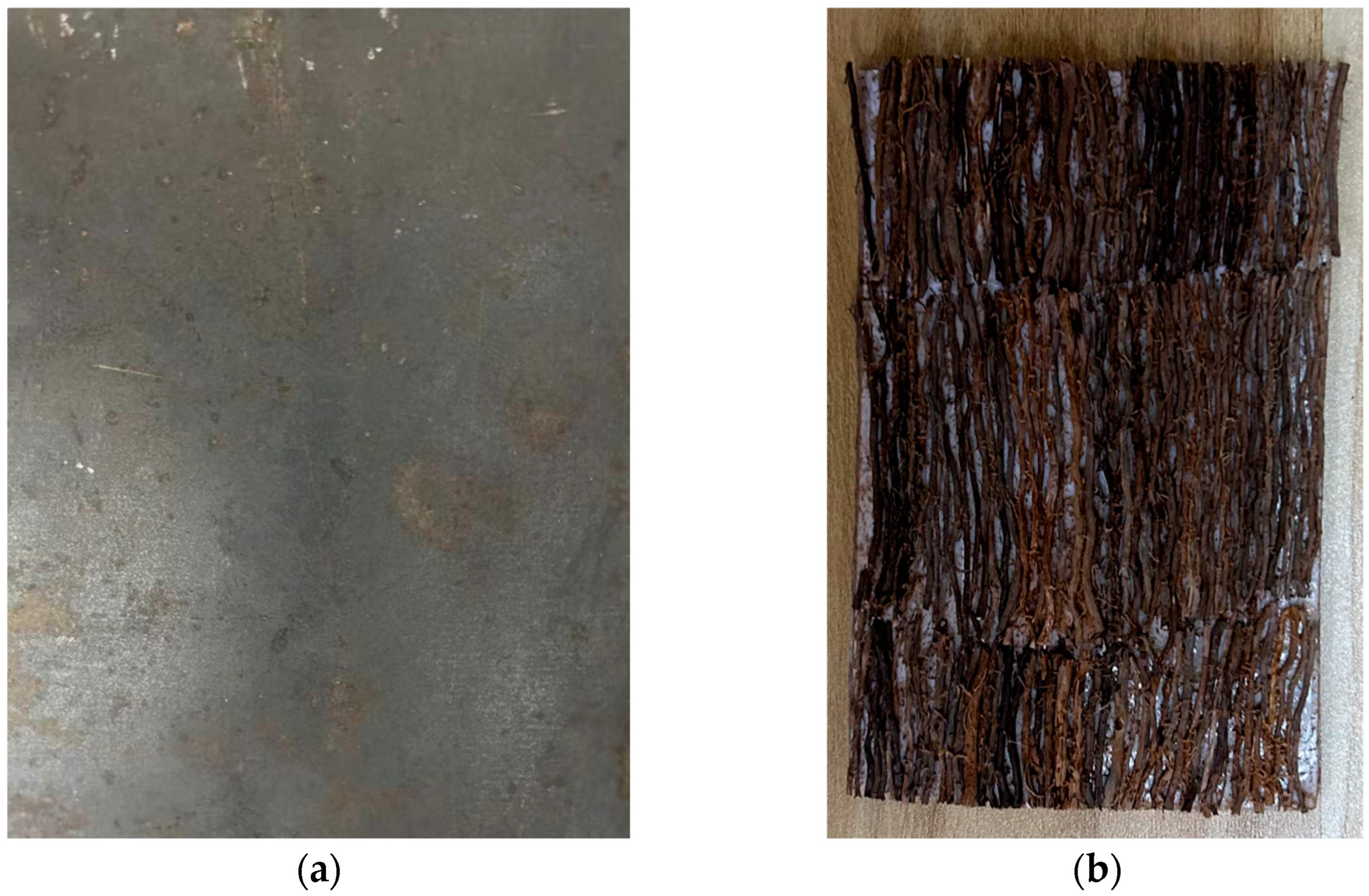
In this study, the inclined plane method was employed to measure the static friction coefficients between the roots and between a single root and a steel plate. AFZALINIA [11] found that stalk length had no significant effect on the friction coefficient. Therefore, during the experiments, the single roots were trimmed to a length of 50 mm to facilitate the measurement of the friction coefficient. The test setup comprised a self–made inclined plane tester for measurement. A steel plate and a board uniformly bonded with the sugarcane roots were prepared for the determination of the friction coefficient. The test steel plate and the root board are shown in Figure 7.
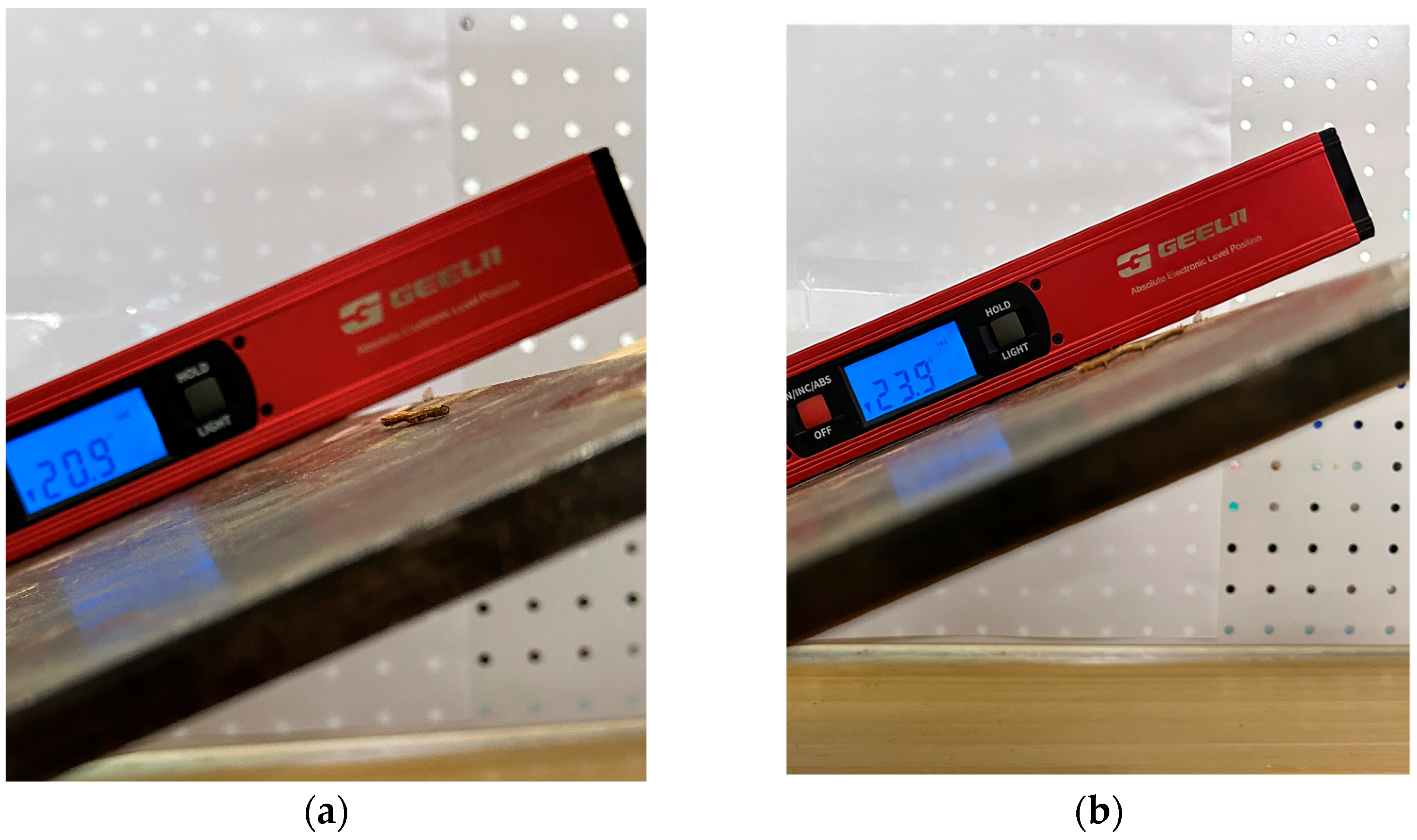
As shown in Figure 8a, during the test, the steel plate was placed horizontally. When measuring the static friction between the sugarcane root and the steel plate, the sugarcane root was placed vertically. As shown in Figure 8b, the root was approximated as a cylinder. To measure its rolling friction, the root was placed horizontally. The angle was adjusted so that the plate formed an inclination with the horizontal plane. When the test material began to slide or roll down the inclined surface, the angle adjustment was stopped, and the inclination angle was read and recorded using a protractor [9]. Each test was conducted five times. The calculation of the friction coefficient is shown in Equation (6):
μ 1 = G sin α G cos α = tan α
where μ 1 is the friction coefficient of the contact surface of the test object; and α is the inclination angle of the inclined plate at the moment when the test object starts to move.
(2)
Collision Restitution Coefficient
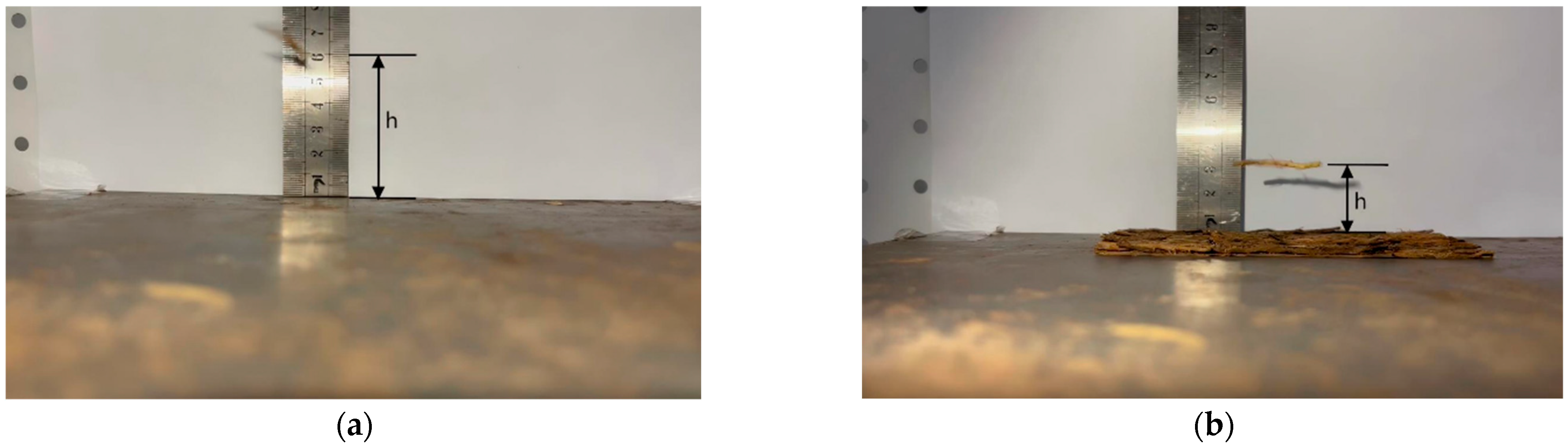
The coefficient of restitution between the roots and between a single root and a steel plate was measured using the free fall collision test method. The calculation is shown in Equation (7):
e = v 0 v = 2 g H 2 gh = H h
where e is the collision restitution coefficient of the individual sugarcane roots; v 0 is the instantaneous contact velocity of the individual sugarcane roots at the collision contact point, in m/s; v is the instantaneous separation speed of the individual sugarcane roots at the collision contact point, in m/s; g is the acceleration due to gravity, set at 9.8 m/s2; H is the initial height of the free fall of the individual sugarcane roots, in mm; and h is the rebound height the of individual sugarcane roots after touching, in mm.
Single rods with a uniform thickness and a length of 30 mm were used in the test. During the test, the single rods were released from a height H (H > h) and allowed to fall freely onto the steel or root plate. The test was recorded using a camera. After the test, using the ruler in the background as a reference, the contact point was set as the measurement origin. The bounce height h was determined as the distance between the highest rebound position captured by the root stem and the starting point. Each test condition was repeated five times. The experimental setup is shown in Figure 9.

2.2.5. Angle of Repose Test of Sugarcane Roots

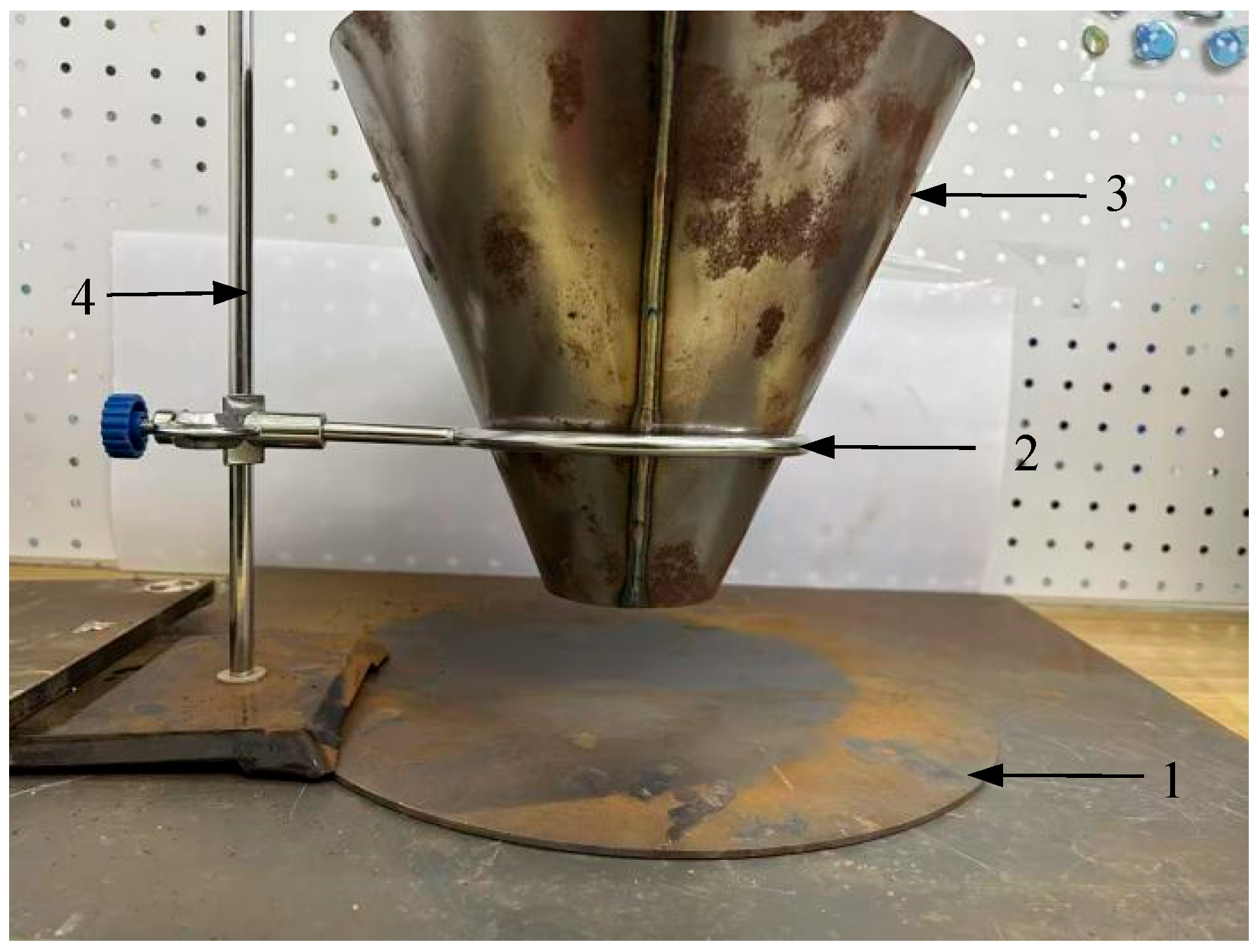
The angle of repose, serving as an evaluation criterion for material parameter calibration, can intuitively reflect the inter–particle frictional and flow characteristics [12]. As shown in Figure 10, this study employed the funnel method to determine the angle of repose between single sugarcane roots. Prior to testing, the sugarcane roots were processed into individual particle samples with a length of 12 mm. These single roots were then allowed to fall naturally onto the steel plate.
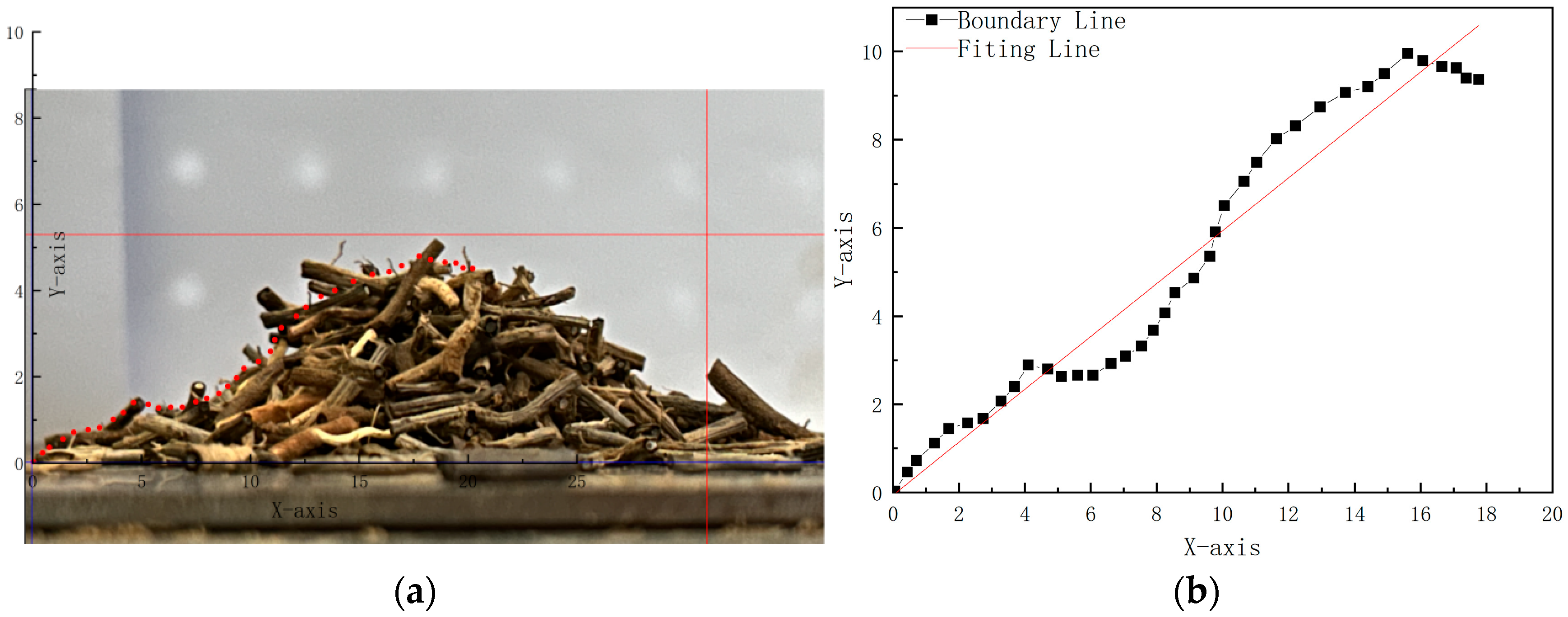
After all the individual samples were stabilized on the plate, photos were taken for documentation purposes. The camera was positioned at the same horizontal line as the pile. To ensure the reliability of the data, the experiment was repeated five times. As shown in Figure 11, the captured photographs were imported into Origin software (version 2025b). The contour of the single sugarcane root pile was manually selected point by point, and the selected points were subjected to fitting analysis [13]. The slope of the fitted line represents the tangent of the angle of repose, which was then converted into the angle of repose.

2.3. Establishment and Parameter Calibration of Discrete Element Model

2.3.1. Rigid Discrete Element Model for a Single Sugarcane Root

To improve simulation efficiency, this study referenced the discrete element modeling methods for agricultural materials found in the literature and simplified the geometry of the single sugarcane roots [14,15].
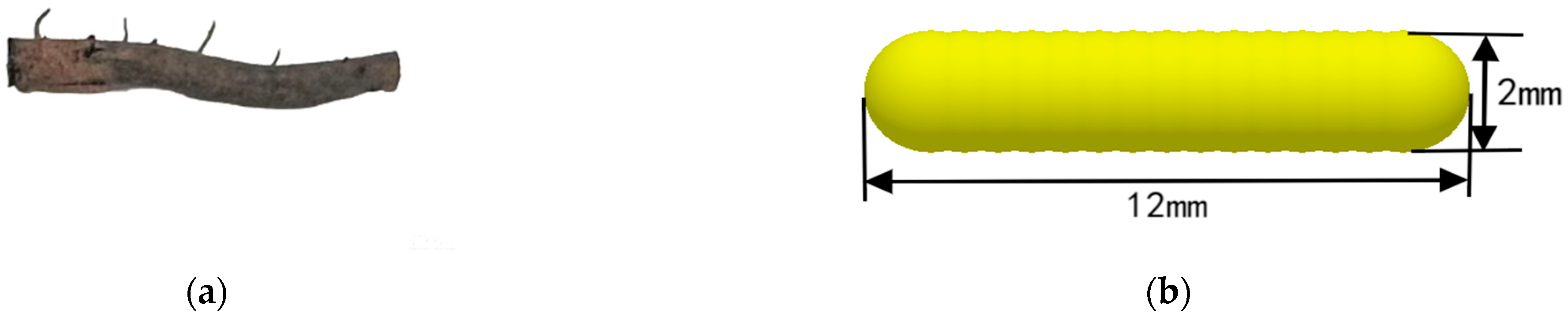
Considering that the material does not undergo bending or fracture in actual angle of repose tests of single roots, this study employed the spherical aggregation method to construct a multi-sphere cylinder to represent a single sugarcane root. As shown in Figure 12, to ensure that the particles fell smoothly during the angle of repose test, a single root model with a diameter of 2 mm and a length of 12 mm was established.

2.3.2. Flexible Discrete Element Model for a Single Sugarcane Root

To simulate the shear test, a flexible model of a single sugarcane root was established in EDEM based on the Hertz–Mindlin with Bonding V2 contact model. As shown in Figure 13, to balance computational efficiency and model accuracy, this study used spherical particles with a radius of 0.25 mm to fill the root geometric structure. Smaller particle sizes will significantly increase the number of particles and prolong the calculation time, while overly large particle sizes have poor internal bonding properties. Therefore, after repeated simulation tests, 0.25 mm was determined to be a reasonable particle radius. This ensured the authenticity of the root model shape while maintaining calculation efficiency.

2.3.3. Angle of Repose Simulation

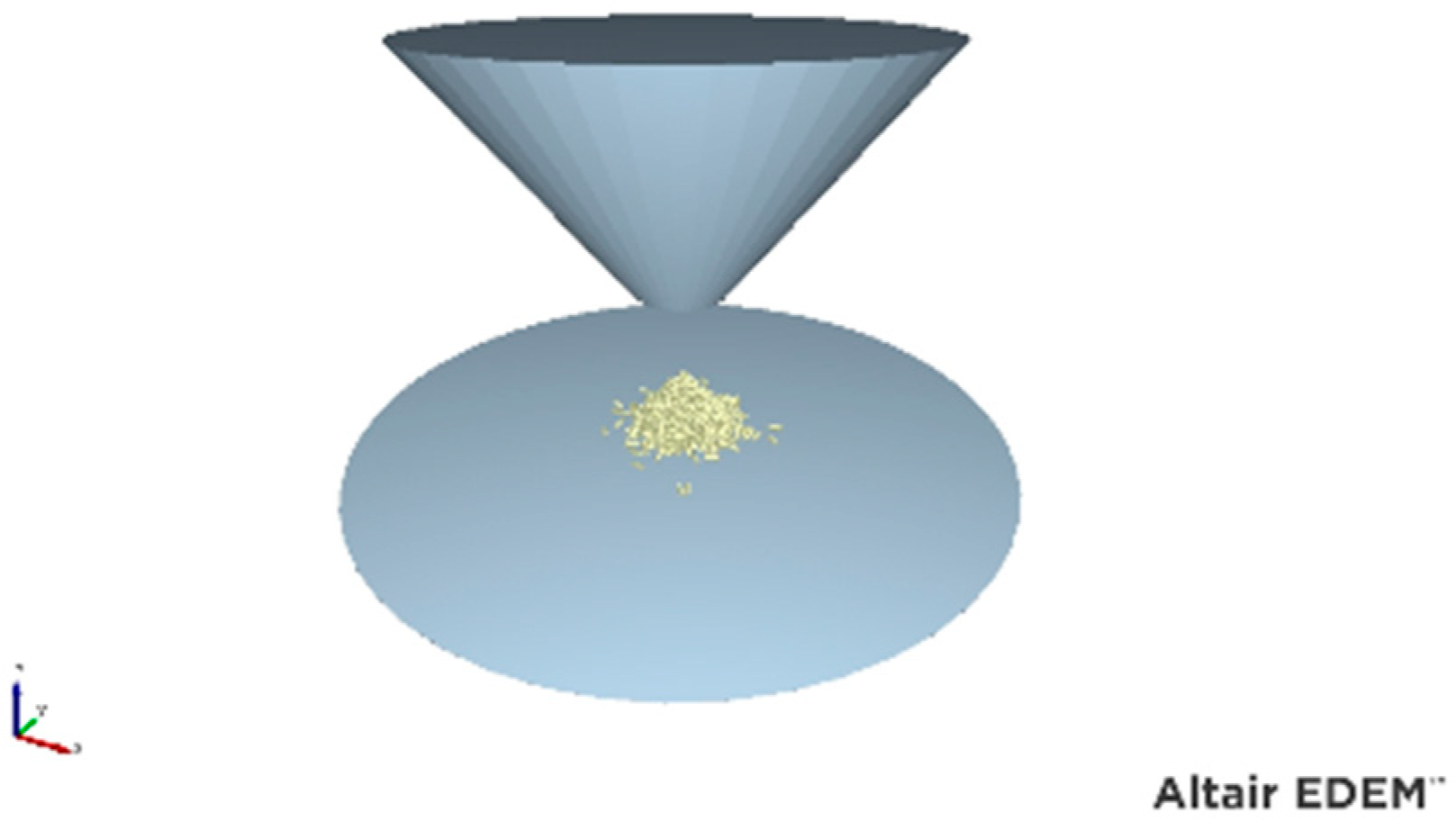
The angle of repose is a macroscopic manifestation of material flowability and frictional characteristics. Under natural conditions, it is essentially a constant and can serve as an evaluation index for calibrating the contact parameters of single sugarcane roots [16]. This study employed the funnel method to conduct a simulation test for the angle of repose of single roots. The angle of repose test for single sugarcane roots is illustrated in Figure 14.

2.3.4. Shear Test Simulation

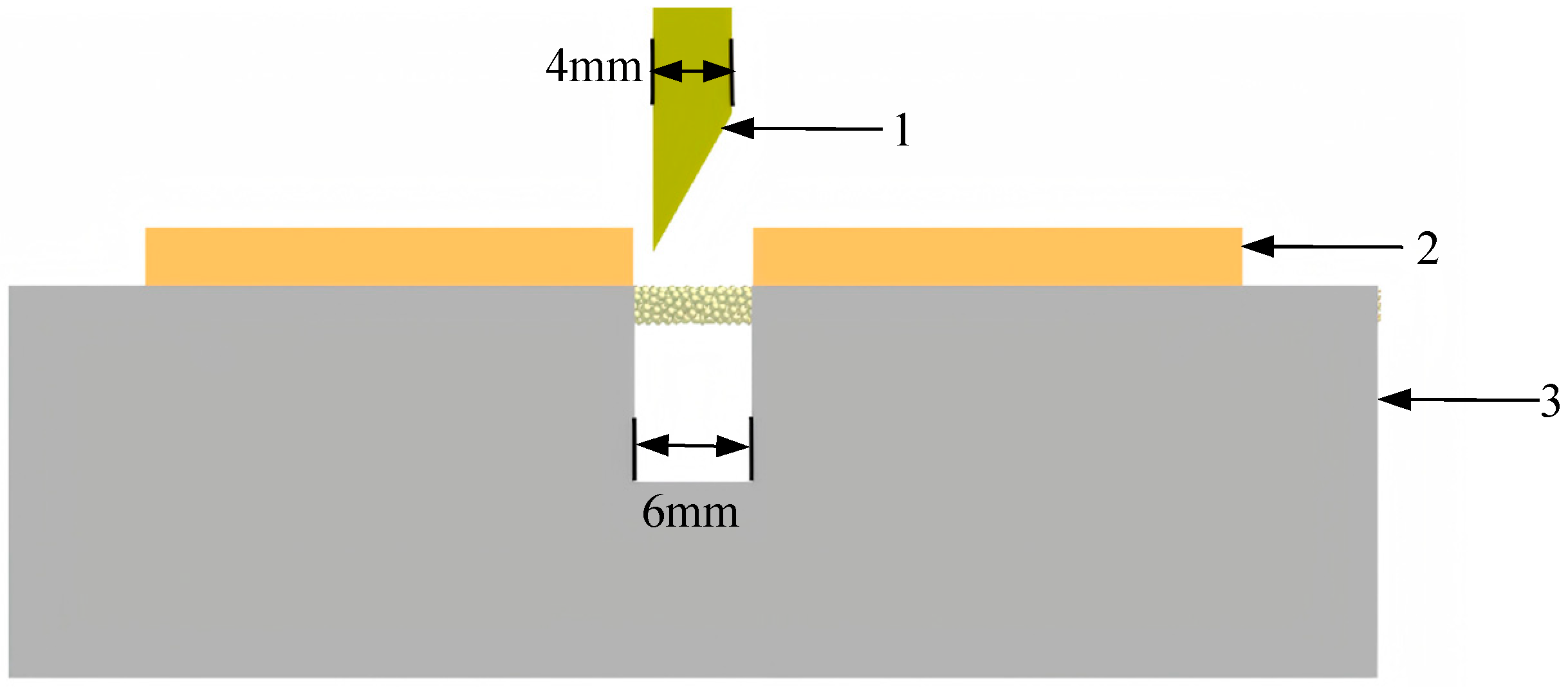
A shear test can directly characterize the mechanical properties of a single sugarcane root. By combining physical and simulated shear tests, the bonding parameters of a single root were calibrated. As shown in Figure 15, models of the cutting blade, base, and cover plate with dimensions identical to the physical test apparatus were first created using SolidWorks2018 3D software and imported into EDEM and imported into EDEM. As the influence of particle gravity and air resistance on shear force and adhesive fracture behavior is extremely small compared to that of the contact force and adhesive interaction, their effects were ignored. The resistance force on the cutting blade at the moment of bond failure, obtained from the EDEM post-processing module, was taken as the resulting root shear force.

2.4. Design of Simulation Test Methods

Liang et al. [17], in their discrete element model calibration experiments of spinach roots, initially employed Design-Expert 13 software to design a Plackett–Burman test. Through this test, significant factors were analyzed and extracted, while non-significant factors were set to their median levels. Subsequently, the steepest ascent test was used to narrow down the value ranges of the significant factors. Finally, based on either the central composite design or the Box–Behnken response surface optimization test, the optimal parameter combination was obtained. The relative error between the measured and calibrated values was 0.98%, indicating the accuracy and reliability of the experimental analysis method. Therefore, this study adopted this experimental design and analysis approach to analyze the results of the calibration tests of the angle of repose and the shear force of single sugarcane roots, focusing on elucidating the parameter calibration process for the single sugarcane root model.

2.4.1. Plackett–Burman Experimental Design for Angle of Repose

The Plackett–Burman test is an efficient experimental design method mainly used to rapidly identify a few key parameters that have a significant impact on the target response from among numerous potential influencing factors. Therefore, in this study, this method was employed to identify the simulation parameters that have a significant influence on the stacking angle of single sugarcane roots. These parameters were derived from eight factors: the Poisson’s ratio of the sugarcane root, the shear modulus of the sugarcane, the static friction coefficient between sugarcane root particles, the dynamic friction coefficient between sugarcane root particles, the restitution coefficient between sugarcane root particles, the static friction coefficient between the sugarcane root and steel, the dynamic friction coefficient between the sugarcane root and steel, and the restitution coefficient between the sugarcane root and steel. The range of the above–mentioned experimental factors was determined from previous physical experiments and references. The coded values for the Plackett–Burman test for the angle of repose are shown in Table 1.

2.4.2. Steepest Ascent Test Design for Angle of Repose

After using the Plackett–Burman test to identify the significant parameters affecting the angle of repose of a single sugarcane root, the steepest ascent test was conducted to rapidly locate the region of the optimal values. The coded values for the steepest ascent test are shown in Table 2. The calculation of the relative error is shown in Equation (8):
E = θ 0 θ θ × 100 %
where θ 0 is the simulated test angle of repose, and θ is the physical test angle of repose.

2.4.3. Box–Behnken Experimental Design for Angle of Repose

Based on the optimal parameter range determined using the steepest ascent test, the Box–Behnken test was conducted. The coded values for the Box–Behnken test in the angle of repose simulation are shown in Table 3, where factors X1, X2, and X3 are the root–root dynamic friction, root–root restitution, and root–steel static friction coefficients, respectively.

2.4.4. Plackett–Burman Experimental Design for Shear Test

Liu and Zhang et al. [8,18] found that the critical stress between root constituent particles, the contact stiffness between particles, and the bonding radius have a significant impact on the mechanical properties of the discrete element model of the root system. Based on a review of the relevant literature, the bonding radius was typically taken as 1.2 to 1.3 times the physical radius [19]. Referencing simulation parameters for plant stalk–like materials and through extensive bending simulation tests conducted to determine an approximate range, orders of magnitude of 1 × 10¹⁰ and 1 × 10⁷ were adopted for the stiffness coefficient and critical stress, respectively. The coded values for the Plackett–Burman test in the shear simulation are shown in Table 4.

2.4.5. Steepest Ascent Test Design for Shear Force

After using the Plackett–Burman test to identify the significant parameters affecting the shear force of single sugarcane roots, the steepest ascent test was conducted to rapidly locate the region of the optimal values. The coded values for the steepest ascent test are shown in Table 5.

2.4.6. Box–Behnken Experimental Design for Shear Test

Based on the optimal parameter range determined using the steepest ascent test, the Box–Behnken test was conducted. The coded values for the Box–Behnken test in the shear simulation are shown in Table 6, where factors X4, X5 and X6 are the normal stiffness per unit area of particles, critical tangential stress, and bonding radius, respectively.

3. Results and Analysis

3.1. Sugarcane Root Density Measurement Results

The root density measurement results are shown in Table 7.

3.2. Sugarcane Root Moisture Content Measurement Results

The root moisture content measurement results are shown in Table 8.

3.3. Measurement Results of Sugarcane Root Contact Parameters

Based on the inclined plane test, the static and dynamic friction coefficients between the sugarcane roots were measured to be in the ranges of 0.5–1 and 0.45–0.9, respectively, and those between the sugarcane roots and the steel plate were in the ranges of 0.6–0.9 and 0.3–0.7, respectively. Through the free-fall test, the coefficient of restitution between the sugarcane roots was found to range from 0.2 to 0.4, and that between the sugarcane roots and the steel plate ranged from 0.3 to 0.5.

3.4. Measurement Results of Sugarcane Root Mechanical Properties

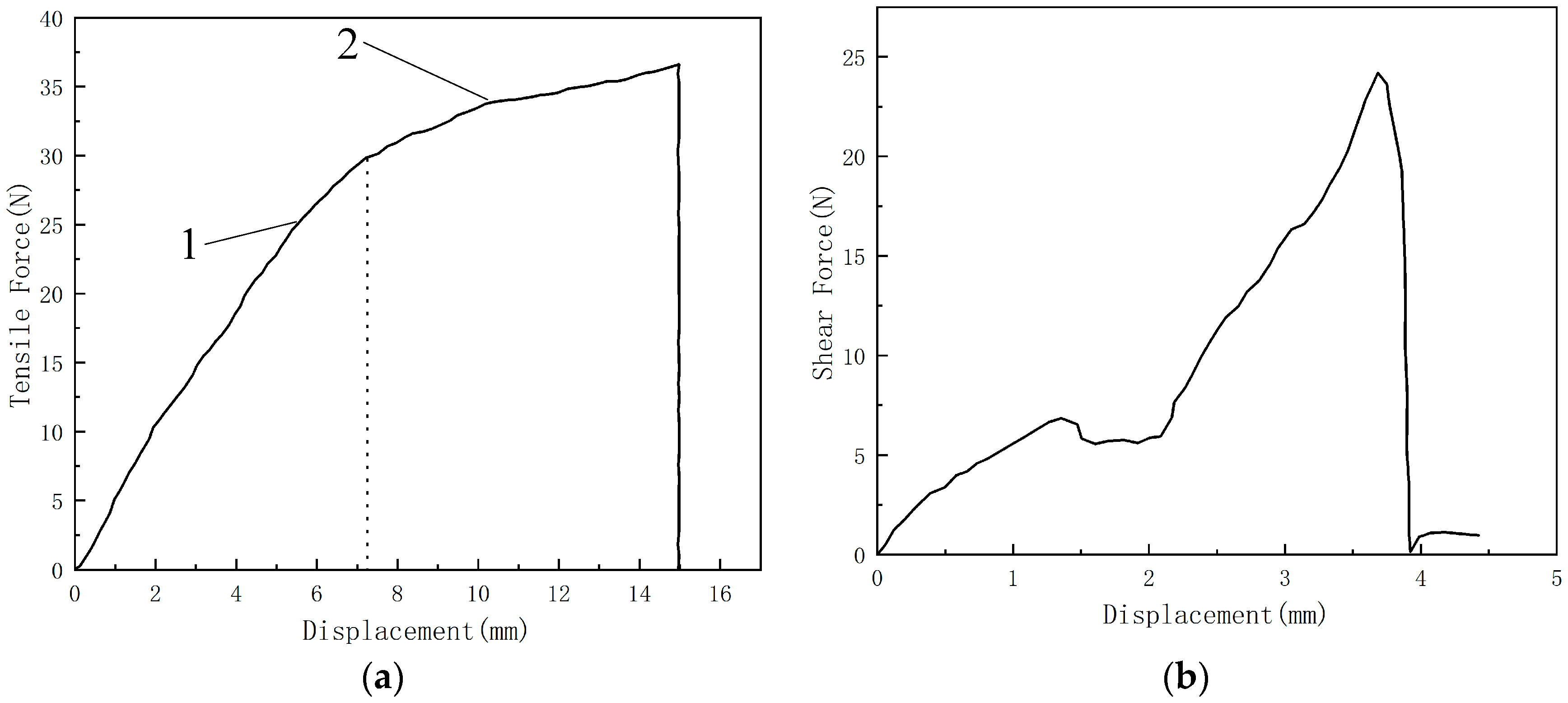
Figure 16a shows the tensile force–displacement curve of the third set of tests, and Figure 16b shows the shear force–displacement curve of the tenth set of tests. The average values of the ten sets of tensile and shear tests are 30.01 N and 23.76 N, respectively. The results are shown in Table 9. It can be observed that the root diameters are mostly around 2 mm, and the maximum shear force for a diameter of 2 mm is 24.19 N. The tensile and shear properties reflect the mechanical strength of the sugarcane roots, which are closely related to the resistance to lodging and structural stability in the field. Greater shear resistance helps the root system withstand external loads during typhoons and mechanical harvesting. The measurement results of the stretching and shearing of the sugarcane root system are shown in Table 9.

3.5. Measurement Results of Angle of Repose for Sugarcane Roots

The average rest angle of the physical experiment was 31.79°. This value reflects the flow and friction characteristics between the root particles and is crucial for calibrating the DEM contact parameters.

3.6. Results of the Plackett–Burman Test for Angle of Repose

The Plackett–Burman test for the angle of repose of single-roots was conducted based on the factor coding in Table 1. The experimental design and results and the significance analysis results are shown in Table 10 and Table 11, respectively. As observed in Table 11, the factors influencing the angle of repose of a single sugarcane root can be ranked in descending order as follows: x5, x6, x4, x3, x2, x8, x1, and x7. Among these, the p-values for x5, x6, and x4 are all less than 0.05, indicating that they have the most significant impact on the results of the angle of repose test of single roots. The p-value for x5 is the smallest among the three, showing the greatest significance and the largest effect on the angle of repose test results. The p-values for the other factors are all greater than 0.05, indicating that they have a relatively minor influence on the angle of repose. Therefore, the contact parameters with higher significance were selected for the steepest ascent test, while the other contact parameters were set to their intermediate levels for use in subsequent tests.

3.7. Results of the Steepest Ascent Test for Angle of Repose

As can be observed in Table 12, when the dynamic friction coefficient between the single sugarcane roots, the restitution coefficient, and the static friction coefficient between the roots and the steel plate gradually increased, the values obtained from the angle of repose simulation tests also gradually increased. In contrast, the relative error first decreased and then increased, with the smallest relative error occurring in the second set of simulation tests.

3.8. Determination Results of the Box–Behnken Test for Angle of Repose

Based on the steepest ascent test, optimal combinations of different parameters were obtained. Using the relative error between the actual and simulated angles of repose as the evaluation index, the Box–Behnken test was conducted. The experimental design and results are shown in Table 13.
Using Design-Expert 13 software, the experimental data were analyzed to establish a second-order regression equation relating the angle of repose of a single sugarcane root to the three factors:
θ = 32.01 0.2925 X 1 + 0.5712 X 2 + 1.09 X 3 + 0.2925 X 1 X 2 + 1.32 X 1 X 3 1.07 X 2 X 3 0.8200 X 1 2 0 . 6875 X 2 2 + 0.8825 X 3 2
The results of the analysis of variance for the angle of repose regression model are shown in Table 14. The inter-root restitution coefficient (X2), the root–steel static friction coefficient (X3), the quadratic terms of the inter–root dynamic friction coefficient (X12), the inter-root restitution coefficient (X22), and the root–steel static friction coefficient (X32), as well as the interaction terms X2X3 and X1X3, had a significant effect on the experimental angle of repose. The p-values for all other terms were greater than 0.05, and, thus, they were not significant. The significance level (p-value) for this fitted angle of repose model was less than 0.01, and the lack-of-fit term was not significant, indicating a high degree of model fit and the absence of lack-of-fit factors. In summary, this regression model can accurately reflect the actual situation and can be used for the predictive analysis of the angle of repose of single sugarcane roots.

3.9. Optimal Parameter Combination for Angle of Repose and Simulation Verification

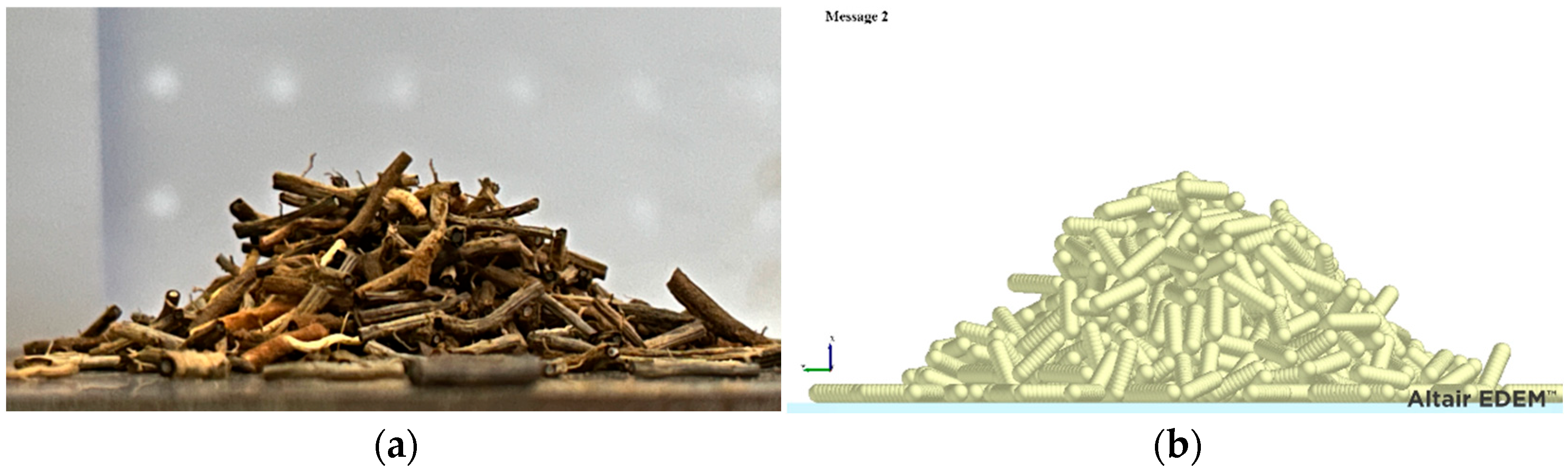
Using the multi-objective optimization module in Design-Expert 13 software, the second-order regression equation for the simulated angle of repose was optimized with the target value set as the measured physical angle of repose of a single root, that is, 31.79°. The optimal parameter combination obtained from the solution was an inter-root dynamic friction coefficient of 0.462, an inter-root restitution coefficient of 0.208, and a root–steel static friction coefficient of 0.602. All other non-significant parameters were set to their intermediate levels. To verify the reliability and accuracy of the parameter calibration for the discrete element model of a single sugarcane root, a simulation verification test of the angle of repose of single roots was conducted using the optimal parameter combination determined above. Through three repeated simulation runs, values of 32.82°, 31.56°, and 32.21° were obtained for the angle of response. The average value of the simulation tests was 32.20°, resulting in a relative error of only 1.29% compared to the physical test average of 31.79°. This somewhat small relative error of 1.29% verified the reliability of the calibrated contact parameters. The small deviations might be attributed to the unevenness of the root and the uncertainty in the experimental measurements; nevertheless, all these deviations were within the acceptable range. The results indicate the reliability of the calibrated parameters for the discrete element model of single roots, confirming their suitability for simulating real-world conditions. The actual test results (Figure 17a) and the simulation verification test results (Figure 17b) for the angle of repose of single roots are shown in Figure 17.

3.10. Results of the Plackett–Burman Test for Shear Force

Based on the factor coding in Table 4, the Plackett–Burman test was conducted to determine the shear force of single roots. The experimental design and results and the significance analysis results are shown in Table 15 and Table 16, respectively. As observed in Table 15, the factors influencing the shear force of a single-root can be ranked in descending order as follows: A, E, D, C, and B. Among these, the p-values for A, D, and E are all less than 0.05, indicating that they have the most significant impact on the results of the shear force test of a single-root. The p-value for A is the smallest among the three, showing the greatest significance and the largest effect on the shear force test results. The p-values for the other factors are all greater than 0.05, and, thus, they have a relatively minor influence on the shear force test results. Therefore, the contact parameters with higher significance were selected for the steepest ascent test, while the other bonding parameters were set to their intermediate levels for use in subsequent tests.

3.11. Results of the Steepest Ascent Test for Shear Force

Based on the significant parameters for the shear force simulation test, as identified using the Plackett–Burman test, the steepest ascent test was conducted to rapidly locate the region of optimal values. The experimental design and results of the steepest ascent test are shown in Table 17. It can be observed in Table 17 that, as the normal stiffness per unit area, critical tangential stress, and bonding radius between particles gradually increased, the shear force values of the single roots also gradually increased. The relative error first decreased and then increased, reaching its minimum in the third set of simulation tests.

3.12. Results of the Box–Behnken Test for Shear Force

Based on the steepest ascent test, optimal combinations of different parameters were obtained. Using the relative error between the actual and simulated shear force values as the evaluation index, the Box–Behnken test was conducted. The experimental design and results are shown in Table 18.
Using Design-Expert 13 software, the experimental data were analyzed to establish a second-order regression equation relating the shear force of a single sugarcane root to the three factors:
θ = 22.61 + 2.31 X 4 0.2287 X 5 + 2.44 X 6 0.0300 X 4 X 5 1.36 X 4 X 6 1.53 X 5 X 6 + 1.10 X 4 2 0.6830 X 5 2 1.89 X 6 2
The results of the analysis of variance for the shear force regression model are shown in Table 19. The normal stiffness per unit area (X4), the bonding radius (X6), the quadratic term of the bonding radius (X62), and the interaction terms X4X6 and X5X6 had a significant effect on the magnitude of the simulated shear force. The p-values for all other terms were greater than 0.05, and, thus, they were not significant. The significance level (p-value) for this fitted shear force model was less than 0.01, and the lack-of-fit term was not significant, indicating a high degree of model fit and the absence of lack-of-fit factors. In summary, this regression model can accurately reflect the actual situation and can be used for the predictive analysis of the shear force of single sugarcane roots.

3.13. Optimal Parameter Combination for Shear Test and Simulation Verification

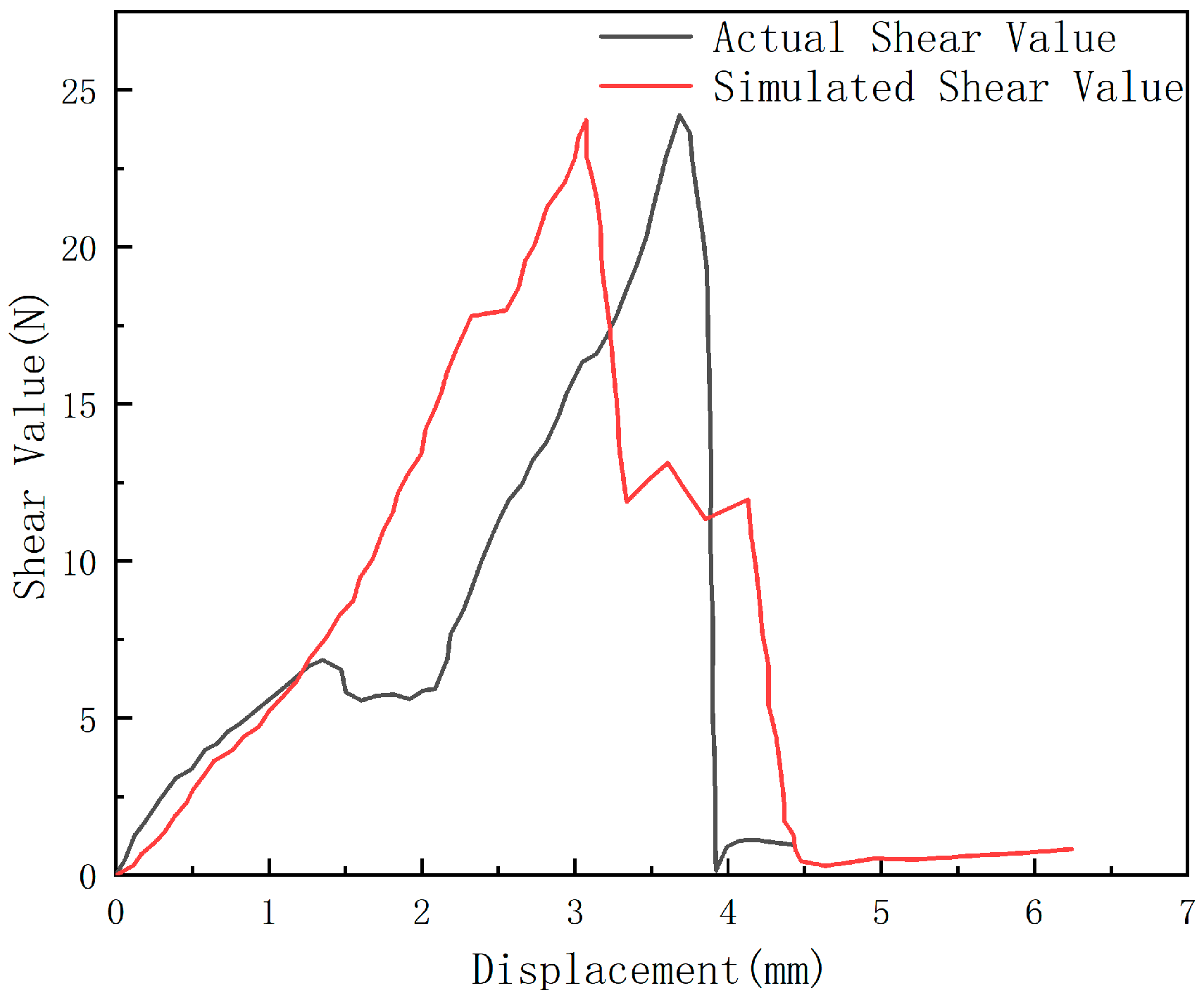
Using the multi-objective optimization module in Design-Expert 13 software, the second-order equation for the simulated shear force was solved, with the target value set as the maximum shear force measured in the physical test of a single root. The optimal parameter combination obtained from the solution was a normal stiffness per unit area of 4.3 × 10¹⁰ N/m3, a critical tangential stress of 3.7 × 10⁷ Pa, and a bonding radius of 0.307 mm. All other non-significant parameters were set to their intermediate levels. To verify the reliability and accuracy of the parameter calibration for the discrete element model of a single sugarcane root, a shear force simulation verification test was conducted on a single-root using the optimal parameter combination determined above. Through three repeated simulation runs, shear force values of 23.7 N, 24.4 N, and 24.0 N were obtained. The average value of the simulation tests was 24.03 N, resulting in a relative error of only 0.66% compared to the physical test value of 24.19 N. This indicates the reliability of the calibrated parameters for the discrete element shear model of single-root, confirming their suitability for simulating real–world conditions. The actual and simulation test results of the shear force of a single-root are shown in Figure 18.
Overall, the contact parameters play a significant role in the friction and accumulation characteristics of the root system, while the adhesive parameters are related to its fracture. Together, these parameters form the basis for constructing a discrete element model of the sugarcane root system.
However, this study has certain limitations. The experiment was conducted in a controlled indoor environment, and only one type of sugarcane variety was used, which may limit the generalizability of the results. Furthermore, this study only studied a single root under laboratory conditions, without considering the complex root–soil interactions, field environmental factors, etc.

4. Conclusions and Discussion

4.1. Conclusions

(1)
Through physical tests, it was found that the average diameter of a single sugarcane root was 2 mm, the density was 941 kg/m3, and the moisture content was 16.97%; additionally, the average shear force of a single root was 23.76 N. These properties reflect the inherent material characteristics of sugarcane roots and lay the foundation for subsequent parameter calibration.
(2)
The optimal contact parameters for sugarcane roots were obtained as follows: the static friction, dynamic friction, and restitution coefficients between the sugarcane roots were 0.75, 0.462, and 0.208, respectively; the static friction coefficient, dynamic friction, and restitution coefficients between a single root and the steel plate were 0.602, 0.5, and 0.4, respectively; the Poisson’s ratio was 0.3; and the shear modulus was 98.75 MPa.
(3)
The optimal bonding parameters for a single sugarcane root were obtained as follows: the normal stiffness per unit area, tangential stiffness per unit area, critical normal stress, and critical tangential stress were 4.3 × 10¹⁰ N/m3, 5 × 10¹⁰ N/m3, 50 MPa, and 37 MPa, respectively; the bonding radius was 0.307 mm.
(4)
The calibrated parameters were preliminarily verified through angle of repose and shear tests, and the relative error between the simulation and experimental results was small. This indicates that these parameters provide a reasonable reference for establishing discrete element models of the sugarcane root system and root–soil composite body. However, it should be noted that the physical properties and stacking characteristics of different grains vary; therefore, when applying this model, it may need to be adjusted and optimized according to the situation.
(5)
The research method established in this study provides a feasible approach for calibrating the parameters of discrete element models of plant root systems, and it can serve as a reference for similar studies on crop root systems. This study’s results can provide a reference for the subsequent establishment of discrete element models of the sugarcane root–soil complex and lay a solid foundation for in–depth analyses of sugarcane’s lodging resistance and the optimization of sugarcane harvesting equipment design.

4.2. Discussion

The average tensile strength of the sugarcane roots calculated from the test results was 33.46 MPa, which is higher than the average tensile strength of 26.21 MPa reported by Zhu et al. [20] for the variety Guitang 55. The sugarcane root variety and growth period examined in this study differ from those examined in Zhu et al.’s study. In addition, the soil environment and the testing equipment also have certain influences on the results. To further verify the findings, the results of this study were compared with those of other relevant studies on the mechanical properties of crop roots. It was found that the changes in the root tensile strength, shear force, and elastic modulus observed in this study were consistent with those reported in the existing literature for the roots of crops such as corn and wheat. Although there were differences in specific values due to variations in material properties and testing conditions, the overall mechanical response patterns and failure modes of the roots were similar. This indicates that the testing methods and parameter ranges obtained in this study are reasonable and reliable.
In the shear test conducted on a single sugarcane root, the root was simplified as an isotropic linear elastic material. As shown in Figure 16, when the cutting tool contacts the single root, the root bends under compression, and the load increases slowly. As the load reaches the bending limit, the tool begins to cut into the root, and the load rises sharply. When the shear force reaches its ultimate value, the specimen shears off, and the load drops. In contrast, during the simulated shear test, the load increases linearly. According to the bonding principle of the root model, this is because particles are connected by bonding bonds. The essence of fracture in the simulation model is that, when particles are subjected to compression or tension, the distance between them exceeds the bonding radius, causing the bonds to break or fail.
In this study, friction coefficient and angle of repose tests were conducted using single sugarcane roots. The sugarcane roots were covered with numerous fine roots, which were partially but not completely removed before the experiments, as shown in Figure 12. This may have affected the accuracy of the measurement results. The remaining fine root systems would have increased the surface roughness of the sugarcane roots, thereby increasing the friction coefficient between the roots and the contact surface during the friction test; in the angle of repose test, the remaining fine root systems would have enhanced the interaction effect between adjacent roots, causing the measured angle of repose to be higher than that of sugarcane roots without fine root systems. Although the influence of the remaining fine root systems is not sufficient to invalidate the overall test results, it still causes a certain degree of systematic error.
Moreover, several simplifications were adopted in the discrete element model, including isotropic linear elasticity, particle-based abstraction, and neglect of air resistance. These assumptions were made to balance computational efficiency and modeling stability. Their potential impacts on the simulation results are relatively small and can be neglected within the scope of this study, as they do not affect the main mechanical behavior or variation trends of sugarcane roots.
Additionally, this study only used the “Guitang 49” sugarcane variety as the sample for testing. The limited number of varieties investigated, to some extent, results in a lack of generalizability of the findings. Therefore, future research will involve broader studies on some of the most common varieties in China.
Future work will study multiple sugarcane varieties and field root–soil complexes, establish more realistic multi–root system models, and conduct field validations to improve the accuracy and applicability of the discrete element model. The calibrated parameters can be further applied to simulations of sugarcane’s resistance to lodging and the optimization of harvesting machinery, providing theoretical support for sugarcane production and agricultural equipment design.

Author Contributions

Conceptualization, Q.L. and Q.Z.; validation, Q.Z., Q.S. and Z.L.; formal analysis, Q.Z.; investigation, X.H., Q.S. and Z.L.; resources, Q.Z.; data curation, Q.Z. and Q.S.; writing—original draft preparation, Q.Z.; writing—review and editing, Q.L. and Q.Z.; visualization, Q.Z.; supervision, Q.L.; project administration, Q.L.; funding acquisition, Q.L. All authors have read and agreed to the published version of the manuscript.

Funding

This work was supported by the National Natural Science Foundation of China (NSFC) General Program (Grant No. 32271995).

Data Availability Statement

The original contributions presented in this study are included in the article. Further inquiries can be directed to the corresponding author.

Conflicts of Interest

The authors declare no conflicts of interest.

References

  1. Liu, Q.T.; Liu, X.X.; Wu, T.; Li, J. China’s 14th five–year plan for sugarcane mechanization and sustainable development of sugarcane industry. Mod. Agric. Equip. 2020, 41, 2–9. (In Chinese) [Google Scholar]
  2. Song, C.H.; Ou, Y.G. Design and simulation analysis of two–stage conical spiral sugarcane lifting mechanism. J. Agric. Mech. Res. 2019, 41, 137–141+147. (In Chinese) [Google Scholar]
  3. Wang, Q.; Zhang, Q.; Zhang, Y.; Zhou, G.; Li, Z.; Chen, L. Lodged sugarcane/crop dividers interaction: Analysis of robotic sugarcane harvester in agriculture via a rigid–flexible coupled simulation method. Actuators 2022, 11, 23. [Google Scholar] [CrossRef]
  4. Zhao, H.B.; Wang, X.Z.; Zheng, Z.Q.; Li, X.; Huang, Y. Research progress on application of discrete element method in agricultural equipment field. Trans. Chin. Soc. Agric. Mach. 2025, 56, 1–19. (In Chinese) [Google Scholar] [CrossRef]
  5. Yuan, J.; Li, J.G.; Zou, L.L.; Liu, L. Optimization design and experiment of root cutting shovel of spinach harvester based on discrete element method. Trans. Chin. Soc. Agric. Mach. 2020, 51, 85–98. (In Chinese) [Google Scholar] [CrossRef]
  6. Gao, G.H.; Xie, H.F.; Wang, T.B. EDEM simulation and experiment on pulling mechanical properties of protected vegetable harvester. J. Agric. Eng. 2017, 33, 24–31. (In Chinese) [Google Scholar]
  7. Bourrier, F.; Kneib, F.; Chareyre, B.; Hicher, P.Y. Discrete modeling of granular soils reinforcement by plant roots. Ecol. Eng. 2013, 61, 646–657. [Google Scholar] [CrossRef]
  8. Zhang, S.; Zhao, H.; Wang, X.; Dong, J.; Zhao, P.; Yang, F.; Chen, X.; Liu, F.; Huang, Y. Discrete element modeling and shear properties of the maize stubble–soil complex. Comput. Electron. Agric. 2023, 204, 107519. [Google Scholar] [CrossRef]
  9. Zhao, Z.; Wu, M.; Xie, S.; Luo, H.; Li, P.; Zeng, Y.; Jiang, X. Parameter calibration for discrete element simulation of soil–preceding rice stubble and analysis of its rotary tillage trajectory. Trans. Chin. Soc. Agric. Eng. 2024, 40, 72–82. (In Chinese) [Google Scholar]
  10. Zeng, B.; Li, M.; Yao, L.; Zhao, S.; Chen, X.; Wang, Y.; Liu, F.; Xie, S. Simulation and experiment on mechanical properties of Coptis chinensis root–soil complex based on image reconstruction. Trans. Chin. Soc. Agric. Eng. 2023, 39, 75–84. (In Chinese) [Google Scholar]
  11. Afzalinia, S.; Roberge, M. Physical and mechanical properties of selected forage materials. Can. Biosyst. Eng. 2007, 49, 2. [Google Scholar]
  12. Liu, F.Y. Discrete Element Modeling of Wheat Grains and Short Straw in Cleaning Device. Master’s Thesis, Northwest A&F University, Yangling, China, 2018. (In Chinese) [Google Scholar]
  13. Zhao, Y.Q.; Li, S.M.; Xie, Y.; Zhao, W.; Chen, Z.X.; Zhang, Y. Parameter calibration of Yunnan red soil simulation based on discrete element method. J. Shenyang Agric. Univ. 2024, 55, 465–473. (In Chinese) [Google Scholar]
  14. Huang, Y.X.; Gao, P.Y.; Zhang, Q.K.; Sheng, H.; Zhu, R.X.; Shi, J.T. Design and experiment of combined stubble–cutting and grass–guiding soil–grass separation device for no–till seeder. Trans. Chin. Soc. Agric. Mach. 2020, 51, 67–78. (In Chinese) [Google Scholar]
  15. Liao, Y.T.; Liao, Q.X.; Zhou, Y.; Wang, Z.; Jiang, Y.; Liang, F. Parameter calibration of discrete element simulation for stem crushing during feed rapeseed bolting stage harvesting. Trans. Chin. Soc. Agric. Mach. 2020, 51, 73–82. (In Chinese) [Google Scholar]
  16. Wang, T.; Chen, X.F.; Liu, J.A.; Liu, M.H.; Yu, J.J.; Cai, J.P.; Tao, Z.Y. Parameter calibration of discrete element method for surface mud of soil in mechanical rice direct seeding. Acta Agric. Univ. Jiangxiensis 2024, 46, 232–240. (In Chinese) [Google Scholar]
  17. Liang, S.; Liu, L.; Liu, F.; Chang, H.; Cui, W.; Li, G. Establishment and calibration experiment of discrete element model for spinach root–soil complex. Trans. Chin. Soc. Agric. Eng. 2025, 41, 38–49. (In Chinese) [Google Scholar]
  18. Liu, J.A. Parameter Optimization of Subsoiler and Study on Comprehensive Soil Loosening Effect Based on Discrete Element Method. Master’s Thesis, China Agricultural University, Beijing, China, 2018. (In Chinese) [Google Scholar]
  19. Chen, T.; Yi, S.J.; Li, Y.F.; Tao, G.X.; Qu, S.M.; Li, R. Establishment and Parameter Calibration of Discrete Element Model of Alfalfa Stem at Squaring Stage. Trans. Chin. Soc. Agric. Mach. 2023, 54, 91–100. [Google Scholar]
  20. Zhu, R.F.; Yang, W.; Luo, Z.K.; Tao, G.X.; Qu, S.M.; Li, R. Experimental study on basic parameters of ratoon sugarcane at harvest stage. J. Agric. Mech. Res. 2023, 45, 116–121. (In Chinese) [Google Scholar]
Figure 1. Flowchart of discrete element modeling and parameter calibration for single sugarcane roots.
Agriculture 16 00864 g001
Figure 2. Sugarcane root–soil composite samples.
Agriculture 16 00864 g002
Figure 3. Root density measurement.
Agriculture 16 00864 g003
Figure 4. Root moisture content measurement.
Agriculture 16 00864 g004
Figure 5. (a) Standard and (b) universal material mechanics testing machine for tensile specimen: 1—bonding interface; 2—individual sugarcane roots; 3—effective tensile area; 4—clamping plate; 5—cut position; 6—grips; 7—tensile specimen.
Agriculture 16 00864 g005
Figure 6. Shear test: 1—cutting blade; 2—cover plate; 3—base.
Agriculture 16 00864 g006
Figure 7. (a) Steel plates and (b) sugarcane root plates.
Agriculture 16 00864 g007
Figure 8. Friction coefficient measurement: (a) measurement of static friction coefficient; (b) measurement of dynamic friction coefficient.
Agriculture 16 00864 g008
Figure 9. Collision restitution coefficient test: (a) root and steel plate; (b) roots and root plates; h—distance between the highest rebound position captured by the root stem and the starting point.
Agriculture 16 00864 g009
Figure 10. Stacking angle test bench: 1—steel plate; 2—clamp; 3—funnel; 4—iron stand.
Agriculture 16 00864 g010
Figure 11. (a) Image point selection and (b) linear fitting.
Agriculture 16 00864 g011
Figure 12. (a) Single sugarcane root and (b) rigid model of single sugarcane root.
Agriculture 16 00864 g012
Figure 13. Flexible simulation model of the single sugarcane root.
Agriculture 16 00864 g013
Figure 14. Angle of repose simulation test for a single sugarcane root.
Agriculture 16 00864 g014
Figure 15. Simulation shear test for a single sugarcane root: 1—cutting blade; 2—cover plate; 3—base.
Agriculture 16 00864 g015
Figure 16. (a) Tensile force–displacement curve and (b) shear force–displacement curve: 1—linear elastic stage; 2—strengthening stage.
Agriculture 16 00864 g016
Figure 17. (a) Physical test and (b) simulation verification test of the stacking angle of individual sugarcane roots.
Agriculture 16 00864 g017
Figure 18. Actual and simulated shear test values.
Agriculture 16 00864 g018
Table 1. Coded values for the Plackett–Burman test in the angle of repose simulation.
FactorCoding
−11
Poisson’s Ratio (x1)0.20.4
Shear Modulus (x2)2.5517.2
Static Friction Coefficient (Sugarcane Roots–Root) (x3)0.51
Dynamic Friction Coefficient (Sugarcane Roots–Root) (x4)0.450.9
Restitution Coefficient
(Sugarcane Roots–Root) (x5)
0.20.4
Static Friction Coefficient (Sugarcane Roots–Steel) (x6)0.60.9
Dynamic Friction Coefficient (Sugarcane Roots–Steel) (x7)0.30.7
Restitution Coefficient
(Sugarcane Roots–Steel) (x8)
0.30.5
Table 2. Coded values for the steepest ascent test in the angle of repose simulation.
FactorCoding
−11
Dynamic Friction Coefficient (Sugarcane Roots–Root) (x4)0.450.9
Restitution Coefficient
(Sugarcane Roots–Root) (x5)
0.20.4
Static Friction Coefficient (Sugarcane Roots–Steel) (x6)0.60.9
Table 3. Coded values for the Box–Behnken test in the angle of repose simulation.
FactorCoding
−101
Dynamic Friction Coefficient (Sugarcane Roots–Root) (X1)0.450.4950.54
Restitution Coefficient
(Sugarcane Roots–Root) (X2)
0.20.220.24
Static Friction Coefficient (Sugarcane Roots–Steel) (X3)0.60.630.66
Table 4. Coded values for the Plackett–Burman test in the single-root shear simulation.
FactorCoding
−11
Normal stiffness per unit area (A)19
Tangential stiffness per unit area (B)19
Critical normal stress (C)19
Critical tangential stress (D)19
Bond radius (E)0.30.325
Table 5. Coded values for the steepest ascent test in the single-root shear simulation.
FactorCoding
−11
Normal stiffness per unit area (A)19
Critical tangential stress (D)19
Bond radius (E)0.30.325
Table 6. Coded values for the Box–Behnken test in the single-root shear simulation.
FactorCoding
−101
Normal stiffness per unit area (X4)2.63.44.2
Critical tangential stress (X5)2.63.44.2
Bond radius (X6)0.3050.30750.31
Table 7. Root density results.
Serial NumberRoot Mass (g)Root Volume (cm3)Root Density (g/cm3)
11.151.20.958
21.311.40.935
31.121.20.933
41.331.40.95
51.471.60.918
Mean value1.281.360.941
Standard error0.0640.0750.007
Table 8. Results of moisture content determination in sugarcane roots.
Serial NumberRoot Moisture Content (%)
116.78
217.24
317.57
416.56
516.71
Mean value16.97
Standard error0.188
Table 9. Results of the tensile and shear tests.
Serial NumberTensile Force (N)Shear Force (N)
119.3923.36
217.4731.12
335.3625.36
425.7418.19
536.1817.48
620.5712.51
756.3517.57
834.7216.02
926.5751.80
1027.7124.19
Mean value30.0123.76
Standard error3.533.50
Table 10. Plackett–Burman experimental design and results for angle of repose.
Serial Numberx1x2x3x4x5x6x7x8Angle of Repose (°)
1−11−111−11132.92
2−111−1111−144.67
311−1111−1−135.87
411−1−1−11−1137.78
5−1111−1−1−1128.08
61−1−1−11−11134.04
7111−1–1−11−135.38
8−1−11−111−1145.68
9−1−1−11−111−129.56
101−1111−1−1−133.54
111−1111−11132.81
12−1−1−1−1−1−1−1−126.69
Table 11. Significance analys is of the Plackett–Burman test for the angle of repose.
Sources of VarianceSum of SquaresDegrees of FreedomF-Valuep-ValueSorting by Significance
x10.27610.06050.82157
x212.7712.80.19285
x345.2419.920.05134
x482.48118.090.02383
x5110.53124.240.01611
x6106.33123.320.01692
x70.252310.05530.82928
x82.6110.57310.5046
Table 12. Steepest ascent test experimental design and results for the angle of repose.
Serial Numberx4x5x6Angle of Repose (°)Relative Error (%)
10.450.20.630.145.19
20.540.240.6633.053.96
30.630.280.7235.3111.07
40.720.320.7838.6921.70
50.810.360.8443.6537.31
60.90.40.945.1241.93
Table 13. Box–Behnken experimental design and results for angle of repose.
Serial NumberRoot–Root Dynamic Friction Coefficient (X1)Root–Root Restitution Coefficient (X2)Root–Steel Static Friction Coefficient (X3)Angle of Repose (°)
10.4950.20.629.85
20.4950.220.6332.19
30.4950.220.6332.13
40.450.20.6330.25
50.540.20.6329.08
60.4950.220.6332.67
70.450.240.6331.34
80.4950.20.6633.95
90.540.220.629.25
100.540.220.6634.31
110.4950.240.632.6
120.450.220.6632.25
130.4950.220.6331.69
140.4950.240.6632.42
150.450.220.632.48
160.540.240.6331.34
170.4950.220.6331.37
Table 14. Regression model analysis of variance of the Box–Behnken test for the angle of repose.
Sources of VarianceSum of SquaresDegrees of FreedomMean Squarep-Value
Model32.5793.620.0008
X10.684510.68450.1336
X22.6112.610.0129
X39.5719.570.0004
X1X20.342210.34220.2694
X1X37.0017.000.0010
X2X34.5814.580.0032
X 1 2 2.8312.830.0107
X 2 2 1.9911.990.0232
X 3 2 3.2813.280.0075
Residual1.6770.2379
Lack of fit0.670630.22350.5154
Pure error0.994440.2486
Sum34.2416
Table 15. Plackett–Burman experimental design and results for shear test.
Serial NumberABCDEShear Force (N)
1−11−11120.1
21−111144.1
3−111−1113.25
4−1111−113.85
51−111−126.9
6−1−11−1115.57
7111−1−118.88
811−1−1−119.64
91−1−1−1131.3
10−1−1−11−16.25
1111−11130.9
12−1−1−1−1−15.72
Table 16. Significance analysis of the Plackett–Burman test for the shear force.
Sources of VarianceSum of SquaresDegrees of FreedomF-Valuep-ValueSorting by Significance
A783.76157.530.00031
B14.5611.070.34105
C28.9512.130.19514
D118.6918.710.02563
E341.12125.040.00242
Table 17. Results of steepest ascent test and protocol for shear force.
Serial NumberADEShear Force (N)Relative Error (%)
1110.313.5842.84
22.62.60.30520.712.87
34.24.20.3124.61.43
45.85.80.31529.122.47
57.47.40.3241.474.24
6990.32545.390.65
Table 18. Box–Behnken experimental design and results for the shear force.
Serial NumberNormal Stiffness per Unit Area (X4)Critical Tangential Stress (X5)Bond Radius (X6)Shear Force (N)
14.23.40.30523.5
23.43.40.307522.8
33.42.60.30515.83
42.63.40.30515.89
53.43.40.307520.28
62.64.20.307520.51
72.63.40.3122.85
83.43.40.307523.47
93.43.40.307523.28
104.24.20.307524.79
112.62.60.307521.2
123.44.20.3121.17
133.43.40.307523.2
144.23.40.3125.03
153.44.20.30518.73
163.42.60.3124.4
174.22.60.307525.6
Table 19. Regression model analysis of variance of the Box–Behnken test for the shear force.
Sources of VarianceSum of SquaresDegrees of FreedomMean Squarep-Value
Model128.89914.320.0016
X442.64142.640.0005
X50.418610.41860.5670
X647.53147.530.0004
X4X50.003610.00360.9571
X4X67.3717.370.0398
X5X69.3919.390.0248
X 4 2 5.1115.110.0739
X 5 2 1.9611.960.2344
X 6 2 15.05115.050.0087
Residual8.1271.16
Lack of fit1.1230.37300.8827
Pure error7.0041.75
Sum137.0116
Disclaimer/Publisher’s Note: The statements, opinions and data contained in all publications are solely those of the individual author(s) and contributor(s) and not of MDPI and/or the editor(s). MDPI and/or the editor(s) disclaim responsibility for any injury to people or property resulting from any ideas, methods, instructions or products referred to in the content.