Article

Evaluation of Fungal Parasitic Activity Under Field Conditions: A Soil Simulation Test

by
Carlos Emiliano Magos Amado
1,2,
Izaro Zubiria Ibarguren
2,
Alfredo Castañeda Ramírez
1,
Rubén Esquivel Velázquez
1,
José Isidro Alejos-de la Fuente
1,
Nelly Cedillo Galindo
1,
Joel Cuervo Suárez
2,
José Ángel Hernández Malagón
2,*,
Jaime Sanchís Polto
2,3,
Adolfo Paz Silva
2 and
Fernando González Cerón
4
1
Departamento de Enseñanza, Investigación y Servicio en Zootecnia, Universidad Autónoma Chapingo, Texcoco 56230, Mexico
2
Grupo de Investigación COPAR (GI-2120), Departamento de Patoloxía Animal, Facultade de Veterinaria, Universidade de Santiago de Compostela, 27002 Lugo, Spain
3
Parasitology and Parasitic Diseases, University of la República—CENUR Litoral Norte, Salto 50000, Uruguay
4
Programa de Ganadería, Colegio de Postgraduados, Texcoco 56230, Mexico
*
Author to whom correspondence should be addressed.
Agriculture 2026, 16(8), 860; https://doi.org/10.3390/agriculture16080860
Submission received: 11 February 2026 / Revised: 26 March 2026 / Accepted: 10 April 2026 / Published: 13 April 2026
(This article belongs to the Section Crop Protection, Diseases, Pests and Weeds)

Abstract

Several species of saprophytic filamentous fungi are able of disrupting the life cycle of certain soil-born parasites that are of veterinary and agronomy importance, offering a promising sustainable control alternative. This study consisted of designing an experimental model, using catnip (Nepeta cataria) trays to simulate a vegetated environment for evaluating the parasiticidal activity of Mucor circinelloides, Trichoderma atrobrunneum, and Duddingtonia flagrans. Fungal spores were added to treated trays before adding feces with protozoan (Eimeria spp.), and gastrointestinal nematodes (roundworms, strongyles), and untreated-control water. No differences in plant growth or vigor, regardless of fungal presence, were observed, confirming the safety of these biological agents for vegetation. In the control trays, the viability of parasites ranged from 50% to 85%. In the treated trays, the viability of Eimeria and roundworms decreased by 40–100%, and the strongyle egg counts were reduced by 74% within 15 days. It is concluded that the vegetated tray model effectively simulates field conditions and provides a reliable platform for evaluating fungal efficacy against the free-living stages of parasites, offering a versatile tool for future research on soil-borne pathogens affecting animals and plants.

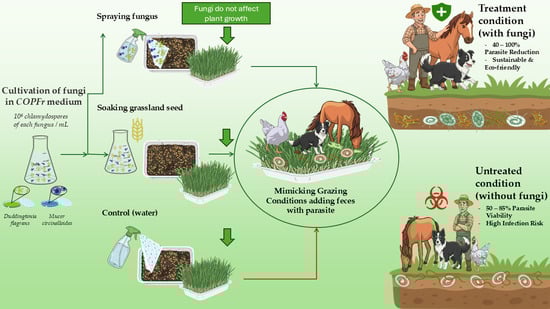
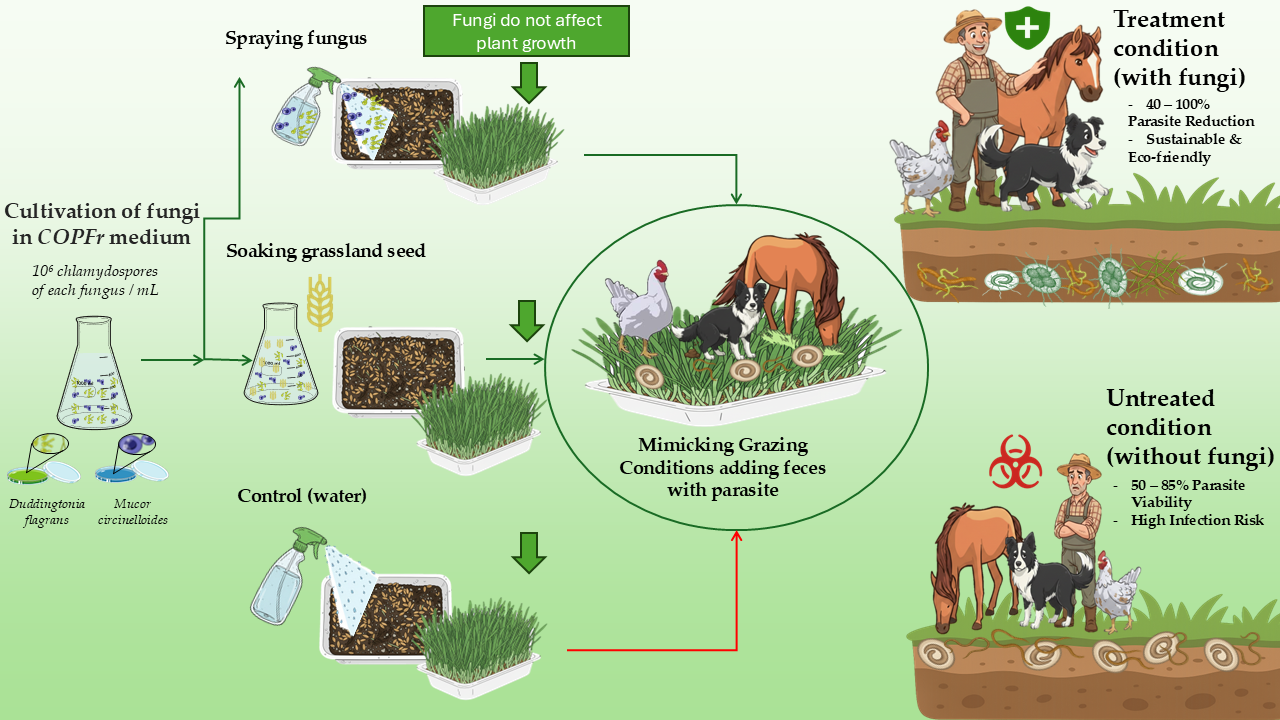
Graphical Abstract

1. Introduction

Infection by different pathogens is frequent among livestock, especially certain endoparasites affecting animal species reared under pasturing regimes [1]. The external phase of the life cycle of some parasites occurs in the soil, where they evolve from oocysts or eggs to their respective infective stages, sporulated oocysts or eggs containing one larva inside; others molt from eggs to larvae [2,3]. Thus, grazing animals are under continuous challenge infection by protozoa or helminths, causing multiple economic and productive losses, as well as altering the welfare environment for the animals [4,5]. At the same time, other soil-borne parasites are pathogens that damage plant roots and vascular systems, resulting in a reduced yield, leaf wilting, and root rot [6,7]. Major examples include nematodes, which constitute a major threat to global agriculture, causing an estimated $157 billion in annual crop losses [8,9].
The control of parasites in animals and crop protection against parasites have generated a great deal of controversy in terms of methodology, based almost exclusively on the treatment with chemical products [10,11,12]. One point to take into account is the continuous report of resistance to chemical pesticides, due to their indiscriminate use on farms, which has strengthened the trend to generate alternatives that are capable of dealing with the parasites that are usually present in any plant and animal production system [13,14,15,16]. Consequently, different sustainable strategies have been designed for their prevention and control, supported by the utilization of some microorganisms that are frequently found in the soil, such as plant-based nematicides or parasitophagous fungi, among others [17,18]. In this way, it is noteworthy to point out the antagonistic activity of some species (Pochonia chlamydosporia, Mucor circinelloides) against the oocysts/eggs of livestock parasites such as Eimeria spp., Fasciola hepatica or Toxocara canis. Other species (Duddingtonia flagrans, Monacrosporium thaumasium) are able to capture the larvae of nematodes as strongylids or hookworms [19,20]. Regarding plant production, some biological control agents have been tested against Meloidogyne spp. [21,22,23].
The effectiveness of this eco-friendly strategy has been studied in animals for several decades in order to establish a suitable plan and nowadays, control methods have shifted towards the use of practices that have the least possible impact on the environment [24,25,26,27]. The evaluation of promising agents with a parasiticidal function requires the analysis of their effect on parasites (ovicidal, larvicidal), which is usually performed in vitro in Petri dishes with added parasites, where fungi develop easily on enriched agar medium [28]. However, less information has been acquired by testing the fungi directly on fecal samples, which carry the parasites from inside their hosts to the environment, and even less under conditions that are similar to natural ones, such as those with moisture and vegetation.
In a recent investigation, the risk of infection by roundworms and cyathostomins (strongylids) was reduced by at least half by sowing the soil with forage seeds pre-treated with fungi [29]. The main objective of this research was to provide a suitable experimental model to simulate field conditions for evaluating the efficacy of three saprophytic filamentous fungi against various parasites affecting animals. For this purpose, grassland seeds were soaked in liquid medium with the fungi before being sown, or the fungal spores were sprayed directly on the soil. With this aim, some assays were designed and developed on trays containing catnip (Nepeta cataria).

2. Materials and Methods

2.1. Design of the Probes

A total of four probes have been carried out in the current research. To improve the distribution of the fungi, two procedures were applied:
(a)
Sowing with seeds that were pre-treated with fungi: 60 g of seeds were soaked in 60 mL of submerged culture for 2–3 h and then air-dried. A total of 30 g of these pre-treated seeds were distributed in each tray.
(b)
Spraying the media directly on the soil: A volume of 10 mL of submerged culture containing ≥106 spores of each fungus/mL were spread in each tray once the seeds (untreated) sprouted.
  • Assay 1. Soaking grass seeds in medium containing M. circinelloides and T. atrobrunneum. Effect on coccidian oocysts.
Eighteen trays with catnip were prepared and divided into three groups, comprising four replicates for each treatment. Seeds that had been pre-treated for two hours (G-Mc with M. circinelloides or G-Ta with T. atrobrunneum) were added to two of them, and the third group was kept untreated as a control (G-C). A total of 50 g free-ranging poultry feces containing 925 ± 243 Eimeria spp. oocysts per gram of feces (OPG) were placed in each tray. The analysis of each tray was performed on days 0, 15 and 30 of the study by using the modified sedimentation protocol, and three observations were considered under the microscope for each sample. The plant growth rate, shape, size, color and vigor were observed.
  • Assay 2. Soaking grass seeds in medium with M. circinelloides and T. atrobrunneum. Effect on the eggs of Toxocara canis and Toxascaris leonina.
In this trial, 18 trays of catnip were prepared and sorted into three groups: G-C (controls), G-Mc (M. circinelloides pre-treated seeds) and G-Ta (T. atrobrunneum pre-treated seeds).
Twenty grams of canine feces with an initial burden of 150 T. canis EPG (eggs per gram of feces) and 200 T. leonina EPG were added to the trays. As in the previous assay, the trays were evaluated using the modified sedimentation protocol for observation under a microscope.
  • Assay 3. Spraying spores of M. circinelloides and T. atrobrunneum on feces containing bird coccidian oocysts.
Twelve trays were prepared and divided into three groups, with four replicates for each. Once the seeds (without fungi) were deposited, they were irrigated with 400 mL of water. Prior to the 15-day growth period, 50 g of poultry feces with 800 Eimeria spp. OPG (oocysts per gram of feces) were added. Later, a solution containing spores from each fungus was randomly sprayed on each of the fungal-treated groups once, twice, three times, or four times over a 30-day period.
  • Assay: 4. Spraying spores of M. circinelloides and D. flagrans on horse feces containing eggs of strongylids.
Two groups were formed with four trays in each; the control group was sprayed with 10 mL of tap water, and the fungus group with a blend of 1 × 10⁶ spores of M. circinelloides + 1 × 10⁶ spores of D. flagrans, once, twice, three times, or four times over a 30-day period. In each group, 24 g of horse feces with 2100 strongyles EPG were added. We waited for a period of 15 days to continue with the analysis of the samples by the modified sedimentation technique, considering three observations under the microscope for each sample.

2.2. Parasitophagous Fungi

This work was carried out in the laboratories of the COPAR Research Group (Pavilion I, Faculty of Veterinary Medicine, Lugo, University of Santiago de Compostela, Spain) and it encompassed the spreading of two fungi with ovicidal activity (M. circinelloides CECT 20824 and T. atrobrunneum CECT 20999) and another larvicidal species (D. flagrans CECT 20823) [30,31] (Figure 1).
These fungal species were isolated by the COPAR research group and deposited in the Spanish Type Culture Collection (CECT, Valencia, Spain). Previous research in dogs, livestock and captive wild animals showed that its administration was completely safe [32,33,34]. In the current investigation, the three fungi were cultured in a submerged medium and RT [32], to facilitate that concentrations ≥106 spores/mL are reached.

2.3. Conditioning the Cat Grass Trays

Four assays were performed in commercially available Cat Grass® trays (Vitakraft S.L., Madrid, Spain). This presentation contains 5.6 × 13.5 × 25.2 cm (L × W × H) plastic trays or containers, 120 g silica and 50 g Nepeta cataria seeds. The trays were conditioned by following the manufacturer’s instructions, although slight changes were introduced after some preliminary testing. At the beginning of the research, different holes were made in the base of the trays to prevent them from becoming waterlogged, but no parasites were recovered because they were lost through runoff. It was shown that plants grew better and were maintained for longer if they were sown in a mixture of silica and substrate; moreover, the evaluation of the results was facilitated if the density of the plants was reduced. Accordingly, no holes were practiced in the trays; for each container, 60 g of silica were mixed with 60 g of substrate, autoclaved (121 °C for 16 min) and then deposited once RT was reached. Finally, 25 g N. cataria seeds were added to each tray, then we sprayed 5 mL of distilled water. The trays were kept in the laboratory of the Gayoso Castro Farm (Deputación Provincial, Castro Ribeiras de Lea, Lugo, Spain) at 15–20 °C and daylight and watered every three days.

2.4. Analysis of the Parasiticidal Effect

The usefulness of the fungal distribution on limiting the presence of infective stages of parasites in the soil was evaluated by adding fecal samples from different animal species that were infected by some parasites in the trays (Table 1).
First, the fecal samples were taken from free-ranging laying hens, dogs and horses, and analyzed by the McMaster flotation in saturated saline, sedimentation and larval migration (Baermann method). Oocysts of Eimeria spp. were identified in the feces of the hens, eggs of roundworms (Toxocara canis and Toxascaris leonina) in canine fecal samples, and eggs of strongylids (cyathosthomins) in horse feces (Table 1). For each animal species, fecal samples were taken from several individuals and mixed with an electrical blender to obtain a homogeneous sample. Five portions were taken from each fecal mix and analyzed by the coprological tests mentioned.
Concerning the evaluation protocol, a random portion of the content (soil) of each tray was taken from each group and processed by a modified sedimentation technique (Cornell–Wisconsin technique), which consisted of weighing 70 g of each sample and mixing with 70 mL of 5% Tween 20 (detergent) solution, then homogenized by shaking for 10 min, and left to stand for five hours. The contents were then filtered through successive 4, 0.52, 0.15 and 0.050 mm pore diameter sieves and washed under running water for 30 min. The sediment retained on the 0.050 mm mesh was transferred to a 1 L sedimentation cup and water was added to fill the cup and allowed to settle for 12 h. The supernatant was then discarded and the sediment transferred to 12 mL centrifuge tubes. Centrifugation was carried out for 10 min at 2500 rpm, where the supernatant was discarded, and a sucrose solution (p ≈ 1.3 g/cm3) was added until half of the capacity was reached, in order to homogenize the samples. The tubes were then completely filled, forming a positive meniscus upon which a coverslip (18 × 18 mm) was placed. The samples were then centrifuged again for 10 min at 2500 rpm to count viable and non-viable parasite forms under an optical microscope at 10–20X. Each sample was examined in duplicate.
The parasiticidal effect was evaluated by comparing the numbers of the parasites that were initially deposited in each tray and those obtained after 30 days (EPGd), i.e., the percentage of reduction (PR), through the McMaster flotation test [30]:
P R   ( % ) = E P G d 0 E P G d 30 E P G d 0 × 100
The reduction in parasite viability (RV) was also calculated as the difference between the number of viable parasites (VP) and the number of non-viable parasites (NVP), using the following formula:
R V   ( % ) = V P N V P V P × 100
Four categories of oocysts were distinguished in this assay: (a) non-viable, those showing physical alterations due to fungal effects; (b) viable, the sum of sporulated and non-sporulated oocysts; (c) sporulated, those viable oocysts that were in a stage of cellular development; (d) non-sporulated, those that were in a viable state but did not show signs of development in their cellular content.

2.5. Model and Statistical Analysis

For a single factor
Each of the fungi used in each trial represented the comparative analysis factor for effectiveness. Each one worked independently, so the model was as follows:
Y i j = μ + τ i + ε i j
where
Yij = Response variable (viable, non-viable, sporulated, non-sporulated oocyst count); μ = population mean; ti = effect of i-th treatment (i = no fungus, with parasiticidal fungus); and e = error attributable to measurement Yij.
Means were compared with Tukey’s test at 95% confidence.
For two factors
Each of the fungi used and the number of sprays count as factors to be evaluated, as well as the interaction between them. Therefore, each one was analyzed independently, and the model was as follows:
Y i j k = μ + a i + β j + a β i j + ε i j k
where
Yijk = response variable (oocyst count per gram of viable feces); μ = population mean; ai = fixed effect of the i-th level of factor A (i = no fungus, Mc; and Ta) on the overall average response; Bj = fixed effect of the i-th level of factor B (j = number of sprays) on the overall mean response; (aB)ij = fixed effect of the interaction of factors A and B at their i and j levels, respectively, on the overall mean response; and eijk = error attributable to the measurement Yijk.
The means were compared with Tukey’s test at 95% confidence.
All tests were performed with the statistical package IBM SPSS Statistics, version 24 (SPSS Inc., Chicago, IL, USA). Statistical significance was considered when p < 0.05.

3. Results

3.1. Development of Grass and Parasites

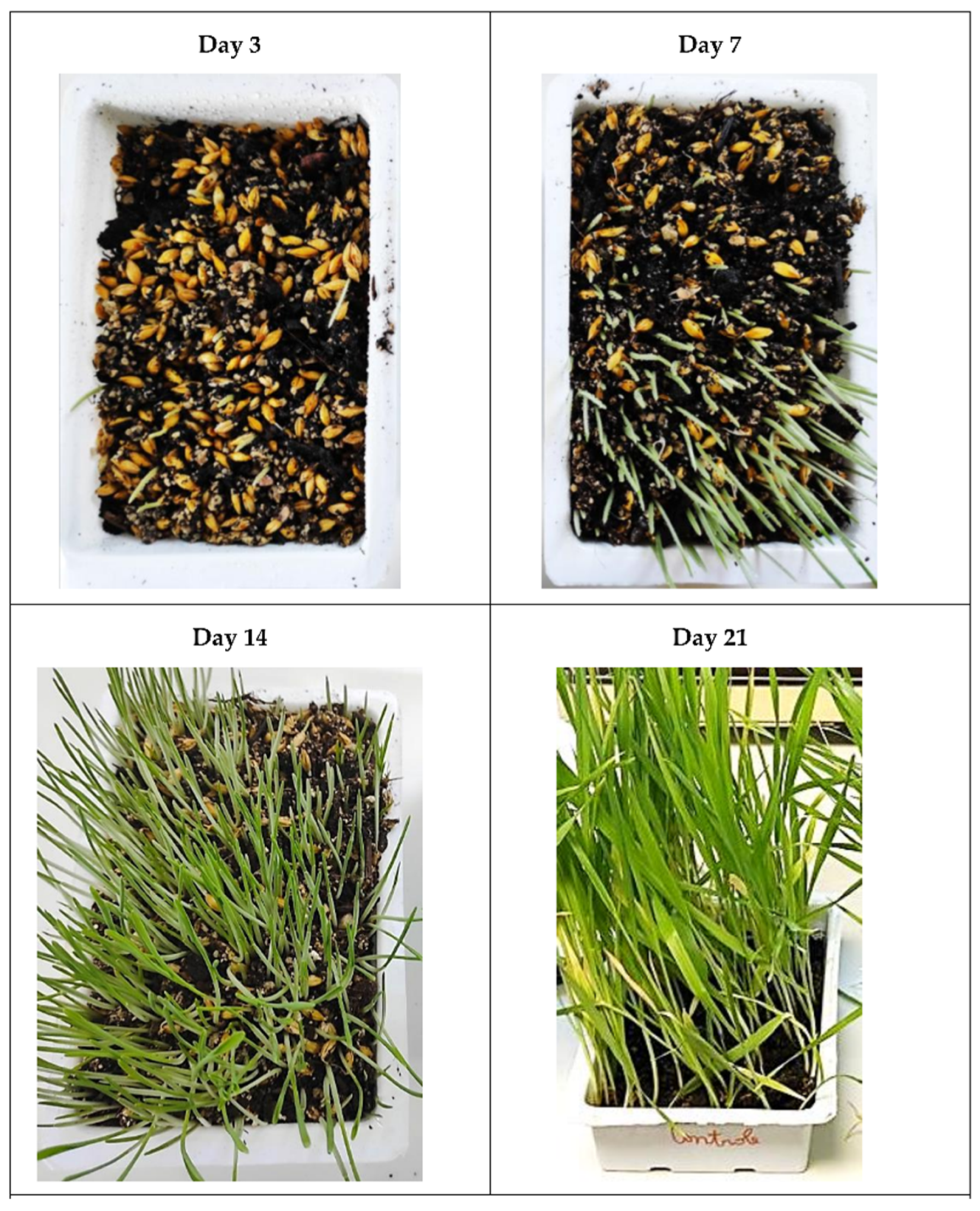
The plants started to sprout from the third day after sowing, and no differences were detected with respect to whether the seeds had been previously soaked in the fungus-dipped culture or not (Figure 2). In either situation, the plants grew rapidly, and no differences were established between the different groups.
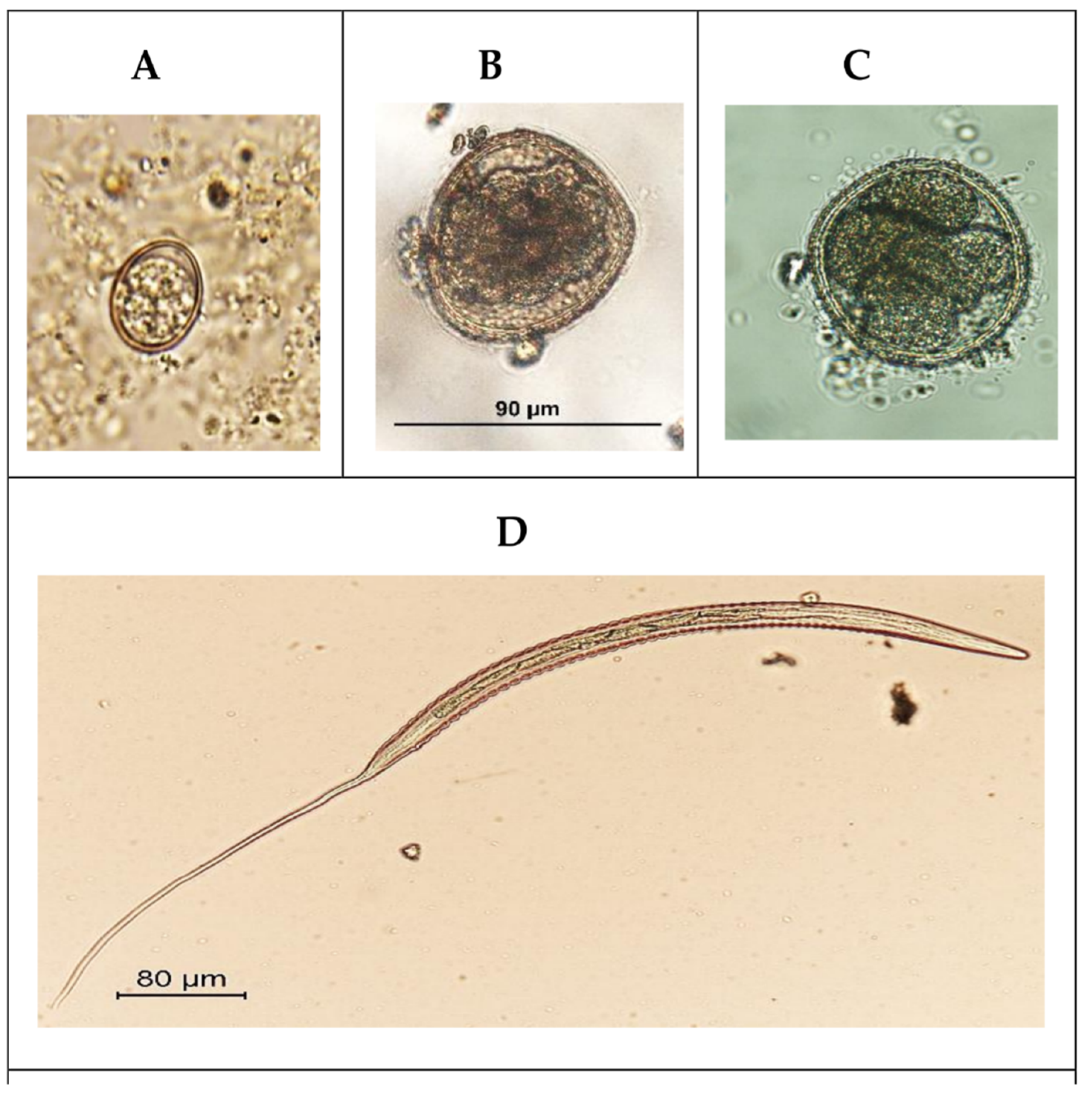
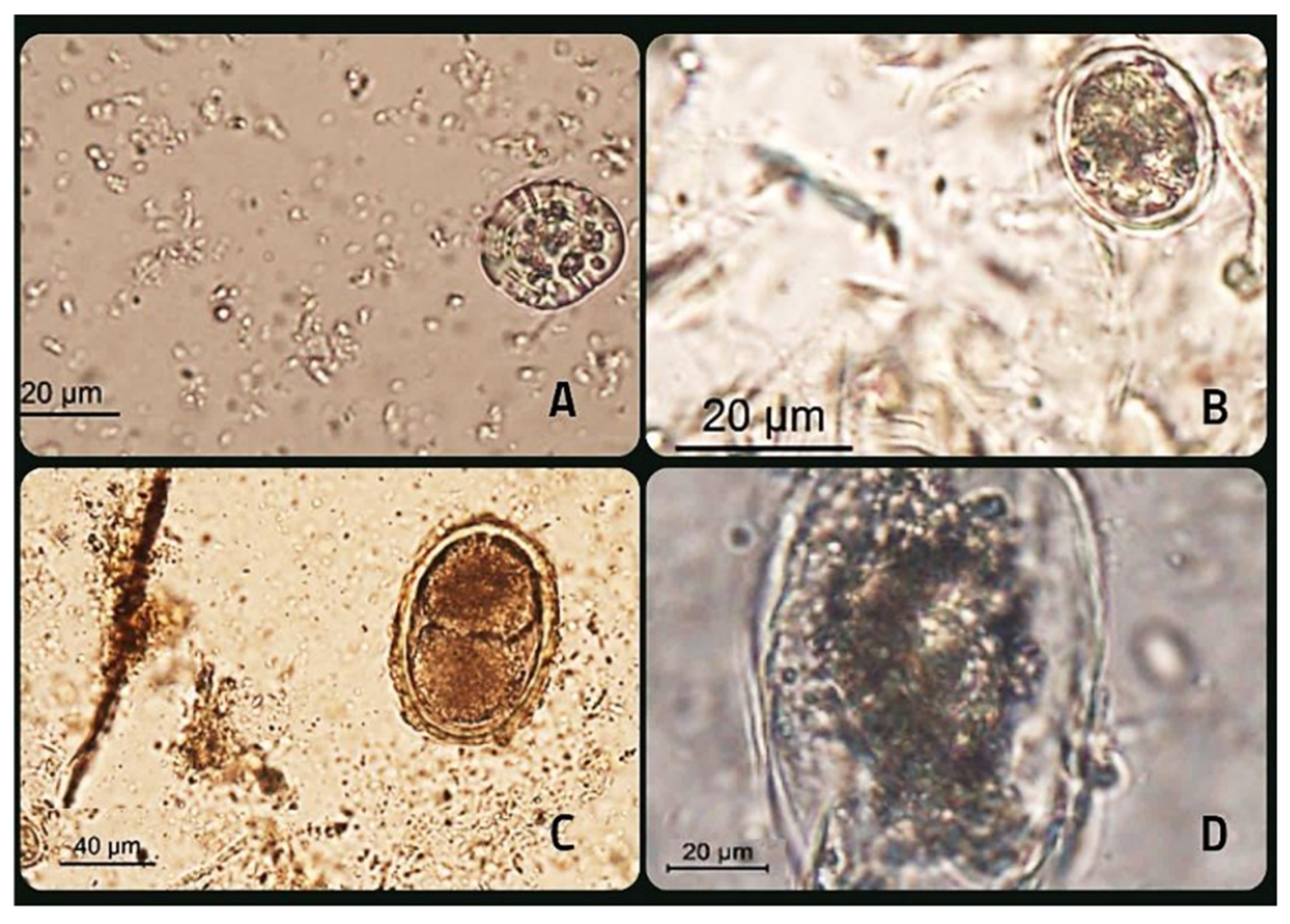
As shown in Figure 3, parasites developed properly in the trays with grass, and different developmental stages could be observed: either sporulated oocysts or third-stage larvae (L3) of cyathostomins (strongylids).

3.2. Effect of Sowing Seeds Previously Soaked in Medium with Parasiticide Fungi

3.2.1. Coccidian Oocysts Exposed to M. circinelloides and T. atrobrunneum

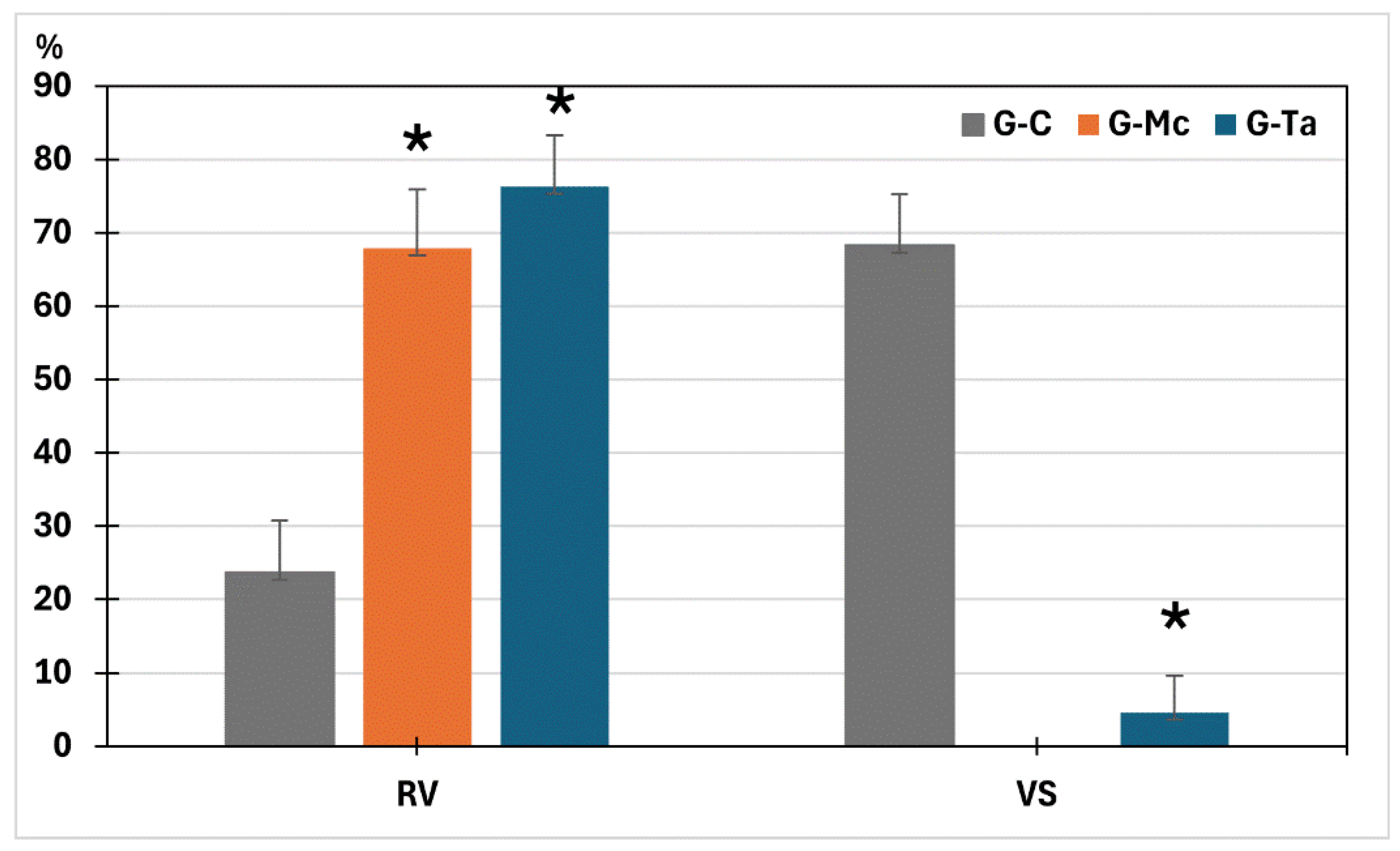
The values of reduction in Eimeria spp. oocysts viability (RV) were significantly higher in the two treated groups than in the controls (F = 6.098, p = 0.005 in G-Mc, and F = 5.940, p = 0.015 in G-Ta) (Figure 4). The numbers of sporulated viable oocysts (VS) were 68 ± 7% in the controls, 0% in G-Mc, and 5 ± 4% (3, 6) in G-Ta (F = 14.312, p = 0.001 in G-Mc, and F = 13.005, p = 0.002 in G-Ta).

3.2.2. Eggs of Toxocara canis and Toxascaris leonina Exposed to M. circinelloides or T. atrobunneum

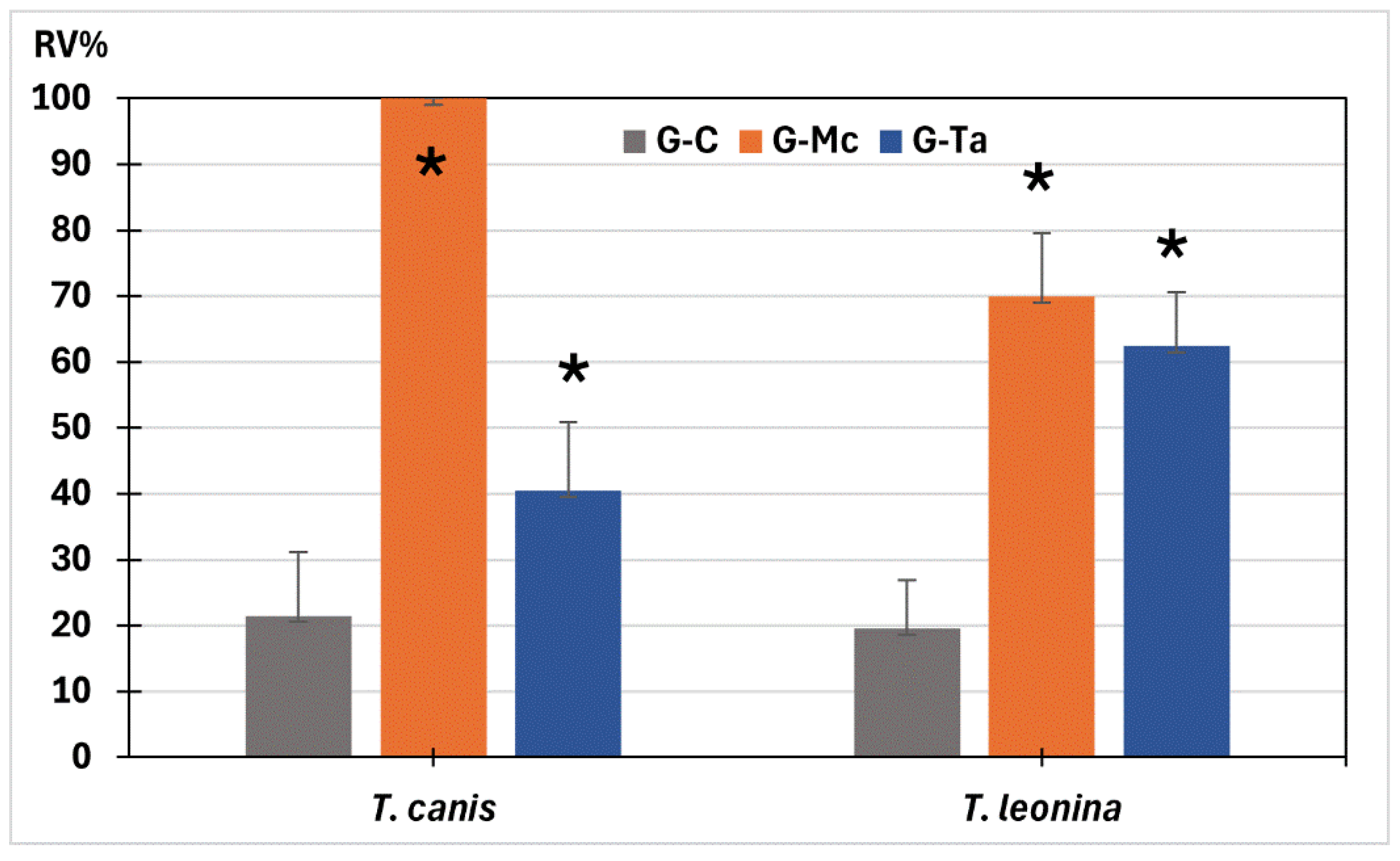
As presented in Figure 5, the reduction in the viability of the two roundworms (T. canis and T. leonina) was significantly lower in the controls than in the fungus-treated groups (F = 5.522, p = 0.025 in G-Mc, and F = 6.1342, p = 0.020 in G-Ta). In respect to the exposure to the fungi, the highest values of reduction were recorded by using M. circinelloides (G-Mc) (100% and 70 ± 9%, respectively), but the differences with G-Ta were not significant (F = 1.987, p = 0.232).
Figure 6 shows the antagonism of the parasitophagous fungi on parasites placed in a simulated plant environment in trays, as evidenced by damage in the shells of oocysts or eggs.

3.3. Effect of Direct Spraying of Parasitophagous Fungi on Soil

3.3.1. Against Eimeria Oocysts

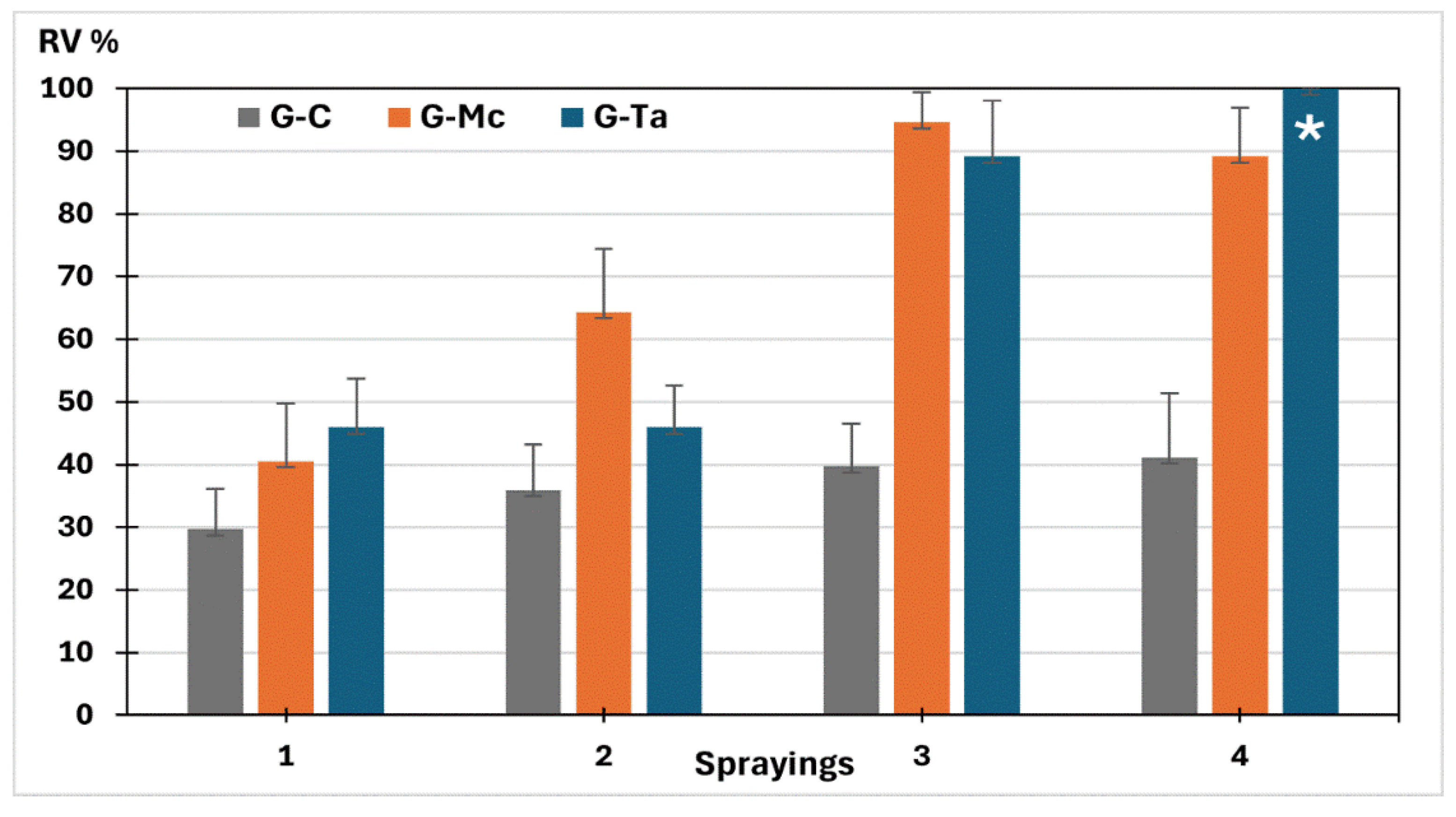
A similar reduction in the viability of Eimeria spp. coccidian was recorded by using both ovicidal fungi, but the group treated with T. atrobrunneum showed a significant difference (F = 8.672, p = 0.004) in the reduction in final OPG when sprayed with chlamydospores three or four times, compared to one or two times (Figure 7).
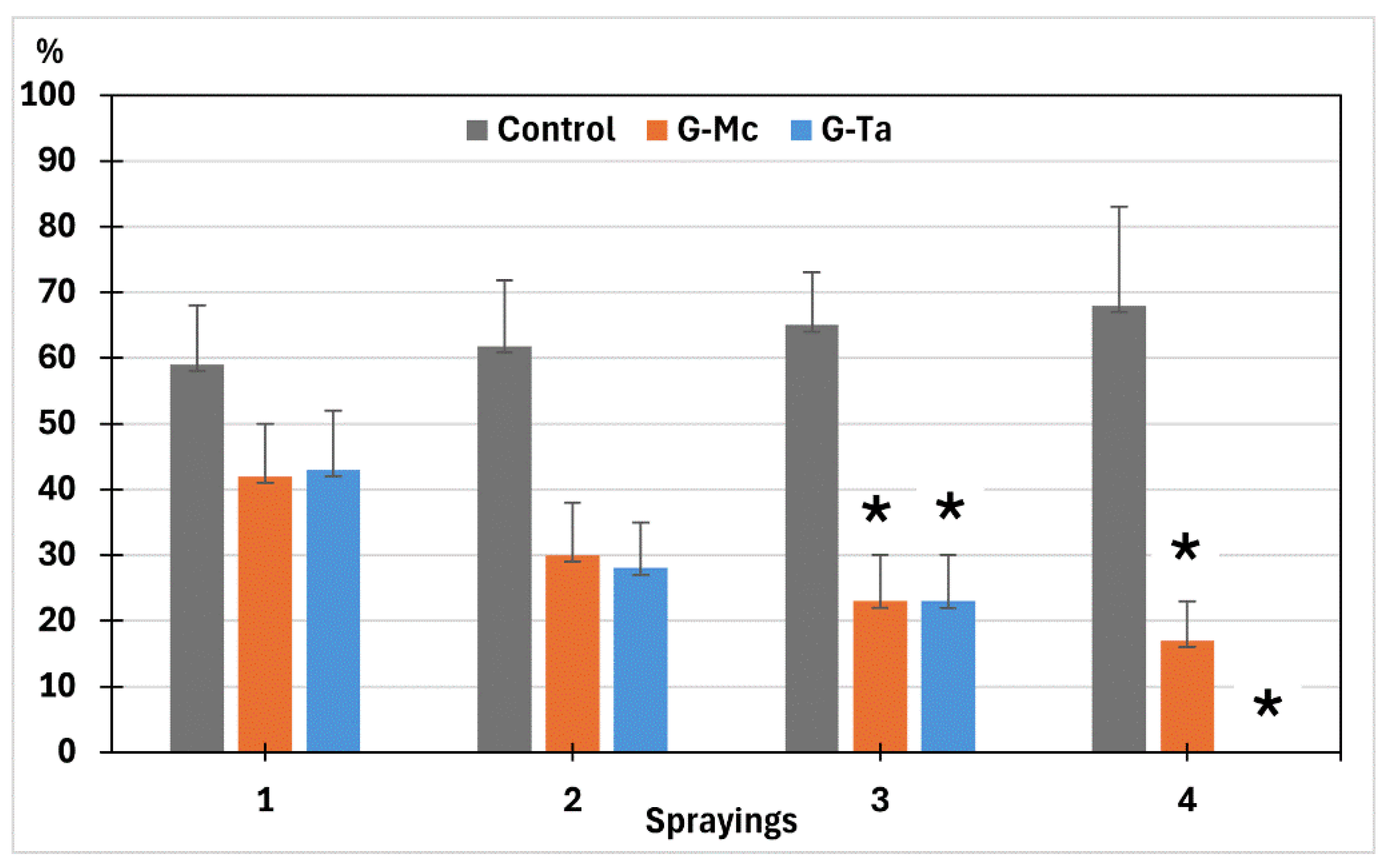
In relation to the sporulated oocysts (=infective), no differences were observed by spraying one or two times (Figure 8). In the control group, the percentages remained higher than 50% throughout the assay. The lowest values of sporulated coccidian were achieved after three–four sprayings (18%) with M. circinelloides, whereas no infective oocysts were identified when T. atrobrunneum was sprayed four times. The differences between the treated groups and the controls were significant (F = 5.041, p = 0.026 in G-Mc, and F = 6.689, p = 0.018 in G-Ta), but not among the two groups receiving fungal spores (F = 2.086, p = 0.182).

3.3.2. Against Eggs of Strongylids

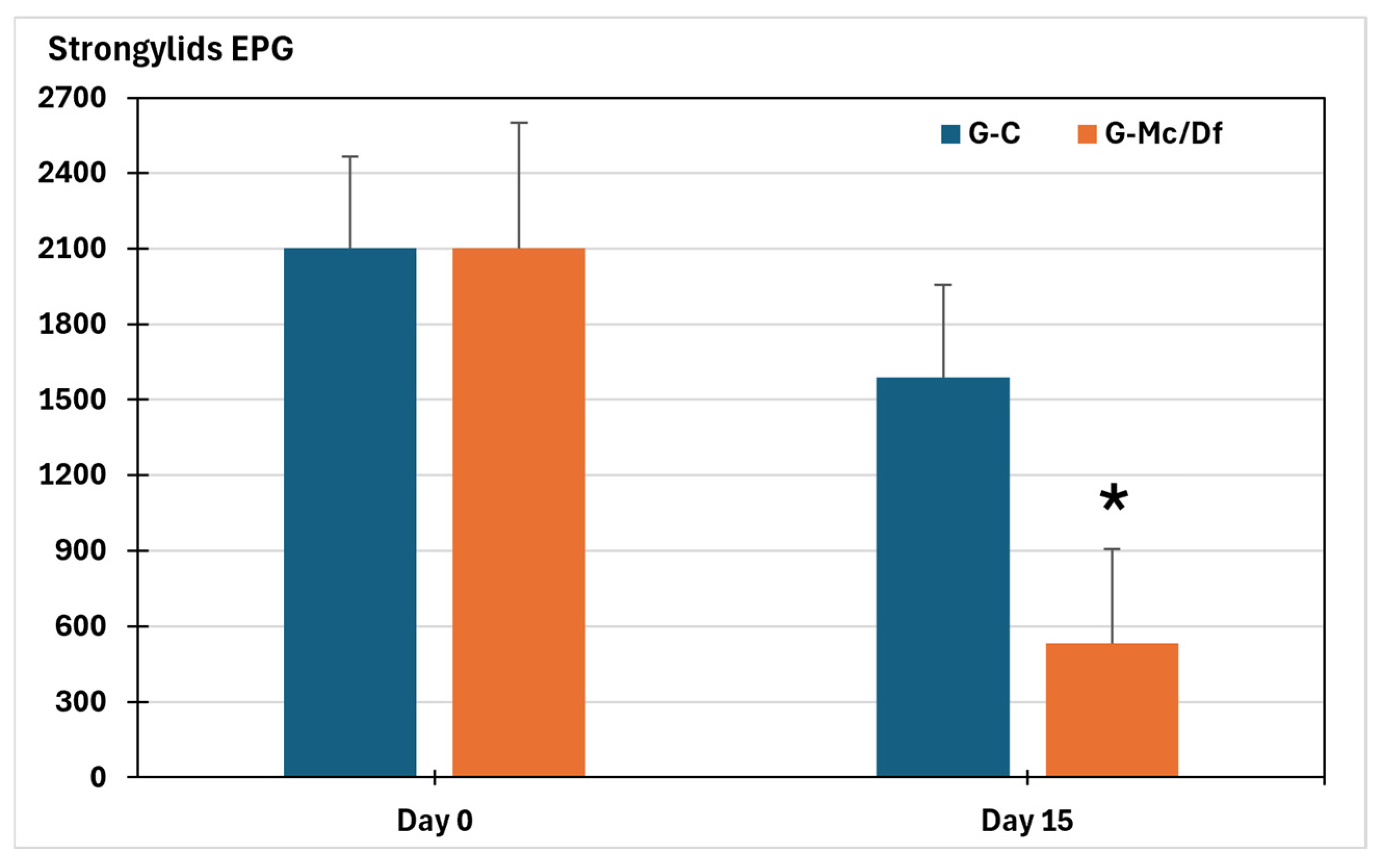
The variations in the strongylids egg counts throughout the trial are shown in Figure 9, resulting in a reduction of 24 ± 5% in the (untreated) controls, and 74 ± 12% fifteen days after spraying with a blend of chlamydospores of M. circinelloides + D. flagrans (F = 8.142, p = 0.007). In this case, the data presented do not go beyond 15 days, because from that moment on, the first-stage larvae (L1) started to hatch from the eggs, and it was no longer possible to keep counting and sorting them.

4. Discussion

In order to gather information on the antagonistic effect of parasitophagous fungi on soil parasites, a novel semi-natural system was designed to simulate the conditions of a vegetated environment in trays, comprising two different types of trials. In the first, the seeds were soaked in a medium containing fungi and then placed in the trays, where germination and development were like those in the absence of fungi. In addition, the parasites added to the trays developed normally until reaching the infective stages, implying that this experimental model also provides a suitable environment for them. Therefore, the viability of Eimeria oocysts was reduced by two-thirds and three-quarters in the presence of M. circineloides or T. atrobrunneum, respectively. These data points out the effect of the strategy against oocysts of Eimeria spp. in the soil and, consequently, in reducing the risk of infection of animals in contact with the parasite, due to their ability to break down the outer shell, penetrate inside and destroy the oocysts [31], or maintain them without attaining the sporulated (infective) stage, which prevents the infection [35]. The antagonistic effect was also confirmed against the eggs of canine roundworms, especially by using M. circinelloides, which provided a 70–100% viability reduction; this is consistent with a prior investigation which reported a 62% reduction in the viability of roundworms’ eggs [36]. It is important to underline that in the trays conditioned with seeds that were previously soaked in a submerged medium containing the fungal species, both protozoa and helminths completed the external phase of their lifecycles, as shown by the observation of infective stages. Besides this, the parasitophagous fungi also grew and developed in the trays, acting on the parasites placed. These results indicate that the design can reproduce the proper conditions for the parasites to reach their infective stages and for the fungi to perform their parasiticidal activity.
In the second series of experiments, Eimeria oocysts were added to trays containing vegetation, then sprayed with spores of M. circinelloides or T. atrobrunneum once, twice, three times, or four times within a 30-day span; the same protocol involved eggs of equine strongylids (cyathostomin) sprayed with a mixture of spores of M. circinelloides and D. flagrans. A reduction in the oocysts’ viability was recorded after three–four sprayings (82% with M. circinelloides and 100% with T. atrobrunneum). A comparison with the results from Trial 1 shows that the reduction in viability observed after spraying two to three times in the spores of the aforementioned fungal species was very similar to that observed when using seeds that had been pre-soaked in fungi. Lozano et al. reported that the viability of Eimeria spp. decreased by 21% when faced with M. circinelloides [37]. These authors also underlined the safety of providing the chlamydospores of this fungus to birds, by demonstrating the lack of virulence [38]. Regarding the trial involving eggs of strongylids, it was noted that these nematodes develop to the infective stage (L3) in the trays, and that the counts decreased by three quarters when the trays were sprayed with chlamydospores of M. circinelloides and T. atrobrunneum. It is important to note that the infective phases of strongylids are third-stage larvae (L3), which evolve from L1 hatched from eggs, unlike the parasites that were previously evaluated in this research, in which immotile stages (sporulated oocysts or eggs containing larvae) must be ingested to cause infection. For that reason, most studies have been focused on the reduction in L3s. An overall 94% decrease was obtained by directly spreading the chlamydospores of D. flagrans directly on fecal pats collected from pasturing horses [39], and the counts of L3s were reduced by 27–98% in the feces of horses given chlamydospores of this nematode-trapping fungus [40]. The results collected in the present research confirm the appropriateness of the designed probe to conduct evaluations of the parasiticide activity that different microorganisms might display, and even the metabolites that can be released [41,42].
The control of soil-borne parasites continues to rely on the application of effective chemicals; however, the demand for food production under sustainable conditions, along with the risk that food may contain chemical residues, and the emergence of resistance to certain widely used dewormers in animals, are the main reasons why alternative strategies against these parasites are needed [14,43]. Accordingly, among the recommendations for avoiding excessive use of antiparasitic agents are biological control strategies based on parasitic fungi (even in combination with pasture management practices) [32,33]. However, it seems essential to provide a procedure that bridges the gap between in vitro testing (typically in Petri dishes with agar) and field trials [43]. Another interesting point lies in the fact that animal species are not the only ones affected by soil-borne agents. Species belonging to the genera Meloydogine, Heterodera or Globodera are important nematodes parasitizing many plant species, and becoming one of the main concerns of farmers, because the root system of plants results were mainly damaged, which is reflected in low crop production [44,45,46,47]. Given that its life cycle develops entirely in the soil, the effect of certain species of fungi (P. chlamydosporia, Trichoderma spp., Purpureocillium lilacinum) on horticultural crops has been analyzed [46,47,48], focused on its activity on cotton verticillium wilt, crop gray mold, tomato gray mold, melon wilt, potato dry rot or tobacco root rot, with very satisfactory and encouraging results [49,50,51,52], even with fungal filtrates [53,54]. According to the results obtained, this novel test could also be applied when checking the efficacy of different strategies on plant parasites.
The use of pots is very useful for conducting low-cost experiments in which plants can grow under controlled conditions [55,56,57]. Recent research has provided interesting and useful information on the use of micro-rhizosphere chambers to evaluate the potential of seven fungi as biological control agents against the plant nematode G. pallida [47]. The data obtained highlight the advantages of the soil simulation test designed to evaluate potentially effective strategies against soil-borne pests, as they provide useful and practical information under conditions like those found in nature [58,59,60]. However, there are some factors that could limit the extent to which these results can be extrapolated to field conditions. The most significant factor appears to be the grass used in this model. The choice of trays with catnip was based on their wide availability in many stores, their low cost, and their ease of handling in the laboratory. We plan to use trays with different mixtures of grass and forage seeds to confirm the results obtained and the suitability of the semi-natural system described. Another aspect that deserves further attention concerns the conditions under which the tests were conducted in this study—in a laboratory setting with controlled temperature and humidity. The possibility of modifying these conditions to obtain data that more closely reflects the real-world conditions—such as at different times of the year—is currently being considered. Finally, given that parasites may be distributed unevenly, it is recommended to analyze two samples from each tray to ensure greater reliability.

5. Conclusions

The development of an innovative soil simulation system based on trays filled with catnip allows for soil-borne parasites that affect animals to thrive under conditions similar to those found naturally in the environment. The data obtained in the present investigation demonstrate that this semi-natural system appears very useful to provide a procedure that bridges the gap between in vitro testing (in agar plates) and field trials. It is concluded that this device provides reliable information on the efficacy of certain strategies against free-living stages of several soil-borne parasites. Considering that some parasites affecting crops have similar life cycles to those mentioned, this design also offers the right conditions for the evaluation of any antagonistic activity on them, which is another added advantage, and further research is underway to obtain more information in this regard.

Author Contributions

Conceptualization, J.Á.H.M., A.P.S. and F.G.C.; Methodology, C.E.M.A., J.S.P., I.Z.I., J.C.S. and J.Á.H.M.; Software, F.G.C. and C.E.M.A.; Validation, A.C.R., R.E.V., J.I.A.-d.l.F., N.C.G., I.Z.I., J.S.P. and J.C.S.; Formal Analysis, C.E.M.A. and J.S.P.; Investigation, C.E.M.A., J.S.P., A.C.R., R.E.V., J.I.A.-d.l.F., N.C.G., I.Z.I. and J.C.S.; Resources, J.Á.H.M. and A.P.S.; Data Curation, C.E.M.A., J.S.P., I.Z.I. and J.C.S.; Writing—Original Draft Preparation, J.Á.H.M., A.P.S. and F.G.C.; Writing—Review and Editing, J.Á.H.M., A.P.S. and F.G.C.; Visualization, C.E.M.A., J.S.P., I.Z.I., J.S.P. and J.C.S.; Supervision, J.Á.H.M. and A.P.S.; Project Administration, A.P.S.; Funding Acquisition, A.P.S. All authors have read and agreed to the published version of the manuscript.

Funding

This study has been made possible thanks to the financial support obtained from the research projects: “Control of parasites in animals and humans: diagnosis, prevention and treatment—COPAR”. ED431B 2025/18. (2025–2027). Groups with Growth Potential, Consellería de Cultura, Educación e Deporte, Xunta de Galicia, Spain. “Sustainable Biological Pest Control”. PDC2025-166774-I00. Proof-of-Concept Projects 2025. Spanish State Research Agency (SSRA). “Parasiticidal fungi for the transition of livestock to pastoral regimes”. European Agricultural Fund for Rural Development 2022-017B. SSRA 2022 Operational Groups. Consellería do Medio Rural, Xunta de Galicia, Spain.

Institutional Review Board Statement

Not applicable.

Data Availability Statement

The data sets used are available from the corresponding author upon reasonable request.

Acknowledgments

We would like to thank the management of the Gayoso Castro Farm for providing us with pasturelands and producing spores.

Conflicts of Interest

The authors declare no conflicts of interest. The authors had sole responsibility for the design of the study; the collection, analyses, or interpretation of data; the writing of the manuscript; and the decision to publish the results.

Abbreviations

The following abbreviations are used in this manuscript:
CECTSpanish Type Culture Collection
EPGEggs per gram (of feces)
G-CControl group
G-McGroup treated with Mucor circinelloides
G-TaGroup treated with Trichoderma atrobrunneum
L1First larval stage
L2Second larval stage
L3Third larval stage (infective stage)
NVNon-viable oocysts
NVPNon-viable parasites
OPGOocysts per gram (of feces)
PRPercentage of reduction
RVReduction in viability
RV%Percentage reduction in viability
SO%Sporulation oocyst percentage
VNSViable non-sporulated oocysts
VPViable parasites
VSViable sporulated oocysts

References

  1. Morales, G.; Arelis Pino, L.; Sandoval, E.; De Moreno, L.; Jiménez, L.D.; Balestrini, C. Dinámica de Los Niveles de Infección Por Estrongilidos Digestivos En Bovinos a Pastoreo. Parasitol. Día 2001, 25, 115–120. [Google Scholar] [CrossRef]
  2. López-Osorio, S.; Chaparro-Gutiérrez, J.J.; Gómez-Osorio, L.M. Overview of Poultry Eimeria Life Cycle and Host-Parasite Interactions. Front. Vet. Sci. 2020, 7, 384. [Google Scholar] [CrossRef]
  3. Mkandawire, T.T.; Grencis, R.K.; Berriman, M.; Duque-Correa, M.A. Hatching of Parasitic Nematode Eggs: A Crucial Step Determining Infection. Trends Parasitol. 2022, 38, 174–187. [Google Scholar] [CrossRef] [PubMed]
  4. Quijada, J.; Bethencourt, A.; Sulbarán, D.; Salcedo, P.; Aguirre, A.; Vivas, I.; López, E.; Pérez, A. Estrongilidos digestivos en caprinos: Contajes fecales de huevos y valores de la escala Famacha® en un rebaño infectado naturalmente. Rev. Científica 2012, XXII, 418–425. [Google Scholar]
  5. Aydin, M.H.; Canpolat, S.; Uzun, T. Some Soilborne Pathogens Causing Root Rot and Wilting of Pistachio Trees in Southeastern Turkey. Can. J. Plant Pathol. 2024, 46, 395–409. [Google Scholar] [CrossRef]
  6. Khanna, K.; Kohli, S.K.; Ohri, P.; Bhardwaj, R. Plants-Nematodes-Microbes Crosstalk within Soil: A Trade-off among Friends or Foes. Microbiol. Res. 2021, 248, 126755. [Google Scholar] [CrossRef]
  7. Gillet, F.-X.; Bournaud, C.; De Souza Júnior, J.D.A.; Fatima Grossi-de-Sa, M. Plant-Parasitic Nematodes: Towards Understanding Molecular Players in Stress Responses. Ann. Bot. 2017, 119, 775–789. [Google Scholar] [CrossRef]
  8. Afzal, A.; Mukhtar, T. Revolutionizing Nematode Management to Achieve Global Food Security Goals—An Overview. Heliyon 2024, 10, e25325. [Google Scholar] [CrossRef] [PubMed]
  9. Abd-Elgawad, M.M.M. Upgrading Strategies for Managing Nematode Pests on Profitable Crops. Plants 2024, 13, 1558. [Google Scholar] [CrossRef]
  10. Ayaz, M.; Zhao, J.-T.; Zhao, W.; Chi, Y.-K.; Ali, Q.; Ali, F.; Khan, A.R.; Yu, Q.; Yu, J.-W.; Wu, W.-C.; et al. Biocontrol of Plant Parasitic Nematodes by Bacteria and Fungi: A Multi-Omics Approach for the Exploration of Novel Nematicides in Sustainable Agriculture. Front. Microbiol. 2024, 15, 1433716. [Google Scholar] [CrossRef] [PubMed]
  11. Deng, X.; Wang, X.; Li, G. Nematicidal Effects of Volatile Organic Compounds from Microorganisms and Plants on Plant-Parasitic Nematodes. Microorganisms 2022, 10, 1201. [Google Scholar] [CrossRef]
  12. Mei, X.; Wang, X.; Li, G. Pathogenicity and Volatile Nematicidal Metabolites from Duddingtonia flagrans against Meloidogyne incognita. Microorganisms 2021, 9, 2268. [Google Scholar] [CrossRef]
  13. Viña, C.; Silva, M.I.; Palomero, A.M.; Voinot, M.; Vilá, M.; Hernández, J.Á.; Paz-Silva, A.; Sánchez-Andrade, R.; Cazapal-Monteiro, C.F.; Arias, M.S. The Control of Zoonotic Soil-Transmitted Helminthoses Using Saprophytic Fungi. Pathogens 2020, 9, 1071. [Google Scholar] [CrossRef]
  14. Ahuir-Baraja, A.E.; Cibot, F.; Llobat, L.; Garijo, M.M. Anthelmintic Resistance: Is a Solution Possible? Exp. Parasitol. 2021, 230, 108169. [Google Scholar] [CrossRef]
  15. Wram, C.L.; Hesse, C.N.; Zasada, I.A. Transcriptional Response of Meloidogyne incognita to Non-Fumigant Nematicides. Sci. Rep. 2022, 12, 9814. [Google Scholar] [CrossRef] [PubMed]
  16. Brown, Z.; Reisig, D. Assessing Market Failures Driving Pesticide Resistance. Science 2025, 387, 930–932. [Google Scholar] [CrossRef] [PubMed]
  17. Jamil, M.; Aleem, M.T.; Shaukat, A.; Khan, A.; Mohsin, M.; Rehman, T.r; Abbas, R.Z.; Saleemi, M.K.; Khatoon, A.; Babar, W.; et al. Medicinal Plants as an Alternative to Control Poultry Parasitic Diseases. Life 2022, 12, 449. [Google Scholar] [CrossRef]
  18. Wan, J.; Dai, Z.; Zhang, K.; Li, G.; Zhao, P. Pathogenicity and Metabolites of Endoparasitic Nematophagous Fungus Drechmeria coniospora YMF1.01759 against Nematodes. Microorganisms 2021, 9, 1735. [Google Scholar] [CrossRef] [PubMed]
  19. Canhão-Dias, M.; Paz-Silva, A.; Madeira de Carvalho, L.M. The Efficacy of Predatory Fungi on the Control of Gastrointestinal Parasites in Domestic and Wild Animals—A Systematic Review. Vet. Parasitol. 2020, 283, 109173. [Google Scholar] [CrossRef]
  20. Mendoza-de Gives, P.; López-Arellano, M.E.; Olmedo-Juárez, A.; Higuera-Pierdrahita, R.I.; Von Son-de Fernex, E. Recent Advances in the Control of Endoparasites in Ruminants from a Sustainable Perspective. Pathogens 2023, 12, 1121. [Google Scholar] [CrossRef]
  21. Mukhtar, T.; Tariq-Khan, M.; Aslam, M.N. Bioefficacy of Trichoderma Species Against Javanese Root-Knot Nematode, Meloidogyne javanica, in Green Gram. Gesunde Pflanz. 2021, 73, 265–272. [Google Scholar] [CrossRef]
  22. Parveen, A.; Tanaka, K.; Khan, M. Biocontrol Efficacy of Pochonia chlamydosporia against Root-Knot Nematode Meloidogyne javanica, in Eggplant and Its Impact on Plant Growth. Sci. Rep. 2025, 15, 36990. [Google Scholar] [CrossRef]
  23. Jaiswal, P.; Khadka, R.B.; Baidya, S.; Bhat, A.H.; Keshari, A.K. Nematicidal Efficacy of Native Trichoderma isolates on Meloidogyne incognita and Their Influence on Tomato Growth Parameters. J. Naural Pestic. Res. 2025, 12, 100128. [Google Scholar] [CrossRef]
  24. López Llorca, L.V.; Jansson, H.-B. Biodiversidad Del Suelo: Control Biológico de Nematodos Fitopatógenos Por Hongos Nematófagos. Cuad. Biodivers. 2001, 6, 12–15. [Google Scholar] [CrossRef]
  25. Kusakabe, A.; Wang, C.; Xu, Y.; Molnár, I.; Stock, S.P. Selective Toxicity of Secondary Metabolites from the Entomopathogenic Bacterium Photorhabdus luminescens sonorensis against Selected Plant Parasitic Nematodes of the Tylenchina Suborder. Microbiol. Spectr. 2022, 10, e02577-21. [Google Scholar] [CrossRef]
  26. Ntalli, N.G.; Ferrari, F.; Giannakou, I.; Menkissoglu-Spiroudi, U. Synergistic and Antagonistic Interactions of Terpenes against Meloidogyne incognita and the Nematicidal Activity of Essential Oils from Seven Plants Indigenous to Greece. Pest Manag. Sci. 2011, 67, 341–351. [Google Scholar] [CrossRef]
  27. Pires, D.; Vicente, C.S.L.; Menéndez, E.; Faria, J.M.S.; Rusinque, L.; Camacho, M.J.; Inácio, M.L. The Fight against Plant-Parasitic Nematodes: Current Status of Bacterial and Fungal Biocontrol Agents. Pathogens 2022, 11, 1178. [Google Scholar] [CrossRef]
  28. Braga, F.R.; Araújo, J.V.; Araujo, J.M.; Frassy, L.N.; Tavela, A.O.; Soares, F.E.F.; Carvalho, R.O.; Queiroz, L.M.; Queiroz, J.H. Pochonia chlamydosporia Fungal Activity in a Solid Medium and Its Crude Extract against Eggs of Ascaridia galli. J. Helminthol. 2012, 86, 348–352. [Google Scholar] [CrossRef]
  29. Hernández, J.Á.; Viña, C.; Lozano, J.; Zubiría, I.; Baena, M.; Abreu-Ramos, I.; Salmo, R.; Valderrábano, E.; Pérez-Anzúrez, G.; Paz-Silva, A.; et al. A New Soil-Based Solution for Reducing the Persistence of Parasites in Zoos. JZBG 2024, 5, 817–827. [Google Scholar] [CrossRef]
  30. Hernández, J.A.; Cazapal-Monteiro, C.F.; Arroyo, F.L.; Silva, M.I.; Palomero, A.M.; Paz-Silva, A.; Sánchez-Andrade, R.; Arias, M.S. Biological Control of Soil Transmitted Helminths (STHs) in a Zoological Park by Using Saprophytic Fungi. Biol. Control 2018, 122, 24–30. [Google Scholar] [CrossRef]
  31. Salmo, R.; Viña, C.; Lozano, J.; Palomero, A.M.; Hernández, J.Á.; Bonilla, R.; Sánchez-Andrade, R.; Paz-Silva, A.; Madeira de Carvalho, L.M.; Arias, M.S.; et al. Saprophytic Filamentous Fungi against Helminths Affecting Captive Wild Animals. Encyclopedia 2024, 4, 91–100. [Google Scholar] [CrossRef]
  32. Hernández, J.Á.; Sánchez-Andrade, R.; Cazapal-Monteiro, C.F.; Arroyo, F.L.; Sanchís, J.M.; Paz-Silva, A.; Arias, M.S. A Combined Effort to Avoid Strongyle Infection in Horses in an Oceanic Climate Region: Rotational Grazing and Parasiticidal Fungi. Parasites Vectors 2018, 11, 240. [Google Scholar] [CrossRef] [PubMed]
  33. Voinot, M.; Cazapal-Monteiro, C.; Hernández, J.Á.; Palomero, A.M.; Arroyo, F.L.; Sanchís, J.; Pedreira, J.; Sánchez-Andrade, R.; Paz-Silva, A.; Arias, M.S. Integrating the Control of Helminths in Dairy Cattle: Deworming, Rotational Grazing and Nutritional Pellets with Parasiticide Fungi. Vet. Parasitol. 2020, 278, 109038. [Google Scholar] [CrossRef]
  34. Palomero, A.M.; Cazapal-Monteiro, C.F.; Viña, C.; Hernández, J.Á.; Voinot, M.; Vilá, M.; Silva, M.I.; Paz-Silva, A.; Sánchez-Andrade, R.; Sol Arias, M. Formulating Fungal Spores to Prevent Infection by Trichostrongylids in a Zoological Park: Practical Approaches to a Persisting Problem. Biol. Control 2021, 152, 104466. [Google Scholar] [CrossRef]
  35. Allen, P.C.; Fetterer, R.H. Recent Advances in Biology and Immunobiology of Eimeria Species and in Diagnosis and Control of Infection with These Coccidian Parasites of Poultry. Clin. Microbiol. Rev. 2002, 15, 58–65. [Google Scholar] [CrossRef]
  36. Lozano, J.; Almeida, C.; Oliveira, M.; Paz-Silva, A.; Madeira de Carvalho, L. Biocontrol of Avian Gastrointestinal Parasites Using Predatory Fungi: Current Status, Challenges, and Opportunities. Parasitologia 2022, 2, 37–44. [Google Scholar] [CrossRef]
  37. Lozano, J.; Cunha, E.; Almeida, C.; Nunes, M.; Dias, R.; Vicente, E.; Sebastião, D.; Henriques, S.; Madeira De Carvalho, L.; Paz-Silva, A.; et al. Analyzing the Safety of the Parasiticide Fungus Mucor circinelloides: First Insights on Its Virulence Profile and Interactions with the Avian Gut Microbial Community. Microbiol. Spectr. 2024, 12, e04078-23. [Google Scholar] [CrossRef]
  38. Paz-Silva, A.; Francisco, I.; Valero-Coss, R.O.; Cortiñas, F.J.; Sánchez, J.A.; Francisco, R.; Arias, M.; Suárez, J.L.; López-Arellano, M.E.; Sánchez-Andrade, R.; et al. Ability of the Fungus Duddingtonia flagrans to Adapt to the Cyathostomin Egg-Output by Spreading Chlamydospores. Vet. Parasitol. 2011, 179, 277–282. [Google Scholar] [CrossRef] [PubMed]
  39. Buzatti, A.; de Paula Santos, C.; Fernandes, M.A.M.; Yoshitani, U.Y.; Sprenger, L.K.; dos Santos, C.D.; Molento, M.B. Duddingtonia flagrans in the Control of Gastrointestinal Nematodes of Horses. Exp. Parasitol. 2015, 159, 1–4. [Google Scholar] [CrossRef] [PubMed]
  40. Masi, M.; Nocera, P.; Reveglia, P.; Cimmino, A.; Evidente, A. Fungal Metabolites Antagonists towards Plant Pests and Human Pathogens: Structure-Activity Relationship Studies. Molecules 2018, 23, 834. [Google Scholar] [CrossRef] [PubMed]
  41. Rojas López-Menchero, J.; Lyssaios, F.A.; Reyes-Castillo, N.; Andres, M.F.; González-Coloma, A.; Díaz, C.E. Fungal Endophytes and Their Secondary Metabolites for Crop Protection. J. Pest Sci. 2026, 99, 34. [Google Scholar] [CrossRef]
  42. Chylinski, C.; Athanasiadou, S.; Thüer, S.; Grovermann, C.; Moakes, S.; Hoste, H.; Petkevicius, S.; Verwer, C.; Verkaik, J.; Werne, S. Reducing Anthelmintic Inputs in Organic Farming: Are Small Ruminant Farmers Integrating Alternative Strategies to Control Gastrointestinal Nematodes? Vet. Parasitol. 2023, 315, 109864. [Google Scholar] [CrossRef]
  43. Kooliyottil, R.; Dandurand, L.; Knudsen, G.R. Prospecting Fungal Parasites of the Potato Cyst Nematode Globodera pallida Using a Rapid Screening Technique. J. Basic Microbiol. 2017, 57, 386–392. [Google Scholar] [CrossRef]
  44. Rosso, L.C.; Romano, F.; Pentimone, I.; Ciancio, A.; Colagiero, M. Effect of Pochonia chlamydosporia endophytism and Meloidogyne incognita Parasitism on WRKYs and Defense Gene Expression in Tomato Roots. Plants 2023, 12, 1284. [Google Scholar] [CrossRef] [PubMed]
  45. Dandurand, L.M.; Zasada, I.A.; LaMondia, J.A. Effect of the Trap Crop, Solanum sisymbriifolium, on Globodera pallida, Globodera tabacum, and Globodera ellingtonae. J. Nematol. 2019, 51, 1–11. [Google Scholar] [CrossRef]
  46. Greco, N.; Inserra, R.N. Detection of Resistance, Susceptibility, Tolerance, and Virulence in Plant–Nematode Interactions: Part I—Sedentary Endoparasitic Nematodes. In Plant-Nematode Interactions; Molinari, S., Ed.; Methods in Molecular Biology; Springer: New York, NY, USA, 2024; Volume 2756, pp. 103–169. ISBN 978-1-0716-3637-4. [Google Scholar]
  47. Hajihassani, A.; Ye, W.; Hampton, B.B. First Report of Meloidogyne javanica on Ginger and Turmeric in the United States. J. Nematol. 2019, 51, 1–3. [Google Scholar] [CrossRef]
  48. Inculet, C.-S.; Mihalache, G.; Sellitto, V.M.; Hlihor, R.-M.; Stoleru, V. The Effects of a Microorganisms-Based Commercial Product on the Morphological, Biochemical and Yield of Tomato Plants under Two Different Water Regimes. Microorganisms 2019, 7, 706. [Google Scholar] [CrossRef]
  49. Contreras-Soto, M.B.; Tovar-Pedraza, J.M.; Solano-Báez, A.R.; Bayardo-Rosales, H.; Márquez-Licona, G. Biocontrol Strategies Against Plant-Parasitic Nematodes Using Trichoderma spp.: Mechanisms, Applications, and Management Perspectives. J. Fungi 2025, 11, 517. [Google Scholar] [CrossRef] [PubMed]
  50. Rashmi, M. A Worldwide List of Endophytic Fungi with Notes on Ecology and Diversity. Mycosphere 2019, 10, 798–1079. [Google Scholar] [CrossRef]
  51. Eberlein, C.; Heuer, H.; Westphal, A. Biological Suppression of Populations of Heterodera schachtii Adapted to Different Host Genotypes of Sugar Beet. Front. Plant Sci. 2020, 11, 812. [Google Scholar] [CrossRef]
  52. Rees, H.J.; Drakulic, J.; Cromey, M.G.; Bailey, A.M.; Foster, G.D. Endophytic Trichoderma spp. Can Protect Strawberry and Privet Plants from Infection by the Fungus Armillaria mellea. PLoS ONE 2022, 17, e0271622. [Google Scholar] [CrossRef] [PubMed]
  53. Jumbam, B.; Peetz, A.B.; Kunwar, V.S.; Zhang, L.; Zasada, I.A.; Aime, M.C. Nematocidal Activity of Fungal Filtrates on Eggs and Juveniles of Five Species of Sedentary Endoparasitic Nematodes. J. Nematol. 2025, 57, 20250018. [Google Scholar] [CrossRef] [PubMed]
  54. Nie, H.; Lv, B.; Sun, M.; Zhong, Z.; Li, S. Pre-Treatment with Dazomet Enhances the Biocontrol Efficacy of Purpureocillium lilacinum to Meloidogyne incognita. BMC Microbiol. 2023, 23, 244. [Google Scholar] [CrossRef]
  55. Kunwar, V.; Mo, C.; Zasada, I.A.; Jumbam, B.; Aime, M.C.; Zhang, L. In Vitro and In-Soil Suppression of Soybean Cyst Nematode by Fungi Isolated from Cyst Mycobiome. Phytopathology 2026, 116, 151–160. [Google Scholar] [CrossRef] [PubMed]
  56. Neumann, G.; George, T.S.; Plassard, C. Strategies and Methods for Studying the Rhizosphere—The Plant Science Toolbox. Plant Soil 2009, 321, 431–456. [Google Scholar] [CrossRef]
  57. Mutai, J.C.; Stewart, J.E.; Medvecky, B.; Dobbs, J.T.; Vanek, S.J.; Ojiem, J.; Chege, G.; Fonte, S.J. Assessing Performance of Simplified Bioassays for Soil-Borne Pathogens in Smallholder Systems of Western Kenya. Front. Plant Sci. 2024, 15, 1389285. [Google Scholar] [CrossRef]
  58. Nyamasoka-Magonziwa, B.; Vanek, S.J.; Ojiem, J.O.; Fonte, S.J. A Soil Tool Kit to Evaluate Soil Properties and Monitor Soil Health Changes in Smallholder Farming Contexts. Geoderma 2020, 376, 114539. [Google Scholar] [CrossRef]
  59. Arroyo, J.M.; Soler, J.; Linares, R.; Palmero, D. Strategies for Selecting Potentially Effective Biofumigant Species for Optimal Biofumigation Outcomes. Agriculture 2025, 15, 147. [Google Scholar] [CrossRef]
  60. Terekhova, V.A. Soil Bioassay: Problems and Approaches. Eurasian Soil Sci. 2011, 44, 173–179. [Google Scholar] [CrossRef]
Figure 1. Designing a novel soil simulation test to evaluate the effect of filamentous saprophytic fungi against soil-borne parasites.
Agriculture 16 00860 g001
Figure 2. Normal and similar growth was observed in all groups, regardless of the presence or absence of fungi.
Agriculture 16 00860 g002
Figure 3. Parasites developed in the trays. (A) Sporulated Eimeria spp oocyst. (B) Cellular development inside a T. leonina egg. (C) T. canis egg. (D) Strongylid (Cyathostomum spp.) L3.
Agriculture 16 00860 g003
Figure 4. Evolution of oocysts of Eimeria spp. in soil sown with seeds previously treated with M. circinelloides (G-Mc) or T. atrobrunneum (G-Ta). G-C: controls; RV: reduction in oocysts viability; and VS: sporulated viable oocysts. (*): Statistical significance (p < 0.05). Bars indicate SD.
Agriculture 16 00860 g004
Figure 5. Reduction on egg viability (RV%) of nematodes in soil sown with seeds previously treated with M. circinelloides (G-Mc) or T. atrobrunneum (G-Ta). G-C: controls. T. canis: Toxocara canis; T. leonina: Toxascaris leonina. (*): Statistical significance (p < 0.05). Bars indicate SD.
Agriculture 16 00860 g005
Figure 6. Exposure of hen feces to M. circinelloides or T. atrobrunneum caused damage to the coccidian oocyst coat (A,B). Effect on the development of roundworm eggs, rendering them totally non-viable (C,D).
Agriculture 16 00860 g006
Figure 7. Reduction in the viability of oocysts of Eimeria spp. (RV%) in feces of laying hens sprayed with spores of M. circinelloides (G-Mc) or T. atrobrunneum (G-Ta). G-C: controls. (*): Statistical significance (p < 0.05). Bars indicate SD.
Agriculture 16 00860 g007
Figure 8. Sporulation of oocysts of Eimeria spp. in feces of laying hens sprayed with spores of M. circinelloides (G-Mc) or T. atrobrunneum (G-Ta). G-C: controls. (*): Statistical significance (p < 0.05). Bars indicate SD.
Agriculture 16 00860 g008
Figure 9. Numbers of viable eggs of strongylids in feces of horses sprayed with a blend of chlamydospores of M. circinelloides (Mc) and D. flagrans (Df). G-C: controls. (*): Statistical significance (p < 0.05). Bars indicate SD.
Agriculture 16 00860 g009
Table 1. Four assays were performed on trays with catnip grass to check the usefulness of this strategy to gain information about the effect of parasiticide fungi.
AssayTargeted ParasitesFungal SpeciesDistribution
1Eimeria spp.M. circinelloides
T. atrobrunneum
Soaking seeds in medium with fungi
2Toxocara canis
Toxascaris leonina
M. circinelloides
T. atrobrunneum
Soaking seeds in medium with fungi
3Eimeria spp.M. circinelloides
T. atrobrunneum
Spraying fungal spores
4StrongylidsM. circinelloides
D. flagrans
Spraying fungal spores
Disclaimer/Publisher’s Note: The statements, opinions and data contained in all publications are solely those of the individual author(s) and contributor(s) and not of MDPI and/or the editor(s). MDPI and/or the editor(s) disclaim responsibility for any injury to people or property resulting from any ideas, methods, instructions or products referred to in the content.