Citrus Limonene as a Potential Source of Biopesticides Against Maize Weevils

 , , , , , and
Abstract
1. Introduction
2. Materials and Methods
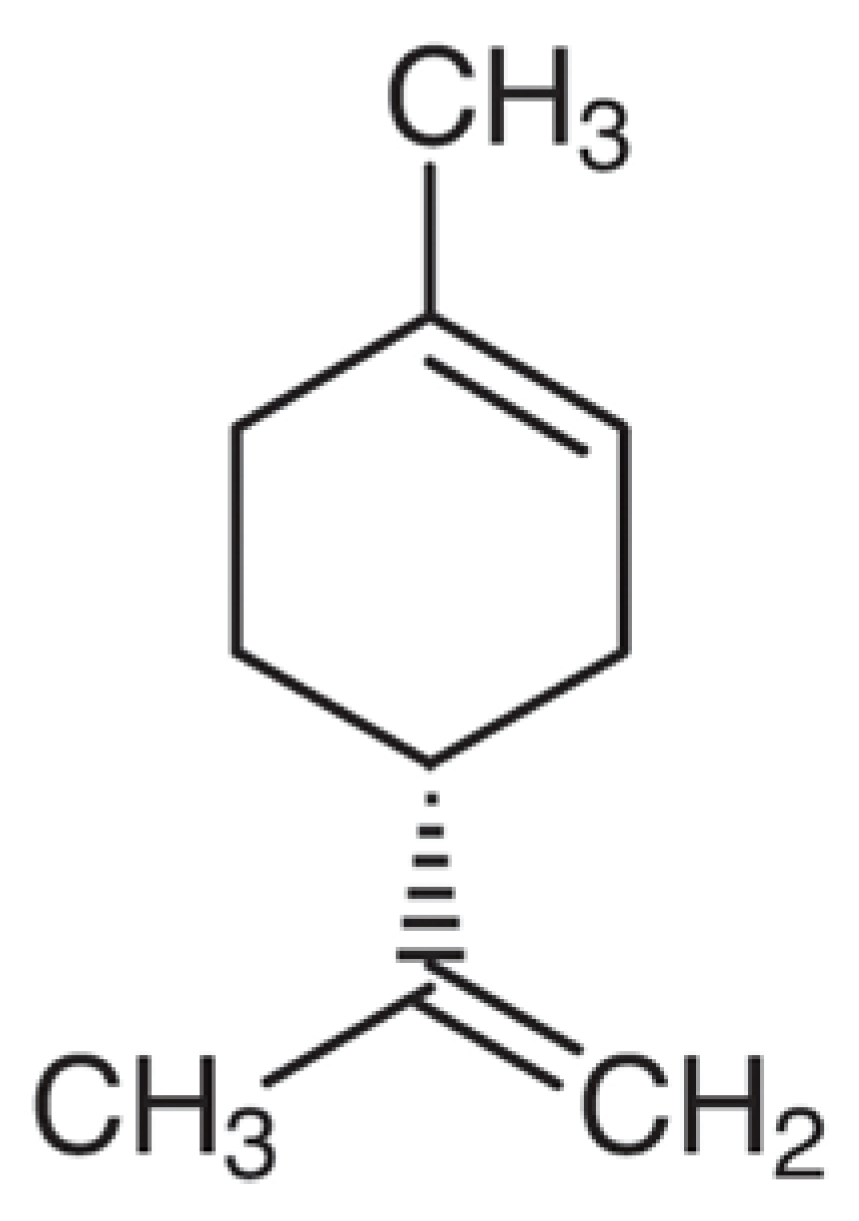
3. Citrus Limonene: Chemical Classification and Structure

4. Insecticidal Properties of Citrus Limonene
4.1. Repellent Activity
4.2. Fumigant Activity
4.3. Contact Toxicity
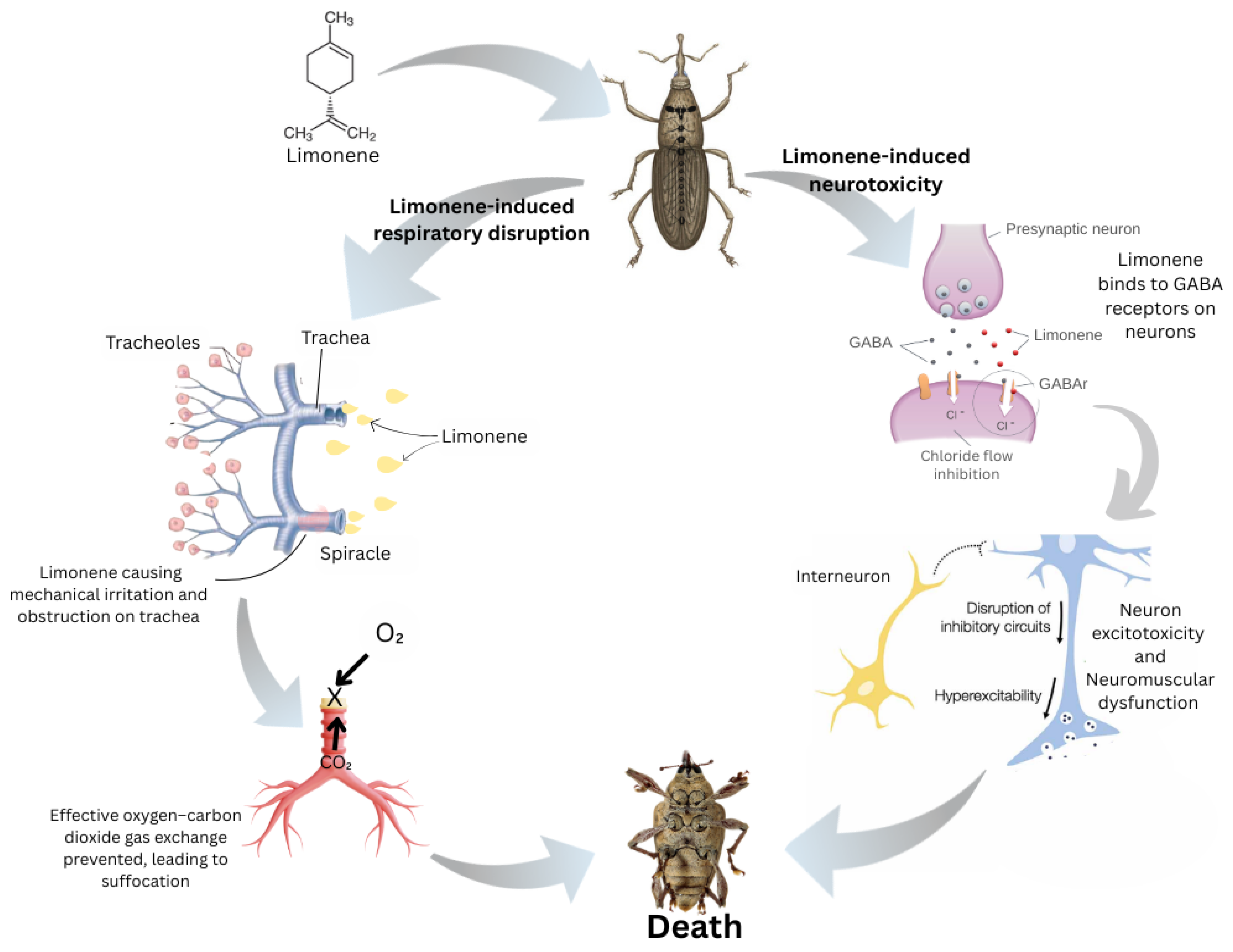
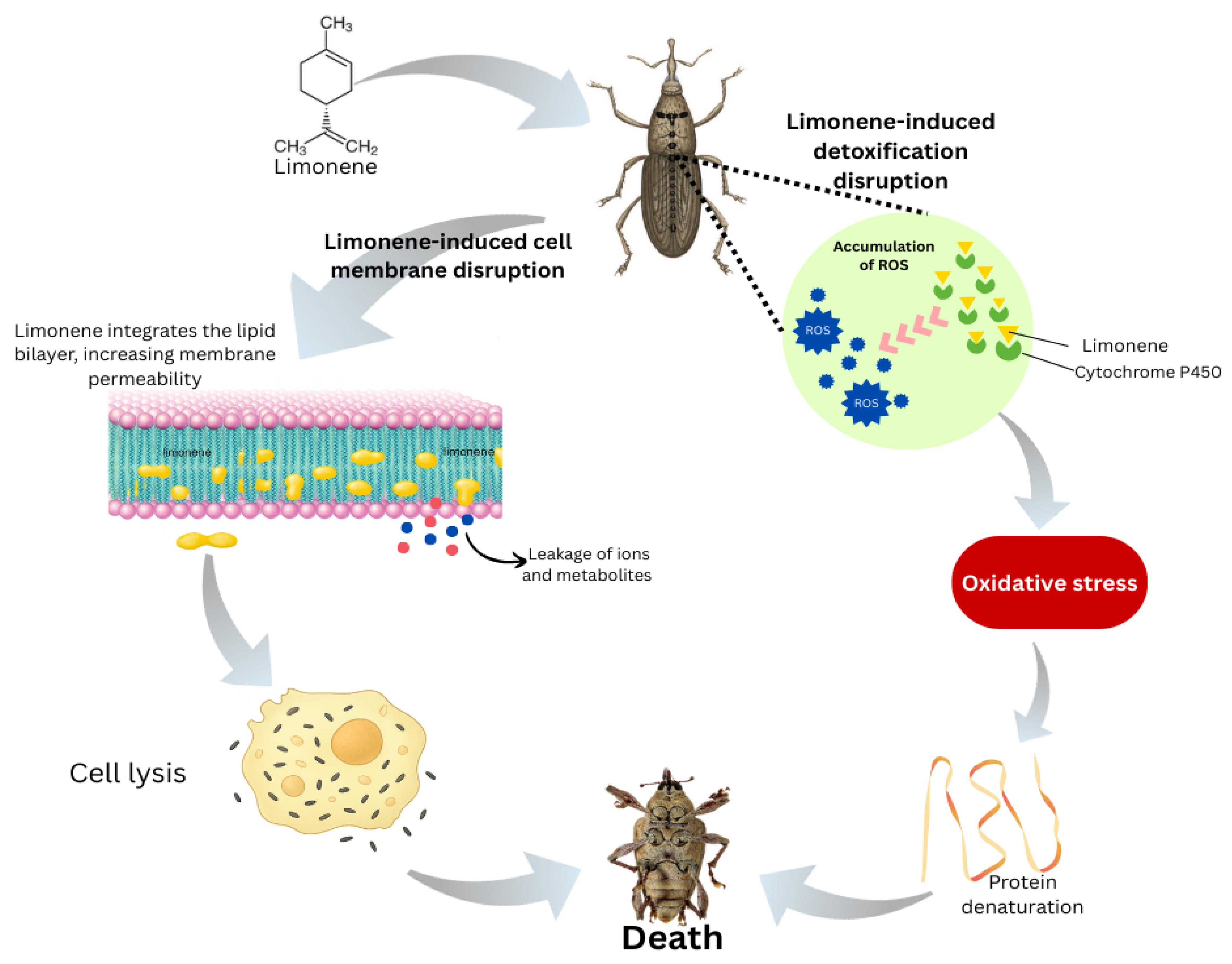
5. Mechanism of Action of Citrus Limonene on Maize Weevils
5.1. Neurotoxic Effects on the Nervous System
5.2. Volatility and Respiratory Disruption
5.3. Oxidative Stress and Disruption of Detoxification Pathways
5.4. Cell Membrane Penetration and Lipid Disruption

6. Prospects of Citrus Limonene as a Potential Biopesticide
7. Limitations of Citrus Limonene as a Potential Biopesticide
8. Conclusions and Recommendations
Author Contributions
Funding
Data Availability Statement
Acknowledgments
Conflicts of Interest
References
- Phokwe, O.J.; Manganyi, M.C. Medicinal plants as a natural greener biocontrol approach to “The Grain Destructor” Maize Weevil (Sitophilus zeamais) Motschulsky. Plants 2023, 12, 2505. [Google Scholar] [CrossRef]
- Akyenah, A.A.; Debrah, S.K.; Asomah, S.; Adjei, R.R.; Santo, K.G.; Anankware, J.P. Efficacy of three botanical powders and their combination against Sitophilus zeamais Motschulsky (Coleoptera: Curculionidae) in maize grain storage. Int. J. Trop. Insect Sci. 2025, 45, 681–688. [Google Scholar] [CrossRef]
- Cortese, D.; de Oliveira, G.S.; Fernandes, M.G. Resistance evaluation of maize varieties to Sitophilus zeamais infestation across two generations: Insights for Integrated Pest Management. J. Stored Prod. Res. 2024, 109, 102473. [Google Scholar] [CrossRef]
- Koca, A.S.; Yılmaz, A. Effective control of Sitophilus zeamais (Motsch.) (Coleoptera: Curculionidae) using essential oil blends: An alternative to single-oil applications. J. Crop Health 2025, 77, 57. [Google Scholar] [CrossRef]
- Kaur, M.; Kaur, G.; Birwal, P.; Kaur, R.; Sandhya. Storage of maize and its products. In Maize; CRC Press: Boca Raton, FL, USA, 2022; pp. 325–356. [Google Scholar]
- Asibe, F.A.; Ngegba, P.M.; Mugehu, E.; Afolabi, C.G. Status and management strategies of major insect pests and fungal diseases of maize in Africa: A review. Afr. J. Agric. Res. 2023, 19, 686. [Google Scholar] [CrossRef]
- Khan, A.A. Insect as major carrier of aflatoxins and mycotoxin in foods: A review. J. Entomol. Zool. Stud. 2024, 12, 46–53. [Google Scholar] [CrossRef]
- Arrahman, A.; Saenong, M. Controlling maize weevil in corn plants by improving cultivation technology and postharvest handling. In IOP Conference Series: Earth and Environmental Science; IOP Publishing: Bristol, UK, 2021. [Google Scholar]
- Akinlosoye, J.; Akinfiresoye, W.A.; Akinwumiju, B.D.; Olumakinwa, C.D. Determination of the efficacy of rice husk biochar as biopesticide against Sitophilus zeamais. Int. J. Sci. Res. Arch. 2025, 14, 16–24. [Google Scholar] [CrossRef]
- Tom, F. Diversity of Storage Insect Pests in Maize and Susceptibility of Maize Varieties to Maize Weevil (Sitophilus zeamais). Doctoral Dissertation, University of Nairobi, Nairobi, Kenya, 2011. [Google Scholar]
- Khakata, S. Post-Harvest Evaluation of Maize Genotypes for Resistance to Maize Weevil (Sitophilus zeamais) and Larger Grain Borer (Prostephanus truncatus) Infestation. Doctoral Dissertation, University of Nairobi, Nairobi, Kenya, 2018. [Google Scholar]
- Sousa, P.A.; Neto, J.; Barbosa, J.V.; Peres, J.; Magro, A.; Barros, G.; Sousa, J.M.; Magalhães, F.D.; Mexia, A.; Aguiar, A.A.R.M.; et al. Novel approach for a controlled delivery of essential Oils during long-term maize storage: Clove bud and pennyroyal oils efficacy to control Sitophilus zeamais, reducing grain damage and post-harvest losses. Insects 2023, 14, 366. [Google Scholar] [CrossRef]
- Tefera, T.; Kanampiu, F.; De Groote, H.; Hellin, J.; Mugo, S.; Kimenju, S.; Beyene, Y.; Boddupalli, P.M.; Shiferaw, B.; Banziger, M. The metal silo: An effective grain storage technology for reducing post-harvest insect and pathogen losses in maize while improving smallholder farmers’ food security in developing countries. Crop Prot. 2011, 30, 240–245. [Google Scholar] [CrossRef]
- Gumede, B.C.; Kuria, S.K. Postharvest Practices and Farmers’ Knowledge in Managing Maize Pests in the Eastern Cape Province, South Africa. Insects 2025, 16, 48. [Google Scholar] [CrossRef]
- Sserumaga, J.P.; Makumbi, D.; Oikeh, S.O.; Otim, M.; Machida, L.; Anani, B.Y.; Nhamucho, E.; Beyene, Y.; Mugo, S. Evaluation of early-generation tropical maize testcrosses for grain-yield potential and weevil (Sitophilus zeamais Motschulsky) resistance. Crop Prot. 2021, 139, 105384. [Google Scholar] [CrossRef]
- Baidhe, E.; Clementson, C.L.; Senyah, J.; Hammed, A. Appraisal of post-harvest drying and storage operations in Africa: Perspectives on enhancing grain quality. AgriEngineering 2024, 6, 3030–3057. [Google Scholar] [CrossRef]
- Okoroafor, E.; Job, M. Post-Harvest Loss And Nutritional Quality Of Popcorn And Local Maize Varieties Infested And Damaged By Maize Weevil, Sitophilus zeamais Motsch (Coleoptera: Curculionidae). IOSR J. Biotechnol. Biochem. 2017, 3, 63–67. [Google Scholar]
- Sebayang, A.; Rohimatun; Salim; Rubiana, R.; Sipi, S.; Manwan, S.W.; Fattah, A.; Arrahman, A.; Yasin, M.; Saenong, M.S. Sitophilus zeamais (Motschulsky): The primary obstacles in the maize quality and quantity. In IOP Conference Series: Earth and Environmental Science; IOP Publishing: Bristol, UK, 2023. [Google Scholar]
- Ferreira-Castro, F.L.; Potenza, M.; Rocha, L.; Correa, B. Interaction between toxigenic fungi and weevils in corn grain samples. Food Control 2012, 26, 594–600. [Google Scholar] [CrossRef]
- Ndiso, J.; Mugo, S.; Kibe, A.M.; Pathaka, R.S.; Likhayo, P. Screening Kenya local coastal maize landraces for resistance to maize weevil (Sitophilus zeamais Motschulsky) and larger grain borer (Prostephanus truncates). Int. J. Plant Res. 2017, 7, 5–11. [Google Scholar]
- Ndiso, J.; Mugo, S.; Kibe, A.M.; Pathaka, R.S.; Likhayo, P. Determination of Maize Landraces for Resistance to Maize Weevil (Sitophilus zeamais Motschulsky) and Larger Grain Borer (Prostephanus truncates): A Case Study from Kenya. Emerg. Issues Agric. Sci. 2023, 6, 142–155. [Google Scholar]
- Tefera, T.; Mugo, S.; Beyene, Y. Developing and deploying insect-resistant maize varieties to reduce pre-and post-harvest food losses in Africa. Food Secur. 2016, 8, 211–220. [Google Scholar] [CrossRef]
- Nwosu, L.C. Maize and the maize weevil: Advances and innovations in postharvest control of the pest. Food Qual. Saf. 2018, 2, 145–152. [Google Scholar] [CrossRef]
- Kumar, R.; Singh, A.; Srivastava, A. Production of biopesticides from agricultural waste as an alternative to chemical pesticides. In Agro-Waste to Microbe Assisted Value Added Product: Challenges and Future Prospects: Recent Developments in Agro-Waste Valorization Research; Springer: Cham, Switzerland, 2024; pp. 365–379. [Google Scholar]
- Brito, V.D.; Achimón, F.; Pizzolitto, R.P.; Sánchez, A.R.; Torres, E.A.G.; Zygadlo, J.A.; Zunino, M.P. An alternative to reduce the use of the synthetic insecticide against the maize weevil Sitophilus zeamais through the synergistic action of Pimenta racemosa and Citrus sinensis essential oils with chlorpyrifos. J. Pest Sci. 2021, 94, 409–421. [Google Scholar] [CrossRef]
- Khursheed, A.; Rather, M.A.; Jain, V.; Wani, A.R.; Rasool, S.; Nazir, R.; Malik, N.A.; Majid, S.A. Plant based natural products as potential ecofriendly and safer biopesticides: A comprehensive overview of their advantages over conventional pesticides, limitations and regulatory aspects. Microb. Pathog. 2022, 173, 105854. [Google Scholar] [CrossRef]
- Serrão, J.E.; Plata-Rueda, A.; Martínez, L.C.; Zanuncio, J.C. Side-effects of pesticides on non-target insects in agriculture: A mini-review. Sci. Nat. 2022, 109, 17. [Google Scholar] [CrossRef]
- Hashimi, M.H.; Hashimi, R.; Ryan, Q. Toxic effects of pesticides on humans, plants, animals, pollinators and beneficial organisms. Asian Plant Res. J. 2020, 5, 37–47. [Google Scholar] [CrossRef]
- Fidelugwuowo, U.B. Knowledge of Garden Egg Farmers’ Safe Usage and Application of Pesticides in South East, Nigeria. J. Inf. Knowl. Manag. 2025, 24, 2550024. [Google Scholar] [CrossRef]
- Aftab, M.; Khan, M.; Habib, U.; Ahmad, M. Biopesticide application on kinnow mandarin (Citrus reticulata Blanco) with improved pruning can enhance cosmetic and physical characters in fruit. Appl. Ecol. Environ. Res. 2021, 19, 5033–5044. [Google Scholar] [CrossRef]
- de Carvalho Brito, R.; Fontes, L.d.S.; da Silva, P.H.S.; Santana, C.d.S.; Barbosa, D.R.e.S. Essential oils from Betula lenta, Cinnamomum cassia, Citrus aurantium var. Amara and Acorus calamus as biopesticides against cowpea weevil. Int. J. Trop. Insect Sci. 2022, 42, 261–268. [Google Scholar] [CrossRef]
- Gupta, H.; Singh, P.P.; Reddy, S.E. Exploring the chemical profiling and insecticidal properties of essential oils from fresh and discarded lemon peels, Citrus limon against pulse beetle. Int. Biodeterior. Biodegrad. 2025, 196, 105924. [Google Scholar] [CrossRef]
- Mursiti, S.; Lestari, N.A.; Febriana, Z.; Rosanti, Y.M.; Ningsih, T.W. The activity of d-limonene from sweet orange peel (Citrus sinensis L.) exctract as a natural insecticide controller of bedbugs (Cimex cimicidae). Orient. J. Chem. 2019, 35, 1420. [Google Scholar] [CrossRef]
- Silwanyana, Y.; Mazwi, V.; Miya, G.; Oriola, A.O.; Hosu, Y.S.; Oyedeji, A.O.; Oyedeji, O.O.; Kuria, S.K. Effectiveness of citrus essential oils as a biopesticide against stored food product pests: A review. J. Essent. Oil Bear. Plants 2025, 28, 224–240. [Google Scholar] [CrossRef]
- Showler, A.T.; Harlien, J.L.; Perez de Léon, A.A. Effects of laboratory grade limonene and a commercial limonene-based insecticide on Haematobia irritans irritans (Muscidae: Diptera): Deterrence, mortality, and reproduction. J. Med. Entomol. 2019, 56, 1064–1070. [Google Scholar] [CrossRef]
- Ibáñez, M.D.; Sanchez-Ballester, N.M.; Blázquez, M.A. Encapsulated limonene: A pleasant lemon-like aroma with promising application in the agri-food industry. A review. Molecules 2020, 25, 2598. [Google Scholar] [CrossRef]
- Lin, H.; Li, Z.; Sun, Y.; Zhang, Y.; Wang, S.; Zhang, Q.; Cai, T.; Xiang, W.; Zeng, C.; Tang, J. D-Limonene: Promising and sustainable natural bioactive compound. Appl. Sci. 2024, 14, 4605. [Google Scholar] [CrossRef]
- Al Kamaly, O.; Numan, O.; Almrfadi, O.M.A.; Alanazi, A.S.; Conte, R. Separation and evaluation of potential antioxidant, analgesic, and anti-inflammatory activities of limonene-rich essential oils from Citrus sinensis (L.). Open Chem. 2022, 20, 1517–1530. [Google Scholar] [CrossRef]
- Singh, B.; Singh, J.P.; Kaur, A.; Yadav, M.P. Insights into the chemical composition and bioactivities of citrus peel essential oils. Food Res. Int. 2021, 143, 110231. [Google Scholar] [CrossRef] [PubMed]
- Harshani, H.S.; Karunaratne, S. Chemical composition and insecticidal effect of fruit peel powders of two citrus species against Callosobruchus maculatus (F.) (Coleoptera: Bruchidae) in stored cowpea (Vigna unguiculata). Int. J. Pest Manag. 2021, 67, 131–138. [Google Scholar] [CrossRef]
- Marmulla, R.; Harder, J. Microbial monoterpene transformations—A review. Front. Microbiol. 2014, 5, 346. [Google Scholar] [CrossRef]
- Eddin, L.B.; Jha, N.K.; Meeran, M.F.N.; Kesari, K.K.; Beiram, R.; Ojha, S. Neuroprotective potential of limonene and limonene containing natural products. Molecules 2021, 26, 4535. [Google Scholar] [CrossRef]
- Yang, X.; Gao, Q.; Zheng, X. Microbial Isoprenoids as Drop-In Biofuel. In The Microbiology of the Drop-In Biofuel Production; Springer: Cham, Switzerland, 2024; pp. 245–287. [Google Scholar]
- Anandakumar, P.; Kamaraj, S.; Vanitha, M.K. D-limonene: A multifunctional compound with potent therapeutic effects. J. Food Biochem. 2021, 45, e13566. [Google Scholar] [CrossRef]
- Achimón, F.; Leal, L.E.; Pizzolitto, R.P.; Brito, V.D.; Alarcón, R.; Omarini, A.B.; Zygadlo, J.A. Insecticidal and antifungal effects of lemon, orange, and grapefruit peel essential oils from Argentina. AgriScientia 2022, 39, 71–82. [Google Scholar] [CrossRef]
- Liu, Z.; Li, Q.X.; Song, B. Pesticidal activity and mode of action of monoterpenes. J. Agric. Food Chem. 2022, 70, 4556–4571. [Google Scholar] [CrossRef]
- Oyedeji, A.; Okunowo, W.; Osuntoki, A.; Olabode, T.; Ayo-Folorunso, F. Insecticidal and biochemical activity of essential oil from Citrus sinensis peel and constituents on Callosobrunchus maculatus and Sitophilus zeamais. Pestic. Biochem. Physiol. 2020, 168, 104643. [Google Scholar] [CrossRef]
- Malacrinò, A.; Campolo, O.; Laudani, F.; Palmeri, V. Fumigant and repellent activity of limonene enantiomers against Tribolium confusum du Val. Neotrop. Entomol. 2016, 45, 597–603. [Google Scholar] [CrossRef] [PubMed]
- Wang, X.; Huang, S.; Wang, S.; Chen, S.; Dong, S.; Zhu, Y. Effect of D-limonene on volatile fatty acids production from anaerobic fermentation of waste activated sludge under pH regulation: Performance and mechanisms. J. Environ. Manag. 2024, 370, 122828. [Google Scholar] [CrossRef] [PubMed]
- Giunti, G.; Palermo, D.; Laudani, F.; Algeri, G.M.; Campolo, O.; Palmeri, V. Repellence and acute toxicity of a nano-emulsion of sweet orange essential oil toward two major stored grain insect pests. Ind. Crops Prod. 2019, 142, 111869. [Google Scholar] [CrossRef]
- Bedini, S.; Bougherra, H.; Flamini, G.; Cosci, F.; Belhamel, K.; Ascrizzi, R.; Conti, B. Repellency of anethole-and estragole-type fennel essential oils against stored grain pests: The different twins. Bull. Insectol. 2016, 69, 149–157. [Google Scholar]
- Chaubey, M.K. Insecticidal activities of Anethum graveolens L. and Illicium verum Hook. f. essential oils against Sitophilus zeamais Motschulsky. Rev. Cienc. Agríc. 2021, 38, 38–49. [Google Scholar]
- Abad, M.K.R.; Besheli, B.A. Insecticidal potential of essential oil from the leaves of Citrus aurantium L. against Oryzaephilus surinamensis (F.), Lasioderma serricorne (L.) and Sitophilus oryzae (L.). J. Entomol. Zool. Stud. 2016, 4, 865–869. [Google Scholar]
- Oboh, G.; Ademosun, A.O.; Olumuyiwa, T.A.; Olasehinde, T.A.; Ademiluyi, A.O.; Adeyemo, A.C. Insecticidal activity of essential oil from orange peels (Citrus sinensis) against Tribolium confusum, Callosobruchus maculatus and Sitophilus oryzae and its inhibitory effects on acetylcholinesterase and Na+/K+-ATPase activities. Phytoparasitica 2017, 45, 501–508. [Google Scholar] [CrossRef]
- Fouad, H.A.; da Camara, C.A. Chemical composition and bioactivity of peel oils from Citrus aurantiifolia and Citrus reticulata and enantiomers of their major constituent against Sitophilus zeamais (Coleoptera: Curculionidae). J. Stored Prod. Res. 2017, 73, 30–36. [Google Scholar] [CrossRef]
- Kidane, D. The potential of orange (Citrus sinensis L.) peel oil as a fumigant and repellent to control maize weevil (Sitophillus zeamais Motsch). J. Biol. Act. Prod. Nat. 2011, 1, 193–199. [Google Scholar] [CrossRef]
- Cosimi, S.; Rossi, E.; Cioni, P.L.; Canale, A. Bioactivity and qualitative analysis of some essential oils from Mediterranean plants against stored-product pests: Evaluation of repellency against Sitophilus zeamais Motschulsky, Cryptolestes ferrugineus (Stephens) and Tenebrio molitor (L.). J. Stored Prod. Res. 2009, 45, 125–132. [Google Scholar] [CrossRef]
- Kim, S.-I.; Lee, D.-W. Toxicity of basil and orange essential oils and their components against two coleopteran stored products insect pests. J. Asia-Pac. Entomol. 2014, 17, 13–17. [Google Scholar] [CrossRef]
- Abdullahi, N.; Kabir, A.; Yushau, M. Studies on the efficacy of lime peel oil in protecting stored maize against adult maize weevils (Sitophilus zeamais Motschusky). J. Entomol. 2011, 8, 398–403. [Google Scholar] [CrossRef]
- Lu, S.; Zhang, L.; Lu, Y.; Chen, M.; Wang, Z. Host volatiles potentially drive two evolutionarily related weevils to select different grains. Insects 2024, 15, 300. [Google Scholar] [CrossRef] [PubMed]
- Yu, J. Chemical Composition of Essential Oils and Their Potential Applications in Postharvest Storage of Cereal Grains. Molecules 2025, 30, 683. [Google Scholar] [CrossRef] [PubMed]
- Liao, M.; Li, S.; Wu, H.; Gao, Q.; Shi, S.; Huang, Y.; Cao, H. Transcriptomic analysis of Sitophilus zeamais in response to limonene fumigation. Pest Manag. Sci. 2022, 78, 4774–4782. [Google Scholar] [CrossRef] [PubMed]
- Rossi, Y.E.; Palacios, S.M. Fumigant toxicity of Citrus sinensis essential oil on Musca domestica L. adults in the absence and presence of a P450 inhibitor. Acta Trop. 2013, 127, 33–37. [Google Scholar] [CrossRef]
- Don-Pedro, K.N. Fumigant toxicity of citruspeel oils against adult and immature stages of storage insect pests. Pestic. Sci. 1996, 47, 213–223. [Google Scholar] [CrossRef]
- Ibrahim, M.A.; Kainulainen, P.; Aflatuni, A. Insecticidal, repellent, antimicrobial activity and phytotoxicity of essential oils: With special reference to limonene and its suitability for control of insect pests. Agric. Food Sci. 2001, 10, 243–259. [Google Scholar] [CrossRef]
- Ukoroije, R.B.; Otayor, R.A. Review on the bio-insecticidal properties of some plant secondary metabolites: Types, formulations, modes of action, advantages and limitations. Asian J. Res. Zool. 2020, 3, 27–60. [Google Scholar]
- Bava, R.; Castagna, F.; Palma, E.; Marrelli, M.; Conforti, F.; Musolino, V.; Carresi, C.; Lupia, C.; Ceniti, C.; Tilocca, B.; et al. Essential oils for a sustainable control of honeybee varroosis. Vet. Sci. 2023, 10, 308. [Google Scholar] [CrossRef]
- Yıldırım, E.; Emsen, B.; Kordalı, S. Insecticidal effects of monoterpenes on Sitophilus zeamais Motschulsky (Coleoptera: Curculionidae). J. Appl. Bot. Food Qual. 2013, 86, 198–204. [Google Scholar]
- Agarwal, P.; Sebghatollahi, Z.; Kamal, M.; Dhyani, A.; Shrivastava, A.; Singh, K.K.; Sinha, M.; Mahato, N.; Mishra, A.K.; Baek, K.-H. Citrus essential oils in aromatherapy: Therapeutic effects and mechanisms. Antioxidants 2022, 11, 2374. [Google Scholar] [CrossRef] [PubMed]
- Alkanat, M.; Alkanat, H.Ö. D-Limonene reduces depression-like behaviour and enhances learning and memory through an anti-neuroinflammatory mechanism in male rats subjected to chronic restraint stress. Eur. J. Neurosci. 2024, 60, 4491–4502. [Google Scholar] [CrossRef]
- Hartley, N.; McLachlan, C.S. Aromas influencing the GABAergic system. Molecules 2022, 27, 2414. [Google Scholar] [CrossRef] [PubMed]
- Koyama, S.; Heinbockel, T. The effects of essential oils and terpenes in relation to their routes of intake and application. Int. J. Mol. Sci. 2020, 21, 1558. [Google Scholar] [CrossRef]
- Chaubey, M.K. Chapter-3 Biology of Common Stored-Grain Insect Pests. In Latest Trends in Zoology and Entomology Sciences; AkiNik Publications: New Delhi, India, 2022; p. 31. [Google Scholar]
- Radünz, A.; Radünz, M.; Bizollo, A.R.; Tramontin, M.A.; Radünz, L.L.; Mariot, M.P.; Tempel-Stumpf, E.R.; Calisto, J.F.F.; Zaniol, F.; Albeny-Simões, D.; et al. Insecticidal and repellent activity of native and exotic lemongrass on Maize weevil. Braz. J. Biol. 2022, 84, e252990. [Google Scholar] [CrossRef]
- Sikhan, A.; Gautam, P.; Kaur, S.; Dhar, P.; Rawat, P.S. Insecticidal Efficacy of Essential Oil Extracted from Therapeutic Plant. Rayat Bahra Int. J. Multidiscip. Res. 2023, 3, 78–88. [Google Scholar]
- Parween, T.; Jan, S. Ecophysiology of Pesticides: Interface Between Pesticide Chemistry and Plant Physiology; Academic Press: Cambridge, MA, USA, 2019. [Google Scholar]
- Shamjana, U.; Grace, T. Review of insecticide resistance and its underlying mechanisms in Tribolium castaneum. In Insecticides-Impact and Benefits of Its Use for Humanity; IntechOpen: London, UK, 2021. [Google Scholar]
- Araújo, M.F.; Castanheira, E.M.; Sousa, S.F. The buzz on insecticides: A review of uses, molecular structures, targets, adverse effects, and alternatives. Molecules 2023, 28, 3641. [Google Scholar] [CrossRef]
- Ogunro, O.B.; Richard, G.; Izah, S.C.; Ovuru, K.F.; Babatunde, O.T.; Das, M. Citrus aurantium: Phytochemistry, therapeutic potential, safety considerations, and research needs. In Herbal Medicine Phytochemistry: Applications and Trends; Springer: Cham, Switzerland, 2024; pp. 181–219. [Google Scholar]
- Zhang, S.; He, Y.; Sen, B.; Wang, G. Reactive oxygen species and their applications toward enhanced lipid accumulation in oleaginous microorganisms. Bioresour. Technol. 2020, 307, 123234. [Google Scholar] [CrossRef]
- Adetuyi, B.O.; Odelade, K.A.; Olajide, P.A.; Adetunji, C.O.; Adetunji, J.B.; Inobeme, A.; Godwin, Y.D.; Ajenifujah-Solebo, O.; Akinbo, O.; Popoola, O.A.; et al. The application of essential oil as an antimicrobial agent in dairy products. In Applications of Essential Oils in the Food Industry; Elsevier: Amsterdam, The Netherlands, 2024; pp. 99–105. [Google Scholar]
- Nouioura, G.; El Fadili, M.; Ghneim, H.K.; Zbadi, L.; Maache, S.; Zouirech, O.; Danouche, M.; Aboul-Soud, M.A.; Giesy, J.P.; Lyoussi, B.; et al. Exploring the essence of celery seeds (Apium graveolens L.): Innovations in microwave-assisted hydrodistillation for essential oil extraction using in vitro, in vivo and in silico studies. Arab. J. Chem. 2024, 17, 105726. [Google Scholar] [CrossRef]
- Li, C.; Zhang, C.; Chen, X.; Cui, H.; Lin, L. The interference mechanism of basil essential oil on the cell membrane barrier and respiratory metabolism of Listeria monocytogenes. Front. Microbiol. 2022, 13, 855905. [Google Scholar] [CrossRef]
- Babarinde, S.A.; Kemabonta, K.A.; Olatunde, O.Z.; Ojutiku, E.O.; Adeniyi, A.K. Composition and toxicity of rough lemon (Citrus jambhiri Lush.) rind essential oil against red flour beetle. Acta Ecol. Sin. 2021, 41, 325–331. [Google Scholar] [CrossRef]
- Medeleanu, M.L.; Fărcaș, A.C.; Coman, C.; Leopold, L.F.; Diaconeasa, Z.; Sendra, E.; Pedro, A.A.C.; Socaci, S.A. Citrus essential oils’ nano-emulsions: Formulation and characterization. Bull. UASVM Cluj-Napoca Food Sci. Technol. 2024, 81, 95–113. [Google Scholar] [CrossRef] [PubMed]
- Bibi, R.; Jahan, N.; Rasheed, K.; Samiah, S.; Hameed, A. C. limon Peels Based Nano-Bio pesticides: Formulation and Bioactivity against the Stored Pests and Microbes. Res. Sq. 2025, 1–23. [Google Scholar]
- Baker, O.S.; Norris, E.J.; Burgess, E.R., IV. Insecticidal and synergistic potential of three monoterpenoids against the yellow fever mosquito, Aedes aegypti (Diptera: Culicidae), and the house fly, Musca domestica (Diptera: Muscidae). Molecules 2023, 28, 3250. [Google Scholar] [CrossRef] [PubMed]
- Fouad, H.A.; da Camara, C.A.; de Moraes, M.M.; de Melo, J.P. The synergistic effects of five essential oils and eight chiral compounds on deltamethrin-piperonyl butoxide insecticide against Sitophilus zeamais (Coleoptera: Curculionidae). J. Asia-Pac. Entomol. 2023, 26, 102072. [Google Scholar] [CrossRef]
- Visakh, N.U.; Pathrose, B.; Chellappan, M.; Ranjith, M.; Sindhu, P.; Mathew, D. Chemical characterisation, insecticidal and antioxidant activities of essential oils from four Citrus spp. fruit peel waste. Food Biosci. 2022, 50, 102163. [Google Scholar] [CrossRef]
- Riaz, M.; Qadir, R.; Anwar, F.; Eman, R.; Rehman, M.F.U.; Akram, M.S. Chemical characterization, antioxidant, antimicrobial, cytotoxicity and in silico studies of hexane extract and essential oils from Citrus limon leaves. Chem. Biodivers. 2023, 20, e202200537. [Google Scholar] [CrossRef]


| Citrus spp. | Plant Part | Toxicity Effect | Reference |
|---|---|---|---|
| Repellent Activity | |||
| Citrus aurantium | Leaves | PR3h = 100% | [53] |
| Citrus sinensis | Peels | LC50; 24h = 29.51 μL/L air | [54] |
| Citrus aurantiifolia | Peels | PR4h = 27.5% | [55] |
| Citrus sinensis | Peels | PR30min = 25.70% | [56] |
| Citrus bergamia | Leaves | RI24h = 56.3% | [57] |
| Citrus reticulata | Peels | PR4h = 30% | [55] |
| Fumigation Activity | |||
| Citrus sinensis | Peels | LC50; 3d = 80.01 mL/L air | [47] |
| Citrus aurantiifolia | Peels | LC50; 24h = 58.51 μL/L | [55] |
| Citrus sinensis | Purchased | LC50; 24h = 75.80 μL/L | [25] |
| Citrus sinensis | Peels | PM24h = 61.25% | [56] |
| Citrus sinensis | Peels | LC50; 24h = 0.12 mg/cm3 | [58] |
| Citrus reticulata | Peels | LC50; 24h = 41.92 μL/L | [55] |
| Contact Toxicity | |||
| Citrus sinensis | Peels | LC50; 24h = 95.63 μg/adult | [47] |
| Citrus aurantiifolia | Peels | LC50; 24h = 71.18 μL/mL | [55] |
| Citrus aurantiifolia | Peels | PM3d = 100% | [59] |
| Citrus sinensis | Peels | LC50; 24h = 0.19 mg/adult | [58] |
| Citrus reticulata | Peels | LC50; 24h = 51.29 μL/mL | [55] |
Disclaimer/Publisher’s Note: The statements, opinions and data contained in all publications are solely those of the individual author(s) and contributor(s) and not of MDPI and/or the editor(s). MDPI and/or the editor(s) disclaim responsibility for any injury to people or property resulting from any ideas, methods, instructions or products referred to in the content. |
© 2026 by the authors. Licensee MDPI, Basel, Switzerland. This article is an open access article distributed under the terms and conditions of the Creative Commons Attribution (CC BY) license.
Share and Cite
Silwanyana, Y.; Oriola, A.O.; Miya, G.M.; Hosu, Y.S.; Oyedeji, A.O.; Oyedeji, O.O.; Kuria, S.K. Citrus Limonene as a Potential Source of Biopesticides Against Maize Weevils. Agriculture 2026, 16, 703. https://doi.org/10.3390/agriculture16060703
Silwanyana Y, Oriola AO, Miya GM, Hosu YS, Oyedeji AO, Oyedeji OO, Kuria SK. Citrus Limonene as a Potential Source of Biopesticides Against Maize Weevils. Agriculture. 2026; 16(6):703. https://doi.org/10.3390/agriculture16060703
Chicago/Turabian StyleSilwanyana, Yamkela, Ayodeji Oluwabunmi Oriola, Gugulethu Mathews Miya, Yiseyon Sunday Hosu, Adebola Omowunmi Oyedeji, Opeoluwa Oyehan Oyedeji, and Simon Kamande Kuria. 2026. "Citrus Limonene as a Potential Source of Biopesticides Against Maize Weevils" Agriculture 16, no. 6: 703. https://doi.org/10.3390/agriculture16060703
APA StyleSilwanyana, Y., Oriola, A. O., Miya, G. M., Hosu, Y. S., Oyedeji, A. O., Oyedeji, O. O., & Kuria, S. K. (2026). Citrus Limonene as a Potential Source of Biopesticides Against Maize Weevils. Agriculture, 16(6), 703. https://doi.org/10.3390/agriculture16060703