Article

Biochar Derived from Black Liquor as a Soil Amendment: Effects on Soil Quality, Growth Parameters, Chlorophyll and Mineral Content of Barley

by
Anca Maria Zaharioiu
1,*,
Oana Maria Tanislav
1,2,
Marius Constantinescu
1,
Antoaneta Roman
1,3,
Felicia Bucura
1,
Violeta-Carolina Niculescu
1,
Simona Oancea
2 and
Florian Marin
1,2
1
National Research and Development Institute for Cryogenic and Isotopic Technologies—ICSI Ramnicu Valcea, 4th Uzinei Street, 240050 Ramnicu Valcea, Romania
2
Faculty of Agricultural Sciences, Food Industry and Environmental Protection, “Lucian Blaga” University of Sibiu, 7-9 I. Ratiu Str., 550012 Sibiu, Romania
3
Doctoral School of Chemical Engineering and Biotechnologies, National University of Science and Technology POLITEHNICA Bucharest, Gheorghe Polizu Street 1-7, District 1, 011061 Bucharest, Romania
*
Author to whom correspondence should be addressed.
Agriculture 2026, 16(6), 659; https://doi.org/10.3390/agriculture16060659
Submission received: 6 February 2026 / Revised: 9 March 2026 / Accepted: 13 March 2026 / Published: 13 March 2026

Abstract

This study investigated the application of biochar obtained from black liquor, a residue generated during the Kraft pulping process in the paper industry, as a sustainable soil amendment in barley (Hordeum vulgare L.) cultivation. The biochar was produced through controlled pyrolysis at 450 °C and subsequently characterized with respect to elemental composition, porosity, specific surface area, and chemical stability, confirming its suitability for agricultural use. The experiment comprised three treatments: unamended soil (control), soil supplemented with 3% biochar, and soil fertilized with NPK, all conducted under controlled growth conditions. The results showed that biochar significantly improved key soil fertility indicators, increasing cation exchange capacity from 11 to 19 cmol(+)/kg and soil organic matter from 2.1% to 2.6%. Mineral nitrogen availability increased from 7.0 mg/kg to 10.5 mg/kg in the biochar treatment compared with the control. At the plant level, biochar enhanced early barley growth, with plant height increasing from 25 cm to 27 cm and chlorophyll content rising from 32.35 SPAD units to 39 SPAD units. Although NPK fertilization produced slightly higher immediate growth responses, biochar contributed to improved soil chemical properties and nutrient retention. Overall, the results suggest that black liquor-derived biochar shows potential as a complementary soil amendment under controlled conditions.

1. Introduction

Contemporary agriculture faces numerous interconnected challenges, driven by factors such as rapid global population growth, climate change, soil degradation, and the rising demand for food security. The United Nations projects that the world population could reach around 9.7 billion by 2050, necessitating a substantial increase in food production to meet global needs [1]. This demand is already reflected in the expansion of cultivated areas, intensified farming practices, and the widespread reliance on chemical fertilizers.
While conventional mineral fertilizers contribute significantly to yield improvement, their overuse or mismanagement can negatively affect ecosystems. Consequences include soil acidification, nutrient leaching into groundwater, nitrogen losses to the atmosphere, and greenhouse gas emissions such as methane (CH4) and nitrous oxide (N2O) [2,3]. Agriculture is estimated to account for more than 50% of global anthropogenic CH4 emissions and over 80% of N2O emissions, exacerbating climate change [4]. Moreover, the efficiency of nutrient utilization in these fertilizers remains relatively low, highlighting the need for more sustainable approaches [5].
A further concern is the large amounts of agricultural residues generated each year, particularly in regions with intensive farming. In many cases, these residues are either burned or left unused, contributing to environmental pollution and resource waste [6]. This situation underscores the importance of adopting a circular economy framework in which organic waste is transformed into valuable products, reducing reliance on external inputs and lowering agriculture’s carbon footprint.
In this context, biochar has gained attention as a versatile organic amendment. Produced through the pyrolysis of biomass such as straw, crop residues, manure, or sludge under high temperatures and low oxygen conditions, biochar is a porous, carbon-rich material. Its physical-chemical properties, including high porosity, large specific surface area, alkaline pH, cation exchange capacity (CEC), and the presence of functional groups, enable it to enhance soil fertility, improve water retention, mobilize nutrients, and stimulate microbial activity [7,8].
Biochar’s characteristics depend on the type of biomass and pyrolysis parameters such as temperature, duration, and heating rate [9]. High-temperature pyrolysis (above 500 °C) typically produces a hydrophobic material with a large surface area and pore volume, suitable for nutrient adsorption and pollutant retention. Lower temperatures (<500 °C) tend to preserve oxygen-containing functional groups, which can help immobilize inorganic contaminants [10,11].
The elemental composition of biochar generally includes carbon, nitrogen, hydrogen, potassium, calcium, sodium, and magnesium, with carbon content increasing at higher pyrolysis temperatures while nitrogen and hydrogen decrease.
Its porous and chemically stable structure enhances soil properties by increasing CEC, reducing acidity, improving water retention, and supporting microbial growth. Studies have reported increases of up to 124.6% in soil electrical conductivity and up to 20% in CEC following biochar application [12,13], along with higher microbial biomass and respiratory activity [14,15].
Beyond serving as a soil amendment, biochar can act as a carrier for sustainable fertilizers. Its combination with organic and inorganic nutrient sources allows the creation of slow-release products suited to crop requirements [16]. Although biochar contains some nutrients, these may not fully meet plant needs, making supplementation necessary [17]. Phosphorus in biochar is mainly present in mineral form (30–98%), ensuring plant availability and offering an alternative source amidst the global phosphate shortage [18].
Biochar has been reported in the literature to contribute to carbon stabilization in soils; however, carbon sequestration was not directly evaluated in the present short-term study [19]. When integrated with fertilizers, it can serve as a controlled-release nutrient source, improving sustainability and input efficiency [20]. However, its effectiveness depends on multiple factors, including feedstock type, pyrolysis conditions, soil properties, crop species, and local climate [21].
In summary, incorporating biochar into agricultural systems within a circular economy framework offers a promising approach to enhancing soil fertility, reducing carbon emissions, valorizing agricultural residues, and improving nutrient efficiency.
Among the industrial residues with significant valorization potential, black liquor (BL) generated during the Kraft pulping process represents one of the largest alkaline waste streams in the pulp and paper industry. Globally, millions of tonnes of BL are produced annually, characterized by extremely high organic load, elevated chemical oxygen demand (COD), strong alkalinity (typically pH > 12), and high concentrations of lignin-derived compounds and inorganic salts. Although modern pulp mills recover a substantial fraction of BL for energy generation, surplus streams and processing residues remain challenging to manage due to their corrosive nature and treatment costs. If not properly handled, these effluents may contribute to water contamination and environmental pressure. Consequently, transforming BL into value-added products such as biochar represents a promising circular economy strategy, enabling the conversion of a problematic industrial byproduct into a functional material for agricultural applications.
Unlike most studies focusing on lignocellulosic or agricultural residue biochars, this work investigates biochar derived from Kraft black liquor, a highly alkaline industrial byproduct characterized by elevated mineral content. The novelty of the present study lies in the combined physicochemical characterization (BET, FTIR, Raman spectroscopy, SEM morphometry and PAHs assessment) together with a comparative soil–plant evaluation against conventional NPK fertilization under controlled conditions.
Against this background, the aim of this study was to investigate the potential of biochar derived from black liquor, a byproduct of the Kraft pulping process, as a soil amendment for barley cultivation under controlled conditions. This study combined physico-chemical characterization of the biochar with an evaluation of its short-term effects on soil agrochemical properties, including pH, cation exchange capacity, organic matter content, and mineral nitrogen availability. In parallel, early plant growth and physiological responses were assessed through measurements of plant height, chlorophyll content, and macronutrient (N, P, K) accumulation in aboveground biomass. The performance of the biochar derived from black liquor was further compared with conventional NPK fertilization in order to highlight its potential benefits and limitations within the context of sustainable agricultural practices and circular economy principles.
Although biochar from various industrial wastes has been investigated, studies addressing black liquor-derived biochar with integrated structural characterization and simultaneous soil–plant assessment remain limited.

2. Materials and Methods

2.1. Materials

2.1.1. Biochar Production

In this study, the biochar was produced from black liquor, an alkaline byproduct of the Kraft chemical pulping process used in the pulp and paper industry. Black liquor contains a complex mixture of compounds, including lignin, hemicellulose, organic carbon, and key minerals such as sodium, potassium, calcium, and sulfur [22].
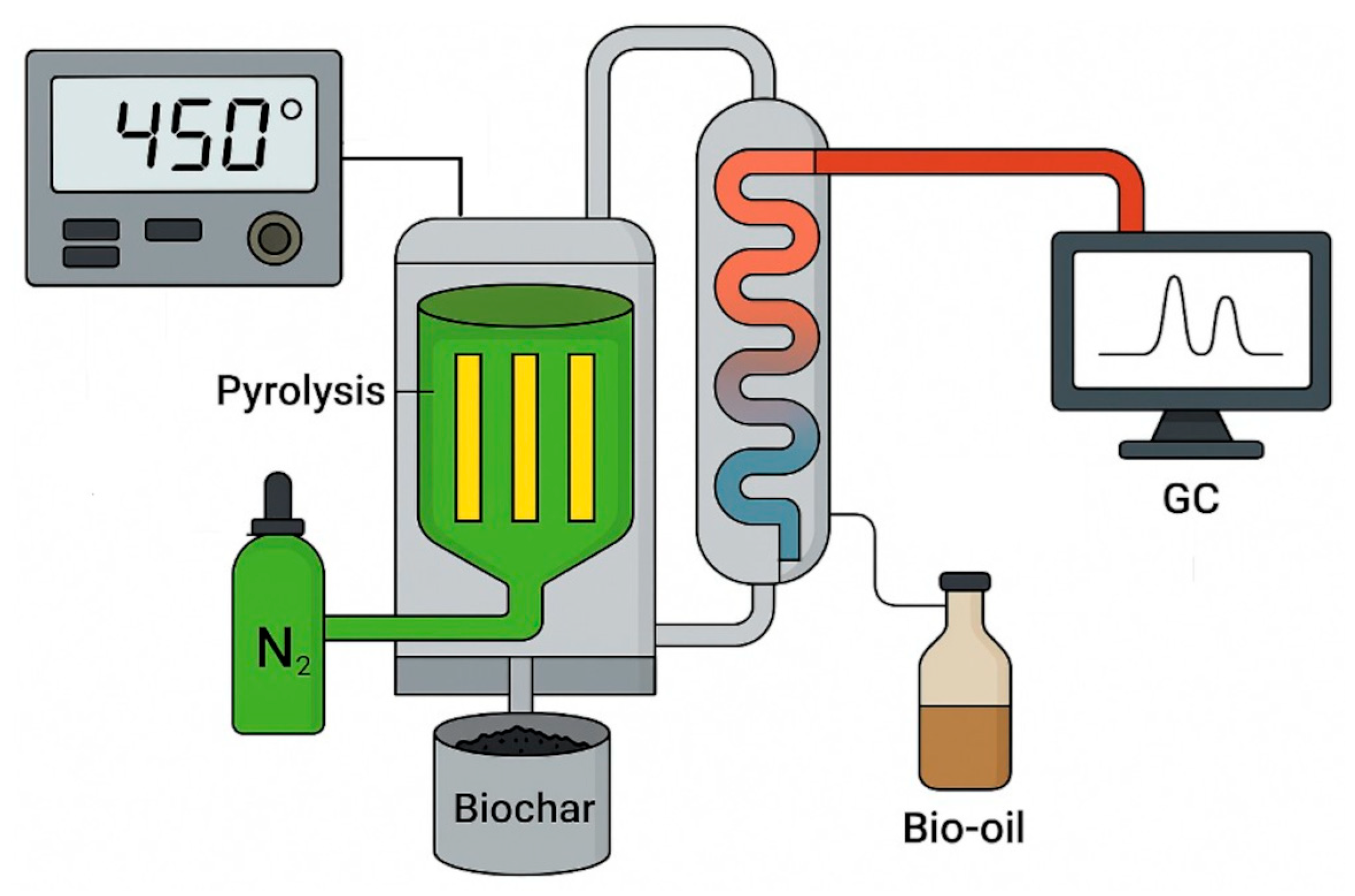
For its conversion into biochar, a laboratory-scale pyrolysis reactor specifically designed for controlled operations was employed. The pyrolysis process was performed in a pyrolysis reactor at 450 °C, with a heating rate of 10 °C/min, as shown in Figure 1. The material was maintained at the target temperature for two hours to ensure complete thermochemical transformation of the organic constituents. The process was carried out under a nitrogen atmosphere to prevent oxidative reactions and minimize carbon losses [23]. The pyrolysis process of black liquor generates three main types of products: syngas, a gaseous mixture with energetic potential; bio-oil, the liquid fraction obtained by condensation of organic vapors; and biochar, a solid carbonaceous residue.
Following pyrolysis, the resulting biochar was allowed to cool gradually under the same inert nitrogen environment, avoiding contact with atmospheric oxygen that could compromise its structure. The solid product was then mechanically milled and sieved to particles smaller than 2 mm, ensuring a uniform granulometry suitable for application and subsequent analysis. Finally, the biochar was stored in airtight containers at room temperature in a dry environment to maintain its physical–chemical stability and prevent moisture uptake.

2.1.2. Barley Crop

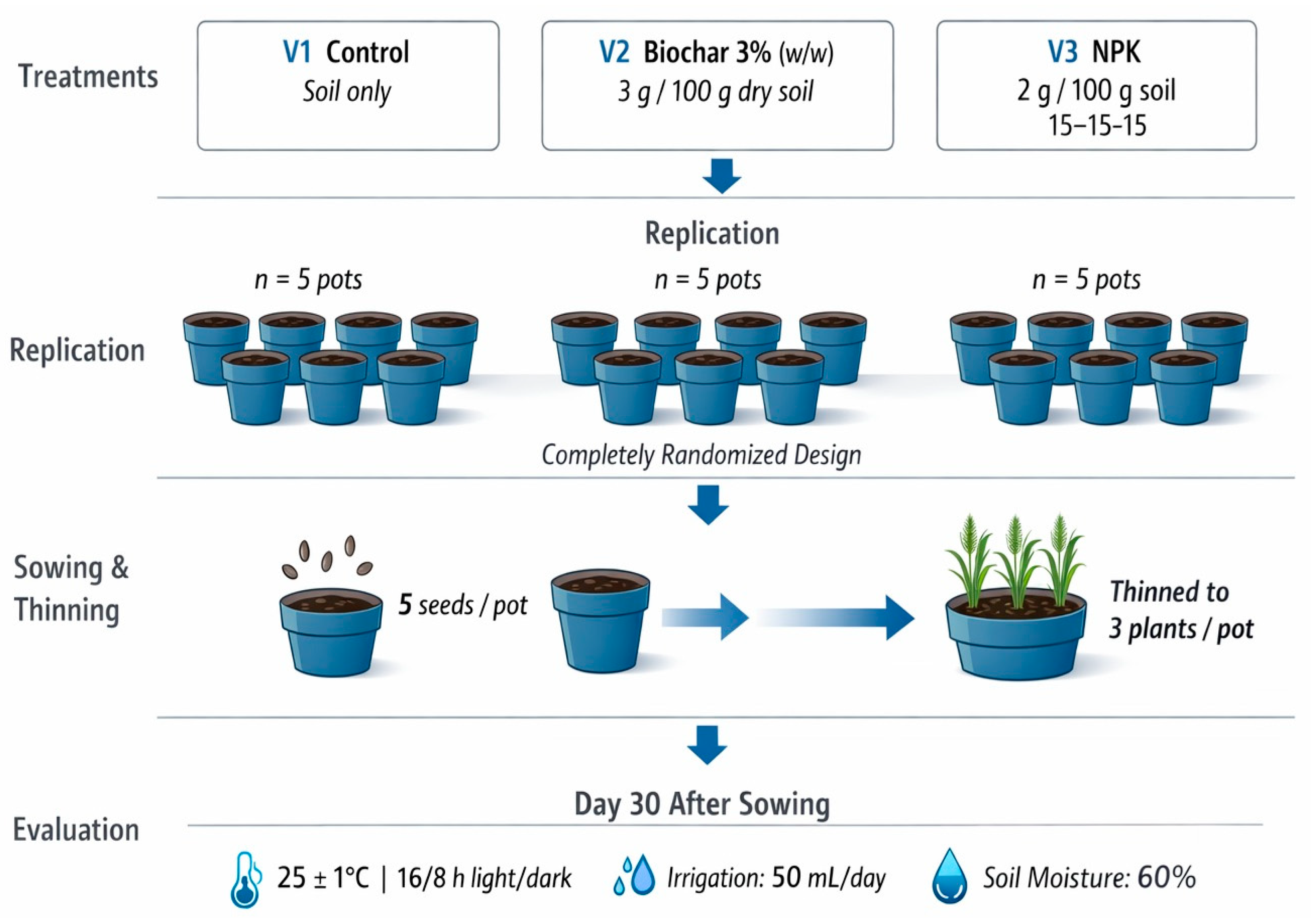
The experiment was carried out under controlled laboratory conditions using Hordeum vulgare L. as the test species, from a standardized local variety well adapted to the pedoclimatic conditions of its origin. Plants were cultivated in 500 mL plastic pots containing medium-textured chernozem soil. The soil was collected from an agricultural chernozem site representative of temperate cropping systems. Prior to the experiment, the soil was air-dried, homogenized, and sieved (<2 mm) to ensure uniformity among treatments. Each pot was filled with 100 g of soil and sown with five barley seeds, as shown in Figure 2. The soil had a neutral pH (~7.0), moderate natural fertility, and moderate to high organic matter content (4–5%), according to common agronomic classification, making it suitable for evaluating the effects of biochar without significant interference from existing nutrients [25]. The baseline physicochemical properties of the experimental soil prior to treatment application are summarized in Table 1.
Three treatment variants were established: (i) control—soil without any biochar or fertilizer, serving as a negative control; (ii) biochar 3% (w/w)—soil amended with 3% biochar (3 g) to assess the effect of biochar alone; (iii) NPK 2 g—soil amended with 2 g of NPK fertilizer to evaluate the impact of a mineral fertilizer dose. A commercial granular NPK fertilizer with balanced macronutrient composition (15–15–15) was used as the mineral fertilization treatment and applied at a rate of 2 g per 100 g of soil.
The experiment followed a completely randomized design with five independent replicate pots per treatment. Each pot, containing three barley plants after thinning, was considered one experimental unit.
Prior to sowing, barley seeds were disinfected by immersion in a 1% (w/v) sodium hypochlorite solution for 5 min, followed by thorough rinsing with sterile distilled water to remove any residues. As shown in Figure 2, five seeds were initially sown per pot, and after germination, seedlings were thinned to three uniform plants per pot to ensure consistent density.
The pots were placed in a climate-controlled growth chamber, where environmental conditions were kept constant throughout the experiment: temperature of 25 ± 1 °C and a photoperiod of 16 h light/8 h dark. Irrigation was performed daily with 50 mL of distilled water, and soil moisture was continuously monitored and maintained at 60% to prevent water stress.
The selection of the three experimental variants aimed to establish a robust comparative framework between the control (untreated soil), conventional fertilization with NPK, and the application of biochar derived from black liquor. The applied dose of 2 g NPK reflects commonly used levels of mineral fertilization under experimental conditions for barley, serving as a benchmark for the assessment of nutritional efficiency [26]. The concentration of 3% biochar was selected because amendments within the range of 2–5% have been reported to enhance soil fertility, water retention capacity, and crop yields, without causing major imbalances in soil structure or nutrient availability [6,27]. The applied amendment rates were selected to enhance the detectability of short-term soil–plant responses under controlled pot conditions and should not be interpreted as direct field application recommendations. Assuming a typical agricultural topsoil layer (0–20 cm depth) with an average bulk density of 1.3 g cm−3, the 3% (w/w) biochar treatment would correspond approximately to high application rates when extrapolated to field scale. Such values exceed common agronomic practices and therefore represent experimental doses intended to evaluate functional responses rather than realistic field management scenarios. Furthermore, the use of biochar derived from industrial residues aligns with the principles of the circular economy and has been identified as a sustainable alternative for reducing reliance on conventional fertilizers [28]. Therefore, the proposed experimental design not only facilitates the direct comparison of an innovative amendment with an established agricultural practice but also enables the evaluation of its potential contribution to the development of more sustainable production systems”.

2.2. Methods

2.2.1. Biochar Characterization

A comprehensive characterization of the biochar was conducted to elucidate its physical and chemical properties, which are critical for assessing its suitability as a soil amendment and its potential environmental applications. The analytical approach combined standardized compositional analyses with surface, structural, and chemical assessments in order to capture both bulk properties and surface-related functionalities.
Biochar characterization was performed to evaluate its physicochemical properties and agronomic suitability as a soil amendment. Ash content was determined by calcination at 750 °C according to ASTM D2866-11, while elemental composition (C, H, N, S, O) was measured following ASTM D5373-16 to assess the degree of carbonization and potential stability in soil [29,30,31]. The gross calorific value was determined according to ASTM D5865-13 to provide complementary information on the extent of organic matter conversion during pyrolysis [32].
Surface functional groups were analyzed by FTIR spectroscopy, and biochar alkalinity was evaluated through pH measurements in a 1:10 (w/v) biochar–water suspension [6,33]. Textural parameters, including specific surface area and pore characteristics, were obtained using the BET nitrogen adsorption method [34]. Morphological features and pore structure were examined by scanning electron microscopy (SEM) (Carl Zeiss Microscopy GmbH, Germany) [35].
Polycyclic aromatic hydrocarbons (PAHs) were extracted using an organic solvent and quantified by UHPLC-FLD analysis to verify compliance with agricultural safety requirements. Raman spectroscopy was used to assess the structural organization of the carbon matrix, with emphasis on the D and G bands to evaluate the degree of structural disorder and graphitization.

2.2.2. Soil and Barley Crop Characterization

At 30 days after sowing, plant growth and soil responses were evaluated to determine the effects of biochar application compared with mineral fertilization. Aboveground biomass was harvested, oven-dried at 65 °C until constant weight, and expressed as g plant−1. Plant height was measured from the soil surface to the tip of the tallest leaf, while chlorophyll content was assessed using SPAD readings as an indicator of plant nitrogen status.
Plant macronutrient concentrations (N, P, K) were determined after acid digestion of dried plant material using ICP-OES analysis.
Following harvest, soil samples were collected from each pot, homogenized, and analyzed for key agrochemical properties. Cation exchange capacity (CEC) was determined using the ammonium acetate method at pH 7. Soil organic matter (SOM) was evaluated by the loss-on-ignition method. It should be noted that the loss-on-ignition method may introduce uncertainty in biochar-amended soils, as thermally stable carbon fractions can contribute to mass loss during ignition. Therefore, the SOM values obtained in this study should be interpreted as operational estimates rather than absolute organic carbon content. Mineral nitrogen forms (NO3 and NH4+) were quantified after extraction with 2 M KCl using photocolorimetric analysis, and total mineral nitrogen was calculated as their sum. Soil pH was measured in a soil–water suspension using standard procedures.
These measurements were selected to provide an integrated assessment of plant performance and soil fertility changes induced by biochar amendment relative to conventional NPK fertilization.
Statistical analysis was performed using one-way analysis of variance (ANOVA) to evaluate the effect of treatments on the measured parameters. Differences were considered statistically significant at p < 0.05.
This study was designed as a short-term pot experiment to evaluate early vegetative responses and initial soil chemical changes rather than long-term agronomic performance.

3. Results

The biochar sample hereby investigated was generated using a pyrolysis reactor engineered for precise process control. The pyrolysis was conducted at 450 °C with a constant heating rate of 10 °C/min. The feedstock was held at the final temperature for 2 h to ensure complete thermochemical conversion of the organic matter. Throughout the process, a nitrogen atmosphere was maintained to suppress oxidation and reduce carbon losses.

3.1. Physicochemical Properties of the Produced Biochar

To evaluate the impact of biochar on soil and barley performance, a comprehensive characterization of its physical–chemical properties was conducted in Table 2. The analysis revealed a complex chemical composition and structural features that can influence soil fertility, nutrient availability, and water-holding capacity.
The biochar displayed a high ash content reflecting considerable amounts of mineral residues after pyrolysis. This high mineral fraction likely results from the type of used feedstock and the elevated processing temperatures. While a high ash content can slightly reduce the calorific value of biochar, it provides agronomic advantages by supplying essential macro- and micronutrients. Although the high ash content may represent an agronomic advantage due to the contribution of mineral nutrients and alkalinity, it also reflects a reduced proportion of fixed organic carbon in the biochar matrix. Consequently, the potential of this material for long-term carbon sequestration may be lower compared with low-ash, carbon-rich biochars produced from lignocellulosic feedstocks. This trade-off highlights the dual functional role of black liquor-derived biochar, which appears more suited for soil fertility improvement and nutrient management than for maximizing carbon storage. Therefore, the agronomic benefits observed in this study should be interpreted alongside the limitations associated with reduced carbon sequestration efficiency.
Carbon, the main constituent, is crucial for the structural stability of biochar in soil and its carbon sequestration potential. The measured carbon content suggests that pyrolysis was carried out at intermediate temperatures. Although higher carbon content would be preferable for climate mitigation applications, this value still supports a durable biochar structure [10].
Nitrogen content was low, which is typical for pyrolyzed biochar due to volatilization at high temperatures. This confirms that the biochar alone cannot fulfill the nitrogen requirements of crops and may need to be supplemented with nitrogen fertilizers for high-demand species. The hydrogen and oxygen contents indicate extensive aromatization and high molecular stability, characteristic of mature biochar [36]. Such stability ensures long-term persistence in soil and reduced microbial decomposition. Sulfur was relatively abundant, suggesting that this biochar could contribute to sulfur nutrition in crops.
The calorific value reflects its potential as a solid fuel; however, compared with low-ash biochars or other biomass types, it is modest, confirming that its primary application should be agricultural rather than energetic [34].
Overall, the biochar possesses physical–chemical properties suitable for agricultural applications, including a high mineral content and stable carbon, although it provides minimal nitrogen. These features make it a promising soil amendment and potential carrier for organo-mineral fertilizers in sustainable farming systems.
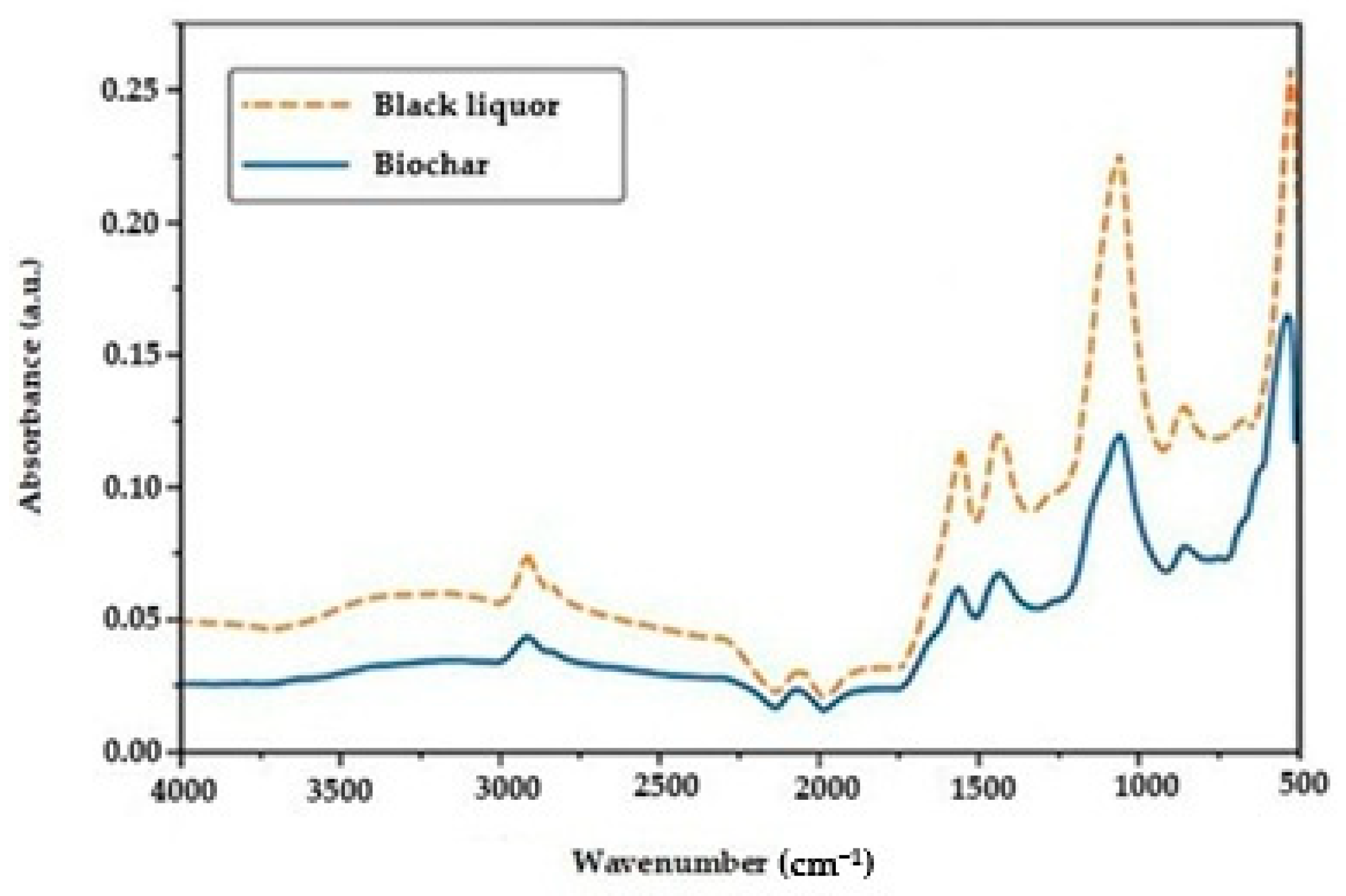
FTIR spectroscopy was employed to identify characteristic functional groups in both the original black liquor (BL) feedstock and the resulting biochar. Figure 3 and Table 3 illustrate the peak assignments. The sharp absorption bands below 1000 cm−1 were attributed to CH bending vibrations in aromatic rings, whereas the absorption band around 3340 cm−1 corresponded to OH stretching vibrations, indicating phenolic, alcoholic, or carboxylic functionalities in BL. A distinct absorption band at 2329 cm−1, associated with C-H stretching in methyl and methylene groups, was also observed [37].
In comparison with the FTIR spectrum of black liquor (BL), the absorption peaks of the biochar obtained from pyrolysis appeared markedly simpler. The band around 3340 cm−1, assigned to O-H stretching vibrations, was no longer observed after pyrolysis. This change may reflect thermal dehydration (loss of adsorbed or bound water) and/or a reduction in hydroxyl-containing functional groups during carbonization and therefore should not be interpreted exclusively as evidence of structural transformation. Similar attenuation of the O-H band after thermal treatment has been reported in previous studies [37,38,39]. Phenolic and carboxylic groups, largely existing as phenolates and carboxylates in BL, remained largely intact. The changes observed at 1554 and 1643 cm−1 indicate the elimination of carbonyl and/or carboxyl functionalities during pyrolysis, which was essentially complete at temperatures exceeding 450 °C [38]. Absorption peaks at 1420 cm−1 and 856 cm−1 correspond to potassium carbonate vibrations, reflecting an increase in potassium content after treatment with potassium hydroxide [39]. The peak around 1162 cm−1 is attributed to C-O-C stretching vibrations of residual ester groups derived from cellulose and hemicellulose [40]. A cluster of peaks between 618 and 767 cm−1 represents residual aromatic C-H vibrations [40].
Additionally, the concentration of PAHs in the biochar produced from black liquor was evaluated. PAHs are potentially harmful organic compounds generated during the incomplete combustion of organic material. Assessing their presence is crucial for determining whether the biochar is suitable for safe agricultural or environmental applications.
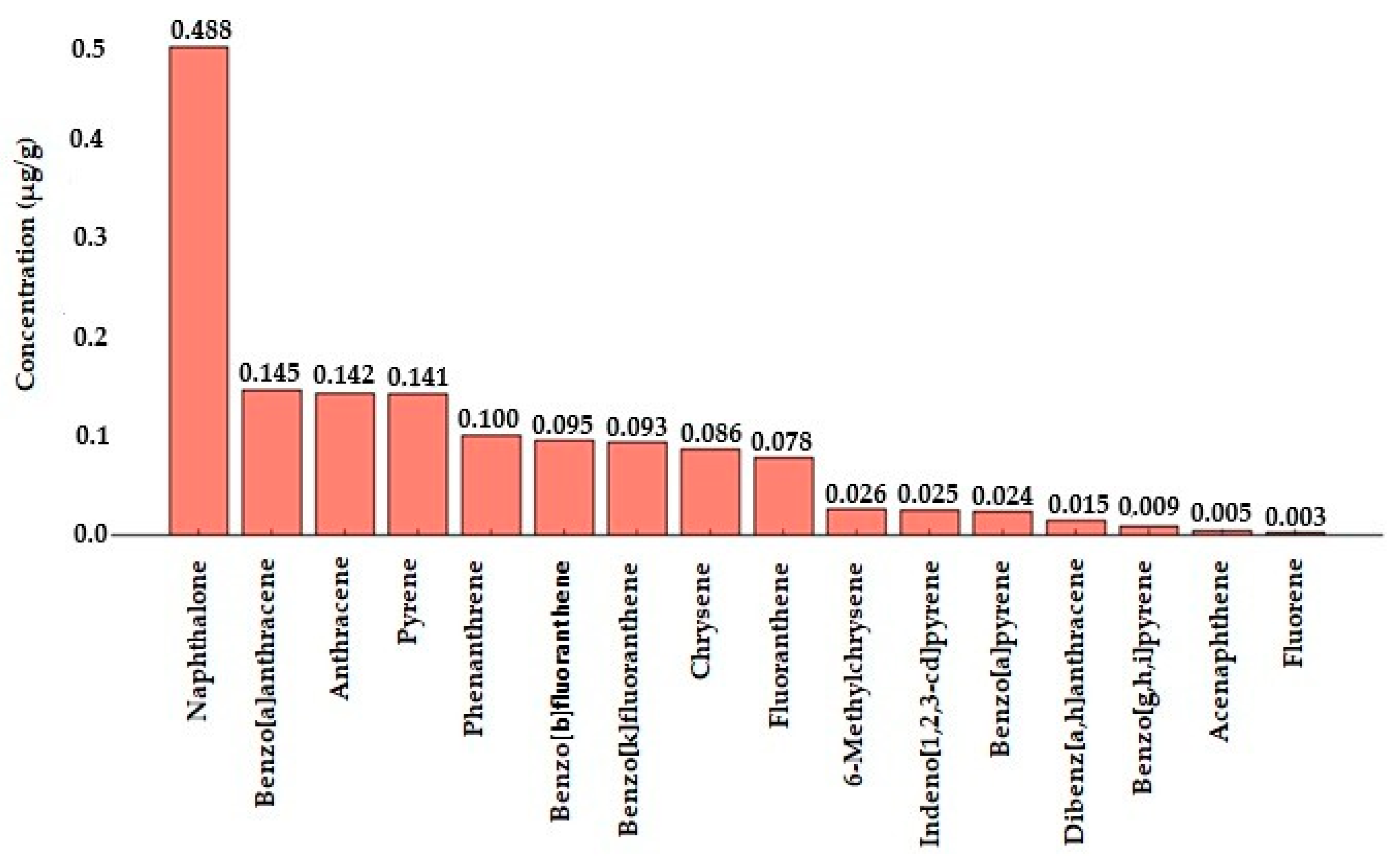
The obtained results are shown in Figure 4.
HPLC analysis revealed 16 PAH compounds in the biochar sample, with concentrations ranging from 0.011 to 0.488 µg/g. Naphthalene was the most abundant, followed by Benzo[a]anthracene, Anthracene, and Pyrene. These results suggest that the pyrolysis process at intermediate temperatures (300–500 °C) may lead to incomplete conversion of organic matter, highlighting the potential to optimize processing conditions to further minimize the formation of PAHs.
The total PAH content was 1.475 µg/g, which is well below the threshold of 6 mg/kg for fertilizing products, as set by the EU Regulation 2019/1009. These low levels of polycyclic aromatic hydrocarbons indicate that the biochar was produced under controlled and acceptable conditions. The minimal presence of toxic compounds suggests negligible risk to soil health, plant growth, and the food chain, making the biochar suitable for agricultural applications, provided that other parameters such as pH and heavy metal content are also within safe limits [41].
Biochar produced from the pyrolysis of black liquor exhibits an alkaline character, with a pH of approximately 9.8, enabling it to ameliorate acidic soils and enhance nutrient availability for plants. Its porous structure, combined with alkaline properties, supports the activity of rhizosphere microorganisms, promoting nutrient mineralization and recycling.
The biochar sample was also characterized by its specific surface area. The results are shown in Table 4.
The biochar derived from black liquor investigated in this study exhibited a BET specific surface area of 161 ± 3 m2/g, which is slightly higher than the range reported by the literature [42] for biochars produced from wood and agricultural residues, where BET surface area values varied between 15.65 m2/g and 151.27 m2/g, depending on feedstock type and pyrolysis conditions. This comparison indicates that black liquor-derived biochar develops a porosity that is at least comparable, and in some cases superior, to that of conventional lignocellulosic biochars produced without activation.
Biochar obtained from the pyrolysis of black liquor, with a total pore volume of 0.093 cm3/g and an average pore diameter of 9.1 nm, exhibits properties that can significantly influence the growth and development of barley. Its predominantly mesoporous structure and moderate specific surface area enable the retention and adsorption of mobile nutrients, particularly nitrogen and phosphorus, reducing leaching losses and enhancing nutrient availability for plants. The nanometric porosity provides ecological niches for rhizosphere microorganisms, promoting nutrient mineralization and cycling, while the pore volume contributes to water retention and stabilization of the microclimate in the root zone. These characteristics may contribute to improved early plant–soil interactions and nutrient retention; however, seed germination, root architecture, and grain yield were not directly evaluated in the present study. Moreover, the chemical stability of the biochar ensures the persistence of these beneficial effects over the long term [43,44].
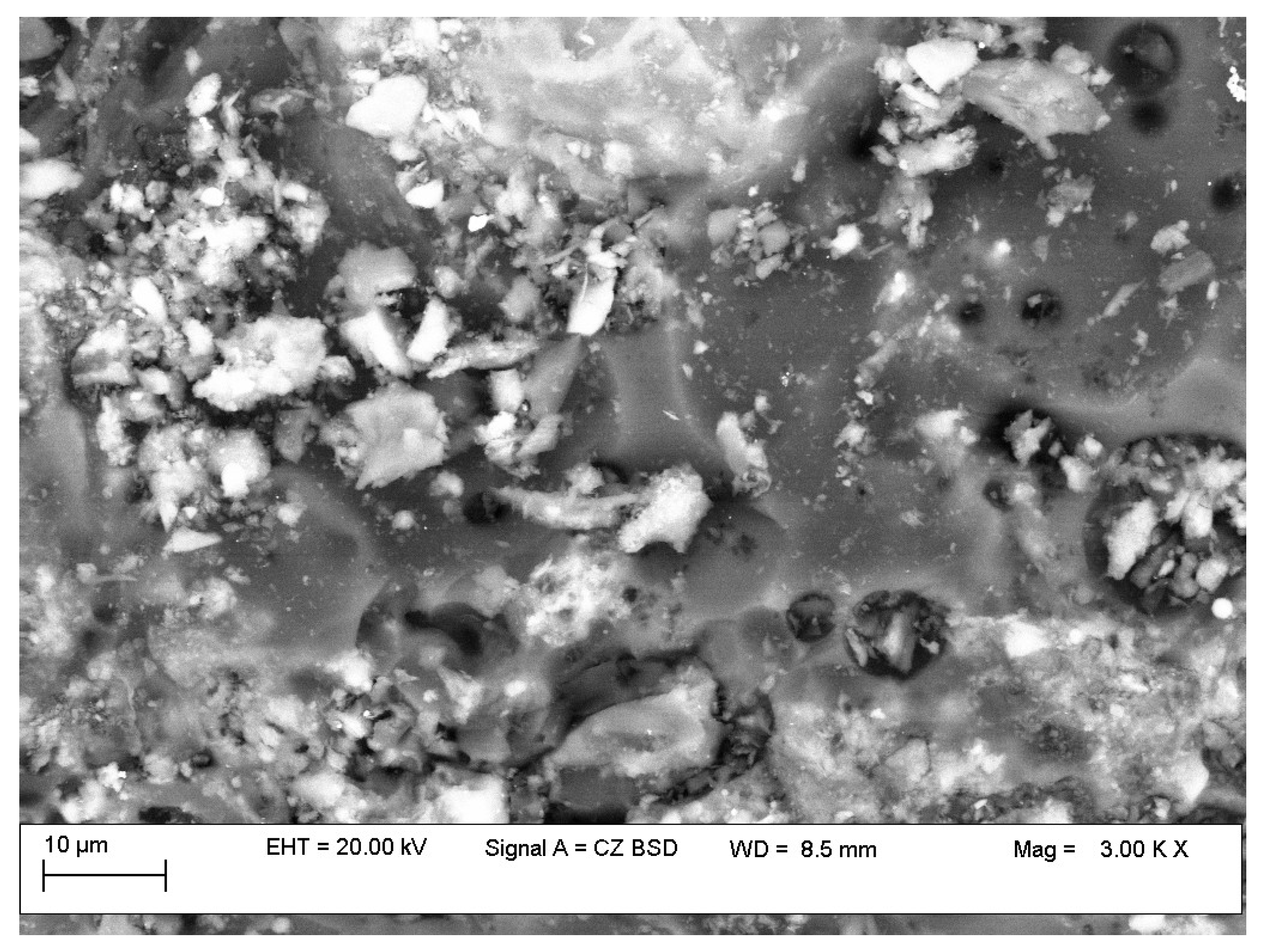
The SEM image of the biochar is presented in Figure 5, illustrating a heterogeneous microstructure with high porosity and complex surface features. Dark regions in the image correspond to porous cavities that are irregularly distributed throughout the carbonized matrix. The cell walls display a rough texture, microcracks, and alveolar patterns, reflecting the volatilization of organic fractions and partial collapse of the lignocellulosic structure during thermal treatment.
Morphometric analysis through image segmentation enabled detailed quantification of pore characteristics. In the analyzed area, a total of 59 pores were detected, with an average equivalent circular diameter (ECD) of 0.62 µm and a median of 0.31 µm. The majority of these cavities were submicron (<1 µm), although some larger pores were present, indicating a hierarchical porosity distribution. The mean major axis of the pores measured 1.10 µm, while the minor axis was 0.57 µm, confirming a mostly elliptical shape. The average pore area was approximately 2.32 µm2, with the total surface porosity in the analyzed region reaching around 52%, indicative of a highly permeable network [45].
Bright regions observed in the SEM image correspond to inorganic inclusions rich in alkali and alkaline-earth metals (Na, K, Ca), originating from the initial composition of black liquor. These mineral phases are concentrated at the interface between the carbon matrix and the pores, potentially affecting surface reactivity and adsorption behavior.
The well-developed, predominantly submicron porosity of biochar produced from black liquor at 450 °C enhances both water retention and soil aeration, which are critical for barley germination and early growth under water-limited conditions. The rough, porous surface provides numerous active sites for nutrient adsorption (N, P, K) and gradual release, minimizing leaching losses and improving fertilization efficiency.
Furthermore, the visible mineral inclusions (Na, K, Ca, Mg) may contribute directly to soil fertility by supplying essential macro- and micronutrients, supporting early plant development and nutrient availability; however, grain yield was not evaluated in the present short-term study.
Additionally, the porous microstructure of biochar confers a high adsorption capacity, enabling it to bind organic contaminants and heavy metals, which suggests a potential adsorption capacity based on structural characteristics; however, contaminant immobilization was not experimentally assessed in this study.
Taken together, SEM analyses suggest that biochar derived from black liquor may improve soil structure and fertility based on physicochemical properties; however, environmental remediation effects were not experimentally evaluated in this study. The observed physicochemical properties indicate potential agronomic relevance, although long-term field performance and yield effects require further investigation.
Application of this biochar can improve soil fertility and crop performance; however, long-term monitoring is essential to prevent potential soil imbalances. Therefore, black liquor-derived biochar represents an effective and sustainable soil amendment for environmentally friendly agricultural practices [46].
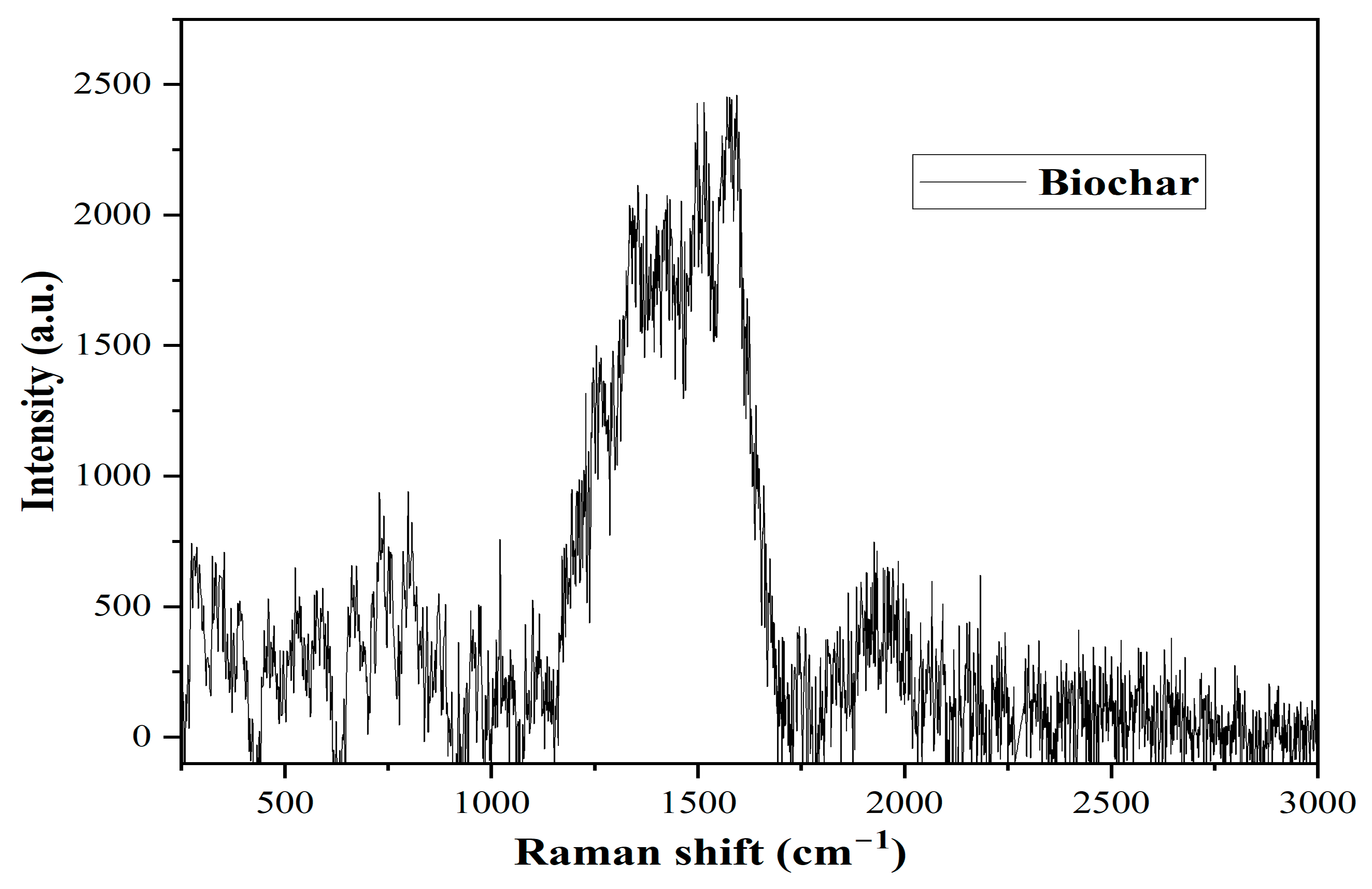
The Raman spectrum of the biochar produced by black liquor pyrolysis at 450 °C was dominated by two characteristic bands in the first-order region (the D and G bands) [47], which are typical of carbonaceous materials derived from biomass pyrolysis (Figure 6).
The D band, centered at about 1355 cm−1, was attributed to the A1g breathing mode of sp2 carbon atoms in aromatic rings and became Raman-active in the presence of structural defects [48,49]. Its pronounced intensity indicated a high degree of disorder, associated with edge defects, heteroatom incorporation, and small aromatic domains formed during lignin decomposition [47,48].
The G band, observed at about 1594 cm−1, corresponded to the E2g vibrational mode of sp2-bonded carbon atoms in graphitic structures [48,49]. The slight upshifts of the G band relative to ideal crystalline graphite (around 1580 cm−1) suggested the presence of lattice distortions, heteroatom substitution, and compressive strain within the aromatic carbon framework, commonly reported for biochar produced at intermediate pyrolysis temperatures [47,48,49].
In addition to the main D and G bands, a weak shoulder in the 1620–1650 cm−1 region can be assigned to the D band, associated with defect-induced intravalley scattering and further confirming the defective nature of the carbon structure [47,48,49].
Broad spectral features observed in the 1200–1250 cm−1 region indicated an amorphous carbon contributions and residual lignin-derived structures, reflecting incomplete carbonization at 450 °C.
The relative degree of structural disorder was assessed using the intensity ratio of the D and G bands (ID/IG). For the biochar obtained at 450 °C, an ID/IG ratio of approximately 0.9 was calculated. This value is characteristic to biochar produced for temperatures varying between 400 and 500 °C and reflects the formation of small, highly defective aromatic clusters rather than extended graphitic domains [47,48,49].
This ID/IG ratio indicates that, while thermal treatment promoted aromatization of the lignin-rich black liquor, the carbon structure remains predominantly disordered, with limited graphitic ordering. This structural configuration is consistent with carbon materials intended for applications requiring high surface reactivity, such as adsorption processes, catalytic supports, or soil amendment materials [49].
Overall, Raman spectroscopy confirmed that pyrolysis of black liquor at 450 °C led to the formation of a predominantly disordered sp2 carbon network, comprising small aromatic domains embedded in an amorphous carbon matrix. The absence of sharp, well-defined graphitic bands indicated that true graphitization was not achieved at this temperature, in agreement with the thermal history of the material. The observed structural features were typical of lignin-derived biochar and highlighted the suitability of the obtained material for functional applications rather than electronic or conductive uses.

3.2. Effects of Biochar on Soil Quality and Barley Characteristics

3.2.1. Barley Growth and Physiological Performance

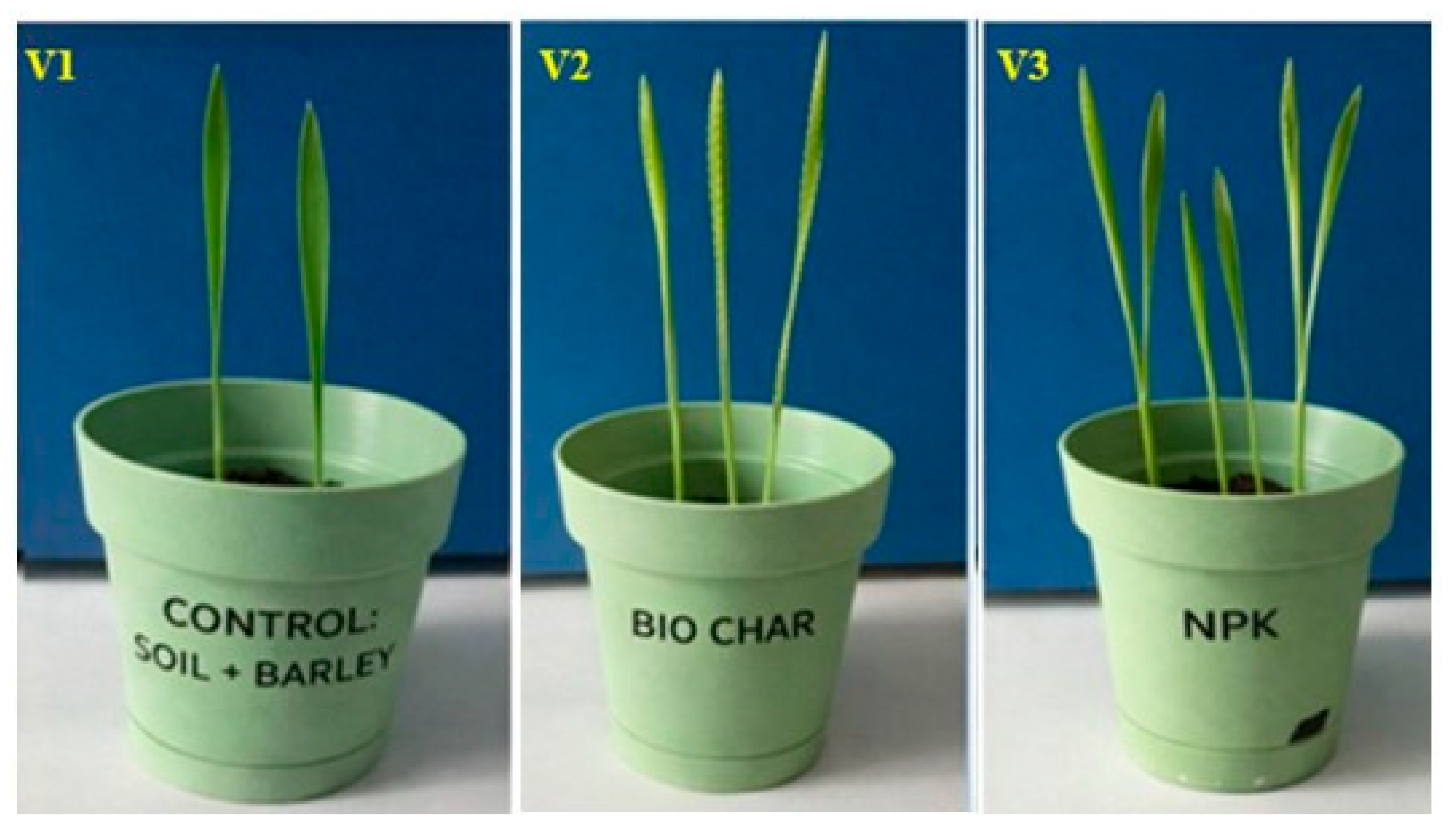
Biometric measurements performed at 30 days after sowing (Figure 7) revealed significant variations among the applied treatments. In the control variant (V1, soil + barley), the average plant height was 25 cm. The application of biochar derived from BL (V2) increased plant height to 27 cm, whereas mineral fertilization with NPK 2% (V3) produced the highest value, 29 cm.
One-way ANOVA revealed significant differences among treatments for plant height (F(2,12) = 8.00, p = 0.006), indicating that the applied treatments significantly influenced plant growth.
The values obtained for the control treatment are consistent with previous studies reporting barley heights of 24–26 cm when grown on unfertilized soil at 30 days [50,51]. Compared with this variant, biochar resulted in an average increase of approximately +2 cm (+8%), while NPK induced a more pronounced difference of +4 cm (+16%).
The height increase observed in the biochar treatment, V2, can be attributed to its effects on soil properties, including enhanced CEC, improved water retention, and greater availability of essential nutrients [6,27]. Moreover, biochar has been widely recognized for its role in reducing abiotic stress and regulating soil pH, which collectively support physiological processes during the early stages of plant development [21].
In contrast, mineral fertilization with NPK exerted a more evident influence on stem elongation due to the rapid supply of macronutrients. Nitrogen contributed to protein synthesis and chlorophyll accumulation, phosphorus supported energy metabolism and root development, while potassium played a crucial role in maintaining water balance and stomatal activity. This combination of factors explains the greater plant height recorded for the mineral-fertilized variant, in agreement with the findings of [52].
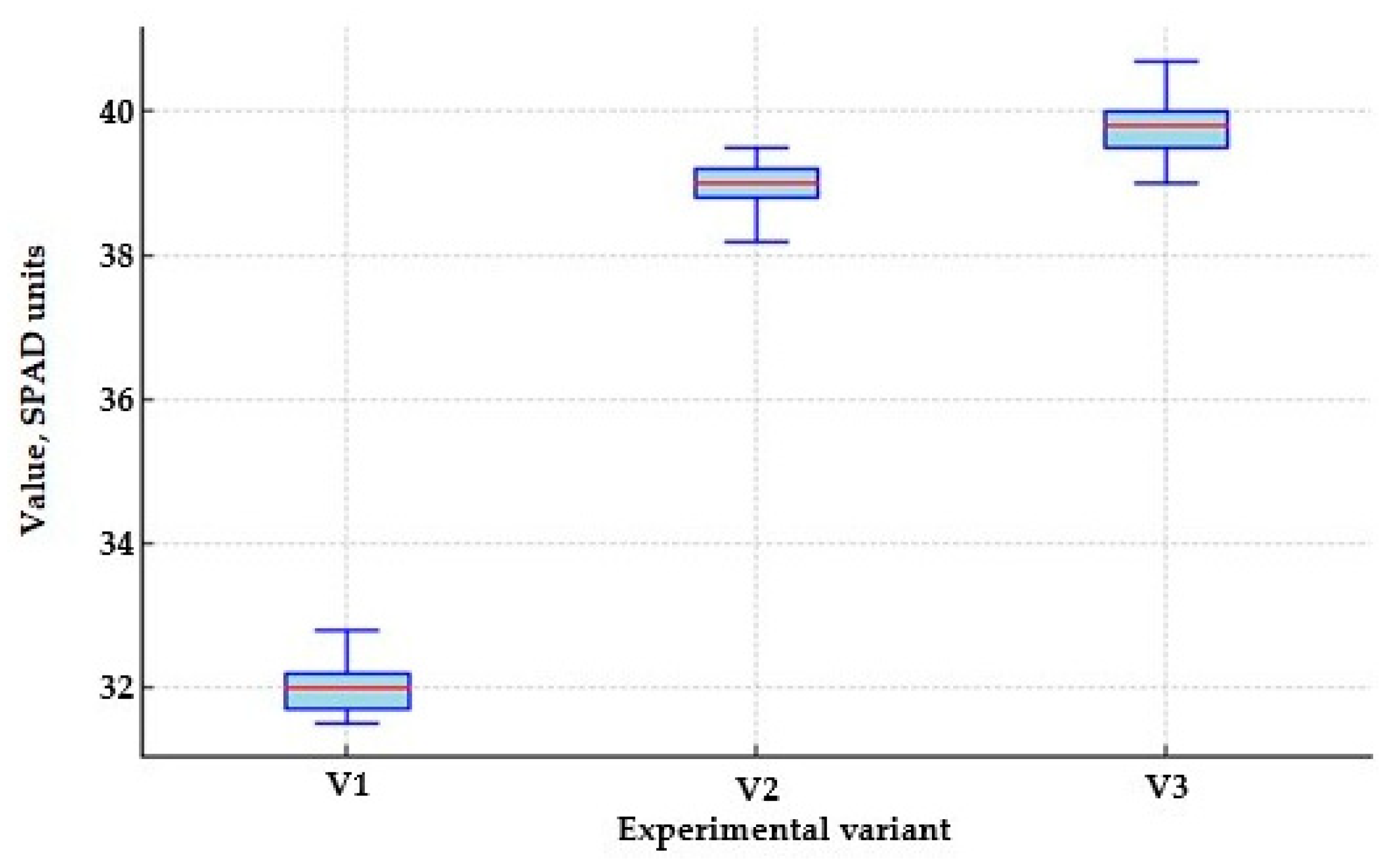
The chlorophyll content in barley leaves was assessed through SPAD measurements. The results presented in Figure 8 showed clear differences among the three planting treatments. The control (V1) recorded a SPAD value of 32.35, reflecting the baseline chlorophyll level in untreated soil. Incorporation of 3% biochar into the soil (V2) increased the SPAD value to 39.00, corresponding to an approximate 20.5% enhancement compared to the control. Similarly, application of 2% NPK fertilizer (V3) resulted in a SPAD value of 39.71, equivalent to a 22.7% increase relative to the control.
One-way ANOVA revealed highly significant differences among treatments for SPAD values (F(2,12) = 43.52, p < 0.001), demonstrating that the applied treatments significantly influenced leaf chlorophyll content. The increase in SPAD values observed in V2 and V3 compared to V1 suggests an improvement in plant physiological status under these treatments.
These findings suggest that biochar can effectively stimulate chlorophyll accumulation in barley, likely by improving nutrient retention, particularly nitrogen, which is essential for chlorophyll synthesis. The comparable performance of biochar and chemical NPK fertilization highlights its potential as a sustainable soil amendment capable of supporting photosynthetic activity and the physiological status of the plants. The observed increase in SPAD values indicates that biochar contributes to optimizing the physiological condition of barley, which indicates improved physiological status during early vegetative growth under controlled conditions.
These findings are consistent with the observations of Lehmann and Joseph, 2015 [6], who reported elevated SPAD values in crops amended with biochar, primarily due to improved nitrogen retention. Similarly, Singh and Ali (2020) [53] documented increases of up to 25% in SPAD values in wheat following biochar application at rates of 2–5%, a range comparable to the results obtained here for barley.
When compared with chemical fertilization, the relatively small difference between the SPAD value under 3% biochar (39.00) and 2% NPK (39.71) suggests that the two treatments exhibit similar efficiency. Comparable results were reported by Agegnehu (2016) [54], who found that combined applications of biochar and NPK maintained high levels of photosynthetic activity, equivalent to those achieved with mineral fertilization alone.
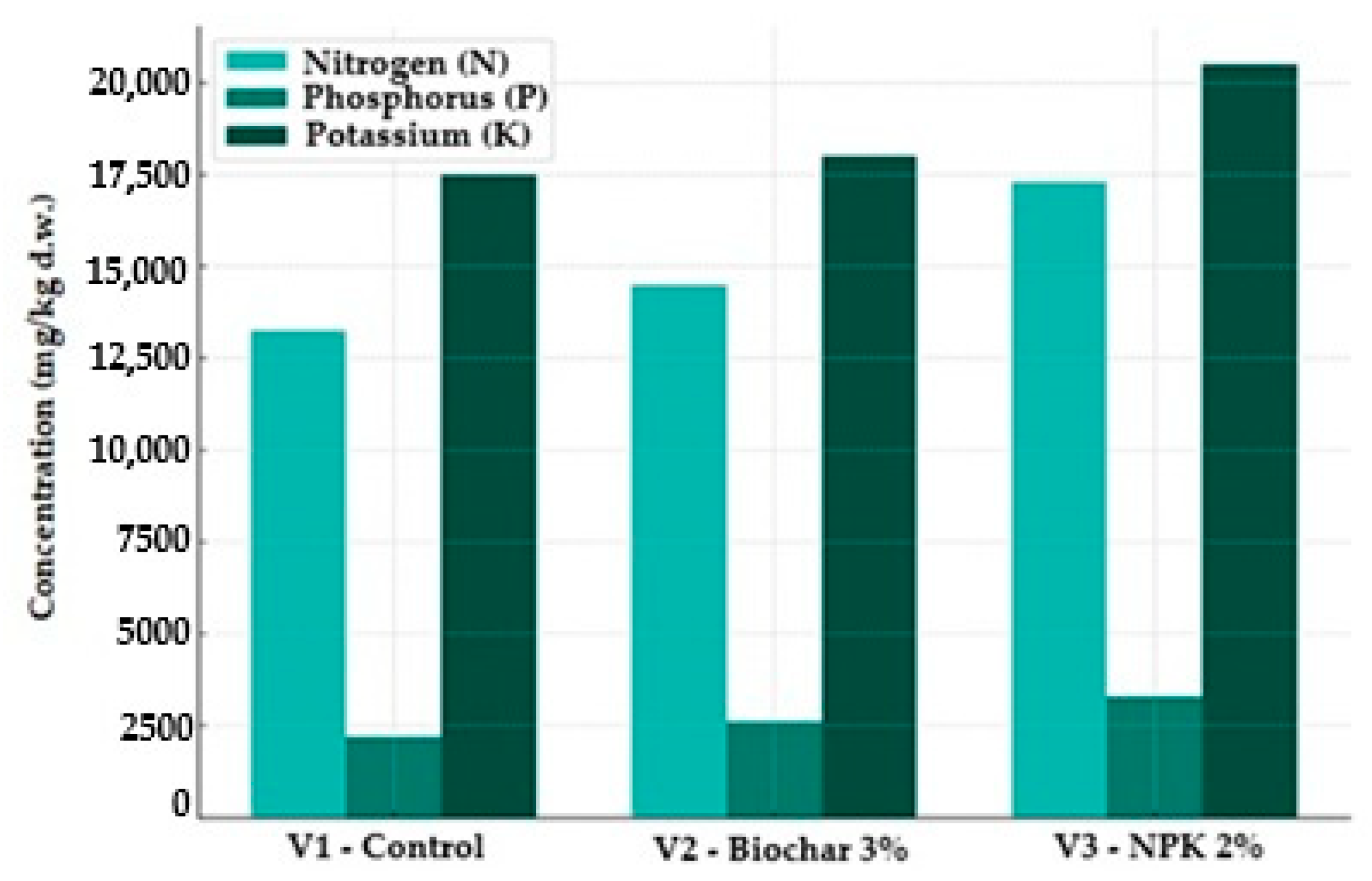
In the control treatment (V1), the lowest concentrations of N, P, and K were recorded, with values of 13.200 g/kg N, 2.225 g/kg P, and 17.565 g/kg K. These results (Figure 9) reflect the inherent soil fertility in the absence of external nutrient inputs, which limited the supply of macronutrients to the plants. The results demonstrate that both biochar (V2) and mineral NPK fertilizer (V3) improved barley plant nutrition compared with the control (V1). However, the nature of the effects produced by the two treatments differed considerably.
Application of NPK led to a rapid and pronounced increase in nitrogen and phosphorus concentrations in plant tissues (17.250 g/kg N and 3.350 g/kg P), confirming the immediate bioavailability of nutrients. While this approach is effective in the short term, particularly during the early growth stages, it relies on continuous inputs and may result in nutrient leaching, with potential environmental impacts.
In contrast, biochar produced a moderate but consistent improvement in nutrient content (14.577 g/kg N and 2.622 g/kg P) through mechanisms that enhance soil fertility over the long term. Although biochar does not directly supply high amounts of nitrogen, it reduces nitrogen losses and prolongs phosphorus availability in the rhizosphere.
Furthermore, by increasing cation exchange capacity, stabilizing soil pH, and improving water retention, biochar creates more favorable conditions for nutrient uptake by plants.
Thus, while NPK acts as an immediate nutritional stimulant, biochar functions as a sustainable soil amendment, optimizing soil conditions and ensuring a more balanced nutrient supply over time. This distinction highlights the potential of biochar to reduce dependence on chemical fertilizers while simultaneously delivering additional benefits for soil health and sustainable agricultural practices.

3.2.2. Soil Responses

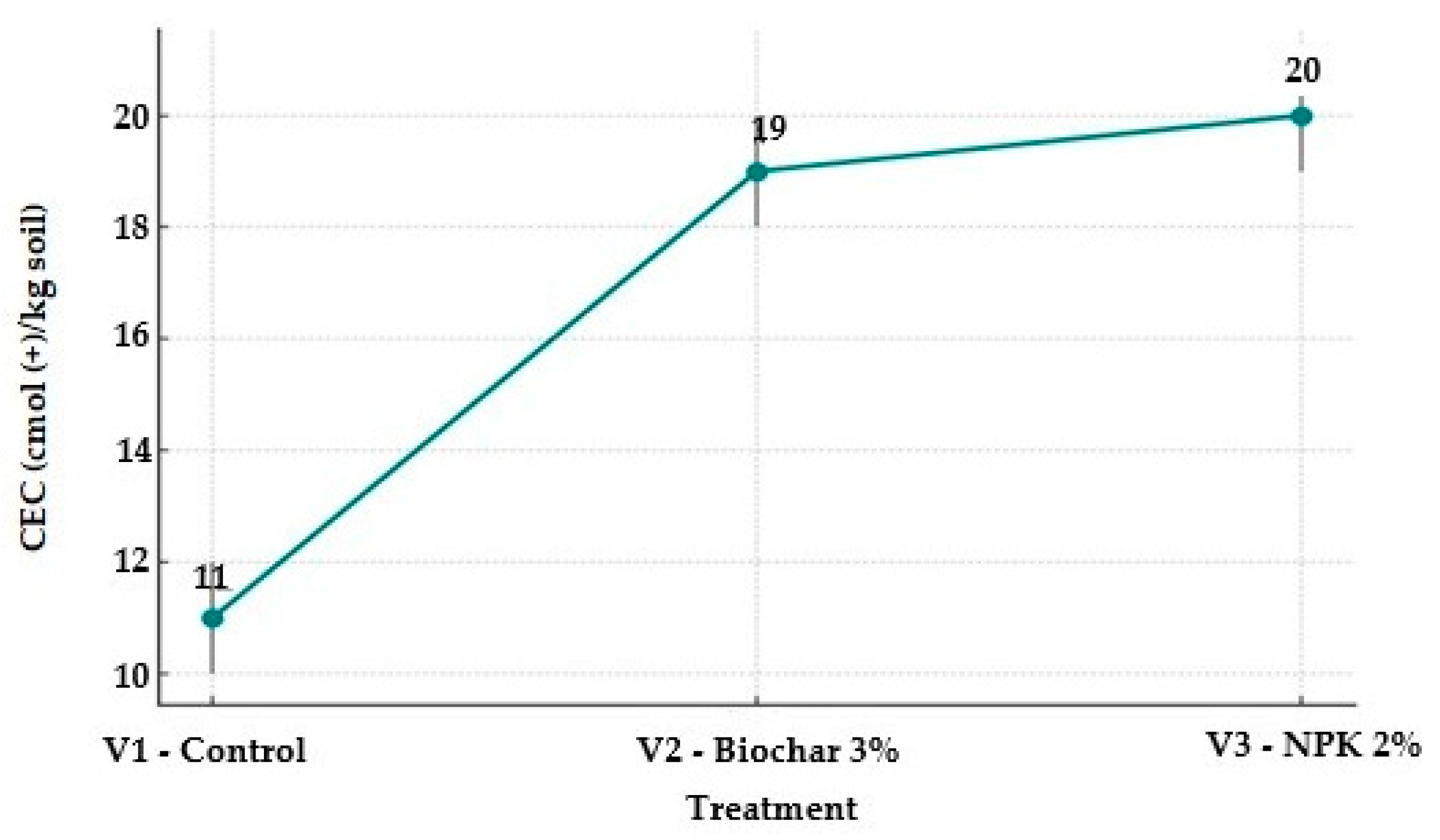
CEC is a key indicator of soil fertility (Figure 10), reflecting the ability of the soil to retain and supply essential cations to plants. In this study, the CEC values measured under the three treatments showed clear differences, highlighting the positive influence of biochar derived from BL and mineral fertilization on the chemical properties of the soil.
The control variant (V1) exhibited the lowest CEC value, 11 cmol(+)/kg, which is characteristic of soils with low chemical fertility and limited nutrient retention capacity. The application of biochar (V2) resulted in a marked increase in CEC, reaching 19 cmol(+)/kg, representing an improvement of approximately 73% compared with the control. This enhancement can be attributed to the porous structure and high surface area of biochar, which provide additional adsorption sites for cations. Mineral fertilization with NPK (V3) produced a CEC value of 20 cmol(+)/kg, suggesting that mineral inputs enhance the immediate availability of cations in the soil solution.
One-way ANOVA revealed highly significant differences among treatments for CEC (F(2,12) = 72.11, p < 0.001), indicating a pronounced effect of the applied treatments on soil cation exchange capacity. The substantial increase observed in V2 and V3 compared to V1 suggests an improvement in soil chemical properties under these treatments.
Overall, the incorporation of biochar derived from black liquor, particularly when combined with mineral fertilizers, significantly improves the cation exchange capacity of the soil. This improvement contributes to enhanced long-term soil fertility and greater nutrient uptake efficiency by plants, thereby supporting sustainable barley production.
SOM content, determined 30 days after sowing, revealed clear differences among treatments. Both the control soil (V1) and the mineral fertilizer treatment (V3, NPK) exhibited similar SOM levels (2.1%), confirming that inorganic fertilization does not modify the native soil organic carbon pool. The initial organic matter content of the chernozem soil (4–5%) refers to baseline agrochemical characterization provided for the bulk soil prior to the experiment, whereas the SOM value of 2.1% obtained for the control treatment represents the fraction determined by the loss-on-ignition (LOI) method after the cultivation period. Differences between these values may arise from methodological variability, sample preparation, and the specific analytical approach used for SOM quantification. In contrast, the biochar-amended soil (V2) showed a higher SOM content of 2.6%, corresponding to an increase of approximately 24% relative to the control. This rise reflects the direct contribution of stable carbon from the biochar material, highlighting its potential to enhance the soil organic matter fraction even at early growth stages.
One-way ANOVA revealed significant differences among treatments for soil organic matter (SOM) (F(2,12) = 14.92, p < 0.001), indicating that the applied treatments significantly affected soil organic matter content. The highest SOM value was observed in V2 compared to V1 and V3.
This improvement produced by biochar can be attributed to its intrinsic properties, which introduce organic carbon into the soil and enhance SOM stability by improving soil structure, cation exchange capacity, and water retention [6,27]. By comparison, mineral fertilization with NPK supplies essential nutrients for plant growth but does not directly contribute to soil organic matter accumulation; in some cases, it has even been associated with accelerated mineralization of existing organic pools [55].
Overall, these findings highlight biochar as an effective amendment for enhancing SOM content and improving soil sustainability, whereas mineral fertilization alone exerts limited influence on this parameter.
The results regarding the available mineral nitrogen are shown in Table 5.
The determination of mineral nitrogen forms in the soil revealed clear differences among the three treatments. The control variant (V1) recorded the lowest concentrations for all parameters, NO3, NH4+, and total mineral nitrogen, reflecting the low natural fertility of the soil and the limited nitrogen availability for plants. The incorporation of biochar (V2) led to a significant increase in mineral nitrogen concentrations, which represents an improvement of approximately 50% compared to the control. This increase was evident for both nitrate and ammonium, suggesting that biochar enhanced nitrogen retention and availability by reducing leaching losses and maintaining ammonium compounds within the rhizosphere.
Mineral fertilization with NPK (V3) resulted in the highest concentrations, reflecting the high and immediate bioavailability of nitrogen supplied by mineral fertilizers, which ensures rapid plant nutrition but may also be associated with a higher risk of leaching, particularly in the case of nitrates. Compared to NPK, biochar did not provide the maximum concentrations of mineral nitrogen; however, it promoted a more stable and balanced nitrogen availability, contributing to the long-term improvement of soil fertility and more efficient nutrient use by plants.
Soil pH analysis revealed distinct differences among the experimental treatments. The control soil (V1) maintained a neutral reaction (pH = 7.0), consistent with the characteristics of the chernozem used. The addition of biochar (V2) increased pH to 7.5, reflecting the alkalinizing effect of the amendment. This outcome can be attributed to the mineral fraction of biochar, particularly carbonates and oxides of calcium, magnesium, and potassium, which neutralize protons in the soil solution and reduce acidity. Such a moderate but significant increase in pH is advantageous, as it enhances phosphorus availability while reducing the solubility and potential toxicity of elements such as aluminum and manganese, effects widely reported in the literature [54]. Although the moderate increase in soil pH may enhance phosphorus availability and buffering capacity, the application of alkaline biochar to neutral soils should be interpreted cautiously. Further alkalization beyond optimal ranges could potentially reduce the availability of micronutrients such as Fe, Mn, and Zn, highlighting the importance of dose optimization and soil-specific management strategies. By contrast, mineral fertilization with NPK (V3) decreased soil pH to 6.6. This acidification is explained by biochemical processes associated with ammonium-based fertilizers, particularly nitrification, which generates protons and lowers soil pH. This phenomenon is well documented and considered one of the major drawbacks of long-term chemical fertilizer use [56]. The results, therefore, highlight the role of biochar as a pH regulator while underlining the contrasting effects of organic amendments and mineral fertilizers.

3.2.3. Comparative Assessment of Soil Treatments

The results confirm contrasting mechanisms of action for the two amendments. NPK delivers readily available nutrients and stimulates rapid plant growth but promotes soil acidification and nutrient leaching. The 3% biochar rate applied in this study represents an experimental amendment level selected to enhance the detectability of short-term responses under controlled pot conditions and should not be interpreted as a direct field application recommendation. Biochar, in contrast, enhances fundamental soil parameters, pH, CEC, and SOM, and contributes to long-term fertility. Although immediate plant responses were slightly lower with biochar than with NPK, the differences were modest, supporting its potential to partially substitute or complement mineral fertilizers. Previous studies have also documented synergistic effects of biochar–NPK combinations, reducing nutrient losses and improving fertilizer use efficiency [6,27].
The differences observed between biochar and NPK treatments in the present study are consistent with previous reports highlighting their distinct modes of action in soil–plant systems. Several studies have demonstrated that biochar application enhances soil cation exchange capacity, organic matter stability, and pH buffering capacity, thereby contributing to long-term improvements in soil fertility [6,13,14]. In contrast, mineral fertilizers provide readily available nutrients that stimulate rapid plant growth but may accelerate soil acidification and nutrient leaching when applied continuously [52,56]. Meta-analytical evidence further indicates that biochar amendments can increase crop productivity by improving nutrient retention and soil structure, particularly when combined with mineral fertilization [21,54]. The moderate but consistent improvements observed in the present study under biochar treatment align with these findings, suggesting that biochar functions primarily as a soil conditioner that enhances nutrient use efficiency rather than as an immediate nutrient source. Therefore, the comparative results obtained here support the growing body of evidence that biochar may partially substitute mineral fertilizers or be integrated into combined fertilization strategies, contributing to improved soil sustainability while maintaining satisfactory crop performance under controlled conditions.

4. Conclusions

The findings of this study confirm the potential of black liquor-derived biochar as an agricultural amendment with notable benefits for both soil quality and barley cultivation. The increase in soil pH observed in the biochar treatment demonstrates its capacity to counteract acidification, an essential feature for maintaining nutrient availability and reducing the toxicity of certain elements. Furthermore, the improvements in cation exchange capacity and organic matter content highlight the role of biochar in strengthening the fundamental fertility of the soil by providing a more stable environment for nutrient retention and release.
At the plant level, biochar application resulted in increases in plant height and chlorophyll content during the early vegetative stage, with responses approaching those obtained with mineral fertilization under controlled conditions. Tissue nutrient analyses revealed that biochar enhanced nitrogen, phosphorus, and potassium uptake in a balanced manner, suggesting improved nutrient availability during the short experimental period.
The physicochemical characteristics of the biochar indicate a potential for carbon stabilization in soil; however, carbon sequestration and agroecosystem resilience were not directly evaluated within the short duration of this experiment. By integrating into the soil matrix, biochar may support soil functional properties relevant for sustainable management, although long-term agronomic performance remains to be validated.
Biochar derived from black liquor has proven to be a promising soil amendment, with positive effects on soil chemical properties and barley crop performance. Nevertheless, potential risks associated with its high ash content, alkaline nature, and long-term cumulative effects require cautious application. These aspects may be addressed and optimized in future research through the adjustment of application rates, adaptation to different soil types, combined use with mineral or organic fertilizers, and long-term, field-scale studies.
The amendment rates used in this study were optimized for controlled experimental conditions and should be interpreted cautiously when extrapolating to field-scale agronomic practices.
Overall, this research demonstrates that black liquor biochar can be effectively valorized to transform an industrial byproduct into a high-value agricultural resource. The results demonstrate improvements in soil chemical parameters and early vegetative growth responses under controlled conditions. However, the short experimental duration and focus on vegetative stages limit extrapolation to yield performance or long-term sustainability, which require further field-scale investigations, including assessments of grain yield, root development, harvest index, and long-term soil processes.

Author Contributions

Conceptualization, A.M.Z. and F.M.; methodology, A.M.Z.; software, A.M.Z.; validation, A.R., M.C. and F.B.; formal analysis, O.M.T.; investigation, V.-C.N. and F.M.; resources, M.C.; data curation, O.M.T.; writing—original draft preparation, A.M.Z.; writing—review and editing, A.R. and A.M.Z.; visualization, S.O.; supervision, S.O.; project administration, M.C.; funding acquisition, M.C. All authors have read and agreed to the published version of the manuscript.

Funding

This work has been funded by the Romanian Ministry of Research Innovation and Digitalization under the Core Program within the National Research Development and Innovation Plan 2022–2027, carried out with the support of MCID, grant 20N/2023, project no. PN 23 15 04 02: “Laboratory experiments valorization in the development of technologies for the production of biofuels from agro-industrial waste”.

Institutional Review Board Statement

Not applicable.

Data Availability Statement

The original contributions presented in this study are included in the article. Further inquiries can be directed to the corresponding author.

Acknowledgments

The authors are grateful to Adriana Marinoiu for the BET investigation (ICSI Energy Department), Amalia Soare for the SEM investigation (ICSI Nuclear Department), and Irina Geana for the PAHs investigation (ICSI Analytics Department) from the National Research and Development Institute for Cryogenic and Isotopic Technologies—ICSI RamnicuValcea.

Conflicts of Interest

The authors declare no conflicts of interest.

Abbreviations

The following abbreviations are used in this manuscript:
CECCation exchange capacity
AAsh Content
QsCalorific value
FTIRFourier Transform Infrared
BETBrunauer–Emmett–Teller
SEMScanning electron microscopy
PAHsPolycyclic aromatic hydrocarbons
HPLCHigh-performance liquid chromatography
SPADLeaf Chlorophyll Content
ICP-OESPlasma optical emission spectrometry
BLBlack liquor
FIAflow injection analysis
NO3nitrate
NH4+ammonium
ECDequivalent circular diameter
SOMSoil organic matter
NPKNitrogen, Phosphorus and Potassium

References

  1. FAO. The Future of Food and Agriculture—Trends and Challenges; Food and Agriculture Organization: Rome, Italy, 2017. [Google Scholar]
  2. Lal, R. Soil carbon sequestration to mitigate climate change. Geoderma 2004, 123, 1–22. [Google Scholar] [CrossRef]
  3. Smith, P.; Martino, D.; Cai, Z.; Gwary, D.; Janzen, H.; Kumar, P.; McCarl, B.; Ogle, S.; O’Mara, F.; Rice, C.; et al. Greenhouse gas mitigation in agriculture. Philos. Trans. R. Soc. B 2008, 363, 789–813. [Google Scholar] [CrossRef] [PubMed]
  4. IPCC. Climate Change 2021: The Physical Science Basis; Cambridge University Press: Cambridge, UK, 2021. [Google Scholar]
  5. Tilman, D.; Cassman, K.G.; Matson, P.A.; Naylor, R.; Polasky, S. Agricultural sustainability and intensive production practices. Nature 2002, 418, 671–677. [Google Scholar] [CrossRef] [PubMed]
  6. Lehmann, J.; Joseph, S. Biochar for Environmental Management: Science, Technology and Implementation, 2nd ed.; Routledge: London, UK, 2015; Volume 2. [Google Scholar]
  7. Glaser, B.; Lehmann, J.; Zech, W. Ameliorating physical and chemical properties of highly weathered soils in the tropics with charcoal—A review. Biol. Fertil. Soils 2002, 35, 219–229. [Google Scholar] [CrossRef]
  8. Lehmann, J.; Rillig, M.C.; Thies, J.; Masillo, C.A.; Hockaday, W.C.; Crowley, D. Biochar effects on soil biota—A review. Soil Biol. Biochem. 2011, 43, 1812–1836. [Google Scholar] [CrossRef]
  9. Sohi, S.P.; Krull, E.; Lopez-Capel, E.; Bol, R. A review of biochar and its use and function in soil. Adv. Agron. 2010, 105, 47–82. [Google Scholar]
  10. Liu, Z.; Niu, W.; Chu, H.; Zhou, T.; Niu, Z. Effect of the carbonization temperature on the properties of biochar produced from the pyrolysis of crop residues. BioResources 2018, 13, 3429–3446. [Google Scholar] [CrossRef]
  11. Tomczyk, A.; Sokolowska, Z.; Boguta, P. Biochar physicochemical properties pyrolysis temperature and feedstock kind effects. Rev. Environ. Sci. Bio/Technol. 2020, 19, 191–215. [Google Scholar] [CrossRef]
  12. Oguntunde, P.G.; Abiodun, O.A.; Ojeniyi, S.O. Effect of charcoal production on maize yield, chemical properties and texture of soil. Biol. Abd Fertil. Soils 2004, 20, 115–121. [Google Scholar] [CrossRef]
  13. Laird, D.A.; Fleming, P.; Wang, B.; Horton, R.; Karlen, D.L. Impact of biochar amendments on the quality of a typical Midwestern agricultural soil. Geoderma 2010, 158, 443–449. [Google Scholar] [CrossRef]
  14. Liang, B.; Lehmann, J.; Solomon, D.; Kinyangi, J.; Grossman, J.; O’Neill, B.; Skjemstad, J.O.; Thies, J.E.; Luizao, F.J.; Petersen, J.; et al. Black carbon increases cation exchange capacity in soils. Soil Sci. Soc. Am. J. 2010, 74, 1307–1316. [Google Scholar] [CrossRef]
  15. Steiner, C.; Teixeira, W.G.; Lehmann, J.; Nehls, T.; Vasconcelos de Macêdo, J.L.; Blum, W.E.H.; Zech, W. Long term effects of manure, charcoal and mineral fertilization on crop production and fertility on a highly weathered Central Amazonian upland soil. Plant Soil 2007, 291, 275–290. [Google Scholar] [CrossRef]
  16. Lorenz, K.; Lal, R. Biochar application to soil for climate change mitigation by soil organic carbon sequestration. J. Plant Nutr. Soil Sci. 2014, 177, 651–670. [Google Scholar] [CrossRef]
  17. Margenot, A.J.; Griffin, D.E.; Alves, B.S.Q.; Rippner, D.A.; Li, C.; Parikh, S.J. Substitution of peat moss with softwood biochar for soil-free marigold growth. Ind. Crop Prod. 2018, 112, 160–169. [Google Scholar] [CrossRef]
  18. European Commission. Critical Raw Materials Resilience: Charting a Path Towards Greater Security and Sustainability; European Commission: Brussel, Belgium, 2020. [Google Scholar]
  19. Woolf, D.; Amonette, J.E.; Street-Perrott, F.A.; Lehmann, J.; Joseph, S. Sustainable biochar to mitigate global climate change. Nat. Commun. 2010, 1, 56. [Google Scholar] [CrossRef] [PubMed]
  20. Joseph, S.; Graber, E.R.; Chia, C.H.; Munroe, P.; Donne, S.W.; Torsten, T.; Nielsen, S.; Marjo, C.; Rutlidge, H.; Pan, G.-X.; et al. Shifting paradigms: Development of high-efficiency biochar fertilizers based on nano-structures and soluble components. Carbon Manag. 2015, 6, 169–189. [Google Scholar] [CrossRef]
  21. Jeffery, S.; Verheijen, F.G.A.; van der Velde, M.; Bastos, A.C. A quantitative review of the effects of biochar application to soils on crop productivity using meta-analysis. Agric. Ecosyst. Environ. 2011, 144, 175–187. [Google Scholar] [CrossRef]
  22. Rajan, K.; Bajpai, P.; Bajpai, P.K. Is Kraft pulping the future of biorefineries? A perspective on the Sustainability of Lignocellulosic Product Development. Polymers 2024, 12, 1357363. [Google Scholar] [CrossRef]
  23. Marin, F.; Bucura, F.; Niculescu, V.-C.; Roman, A.; Botoran, O.R.; Constantinescu, M.; Spiridon, S.I.; Ionete, E.I.; Oancea, S.; Zaharioiu, A.M. Mesoporous silica nanocatalyst-based pyrolysis of a by-product of paper manufacturing, black liquor. Sustainability 2024, 16, 3429. [Google Scholar] [CrossRef]
  24. Marin, F.; Botoran, O.; Oancea, S.; Constantinescu, M.; Zaharioiu, A.M. Recycling of black liquor waste from pulp factories and the development of sustainable fuels. Int. Multidiscip. Sci. GeoConf. SGEM 2024, 2024, 299–306. [Google Scholar]
  25. Weil, R.R.; Brady, N.C. The Nature and Properties of Soils, 15th ed.; Pearson Education: Harlow, UK, 2017. [Google Scholar]
  26. Zhang, X.; Wang, H.; He, L.; Lu, K.; Sarmah, A.; Li, J.; Bolan, N.S.; Pei, J.; Huang, H. Using biochar for remediation of soils contaminated with heavy metals and organic pollutants. Environ. Sci. Pollut. Res. 2013, 20, 8472–8483. [Google Scholar] [CrossRef]
  27. Jenberu, G.A. Biochar, Compost, Compost and Biochar–Compost: Effects on Crop Performance, Soil Quality and Greenhouse Gas Emissions in Tropical Agricultural Soils. Ph.D. Thesis, James Cook University, Cairns, Australia, 2017. [Google Scholar]
  28. Martínez-Gómez, Á.; Poveda, J.; Escobar, C. Overview of the use of biochar from main cereals to stimulate plant growth. Front. Plant Sci. 2022, 13, 912264. [Google Scholar] [CrossRef]
  29. ASTM D2866-11; Standard Test Method for Total Ash Content of Activated Carbon. ASTM International: West Conshohocken, PA, USA, 2011.
  30. ASTM D5373-16; Standard Test Methods for Instrumental Determination of Carbon, Hydrogen, and Nitrogen in Laboratory Samples. ASTM International: West Conshohocken, PA, USA, 2016.
  31. Joseph, S.; Camps-Arbestain, M.; Lin, Y.; Munroe, P.; Chia, C.H.; Hook, J.; Zwieten, L.; Kimber, S.; Cowie, A.; Singh, B.P.; et al. An investigation into the reactions of biochar in soil. Aust. J. Soil Res. 2010, 48, 501–515. [Google Scholar] [CrossRef]
  32. ASTM D5865-13; Standard Test Method for Gross Calorific Value of Coal and Coke. ASTM International: West Conshohocken, PA, USA, 2013.
  33. Rajkovich, S.; Enders, A.; Hanley, K.; Hyland, C.; Zimmerman, A.R.; Lehmann, J. Corn growth and nitrogen nutrition after additions of biochars with varying properties to a temperate soil. Biol. Fertil. Soils 2011, 48, 912264. [Google Scholar] [CrossRef]
  34. Downie, A.; Crosky, A.; Munroe, P. Physical properties of biochar. In Biochar for Environmental Management; Routledge: London, UK, 2009; pp. 13–32. [Google Scholar]
  35. Ahmad, M.; Rajapakska, A.U.; Lim, J.E.; Zhang, M.; Bolan, N.; Mohan, D.; Vithanage, M.; Lee, S.S.; Ok, Y.S. Biochar as a sorbent for contaminant management in soil and water: A review. Chemosphere 2014, 99, 19–33. [Google Scholar] [CrossRef] [PubMed]
  36. Wijitkosum, S.; Sriburi, T. Aromaticity, polarity, and longevity of biochar derived from disposable bamboo chopsticks waste for environmental application. Helyon 2023, 230, 115855. [Google Scholar] [CrossRef]
  37. Yang, H.; Yan, R.; Chen, H.; Lee, D.H.; Zheng, C. Characteristics of hemicellulose, cellulose and lignin pyrolysis. Fuel 2007, 86, 1781–1788. [Google Scholar] [CrossRef]
  38. Keiluweit, M.; Nico, P.S.; Johnson, M.G.; Kleber, M. Dynamic Molecular Structure of Plant Biomass-Derived Black Carbon (Biochar). Environ. Sci. Technol. 2010, 44, 1247–1253. [Google Scholar] [CrossRef]
  39. Yuan, J.H.; Xu, R.K.; Zhang, H. The forms of alkalis in the biochar produced from crop residues at different temperatures. Bioresour. Technol. 2011, 102, 3488–3497. [Google Scholar] [CrossRef]
  40. Siipola, V.; Tamminen, T.; Kalli, A.; Lahti, R.; Romar, H.; Rasa, K.; Keskinen, R.; Hyvaluoma, J.; Hannula, M.; Wikberg, H. Effects of biomass type, carbonization process and activation method on the properties of bio-based activated carbons. Bioresources 2018, 13, 5976–6002. [Google Scholar] [CrossRef]
  41. Hilber, I.; Blum, F.; Leifeld, J.; Schmidt, H.P.; Bucheli, T.D. Quantitative Determination of PAHs in Biochar: A Prerequisite To Ensure Its Quality and Safe Application. J. Agric. Food Chem. 2012, 60, 3042–3050. [Google Scholar] [CrossRef] [PubMed]
  42. Wijitkosum, S. Biochar derived from agricultural wastes and wood residues for sustainable agricultural and environmental applications. Int. Soil Water Conserv. Res. 2022, 10, 335–341. [Google Scholar] [CrossRef]
  43. Tsolis, V.; Barouchas, P. The Effect of Biochar on Soil Properties Using VIS-NIR Diffuse Reflectance Spectroscopy, Biochar Aging and Soil Microbiology—A Review. Land 2023, 12, 1580. [Google Scholar] [CrossRef]
  44. Murtaza, G.; Zeeshan, A.; Eldin, S.M.; Basharat, A.; Bawazeer, S.; Usman, M.; Iqbal, R.; Neupane, D.; Ullah, A.; Khan, A.; et al. Biochar-Soil-Plant Interactions: A Cross Talk for Sustainable Agriculture under changing climate. Front. Environ. Sci. 2023, 11, 1059449. [Google Scholar] [CrossRef]
  45. Batista, E.M.C.C.; Shultz, J.; Matos, T.T.S.; Fornari, M.R.; Ferreira, T.M.; Szpoganicz, B.; Freitas, R.A.; Mangrich, A.S. Effect of surface and porosity of biochar on water holding capacity aiming indirectly at preservation of the Amazon biome. Sci. Rep. 2018, 8, 10677. [Google Scholar] [CrossRef]
  46. Liu, X.; Shen, F.; Smith, R.L., Jr.; Qi, X. Black liquor-derived calcium-activated biochar for recovery of phosphate from aqueous solutions. Bioresour. Technol. 2019, 294, 122198. [Google Scholar] [CrossRef]
  47. Wei, Z.; Chen, Y.; Wang, J.; Zhang, X.; Zhang, S.; Wu, W.; Wang, H. Comprehensive Characterization of Biochars Produced from Three Major Crop Straws of China. BioResources 2017, 12, 3316–3335. [Google Scholar] [CrossRef]
  48. Mondal, A.K.; Hinkley, C.; Krishnan, L.; Ravi, N.; Akter, F.; Ralph, P.; Kuzhiumparambil, U. Macroalgae-Based Biochar: Preparation and Characterization of Physicochemical Properties for Potential Applications. RSC Sustain. 2024, 2, 1828–1836. [Google Scholar] [CrossRef]
  49. Mobarak, M.B.; Pinky, N.S.; Mustafia, S.; Chowdhury, F.; Naharc, A.; Akhtara, U.S.; Quddus, M.S.; Yasminc, S.; Alama, M.A. Unveiling the Reactor Effect: A Comprehensive Characterization of Biochar Derived from Rubber Seed Shell via Pyrolysis and In-House Reactor. RSC Adv. 2024, 14, 31752–31765. [Google Scholar] [CrossRef]
  50. Tuppad, P.; Kishore, A.; Kharad, S.; Sharma, J.D. Effect of Nitrogen Levels on the Growth and Yield of Barley (Hordeum vulgare L.) Varieties. Ecol. Environ. Conserv. 2023, 29, 156–160. [Google Scholar] [CrossRef]
  51. Seerat, W.A.; Salihi, M.S.; Latifee, A.Q.; Hamim, H. Effects of Nutrient Management on Growth, Agronomic Efficiency, and Economic Yield of Barley in Kandahar. J. Nat. Sci. Rev. 2025, 3, 45–59. [Google Scholar] [CrossRef]
  52. Hlisnikovsky, L.; Krizova, K.; Mensik, L.; Kunzova, E. How Mineral Fertilization and Soil-Climate Conditions Affect Spring Barley Grain Yield and Soil Chemical Properties. Agronomy 2021, 11, 1843. [Google Scholar] [CrossRef]
  53. Singh, B.; Ali, A.M. Using Hand-Held Chlorophyll Meters and Canopy Reflectance Sensors for Fertilizer Nitrogen Management in Cereals in Small Farms in Developing Countries. Sensors 2020, 20, 1127. [Google Scholar] [CrossRef]
  54. Agegnehu, G.; Bass, A.M.; Nelson, P.N.; Bird, M.I. Benefits of biochar, compost and biochar–compost for soil quality, maize yield and greenhouse gas emissions in a tropical agricultural soil. Sci. Total Environ. 2016, 543, 295–306. [Google Scholar] [CrossRef]
  55. Guo, Z.; Han, J.; Li, J.; Xu, Y.; Wang, X. Effects of long-term fertilization on soil organic carbon mineralization and microbial community structure. PLoS ONE 2019, 14, e0216006. [Google Scholar]
  56. Guo, J.H.; Liu, X.J.; Zhang, Y.; Shen, J.L.; Han, W.X.; Zhang, W.F.; Christie, P.; Goulding, K.W.T.; Vitousek, P.M.; Zhang, F.S. Significant acidification in major Chinese croplands. Science 2010, 327, 1008–1010. [Google Scholar] [CrossRef]
Figure 1. Pyrolysis of Black Liquor for Biochar Production [24].
Agriculture 16 00659 g001
Figure 2. Experimental design and replication scheme for the barley pot experiment.
Agriculture 16 00659 g002
Figure 3. FTIR Spectrum of Black Liquor and Biochar Obtained from Pyrolysis at 450 °C with a Heating Rate of 10 °C/min.
Agriculture 16 00659 g003
Figure 4. The content of PAH in Biochar.
Agriculture 16 00659 g004
Figure 5. SEM analysis of biochar.
Agriculture 16 00659 g005
Figure 6. Raman spectra of the biochar.
Agriculture 16 00659 g006
Figure 7. Biometric measurements performed at 30 days for V1, V2, and V3.
Agriculture 16 00659 g007
Figure 8. Chlorophyll content in barley plants under different treatments.
Agriculture 16 00659 g008
Figure 9. Concentration of N, P, and K in the three treatment variants of barley crop.
Agriculture 16 00659 g009
Figure 10. Cation exchange capacity of soil under the three treatment variants of barley crop.
Agriculture 16 00659 g010
Table 1. Baseline properties of the experimental soil.
ParameterValue
Soil typeChernozem
TextureMedium-textured
pH7.0
Soil organic matter4–5%
Table 2. Physical–chemical characterization of biochar.
A wt. %C wt. %N wt. %H wt. %S wt. %O wt. %Qs kcal/kg
52.12 ± 4.1736.20 ± 0.450.45 ± 0.011.59 ± 0.061.49 ± 0.088.15 ± 0.232975 ± 30
Table 3. Relevant Absorption Bands Identified in the Black Liquor Spectrum.
Wavenumber (cm−1)Vibrational Assignment
935In plane C-H [37,38,39]
1036–1118C-O deformation from primary alcohols [37,40]
1185C-O vibration + C=O and C-C from guaiacyl and syringyl cores [37]
1408In-plane deformation of OH group [37]
1554C-H vibration [37,38]
1643Aromatic ring vibration + C=O stretching [37,38]
2329C-H from methyl and methylene groups [37]
3340O-H from phenols, alcohols, and water [37,40]
Table 4. Specific surface area for biochar.
SBET m2/gVp cm3/gDp nm
161 ± 30.093 ± 0.0039.1
Table 5. Available mineral nitrogen forms in the investigated soil samples.
NO3 (mg/kg)NH4+ (mg/kg)Total Mineral Nitrogen (mg/kg)
V14.12.97.0
V25.94.610.5
V39.95.115.0
Disclaimer/Publisher’s Note: The statements, opinions and data contained in all publications are solely those of the individual author(s) and contributor(s) and not of MDPI and/or the editor(s). MDPI and/or the editor(s) disclaim responsibility for any injury to people or property resulting from any ideas, methods, instructions or products referred to in the content.