Article

Study on the Performance of Seedling-Carrying Potting for Mechanical Transplanting of Oilseed Rape and Its Effect on Seedling Growth


1
College of Orient Science & Technology, Hunan Agricultural University, Changsha 410128, China
2
College of Mechanical and Electrical, Hunan Agricultural University, Changsha 410128, China
3
Hubei Provincial Key Laboratory for Operation and Control of Cascaded Hydropower Station, China Three Gorges University, Yichang 443002, China
*
Author to whom correspondence should be addressed.
Agriculture 2026, 16(6), 635; https://doi.org/10.3390/agriculture16060635
Submission received: 13 February 2026 / Revised: 9 March 2026 / Accepted: 9 March 2026 / Published: 10 March 2026

Abstract

This study proposed a standardized oilseed rape seedling-carrying potting molding method to improve the adaptability of mechanical transplanting of potting seedlings. This method aims to address the failure in seedling pick-up and transport during the mechanized transplanting of rapeseed pot seedlings, which is caused by matrix breakage and seedling damage. This study selected cylindrical oilseed rape seedling-carrying potting as the research object and investigated the relationship between the physical characteristics of seedling-carrying potting and the proportion of the composition of the matrix soil as well as the characteristics of seedling growth after planting. The optimal parameter combination of the matrix soil was obtained using Design-Expert 8.0.6 software: dry matter ratio of 4:1, compression ratio of 0.36, and moisture content of 45%. A single-factor test was conducted using a seedling-carrying potting test bed. According to the single-factor test results, the dry matter ratios (commercial substrate: clay loam mass ratios of 2:1, 3:1, and 4:1), matrix soil compression ratios (0.35, 0.40, and 0.45), and matrix soil moisture content (35%, 40%, and 45%) were selected as the factors of influence, while the drop loss rate, shear resistance, and scattering rate were used as the indicators of evaluation. The drop loss rate of seedling-carrying potting under this parameter combination was 1.5%, the shear resistance was 7.1 N, and the scattering rate was 34.9%. Validation tests were conducted on a seedling-carrying potting test bed, and the relative errors between the actual and simulated values of the drop loss rate, shear resistance, and scattering rate were 7.1%, 7.0%, and 8.4%, respectively, verifying the accuracy of the model and the optimized parameters. Comparison tests of the growth characteristics of the optimized seedling-carrying potting, hole-tray seedling, and bare seedling in field transplanting were conducted. The results displayed that root length, root diameter, root dry matter, chlorophyll content, and seedling vigor index consistently followed the same descending order: seedling-carrying potting > hole-tray seedlings > bare seedlings. Compared to hole-tray seedlings, the corresponding growth characteristics of seedling-carrying potting were 11.7%, 10%, 21.7%, 2.8%, and 27.8% higher, respectively. Compared to bare seedlings, they were 17.1%, 12.5%, 32.2%, 10.8%, and 32.7% higher, respectively. The seedling length, seedling width, plant taper angle, and dry matter mass of stem and leaves were, in descending order, greater in hole-tray seedlings, followed by seedling-carrying potting, and then bare seedlings. In comparison, the corresponding growth characteristics of seedling-carrying potting were 8.9%, 9.8%, 2.3%, and 30.6% higher than those of bare seedlings, respectively.

1. Introduction

Oilseed rape, a major grain and oil crop in China, has the highest planting area and total production worldwide. The winter oilseed rape area in the Yangtze River Basin is the main oilseed rape planting area, accounting for approximately 85% of the total planting area of oilseed rape in the country, and it adopts the planting mode of rice-oilseed crop rotation, making the stubble contradiction more prominent [1,2,3]. Mechanical transplanting is the primary method for resolving cropping conflicts in rapeseed cultivation and improving both the yield and quality of rapeseed oil. Based on different seedling-raising processes, mechanized transplanting is mainly categorized into three modes: pot seedling transplanting, blanket seedling transplanting, and substrate block seedling transplanting [4,5,6,7]. However, during mechanized transplanting, the clamping and conveying actions of the seedling-picking–feeding device and the planting device can easily cause the seedling-carrying pot to break or scatter. This significantly reduces the transplanting success rate and impairs seedling growth quality [8]. Research on the mechanical transplanting adaptability of seedling-carrying potting can effectively improve the success rate of transplanting and the quality of seedling growth.
To solve these problems, extensive studies have been conducted by researchers on the seedling picking and delivery method of the transplanting machine and the physical characteristics of the seedling bowl. Regarding the influence of the seedling picking and conveying method on the transplanting process. Hu investigated the transplanting machine to address the low success rate of seedling delivery and found that the seedling delivery line speed, the installation angle of the seedling carrying platform, the seedling frame bottom, and high work parameters impact the success rate of the seedling delivery [9,10,11]. Cui et al. (2023) conducted a theoretical analysis of the delivery of seedlings and planting and optimized the device to determine the conveyor motor rotation rate of the success of the seedling delivery rate and the substrate breakage rate of the greater impact [12,13]. The material ratio of the potting material and the body’s mechanical properties may also have a significant impact on the potting body breakage and success rates of picking up and sending seedlings in the transplantation [14,15,16]. Regarding seedling cultivation methods, relevant studies have used different seedling formulations to evaluate seedling growth quality. Qu investigated the mechanical properties of matrix blocks with different levels of biodegradable gum and their effects on seedling growth. The nutrient release rate of modified urea-formaldehyde resins was characterized. The aeration porosity, water-holding porosity, EC, pH value, and compressive strength of the substrate blocks were also tested; the effect of the substrate blocks on the cucumber seedling was measured, resulting in an optimal formulation favorable for mechanical transplanting and seedling growth [17]. Jong employed a root culture medium containing coconut shell fibers; two different formulations of coir dust (CO) with perlite (PL) and vermiculite (VM) (5:5 and 7:3 mixtures of CO + VM and CO + PL, v/v) were used as growing media and investigated the effects of seedling substrates with different material formulations on the growth quality of tomato seedlings [18]. Sorin N assesses the influence of different types of soilless substrates on the content of nitrate, carbohydrates, chlorophyll, proteins, invertase activity, and dry matter in cucumber leaves, stems, and fruit grown on the respective substrates; the best choice for growing cucumbers in terms of both production and nutrient content is mainly the Perlite—4 mm substrate [19]. Hoa used an eco-organic soilless cultivation system to study the effects of 11 different peat-containing substrates on the growth, yield, and fruit quality of cucumbers. The results indicate that the addition of vermiculite, perlite, and coal ash to peat resulted in better seedling growth, higher yield, and better quality of fruit, probably owing to increasing water-holding capacity and aeration of peat, which demonstrates that inorganic substances such as vermiculite, perlite, and coal ash could partially replace peat [20]. Hu conducted research to address the issue of seedling block damage during transplanting. They investigated how factors like substrate composition ratio, substrate compaction degree, and boron-selenium nutrient solution concentration affect the mechanical properties of the substrate blocks. Using a comprehensive scoring method, they determined the optimal substrate composition ratio. Seedling blocks prepared with this optimal ratio were then subjected to bench tests. Under the test conditions—a transverse seedling pushing speed of 20 mm/s, a synchronous conveyor belt speed of 30 mm/s, and a seedling picking frequency of 40 plants/min—the results showed a substrate loss rate of 2.57% and a seedling feeding and picking success rate of 90.93%, meeting the requirements for mechanical transplanting [21]. Yang optimized the formulation of formed substrates for vegetable seedlings to improve seedling growth. Using aerobically composted cow manure and vermicomposted cow manure as the main materials, peat as an auxiliary, water-absorbent resin as an expansion agent, wood vinegar as a regulator, and cucumber as an indicator plant, they investigated the effects of different formulations on the formation and seedling performance of substrate blocks. A comprehensive evaluation of various target indicators was conducted to determine the optimal formulation for formed seedling substrates. The results showed that the drop shatter rate of substrate blocks made from both types of composted materials was less than 5%; the damage rate was less than 20% and 40%, respectively; the seedling survival rate was greater than 40% and 70%, respectively; and the whole-plant dry mass exceeded 100 mg in all cases. These findings provide a theoretical basis for the development and quality improvement of organic-formed substrates for vegetable seedlings [22]. The transplanted potting seedlings must have better mechanical properties and growth quality to ensure good mechanical transplanting. The composition, proportion, and compaction of the substrate are key factors affecting the mechanical properties and growth quality of potting seedlings.
In summary, the current research on mechanical transplanting has mostly focused on the optimal design of the working parameters of the seedling picking and feeding device, the influence of seedling substrate formulation on the growth characteristics of seedlings, and research on the physical and mechanical characteristics of potting seedlings. However, the quality of seedling growth after transplantation has seldom been observed. In this study, we focused on the cylindrical oilseed rape seedling-carrying mantle, including the standardized mantle and the seedlings it carries. We conducted a seedling-carrying mantle molding test, taking the physical-mechanical properties of the oilseed rape seedling-carrying mantle (shear resistance, drop loss rate, and scattering rate) as experimental indicators. Based on the test, we optimized the optimal combination of substrate and soil parameters required for the oilseed rape seedling-carrying mantle. We conducted a comparative experimental study of the growth quality of the transplanted seedlings in the optimized seedling-carrying mantle and in hole-tray seedlings and bare seedlings. Comparative experimental study of the growth quality of the optimized seedling-carrying potting and hole-tray seedlings and bare seedlings after transplanting. This study aimed to provide a reference for designing a seedling-carrying pot transplanting machine for rapeseed.

2. Materials and Methods

2.1. Test Materials and Equipment

The seedling-carrying potting molding test was conducted on 6 November 2023 in the laboratory of the oil tea base at Hunan Agricultural University, under conditions of 18.4 °C temperature and 77.2% humidity. The test substrate, primarily composed of Northeast peat soil, slow-release fertilizer, and perlite, was sourced from Changchun Zhuangmiao Peat Technology Co., Ltd. (Changchun, China). The test soil was selected from clay loam with a particle size of less than 2 mm after clearing through a screen with a mesh size of 10. The test seedlings were selected from the same plot and the same period of sowing and seedling cultivation, and the seedling was bare-root rapeseed seedlings that had grown to four leaves and a terminal bud after the nursery. The selected seedling was “Fengyou 730”, and the seedling age was 28–32 days. The main test equipment were an LD24 microcomputer-controlled electronic universal testing machine, TCB3002 electronic balance, 101-3BS electric blast drying oven, LC-DHS-10A moisture rapid analyzer, ring knife, ZFJ-11 vibration sifter, seedling-carrying potting test bed, homemade small mixers, measuring cylinders, hollow cylinders, chlorophyll analyzer, and nylon mesh fabrics.

2.2. Test Methods

2.2.1. Preparation of Matrix Soil

The matrix soil consists of a certain proportion of seedling substrate, clay loam, and water. The seedling substrate primarily provides nutrients for rapeseed seedling growth and improves the water absorption and holding capacity of the matrix soil. The clay loam increases adhesion between the seedling substrate particles [23]. The moisture content of the seedling substrate and clay loam was measured using a rapid moisture analyzer. Then, the dry material ratio (seedling substrate: clay loam), moisture content, and compression ratio were calculated under the conditions of the required addition of seedling substrate, clay loam, and the mass of water, using a measuring cylinder to add water, a homemade small blender to mix it, and leaving it to stand for 24 h. A vibration sieving machine was used to sieve the matrix soil and obtain its mass. The distribution was as follows: <1 mm accounted for 26.8%, 1–3 mm accounted for 31.3%, 3–5 mm accounted for 30.7%, and >5 mm accounted for 11.2%.

2.2.2. Preparation of Seedling-Carrying Mantles

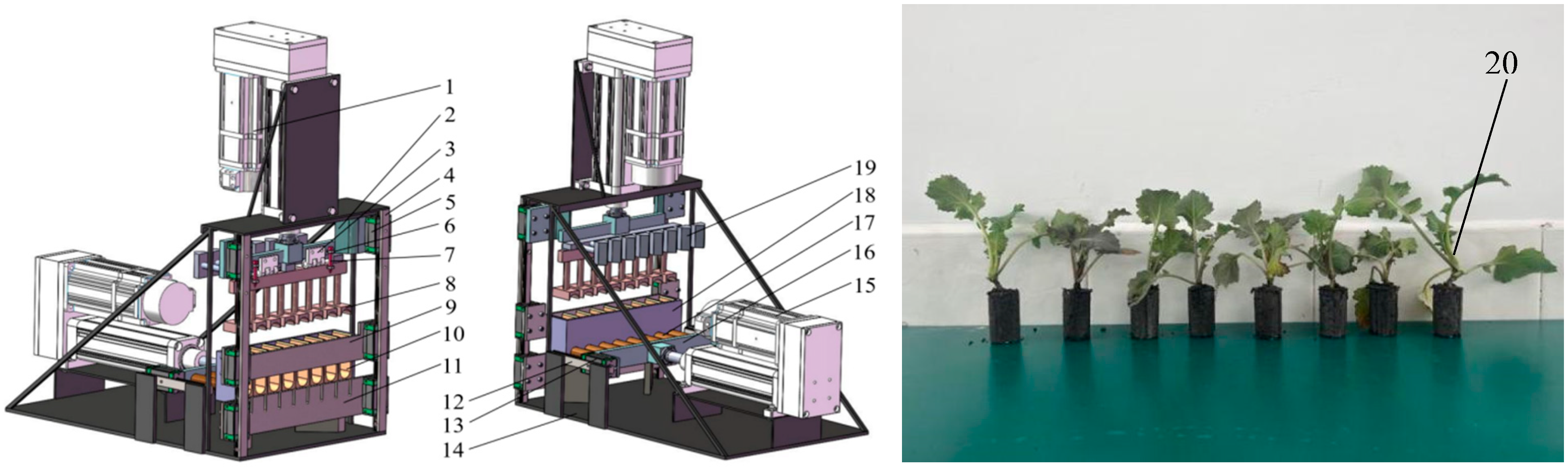
During operation, the V-shaped mold aligns with the lower mold. The lower mold is filled with half of the total weight of the substrate soil required for the seedling-carrying potting container’s formation. Servo cylinder I drives the V-shaped mold downward until its bottom coincides with the “U”-shaped core of the lower mold, at which point the substrate soil is compressed into a V-shape, completing one cycle of substrate soil compression molding. Subsequently, Cylinder I drives the V-shaped mold to reset to its highest position. At this stage, the upper mold is flipped to align with the lower mold, and a positioning pin is inserted for fixation. The closed upper and lower plates are then opened, and the rapeseed seedling roots (After pruning, the length is approximately the same as that of the lower mold) are placed into the pre-formed “V”-shaped substrate soil in the lower mold. After closing the plates, an equal amount of substrate soil is added to cover the seedling roots. Next, Servo Motor I drives the upper mold downward until it engages with the lower mold, at which point the combined force of both molds compresses the substrate soil and seedling roots into a cylindrical seedling-carrying potting. After forming, a 10-s pressure-holding period is maintained [24,25]. Following this, the upper and lower plates are opened, and Servo Motor II drives the seedling-pushing rod forward along the axis of the rear plate’s circular hole. This pushes out the standardized seedling-carrying potting (cylindrical, 2 cm diameter, 4 cm height) from the mold, completing the forming and ejection process. The seedling-carrying potting test bed and the standardized seedling-carrying potting after pressing and forming are depicted in Figure 1.

2.2.3. Experimental Design and Methods

(1)
One-factor test
Based on previous experimental research and the agronomic requirements in the transplanting and planting area of Hunan rapeseed, the three main factors affecting the molding quality of seedling-carrying potting were the dry material ratio, compression ratio of matrix soil, and moisture content of the matrix soil. Based on the results of preliminary pre-experimental studies, the shear resistance, drop loss rate, and scattering rate of the compressed seedling-carrying potting were used as the indices for molding quality. The dry material ratios of the seedling substrate to clay loam were set to 1:1, 2:1, 3:1, 4:1, and 5:1. The moisture contents of the matrix soil were 30%, 35%, 40%, 45%, and 50%, and the compression ratios were 0.3, 0.35, 0.4, 0.45, and 0.5, respectively.
(2)
Orthogonal combination test
The Box–Behnken test in Design-Expert 8.0.6 software was used to code the factors based on the one-factor test results and their level ranges. A multi-factor orthogonal combination test was conducted, with each set of tests repeated three times, and the results of the three tests were taken as the experimental average. The regression model for each seedling-carrying potting quality evaluation index was established using the response surface method [26]. A significance test of the regression equation and a goodness-of-fit test were conducted. The response surface was plotted according to the fitted model to analyze the influence of the interaction of each factor on the molding characteristics of seedling-carrying potting.

2.2.4. Indicators of Quality of Molding of Seedling-Carrying Potting and Pans

(1)
Measurement of the physical properties of the seedling carrier bowl
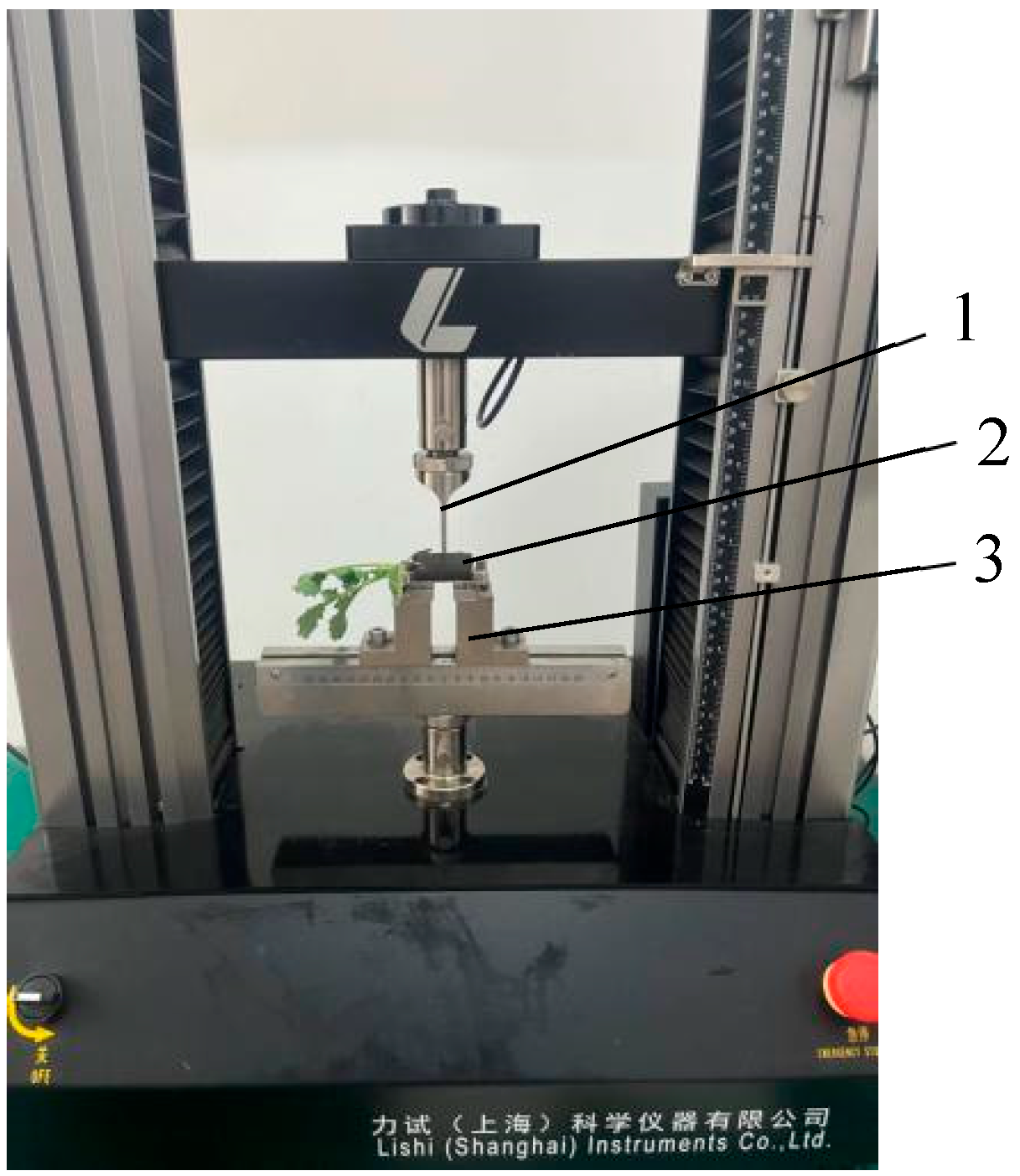
Figure 2 presents the test selection LD24 microcomputer-controlled electronic universal testing machine supporting the shear mold to carry the seedling-carrying potting for shear force and deformation test determination. The working range of the testing machine was set to 20 mm, and the shear speed was 60 mm/min. When the seedling-carrying potting is from contact with the shear mold to complete destruction, the system automatically unloads at the end of the test. The force relationship curve of the seedling-carrying mantle was automatically recorded and saved by the computer. When the seedling-carrying mantle was destroyed, the peak value in the mechanical curve was considered the maximum value of the shear force of the seedling-carrying potting. Each data point was repeated five times, and the average value was calculated.
(2)
Measurement of drop loss rate
The mechanical strength and shattering resistance of the oilseed rape seedling-carrying potting were evaluated using the drop loss rate [27]. Based on the actual drop height of the plug seedling during transplanting, the molded seedling-carrying potting were dropped from a height of 50 cm in free-fall onto a horizontally placed steel plate. The drop loss rate was defined as the percentage of the lost mass of the seedling-carrying potting after dropping to the mass of the pots before dropping. Each data point was repeated five times, and the average value was calculated.
(3)
Measurement of scattering rate
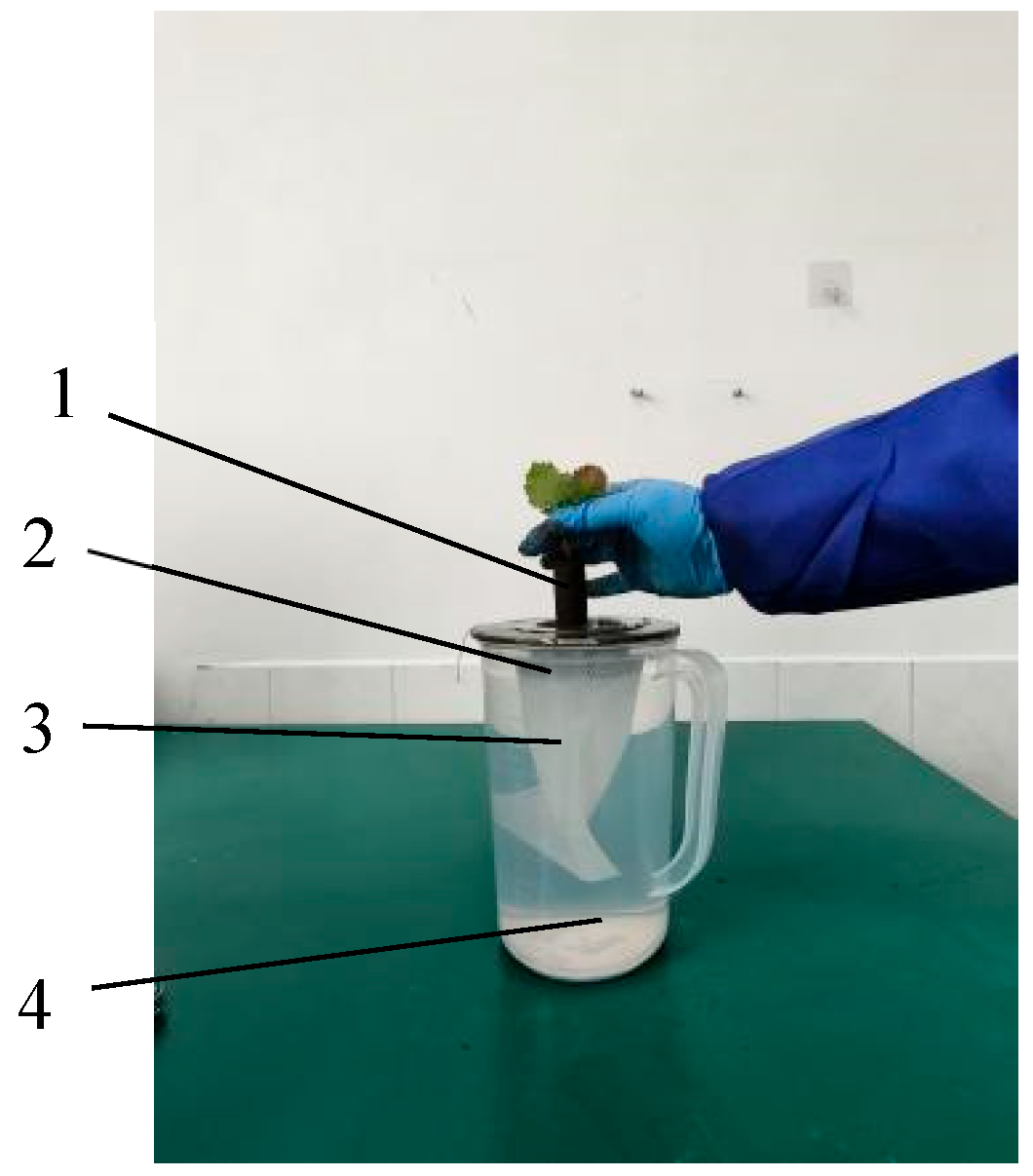
The water absorption of the matrix soil after the seedling-carrying potting was evaluated using the scattering rate as an index to provide good air and water permeability for compacted seedling-carrying potting [28,29]. The molded seedling-carrying potting was placed in a hollow cylindrical tube with a nylon mesh fabric at the bottom (Figure 3). The hollow cylindrical tube was submerged in a measuring cylinder filled with water (To prevent the water-saturated matrix soil from entering the measuring cylinder through the nylon mesh fabric, a 500 × 500 mesh per square inch nylon mesh fabric should be selected), and the seedling-carrying potting was maintained in water for 10 s and then removed. The matrix soil, not dislodged from the seedling-carrying potting, was loaded into another nylon mesh fabric. A portion of the matrix soil dislodged from the water and entered the nylon mesh fabric at the bottom of the hollow cylindrical tube. The two nylon mesh fabrics with matrix soil were put into a constant-temperature drying bag. The two nylon mesh fabrics with matrix soil were placed in a constant-temperature drying oven, and the temperature was set at 100 °C for 6 h of constant-temperature baking treatment. Then, the mass of matrix soil in the nylon mesh fabrics was determined. The formula for calculating the scattering rate is presented in Equation (1).
Q = M 1 m M 1 + M 2 m × 100 %
where Q is the scattering rate, M1: Dry mass of the dislodged matrix soil, specifically the soil that detached from the pot and passed through the bottom nylon mesh fabric (g), M2: Dry mass of the non-dislodged matrix soil, referring to the soil that remained within the pot (g), and M: Tare mass of the nylon mesh fabric, weighed before the test (g).

2.2.5. Integrated Optimization and Experimental Validation

The magnitude of the shear resistance directly affects the breakage rate of seedling-carrying potting during seedling pickup and delivery. The drop loss rate affects the degree of loss of the potting mix when seedling-carrying potting falls from the seedling pickup and delivery mechanism to the planting device. The scattering rate determines the permeability of the seedling-carrying potting after transplantation. After comprehensively analyzing the importance of molding quality indexes for seedling-carrying potting delivery and transplantation, the weight coefficients of shear resistance, drop loss rate, and scattering rate were set to 0.33. Multi-objective optimization was conducted using Design-Expert 8.0.6 software to obtain optimal parameter combinations. The seedling-carrying potting, under the optimal combinations of parameter conditions, was pressed and molded to validate the shear resistance, drop loss rate, and scattering rate of the seedling-carrying potting, which was repeated five times. The test was repeated five times, and the results were averaged.

3. Results and Analysis

3.1. Results and Analysis of the One-Factor Test

3.1.1. Dry Material Ratio (Seedling Substrate: Clay Loam)

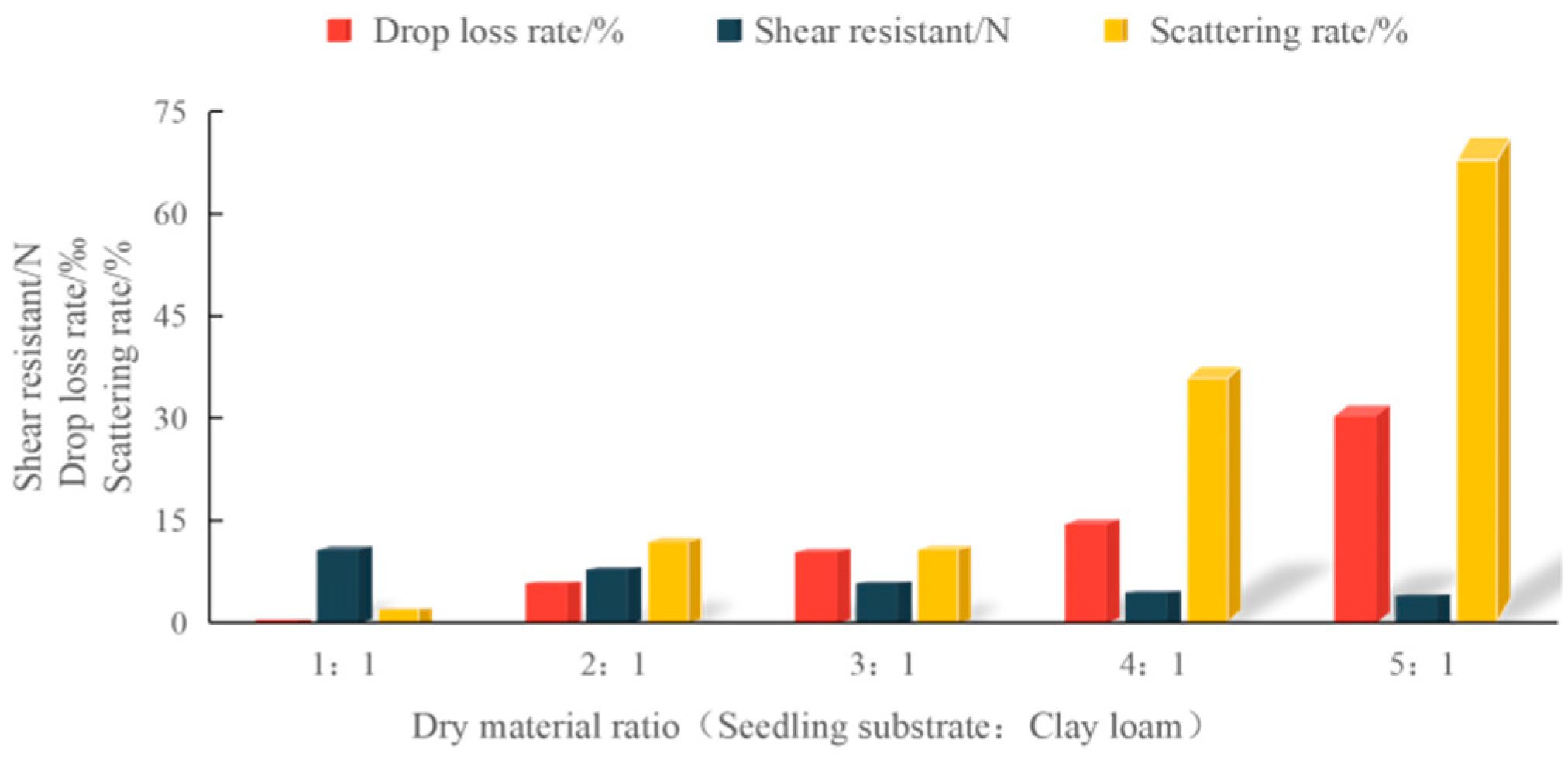
The moisture content of the matrix soil was set at 40%, the compression ratio was 0.4, and the dry material ratios were 1:1, 2:1, 3:1, 4:1, and 5:1 at the five levels. Figure 4 illustrates the relationship between each measure and the dry material ratio.
Figure 4 demonstrates that as the dry material ratio increased (the content of the seedling substrate in the matrix soil raised), the drop loss rate of the seedling-carrying potting increased while the shear resistance declined. The scattering rate initially increased and then sharply raised. At a dry material ratio of 1:1, the adhesion force between soil and seedling substrate particles during the extrusion molding process of the matrix soil was strong due to the low content of seedling substrate in the matrix soil (with a relatively high clay loam content), resulting in the maximum shear resistance, minimum drop loss rate, and scattering rate. When the dry material ratio ranged from 2:1 to 4:1, the shear resistance of the seedling-carrying potting gradually decreased, and the drop loss rate increased, with a clear upward trend in the scattering rate. The overall performance of the seedling-carrying potting reached a relatively optimal state, with a shear resistance of 8.2 N and a scattering rate of 37.7%. Although the drop loss rate reached 15.2%, the mixed matrix of the drop loss had a minimal impact on the integrity of the seedling-carrying potting. When the dry material ratio increased to 5:1, because of the relatively high content of the seedling substrate, the shear resistance reached its minimum value, the scattering rate reached its maximum, and the drop loss rate reached its maximum of 31.9%. The seedling-carrying potting suffered severe damage during the drop process, significantly impacting its integrity. The preliminary optimal range of dry material ratio was determined through single-factor experiments to be between 2:1 and 4:1.

3.1.2. Moisture Content

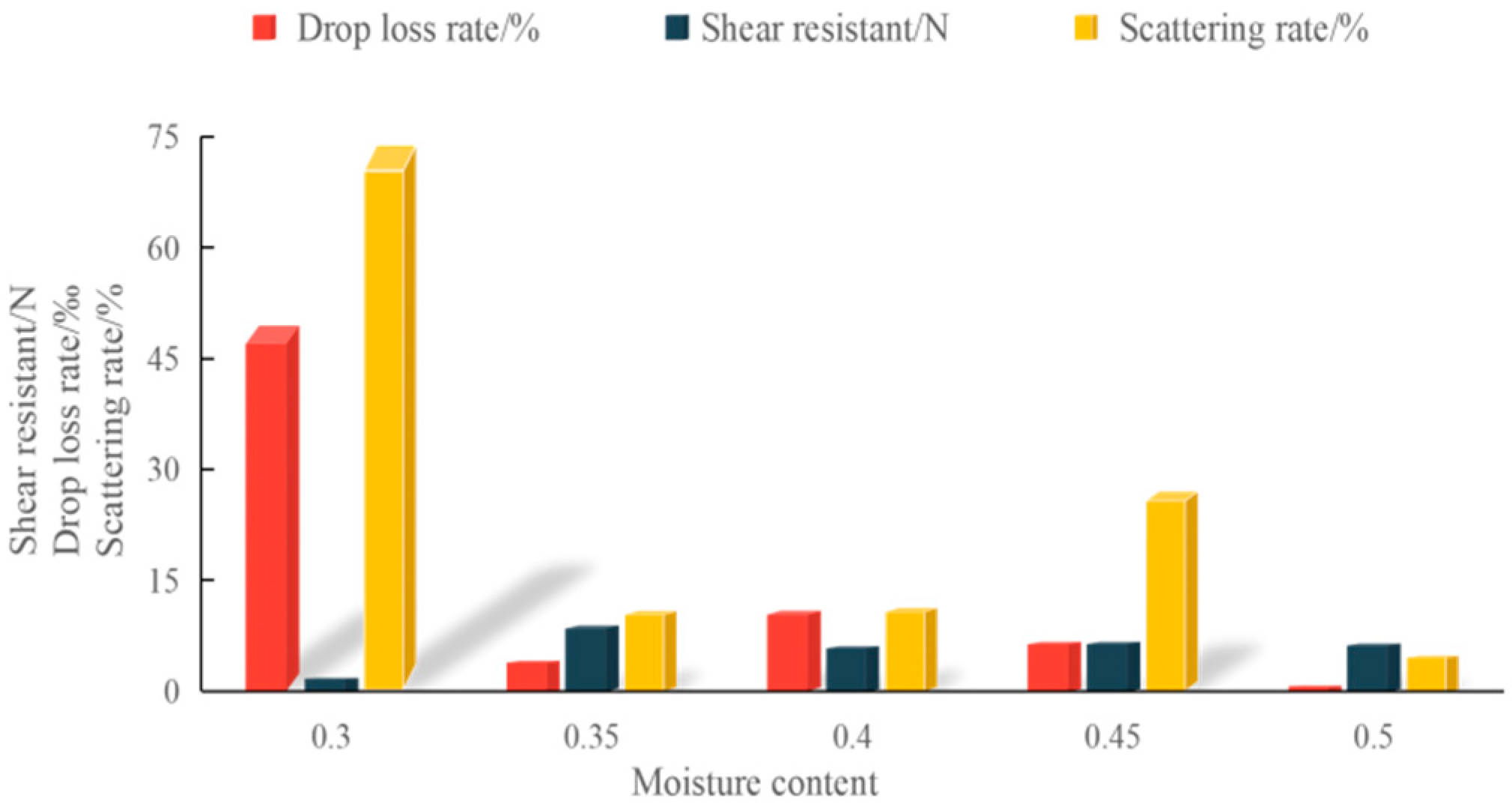
The matrix soil had a dry material ratio of 3:1, a compression ratio of 0.4, and moisture contents of 30%, 35%, 40%, 45%, and 50%, representing five levels. Figure 5 illustrates the relationship between each measurement indicator and the dry material ratio.
Figure 5 depicts that, as the moisture content gradually increased, the drop loss rate of the seedling-carrying potting initially decreased, then increased, and finally decreased again. The shear resistance exhibited an initial increase followed by a decrease, while the scattering rate first decreased sharply, then increased, and finally declined. At a moisture content of 30%, the drop loss rate peaked, shear resistance reached its minimum, and the scattering rate attained its maximum, which can be attributed to the relatively weak water film adhesion between matrix soil particles and the enhanced detachment after water absorption. When the moisture content ranged between 35% and 45%, the performance indicators of the seedling-carrying potting remained relatively stable. The comprehensive performance reaches a relatively optimal state, with a drop loss rate of only 4.1%, shear resistance of 8.9 N, and scattering rate of 27.1%. At a moisture content of 50%, the seedling-carrying potting did not break upon dropping but only deformed, resulting in negligible drop loss. There was no significant change in the shear resistance, but the scattering rate reached a minimum of 4.8% due to the high moisture content, compromising the ventilation and water permeability of the seedling-carrying potting. The preliminary optimal range of moisture content was determined through single-factor experiments to be between 35% and 45%.

3.1.3. Compression Ratio

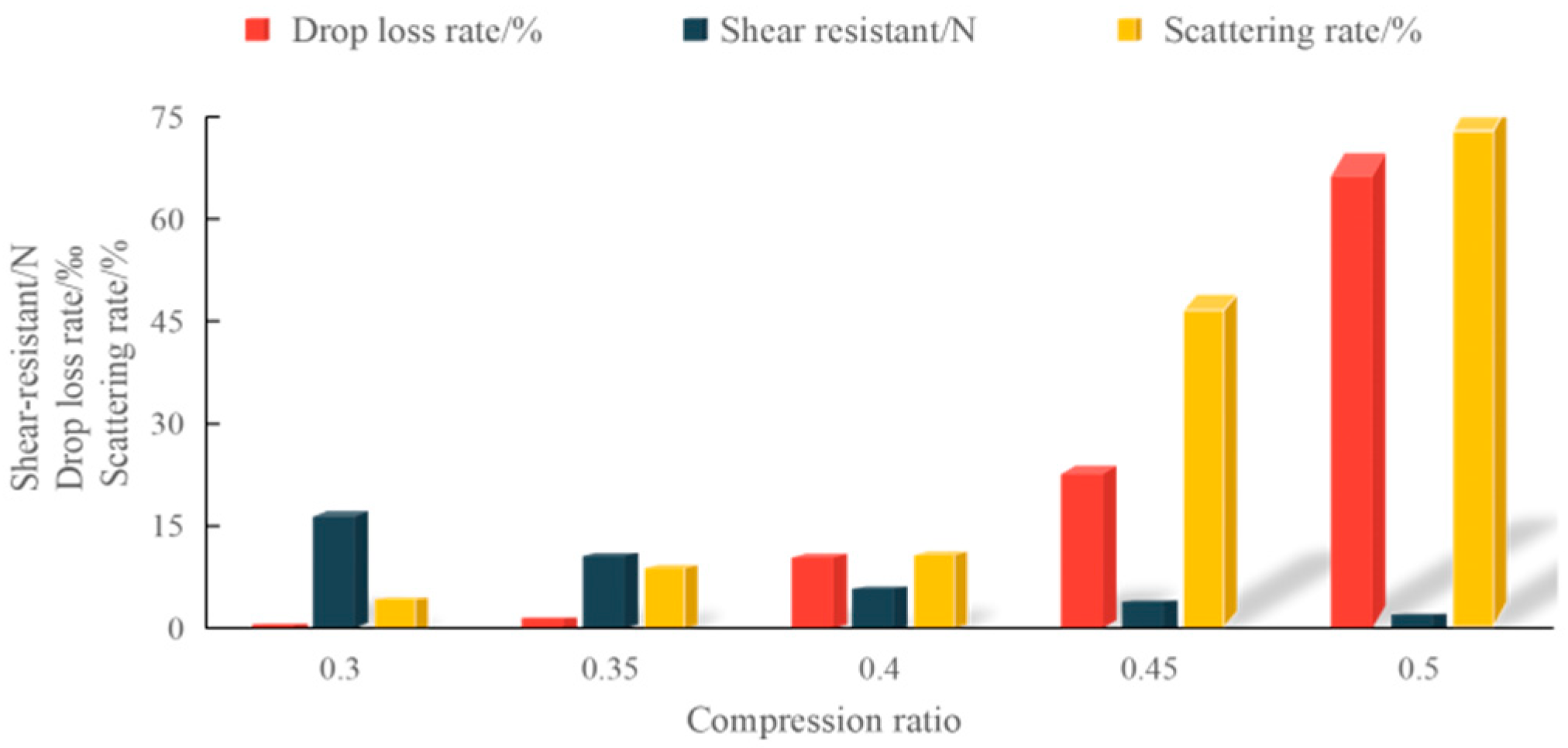
The dry material ratio of the matrix soil was set to 3:1, with a moisture content of 40% and compression ratios of 0.3, 0.35, 0.40, 0.45, and 0.50, totaling five levels. Figure 6 illustrates the relationship between each measurement indicator and the dry material ratio.
Figure 6 depicts that as the compression ratio progressively increased (corresponding to a gradual reduction in the mass of the matrix soil added to the upper and lower molds), the drop loss rate of the seedling-carrying potting initially increased and then surged, while the shear resistance progressively declined. The scattering rate initially increased and then soared. At a compression ratio of 0.3, the formed seedling-carrying potting exhibited high compactness due to the maximum squeezing force between the matrix soil particles, resulting in peak shear resistance, minimal drop loss rate, and scattering rate. When the compression ratio ranged between 0.35 and 0.45, the interaction force between the matrix soil particles progressively diminished, leading to a gradual decrease in the compactness of the seedling-carrying potting. The drop loss rate can reach 23.8%, shear resistance can be reduced to 4.1 N, and the scattering rate can reach 49.1%. Within this range, the scattering rate performance indicator was favorable, and both the drop loss rate and shear resistance can achieve optimal values. At a compression ratio of 0.5, the squeezing force between the matrix soil particles was minimal due to the minimal mass of matrix soil added to the upper and lower molds. Although, at this point, the scattering rate of the seedling-carrying potting reached its peak, the drop loss rate was also maximized, while the shear resistance reached its minimum. Consequently, the mechanical properties of the seedling-carrying potting mix were suboptimal. The preliminary optimal range of compression ratio was determined through single-factor experiments to be between 0.35 and 0.45.

3.2. Multifactor Test Results and Analysis

Based on the single-factor experimental results, the dry material ratio, moisture content, and compression ratio of the matrix soil significantly affected the drop loss rate, shear resistance, and scattering rate. The drop loss rate, shear resistance, and scattering rate were used as evaluation criteria to investigate the patterns and optimal parameter combinations affecting the quality of the seedling-carrying potting. The dry material ratios were set to 2:1, 3:1, and 4:1; moisture contents of 35%, 40%, and 45%; and compression ratios of 0.35, 0.40, and 0.45, respectively. A three-factor, three-level quadratic orthogonal combination optimization experiment was conducted. Table 1 presents the factor-level coding tables.
Based on the experimental factor level coding table, a quadratic orthogonal combination experimental design was developed, encompassing 17 seedling-carrying potting-shaping trials, each replicated three times. The average of three trial outcomes was used as the experimental result. Table 2 presents the experimental design and the results. Based on the experimental findings, quadratic polynomial regression models were developed for dry material ratio a, moisture content b, compression ratio c, drop loss rate y1, shear resistance y2, and scattering rate y3. After discarding non-significant factors, the resulting regression equation was as follows:
y1 = 10.38 + 3.10a + 1.16b + 9.96c + 0.85ab + 2.8ac + 2.03bc − 2.73a2 − 3.0b2 + 4.35c2
y2 = 6.22 − 1.06a − 1.60b − 3.24c − 0.72ab + 0.85ac + 1.44b2 + 1.62c2
y3 = 12.70 + 7.98a + 8.31b + 14.18c + 9.80ab − 3.78ac + 10.62bc + 8.97a2 + 11.30c2

3.2.1. Analysis of Variance

Analysis of variance was conducted on the experimental models presented in Table 2 using Design-Expert 8.0.6 software. Table 3 presents the variance analysis results for drop loss rate, shear resistance, and scattering rate. The significance level for all models was <0.01, indicating a high degree of statistical significance. This suggests that all independent variables significantly influence the dependent variables. The mismatch terms for the objective functions were 0.4607, 0.3345, and 0.1922, respectively, all exceeding 0.05, indicating the absence of mismatched factors. These regression equations can replace the actual experimental points when analyzing the results. The determination coefficient R2 and adjusted determination coefficient R2 adj, both close to 1, demonstrate that the models exhibit high reliability and accuracy. The magnitudes of the F-values in Table 3 indicate the degree of influence of each factor on the evaluation indices. The higher the F-value, the greater the impact. Based on the single-factor level analysis, the sequence of influence on the drop loss rate was as follows: c (compression ratio) > a (dry material ratio) > b (moisture content). Similarly, the sequence for shear resistance and scatter rate was as follows: c (compression ratio) > b (moisture content) > a (dry material ratio). Interaction effects were also evident: the sequence for the drop loss rate was ac > bc > ab, for shear resistance ac > ab > bc, and for scattering rate bc > ab > ac.

3.2.2. Analysis of the Interactive Effects of Regression Models

The Impact of the Interaction of Various Factors on the Drop Loss Rate
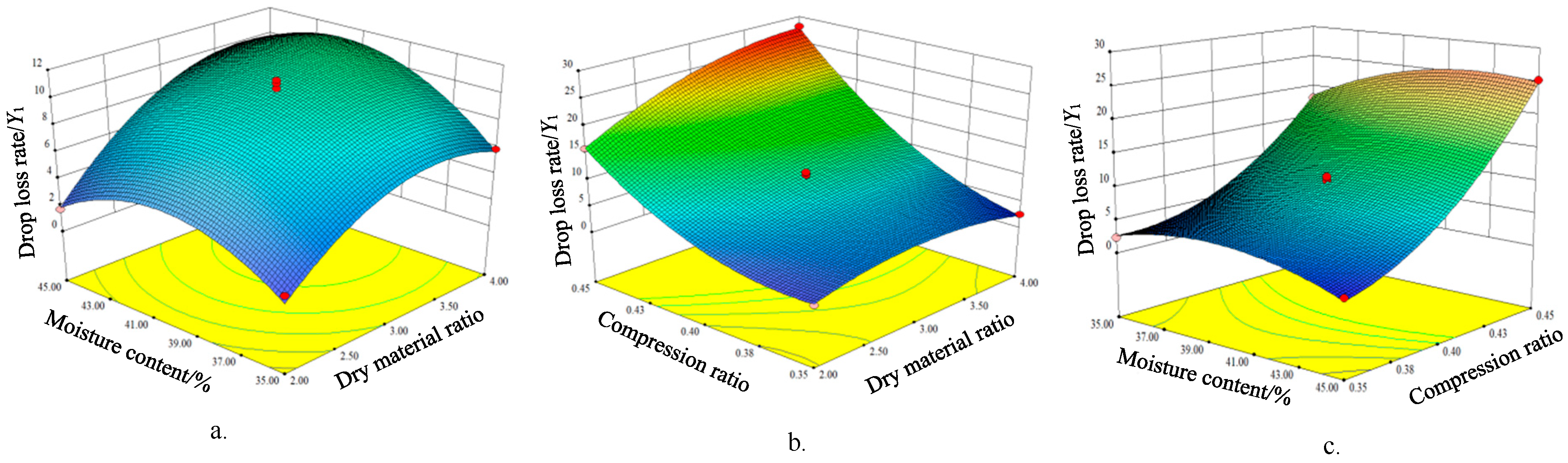
Figure 7 depicts the response surface of the drop loss rate. Figure 7a reveals that at a compression ratio of 0.4, the drop loss rate initially increased with higher moisture content, and then decreased, followed by a subsequent increase with increased dry material ratio. The response surface shifts more rapidly along the dry material ratio axis and less along the moisture content axis. At a constant compression ratio, the influence of the dry material ratio on the drop loss rate was more pronounced than that of moisture content. The drop loss rate was relatively low when the moisture content was approximately 45%, and the dry material ratio was approximately 2:1. Figure 7b depicts that the drop loss rate escalated as the compression ratio increased, albeit more slowly as the dry material ratio increased, at a moisture content of 40%. The drop loss rate was lowest when the compression ratio was 0.35, and the dry material ratio was approximately 2:1. The response surface indicated that the drop loss rate shifted swiftly along the compression ratio axis and less so along the moisture content axis. At a fixed dry material ratio, the impact of the compression ratio on the drop loss rate was more significant than that of the moisture content. Figure 7c shows that the drop loss rate increases with higher compression ratios at a dry material ratio of 3:1, and initially increases and then decreases with increasing moisture content. The drop loss rate was lowest when the moisture content was approximately 45%, and the compression ratio was 0.35. The response surface shifted rapidly along the compression ratio axis, while it shifted less rapidly along the moisture-content axis. At a constant dry material ratio, the influence of the compression ratio on the drop loss rate was more pronounced than that of moisture content.
The Impact of the Interaction of Various Factors on Shear Resistance
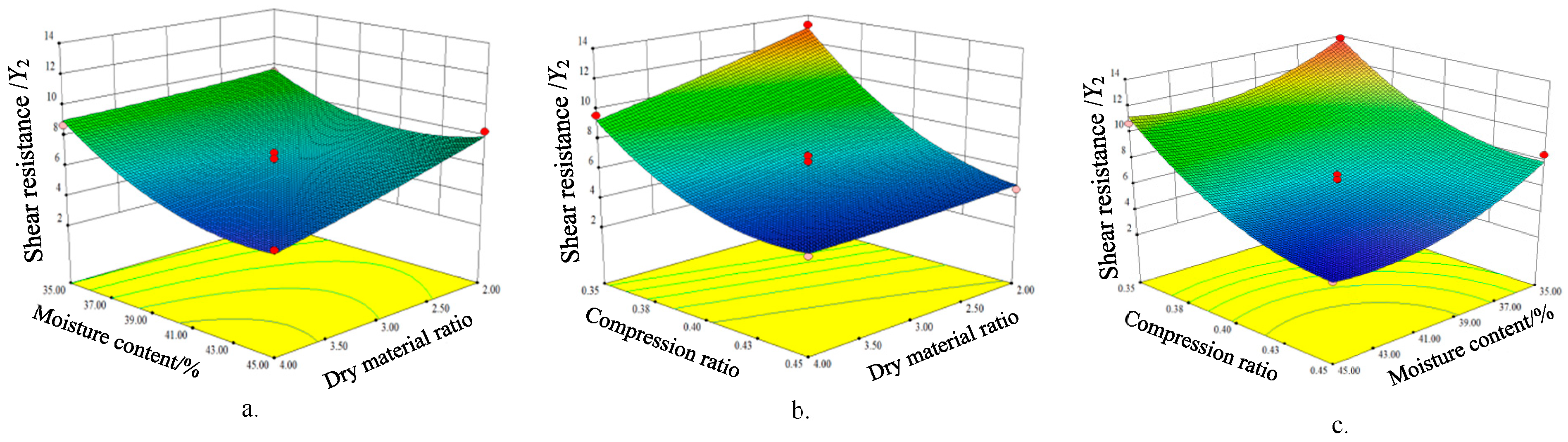
Figure 8 depicts the response surface for the shear resistance. Figure 8a reveals that at a compression ratio of 0.4, the shear resistance decreased with increasing moisture content and dry material ratio. The response surface indicates that the shear resistance changes more gradually with changes in the material ratio and more rapidly with changes in the moisture content. At a constant compression ratio, the influence of the moisture content on the shear resistance was more pronounced than that of the dry material ratio. Figure 8b demonstrates that at a moisture content of 40%, the shear resistance decreased with increasing compression ratio, and the change was relatively smooth with increasing material ratio. Specifically, at a compression ratio of approximately 0.35 and a dry material ratio of approximately 2:1, the shear resistance was at its highest. Figure 8c indicates that at a dry material ratio of 3:1, the shear resistance decreased with increasing compression and moisture content. The shear resistance reached maximum when the moisture content was approximately 35%, and the compression ratio was 0.35. The response surface indicates that the shear resistance changes rapidly with the compression ratio and less rapidly with the moisture content. At a constant dry material ratio, the impact of the compression ratio on the shear resistance was more pronounced than that of the moisture content.
The Impact of the Interaction of Various Factors on the Scattering Rate
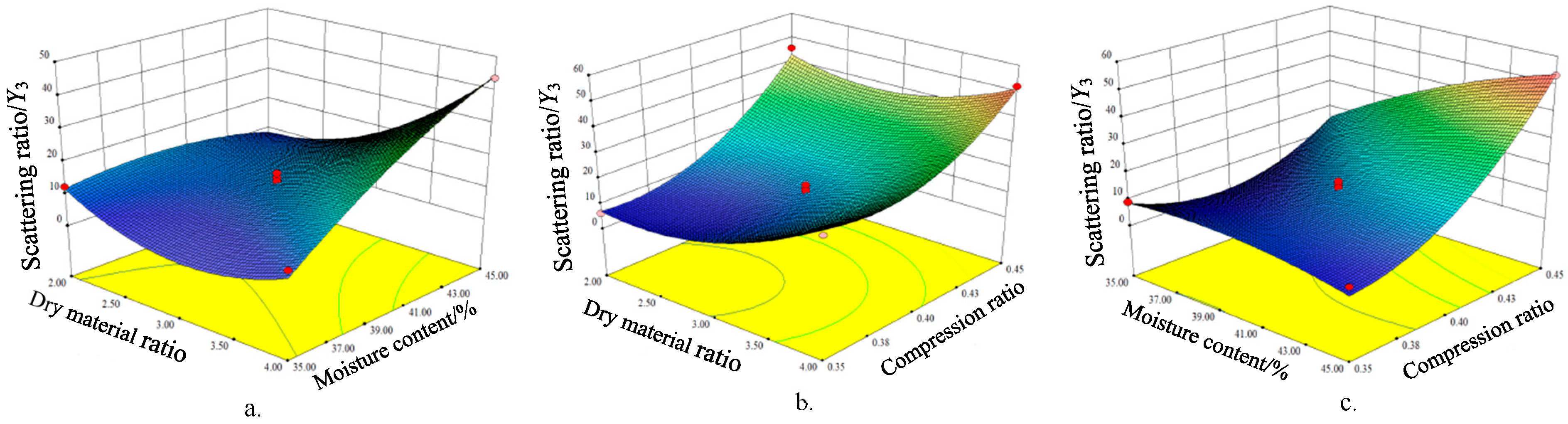
Figure 9 presents the response surface of the scattering ratio. Figure 9a indicates that when the compression ratio was 0.4, the scattering ratio initially decreased and then increased with increasing dry material ratio and moisture content. According to the response surface, the variation in the scattering ratio was faster along the direction of the moisture content and relatively slower along the direction of the dry material ratio. The scattering rate was the highest when the dry material ratio was approximately 4:1, and the moisture content was approximately 45%. Figure 9b illustrates that when the moisture content was 40%, the scattering ratio increased with an increase in the dry material and compression ratios. The response surface changed relatively quickly along the direction of the compression ratio and relatively slowly along the direction of the dry material ratio. The scattering ratio reached a maximum when the compression ratio was 0.45, and the dry material ratio was approximately 4:1. The porosity increased and then decreased with increased moisture content and compression ratio. The scattering ratio reached a maximum when the moisture content was approximately 45%, and the dry material ratio was approximately 4:1 (Figure 9c). According to the corresponding surface, the scattering ratio changed rapidly along the direction of the compression ratio and relatively slowly along the direction of the moisture content. When the dry material ratio was constant, the compression ratio significantly impacted the scattering rate more than the moisture content.

3.2.3. Parameter Optimization

The optimal proportioning scheme of the matrix soil was optimized with the objectives of low drop loss rate, high shear resistance, and high scattering rate to ensure better physico-mechanical properties of the seedling-carrying potting. The Optimization-Numerical module of Design-Expert v8.0.6 software was used to solve the optimization with the following objective functions and constraints:
min y 1 a , b , c max y 2 a , b , c min y 3 a , b , c a 1 ,   1 b 1 ,   1 a 1 ,   1
After optimization, the best combination of parameters influencing the factors was obtained as follows: dry material ratio of 4:1, moisture content of 45%, compression ratio of 0.36, model-predicted drop loss rate of 1.5%, shear resistance of 7.1 N, and scattering rate of 34.9%.

3.2.4. Validation Tests

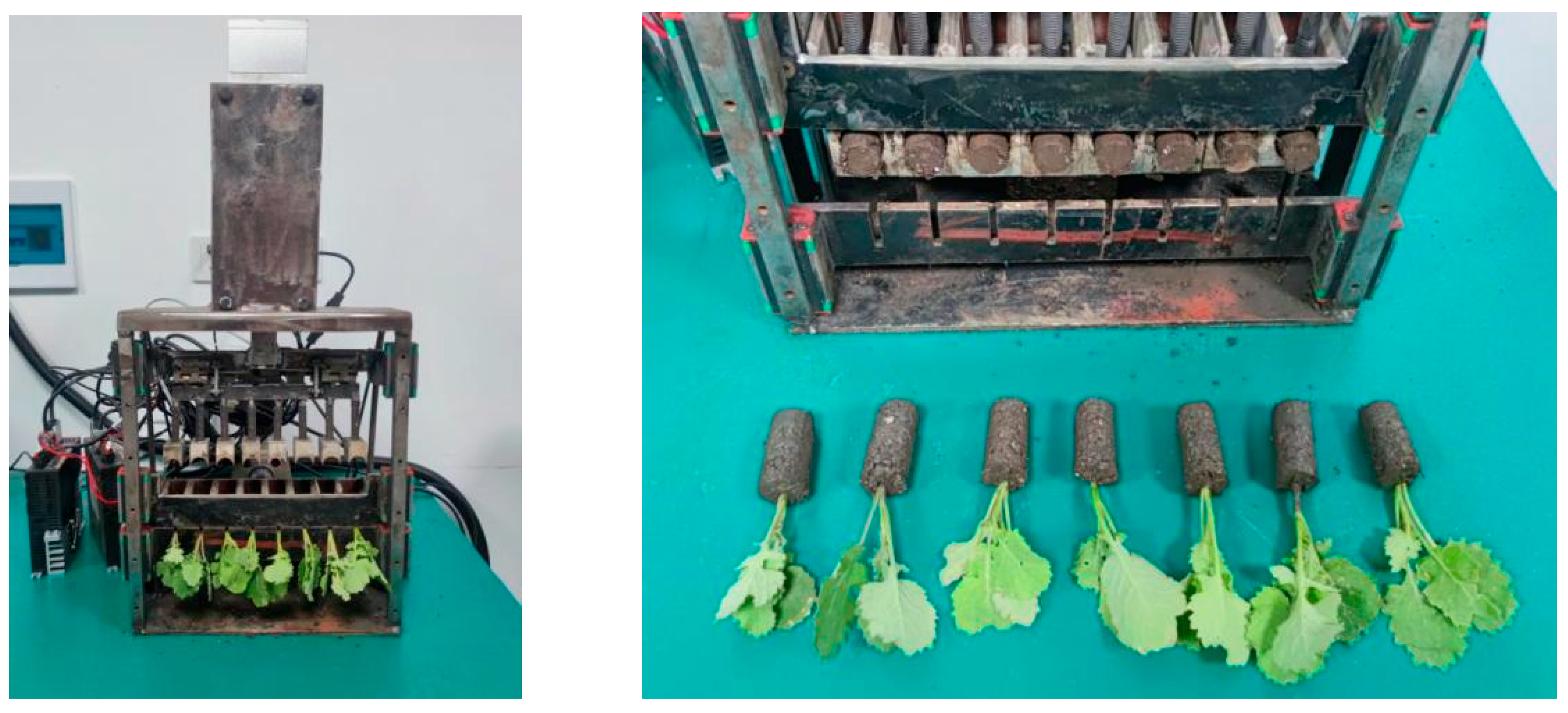
Based on the software optimized parameter combination (dry material ratio of 4:1, moisture content of 45%, and compression ratio of 0.36). The seedling-carrying potting required for the experiment were manufactured using a seedling-carrying potting test bed in the laboratory of the oil tea base at Hunan Agricultural University (Figure 10). The testing method was the same as described in Section 2.2.4 “Indicators of quality of molding of seedling-carrying potting and pans”. Each evaluation index was averaged over five repetitions to eliminate random errors. Table 4 lists the test results. The analysis showed that the average drop loss rate, shear resistance, and scattering rate values were 1.4%, 7.6 N, and 32.2%, respectively. The relative errors between the validation test on the bench and the optimal value predicted by the model were 7.1%, 7.0%, and 8.4%, respectively, indicating that the factors influencing the quality of potting are reasonable and that the mathematical model of the established evaluation indexes is correct.

3.3. Comparative Field Transplanting Trials

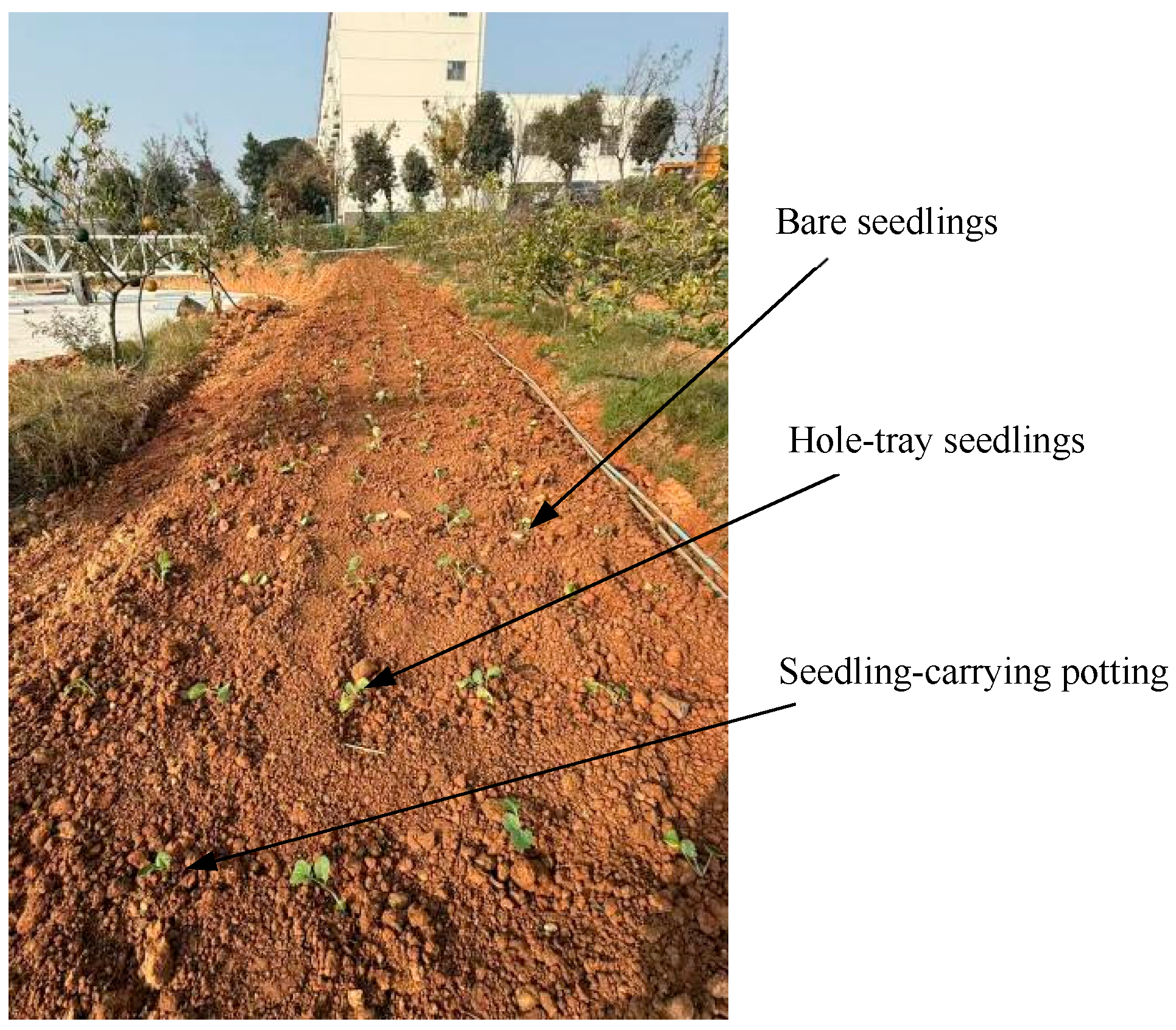
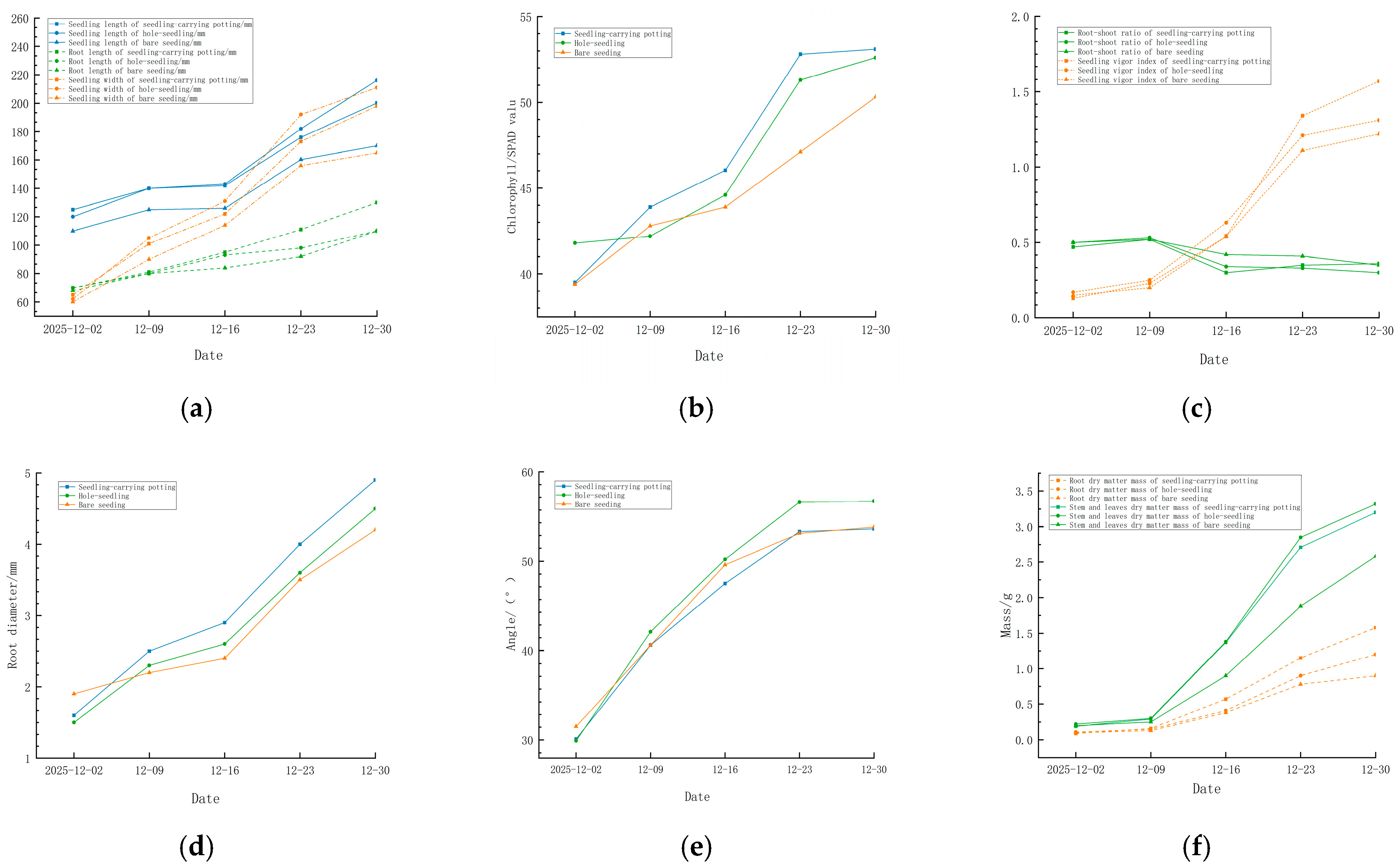
To test the growth of the seedling-carrying potting after compression and formation using a seedling-carrying potting test bed (Figure 11), 200 rapeseed seedlings with “four leaves and one core” were taken from the field, of which 100 were used for bare seedling transplantation. The remaining 100 were compressed and transplanted using the seedling-carrying potting test bed to obtain the seedling-carrying potting. Simultaneously, 100 rapeseed seedlings with “four leaves and one core” with consistent growth were selected from the seedling tray, and three seedlings were planted in the oil tea base of Hunan Agricultural University, with two rows for each seedling. From 7 to 37 days after transplanting, sampling tests were conducted on sunny days. Prior to sampling, the experimental field was divided into grids, and sampling points were randomly selected within each grid. At 7-day intervals, 20 seedlings each of the seedling-carrying potting, hole-tray seedlings, and bare seedlings were randomly sampled from the grids. The growth characteristic parameters of the seedlings, including seedling length, seedling width, root diameter, root length, plant taper angle, chlorophyll content, root-to-shoot ratio, seedling vigor index, root dry matter mass, and stem and leaf dry matter mass, were measured separately. When selecting seedlings, the integrity of the root system should be ensured, and the seedlings should not be pulled out directly by hand. The roots and soil should be removed using a shovel and stored in a pot with water. Each growth characteristic parameter was measured five times, and the average value was calculated.
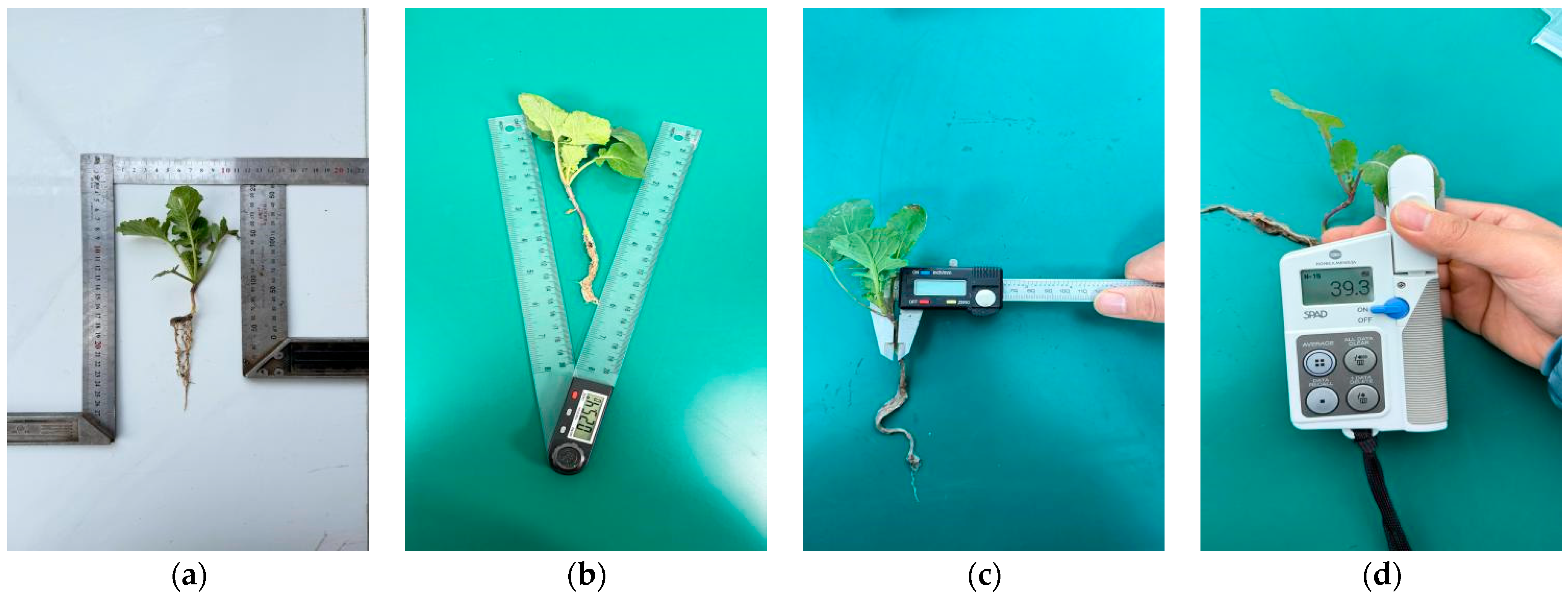
The seedling’s physical characteristics were measured as follows (Figure 12):
Seedling length: Seedlings were placed horizontally and naturally, and their lengths were measured from the tip of the leaf blade to the bottom of the root.
Seedling width: The distance between the two widest points of the seedling leaf blades in their natural state was measured as the seedling width.
Root diameter: A Vernier caliper was used to measure the diameter at 10 mm from the side root system on the stalks of rapeseed seedlings, rotated along the 60° direction three times, and the average value was taken to record the root diameter of the main stalk.
Root length: The length from the root diameter of the main stalk to the end of the main root was measured as the root length.
Plant taper angle: The plant taper angle is the acute angle between the two widest points of the plant and the line connecting the fixed point of the plant root. The plant was laid naturally on a horizontal surface. Two steel rulers were used to connect the outermost point of the leaf contour to the bottom of the root system, and a protractor was used for manual measurements.
Root dry matter mass: The root system was cut and washed along the diameter measurement of oilseed rape roots, which were removed after baking for 6 h in an oven set at 108°, and its mass was measured using an electronic balance as the dry matter mass of the root system. The remaining part of the root system was removed after baking for 6 h in the same way in an oven set at 108°, and its mass was measured using an electronic balance as the dry matter mass of the stem and leaves.
Chlorophyll Content: For all three seedling types, the first leaf above the root was uniformly selected as the measurement object, and its chlorophyll content was measured using a chlorophyll meter. The root-to-shoot ratio and seedling vigor index were obtained through their corresponding calculation formulas [21].
Figure 13 shows the experimental results. From Figure 13a,b,d–f, it can be observed that the indicators for the three seedling types—seedling length, root length, root diameter, seedling width, chlorophyll content, root dry matter mass, stem and leaves dry matter mass, and plant taper angle—all exhibited an increasing trend. According to Figure 13c, the root-to-shoot ratio of the three seedling types first increased and then decreased, while the seedling vigor index showed a continuous upward trend, indicating that root growth predominated in the early stage after transplanting, followed by a faster growth rate of stems and leaves in the later stage. The rates of change for seedling length, seedling width, chlorophyll content, and plant cone angle, in descending order, were hole-tray seedlings, seedling-carrying potting, and bare seedlings. The rates of change for root length, root diameter, root-to-shoot ratio, and seedling vigor index, in descending order, were seedling-carrying potting, hole-tray seedlings, and bare-root seedlings. The growth rates of all indicators were relatively high during the third sampling cycle but significantly lower in the final sampling cycle. The reason for this may be that the higher temperatures during the third sampling period were more favorable for seedling growth, whereas the sharp temperature drop in the final sampling cycle slowed the growth of all indicators. A comparative analysis of the growth indicators from the third sampling cycle (the fourth sampling), the seedling length, seedling width, plant taper angle, stem and leaves dry matter mass, and four indicators from large to small for the hole-tray seedling, seedling-carrying potting, and bare seedling. In seedling-carrying potting, the growth characteristics of each growth were higher than the bare seedlings by 8.9%, 9.8%, 2.3%, and 30.6%, but were reduced by 3.3%, 4.9%, 4.1%, and 4.9% as compared to the hole-tray seedlings. The reason for this might be that the nutrients in the root part of the seedling-carrying potting transplants were higher than those in the bare seedling transplants, while the seedling transplants in the hole-tray had a relatively shorter period of slowing down, and the above-ground parts of the seedling transplants grew faster. The root length, root diameter, root dry matter, chlorophyll content, and seedling vigor index, from highest to lowest, are in the order of seedling-carrying potting, hole-tray seedlings, and bare seedlings. Compared to hole-tray seedlings, the respective growth characteristics of seedling-carrying potting were higher by 11.7%, 10%, 21.7%, 2.8%, and 27.8%. Compared to bare seedlings, they were higher by 17.1%, 12.5%, 32.2%, 10.8%, and 32.7%. This may be because the root system of the seedling-carrying potting is more favorable for its growth after a certain degree of compaction and prune of the matrix soil, and the matrix soil of the seedling-carrying potting can provide sufficient nutrients to the transplanted seedlings. To summarize, the seedling root system formed by prune and compaction of matrix soil in the seedling-carrying potting has better growth quality after transplanting, and the seedling root system will not be adversely affected by a certain degree of compaction. Due to seedling-carrying potting having undergone a certain degree of compaction and prune, the scattering of the matrix and seedling damage during mechanized transplanting operations are lower than those of hole-tray seedlings and bare seedlings, making it more suitable for mechanization.

4. Discussion

4.1. Compared with the Mainstream Transplanting Methods

The studies above demonstrated that the growth quality of the pot formed according to the optimized ratio of matrix soil after transplanting to the field showed certain advantages compared with the hole-tray seedlings and bare seedlings. Comparative field transplanting tests demonstrated that the seedling length, seedling width, plant taper angle, stem and leaves dry matter mass, and four indicators from large to small for the hole-tray seedling, seedling-carrying potting, and bare seedling. The reason for this might be that the nutrients in the root part of the seedling-carrying potting transplants were higher than those in the bare seedling transplants, while the seedling transplants in the hole-tray had a relatively shorter period of slowing down, the stress resistance was notably enhanced, and the above-ground parts of the seedling transplants grew faster. The growth characteristics of root length and diameter, as well as the dry matter content of the root system, stems, and leaves, were in descending order. The root length, root diameter, root dry matter, chlorophyll content, and seedling vigor index, from highest to lowest, are in the order of seedling-carrying potting, hole-tray seedlings, and bare seedlings. The reason may be that the root system of the seedling-carrying potting becomes more conducive to growth after undergoing an appropriate degree of pruning and compaction. Root pruning can enhance the above-ground dry weight of plants, increase root dry weight and stem thickness, and improve root structure. Consequently, the nutrient element content in the root system was elevated [30,31]. Studies have shown that root pruning enhances plant survival rates, facilitates transplantation, and reduces the duration of the slow seedling stage. Additionally, root pruning promotes earlier root emergence while delaying early leaf phenology [32]. Root pruning can accelerate early seedling development; however, it may prolong the overall growth duration [33]. By root pruning, the contents of vitamin total sugar were increased, but the content of cypermethrin was decreased in fruits, and no effects were found on the total acid content of fruit and yield at harvest [34]. The seedling-carrying potting examined in this study was characterized by a certain degree of compaction between the selected healthy seedlings and the matrix soil, ensuring consistent transplanting quality for each potted seedling. The transplanting quality of pothole seedlings was influenced not only by the transplanting equipment but also directly by the germination rate of seeds and the robustness of seedlings. It was challenging to ensure uniform growth quality for seedlings in each hole during the cultivation process of pothole seedlings [35,36,37]. Compared to the transplanting of hole-potting seedlings and matrixblock seedlings, the seedling-carrying potting transplanting can significantly mitigate issues related to suboptimal transplanting quality that arise from low seed germination rates and poor seedling robustness. Additionally, the structural integrity of seedling-carrying potting can effectively minimize substrate loss during mechanical transplanting. The mechanical actuating components did not come into direct contact with the seedling rhizomes during the transplanting process, thereby effectively preventing potential damage to the rhizomes that could be caused by these components [38]. Using seedling-carrying potting transplanting can enhance both the quality and efficiency of transplanting while also increasing the mechanization level of rapeseed transplanting operations.

4.2. Limitations and Challenges in Practical Application

Despite the higher degree of mechanization associated with seedling-carrying potting compared to hole-potting seedling and bare seedling, the proposed method faces certain limitations and challenges in practical application. Firstly, the seedling-carrying potting used in this study was formed by compressing seedlings, matrix soil, and water in a specific ratio. In actual production, seedlings must be extracted from the field and then processed by the seedling container-forming machine for secondary processing. Although these steps were more complex compared to traditional seedling-raising methods, the seedling-carrying potting-forming machine can efficiently manufacture large quantities of containers in an indoor environment, thereby avoiding the adverse effects of outdoor uncontrollable factors on seedling quality. Secondly, there were significant challenges in accurately supplying large quantities of matrix soil required for the seedling-carrying potting-forming machine, orderly collecting the formed seedling-carrying potting for transplanters, and transitioning from manual placement of seedlings to automated intelligent transportation. These limitations and challenges can be effectively addressed by designing a matrix soil stirring device with intelligent monitoring capabilities, a seedling container collecting device with automatic collection into cakes or strips, and a seedling root grasping device with intelligent recognition functions. While corresponding equipment needs to be designed to complete various stages of container transplanting, all operations can be shifted from outdoor/field environments to indoor settings, significantly enhancing control over seedling quality before transplanting.

4.3. Future Research Directions

It is important but difficult to achieve transplanting of seedling-carrying potting. A comprehensive analysis of the development status of transplanting technology and equipment for pressed and formed matrix block seedlings, proposing recommendations to optimize the physical and chemical parameters of the matrix, enhance the structural design of the matrix block seedling trays, and address the technical challenges associated with automated seedling extraction [39]. An investigation into nitrogen utilization in matrix blocks composed of straw and rapeseed cake found that the addition of rapeseed cake during the preparation of straw matrix blocks resulted in improved biological characteristics of the seedlings [40]. Currently, numerous scholars have investigated the preparation and transplantation of matrix block seedlings, encompassing aspects such as the pressing molding method for matrix block seedlings and the associated transplanting machinery. Research indicates that pots formed by mixing and pressing seedling matrix materials along with other loose particles can promote seedling growth to a certain extent. However, there was room for improvement in terms of full automation rates and transplanting efficiency. In the future, to enhance the mechanization level and operational efficiency of pot seedling production from pressed mixed materials, further research will focus on the development of seedling-carrying potting forming and transplanting machinery, building upon existing studies on matrix block seedling transplantation. Specifically, the impact of seedling-carrying potting shape and root cutting methods prior to formation on post-transplantation growth will be analyzed. Additionally, more detailed studies on matrix soil distribution ratios will be conducted to better understand their influence on seedling-carrying potting formation. These efforts aim to further investigate the yield and quality of rapeseed oil produced from transplanted seedling-carrying potting in the field.

5. Conclusions

This study focused on the molding process of substrate pots and their transplanting performance. Through single-factor experiments, quadratic orthogonal rotational combination tests, and field comparative trials, the effects of dry material ratio, compression ratio, and moisture content on pot molding quality and seedling growth were systematically investigated. After root pruning, the number of lateral roots of the seedling-carrying potting increased significantly. The increased lateral root count provides greater wrapping strength around the pot, thereby effectively reducing the pot breakage rate during crop transplanting and improving the success rate of mechanical seedling picking, ultimately enhancing the overall quality of transplanting operations. Based on the optimal molding parameters obtained in this study, future work could involve the development of seedling-carrying potting molding equipment integrated with sensor technology and intelligent control algorithms, enabling real-time monitoring and regulation of parameters such as substrate moisture content and compression force. In parallel, efforts should be directed toward advancing integrated “molding–transplanting” equipment, including the design of seedling-carrying potting transplanters and compatible implements for other related operations. In the future, seedling-carrying potting transplanting may extend beyond rapeseed to include various other vegetable crops, with standardized pot dimensions enabling uniform manufacturing. This standardization would facilitate the design and production of key components for transplanting equipment.

Author Contributions

Conceptualization, W.Q. and J.S.; methodology, W.Q. and J.S.; software, H.C.; validation, W.Q., X.J. and F.S.; formal analysis, D.T.; investigation, J.S.; resources, H.Z.; data curation, W.Q.; writing—original draft preparation, W.Q.; writing—review and editing, M.W.; visualization, X.J.; supervision, M.W.; project administration, M.W.; funding acquisition, W.Q., X.J. and M.W. All authors have read and agreed to the published version of the manuscript.

Funding

This research was funded by a Project Supported by Scientific Research Fund of Hunan Provincial Education Department (23A0193); Hunan Provincial Natural Science Foundation (2026JJ50397); the Yuelushan Laboratory Breeding Program (YLS-2025-ZY03021); Hunan Oil Industry Technology System (HARS-03).

Institutional Review Board Statement

This study did not involve human participants or vertebrate animals. The insect specimens collected from the field are not endangered or protected species. Therefore, ethical approval was not required.

Data Availability Statement

The raw data supporting the conclusions of this article will be made available by the authors on request.

Conflicts of Interest

The authors declare no conflicts of interest.

References

  1. Hu, Z.Y.; Xian, M.Z.; Li, J. Current situation and development trends of rapeseed variety improvement in China. J. China Agric. Univ. 2024, 29, 50–62. [Google Scholar]
  2. Li, G.C.; Niu, Q.C.; Leng, B.F.; Ding, Y.F.; Tong, T.; Fan, L.X. The decade of rapeseed industry in the new era: Development and its path choice. Chin. J. Oil Crop Sci. 2024, 46, 228–235. [Google Scholar]
  3. Li, X.Z.; Liao, Q.X.; Yuan, H.; Han, J.X.; Wang, L.; Fu, M.L. Design and test of seedbed belt preparation device for rapeseed substrate block transplanter. J. Huazhong Agric. Univ. 2024, 43, 215–226. [Google Scholar]
  4. Yang, Q.; Xu, L.; Shi, X.; Ibrar, A.; Mao, H.; Hu, J.; Han, L. Design of seedlings separation device with reciprocating movement seedling cups and its controlling system of the full-automatic plug seedling transplanter. Comput. Electron. Agric. 2018, 147, 131–145. [Google Scholar] [CrossRef]
  5. Dihingia, P.C.; Kumar, G.V.P.; Sarma, P.K. Development of a hopper-type planting device for a walk-behind hand-tractor-powered vegetable transplanter. J. Biosyst. Eng. 2016, 41, 21–33. [Google Scholar] [CrossRef]
  6. Liu, M.F.; Hu, X.P.; Liao, Y.T.; Liao, Q.X.; Wan, X.Y.; Ji, M.Y. Morphological parameters characteristics of mechanically transplanted plant in suitable transplanting period for different rape varieties. Trans. Chin. Soc. Agric. Eng. 2015, 31, 79–88. [Google Scholar]
  7. Yu, X.X.; Zhao, Y.; Chen, B.C.; Zhou, M.L.; Zhang, H.; Zhang, Z.C. Current Situation and Prospect of Transplanter. Trans. Chin. Soc. Agric. Mach. 2014, 45, 44–53. [Google Scholar]
  8. Liu, Y.; Mao, H.P.; Wang, T.; Li, B.; Li, Y.X. Collision Optimization and Experiment of Tomato Plug Seedling in Basket-type Transplanting Mechanism. Trans. Chin. Soc. Agric. Mach. 2018, 49, 143–151. [Google Scholar]
  9. Hu, Q.L.; Wang, L.; Li, X.Z.; Yuan, H.; Yuan, J.C.; Liao, Q.X. Design and experiment of the counter roll seedling taking equipment for rapeseed substrate block seedlings transplanter. Trans. Chin. Soc. Agric. Eng. 2022, 38, 12–23. [Google Scholar]
  10. Hu, Q.; Yuan, J.; Li, X.; Wang, L.; Zhang, Q.; Liao, Q. Design and Experiment of Two-way Progressive Seedling Feeding for Rape Substrate Transplanters. Trans. Chin. Soc. Agric. Mach. 2022, 53, 106–115. [Google Scholar]
  11. Hu, Q.L.; Zhang, Q.S.; Li, X.Z.; Wan, X.Y.; Wang, L.; Liao, Q.X. Design and parameter analysis of seedling collection device of rapeseed substrate block seedlings transplanter machine. Trans. Chin. Soc. Agric. Eng. 2021, 37, 18–27. [Google Scholar]
  12. Cui, Z.C.; Guan, C.S.; Xu, T.; Fu, J.J.; Chen, Y.S.; Zheng, S.H. Design and Experiment of Double-row Chain Planting Device for Cabbage Substrate Block Seedlings. Trans. Chin. Soc. Agric. Mach. 2023, 54, 46–54. [Google Scholar]
  13. Cui, Z.C.; Guan, C.S.; Xu, T.; Li, J.C.; Chen, Y.Y.; Song, J.L.; Zheng, S.H. Design and experiment of the automatic conveying and separating device for substrate block seedling transplanting machine. Trans. Chin. Soc. Agric. Eng. 2023, 39, 68–79. [Google Scholar]
  14. Liu, J.Z.; Li, M.; Li, N.; Li, P.P.; Zhao, M.Z.; Yue, W. Design and Test of End-effector for Automatic Transplanting of Strawberry Plug Seedlings. Trans. Chin. Soc. Agric. Mach. 2016, 47, 49–58. [Google Scholar]
  15. Liu, J.D.; Cao, W.B.; Tian, D.Y.; Ouyang, Y.N.; Zhao, H.Z. Optimization experiment of transplanting actuator parameters based on mechanical property of seedling pot. Trans. Chin. Soc. Agric. Eng. 2016, 32, 32–39. [Google Scholar]
  16. Wang, Y.; Chen, J.N.; Wu, J.W.; Zhao, J. Mechanics property experiment of broccoli seedling oriented to mechanized planting. Trans. Chin. Soc. Agric. Eng. 2014, 30, 1–10. [Google Scholar]
  17. Qu, P.; Zhao, Y.F.; Song, J.; Xia, L.R. Performance of substrate blocks glued by modified urea formaldehyde resins and its effect on cucumber seedlings. Trans. Chin. Soc. Agric. Eng. 2017, 33, 253–259. [Google Scholar]
  18. Choi, J.M.; Kang, C.S.; Ahn, J.W.; Lee, C.W. Influence of fertilizer concentrations on the performance of seedling grafts of tomato grown in coir based root media. Hortic. Environ. Biotechnol. 2011, 52, 393–401. [Google Scholar] [CrossRef]
  19. Petre, S.N.; Pele, M.; Draghici, E.M. Influence of perlite and jiffy substrates on cucumber fruit productivity and quality. J. Agric. Sci. 2015, 7, 185. [Google Scholar] [CrossRef]
  20. Hoa, H.T.; Wang, C.L.; Wang, C.H. The effects of different substrates on the growth, yield, and nutritional composition of two oyster mushrooms (Pleurotus ostreatus and Pleurotus cystidiosus). Mycobiology 2015, 43, 423–434. [Google Scholar] [CrossRef]
  21. Hu, Q.L.; Liao, Q.X.; Wang, Y. Mechanical and biological characteristics analysis of mechanically transplanted rapeseed substrate block seedlings. Trans. Chin. Soc. Agric. Eng. 2019, 35, 58–65. [Google Scholar]
  22. Yang, L.Y.; Yuan, Q.X.; Liu, Z.G.; Cao, H.L.; Luo, S. Experiment on seedling of compressed substrates with cow dung aerobic composting and earthworm cow dung composting. Trans. Chin. Soc. Agric. Eng. 2016, 32, 226–233. [Google Scholar]
  23. Huang, K.; Xia, H. Role of earthworms’ mucus in vermicomposting system: Biodegradation tests based on humification and microbial activity. Sci. Total Environ. 2018, 610–611, 703–708. [Google Scholar] [CrossRef]
  24. Zheng, Z.M. Study on the Formula of Compressed Greening Matrix Block and the Optimization of Key Parameters in Forming Processon. Master’s Thesis, Huazhong Agricultural University, Wuhan, China, 2022. [Google Scholar]
  25. Ren, J.H.; Chen, H.; Xiong, S.B.; Zong, L.; Wan, P. Optimization of technical parameters of compression molding of dried fish floss block. Trans. Chin. Soc. Agric. Eng. 2012, 28, 306–311. [Google Scholar]
  26. Ma, X.X.; Li, H.; Cao, W.B.; Yv, S.Y.; Li, S.F. Optimization and experiment of working parameters of automatic seedling picking device for tomato seedlings transplanting. Trans. Chin. Soc. Agric. Eng. 2020, 36, 46–55. [Google Scholar]
  27. Cao, H.L.; Yang, L.Y.; Yuan, Q.X.; Huang, C.Q. Experimental Research of Seedling Substrate Compressed of Cattle Manures. Trans. Chin. Soc. Agric. Mach. 2015, 46, 197–202. [Google Scholar]
  28. Luo, S. Molding Process and Molding Machine Design and Experiment of Vermicompost Substrate. Ph.D Thesis, Huazhong Agricultural University, Wuhan, China, 2019. [Google Scholar]
  29. Zhao, W.; Cui, Z.C.; Guan, C.S.; Chen, Y.S.; Yang, Y.T.; Gao, Q.S. Design and experiment of vegetable seedling substrate block forming machine. J. Chin. Agric. Mech. 2021, 42, 77–82. [Google Scholar]
  30. Huang, Y.M.; Wu, L.M.; Song, F.; Wang, Z.J.; He, L.G.; Tong, T.; Jiang, Y.C. Effect of root pruning and inoculation with arbuscular mycorrhizal fungi on root morphology of trifoliate seedlings. South China Fruits 2019, 48, 5–10. [Google Scholar]
  31. Huang, Y.M.; Song, F.; Wang, C.; Yao, J.L.; Wang, Z.J.; He, L.G.; Wu, L.M.; Jiang, Y.C. Effects of root pruning on growth and expression of related genes in Poncirus trifoliata. Acta Agric. Zhejangensis 2021, 33, 270–277. [Google Scholar]
  32. Chang, X.C.; Zhang, J.; Wan, F.F.; Xian, L.H.; Liu, Y. Effects of Root Pruning and Size on Growth Traits of Hybrid Poplar Seedlings. Forests 2024, 15, 1770. [Google Scholar] [CrossRef]
  33. Wang, T.J.; Xiong, W.; Kuang, F.M.; Sun, D.D.; Geng, Z.X.; Que, J.N.; Hou, R.Z.; Zhu, D.Q. Efects of seedling age and root pruning on root characteristics and dry matter accumulation dynamics in machine-transplanted rice. Plan. Soil Environ. 2024, 70, 164–175. [Google Scholar] [CrossRef]
  34. Yang, S.; Xing, S.; Liu, C.; Du, Z.; Wang, H.; Xu, Y. Effects of root pruning on the vegetative growth and fruit quality of Zhanhuadongzao trees. Hort. Sci. 2010, 37, 14–21. [Google Scholar] [CrossRef]
  35. Wang, X.Q.; Zhou, H.L.; Tong, J.H. The simplification and analytical verification of the static liquid bridge force model for particle adhesion in inferior seedling substrates. Surf. Interfaces 2024, 53, 104994. [Google Scholar] [CrossRef]
  36. Wang, X.Q.; Yu, G.H.; Liu, N.H.; Tong, J.H.; Shang, K.Y. Parameter optimization and experimental verification of the air suction removal device for inferior bowl seedlingsy. Trans. Chin. Soc. Agric. Eng. 2023, 39, 36–43. [Google Scholar]
  37. Tong, J.H.; Shang, K.Y.; Wang, X.Q.; Sun, L.; Zhang, N.; Norupiri, R.O.; Ma, S.Q. Design and Test of Spiral Rejection Mechanism for Inferior Bowl Seedlings. Trans. Chin. Soc. Agric. Mach. 2024, 55, 129–137. [Google Scholar]
  38. Li, H.; Ma, X.X.; Cao, W.B.; Li, S.F.; Zhou, W.J. Design and experiment of seedling picking mechanism by stem clipping for tomato plug seedlingly. Trans. Chin. Soc. Agric. Eng. 2020, 36, 39–48. [Google Scholar]
  39. Cui, Z.C.; Guan, C.S.; Xu, T.; Yang, Y.T.; Xu, B.X.; Chen, Y.S. Development status of technology and equipment of substrate block seedling cultivation and transplanting. J. Chin. Agric. Mech. 2022, 43, 29–34. [Google Scholar]
  40. Du, Y.H.; Chen, Z.F.; Shen, Y.; Wang, Q.J.; Li, T.L.; Huang, H.Y.; Chen, D.Y. Effect of straw and rapeseed cake on nitrogen use efficiency of rice seedling cultivation. J. Shanxi Agric. Univ. (Nat. Sci. Ed.) 2023, 43, 80–88. [Google Scholar]
Figure 1. The seedling-carrying potting test bed and the standardized seedling-carrying potting. 1—Servo cylinder I; 2—Connecting plate I; 3—Flip hinge; 4—Vertical guide rail; 5—Vertical slider; 6—Positioning cylinder; 7—Dowel pin; 8—Upper mold; 9—Upper baffle; 10—Lower mold; 11—Lower baffle; 12—Horizontal guide rail; 13—Horizontal slider; 14—Frame; 15—Servo cylinder II; 16—Connecting plate II; 17—Seedling-pushing rod; 18—Tailgate; 19—V-shaped mold; 20—Seedling-carrying potting.
Agriculture 16 00635 g001
Figure 2. Shear test of seedling-carrying potting. 1—Shear mold; 2—seedling-carrying potting; 3—the trestle of seedling-carrying potting.
Agriculture 16 00635 g002
Figure 3. The determination test of the scattering rate. 1—seedling-carrying potting; 2—hollow cylinder; 3—nylon mesh fabric; 4—measuring cylinder.
Agriculture 16 00635 g003
Figure 4. The relationship between test index and dry material ratio.
Agriculture 16 00635 g004
Figure 5. The relationship between test index and moisture content.
Agriculture 16 00635 g005
Figure 6. The relationship between the test index and compression ratio.
Agriculture 16 00635 g006
Figure 7. Influence of interactive factors on drop loss rate. (a) y1(a, b, 0.4); (b) y1(a, 40%, c); (c) y1(3:1, b, c).
Agriculture 16 00635 g007
Figure 8. Influence of interactive factors on shear resistance. (a) y2(a, b, 0.4); (b) y2(a, 40%, c); (c) y2(3:1, b, c).
Agriculture 16 00635 g008
Figure 9. Influence of interactive factors on scattering ratio. (a) y3(a, b, 0.4); (b) y3(a, 40%, c); (c) y3(3:1, b, c).
Agriculture 16 00635 g009
Figure 10. Manufacturing the seedling-carrying pottings.
Agriculture 16 00635 g010
Figure 11. Comparative experiment on growth characteristics of oilseed rape seedlings.
Agriculture 16 00635 g011
Figure 12. Method for determining physical characteristic parameters of seedlings; (a) Seedling width; (b) Plant taper angle; (c) Root diameter; (d) Chlorophyll.
Agriculture 16 00635 g012
Figure 13. Comparison of seedling growth characteristics of different transplanting methods; (a) Seedling length and Root length, and Seedling width; (b) Chlorophyll; (c) Root-shoot ratio and seedling vigor index; (d) Root diameter; (e) Plant taper angle; (f) Dry matter mass.
Agriculture 16 00635 g013
Table 1. Coding of factors and levels.
LevelFactors
Dry Material Ratio (a)Moisture Content (b)Compression Ratio (c)
−12:135%0.35
03:140%0.4
14:145%0.45
Table 2. Experimental design and results.
No.FactorsResponse Index
abcDrop Loss Rate y1/%Shear Resistant y2/NScattering Rate y3/%
13:140%0.411.15.913.1
23:140%0.49.65.615.6
32:135%0.401.89.512.3
42:140%0.4515.94.645.6
53:135%0.352.313.88.9
62:140%0.351.513.36.6
73:145%0.4525.24.153.3
84:135%0.45.98.710.2
93:135%0.4518.18.512.6
103:140%0.410.56.29.4
113:145%0.351.310.77.1
124:140%0.352.59.627.9
134:145%0.49.24.643.6
144:140%0.4528.14.352.1
153:140%0.49.86.914.1
163:140%0.410.96.511.3
172:145%0.41.78.36.5
Table 3. ANOVA of the response surface quadratic model for y1, y2, and y3.
Source of
Variance
Drop Loss Rate/y1Shear Resistant/y2Scattering Rate/y3
Sum of
Squares
FreedomMean
Square
Fp ValueSum of
Squares
FreedomMean
Square
Fp ValueSum of
Squares
FreedomMean
Square
Fp Value
Model1074.29119.36266.89<0.0001139.92915.5549.12<0.00014499.39499.9351.15<0.0001
a76.88176.88171.910.00019.0319.0328.530.0011497.701497.7050.930.0002
b10.81110.8124.170.001720.48120.4864.71<0.0001552.781552.7856.560.0001
c794.011794.011775.40.000183.85183.85264.9<0.00111607.411607.4164.4<0.0001
ab2.8912.896.460.03852.1012.106.640.0366384.161384.1639.310.0004
ac31.36131.3670.120.00012.8912.899.130.019357.00157.005.830.0464
bc16.40116.4036.680.00050.4210.421.330.2858451.561451.5646.200.0003
a231.32131.3270.040.00010.05610.0560.180.6875339.161339.1634.700.0006
b237.96137.9684.880.00018.7318.7327.590.001252.32152.325.350.0539
c279.58179.58177.950.000110.98110.9834.700.0006537.641537.6455.010.0001
Residual3.1370.451.050.46072.2270.321.540.334568.4179.772.570.1922
Lack of fit1.3830.461.1930.4045.03315.01
Pure error1.7540.441.0340.2623.3845.84
Cor total1077.316 142.1416 4567.716
R2 = 0.9971; R2adj = 0.9934; C = 6.87%R2 = 0.9844; R2adj = 0.9644; C = 7.30%R2 = 0.9850; R2adj = 0.9658; C = 15.19%
Note: p < 0.01 indicate extremely significance and p < 0.05 indicate significance.
Table 4. Validation test results under optimized conditions.
No.Drop Loss Rate/%Shear Resistance/NScattering Rate/%
11.77.532.7
21.27.632.1
31.57.731.9
41.17.931.1
51.77.333.4
Average value1.47.632.2
Disclaimer/Publisher’s Note: The statements, opinions and data contained in all publications are solely those of the individual author(s) and contributor(s) and not of MDPI and/or the editor(s). MDPI and/or the editor(s) disclaim responsibility for any injury to people or property resulting from any ideas, methods, instructions or products referred to in the content.