1. Introduction
Subsoil geological structure (SSGS) plays a fundamental role in grapevine growth and development, encompassing features such as effective topsoil depth to bedrock, fracture density and connectivity, karst cavities, permeability contrasts between soil layers, and lateral subsurface flow pathways. These geological characteristics work together to control the three-dimensional distribution and temporal dynamics of water, nutrients, and oxygen in the root zone. Consequently, understanding and managing SSGS has become increasingly important for optimizing both grape production and wine quality.
The importance of SSGS is particularly pronounced in mountainous vineyard regions, where geological complexity creates unique challenges. Topsoils in these environments are often thin or entirely absent, bedrock frequently lies exposed or at shallow depths, and centuries of terracing have created artificial soil–bedrock interfaces with highly variable characteristics [
1]. Several aspects of the subsurface become especially critical for vine–water relations in these settings. Effective topsoil depth determines the volume of soil-stored water that roots can access. Beyond the topsoil layer, bedrock type and fracture networks control whether roots can penetrate deeper to tap moisture reserves in the substrate. In carbonate terrains, this dynamic becomes more complex; karst features such as dissolution cavities and enlarged fractures can create localized pockets where water accumulates. Terraced vineyards add another dimension to consider, as the texture, compaction, and depth of anthropogenic fill materials influence both infiltration rates and water retention capacity. Water movement is not limited to vertical flow, either. Lateral subsurface pathways along topsoil–bedrock interfaces or through fractured bedrock can redistribute moisture across the landscape. Together, these terroir conditions shape the drought stress patterns that vines experience [
2,
3], which ultimately connect to wine attributes and quality [
4].
SSGS characteristics influence multiple dimensions of vine performance through interconnected mechanisms. Topsoil structure, depth, and the nature of underlying geology define the physical environment for root development, determining pore space, water-holding capacity, and drainage properties that support healthy root system establishment [
5,
6,
7,
8,
9]. These same properties govern soil moisture dynamics and nutrient availability by influencing microbial activity and organic matter decomposition processes [
10,
11,
12]. In terraced systems specifically, the interplay among fill material depth, underlying bedrock characteristics, and the presence of fracture networks or karst features creates complex three-dimensional patterns in water availability. These patterns remain hidden from surface observations yet critically influence vine water status and productivity.
Water and heat stress during the growing season represent major sources of variation in red wine yield and quality [
13,
14]. Recent studies have demonstrated strong linkages between soil water availability and grapevine physiological responses, including stomatal regulation and photosynthetic performance [
15]. While extreme drought stress reduces grape yield, decreases berry size, and compromises wine quality [
16], the relationship between stress and quality is not simply linear. Heat stress further modifies this dynamic by altering ripening trajectories, sugar accumulation patterns, acidity levels, and phenolic compound development [
17,
18]. Research on Merlot vineyards indicates that maintaining stem water potential above approximately −1.4 MPa produces optimal grape and wine quality [
19,
20]. For instance, the literature on deficit irrigation demonstrates that regimes delivering 50% of crop evapotranspiration during early berry development, then reducing to 20% during later stages, can successfully balance vegetative growth, yield, berry composition, and wine quality [
19]. However, in the present study, all rows received uniform irrigation (35% ET
c), and the observed differences in vine water status arose solely from SSGS effects on water availability rather than differential irrigation treatments.
Understanding root-zone physical constraints has become increasingly critical in Mediterranean cropping systems facing climate variability. Recent comprehensive reviews emphasize that abiotic stressors, including elevated temperatures, increased vapor pressure deficits, water scarcity, and modified solar radiation, typically act simultaneously and often synergistically, challenging both crop productivity and resource management [
21]. While controlled environment agriculture offers some buffering capacity, open-field viticulture remains directly exposed to external climatic forcing. In these systems, vine performance is strongly modulated by subsurface geological structure, particularly in mountainous Mediterranean terroirs where thin soils and exposed bedrock generate sharp spatial gradients in water availability and vine performance. Achieving optimal water stress levels becomes complicated when SSGS varies considerably over short distances, creating challenges for irrigation management—especially in new vineyard plots or terraced landscapes where the subsurface architecture remains poorly understood [
22,
23].
Before planting, developing an understanding of plot-scale soil–substrate–geology systems is essential. In practice, however, growers typically rely on geological surveys of exposed outcrops, existing soil maps, or local agronomic experience. When SSGS characteristics are poorly constrained, and vineyard performance exhibits pronounced spatial variability, geophysical methods can provide valuable explanations for the observed heterogeneity. Non-invasive geophysical techniques overcome many limitations of traditional invasive approaches while offering detailed insights into vineyard subsurface conditions, including variations in effective topsoil depth, bedrock depth and lithology, the presence of karst features or fracture zones, and spatial patterns in subsurface moisture dynamics [
23,
24].
By mapping SSGS heterogeneity, vineyard managers can delineate terrain-based management zones and implement targeted, site-specific adaptation strategies. Geophysical surveys excel at detecting and mapping features such as hidden bedrock cavities, fracture networks, and other structural elements that significantly influence vineyard development and long-term management [
25,
26,
27]. Techniques such as electrical resistivity tomography (ERT) and ground-penetrating radar (GPR) enable detailed characterization of subsurface conditions, improving our understanding of vine–soil–substrate interactions and supporting the design of more precise management practices [
28].
Despite the clear potential of these geophysical methods and the well-documented relationships between vine water stress and wine quality, important knowledge gaps remain. Most geophysical studies in viticulture have focused on vineyard planning and soil mapping, with few integrating geophysical characterization of SSGS with comprehensive physiological monitoring, berry chemistry, and wine quality outcomes within a single experimental framework. The specific mechanisms by which discrete geological features influence vine performance through altered water availability patterns are rarely documented with direct chemical evidence linking subsurface structure to berry composition and wine attributes. Furthermore, terraced vineyards, which represent a common viticultural practice in mountainous regions worldwide, present particularly complex SSGS scenarios due to anthropogenic modification of natural soil profiles, yet integrated geophysical–agronomic–enological studies in these systems remain scarce.
The present work addresses these gaps through a comprehensive interdisciplinary approach conducted within a single-terraced Merlot vineyard exhibiting spatial variability in vine performance despite uniform management. We combine non-invasive geophysical characterization of SSGS using both ERT and GPR to provide complementary information on subsurface structure and moisture dynamics, detailed physiological monitoring including stem water potential, gas exchange, and leaf area index, comprehensive berry and wine chemical analyses covering anthocyanins, phenolics, color parameters, and acidity, plus sensory evaluation. This integrated design allows us to trace mechanistic pathways from specific geological features through water availability and vine physiological responses to berry chemistry and ultimately wine quality, providing direct evidence for how SSGS influences terroir expression.
Based on hydrogeophysical principles and established plant–water relations, we developed specific expectations to guide our investigation. Regarding geophysical signatures, we anticipated that low electrical resistivity in ERT surveys combined with disrupted or weak GPR reflections in the upper 1–2 m would indicate high-porosity zones—such as unconsolidated fill, karst features, or fractured bedrock—with elevated water content. Conversely, high resistivity paired with continuous, strong horizontal GPR reflections should reflect consolidated bedrock with limited water storage capacity. We also expected seasonal resistivity contrasts between winter and summer surveys to be more pronounced in high-porosity zones, indicating greater moisture storage and buffering capacity.
From a physiological perspective, we expected vines positioned above geological features associated with higher water availability—low-resistivity zones, karst structures, or thick fill layers—to exhibit less negative stem water potential, indicating reduced water stress. These same vines should maintain higher stomatal conductance and net CO2 assimilation rates, reflecting adequate water supply for photosynthetic activity. Greater vegetative growth should manifest as higher leaf area index and pruning mass, along with increased yield and potentially larger berry size.
Concerning wine quality relationships, we recognized that the connection between water availability and wine quality is non-linear, with moderate stress typically producing optimal results. We therefore expected that vines with excessive water availability would produce larger but more dilute berries with lower anthocyanin and phenolic concentrations, yielding wines with reduced color density, lower phenolic content, and diminished sensory quality scores. Vines experiencing moderate water stress around −1.4 MPa stem water potential for Merlot should achieve an optimal balance between yield and quality, producing concentrated berries and wines with high phenolic content, good color, and superior sensory scores. Under extreme water stress conditions (stem water potential more negative than −1.6 MPa), we anticipated declining wine quality despite high compound concentrations, due to impaired photosynthesis, accelerated ripening, potential off-flavor development, and wine imbalances such as elevated volatile acidity.
These expectations were formalized into specific testable hypotheses. We predicted that ERT and GPR surveys would reveal spatial variations in subsurface structure across our five study rows, with distinctive resistivity patterns and GPR reflection characteristics corresponding to differences in geological features such as fill depth, bedrock depth, and the presence of karst or fracture zones. These geophysical patterns should correspond spatially with vine water status measurements, with low-resistivity, high-porosity zones associated with less negative stem water potential and higher gas exchange rates, while high-resistivity, consolidated bedrock zones would correspond to more negative stem water potential and reduced photosynthetic activity.
We further hypothesized that these differential water stress patterns would translate into measurable differences in yield components and vegetative growth, with higher water availability supporting increased yield and more vigorous canopy development. Berry chemical composition at harvest should demonstrate an inverse relationship between water availability and concentrations of quality-determining compounds, with moderate stress producing optimal concentrations and extreme stress potentially compromising berry development. Wine chemical analyses should reflect these berry composition patterns, with wines from less stressed vines showing lower phenolic content and color density, wines from moderately stressed vines displaying optimal chemical profiles, and wines from extremely stressed vines potentially exhibiting signs of imbalance, such as elevated volatile acidity. Finally, sensory evaluation should assign the highest quality scores to wines from vines experiencing moderate water stress, with lower scores for wines from both excessively watered and extremely stressed vines.
By testing these mechanistic hypotheses in a terraced vineyard where adjacent rows exhibit contrasting performance under identical management, we aimed to demonstrate how non-invasive geophysical characterization of SSGS can explain terroir variability and inform precision viticulture management strategies.
4. Discussion
This study investigated how subsurface geological structure (SSGS) influences vine physiology, growth, and wine quality in a terraced Merlot vineyard. By integrating physiological monitoring with geophysical surveys (ERT and GPR), we revealed that invisible subsoil heterogeneity creates vastly different growing conditions that override uniform management practices.
Gas exchange measurements exposed clear, geology-driven divergence among vineyard rows (
Table 3). Early in the season, gas exchange parameters were similar across all rows, typical of non-stressed Merlot vines [
19]. By mid-July, row C maintained high assimilation rates while rows A, B, D, and E declined sharply, indicating that the irrigation rate (35% ET
c) was adequate over the karst/fill system but insufficient over shallow bedrock. Stomatal conductance patterns paralleled these trends, with near-complete closure in row E by late summer and sustained moderate conductance in row C.
Stem water potential measurements confirmed a clear stress gradient (
Table 2): rows C and B were relatively in moderate stress (~−1.2 MPa), rows D and E experienced severe stress (~−1.5 MPa or below), and row A hovered near the −1.4 MPa threshold reported as optimal for Merlot quality [
20]. Wine scores followed this physiological pattern, where row A produced the highest quality, while insufficiently stressed rows C and B produced lower-quality wines. These results indicate that the SSGS created distinct zones of water availability that directly influenced vine physiological responses. The extremely low stomatal conductance values observed in late season (as low as ~5 mmol m
−2 s
−1;
Table 3) reflect near-complete stomatal closure under severe water stress conditions. Such low gs values are consistent with the limited irrigation regime and late-season drought stress typical of Mediterranean vineyards under deficit irrigation management.
Yield and berry metrics reflected this water availability/vine physiology gradient (
Table 4). Row C combined high bunch numbers with large berries (124.3 g per 100 berries versus 76.5–92.3 g elsewhere), producing the highest yield within the normal commercial range for Merlot vines [
45]. Row E exhibited extreme yield reduction driven by low bunch and berry numbers rather than compensatory enlargement, consistent with severe, growth-limiting stress. Notably, yields across all treatments were very low, even relative to other mountainous vineyards in the same region, a pattern attributable in part to the absence of mineral fertilization and the use of a single compost application only once every 3–4 years. These findings align with recent work showing that spatial variation in soil moisture can drive differential physiological responses even within small vineyard areas [
46].
Wine chemistry revealed a clear pathway from geological structure through water availability to quality. Row C’s higher water status produced the lowest Brix, anthocyanins, and phenolics (
Table 5), reflecting dilution effects [
20]. Row A moderately stressed achieved optimal balance with high phenolics, good color density, and the highest sensory scores of 88.78 points (
Table 7). Row E, under extreme stress, produced highly concentrated wine (highest phenolics and color) but ranked only fourth in sensory evaluation due to elevated volatile acidity, lower alcohol, and early harvest, demonstrating that quality depends on balance rather than concentration alone. It is important to note that wine chemistry and sensory analysis results are based on single vinifications per row (
n = 1 wine per treatment). While the observed chemical and sensory patterns are consistent with the physiological and yield differences among rows, these wine quality findings should be interpreted as indicative trends rather than definitive conclusions. Future studies employing replicated vinifications would strengthen the statistical inference regarding wine quality responses to subsoil geological structure.
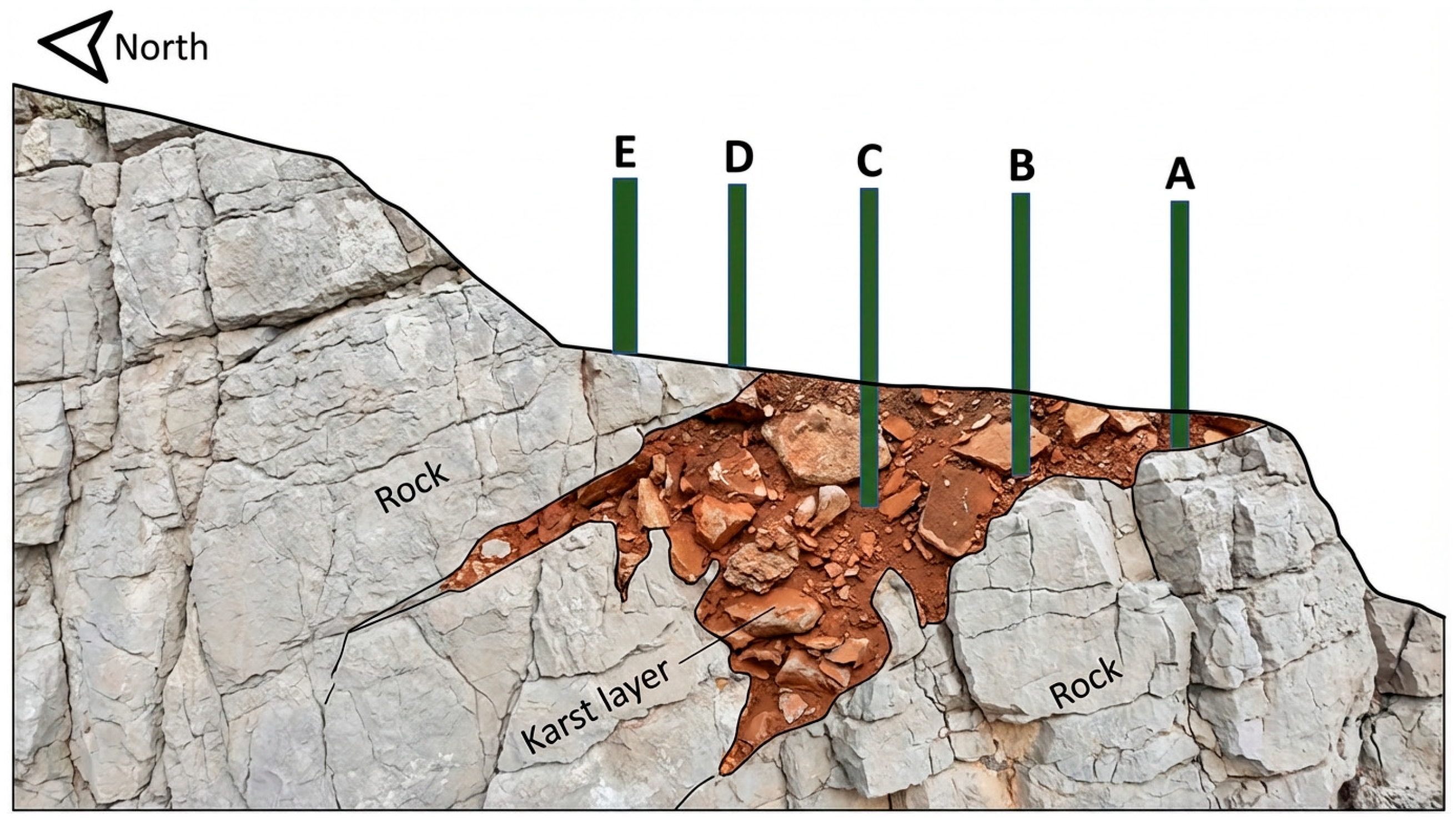
The primary mechanism involves SSGS control over root system development and water access. Row E, over consolidated limestone, likely has a shallow effective rooting depth with roots confined to thin surface layers, creating minimal water storage that is rapidly depleted between irrigations [
47]. Row C, over a karst cavity with fill material, enjoys deeper exploitable rooting (80–100 cm versus <60 cm over bedrock) and access to bedrock fissures that can extend root exploration to 3–4 m depth [
48]. The sustained higher stomatal conductance in row C during peak stress strongly suggests the karst cavity acts as a subsurface reservoir, intercepting irrigation and lateral flows, then slowly releasing moisture through capillary redistribution [
49].
Hydraulic properties further influence water movement. The heterogeneous fill material likely has higher conductivity, favoring infiltration but also faster drainage, while intact bedrock beneath row E acts as a low-permeability barrier promoting runoff rather than root-zone storage. Although nutrient differences cannot be ruled out, karst soils often differ in pH and micronutrient availability [
50]. Several observations point to water as the dominant driver: differences intensified with seasonal progression, stomatal patterns reflect hydraulic rather than nutrient limitation [
51], and quality effects align with classic deficit irrigation responses.
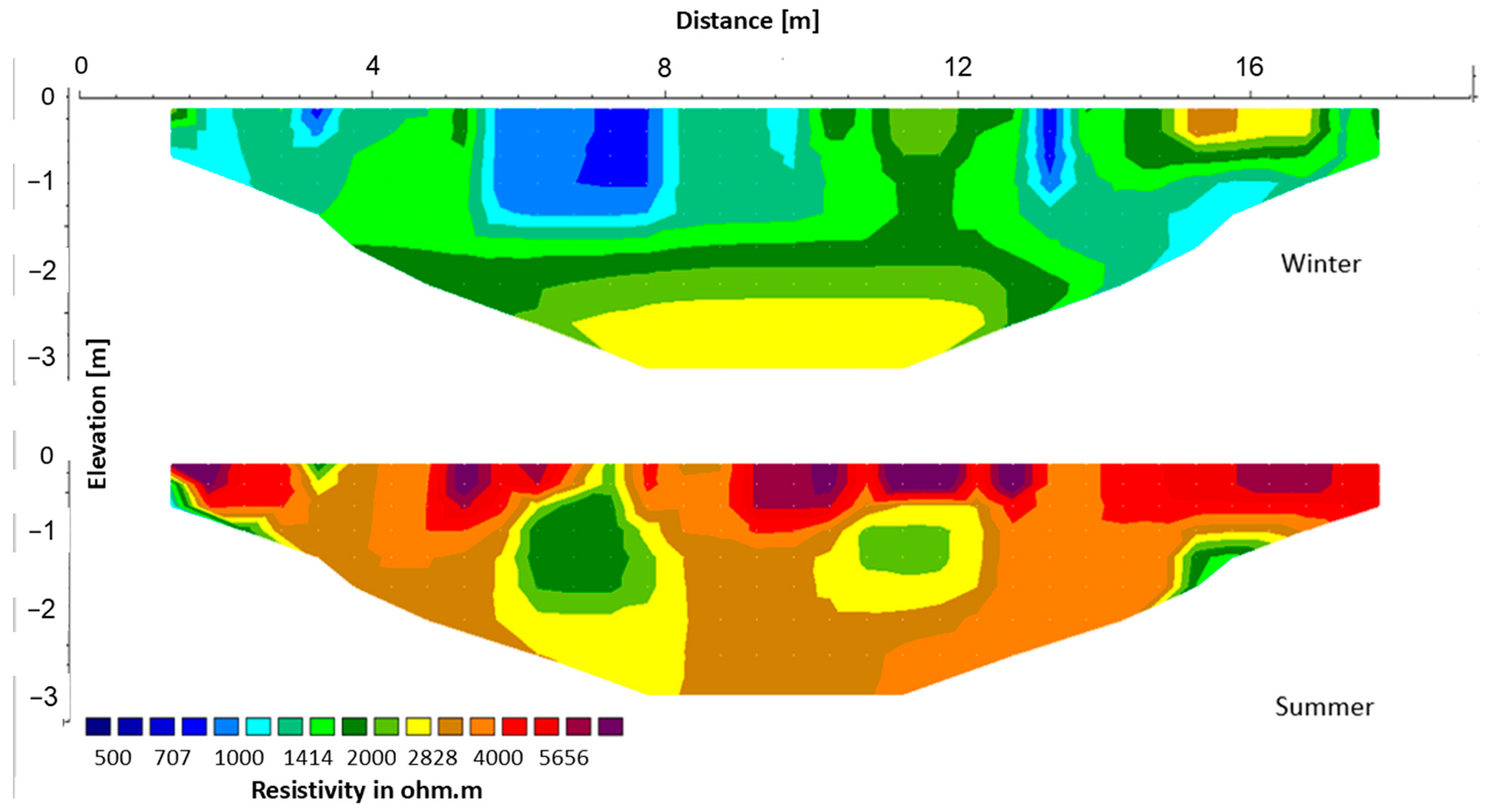
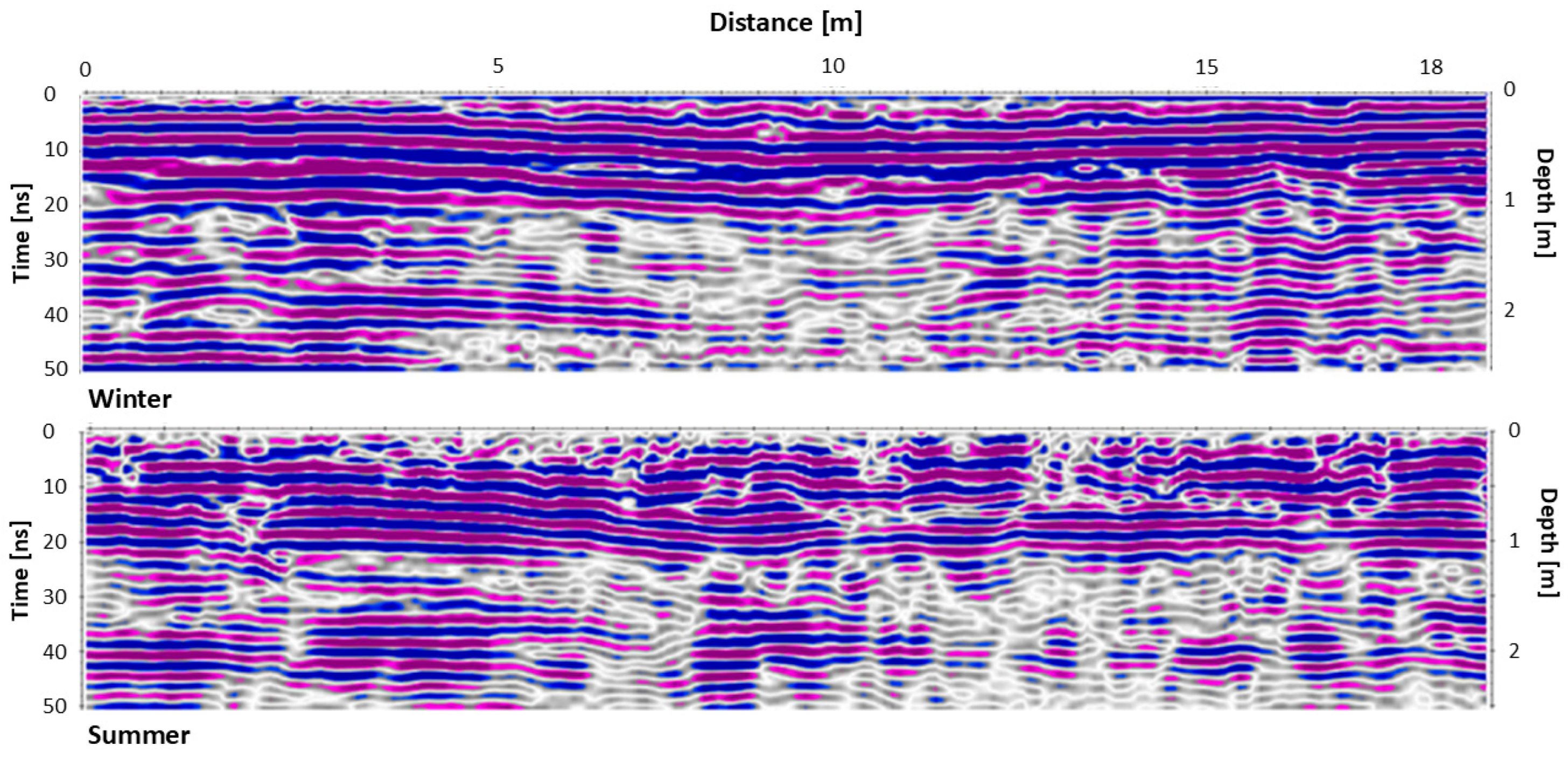
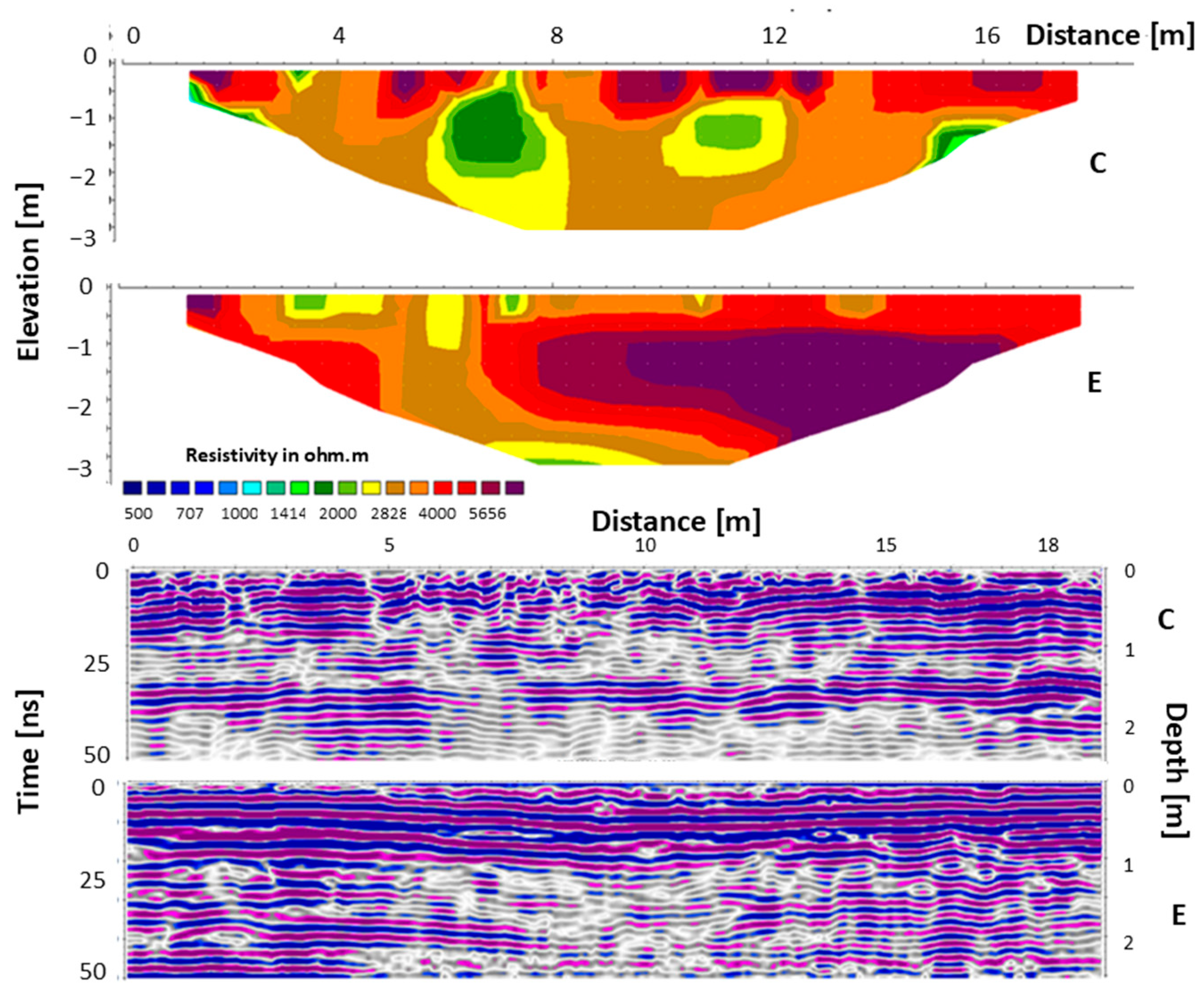
ERT and GPR imaging identified low-resistivity features beneath row C and high-resistivity bedrock beneath row E that correspond closely with vine performance patterns. While our subsurface model is inferred rather than directly measured, convergence between independent geophysical methods and strong functional agreement between inferred structure and vine responses under identical management provide compelling validation. The seasonal evolution of resistivity signatures matched expected Mediterranean moisture dynamics.
Several important limitations warrant acknowledgment. We did not directly observe root systems, leaving distribution and fissure penetration as inferred mechanisms. The study represents one vineyard over one season with one cultivar–rootstock combination. The quantitative integration of geophysical and agronomic data was limited by scale mismatches, with geophysical signals integrated over cubic-meter volumes, while vine measurements were point-based, and the small number of rows with strong spatial autocorrelation.
Our findings are specific to Merlot grafted onto 140 Ruggeri rootstock, which is suitable for poor soils, has high drought tolerance and high vigor [
52,
53]. Therefore, it had the best traits to handle the plot’s condition and still presented evident signs of stress. Nonetheless, drought-tolerant cultivars might show attenuated stress over bedrock, while more vigorous rootstocks could reduce SSGS-induced variability [
53]. This suggests that geophysical SSGS characterization could guide strategic cultivar–rootstock placement and zone-specific management.
Moving toward quantitative precision viticulture requires intensive ground-truthing with soil pits and root mapping, time-series monitoring to capture seasonal dynamics, and three-dimensional geophysical characterization. Such advances would transform geophysical surveys from exploratory tools into robust decision-support systems for complex terroir management.