Exploring the Cultivable Fraction of the Bacterial Microbiome from Tomato Plants for Growth-Promoting and Biocontrol Traits Toward Bioinput Development

 , , and
Abstract
1. Introduction
2. Materials and Methods
2.1. Experimental Sites and Sample Collection
2.2. Isolation, Enumeration, and Preservation of Cultivable Bacteria
2.3. In Vitro Characterization of Bacterial Isolates for Plant Colonization Potential
2.3.1. Lytic Enzyme Activity and ECi Calculation
2.3.2. Biofilm Formation and Bf Calculation
2.3.3. Plant Colonization Index (PCi)
2.4. In Vitro and In Vivo Characterization of Bacterial Isolates for Antagonistic Potential
2.4.1. Extracellular Lytic Enzyme Production and ECiA Calculation
2.4.2. Dual Culture Assays and PIRG Determination
2.4.3. Antagonistic Potential Index (APi) and Biocontrol Potential Index (BPi) and Selection of Promising Biocontrol Isolates
2.4.4. Inhibition of Conidial Germination
2.4.5. In Vivo Biocontrol on Lettuce Seedlings
2.5. In Vitro and In Vivo Characterization of Bacterial Isolates for Plant Growth-Promotion Potential
2.5.1. Phosphate Solubilization
2.5.2. Siderophore Production
2.5.3. Biological Nitrogen Fixation
2.5.4. Auxin Production
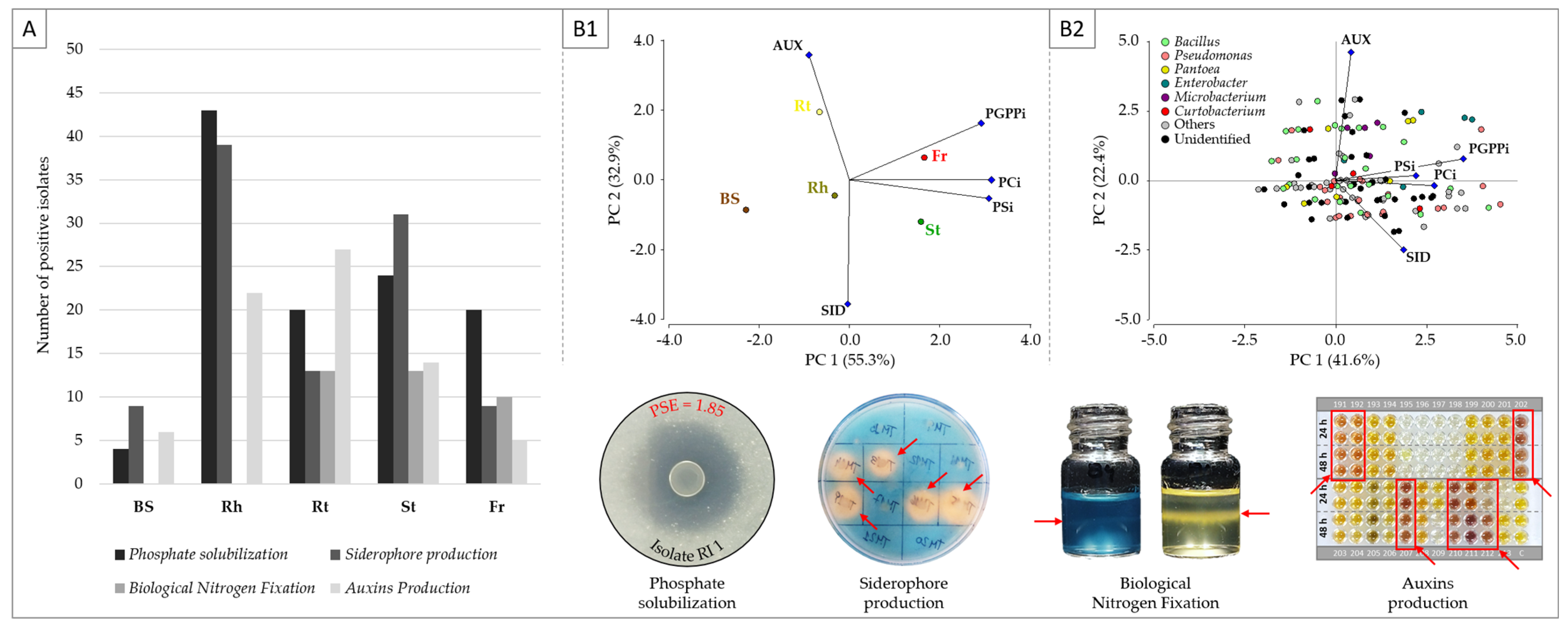
2.5.5. Calculation of Plant Growth-Promotion Indices and Selection of Promising Isolates
2.5.6. In Vivo Plant Growth-Promotion Assays
2.6. Taxonomic Assignment and Phylogenetic Analysis of Endophytic Bacteria
2.7. Statistical Data Analysis
3. Results
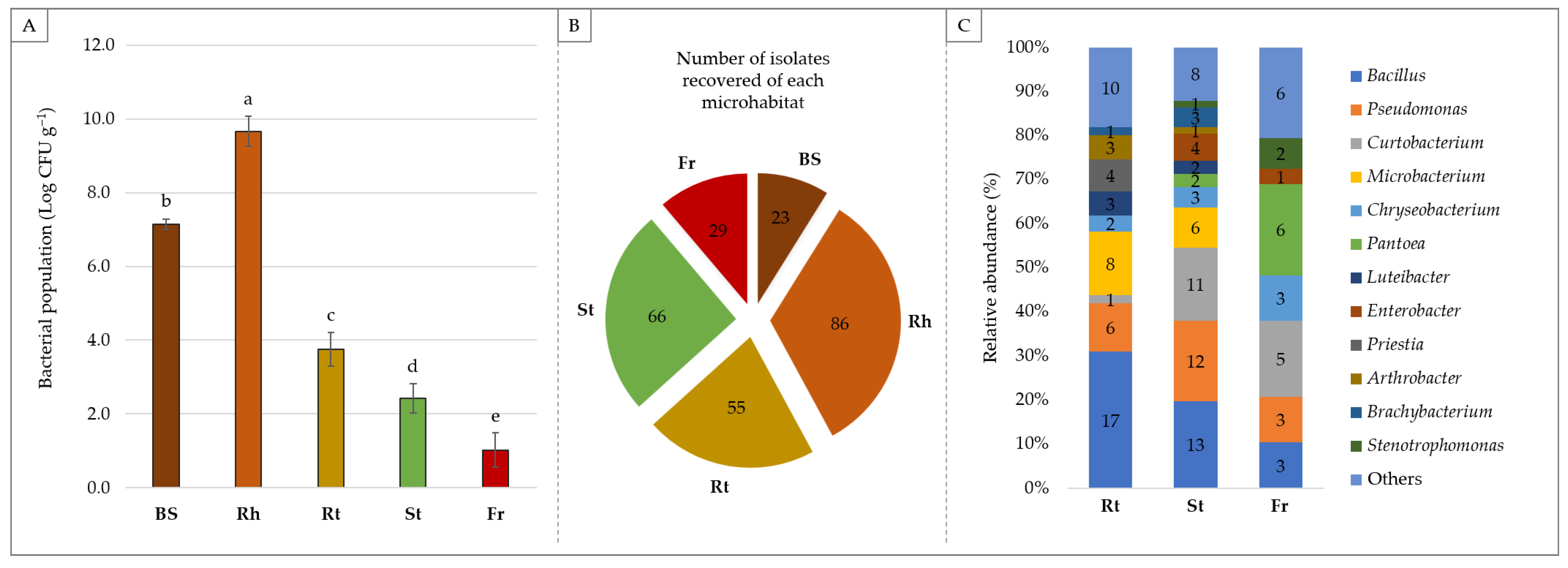
3.1. Enumeration, Isolation, and Taxonomic Characterization of Cultivable Bacteria
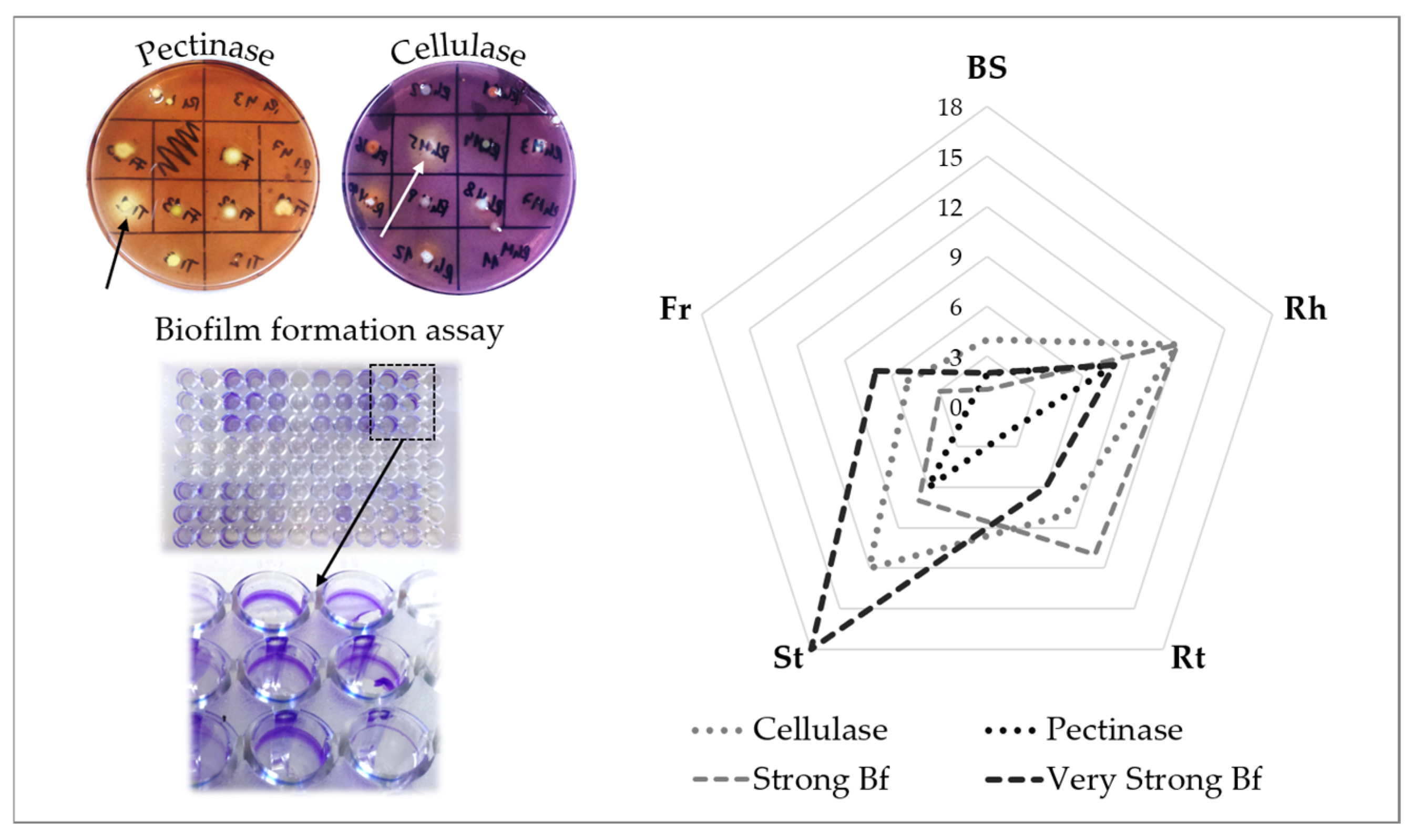
3.2. In Vitro Characterization of Plant Colonization Potential
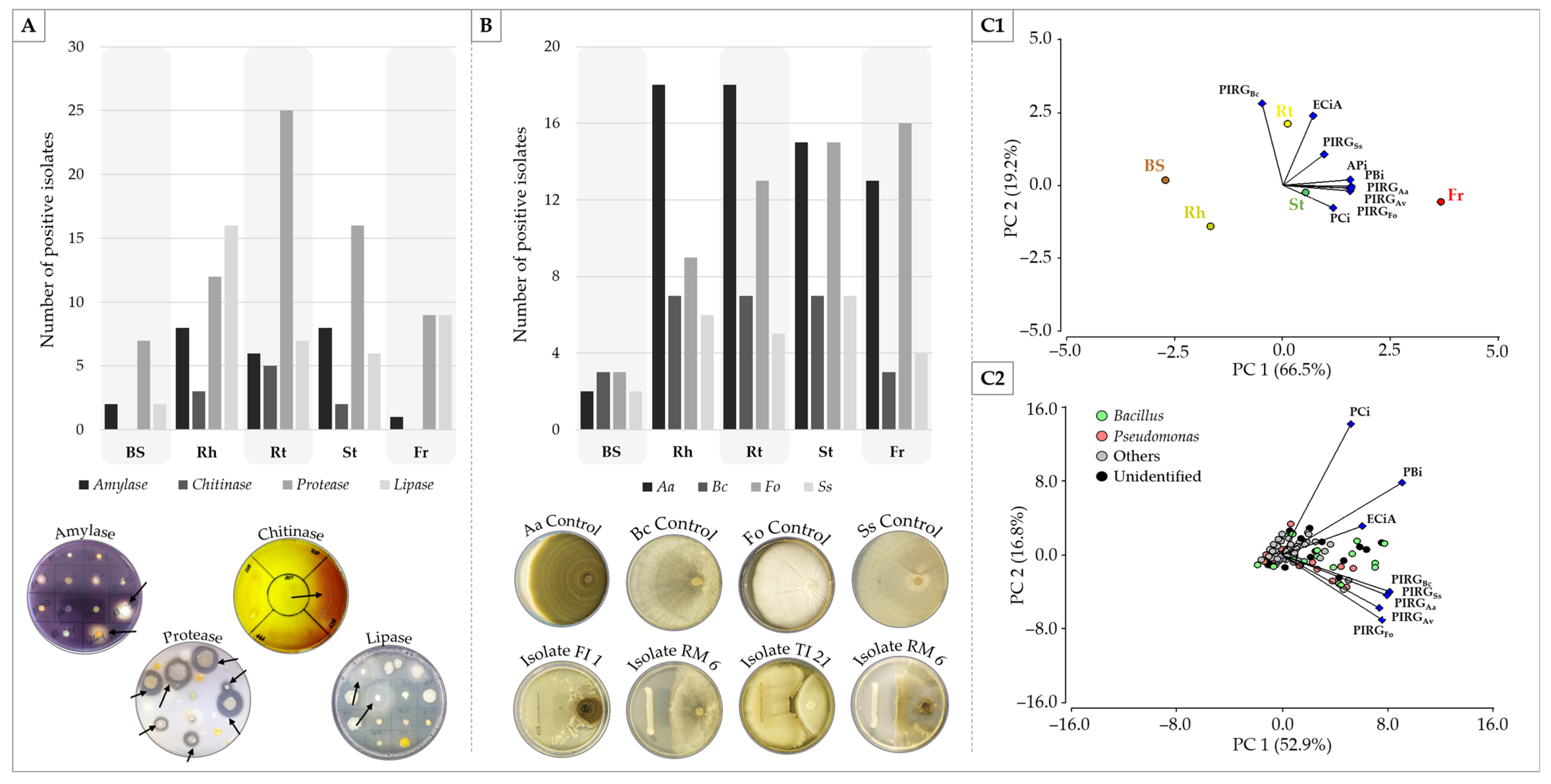
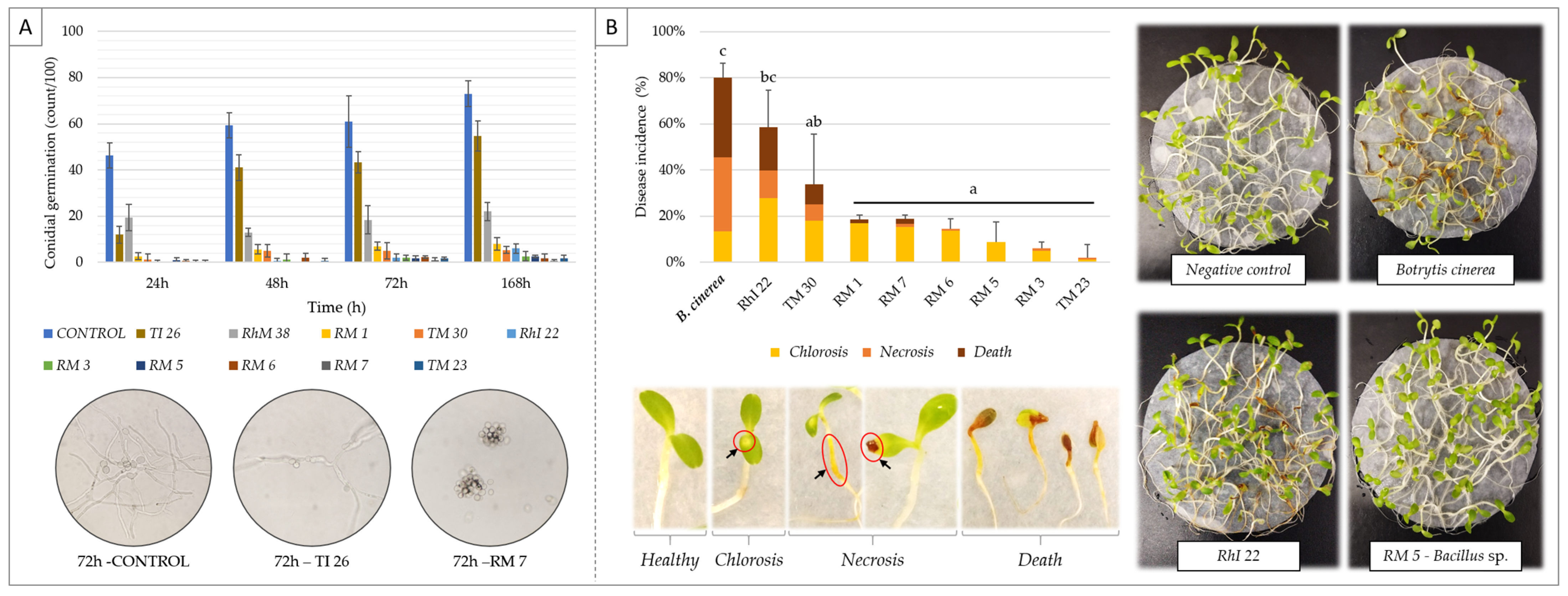
3.3. In Vitro and In Vivo Characterization of Antagonistic Potential
3.4. In Vitro and In Vivo Characterization of Plant Growth-Promoting Traits
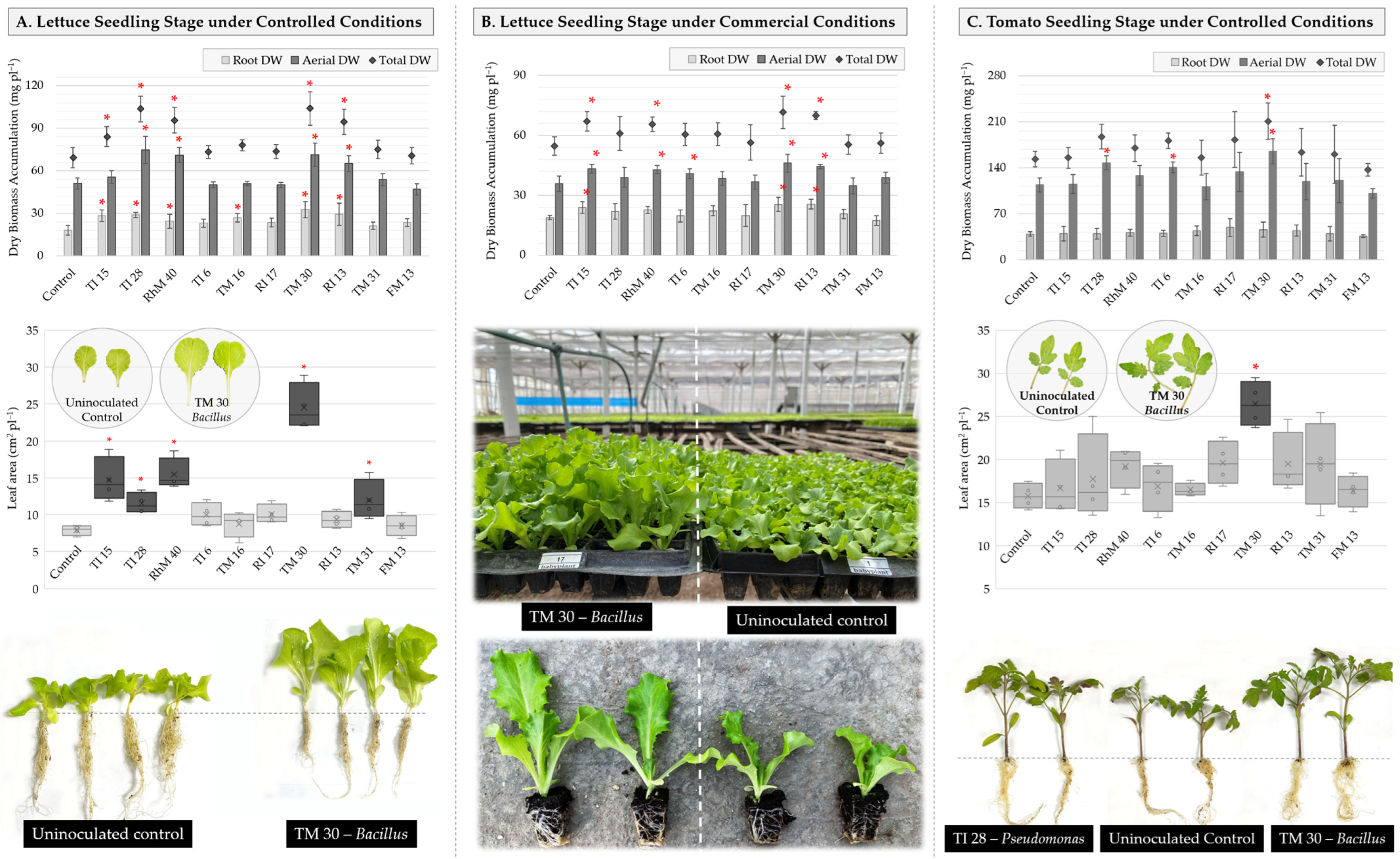
- Lettuce seedling assay: In lettuce grown under controlled conditions, selected bacterial isolates significantly affected seedling growth compared with the uninoculated control (Figure 6). Four isolates—TI 15, Pseudomonas; TI 28, Pseudomonas; RhM 40, Bacillus; and TM 30, Bacillus—consistently promoted significant increases in total biomass across two independent experiments (p < 0.05). Biomass enhancement involved both root and shoot compartments, indicating a generalized stimulation of seedling growth. These isolates also induced a significant expansion of leaf area in the first two true leaves. Among them, TM 30 (Bacillus) showed the strongest effect, increasing leaf area by ~210% and total biomass by 50–64% relative to the control. Additional isolates, including RI 13 (Peribacillus sp.) and TM 31 (Enterobacter sp.), promoted seedling biomass in a single experimental run. Seedling assays conducted under commercial nursery conditions using lettuce cv. Emilia yielded results consistent with those obtained under controlled conditions. Total biomass accumulation before transplanting was significantly higher (p < 0.05) in seedlings inoculated with TI 15 (Pseudomonas sp.), RhM 40 (Bacillus sp.), TM 30 (Bacillus sp.), and RI 13 (Peribacillus sp.) compared with the uninoculated control (Figure 6). Biomass increases were generally observed in both root and shoot compartments, resulting in improved seedling vigor at transplant.
- Tomato seedling assay: In tomato grown under controlled conditions, bacterial isolates resulted in more moderate but significant growth responses (Figure 6). Seedlings inoculated with TM 30 (Bacillus) exhibited a significant increase in total dry biomass (+38%) relative to the control (p < 0.05), mainly due to enhanced shoot growth. In addition, TI 28 (Pseudomonas) and TI 6 (Curtobacterium) significantly increased shoot biomass without affecting total biomass. None of the isolates significantly increased root biomass. Among the tested isolates, only TM 30 (Bacillus) also promoted a significant increase in leaf area, indicating an early growth-promoting effect at the seedling stage (Figure 6).
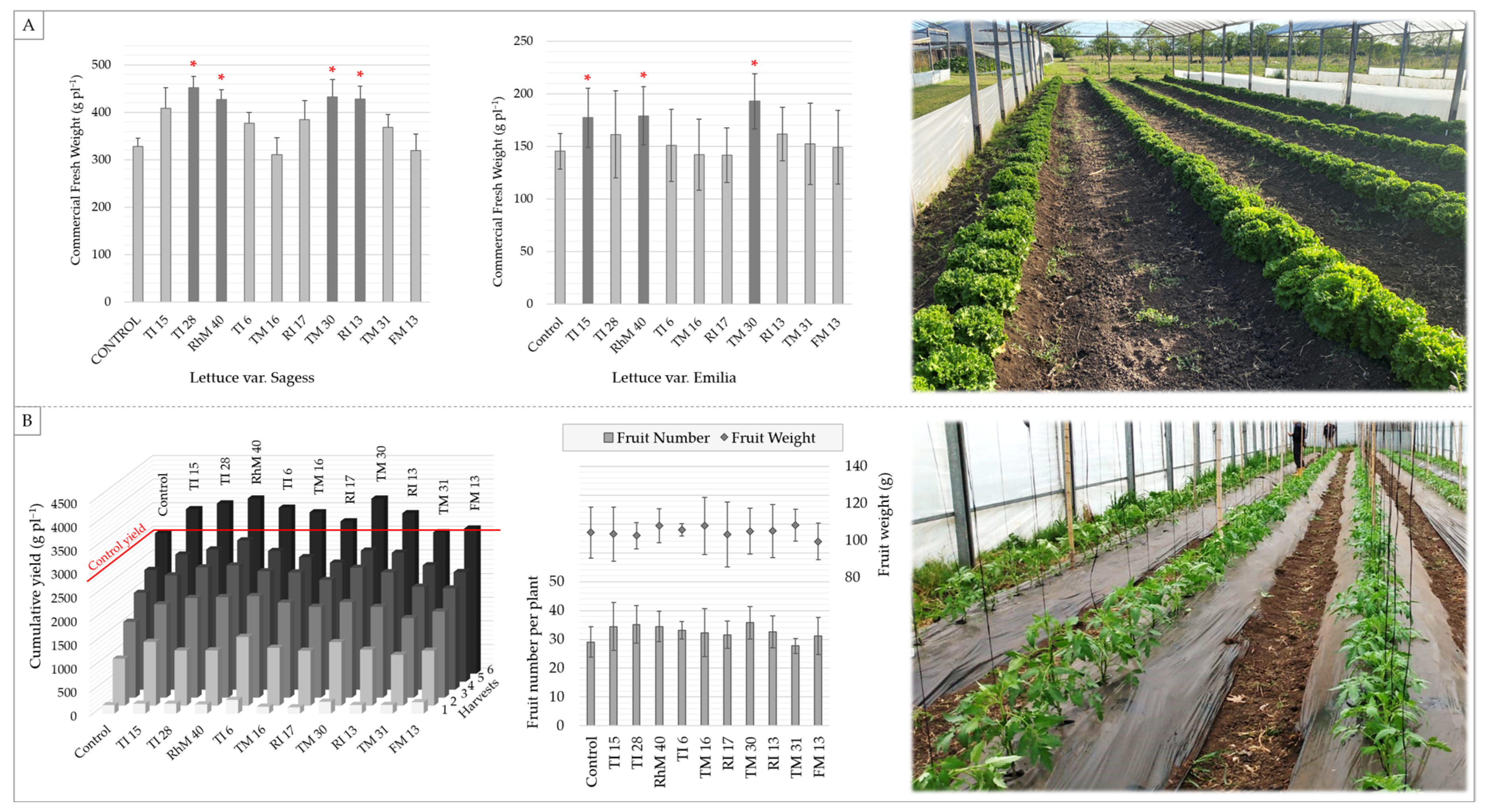
- Lettuce productive-stage assay: Notably, growth-promoting effects observed at the seedling stage were maintained at the productive stage for several bacterial isolates. In both lettuce cultivars tested (cv. Sagess and cv. Emilia), several isolates significantly increased marketable fresh weight compared with the uninoculated control. In cv. Sagess, four isolates enhanced commercial fresh weight by 30–37%: TI 28 (Pseudomonas), TM 30 (Bacillus), RI 13 (Peribacillus), and RhM 40 (Bacillus). In cv. Emilia, three isolates promoted increases ranging from 21–32%: TM 30 (Bacillus), RhM 40 (Bacillus), and TI 15 (Pseudomonas) (Figure 7).
- Tomato productive-stage assay: Cumulative yield was evaluated over six weekly harvests. Across the entire experiment, the mean yield was 3370 g fruit plant−1. Control plants yielded 2971 ± 170 g plant−1, whereas inoculated treatments ranged from 2991 to 3704 g plant−1 (Figure 7). Although some isolates, including TM 30 (Bacillus), RhM 40 (Bacillus), and TI 28 (Pseudomonas), showed 25.3%, 24.7%, and 21.2% higher yields than uninoculated plants, respectively, bacterial inoculation did not result in statistically significant differences in total yield compared with the control (p = 0.112). Fruit number and individual fruit weight were also unaffected by bacterial inoculation. Across treatments, plants produced an average of 32 ± 3 fruits plant−1 with a mean fruit weight of 104 ± 3 g. No significant differences were detected for fruit number (p = 0.928) or fruit weight (p = 0.901) between inoculated and uninoculated treatments.
4. Discussion
4.1. Bioprospecting as a Structured Pathway: From Microbial Diversity to Agronomically Relevant Bioinputs
4.2. Endophytic Bacteria as a Functional Reservoir: Ecological and Biotechnological Advantages for Bioinput Development
4.3. In Vitro Screening as an Initial Filter Within an Integrative Selection Framework
4.4. Consistency and Limits of PGPB Effects Across Horticultural Growth Stages
4.5. Bacillus and Pseudomonas as Outcomes of Performance-Based Selection
4.6. Bridging Microbial Potential and Agronomic Performance Through Structured Selection
4.7. Limitations and Future Perspectives
Supplementary Materials
Author Contributions
Funding
Data Availability Statement
Acknowledgments
Conflicts of Interest
Abbreviations
| Aa | Alternaria alternata |
| APi | Antagonistic Potential Index |
| AUX | Auxins Production Index |
| Bc | Botrytis cinerea |
| Bf | Biofilm Formation Index |
| BNF | Biological Nitrogen Fixation Index |
| BPi | Biocontrol Potential Index |
| BS | Bulk Soil |
| CFU | Colony-forming Units |
| CHP | Horticultural Belt of La Plata |
| ECi | Enzymatic Characterization Index for Plant Colonization |
| ECiA | Enzymatic Characterization Index for Antagonism |
| Fo | Fusarium oxysporum |
| Fr | Fruit Endosphere Samples |
| PCi | Plant Colonization Index |
| PGPB | Plant Growth-Promoting Bacteria |
| PGPi | Plant Growth-Promoting Trait Index |
| PGPPi | Plant Growth-Promotion Potential Index |
| PIRG | Percentage of Inhibition of Radial Growth |
| PSi | Phosphate Solubilization Index |
| Rh | Rhizosphere Samples |
| Rt | Root Endosphere Samples |
| SID | Siderophore Production Index |
| Ss | Sclerotinia sclerotiorum |
| St | Stem Endosphere Samples |
References
- González, M.; Araya-Angel, J.P.; Muñoz, A.; Alfaro-Flores, A.; Cardinale, M.; Stoll, A. Genetic Diversification of Tomato and Agricultural Soil Management Shaped the Rhizospheric Microbiome of Tomato (Solanum lycopersicum). Microorganisms 2025, 13, 1550. [Google Scholar] [CrossRef]
- Ministerio de Agricultura, Ganadería y Pesca de la Nación (Argentina). Ficha Técnica: Bioeconomía del Tomate; Gobierno de Argentina: Buenos Aires, 2024. Available online: https://www.argentina.gob.ar/sites/default/files/2024/06/bioeconomia-tomate-ficha-sintetica.pdf (accessed on 20 December 2025).
- Ministerio de Agricultura, Ganadería y Pesca de la Nación (Argentina). Producción de Tomate en Argentina; Gobierno de Argentina: Buenos Aires, 2020. Available online: https://www.argentina.gob.ar/sites/default/files/produccion-tomate-argentina-diciembre-2020.pdf (accessed on 20 December 2025).
- Mac Loughlin, T.M.; Peluso, L.; Marino, D.J.G. Pesticide impact study in the peri-urban horticultural area of Gran La Plata, Argentina. Sci. Total Environ. 2017, 598, 572–580. [Google Scholar] [CrossRef]
- Orozco-Mosqueda, M.d.C.; Flores, A.; Rojas-Sánchez, B.; Urtis-Flores, C.A.; Morales-Cedeño, L.R.; Valencia-Marin, M.F.; Chávez-Avila, S.; Rojas-Solis, D.; Santoyo, G. Plant Growth-Promoting Bacteria as Bioinoculants: Attributes and Challenges for Sustainable Crop Improvement. Agronomy 2021, 11, 1167. [Google Scholar] [CrossRef]
- Hardoim, P.R.; van Overbeek, L.S.; Berg, G.; Pirttilä, A.M.; Compant, S.; Campisano, A.; Döring, M.; Sessitsch, A. The Hidden World within Plants: Ecological and Evolutionary Considerations for Defining Functioning of Microbial Endophytes. Microbiol. Mol. Biol. Rev. 2015, 79, 293–320. [Google Scholar] [CrossRef]
- Sherzad, Z.; Nawakht, N.A.; Sherzad, F. Plant growth-promoting endophytic bacteria: A sustainable solution for climate change and environmental stresses in agriculture. Discov. Appl. Sci. 2025, 7, 894. [Google Scholar] [CrossRef]
- Massa, F.; Defez, R.; Bianco, C. Exploitation of Plant Growth Promoting Bacteria for Sustainable Agriculture: Hierarchical Approach to Link Laboratory and Field Experiments. Microorganisms 2022, 10, 865. [Google Scholar] [CrossRef]
- Shahzad, M.; Hayat, R.; Mujtaba, G.; Rehman, W.U.; Nadeem, M. Biofertilizers in sustainable agriculture: Mechanisms, applications, and future prospects. Discov. Agric. 2025, 3, 224. [Google Scholar] [CrossRef]
- Janssen, P.H.; Yates, P.S.; Grinton, B.E.; Taylor, P.M.; Sait, M. Improved culturability of soil bacteria and isolation in pure culture of novel members of the divisions acidobacteria, actinobacteria, proteobacteria, and verrucomicrobia. Appl. Environ. Microbiol. 2002, 68, 2391–2396. [Google Scholar] [CrossRef]
- Vio, S.A.; Bernabeu, P.R.; García, S.S.; Galar, M.L.; Luna, M.F. Tracking and plant growth-promoting effect of Paraburkholderia tropica MTo-293 applied to Solanum lycopersicum. J. Basic. Microbiol. 2022, 62, 875–886. [Google Scholar] [CrossRef]
- García, S.S.; Bernabeu, P.R.; Vio, S.A.; Cattelan, N.; García, J.E.; Puente, M.L.; Galar, M.L.; Prieto, C.I.; Luna, M.F. Paraburkholderia tropica as a plant-growth–promoting bacterium in barley: Characterization of tissues colonization by culture-dependent and independent techniques for use as an agronomic bioinput. Plant Soil. 2019, 451, 89–106. [Google Scholar] [CrossRef]
- Agaras, B.C.; Scandiani, M.; Luque, A.; Fernández, L.; Farina, F.; Carmona, M.; Gally, M.; Romero, A.; Wall, L.; Valverde, C. Quantification of the potential biocontrol and direct plant growth promotion abilities based on multiple biological traits distinguish different groups of Pseudomonas spp. isolates. Biol. Control 2015, 90, 173–186. [Google Scholar] [CrossRef]
- Ben Ghalib, K.; Chadli, M.; Durna Daştan, S.; Elmtili, N. Isolation and molecular identification of cellulose-degrading bacteria from rumen sheep Ovis aries and evaluation of their cellulase production. Sci. Afr. 2024, 26, e02439. [Google Scholar] [CrossRef]
- Umar, M.; Rehman, A.; Khan, I.; Hayat, P.; Hayat, A.; Rehman, M.; Shah, T.; Dawoud, T.; Hadrach, S.; Bourhia, M. Screening and optimization of extracellular pectinase produced by Bacillus thuringiensis SH7. Open Chem. 2023, 21, 20220358. [Google Scholar] [CrossRef]
- O’Toole, G.A. Microtiter Dish Biofilm Formation Assay. J. Vis. Exp. 2011, 47, 2437. [Google Scholar] [CrossRef]
- Stepanovic, C.; Vukovic, D.; Hola, V.; Di Bonaventura, G.; Djukic, S.; Cirkovic, I.; Ruzicka, F. Quantification of biofilm in microtiter plates: Overview of testing conditions and practical recommendations for assessment of biofilm production by Staphylococci. APMIS 2007, 115, 891–899. [Google Scholar] [CrossRef]
- Tariq, M.; Noman, M.; Ahmed, T.; Hameed, A.; Manzoor, N.; Zafar, M. Antagonistic features displayed by Plant Growth Promoting Rhizobacteria (PGPR): A Review. J. Plant Sci. Phytopathol. 2017, 1, 38–43. [Google Scholar] [CrossRef]
- Torres-Sánchez, A.; Luque, G.; Ortiz, P.; Ruiz-Rodríguez, A.; López-Moreno, A.; Aguilera, M. Analysis of Human Gut Microbiota Enzymes for Biotechnological and Food Industrial Applications. Foods 2025, 14, 1794. [Google Scholar] [CrossRef]
- López, A.C.; Giorgio, E.M.; Vereschuk, M.L.; Zapata, P.D.; Luna, M.F.; Alvarenga, A.E. Ilex paraguariensis Hosts Root-Trichoderma spp. with Plant-Growth-Promoting Traits: Characterization as Biological Control Agents and Biofertilizers. Curr. Microbiol. 2023, 80, 120. [Google Scholar] [CrossRef]
- Deb, P.; Talukdar, S.A.; Mohsina, K.; Sarker, P.K.; Abu Sayem, S.M. Production and partial characterization of extracellular amylase enzyme from Bacillus amyloliquefaciens P-001. Springer Plus 2013, 2, 154. [Google Scholar] [CrossRef]
- Ali, S.; Hameed, S.; Shahid, M.; Iqbal, M.; Lazarovits, G.; Imran, A. Functional characterization of potential PGPR exhibiting broad-spectrum antifungal activity. Microbiol. Res. 2020, 232, 126389. [Google Scholar] [CrossRef]
- Zhu, Q.; Ma, Y.; Zhang, T.; Liu, W.; Zhang, S.; Chen, Y.; Peng, D.; Zhang, X. Biocontrol Potential of Rhizosphere Bacteria Against Fusarium Root Rot in Cowpea: Suppression of Mycelial Growth and Conidial Germination. Biology 2025, 14, 921. [Google Scholar] [CrossRef]
- Nautiyal, C.S. An efficient microbiological growth medium for screening phosphate solubilizing microorganisms. FEMS Microbiol. Lett. 1999, 170, 265–270. [Google Scholar] [CrossRef]
- Kundu, B.S.; Nehra, K.; Yadav, R.; Tomar, M. Biodiversity of phosphate solubilizing bacteria in rhizosphere of chickpea, mustard and wheat grown in different regions of Haryana. Indian J. Microbiol. 2009, 49, 120–127. [Google Scholar] [CrossRef]
- Pérez-Miranda, S.; Cabirol, N.; George-Téllez, R.; Zamudio-Rivera, L.S.; Fernández, F.J. O-CAS, a fast and universal method for siderophore detection. J. Microbiol. Methods 2007, 70, 131. [Google Scholar] [CrossRef]
- Baldani, J.I.; Reis, V.M.; Videira, S.S.; Bodey, L.H.; Divan Baldani, V.L. The art of isolating nitrogen-fixing bacteria from non-leguminous plants using N-free semi-solid media: A practical guide for microbiologists. Plant Soil. 2014, 384, 413–431. [Google Scholar] [CrossRef]
- Asghar, H.; Zahir, Z.; Arshad, M.; Khaliq, A. Relationship between in vitro production of auxins by rhizobacteria and their growth-promoting activities in Brassica juncea L. Biol. Fertil. Soils 2002, 35, 231–237. [Google Scholar] [CrossRef]
- Vio, S.A.; Galar, M.L.; Gortari, M.C.; Balatti, P.; Garbi, M.; Lodeiro, A.R.; Luna, M.F. Multispecies Bacterial Bio-Input: Tracking and Plant-Growth-Promoting Effect on Lettuce var. sagess. Plants 2023, 12, 736. [Google Scholar] [CrossRef]
- Vio, S.A.; Martínez Sbrancia, C.; Gortari, C.; Galar, M.L.; Luna, M.F. Inoculation of Microorganisms into the Soil and Rhizosphere. In Plant Microbiome Engineering. Methods and Protocols in Food Science; Dharumadurai, D., Narayanan, A.S., Eds.; Humana: New York, NY, USA, 2025; pp. 457–465. [Google Scholar] [CrossRef]
- Rueden, C.T.; Schindelin, J.; Hiner, M.C.; deZonia, B.E.; Walter, A.E.; Arena, E.T.; Eliceiri, K.W. ImageJ2: ImageJ for the next generation of scientific image data. BMC Bioinform. 2017, 18, 529. [Google Scholar] [CrossRef]
- Davis, M.W.; Jorgensen, E.M. ApE, A Plasmid Editor: A Freely Available DNA Manipulation and Visualization Program. Front. Bioinform. 2022, 2, 818619. [Google Scholar] [CrossRef]
- di Rienzo, J.A.; Casanoves, F.; Balzarini, M.G.; Gonzalez, L.; Tablada, M.; Robledo, C. Infostat, Version 2018; Grupo Infostat, FCA; Universidad Nacional de Córdoba, Argentina: Córdoba, Argentina. Available online: https://www.infostat.com.ar/ (accessed on 10 November 2022).
- Anzalone, A.; Di Guardo, M.; Bella, P.; Ghadamgahi, F.; Dimaria, G.; Zago, R.; Cirvilleri, G.; Catara, V. Bioprospecting of beneficial bacteria traits associated with tomato root in greenhouse environment reveals that sampling sites impact more than the root compartment. Front. Plant Sci. 2021, 12, 637582. [Google Scholar] [CrossRef]
- Dong, C.-J.; Wang, L.-L.; Li, Q.; Shang, Q.-M. Bacterial communities in the rhizosphere, phyllosphere and endosphere of tomato plants. PLoS ONE 2019, 14, e0223847. [Google Scholar] [CrossRef]
- Allard, S.M.; Walsh, C.S.; Wallis, A.E.; Ottesen, A.R.; Brown, E.W.; Micallef, S.A. Solanum lycopersicum (tomato) hosts robust phyllosphere and rhizosphere bacterial communities when grown in soil amended with various organic and synthetic fertilizers. Sci. Total Environ. 2016, 573, 555–563. [Google Scholar] [CrossRef]
- Xiong, C.; Zhu, Y.-G.; Wang, J.; Singh, B.K.; Han, L.; Shen, J.-P.; Li, P.-P.; Wang, G.B.; Wu, C.F.; Ge, A.-H.; et al. Host selection shapes crop microbiome assembly and network complexity. New Phytol. 2020, 229, 1091–1104. [Google Scholar] [CrossRef]
- Compant, S.; Samad, A.; Faist, H.; Sessitsch, A. A review on the plant microbiome: Ecology, functions, and emerging trends in microbial application. J. Adv. Res. 2019, 19, 29–37. [Google Scholar] [CrossRef]
- Rabasco-Vílchez, L.; Bolívar, A.; Morcillo-Martín, R.; Pérez-Rodríguez, F. Exploring the microbiota of tomato and strawberry plants as sources of bio-protective cultures for fruits and vegetables preservation. Future Foods 2024, 9, 100344. [Google Scholar] [CrossRef]
- Santoyo, G.; Moreno-Hagelsieb, G.; Orozco-Mosqueda, M.d.C.; Glick, B.R. Plant growth-promoting bacterial endophytes. Microbiol. Res. 2016, 183, 92–99. [Google Scholar] [CrossRef]
- Compant, S.; Cambon, M.C.; Vacher, C.; Mitter, B.; Samad, A.; Sessitsch, A. The plant endosphere world—Bacterial life within plants. Environ. Microbiol. 2021, 23, 1812–1829. [Google Scholar] [CrossRef]
- Reinhold Reinhold-Hurek, B.; Bünger, W.; Burbano, C.S.; Sabale, M.; Hurek, T. Roots Shaping Their Microbiome: Global Hotspots for Microbial Activity. Annu. Rev. Phytopathol. 2015, 53, 403–424. [Google Scholar] [CrossRef]
- Trivedi, P.; Leach, J.E.; Tringe, S.G.; Sa, T.; Singh, B.K. Plant–microbiome interactions: From community assembly to plant health. Nat. Rev. Microbiol. 2020, 18, 607–621. [Google Scholar] [CrossRef]
- Berg, G.; Köberl, M.; Rybakova, D.; Müller, H.; Grosch, R.; Smalla, K. Plant microbial diversity is suggested as the key to future biocontrol and health trends. FEMS Microbiol. Ecol. 2017, 93, fix050. [Google Scholar] [CrossRef]
- Amaresan, N.; Jayakumar, V.; Kumar, K.; Thajuddin, N. Isolation and characterization of plant growth promoting endophytic bacteria and their effect on tomato (Lycopersicon esculentum) and chilli (Capsicum annuum) seedling growth. Ann. Microbiol. 2012, 62, 805–810. [Google Scholar] [CrossRef]
- Abdeljalil, N.O.; Vallance, J. Characterization of Tomato-associated Rhizobacteria Recovered from Various Tomato-growing Sites in Tunisia. J. Plant Pathol. Microbiol. 2016, 7, 2. [Google Scholar] [CrossRef]
- Tian, B.; Zhang, C.; Ye, Y.; Wen, J.; Wu, Y.; Wang, H.; Li, H.; Cai, S.; Cai, W.; Cheng, Z.; et al. Beneficial traits of bacterial endophytes belonging to the core communities of the tomato root microbiome. Agric. Ecosyst. Environ. 2017, 247, 149–156. [Google Scholar] [CrossRef]
- López, S.M.Y.; Pastorino, G.N.; Franco, M.E.E.; Medina, R.; Lucentini, C.G.; Saparrat, M.C.N.; Balatti, P.A. Microbial endophytes that live within the seeds of two tomato hybrids cultivated in Argentina. Agronomy 2018, 8, 136. [Google Scholar] [CrossRef]
- Flemer, B.; Gulati, S.; Bergna, A.; Rändler, M.; Cernava, T.; Witzel, K.; Berg, G.; Grosch, R. Biotic and abiotic stress factors induce microbiome shifts and enrichment of distinct beneficial bacteria in tomato roots. Phytobiomes J. 2022, 6, 276–289. [Google Scholar] [CrossRef]
- Arif, I.; Batool, M.; Schenk, P.M. Plant microbiome engineering: Expected benefits for improved crop growth and resilience. Trends Biotechnol. 2020, 38, 1385–1396. [Google Scholar] [CrossRef]
- Gupta, R.; Anand, G.; Gaur, R.; Yadav, D. Plant–microbiome interactions for sustainable agriculture: A review. Physiol. Mol. Biol. Plants 2021, 27, 165–179. [Google Scholar] [CrossRef]
- Bonaterra, A.; Badosa, E.; Daranas, N.; Francés, J.; Roselló, G.; Montesinos, E. Bacteria as Biological Control Agents of Plant Diseases. Microorganisms 2022, 10, 1759. [Google Scholar] [CrossRef]
- Finch-Savage, W.E.; Bassel, G.W. Seed vigour and crop establishment: Extending performance beyond adaptation. J. Exp. Bot. 2016, 67, 567–591. [Google Scholar] [CrossRef]
- Engels, C.; Kirkby, E.A.; White, P.J. Mineral nutrition, yield and source–sink relationships. In Marschner’s Mineral Nutrition of Higher Plants, 3rd ed.; Marschner, P., Ed.; Academic Press: Cambridge, MA, USA, 2012; pp. 85–133. [Google Scholar] [CrossRef]
- Taiz, L.; Møller, I.M.; Murphy, A.; Zeiger, E. Mineral Nutrition. In Plant Physiology and Development; Taiz, L., Zeiger, E., Møller, I.M., Murphy, A., Eds.; Oxford University Press: Oxford, UK, 2023; pp. 189–226. [Google Scholar] [CrossRef]
- Santoyo, G.; Orozco-Mosqueda, M.C.; Govindappa, M. Mechanisms of biocontrol and plant growth-promoting activity in soil bacterial species of Bacillus and Pseudomonas: A review. Biocontrol Sci. Technol. 2012, 22, 855–872. [Google Scholar] [CrossRef]
- Castiglione, A.M.; Mannino, G.; Contartese, V.; Bertea, C.M.; Ertani, A. Microbial Biostimulants as Response to Modern Agriculture Needs: Composition, Role and Application of These Innovative Products. Plants 2021, 10, 1533. [Google Scholar] [CrossRef]
- Youseif, S.H.; Abd El-Megeed, F.H.; Humm, E.A.; Maymon, M.; Mohamed, A.H.; Saleh, S.A.; Hirsch, A.M. Comparative Analysis of the Cultured and Total Bacterial Community in the Wheat Rhizosphere Microbiome Using Culture-Dependent and Culture-Independent Approaches. Microbiol. Spectr. 2021, 9, e00678-21. [Google Scholar] [CrossRef]
- Hughes, J.B.; Hellmann, J.J.; Ricketts, T.H.; Bohannan, B.J. Counting the uncountable: Statistical approaches to estimating microbial diversity. Appl. Environ. Microbiol. 2001, 67, 4399–4406. [Google Scholar] [CrossRef]
- Bernabeu, P.R.; García, S.S.; López, A.C.; Vio, S.A.; Carrasco, N.; Boiardi, J.L.; Luna, M.F. Assessment of bacterial inoculant formulated with Paraburkholderia tropica to enhance wheat productivity. World J. Microbiol. Biotechnol. 2018, 34, 81. [Google Scholar] [CrossRef]



| Isolate | Microhabitat | Taxonomy | Pathogen-Specific Antagonists | General Antagonists (PBi) | |||
|---|---|---|---|---|---|---|---|
| PIRGAa | PIRGBc | PIRGFo | PIRGSs | ||||
| RhM 38 | Rh | nd | 0.50 | 0.90 | |||
| RhI 22 | nd | 0.76 | |||||
| RhI 5 | Pseudomonas | 0.82 | |||||
| RM 1 | Rt | Bacillus | 0.79 | ||||
| RM 3 | Pseudomonas | 0.44 | 0.44 | ||||
| RM 5 | Bacillus | 0.42 | |||||
| RM 7 | Chryseobacterium | 0.40 | |||||
| RM 6 | Bacillus | 0.38 | 0.44 | ||||
| TI 26 | St | Bacillus | 0.72 | 0.48 | 0.73 | ||
| TM 23 | Stenotrophomonas | 0.46 | |||||
| TM 30 | Bacillus | 0.91 | |||||
| TI 21 | Bacillus | 0.78 | |||||
| TI 17 | Bacillus | 0.74 | |||||
| TM 36 | Bacillus | 0.46 | |||||
| FM 5 | Fr | Pseudomonas | 0.90 | 0.86 | |||
| FI 5 | Pseudomonas | 0.82 | |||||
| FI 1 | Pseudomonas | 0.80 | |||||
| FM 13 | Enterobacter | 0.80 | |||||
| FM 15 | Stenotrophomonas | 0.80 | |||||
| Isolate | Microhabitat | Taxonomy | PSi | SID | BNF | AUX | PGPi | PCi | PGPPi |
|---|---|---|---|---|---|---|---|---|---|
| RhM 40 | Rh | Bacillus | 0.87 | + | + | - | 0.55 | 0.25 | 0.68 |
| RI 17 | Rt | Agrobacterium | 0.05 | + | + | + | 0.43 | 0.50 | 0.68 |
| RI 13 | Peribacillus | 0.00 | ++ | + | - | 0.42 | 0.50 | 0.67 | |
| TM 30 | St | Bacillus | 0.00 | ++ | + | - | 0.42 | 1.00 | 0.92 |
| TI 15 | Pseudomonas | 0.91 | + | + | ++ | 0.73 | 0.25 | 0.85 | |
| TM 16 | Flavobacterium | 0.05 | ++ | + | - | 0.43 | 0.75 | 0.80 | |
| TI 28 | Pseudomonas | 1.00 | + | + | - | 0.58 | 0.38 | 0.77 | |
| TM 31 | Enterobacter | 0.94 | - | - | ++ | 0.40 | 0.50 | 0.65 | |
| TI 6 | Curtobacterium | 0.37 | ++ | + | - | 0.51 | 0.25 | 0.63 | |
| FM 13 | Fr | Enterobacter | 0.21 | + | - | +++ | 0.38 | 0.50 | 0.63 |
Disclaimer/Publisher’s Note: The statements, opinions and data contained in all publications are solely those of the individual author(s) and contributor(s) and not of MDPI and/or the editor(s). MDPI and/or the editor(s) disclaim responsibility for any injury to people or property resulting from any ideas, methods, instructions or products referred to in the content. |
© 2026 by the authors. Licensee MDPI, Basel, Switzerland. This article is an open access article distributed under the terms and conditions of the Creative Commons Attribution (CC BY) license.
Share and Cite
Vio, S.A.; Paiva González, K.B.; Gortari, M.C.; Galar, M.L.; Pistorio, M.; Luna, M.F. Exploring the Cultivable Fraction of the Bacterial Microbiome from Tomato Plants for Growth-Promoting and Biocontrol Traits Toward Bioinput Development. Agriculture 2026, 16, 610. https://doi.org/10.3390/agriculture16050610
Vio SA, Paiva González KB, Gortari MC, Galar ML, Pistorio M, Luna MF. Exploring the Cultivable Fraction of the Bacterial Microbiome from Tomato Plants for Growth-Promoting and Biocontrol Traits Toward Bioinput Development. Agriculture. 2026; 16(5):610. https://doi.org/10.3390/agriculture16050610
Chicago/Turabian StyleVio, Santiago Adolfo, Karen Belén Paiva González, María Cecilia Gortari, María Lina Galar, Mariano Pistorio, and María Flavia Luna. 2026. "Exploring the Cultivable Fraction of the Bacterial Microbiome from Tomato Plants for Growth-Promoting and Biocontrol Traits Toward Bioinput Development" Agriculture 16, no. 5: 610. https://doi.org/10.3390/agriculture16050610
APA StyleVio, S. A., Paiva González, K. B., Gortari, M. C., Galar, M. L., Pistorio, M., & Luna, M. F. (2026). Exploring the Cultivable Fraction of the Bacterial Microbiome from Tomato Plants for Growth-Promoting and Biocontrol Traits Toward Bioinput Development. Agriculture, 16(5), 610. https://doi.org/10.3390/agriculture16050610