Article

Analysis of Nutritional Quality in Taste-Type (‘Baiyu’) and Conventional (‘Qinhongbao’ and ‘Jinbao’) Onions (Allium cepa L.)

1
Vegetable Research Institute, Gansu Academy of Agricultural Sciences, Lanzhou 730070, China
2
College of Horticulture, Gansu Agricultural University, Lanzhou 730070, China
3
Gansu Provincial Agricultural Technology Extension Station, Lanzhou 730020, China
*
Authors to whom correspondence should be addressed.
Agriculture 2026, 16(5), 601; https://doi.org/10.3390/agriculture16050601
Submission received: 22 December 2025 / Revised: 30 January 2026 / Accepted: 27 February 2026 / Published: 5 March 2026
(This article belongs to the Section Agricultural Product Quality and Safety)

Abstract

This study aims to systematically compare the key nutritional and flavor characteristics of three distinct onion materials: the novel taste-type cultivar ‘Baiyu’, the pink-skinned cultivar ‘Qinhongbao’, and the conventional yellow-skinned cultivar ‘Jinbao’. By measuring and statistically analyzing their agronomic traits, mineral content, amino acids, fatty acids, sugar composition, and organic acids, we found that ‘Baiyu’ exhibits a superior nutritional profile compared to the conventional varieties. Its total sugar content was 41.29 mg/g, with fructose (14.88 mg/g) as a major contributor to its pronounced sweetness. The total organic acid content was 8053.28 μg/g, with a distinct profile dominated by lactic acid (39.4%), followed by propionic and malic acids. The total amino acid content reached 1757.49 μg/g, characterized by notably high levels of arginine and glutamic acid. Fatty acid analysis revealed a linoleic acid content of 26.39 μg/g. Regarding mineral elements, ‘Baiyu’ exhibited the highest contents of potassium (1744.53 mg/100 g) and magnesium (523.50 mg/100 g), which were significantly higher than those in the pink onion but showed no significant difference compared to the yellow onion. In conclusion, the taste-type onion ‘Baiyu’ exhibits comprehensive quality advantages in terms of the co-elevated levels of both sugars and organic acids. This revision ensures that our conclusions are fully supported by the data presented, flavor-related amino acids, beneficial fatty acids, and key mineral content, which offers valuable insights and a scientific basis for flavor-oriented onion breeding and the development of functional onion products.

1. Introduction

Onions (Allium cepa L.) are a globally significant vegetable crop, valued not only for their culinary versatility but also for their unique nutritional and health properties. Traditionally, their health benefits have been primarily attributed to volatile sulfur compounds [1,2,3,4,5]. However, the eating quality and nutritional value of onions are equally determined by their complex profile of non-volatile components, including sugars, organic acids, free amino acids, and mineral elements. These compounds directly influence core sensory attributes such as sweetness, sourness, and umami [6,7].
Onion cultivars can be broadly classified into three groups based on bulb characteristics: pink onions, which are recognized for high productivity, pronounced pungency, and superior storage quality; yellow onions, featuring intermediate pungency and satisfactory storage capability; and white onions, outstanding for their enhanced nutritional composition [8,9].
Driven by rising consumer expectations for superior vegetable quality, taste-type onions (fruit onions) have positioned themselves as a promising category with considerable growth prospects. Within quality assessment frameworks, mineral elements play a pivotal role as core indicators of nutritional value in crops [10]. Moreover, they not only directly affect human health but also regulate the metabolic processes of flavor compounds, such as sugars and organic acids [11]. For instance, potassium serves as a pivotal regulator of cellular osmotic pressure, thereby influencing both organic acid accumulation and sugar transport mechanisms [12,13]. As key cofactors, calcium and magnesium activate numerous enzyme systems, which in turn regulate amino acid synthesis and protein metabolism [14,15]. Therefore, a systematic analysis of mineral nutrients is essential for elucidating the mechanisms underlying the formation of nutritional and sensory qualities in onions.
Meanwhile, as a critical determinant of sweetness, the accumulation patterns and metabolic regulation of sugars have become a central focus in quality research [16]. The organic acid composition constitutes a key determinant of acidity and plays a vital role in shaping the organoleptic properties of the product through its synergistic interaction with sugars [17,18]. Serving as fundamental determinants of both flavor and function, the compositional characteristics of amino acids are critical factors in defining a product’s nutritional quality and sensory attributes [19,20]. Recent research has highlighted the “sugar-acid ratio” as a critical composite indicator for produce sweetness evaluation, as it significantly outperforms individual measurements of sugar or acid content in predicting sensory sweetness [21,22]. While this ratio is valuable, the absolute levels and specific composition of sugars and organic acids are fundamental determinants of flavor. Therefore, this study provides a detailed comparative analysis of these individual components.
Driven by rising consumer expectations for superior vegetable quality, onion varieties selected for a mild, sweet flavor profile—often marketed as “taste-type” or “fruit onions”—have emerged. These varieties, such as the well-known Vidalia onion, are characterized by high consumer acceptability linked to low levels of pungent sulfur compounds and a perception of sweetness [23]. This category has positioned itself as a promising market segment with considerable growth prospects. To address this gap, this study aims to establish a comprehensive and quantifiable chemical benchmark. We hypothesize that a superior taste-type onion will exhibit a distinctive metabolic signature characterized by (1) higher sugar content, (2) a richer profile of flavor-enhancing amino acids and essential minerals, and (3) a unique fatty acid composition. To test this hypothesis, three representative cultivars were selected: the novel taste-type white-skinned cultivar ‘Baiyu’, the conventional yellow-skinned cultivar ‘Jinbao’, and the pink-skinned cultivar ‘Qinhongbao’. Under identical cultivation conditions, we systematically compared their bulb traits, mineral content, and the profiles of sugars, organic acids, amino acids, and fatty acids. This work seeks to provide a scientific basis for flavor-oriented onion breeding and product development.

2. Materials and Methods

2.1. Plant Materials and Location

2.1.1. Plant Materials and Experimental Site

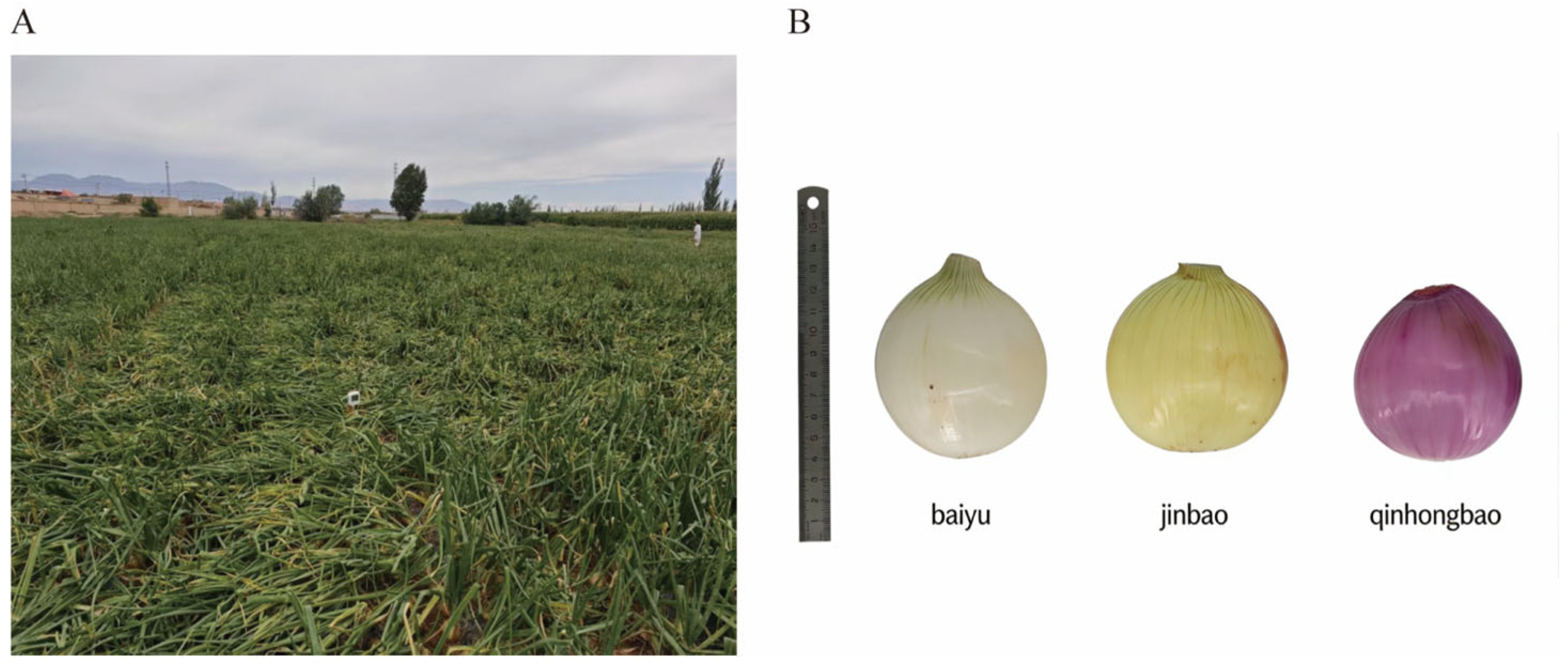
The experimental materials comprised three onion varieties: pink (‘Qinhongbao’), yellow (‘Jinbao’), and taste-type (‘Baiyu’), all provided by Nunhems Beijing Seeds Co., Ltd. (Beijing, China) (see Table 1 for details). Seed germination and seedling cultivation commenced on 10 February 2024, with subsequent field transplanting on 8 April. The trial was conducted in Shuangwan Village, Jinchang City (102°17′20.22″ E, 38°38′31.87″ N), located in a temperate continental arid climate zone (Figure 1). Key site characteristics were as follows: an average elevation of 1430 m, a mean annual temperature of 9.4 °C, annual precipitation of 114 mm, 2878 annual sunshine hours, and a frost-free period of 156 days. The soil type at the experimental site is classified as Gray-brown Desert Soil.

2.1.2. Experimental Design and Cultivation Management

A randomized complete block design with three replications was implemented. Each plot measured 9.8 m × 8.8 m (86.24 m2), with a planting density set at 20 cm between rows and 15 cm within rows. All cultivation practices followed standardized protocols to ensure uniform growing conditions. Prior to planting, well-rotted sheep manure was applied as a basal fertilizer at a rate of 5 t·ha−1. During the bulb enlargement phase, a nitrogen–phosphorus–potassium compound fertilizer (N-P2O5-K2O) was applied in two split doses, with a total application rate of 306–175.95–229.5 kg·ha−1. A drip irrigation system provided precise watering at 7–10 day intervals, with a total irrigation quota of 3300 m3·ha−1.

2.1.3. Harvest and Sample Preparation

The onions were considered mature upon natural lodging of most plants, accompanied by bulbs reaching variety-specific size, with softened necks, and the outer scales turning dry, leathery, and displaying mature coloration [24]. Within each of the three replicate plots, three onion plants per variety were randomly selected. The sampled plants of each variety from the same plot were pooled, and the outer dry scales were removed. The fleshy scale tissues from these plants were combined, chopped, and thoroughly mixed to form a composite sample representing that specific plot. This process was performed independently for each of the three plots. Each composite plot sample was then rapidly frozen in liquid nitrogen and stored at −80 °C until analysis.

2.2. Measurement Indicators and Methods

2.2.1. Bulb Physical Parameters

Bulb dimensions—specifically bulb length, bulb width, discoid stem diameter, and bulb stem thickness—were measured using a digital vernier caliper (Mitutoyo, Kanagawa, Japan; resolution 0.02 mm). Before measurement, bulbs were transversely sectioned to count the number of scale layers and buds. Individual bulb weight was determined using an electronic balance. All measurements were performed with three biological replicates.

2.2.2. Organic Acid Components

The composition of ten organic acids (oxalic acid, tartaric acid, formic acid, malic acid, lactic acid, citric acid, maleic acid, succinic acid, fumaric acid, and propionic acid) in the onions was determined using ultra-high-performance liquid chromatography (HPLC) [25]. The analytical procedure was conducted as follows: approximately 1 g of onion sample was weighed into a 50 mL centrifuge tube and homogenized with 25 mL of ultrapure water. After 30 min of sonication, the extract was transferred and diluted to a final volume of 25 mL with ultrapure water. The solution was thoroughly mixed and filtered through a 0.22 μm syringe filter prior to chromatographic analysis. The chromatographic conditions were as follows: the analysis of organic acids was performed using high-performance liquid chromatography (HPLC) with a Thermo Fisher (Waltham, MA, USA) U3000 system equipped with an LP-C18 column (4.6 mm × 250 mm, 5 μm). The mobile phase consisted of a 0.1% phosphoric acid solution (phase A) and acetonitrile (phase B). The elution gradient was programmed as follows: 0–15 min, 100% A; 15–20 min, linear decrease of A from 100% to 50% with a corresponding increase of B to 50%; 20–25 min, maintained at 50% A and 50% B; 25–30 min, returned to 100% A. The column temperature was maintained at 35 ± 2 °C, the detection wavelength was set at 210 nm, the flow rate was 0.8 mL/min, and the injection volume was 10 μL.

2.2.3. Amino Acid Composition

Determination of amino acid components in onions using ultra-high-performance liquid chromatography [26]. Briefly, 1 g of onion sample was accurately weighed and homogenized. The homogenate was transferred to a 50 mL centrifuge tube, mixed with 10 mL of 50% ethanol, and sonicated for 30 min. After filtration, the filtrate was evaporated to dryness at 80 °C. The residue was reconstituted with deionized water to a final volume of 1 mL. For derivatization, 200 μL of the prepared sample solution was pipetted into a 2 mL centrifuge tube. Then, 100 μL of a 1:4 (v/v) triethylamine-acetonitrile solution and 100 μL of a 1:80 (v/v) phenyl isothiocyanate (PITC)-acetonitrile solution were sequentially added. The mixture was vortexed thoroughly and allowed to react for 1 h at room temperature. Subsequently, 400 μL of n-hexane was added. The mixture was vortexed again and left to stand for 10 min for phase separation. The lower aqueous layer was carefully collected, passed through a 0.22 μm syringe filter, and analyzed by HPLC. The detailed chromatographic equipment and conditions are provided in Table 2.

2.2.4. Sugars Composition

The composition of sugar components in onions was determined using ultra-high-performance liquid chromatography (HPLC) [27]. Approximately 2 g of onion tissue was homogenized with 40 mL of 50% methanol in a 50 mL centrifuge tube, followed by sonication for 30 min. The homogenate was filtered, and the filtrate was brought to a final volume of 50 mL with 50% methanol in a volumetric flask. For HPLC analysis, a 1 mL aliquot of this stock solution was diluted to 5 mL with deionized water. The diluted solution was then passed through a 0.22 μm membrane filter prior to injection. The concentrations of fructose, sucrose, and glucose were quantified using a Waters HPLC system(Waters Corporation, Milford, CT, USA). The analysis of sugars was conducted using a Waters e-2695 high-performance liquid chromatography (HPLC) system (Waters Corporation, Milford, CT, USA) equipped with an AcclaimTM 120 C18 column (4.6 mm × 250 mm, 5 μm). The mobile phase consisted of 0.1% triethylamine (phase A) and acetonitrile (phase B). Isocratic elution was performed by maintaining a constant ratio of 10% phase A and 90% phase B from 0 to 20 min. The column temperature was set at 40 ± 2 °C, and detection was carried out using a Waters 2424 evaporative light scattering detector (ELSD) with a drift tube temperature of 82 °C and a carrier gas pressure of 30.0 psi. The injection volume was 10 μL.

2.2.5. Fatty Acid Composition

Fatty acid composition was analyzed as fatty acid methyl esters (FAMEs) using gas chromatography-mass spectrometry (GC-MS) [28]. Briefly, approximately 10 g of onion sample was hydrolyzed at 75 °C for 40 min, and the lipids were extracted with petroleum ether. The extract was concentrated and then derivatized to FAMEs by saponification with 2% methanolic NaOH at 80 °C for 30 min, followed by methylation with 15% boron trifluoride-methanol at 80 °C for an additional 30 min under reflux. The FAMEs were extracted into n-heptane. After washing and dehydration, the FAME extract was filtered, spiked with methyl nonadecanoate (C19:0, 10.0 mg/L in n-heptane) as an internal standard, and analyzed using an Agilent 6890N-5975C (Santa Clara, CA, USA) GC-MS system. Chromatographic separation was performed using an Agilent DB-23 capillary column (30 m × 0.25 mm, 0.25 μm). The injector temperature was set at 250 °C, and the detector temperature was maintained at 280 °C. The temperature program was as follows: initial temperature 40 °C held for 1 min; increased to 200 °C at a rate of 10 °C/min and held for 10 min; then raised to 230 °C at 4 °C/min and held for 10 min. Helium was used as the carrier gas, with splitless injection mode and an injection volume of 1 μL.

2.2.6. Mineral Element Content

The concentrations of mineral elements (K, Ca, Mg, Cu, Fe, Mn) were determined by atomic absorption spectrometry following wet digestion. Approximately 0.5 g of dried, homogenized onion powder was weighed into a digestion flask, moistened with water, and pre-digested overnight with 5 mL of concentrated H2SO4. The digestion was completed on a hotplate with incremental additions of 30% H2O2 until the solution became clear and colorless. After cooling, the digest was diluted to a final volume of 100 mL with ultrapure water. Elemental concentrations were quantified using a ZEEnit 700P (Analytik Jena AG, Jena, Germany) atomic absorption spectrometer against a series of matrix-matched calibration standards. The details are as follows:
Procedural Blanks: Three blank controls were included in each batch of sample digestion to monitor and correct background values.
Replicate Analyses: No less than 10% of the samples were randomly selected for duplicate digestion and measurement to evaluate the precision of the method. The relative standard deviation (RSD) of the parallel samples was consistently below 5%.
Spike Recovery Tests: Portions of randomly selected samples were spiked with known amounts of a mixed standard solution of target elements prior to digestion and carried through the entire analytical process. Recoveries for all elements ranged between 90% and 105%, indicating good method accuracy.
Certified Reference Material Analysis: The method was simultaneously validated using a plant-based certified reference material, GBW10012. All measured results fell within the certified uncertainty ranges of the reference materials.

2.3. Statistical Analysis

Data were analyzed using one-way analysis of variance (ANOVA) followed by Duncan’s multiple range test for post hoc comparisons at a significance level of p < 0.05, using SPSS software (version 25.0). The experimental unit for statistical analysis was the plot composite sample. Therefore, for each variety, n = 3 (three independent field plots). Graphs were generated using Origin (version 2022). All values presented in the figures represent the mean ± standard deviation of the three biological replicates (plot-level samples).

3. Results

3.1. Analysis of Bulb Traits of Different Onion Varieties

A comparative analysis of bulb traits among the three onion types (yellow, pink, and taste-type) revealed no significant differences in morphological indicators such as bulb length, width, discoid stem diameter, and stem base thickness (p > 0.05). However, the average single-bulb weight demonstrated a significant divergence (p < 0.05). (Table 3). The bulb length ranged from 88.39 to 92.23 mm, with the taste-type onion exhibiting the largest length and the Pink onion the smallest. Bulb width varied within a relatively narrow range of 91.59 to 93.42 mm, with the widest bulbs observed in the taste-type variety. The discoid stem diameter ranged from 20.49 to 21.94 mm, again with the taste-type onion showing the greatest value. Individual bulb weight primarily varied between 371.66 and 421.67 g, with the highest weight recorded for the taste-type onion. Overall, the taste-type onion showed numerically higher values for most of the measured agronomic traits (bulb length, width, discoid stem diameter, and single-bulb weight) compared to the yellow and pink onions, although these differences were not statistically significant (p > 0.05). The most notable and statistically significant difference among the varieties was in the average single-bulb weight (p < 0.05), with the taste-type onion being the heaviest.

3.2. Mineral Element Analysis of Different Onion Varieties

The mineral content directly reflects the absorption and accumulation of various mineral nutrients during onion growth and is a key indicator of nutritional quality. As shown in Table 4, potassium (K) was the most abundant mineral across all varieties, while copper (Cu) was the least abundant. Compared with pink onions, taste-type onions accumulated significantly higher levels of K and Mg, along with a notably higher Cu content than pink onions. Specifically, the taste-type onion exhibited the highest potassium content (1744.53 mg/100 g), which was significantly higher than that of the pink onion (1204.53 mg/100 g; p < 0.05), representing an increase of approximately 44.8%. In contrast, its content was not statistically different from the yellow onion (1338.27 mg/100 g; p > 0.05), despite a numerical difference of about 30.4%. Similarly, the magnesium content (523.50 mg/100 g) was numerically higher than that in yellow onions (443.00 mg/100 g) by 18.17%, but this difference was not statistically significant. However, it was significantly higher than that in pink onions by 83.19%. In contrast, taste-type onions had lower Ca and Mn content than at least one of the common types, while no significant difference in Fe content was observed. These results demonstrate that taste-type onions possess a distinct mineral profile, with pronounced advantages in the accumulation of K and Mg, highlighting their superior nutritional potential.

3.3. Analysis of Amino Acid Composition of Different Varieties of Onions

As shown in Table 5, significant differences were observed in the free amino acid profiles among the three onion varieties. A total of 21 amino acids were detected. Arginine was the most abundant (ranging from 355.64 to 534.26 μg/g), followed by asparagine (144.88–271.11 μg/g), while theanine was present at the lowest concentration (5.63–9.18 μg/g). Comparative analysis revealed a distinct amino acid accumulation pattern in taste-type onions. They exhibited significantly higher concentrations of several nutritionally and flavor-important amino acids compared to conventional yellow and pink onions, including glutamic acid, asparagine, glutamine, alanine, proline, tyrosine, threonine, arginine, and leucine. Notably, the leucine content in the taste-type onion is 123.33 μg/g, which is 2.29 times that of the pink onion and 6.74 times that of the yellow onion. Conversely, taste-type onions showed significantly lower levels of aspartic acid, cysteine, and phenylalanine compared to at least one of the conventional varieties. For valine and isoleucine, their contents in taste-type onions were comparable to yellow onions but significantly lower than in pink onions. The glycine content was similar between taste-type and yellow onions, both of which were higher than in pink onions. Histidine content was highest in pink onions.
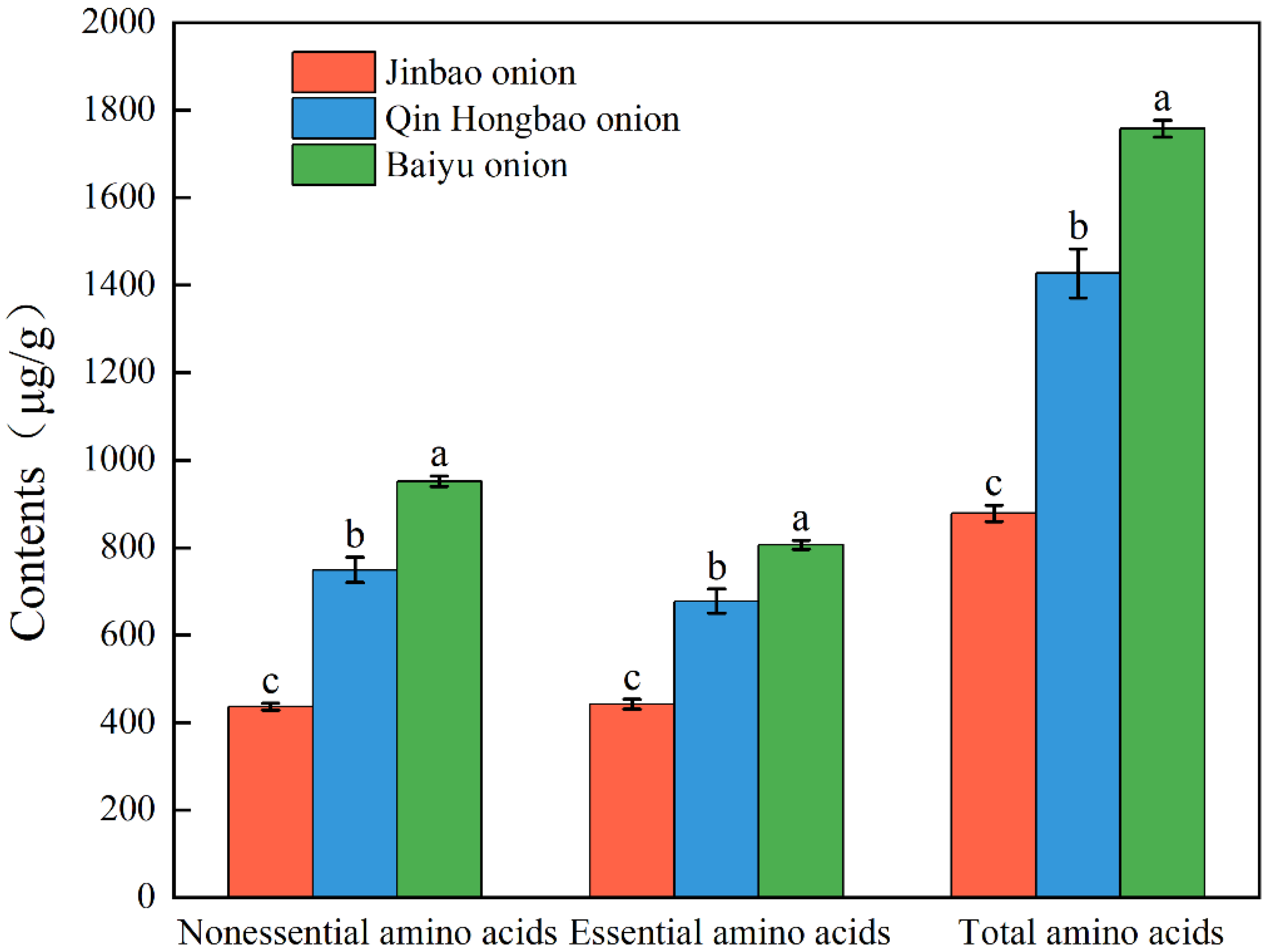
Taste-type onions also demonstrated superior performance regarding the total content of both nonessential amino acids (NEAAs) and essential amino acids (EAAs), ranking highest among the three varieties, followed by pink onions, while yellow onions showed the lowest totals. In terms of overall amino acid content, the total amount in taste-type onions reached 1757.49 μg/g, exceeding that of common onion varieties by more than 1.2-fold (Figure 2). These results indicate that taste-type onions possess a clear advantage in amino acid-related nutritional quality, and their richer amino acid profile suggests greater potential in terms of edible value.

3.4. Analysis of Fatty Acid Composition in Different Onion Varieties

Fatty acid composition is a critical determinant of onion nutritional quality and flavor characteristics. As presented in Table 6, significant variations were observed in the fatty acid profiles among the three onion cultivars, with a total of 17 fatty acids identified. Yellow onions exhibited the greatest diversity, containing 15 different fatty acids, followed by taste-type onions (12 acids), while pink onions showed the most limited profile (10 acids). Notably, arachidic acid (C20:0) and docosanoic acid (C22:0) were detected exclusively in taste-type onions, suggesting distinct lipid metabolism in this variety. In terms of abundance, linoleic acid (C18:2) was the predominant fatty acid across all cultivars, followed by palmitic acid (C16:0). Among the three most abundant fatty acids, oleic acid (C18:1) showed the lowest mean concentration, with no significant difference observed among the varieties (p > 0.05). Taste-type onions demonstrated a superior accumulation capacity for several nutritionally important fatty acids. Their content of linoleic acid reached 26.39 μg/g, which was 254% and 400% higher than that of yellow and Pink onions, respectively. Furthermore, taste-type onions also accumulated significantly higher levels of palmitic acid, stearic acid (C18:0), and alpha-linolenic acid (C18:3) compared to the other two varieties (p < 0.05). This pronounced enrichment in key fatty acids, particularly the essential polyunsaturated fatty acid linoleic acid, underscores the enhanced nutritional potential of taste-type onions.
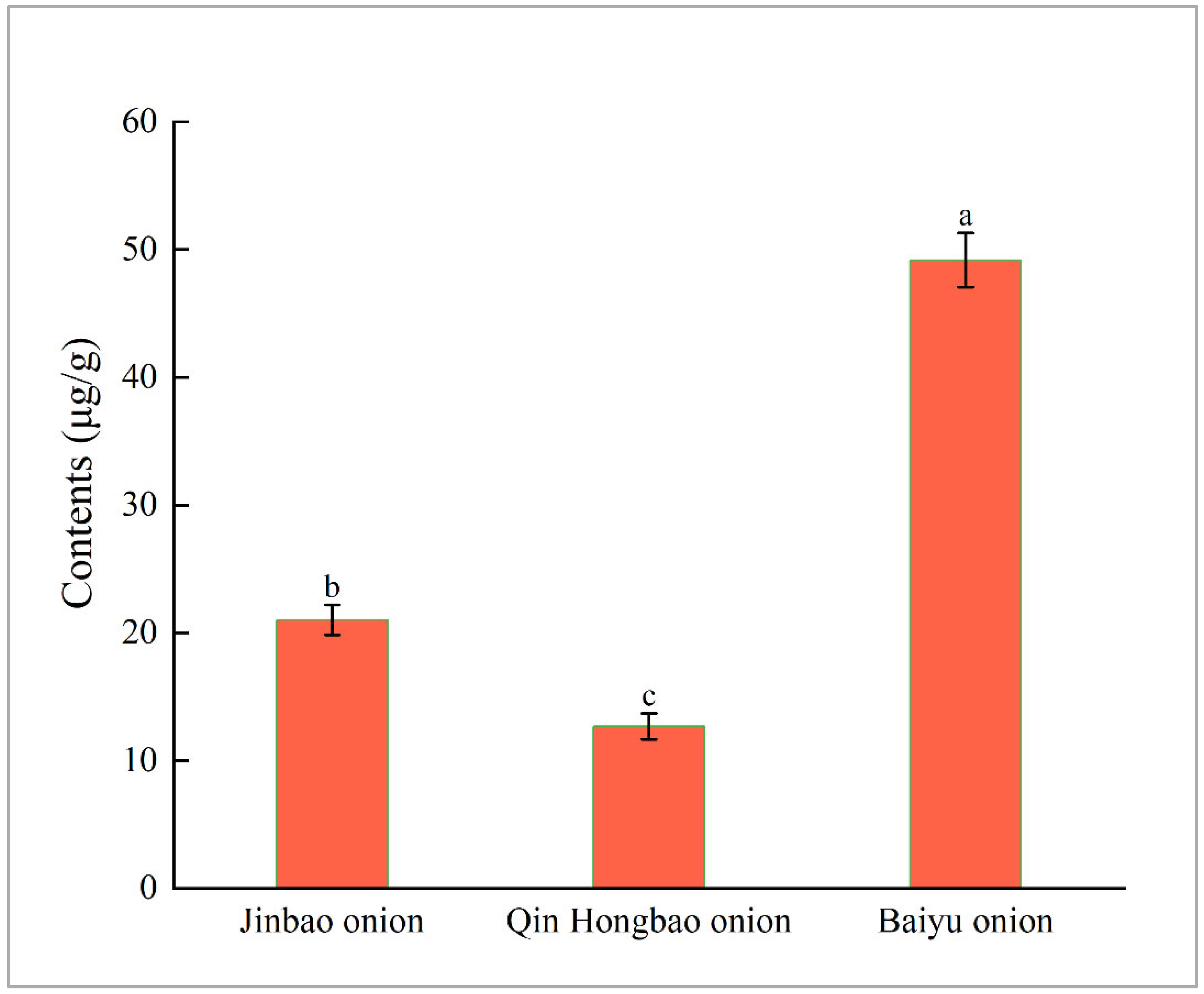
Analysis of total fatty acid content revealed significant differences among the onion cultivars (Figure 3). The taste-type onion exhibited the highest total fatty acid accumulation (49.17 μg/g), followed by yellow onion (21.01 μg/g), while pink onion showed the lowest content (12.68 μg/g). Compared to the yellow and pink onion varieties, the taste-type onion demonstrated 134.0% and 287.8% higher total fatty acid levels, respectively. These pronounced differences suggest distinct physiological characteristics in fatty acid biosynthesis across the onion varieties studied.

3.5. Analysis of Sugar and Acid Components in Different Varieties of Onions

3.5.1. Sugar Components

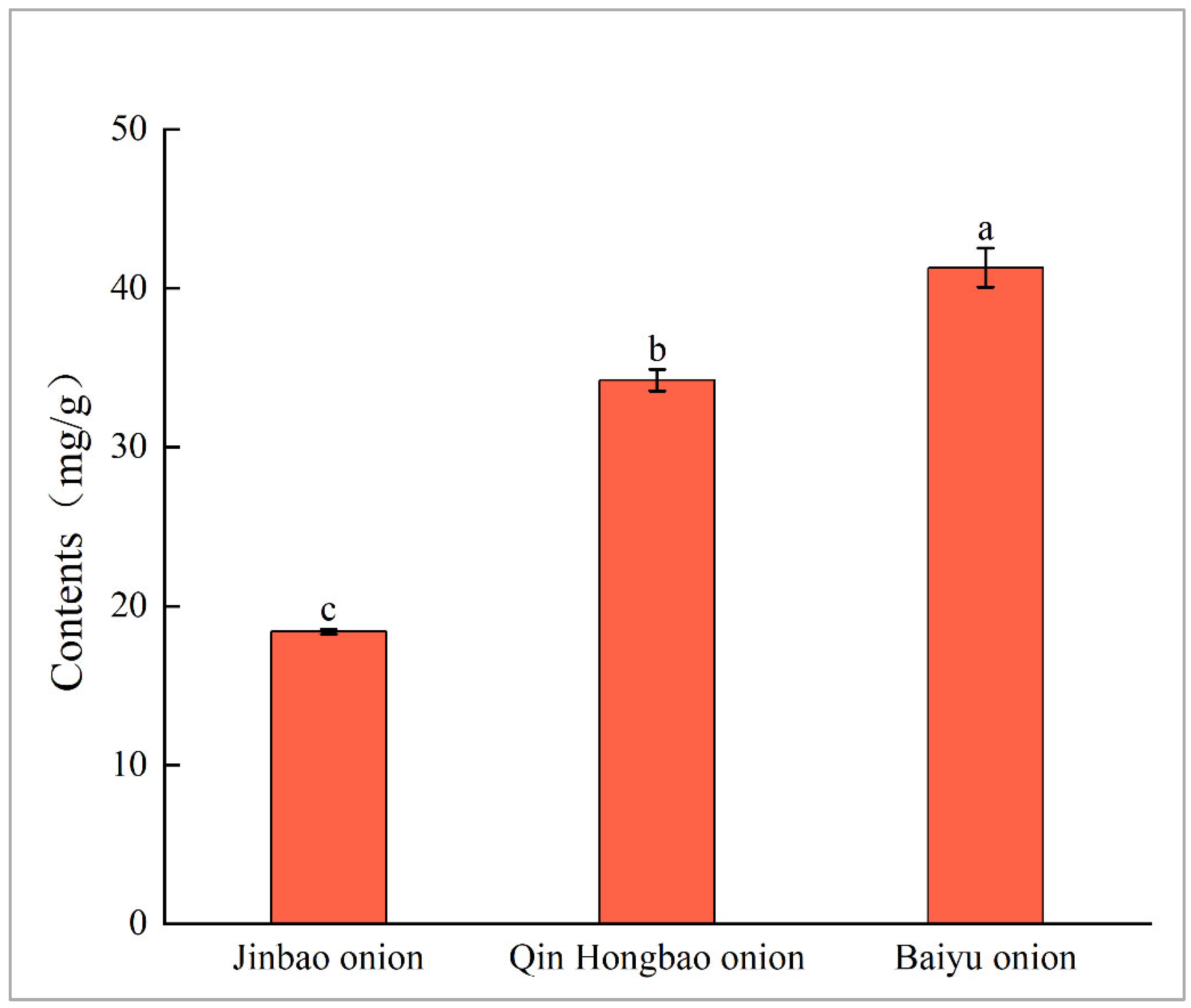
As shown in Table 7, significant differences were observed in sugar composition among the onion varieties. Three sugar components—fructose, glucose, and sucrose—were identified. In taste-type onions, fructose was the most abundant sugar (14.88 mg/g), followed by glucose (14.35 mg/g), with sucrose present at the lowest level (12.05 mg/g). Comparative analysis revealed that taste-type onions accumulated significantly higher fructose and sucrose than both yellow and pink onions (p < 0.05). Specifically, their fructose content was 122% higher than that of yellow onions, while sucrose content showed a 173% increase. The glucose content in taste-type onions was comparable to that in pink onions (no significant difference) but was 97% higher than in yellow onions. Regarding total sugar content (Figure 4), taste-type onions exhibited the highest accumulation (41.29 mg/g), exceeding yellow onions by 121% and pink onions by 21%. These results demonstrate that taste-type onions possess a superior sugar-accumulating capacity, particularly for fructose and sucrose, which may directly contribute to their enhanced sweet taste and overall flavor profile.

3.5.2. Organic Acids

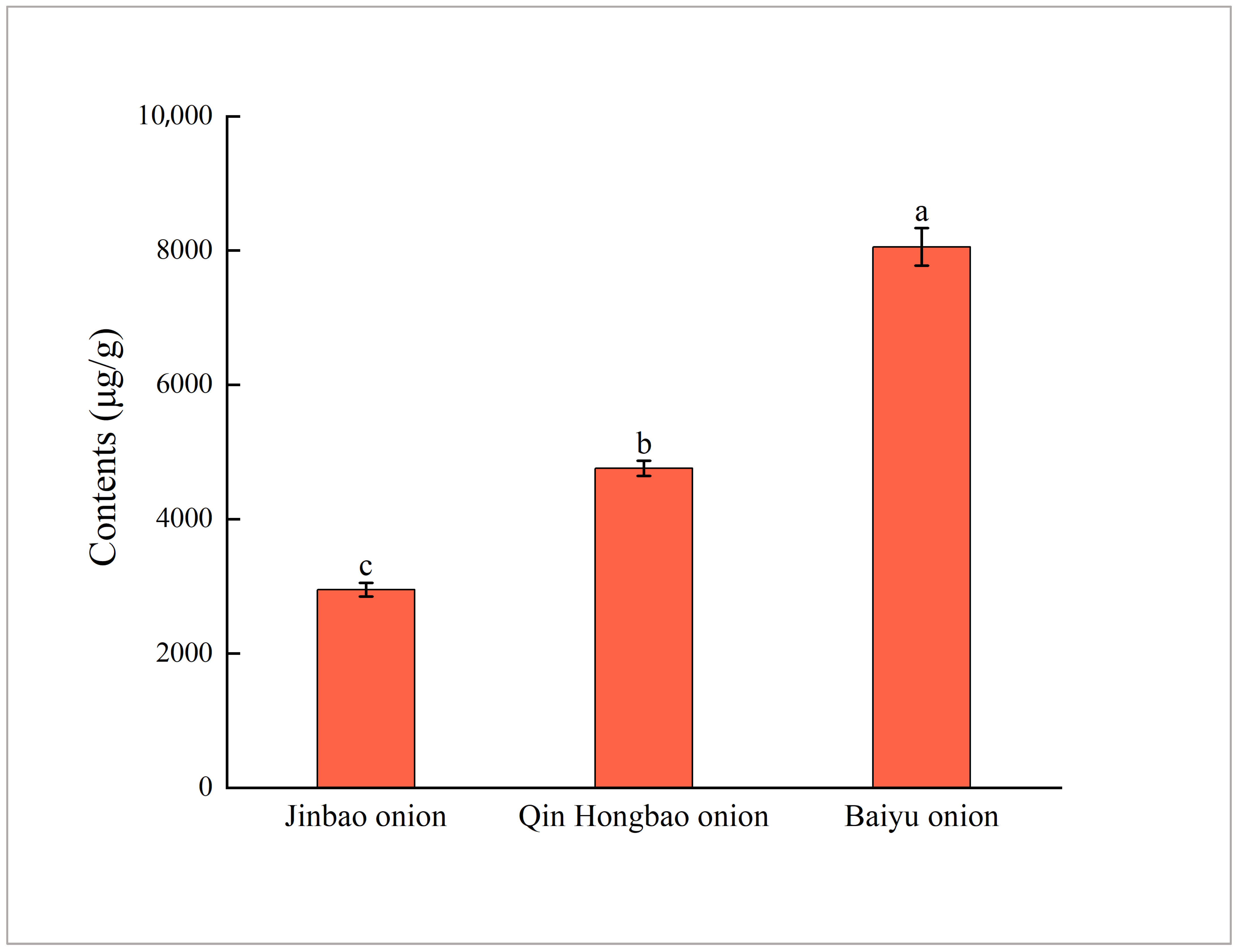
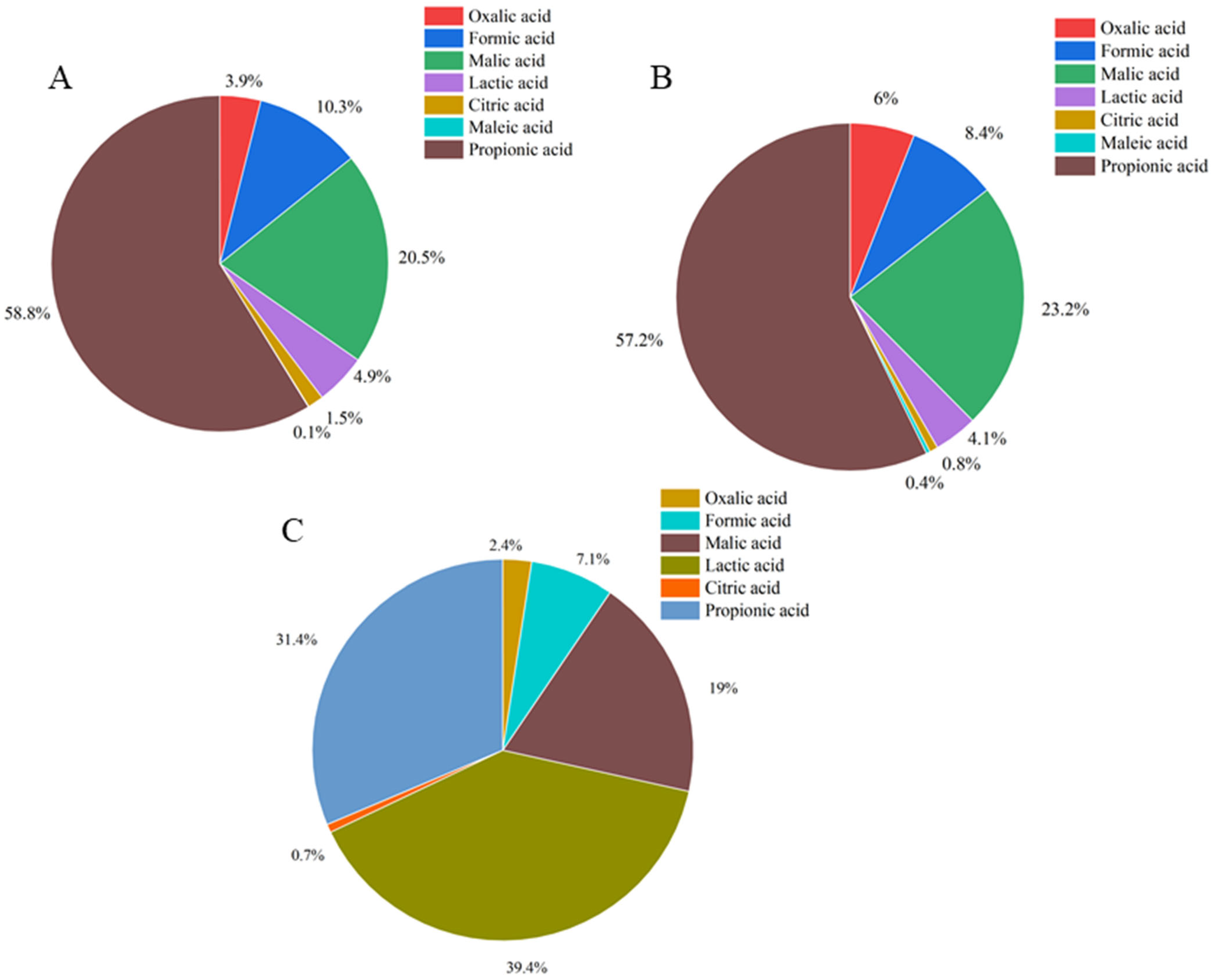
As shown in Figure 5 and Figure 6, significant differences were observed in both the total content and composition of organic acids among the three onion varieties. The total organic acid content of the taste-type onion was significantly higher than that of the common onion varieties, reaching 8053.28 μg/g—more than three times that of ordinary onions. Furthermore, the organic acid profiles differed markedly among the varieties. In yellow onions and pink onions, propionic acid, malic acid, and formic acid constituted the major organic acid fractions, with propionic acid alone accounting for over half of the total organic acids, making it the dominant component in these two cultivars. In contrast, the organic acid profile of taste-type onions was characterized by high proportions of lactic acid, propionic acid, and malic acid. Notably, lactic acid represented 39.4% of the total organic acids, establishing it as the principal organic acid component in taste-type onions.

4. Discussion

The increasing consumer demand for high-quality vegetables is driving the breeding of crop varieties with superior flavor and nutritional value. This study demonstrates that the novel taste-type onion (‘Baiyu’) exhibits a comprehensive advantage. Compared to common yellow and pink onion varieties, its content of key primary and secondary metabolites, including sugars, organic acids, amino acids, and fatty acids, is significantly elevated. These findings not only confirm its dual potential in sensory and nutritional aspects but also prompt a deeper consideration of the mechanisms underlying quality formation in vegetable crops.
The final quality of vegetables is the output of complex metabolic networks shaped by genetic background and environment [29]. As a globally important vegetable crop, the onion exhibits extensive metabolic diversity among varieties [30,31,32]. For example, NMR-based metabolomics studies have confirmed significant differences in sugar (glucose, fructooligosaccharides), organic acid (citric acid), and amino acid composition among Italian onions of different colors (red, yellow, white), which form the basis of their flavor and function [31]. In the present study, the synergistic enhancement of multiple metabolites in the taste-type onion is a manifestation of its intrinsic genetic background. The co-occurrence of high sugar and high organic acid content in it is particularly noteworthy, contrasting with the potential metabolic trade-offs between flavor compounds (e.g., the lachrymatory factor) and other nutrients observed in some traditional varieties [31]. This phenomenon of “quality trait clustering” suggests that key nodes in its metabolic regulation may have undergone critical shifts. In vegetable crops, similar metabolic reprogramming is a common strategy for responding to external stimuli [33].
The taste-type onion ‘Baiyu’ exhibited a unique organic acid profile dominated by lactic acid. It is critical to note that all analytical procedures were performed by an accredited laboratory under strict protocols to ensure sample integrity. While the detected level of lactic acid (~3013 µg/g) is notably higher than typical values reported for common onion varieties, and post-harvest microbial activity was controlled for by the laboratory’s standard procedures, we cannot entirely rule out the possibility of cultivar-specific metabolic traits or subtle physiological differences contributing to this profile. This distinctive composition forms part of the metabolic signature we report and warrants further targeted investigation into its genetic or physiological basis. This phenomenon is difficult to attribute to post-harvest microbial activity and is likely related to endogenous fermentation triggered by transient hypoxic microenvironments that may occur within the bulb tissue during late developmental stages [34,35]. Although it is fresh tissue, its metabolic physiology is comparable to the process of lactic acid fermentation in vegetables. Research indicates that onions themselves are an excellent substrate for lactic acid bacteria (LAB) fermentation; their rich fructooligosaccharide (FOS) content specifically supports the growth and metabolism of beneficial bacteria such as Lactiplantibacillus plantarum [36]. Notably, onion tissue inherently contains highly active lactate dehydrogenase, an enzyme that rapidly converts pyruvate—a key intermediate in sugar metabolism—into lactate. Studies indicate that compared to many other vegetables, onions exhibit higher expression levels of the genes encoding this enzyme and possess greater enzymatic activity, which likely facilitates the continuous synthesis of lactate within the tissue. Furthermore, this metabolic trait may be associated with the biochemical characteristics of the Allium genus: onions share a similar pattern of high lactate accumulation with garlic, another member of the Liliaceae family Allium, suggesting that elevated lactate levels may be an inherent metabolic feature of this plant genus [37,38,39,40].
The superior sensory quality of the taste-type onion directly stems from its metabolic profile. Its total sugar content (41.29 mg/g) is significantly higher, particularly the highly sweet fructose. Simultaneously, its content of the key umami amino acid—glutamate (130.80 μg/g)—is also remarkably high. This recalls the synergy of metabolic networks in vegetable quality formation. In tomatoes, exogenous brassinosteroid treatment can simultaneously affect sugar metabolism (e.g., the Calvin cycle), the TCA cycle, and amino acid metabolism by inducing transcriptional and metabolic reprogramming, thereby synergistically improving plant biomass and stress resistance [41,42]. Furthermore, arginine, as the most abundant amino acid, serves not only as a nitrogen reservoir but also as a precursor for polyamines and nitric oxide, potentially involved in bulb development and stress response, indirectly influencing quality formation [43].
In terms of fatty acid composition, this study identified 17 fatty acids in the three onion varieties, with linoleic acid being the most abundant. The linoleic acid content in taste-type onions (26.39 μg/g) was 3–4 times greater than that in conventional varieties. As a precursor for prostaglandin A synthesis, this elevated level is of significant importance for cardiovascular health [44]. Notably, arachidic acid (C20:0) and docosanoic acid (C22:0) were found exclusively in the taste-type onion (‘Baiyu’). This unique profile may reflect variety specific lipid metabolism, possibly involving modified pathways that allow these typically seed associated long-chain fatty acids to accumulate in the bulb [45,46,47]. The identification of arachidic and docosanoic acids is based on the high-confidence GC-MS analysis report provided by Nanjing Zhenke Testing Technology Co., Ltd. (Nanjing, China), which employed standard NIST library matching with stringent criteria While the biological origin and significance of these specific long-chain saturated fatty acids in onion bulbs warrant further investigation, their confirmed presence highlights a distinct lipid metabolic profile in this cultivar.
In summary, the nutritional profile of taste-type onions, characterized by high sugar, distinct organic acids, and unique fatty acids, likely arises from their specific genetic background. Most significantly, our study highlights their exceptionally high content of iron (Fe), positioning this variety as a potential dietary resource to help combat global micronutrient malnutrition related to iron deficiency. These results offer a theoretical foundation for the quality assessment and functional food development of taste-type onions. A key limitation to note is that all reported values were determined from fresh bulbs; further research on the impact of common processing methods (e.g., drying, cooking) on nutrient retention is essential to translate these findings into practical dietary benefits.

5. Conclusions

This study systematically compares the nutritional profiles of three distinct onion cultivars: the novel taste-type white-skinned ‘Baiyu’, the conventional yellow-skinned ‘Jinbao’, and the pink-skinned ‘Qinhongbao’. The taste-type onion ‘Baiyu’ demonstrates superior quality advantages, characterized by significantly elevated levels of both sugars and organic acids—particularly fructose and lactic acid—forming its distinct flavor foundation. Simultaneously, this cultivar exhibits enhanced accumulation of flavor-enhancing amino acids, beneficial fatty acids (notably linoleic acid), and key minerals, including potassium and magnesium. In contrast, the pink-skinned ‘Qinhongbao’ displays specific compositional traits, while the conventional yellow-skinned ‘Jinbao’ shows greater diversity in its fatty acid profile. These findings provide clear chemical benchmarks that define the unique quality attributes of each onion type, offering evidence to support targeted breeding strategies and the development of specialized onion products with enhanced sensory and nutritional properties.

Author Contributions

G.Z. and X.W. conceived and designed the research. Y.Z. and J.K. conducted the experiments. Q.X. contributed new reagents or analytical tools. Y.M. and Z.C. analyzed the data. Y.Z. wrote the manuscript. All authors have read and agreed to the published version of the manuscript.

Funding

This work was supported by the National Modern Agricultural Industry Technology System (CARS-24-G-28), the Gansu Province Talent Project (2025QNGR58), and the Gansu Academy of Agricultural Sciences Mid-Career Research Fund Project (2023GAAS29).

Data Availability Statement

The datasets used and/or analyzed during the current study are available from the corresponding author on reasonable request.

Conflicts of Interest

The authors declare that they have no conflicts of interest.

References

  1. Gupta, A.J.; Kaldate, S.; Volaguthala, S.; Mahajan, V. Onion nutritional and nutraceutical composition and therapeutic potential of its phytochemicals assessed through preclinical and clinical studies. J. Funct. Foods 2025, 129, 106889. [Google Scholar] [CrossRef]
  2. Singh, H.; Khar, A. Potential of onion (Allium cepa) as traditional therapeutic and functional food: An update. Indian J. Agric. Sci. 2022, 92, 1291–1297. [Google Scholar] [CrossRef]
  3. Zhao, L.; Wang, L.; Wang, N.; Gao, X.; Zhang, B.; Zhao, Y.; Wang, N. Cooking Alters the Metabolites of Onions and Their Ability to Protect Nerve Cells from Lead Damage. Foods 2024, 13, 3707. [Google Scholar] [CrossRef] [PubMed]
  4. Ha, J.; Lee, S.; Kim, S. Influence Relationship between Online News Articles and the Consumer Selling Price of Agricultural Products—Focusing on Onions. Agriculture 2023, 13, 1707. [Google Scholar] [CrossRef]
  5. Wakchaure, G.C.; Khapte, P.S.; Kumar, S.; Kumar, P.S.; Sabatino, L.; Kumar, P. Exogenous Growth Regulators and Water Stress Enhance Long-Term Storage Quality Characteristics of Onion. Agronomy 2023, 13, 297. [Google Scholar] [CrossRef]
  6. Kaur, C.; Joshi, S.; Kapoor, H.C. Antioxidants In Onion (Allium Cepa L.) Cultivars Grown In India. J. Food Biochem. 2009, 33, 184–200. [Google Scholar] [CrossRef]
  7. Liu, Z.J.; Yuan, X.L.; Zhang, P.Y.; Zhang, L. Suitability evaluation of onion varieties for seasoning sauce production. China Condiment. 2022, 47, 46–51. [Google Scholar]
  8. Kitinoja, L.; Kader, A. Small Scale Postharvest Handling Practices: A Manual for Horticultural Crops, 5th ed.; UC Davis: Davis, CA, USA, 2015. [Google Scholar]
  9. Tripathi, P.; Lawande, K.E. Onion storage in tropical region—A review. Curr. Hortic. 2019, 7, 15–27. [Google Scholar] [CrossRef]
  10. He, S.; Zhao, Y.; Liu, C.; He, Z. An exploration into the relationship between mineral elements (nitrogen and phosphorus) and nutritional quality in soil-watermelon (Citrullus lanatus) system. J. Anal. Sci. Technol. 2022, 13, 48. [Google Scholar] [CrossRef]
  11. Lu, Y.; Zhu, H. The regulation of nutrient and flavor metabolism in tomato fruit. Veg. Res. 2022, 2, 1–14. [Google Scholar] [CrossRef]
  12. Bhardwaj, S.; Kapoor, B.; Kapoor, D.; Thakur, U.; Dolma, Y.; Raza, A. Manifold roles of potassium in mediating drought tolerance in plants and its underlying mechanisms. Plant Sci. Int. J. Exp. Plant Biol. 2025, 351, 112337. [Google Scholar] [CrossRef]
  13. Lei, J.; Gu, H.; Liu, Z.; Hu, X.; Yu, Z.; Guan, Q.; Jin, J.; Liu, X.; Wang, G.; Liu, J. Recruitment of specific rhizosphere microorganisms in saline-alkali tolerant rice improves adaptation to saline-alkali stress. Sci. Total Environ. 2025, 963, 178413. [Google Scholar] [CrossRef] [PubMed]
  14. He, Z.; Shang, X.; Wang, X.; Xing, Y.; Zhang, T.; Yun, J. The contribution of Ca and Mg to the accumulation of amino acids in maize: From the response of physiological and biochemical processes. BMC Plant Biol. 2024, 24, 579. [Google Scholar] [CrossRef] [PubMed]
  15. He, Z.; Shang, X.; Zhang, T.; Yun, J. Ca and Mg stimulate protein synthesis in maize kernel through the action of endogenous hormones and defense enzymes. Plant Physiol. Biochem. 2024, 206, 108280. [Google Scholar] [CrossRef] [PubMed]
  16. Tang, Y.; Wang, P.; Chen, J.; Li, L.; Tang, L.; Huang, W.; Wei, X.; Xu, J. The accumulation pattern of sugars and organic acids in diverse fruit pulps coordinates sweet-sour taste of passion fruit. LWT 2025, 225, 117948. [Google Scholar] [CrossRef]
  17. Xiao, Q.; Ye, S.; Wang, H.; Xing, S.; Zhu, W.; Zhang, H.; Zhu, J.; Pu, C.; Zhao, D.; Zhou, Q.; et al. Soluble sugar, organic acid and phenolic composition and flavor evaluation of plum fruits. Food Chem. X 2024, 24, 101790. [Google Scholar] [CrossRef]
  18. Shi, Y.; Pu, D.; Zhou, X.; Zhang, Y. Recent Progress in the Study of Taste Characteristics and the Nutrition and Health Properties of Organic Acids in Foods. Foods 2022, 11, 3408. [Google Scholar] [CrossRef]
  19. Sun, N.; Zhao, L.; Liu, A.; Su, L.; Shi, K.; Zhao, H.; Liu, S. Role of amino acids in flavor profiles and foam characteristics of sparkling wines during aging. J. Food Compos. Anal. 2024, 126, 105903. [Google Scholar] [CrossRef]
  20. He, Y.; Qin, H.; Wen, J.; Wang, L. Characterization of Amino Acid Composition, Nutritional Value, and Taste of Fruits from Different Actinidia arguta Resources. J. Food Qual. 2024, 2024, 1005194. [Google Scholar] [CrossRef]
  21. Liu, L.; Ji, M.L.; Chen, M.; Sun, M.; Fu, X.; Li, L.; Gao, D.; Zhu, C. The flavor and nutritional characteristic of four strawberry varieties cultured in soilless system. Food Sci. Nutr. 2016, 4, 858–868. [Google Scholar] [CrossRef]
  22. Chen, W.; Wu, W. Molecular basis and detection technologies of sweetness. Food Res. Int. 2025, 219, 116965. [Google Scholar] [CrossRef] [PubMed]
  23. Li, S.; Zhao, B.; Lu, J.; Xiang, M.; Lin, Y.; Zhang, Y.; Wang, Y.; He, W.; Li, M.; Chen, Q.; et al. Comprehensive analysis and evaluation of the intrinsic fruit quality of Sichuan pear germplasm resources in China. Sci. Hortic. 2024, 343, 114084. [Google Scholar] [CrossRef]
  24. Kim, H.Y.; Jackson, D.; Adhikari, K.; Riner, C.; Sanchez-Brambila, G. Relationship Between Consumer Acceptability and Pungency-Related Flavor Compounds of Vidalia Onions. J. Food Sci. 2017, 82, 2396–2402. [Google Scholar] [PubMed]
  25. Kader, A.A. Postharvest Quality Maintenance of Fruits and Vegetables in Developing Countries. In Post-Harvest Physiology and Crop Preservation; Lieberman, M., Ed.; Springer: Boston, MA, USA, 1983; pp. 455–470. [Google Scholar]
  26. Lee, J.; Ebeler, S.E.; Zweigenbaum, J.A.; Mitchell, A.E. UHPLC-(ESI)QTOF MS/MS profiling of quercetin metabolites in human plasma postconsumption of applesauce enriched with apple peel and onion. J. Agric. Food Chem. 2012, 60, 8510–8520. [Google Scholar]
  27. Zheng, G.; Jin, W.; Fan, P.; Feng, X.; Bai, Y.; Tao, T.; Yu, L. A novel method for detecting amino acids derivatized with phenyl isothiocyanate by high-performance liquid chromatography–electrospray ionization mass spectrometry. Int. J. Mass Spectrom. 2015, 392, 1–6. [Google Scholar] [CrossRef]
  28. Filip, M.; Vlassa, M.; Coman, V.; Halmagyi, A. Simultaneous determination of glucose, fructose, sucrose and sorbitol in the leaf and fruit peel of different apple cultivars by the HPLC-RI optimized method. Food Chem. 2016, 199, 653–659. [Google Scholar] [CrossRef]
  29. González-De-Peredo, A.V.; Maroto, A.; Barbero, G.F.; Memboeuf, A. Profiling of Organosulfur Compounds in Onions: A Comparative Study between LC-HRMS and DTD-GC-MS. Chemosensors 2024, 12, 130. [Google Scholar] [CrossRef]
  30. Harrigan, G.G.; Stork, L.G.; Riordan, S.G.; Reynolds, T.L.; Ridley, W.P.; Masucci, J.D.; Macisaac, S.; Halls, S.C.; Orth, R.; Smith, R.G. Impact of genetics and environment on nutritional and metabolite components of maize grain. J. Agric. Food Chem. 2007, 55, 6177–6185. [Google Scholar] [CrossRef]
  31. Cheng, K.; Xiao, J.; He, J.; Yang, R.; Pei, J.; Jin, W.; Abd El-Aty, A.M. Unraveling volatile metabolites in pigmented onion (Allium cepa L.) bulbs through HS-SPME/GC-MS-based metabolomics and machine learning. Front. Nutr. 2025, 12, 1582576. [Google Scholar] [CrossRef]
  32. Saviano, G.; Paris, D.; Melck, D.; Fantasma, F.; Motta, A.; Iorizzi, M. Metabolite variation in three edible Italian Allium cepa L. by NMR-based metabolomics: A comparative study in fresh and stored bulbs. Metabolomics 2019, 15, 105. [Google Scholar] [CrossRef]
  33. Jia, H.; Song, J.; Zhang, T.; Tan, Y.; Wang, M.; Zang, J.; Zhang, X.; Yang, W.; Pang, Y.; Yang, Y.; et al. Comprehensive Characterization of Metabolites in Multiplier Onion Bulbs and Identification of Regulatory Genes for Nutritional Improvement. Foods 2025, 14, 3290. [Google Scholar] [CrossRef] [PubMed]
  34. Fan, P.; Feng, X. Regulation of Secondary Metabolism in Vegetable Crops. In Growth Regulation and Quality Improvement of Vegetable Crops: Physiological and Molecular Features; Springer Nature: Singapore, 2025; pp. 145–181. [Google Scholar]
  35. Kenney, L.J. Peeling the onion: Additional layers of regulation in the acid stress response. J. Bacteriol. 2024, 206, e0006924. [Google Scholar] [CrossRef] [PubMed]
  36. Guan, N.; Liu, L. Microbial response to acid stress: Mechanisms and applications. Appl. Microbiol. Biotechnol. 2020, 104, 51–65. [Google Scholar] [PubMed]
  37. Ścieszka, S.; Piekarska-Radzik, L.; Klewicki, R.; Sójka, M.; Juśkiewicz, J.; Fotschki, B.; Klewicka, E.; Grzelak-Błaszczyk, K. Spontaneously fermented Allium cepa L. as a source of lactic acid bacteria with probiotic potential. Sci. Rep. 2025, 15, 25970. [Google Scholar] [CrossRef]
  38. Säde, E.; Lassila, E.; Björkroth, J. Lactic acid bacteria in dried vegetables and spices. Food Microbiol. 2016, 53, 110–114. [Google Scholar] [CrossRef]
  39. Zhang, D.; Zhang, F.; Zhang, X.; Cao, Z.; Song, X.; Zhang, T.; Yang, Z. Metabolomics revealed the characteristics of the unique flavor substances of Alxa Allium mongolicum. Food Chem. X 2024, 24, 101979. [Google Scholar] [CrossRef]
  40. Yamada, K.; Iji, M.; Sameshima, C.; Arioka, S. Flavor and Umami Taste-Related Amino Acids Vary with the Growth of Allium tuberosum. Food Preserv. Sci. 2021, 47, 245–254. [Google Scholar] [CrossRef]
  41. Wang, X.X.; Huang, C.H.; Morales-Briones, D.F.; Wang, X.Y.; Hu, Y.; Zhang, N.; Zhao, P.G.; Wei, X.M.; Wei, K.H.; Hemu, X.; et al. Phylotranscriptomics reveals the phylogeny of Asparagales and the evolution of allium flavor biosynthesis. Nat. Commun. 2024, 15, 9663. [Google Scholar] [CrossRef]
  42. Liu, J.; Huang, Y.; Liu, S.; Cheng, L.; Xu, D.; Ling, Y.; Yang, R.; Zhang, Y. Combining transcriptome and untargeted metabolome analysis to reveal the potential mechanism of 24-epibrassinolide alleviating low light stress in tomato. Curr. Plant Biol. 2024, 38, 100327. [Google Scholar] [CrossRef]
  43. Luo, S.; He, X.; Li, L.; Liu, Z.; Zhang, G.; Lv, J.; Yu, J. Regulatory role of exogenous 24-epibrassinolide on tomato fruit quality. BMC Plant Biol. 2025, 25, 703. [Google Scholar] [CrossRef]
  44. Kawade, K. Dynamics of arginine metabolism during gametophore shoot formation iPhyscomitrium patens. Plant Morphol. 2024, 36, 21–26. [Google Scholar] [CrossRef]
  45. Fleming, J.A.; Kris-Etherton, P.M. The Evidence for α-Linolenic Acid and Cardiovascular Disease Benefits: Comparisons with Eicosapentaenoic Acid and Docosahexaenoic Acid. Adv. Nutr. 2014, 5, 863S–876S. [Google Scholar] [CrossRef]
  46. Mardini, M.; Ermolaev, A.; Kuznetsov, A.Y.; Zhevnerov, A.V.; Buravkov, S.; Khrustaleva, L. Onion pollenkitt: Function, DNase activity, fatty acid composition, and SEM imaging. PLoS ONE 2025, 20, e0321197. [Google Scholar] [CrossRef]
  47. Nwafor, C.C.; Li, D.; Qin, P.; Li, L.; Zhang, W.; Zhou, Y.; Xu, J.; Yin, Y.; Cao, J.; He, L.; et al. Genetic and Biochemical Investigation of Seed Fatty Acid Accumulation in Arabidopsis. Front. Plant Sci. 2022, 13, 942054. [Google Scholar] [CrossRef]
Figure 1. Planting site and onion varieties. (A) Planting site; (B) onion varieties.
Agriculture 16 00601 g001
Figure 2. Non-essential and essential amino acid contents of different varieties of onion. Different lowercase letters in the figure indicate significant differences at the 0.05 level among different treatments.
Agriculture 16 00601 g002
Figure 3. Total fatty acid content of different varieties of onions.
Agriculture 16 00601 g003
Figure 4. Total content of sugar fractions in different varieties of onion.
Agriculture 16 00601 g004
Figure 5. Organic acid content in different varieties of onions.
Agriculture 16 00601 g005
Figure 6. Percentage of organic acid fractions in different varieties of onion. (A) Yellow onions, (B) pink onions, and (C) taste-type onions.
Agriculture 16 00601 g006
Table 1. Information on onion test materials.
TypeCultivar Name Skin ColorSource
Yellow onionJinbaoYellowNunhems Beijing Seeds Co., Ltd.
Pink onionsQin HongbaoPinkNunhems Beijing Seeds Co., Ltd.
Taste-type onionBaiyuWhiteNunhems Beijing Seeds Co., Ltd.
Table 2. Chromatographic analysis equipment and conditions for amino acid composition.
Measurement Index21 Types of Free Amino Acids
Analytical equipmentInstrument modelThermo Fisher U3000 High Performance Liquid Chromatograph (China)
Chromatography columnLP-C18 column (4.6 mm × 250 mm, 5 μm)
Mobile phase AAmmonium acetate (pH 6.5)
Mobile phase BAcetonitrile
Column temperature40 ± 2 °C
Detection wavelength254 nm
Flow velocity1.0 mL/min
Sample volume2 μL
Elution procedureTime (min)Mobile phase A (%)Mobile phase B (%)
0946
149010
209010
218812
278416
288218
436832
464258
494258
51946
Table 3. Bulb trait of different onion varieties.
Bulb Length
(mm)
Bulbs Width (mm)Discoid Stem Diameter (mm)Bulb Stem Thickness
(mm)
Number of ScalesBulb Scales CountBulb Weight
(g)
Yellow onions91.28 ± 1.59 a91.59 ± 2.83 a20.49 ± 1.39 a13.52 ± 1.21 a111417.67 ± 9.28 a
Pink onions88.39 ± 1.88 a92.38 ± 3.31 a21.11 ± 1.29 a14.14 ± 1.28 a102371.66 ± 10.74 b
Taste-type onions92.23 ± 2.00 a93.42 ± 3.73 a21.94 ± 0.79 a12.66 ± 0.69 a81421.57 ± 6.11 a
Note: Different lowercase letters in the table indicate significant differences at the level of 0.05 among different treatments.
Table 4. Mineral element content of different varieties of onions.
Content (mg/100 g)Taste-Type OnionsYellow OnionsPink Onions
Ca556.93 ± 6.86 b672.43 ± 39.83 ab793.97 ± 46.39 a
Cu0.08 ± 0.01 a0.08 ± 0.01 a0.05 ± 0.01 b
Fe2.30 ± 0.20 a2.33 ± 0.46 a1.77 ± 0.46 a
Mn0.49 ± 0.01 b0.61 ± 0.01 a0.50 ± 0.02 b
Mg523.50 ± 43.17 a443.00 ± 26.71 a285.77 ± 10.24 b
K1744.53 ± 94.47 a1338.27 ± 44.96 a1204.53 ± 49.28 b
Note: Different lowercase letters in the table indicate significant differences at the level of 0.05 among different treatments.
Table 5. Amino acid content in different onion varieties.
Amino Acid (ug/g)Yellow OnionPink OnionTaste-Type Onion
Aspartic acid20.33 ± 0.89 b37.99 ± 2.65 a9.96 ± 0.48 c
Glutamic acid41.95 ± 1.42 c101.29 ± 3.80 b130.80 ± 8.29 a
Asparagine144.88 ± 2.25 b249.00 ± 19.37 a271.11 ± 5.25 a
Serine14.59 ± 0.57 b49.29 ± 3.85 a21.05 ± 1.00 b
Glutamine30.10 ± 1.77 c110.00 ± 4.19 b152.26 ± 1.50 a
Glycine33.82 ± 0.66 a21.26 ± 1.58 b32.75 ± 1.82 a
Cysteine54.32 ± 1.88 a60.01 ± 4.17 a38.02 ± 6.43 b
Gamma-aminobutyric acid14.95 ± 0.41 b20.44 ± 1.43 a20.79 ± 1.08 a
Alanine17.28 ± 0.37 b13.59 ± 0.58 c42.41 ± 1.27 a
Proline21.68 ± 0.53 c27.74 ± 1.10 b47.48 ± 0.71 a
Theanine5.63 ± 0.06 b8.09 ± 0.71 a9.18 ± 1.19 a
Tyrosine36.88 ± 1.55 c49.42 ± 2.45 b175.56 ± 2.61 a
Histidine5.19 ± 0.25 b11.17 ± 0.56 a6.64 ± 0.50 b
Threonine7.91 ± 0.49 c32.12 ± 0.97 b56.59 ± 0.41 a
Arginine355.64 ± 8.35 c454.92 ± 23.73 b534.26 ± 14.05 a
Valine16.66 ± 0.49 b39.96 ± 1.43 a16.61 ± 1.24 b
Methionine11.97 ± 0.51 b20.04 ± 1.31 a24.39 ± 1.63 a
Isoleucine5.76 ± 0.28 b15.91 ± 0.78 a6.66 ± 0.23 b
Leucine18.29 ± 0.86 c47.61 ± 0.97 b123.33 ± 1.36 a
Phenylalanine6.67 ± 0.25 c27.89 ± 0.56 a17.62 ± 1.15 b
Tryptophan13.88 ± 0.92 c27.32 ± 1.09 a20.05 ± 1.35 b
Note: Different lowercase letters in the table indicate significant differences at the level of 0.05 among different treatments.
Table 6. Analysis results of fatty acid composition in three types of onions.
Content (μg/g)
CompoundMolecular FormulaYellow OnionPink OnionTaste-Type Onion
Butyric acidC3H7COOH0.71 ± 0.01 a0.52 ± 0.02 b0.67 ± 0.05 a
Lauric acidC12H24O20.09 ± 0.01
Myristic acidC14H28O20.18 ± 0.02 b0.33 ± 0.02 a0.32 ± 0.02 a
Pentadecanoic acidC15H30O20.04 ± 0.01 b0.04 ± 0.01 b0.19 ± 0.01 a
(10Z)-Pentadec-10-enoic acidC15H28O20.18 ± 0.02 b0.33 ± 0.01 a0.41 ± 0.02 a
Palmitic acidC16H32O25.00 ± 0.82 b3.36 ± 1.47 b14.31 ± 0.81 a
Stearic acidC18H36O20.78 ± 0.11 b0.65 ± 0.02 b1.39 ± 0.10 a
Elaidic acidC18H34O20.24 ± 0.04 a0.19 ± 0.01 a0.16 ± 0.02 a
Oleic acidC18H34O23.16 ± 0.72 a1.51 ± 0.37 a3.17 ± 0.08 a
Linoleic acidC18H32O27.45 ± 0.57 b5.28 ± 0.45 b26.39 ± 0.97 a
Alpha-linolenic acidC18H30O20.36 ± 0.01 b0.49 ± 0.04 b1.53 ± 0.06 a
Arachidic acidC20H40O20.31 ± 0.01
Arachidonic acidC20H32O20.32 ± 0.02
Eicosatrienoic acidC20H34O20.26 ± 0.02
Docosanoic acidC22H44O20.41 ± 0.02
Erucic acidC22H42O20.38 ± 0.02
Nervonic acidC24H46O21.86 ± 0.04
Note: Different lowercase letters in the table indicate significant differences at the level of 0.05 among different treatments, “—” means not detected.
Table 7. Sugar content of different onion varieties.
Sugar (mg/g)Yellow OnionPink OnionTaste-Type Onion
Fructose6.70 ± 0.14 c9.24 ± 0.49 b14.88 ± 0.51 a
Glucose7.28 ± 0.10 b14.07 ± 0.32 a14.35 ± 0.60 a
Sucrose4.41 ± 0.03 c10.90 ± 0.13 b12.05 ± 0.32 a
Note: Different lowercase letters in the table indicate significant differences at the level of 0.05 among different treatments.
Disclaimer/Publisher’s Note: The statements, opinions and data contained in all publications are solely those of the individual author(s) and contributor(s) and not of MDPI and/or the editor(s). MDPI and/or the editor(s) disclaim responsibility for any injury to people or property resulting from any ideas, methods, instructions or products referred to in the content.