Review

Biological Control of Insect Pests in Agroecosystems: Current Challenges, Innovative Strategies, and Future Directions


1
Key Laboratory of Plant Genetics and Molecular Breeding, Zhoukou Normal University, Zhoukou 466001, China
2
College of Forestry, Henan Agricultural University, Zhengzhou 450002, China
3
College of Life Sciences and Agronomy, Zhoukou Normal University, Zhoukou 466001, China
4
Henan Key Laboratory of Crop Molecular Breeding and Bioreactor, Zhoukou Normal University, Zhoukou 466001, China
*
Authors to whom correspondence should be addressed.
Agriculture 2026, 16(5), 597; https://doi.org/10.3390/agriculture16050597
Submission received: 1 February 2026 / Revised: 24 February 2026 / Accepted: 4 March 2026 / Published: 5 March 2026
(This article belongs to the Section Crop Protection, Diseases, Pests and Weeds)

Abstract

Biological control (biocontrol), the use of living organisms to suppress pest populations, has become a cornerstone of sustainable agriculture and a core component of integrated pest management (IPM), offering a vital alternative to over-reliance on chemical pesticides. This review synthesizes recent advancements in the field, covering conceptual frameworks, key influencing factors (landscape structure, plant diversity, climate change), diverse biocontrol agents, and pest-specific case studies. It provides a systematic analysis of critical limitations such as inconsistent efficacy, scalability barriers, regulatory gaps, and pest resistance. To address these gaps, the review places particular emphasis on innovative and integrative strategies as pivotal pathways forward. These include trait-based agent selection, precision landscape design, integrated multi-agent systems, and, prominently, proactive regional management as demonstrated by pre-emptive biological control. The envisioned future directions focus on long-term cross-scale research, optimized production systems, and enhanced stakeholder collaboration aimed at bolstering the practicality and resilience of biocontrol in the face of global climate change. Among these, proactive biological control, which entails the pre-establishment identification and regulatory pre-approval of host-specific natural enemies, stands out as a conceptual model with transformative potential for shortening post-invasion response times and mitigating economic losses, embodying a paradigm shift from reactive to pre-emptive pest management.

1. Introduction

Insect pests pose escalating threats to agricultural productivity and food security [1,2]. For decades, chemical pesticides have been the primary tool for pest management, but their overuse has led to severe consequences: the evolution of pest resistance, environmental contamination, harm to non-target organisms (including pollinators and natural enemies), and public health risks [2]. In response, biological control has emerged as a sustainable, ecologically sound alternative, which leverages the natural interactions between pests and their enemies to reduce pest populations to economically and environmentally acceptable levels [3].
Biological control is not a new concept; indeed, ancient agricultural practices, such as intercropping to enhance natural enemy activity, date back thousands of years. However, modern biocontrol has evolved into a structured discipline with standardized methods and classifications [4]. Classical biocontrol, involving the introduction of co-evolved natural enemies from a pest’s native range, has achieved remarkable successes, such as the suppression of the glassy-winged sharpshooter (Homalodisca vitripennis) in French Polynesia by the introduced egg parasitoid Cosmocomoidea ashmeadi, which reduced pest populations within seven months of release [5,6]. Conservation and augmentative biocontrol strategies have further expanded its application, integrating habitat management, mass-reared natural enemies, and microbial agents to adapt to diverse agroecosystems [2,7]. In this review, we also place special emphasis on the understudied role of vertebrate predators (e.g., frogs, bats, woodpeckers) in biocontrol, systematically elaborating on their ecological functions and application potential in different agroecosystems.
Despite these advances, biocontrol faces significant challenges. Conceptual and terminological inconsistencies across disciplines hinder regulatory alignment and knowledge sharing [3]. Context dependence, where biocontrol efficacy varies with landscape structure, climate, and pest species, limits scalability [8,9]. Additionally, mass production costs, pest resistance to microbial agents, and inadequate farmer awareness and technical knowledge constrain widespread adoption [4,10]. Climate change exacerbates these issues by disrupting the synchrony between pests and their natural enemies, altering species distributions, and increasing the frequency of pest outbreaks [11,12].
This review aims to synthesize the current state of biocontrol research and practice against insect pests, with a focus on addressing these challenges through novel innovative strategies and proposing forward-looking, actionable future directions rather than providing a mere descriptive compilation. We deliberately focus on insect pests to provide an in-depth analysis, acknowledging that biocontrol of weeds and pathogens involves distinct agent groups and ecological principles (e.g., see [13,14]). A rigorous literature selection and evaluation methodology was adopted for this review. We systematically screened peer-reviewed original research papers and review papers published from 1986 to 2025 in core databases, including Web of Science, Scopus and ScienceDirect. The key search terms were “biological control”, “insect pest”, “agroecosystem”, “natural enemy” and “microbial biocontrol agent”. We set the inclusion criterion as field validation-based research and excluded non-empirical review papers without original data support. We further integrated long-term monitoring data from Asian agroecosystems to ensure the novelty and evidence-based nature of the content. We selected three representative insect pests as case studies based on the following explicit criteria: (1) covering three typical pest functional types (migratory polyphagous, invasive woodboring, regional monophagous); (2) corresponding to three major agroecosystem types (cereal cropland, forestry, paddy field) with global distribution; (3) involving three different biocontrol management scales (local, regional, transboundary); (4) having sufficient Asian regional research data and global application references. We first establish a conceptual framework for biocontrol classification and key influencing factors (landscape and climate). We then explore multidimensional biocontrol agents—predators, parasitoids, and entomopathogens—before presenting targeted case studies of three representative insect pests: the fall armyworm (Spodoptera frugiperda, a polyphagous migratory pest), the Asian longhorned beetle (Anoplophora glabripennis, an invasive wood-boring pest), and the rice stem borer (Chilo suppressalis, a key regional rice pest). As noted, these three case studies were strategically selected to represent different pest functional types and agroecosystem types as outlined above and to illustrate the context-dependence and scale-specific design of biocontrol strategies across different management scales (local, regional, transboundary). Critical challenges and the innovative strategies to overcome them are discussed in depth, setting the stage for the subsequent outline of future directions to enhance biocontrol’s impact in sustainable agriculture. By integrating insights from diverse agroecosystems and pest complexes, this review provides a comprehensive and critical guide for advancing biocontrol as a cornerstone of IPM.

2. Conceptual Framework and Classification of Biological Control

Biological control is founded on three core principles that set it apart from other bioprotection approaches: (1) only living organisms can drive biocontrol. Following the established conceptual frameworks in biological control [3,15], we include viral particles within the scope of biocontrol agents. While viruses are not considered living organisms in a strict biological sense due to their lack of independent metabolism and reproduction, they function as obligate intracellular parasites that replicate, utilize host metabolic machinery, and exert pest-suppressive effects upon infecting a host. This functional alignment with the core principle of using biotic agents for pest suppression, coupled with their widespread application and regulatory consideration as biological control products, justifies their inclusion in biocontrol discussions [3,15]. By contrast, non-living nature-derived substances (e.g., plant extracts, semiochemicals, botanical pesticides) fall under the broader umbrella of “bioprotection” but do not constitute biological control [3,15]; (2) biocontrol always targets a pest (directly or indirectly), thus excluding processes like biostimulation that focus on non-pest interactions; (3) all biocontrol methods fall into four categories: natural biocontrol (resident agents acting without targeted human intervention, e.g., native ladybeetles naturally preying on aphids in wheat fields without any human management [16]), conservation biocontrol (enhancing resident agents via habitat management or pesticide reduction, e.g., planting flower strips in fields to provide nectar for parasitoids and increase their abundance [8]), classical biocontrol (introducing external agents for permanent establishment, e.g., introducing Gonatocerus ashmeadi to control Homalodisca vitripennis in French Polynesia [5,6]), and augmentative biocontrol (temporarily adding agents for short-term pest suppression, e.g., mass releasing Trichogramma pretiosum to control fall armyworm egg masses in maize fields [17]).
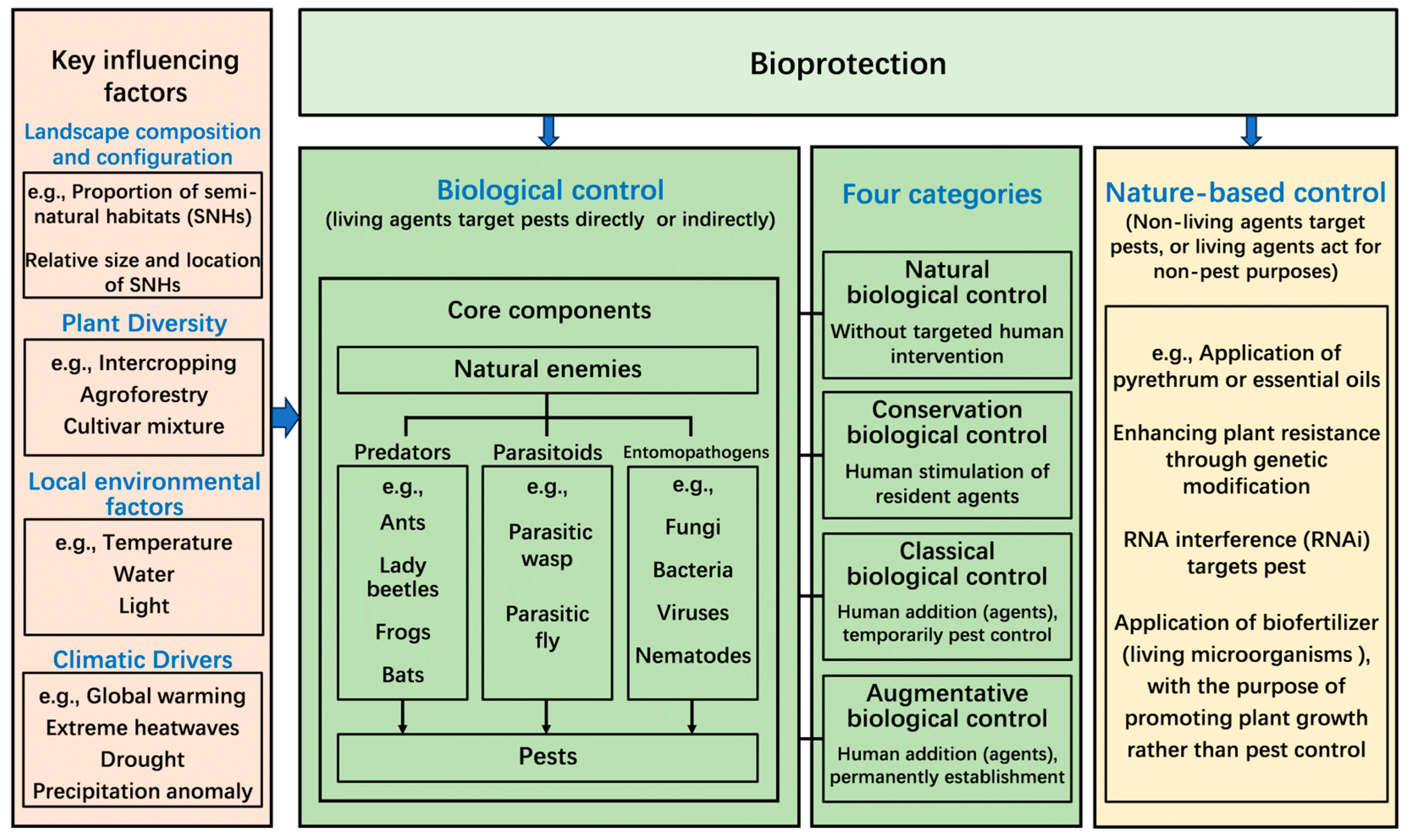
Despite this structured framework, conceptual and terminological inconsistencies persist due to disciplinary divides; for instance, phytopathology, entomology, and weed science have developed distinct biocontrol practices and terminology, leading to inconsistent references to biocontrol in industrial and legislative contexts [3,18]. These inconsistencies create barriers to regulatory uniformity: for instance, classical biocontrol agents may face rigorous risk-assessment requirements due to terminological ambiguities, while augmentative agents struggle with inconsistent authorization standards [3]. A unified global conceptual and terminological platform is therefore essential to align research, policy, and practice. Existing international efforts can serve as a solid foundation for this platform: the International Organization for Biological and Integrated Control of Noxious Animals and Plants (IOBC) has formulated basic terminological standards for biocontrol, and the Food and Agriculture Organization (FAO) of the United Nations has integrated biocontrol terminology into the global IPM technical guidelines. Major terminological clashes that need urgent resolution include the confused use of “biocontrol” and “bioprotection” in agricultural production and legislation. Concrete examples of term misuse include the classification of plant extracts as ‘biocontrol agents’ in some regional policies, which contradicts the core principle of biocontrol (only living organisms). The unified platform should include standardized definitions, classification criteria, and harmonized regulatory frameworks. Such a platform would standardize definitions and streamline regulatory processes; this is critical, as biocontrol implementation delays stem from terminological misalignment [3] (Figure 1).

3. Key Influencing Factors: Heterogeneity and Context Dependence

3.1. Landscape and Plant Diversity

As illustrated in Figure 1, landscape composition (proportion of non-crop habitats, woodlands, grasslands) and configuration shape the habitat structure and microclimate of agroecosystems, determining the overwintering survival, summer persistence, and population dynamics of biocontrol agents; a well-designed landscape creates conditions more favorable for cultivated plants and biocontrol agents than for phytophagous pests and is the primary driver of biocontrol effectiveness by modulating the abundance, diversity, and dispersal of natural enemies [19,20]. For example, in organic strawberry fields in California’s Central Coast, a greater proportion of woody habitat at the landscape scale boosts natural enemy numbers, while on-farm diversification practices (e.g., polyculture, cover cropping) increase natural enemy diversity, together enhancing suppression of the pest Lygus hesperus [19].
Semi-natural habitats (SNHs) are pivotal for conservation biological control (CBC), supplying natural enemies with essential resources: nectar and pollen for nutrition, as well as shelter, and overwintering sites [8]. For instance, in conventional cruciferous agroecosystems, increasing grassland coverage in the landscape reduces populations of small-sized pests (aphids, leaf miners, thrips) and Plutella xylostella by boosting canopy-dwelling predator abundance and diversity, while forests support higher diversity of airborne enemies (parasitoids, canopy predators) and greater numbers of ground-dwelling predators [8]. However, these effects are spatially variable: the scale at which pests and natural enemies respond to landscape composition depends on their feeding ranges and dispersal capacities: sedentary ground predators respond to changes within 0.5 km, while highly mobile parasitoids may react to landscape features at a larger scale [8,21]. Thus, maintaining or enhancing the diversity of agricultural and semi-natural landscape mosaics has the potential to strengthen “top-down effects” on pest suppression [22], but site-specific assessments are needed to minimize trade-offs (e.g., some SNHs may benefit both pests and their enemies) [8].
Plant diversity, achieved through three key agronomic practices (agroforestry, cultivar mixture, and intercropping), further modulates biocontrol outcomes by altering the resource availability and microhabitat of pests and natural enemies (Figure 1). A meta-analysis by Letourneau et al. (2011) showed that local-scale diversification of crop and non-crop habitats reduces insect pests and crop damage while increasing natural enemies [23]. A classic example is that intercropping alfalfa with cotton in China boosted the abundance of aphid natural enemies (such as coccinellids, chrysopids, and syrphid flies) by 13.65 times relative to cotton monocropping systems, significantly suppressing Aphis gossypii populations [4,24]. However, diversification effects are pest- and system-specific: in wheat-based systems, intercropping reduces pests but does not always boost natural enemies [25], as non-host plants may create physical or chemical barriers that hinder both pest host-finding and enemy foraging [26,27]. Furthermore, cover cropping can disrupt keystone mutualisms (e.g., ant-aphid interactions) in cotton agroecosystems: living mulches reduced ant and aphid abundances in crop canopies by 97% and 93%, respectively, compared to bare soil, while also tripling weed seed biocontrol rates [28].

3.2. Environmental and Climatic Drivers

Local environmental factors that modulate biocontrol efficacy include not only temperature, water, and light, but also soil properties (e.g., pH, organic matter content), air humidity, and microtopography, all of which jointly shape the microclimate of agroecosystems and influence the survival, development, and foraging behavior of biocontrol agents. As illustrated in Figure 1, climate change, marked by global warming, extreme heatwaves, drought, and altered precipitation patterns, disrupts biocontrol primarily by altering the synchrony of the phenological stages of phytophagous pests and their entomophagous natural enemies, reducing enemy fitness, and altering the geographic distribution of both pests and natural enemies [11]. Rising temperatures, extreme heat, and drought directly reduce the survival rate of natural enemies, while altered precipitation patterns affect the spore germination of entomopathogenic fungi and the foraging activity of predators; overall, climatic drivers create an asymmetric fitness landscape where pests often gain a competitive advantage over their natural enemies, leading to reduced biocontrol efficacy. For example, Plutella xylostella grows faster under elevated temperatures than its parasitoid Diadegma semiclausum [29]. Conversely, low temperatures may also benefit the pest. During cool early springs, Melitaea cinxia caterpillars benefit from basking in the sun and grow faster than their parasitoid Cotesia melitaearum, leading to reduced parasitism rates and high pest density [11,30]. Parasitism levels in caterpillars may further decline as climatic variability increases [11,31], as variability impairs parasitoids’ ability to track host populations across space and time [32]. Additionally, parasitoids often have lower heat tolerance than their hosts, and low relative humidity causes nectar and honeydew (critical carbohydrate sources for natural enemies) to crystallize, shortening the adult lifespan of natural enemies [12]. These climate-driven disruptions highlight the need for climate-adaptive biocontrol strategies, such as selecting heat-tolerant enemy strains (e.g., Beauveria bassiana strains adapted to arid conditions) and designing landscapes that buffer microclimatic extremes (e.g., shaded hedgerows for temperature regulation) [12].
Anthropogenic factors are a dominant driver of biocontrol success or failure. Human interventions alter the agroecosystem environment, plant composition, and microclimate in multiple ways: intensive tillage destroys the overwintering habitats of soil-dwelling natural enemies; excessive pesticide use directly kills natural enemies and disrupts their foraging behavior; and monocropping reduces plant diversity and limits resource availability for natural enemies. In contrast, sustainable practices such as conservation tillage, crop diversification, and precision landscape design can enhance biocontrol by optimizing the habitat and microclimate for natural enemies.

4. Biocontrol Agents (Natural Enemies): Mechanisms and Applications

Natural enemies employ diverse behavioral and physiological mechanisms to suppress pests, with effectiveness varying by species traits and ecosystem context (Figure 1). This section integrates the latest research progress to elaborate on the functional mechanisms and application innovations of biocontrol agents and identifies the key environmental and biological factors that determine the efficacy of each agent type. The differences in agent functional traits (dispersal capacity, host specificity, climate tolerance) are the core basis for biocontrol efficacy, which can be leveraged for trait-based selection (see Section 7.1).

4.1. Predators

Ladybeetles like Harmonia axyridis and Propylea japonica are among the most extensively researched predatory biocontrol organisms, consuming aphids, thrips, mealybugs, and lepidopteran eggs/larvae [16,33]. Notably, H. axyridis exhibits dietary flexibility: in addition to high-protein prey, it consumes carbohydrate-rich resources (nectar, pollen) to meet nutritional requirements, a trait that enhances its persistence in resource-poor agroecosystems [33,34]. In northern China’s wheat-maize-cotton rotation systems, P. japonica populations persist across crop seasons, residing in wheat fields (April–May) before migrating to maize fields post-wheat harvest, providing continuous aphid suppression in cotton [16].
Novel predatory mechanisms have been identified in subsequent studies; for example, the predatory bug Orius laevigatus induces jasmonic acid-mediated resistance in tomato plants during oviposition, reducing feeding damage by Frankliniella occidentalis independently of direct predation [2,35]. Vertebrate predators make significant contributions to biocontrol in tropical and subtropical agroecosystems worldwide. In Philippine rice fields, the Luzon wart frog (Fejervarya vittigera) consumes a high proportion of rice pests (54.1% of their diet), while also reducing vectors of zoonotic diseases [36]. The artificial introduction of frogs in Chinese paddy fields further reduces populations of rice leaf rollers, stem borers, and planthoppers, while increasing soil microbial diversity (e.g., bacteria, actinomycetes) and enzyme activity, thereby enhancing disease suppression (e.g., sheath blight) and grain yield [37]. Bats (e.g., Pipistrellus pygmaeus) are equally impactful: in Spanish rice fields, artificial roosts increased bat abundance, and bat density was negatively associated with infestations of the rice stem borer (Chilo suppressalis) over a 10-year period [38].
The role of ants in biocontrol is complex and context-dependent. While some species (e.g., Camponotus modoc, Oecophylla longinoda) suppress pests with efficiency rates up to 100%, others (e.g., Linepithema humile, Solenopsis invicta) protect aphids or displace beneficial enemies [39]. For instance, in Nicaraguan maize fields, ants mediate fall armyworm (Spodoptera frugiperda) control, with maize-bean intercropping boosting ant abundance and pest suppression [17,40]. However, ant-pest mutualisms (e.g., ant-aphid tending) can undermine biocontrol, highlighting the need for targeted ant management (e.g., providing alternative sugar sources to disrupt mutualisms) [41].
Predators exhibit high dietary flexibility and rapid pest suppression capacity, and their efficacy is closely linked to landscape plant diversity and microhabitat stability; vertebrate predators in particular play a unique role in tropical/subtropical agroecosystems, while ant predators require targeted management to avoid mutualism with pests.

4.2. Parasitoids

Parasitoids rely on specialized host-location mechanisms, often guided by chemical cues (plant volatiles, host pheromones) and “infochemical detour” strategies, which involve using cues from non-target host stages (e.g., adult pheromones) to locate cryptic hosts (e.g., eggs) [42]. For example, the egg parasitoid Anaphes nitens uses eucalyptus volatiles (1,8-cineole, γ-terpinene) for long-range habitat location and the male sex/aggregation pheromone of its host (Gonipterus platensis) to find infested areas before relying on female feces and physical cues for final host selection [42].
Parasitoid effectiveness varies with host exposure: semi-concealed pests (e.g., leaf rollers, leaf tiers) exhibit higher parasitism rates (12%) than exposed caterpillars (5%), with Braconidae parasitoids showing the highest host specificity and Ichneumonidae the lowest [43]. In classical biocontrol programs, host specificity is critical: Cotesia rubecula (a specialist on Pieris rapae) achieved significant pest suppression in the USA only after introducing a Chinese strain, whereas the generalist Cotesia glomerata failed to control P. rapae despite multiple introductions [44]. Notably, in augmentative biocontrol, parasitoids such as Dastarcus helophoroides have demonstrated high efficacy against wood-boring pests like the Asian longhorned beetle, achieving substantial parasitism under controlled conditions and significant field suppression, illustrating the potential of well-selected agents in classical and augmentative programs [7].
Phenological synchrony between phytophagous pests and their parasitoids is a core determinant of parasitoid efficacy: only when the active stage of parasitoids overlaps with the susceptible stage of pest hosts can effective parasitism be achieved. This synchrony is jointly determined by regional climate (e.g., temperature, precipitation) and local microclimate conditions (e.g., habitat shading, soil moisture), and global climate change in recent decades has disrupted this critical synchrony by altering the developmental rates of pests and parasitoids, leading to reduced parasitism rates; this disruption will continue to intensify with ongoing climate warming.
Parasitoids offer high host specificity and long-term pest population regulation capacity, but their success is intricately linked to pest-parasitoid phenological synchrony and landscape structure; the selection of parasitoid agents must fully consider their host range and environmental adaptation traits to match the target pest and local agroecosystem.

4.3. Microbial Biocontrol Agents (MBCAs)

Like predators and parasitoids, microbial biocontrol agents (MBCAs) offer target-specific, eco-friendly pest suppression, with applications spanning greenhouse and field crops. All these living biocontrol agents share the core advantage of being environmentally benign, as they do not cause environmental contamination and pose no risks to non-target organisms or human health.

4.3.1. Fungi and Bacteria

Entomopathogenic fungi (EPF) like B. bassiana and Metarhizium anisopliae invade pests through cuticular entry and secrete toxins leading to pest death. Metarhizium anisopliae achieves 88% mortality in Culex pipiens larvae and the shortest LT50 (22.6 h) among the tested EPF, while also reducing female fecundity and pupation rates [45]. Many EPF also function as endophytes: Beauveria spp. colonize plant tissues without causing harm, enhancing plant growth and inducing resistance to herbivores, while simultaneously suppressing pest populations via direct infection [46]. Exposure to B. bassiana causes sublethal effects on Spodoptera exigua that persist across generations, lowering the intrinsic rate of increase (rm) and net reproductive rate (R0) of F1 offspring [45]. Adequate soil moisture is essential for EPF efficacy, as it is required for spore germination, cuticular penetration, and subsequent hyphal growth in the pest host.
Bacillus thuringiensis (Bt) is the most widely used bacterial biocontrol agent, with subspecies (e.g., Bacillus thuringiensis var. kurstaki) targeting lepidopteran larvae. In field trials, Bt-based formulations (e.g., BioAsp at 1 kg/ha) caused minimal leaf damage by Plutella xylostella and Pieris brassicae, while commercial products like Spinosad® (2 L/ha) and XenTari® (1 kg/ha) effectively suppressed pest populations [10]. However, Bt effectiveness is limited by pest resistance: some Spodoptera frugiperda populations have evolved resistance to Bt toxins, necessitating rotation with other MBCAs [17,47]. Beyond this biological constraint, sufficiently high temperatures are a key factor for optimizing the efficacy of bacterial biocontrol agents such as Bt, as elevated temperatures promote larval feeding activity, thereby increasing the consumption of Bt-contaminated foliage and enhancing the toxic effect of Bt toxins on pest larvae.

4.3.2. Viruses and Nematodes

Nuclear polyhedrosis viruses (NPVs) have long been successfully used for the biocontrol of lepidopteran pests such as Spodoptera exigua, Helicoverpa armigera, Helicoverpa zea, and Trichoplusia ni; granuloviruses (GVs) have also been widely and effectively applied against pests such as the codling moth (Cydia pomonella) and Phthorimaea operculella. Collectively, these baculoviruses (encompassing NPVs and GVs) display a high degree of host specificity for lepidopteran pests: for instance, Phthorimaea operculella granulovirus (PhopGV) infects Tuta absoluta and P. operculella larvae and has even received emergency approval for use in European countries owing to its exceptional efficacy against neonate T. absoluta [2]. Notably, a key advantage of baculoviruses over chemical pesticides is their harmlessness to non-target organisms (e.g., hymenopteran parasitoids), a trait that renders them ideal candidates for integrated pest management (IPM) [2]. For these viral biocontrol agents to achieve optimal biocontrol performance, two critical temperature-related factors govern their efficacy: first, sufficiently high temperatures boost larval feeding activity and the consumption of virus-contaminated foliage; second, optimal temperatures facilitate the accumulation of polyhedra in infected pest larvae—an essential process for the secondary infection of new pest individuals, the maintenance of polyhedra viability on plant surfaces, and the development of viral epizooty in pest populations.
Entomopathogenic nematodes (EPNs) of the families Steinernematidae and Heterorhabditidae (e.g., Steinernema feltiae) form symbiotic relationships with gut bacteria (Xenorhabdus bovienii) that kill hosts within days. Steinernema feltiae is effective against T. absoluta and soil-borne pests, with foliar and soil applications reducing pest populations in tomato crops [2]. However, EPNs are sensitive to UV radiation and desiccation, requiring application during high-humidity periods (morning/evening) to maximize effectiveness [2].
For all types of biocontrol agents (predators, parasitoids, MBCAs), the most critical application principle is to deploy the agent when the most susceptible individuals of the target phytophagous pests are the most prevalent in the field; this timing maximizes biocontrol efficacy, minimizes pest population growth, and reduces the risk of pest outbreaks.
MBCAs feature high target specificity and compatibility with other biocontrol strategies, and their efficacy is highly dependent on environmental factors such as soil moisture and temperature; the rational rotation of different MBCAs is the key to delaying the evolution of pest resistance, and the formulation optimization of MBCAs can effectively improve their field persistence.

5. Pest-Specific Case Studies: Illustrating Biocontrol Across Systems

The following case studies were selected to demonstrate the application and integration of various biocontrol strategies against three distinct types of insect pests in different agroecosystems. This comparative approach highlights the context-dependence and scale-specific design necessary for successful biocontrol implementation. As outlined in the introduction, the three case studies are strategically designed to cover different pest functional groups, agroecosystem types, and management scales, providing evidence-based examples for the innovative biocontrol strategies proposed in Section 7; each case study also illustrates the site-specific biocontrol design principles that are critical for practical application.

5.1. Fall Armyworm (Spodoptera frugiperda)

The fall armyworm (FAW), a migratory and polyphagous pest, poses a threat to global cereal production, with transboundary migration driving regional outbreaks. In East Asia, FAW moths migrate across the South China Sea, and carbon isotope analysis and trajectory modeling have confirmed that spring/summer migrants originate from India and Bangladesh, while autumn migrants return to these regions [48,49].
Biocontrol of FAW relies on augmentative parasitoid releases, conservation of natural enemies, and integration with microbial agents [17]. Trichogramma pretiosum and Telenomus remus, both egg parasitoids, are widely used: in Brazil, T. pretiosum releases reduce FAW infestations, while T. remus—reared on Corcyra cephalonica eggs—suppresses egg masses in multiple countries [17]. Larval parasitoids like Habrobracon hebetor (India) and Cotesia icipe (East Africa) further enhance suppression, with C. icipe achieving high parasitism rates in maize [17]. Notably, microbial biocontrol agents (MBCAs) such as Bt are widely applied, but FAW populations in some regions have evolved resistance to Bt toxins, necessitating rotation with other MBCAs [17,47].
Crop diversification and landscape management complement biological control tactics: maize-bean intercropping increases ant abundance and FAW suppression, while residue retention enhances early-season biological control by ground-dwelling predators (e.g., carabid beetles and spiders) [17]. Regional monitoring, using searchlight trapping, pheromone lures, and satellite trajectory modeling, enables coordinated releases, with a proposed Asian regional early warning system to track migration and optimize agent deployment timings [49].
The biocontrol of FAW, a migratory polyphagous pest, requires a transboundary, multi-agent strategy integrating augmentative releases (e.g., Trichogramma, Telenomus), MBCAs, and landscape diversification. The extrapolation limit of this case is that control strategies developed in Asian smallholder maize fields may need optimization for large-scale monocultures in the Americas, where the timing of agent releases and landscape design principles must be adjusted for different scales and management intensities. However, the core principle of integrating multi-agent systems for season-long control remains globally applicable.

5.2. Asian Longhorned Beetle (Anoplophora glabripennis)

The Asian longhorned beetle (ALB), a wood-boring pest of hardwood trees, is managed via conservation of vertebrate predators, augmentative parasitoid releases, and habitat manipulation [7]. Woodpeckers (Dendrocopos major, Picus canus) are key natural enemies: in Chinese poplar forests, 29–58% of D. major’s diet consists of cerambycid larvae during the brood time, when each pair of woodpeckers can consume as many as 2500 larvae [7,50]. Conservation measures—planting mixed forests, providing nest boxes, and preserving deadwood—increase woodpecker abundance, reducing ALB larval densities from 16 to 3 per tree over 3 years [7,51]. Woodpeckers are not a viable stand-alone tool for rapid response in high-value plantations but represent a key component of long-term conservation strategies in forest settings.
The management of ALB within its native Asian range demonstrates effective augmentative biological control but also highlights critical considerations for agent selection. For instance, releases of the generalist ectoparasitoid D. helophoroides, a native natural enemy of ALB in China, can achieve parasitism rates of 60–100% in the laboratory and reduce field larval populations by over 86% under optimal release ratio [7,52]. Sclerodermus guani targets early-instar ALB larvae, causing 100% mortality of 1st-instar larvae, 92% of 2nd-instar larvae, and 87% of 3rd-instar larvae under laboratory conditions, though field mortality of early instars is 33% [7,53]. Another congener, Sclerodermus pupariae, exhibits higher parasitism rates on young ALB larvae than S. guani, reducing populations by over 62% in field augmentative releases [7]. Non-target risks limit parasitoid use outside Asia, as both D. helophoroides and Sclerodermus spp. are generalist ectoparasitoids attacking multiple woodboring beetle species, emphasizing the need for host-specific agents in invaded regions [7,54].
The biocontrol of ALB, an invasive wood-boring pest, showcases a combination of long-term conservation strategies (woodpeckers) and short-term augmentative releases (parasitoids). The extrapolation limit of this case is that the forestry management intensity in Asia is lower than that in Europe and North America, and the conservation biocontrol measures need to be combined with the intensive management requirements of high-value commercial forests in other regions. Furthermore, the use of generalist parasitoids like D. helophoroides outside its native range is precluded by non-target risks, highlighting the need for proactive screening of host-specific agents for invaded regions.

5.3. Rice Stem Borer (Chilo suppressalis)

The rice stem borer (RSB) is a major pest of rice in subtropical Asia, with biocontrol effectiveness shaped by landscape composition, parasitoid traits, and integrated cultural practices [55]. In Jiangxi Province, China, RSB infestation levels are highest in agriculture-dominated landscapes, while parasitism rates rise with pest pressure [55]. Parasitoid responses to landscape vary by species: the specialist Cotesia chilonis (a key RSB larval parasitoid) reacts negatively to non-crop habitat, likely due to its narrow foraging range, while generalists Eriborus sinicus and Microgaster russata benefit from non-crop habitats due to their broader resource use [55].
Vertebrate predators (frogs, bats) and MBCAs complement parasitoids: rice-fish co-culture systems increase spider abundance and spatial aggregation, thereby enhancing RSB suppression via top-down control [56]. Baculoviruses (e.g., Chilo suppressalis nucleopolyhedrovirus, CsNPV) and entomopathogenic nematodes (EPNs, Steinernema feltiae) further reduce RSB larvae, with CsNPV achieving high efficacy in neonates and S. feltiae suppressing soil-dwelling pupae [2]. Additionally, habitat diversification (e.g., planting nectar-rich border plants) supports parasitoid longevity and fecundity, while reduced tillage preserves overwintering natural enemy populations [55].
The biocontrol of RSB, a regional monophagous pest, is highly dependent on landscape composition and integrated cultural practices. The extrapolation limit of this case is that the small-scale paddy field pattern in Asia is different from the large-scale mechanized paddy fields in the Americas and Australia, and the habitat diversification measures need to be adjusted according to the mechanized farming requirements. However, the principle of matching parasitoid traits (specialist vs. generalist) to landscape complexity is universally applicable for designing precision landscape-based biocontrol strategies.
Notably, this review draws heavily from Asian biocontrol research and practice, justified by the region’s diverse agroecosystems, extensive smallholder farming, and accumulated long-term data, providing context-specific insights with broad relevance. The conclusions from Asian agroecosystems are mainly applicable to smallholder-dominated agricultural regions in the global tropics and subtropics; for large-scale mechanized agricultural regions in Europe and North America, the biocontrol strategies need to be optimized for planting scale, management intensity and landscape characteristics, and the core principles of site-specific design and multi-agent integration remain universally applicable.

6. Critical Challenges in Biocontrol Implementation

6.1. Conceptual and Regulatory Barriers

Inconsistent terminology and stringent registration requirements impede the adoption of biocontrol practices. Between 1890 and 2010, 780 insect introductions for classical biocontrol in Europe, North Africa, and the Middle East achieved only 32% establishment success, 18% single-agent impact, and 11% complete control, partly due to inconsistent definitions of “success” across disciplines [57]. Regulatory frameworks, designed for chemical pesticides, fail to account for biocontrol agents’ living nature: for example, classical biocontrol agents face lengthy risk assessments due to fears of non-target impacts, while augmentative agents struggle with inconsistent authorization standards [3]. The assessment of non-target risks is particularly critical for classical biocontrol and augmentative release of generalist agents: for example, the generalist parasitoid Dastarcus helophoroides (used for ALB control) may attack non-target woodboring beetles in non-Asian regions, highlighting the need for host-specificity testing before cross-border deployment [54]. A key question for practical biocontrol is determining when classical biocontrol is feasible versus when annual augmentative releases are required: classical biocontrol is suitable for invasive pests with stable populations in a new range and host-specific natural enemies that can establish permanent self-sustaining populations (e.g., Gonatocerus ashmeadi for Homalodisca vitripennis [5,6]); annual augmentative releases are necessary for highly migratory, sporadic, or regionally endemic pests where natural enemies cannot maintain sufficient populations to suppress pests (e.g., Trichogramma spp. for fall armyworm [17]). For generalist natural enemies (e.g., woodpeckers, most ants, and some parasitoids) that prey on or kill any suitable prey in the absence of target herbivores, classical biocontrol is only feasible if the target pest is the dominant prey in the agroecosystem; otherwise, annual augmentative releases combined with habitat management to maintain generalist enemy populations are recommended.

6.2. Inconsistent Efficacy

Landscape composition and species-specific responses lead to variable pest suppression. Landscape composition explains 14–20% of variation in pest-control variables, with non-crop habitats benefiting some enemies (e.g., ladybeetles in woodlands) but increasing pest pressure in others (e.g., aphids in flower strips) [58,59]. In conventional cereal fields, flower strips increase parasitoid abundance but fail to control aphids, while organic farming reduces pest infestation but supports fewer natural enemies than flower strips [59]. The inconsistent efficacy of biocontrol also involves ecological trade-offs: for example, the planting of flower strips to attract natural enemies may also provide nectar resources for pest adults, and the conservation of generalist predators may lead to intraguild predation of parasitoids, which requires comprehensive assessment and optimization of biocontrol strategies. This inconsistency necessitates site-specific biocontrol design, which is a core principle for all biocontrol applications and is determined by local landscape composition, climate conditions, pest species traits, and agroecosystem type.

6.3. Scalability and Cost

Mass rearing of natural enemies is labor-intensive and costly. Dipteran predators (e.g., hoverflies) require larval stages for pest control, but pupae are the only transportable stage, which creates a significant time gap between release and effective biocontrol by the next larval generation [60]. MBCAs can be more expensive than chemical pesticides: Bt formulations may cost 2–3 times more than conventional insecticides, and their short shelf life (6–12 months) increases storage and reapplication costs [10]. Smallholder farmers, in particular, face barriers to adoption due to limited access to mass-reared agents and technical training [4]. For instance, for perennial crops (e.g., fruit trees, poplar forests), conservation biocontrol combined with occasional augmentative releases is the optimal strategy, as perennial habitats support the long-term survival of natural enemies; for rotating annual crops (e.g., wheat-maize, cotton-soybean), habitat management (e.g., cover cropping, border plants) to maintain natural enemy populations across crop rotations and targeted augmentative releases during key pest infestation periods are recommended to ensure continuous biocontrol efficacy. The scalability of biocontrol also faces governance challenges: the large-scale application of biocontrol requires cross-regional collaboration and unified technical standards, while the small-scale and scattered planting pattern of smallholder farmers increases the difficulty of unified biocontrol management, which requires policy support and technical extension services to address.

6.4. Pest Resistance and Enemy Disruption

Pests evolve resistance to MBCAs: P. xylostella populations show resistance to Bt, while Spodoptera exigua exhibits reduced susceptibility to B. bassiana [10]. Insecticides further disrupt biocontrol: neonicotinoids reduce natural enemy abundance by 50–70% in cotton fields, while sublethal doses of pyrethroids impair parasitoid host-location behavior [61,62]. Intraguild predation, such as ants preying on parasitoid larvae, also reduces enemy effectiveness [7]. The evolution of pest resistance to MBCAs is a long-term ecological challenge, and the over-reliance on a single type of MBCA is the main cause of resistance; the combination of different MBCAs and the integration of MBCAs with physical/chemical control measures can effectively delay the evolution of resistance. In addition, the selective use of low-risk insecticides and the application of sublethal doses can reduce the disruption of natural enemies while controlling pests.

6.5. Knowledge and Policy Gaps

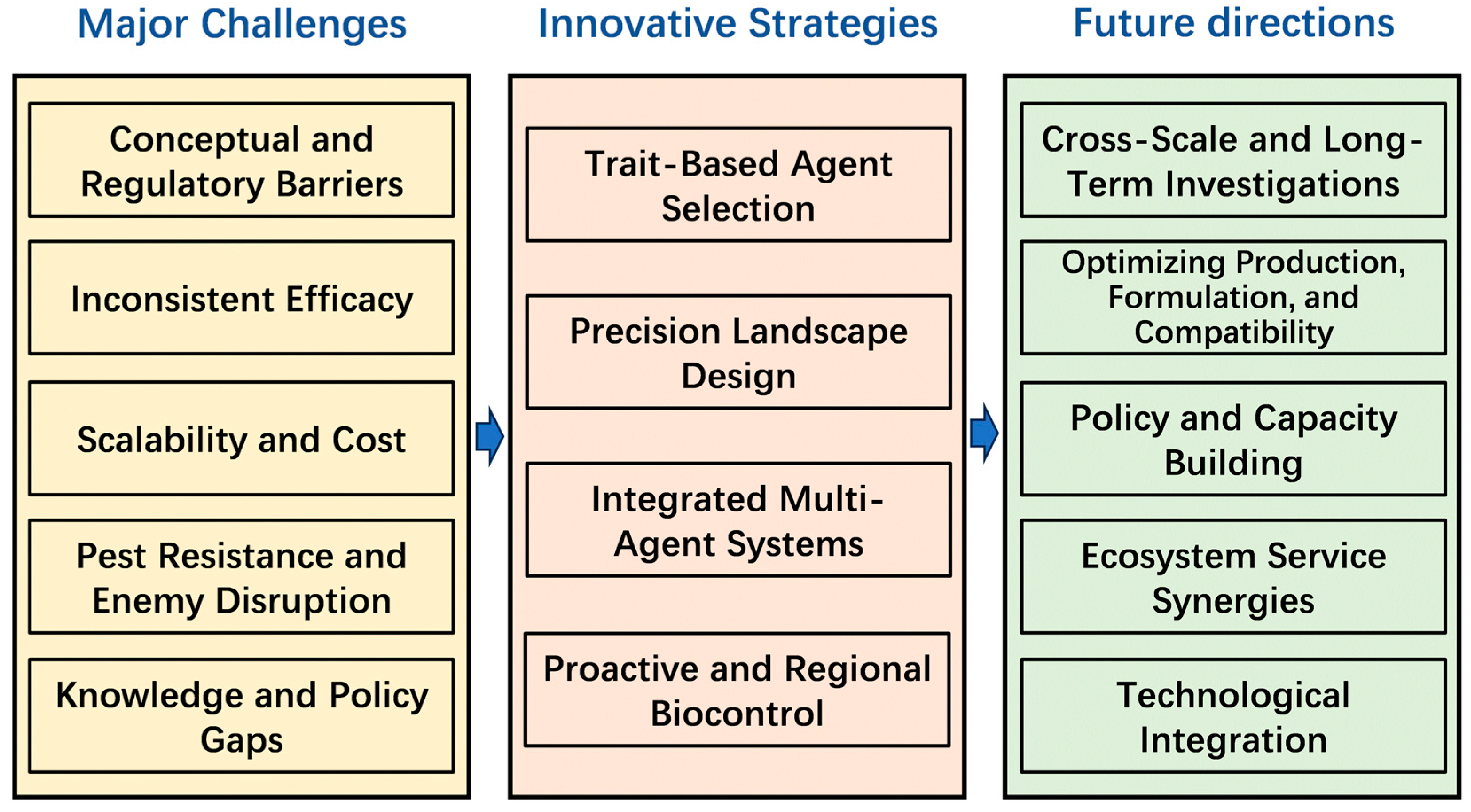
Farmers lack awareness and technical expertise in biocontrol. For example, surveys in China found that only a small proportion of smallholders use conservation biocontrol, due to limited training on habitat management [4,63]. Inadequate funding for research and extension slows innovation: public investment in biocontrol R&D is 5–10 times lower than for chemical pesticides, limiting the development of new agents [64]. Policy support is also lacking: For instance, while the EU’s Sustainable Use of Pesticides Directive (SUD) aims to reduce pesticide risk, its direct incentives for biocontrol adoption are often considered insufficient [64] (Figure 2). In contrast, regulatory frameworks in countries like the USA, Canada, New Zealand, and Australia have facilitated successful classical biocontrol programs through streamlined processes for low-risk agents and proactive pre-release screening (e.g., for pre-emptive biocontrol against high-risk invaders) [65,66]. As outlined in Figure 2, the core challenges of biocontrol implementation can be categorized into these five types, each requiring targeted innovative strategies to address.

7. Innovative Strategies

7.1. Trait-Based Agent Selection

Focusing on natural enemies with complementary functional characteristics, such as dispersal capacity, host specificity, and climate tolerance, enhances biocontrol robustness. Building on the evidence, we propose a “trait-matching framework” that operationalizes agent selection based on three evidence-based dimensions: (1) Pest-targeting traits (e.g., host stage specificity, feeding mode compatibility), (2) Environmental adaptation traits (e.g., thermal tolerance, humidity resistance), and (3) Ecosystem integration traits (e.g., dispersal capacity, non-target risk). This framework is currently a conceptual synthesis based on existing empirical studies and has not yet been fully validated by large-scale field experiments; to improve its operationalization, we design a preliminary structured decision matrix for the framework: the matrix takes pest traits (host range, feeding habit, developmental stage), environmental factors (temperature, humidity, landscape type) and ecosystem requirements (non-target risk, persistence) as evaluation indices and scores the functional traits of natural enemies to select the optimal biocontrol agent. For RSB management, large-bodied parasitoids (E. sinicus), with high mobility, are deployed in complex landscapes, while small specialists (C. chilonis) are used in crop-dominated areas [55]. For FAW, combining Trichogramma (targets exposed eggs) and Telenomus (targets scaled eggs) overcomes physical barriers to parasitism [17]; this complementary egg parasitism strategy exemplifies the trait-matching framework’s pest-targeting dimension. Climate-adaptive traits are also critical: selecting heat-tolerant Beauveria strains for dryland agroecosystems enhances persistence under drought [12].

7.2. Precision Landscape Design

Optimizing the spatial arrangement of resources enhances enemy foraging and pest suppression. We highlight strategies such as the strategic placement of semiochemical dispensers and companion plants, reducing field size, and combining farming practices. For instance, in apple orchards, placing synthetic methyl salicylate (MeSA) dispensers inside fields and Calendula officinalis borders maximizes aphid control, as MeSA guides ladybirds (Propylea japonica) to locate prey and C. officinalis provides nectar [67]. Reducing field size (from 7 ha to 2 ha) increases natural enemy abundance by ~300%, while combining organic farming with flower strips synergizes pest suppression [59]. For cruciferous crops, designing landscapes with 100–400 m buffers of grasslands and forests enhances natural enemy spillover and pest control, as validated by Zhang et al. (2021) in conventional agroecosystems [8]. We further advance the concept of “precision resource mapping”—a targeted, data-driven approach using remote sensing and insect trapping to identify and rectify resource gaps for natural enemies in the landscape: (1) remote sensing data are used to map the distribution of crop/non-crop habitats and resource types in the landscape; (2) insect trapping (pheromone traps, yellow sticky traps) is used to investigate the spatial distribution of pests and natural enemies; (3) Geographic Information System (GIS) technology is used to overlay the above data to identify resource gaps (nectar deficiency, shelter shortage) for natural enemies; (4) targeted landscape optimization measures are formulated to fill the resource gaps.

7.3. Integrated Multi-Agent Systems

Combining natural enemies and cultural practices enhances biocontrol effectiveness by leveraging three evidence-based interaction types: (1) Complementary interactions (targeting different pest stages), (2) Synergistic interactions (enhancing agent efficacy), and (3) Stabilizing interactions (sustaining agent populations). For example, in tomato greenhouses, Nesidiocoris tenuis (predator) + Trichogramma achaeae (parasitoid) + Bt reduces T. absoluta populations more effectively than single agents [2]. Sublethal insecticide doses further synergize biocontrol: low concentrations of chlorantraniliprole increase Cotesia marginiventris parasitism rates in FAW larvae [62]. Banker plant systems, which use alfalfa as an alternative host for non-pest aphids, sustain Aphidius gifuensis populations, providing continuous control of cotton aphids [4]. The application of integrated multi-agent systems also needs to consider ecological trade-offs and non-target risks: the combination of multiple natural enemies may lead to intraguild predation, and the integration of MBCAs with chemical pesticides may cause mutual inactivation, which requires pre-experimental verification of the compatibility of different agents.

7.4. Proactive and Regional Biocontrol

Proactive biocontrol, which involves identifying natural enemies before pest establishment, reduces response time, addressing the limitations of reactive management. Drawing on established work, we delineate a structured “proactive biocontrol pipeline” comprising three validated stages: (1) Risk assessment (identifying high-risk invasive pests using pathway analysis and climate niche modeling), (2) Enemy screening (testing host specificity and efficacy of natural enemies from the pest’s native range), and (3) Pre-approval and stockpiling (securing regulatory approval and maintaining agent populations for rapid deployment). This pipeline is a conceptual synthesis based on existing regional biocontrol practices and has not yet been applied on a global scale; to improve its practicality, we clarify the regulatory and ecological safeguards of the pipeline: (1) regulatory safeguards: establish a global unified pre-approval standard for biocontrol agents and set up a fast track for the approval of low-risk host-specific agents; (2) ecological safeguards: conduct multi-level host specificity testing (no-choice test, choice test, field cage test) for natural enemies and assess the potential impact of agent release on local biodiversity. For invasive pests like ALB, screening parasitoids (e.g., D. helophoroides) in native ranges and pre-approving their release accelerates biocontrol deployment [1]. For example, proactive host range testing of Anastatus orientalis (an egg parasitoid) against the spotted lanternfly (Lycorma delicatula) was completed before the pest became established in California, allowing for rapid release once the pest was detected [1]. Pre-emptive screening of parasitoids for the brown marmorated stink bug (Halyomorpha halys) in Australia could substantially shorten post-invasion response time and reduce economic losses [66]. To address the potential limitations of the proactive biocontrol pipeline, we add the following critical considerations: (1) Cost of stockpiling agents: Maintaining viable populations of natural enemies requires specialized facilities (e.g., climate-controlled rearing rooms) and continuous resource input; regional cooperative stockpiling among multiple countries/regions can share costs and improve efficiency. (2) Risks of pre-invasion screening: False positives (identifying agents with low field efficacy) may waste resources, while false negatives (missing highly effective agents) reduce control success—this can be mitigated by combining laboratory efficacy tests with semi-field trials in simulated target agroecosystems. (3) Genetic diversity of stockpiled colonies: Long-term captive rearing may lead to inbreeding depression (reduced fitness and efficacy); periodic introduction of wild individuals from the native range of natural enemies can maintain genetic diversity. Regional collaboration is critical for migratory pests: the proposed Asian FAW monitoring network will coordinate parasitoid releases and habitat management across borders [49]. Farmer field schools, which train smallholders in habitat management and agent release, increase biocontrol adoption: in China, such programs have increased the use of conservation biocontrol on a wider scale [4], demonstrating the efficacy of participatory extension models.

8. Future Directions

Future efforts to advance biocontrol should prioritize transdisciplinary integration, an approach that combines ecological research, technological innovation, policy reform, and capacity building to address multi-faceted challenges.

8.1. Cross-Scale and Long-Term Investigations

Future research should explore the spatiotemporal patterns of interactions between pests and their natural enemies (e.g., the most predictive spatiotemporal correlation patterns between ladybeetle abundance and aphid population growth were 0.5 km for the early season, and 2.0 km for the late season, highlighting scale-dependent biocontrol dynamics) and climate change impacts [68]. Long-term studies (10+ years) are needed to assess the cumulative effects of landscape diversification on biocontrol (e.g., woodlot restoration in strawberry systems) [19]. Cross-scale research should integrate local field data from smallholder systems with regional climate and landscape models to identify generalizable patterns of biocontrol efficacy, addressing the context-dependence challenge [8,9].

8.2. Optimizing Production, Formulation, and Compatibility

Key areas for development include cost-effective artificial diets for parasitoids (e.g., D. helophoroides) and nanomaterial-based formulations for EPNs/RNAi to extend shelf life [4,69]; scaling up fermentation processes for Bt and baculoviruses to reduce production costs [10]; and identifying neonicotinoid-resistant natural enemy strains (e.g., Trichogramma spp.) and developing RNAi-dsRNA blends targeting multiple pest genes to delay resistance [62,69].

8.3. Strengthening Policy and Capacity Building

Efforts should focus on streamlining biocontrol agent registration (e.g., fast-tracking native species) and providing financial incentives (e.g., subsidies for biological control agents) to farmers [45,64]. Expanding farmer training programs to include habitat design (e.g., flower strip establishment) and agent release [4]. Policy frameworks should align with global IPM goals, integrating biocontrol into national pesticide reduction strategies and adapting successful models from Asia (e.g., China’s farmer field schools) to other regions [14,45]. Policy frameworks should also promote cross-regional collaboration for migratory pests (e.g., the proposed Asian FAW monitoring network) and establish unified technical standards for biocontrol agent production and deployment.

8.4. Promoting Ecosystem Service Synergies

Future landscape design should consciously aim to enhance multiple ecosystem services (e.g., pest control, pollination, carbon sequestration) via diverse SNHs (e.g., hedgerows for bees and ladybeetles) [8]. Integrated systems like rice-fish co-culture should be evaluated for their multifunctional benefits [56].

8.5. Harnessing Technological Integration

The strategic integration of emerging technologies, such as genomics for agent improvement, ethology for deployment optimization, and remote sensing for landscape-scale monitoring, holds great promise. [45]. There is a need to develop digital decision-support systems (e.g., pest forecasting models integrating weather and landscape data) to guide agent release timing, thereby reducing unnecessary applications [2] (Figure 2). Technological innovations should prioritize user-friendly tools for smallholder farmers, such as mobile apps for real-time pest monitoring and agent deployment guidance [45,63].

9. Conclusions

Biological control is a dynamic, context-dependent approach that reduces chemical pesticide reliance, protects biodiversity, and enhances agricultural sustainability. However, its full potential is constrained by conceptual inconsistencies, inconsistent efficacy, scalability barriers, pest resistance, and knowledge gaps. Innovations in trait-based agent selection (via the evidence-based trait-matching framework), precision landscape design (through data-driven resource mapping), integrated multi-agent systems (leveraging complementary, synergistic, and stabilizing interactions), and proactive regional biocontrol (via the conceptual proactive pipeline based on regional practice) directly address these challenges. These strategies enhance resilience to climate change and invasive pests—epitomizing a paradigm shift from reactive to pre-emptive pest management. A core conclusion and practical principle for all biocontrol applications is that site-specific biocontrol design is essential: the selection of biocontrol agents, the design of biocontrol strategies, and the deployment of biocontrol measures must all be tailored to the specific local conditions, including landscape composition, climate and microclimate, pest species traits, agroecosystem type (perennial/annual, monoculture/diversified), and human management practices. The site-specific design principle, while derived from Asian smallholder systems, is universally applicable, though the specific strategies must be adapted to local agricultural systems, management intensities, and socioeconomic contexts.
By grounding the synthesis in the rich context of Asian agroecosystems and rigorously integrating critical analysis across innovative strategies and future directions, this review moves beyond description to offer novel and actionable insights. Future efforts must prioritize transdisciplinary research, knowledge translation, and policy support to integrate biocontrol into mainstream agriculture—ensuring food security for a growing global population while safeguarding ecosystem health. Through sustained collaboration between researchers, policymakers, and practitioners, biological control can fulfill its potential as a cornerstone of sustainable IPM in a changing world; the insights from Asian agroecosystems presented herein provide a valuable foundation for this global endeavor.

Author Contributions

X.S. and Q.Z.: conceptualization, funding acquisition, investigation, supervision, validation, visualization, writing—original draft, writing—review and editing. B.Z., Z.X. and K.X.: writing—original draft, writing—review and editing. All authors have read and agreed to the published version of the manuscript.

Funding

This work was supported by the Department of Science and Technology Planning Project of Henan Province (242102110299; 222102110057; 242102110214), Natural Science Foundation of Henan (252300420226), High-level talents research start-up project of Zhoukou Normal University (ZKNUC2021047).

Data Availability Statement

No new data were created or analyzed in this study.

Acknowledgments

We thank our colleagues for their suggestions on the manuscript.

Conflicts of Interest

The authors declare that they have no known competing financial interests or personal relationships that could have appeared to influence the work reported in this paper.

References

  1. Hoddle, M.S. A new paradigm: Proactive biological control of invasive insect pests. BioControl 2024, 69, 321–334. [Google Scholar]
  2. Ivezić, A.; Popović, T.; Trudić, B.; Krndija, J.; Barošević, T.; Sarajlić, A.; Stojačić, I.; Kuzmanović, B. Biological control agents in greenhouse tomato production (Solanum lycopersicum L.): Possibilities, challenges and policy insights for Western Balkan region. Horticulturae 2025, 11, 155. [Google Scholar] [CrossRef]
  3. Stenberg, J.A.; Sundh, I.; Becher, P.G.; Björkman, C.; Dubey, M.; Egan, P.A.; Friberg, H.; Gil, J.F.; Jensen, D.F.; Jonsson, M. When is it biological control? A framework of definitions, mechanisms, and classifications. J. Pest Sci. 2021, 94, 665–676. [Google Scholar] [CrossRef]
  4. Liu, T.-X.; Chen, X.-X. Biological control of aphids in China: Successes and prospects. Annu. Rev. Entomol. 2025, 70, 401–419. [Google Scholar]
  5. Grandgirard, J.; Hoddle, M.S.; Petit, J.N.; Roderick, G.K.; Davies, N. Engineering an invasion: Classical biological control of the glassy-winged sharpshooter, Homalodisca vitripennis, by the egg parasitoid Gonatocerus ashmeadi in Tahiti and Moorea, French Polynesia. Biol. Invasions 2008, 10, 135–148. [Google Scholar]
  6. Grandgirard, J.; Hoddle, M.S.; Petit, J.N.; Roderick, G.K.; Davies, N. Classical biological control of the glassy-winged sharpshooter, Homalodisca vitripennis, by the egg parasitoid Gonatocerus ashmeadi in the Society, Marquesas and Austral archipelagos of French Polynesia. Biol. Control 2009, 48, 155–163. [Google Scholar]
  7. Johnson, C.L.; Coyle, D.R.; Duan, J.J.; Lee, S.; Lee, S.; Wang, X.; Wang, X.; Oten, K.L. A review of non-microbial biological control strategies against the Asian longhorned beetle (Coleoptera: Cerambycidae). Environ. Entomol. 2025, 54, 679–690. [Google Scholar] [PubMed]
  8. Zhang, J.; You, S.; Niu, D.; Guaman, K.G.G.; Wang, A.; Saqib, H.S.A.; He, W.; Yu, Y.; Yang, G.; Pozsgai, G. Landscape composition mediates suppression of major pests by natural enemies in conventional cruciferous vegetables. Agric. Ecosyst. Environ. 2021, 316, 107455. [Google Scholar] [CrossRef]
  9. Ma, C.-S.; Wang, B.-X.; Wang, X.-J.; Lin, Q.-C.; Zhang, W.; Yang, X.-F.; van Baaren, J.; Bebber, D.P.; Eigenbrode, S.D.; Zalucki, M.P. Crop pest responses to global changes in climate and land management. Nat. Rev. Earth Environ. 2025, 6, 264–283. [Google Scholar] [CrossRef]
  10. Chaudhary, R.; Nawaz, A.; Khattak, Z.; Butt, M.A.; Fouillaud, M.; Dufossé, L.; Munir, M.; ul Haq, I.; Mukhtar, H. Microbial bio-control agents: A comprehensive analysis on sustainable pest management in agriculture. J. Agric. Food Res. 2024, 18, 101421. [Google Scholar] [CrossRef]
  11. Hill, G.M.; Kawahara, A.Y.; Daniels, J.C.; Bateman, C.C.; Scheffers, B.R. Climate change effects on animal ecology: Butterflies and moths as a case study. Biol. Rev. 2021, 96, 2113–2126. [Google Scholar] [CrossRef]
  12. Saabna, N.; Keasar, T. Parasitoids for biological control in dryland agroecosystems. Curr. Opin. Insect Sci. 2024, 64, 101226. [Google Scholar] [CrossRef]
  13. Winston, R.; Schwarzländer, M.; Hinz, H.L.; Day, M.D.; Cock, M.J.; Julien, M. Biological Control of Weeds: A World Catalogue of Agents and Their Target Weeds; Forest Health Technology Enterprise Team: Morgantown, WV, USA, 2014. [Google Scholar]
  14. Han, P.; Rodriguez-Saona, C.; Zalucki, M.P.; Liu, S.-S.; Desneux, N. A theoretical framework to improve the adoption of green Integrated Pest Management tactics. Commun. Biol. 2024, 7, 337. [Google Scholar] [CrossRef]
  15. Eilenberg, J.; Hajek, A.; Lomer, C. Suggestions for unifying the terminology in biological control. BioControl 2001, 46, 387–400. [Google Scholar] [CrossRef]
  16. Ouyang, F.; Su, W.; Zhang, Y.; Liu, X.; Su, J.; Zhang, Q.; Men, X.; Ju, Q.; Ge, F. Ecological control service of the predatory natural enemy and its maintaining mechanism in rotation-intercropping ecosystem via wheat-maize-cotton. Agric. Ecosyst. Environ. 2020, 301, 107024. [Google Scholar] [CrossRef]
  17. Wyckhuys, K.A.; Akutse, K.S.; Amalin, D.M.; Araj, S.-E.; Barrera, G.; Beltran, M.J.B.; Fekih, I.B.; Calatayud, P.-A.; Cicero, L.; Cokola, M.C. Global scientific progress and shortfalls in biological control of the fall armyworm Spodoptera frugiperda. Biol. Control 2024, 191, 105460. [Google Scholar] [CrossRef]
  18. Van Lenteren, J.; Bale, J.; Bigler, F.; Hokkanen, H.; Loomans, A. Assessing risks of releasing exotic biological control agents of arthropod pests. Annu. Rev. Entomol. 2006, 51, 609–634. [Google Scholar] [CrossRef]
  19. Lu, A.; Gonthier, D.J.; Sciligo, A.R.; Garcia, K.; Chiba, T.; Juarez, G.; Kremen, C. Changes in arthropod communities mediate the effects of landscape composition and farm management on pest control ecosystem services in organically managed strawberry crops. J. Appl. Ecol. 2022, 59, 585–597. [Google Scholar] [CrossRef]
  20. Tscharntke, T.; Karp, D.S.; Chaplin-Kramer, R.; Batáry, P.; DeClerck, F.; Gratton, C.; Hunt, L.; Ives, A.; Jonsson, M.; Larsen, A. When natural habitat fails to enhance biological pest control—Five hypotheses. Biol. Conserv. 2016, 204, 449–458. [Google Scholar] [CrossRef]
  21. Martin, E.A.; Seo, B.; Park, C.R.; Reineking, B.; Steffan-Dewenter, I. Scale-dependent effects of landscape composition and configuration on natural enemy diversity, crop herbivory, and yields. Ecol. Appl. 2016, 26, 448–462. [Google Scholar] [CrossRef]
  22. Gurr, G.M.; Wratten, S.D.; Landis, D.A.; You, M. Habitat management to suppress pest populations: Progress and prospects. Annu. Rev. Entomol. 2017, 62, 91–109. [Google Scholar] [CrossRef] [PubMed]
  23. Letourneau, D.K.; Armbrecht, I.; Rivera, B.S.; Lerma, J.M.; Carmona, E.J.; Daza, M.C.; Escobar, S.; Galindo, V.; Gutiérrez, C.; López, S.D. Does plant diversity benefit agroecosystems? A synthetic review. Ecol. Appl. 2011, 21, 9–21. [Google Scholar] [CrossRef] [PubMed]
  24. Zhang, R.; Liang, H.; Tian, C.; Zhang, G. Biological mechanism of controlling cotton aphid (Homoptera: Aphididae) by the marginal alfalfa zone surrounding cotton field. Chin. Sci. Bull. 2000, 45, 355–358. [Google Scholar] [CrossRef]
  25. Chevalier Mendes Lopes, T.; Hatt, S.; Xu, Q.; Chen, J.; Liu, Y.; Francis, F. Wheat (Triticum aestivum L.)-based intercropping systems for biological pest control: A review. Pest Manag. Sci. 2016, 72, 2193–2202. [Google Scholar] [CrossRef]
  26. Hatt, S.; Boeraeve, F.; Artru, S.; Dufrêne, M.; Francis, F. Spatial diversification of agroecosystems to enhance biological control and other regulating services: An agroecological perspective. Sci. Total Environ. 2018, 621, 600–611. [Google Scholar] [CrossRef]
  27. Shao, X.; Yang, M.; Zhang, H.; Wang, Z.; Zhang, Q.; Xu, K. How adjacent nonhost plants affect the ability of an insect herbivore to find a host. J. Pest Sci. 2025, 98, 1819–1828. [Google Scholar] [CrossRef]
  28. Blubaugh, C.K.; Huss, C.P.; Lindell, H.C.; Spann, G.L.; Basinger, N.T. Cover crops dismantle keystone ant/aphid mutualisms to enhance insect pest suppression and weed biocontrol. Agric. For. Entomol. 2025, 27, 294–303. [Google Scholar] [CrossRef]
  29. Wang, L.; Etebari, K.; Zhao, Z.; Walter, G.H.; Furlong, M.J. Differential temperature responses between Plutella xylostella and its specialist endo-larval parasitoid Diadegma semiclausum—Implications for biological control. Insect Sci. 2022, 29, 855–864. [Google Scholar] [CrossRef]
  30. Van Nouhuys, S.; Lei, G. Parasitoid-host metapopulation dynamics: The causes and consequences of phenological asynchrony. J. Anim. Ecol. 2004, 73, 526–535. [Google Scholar] [CrossRef]
  31. Singer, M.C.; Parmesan, C. Phenological asynchrony between herbivorous insects and their hosts: Signal of climate change or pre-existing adaptive strategy? Philos. Trans. R. Soc. B Biol. Sci. 2010, 365, 3161–3176. [Google Scholar] [CrossRef] [PubMed]
  32. Stireman, J.O., III; Dyer, L.A.; Janzen, D.; Singer, M.; Lill, J.; Marquis, R.; Ricklefs, R.; Gentry, G.; Hallwachs, W.; Coley, P. Climatic unpredictability and parasitism of caterpillars: Implications of global warming. Proc. Natl. Acad. Sci. USA 2005, 102, 17384–17387. [Google Scholar] [CrossRef] [PubMed]
  33. Sun, S.L.; Abudisilimu, N.; Yi, H.; Li, S.; Liu, T.X.; Jing, X. Understanding nutritive need in Harmonia axyridis larvae: Insights from nutritional geometry. Insect Sci. 2022, 29, 1433–1444. [Google Scholar] [CrossRef] [PubMed]
  34. Wolf, S.; Romeis, J.; Collatz, J. Utilization of plant-derived food sources from annual flower strips by the invasive harlequin ladybird Harmonia axyridis. Biol. Control 2018, 122, 118–126. [Google Scholar] [CrossRef]
  35. De Puysseleyr, V.; Höfte, M.; De Clercq, P. Ovipositing Orius laevigatus increase tomato resistance against Frankliniella occidentalis feeding by inducing the wound response. Arthropod-Plant Interact. 2011, 5, 71–80. [Google Scholar] [CrossRef]
  36. Shuman-Goodier, M.E.; Diaz, M.I.; Almazan, M.L.; Singleton, G.R.; Hadi, B.A.; Propper, C.R. Ecosystem hero and villain: Native frog consumes rice pests, while the invasive cane toad feasts on beneficial arthropods. Agric. Ecosyst. Environ. 2019, 279, 100–108. [Google Scholar] [CrossRef]
  37. Teng, Q.; Hu, X.-F.; Luo, F.; Cheng, C.; Ge, X.; Yang, M.; Liu, L. Influences of introducing frogs in the paddy fields on soil properties and rice growth. J. Soils Sediments 2016, 16, 51–61. [Google Scholar] [CrossRef]
  38. Lindell, C.; Eaton, R.A.; Howard, P.H.; Roels, S.M.; Shave, M. Enhancing agricultural landscapes to increase crop pest reduction by vertebrates. Agric. Ecosyst. Environ. 2018, 257, 1–11. [Google Scholar] [CrossRef]
  39. Lutinski, J.A.; Lutinski, C.J.; Ortiz, A.; Zembruski, F.S.; Ripke, M.O.; Garcia, F.R.M. Biological Control Using Ants: Current Status, Opportunities, and Limitations. Agronomy 2024, 14, 1558. [Google Scholar] [CrossRef]
  40. Perfecto, I.; Sediles, A. Vegetational diversity, ants (Hymenoptera: Formicidae), and herbivorous pests in a Neotropical agroecosystem. Environ. Entomol. 1992, 21, 61–67. [Google Scholar] [CrossRef]
  41. de Bobadilla, M.F.; Ramírez, N.M.; Calvo-Agudo, M.; Dicke, M.; Tena, A. Honeydew management to promote biological control. Curr. Opin. Insect Sci. 2024, 61, 101151. [Google Scholar] [CrossRef]
  42. Branco, S.; Mateus, E.P.; Richter Gomes da Silva, M.D.; Mendes, D.; Pereira, M.M.A.; Schuetz, S.; Paiva, M.R. Olfactory responses of Anaphes nitens (Hymenoptera, Mymaridae) to host and habitat cues. J. Appl. Entomol. 2021, 145, 675–687. [Google Scholar] [CrossRef]
  43. Hrcek, J.; Miller, S.E.; Whitfield, J.B.; Shima, H.; Novotny, V. Parasitism rate, parasitoid community composition and host specificity on exposed and semi-concealed caterpillars from a tropical rainforest. Oecologia 2013, 173, 521–532. [Google Scholar] [CrossRef] [PubMed]
  44. Žikić, V.; Fernández-Triana, J.L.; Trajković, A.; Lazarević, M. Advancing Sustainable Agriculture: Potential of Life Story Strategies of Solitary and Gregarious Microgastrinae Parasitoids (Hymenoptera: Braconidae) to Enhance Biological Control. Sustainability 2024, 16, 10004. [Google Scholar] [CrossRef]
  45. Chen, Z.; Luo, Y.; Wang, L.; Sun, D.; Wang, Y.; Zhou, J.; Luo, B.; Liu, H.; Yan, R.; Wang, L. Advancements in Life Tables Applied to Integrated Pest Management with an Emphasis on Two-Sex Life Tables. Insects 2025, 16, 261. [Google Scholar] [CrossRef] [PubMed]
  46. Panwar, N.; Szczepaniec, A. Endophytic entomopathogenic fungi as biological control agents of insect pests. Pest Manag. Sci. 2024, 80, 6033–6040. [Google Scholar] [CrossRef]
  47. Tabashnik, B.E.; Fabrick, J.A.; Carrière, Y. Global patterns of insect resistance to transgenic Bt crops: The first 25 years. J. Econ. Entomol. 2023, 116, 297–309. [Google Scholar] [CrossRef]
  48. Zhou, X.; Wu, Q.; Jia, H.; Wu, K. Searchlight trapping reveals seasonal cross-ocean migration of fall armyworm over the South China Sea. J. Integr. Agric 2021, 20, 673–684. [Google Scholar] [CrossRef]
  49. Song, Y.; Zhang, H.; Wu, K. Transboundary migration of Spodoptera frugiperda between China and the South-Southeast Asian region. J. Pest Sci. 2025, 98, 1159–1171. [Google Scholar] [CrossRef]
  50. Zhang, Z. Study on the feeding habit of Dendrocopos major in forest. For. Pest Dis. 1986, 4, 4–7. [Google Scholar]
  51. Zhu, Y. A forestry investigation on the natural control of Anoplophora nobilis Ganglbauer by woodpecker. J. Northwest For. Coll. 2002, 17, 72–74. [Google Scholar]
  52. Li, M.; Li, Y.; Lei, Q.; Yang, Z. Biocontrol of Asian longhorned beetle larva by releasing eggs of Dastarcus helophoroides (Coleoptera: Bothrideridae). Sci. Silvae Sin. 2009, 45, 78–82. [Google Scholar]
  53. Yao, W.; Yang, Z. Study on the biological control of Anoplophora glabripennis with a parasitoid, Scleroderma guani. J. Environ. Entomol. 2008, 30, 127–134, (In Chinese with English summary). [Google Scholar]
  54. Kenis, M.; Hurley, B.; Colombari, F.; Lawson, S.; Jiang-Hua, S.; Wilcken, C.F.; Weeks, R.; Sathyapala, S. Guide to the Classical Biological Control of Insect Pests in Planted and Natural Forests; FAO: Roma, Italy, 2019. [Google Scholar]
  55. Zhu, Y.; Chen, J.; Zou, Y.; Huang, X.; Jiang, T.; Wyckhuys, K.A.G.; van der Werf, W.; Xiao, H. Response of the rice stem borer Chilo suppressalis (Walker) and its parasitoid assemblage to landscape composition. Agric. Ecosyst. Environ. 2023, 343, 108259. [Google Scholar] [CrossRef]
  56. Wan, N.F.; Cavalieri, A.; Siemann, E.; Dainese, M.; Li, W.W.; Jiang, J.X. Spatial aggregation of herbivores and predators enhances tri-trophic cascades in paddy fields: Rice monoculture versus rice-fish co-culture. J. Appl. Ecol. 2022, 59, 2036–2045. [Google Scholar] [CrossRef]
  57. Seehausen, M.L.; Afonso, C.; Jactel, H.; Kenis, M. Classical biological control against insect pests in Europe, North Africa, and the Middle East: What influences its success? NeoBiota 2021, 65, 169–191. [Google Scholar] [CrossRef]
  58. Karp, D.S.; Chaplin-Kramer, R.; Meehan, T.D.; Martin, E.A.; DeClerck, F.; Grab, H.; Gratton, C.; Hunt, L.; Larsen, A.E.; Martínez-Salinas, A. Crop pests and predators exhibit inconsistent responses to surrounding landscape composition. Proc. Natl. Acad. Sci. USA 2018, 115, E7863–E7870. [Google Scholar] [CrossRef]
  59. Török, E.; Zieger, S.; Rosenthal, J.; Földesi, R.; Gallé, R.; Tscharntke, T.; Batáry, P. Organic farming supports lower pest infestation, but fewer natural enemies than flower strips. J. Appl. Ecol. 2021, 58, 2277–2286. [Google Scholar] [CrossRef]
  60. Burgio, G.; Dindo, M.L.; Pape, T.; Whitmore, D.; Sommaggio, D. Diptera as predators in biological control: Applications and future perspectives. Biocontrol 2025, 70, 1–17. [Google Scholar] [CrossRef]
  61. Calvo-Agudo, M.; González-Cabrera, J.; Picó, Y.; Calatayud-Vernich, P.; Urbaneja, A.; Dicke, M.; Tena, A. Neonicotinoids in excretion product of phloem-feeding insects kill beneficial insects. Proc. Natl. Acad. Sci. USA 2019, 116, 16817–16822. [Google Scholar] [CrossRef] [PubMed]
  62. Theenoor, R.; Ghosh, A.; Venkatesan, R. Harmonising control: Understanding the complex impact of pesticides on parasitoid wasps for enhanced pest management. Curr. Opin. Insect Sci. 2024, 65, 101236. [Google Scholar] [CrossRef] [PubMed]
  63. Chen, Z.; Li, X.; Xia, X. Socioeconomic status, ambidextrous learning, and farmers’ adoption of biological control technology: Evidence from 650 kiwifruit growers in China. Pest Manag. Sci. 2022, 78, 475–487. [Google Scholar] [CrossRef]
  64. Galli, M.; Feldmann, F.; Vogler, U.K.; Kogel, K.-H. Can biocontrol be the game-changer in integrated pest management? A review of definitions, methods and strategies. J. Plant Dis. Prot. 2024, 131, 265–291. [Google Scholar] [CrossRef]
  65. Barratt, B.; Moran, V.; Bigler, F.; Van Lenteren, J. The status of biological control and recommendations for improving uptake for the future. BioControl 2018, 63, 155–167. [Google Scholar] [CrossRef]
  66. Caron, V.; Yonow, T.; Paull, C.; Talamas, E.J.; Avila, G.A.; Hoelmer, K.A. Preempting the Arrival of the Brown Marmorated Stink Bug, Halyomorpha halys: Biological Control Options for Australia. Insects 2021, 12, 581. [Google Scholar] [CrossRef]
  67. Jaworski, C.C.; Xiao, D.; Xu, Q.; Ramirez-Romero, R.; Guo, X.; Wang, S.; Desneux, N. Varying the spatial arrangement of synthetic herbivore-induced plant volatiles and companion plants to improve conservation biological control. J. Appl. Ecol. 2019, 56, 1176–1188. [Google Scholar] [CrossRef]
  68. Yang, L.; Zeng, Y.; Xu, L.; Liu, B.; Zhang, Q.; Lu, Y. Change in ladybeetle abundance and biological control of wheat aphids over time in agricultural landscape. Agric. Ecosyst. Environ. 2018, 255, 102–110. [Google Scholar] [CrossRef]
  69. Shang, H.; He, D.; Li, B.; Chen, X.; Luo, K.; Li, G. Environmentally friendly and effective alternative approaches to pest management: Recent advances and challenges. Agronomy 2024, 14, 1807. [Google Scholar] [CrossRef]
Figure 1. Schematic diagram of bioprotection and core influencing factors of biological control efficacy. This diagram delineates the scope of bioprotection and the hierarchical core factors modulating biocontrol efficacy in agroecosystems, distinguishing biocontrol from other bioprotection approaches and illustrating the direct and indirect regulatory effects of abiotic and biotic factors on the interaction between pests and biocontrol agents. Landscape and plant diversity shape the basic habitat conditions of agroecosystems, while environmental/climatic drivers and human activities further regulate the survival, reproduction and functional expression of biocontrol agents, jointly determining the final biocontrol effect. Note: Although viruses are not considered living organisms in a strict biological sense, they are included within the scope of this review as biocontrol agents following established frameworks [3,15]. Upon infecting a host, they replicate and specifically suppress pest populations, aligning with their practical application in pest management.
Agriculture 16 00597 g001
Figure 2. Logical framework of core challenges, innovative strategies and future research directions for biological control implementation. This framework systematically links core challenges of biocontrol implementation with targeted innovative strategies and corresponding future research/practice directions. Innovative strategies directly address specific challenges, while future directions aim to optimize these strategies and facilitate their large-scale implementation. Together, they form an integrated logical chain of “problem diagnosis–strategy formulation–future optimization”, providing a clear and actionable roadmap for advancing biological control research and practice in agroecosystems.
Agriculture 16 00597 g002
Disclaimer/Publisher’s Note: The statements, opinions and data contained in all publications are solely those of the individual author(s) and contributor(s) and not of MDPI and/or the editor(s). MDPI and/or the editor(s) disclaim responsibility for any injury to people or property resulting from any ideas, methods, instructions or products referred to in the content.