Article

Entomopathogenic Effects of the Plant-Associated Fungus Ochroconis guangxiensis X22 Strain on the Physiological and Metabolic State of the Rice-Pest Planthopper, Sogatella furcifera

1
College of Agriculture, Yangtze University, Jingzhou 434025, China
2
Plant Protection Research Institute, Guangxi Academy of Agricultural Sciences, Nanning 530007, China
3
Guangxi Key Laboratory of Biology for Crop Diseases and Insect Pests, Nanning 530007, China
4
Key Laboratory of Green Prevention and Control on Fruits and Vegetables in South China Ministry of Agriculture and Rural Affairs, Nanning 530007, China
5
Microbiology Research Institute, Guangxi Academy of Agricultural Sciences, Nanning 530007, China
*
Authors to whom correspondence should be addressed.
These authors contributed equally to this work.
Agriculture 2026, 16(5), 567; https://doi.org/10.3390/agriculture16050567
Submission received: 3 February 2026 / Revised: 20 February 2026 / Accepted: 25 February 2026 / Published: 2 March 2026
(This article belongs to the Section Crop Protection, Diseases, Pests and Weeds)

Abstract

The white-backed planthopper (Sogatella furcifera) is a major pest in rice-growing regions worldwide. It severely limits rice production through piercing–sucking feeding, oviposition injury, and by efficiently transmitting the Southern Rice Black-Streaked Dwarf Virus (SRBSDV). Previous studies demonstrated that the dark septate endophytic fungus Ochroconis guangxiensis strain X22 exhibits control activity against SRBSDV. To further evaluate its biocontrol potential, this study investigated the effects of the X22 strain on S. furcifera, the primary vector of SRBSDV. In this study, we established an X22–rice symbiotic system to evaluate its effects on the biological traits of S. furcifera. The results showed that, compared with a clear water treatment, the X22 strain significantly reduced the feeding amount (29.02%), egg-laying amount (12.30%), and hatching rate (11.58%) of S. furcifera. Gene expression analysis showed that the relative expression levels of the Target of Rapamycin (TOR) and vitellogenin (Vg) genes in one-day-old S. furcifera from the X22 treatment group were modestly downregulated, although no significant differences were detected compared with the control. Enzyme activity assays revealed that between 72 and 120 h post-treatment, the activities of detoxification enzymes, including carboxylesterase (CarE) and acetylcholinesterase (AChE), generally declined following X22 exposure. In contrast, the activities of protective enzymes, superoxide dismutase (SOD) and catalase (CAT), as well as certain digestive enzymes, α-amylase (α-AL) and trypsin, were induced. Conversely the activities of glutathione peroxidase (GSH-Px) and lipase (LPS) were suppressed. However, the physiological mechanisms underlying its effect on S. furcifera remain unclear. Collectively, these results demonstrate that the O. guangxiensis X22 strain inhibits S. furcifera reproduction by disrupting its physiological metabolism through multiple pathways, providing a mechanistic basis for its development as an environmentally friendly biocontrol agent.

1. Introduction

Rice (Oryza sativa L.) is one of the most important food crops globally. It is widely cultivated across regions in Asia, Africa, and the Americas, providing the primary source of energy and nutrition for more than half of the world’s population [1]. However, rice production is frequently threatened by insect pests throughout the growth period [2]. Among them, the white-backed planthopper [Sogatella furcifera (Horváth) (Hemiptera: Delphacidae)] is an important rice pest with a wide migratory range, frequent outbreaks, and severe damage potential [3]. S. furcifera directly harms rice by feeding on phloem sap, causing nutrient depletion, and transmitting viral diseases that markedly reduce grain yield and quality [4]. Currently, chemical control remains the primary management strategy; however, long-term overuse has led to the development of significant resistance in S. furcifera, along with environmental pollution, food safety concerns, and ecological risks [5,6,7,8]. Host plant resistance provides an economical, safe, and sustainable alternative to chemical control. Nevertheless, commercially viable resistant germplasm remains limited [4] and insufficient for production needs. Therefore, biological control strategies, characterized by environmental compatibility, sustainability, and reduced resistance risk, have received increasing attention.
Endophytic fungi constitute a diverse and widespread group of fungi that inhabit host plant tissues without causing direct or indirect harm [9,10,11]. Previous studies have demonstrated that endophytic colonization can mitigate herbivore-induced damage, underscoring its potential in pest management. For example, inoculation of cotton with the endophytic fungus Chaetomium globosum TAMU520 significantly reduced the reproduction of root-knot nematodes, decreasing egg production by approximately 70% [12]. Likewise, inoculation of pepper (Capsicum annuum) with Beauveria bassiana and Metarhizium brunneum significantly suppressed the fecundity of the green peach aphid (Myzus persicae Sulzer) after feeding [13]. Furthermore, pea aphids (Acyrthosiphon pisum) feeding on drunken horse grass (Achnatherum inebrians) that was forming endophytic symbiosis exhibited increased mortality, reduced reproduction, and notable changes in digestive and detoxification enzyme activities [14]. Zhu et al. demonstrated that endophytic Beauveria bassiana primes the plant phenylpropanoid metabolic pathway, which leads to the concurrent suppression of the expression of detoxification enzymes (CYP450, GST) and immune defense-related genes in feeding insects [15]. Consequently, the insects exhibit a significant reduction in detoxification capacity against plant secondary metabolites, coupled with impaired immune responses, ultimately resulting in a marked decrease in their survival rate and developmental rate. Maria et al. investigated the melon–Beauveria bassiana–cotton aphid tripartite system and found that aphids feeding on endophyte-colonized plants exhibited upregulated expression of genes related to detoxification metabolism (CYP450 family) and apoptotic markers as a stress response. In contrast, genes associated with cellular homeostasis were significantly downregulated, ultimately leading to a “stress-activated yet dysfunctional” detoxification pathway in aphids and a marked reduction in their feeding capacity and survival [16]. This study identified a novel mechanism whereby endophytic fungi modulate the detoxification metabolism of piercing–sucking insects not through direct inhibition but via functional perturbation of the relevant detoxification pathways. In summary, after successful colonization within host plant, endophytic fungi can effectively suppress the growth and development of target pests, reduce their fecundity, and increase mortality through multiple synergistic mechanisms. These include the direct secretion of insecticidal or inhibitory secondary metabolites, as well as indirect, systemic regulation of plant defense hormones and defense-related enzyme activities [17,18,19].
Endophytic fungi reportedly exert diverse protective effects on host plants. Previous research showed that Phialocephala fortinii J2PC4 mitigates Southern rice black-streaked dwarf disease (SRBSDV), transmitted by S. furcifera, while increasing S. furcifera mortality and reducing fecundity [19]. These results indicate that endophytic fungi not only enhance host disease resistance but also suppress insect reproduction, providing an ecologically sustainable means of mitigating biotic stress. In subsequent research, we identified another endophytic fungus Ochroconis guangxiensis X22 [20], which also reduces the incidence of SRBSDV and inhibits S. furcifera oviposition more effectively than P. fortinii J2PC4. In insect reproduction, vitellogenin (Vg) is the primary yolk protein precursor and plays a central role in vitellogenesis and reproductive regulation in oviparous animals. Meanwhile, TOR is a key nutrient-sensing signaling gene [21] that regulates both Vg synthesis and its uptake by oocytes [22]. Additionally, the defense enzyme system in female insects detoxifies endogenous and exogenous compounds, limits physiological damage, and maintains normal metabolic function. However, the physiological mechanisms by which O. guangxiensis X22 influences S. furcifera remain unclear. On this basis, we hypothesize that the control effect of O. guangxiensis X22 against SRBSDV results not only from enhanced systemic immunity in rice plants but also from direct interference with key physiological pathways in the vector insect S. furcifera. To test this hypothesis, we established an X22–rice symbiotic system and systematically analyzed changes in S. furcifera’s reproductive capacity after feeding, expression patterns of TOR and Vg, and key physiological and biochemical indicators, including detoxification and protective enzymes. This study aims to elucidate the physiological mechanisms underlying X22-mediated suppression of pest reproduction and to provide a theoretical basis for the application of endophytic fungi in the sustainable development of the rice industry.

2. Materials and Methods

2.1. Plant Materials and Insect Source

The insect-susceptible rice cultivar Taichung Native 1 (TN1) was used. The TN1 rice seeds were packaged in breathable seed bags and stored in a refrigerator at 4 °C in the laboratory for subsequent use. S. furcifera specimens were supplied by the Virology Laboratory of the Plant Protection Research Institute, Guangxi Academy of Agricultural Sciences, and maintained on untreated TN1 seedlings. Rearing conditions were 28 ± 1 °C, 70–80% relative humidity and a 16 h:8 h light–dark photoperiod.

2.2. Test Strain and Preparation of Inoculum

O. guangxiensis strain X22 was isolated from banana rhizosphere soil and is preserved in the China General Microbiological Culture Collection Center (CGMCC) under accession number CGMCC No. 19656. This strain is protected by national invention patents (ZL 202010731813.3 and ZL 202110854452.6). For inoculum preparation, strain X22 was cultured in Potato Dextrose Broth at 28 °C with shaking at 120 rpm for 12 days. Mycelia were harvested by filtration through double-layered gauze, rinsed three times with sterile water, and excess moisture was removed manually. The mycelia were homogenized for 40 s, and the resulting homogenate was diluted with sterile water at a 1:30 (w/v) ratio to produce the final suspension.

2.3. Establishment of the X22–Rice Symbiotic System

TN1 rice variety seeds were surface-sterilized by immersion in 75% ethanol and 1% sodium hypochlorite solution for 30 s each and then rinsed 3–5 times with sterile water to eliminate surface microorganisms. The sterilized seeds were wrapped in moist gauze and germinated in an incubator at 30 °C and 70% humidity for 48 h, after which uniformly germinated seeds were selected for subsequent use. These seeds were soaked in the prepared X22 mycelial suspension (5 × 10⁵ CFU/mL) [19,23] for 30 min, with water-treated seeds serving as the control. The nursery soil was sterilized in an autoclave at 121 °C for 30 min, placed into seedling cups (16 cm × 8 cm), and sown with 30 TN1 rice seeds per cup after being treated with either the X22 strain suspension or sterile water. Plants were maintained in a controlled climate chamber at 28 °C, 75% relative humidity, and a 16 h light:8 h dark photoperiod. At the two-leaf–one-heart stage, roots were collected from both treatment groups and gently washed. Cleaned roots were fixed in 3% glutaraldehyde at 4 °C for 2 h, rinsed three times in 0.1 M PBS buffer (pH 7.2) at 4 °C for 10 min each, post-fixed in 1% osmium tetroxide at 4 °C for 1 h, and rinsed again in PBS. Samples were dehydrated through a graded ethanol series (50%, 70%, 80%, 90%, and three changes of 100%) for 10 min per step, with the 50% and 70% steps performed at 4 °C. They were subsequently treated three times with 100% hexamethyldisilazane (HMDS) for 10 min each and dried in a vacuum desiccator. Finally, the dried roots were mounted on stubs, sputter-coated with gold using an IB-3 or IB-5 ion sputter coater, and examined by scanning electron microscopy (SEM) to verify the colonization of the X22 strain in rice roots and to examine whether endophytic fungi were present in the roots of the water-treated control group.

2.4. Fecundity and Egg Hatching Rate of Female S. furcifera on X22–Rice Symbiotic Plants

Following the method described in Section 2.3, the TN1 rice seeds were sterilized, germinated, and subjected to seed soaking treatment. After treatment, seeds from the X22 mycelial suspension group (X22) and the sterile water control group (CK) were sown separately in pots covered with insect-proof nets. The pots were filled with autoclaved soil and placed in a greenhouse maintained at 29 ± 1 °C and 70% humidity. Four pots were used per treatment, with four seeds sown per pot. After 45 days, when the rice plants reached the tillering stage, all tillers were removed, leaving only the main stem. Each stem was placed in a glass tube, and one newly emerged female and one male S. furcifera adult were introduced for mating. Absorbent cotton at the tube base helped maintain humidity, and the openings were sealed with 80-mesh gauze to prevent escape. All tubes were kept in a constant-temperature incubator at 28 °C, 70% relative humidity, and a 14 h:10 h light: dark regime. Each treatment comprised 16 replicates. Males that died within three days were replaced. Fresh insect-free rice stems and water were supplied every three days, and older stems were retained for observation. Hatched nymphs on the rice stems were counted and removed daily at 10:00 and 22:00. After the female adult died, the remaining eggs in its body were counted under a stereomicroscope. If no nymphs hatched for eight consecutive days, the main stem was dissected to count unhatched eggs and any dead nymphs that failed to emerge. The following formulas were used for calculation:
Total Eggs Laid = Number of Hatched Nymphs + Number of Unhatched Eggs
Hatching Rate = (Number of Hatched Nymphs/Total Eggs Laid) × 100%

2.5. Feeding Amount of S. furcifera on X22–Rice Symbiotic Plants

The S. furcifera feeding amount was assessed using the honeydew excretion method [24]. Following the method described in Section 2.3, the TN1 rice seeds were sterilized, germinated, and subjected to seed soaking treatment. After treatment, seeds from the X22 mycelial suspension group and the sterile water control group were sown separately in pots covered with insect-proof nets. The pots were filled with autoclaved soil and placed in a greenhouse maintained at 29 ± 1 °C and 60% humidity. Four pots were used per treatment, with four seeds sown per pot. After 45 days, when the plants reached the tillering stage, the tillers were removed to retain only the main stem. Uniform Parafilm bags were prepared and stapled to the main stems, two per stem, for a total of 32 replicates per treatment. Newly emerged, healthy, and uniformly sized female S. furcifera adults were starved for 2 h, and then one female was introduced into each bag, which was sealed to prevent escape. The bags were placed on a culture shelf and maintained at 28 ± 1 °C, 70% humidity, and a photoperiod of L:D = 16 h:8 h. After 48 h, the bags were removed and the insects were retrieved. Each bag was weighed. When excreted substances were ambiguous, dried filter paper treated with 0.5% ninhydrin solution was used to confirm honeydew. Samples with no color change were classified as non-honeydew and excluded. Honeydew production was calculated using the following formula:
Honeydew Amount (mg) = Weight of Parafilm Bag at 48 h − Initial Weight of Parafilm Bag − Weight of Staples − water in the Parafilm sachets

2.6. Determination of Relative Expression Levels of Vitellogenin (Vg) and Target of Rapamycin (Tor) Genes

Following the method described in Section 2.3, the TN1 rice seeds were sterilized, germinated, and subjected to seed soaking treatment. After treatment, seeds from the X22 mycelial suspension group and the sterile water control group were sown separately in pots covered with insect-proof nets. The pots were filled with autoclaved soil and placed in a greenhouse maintained at 28 ± 1 °C, with 70% humidity, and a photoperiod of L:D = 16 h:8 h. When the rice seedlings reached the two-leaf stage, newly hatched nymphs were transferred to the X22-treated and control groups for rearing. Upon the emergence of female adults, one-day-old females were collected, immediately snap-frozen in liquid nitrogen, and stored at −80 °C for subsequent analysis. The RNA concentration was determined with a NanoDrop spectrophotometer (Thermo Fisher Scientific, Wilmington, DE, USA) based on the OD260/OD280 ratio. Genomic DNA removal and first-strand cDNA synthesis were performed using the StarScript Pro All-in-one RT Mix with gDNA Remover (GenStar, Beijing, China). Quantitative PCR reactions were prepared in PCR multi-well plates with a 20 µL system containing 10 µL of 2× ChemQ Universal SYBR qPCR Master Mix, 0.4 µL each of forward and reverse primers, 2 µL of cDNA template, and 7.2 µL of ddH2O. Each treatment was performed with three biological replicates, and each biological replicate included three technical replicates. The reference genes selected were the previously reported RPL9 (GenBank: KP735523) and RPL10 (GenBank: KP735524) of S. furcifera. A patent from the Institute of Plant Protection, Chinese Academy of Agricultural Sciences reports that RPL9 [25] and RPL10 [26], identified using reverse transcription quantitative PCR, exhibit stable expression across different tissues and developmental stages of S. furcifera. In this study, the stability of RPL9 and RPL10 was further evaluated to determine the most appropriate reference gene combination for the experimental system. Primer sequences are listed in Table 1 [27]. The RT-qPCR program consisted of pre-denaturation at 95 °C for 30 s, followed by 40 cycles of 95 °C for 10 s and 60 °C for 30 s. Amplification and melting curves were examined to confirm primer specificity. Normal distribution analysis was performed on the CT values of the reference genes to confirm their expression stability throughout the experiment. Relative expression levels of Vg and Tor were calculated using the 2–ΔΔCt method.

2.7. Detoxification, Protective, and Digestive Enzyme Activities in S. furcifera Fed on X22–Rice Symbiotic Plants

Following the method described in Section 2.3, the TN1 rice seeds were sterilized, germinated, and subjected to seed soaking treatment. After treatment, seeds from the X22 mycelial suspension group and the sterile water control group were sown in seedling cups at a density of 30 seeds per cup and covered with 80-mesh gauze. The cups were placed in an artificial climate chamber maintained at 28 °C, 70% humidity, and a photoperiod of 16 L:8 D. When the rice plants reached the three-leaf stage, adult S. furcifera were introduced at a density of one insect per plant. Each treatment included 60 cups. At 72, 96, and 120 h after infestation, 20 cups per treatment were sampled. The insects were collected, immediately frozen in liquid nitrogen, and stored at –80 °C for subsequent analysis. Each treatment was performed with three biological replicates, and each biological replicate included three technical replicates. The activities of detoxification enzymes [carboxylesterase (CarE) and acetylcholinesterase (AChE)], protective enzymes [superoxide dismutase (SOD), glutathione peroxidase (GSH-Px), and catalase (CAT)], and digestive enzymes [α-amylase (α-AL), lipase (LPS), pepsin, and trypsin] were determined using 0.1 g samples with commercial kits in Table 2 (Suzhou Grace Biotechnology Co., Ltd. Suzhou, China.).

2.8. Data Processing

Data were analyzed using Microsoft Excel 2010 and DPS 7.05 (Hangzhou Ruifeng Information Technology Co. Ltd., Hangzhou, China). Differences between treatments were evaluated by one-way analysis of variance (ANOVA) followed by Duncan’s new multiple range test at α = 0.05. Results are expressed as mean ± standard deviation (SD). Figures were prepared using Origin 2024.

3. Results

3.1. Colonization of Strain X22 in Rice Roots

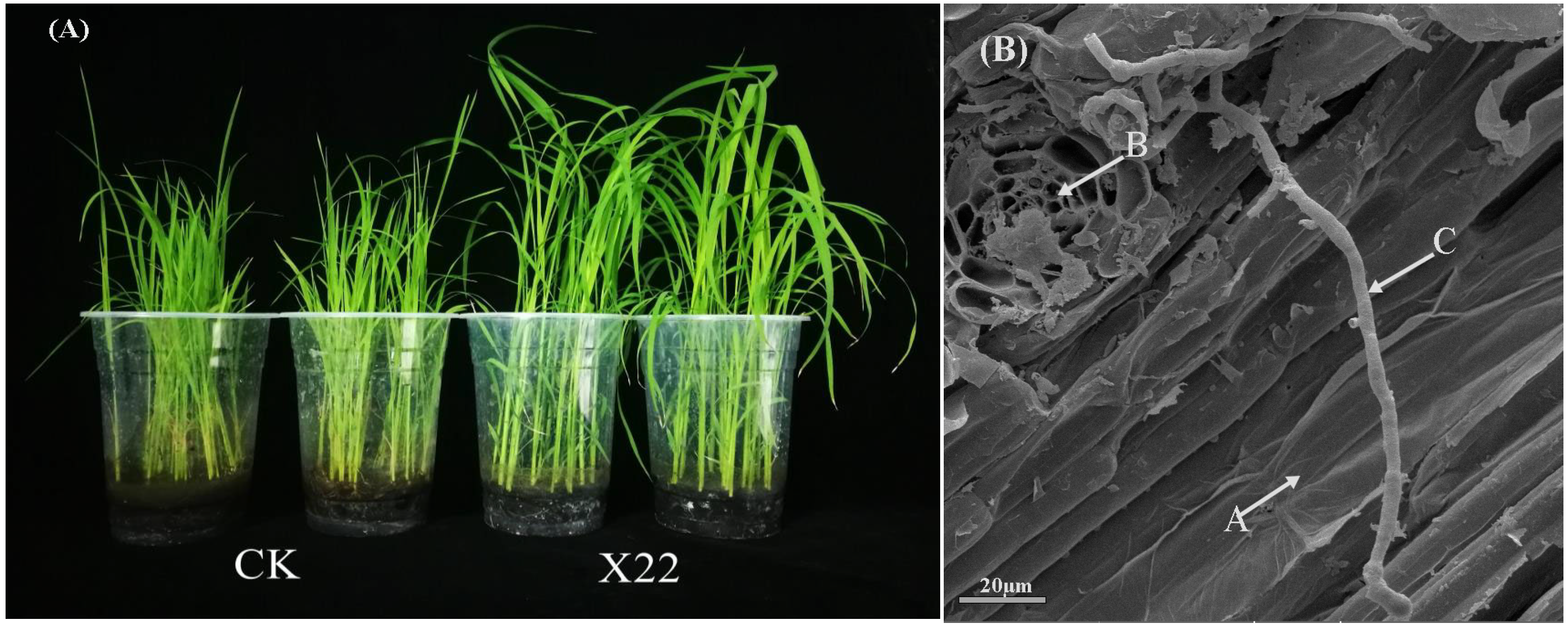
Following X22 treatment, germinated TN1 rice seeds were sown in nursery pots to establish an X22–rice symbiotic system (Figure 1A). SEM observation of the roots of the X22–rice symbiont revealed that the hyphae of the X22 strain colonize the root tissues of rice (Figure 1B).

3.2. Effect of feeding S.furcifera with X22–Rice on its Fecundity and Reproduction

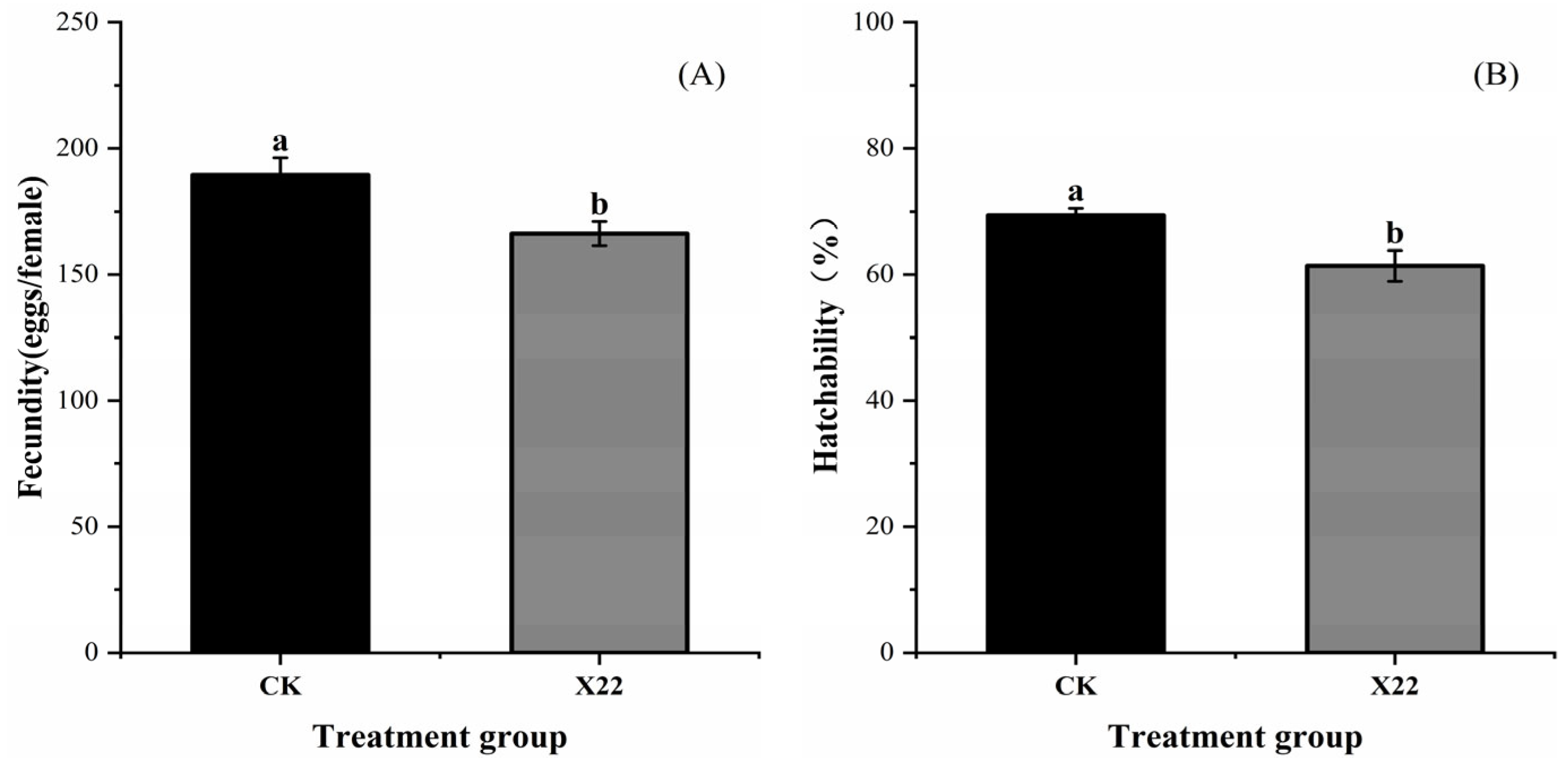
As shown in Figure 2, the number of eggs laid by S. furcifera on the X22-treated rice plants (166.2 eggs/female) was significantly lower than in the control (189.5 eggs/female) (p = 0.048), a reduction of 12.30% (Figure 2A). The nymph hatching rate in the X22 treatment (61.37%) was also significantly lower than the control (69.41%) (p = 0.041), corresponding to an 11.58% decrease (Figure 2B).

3.3. Effect of X22–Rice Symbiosis on Feeding Amount of S. furcifera

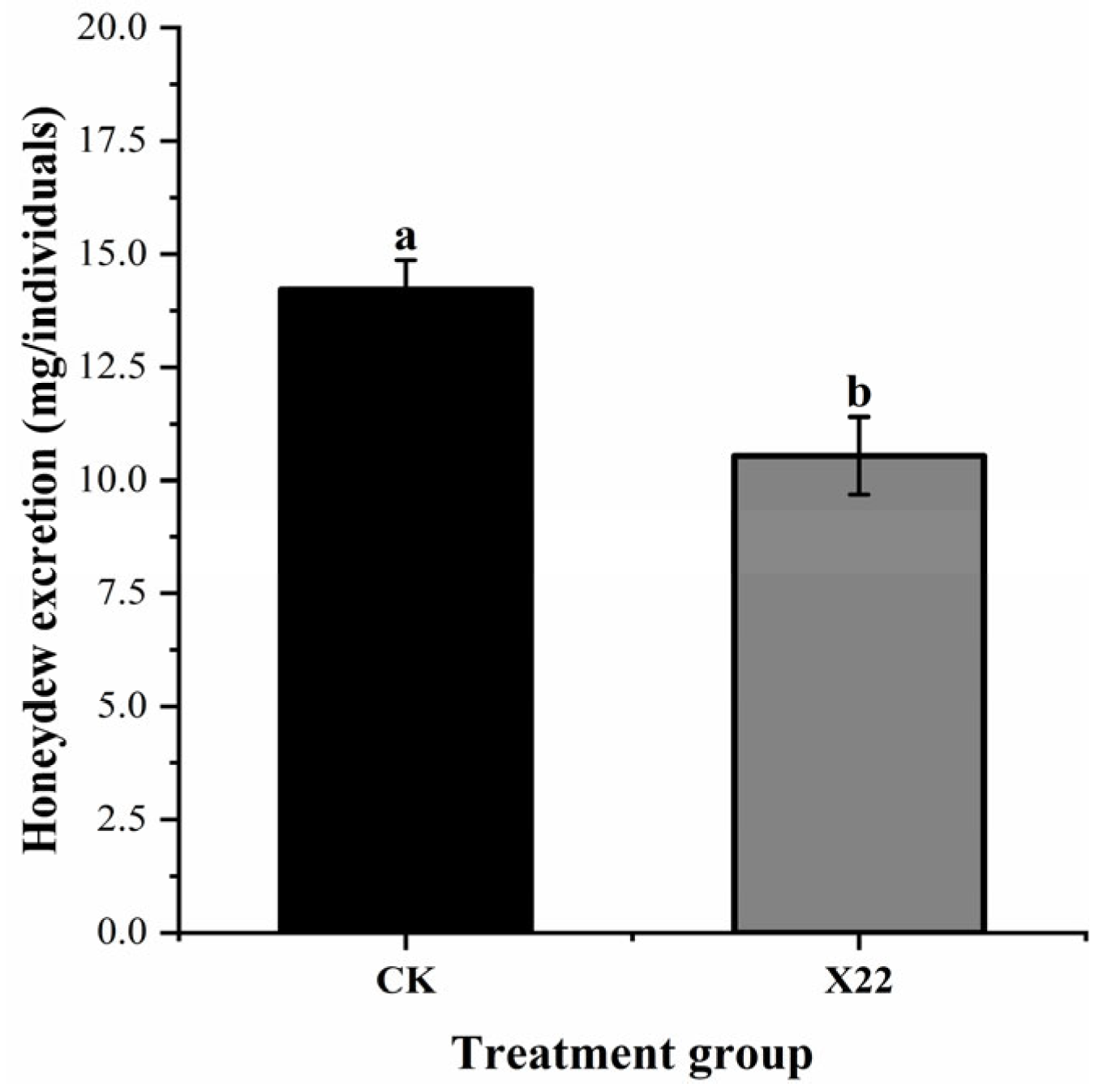
After 48 h of feeding on X22–rice symbiotic plants, honeydew excretion by female S. furcifera adults (10.37 mg) was significantly lower than that of the control (14.61 mg) (p = 0.028), a reduction of 29.02% (Figure 3). These findings indicate that strain X22 suppresses S. furcifera feeding behavior.

3.4. Effect of X22–Rice Symbiosis on Relative Expression Levels of TOR and Vg Genes in S. furcifera

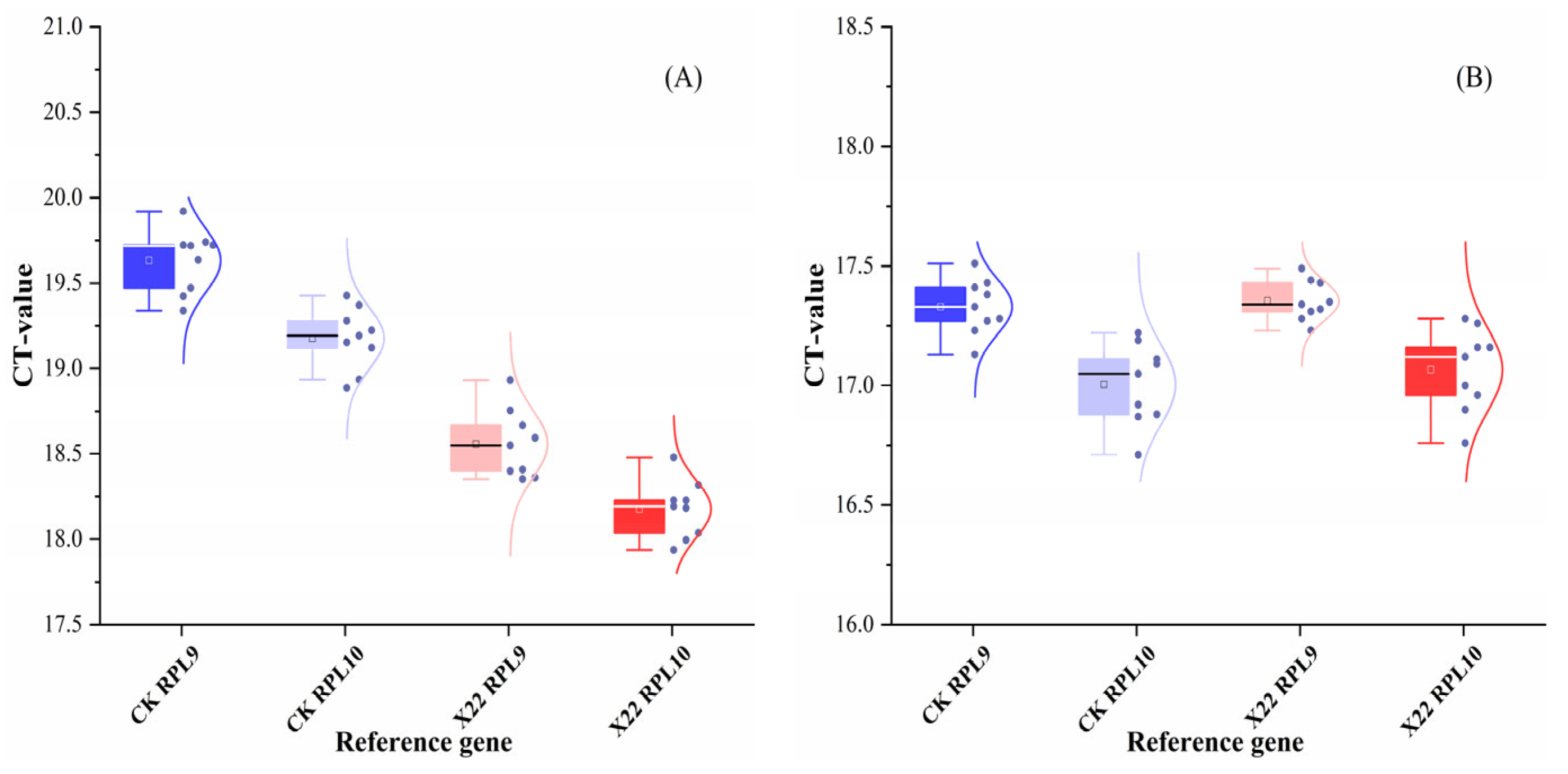
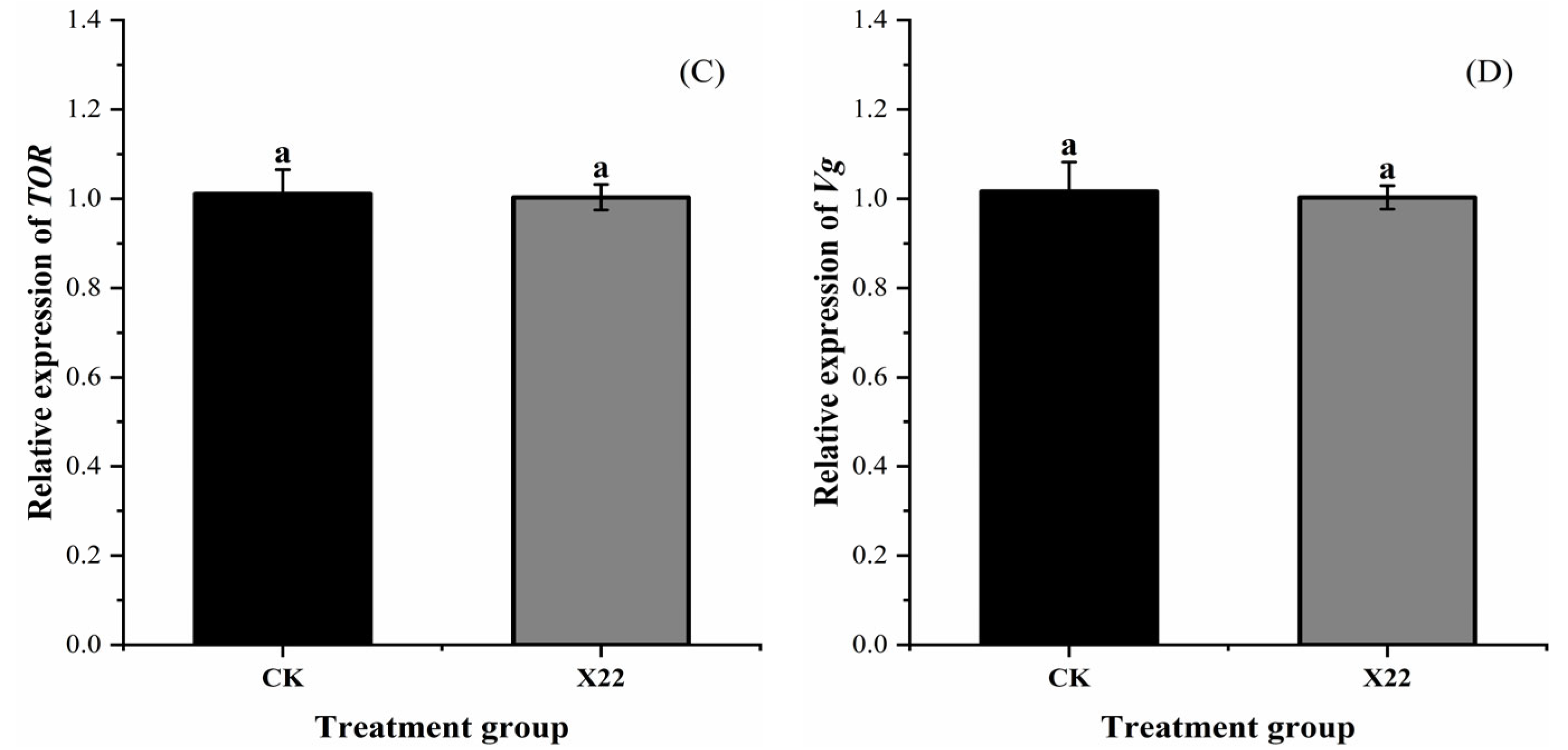
Using RPL9 and RPL10 as reference genes, expression of TOR and Vg in female S. furcifera adults was quantified. In the analysis of TOR gene expression (Figure 4A), the mean CT values of the reference genes RPL9 and RPL10 in the CK group were 19.63 and 19.18, respectively, whereas those in the X22 group were 18.56 and 18.18, respectively. In the analysis of Vg gene expression (Figure 4B), the mean CT values of RPL9 and RPL10 were 17.33 and 17.00 in the CK group and 17.35 and 17.07 in the X22 group. Both reference genes showed stable expression throughout the experiment. Relative expression of TOR and Vg in the X22 treatment downregulated by 0.88% and 1.37%, respectively, compared with the control. However, these differences were not statistically significant (Figure 4C,D, p ≥ 0.847).

3.5. Effect of X22–Rice Symbiosis on Detoxification, Antioxidant, and Digestive Enzyme Activities in S. furcifera

3.5.1. Effect on Detoxification Enzyme Activities

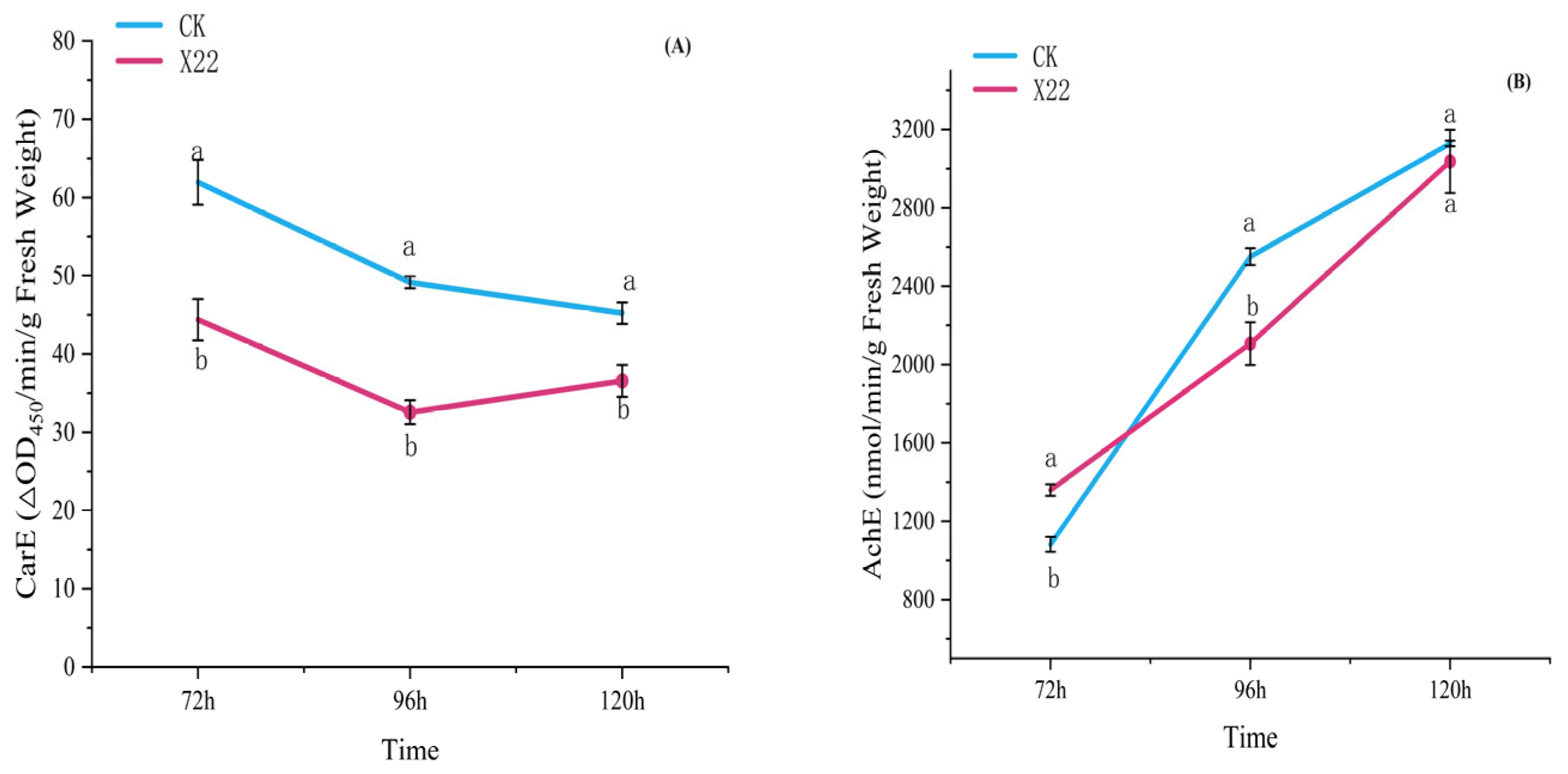
Following feeding on X22-treated and control (CK) plants, CarE and AChE activities in S. furcifera adults exhibited distinct patterns during 72–120 h (Figure 5). Under X22 treatment, CarE activity declined and then increased, whereas a consistent decline occurred in CK plants (Figure 5A). From 72 to 120 h, CarE activity in the X22 group remained significantly lower than CK (p ≤ 0.03, Cohen’s d ≥ 2.89), with reductions of 28.35%, 33.50%, and 19.15%, respectively. Both treatments showed increasing AChE activity over the same period (Figure 5B). At 72 h, AChE activity in the X22 group was significantly higher than in the CK group (p = 0.014, Cohen’s d = 5.03), an increase of 25.63%. At 96 h and 120 h, AChE activity in the X22 group was lower than in the CK group, with a significant reduction observed at 96 h (p = 0.019, Cohen’s d = 3.10), representing a 17.39% decrease.

3.5.2. Effect on Protective Enzyme Activities

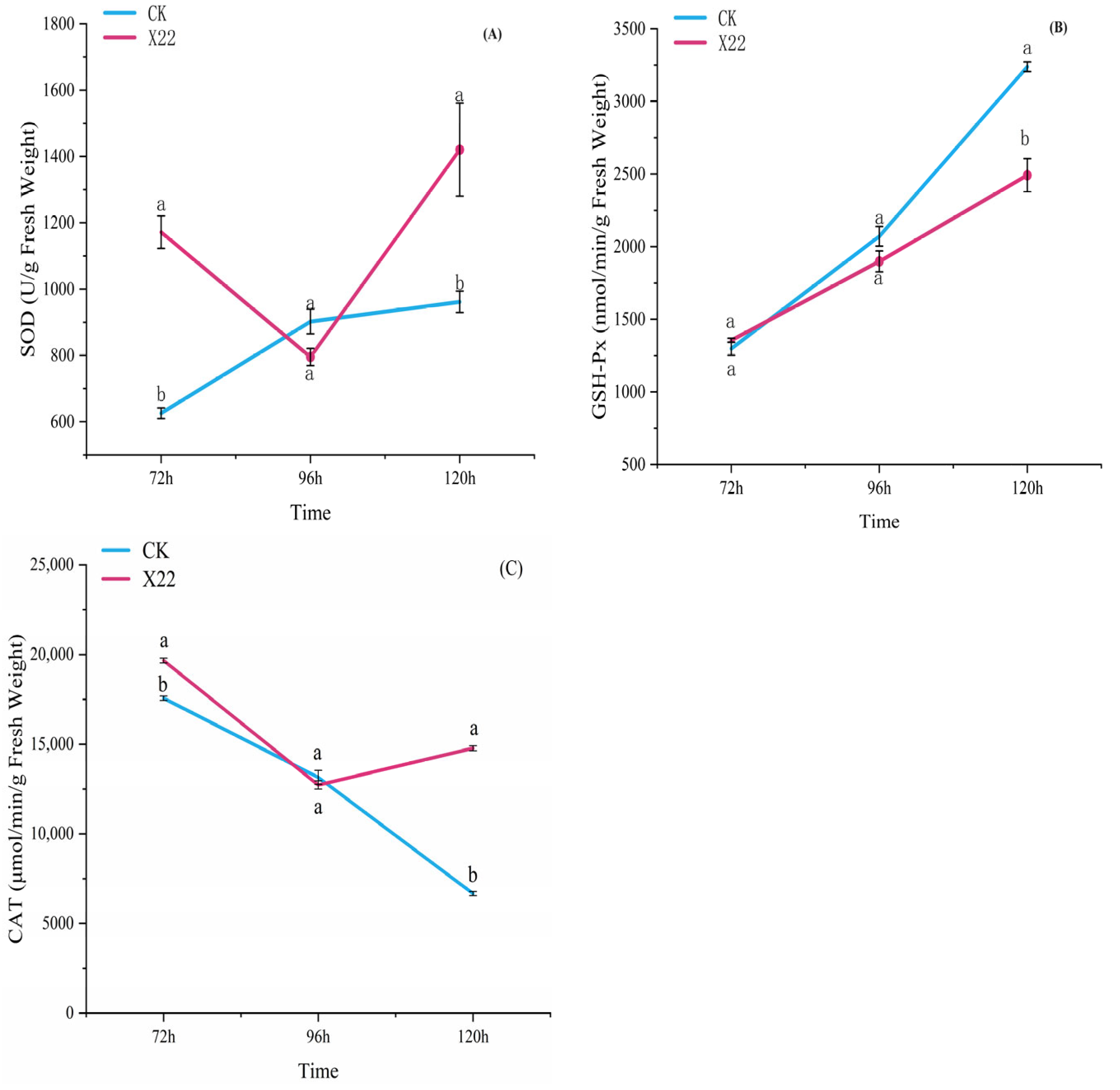
Feeding on X22-treated and CK rice plants produced distinct temporal responses in SOD, GSH-Px, and CAT activities in S. furcifera adults from 72 to 120 h (Figure 6). SOD activity in X22-fed S. furcifera initially declined and then increased, whereas the CK group exhibited a consistent upward trend (Figure 6A). At 72 h and 120 h, SOD activity in the X22 group was significantly higher than in the CK group (p ≤ 0.033, Cohen’s d ≥ 2.60), with increases of 87.25% and 47.72%, respectively. No significant difference occurred at 96 h (p = 0.078, Cohen’s d = 4.74). Both treatments demonstrated rising GSH-Px activity from 72 to 120 h (Figure 6B), with no significant differences at 72 h or 96 h (p ≥ 0.156, Cohen’s d ≥ 0.99). However, by 120 h, GSH-Px activity in X22 was significantly lower than in CK (p = 0.003, Cohen’s d ≥ 5.11), representing a 23.90% reduction. CAT activity in X22 initially decreased and then recovered, while CK showed a continuous decline (Figure 6C). At 72 h, CAT activity in X22 was significantly higher than in CK p = 0.0001, Cohen’s d ≥ 6.91) with a 11.97% reduction, whereas by 120 h it was significantly higher (p = 0.0001, Cohen’s d ≥ 36.63), increasing by 121.55%. No significant difference was observed at 96 h (p = 0.383, Cohen’s d ≥ 0.58).

3.5.3. Effect on Digestive Enzyme Activities

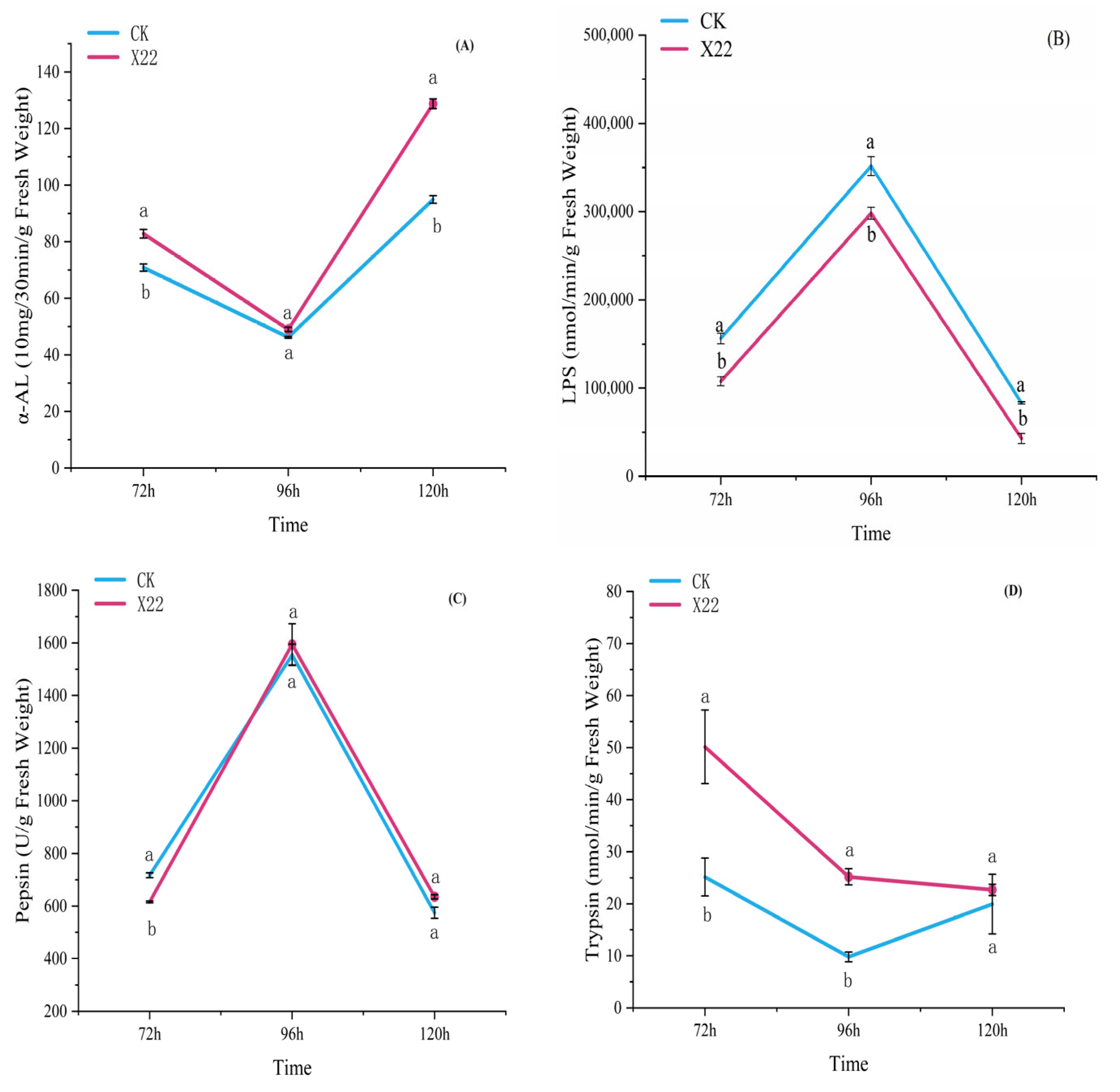
Feeding on X22-treated and control (CK) rice plants resulted in distinct temporal patterns in α-AL, LPS, pepsin, and trypsin activities in S. furcifera adults during 72–120 h (Figure 7). In both treatments, α-AL activity declined initially and then increased from 72 to 120 h (Figure 7A). The X22 group consistently exhibited significantly higher α-AL activity than the CK group at 72 h and 120 h (p ≤ 0.029, Cohen’s d ≥ 4.90), with increases of 14.44% and 35.63%. LPS and pepsin activities in both groups increased initially and then decreased over the 72–120 h interval (Figure 7B,C). LPS activity in the X22 group remained significantly lower than the CK group across all time points (p ≤ 0.013, Cohen’s d ≥ 3.47), with reductions of 31.08%, 15.20%, and 48.33%. For pepsin, the X22 group showed a significant 14.13% reduction relative to CK at 72 h (p = 0.0001, Cohen’s d = 8.61), whereas no significant differences occurred at 96 h or 120 h (p ≥ 0.054, Cohen’s d ≥ 0.37). Trypsin activity in the X22 group declined gradually, while the CK group exhibited an initial decrease followed by an increase (Figure 7D). The X22 group showed significantly higher trypsin activity than CK at 72 h and 96 h (p ≤ 0.035, Cohen’s d ≥ 2.57), with increases of 99.92% and 156.89%, respectively. However, no significant difference was observed between treatments at 120 h (p = 0.666, Cohen’s d = 0.38).

4. Discussion

Endophytic fungi such as Beauveria bassiana, Cladosporium spp., and Metarhizium rileyi have been widely applied in pest biological control and effectively suppress diverse agricultural pests, including Bemisia tabaci, Tenebrio molitor, Coraebus florentinus Herbst, Coraebus undatus Fabricius, Lymantria dispar, and Spodoptera frugiperda [28,29,30,31]. As multifunctional microbial resources, fungi of the genus Ochroconis are known for lignocellulose degradation [32], production of antibiotic hydrolases that enhance plant stress resistance [33], and suppression of banana Fusarium wilt of banana [23]. However, their application in insect pest control has not been reported. This study provides the first evidence that O.guangxiensis significantly suppresses the reproduction of the white-backed planthopper, offering valuable strain resources and a theoretical foundation for developing novel fungal biological control agents.
The entire experiment was conducted in a greenhouse under controlled environmental conditions. As shown by the SEM results, the X22 hyphae were able to penetrate rice roots through seed soaking and colonize within the rice tissues. The fecundity and hatch rate of the white-backed planthopper are key determinants of population growth [34]. In this study, feeding on rice treated with the X22 strain significantly reduced both egg production and nymph hatch rate compared with the control. These finding are consistent with previous reports showing that rice treatments with clothianidin, jinggangmycin, Fusarium oxysporum Fo162, and Rhizobium etli G12 suppress pest fecundity [35,36,37], thereby supporting the potential of the X22 strain to inhibit population expansion of white-backed planthoppers. At the molecular level, vitellogenin (Vg) is the primary yolk protein precursor and plays a central role in insect ovarian maturation, oogenesis, and population proliferation [38]. The TOR signaling pathway, a core nutrient-sensing pathway in insects [21,22], regulates vitellogenin by modulating juvenile hormone (JH) synthesis [39], thereby influencing ovarian development and oogenesis. In the present study, although TOR and Vg transcript levels in newly emerged 1-day-old female adults showed a decreasing trend, these changes were not statistically significant. Nevertheless, the final egg production was significantly reduced. This pattern is largely consistent with the findings of Qian [40], indicating that the X22 strain did not directly regulate the expression of TOR and Vg genes in newly emerged one-day-old female S. furcifera. Because gene expression was assessed only in 1-day-old females and did not cover the entire reproductive period, future studies should examine the expression levels of Vg and TOR at different time points to clarify the dynamic regulatory mechanisms involved.
Honeydew secretion is a key indicator of rice resistance to insect attack and feeding intensity [41]. Previous studies have shown that biocontrol agents such as Aspergillus oryzae and the endophytic Alternaria sp. CX5 suppresses pest feeding by inducing plant secondary metabolism and modulating phytohormone levels [17,42]. Similarly, the insecticide imidacloprid directly reduces honeydew secretion in white-backed planthoppers [43]. In this study, treatment with the X22 strain significantly reduced the feeding amount of white-backed planthoppers. These findings indicate that the X22 strain suppresses the feeding activity of S. furcifera, thereby affecting its growth and development. Concurrently, changes in insect digestive enzyme activity provide a physiological basis for the observed reduction in feeding. After feeding on X22-treated rice, trypsin and α-amylase activities in white-backed planthoppers were significantly induced. Previous studies indicate that enzyme inhibitors can bind to insect α-amylase to form enzyme-inhibitor (EI) complexes, triggering excessive digestive enzyme secretion. This process depletes amino acids and carbohydrates in the insect, leading to anorexia and abnormal mortality [44,45]. Plant defensive protease inhibitors hinder insect feeding by degrading insect digestive proteases, thereby disrupting insect digestion and nutritional balance [46]. The gradual decline in enzyme activity over time in the control group is a normal physiological response, as digestive and stress-adaptive processes inherently drive fluctuations in enzyme activity. In contrast, colonization by strain X22 likely induces the accumulation of specific enzyme inhibitors in rice, thereby overstimulating digestive enzyme activity in white-backed planthoppers. This overstimulation might lead to metabolic depletion, potentially contributing to the disruption of normal feeding function. However, direct evidence for inhibitor accumulation and metabolic depletion—such as identification of inhibitors or quantification of energy reserves—remains to be established in future studies. The X22 strain also significantly affects detoxification and antioxidant systems in the white-backed planthopper. Carboxylesterase (CarE) and acetylcholinesterase (AChE) are key detoxification enzymes involved in the metabolism of exogenous toxins in insects [47,48,49], and their activities can be suppressed by external factors such as triflumizole and Glomus mosseae [50,51]. This study found that CarE and AChE activities were significantly inhibited in white-backed planthoppers feeding on X22-treated rice, indicating compromised detoxification capacity and reduced tolerance to plant defensive compounds and environmental stressors. With respect to antioxidant defense, superoxide dismutase (SOD), catalase (CAT), and glutathione peroxidase (GSH-Px) function cooperatively to scavenge reactive oxygen species and maintain physiological homeostasis [52]. Previous reports have shown that stressors such as Metarhizium infection, azadirachtin, and thiamethoxam induce elevated SOD and CAT activities in insects [53,54,55]. Consistent with these findings, SOD and CAT activities in white-backed planthoppers were significantly upregulated at 72 h and 120 h after feeding on X22-treated rice, whereas GSH-Px activity was suppressed. The results showed that feeding on rice treated with the X22 strain induced oxidative stress in S. furcifera. The insects responded by enhancing the activities of SOD and CAT to strengthen their antioxidant defense capacity against stress-induced damage. Previous studies have shown that Vg also possesses antioxidant functions [56]. In the present study, under X22 treatment, the expression of Vg in one-day-old female S. furcifera was significantly inhibited, while the activities of the antioxidant enzymes SOD and CAT were significantly increased. This suggests that the stress induced by X22 may act primarily at the level of reactive oxygen species scavenging.

5. Conclusions

This study demonstrates that treatment with the O. guangxiensis strain X22 did not significantly alter the transcriptional levels of reproduction-related genes (TOR and Vg) in one-day-old female S. furcifera but was closely associated with changes in physiological metabolism (detoxification enzymes, digestive enzymes, and protective enzymes) and feeding behavior, accompanied by reduced physiological fitness, ultimately leading to effective suppression of feeding and reproduction. These findings suggest that the suppressive effect of X22 on S. furcifera may be mediated primarily through interference with physiological metabolism and behavior, rather than through direct regulation of early reproductive gene expression. The observed comprehensive changes in these physiological indicators contribute to enhancing the inherent resistance of rice to pests and provide a theoretical basis for developing X22-based green control strategies. However, the potential functional links between the TOR/Vg pathway and the antioxidant enzyme system warrant further investigation.

Author Contributions

Conceptualization, Y.Y., F.Z., Y.Z. and L.X.; methodology, Y.Y., F.Z., Y.Z. and L.X.; software, Y.Y., Y.Z. and Y.L.; validation, Y.Y., F.Z., B.Q. and W.Z.; formal analysis, Y.Y., F.Z., Y.Z. and L.X.; investigation, X.W.; resources, Y.Y., X.W., B.Q. and J.Y.; data curation, F.Z., Y.L. and Z.S.; writing—original draft preparation, Y.Y., F.Z., Y.L. and Z.S.; writing—review and editing, Y.Y., Y.Z. and L.X.; visualization, F.Z., Z.S. and Y.L.; supervision, X.W. and J.Y.; project administration, Y.Z. and L.X. funding acquisition, Y.Z. and L.X. All authors have read and agreed to the published version of the manuscript.

Funding

This research was supported by grants from the National Natural Science Foundation of China (No. 32360710), Guangxi Natural Science Foundation (No. 2024GXNSFBA010416), Guangxi Key Research and Development Program (No. Guike AB25069066), Basic Scientific Research Project of Guangxi Academy of Agricultural Sciences (No. Guinongke 2024ZX15, No. Guinongke2026YT134, No. Guinongke2026YP030).

Institutional Review Board Statement

Not applicable.

Data Availability Statement

The original contributions presented in this study are included in this article. Further inquiries can be directed to the corresponding author.

Conflicts of Interest

The authors declare no conflicts of interest.

References

  1. Rathod, S.; Yerram, S.; Arya, P.; Katti, G.; Rani, J.; Padmakumari, A.P.; Somasekhar, N.; Padmavathi, C.; Ondrasek, G.; Amudan, S.; et al. Climate-based modeling and prediction of rice gall midge populations using count time series and machine learning approaches. Agronomy 2021, 12, 22. [Google Scholar] [CrossRef]
  2. Conde, S.; Catarino, S.; Ferreira, S.; Temudo, M.P.; Monteiro, F. Rice Pests and Diseases Around the World: Literature-Based Assessment with Emphasis on Africa and Asia. Agriculture 2025, 15, 667. [Google Scholar] [CrossRef]
  3. Zhai, B. Rice planthoppers: A China problem under the international perspectives. Chin. J. Appl. Entomol. 2011, 48, 1184–1193. [Google Scholar]
  4. Zhu, Y.; Bai, J.; Xie, H.; Wu, F.; Luo, X.; Jiang, S.; He, W.; Chen, L.; Cai, Q.; Xie, H.; et al. Breeding restore lines of hybrid rice by pyramiding genes for resistance to white backed planthoppers and brown planthoppers. Chin. J. Rice Sci. 2019, 33, 421–428. [Google Scholar] [CrossRef]
  5. Matsumura, M.; Sanada-Morimura, S.; Otuka, A.; Sonoda, S.; Van Thanh, D.; Van Chien, H.; Van Tuong, P.; Loc, P.M.; Liu, Z.W.; Zhu, Z.R.; et al. Insecticide susceptibilities of the two rice planthoppers Nilaparvata lugens and Sogatella furcifera in East Asia, the Red River Delta, and the Mekong Delta. Pest Manage. Sci. 2018, 74, 456–464. [Google Scholar] [CrossRef]
  6. Waqas, M.; Shahzad, R.; Hamayun, M.; Asaf, S.; Khan, A.L.; Kang, S.M.; Yun, S.; Kim, K.M.; Lee, I.J. Biochar amendment changes jasmonic acid levels in two rice varieties and alters their resistance to herbivory. PLoS ONE 2018, 13, e0191296. [Google Scholar] [CrossRef]
  7. Huang, K.; Miao, Y.; Gao, X.; Hu, B.; Xu, L.; Li, H.; Li, B. Effects of three insecticides on Sogatella furcifera and predatory natural enemy community in mid-season rice fields. Plant Protect 2016, 42, 184–189. [Google Scholar] [CrossRef]
  8. Zhang, W.J. Resistance Monitoring of Sogatella furcifera and Laodelphaxstriatellus and Resistance Inhertiance Analysis and Fitness Costof Laodelphax striatellus to Buprofezin. Master’s Thesis, Nanjing Agricultural University, Nanjing, China, 2022. [Google Scholar]
  9. Carroll, G. Fungal Endophytes in stems and leaves: From latent pathogen to mutualistic symbiont. Ecology 1988, 69, 2–9. [Google Scholar] [CrossRef]
  10. Jia, M.; Chen, L.; Xin, H.L.; Zheng, C.J.; Rahman, K.; Han, T.; Qin, L.P. A friendly relationship between endophytic fungi and medicinal plants: A systematic review. Front. Microbiol. 2016, 7, 7906. [Google Scholar] [CrossRef]
  11. Cui, J.L.; Wang, Y.N.; Jiao, J.; Gong, Y.; Wang, J.H.; Wang, M.L. Fungal endophyte-induced salidroside and tyrosol biosynthesis combined with signal cross-talk and the mechanism of enzyme gene expression in Rhodiola crenulata. Sci. Rep. 2017, 7, 12540. [Google Scholar] [CrossRef]
  12. Zhou, W.; Starr, J.L.; Krumm, J.L.; Sword, G.A. The fungal endophyte Chaetomium globosum negatively affects both above- and belowground herbivores in cotton. FEMS Microbiol. Ecol. 2016, 92, fiw158. [Google Scholar] [CrossRef]
  13. Jaber, L.R.; Araj, S.E. Interactions among endophytic fungal entomopathogens (Ascomycota: Hypocreales), the green peach aphid Myzus persicae Sulzer (Homoptera: Aphididae), and the aphid endoparasitoid Aphidius colemani Viereck (Hymenoptera: Braconidae). Biol. Control 2018, 116, 53–61. [Google Scholar] [CrossRef]
  14. Ma, Y.L. Toxic Effect and Mechanism of Symbiont of Achnatherum inebrians-Epichloëendo-Phyteson Acyrthosiphon pisum. Doctoral Dissertation, Lanzhou University, Lanzhou, China, 2022. [Google Scholar]
  15. Zhu, P.P.; Zhang, Y.X.; Zhang, Y.P.; Bai, J.Y.; Xu, L.T. Endophytic entomopathogenic fungi promote growth and prime phenylpropanoid defenses for enhanced insect resistance in willows. Ind. Crop. Prod. 2026, 240, 122631. [Google Scholar] [CrossRef]
  16. María, C.M.; José, V.D.; Adrián, P.R.; Enrique, Q.M.; Natalia, G.M. Transcriptome analyses reveal Beauveria bassiana endophyte induced disruption of aphid physiology. J. Invertebr. Pathol. 2025, 212, 108377. [Google Scholar] [CrossRef] [PubMed]
  17. Cui, H.; Sun, Y.; Meng, X.; Lü, S.; Ye, B.; Li, L. Mechanism of maize endophytes against maize aphids. Chin. J. Appl. Entomol. 2025, 62, 619–625. [Google Scholar]
  18. Díaz-Urbano, M.; Goicoechea, N.; Velasco, P.; Poveda, J. Development of agricultural bio-inoculants based on mycorrhizal fungi and endophytic filamentous fungi: Co-inoculants for improve plant-physiological responses in sustainable agriculture. Biol. Control 2023, 182, 105223. [Google Scholar] [CrossRef]
  19. Zhang, Y.; Qin, B.; Narisawa, K.; Nong, Q.; Qin, L.; Xie, L. The dark septate endophyte, Phialocephala fortinii J2PC4, mitigates southern rice black-streaked dwarf disease and impacts the mortality of white back planthopper. Biol. Control 2022, 170, 104911. [Google Scholar] [CrossRef]
  20. Chen, Y.; Xie, L.; Long, Y.; Zhang, Y.; Qin, B.; Liao, S.; Su, Q.; Liu, B. A new species and two new Chinese records of Ochroconis from sugarcane and banana rhizosphere in Guangxi, China. Mycoscience 2020, 61, 307–314. [Google Scholar] [CrossRef]
  21. Smykal, V.; Raikhel, A.S. Nutritional control of insect reproduction. Curr. Opin. Insect Sci. 2015, 11, 31–38. [Google Scholar] [CrossRef]
  22. Roy, S.; Saha, T.T.; Zou, Z.; Raikhel, A.S. Regulatory pathways controlling female insect reproduction. Ann. Rev. Entomol. 2018, 63, 489–511. [Google Scholar] [CrossRef]
  23. Qiu, M.S. Effect and Mechanism of Ochroconis guangxiensis Strain X22 Inducing Resistance to Banana Fusariumwilt. Master’s Thesis, Yangtze University, Jinzhou, China, 2023. [Google Scholar]
  24. Huang, S.S.; Qin, B.X.; Wu, B.Q.; Xie, H.T.; Li, C.; Li, Z.B.; Huang, F.K.; Cai, J.H. Effects of SRBSDV on the resistance of WBPH-resistant rice varieties. Chin. J. Appl. Entomol. 2022, 59, 1048–1058. [Google Scholar]
  25. Liu, Y.; An, X.; Hou, M. Reference Genes with Stable Expression in Different Tissues of the White-Backed Planthopper. Sogatella furcifera), Their Screening Methods and Applications 2028. [Google Scholar]
  26. Liu, Y.; An, X.; Hou, M. Reference Genes with Stable Expression Across Different Devel-Opmental Stages of the White-Backed Planthopper. Sogatella furcifera), Their Screening Methods and Applications 2028. [Google Scholar]
  27. Deng, Y. Molecular Cloning, Expression Pattern and Functionanalysis of Vitellogenin and Target of Rapamycin Gene in Sogatella furcifera. Master’s Thesis, Yangtze University, Jinzhou, China, 2018. [Google Scholar]
  28. Barra-Bucarei, L.; González, M.G.; Iglesias, A.F.; Aguayo, G.S.; Peñalosa, M.G.; Vera, P.V. Beauveria bassiana multifunction as an endophyte: Growth promotion and biologic control of Trialeurodes vaporariorum, (Westwood) (Hemiptera: Aleyrodidae) in tomato. Insects 2020, 11, 591. [Google Scholar] [CrossRef] [PubMed]
  29. Morda, W.; Vinci, A.; Lentini, A.; Mannu, R.; Olivieri, M.; Ruiu, L. Potential of endophytic Beauveria bassiana against Coraebus (Coleoptera: Buprestidae) oak borers. Pest Manag. Sci. 2025. [Google Scholar] [CrossRef] [PubMed]
  30. Walther, C.; Vallet, M.; Reichelt, M.; Giri, P.; Rothe, B.; Negwer, E.J.; Van Berkum, P.M.; Gershenzon, J.; Unsicker, S.B. A fungal endophyte alters poplar leaf chemistry, deters insect feeding and shapes insect community assembly. Ecol. Lett. 2025, 28, e70007. [Google Scholar] [CrossRef] [PubMed]
  31. Gou, X.L. Two Entomopathogenic Fungi induced Resistance of Maize Plantagainst Spodoptera frugiperda. Master’s Thesis, Shenyang Agricultural University, Shenyang, China, 2023. [Google Scholar]
  32. Ervin, B.; Wolfe, G. Acido-thermotolerant fungi from Boiling Springs Lake, LVNP: Potential for lignocellulosic biofuels. Am. Mineral. 2016, 101, 2484–2497. [Google Scholar] [CrossRef]
  33. Tazik, Z.; Rahnama, K.; Iranshahi, M.; White, J.F.; Soltanloo, H. Ochroconis ferulica sp. nov. (Venturiales), a fungal endophyte from Ferula ovina. Nova Hedwig 2020, 110, 369–381. [Google Scholar] [CrossRef]
  34. Yu, X.; Wu, G.; Hu, C. Effect of variety differenceon on oviposition of whitebacked planthopper (Sogatella furcifera horvath) acta. J. Zhejiang Univ. (Agric. Life Sci.) 1990, 16, 63–67. [Google Scholar] [CrossRef]
  35. Xia, F.; Luo, D.; He, M.; Wu, S.; Zhao, X.; Liao, X. The development, reproduction and P450 enzyme of the white-backed planthopper, Sogatella furcifera (Hemiptera: Delphacidae) under the sublethal concentrations of clothianidin. Ecotoxicol. Environ. Saf. 2022, 246, 114188. [Google Scholar] [CrossRef]
  36. Jiang, L.B.; Zhao, K.F.; Wang, D.J.; Wu, J.C. Effects of different treatment methods of the fungicide jinggangmycin on reproduction and vitellogenin gene (Nlvg) expression in the brown planthopper Nilaparvata lugens Stål (Hemiptera: Delphacidae). Pestic. Biochem. Physiol. 2012, 102, 51–55. [Google Scholar] [CrossRef]
  37. Martinuz, A.; Schouten, A.; Sikora, R.A. Post-infection development of Meloidogyne incognita on tomato treated with the endophytes Fusarium oxysporum strain Fo162 and Rhizobium etli strain G12. BioControl 2013, 58, 95–104. [Google Scholar] [CrossRef]
  38. Zhuo, J.C.; Xue, J.; Lu, J.B.; Huang, H.J.; Xu, H.J.; Zhang, C.X. Effect of RNAi-mediated knockdown of NlTOR gene on fertility of male Nilaparvata lugens. J. Insect Physiol. 2017, 98, 149–159. [Google Scholar] [CrossRef]
  39. Lu, K.; Chen, X.; Liu, W.T.; Zhou, Q. TOR pathway-mediated juvenile hormone synthesis regulates nutrient-dependent female reproduction in Nilaparvata lugens (Stål). Int. J. Mol. Sci. 2016, 17, 438. [Google Scholar] [CrossRef] [PubMed]
  40. Qian, Y.Y. The Effects of Plumbum Stress on Reproduction and Vg of Beet Armyworm. Master’s Thesis, Yangzhou University, Yangzhou, China, 2016. [Google Scholar]
  41. Liu, G.; Shen, J.; Hanchuan, Y.; Wang, H.; Xie, X. The quantitative indices in evaluation for the resistance to the whitebacked planthopper, Sogatella furcifera in some Chinese rice. Acta Phytophylacica Sin. 2003, 30, 153–160. [Google Scholar] [CrossRef]
  42. Sun, B.T. Endophytic Effects of Aspergillus oryzae on Radish (Raphanus sativus) and its Herbivore, Plutella xylostella. Master’s Thesis, Fujian Agriculture and Forestry University, Fujian, China, 2018. [Google Scholar]
  43. Liu, Z.; Han, Z.; Zhang, L. The influence of imidacloprid on the feeding of Sogatella furcifera. Entomol. Knowl. 2003, 40, 128–130. [Google Scholar] [CrossRef]
  44. Pueyo, J.J.; Morgan, T.D.; Ameenuddin, N.; Liang, C.; Reeck, G.R.; Chrispeels, M.J.; Kramer, K.J. Effects of bean and wheat α-amylase inhibitors on α-amylase activity and growth of stored product insect pests. Entomol. Exp. Appl. 1995, 75, 237–244. [Google Scholar] [CrossRef]
  45. de Sa, M.F.G.; Mirkov, T.E.; Ishimoto, M.; Colucci, G.; Bateman, K.S.; Chrispeels, M.J. Molecular characterization of a bean α-amylase inhibitor that inhibits the α-amylase of the Mexican bean weevil Zabrotes subfasciatus. Planta 1997, 203, 295–303. [Google Scholar] [CrossRef]
  46. Gatehouse, J.A. Prospects for using proteinase inhibitors to protect transgenic plants against attack by herbivorous insects. Curr. Protein Pept. Sci. 2011, 12, 409–416. [Google Scholar] [CrossRef]
  47. Yang, Z.; Zhang, F.; He, Q.; He, G. Molecular dynamics of detoxification and toxin-tolerance genes in brown planthopper (Nilaparvata lugens Stål., Homoptera: Delphacidae) feeding on resistant rice plants. Arch. Insect Biochem. Physiol. 2005, 59, 59–66. [Google Scholar] [CrossRef]
  48. Després, L.; David, J.P.; Gallet, C. The evolutionary ecology of insect resistance to plant chemicals. Trends Ecol. Evol. 2007, 22, 298–307. [Google Scholar] [CrossRef] [PubMed]
  49. Duan, H.; Schuler, M.A. Differential expression and evolution of the Arabidopsis CYP86A subfamily. Plant Physiol. 2005, 137, 1067–1081. [Google Scholar] [CrossRef] [PubMed]
  50. Wen, S.; Xue, Y.; Du, R.; Liu, C.; Wang, X.; Wang, Y.; Liu, C.; Wang, S.; Wang, J.; Xia, X. Toxicity and sublethal effects of triflumezopyrim on the development and detoxification enzymatic activities in the small brown planthopper (SBPH), Laodelphax striatellus (Fallen). Crop Prot. 2021, 150, 105813. [Google Scholar] [CrossRef]
  51. Zhao, J.Q. Effects of Arbuscular Mycorrhizal Fungicolonization on Growth of Populus pseudo-cathayana × Deltoides and Feeding Adaptability of Lymantria dispar. Master’s Thesis, Northeast Forestry University, Harbin, China, 2022. [Google Scholar]
  52. Lozinskaya, Y.L.; Slepneva, I.A.; Khramtsov, V.V.; Glupov, V.V. Changes of the antioxidant status and system of generation of free radicals in hemolymph of Galleria mellonella larvae at Microsporidiosis. J. Evol. Biochem. Physiol. 2004, 40, 119–125. [Google Scholar] [CrossRef]
  53. Pang, J.; Peng, Y.; Di, T.; Du, G.; Chen, B. Virulence of Metarhizium rileyi Is determined by its growth and antioxidant stress and the protective and detoxifying enzymes of Spodoptera frugiperda. Insects 2023, 14, 260. [Google Scholar] [CrossRef]
  54. Qin, D.; Liu, B.; Zhang, P.; Zheng, Q.; Luo, P.; Ye, C.; Zhao, W.; Zhang, Z. Treating green pea aphids, Myzus persicae, with azadirachtin affects the predatory ability and protective enzyme activity of harlequin ladybirds, Harmonia axyridis. Ecotoxicol. Environ. Saf. 2021, 212, 111984. [Google Scholar] [CrossRef]
  55. Zhou, C.; Yang, H.; Wang, Z.; Long, G.Y.; Jin, D.C. Protective and detoxifying enzyme activity and ABCG subfamily gene expression in Sogatella furcifera under insecticide stress. Front. Physiol. 2019, 9, 1890. [Google Scholar] [CrossRef]
  56. Zhang, W.X.; Liu, Z.G.; Zhu, M.; Ma, L.T.; Wang, Y.; Wang, H.F.; Guo, X.Q.; Xu, B.H. Molecular cloning, expression and oxidative stress response of the vitellogenin Gene (AccVg) from Apis cerana cerana. Apidologie 2017, 48, 599–611. [Google Scholar] [CrossRef]
Figure 1. Symbiosis between the O. guangxiensis X22 strain and rice. (A) Scanning electron microscopy (SEM) of rice roots (B). In panel (B), the labels are as follows: A, cell wall; B, phloem; and C, hyphae of the X22 strain.
Agriculture 16 00567 g001
Figure 2. Egg deposition (A) and hatching rate (B) of S. furcifera adults on rice plants subjected to different treatments. Data are presented as mean ± SE. Different lowercase letters above bars indicate statistically significant differences (p < 0.05).
Agriculture 16 00567 g002
Figure 3. Honeydew excretion (mg per insect) of S. furcifera after 48 h of feeding on rice plants. Data are presented as mean ± SE. Different lowercase letters above bars indicate statistically significant differences (p < 0.05).
Agriculture 16 00567 g003
Figure 4. Stability of the reference gene for TOR (A) and stability of the reference gene for Vg (B) during the experiment, and expression levels of the TOR (C) and Vg genes (D) in S. furcifera under X22 treatment. Data are presented as mean ± SE. Different lowercase letters indicate significant differences (p < 0.05).
Agriculture 16 00567 g004aAgriculture 16 00567 g004b
Figure 5. Changes in activities of carboxylesterase (CarE) (A) and acetylcholinesterase (AChE) (B) in S. furcifera adults fed on rice plants under different treatments and feeding durations. Data are presented as mean ± SE. Different lowercase letters indicate statistically significant differences (p < 0.05).
Agriculture 16 00567 g005
Figure 6. Changes in activities of superoxide dismutase (SOD) (A), glutathione peroxidase (GSH-Px) (B), and catalase (CAT) (C) in S. furcifera adults fed on rice plants under different treatments and feeding durations. Data are presented as mean ± SE. Different lowercase letters indicate statistically significant differences (p < 0.05).
Agriculture 16 00567 g006
Figure 7. Changes in activities of α-amylase (α-AL) (A), lipase (LPS) (B), pepsin (C), and trypsin (D) in S. furcifera adults fed on rice plants under different treatments and feeding durations. Data are presented as mean ± SE. Different lowercase letters indicate statistically significant differences (p < 0.05).
Agriculture 16 00567 g007
Table 1. Primers for quantitative real-time PCR (qRT-PCR).
PrimerSequence (5′–3′)Product Size
RPL9FCAAGATGAGAGCCGTGTA142 bp
RPL9RCGAGTTGGTAACAGTGAC
RPL10F GCGACTTCATCCGTTCCA121 bp
RPL10R CACTCTAGCCACTGTTCCTT
VgF GACCTTTGAGCCCTACCTGG152 bp
VgRCAGGAGCTTCACCAGGGTTC
TorFATGACCACCTGACGCTCATG151 bp
TorRGCCAGTGAGCGAGTGTAGTT
Table 2. Assay kits for defensive enzyme activities.
Company NameReagent NameCatalog Number
Suzhou Grace Biotechnology Co., Ltd. Suzhou, China.Carboxylesterase (CarE) Assay KitG0908W
Acetylcholinesterase (AChE) Assay KitG0907W
Catalase (CAT) Activity Colorimetric Assay KitG0105W48
Superoxide Dismutase (SOD) Assay KitG0101W48
Glutathione Peroxidase (GSH-Px) Assay KitG0204W48
Pepsin Assay KitG12010W
Lipase (LPS) Activity Assay KitG0902W
α-Amylase Activity Starch-Iodine Colorimetric Assay KitG0595W
Trypsin Activity Colorimetric Assay KitG1209W48
Disclaimer/Publisher’s Note: The statements, opinions and data contained in all publications are solely those of the individual author(s) and contributor(s) and not of MDPI and/or the editor(s). MDPI and/or the editor(s) disclaim responsibility for any injury to people or property resulting from any ideas, methods, instructions or products referred to in the content.