Article

Dynamic Response Analysis and Multi-Objective Optimization of a Potato–Soil Separation Conveyor Based on DEM–MBD Coupling and Field Validation


1
School of Information and Communication Engineering, Hainan University, Haikou 570228, China
2
School of Mechanical and Electrical Engineering, Hainan University, Haikou 570228, China
3
Key Laboratory of Tropical Intelligent Agricultural Equipment, Ministry of Agriculture and Rural Affairs, Danzhou 571700, China
*
Author to whom correspondence should be addressed.
Agriculture 2026, 16(4), 473; https://doi.org/10.3390/agriculture16040473
Submission received: 26 January 2026 / Revised: 14 February 2026 / Accepted: 17 February 2026 / Published: 19 February 2026
(This article belongs to the Section Agricultural Technology)

Abstract

Potato combine harvesters often face the challenge of balancing efficient potato–soil separation with minimizing tuber mechanical damage, which significantly affects harvest quality and economic returns. To address this issue, a dual-vibration potato–soil separation conveyor was designed based on agronomic planting parameters and soil physical characteristics. A high-fidelity DEM-MBD coupling simulation model was developed to analyze soil clod breakage behavior and potato collision-induced jumping dynamics, and to identify key operational factors influencing separation performance. The porosity was verified using computer vision combined with CT technology to ensure the model’s fidelity. Single-factor simulations and a central composite design (CCD) response surface experiment were conducted using potato damage rate and soil removal efficiency as evaluation indices. The results showed that the inclination angle α, conveying line speed Vf, and vibration frequency f were the dominant factors affecting separation efficiency and tuber integrity. Multi-objective optimization determined optimal operating parameters of α = 18.51°, Vf = 1.995 km·h−1, and f = 6.22 Hz, under which soil removal efficiency reached 98.43% and the minimum damage rate was 1.60%. Field experiments using a 4U-1000 combine harvester verified the simulation results, with an average soil removal efficiency of 97.8% and an average damage rate of 1.62%. These findings confirm the accuracy of the DEM-MBD simulation model and provide theoretical guidance for optimizing separation devices in large-scale potato harvesting equipment.

1. Introduction

Potato is an important grain, economic, and feed crop in China, playing a crucial role in ensuring national food security. In 2023, the total planting area of potato crops in China reached 7.185 million hectares. With a yield of approximately 93.49 million tons, and mechanical damage to potatoes reaching as high as 8%, the total economic loss, calculated at 5 yuan per kilogram, is estimated at approximately 30 billion yuan. [1]. The efficiency and quality of mechanized potato harvesting directly affect downstream industrial chain stability, product quality assurance, and economic benefit realization [2]. In recent years, with the continuous implementation of the national potato staple food strategy, the planting area has expanded significantly, especially in the northern single-season production regions. As a result, the demand for large-scale combine harvesters has increased rapidly, and potato combines are gradually being applied at scale in modern agricultural production [3]. Improving potato–soil separation efficiency is key to enhancing harvesting performance; however, excessive conveying speed or high vibration amplitude can cause severe tuber damage. Therefore, achieving high-efficiency potato–soil separation while minimizing potato mechanical damage remains a critical scientific and engineering challenge [4].
Many domestic and international scholars have conducted research on potato–soil separation and damage reduction. Yang et al. [5] designed a dual-level sweet-potato soil separation conveyor using mechanical analysis and identified optimal conveying motion parameters. Wei et al. [6] developed a wave-type potato–soil separation device based on the discrete element method (DEM), achieving excellent soil separation and low-damage results using combined vibration–wave separation. Lv et al. [7] investigated the mechanism of tuber damage during lifting and separation using mechanical theory and bench testing. Beznosyuk et al. [8] designed a multi-cam vibrator installed on a potato–soil separation mechanism to improve soil removal efficiency. However, most of these studies focused only on mechanical analysis of impact forces and tuber damage, without accurately describing the microscopic dynamic process during potato–soil mixture separation.
With the increasing popularity of virtual simulation technologies, DEM-based simulation has increasingly been applied in root crop harvesting research. Chen et al. [9] proposed an RVPSD potato separation device and optimized working parameters through simulation. Yang et al. [10] and Li et al. [11] analyzed lifting mechanisms in potato harvesting using EDEM and obtained optimal lifting parameters. Wei et al. [12] performed RecurDyn–EDEM coupled simulation to compare collision characteristics with and without buffering rollers during bag loading, reducing tuber damage. Cheng et al. [13] evaluated potato collision behavior during collection and bagging using DEM simulation. Wang et al. [14] analyzed motion forces during potato pickup using DEM and multi-body dynamics and obtained optimal chain line speed. Liu et al. [15] investigated soil stress–strain behavior and energy dissipation under different moisture contents using EDEM and proposed a low-error soil fragmentation energy model. However, these studies mainly focused on either potatoes or soil in isolation, without addressing the separation of soil adhered to potato surfaces.
In summary, current research primarily focuses on potato mechanical response during separation, while lacking visualization and analysis of the microscopic dynamic potato–soil separation process. Moreover, most studies have concentrated on small or medium-sized harvesters, and in-depth research is scarce regarding large combine harvesters during potato–soil conveying and separation. Coupled analysis of potato soil is more challenging in simulation because it requires running two software programs simultaneously and enabling the coupling interface. Furthermore, it necessitates analyzing soil fragmentation while ensuring minimal damage to the potatoes, thus increasing the computational and analytical difficulty.
To address these gaps, this study investigates a dual-vibration potato–soil separation conveyor on a large-scale potato combine harvester through an integrated “measurement–modeling–optimization–validation” pipeline. The main contributions are as follows: (1) incorporating field-measured soil texture and CT-derived porosity information to better constrain DEM soil modeling and to provide a quantitative verification target; (2) establishing a bidirectionally coupled RecurDyn-EDEM framework to capture the vibration-induced chain dynamics and the particle-scale separation behavior simultaneously; (3) formulating energy-based soil clod fragmentation and collision-induced tuber loading relationships to justify the selection of key operational factors; and (4) Guided by engineering goals performing CCD-based response surface experiments and multi-objective optimization, followed by field validation on a 4U-1000 combine harvester to demonstrate engineering applicability under realistic harvesting conditions.

2. Materials and Methods

2.1. Potato Agronomic Characteristics and Soil Physical Properties

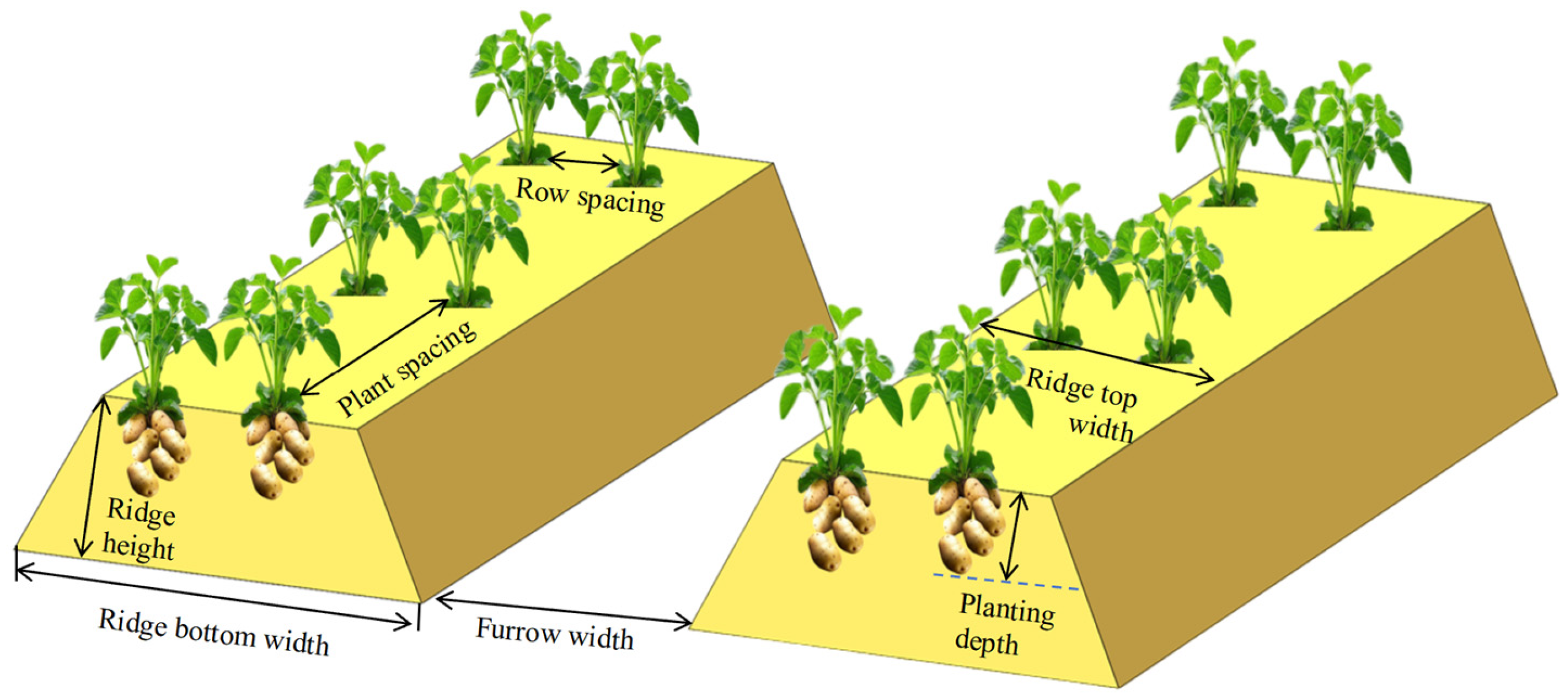
The field experiments were conducted in a potato planting demonstration base located in Gansu Province, China. Agronomic parameters of potato cultivation at the harvest stage were measured on-site. The potatoes were planted in a single-ridge dual-row pattern, as illustrated in Figure 1. The measured ridge geometry for table-potato production was as follows: ridge height (212 ± 13) mm, ridge-top width (544 ± 38.5) mm, ridge bottom width (985 ± 13) mm, furrow width (288 ± 47.64) mm, plant spacing (284 ± 27) mm, row spacing within the ridge (248 ± 19) mm, and planting depth (166 ± 11) mm. These agronomic parameters provide the geometric boundary and operating environment for the separation conveyor design.
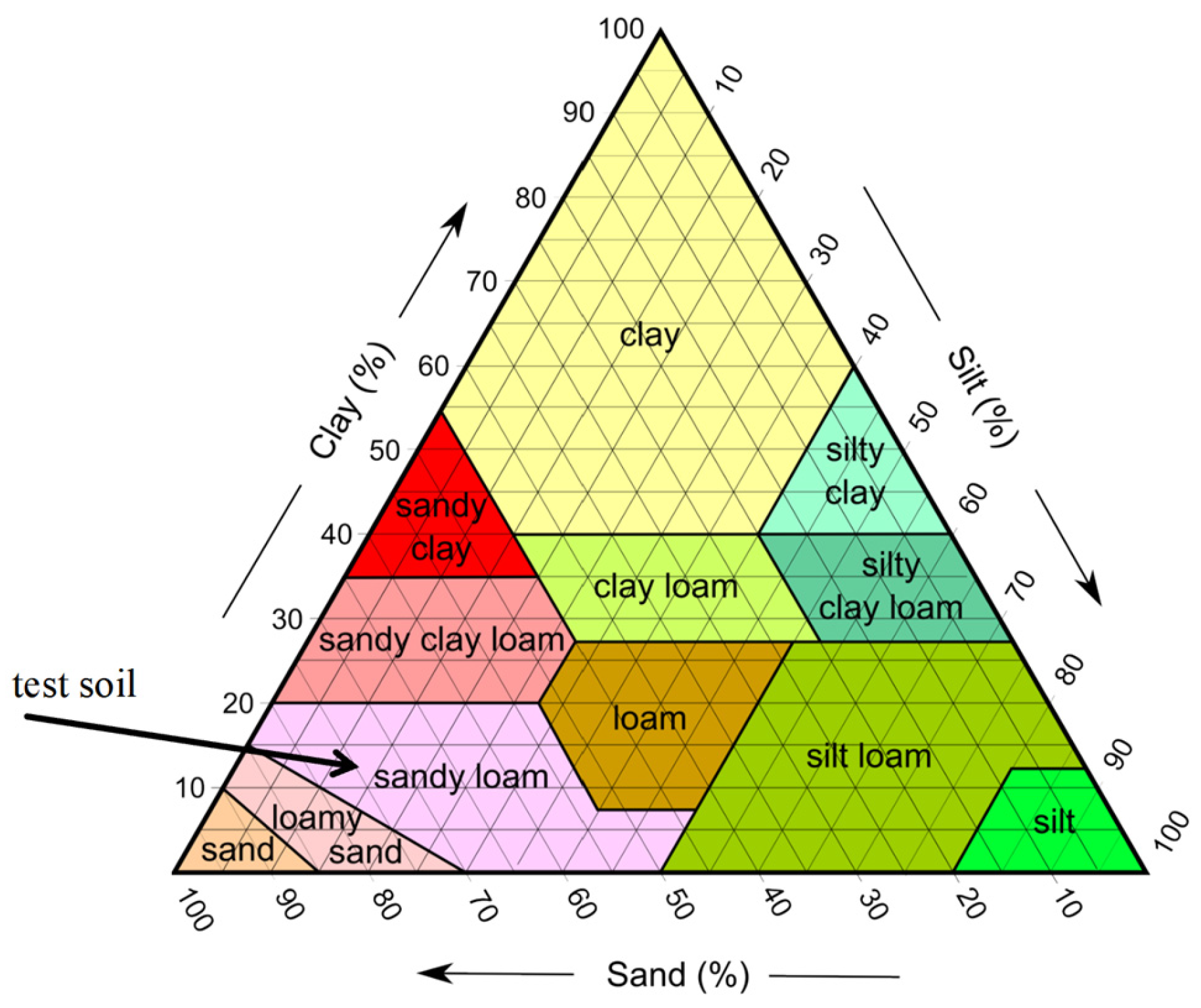
Soil texture was determined using the ring knife sampling method combined with laser particle size analysis following Sweet et al. [16]. Particles larger than 2 mm were removed, and the remaining distribution was measured as: sand (0.05–2 mm) 62.57%, silt (0.002–0.05 mm) 32.6%, and clay (<0.002 mm) 4.83%. According to the United States Department of Agriculture (USDA) soil texture classification standard, the soil used in this study is categorized as sandy loam (Figure 2) [17]. The moisture content, as determined by a moisture content meter, is 25.22%.
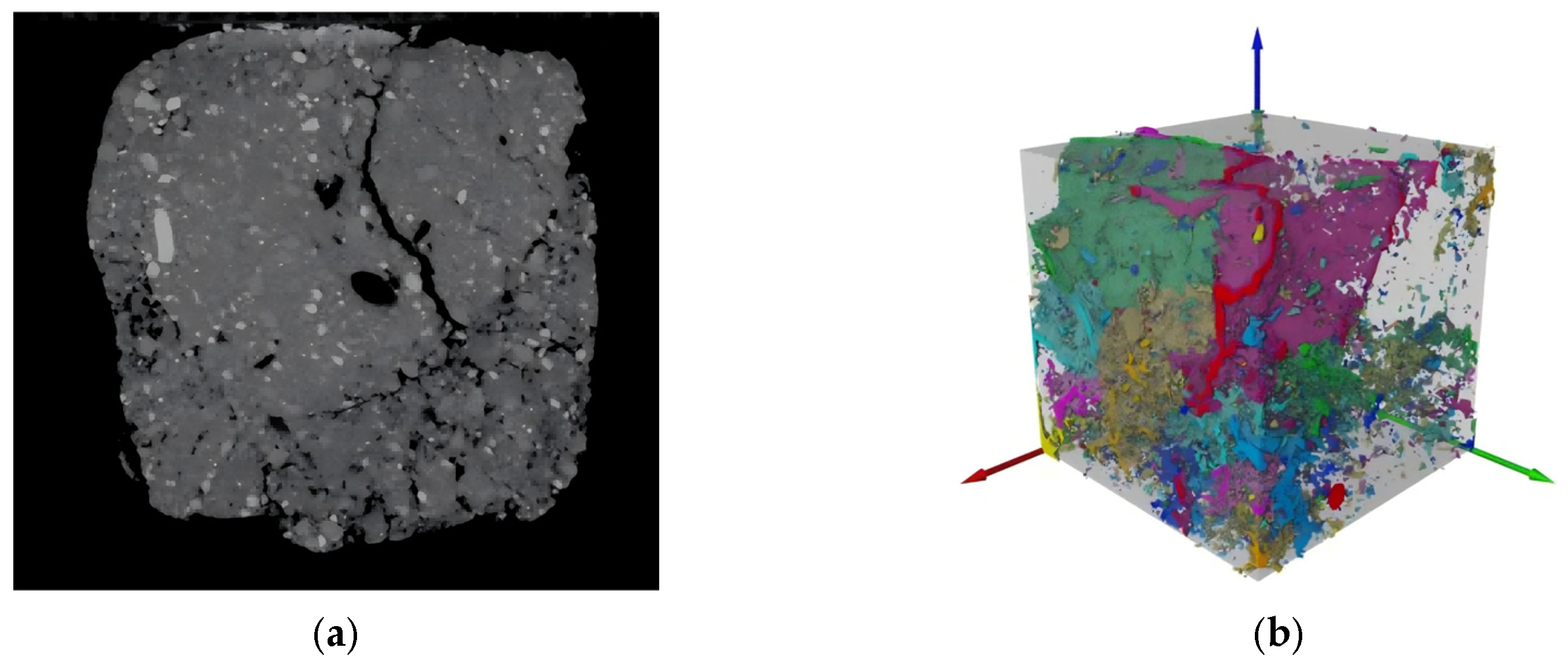
To further characterize soil internal porosity, CT scanning combined with Voxel Studio Recon processing was used to eliminate beam-hardening artifacts and obtain high-resolution multi-angle CT cross-sectional images (Figure 3a). The images were sliced and analyzed to determine soil porosity at different depths. Due to the spatial heterogeneity of soil porosity within the 20 cm excavation depth, the mean porosity value was used as the evaluation index [18]. Three-dimensional visualization using VG Studio MAX generated color-mapped soil pore distribution (Figure 3b), and post-processing results showed a mean soil porosity of 13.66%.
These agronomic and soil physical characteristics provide essential input parameters for the DEM soil modeling and operational parameter design of the potato–soil separation device. The ridge geometry and planting pattern defined the geometric boundary conditions for the separation conveying device and the potato–soil composite domain. The soil texture classification and CT-derived mean porosity were treated as quantitative constraints for DEM soil generation and subsequent model verification, thereby reducing parameter arbitrariness and improving the representativeness of the simulated soil structure.

2.2. Mechanical Model of the Separation Conveying Device

2.2.1. Structure and Working Principle of the Separation Conveying Device

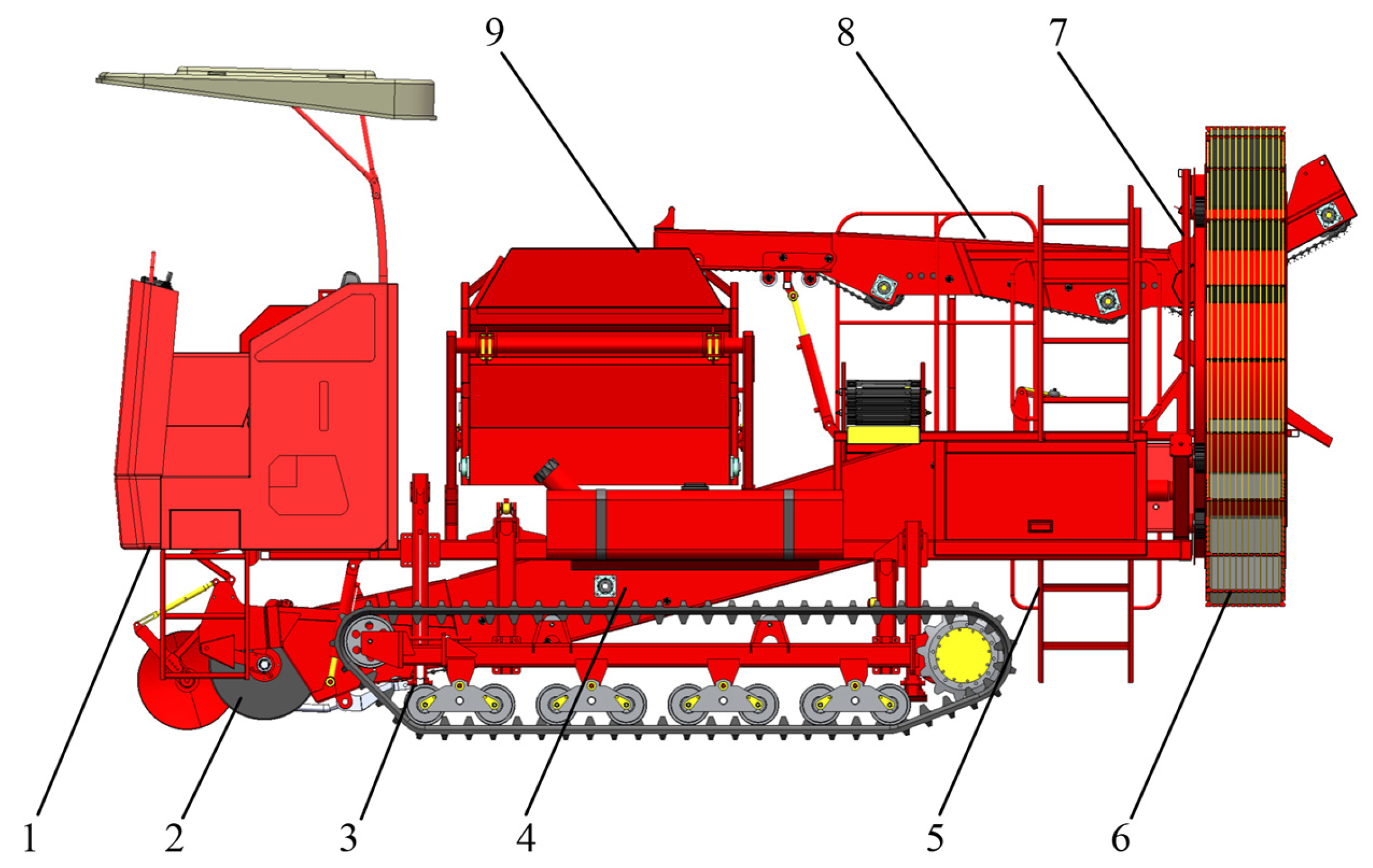
As shown in Figure 4, a potato combine harvester mainly consists of the cab, digging unit, crawler chassis, separation conveying device, manual walkway, rotary elevator, ring elevator, grading unit, and collection hopper. Among these components, the separation conveying device is located behind the digging unit and in front of the horizontal conveying system. Its primary function is to remove soil from the excavated potato–soil mixture and from the potato surface while ensuring minimal mechanical damage to the tubers.
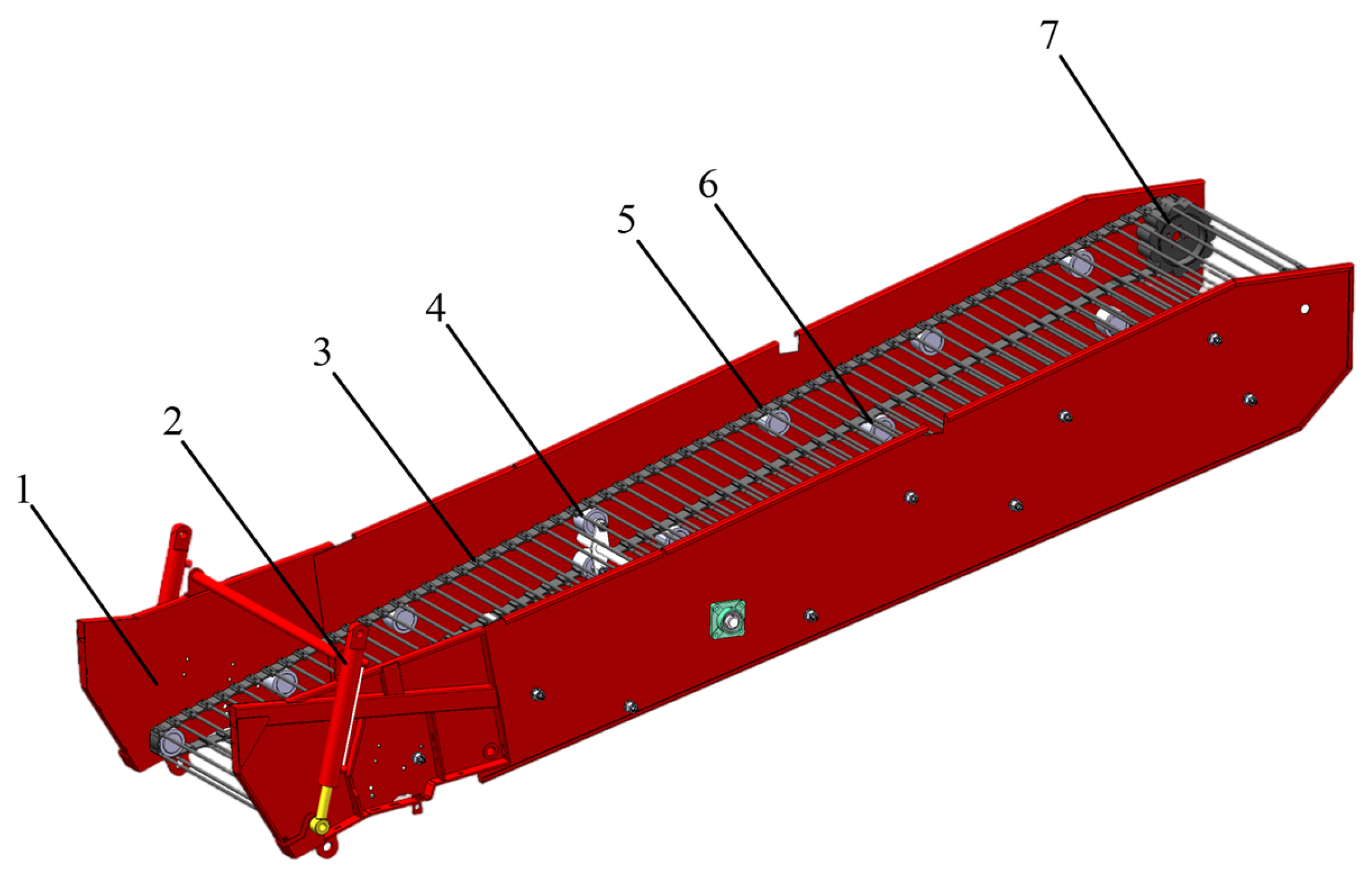
As shown in Figure 5, the separation conveying device is composed of a supporting frame, an inclination adjustment hydraulic cylinder, an upper support wheel, a lower support driving wheel, a beating wheel, a conveying chain, and a driving wheel. The driving wheel provides power to the separation conveying chain and synchronously drives the beating wheel. The beating wheel periodically strikes the conveying chain at a fixed frequency, thereby inducing vibration of the chain.
During harvesting, the potato–soil mixture excavated by the digging unit enters the separation conveying device. The inclination adjustment hydraulic cylinder is used to regulate the inclination angle of the conveying chain. The driving wheel drives the chain to move rearward along the machine, while the beating wheel applies periodic impacts to the chain, causing it to vibrate. Under the combined effects of chain vibration and conveying motion, the potato–soil mixture undergoes repeated lifting and dropping on the chain surface, which promotes soil detachment and separation. Driven by the conveying chain, the separated potatoes and residual soil are transported toward the rear of the harvester.

2.2.2. Simplified Mechanical Model of the Separation Conveying Device

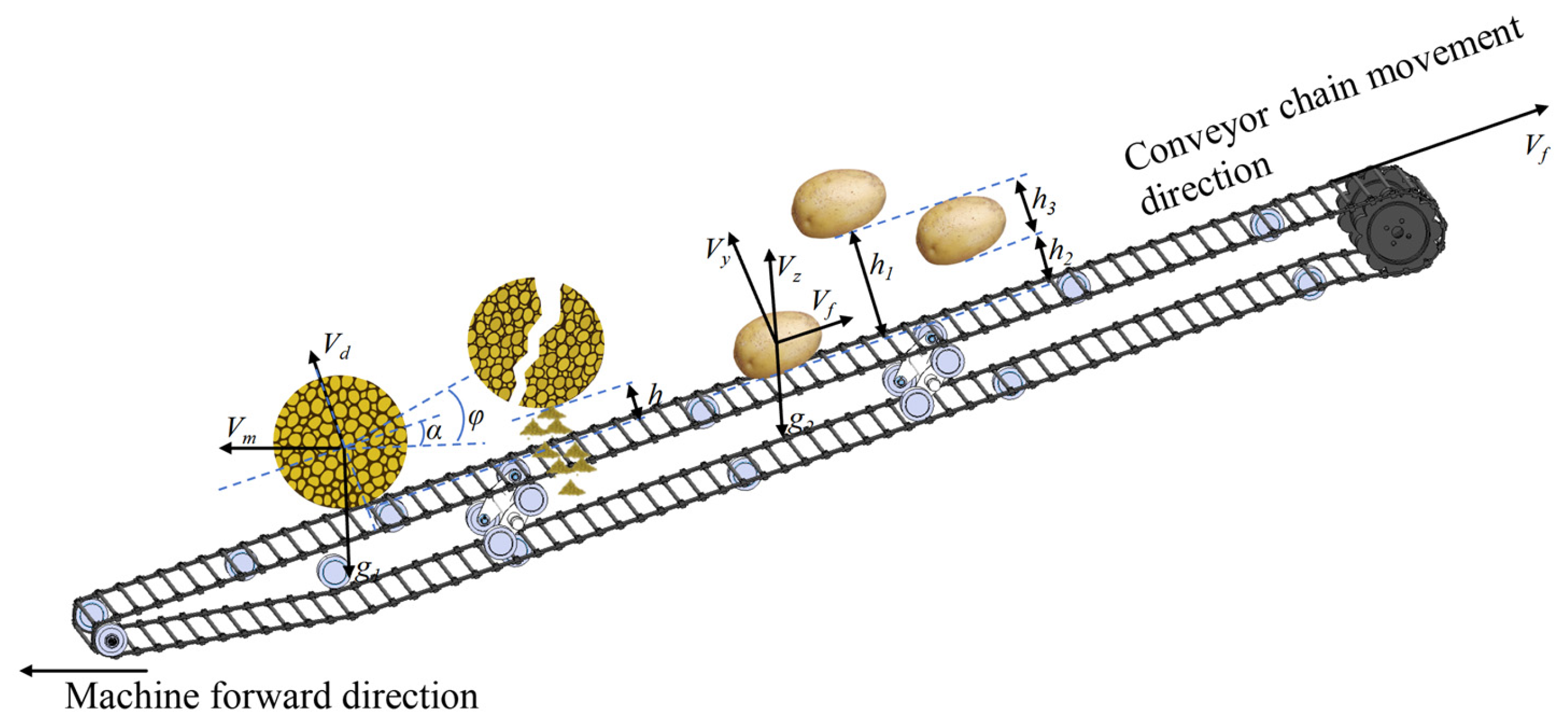
During operation, the soil clods on the separation conveying device are subjected to the periodic vibration of the conveyor chain, resulting in continuous lifting and falling cycles. This dynamic motion induces soil fragmentation and enables soil detachment from potato tubers [19]. The fragmentation process is primarily influenced by energy input. Assuming the soil clod is spherical and fractures through its midplane, the required breaking force F can be expressed as follows:
F = cS = cπR2
where c is the soil cohesive strength, and R is the equivalent radius of the soil clod.
To achieve fragmentation, external work must be applied to produce displacement. Under a unit deformation displacement, the required energy is approximately proportional to the fracture surface area and the material resistance. To account for variations in soil microstructure, moisture content, and aggregation strength, a correction factor γ is introduced [20]:
Ec = γR2c
Soil fragmentation occurs when the input energy EI exceeds the critical energy EC. The input energy is described as follows:
E i = m g 1 h + 1 2 m V s 2 > E c = γ R 2 c
where h is the lifting height of the soil clod after impact, VS is the relative velocity between the soil clod and the conveyor chain at the instant of contact, g is gravitational acceleration, and re is vibration amplitude radius. VS is composed of the horizontal conveying velocity Vf and the vibration-induced vertical velocity Vd perpendicular to the conveyor chain surface:
V s = V f 2 + V d 2
V d = 2 π f r e cos α
Substituting Equation (6) into Equation (5), the following relationship is obtained:
V s 2 = V f 2 + V d 2 = V f 2 + ( 2 π f r e cos α ) 2
When the soil clod is thrown off the chain surface, it decelerates in the normal direction under the action of the gravitational component. The maximum normal displacement h is expressed as follows:
h = V s 2 2 g 1 cos α = ( 2 π f r e cos α ) 2 2 g 1 cos α = ( 2 π f r e ) 2 cos α 2 g 1
where re is defined as the equivalent excitation radius, calculated as half of the peak-to-peak vertical displacement of the chain at the beating location extracted from the MBD time history; it is consistent with the beating-wheel excitation geometry.
Substituting Equations (7) and (6) into Equation (3) yields:
m g 1 ( 2 π f r e ) 2 cos α 2 g 1 + 1 2 m V f 2 + ( 2 π f r e cos α ) 2 > E c = γ R 2 c
Rearranging the above expression into a kinetic energy inequality leads to the soil fragmentation criterion:
1 2 m [ V f 2 + ( 2 π f r e cos α ) 2 + ( 2 π f r e ) 2 cos α ] > E c = γ R 2 c
It can be concluded that, after the machine starts operating, soil fragmentation is closely related to the conveying chain line speed Vf, the vibration frequency f, and the conveying chain inclination angle α.
Potato damage and the effectiveness of potato–soil separation mainly result from collisions between potato tubers and the vibrating conveying chain. The contact force generated during the collision between a potato tuber and the conveying chain can be expressed as follows:
F = σ × S
where F is the collision force between the potato and the conveying chain, σ is the contact stress, and S is the contact area.
When a potato collides with an elastic medium, the contact area S is a function of the falling height h3. Therefore, the following relationship can be established:
S = k × h 3 + 122.2
It is assumed that, under excitation at vibration frequency f, the potato tuber obtains an initial upward velocity VZ and subsequently completes a full projectile motion under the action of gravity:
h 1 = V z 2 2 g 2 t 1 = V z g 2  
h 2 = V f t 1 sin α = V f V z g 2 sin α h 3 = h 1 h 2 = V z 2 2 g 2 V f V z g 2 sin α
where Vf is the conveying chain line speed, VZ is the initial upward velocity of the potato, α is the inclination angle of the conveying chain, t1 is the time required for the potato to reach its highest point, h1 is the vertical lifting height of the potato, h2 is the conveying distance of the chain along the inclined direction during this time, h3 is the actual free-fall height when the potato returns to the chain surface, k is a coefficient, and g is the gravitational acceleration acting on the potato.
Substituting h3 into the damage model yields the following:
S = k V z 2 2 g 2 V f V z g 2 sin α n
F = σ k V z 2 2 g 2 V f V z g 2 sin α n
V z = V b = 2 π f r e
where f is the vibration frequency determined by the rotational speed of the beating wheel; re is the equivalent excitation radius caused by periodic deformation or eccentricity of the conveying chain; VZ is the initial upward velocity; and Vb is the peak vertical velocity of the excitation mechanism.
By combining Equations (14)–(16), the following expression is obtained:
F = σ k ( 2 π f r e ) 2 2 g 2 V f 2 π f r e g 2 sin α n
It can be seen that, after the machine begins operation, the damage force F acting on the potato tuber is affected by the vibration frequency f, the conveying chain line speed Vf, and the conveying chain inclination angle α.
Based on the above analysis, in order to achieve rapid potato–soil separation while ensuring minimal potato damage, separation efficiency depends not only on the physical properties of potatoes and soil but also on the vibration frequency f, conveying line speed Vf, and inclination angle α. The inclination angle is constrained by the overall machine configuration and the digging shovel geometry, with a minimum value of 10° and a maximum not exceeding 45° to ensure efficient conveying. The conveying chain line speed is related to the actual field operating speed; the forward speed of the machine should not exceed 3 km·h−1, and the conveying chain speed is set to 1.2 times the forward speed. Therefore, the maximum conveying speed does not exceed 3.4 km·h−1. Based on relevant literature, the vibration frequency is selected within the range of 3–9 Hz [21,22,23,24,25], Force analysis is shown in Figure 6.

2.3. Simulation Experiments of the Separation Conveying Device

2.3.1. Establishment of the Simulation Model

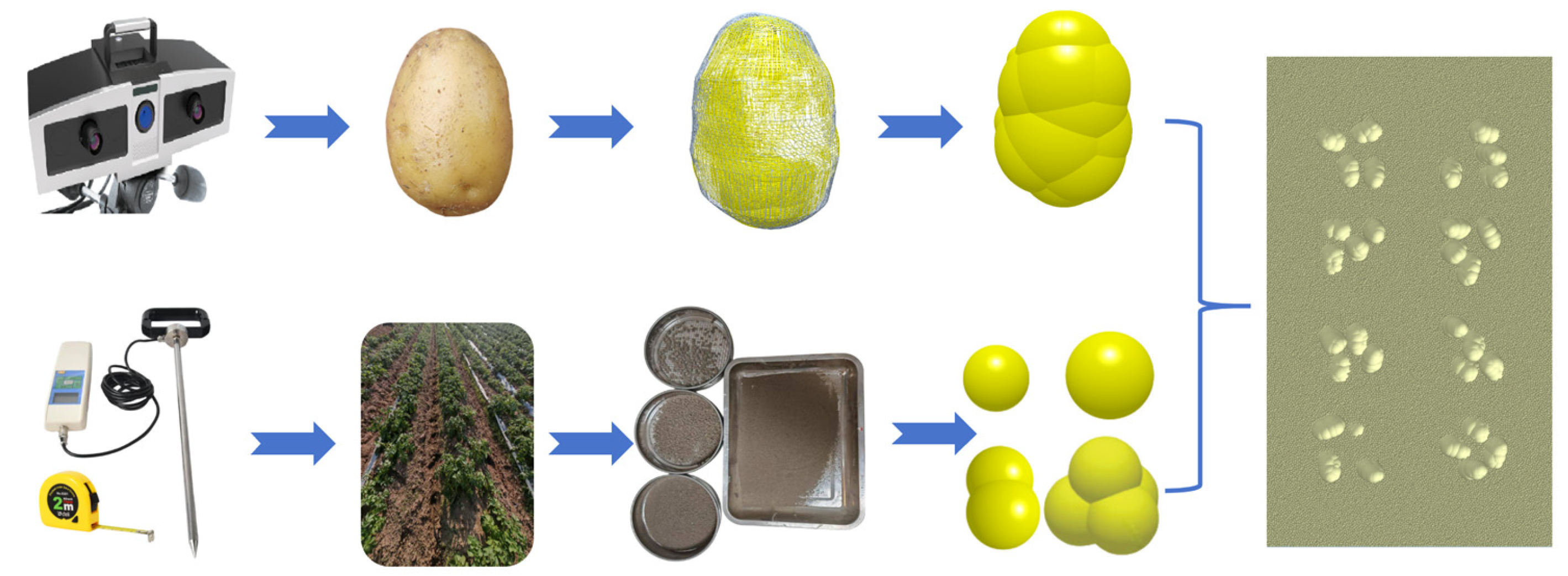
Potato tubers were selected as the simulation objects. A three-dimensional point cloud of an individual potato tuber was obtained using a 3D scanner. After surface repair and smoothing, the reconstructed geometry was imported into EDEM as a STEP file. To maintain geometric integrity and mass distribution, the potato tuber was filled with spherical particles with a radius of 3 mm. To control the contact quantity and stiffness, the soil model used spherical particles with a radius of 1 mm, and the Hertz–Mindlin adhesive contact model was applied to simulate the local adhesion between soil particles and the potato surface. Convergence tests showed that the response trends of soil removal and damage were preserved under particle size scaling.
Based on field soil sampling, the soil was identified as sandy loam. Considering the excessive computational cost of resolving sub-millimeter scale real soil particles in a full-scale simulation, a coarse-graining strategy was adopted. The generated DEM particle size categories were mapped to the measured soil components to preserve the relative composition of aggregate sizes while maintaining a controllable simulation time. Soil particles with diameters of 6.2, 3.5, 1.5, and 0.5 mm were generated to represent soil fractions with particle sizes of >5 mm, 2–5 mm, 1–2 mm, and 0–1 mm, respectively. The Hertz–Mindlin with JKR contact model was employed to simulate cohesive behavior of wet soil aggregates. The surface energy was set to 12.56 J·m−2 for soil–soil contacts and 18.43 J·m−2 for soil-potato contacts, according to relevant references [26,27].
Based on the measured ridge geometry, a root–soil composite DEM model with dimensions of 2000 mm × 300 mm × 800 mm (length × width × height) was established. The material properties and contact parameters used in the simulation are listed in Table 1 and Table 2.
Using the above parameters and in combination with potato agronomic characteristics, a potato–soil composite model was constructed. The modeling procedure is illustrated in Figure 7.

2.3.2. Single-Factor Simulation Analysis: Effect of Conveying Line Speed

To obtain more realistic simulation results, the established discrete soil model was first validated. The soil layer was extracted using the Clipping function in Analyst Tree, and the soil particle layer was binarized. Porosity was calculated using Python 3.9.21 post-processing, yielding a value of 14%, which differed from the measured field porosity by only 2.4%. The porosity deviation (2.4%) indicates a high-fidelity reconstruction of field pore structure, providing a robust benchmark for subsequent DEM–MBD co-simulation. This result indicates that the soil model meets the requirements for representing actual field conditions.
In this study, porosity was chosen as a physically interpretable bulk descriptor linking micro-structure to separation behavior, and it is less sensitive to local particle-scale randomness than point-wise kinematic metrics. The small deviation between simulated and measured porosity indicates that the generated soil packing state is representative, supporting the credibility of subsequent device-level separation and collision analyses.
The three-dimensional model of the separation conveying device was exported as a STEP (.stp) file and imported into RecurDyn to construct the flexible multibody dynamics (MBD) model. Prescribed motions were applied to the driving wheel and the beating wheel, and a forward translational motion was imposed on the system. Contact relationships and kinematic constraints were then defined. The wall geometry of the separation conveying device was exported for EDEM, and a co-simulation data exchange interface between the MBD and DEM solvers was established, enabling bidirectional coupling between RecurDyn and EDEM.
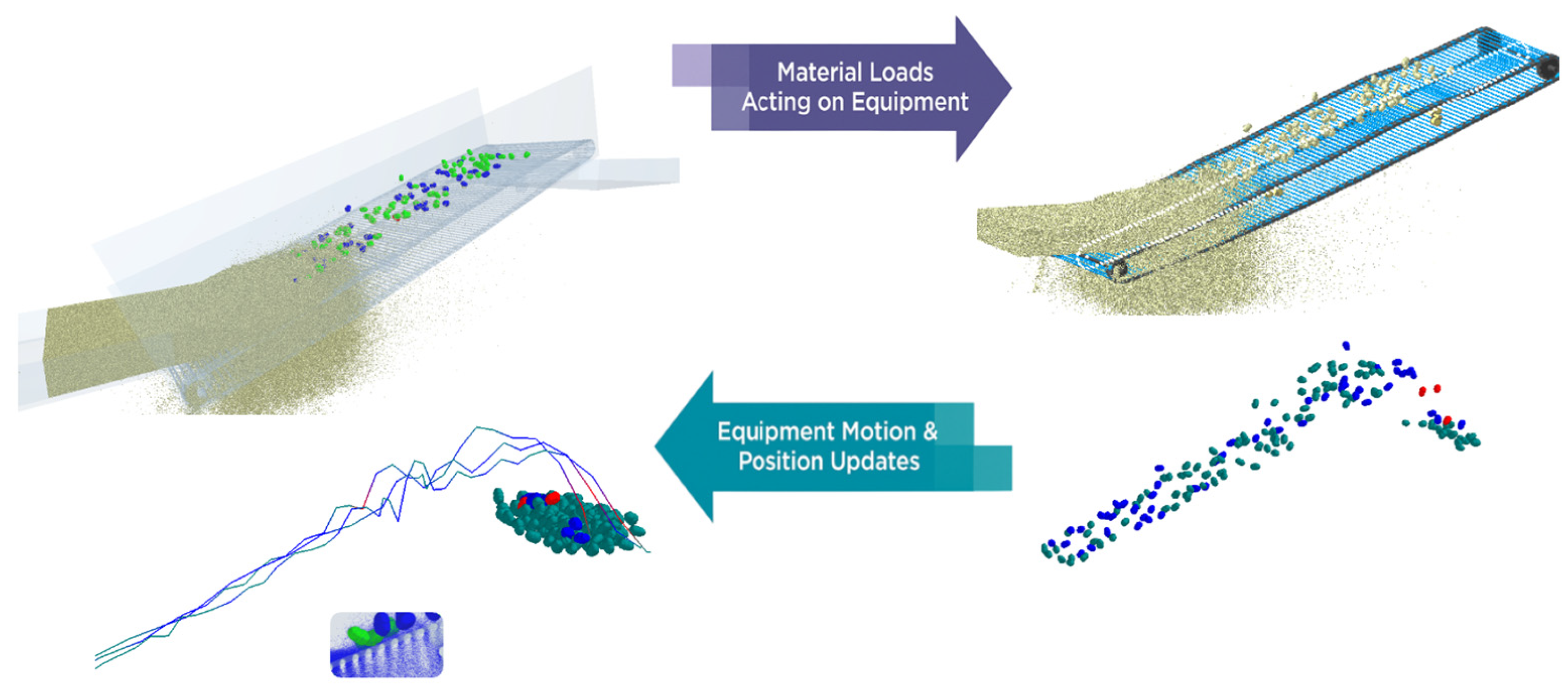
After setting the EDEM parameters and establishing the soil model, the mass of a filled potato tuber was calculated using EDEM Properties as 0.4 kg, corresponding to a gravitational force of 3.92 N. Equipment materials and geometries were defined, and soil conveying components, baffles, and the collection box were added to the model. The number of cells was set to 743,256, the fixed time step was 1 × 10⁻⁶ s, the required iterations were 1.67 × 10⁶, the data saving interval was 0.01 s, and the total simulation time was 10 s [28,29]. The coupled potato–soil–machine simulation process is shown in Figure 8.

2.3.3. Single-Factor Simulation Experiments

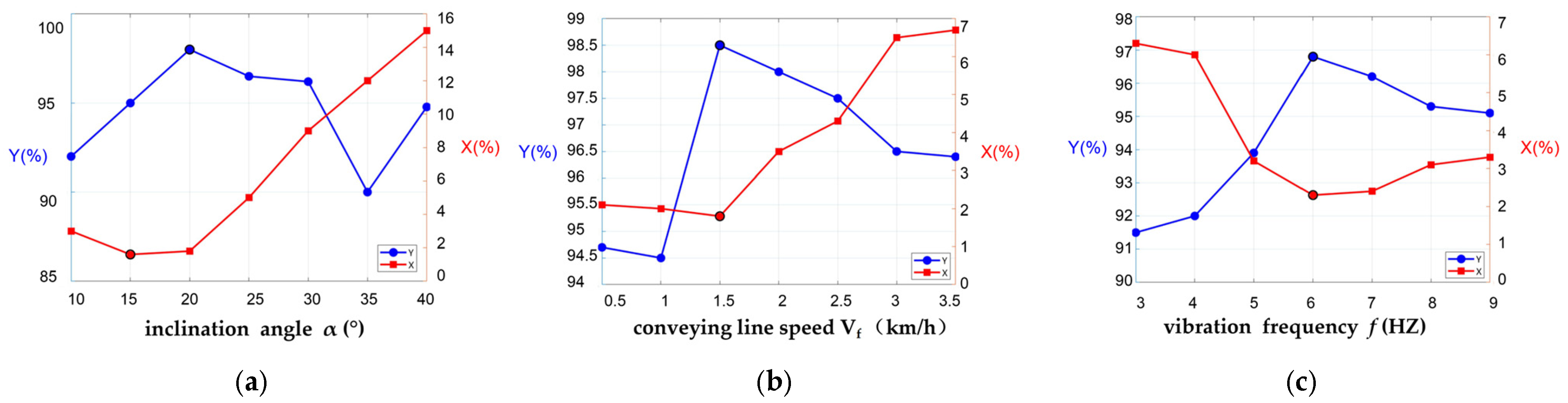
To clarify the effects of key operating parameters of the separation conveying device on potato damage rate (X) and soil removal rate (Y), single-factor simulation experiments were conducted based on the DEM-MBD coupled framework. The total simulation time was 10 s, with an EDEM time step of 1 × 10⁻⁶ s and a RecurDyn time step of 1 × 10⁻³ s. The DEM time step is set according to the Rayleigh time step criterion commonly used in DEM practice. RecurDyn uses a larger stable step size to integrate flexible body motion. The MBD step size (1 × 10⁻³ s) is used as the coupling communication interval, and multiple substeps (1 × 10⁻⁶ s) are executed within each MBD step size to ensure accurate accumulation of contact forces and stable bidirectional data exchange. According to the theoretical analysis in Section 2.2, inclination angle α, conveying line speed Vf, and vibration frequency f were selected as single-factor variables. The effects of each factor on potato damage rate X and soil removal rate Y were analyzed to determine the underlying physical mechanisms and to establish appropriate parameter ranges for subsequent response surface experiments.
  • Effect of Inclination Angle
Based on the theoretical analysis in Section 2.2, the inclination angle was set within a range of 10–40°. With the conveying line speed fixed at 2 km·h−1 and the vibration frequency fixed at 6 Hz, inclination angles of 10°, 15°, 20°, 25°, 30°, 35°, and 40° were investigated. The effects on potato damage rate X and soil removal rate Y are shown in Figure 9.
The simulation results indicate that, as the inclination angle increased, the soil removal rate Y initially increased and then decreased, while the potato damage rate X first decreased and then increased significantly. In the initial stage, increasing the inclination angle effectively extended the movement path of the potato–soil mixture on the separation surface, thereby improving soil separation efficiency. However, when the inclination angle exceeded 20°, soil and potato tubers tended to accumulate and clog, leading to reduced separation performance. As the inclination angle further increased, excessive inclination intensified impact forces during material movement, resulting in a sharp increase in potato damage; when the inclination angle reached 40°, the damage rate increased to 15%. This is because the tubers roll back and repeatedly collide with the rod chain, resulting in an increase in accumulated impact energy and a sharp rise in the damage rate. The minimum damage rate of 1.6% occurred at 15°, while the maximum soil removal rate of 98% was achieved at 20%. Therefore, to ensure high soil removal efficiency and low damage rate, the optimal inclination angle range was determined to be 10–25°.
2.
Effect of Conveying Line Speed
The conveying line speed was analyzed within a range of 0.5–3.5 km·h−1, with the inclination angle fixed at 25° and the vibration frequency fixed at 6 Hz. Conveying speeds of 0.5, 1.0, 1.5, 2.0, 2.5, and 3.0 km·h−1 were evaluated.
The results show that both soil removal rate and potato damage rate exhibited a trend of “initial improvement followed by deterioration” as the conveying speed increased. When the speed increased from 1.0 to 1.5 km·h−1, the soil removal rate increased significantly and reached a maximum of 98.5%, while the damage rate decreased to a minimum of 1.8%. This indicates that, during the transition from low to medium speeds, enhanced throwing and screening effects promoted potato–soil separation, while moderate impact intensity reduced tuber damage. However, when the conveying speed increased to 3.0 km·h−1, the soil removal rate decreased markedly and the damage rate increased substantially. This is attributed to intensified collisions between potato tubers and conveying components, as well as reduced material residence time, which limited effective soil separation. Considering both performance indicators, the optimal conveying speed range was determined to be 1–3 km·h−1.
3.
Effect of Vibration Frequency
The vibration frequency was investigated within a range of 3–9 Hz, with the inclination angle fixed at 25° and the conveying line speed fixed at 2 km·h−1. Frequencies of 3, 4, 5, 6, 7, 8, and 9 Hz were analyzed.
The results indicate that vibration frequency is a key factor influencing energy input and material state during the separation process. As the frequency increased from 3 to 6 Hz, enhanced vibration promoted soil loosening and stratification, resulting in a significant increase in soil removal rate. Meanwhile, moderate vibration reduced continuous sliding friction and aggregation of potato tubers, leading to a gradual decrease in damage rate. At a frequency of 6 Hz, the maximum soil removal rate of 96.8% was achieved, while the damage rate reached a minimum of 2.3%. When the frequency was further increased to 8 Hz, the soil removal rate decreased slightly, whereas the damage rate increased significantly. This is because excessive vibration intensifies relative motion between tubers and the chain surface, increasing impact and friction damage, while reducing the effective separation time. Therefore, the optimal vibration frequency range was determined as 4–8 Hz.

2.4. Quadratic Orthogonal Rotatable Regression Experimental Design

To further investigate the interactive effects of inclination angle α, conveying line speed Vf, and vibration frequency f on potato damage rate (X) and soil removal rate (Y), and to obtain an optimal multi-objective parameter combination, a quadratic orthogonal rotatable combination experiment was conducted using the central composite design (CCD) method.
Based on the effective parameter ranges obtained from the single-factor simulation experiments, inclination angle α, conveying line speed Vf, and vibration frequency f were selected as experimental factors A, B, and C, respectively. Potato damage rate (X) and soil removal rate (Y) were selected as response variables. The CCD experimental design was constructed to evaluate both the main effects and interaction effects of the three factors on the response variables.
The factor levels and corresponding coded values of the CCD experiment are listed in Table 3, where five levels (−1.682, −1, 0, +1, +1.682) were employed for each factor to ensure rotatability of the experimental design [30]. The ranges of inclination angle, conveying line speed, and vibration frequency were determined according to theoretical analysis and practical operating constraints of the separation conveying device.

3. Results

Based on the quadratic orthogonal rotatable regression experimental design, simulation experiments were conducted for different combinations of inclination angle, conveying line speed, and vibration frequency. The corresponding response values of potato damage rate and soil removal efficiency were obtained, and regression modeling and statistical analysis were performed using Design-Expert 13.0 software. The experimental results are shown in Table 4.

3.1. Regression Model Establishment and Analysis of Variance

The ANOVA results of the quadratic response surface models are presented in Table 5. For the damage rate model (X), the model p-value was less than 0.0001, indicating that the regression model was extremely significant. The corresponding F-value was 242.45, further confirming a good model fit and suggesting that the three selected factors provided strong explanatory power for the response. The effects of the factors on the damage rate (X) ranked as follows: conveying line speed (B) > inclination angle (A) > vibration frequency (C). Based on the residual, pure error, and lack-of-fit tests, the residual sum of squares and mean square were 0.2094 and 0.0233, respectively; the pure error sum of squares and mean square were 0.0679 and 0.0170, respectively. The lack-of-fit p-value was 0.3201 (>0.05), indicating that the lack of fit was not significant and that the model adequately described the experimental data.
For the soil removal efficiency model (Y), the model p-value was also less than 0.0001, demonstrating that the regression model was extremely significant. The model F-value reached 249.81, indicating a good fit and strong explanatory capability of the selected factors for soil removal efficiency. The effects of the factors on soil removal efficiency (Y) ranked as: inclination angle (A) > conveying line speed (B) > vibration frequency (C). The residual sum of squares and mean square were 0.6966 and 0.0774, respectively; the pure error sum of squares and mean square were 0.4135 and 0.1034, respectively. The lack-of-fit p-value was 0.7384 (>0.05), confirming that the lack of fit was not significant and that the model fit was acceptable [31,32].
The coefficients of determination (R2) and adjusted coefficients of determination (Adj. R2) for both models were high, indicating good agreement between the predicted values and the experimental results. This demonstrated that the established regression models were suitable for describing the relationships between the operating parameters and the response variables.
The quadratic polynomial fitting equation for the damage rate X and soil removal rate Y obtained using the least squares regression (OLS) algorithm is as follows:
X = 1.56757 0.210549 A + 0.440436 B 0.166615 C 0.12625 A B + 1.12875 B C + 1.01515 A 2 + 1.09823 B 2 + 1.11768 C 2
Y = 98.1344 + 1.34367 A + 1.19992 B + 0.72201 C 0.3125 A B + 00.51 A C 0.3 B C 2.18925 A 2 2.17687 B 2 1.18516 C 2

3.2. Response Surface Analysis

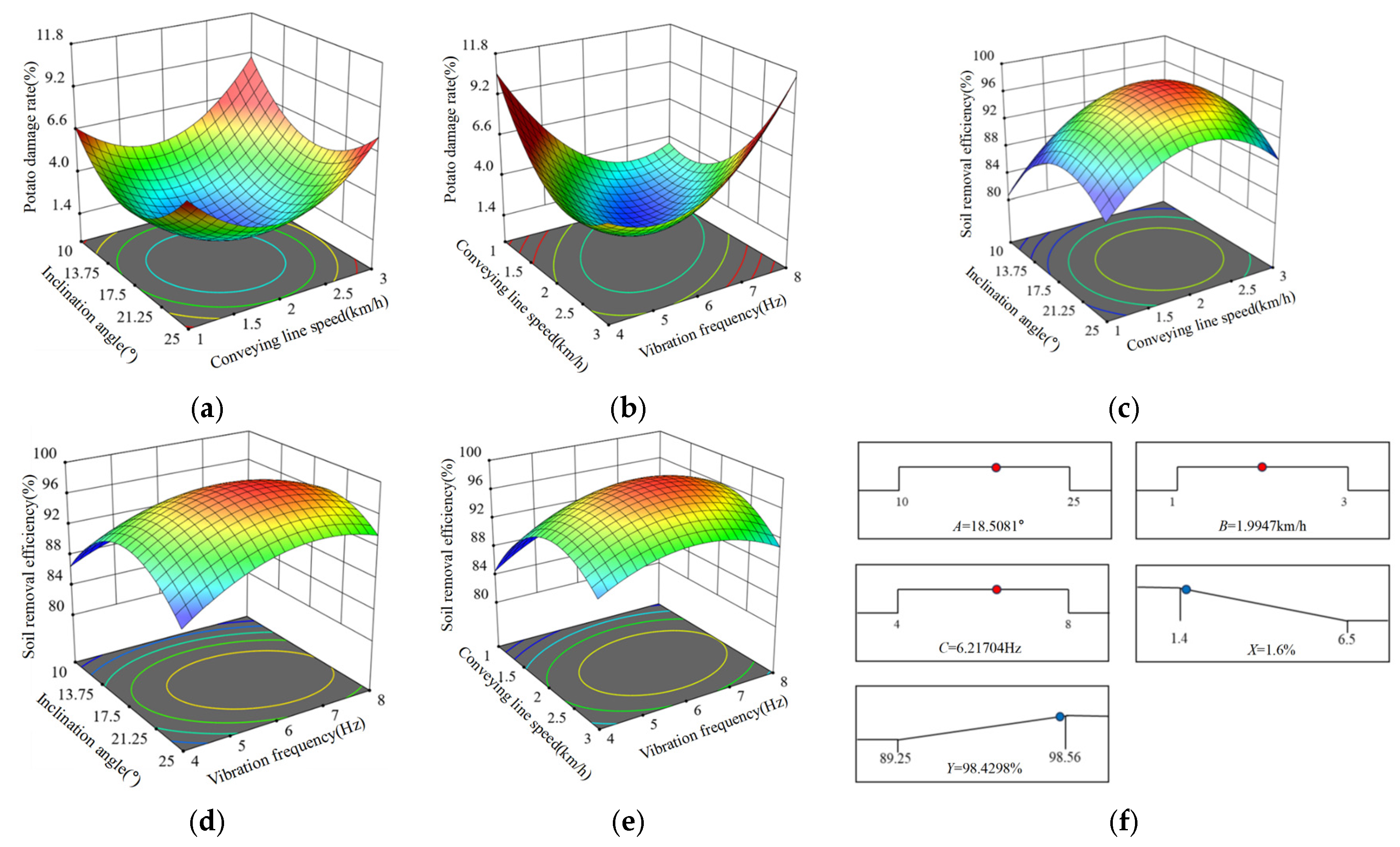
To further investigate the interactive effects of the operating parameters on potato damage rate and soil removal efficiency, response surface and contour plots were generated using Design-Expert 13.0 software.
Figure 10a illustrates the combined effect of inclination angle and conveying line speed on potato damage rate at a fixed vibration frequency. As the inclination angle and conveying speed increased, the potato damage rate initially decreased and then increased. Within a moderate range of inclination angles and conveying speeds, the motion of the potato–soil mixture was relatively stable, and collision intensity between potato tubers and the conveying chain was reduced, resulting in a lower damage rate. However, excessive inclination angles or conveying speeds intensified potato jumping and secondary collisions, leading to an increase in damage rate.
Figure 10b shows the interaction between conveying line speed and vibration frequency on potato damage rate. When the conveying speed and vibration frequency were within moderate ranges, potato motion remained stable and the damage rate was minimized. At higher vibration frequencies or conveying speeds, excessive excitation caused frequent collisions and increased damage. The presence of closed elliptical contour lines indicated the existence of an optimal parameter region for minimizing potato damage rate.
Figure 10c–e present the response surfaces of soil removal efficiency under different parameter combinations. Soil removal efficiency increased initially and then decreased with increasing inclination angle and conveying line speed. At moderate inclination angles, the residence time of the potato–soil mixture on the conveying chain was extended, promoting rolling and screening of soil particles. However, excessive inclination angles or conveying speeds led to unstable material flow and reduced effective separation time, resulting in lower soil removal efficiency.
Vibration frequency played an important role in energy input during the separation process. At appropriate vibration frequencies, soil clods were effectively loosened and separated from potato tubers. When the vibration frequency was too high, excessive potato jumping occurred, which reduced the effective contact time between soil and the conveying chain, thereby decreasing soil removal efficiency.

3.3. Multi-Objective Optimization Results

Based on the established regression models, multi-objective optimization was performed with the goals of minimizing potato damage rate and maximizing soil removal efficiency. The optimal parameter combination was determined using the desirability function method in Design-Expert 13.0 software.
The optimal operating parameters were an inclination angle of 18.51°, a conveying line speed of 1.99 km·h−1, and a vibration frequency of 6.22 Hz. Under these conditions, the predicted potato damage rate was 1.60%, and the predicted soil removal efficiency reached 98.43%.
To verify the accuracy of the optimization results, the predicted values were compared with the simulation results, and good agreement was observed. This demonstrated that the regression models and optimization results were reliable and provided an effective basis for parameter selection and performance optimization of the separation conveying device.

3.4. Field Experiments

3.4.1. Experimental Equipment and Test Conditions

To verify the effectiveness of the optimal parameter combination obtained from the DEM-MBD coupling simulation and multi-objective optimization, field validation experiments were conducted using a 4U-1000 self-propelled potato combine harvester at a potato planting base. According to the measurements described in Section 2.1, the experimental field soil was classified as sandy loam, with an average soil porosity of 13.66% and a moisture content of 17.7%. The potato planting pattern was a single-ridge double-row arrangement.
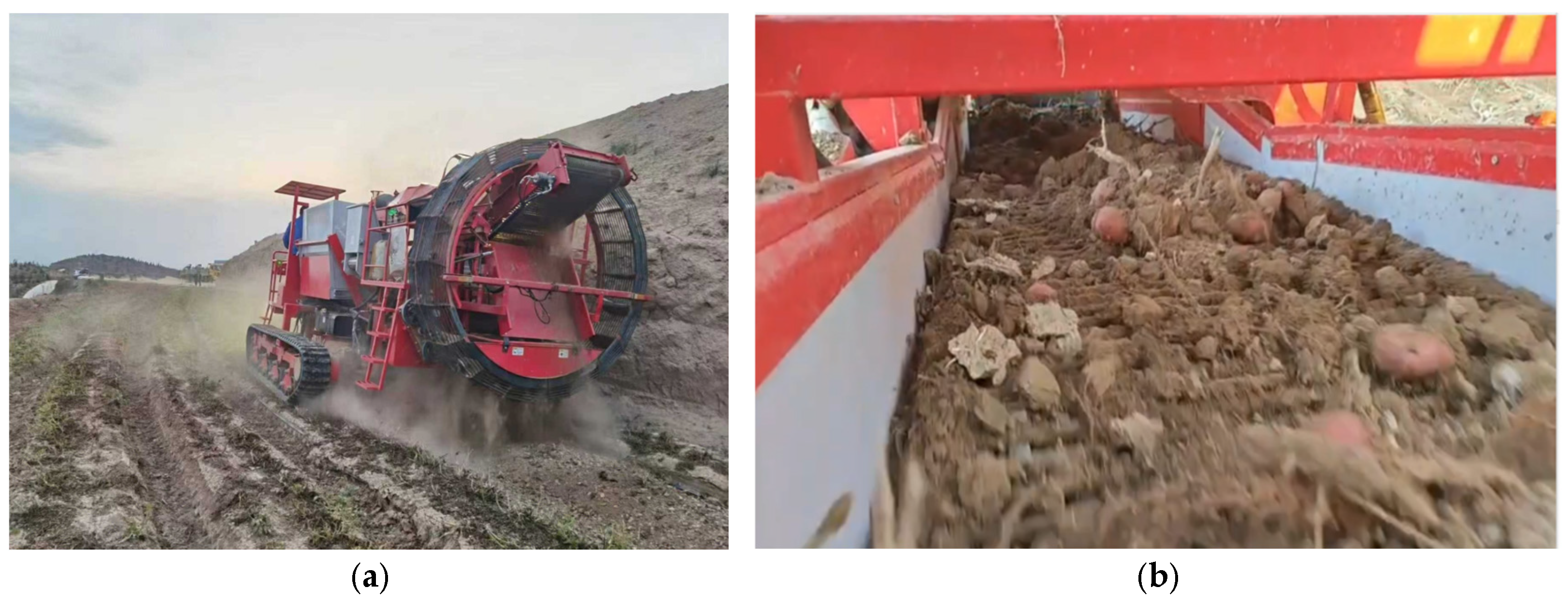
Potato–soil separation efficiency and potato damage rate were selected as evaluation indices. A total of ten field tests were performed, with a harvesting distance of 50 m for each test. The average values of the measured results were used for analysis. The field harvesting operation and the working condition of the separation conveying device are shown in Figure 11.

3.4.2. Evaluation Indices

According to the Technical Specifications for Quality Evaluation of Potato Harvesters (NY/T 648—2015) issued by the Ministry of Agriculture of the People’s Republic of China, the potato damage rate was calculated using the following equation:
X = Q 1 Q 2 × 100 %
where X is the potato tuber damage rate (%); Q1 is the mass of damaged potato tubers entering the lifting device (kg); and Q2 is the total mass of potato tubers entering the lifting device (kg).
The potato–soil separation efficiency was calculated as follows:
Y = W 1 W 2 × 100 %
where Y is the potato–soil separation efficiency (%), W1 is the mass of potatoes entering the lifting device (kg), and W2 is the total mass of potatoes and soil entering the lifting device (kg).
The mean relative error (MRE) between simulation results and field experimental data was calculated as follows:
M R E = 1 n i = 1 n   x i u i u i × 100 %
where MRE denotes the relative error between the simulation results and the field measurements; n is the number of tests; xᵢ and ui are the simulated and corresponding field-measured values for the i-th test, respectively.

3.4.3. Experimental Results and Analysis

According to the enterprise standard Q/0781QHL01-2019 Potato Harvester, the average potato–soil separation efficiency obtained from the field experiments was 97.8%, and the average potato damage rate was 1.62%. Comparative analysis showed that the mean relative errors between the simulation results and field experimental results were 0.63% for soil removal efficiency and 1.25% for potato damage rate, respectively.
The extremely small deviations between simulation predictions and field measurements demonstrate the high fidelity of the DEM-MBD coupling model in reproducing real operating conditions. The strong agreement between numerical predictions and experimental observations validates the accuracy, robustness, and engineering applicability of the proposed simulation-driven optimization framework. These results confirm that the optimized parameter combination can effectively achieve high-efficiency potato–soil separation with low mechanical damage under actual field harvesting conditions.

4. Discussion

This study addressed the engineering trade-off between “high-efficiency soil removal” and “low tuber damage” in the separation conveying stage of a potato combine harvester. A DEM-MBD coupling simulation framework and a CCD-based response surface methodology (RSM) were employed to systematically interpret the effects of the inclination angle (α), conveying line speed (Vf), and vibration frequency (f), as well as their coupled interactions. The results showed that adjusting these three parameters could well explain the coordinated variation trends of soil removal rate (Y) and damage rate (X). This work provided an optimal operating region and an optimal parameter combination for parameter matching of the soil removal conveying device, and the optimal setting was further validated through field experiments.
The mechanical model indicated that soil clod fragmentation and the potato collision-induced damage force F were associated with three parameters, i.e., conveying line speed Vf, vibration frequency f, and inclination angle α. The single-factor experiments verified the effects of Vf, f, and α on soil fragmentation and on the damage force F: α mainly altered the residence time and the gravitational component along the conveying direction; Vf primarily determined the conveying rhythm and the relative velocity level; and f mainly controlled the excitation input and the throwing amplitude. In addition, the response surface analysis suggested that these three parameters jointly shaped tuber bouncing and collision frequency, thereby forming a controllable trade-off between “improved soil removal efficiency” and “increased damage risk”.
Analysis of variance (ANOVA) showed that the regression models for both damage rate and soil removal rate were extremely significant (p < 0.0001) with a non-significant lack of fit, indicating reliable model fitting and predictive capability. The ranking of main effects on soil removal rate (Y) was: inclination angle (A) > conveying line speed (B) > vibration frequency (C), whereas the ranking on damage rate (X) was: conveying line speed (B) > inclination angle (A) > vibration frequency (C). Field experiments were conducted under sandy loam conditions (porosity 13.66%, moisture content 17.7%, single ridge-double row planting pattern). The results showed an average potato–soil separation efficiency of 97.8% and an average damage rate of 1.62%. The mean relative errors between simulation predictions and field measurements were 0.63% and 1.25%, respectively, demonstrating that the coupled simulation and optimization results have good engineering applicability.
The DEM-MBD coupling approach combined DEM-based characterization of particle-level contact and separation in the potato–soil mixture with MBD-based description of the kinematic and dynamic responses of the separation conveying chain mechanism. This integration compensated for the limitation of a single simulation platform in simultaneously capturing the coupled “material-mechanism” interactions. Moreover, the proposed workflow has potential to reduce repetitive prototype fabrication and extensive field trials, thereby lowering development cost and shortening the R&D cycle.
This study provides a theoretical basis and design framework for efficient soil removal and low tuber damage in potato combine harvesters. However, due to the complexity of agricultural machinery operations, this work still has limitations, despite good agreement between simulation results and field results. DEM parameterization is constrained by the tested sandy loam field conditions and specific moisture content ranges; therefore, caution should be exercised when extrapolating it to fields with significantly different soil textures, wider moisture content ranges, more stones, or more stems. Furthermore, variety-related tuber shape and size distribution may alter collision statistics and residence time on the conveyor belt. Future work will extend the proposed framework to multi-field datasets and incorporate state-aware adaptive coordination of operating parameters to further enhance robustness under various harvesting environments.

5. Conclusions

(1) By analyzing potato agronomic characteristics at the harvest stage and the soil at the digging depth, key physical properties of potatoes and soil were obtained. These parameters guided the operating parameter design of the separation conveying device and supported verification of the soil simulation model.
(2) Potato damage and potato–soil separation efficiency are key indices affecting operational quality during combine harvesting. By establishing a mechanical model of the separation conveying device, the mechanical mechanisms of soil fragmentation behavior and potato bouncing/collision-induced damage were clarified. The most influential factors affecting soil fragmentation and potato damage were identified as inclination angle α, conveying line speed Vf, and vibration frequency f. Based on single-factor experiments and practical processing/operational requirements, effective working ranges of these factors were determined.
(3) Using the multi-objective comprehensive optimization algorithm within response surface methodology (RSM), the optimal operating parameters were determined as an inclination angle of 18.5081°, a conveying line speed of 1.99471 km·h−1, and a vibration frequency of 6.21704 Hz. Under this condition, the model predicted a damage rate of 1.6% while achieving a soil removal rate of 98.4298%.
(4) The simulation model and optimized parameters were validated through field experiments. The results showed an average potato–soil separation efficiency of 97.8% and an average damage rate of 1.62%, confirming the accuracy of the simulation model and the feasibility of engineering application. The performance met the requirements of national agricultural machinery industry standards and achieved the operational objective of high-efficiency and low-damage separation.
(5) This study demonstrates that DEM-MBD coupling simulation combined with RSM-based optimization provides an effective pathway for parameter matching of separation conveying systems in large-scale potato harvesting equipment, with practical value in reducing physical trials and improving R&D efficiency.

Author Contributions

Conceptualization, R.Y. and Y.P.; methodology, Y.P.; software, Y.P. and W.L.; validation, J.Z., A.Z. and S.L.; formal analysis, Y.P.; investigation, Y.P.; resources, R.Y.; data curation, Y.P.; writing—original draft preparation, Y.P.; writing—review and editing, Y.P.; visualization, Y.P.; supervision, R.Y.; project administration, J.Z.; funding acquisition, R.Y. All authors have read and agreed to the published version of the manuscript.

Funding

National Natural Science Foundation of China (32272003).

Data Availability Statement

The original contributions presented in this study are included in the article. Further inquiries can be directed to the corresponding author.

Acknowledgments

The authors gratefully acknowledge the administrative and technical support provided by Hainan University.

Conflicts of Interest

The authors declare no conflicts of interest.

References

  1. Liu, C.; Wu, N.; Cheng, G.; Wu, F.; Gu, F.; Shi, L.; Wang, B. Design and Optimization of a Lightweight and Simple Self-Propelled Crawler Potato Combine Harvester. Agronomy 2025, 15, 65. [Google Scholar] [CrossRef]
  2. National Bureau of Statistics of China. China Agricultural Statistical Yearbook 2023; China Statistics Press: Beijing, China, 2023.
  3. Shen, H.Y.; Wang, B.; Wang, G.P.; Wang, Y.M.; Bao, G.C.; Hu, L.L.; Hu, Z. Research and optimization of the hand-over lifting mechanism of a sweet potato combine harvester based on EDEM. Int. J. Agric. Biol. Eng. 2023, 16, 71–79. [Google Scholar] [CrossRef]
  4. Zhang, X.; Liu, J.; Zhang, C.; Zhao, Y.; Du, X. Design and Experimentation of a Small Potato Harvester for Heavy Soil Conditions. Agronomy 2024, 14, 2131. [Google Scholar] [CrossRef]
  5. Yue, Y.M.; Zhang, Q.; Dong, B.Y.; Li, J. Application of discrete element method to potato harvesting machinery: A review. Agriculture 2025, 15, 315. [Google Scholar] [CrossRef]
  6. Wei, Z.; Su, G.; Li, X.; Wang, F.M.; Sun, C.Z.; Meng, P.X. Parameter Optimization and Experiment of a Wavy Sieve Surface for a Potato Harvester Based on the Discrete Element Method. Trans. Chin. Soc. Agric. Mach. 2020, 51, 109–122. [Google Scholar]
  7. Lv, J.Q.; Yang, X.H.; Lv, Y.N.; Li, Z.H.; Li, J.C.; Du, C.L. Mechanism Analysis and Experiment on Tuber Damage during the Lifting and Separation Process of a Potato Digger. Trans. Chin. Soc. Agric. Mach. 2020, 51, 103–113. [Google Scholar]
  8. Beznosyuk, R.; Evtekhov, D.; Borychev, S.; Kostenko, M.; Rembalovich, G. Justification of Parameters of a Finger Hump of Potato Harvesters when Vibrating Canvas. IOP Conf. Ser. Earth Environ. Sci. 2022, 981, 042051. [Google Scholar] [CrossRef]
  9. Chen, M.; Liu, X.; Hu, P.; Zhai, X.; Han, Z.; Shi, Y.; Zhu, W.; Wang, D.; He, X.; Shang, S. Study on a Rotor Vibration Potato–Soil Separation Device for a Potato Harvester Using DEM–MBD Coupling Simulation. Comput. Electron. Agric. 2024, 218, 108638. [Google Scholar] [CrossRef]
  10. Yang, R.B.; Tian, G.B.; Shang, S.Q.; Wang, B.J.; Zhang, J.; Zhai, Y.M. Design and Experiment of a Roller-Group Potato–Soil Separation Device for a Potato Harvester. Trans. Chin. Soc. Agric. Mach. 2023, 54, 107–118. [Google Scholar]
  11. Li, B.; Gao, G. Research on Parameter Optimization of Potato Soil Transportation Separation Mechanism. In Proceedings of the 2019 2nd World Conference on Mechanical Engineering and Intelligent Manufacturing (WCMEIM), Shanghai, China, 22–24 November 2019; pp. 147–150. [Google Scholar]
  12. Wei, Z.; Han, M.; Su, G.; Hu, L.; Wang, F.; Cheng, X.; Jin, C.; Zhang, X. Analysis and Experiments of Potato Impact Damage During the Process of Bagging and Unloading. Trans. Chin. Soc. Agric. Eng. 2024, 40, 41–51. [Google Scholar]
  13. Cheng, Z.W.; Yang, D.Q.; Liu, M.M.; Li, Y.; Chen, X.Y. DEM-Based Study on the Potato Collecting and Bagging Process of a Potato Harvester. Trans. Chin. Soc. Agric. Mach. 2024, 55, 62–74. [Google Scholar]
  14. Wang, X.; Yang, D.Q.; Liu, M.M.; Li, Y.; Chen, X.Y. Parameter Optimization and Experiment of the Picking Device for a Self-Propelled Potato Picker. Trans. Chin. Soc. Agric. Mach. 2023, 54, 20–29. [Google Scholar]
  15. Liu, W.; Zhang, G.; Wang, H.; Liu, H.; Kang, Q.; Li, Z. Microscopic Deformation and Fragmentation Energy Consumption Characteristics of Soils with Various Moisture Contents Using Discrete Element Method. Soil Tillage Res. 2024, 241, 106131. [Google Scholar] [CrossRef]
  16. Sweet, S.K.; Bassuk, N.L.; Miller, B.M. Deep Compost Amendment Reduces Soil Bulk Density Resulting in Improved Growth of Urban Gymnocladus dioicus Trees over Time. Urban For. Urban Green. 2025, 108, 128822. [Google Scholar] [CrossRef]
  17. Moreno-Maroto, J.M.; Sánchez-Fernández, A.; Gómez-Calvet, R.; Hernández, M. Evaluation of the USDA Soil Texture Triangle through Atterberg Limits and an Alternative Classification System. Environ. Geol. 2022, 81, 247. [Google Scholar] [CrossRef]
  18. Smet, S.; Pérès, G.; Houot, S.; Chaussod, R. X-ray Micro-CT: How Soil Pore Space Description Can Be Trusted. Vadose Zone J. 2018, 17, 1–15. [Google Scholar] [CrossRef]
  19. Lv, J.Q.; Sun, H.; Dui, H.; Peng, M.M.; Yu, J.Y. Improved Design and Experiment of a Separation and Conveying Device for a Potato Digger in Heavy Clay Soil. Trans. Chin. Soc. Agric. Mach. 2017, 48, 146–155. [Google Scholar]
  20. Zhang, P.C.; Li, F.G.; Wang, F.Y. Optimization and Test of a Ginger-Shaking and Harvesting Device Based on EDEM Software. Comput. Electron. Agric. 2023, 213, 108257. [Google Scholar] [CrossRef]
  21. Wei, Z.C.; Li, H.W.; Su, G.L.; Sun, C.Z.; Liu, W.Z.; Li, X.Q. Design and Experiment of a Low-Level Laying Double-Buffer Potato Harvester. Trans. Chin. Soc. Agric. Mach. 2019, 50, 140–152. [Google Scholar]
  22. Wang, X.; Lyu, D.; Ren, J.; Zhang, M.; Meng, P.; Li, X. Design and Parameter Optimization of the Cleaning Device for a Bagged Potato Combine Harvester. Trans. Chin. Soc. Agric. Eng. 2022, 38, 8–17. [Google Scholar]
  23. Wei, Z.C.; Wang, X.H.; Li, X.Q.; Wang, F.M.; Li, Z.H.; Jin, C.Q. Design and Experiment of a Tracked Self-Propelled Sorting-Type Potato Harvester. Trans. Chin. Soc. Agric. Mach. 2023, 54, 95–106. [Google Scholar]
  24. Du, X.W.; Li, J.; Zhao, Y.Y.; Zhang, C.L.; Zhang, X.X.; Wang, Y.S. Design and test of discrete element-based separation roller potato–soil separation device. Agriculture 2024, 14, 1053. [Google Scholar] [CrossRef]
  25. Fotuhi, M.; Ben Hazem, Z.; Bingül, Z. Modelling and Torque Control of an Non-Linear Friction Inverted Pendulum driven with a Rotary Series Elastic Actuator. In Proceedings of the 2019 3rd International Symposium on Multidisciplinary Studies and Innovative Technologies (ISMSIT), Ankara, Turkey, 11–13 October 2019. [Google Scholar]
  26. Zeng, B.; Li, M.; Yao, L.; Zhao, S.; Chen, X.; Wang, Y.; Liu, F.; Xie, S. Simulation and Experiment on Mechanical Properties of Coptis chinensis Root–Soil Composite Based on Image Reconstruction. Trans. Chin. Soc. Agric. Eng. 2023, 39, 75–84. [Google Scholar]
  27. Ji, C.; Liu, W.; Deng, Y.; Wang, Y.; Chen, P.; Yan, B. Calibration of DEM Parameters and Microscopic Deformation Characteristics During Compression Process of Lateritic Soil with Different Moisture Contents. Agriculture 2025, 15, 1548. [Google Scholar] [CrossRef]
  28. Pan, Y.; Yang, R.; Zhang, H.; Zhang, J.; Zha, X.; Qiu, Z.; Wu, M. Experiment and Optimization of the Potato–Soil Separation and Conveying Device for a Harvester Using RecurDyn–EDEM Coupling Simulation. Int. J. Agric. Biol. Eng. 2025, 18, 149–156. [Google Scholar]
  29. Foldager, F.F.; Munkholm, L.J.; Balling, O.; Serban, R.; Negrut, D.; Heck, R.J.; Green, O. Modeling soil aggregate fracture using the discrete element method. Soil Tillage Res. 2022, 218, 105295. [Google Scholar] [CrossRef]
  30. Wang, X.; Lyu, D.; Ren, J.; Zhang, M.; Meng, P.; Li, X. Development of a Cleaning Device for a Bagged Potato Combine Harvester. Trans. Chin. Soc. Agric. Eng. 2022, 38, 8–17. [Google Scholar]
  31. Wang, W.L.; Zhang, D.K.; Wang, X.; Wang, F.Y. Parameter optimization and test of harvesting device for digging and pulling green onions based on discrete element analysis. Int. J. Agric. Biol. Eng. 2025, 18, 165–172. [Google Scholar] [CrossRef]
  32. Lv, D. Design and Experimental Study of a Differential Roller-Type Cleaning Device for a Potato Combine Harvester. Master’s Thesis, Shandong University of Technology, Zibo, China, 2023. [Google Scholar]
Figure 1. Harvest field ridge map.
Agriculture 16 00473 g001
Figure 2. USDA soil texture triangle diagram.
Agriculture 16 00473 g002
Figure 3. CT-processed soil results image of (a) the two-dimensional results of soil CT processing and (b) the three-dimensional distribution of soil porosity.
Agriculture 16 00473 g003
Figure 4. Potato combine harvester. 1. Cab 2. Digging unit 3. Crawler chassis 4. Separation conveying device 5. Manual walkway 6. Rotary device 7. Ring device 8. Grading unit 9. Collection hopper.
Agriculture 16 00473 g004
Figure 5. Separation conveying device 1. Supporting frame 2. Inclination adjustment hydraulic cylinder 3. Upper support wheel 4. Lower support driving wheel 5. Beating wheel 6. Conveying chain 7. Driving wheel.
Agriculture 16 00473 g005
Figure 6. Kinematic diagram of the separation conveying device.
Agriculture 16 00473 g006
Figure 7. Workflow diagram of the potato–soil composite model.
Agriculture 16 00473 g007
Figure 8. Simulation workflow diagram of the potato–soil–machine composite model.
Agriculture 16 00473 g008
Figure 9. Single-factor experimental results. (a) Effect of inclination angle on X and Y. (b) Effect of conveying line speed on X and Y. (c) Effect of vibration frequency on X and Y.
Agriculture 16 00473 g009
Figure 10. Three-dimensional response surface plots and contour plots. (a) Three-dimensional response surface of the AB interaction on damage rate (X). (b) Three-dimensional response surface of the BC interaction on damage rate (X). (c) Three-dimensional response surface of the AB interaction on soil removal rate (Y). (d) Three-dimensional response surface of the AC interaction on soil removal rate (Y). (e) Three-dimensional response surface of the BC interaction on soil removal rate (Y). (f) Predicted results at the optimal parameter combination.
Agriculture 16 00473 g010
Figure 11. Field operation of the potato harvester. (a) Field operation of the potato harvester; (b) Operation of the separation conveying device.
Agriculture 16 00473 g011
Table 1. Material physical properties.
ParameterPotato TuberSoil Metal
Poisson’s ratio0.480.280.3
Density (kg/m3)105818507800
Shear modulus (Pa)1.58 × 1081.0 × 1067.794 × 1010
Table 2. Material contact parameters.
ParameterPotato–PotatoPotato–SoilPotato–MetalSoil–Metal
Coefficient of restitution0.1030.010.030.05
Static friction coefficient0.360.300.810.108
Rolling friction coefficient0.300.330.8560.03
Table 3. CCD–response surface experimental design table.
LevelInclination Angle A (°)Conveying Line Speed B (km·h−1)Vibration Frequency C (Hz)
−1.6821014
−113.041.414.81
017.5026
121.962.597.19
1.6822538
Note: The coded levels ±1.682 correspond to the axial points of a rotatable central composite design.
Table 4. Response surface analysis results.
CodeA (°)B (km·h−1)C (Hz)X (%)Y (%)
117.502.006.001.3998.56
213.041.414.815.5189.25
317.502.004.005.2193.43
421.961.414.815.5691.52
521.961.417.192.8994.45
621.962.597.195.8995.58
717.502.006.001.5798.38
817.502.006.001.7197.87
917.502.008.004.4196.32
1017.502.006.001.6697.97
1117.501.006.004.0490.07
1225.002.006.004.1294.25
1317.503.006.005.4794.07
1413.041.417.193.2090.02
1510.002.006.004.9289.82
1617.502.006.001.4897.86
1713.042.594.814.5092.83
1813.042.597.196.5292.52
1921.962.594.813.8693.97
2017.502.006.001.3998.56
Table 5. Results Analysis Table.
ResponseSourceSum of SquaresDegrees of FreedomMean SquareF-Valuep-ValueSignificance
XModel50.7895.64242.45<0.0001significant
A0.605410.605426.010.0006***
B2.6512.65113.84<0.0001***
C0.379110.379116.290.0029**
AB0.127510.12755.480.0440*
AC0.015310.01530.65800.4382
BC10.19110.19437.97<0.0001***
A214.07114.07604.45<0.0001***
B216.46116.46707.44<0.0001***
C217.05117.05732.72<0.0001***
Residual0.209490.0233
Lack of fit0.141650.02831.670.3201not significant
Pure error0.067940.0170
Cor Total50.9918
YModel174.03919.34249.81<0.0001significant
A24.66124.66318.55<0.0001***
B19.66119.66254.03<0.0001***
C7.1217.1291.98<0.0001***
AB0.781210.781210.090.0112*
AC2.0812.0826.880.0006***
BC0.7210.729.30.0138*
A265.42165.42845.21<0.0001***
B264.69164.69835.68<0.0001***
C219.17119.17247.7<0.0001***
Residual0.696690.0774
Lack of fit0.283250.05660.54790.7384not significant
Pure error0.413540.1034
Cor Total174.7218
Note: ***, p < 0.001, extremely significant; **, p < 0.01, highly significant; *, p < 0.05, significant; •, not significant.
Disclaimer/Publisher’s Note: The statements, opinions and data contained in all publications are solely those of the individual author(s) and contributor(s) and not of MDPI and/or the editor(s). MDPI and/or the editor(s) disclaim responsibility for any injury to people or property resulting from any ideas, methods, instructions or products referred to in the content.