Article

Characterization of CircRNA Expression Profiles and ceRNA Networks in Mongolian Sheep Subcutaneous Adipose Tissue Metabolism During Growth

1
Inner Mongolia Academy of Agricultural and Animal Husbandry Sciences, Hohhot 010031, China
2
College of Food Science and Engineering, Inner Mongolia Agricultural University, Hohhot 010018, China
3
State Key Laboratory of Reproductive Regulation and Breeding of Grassland Livestock, School of Life Sciences, Inner Mongolia University, Hohhot 010040, China
4
School of Life Science and Technology, Inner Mongolia University of Science and Technology, Baotou 014010, China
5
Department of Agriculture, Hetao College, Bayannur 015000, China
*
Authors to whom correspondence should be addressed.
Agriculture 2026, 16(4), 402; https://doi.org/10.3390/agriculture16040402

Submission received: 3 January 2026 / Revised: 5 February 2026 / Accepted: 6 February 2026 / Published: 9 February 2026
(This article belongs to the Section Farm Animal Production)

Abstract

While circular RNAs (circRNAs) are known to play crucial roles in adipose tissue metabolism, their regulatory mechanisms in naturally grazing Mongolian sheep remain poorly understood. This study characterized the circRNA expression profiles in the subcutaneous adipose tissue (SAT) of castrated rams (Mongolian sheep) at 6, 18, and 30 months after of birth (n = 3). A total of 18,581 circRNAs were identified in the SAT of these sheep, among which 203 were differentially expressed (DE) across different growth stages, including circRNA7989, circRNA2263, circRNA4685, and circRNA4786. The host genes of DE circRNAs were enriched in lipid metabolism, amino acid metabolism, and glucose metabolism. Moreover, competing endogenous RNA network analysis combining miRNA and mRNA data revealed that circRNA4744, circRNA12148, circRNA10725, and circRNA4895 potentially modulate adipocyte hyperplasia, TG synthesis, and fat deposition by regulating miRNAs that target PDPN, CYP26B1, COL24A1, and SCD. The results of the present study suggest that circRNAs and the ceRNA network play a critical role in SAT metabolism during the growth of naturally grazing sheep, offering a theoretical foundation for breeding strategies and meat quality regulation, for example, by modulating key genes such as circRNA4744, circRNA12148, circRNA10725, and circRNA4895.

1. Introduction

Adipose tissue functions as a vital and adaptable endocrine organ, enabling animals to endure harsh environments, whether extreme cold, heat, limited food, or high altitude [1,2]. Mongolian sheep are cold- and food deprivation-resistant, owing to their strong fat storage capacity and specific metabolic mechanisms. Their adipose tissue is mainly distributed in subcutaneous, tail, abdominal, intermuscular, and intramuscular areas. Subcutaneous adipose tissue (SAT) is the most widely distributed and closely connected to the carcass, which affects muscle quality and nutritional value [3,4,5]. In addition, adipose tissue is the raw material for shortening, lipstick, soap, and other products. Thus, it is important to explore the mechanism underlying the metabolism of adipose tissue during different growth periods to enhance its utilization.
The metabolism of adipose tissue is intricately governed by hormones, transcription factors, and signaling pathways [6,7,8]. CircRNAs are a type of covalently closed RNA molecules; they can sequester miRNAs by competing with mRNAs for shared binding sites, thus modulating mRNA expression [9,10]. An increasing number of studies show that circRNAs are involved in various biological processes, including fat metabolism. For example, a study investigating cattle fat tissue found that a high level of binding of circFUT10 to let-7c promotes cell proliferation and inhibits cell differentiation by targeting PPARGC1B in cattle adipocytes [11]. Another study demonstrated that circPRKAA1 activates the Ku80/Ku70/SREBP-1 axis driving de novo fatty acid synthesis [12]. A study revealed that CircITGB1 enhances the transcription of genes associated with proliferation, such as cyclin B, cyclin D1, CDK4, and PCNA, in adipocytes. Conversely, it suppresses the expression of markers linked to differentiation, including PPARγ, C/EBPα, FABP4, and adiponectin [13]. A recent study found that six circRNAs are associated with adipogenesis in Yak adipocytes [14]. Another study found that two circRNAs (19:45387150|45389986 and 21:6969877|69753491) have the function of regulating fat deposition in buffalo [15]. In summary, circRNAs play important roles in adipogenesis and deposition. Based on the mechanism of ceRNA action, the construction of circRNA–miRNA–mRNA regulatory networks has become one of the important tools to study metabolic mechanisms. A recent study found that circSAMD4A played a role in regulating preadipocyte differentiation by functioning as a sponge for miR-138-5p, which, in turn, led to an increase in EZH2 expression in humans [16]. Another study identified four candidate circRNAs that may influence adipogenesis by modulating miRNAs via PPAR and fatty acid metabolism-related pathways [17]. The current research suggests that age [18], breed [19], castration [20], and adipose tissue location [21] induce circRNA regulation of animal adipose tissue development and metabolism. To deeply explore the developmental mechanism of SAT in Mongolian sheep, this study utilized circRNA-seq to analyze the underlying molecular mechanism.
Previous investigations have compared the thickness, adipocyte morphology, fatty acid profile, and metabolite profile of SAT from naturally grazing Sunit sheep at 6, 18, and 30 months of age. These results indicate that SAT thickness and adipocyte number gradually increased, while adipocyte size gradually decreased; moreover, alterations in lipid, glucose, and amino acid metabolism were observed [22]. To explore the molecular mechanisms of SAT development, another study analyzed the transcriptome of the SAT, including the mRNA profile and miRNA profile [23]. However, the circRNA profile has not yet been studied. In this study, 9 samples were gathered from 6-, 18- and 30-month-old naturally grazing Mongolian sheep. The hypothesis is that the circRNA profile in the SAT of Mongolian sheep varies across developmental stages and that differentially expressed (DE) circRNAs facilitate adipogenesis and upregulate lipid metabolism-associated genes through competitive miRNA binding, thereby augmenting fat deposition in Mth-18 and Mth-30. This study further explored the molecular mechanisms of SAT metabolism in Mongolian sheep at different growth stages and screened for key circRNAs that regulate adipose tissue metabolism, thus providing a theoretical basis for breeding and meat quality regulation.

2. Materials and Methods

2.1. Sample Collection

The SAT samples were gathered from 9 castrated (in the first 30 days postpartum) rams (Mongolia sheep) at three distinct developmental stages: 6 months (liveweight: 29.43 kg ± 0.90), 18 months (liveweight: 48.57 kg ± 1.32), and 30 months of age (liveweight: 56.97 kg ± 1.71) (designated Mth-6, Mth-18, and Mth-30, respectively). There were three sheep in each group (n = 3). All the experimental sheep were all sourced from a herd that was raised under natural grazing conditions on the Xilingol grassland in Sunit Banner, Inner Mongolia. Once slaughtered, the SAT was taken as sample, quickly frozen in liquid nitrogen, and then kept at a temperature of −80 °C.

2.2. RNA Extraction, Sequencing, and Transcript Assembly

TRIzol reagent (Invitrogen, Carlsbad, CA, USA) was used to extract total RNA from the SAT samples. To determine the quantity and purity of total RNA, we used the Bioanalyzer 2100 and RNA 6000 Nano LabChip Kit (Agilent, Santa Clara, CA, USA), respectively, following the manufacturer’s protocol. Approximately 10 µg of total RNA was treated with the Epicenter Ribo-Zero Gold Kit (Illumina, San Diego, CA, USA) to deplete ribosomal RNA. Then, we used the RNA-seq Library Preparation Kit (Illumina, San Diego, CA, USA) to reverse-transcribe to form a DNA (cDNA) library for the remaining RNA fragments. Finally, paired-end sequencing was conducted on an Illumina HiSeq 4000 (Illumina). The mapped reads were assembled into circRNAs using CIRCExplorer 2.2.6 [24,25]. Tophat-fusion 2.1.0 and CIRCEexporer 2.2.6 were employed to identify the back-spliced reads within the unmapped reads. The back-spliced reads (evidence for circRNAs) were normalized according to the read length and number of mapped reads. This normalization method, known as spliced reads per billion mapping (SRPBM), enables quantitative comparisons of back splicing across different RNA-seq datasets. The SRPBM value for each sample’s circRNAs was computed using a Perl5 script and utilized as a measure of expression abundance.

2.3. Identification of Differentially Expressed CircRNAs

The differential expression analysis of circRNAs was carried out using the edgeR software (3.22.5) between two distinct groups and two different samples. circRNAs with a p value < 0.05 and fold change >2 or <0.5 were considered DE circRNAs.

2.4. Functional Enrichment Analysis of DE CircRNA Host Coding Genes

Based on the underlying mechanisms of circRNAs, DE circRNA host coding genes were then subjected to Gene Ontology (GO) and Kyoto Encyclopedia of Genes and Genomes (KEGG) enrichment analysis.

2.5. Construction of ceRNA Co-Expression Network

CircRNAs can function as sponge absorbers for miRNAs to modulate gene expression. The target relationships between DE circRNAs, miRNAs, and circRNAs were predicted using TargetScan 50 (score > 50) and miRanda 3.3a (energy < −20). This study screened for miRNA–target pairs with negative regulatory relationships from these target relationships to build the circRNA-miRNA-mRNA co-expression networks utilizing the Cytoscape 3.10.1 software.

2.6. qRT-PCR Validation

In our research, differentially expressed (DE) circRNAs, DE miRNAs, and host genes were chosen to verify the RNA-seq data and the target relationships of ceRNA via real-time quantitative PCR. First-strand cDNA was synthesized by reverse transcription using the PrimeScript™ RT reagent Kit with gDNA Eraser (Takara Biotechnology, Dalian, China). The expression of circRNAs and host genes was detected using TB GreenTM Premix Ex Taq™II (Takara Biotechnology, Dalian, China). The miRcute Plus miRNA First-Strand cDNA Kit (Tiangen Biochemical Technology, Beijing, China) was employed for the reverse transcription of miRNAs to generate cDNAs. The expression levels of miRNAs were detected using the miRcute Plus miRNA qPCR Kit (SYBR Green) (Tiangen Biochemical Technology, Beijing, China), following the manufacturer’s instructions. GAPDH and U6 were utilized as internal reference genes to normalize the expression of circRNAs and mRNA, and miRNAs, respectively. The primer sequences are presented in Table S1. All experiments were carried out in triplicate. The relative expression of RNAs was computed by applying the 2−ΔΔCt method.

3. Results

3.1. CircRNA Characterization

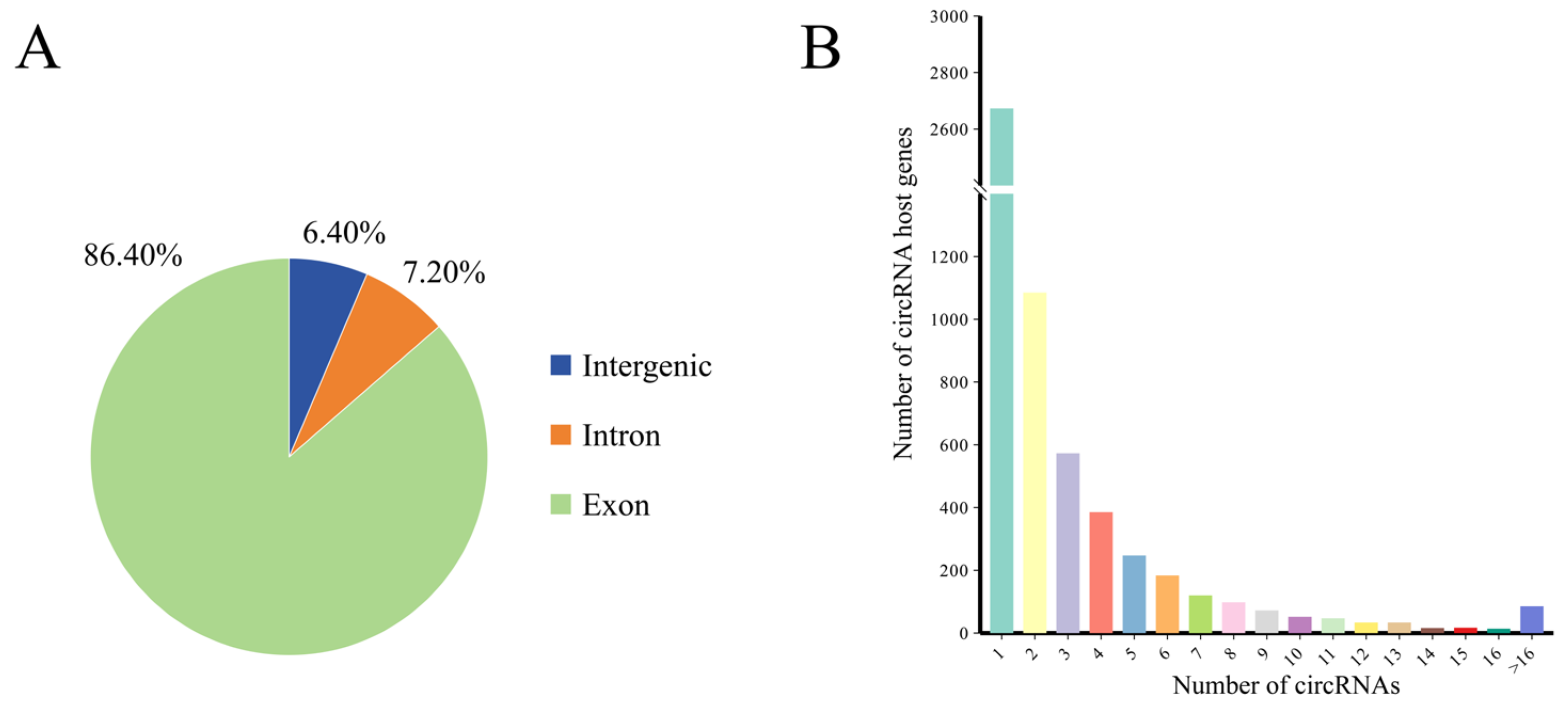
In this study, 18,581 circRNAs were obtained from each SAT sample. The majority of circRNAs were exons (86.40%), followed by introns (7.20%), and some circRNAs were intergenic regions (6.40%) in the sheep adipose tissue (Figure 1A); these results are consistent with our previous studies [2]. These 18,581 circRNAs were formed by the transcription of 5733 host genes, demonstrating that some host genes can only produce one circRNA, while others can produce multiple circRNAs (Figure 1B). In sum, circRNAs and host genes are closely linked and collaborate to affect adipose tissue metabolism.

3.2. Analysis of Differentially Expressed CircRNAs

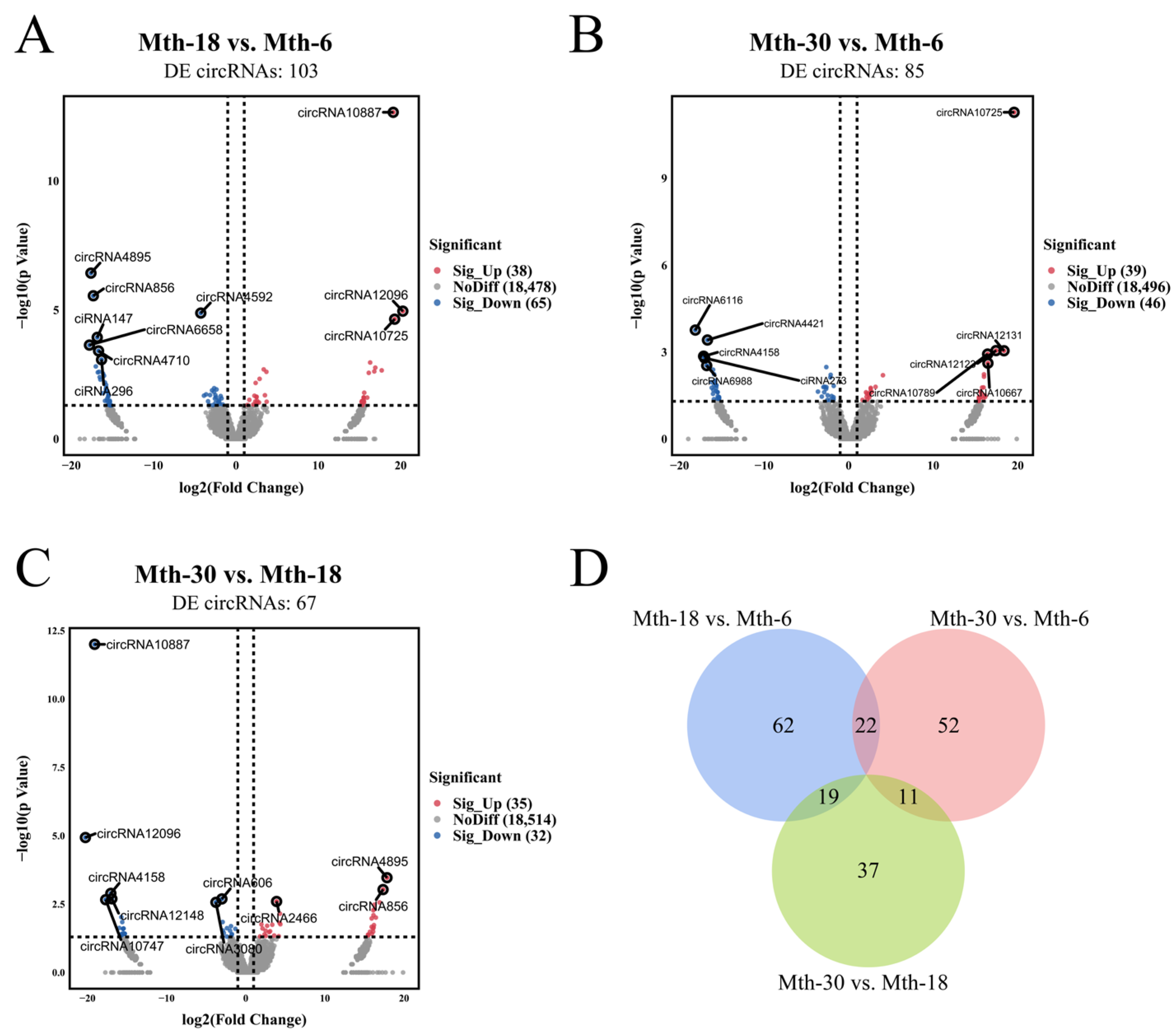
This study carried out a differential analysis of circRNAs to investigate their expression patterns during different stages of SAT development. For the comparisons of Mth-18 vs. Mth-6, Mth-30 vs. Mth-6, and Mth-30 vs. Mth-18, a total of 103 (38 upregulated and 65 downregulated), 85 (39 upregulated and 46 downregulated), and 67 (35 upregulated and 32 downregulated) differentially expressed (DE) circRNAs (p value < 0.05 and fold change >2 or <0.5) were identified, respectively (Figure 2A–C). No overlap was detected between these three comparison groups (Figure 2D). These results demonstrate that the expression of circRNAs is variable during the development of SAT in Mongolian sheep.

3.3. GO Annotation and KEGG Pathway Analysis of DE CircRNA–Host Gene

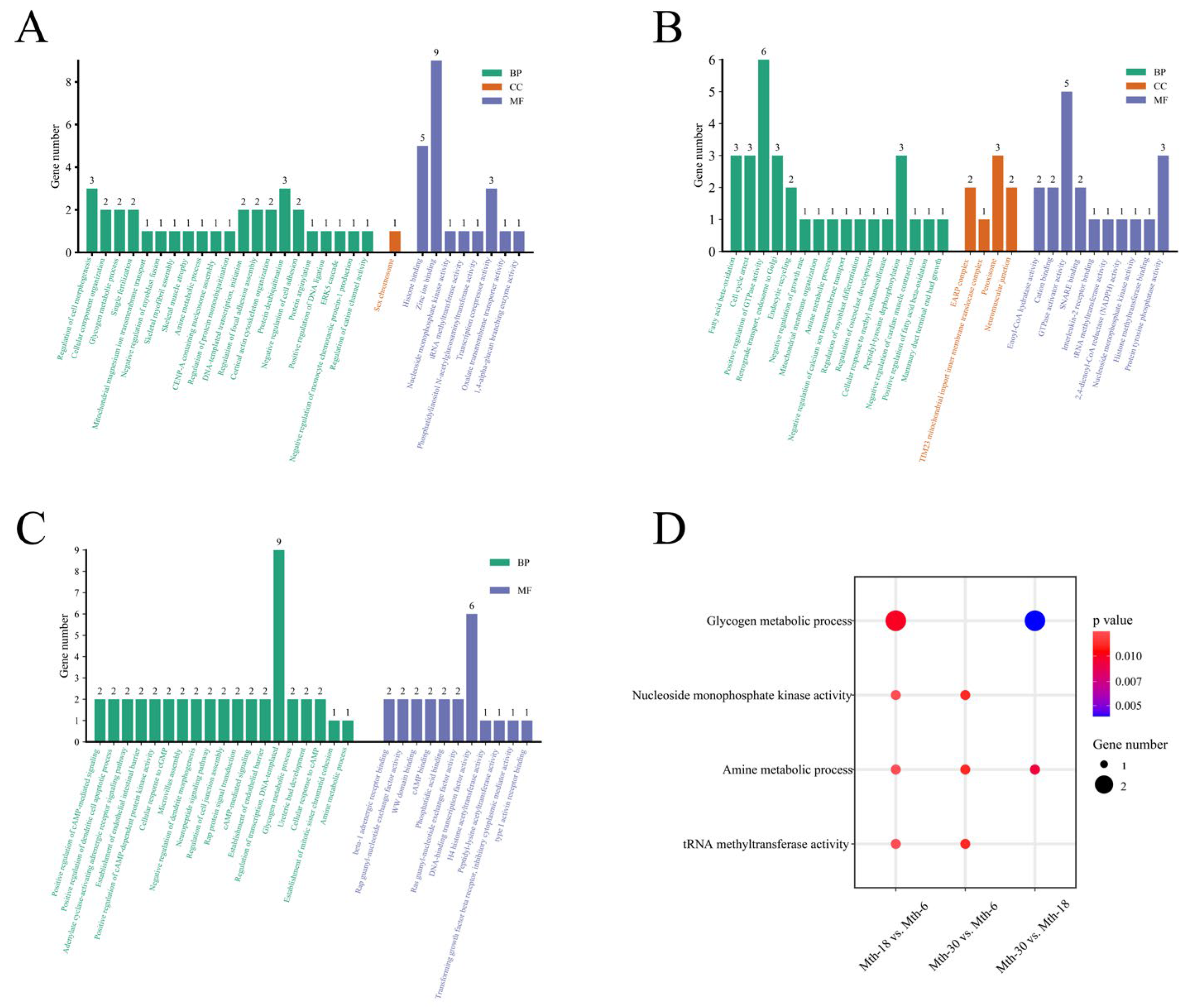
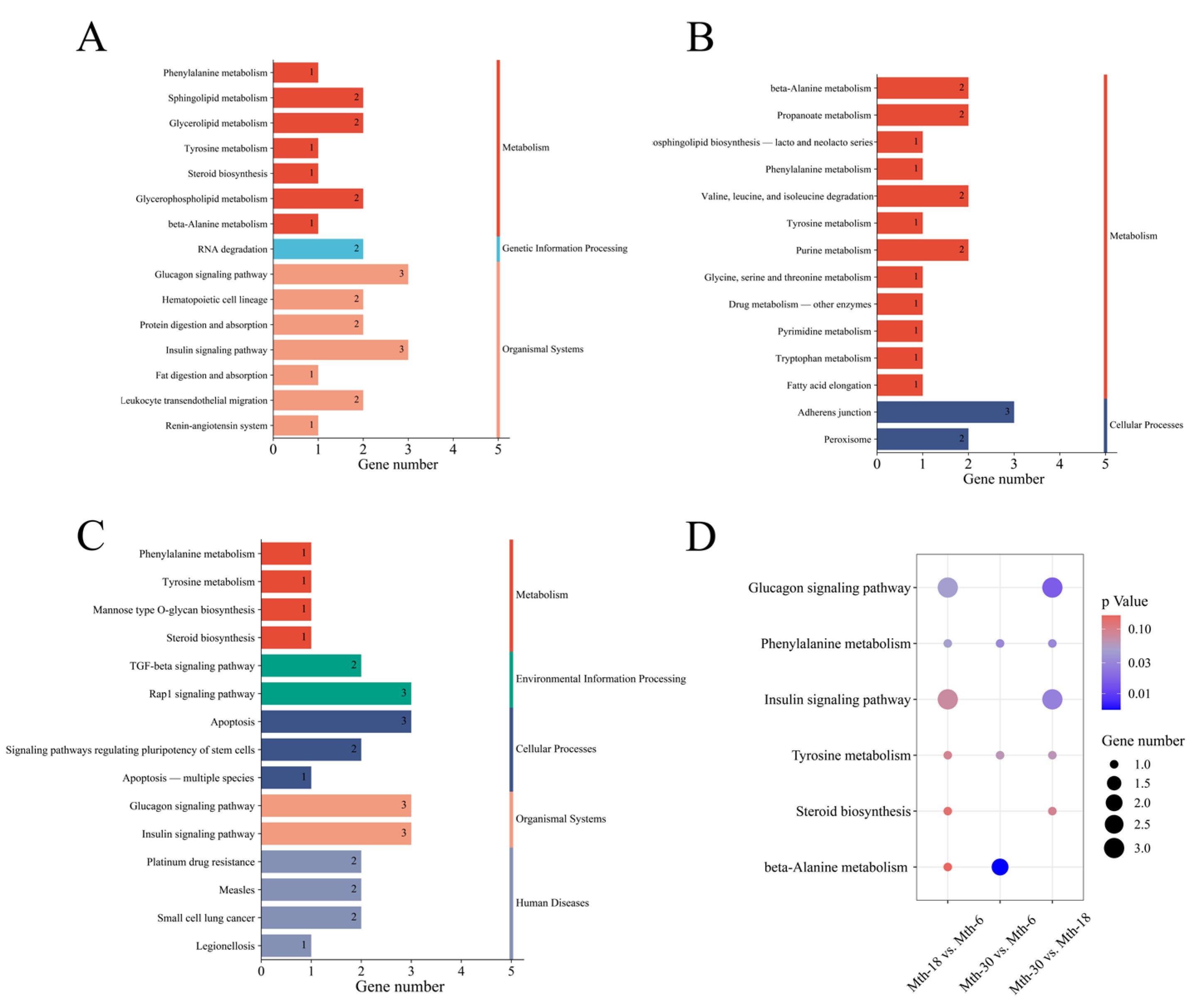
To elucidate the molecular mechanisms of circRNAs in the metabolism of Mongolian sheep SAT, this study performed GO and KEGG enrichment analyses on the host genes of DE circRNAs in different groups. Through an analysis of the top 30 GO terms, this study found that amine metabolic process was the only common GO enrichment term across the three comparison groups. In addition, there were some GO terms associated with biological processes, cellular components, and fat metabolism, such as nucleoside monophosphate kinase activity, phosphatidylinositol N-acetylglucosaminyltransferase activity, peroxisome, fatty acid beta-oxidation, and glycogen metabolic process (Figure 3). By analyzing the top 15 KEGG pathways, this study found a multitude of KEGG pathways associated with lipid metabolism (e.g., sphingolipid metabolism, glycerolipid metabolism, fat digestion and absorption, steroid biosynthesis glycerophospholipid metabolism), amino acid metabolism (e.g., phenylalanine metabolism; beta-alanine metabolism; valine, leucine, and isoleucine degradation; glycine, serine, and threonine metabolism), glucose metabolism (glycosphingolipid biosynthesis), and purine metabolism. In addition, a number of pathways were associated with cell formation, such as adherens junction, cell adhesion molecules, apoptosis, and signaling pathways regulating the pluripotency of stem cells (Figure 4). Thus, DE circRNAs may influence adipose tissue metabolism by regulating genes associated with these functions. This study screened for key DE circRNAs based on their host genes and the enrichment analysis results. In particular, this study further analyzed the KEGG pathways related to lipid metabolism (Table 1, Table 2 and Table 3). circRNA7989 was upregulated in the Mth-18 vs. Mth-6 comparison, and the host gene is GPAT3, which was found to be enriched in glycerol ester metabolism and glycerophospholipid metabolism. The host gene HADHA of circRNA2263 was enriched in fatty acid elongation; β-alanine metabolism; tryptophan metabolism; and valine, leucine, and isoleucine degradation. circRNA4685 and circRNA4786 were derived from the host genes CerS5 (ENSOARG00000017904) and ACER3 (ENSOARG00000013240), respectively, which were enriched in sphingolipid metabolism. In addition, ciRNA273, ciRNA275, ciRNA277, and ciRNA423 were derived from the host gene VAP (ENSOARG00000004027/primary-amine oxidase), which was enriched in the pathways related to phenylalanine metabolism; tyrosine metabolism; β-alanine metabolism; and glycine, serine, and threonine metabolism. Compared with Mth-6, ciRNA277 and ciRNA423 were upregulated and ciRNA273 was downregulated in Mth-18 and Mth-30, which indicate that DE circRNAs affect adipose tissue metabolism by regulating host gene expression.

3.4. The Analysis of ceRNA Co-Expression Network

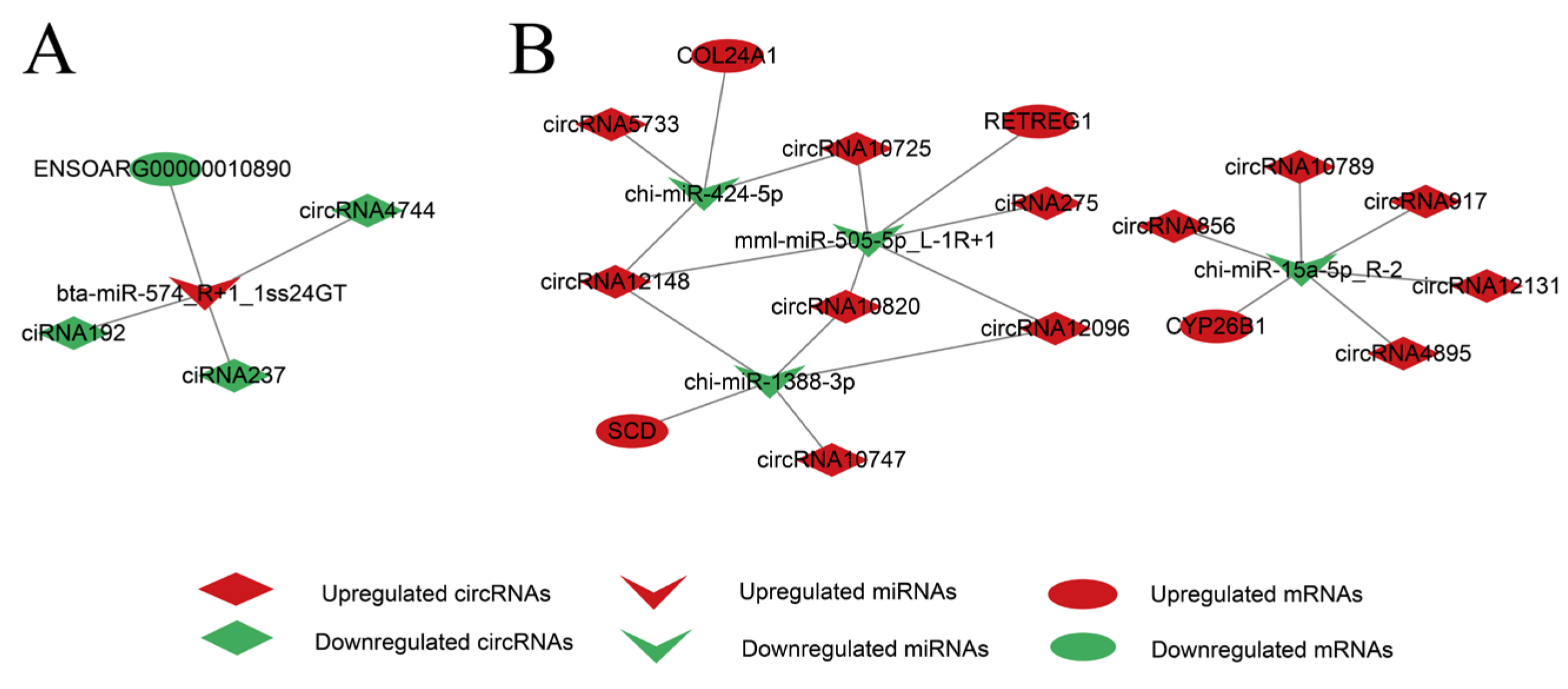
Circular RNAs function as competitive endogenous (ce) RNAs by sequestering miRNAs, thereby altering the transcriptional output of miRNA–targeted mRNAs. To delve deeper into the regulatory mechanism, this study screened for miRNA–target pairs with negative regulatory relationships to build circRNA-miRNA-mRNA networks (Down–Up–Down mode and Up–Down–Up mode) (Figure 5). The screened mRNAs are closely related to adipose tissue metabolism. In the Down–Up–Down mode, we identified three DE circRNAs (ciRNA192, ciRNA237, and circRNA4744) that competitively bind to one DE miRNA (bta-miR-574_R+1_1ss24GT), thereby affecting the expression of one DEG (ENSOARG00000010890). In the Up–Down–Up mode, 12 DE circRNAs were identified that competitively bind to four DE miRNAs, thereby affecting the expression of four DEGs. Notably, five DE circRNAs were found to competitively bind to chi-miR-15a-5p_R-2, thus exerting a regulatory effect on CYP26B1. Moreover, four DE circRNAs were found to competitively bind to chi-miR-1388-3p, thus exerting an indirect regulatory effect on SCD. These results demonstrate that DE circRNAs competitively bind to DE miRNAs, thereby leading to an alteration in the expression of mRNA that are involved in the metabolism of fats.

3.5. Validation of CircRAN-Seq and the Regulation of CircRNAs, miRNAs, and mRNAs

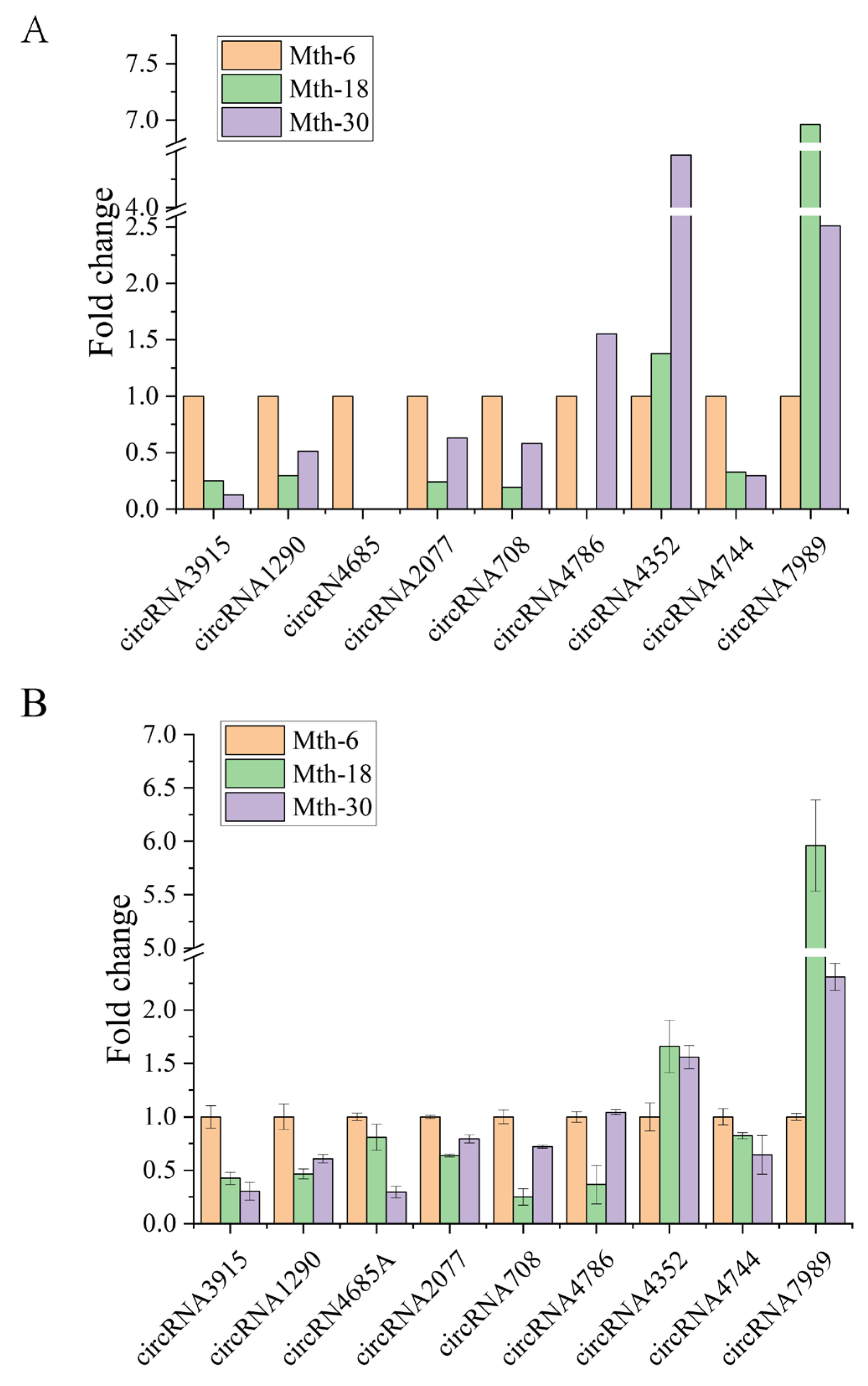
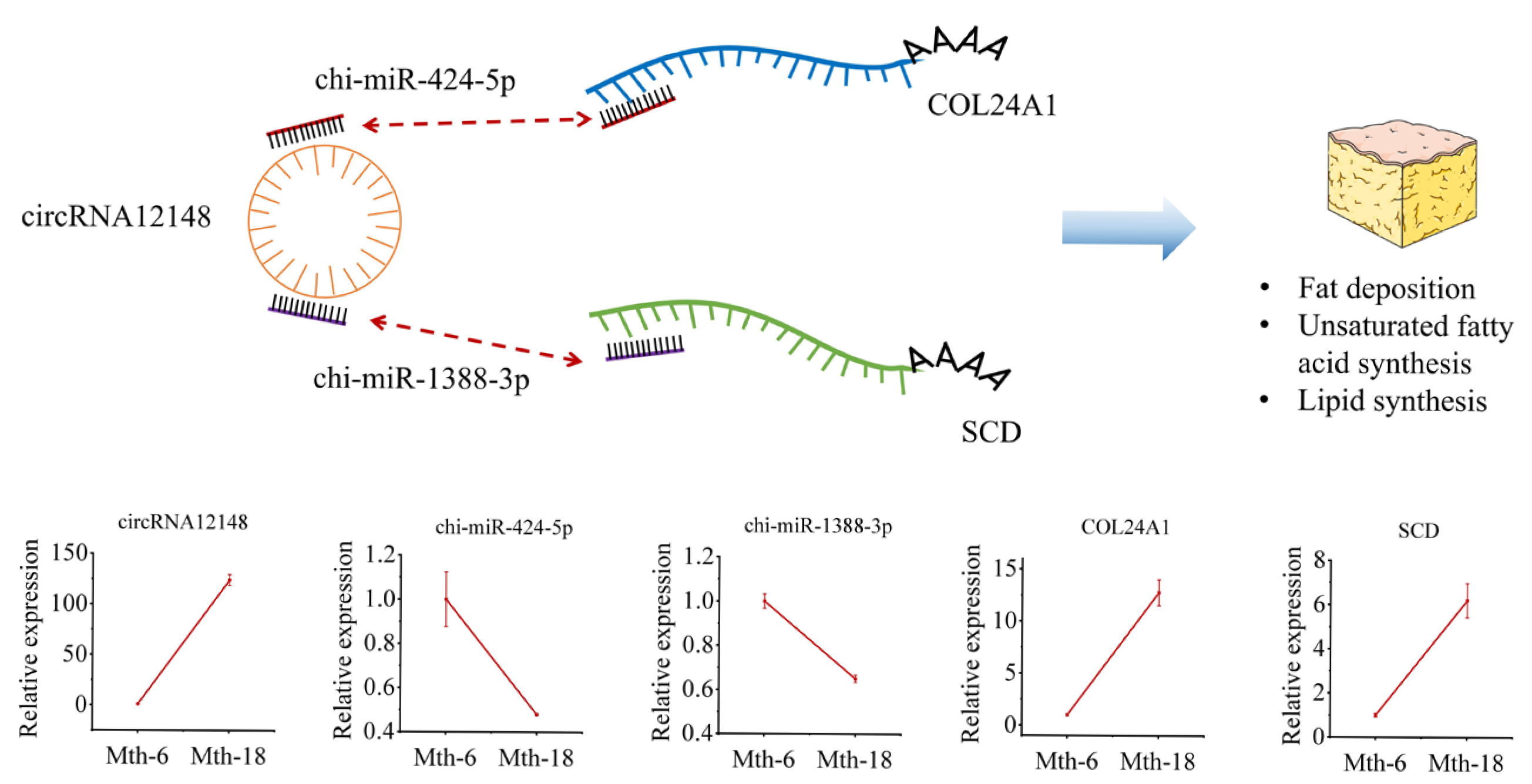
To verify the sequencing data, circRNAs were chosen randomly to assess their expression levels via RT-qPCR (Figure 6). The expression patterns were in line with the circRNA-seq results, suggesting that the data of circRNA-seq were trustworthy. In addition, this study validated the screened ceRNAs by qRT-PCR; as shown in Figure 7, it was observed that the expression trend of chi-miR-424-5p was opposite to that of circRNA12148 and COL24A1, while the expression trend of chi-miR-1388-3p was opposite to that of circRNA12148 and SCD.

4. Discussion

Our previous research has shown that fat deposition increases through adipocyte proliferation as sheep grow under natural grazing conditions, which is accompanied by an enhancement in fatty acid elongation [22]. Recent studies have revealed that many circRNAs influence adipocyte formation and adipose tissue metabolism [14,26,27]. The potential role and effect of circRNAs in the development of SAT in Mongolian sheep remains largely unclear. This study compared the circRNA profiles in the SAT of naturally grazed sheep at different growth stages and screened for DE circRNAs to explore the metabolic mechanisms of circRNAs in sheep adipose tissue, in conjunction with mRNAs and miRNAs.
A total of 18,581 circRNAs were detected in the SAT of Mongolian sheep, which were formed by the transcription of 5733 host genes. In a previous study, 17,531 circRNAs were identified in the tail of sheep, which were formed by the transcription of 4767 host genes [2]. This study found a greater number of circRNAs and host genes in the SAT than in the tail. Although the adipose tissue in both parts was WAT, circRNAs were more active in the SAT, which may be related to its function. Further, this study filtered the DE circRNAs in different growth stages. A total of 103 (38 upregulated and 65 downregulated), 85 (39 upregulated and 46 downregulated), and 67 (35 upregulated and 32 downregulated) DE circRNAs were identified in the comparisons of Mth-18 vs. Mth-6, Mth-30 vs. Mth-6, and Mth-30 vs. Mth-18, respectively. This study found a greater proportion of downregulated DE circRNAs in Mth-18 and Mth-30 compared with Mth-6, suggesting that circRNAs are more active in early SAT development.
It is well known that the main mechanism of action of circRNAs is to affect the expression of their host genes [28,29,30]. Therefore, this study explored the role of circRNAs in the regulation of adipose metabolism by analyzing the GO terms and KEGG pathway enrichment of their host genes. Through an analysis of the top 30 GO terms, this study found that amine metabolic process was the only common GO enrichment term across the three comparison groups. In addition, there were some GO terms with relevance to biological processes, cellular composition, and fat metabolism. Through an analysis of the top 15 KEGG pathways, this study found a multitude of KEGG pathways associated with lipid metabolism, amino acid metabolism, glucose metabolism, and purine metabolism. These results suggest that DE circRNAs may influence fat metabolism by modulating the expression of their host genes. Among the KEGG pathways, the lipid metabolism-related pathways are sphingolipid metabolism, glycerolipid metabolism, insulin signaling pathway, fat digestion and absorption, glycosphingolipid biosynthesis, steroid biosynthesis, glycerophospholipid metabolism, and fatty acid elongation. The DE circRNAs enriched in these pathways include circRNA4685, circRNA4786, circRNA4592, and circRNA7989, which are derived from the host genes CerS5, ACER3, MBOAT2, and GPAT3, respectively. CerS5 is a major ceramide synthetase and regulates phosphatidylcholine synthesis [31]. A previous study has revealed that the knockdown of GPAT3 in 3T3-L1 adipocytes, which is induced during differentiation, reduces lipid accumulation and downregulates the expression of PPARγ and SREBP1c [32]. Thus, it is possible that circRNA7989 regulated the GPAT3 expression and increased the fat deposition in Mth-30 compared with Mth-18. The HADHA gene is responsible for encoding the alpha subunit of MTP, which plays a crucial role in catalyzing the final three steps of the mitochondrial beta-oxidation process of long-chain fatty acids [33]. circRNA2263 was significantly downregulated in the Mth-30 vs. Mth-18 comparison group, possibly reducing fatty acid β-oxidation by modulating HADHA expression. In addition, ciRNA273, ciRNA275, ciRNA277, and ciRNA423 are derived from VAP and are enriched in amino acid metabolic pathways such as phenylalanine metabolism, tyrosine metabolism, β-alanine metabolism, and glycine, serine, and threonine metabolism. A study showed that inhibiting the expression of VAP reduced adipose tissue deposition [34]. In this study, the expression of ciRNA277 and ciRNA423 was upregulated in Mth-18 and Mth-30 compared with Mth-6, which might have affected adipose tissue deposition by regulating the expression of VAP. In summary, the expression of circRNAs in Mongolian sheep SAT demonstrate significant variation across different growth stages. The results reveal several DE circRNAs, including circRNA4685, circRNA4786, circRNA4592, circRNA7989, circRNA2263, circRNA273, ciRNA275, ciRNA277, and ciRNA423, as key factors influencing adipose tissue metabolism. Variations in the expression of these circRNAs influence adipocyte proliferation and fat deposition. In breeding programs, the expression of these circRNAs might be optimized to achieve specific fat deposition objectives. Importantly, the functional significance of these circRNAs requires further investigation through in cellular or animal experiments.
We constructed the circRNA-miRNA-mRNA networks to delve deeper into the regulatory mechanism. In the Down–Up–Down mode, we identified three DE circRNAs (ciRNA192, ciRNA237, and circRNA4744) that can competitively bind to bta-miR-574_R+1_1ss24GT, thereby affecting the expression of one DEG (ENSOARG00000010890/PDPN). A previous study demonstrated that podoplanin (PDPN) expression in monocytes plays a pivotal role in driving brown adipose tissue hypertrophy and modulating matrix remodeling [35]. The treatment of L-O2 cells with a miR-574–5p mimic In in vitro experiments suggested that miR-574–5p can inhibit lipid accumulation and lipid formation induced by OA [36]. In our study, three DE circRNAs were identified that competitively bind to bta-miR-574_R+1_1ss24GT, which may inhibit PDPN expression and thus affect BAT production. In the Up–Down–Up mode, five DE circRNAs (circRNA10789, circRNA12131, circRNA4895, circRNA856, and circRNA917) were found to competitively bind to chi-miR-15a-5p_R-2 and inhibit its expression, thus exerting a regulatory effect on CYP26B1, which may promote adipocyte differentiation. CYP26B1 functions as a retinoic acid hydroxylase and is mainly responsible for regulating the cellular levels of all-trans retinoic acid. Retinoic acid, a derivative of vitamin A, is crucial for cell growth and differentiation [37]. Previous research has indicated that retinoids, especially retinoic acid, are of vital importance in the adipose differentiation process [38,39]. A study showed that miR-15a is involved in the development and metabolism of preadipocytes [40]. The results of this study suggest that the expression of these genes may promote the differentiation of SAT adipocytes during the growth of sheep. COL24A1 encodes for extracellular matrix (ECM) proteins [41]. Adipocyte differentiation, structural reorganization, and functional performance are profoundly shaped by the surrounding extracellular matrix (ECM); additionally, the ECM governs adipose tissue remodeling through its regulation of cell–matrix interactions, signaling cascades, and bioactive factor secretion [42]. During the growth of Mongolian sheep, three DE circRNAs (circRNA10725, circRNA12148, and circRNA5733) were found to enhance COL24A1 expression by competitively binding to chi-miR-424-5p, thereby promoting adipocyte hyperplasia and fat deposition, which is consistent with the findings from previous studies [22]. SCD, an enzyme located in the endoplasmic reticulum, catalyzes the synthesis of monounsaturated fatty acids. This process supplies substrates for the synthesis of TG [43]. Activation of SCD has been reported to promote lipid accumulation [44]. There are four DE circRNAs (circRNA10747, circRNA10820, circRNA12096, and circRNA12148) that competitively bind to chi-miR-1388-3p and inhibit its expression, which may consequently promote SCD expression during the growth of sheep. This effect is conducive to fat deposition and is also consistent with previous findings [22]. These findings indicate that targeted regulation of circRNA10747, circRNA10820, circRNA12096, and circRNA12148 expression might modulate SCD levels, thereby influencing lipid metabolism and presenting a potential strategy for enhancing meat quality. Notably, circRNA12148 also competitively binds to chi-miR-424-5p and chi-miR-1388-3p, thereby exerting regulatory effects on COL24A1 and SCD, respectively. These results indicate that DE circRNAs can competitively bind to miRNAs to modulate the expression of adipose metabolism-related genes and exert regulatory effects on adipocyte differentiation, unsaturated fatty acid synthesis, lipid synthesis, and fat deposition. Given the constraints of the modest sample size in this investigation and the intricate nature of gene regulatory networks, further investigation employing knockdown, overexpression, and luciferase reporter assays in cellular or animal models is essential to elucidate the precise regulatory mechanisms of these circRNAs. This study provides a theoretical basis for sheep breeding and meat quality regulation.

5. Conclusions

This study compared the expression of circRNAs in Mongolian sheep SAT at different growth stages and examined their potential role. A total of 18,581 circRNAs were detected in the SAT. Among them, 203 DE circRNAs were identified at different growth stages, whose host genes were found to be enriched in lipid, amino acid, glucose, and purine metabolism. Moreover, ceRNA networks were constructed by combining miRNA data with mRNA data. Several candidate circRNAs, such as circRNA4744, circRNA12148, circRNA10725, and circRNA4895, potentially influence adipocyte hyperplasia, TG synthesis, and fat deposition by sequestering bta-miR-574_R+1_1ss24GT, chi-miR-15a-5p_R-2, chi-miR-15a-5p_R-2, and chi-miR-1388-3p to regulate the expression of PDPN, CYP26B1, COL24A1, and SCD. The results indicate that circRNAs and ceRNAs may play important roles in SAT metabolism and provide a theoretical basis for breeding and meat quality regulation, for example, by modulating key genes such as circRNA4744, circRNA12148, circRNA10725, and circRNA4895.

Supplementary Materials

The following supporting information can be downloaded at: https://www.mdpi.com/article/10.3390/agriculture16040402/s1, Table S1: RNAs primer sequences.

Author Contributions

Conceptualization: Y.H. (Yunfei Han), Y.Y. and G.B.; Methodology: Y.H. (Yunfei Han), Y.Y. and G.B.; Software: Y.H. (Yunfei Han), X.H., Y.H. (Yajuan Huang) and L.C.; Validation: Y.H. (Yunfei Han) and X.H.; Formal analysis: Y.H. (Yunfei Han) and Y.Y.; Investigation: Y.H. (Yunfei Han), Y.H. (Yajuan Huang), L.C. and X.H.; Resources: G.B.; Data curation: Y.H. (Yunfei Han) and X.H.; Writing—original draft preparation: Y.H. (Yunfei Han); Writing—review and editing: Y.H. (Yunfei Han), Y.Y., X.H. and G.B.; Visualization: Y.H. (Yunfei Han), X.H. and Y.Y.; Supervision: G.B.; Project administration: G.B.; Funding acquisition: G.B., Y.Y. and X.H. All authors have read and agreed to the published version of the manuscript.

Funding

This research was funded by the China Agriculture Research System of MOF and MARA (China; CARS38) and the Natural Science Foundation of Inner Mongolia (China; 2024QN03009 and 2023MS03038).

Institutional Review Board Statement

This study was approved by the Specialized Committee on Scientific Research and Academic Ethics of Inner Mongolia Agricultural University (approval document number [2020]022).

Data Availability Statement

The original data presented in this study are openly available in the NCBI SRA database at https://submit.ncbi.nlm.nih.gov/subs/sra/ (accessed on 11 December 2024) or PRJNA1215330.

Conflicts of Interest

The authors declare no conflicts of interest.

Abbreviations

The following abbreviations are used in this manuscript:
circRNAscircular RNAs
SATsubcutaneous adipose tissue
DEdifferentially expressed
ceRNAcompeting endogenous RNA
GOGene Ontology
KEGGKyoto encyclopedia of genes and genomes

References

  1. Deng, K.; Ren, C.; Liu, Z.; Gao, X.; Fan, Y.; Zhang, G.; Zhang, Y.; Ma, E.S.; Wang, F.; You, P. Characterization of RUNX1T1, an Adipogenesis Regulator in Ovine Preadipocyte Differentiation. Int. J. Mol. Sci. 2018, 19, 1300. [Google Scholar] [CrossRef]
  2. He, X.; Wu, R.; Yun, Y.; Qin, X.; Huang, Y.; Chen, L.; Han, Y.; Wu, J.; Sha, L.; Borjigin, G. MicroRNA and circular RNA profiling in the deposited fat tissue of Sunite sheep. Front. Vet. Sci. 2022, 9, 954882. [Google Scholar] [CrossRef] [PubMed]
  3. Junior, F.F.; de Freitas Pena, A.; Grandis, F.A.; Koritiaki, N.A.; de Almeida Rego, F.C.; dos Santos, R.M.; de Azambuja Ribeiro, E.L. Subcutaneous fat thickness at slaughter in castrated and non-castrated Santa Inês and Dorper lambs and its influence on meat and carcass quality. Livest. Sci. 2021, 253, 104694. [Google Scholar] [CrossRef]
  4. Ugnivenko, A.; Kruk, O.; Nosevych, D.; Antoniuk, T.; Kryzhova, Y.; Gruntovskyi, M.; Prokopenko, N.; Yemtcev, V.; Kharsika, I.; Nesterenko, N. The expressiveness of meat forms of cattle depending on the content of adipose tissue under the skin and between the muscles. Potravin. Slovak J. Food Sci. 2023, 17, 358–370. [Google Scholar] [CrossRef] [PubMed]
  5. Liu, T.Y.; Feng, H.; Yousuf, S.; Xie, L.L.; Miao, X.Y. Functional analysis of differentially expressed circular RNAs in sheep subcutaneous fat. BMC Genom. 2023, 24, 591. [Google Scholar] [CrossRef]
  6. Manzano, M.; Giron, M.D.; Salto, R.; Vilchez, J.D.; Reche-Perez, F.J.; Cabrera, E.; Linares-Pérez, A.; Plaza-Díaz, J.; Ruiz-Ojeda, F.J.; Gil, A.; et al. Quality More Than Quantity: The Use of Carbohydrates in High-Fat Diets to Tackle Obesity in Growing Rats. Front. Nutr. 2022, 9, 809865. [Google Scholar] [CrossRef]
  7. Kowalczyk-Bołtuć, J.; Wiórkowski, K.; Bełtowski, J. Effect of Exogenous Hydrogen Sulfide and Polysulfide Donors on Insulin Sensitivity of the Adipose Tissue. Biomolecules 2022, 12, 646. [Google Scholar] [CrossRef]
  8. Shao, X.; Lu, X.; Sun, X.; Jiang, H.; Chen, Y. Preliminary studies on the molecular mechanism of intramuscular fat deposition in the longest dorsal muscle of sheep. BMC Genom. 2024, 25, 592. [Google Scholar] [CrossRef]
  9. Yu, C.; Kuo, H. The emerging roles and functions of circular RNAs and their generation. J. Biomed. Sci. 2019, 26, 29. [Google Scholar] [CrossRef]
  10. Patop, I.L.; Wüst, S.; Kadener, S. Past, present, and future of circRNAs. EMBO J. 2019, 38, e100836. [Google Scholar] [CrossRef]
  11. Jiang, R.; Li, H.; Yang, J.; Shen, X.; Song, C.; Yang, Z.; Wang, X.; Huang, Y.; Lan, X.; Lei, C.; et al. circRNA Profiling Reveals an Abundant circFUT10 that Promotes Adipocyte Proliferation and Inhibits Adipocyte Differentiation via Sponging let-7. Mol. Ther. Nucleic Acids 2020, 20, 491–501. [Google Scholar] [CrossRef]
  12. Li, Q.; Yao, H.; Wang, Y.; Wu, Y.; Thorne, R.; Zhu, Y.; Wu, M.; Liu, L. circPRKAA1 activates a Ku80/Ku70/SREBP-1 axis driving de novo fatty acid synthesis in cancer cells. Cell Rep. 2022, 41, 111707. [Google Scholar] [CrossRef] [PubMed]
  13. Yue, X.; Fan, M.; Liang, Y.; Qiao, L.; Liu, J.; Pan, Y.; Yang, K.; Liu, W. circITGB1 Regulates Adipocyte Proliferation and Differentiation via the miR-23a/ARRB1 Pathway. Int. J. Mol. Sci. 2023, 24, 1976. [Google Scholar] [CrossRef] [PubMed]
  14. Zhang, Y.; Guo, X.; Pei, J.; Chu, M.; Ding, X.; Wu, X.; Liang, C.; Yan, P. CircRNA Expression Profile during Yak Adipocyte Differentiation and Screen Potential circRNAs for Adipocyte Differentiation. Genes 2020, 11, 414. [Google Scholar] [CrossRef] [PubMed]
  15. Huang, J.; Zhao, J.; Zheng, Q.; Wang, S.; Wei, X.; Li, F.; Shang, J.; Lei, C.; Ma, Y. Characterization of Circular RNAs in Chinese Buffalo (Bubalusbubalis) Adipose Tissue: A Focus on Circular RNAs Involved in Fat Deposition. Animals 2019, 9, 403. [Google Scholar] [CrossRef]
  16. Yanjun, L.; Hongtao, L.; Yi, L.; Rui, M.; Huawu, Y.; Yuanchuan, Z.; Yu, Z.; Pengsen, G.; Dafang, Z.; Tongtong, Z. Circular RNA SAMD4A controls adipogenesis in obesity through the miR-138-5p/EZH2 axis. Theranostics 2020, 10, 4705–4719. [Google Scholar]
  17. Zhang, M.; Han, Y.; Zhai, Y.; Ma, X.; An, X.; Zhang, S.; Li, Z. Integrative analysis of circRNAs, miRNAs, and mRNAs profiles to reveal ceRNAs networks in chicken intramuscular and abdominal adipogenesis. BMC Genom. 2020, 21, 594. [Google Scholar] [CrossRef]
  18. Jin, W.; Zhao, Y.; Zhai, B.; Li, Y.; Fan, S.; Yuan, P.; Sun, G.; Jiang, R.; Wang, Y.; Liu, X.; et al. Characteristics and expression profiles of circRNAs during abdominal adipose tissue development in Chinese Gushi chickens. PLoS ONE 2021, 16, e0249288. [Google Scholar] [CrossRef]
  19. Li, Q.; Wang, L.; Xing, K.; Yang, Y.; Adetula, A.A.; Liu, Y.; Yi, G.; Zhang, H.; Sweeney, T.; Tang, Z. Identification of circRNAs Associated with Adipogenesis Based on RNA-seq Data in Pigs. Genes 2022, 13, 2062. [Google Scholar] [CrossRef]
  20. Wang, J.; Yang, Y.; Xing, B.; Chen, J.; Lu, Q.; Zhang, J.; Ren, Q.; Ma, Q.; Guo, H.; Cao, H. Castration induced circRNA expressional changes in subcutaneous adipose tissue of male pigs. Anim. Sci. J. 2021, 92, e13648. [Google Scholar] [CrossRef]
  21. Feng, H.; Yousuf, S.; Liu, T.; Zhang, X.; Huang, W.; Li, A.; Xie, L.; Miao, X. The comprehensive detection of miRNA and circRNA in the regulation of intramuscular and subcutaneous adipose tissue of Laiwu pig. Sci. Rep. 2022, 12, 16542. [Google Scholar] [CrossRef] [PubMed]
  22. Han, Y.; He, X.; Yun, Y.; Chen, L.; Huang, Y.; Wu, Q.; Qin, X.; Wu, H.; Wu, J.; Sha, R.; et al. The Characterization of Subcutaneous Adipose Tissue in Sunit Sheep at Different Growth Stages: A Comprehensive Analysis of the Morphology, Fatty Acid Profile, and Metabolite Profile. Foods 2024, 13, 544. [Google Scholar] [CrossRef] [PubMed]
  23. He, X.; Han, Y.; Chen, L.; Yun, Y.; Huang, Y.; Borjigin, G.; Nashun, B. Mechanisms of Adipose Tissue Metabolism in Naturally Grazing Sheep at Different Growth Stages: Insights from mRNA and miRNA Profiles. Int. J. Mol. Sci. 2025, 26, 3324. [Google Scholar] [CrossRef] [PubMed]
  24. Zhang, X.; Dong, R.; Zhang, Y.; Zhang, J.; Luo, Z.; Zhang, J.; Chen, L.; Yang, L. Diverse alternative back-splicing and alternative splicing landscape of circular RNAs. Genome Res. 2016, 26, 1277–1287. [Google Scholar] [CrossRef]
  25. Zhang, X.; Wang, H.; Zhang, Y.; Lu, X.; Chen, L.; Yang, L. Complementary sequence-mediated exon circularization. Cell 2014, 159, 134–147. [Google Scholar] [CrossRef]
  26. Zhu, R.; Feng, Y.; Yang, X.; Li, R.; Song, Z.; Liu, Q.; Shi, D.; Huang, J. Functionally conserved PPARG exonic circRNAs enhance intramuscular fat deposition by regulating PPARG and HSL. Int. J. Biol. Macromol. 2023, 257, 128613. [Google Scholar] [CrossRef]
  27. Liu, S.; Yang, Y.; Luo, H.; Pang, W.; Martin, G.B. Fat deposition and partitioning for meat production in cattle and sheep. Anim. Nutr. 2024, 17, 376–386. [Google Scholar] [CrossRef]
  28. Li, Y.; Ren, S.; Xia, J.; Wei, Y.; Xi, Y. EIF4A3-Induced circ-BNIP3 Aggravated Hypoxia-Induced Injury of H9c2 Cells by Targeting miR-27a-3p/BNIP3. Mol. Ther. Nucleic Acids 2020, 19, 533–545. [Google Scholar] [CrossRef]
  29. Li, Z.; Huang, C.; Bao, C.; Chen, L.; Lin, M.; Wang, X.; Zhong, G.; Yu, B.; Hu, W.; Dai, L.; et al. Exon-intron circular RNAs regulate transcription in the nucleus. Nat. Struct. Mol. Biol. 2015, 22, 256–264. [Google Scholar] [CrossRef]
  30. Conn, V.M.; Hugouvieux, V.; Nayak, A.; Conos, S.A.; Capovilla, G.; Cildir, G.; Jourdain, A.; Tergaonkar, V.; Schmid, M.; Zubieta, C.; et al. A circRNA from SEPALLATA3 regulates splicing of its cognate mRNA through R-loop formation. Nat. Plants 2017, 3, 17053. [Google Scholar] [CrossRef]
  31. Vazquez, A.I.; Bates, D.M.; Rosa, C.J.M.; Gianola, D.; Weigel, K.A. Technical note: An R package for fitting generalized linear mixed models in animal breeding. J. Anim. Sci. 2010, 88, 497–504. [Google Scholar] [CrossRef] [PubMed]
  32. Alves-Bezerra, M.; Ramos, I.B.; De Paula, I.F.; Maya-Monteiro, C.M.; Klett, E.L.; Coleman, R.A.; Gondim, K.C. Deficiency of glycerol-3-phosphate acyltransferase 1 decreases triacylglycerol storage and induces fatty acid oxidation in insect fat body. Biochim. Biophys. Acta Mol. Cell Biol. Lipids 2017, 1862, 324–336. [Google Scholar] [CrossRef] [PubMed]
  33. Maeyashiki, C.; Oshima, S.; Otsubo, K.; Kobayashi, M.; Nibe, Y.; Matsuzawa, Y.; Onizawa, M.; Nemoto, Y.; Nagaishi, T.; Okamoto, R.J.B.; et al. HADHA, the alpha subunit of the mitochondrial trifunctional protein, is involved in long-chain fatty acid-induced autophagy in intestinal epithelial cells. Biochem. Biophys. Res. Commun. 2017, 484, 636–641. [Google Scholar] [CrossRef] [PubMed]
  34. Haj Ahmed, W.; Peiro, C.; Fontaine, J.; Ryan, B.J.; Kinsella, G.K.; O’Sullivan, J.; Grolleau, J.L.; Henehan, G.T.M.; Carpéné, C. Methylxanthines Inhibit Primary Amine Oxidase and Monoamine Oxidase Activities of Human Adipose Tissue. Medicines 2020, 7, 18. [Google Scholar] [CrossRef]
  35. Gallerand, A.; Stunault, M.I.; Merlin, J.; Luehmann, H.P.; Sultan, D.H.; Firulyova, M.M.; Magnone, V.; Khedher, N.; Jalil, A.; Dolfi, B.; et al. Brown adipose tissue monocytes support tissue expansion. Nat. Commun. 2021, 12, 5255. [Google Scholar] [CrossRef]
  36. Li, J.; Song, H.; Chen, Z.; Yang, Q.; Yang, Z.; Yan, C.; Zhong, C. MicroRNA-574-5p targeting HOXC6 expression inhibits the hepatocyte lipid uptake to alleviate non-alcoholic fatty liver disease. Exp. Cell Res. 2023, 428, 113631. [Google Scholar] [CrossRef]
  37. Caryn, C.; Lawson, H.A. Genetic background and diet affect brown adipose gene coexpression networks associated with metabolic phenotypes. Physiol. Genom. 2020, 52, 223–233. [Google Scholar] [CrossRef]
  38. Kuri-Harcuch, W. Differentiation of 3T3-F442A cells into adipocytes is inhibited by retinoic acid. Differentiation 1982, 23, 164–169. [Google Scholar] [CrossRef]
  39. Warrener, P.; Petryshyn, R.N. Phosphorylation and proteolytic degradation of nucleolin from 3T3-F442A cells. Biochem. Biophys. Res. Commun. 1991, 180, 716–723. [Google Scholar] [CrossRef]
  40. Wang, W.; Du, Z.; Cheng, B.; Wang, Y.; Yao, J.; Li, Y.; Cao, Z.; Luan, P.; Wang, N.; Li, H. Expression profiling of preadipocyte microRNAs by deep sequencing on chicken lines divergently selected for abdominal fatness. PLoS ONE 2015, 10, e0117843. [Google Scholar] [CrossRef]
  41. Pace, J.M.; Corrado, M.; Missero, C. Identification, characterization and expression analysis of a new fibrillar collagen gene, COL27A1. Matrix Biol. 2003, 22, 3–14. [Google Scholar] [CrossRef]
  42. Chen, G.; Lin, Z.; Peng, H.; Zhang, S.; Zhang, Z.; Zhang, X.; Nie, Q.; Luo, W. The transmembrane protein TMEM182 promotes fat deposition and alters metabolomics and lipidomics. Int. J. Biol. Macromol. 2024, 259, 129144. [Google Scholar] [CrossRef]
  43. Fang, J.; Wang, F.; Song, H.; Wang, Z.; Gou, L. AMPKα pathway involved in hepatic triglyceride metabolism disorder in diet-induced obesity mice following Escherichia coli Infection. Aging 2018, 10, 3161–3172. [Google Scholar] [CrossRef]
  44. Ntambi, J.M.; Miyazaki, M.; Stoehr, J.P.; Lan, H.; Kendziorski, C.M.; Yandell, B.S.; Song, Y.; Cohen, P.; Friedman, J.M.; Attie, A.D. Loss of stearoyl-CoA desaturase-1 function protects mice against adiposity. Proc. Natl. Acad. Sci. USA 2002, 99, 11482–11486. [Google Scholar] [CrossRef]
Figure 1. Characteristics of circRNAs in SAT. (A): Distribution of circRNAs. (B): Number of circRNA host genes.
Agriculture 16 00402 g001
Figure 2. DE circRNAs in Mth-18 vs. Mth-6 (A), Mth-30 vs. Mth-6 (B), and Mth-30 vs. Mth-6 (C); (D) Venn diagram of DE circRNAs across different comparison groups.
Agriculture 16 00402 g002
Figure 3. GO terms of DE circRNAs. Top 30 GO terms of DE circRNAs in Mth-18 vs. Mth-6 (A), Mth-30 vs. Mth-6 (B), and Mth-30 vs. Mth-6 (C). (D): GO terms of different comparison groups.
Agriculture 16 00402 g003
Figure 4. KEGG pathway of DE circRNAs. Top 15 KEGG pathway of DEGs in Mth-18 vs. Mth-6 (A), Mth-30 vs. Mth-6 (B), and Mth-30 vs. Mth-6 (C). (D) KEGG pathways of different comparison groups.
Agriculture 16 00402 g004
Figure 5. The circRNA–miRNA–mRNA interaction networks. (A): Down–Up–Down (The expression of circRNAs, miRNAs, and mRNAs were downregulated, upregulated, and downregulated, respectively); (B): Up–Down–Up mode (The expression of circRNAs, miRNAs, and mRNAs were upregulated, downregulated, and upregulated, respectively).
Agriculture 16 00402 g005
Figure 6. RT-qPCR validation of circRNAs. (A) Relative expression of circRNA in circRNA-seq; (B) Relative expression of circRNA in qRT-PCR.
Agriculture 16 00402 g006
Figure 7. ceRNA regulatory network and RT-qPCR validation.
Agriculture 16 00402 g007
Table 1. DE circRNAs and enrichment pathways in Mth-18 vs. Mth-6 comparison.
Pathway IDPathway NameGenes
ko04922Glucagon signaling pathwaycircRNA4895 ↓ (ENSOARG00000016405); circRNA771 ↑ (PDE3B); circRNA856 ↓ (PHKB)
ko00360Phenylalanine metabolismciRNA273 ↓(ENSOARG00000004027); ciRNA275 ↑ (ENSOARG00000004027); ciRNA277 ↑ (ENSOARG00000004027)
ko04974Protein digestion and absorptioncircRNA10513 ↑ (MME);
circRNA6658 ↓ (ENSOARG00000006115)
ko00600Sphingolipid metabolismcircRNA4685 ↓ (ENSOARG00000017904); circRNA4786 ↓ (ENSOARG00000013240)
ko00561Glycerolipid metabolismcircRNA4592 ↓ (ENSOARG00000014789); circRNA7989 ↑ (GPAT3)
ko04910Insulin signaling pathwaycircRNA4895 ↓ (ENSOARG00000016405); circRNA771 ↑ (PDE3B); circRNA856(PHKB)
ko04975Fat digestion and absorptioncircRNA2077 ↓ (ENSOARG00000017123; CD36)
ko00350Tyrosine metabolismciRNA273 ↓ (ENSOARG00000004027); ciRNA275 ↑ (ENSOARG00000004027); ciRNA277 ↑ (ENSOARG00000004027)
ko03018RNA degradationcircRNA9834 ↑ (DCP2);
circRNA9961 ↑ (CNOT6L)
ko00100Steroid biosynthesiscircRNA2758 ↓ (FDFT1)
ko00564Glycerophospholipid
metabolism
circRNA4592 ↓ (ENSOARG00000014789);
circRNA7989 ↑ (GPAT3)
ko00410beta-Alanine metabolismciRNA273 ↓ (ENSOARG00000004027); ciRNA275 ↑ (ENSOARG00000004027); ciRNA277 ↑ (ENSOARG00000004027)
↑: represents were upregulated; ↓: represents were downregulated.
Table 2. DE circRNAs and enrichment pathways in Mth-30 vs. Mth-6 comparison.
Pathway IDPathway NameGenes
ko00410beta-Alanine metabolismcircRNA2263 ↓ (HADHA);
ciRNA273 ↓ (ENSOARG00000004027);
ciRNA423 ↑ (ENSOARG00000004027)
ko04520Adherens junctioncircRNA1377 ↓ (PTPRM);
circRNA3845 ↓ (ENSOARG00000006055);
circRNA3884 ↓ (ENSOARG00000019053); circRNA7761 ↑ (PTPRM)
ko00640Propanoate metabolismcircRNA2263 ↓ (HADHA);
circRNA2415 ↑ (ACSS3)
ko00601Glycosphingolipid biosynthesis—lacto and neolacto seriescircRNA10469 ↑ (ST3GAL6)
ko00360Phenylalanine metabolismciRNA273 ↓ (ENSOARG00000004027);
ciRNA423 ↑ (ENSOARG00000004027)
ko00280Valine, leucine and isoleucine
degradation
circRNA2263 ↓ (HADHA);
circRNA4352 ↑ (ENSOARG00000007832)
ko04514Cell adhesion molecules (CAMs)circRNA1377 ↓ (PTPRM);
circRNA2806 ↓ (ITGA6);
circRNA7761 ↑ (PTPRM)
ko00350Tyrosine metabolismciRNA273 ↓ (ENSOARG00000004027);
ciRNA423 ↑ (ENSOARG00000004027)
ko04146PeroxisomecircRNA10191 ↑ (ABCD2);
circRNA10667 ↑ (ENSOARG00000019350)
ko00230Purine metabolismcircRNA4521 ↓ (ENSOARG00000003146);
circRNA9912 ↑ (PDE5A)
ko00260Glycine, serine and threonine metabolismciRNA273 ↓ (ENSOARG00000004027);
ciRNA423 ↑ (ENSOARG00000004027)
ko00240Pyrimidine metabolismcircRNA4888 ↓ (ENSOARG00000014636)
ko00380Tryptophan metabolismcircRNA2263 ↓ (HADHA)
ko00062Fatty acid elongationcircRNA2263 ↓ (HADHA)
↑: represents were upregulated; ↓: represents were downregulated.
Table 3. DE circRNAs and enrichment pathways in Mth-30 vs. Mth-18 comparison.
Pathway IDPathway NameGenes
ko04922Glucagon signaling pathwaycircRNA4895 ↑ (ENSOARG00000016405);
circRNA856 ↑ (PHKB);
ciRNA206 ↓ (ENSOARG00000006076)
ko04210ApoptosiscircRNA1883 ↑ (PTPN13);
circRNA6060 ↓ (APAF1);
ciRNA206 ↓ (ENSOARG00000006076)
ko04910Insulin signaling pathwaycircRNA4895 ↑ (ENSOARG00000016405); circRNA856 ↑ (PHKB);
ciRNA206 ↓ (ENSOARG00000006076)
ko00360Phenylalanine metabolismciRNA275 ↓ (ENSOARG00000004027)
ko00350Tyrosine metabolismciRNA275 ↓ (ENSOARG00000004027)
ko04350TGF-beta signaling
pathway
circRNA1555 ↓ (SMAD6);
circRNA1951 ↑ (SMAD5)
ko04015Rap1 signaling pathwaycircRNA606 ↓ (RAPGEF2);
circRNA8869 ↑(ENSOARG00000002302); ciRNA206 ↓ (ENSOARG00000006076)
ko00515Mannose type O-glycan biosynthesiscircRNA8866 ↓ (ENSOARG00000018279)
ko00100Steroid biosynthesiscircRNA2758 ↑ (FDFT1)
ko04550Signaling pathways regulating pluripotency of stem cellscircRNA1951 ↑ (SMAD5);
ciRNA206 ↓ (ENSOARG00000006076)
ko04215Apoptosis—multiple
species
circRNA6060 ↓ (APAF1)
↑: represents were upregulated; ↓: represents were downregulated.
Disclaimer/Publisher’s Note: The statements, opinions and data contained in all publications are solely those of the individual author(s) and contributor(s) and not of MDPI and/or the editor(s). MDPI and/or the editor(s) disclaim responsibility for any injury to people or property resulting from any ideas, methods, instructions or products referred to in the content.