Review

Application-Oriented Valorization Routes and Arrangements for Agro-Industrial Residues and By-Products: A Scoping Review Across Sectors and Application Scales

by
Jackson Epaminondas de Sousa
1,*,
Marlene Evangelista Vieira
2,
Diego José Araújo Bandeira
2,
Julyana Carvalho Kluck Silva
1,
Romeu Tavares Bandeira
3,
Ágda Nara Tavares Bandeira
4,
Agenor Sousa Santos Neto
1,
Mila Façanha Gomes
2,
Paulo Cesar dos Santos
5,
Dalva Damiana Estevam da Silva
6,
Karina Barbosa Xavier
1 and
Almy Junior Cordeiro de Carvalho
7
1
Department of Production Engineering, Amapá State University (UEAP), Campus I, Macapá 68901-258, AP, Brazil
2
Department of Agronomic Engineering, Amapá State University (UEAP), Lakes Territory Campus, Amapá 68901-258, AP, Brazil
3
Department of Law, Amapá State University (UEAP), Campus I, Macapá 68901-258, AP, Brazil
4
Center for Technology and Natural Resources, Federal University of Campina Grande (UFCG), Campina Grande 58429-900, PB, Brazil
5
Department of Agronomy, Federal University of Espírito Santo (UFES), Alegre 29500-000, ES, Brazil
6
Department of Architecture and Urbanism, Federal Institute of Paraíba (IFPB), Catolé do Rocha 58884-000, PB, Brazil
7
Center for Agricultural Science and Technologies, Northern Fluminense State University Darcy Ribeiro (UENF), Campos dos Goytacazes 28013-602, RJ, Brazil
*
Author to whom correspondence should be addressed.
Agriculture 2026, 16(18), 1951; https://doi.org/10.3390/agriculture16181951
Submission received: 24 July 2026 / Revised: 30 August 2026 / Accepted: 8 September 2026 / Published: 11 September 2026
(This article belongs to the Section Agricultural Systems and Management)

Abstract

The valorization of agro-industrial residues and by-products can improve resource efficiency and circularity, but implementation depends on more than technical performance. This scoping review mapped application-oriented valorization routes, their distribution across sectors and scales, and the barriers, facilitators, gaps, and recommendations related to implementation. Following Joanna Briggs Institute guidance and PRISMA-ScR, the Web of Science Core Collection was searched without publication-period or language restrictions. Thirty peer-reviewed studies published between 1996 and 2026 were included. Vegetable oils and oilseeds accounted for 40.0% of the studies, while industrial or plant-level applications represented 30.0%. Energy-based strategies were the most frequent (26.7%), followed by biological and chemical or physicochemical approaches (20.0% each). Implementation was influenced by residue characteristics, production processes, infrastructure, costs, logistics, coordination, regulation, and information availability. Six interconnected implementation domains were identified: technical and operational; economic and financial; logistical; organizational and governance; regulatory and institutional; and scale-up, limitations, and recommendations. The findings indicate that scale-up requires integration of technical, operational, logistical, economic, governance, and institutional conditions. An implementation-oriented perspective is provided to support future assessments, industrial planning, and policy decisions toward circular agro-industrial systems.

1. Introduction

Long-term environmental sustainability requires strategies that promote the efficient use of resources. In this context, the agro-industrial sector generates underutilized or low-value streams associated with food and biomass production. The valorization of these streams has been discussed as a means of improving resource-use efficiency [1]. When treated as resources, residues and by-products can support more circular production and consumption pathways by preventing materials from becoming unusable waste and facilitating their reintegration into production cycles [2,3].
The circular bioeconomy emphasizes resource-use efficiency and waste minimization to reduce environmental impacts and conserve resources throughout production chains [4]. However, the broader adoption of sustainable solutions depends on overcoming economic and implementation-related barriers, which may be mitigated through production scale-up and the valorization of agro-industrial residues and by-products [5]. Regulatory frameworks and international initiatives also reinforce the need to develop alternative feedstocks. Accordingly, the feasibility of these solutions involves technical, regulatory, and market considerations [3].
Despite advances in the literature and the growing number of valorization routes, a paradox remains: the abundance of proposals and potential applications contrasts with the difficulty of achieving systematic adoption in production settings. Economic constraints, regulatory barriers, logistical limitations, and institutional weaknesses may hinder the implementation of sustainable solutions, even when residues and valorization opportunities are available [6]. Thus, the gap between potential and implementation remains a recurring issue in discussions of circularity and valorization across production chains [2,3].
The heterogeneity of the topic also contributes to the fragmentation of the scientific literature. Previous studies have identified a wide range of sources, valorization routes, and applications for biologically derived residues and by-products across food and agro-industrial systems [7]. Valorization strategies may also aim to generate added value and vary according to the type of stream and sector examined [8,9]. This diversity of residues, sectors, technologies, and application contexts encourages the concentration of studies within thematic niches, thereby hindering integrated comparisons across routes, sectors, and scales and limiting a broader understanding of implementation conditions.
Although alternatives exist for reusing and reintegrating by-products into the food supply chain, their adoption faces challenges related to safety, regulation, and economic feasibility [10]. These factors influence the transfer of knowledge to operational and implementation settings, particularly when applications are scaled up or transferred to production units, agro-industrial supply chains, or territorial contexts. Beyond technical, regulatory, and economic considerations, the implementation of resource-recovery systems should also account for the operational and social conditions under which activities are performed, as inadequate equipment and work organization may compromise worker safety and the social sustainability of resource-recovery activities [11].
Against this background, the central problem addressed in this study is the gap between the accumulation of knowledge on valorization routes and an integrated understanding of the conditions associated with their implementation across different sectors and scales. In this article, scale refers to the context in which an alternative was analyzed, whereas the application interface refers to its explicit connection to processes, products, production units, supply chains, sectors, or territories, together with the conditions associated with its implementation.
By-product valorization requires a structured approach and a systemic view of the production process rather than the consideration of a technology in isolation [12]. This perspective remains relevant given the challenges associated with scale-up, economic feasibility, logistics, and coordination among stakeholders, reinforcing the need for syntheses that focus on implementation rather than solely on the theoretical potential of proposed solutions [4,5]. For this review, the terminology used in the original studies for residues, by-products, and co-products was retained. A by-product was defined as a secondary output generated by a production process that can be directly used without further processing beyond normal industrial practice [13].
This study addresses this gap by providing an implementation-oriented synthesis across strategies, sectors, and application contexts, thereby connecting scientific knowledge with the technical, economic, logistical, organizational, and institutional conditions that are associated with the implementation of solutions in agro-industrial systems.
Accordingly, this article aims to map and systematize, through a scoping review, application-oriented valorization routes and arrangements for agro-industrial residues and by-products and to examine their distribution across agro-industrial sectors and application scales, as well as the implementation-related conditions, barriers, facilitators, gaps, and recommendations reported in the literature.

2. Materials and Methods

2.1. Review Design and Reporting

This study was conducted as a scoping review to map and systematize application-oriented valorization routes and arrangements for agro-industrial residues and by-products. The review followed the methodological guidance of the Joanna Briggs Institute for scoping reviews [14] and was reported in accordance with the PRISMA Extension for Scoping Reviews (PRISMA-ScR) [15].
A review protocol was developed before the search and screening stages to establish the review objectives, eligibility criteria, search strategy, study selection procedures, and data extraction approach. The protocol also supported methodological alignment among the research team by standardizing the procedures applied throughout the review process and reducing the risk of inconsistent decisions during screening and data charting. Although the protocol was not prospectively registered in a public repository, it was developed before the search and screening stages, ensuring that methodological decisions were established a priori and applied consistently throughout the review process. The protocol was not separately shared as a standalone document; however, its principal methodological components were incorporated into the manuscript and Supplementary Materials to support transparency and reproducibility.

2.2. Research Questions and PCC Framework

The research questions and eligibility criteria were developed using the PCC framework, which comprises Population, Concept, and Context. The operational definition of each component is presented in Table 1.
For this review, an application interface was defined as an explicit connection between a valorization route and a process, product, industrial facility, supply chain, sector, or territory, together with information concerning its use or the technical, economic, environmental, operational, logistical, organizational, regulatory, or institutional conditions associated with its implementation. To operationalize this concept, studies were considered to present an application interface when they moved beyond the isolated characterization, laboratory optimization, or purely technical assessment of a technology and established a connection between the valorization route and an identifiable implementation context, such as a production process, facility, supply chain, sector, or territorial system. The operational criteria and screening framework used to assess application interface during screening and eligibility assessment are provided in Supplementary Material S1.
The review addressed the following questions:
(i)
Which valorization routes and arrangements for agro-industrial residues and by-products are reported in studies with an application interface, and how are they distributed across sectors and application scales?
(ii)
Which limitations, barriers, facilitators, gaps, and recommendations are reported in relation to their implementation and transferability?

2.3. Eligibility Criteria

Eligibility criteria were established prior to screening and applied to titles, abstracts, and full texts. They are summarized in Table 2. The operational screening framework used during screening and full-text eligibility assessment is provided in Supplementary Material S1.
Studies focusing primarily on nutrition, health, bioactive compounds, or food composition were excluded when they did not address systemic or application-oriented valorization. Similarly, studies involving specific technologies identified in the exclusion block of the search strategy were not excluded based on the technology itself, but were excluded when their scope was restricted to isolated experimental optimization, characterization, or proof-of-concept applications without an explicit application interface.
The exclusion of gray literature and non-peer-reviewed documents was adopted to ensure greater methodological comparability among the included studies and to prioritize peer-reviewed empirical evidence. However, this criterion may have limited the identification of complementary information related to policy, governance, and implementation contexts, which is acknowledged as a limitation of this review.

2.4. Information Source and Search Strategy

The search was conducted on 12 January 2026, in the Web of Science Core Collection. This database was selected due to its multidisciplinary coverage and relevance for retrieving peer-reviewed studies related to agro-industrial systems, circular economy, resource recovery, and environmental management. The review therefore used the Web of Science Core Collection as its single bibliographic source, with the search designed to provide broad coverage within the selected database and without restrictions on publication period or language. Document type and the remaining eligibility criteria were assessed during screening. The complete search strategy and operational screening framework are provided in Supplementary Material S1.
The search was performed in the Topic field, which includes titles, abstracts, author keywords, and Keywords Plus. Terms related to agro-industrial settings, residues and by-products, valorization, environmental management, and the circular economy were combined using Boolean operators.
The following search string was used: TS = ((“agro-industr*” OR agroindustry OR agroindustrial OR “food processing” OR “food industry” OR slaughterhouse OR dairy OR brewery OR mill OR “processing plant*” OR factory) AND (byproduct* OR “co-product*” OR residue* OR “agro-industrial waste”) AND (“circular economy” OR “resource recovery” OR “waste management” OR “by-product utilization” OR valorization OR valorisation OR “industrial symbiosis”)) NOT TS = (“food waste” OR household OR municipal OR consumer* OR diet* OR nutrition* OR antioxidant* OR phenolic* OR flavonoid* OR polyphenol* OR metabolite* OR enzyme* OR microbiolog* OR probiotic* OR fermentation OR extraction OR “supercritical” OR chromatograph* OR spectroscopy OR “response surface” OR RSM OR kinetics OR pyrolysis OR gasification OR “hydrothermal” OR “life cycle assessment” OR LCA OR “anaerobic digestion” OR biodigest* OR biogas OR biochar OR biorefinery).
The exclusion block was designed to reduce the retrieval of studies focused primarily on biochemical characterization, nutritional analysis, isolated technological optimization, or laboratory proof-of-concept applications. The exclusion terms were not applied to remove specific valorization technologies themselves, but rather to reduce studies in which these approaches were investigated exclusively as isolated experimental processes without an explicit connection to agro-industrial application, implementation, or transferability. Because the exclusion terms were applied at the database-search stage, studies containing these terms could nevertheless have been omitted before title and abstract screening, even when an application-oriented context was present. Therefore, the possibility of incomplete retrieval of some technology-specific evidence cannot be excluded.

2.5. Selection of Sources of Evidence

The retrieved records were imported into Rayyan [16]. Duplicate detection was performed within the platform. Titles and abstracts were independently screened by two reviewers, who remained blinded to each other’s decisions until completion of this stage. Disagreements were resolved through discussion and consensus. No third reviewer was involved in the adjudication process. Although no formal statistical measure of inter-reviewer agreement was calculated, independent blinded screening followed by consensus-based resolution was adopted to improve transparency and minimize selection inconsistencies.
Studies considered potentially eligible were retrieved in full and assessed against the predefined eligibility criteria. Uncertain cases were discussed by the research team until consensus was reached. No additional exclusions were required after full-text assessment because all studies evaluated at this stage met the predefined eligibility criteria. The operational screening pathway applied during title, abstract, and full-text assessment is detailed in Supplementary Material S1.
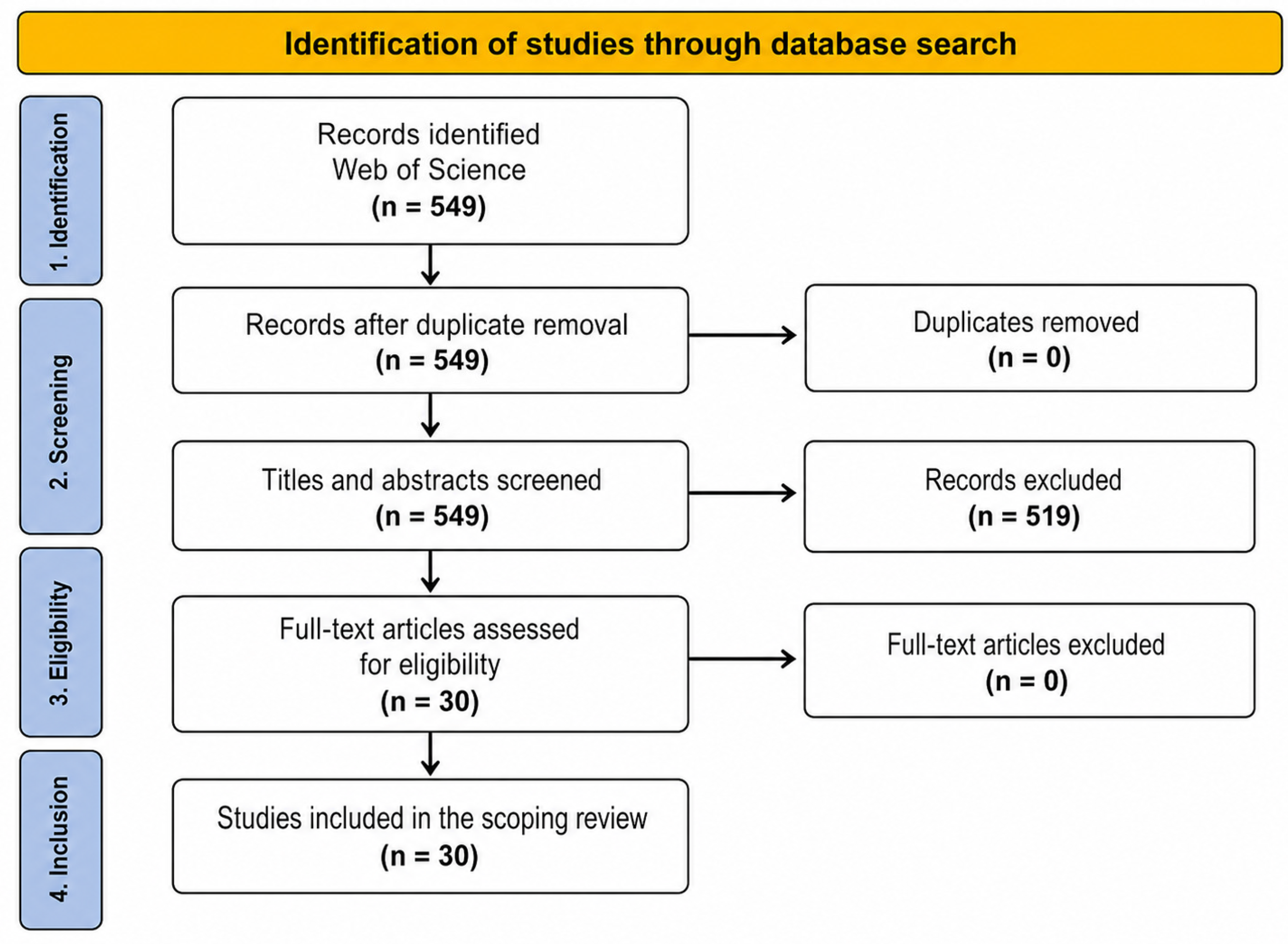
Full texts were obtained through the CAPES Journals Portal. The results of the study selection process are presented in Figure 1.

2.6. Data Charting Process and Data Items

Full-text assessment and data extraction were conducted by one researcher using a standardized electronic spreadsheet. The extraction process followed predefined data items established according to the objectives of the review. The structured extraction form was designed to ensure consistency in the recording of study characteristics, valorization pathways, and implementation-related evidence. Cases involving uncertainty regarding eligibility, classification, or interpretation of extracted information were discussed by the research team until consensus was reached. The extraction form was not formally pilot-tested, and the complete extracted dataset was not independently verified by a second researcher. Missing information was recorded as “not reported” when it was not available in the original articles, without inference.
The following data were extracted: (i) authorship and year of publication; (ii) country or region; (iii) agro-industrial sector and study context; (iv) type and origin of the residue, by-product, or co-product; (v) valorization route or arrangement; (vi) application scale; (vii) environmental, economic, and operational indicators; (viii) barriers, facilitators, and implementation conditions; and (ix) limitations, knowledge gaps, and recommendations. The complete implementation-related extraction matrix supporting the synthesis of barriers, facilitators, and recommendations is provided in Supplementary Material S3.

2.7. Classification and Synthesis of Results

The categories used to classify sectors, application scales, and valorization strategies were consolidated through a comparative reading of the included studies. Each article was assigned a single primary category for each dimension according to its objective, unit of analysis, and predominant intervention. Classification was based on the analytical context explicitly addressed by each study rather than on the physical origin of the residue or the presence of an industrial facility alone. This approach was adopted to enable comparative synthesis across studies while recognizing that individual studies may involve multiple sectors, strategies, or implementation dimensions. The operational criteria used for classification and the decision rules applied to assign primary categories are provided in Supplementary Material S2.
Agro-industrial sectors were classified as vegetable oils and oilseeds; dairy; meat and slaughter; fisheries and aquaculture; beverages and industrial fermentation; general food processing; sugarcane and sugar-energy agro-industry; agri-food supply chains, policy, and governance; and multisectoral agro-industrial residues.
Application scales were classified as laboratory; pilot or semi-industrial; industrial or plant-level; supply-chain or sectoral; regional, territorial, or national; and multiscale. Studies were considered multiscale when they explicitly addressed interactions among two or more application scales within the same analysis, such as combinations of industrial, supply-chain, regional, territorial, or other implementation contexts. Within the industrial or plant-level category, empirical applications, diagnostic assessments and case studies, and modeling or simulation studies were distinguished. The industrial origin of a sample alone was not considered sufficient to classify a study as industrial or plant-level. Thus, this category represented the primary analytical context of the study rather than a direct measure of technological maturity or continuous operational implementation. Valorization strategies were grouped as biological; energy-based; material; chemical or physicochemical; organizational and systemic; and integrated or multiple routes. The integrated or multiple routes category was used when a study explicitly combined two or more strategy families or examined several routes without a clearly predominant strategy.
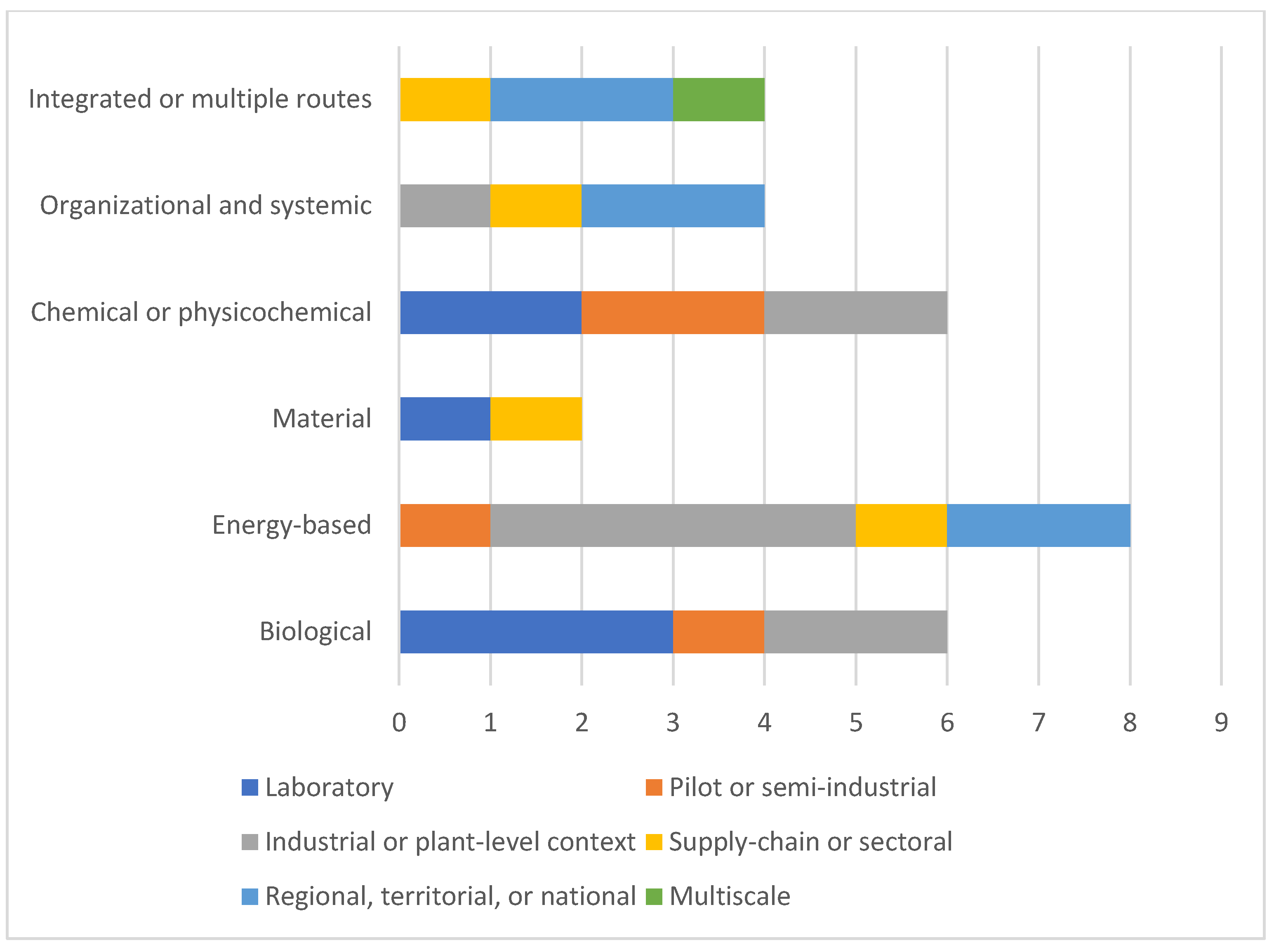
The quantitative synthesis included absolute and relative frequencies and three cross-tabulations: (i) strategy by application scale; (ii) strategy by agro-industrial sector; and (iii) application scale by agro-industrial sector. For the cross-tabulations, cell values represent the number of included studies, with the overall denominator being the 30 studies in the review; when proportions were described for a specific category, the denominator corresponded to the number of studies within that category. No statistical uncertainty intervals were calculated because the cross-tabulations were intended as descriptive summaries of the included evidence rather than estimates of population parameters.
The relationships were presented using stacked bar charts. No inferential statistical tests were performed. The quantitative synthesis was therefore interpreted as a descriptive mapping of the distribution of the included literature rather than as an assessment of technological superiority, effectiveness, or causal relationships. Barriers, facilitators, limitations, gaps, and recommendations were synthesized comparatively and grouped into thematic domains based on recurring patterns identified across the studies. The extracted implementation-related evidence supporting these thematic domains is provided in Supplementary Material S3, while the conceptual organization of implementation dimensions is presented in Supplementary Material S4.

2.8. Critical Appraisal of Sources of Evidence

No formal methodological quality or risk-of-bias assessment was conducted. In scoping reviews, critical appraisal is optional and may be omitted when the primary objective is to map the extent, characteristics, and distribution of the available evidence rather than to assess the certainty of evidence or estimate intervention effects [14,15]. This decision was therefore consistent with the objective of the present review, which was to map, classify, and compare the available evidence rather than to determine the effectiveness of specific valorization strategies.
Considering that the included studies encompassed different methodological approaches, analytical scales, and implementation contexts, the interpretation of findings focused on the characteristics, reported conditions, and application contexts of the identified valorization routes rather than on comparative judgments regarding study quality or technological performance.
The absence of formal critical appraisal was considered when interpreting the findings, which were treated as a descriptive and comparative representation of the included literature. Accordingly, the results should not be interpreted as evidence of methodological superiority, causal effectiveness, or certainty regarding the reported valorization routes and arrangements. This aspect was also considered when defining the scope and limitations of the conclusions drawn from the available evidence.

3. Results and Discussion

3.1. Study Selection

The search retrieved 549 records. No duplicates were identified; therefore, all records proceeded to title and abstract screening. Following this screening stage, 519 records were excluded, and 30 articles were assessed in full text. The high proportion of exclusions during title and abstract screening was mainly related to the absence of an explicit application interface, the focus on isolated technological characterization or optimization, and the lack of alignment with the agro-industrial valorization scope defined for this review. The 30 articles retrieved for full-text assessment were subsequently evaluated against the predefined full-text eligibility criteria described in Supplementary Material S1.
No studies were excluded during the full-text assessment, yielding a final sample of 30 studies. This occurred because studies retrieved for full-text assessment had already met the preliminary eligibility criteria regarding agro-industrial context, valorization focus, and availability of information required for classification and synthesis. The study selection process is shown in Figure 1.

3.2. Study Profile and Overall Distribution

Thirty studies published between 1996 and 2026 were included, with a clear concentration of publications in recent years: 15 articles were published between 2021 and 2026 (50.0%), nine between 2016 and 2020 (30.0%), and six were published up to 2015 (20.0%). The publication period extended from a 1996 study addressing residues from the palm oil industry to a 2026 study focusing on the composting of acidified soybean soapstock.
The publications covered 19 countries. Spain accounted for four studies; Brazil and Greece accounted for three each; and Colombia, Mexico, Malaysia, and Australia accounted for two each. The remaining countries contributed one study each, indicating broad geographic coverage across Latin America, Europe, Asia, North America, Oceania, and the Middle East.
The individual characteristics of the 30 included studies, including the country, agro-industrial sector, residue or by-product, valorization route or arrangement, application scale, and main contribution, are presented in Table 3.
The vegetable oils and oilseeds sector accounted for 12 studies (40.0%), followed by dairy and multisectoral agro-industrial residues, with four studies each (13.3%), and the sugarcane and sugar-energy agro-industry, with three (10.0%). All other sectors represented less than 10.0% of the sample. The higher representation of vegetable oils and oilseeds was associated with the diversity of residues and by-products identified in the included studies, including biomass, effluents, and solid residues from palm, olive, sunflower, and soybean processing chains. This pattern may also reflect differences in research availability and reporting practices among agro-industrial sectors, as some chains may have more extensively documented valorization initiatives than others. This distribution reflects the composition of the retrieved evidence base and should not be interpreted as a direct indication of the relative importance, maturity, or potential of each agro-industrial sector for residue valorization.
Regarding application scale, nine studies were classified as industrial or plant-level (30.0%). Laboratory and regional, territorial, or national scales each accounted for six studies (20.0%), whereas pilot or semi-industrial and supply-chain or sectoral scales accounted for four studies each (13.3%). One study was classified as multiscale (3.3%). Within the industrial or plant-level category, studies included empirical assessments, case studies, experimental evaluations, and modeling or simulation approaches conducted within industrial contexts [28,32,34,35,36,37,39]. Therefore, this classification refers to the analytical context addressed by the study rather than representing a direct measure of technological maturity or operational deployment.
Energy-based strategies were the most frequent, with eight studies (26.7%), followed by biological and chemical or physicochemical approaches, each represented by six studies (20.0%). Organizational and systemic strategies and integrated or multiple-route approaches each accounted for four studies (13.3%), whereas material-based strategies accounted for two (6.7%). These frequencies represent the distribution of valorization strategies among the included studies and do not indicate superior performance, feasibility, or effectiveness of one strategy over another. To avoid double counting, each article was assigned to one primary category for sector, scale, and strategy. The overall distribution of the studies by sector, application scale, and valorization strategy is presented in Table 4.

3.3. Valorization Routes and Arrangements by Sector and Application Scale

The distribution of valorization strategies varied by application scale. Biological and chemical or physicochemical approaches spanned laboratory, pilot, and industrial settings, whereas organizational and integrated strategies were concentrated at broader scales, reflecting their greater association with coordination among actors, supply-chain arrangements, and territorial or systemic analyses, as shown in Figure 2.
Energy-based strategies showed the broadest distribution across application scales. This broad distribution may be influenced by the existence of established conversion pathways and infrastructure in some agro-industrial contexts. However, the included studies did not provide sufficient comparative evidence to determine whether these approaches present greater technological maturity or economic feasibility than other valorization approaches. Within the included studies, the occurrence of energy-based routes was also associated with the availability of biomass, compatibility with existing energy systems, opportunities for fuel substitution or cogeneration, and, in some contexts, economic incentives or revenues from energy generation. Of the eight studies in this category, four were classified as industrial or plant-level, two as regional, territorial, or national, one as supply-chain or sectoral, and one as pilot or semi-industrial. The routes included combustion, co-combustion, cogeneration, heat and power recovery, and biomass drying for energy use. Their presence across different application scales reflects the use of biomass-based residues in contexts ranging from process-level energy recovery to broader supply-chain and territorial planning. Within industrial or plant-level applications, the evidence addressed cogeneration using sugarcane bagasse [18] and the co-combustion of filter cake and bagasse [37]. At broader scales, the studies examined regional scenarios for the use of residual palm biomass [22] and the integration of sugarcane trash into energy and biofuel supply chains [21].
Biological strategies included three laboratory studies, one pilot or semi-industrial study, and two industrial or plant-level studies. Under controlled conditions, the evidence focused on composting or biological conversion [25,44,46], whereas applications in production settings addressed mixture formulation, moisture management, residue availability, and operational control [34,36]. These studies indicate that the implementation of biological routes depends on the compatibility between residue characteristics and process requirements, particularly regarding formulation, moisture conditions, and operational adjustments.
Chemical or physicochemical approaches were evenly distributed across laboratory, pilot or semi-industrial, and industrial or plant-level contexts. The studies in this category examined combined filtration, ion exchange, and electrodialysis [30], acid whey pretreatment [31], and industrial membrane-separation scenarios [32]. This distribution reflects the applicability of separation and treatment approaches across different analytical contexts, ranging from controlled evaluations to industrial process scenarios.
Organizational and systemic strategies occurred only at industrial or plant-level, supply-chain or sectoral, and regional, territorial, or national scales. The evidence included a waste diagnosis in a poultry-processing facility [27], the analysis of a whey collection and processing network [38], and studies addressing industrial symbiosis and territorial governance [26,45]. The concentration of these strategies at broader scales is consistent with their dependence on coordination mechanisms, information flows, infrastructure, and interactions among multiple stakeholders.
Integrated studies were also concentrated at broader scales, combining energy, agricultural, logistical, or institutional alternatives in palm and olive value chains [29,42,43], as well as cascading approaches to the valorization of food co-products [41].
Material-based strategies were less frequent. At the laboratory scale, alkali-activated materials were evaluated [19], whereas biomass ash was examined as a cementitious material from a supply-chain or sectoral perspective, considering costs, transportation, location, and emissions [17].
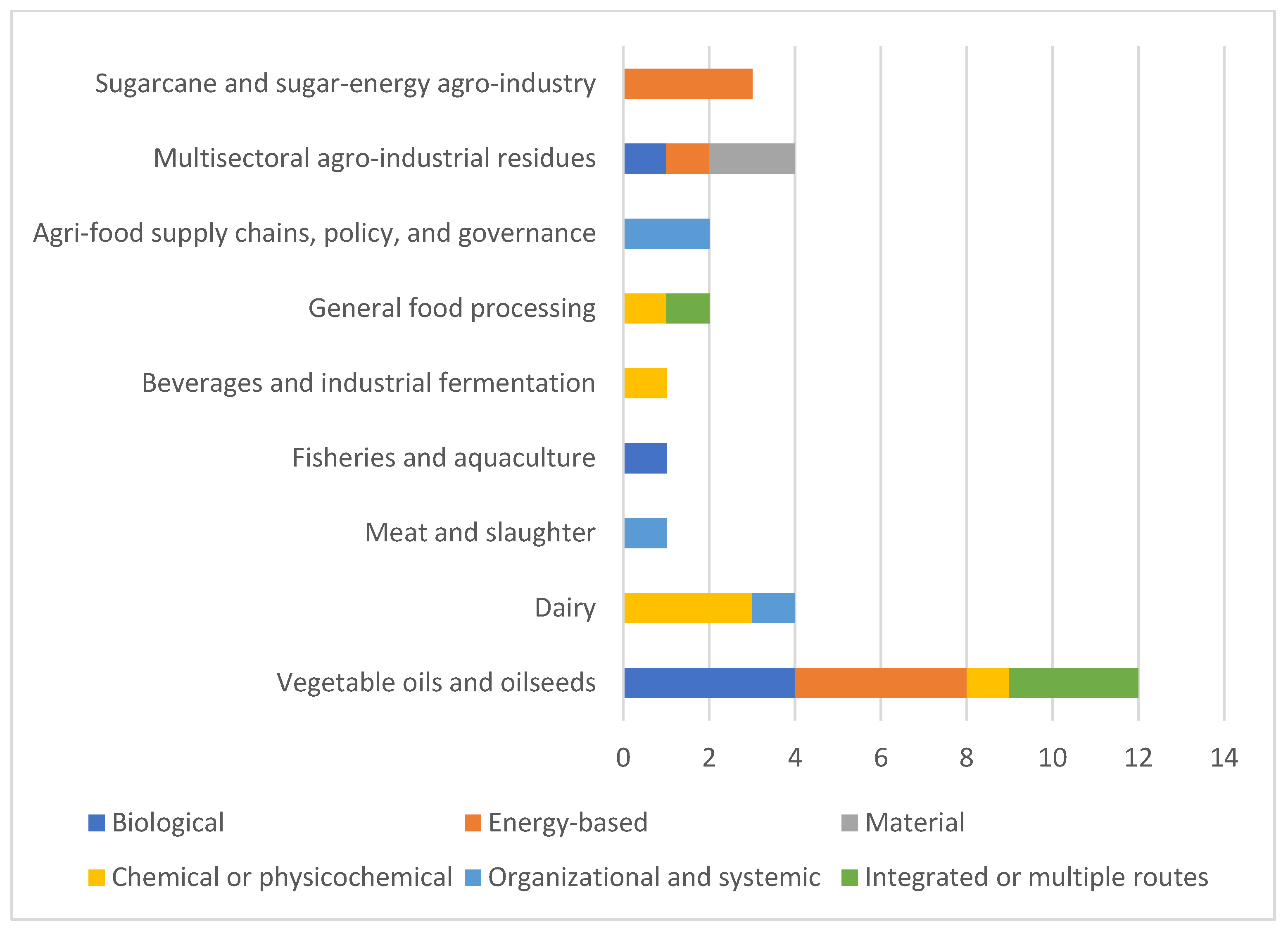
The distribution of strategies across agro-industrial sectors is presented in Figure 3.
The vegetable oils and oilseeds sector accounted for 12 studies and showed the greatest diversity of alternatives: four biological, four energy-based, three integrated or multiple-route, and one physicochemical. This diversity reflects the different streams generated in palm, olive, sunflower, and soybean value chains, including solid residues, biomass, and effluents with energy or agronomic potential. The range of valorization routes identified in this sector may be associated with the diversity of residue characteristics across different processing chains, which can influence the suitability of biological, energy-based, physicochemical, or integrated approaches.
In the dairy sector, three of the four studies adopted chemical or physicochemical approaches. These studies addressed filtration, pretreatment, and separation processes for the recovery of whey components [30,31,32], whereas an organizational approach focused on the design of a collection and processing network [38]. In the sugarcane and sugar-energy agro-industry, all three studies were energy-based and examined bagasse, sugarcane trash, and filter cake for the production of heat, electricity, or fuels [18,21,37].
Multisectoral studies included biological, energy-based, and material strategies, encompassing the use of ash and other residues, the assessment of biomass energy potential, and the composting of olive-processing residues, winery waste, and sludge [17,19,23,40]. In sectors represented by only one or two publications, the observed pattern reflects the scope of the literature retrieved and should not be interpreted as indicating the absence of other valorization alternatives. Similarly, the frequency of strategies within each sector reflects the composition of the included studies rather than the relative suitability or superiority of specific routes for a given agro-industrial sector.
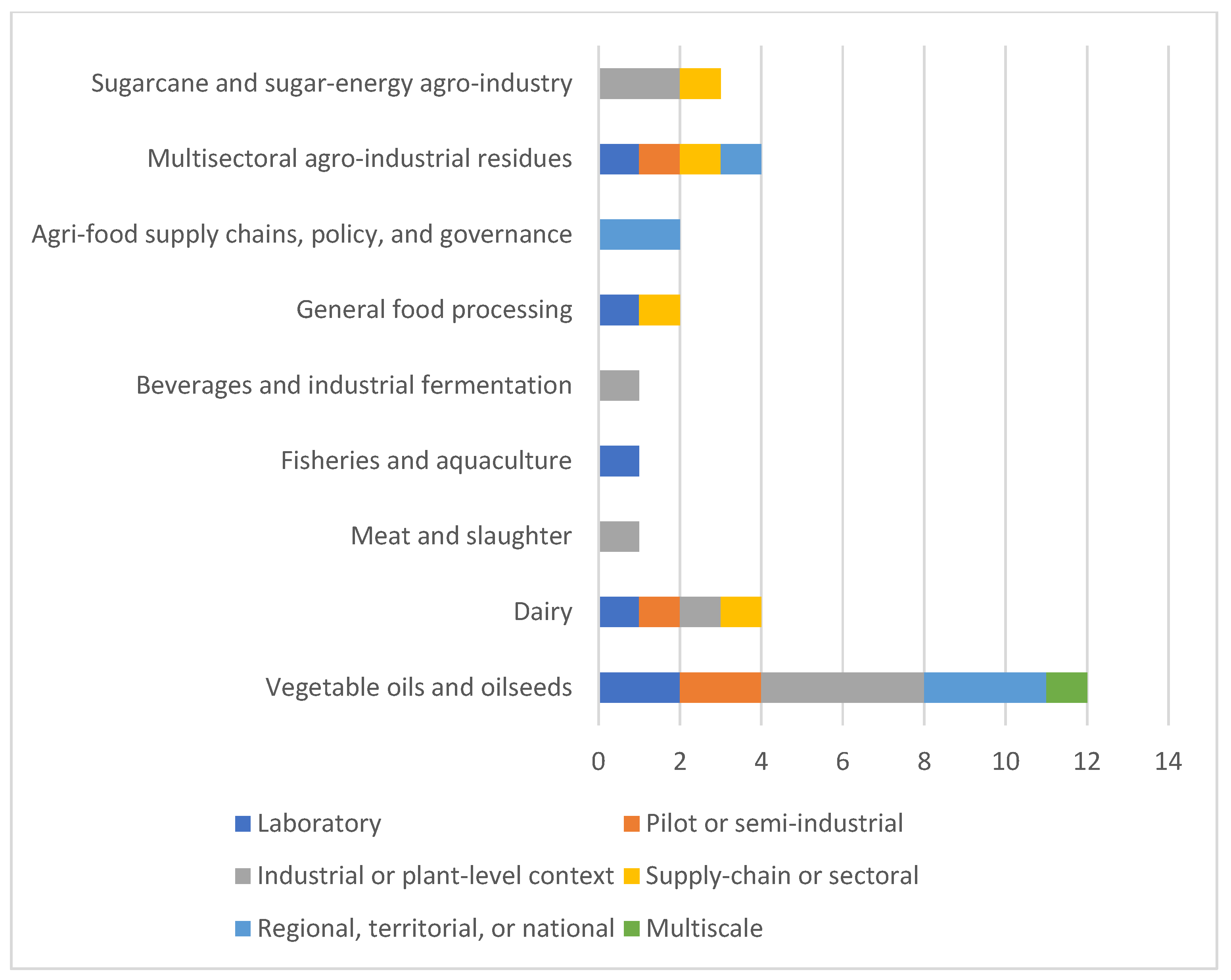
The relationship between sectors and application scales is presented in Figure 4.
Vegetable oils and oilseeds also showed the widest distribution across application scales: two laboratory studies; two pilot or semi-industrial studies; four industrial or plant-level studies; three regional, territorial, or national studies; and one multiscale study. Oilseed value chains were therefore examined across contexts ranging from controlled conditions and plant-level applications to territorial planning.
Dairy studies were evenly distributed across laboratory, pilot or semi-industrial, industrial or plant-level, and supply-chain or sectoral contexts, covering acid whey pretreatment, component recovery, industrial modeling, and network design [30,31,32,38]. In the sugarcane and sugar-energy agro-industry, two studies were conducted in industrial or plant-level contexts and one at the supply-chain or sectoral level, whereas multisectoral studies were distributed across laboratory; pilot or semi-industrial; supply-chain or sectoral; and regional, territorial, or national scales.
Analyses of policy, governance, and agri-food supply-chain organization were conducted at the regional, territorial, or national scale. These studies examined stakeholders, infrastructure, public policies, and resource flows extending beyond the boundaries of a single production facility [26,45]. This broader analytical scope reflects the need to consider interactions among multiple actors and system components that influence the implementation of valorization arrangements beyond individual processing units.
Classification as industrial or plant-level does not necessarily indicate continuous or full-scale implementation. This category included empirical applications, diagnostic assessments, case studies, modeling, and simulations linked to industrial facilities. Therefore, application scale should be interpreted as the main context in which a study analyzed a valorization route rather than as a direct indicator of technological maturity, commercial readiness, or operational continuity.
The main valorization routes and arrangements are summarized in Table 5. The references listed in the final column correspond to representative studies within each category.

3.4. Implementation Conditions, Gaps, and Recommendations

The implementation of valorization routes is influenced by factors beyond the technical performance of the proposed solutions. Path dependency may also influence the long-term adoption of valorization routes. Investments in established infrastructure, operational practices, and market arrangements may favor technically mature but lower-value pathways, potentially limiting the transition toward more integrated cascading approaches. Therefore, future assessments should consider not only technical feasibility but also the flexibility of existing systems to incorporate higher-value valorization alternatives. The studies indicated the combined influence of operational, economic, logistical, organizational, regulatory, and institutional conditions, which were grouped into six domains in Table 6. The implementation-related evidence extracted from the included studies and supporting the synthesis of barriers, facilitators, limitations, and recommendations is provided in Supplementary Material S3. The references listed in the final column illustrate each domain and do not encompass all articles that reported a given barrier or recommendation.
In the technical and operational domain, residue heterogeneity and the need to adapt processes to their specific physicochemical characteristics emerged as key issues. Variations in moisture, acidity, salinity, organic composition, and nutrient availability may affect route performance and require adjustments to formulation, pretreatment, aeration, temperature, or processing time. These aspects indicate that the compatibility between residue characteristics and the selected valorization route is an important consideration when assessing implementation conditions.
Studies in this domain showed that mixture structure, the carbon-to-nitrogen ratio, and aeration affect the composting of olive-processing residues, winery waste, and sludge [40]. Salinity was identified as a critical factor in the biological treatment of fish-processing sludge [44], while the proportion of mineral conditioner influenced both process performance and the agronomic quality of the final product [46]. At the industrial or plant-level scale, the energy valorization of filter cake and bagasse was found to depend on boiler compatibility and operational control [37]. Together, these studies illustrate that residue characteristics and process requirements must be considered jointly when evaluating the applicability of a valorization route.
Accordingly, transferring a valorization route to another production facility requires an assessment of residual stream composition, supply continuity, and process-control capacity. Recommended measures include continuous monitoring, equipment adaptation, and validation under conditions that closely resemble regular operation. These aspects are particularly relevant because performance observed under specific experimental or operational conditions may not be directly transferable to other facilities or residue streams.
In the economic and financial domain, the studies reported initial investment requirements, fluctuations in energy prices, and costs related to transportation, storage, treatment, and outsourcing, as well as a lack of standardized and comparable parameters for feasibility assessment. Economic attractiveness may depend on both the revenue generated and the costs avoided through reduced disposal, fuel use, or conventional treatment.
Comparative analyses examined the costs, energy consumption, and emissions associated with the use of olive oil by-products [35], as well as heat, electricity, and cogeneration alternatives for sunflower husks [39]. The design of whey-processing networks was shown to depend on budget, location, and outsourcing [38], whereas the expansion of integrated arrangements was linked to infrastructure, transportation, and the combination of valorization routes [42]. Although these studies incorporated economic and operational assessments, the criteria and system boundaries varied among them, limiting direct quantitative comparison across valorization routes.
From an implementation perspective, economic feasibility was therefore not determined by operating costs alone, but also by the expected value or revenue associated with recovered products or energy, market opportunities, and the costs required to collect, transport, store, and process the residues. Market conditions may consequently determine whether a technically feasible route can generate sufficient value to offset implementation and operating requirements, particularly when recovered products compete with conventional alternatives or require additional certification and market validation.
Together, these findings reinforce the need for sensitivity analyses, alternative scenarios, and standardized economic criteria that account for avoided costs, potential revenues, and phased implementation options.
Logistical barriers were associated with residue characteristics, geographic distribution, and the organization of material flows, particularly in supply-chain or sectoral contexts, regional, territorial, or national scales, and multiscale settings. Wet, perishable, low-density, or geographically dispersed residues may entail high storage and transportation costs, thereby reducing the attractiveness of technically efficient solutions.
Seasonal variability in residue generation may further affect the reliability of valorization systems, particularly in agro-industrial chains characterized by harvest cycles or fluctuating production patterns. Therefore, implementation strategies should consider storage requirements, supply stabilization mechanisms, and operational flexibility to maintain continuous residue availability throughout the year.
At the plant level, the effective use of palm residues depended on moisture control, formulation, and material movement [36]. Cascading valorization was associated with preservation, transportation, market conditions, and coordination among food value chains [41]. Other analyses incorporated infrastructure constraints and territorial distribution [42] or emphasized the organization of collection, destination, and demand [43].
Valorization near the point of generation, dedicated networks, and territorial planning were among the main facilitators identified. Cluster-based arrangements and industrial symbiosis may also reduce transport distances, promote infrastructure sharing, and connect residue generators with users of recovered materials. These arrangements were particularly relevant in studies addressing supply-chain, regional, or multisectoral contexts, where implementation depended on coordination among multiple actors and material flows.
At the organizational level, limitations included fragmented responsibilities, weak internal integration, limited coordination among organizations, and insufficient data on the quantity, quality, and destination of residues. Initial valorization was shown to depend on diagnosis, segregation, and flow control [27], whereas industrial symbiosis required stakeholder coordination and reliable information [26].
The interaction among technology, markets, and value-chain organization was also emphasized [41], while other analyses identified limitations related to infrastructure, governance, and the implementation of circularity policies [45]. Recommended measures include cooperative models, data sharing, partnerships, and the prior definition of technical and economic responsibilities. These findings indicate that organizational conditions can influence the feasibility of valorization arrangements, particularly when implementation extends beyond individual production facilities. These challenges may be particularly relevant for small and medium-sized producers, which may face greater constraints regarding investment capacity, infrastructure availability, technical expertise, and access to coordinated valorization networks.
Regulatory and institutional conditions also influenced the adoption of valorization solutions. Sanitary and environmental requirements, the legal classification of by-products [41], quality standards, and the stability of incentive mechanisms may either facilitate or restrict specific uses. Beyond regulatory compliance, market acceptance, certification schemes, and quality standards may influence the transition from technically feasible valorization routes to commercially viable solutions. These aspects are particularly relevant when recovered materials compete with conventional products or require additional validation before market adoption. The need to ensure the stabilization and safety of treated material was emphasized [44]. Institutional conditions were also shown to influence energy alternatives [39], while gaps were identified in the implementation of circularity instruments [45].
Limitations related to scale-up and cross-study comparability also remained. Some investigations were conducted at the laboratory or pilot scale, as case studies, or through modeling, which limits direct extrapolation to other facilities and regions. Although promising results were reported under controlled conditions [19,44,46], validation at larger scales remains necessary. A modeling approach integrating location, costs, transportation, and emissions was also proposed, but its applicability remains dependent on the characteristics of the supply chain examined [17]. These limitations highlight that reported results should be interpreted within the specific operational and analytical contexts of each study rather than as universally transferable solutions.
This aspect also highlights the potential influence of path dependency in valorization decisions, as early technological choices may create infrastructural, organizational, or market constraints that affect future opportunities. Therefore, route selection should consider not only immediate feasibility but also long-term adaptability and the possibility of integrating alternative valorization pathways.
Across the main valorization strategy groups, the reported evidence pointed to different implementation conditions rather than a consistent performance hierarchy. Energy-based routes were associated in some studies with process integration and potential energy recovery, while biological and physicochemical routes involved different process-control and treatment requirements. Integrated or multiple-route approaches additionally depended on coordination among processes or actors. However, the heterogeneity of the reported indicators and the frequent absence of comparable technical, economic, and environmental information preclude a direct comparison of overall performance among strategy groups.
Future studies should also incorporate broader sustainability dimensions, including social impacts, stakeholder perspectives, and resource nexus approaches. In particular, the integration of water–energy–food (WEF) nexus perspectives may help identify potential synergies and trade-offs among competing valorization pathways, considering interactions between resource recovery, energy generation, and food-system sustainability. However, such integrated assessments were rarely addressed in the studies included in this review. The environmental dimension was more frequently represented through energy use, emissions, resource recovery, and process-related impacts, whereas social sustainability was less consistently reported. When present, social considerations were mainly related to working conditions, stakeholder coordination, and organizational arrangements, limiting the possibility of a systematic comparison across routes. This gap is particularly relevant because different valorization pathways may involve distinct resource trade-offs. For example, energy recovery routes may contribute to renewable energy generation, whereas biological or material pathways may prioritize nutrient recycling and resource reintegration, requiring integrated assessments of resource availability, environmental impacts, and system-level sustainability. Accordingly, demonstration-scale applications, longitudinal monitoring, replication across different contexts, and the use of comparable technical, environmental, and economic indicators are needed. These measures may facilitate comparisons among valorization routes and support investment decisions.
Emerging digital approaches, including monitoring systems, traceability tools, and data-driven management, may further support the optimization and coordination of valorization systems. However, these approaches were not substantially explored among the included studies, representing an opportunity for future research aimed at improving transparency, operational control, and decision-making in circular agro-industrial systems.
Overall, transforming a valorization alternative into an applicable solution requires alignment among residue characteristics, technology, application scale, and system organization. Scale-up therefore involves not only increased production capacity but also operational control, economic feasibility, logistics, governance, and regulatory certainty. Thus, successful implementation depends on the integration of technological, operational, economic, logistical, organizational, and institutional dimensions rather than on technological performance alone. This perspective supports the development of future multi-criteria assessment approaches capable of considering the contextual conditions required for successful agro-industrial residue valorization. Based on these implementation domains, a conceptual multidimensional framework was developed to organize the main dimensions that may support future decision-making approaches for agro-industrial residue valorization (Supplementary Material S4).

3.5. Limitations of the Review

This review has some limitations that should be considered when interpreting the findings. First, the search strategy was conducted using the Web of Science Core Collection as the sole bibliographic database. Although this database provides broad multidisciplinary coverage and relevant indexing for topics related to agro-industrial systems, circular economy, and resource recovery, the use of a single database may have limited the identification of additional studies available in other indexing platforms. In addition, grey literature, technical reports, and non-peer-reviewed documents were not included, as the review focused on peer-reviewed scientific evidence to ensure methodological consistency among the selected studies.
Second, in accordance with the objectives of a scoping review, no formal critical appraisal of methodological quality or risk of bias was performed. The purpose of this study was to map and characterize application-oriented valorization approaches rather than to estimate effects or establish comparative effectiveness among routes. Furthermore, the heterogeneity of sectors, residues, scales, indicators, and assessment approaches limited the possibility of quantitative synthesis and direct comparison across studies. Future research may expand database coverage, incorporate additional evidence sources, and apply structured evaluation approaches to further investigate the feasibility and performance of agro-industrial residue valorization pathways.

4. Conclusions

This scoping review mapped application-oriented valorization routes and arrangements for agro-industrial residues and by-products and examined their distribution across sectors and application scales. The 30 studies analyzed were concentrated primarily in the vegetable oils and oilseeds sector, with additional coverage of dairy, sugarcane, food processing, agri-food supply chains, policy, and governance, fisheries, beverages, meat, and multisectoral systems. Energy-based strategies were the most frequent, followed by biological and chemical or physicochemical approaches.
The distribution of valorization routes varied according to sector and application context. Biological and physicochemical processes were reported across laboratory, pilot, and industrial settings. Energy-based strategies showed the broadest distribution across plants, supply chains, and territorial contexts, whereas organizational and integrated approaches were concentrated in studies addressing logistics, production networks, governance, and coordination among different stakeholders. These findings indicate that the distribution of valorization alternatives in the included studies was associated with residue characteristics, process conditions, available infrastructure, and the scope of application.
The implementation of these solutions was shaped by factors extending beyond technical performance. The synthesis of the included studies highlighted six interconnected implementation domains: technical and operational, economic and financial, logistical, organizational and governance, regulatory and institutional, and scale-up, limitations, and recommendations. Scale-up should therefore not be understood solely as an increase in production capacity, but rather as a process that integrates technical and operational, economic and financial, logistical, organizational and governance, and regulatory and institutional conditions.
Important evidence gaps remain regarding the transition from experimental or isolated applications to continuous industrial operation, the comparability of assessment indicators, and the evaluation of implementation conditions across different agro-industrial contexts. The reviewed evidence also indicates that some sectors and application scales remain less represented, limiting broader conclusions about the transferability of valorization solutions beyond the contexts investigated. Future research should prioritize demonstration-scale studies, longitudinal assessments, and standardized multi-criteria evaluation approaches integrating technical, economic, environmental, organizational, and social dimensions. Such approaches may improve the understanding of trade-offs among valorization pathways and support decision-making by industry, policymakers, and other stakeholders.
Despite the limitations in coverage associated with the adopted search strategy, this study provides a comparative synthesis of the identified routes and indicates that the feasibility of agro-industrial residue valorization is influenced by the alignment between sector-specific characteristics and application conditions. This perspective may support future research, industrial planning, and policy decisions aimed at advancing circularity, improving resource-use efficiency, and reducing the impacts associated with agro-industrial processes. For practitioners and policymakers, the findings emphasize the need to assess valorization options according to the specific residue, operational setting, scale, infrastructure, economic conditions, and institutional requirements rather than relying on technological performance alone.

Supplementary Materials

The following supporting information can be downloaded at: https://www.mdpi.com/article/10.3390/agriculture16181951/s1.

Author Contributions

Conceptualization, J.E.d.S., M.E.V. and D.J.A.B.; methodology, J.E.d.S., M.E.V. and D.J.A.B.; investigation, J.E.d.S., D.J.A.B., J.C.K.S., R.T.B., Á.N.T.B., A.S.S.N., M.F.G., P.C.d.S., D.D.E.d.S. and K.B.X.; formal analysis, J.E.d.S., M.E.V. and D.J.A.B.; data curation, J.E.d.S. and D.J.A.B.; visualization, J.E.d.S. and D.J.A.B.; writing—original draft preparation, J.E.d.S.; writing—review and editing, J.E.d.S., M.E.V., D.J.A.B., J.C.K.S., R.T.B., Á.N.T.B., A.S.S.N., M.F.G., P.C.d.S., D.D.E.d.S., K.B.X. and A.J.C.d.C.; project administration, J.E.d.S. All authors have read and agreed to the published version of the manuscript.

Funding

This research received no external funding.

Institutional Review Board Statement

Not applicable.

Data Availability Statement

The original contributions presented in this study are included in the article.

Acknowledgments

The authors acknowledge the State University of Amapá (UEAP) for its institutional support and encouragement of research and the dissemination of its results and thank all collaborators who contributed to the development of this study.

Conflicts of Interest

The authors declare no conflicts of interest.

References

  1. Mekonnen, T.; Mussone, P.; Bressler, D. Valorization of Rendering Industry Wastes and Co-Products for Industrial Chemicals, Materials and Energy. Crit. Rev. Biotechnol. 2016, 36, 120–131. [Google Scholar] [CrossRef] [Scilit] [PubMed]
  2. Ricciardi, P.; Cillari, G.; Carnevale Miino, M.; Collivignarelli, M.C. Valorization of Agro-Industry Residues in the Building and Environmental Sector: A Review. Waste Manag. Res. 2020, 38, 487–513. [Google Scholar] [CrossRef] [Scilit] [PubMed]
  3. Rossi, L.; Miccio, L.A.; Ciannamea, E.M.; Stefani, P.M. From Agricultural Residues to Sustainable Boards: Complex Network Analysis of Binderless Composites. Polymers 2025, 17, 3082. [Google Scholar] [CrossRef] [Scilit] [PubMed]
  4. Cheah, W.Y.; Siti-Dina, R.P.; Leng, S.T.K.; Er, A.C.; Show, P.L. Circular Bioeconomy in Palm Oil Industry: Current Practices and Future Perspectives. Environ. Technol. Innov. 2023, 30, 103050. [Google Scholar] [CrossRef] [Scilit]
  5. Coelhoso, I. Polysaccharide Films/Membranes for Food and Industrial Applications. Polysaccharides 2025, 6, 48. [Google Scholar] [CrossRef] [Scilit]
  6. Abogunrin-Olafisoye, O.B.; Adeyi, O.; Adeyi, A.J.; Oke, E.O. Sustainable Utilization of Oil Palm Residues and Waste in Nigeria: Practices, Prospects, and Environmental Considerations. Waste Manag. Bull. 2024, 2, 214–228. [Google Scholar] [CrossRef] [Scilit]
  7. Aït-Kaddour, A.; Hassoun, A.; Tarchi, I.; Loudiyi, M.; Boukria, O.; Cahyana, Y.; Ozogul, F.; Khwaldia, K. Transforming plant-based waste and by-products into valuable products using various “Food Industry 4.0” enabling technologies: A literature review. Sci. Total Environ. 2024, 955, 176872. [Google Scholar] [CrossRef] [Scilit] [PubMed]
  8. Domínguez-Perles, R.; Moreno, D.A.; García-Viguera, C. Waking up from Four Decades’ Long Dream of Valorizing Agro-Food Byproducts: Toward Practical Applications of the Gained Knowledge. J. Agric. Food Chem. 2018, 66, 3069–3073. [Google Scholar] [CrossRef] [Scilit] [PubMed]
  9. Soumati, B.; Atmani, M.; Benabderrahmane, A.; Benjelloun, M. Whey Valorization–Innovative Strategies for Sustainable Development and Value-Added Product Creation. J. Ecol. Eng. 2023, 24, 86–104. [Google Scholar] [CrossRef] [Scilit]
  10. He, W.; Guo, X.; Han, J. Management of Urban Manufacturing Byproducts: Food Circular Economy and Safety Aspects. CyTA-J. Food 2025, 23, 2477659. [Google Scholar] [CrossRef] [Scilit]
  11. Valadares, A.A.F.; de Sousa, J.E.; Bandeira, R.T.; Santos Neto, A.S.; Xavier, K.B.; da Silva, D.D.E.; Bandeira, Á.N.T. Multimethod Ergonomic Assessment of Waste-Picking Work Using a Human-Powered Vehicle in Macapá, Amapá, Brazil: A Single-Case Study. WORK 2026. advance online publication. [Google Scholar] [CrossRef] [Scilit] [PubMed]
  12. Rosentrater, K.A. Strategic Methodology for Advancing Food Manufacturing Waste Management Paradigms. In Proceedings of the Environmentally Conscious Manufacturing IV; SPIE: Philadelphia, PA, USA, 2004; Volume 5583, pp. 274–285. [Google Scholar]
  13. dos Santos Morais, K.; Marquez, A.F.; Gomes, T.G.; Machado, A.E.V.; Lemos, M.; Oliveira, M.E.C.; Junior, H.M.; Mendonça, S.; de Siqueira, F.G. Subprodutos Da Agroindústria Do Óleo de Palma (Dendê) Para Cultivo de Cogumelos Comestíveis e Nutrição de Peixes. Rev. Biotecnol. Ciência 2017, 6, 25–54. [Google Scholar]
  14. Peters, M.D.; Marnie, C.; Tricco, A.C.; Pollock, D.; Munn, Z.; Alexander, L.; McInerney, P.; Godfrey, C.M.; Khalil, H. Updated Methodological Guidance for the Conduct of Scoping Reviews. JBI Evid. Synth. 2020, 18, 2119–2126. [Google Scholar] [CrossRef] [Scilit] [PubMed]
  15. Tricco, A.C.; Lillie, E.; Zarin, W.; O’Brien, K.K.; Colquhoun, H.; Levac, D.; Moher, D.; Peters, M.D.; Horsley, T.; Weeks, L. PRISMA Extension for Scoping Reviews (PRISMA-ScR): Checklist and Explanation. Ann. Intern. Med. 2018, 169, 467–473. [Google Scholar] [CrossRef] [Scilit] [PubMed]
  16. Ouzzani, M.; Hammady, H.; Fedorowicz, Z.; Elmagarmid, A. Rayyan—A Web and Mobile App for Systematic Reviews. Syst. rev. 2016, 5, 210. [Google Scholar] [CrossRef] [Scilit] [PubMed]
  17. Villegas, J.G.; Álvarez-López, G.; Jaramillo, L.Y.; Romero-Sáez, M. Supply Chain (Re) Design and Pricing for Biomass Ash Valorization as Supplementary Cementitious Materials. Recycling 2025, 10, 34. [Google Scholar] [CrossRef] [Scilit]
  18. Manzini Poli, F.L.; Islas-Samperio, J.M.; García Bustamante, C.A.; Sacramento Rivero, J.C.; Grande-Acosta, G.K.; Gallardo-Álvarez, R.M.; Musule Lagunes, R.; Navarro Pineda, F.; Alvarez Escobedo, C. Sustainability Assessment of Solid Biofuels from Agro-Industrial Residues Case of Sugarcane Bagasse in a Mexican Sugar Mill. Sustainability 2022, 14, 1711. [Google Scholar] [CrossRef] [Scilit]
  19. Salas, I.; Cifrian, E.; Soriano, L.; Monzó, J.; Andrés, A. Environmental Assessment of Alkali-Activated Materials Based on Agro-Industrial Waste as Alkaline Activators through Leaching Tests. J. Environ. Manag. 2024, 368, 122265. [Google Scholar] [CrossRef] [Scilit] [PubMed]
  20. Valenzuela, E.I.; Cervantes-Aviles, P.; Ortega-Lara, W.; Franco-Morgado, M.; Gutierrez-Uribe, J.A. Comprehensive Characterization of Maize Lime-Cooking Wastewater with a Prospective Approach for Ca-P Minerals Recovery: Implications for Waste Valorization. Sep. Purif. Technol. 2025, 353, 128450. [Google Scholar] [CrossRef] [Scilit]
  21. Alonso Pippo, W.; Luengo, C.A.; Alonsoamador Morales Alberteris, L.; Garzone, P.; Cornacchia, G. Energy Recovery from Sugarcane-Trash in the Light of 2nd Generation Biofuel. Part 2: Socio-Economic Aspects and Techno-Economic Analysis. Waste Biomass Valorization 2011, 2, 257–266. [Google Scholar] [CrossRef] [Scilit]
  22. Boom-Cárcamo, E.; Peñabaena-Niebles, R.; Alean, J. Scenario Analysis of the Use of Oil Palm Residual Biomass for Bioenergy Generation: A Comparison with Fossil Fuels. Energy 2025, 335, 137933. [Google Scholar] [CrossRef] [Scilit]
  23. Maragkaki, A.E.; Kotrotsios, T.; Samaras, P.; Manou, A.; Lasaridi, K.; Manios, T. Quantitative and Qualitative Analysis of Biomass from Agro-Industrial Processes in the Central Macedonia Region, Greece. Waste Biomass Valorization 2016, 7, 383–395. [Google Scholar] [CrossRef] [Scilit]
  24. Maragkaki, A.; Galliou, F.; Markakis, N.; Sabathianakis, G.; Tsompanidis, C.; Lolos, G.; Mavrogiannis, G.; Koukakis, G.; Lasaridi, K.; Manios, T. Initial Investigation of the Solar Drying Method for the Drying of Olive Oil By-Products. Waste Biomass Valorization 2016, 7, 819–830. [Google Scholar] [CrossRef] [Scilit]
  25. Chin, K.L.; H’ng, P.S.; Chai, E.W.; Khoo, P.S.; Lee, C.L.; Go, W.Z. Valorization of Lignocellulosic Food Industry Waste in Malaysia by Accelerated Co-Composting Method: Changes in Physicochemical and Microbial Community. Waste Biomass Valorization 2020, 11, 4871–4884. [Google Scholar] [CrossRef] [Scilit]
  26. Haller, H.; Fagerholm, A.-S.; Carlsson, P.; Skoglund, W.; van den Brink, P.; Danielski, I.; Brink, K.; Mirata, M.; Englund, O. Towards a Resilient and Resource-Efficient Local Food System Based on Industrial Symbiosis in Härnösand: A Swedish Case Study. Sustainability 2022, 14, 2197. [Google Scholar] [CrossRef] [Scilit]
  27. Grassi, P.; Wahlbrink, S.; Drumm, F.C.; Georgin, J.; de Lima Brombilla, V. Diagnóstico de Resíduos Sólidos Gerados em uma Agroindústria do Extremo Oeste de Santa Catarina/RS: Estudo de Caso. Rev. GEDECON-Gestão Desenvolv. Contexto 2019, 7, 41–49. [Google Scholar]
  28. Mutlu, Ö.Ç.; Büchner, D.; Theurich, S.; Zeng, T. Combined Use of Solar and Biomass Energy for Sustainable and Cost-Effective Low-Temperature Drying of Food Processing Residues on Industrial-Scale. Energies 2021, 14, 561. [Google Scholar] [CrossRef] [Scilit]
  29. Prasertsan, S.; Prasertsan, P. Biomass Residues from Palm Oil Mills in Thailand: An Overview on Quantity and Potential Usage. Biomass Bioenergy 1996, 11, 387–395. [Google Scholar] [CrossRef] [Scilit]
  30. El-Okazy, M.A.; Kentish, S.E.; Gras, S.L.; Chen, G.Q. Toward a Sustainable Approach for Dairy Waste Management: The Integration of Filtration, Ion Exchange, and Electrodialytic Processes for Whey Demineralization. ACS Sustain. Chem. Eng. 2024, 12, 13197–13207. [Google Scholar] [CrossRef] [Scilit]
  31. Long, F.; Liu, H. Enhancing Resource Recovery from Acid Whey through Chitosan-Based Pretreatment and Machine Learning Optimization. Bioresour. Technol. 2025, 418, 131932. [Google Scholar] [CrossRef] [Scilit] [PubMed]
  32. Benoit, S.; Chamberland, J.; Doyen, A.; Margni, M.; Bouchard, C.; Pouliot, Y. Integrating Pressure-Driven Membrane Separation Processes to Improve Eco-Efficiency in Cheese Manufacture: A Preliminary Case Study. Membranes 2020, 10, 287. [Google Scholar] [CrossRef] [Scilit] [PubMed]
  33. Goula, A.M.; Adamopoulos, K.G. A Method for Preparing a Novel Solid Product from Olive Mill Wastewater: Wastewater Characterization and Product Recovery. Dry. Technol. 2013, 31, 339–349. [Google Scholar] [CrossRef] [Scilit]
  34. García-Rández, A.; Orden, L.; Marks, E.A.; Andreu-Rodríguez, J.; Franco-Luesma, S.; Martínez-Sabater, E.; Saéz-Tovar, J.A.; Pérez-Murcia, M.D.; Agulló, E.; Bustamante, M.Á. Monitoring of Greenhouse Gas Emissions and Compost Quality during Olive Mill Waste Co-Composting at Industrial Scale: The Effect of N and C Sources. Waste Manag. 2025, 193, 33–43. [Google Scholar] [CrossRef] [Scilit] [PubMed]
  35. Lanfranchi, M.; Giannetto, C.; De Pascale, A. Economic Analysis and Energy Valorization of By-Products of the Olive Oil Process: “Valdemone DOP” Extra Virgin Olive Oil. Renew. Sustain. Energy Rev. 2016, 57, 1227–1236. [Google Scholar] [CrossRef] [Scilit]
  36. Yahya, A.; Sye, C.P.; Ishola, T.A.; Suryanto, H. Effect of Adding Palm Oil Mill Decanter Cake Slurry with Regular Turning Operation on the Composting Process and Quality of Compost from Oil Palm Empty Fruit Bunches. Bioresour. Technol. 2010, 101, 8736–8741. [Google Scholar] [CrossRef] [Scilit] [PubMed]
  37. Ochoa George, P.A.; Eras, J.J.C.; Gutierrez, A.S.; Hens, L.; Vandecasteele, C. Residue from Sugarcane Juice Filtration (Filter Cake): Energy Use at the Sugar Factory. Waste Biomass Valorization 2010, 1, 407–413. [Google Scholar] [CrossRef] [Scilit]
  38. Esmaeilbeigi, R.; Middleton, R.; García-Flores, R.; Heydar, M. Benders Decomposition for a Reverse Logistics Network Design Problem in the Dairy Industry. Ann. Oper. Res. 2025, 354, 495–546. [Google Scholar] [CrossRef] [Scilit]
  39. Havrysh, V.; Kalinichenko, A.; Mentel, G.; Mentel, U.; Vasbieva, D.G. Husk Energy Supply Systems for Sunflower Oil Mills. Energies 2020, 13, 361. [Google Scholar] [CrossRef] [Scilit]
  40. Fernández, F.J.; Sanchez-Arias, V.; Rodriguez, L.; Villasenor, J. Feasibility of Composting Combinations of Sewage Sludge, Olive Mill Waste and Winery Waste in a Rotary Drum Reactor. Waste Manag. 2010, 30, 1948–1956. [Google Scholar] [CrossRef] [Scilit] [PubMed]
  41. Egelyng, H.; Romsdal, A.; Hansen, H.O.; Slizyte, R.; Carvajal, A.K.; Jouvenot, L.; Hebrok, M.; Honkapää, K.; Wold, J.P.; Seljåsen, R. Cascading Norwegian Co-Streams for Bioeconomic Transition. J. Clean. Prod. 2018, 172, 3864–3873. [Google Scholar] [CrossRef] [Scilit]
  42. Harahap, F.; Leduc, S.; Mesfun, S.; Khatiwada, D.; Kraxner, F.; Silveira, S. Opportunities to Optimize the Palm Oil Supply Chain in Sumatra, Indonesia. Energies 2019, 12, 420. [Google Scholar] [CrossRef] [Scilit]
  43. Alharbi, A.; Ghonimy, M. Environmental Benefits of Olive By-Products in Energy, Soil, and Sustainable Management. Sustainability 2025, 17, 4722. [Google Scholar] [CrossRef] [Scilit]
  44. Araujo, T.R.; Marques, R.V.; Ramires, T.; Mendes, P.M.; Otero, D.M.; da Silva, W.P.; Corrêa, É.K. Effects of Inoculation with Halotolerant Bacteria on Composting of Saline Fish Sludge. Braz. J. Chem. Eng. 2025, 42, 517–525. [Google Scholar] [CrossRef] [Scilit]
  45. Priyadarshini, P.; Abhilash, P.C. An Empirical Analysis of Resource Efficiency and Circularity within the Agri-Food Sector of India. J. Clean. Prod. 2023, 385, 135660. [Google Scholar] [CrossRef] [Scilit]
  46. Chen, D.; Li, S.; Zhang, S.; Yang, M.; Shen, T.; Zhang, Y.; Wang, Z.; Zhang, L.; Wang, S.; Yao, Y. Lignite-Enhanced Aerobic Composting of Acidified Soybean Soapstock by-Products: Reducing Carbon and Nitrogen Loss and Accelerating Composting Process. Waste Manag. 2026, 211, 115282. [Google Scholar] [CrossRef] [Scilit] [PubMed]
Figure 1. Flow diagram of the study selection process.
Agriculture 16 01951 g001
Figure 2. Distribution of valorization strategies by application scale.
Agriculture 16 01951 g002
Figure 3. Distribution of valorization strategies by agro-industrial sector.
Agriculture 16 01951 g003
Figure 4. Distribution of agro-industrial sectors by application scale.
Agriculture 16 01951 g004
Table 1. PCC framework used to formulate the research questions.
PCC ElementDefinition in This Review
PopulationAgro-industrial residues, by-products, and co-products generated during food, biomass, and agricultural raw-material processing.
ConceptValorization, resource recovery, productive use, environmental management, and circularity routes or arrangements with an explicit application interface.
ContextAgro-industrial systems, processing plants, supply chains, sectors, and regional, territorial, or national settings, with no restrictions on country or facility size.
Table 2. Eligibility criteria for the scoping review.
CriterionInclusion CriteriaExclusion Criteria
Document typePeer-reviewed research articles.Reviews, editorials, letters, commentaries, conference papers, book chapters, reports, and other gray literature.
Agro-industrial contextStudies involving identifiable agro-industrial systems, processing facilities, supply chains, sectors, or territories.Household, retail, or municipal food waste without a connection to agro-industrial processing.
Material investigatedResidues, by-products, or co-products associated with agro-industrial production processes.Materials not linked to an identifiable agro-industrial process.
Valorization conceptValorization, resource recovery, productive use, environmental management, or circularity routes and arrangements.Studies limited to analytical characterization without a valorization or management interface.
Application interfaceExplicit connection with a process, product, facility, supply chain, sector, or territory.Laboratory proof-of-concept studies without discussion of application, implementation, or transferability.
Study informationExtractable information on sector, scale, strategy, implementation conditions, barriers, facilitators, gaps, or recommendations.Studies without sufficient information for classification or synthesis.
Publication period and languageNo restrictions.None.
Table 3. Characteristics of the 30 included studies.
StudyYearCountrySectorResidue/
By-Product
Route or ArrangementScale/ContextMain Contribution
[17]2025ColombiaMultisectoral agro-industrial residuesBiomass ashUse as a supplementary cementitious materialSupply chain/sectorDevelops a network and pricing model that integrates costs, location, transportation, and emissions.
[18]2022MexicoSugarcane and sugar-energy agro-industrySugarcane
bagasse
Heat and power
cogeneration
Plant-level case study and modelingAssesses the environmental, economic, and social sustainability of energy systems at a Mexican sugar mill.
[19]2024SpainMultisectoral agro-industrial residuesAsh and various residuesAlkali-activated
materials
LaboratoryDemonstrates the use of residues as activators and silica sources while controlling leaching.
[20]2025MexicoGeneral food processingNejayotePrecipitation of Ca–P mineralsLaboratoryCharacterizes the effluent and tests calcium and phosphorus recovery through a physicochemical route.
[21]2011BrazilSugarcane and sugar-energy agro-industrySugarcane trashEnergy recoverySupply chain/sectorExamines availability, environmental implications, and the integration of biomass into energy and biofuel systems.
[22]2025ColombiaVegetable oils and oilseedsResidual palm
biomass
Combustion for steam and electricity
generation
Regional/
national
Compares bioenergy scenarios with fossil fuels across a regional network of plants.
[23]2016GreeceMultisectoral agro-industrial residuesAgro-industrial biomassEnergy-use planningRegional/
national
Quantifies regional flows and estimates their potential for energy production.
[24]2016GreeceVegetable oils and oilseedsOlive by-productsSolar drying for use as solid fuelPilotTests solar drying as a pretreatment for energy valorization.
[25]2020MalaysiaVegetable oils and oilseedsLignocellulosic residuesAccelerated
composting
LaboratoryEvaluates physicochemical and microbial changes during co-composting.
[26]2022SwedenAgri-food supply chains, policy, and governanceMultiple local material flowsIndustrial symbiosisRegional/
national
Proposes territorial connections to redirect underutilized resources toward local food production.
[27]2019BrazilMeat and slaughterVarious solid
residues
Diagnosis and
management
Plant-level
diagnostic
assessment
Identifies the generation, segregation, and destination of residues in a poultry-processing facility.
[28]2021SpainBeverages and industrial fermentationBrewery spent grainLow-temperature
industrial drying
Plant-level simulationModels a hybrid solar–biomass system and assesses its thermoenergetic and economic performance.
[29]1996ThailandVegetable oils and oilseedsPalm residuesEnergy-based,
agricultural and industrial routes
Regional/
national
Maps combined alternatives for solid and liquid streams from palm oil production.
[30]2024AustraliaDairyCheese wheyFiltration, ion exchange, and
electrodialysis
PilotRecovers salts and generates reusable products from whey.
[31]2025United StatesDairyAcid wheyChitosan pretreatmentLaboratoryReduces solids and facilitates subsequent resource-recovery stages.
[32]2020CanadaDairyCheese wheyMembrane separationPlant-level simulationCompares industrial ultrafiltration and microfiltration scenarios in terms of eco-efficiency.
[33]2013GreeceVegetable oils and oilseedsOlive mill effluentDrying and solid
recovery
PilotEvaluates drying to obtain a solid product with recovery potential.
[34]2025SpainVegetable oils and oilseedsOlive mill residueCo-compostingPlant-level
empirical case study
Validates combinations of carbon and nitrogen sources in industrial windrows.
[35]2016ItalyVegetable oils and oilseedsOlive oil
by-products
Combustion and
energy recovery
Plant-level
empirical case study
Compares the costs, energy use, and emissions associated with the local use of biomass and methane.
[36]2010MalaysiaVegetable oils and oilseedsEFB, POME, and decanter cakeWindrow compostingPlant-level
empirical study
Tests turning, moisture control, and mixture formulation in a commercial plant.
[37]2010CubaSugarcane and sugar-energy agro-industryFilter cake and
bagasse
Co-combustion in
boilers
Plant-level
experimental study
Demonstrates the technical and operational feasibility of the combined energy recovery of both residues.
[38]2025AustraliaDairyWheyCollection and processing networkSupply chain/sectorOptimizes location, budget, and outsourcing under uncertainty in residue generation.
[39]2020UkraineVegetable oils and oilseedsSunflower husksHeat, electricity, and cogenerationPlant-level data and
scenarios
Compares energy alternatives, costs, and emission reductions in industrial facilities.
[40]2010SpainMultisectoral agro-industrial residuesOlive-processing residues, winery waste, and sludgeComposting and
co-composting
PilotDemonstrates the effects of mixture structure, aeration, and the C/N ratio in a closed reactor.
[41]2018NorwayGeneral food processingVarious food co-productsCascading valorization and upcyclingSupply chain/sectorLinks technology, logistics, regulation, and markets across different food value chains.
[42]2019IndonesiaVegetable oils and oilseedsPalm-derived streamsBioenergy, nutrient
recovery, and integrated arrangements
Regional/
national
Models regional expansion, infrastructure, and route combinations under logistical constraints.
[43]2025Saudi ArabiaVegetable oils and oilseedsOlive residuesComposting and
bioenergy
MultiscaleIntegrates agricultural and energy-based routes and discusses collection, markets, and institutional support.
[44]2025BrazilFisheries and aquacultureSaline fish-processing sludgeComposting with halotolerant bacteriaLaboratoryDemonstrates residue stabilization under salinity control and inoculation conditions.
[45]2023IndiaAgri-food supply chains, policy, and governanceAgri-food
residues
Resource efficiency and governanceRegional/
national
Analyzes policies, infrastructure, data, and circularity targets in the Indian sector.
[46]2026ChinaVegetable oils and oilseedsAcidified soybean soapstockComposting with a mineral conditionerLaboratoryIdentifies the proportion of lignite that improves process performance, emissions, and agronomic quality.
Table 4. Distribution of studies by sector, application scale, and valorization strategy.
DimensionCategoryn%
Agro-industrial sectorVegetable oils and oilseeds1240.0%
Dairy413.3%
Meat and slaughter13.3%
Fisheries and aquaculture13.3%
Beverages and industrial fermentation13.3%
General food processing26.7%
Agri-food supply chains, policy, and governance26.7%
Multisectoral agro-industrial residues413.3%
Sugarcane and sugar-energy agro-industry310.0%
Application scaleLaboratory620.0%
Pilot or semi-industrial413.3%
Industrial or plant-level context930.0%
Supply-chain or sectoral413.3%
Regional, territorial, or national620.0%
Multiscale13.3%
Valorization strategyBiological620.0%
Energy-based826.7%
Material26.7%
Chemical or physicochemical620.0%
Organizational and systemic413.3%
Integrated or multiple routes413.3%
Table 5. Summary of the identified valorization routes and arrangements.
StrategyMain Routes or ArrangementsRecurring Residues or SectorsObserved ScalesRepresentative
Studies
BiologicalComposting, co-composting, and aerobic conversion using inoculants or conditionersPalm and olive residues, fish-processing sludge, multisectoral residues, and acidified soapstockLaboratory, pilot, and industrial contexts[25,34,36,40,44,46]
Energy-basedCombustion, co-combustion, cogeneration, heat and power recovery, and drying for use as solid fuelSugarcane bagasse and trash, palm biomass, sunflower husks, and olive oil by-productsPilot, plant-level, supply-chain, and regional contexts[18,21,22,35,39]
MaterialIncorporation of ash and residues into cementitious and alkali-activated materialsBiomass ash and agro-industrial residues from different value chainsLaboratory and supply-chain contexts[17,19]
Chemical or physicochemicalPrecipitation, drying, filtration, membrane separation, ion exchange, electrodialysis, and pretreatmentsCheese whey, acid whey, nejayote, brewery spent grain, and olive-processing effluentLaboratory, pilot, and industrial contexts[20,28,30,31,32,33]
Organizational and systemicDiagnosis, waste management, industrial symbiosis, network design, governance, and resource efficiencyFood-processing plant residues, whey, and territorial or agri-food flowsPlant-level, supply-chain, and regional contexts[26,27,38,45]
Integrated or multiple routesCombination of energy-based, agricultural, material, or organizational routes and cascading valorizationPalm and olive streams and various food co-productsSupply-chain, regional, and multiscale contexts[29,41,42,43]
Table 6. Summary of implementation conditions, identified gaps, and recommendations.
DomainBarriers or LimitationsFacilitators or
Recommendations
Representative Studies
Technical and operationalVariability in composition, moisture, acidity, or salinity; need for process control, pretreatment, and equipment adaptationOperational monitoring, use of bulking agents or inoculants, plant compatibility, and validation at larger scales[37,40,44,46]
Economic and financialInitial investment, incomplete cost data, sensitivity to energy prices, and transportation or outsourcing expensesSensitivity analysis, avoided disposal and fuel costs, revenue from energy or co-products, and phased implementation[35,38,39,42]
LogisticsGeographically dispersed generation, high moisture content or perishability, and difficulties related to collection, storage, transportation, and access to infrastructureLocal use, dedicated networks, cluster arrangements, and territorial planning of material flows[36,41,42,43]
Organizational and
governance
Insufficient coordination among stakeholders, fragmented responsibilities, limited databases, and uneven policy implementationIndustrial symbiosis, cooperative models, data sharing, partnerships, and clear allocation of responsibilities[26,27,41,45]
Regulatory and institutionalSanitary and environmental constraints, legal classification of by-products, unstable incentives, and a lack of specific circularity targetsClear standards, renewable energy incentives, compliance monitoring, and innovation policies[39,40,41,44,45]
Scale-up and evaluationFindings concentrated in case studies or small-scale applications, heterogeneous indicators, and limited longitudinal or comparable informationDemonstration studies, long-term monitoring, a core set of indicators, and replication in other contexts[17,19,44,46]
Disclaimer/Publisher’s Note: The statements, opinions and data contained in all publications are solely those of the individual author(s) and contributor(s) and not of MDPI and/or the editor(s). MDPI and/or the editor(s) disclaim responsibility for any injury to people or property resulting from any ideas, methods, instructions or products referred to in the content.