


Abstract
Selective harvesting of perilla (Perilla frutescens) leaves requires the repeated removal of mature outer leaves while preserving the central growing region, including the apical meristem and immature inner leaves, on the same plant. Conventional harvesting end-effectors developed for fruits or whole-head leafy vegetables are not directly applicable to this task because of the dense leaf arrangement, thin and flexible leaf blades, and the need to protect the central growing region. This study proposes and evaluates a dual-module end-effector that integrates a central growing region protection and stem-support (CPS) module with a petiole grasping (PG) module using pneumatic soft pads and a scissor-lift mechanism for petiole tensile separation. FSR-based pneumatic-pressure calibration and photoelectric-sensor-based position-adaptive stopping control were implemented to reduce grasping damage and accommodate plant-to-plant variation in petiole height. The developed end-effector was evaluated using mock perilla plants under aligned, rotated, and overlapped leaf conditions and cultivated perilla plants over two harvesting sessions separated by two weeks. In the mock-plant experiment, the system achieved an attempt success rate of 96.7% and a leaf harvest rate of 98.3%. In the real perilla experiment, it achieved an attempt success rate of 88.5% and a leaf harvest rate of 90.4%. The target-leaf damage rate was 2.1%, and no damage was observed on the main stem. In the second harvesting session, the system maintained an attempt success rate of 91.7% for newly developed leaves on the same plants. These results indicate that the developed end-effector can selectively harvest mature perilla leaves with low damage while preserving plant structures required for continued growth.
1. Introduction
Labor shortages and rising labor costs in agriculture have driven continued research on the automation of harvesting operations [1,2]. Previous studies on robotic harvesting have mainly focused on fruit-bearing crops, for which suction-based, grasping, cutting, and soft-gripper end-effectors have been developed according to crop characteristics [3,4]. These technologies have been validated for crops such as strawberries, tomatoes, apples, and sweet peppers, where the harvest target is relatively separated from surrounding plant structures [5,6,7,8].
Unlike fruit-bearing crops, leafy vegetables use the leaf itself as both the harvest target and the marketable product. Target leaves are closely arranged with adjacent leaves and growing tissues, and even minor contact or pressure during harvesting can cause visible damage such as tearing, bending, or compression, which directly reduces marketability. In addition, because multiple leaves grow densely or overlap with one another, the workspace between the target leaf and neighboring leaves is limited, making it difficult for an end-effector to selectively access the harvesting position. These characteristics limit the direct application of harvesting technologies developed for fruit-bearing crops to leafy vegetables. Therefore, low-damage robotic harvesting technologies tailored to crop-specific growth structures and harvesting methods are required. Even for leafy vegetables harvested at the whole-plant level, such as lettuce and broccoli, outer-leaf damage, accessibility in dense planting conditions, and cutting-position accuracy have been reported as major challenges [9,10,11].
The difficulty of automating leafy-vegetable harvesting varies considerably depending on the harvesting method of the crop. For crops such as lettuce, in which the entire harvestable part is processed at once, the main challenges are accurate cutting and stable grasping and retrieval of the harvested product [9]. In contrast, crops such as perilla require the repeated removal of only mature leaves from the same plant. Therefore, perilla harvesting requires simultaneous consideration of target-leaf selection, petiole access, low-damage detachment, and protection of the central growing region.
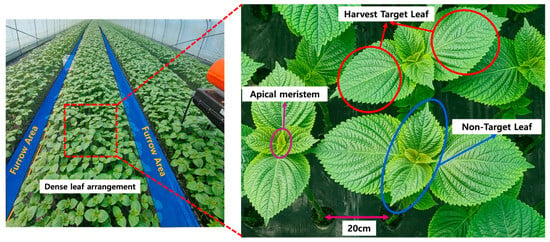
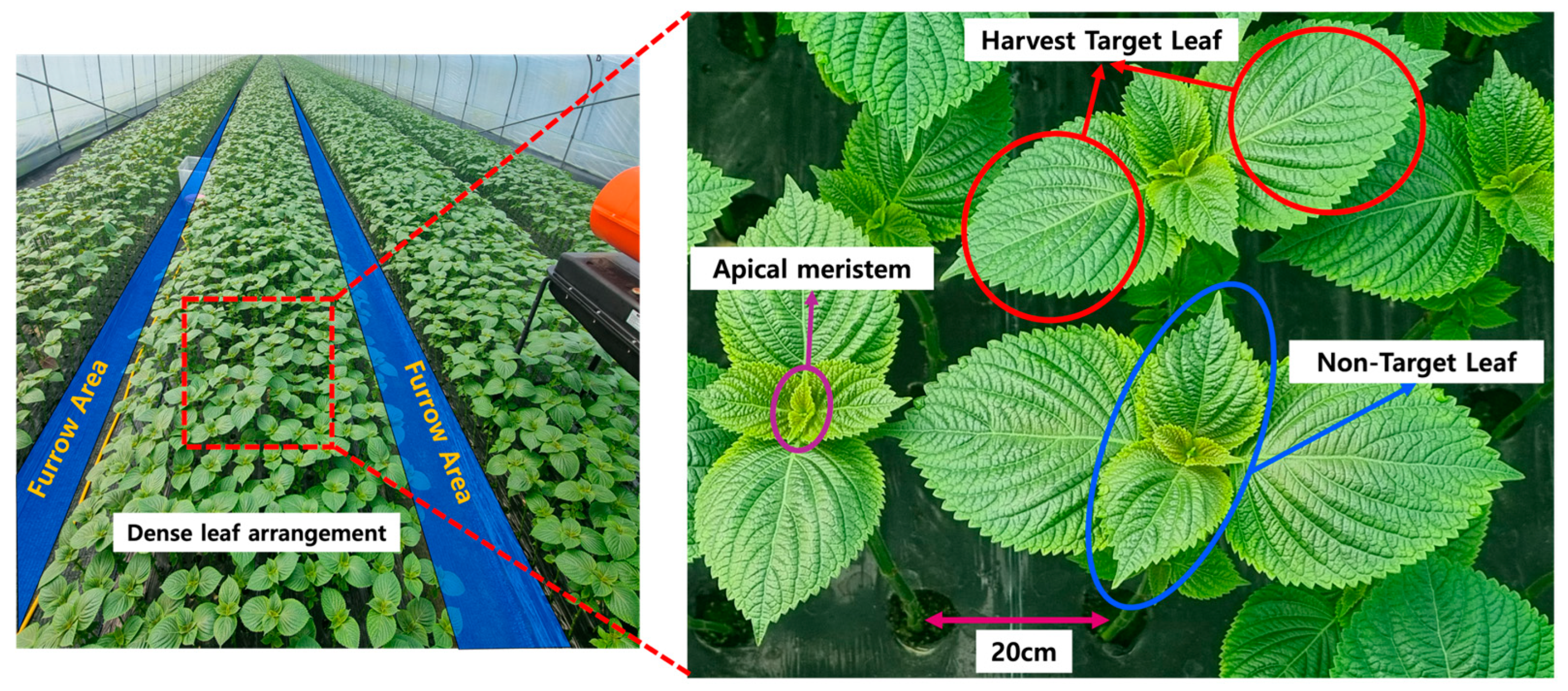
Perilla leaves are the edible leaves of Perilla frutescens, an annual plant in the Lamiaceae family, and are widely used as food and seasoning ingredients in East Asia [12]. Perilla plants have an opposite phyllotaxy, in which two leaves grow opposite each other at each node along the main stem, while new leaves continuously emerge from the apical growing region. In practical cultivation, mature leaves with a blade length of 14 cm or more are repeatedly harvested once or twice per week after the development of at least four true leaves [13]. Thus, perilla harvesting requires the sequential removal of mature outer leaves while preserving the central growing region, including the apical meristem and immature inner leaves. In conventional manual harvesting, the petiole of the target leaf is grasped near the petiole–stem junction and pulled downward to detach the leaf. However, the petiole is located close to neighboring leaves, and the thin, flexible leaf blade is vulnerable to visible damage even under low contact pressure. Therefore, robotic perilla harvesting requires an end-effector that can reliably access the petiole-grasping position while reducing interference with neighboring leaves and protecting the central growing region (Figure 1).
Figure 1.
Cultivation environment and selective harvesting targets of perilla leaves; mature outer leaves are harvested while the central growing region (including the apical meristem and immature inner leaves) is preserved.
An earlier attempt to mechanize edible perilla leaf harvesting was reported by Chang et al. [14], who developed an automated harvesting system consisting of a traveling mechanism, conveying equipment, leaf-picking equipment, and harvest control equipment. The system demonstrated the feasibility of machine-level perilla harvesting and reported a field working efficiency of 16.73 m2/h. However, the harvesting loss rate was 56.67%, and the damage rate involving harvested leaves and plant stems was 11.67% [14]. These results indicate that, although system-level mechanization of perilla harvesting is feasible, repeated mature-leaf harvesting still requires an end-effector-level strategy that can selectively access individual petioles, detach target leaves with low damage, and preserve the main stem and central growing region for subsequent regrowth.
More recently, Song and Yi [15] developed an automatic perilla harvesting system in which perilla leaf positions were estimated using instance segmentation and keypoint-based recognition, enabling the end-effector to approach the target harvesting position. That study verified the integration of vision-based recognition and robotic approach motion and achieved an 80.0% harvesting success rate in a simulated environment using perilla plant models. In addition, a photoelectric sensor-based stem detection mechanism [16] demonstrated the feasibility of detecting plant structures around the harvesting target using non-vision sensors. Although these studies demonstrated the feasibility of vision-guided perilla harvesting and sensor-based plant-structure detection, quantitative evaluations of low-damage harvesting performance under real-plant conditions remain limited. In particular, few studies have addressed repeated mature-leaf harvesting in which the central growing region must be preserved for subsequent regrowth.
In this study, we propose a dual-module end-effector for low-damage harvesting of mature perilla leaves while protecting the central growing region. The proposed end-effector adopts a vertical top-down approach and integrates a central growing region protection and stem-support module with a petiole grasping module. In addition, pressure-sensor-based pneumatic calibration and photoelectric sensor-based stopping control are implemented to stably grasp and detach target leaves while minimizing damage to the central growing region and main stem.
The main contributions of this study are as follows: (1) the design of a functionally separated dual-module end-effector that physically decouples central growing region protection and stem support from petiole grasping and tensile separation; (2) quantitative determination of a low-damage pneumatic pressure setting based on pressure-sensor measurements; (3) implementation of position-adaptive stopping control using a photoelectric sensor; and (4) quantitative evaluation of harvesting performance and damage using both perilla plant models and real perilla plants.
2. Related Work
End-effectors for automated harvesting have been developed in various forms depending on the physical properties of the target crop and the detachment method required for harvesting. Previous review studies have summarized representative harvesting mechanisms, including vacuum suction, multi-finger grasping, cutting, and soft-gripper-based approaches [1,3,4]. Recent studies have further introduced soft materials, force feedback, compliant grasping, and variable-stiffness mechanisms to reduce crop damage during harvesting [17,18,19,20]. However, the applicability of these end-effectors strongly depends on the harvesting unit, target morphology, detachment method, and the need to preserve non-target plant structures. Therefore, the most suitable harvesting mechanism should not be determined solely by the actuator type, such as suction, cutting, or soft grasping, but rather by crop-specific requirements, including target accessibility, detachment behavior, and protection of non-target growing tissues. This section reviews end-effector structures and mechanization approaches for fruit, whole-plant leafy vegetables, and selective or repeated leaf harvesting, and derives the design requirements for repeated mature-leaf harvesting in perilla.
2.1. End-Effectors for Fruit and Fruiting Vegetable Harvesting
End-effectors for fruit and fruiting vegetable harvesting have been designed with various structures according to crop-specific physical properties and cultivation environments. In strawberry harvesting, vacuum suction has been used to hold the fruit while reducing compression damage, followed by cutting the stem above the calyx [5]. In tomato and apple harvesting, multi-finger grasping and vacuum suction mechanisms have been applied to stably enclose or support the fruit [6,7]. For crops that require stem cutting, such as sweet pepper, hybrid end-effectors combining a grasping structure with a cutting tool have also been investigated [8].
These systems mainly focus on grasping or supporting relatively independent harvest targets and detaching them near the stem, peduncle, or calyx. Accordingly, the design emphasis is commonly placed on stable fruit holding, contact-force reduction, and detachment reliability. However, in repeated mature-leaf harvesting, the harvest target is not an isolated fruit but a thin, flexible leaf connected to the main stem through a short petiole. In addition, adjacent leaves, immature leaves, and the central growing region are located close to the target petiole. Therefore, fruit-harvesting end-effectors cannot be directly applied to perilla harvesting without additional structures for central-region protection, selective petiole access, and low-damage leaf detachment.
2.2. End-Effectors for Whole-Plant Leafy Vegetable Harvesting
In leafy vegetable harvesting, crop-specific end-effectors have been developed by considering the morphological characteristics of crops such as lettuce, broccoli, and cabbage. Birrell et al. [9] proposed Vegebot, which combines convolutional neural network (CNN)-based vision recognition with a soft gripper for iceberg lettuce harvesting, and reported that outer-leaf damage can reduce the marketability of harvested lettuce. For broccoli harvesting, end-effectors designed to grasp and cut the whole head have been studied [10], and compact actuation structures have also been proposed to reduce interference in densely planted environments [11]. In addition, pneumatic soft grippers have been applied to crops with irregular external shapes, such as cabbage [4].
Although these studies show the importance of low-damage handling and compact end-effector design in leafy vegetables, most existing leafy-vegetable harvesting systems are intended for whole-plant, whole-head, or whole-flower-head harvesting. Such approaches are suitable when the entire harvestable portion is removed in a single operation. However, they are structurally difficult to apply to perilla harvesting, where only mature outer leaves must be repeatedly detached while preserving immature leaves, the main stem, and the central growing region on the same plant.
2.3. End-Effectors and Mechanization Approaches for Selective or Repeated Leaf Harvesting
Compared with fruit harvesting and whole-head leafy-vegetable harvesting, selective or repeated mature-leaf harvesting has been less extensively studied. This task is more challenging because the end-effector must access an individual petiole within a dense leaf arrangement, detach the target leaf without tearing or compression, and avoid damage to non-target tissues required for subsequent growth.
An earlier machine-level approach for edible perilla leaf harvesting was reported by Chang et al. [14]. Their system included a traveling mechanism, conveying equipment, leaf-picking equipment, and harvest control equipment, and demonstrated the feasibility of automated perilla harvesting. However, the field test reported a harvesting loss rate of 56.67% and a damage rate of 11.67%. The reported problems included unstable travel, reduced photosensor performance under sunlight, and difficulty harvesting low-positioned perilla leaves [14]. These results indicate that machine-level mechanization alone has limitations in achieving reliable low-damage repeated harvesting, highlighting the need for an end-effector-level strategy for selective petiole access, local plant stabilization, and low-damage detachment.
Recent perilla-related studies have investigated vision-based target localization and sensor-based plant-structure detection [15,16]. These studies demonstrated that robotic access to the target leaf region and detection of plant structures around the harvesting target are feasible. However, they provided limited quantitative evaluation of harvesting damage under real-plant conditions and did not fully analyze how petiole-position variation, leaf overlap, and contact instability affect harvesting outcomes. Therefore, further evaluation using real perilla plants is required to verify whether the end-effector can repeatedly harvest mature leaves while preserving the main stem and central growing region.
Table 1 compares representative harvesting end-effector architectures and mechanization approaches with respect to their applicability to repeated mature-leaf harvesting in perilla.
Table 1.
Comparison of harvesting approaches and their applicability to repeated mature-leaf harvesting in perilla.
As shown in Table 1, previous systems mainly targeted relatively independent fruits, whole harvestable organs, or machine-level perilla harvesting. In contrast, repeated mature-leaf harvesting in perilla requires simultaneous central-region protection, petiole-level access, and low-damage tensile separation.
2.4. Requirements for Repeated Mature-Leaf Harvesting
As reviewed above, fruit and fruiting-vegetable end-effectors mainly focus on grasping and detaching relatively independent harvest targets, whereas existing leafy-vegetable end-effectors generally handle the whole plant, whole head, or whole flower head as a single harvest unit. In contrast, repeated perilla harvesting requires selective removal of mature leaves while preserving immature leaves, the main stem, and the central growing region within the same plant.
Therefore, an end-effector for repeated mature-leaf harvesting must satisfy the following requirements. First, it must provide adaptive access to individual petiole positions because petiole height and orientation vary among plants and nodes. Second, it must protect the central growing region, including the apical meristem and immature inner leaves, because these structures determine subsequent leaf regrowth. Third, it must minimize interference with adjacent leaves and non-target tissues during grasping and detachment. Fourth, the detachment mechanism should avoid unnecessary cutting components near the central region, because cutting tools may increase the risk of damaging immature leaves or the main stem in dense leaf arrangements.
Based on these requirements, a dual-module architecture was selected in this study. The central growing region protection and stem-support module provides local stabilization and physical protection around the main stem, whereas the petiole grasping module performs position-adaptive petiole grasping and tensile separation. This functionally separated structure physically decouples central-region protection from petiole detachment, which is difficult to achieve using a single-module gripper, a fully soft pneumatic design, a continuum manipulator without a dedicated stabilization mechanism, or a general cutting-based mechanism. The detailed structure and operating principle of the proposed end-effector are described in the following section.
3. Materials and Methods
3.1. Growth Structure and Conventional Harvesting Method of Perilla Leaves
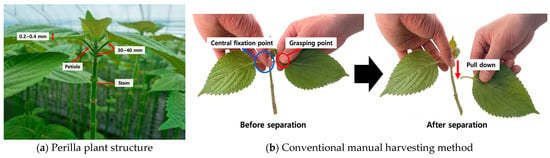
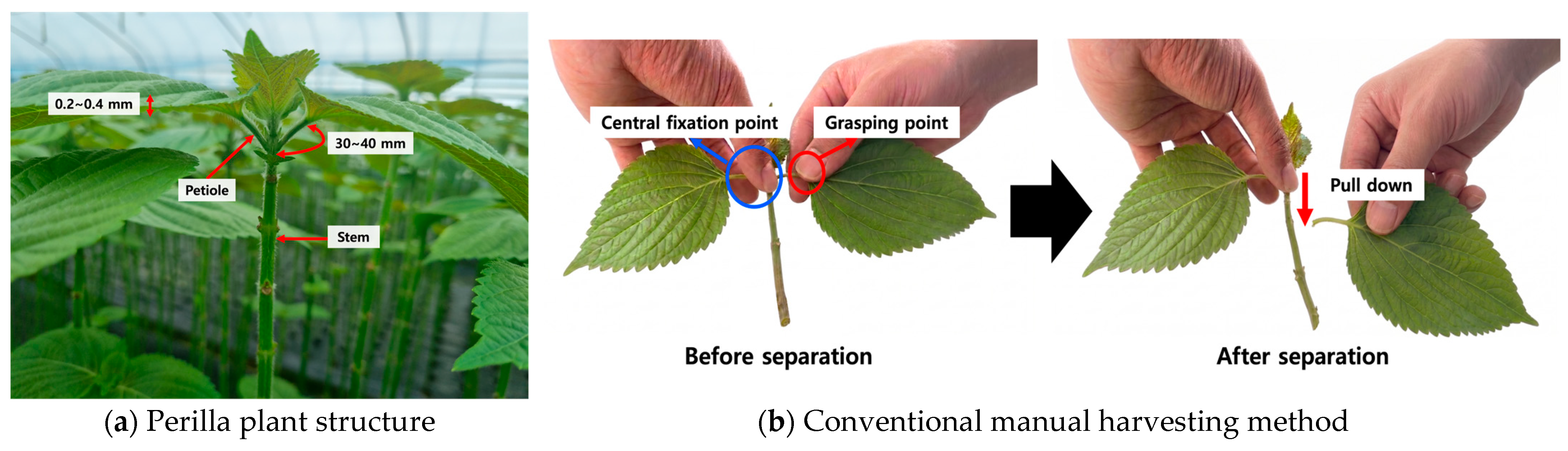
This section summarizes the growth structure, planting arrangement, and conventional harvesting method of perilla leaves that directly affect the end-effector design. The petiole of a target leaf protrudes approximately 30–40 mm from the main stem, and the narrow spacing between adjacent leaves can easily cause physical interference during harvesting. The leaf blade is extremely thin and flexible, with a thickness of approximately 0.2–0.4 mm; therefore, even a small contact pressure can cause visible damage such as tearing, bending, or compression. In addition, the main stem of the perilla plant has a quadrangular cross-section, and two leaves grow opposite each other at each node along the stem (Figure 2a). In conventional manual harvesting of perilla leaves, the petiole is grasped near the petiole–stem junction and pulled downward to naturally detach the leaf at the junction. During this process, skilled workers stabilize the central stem with one hand to prevent main-stem movement and damage to the central growing region, while individually removing mature outer leaves with the other hand (Figure 2b).
Figure 2.
Physical characteristics and conventional harvesting method of perilla leaves. (a) Morphological traits of the leaf and petiole. (b) Manual harvesting by stabilizing the stem and pulling the target leaf downward at the petiole–stem junction.
This practice indicates that perilla leaves can be detached by tensile force without the use of a cutting tool. A previous study on automated harvesting of green perilla leaves reported that the shear force required to cut perilla petioles ranged from 7.13 to 17.42 N, with an average value of 12.13 N [21]. Although the present study used tensile separation rather than cutting, this reported range provides a useful reference scale for designing a petiole detachment mechanism. Based on the manual harvesting principle described above, the end-effector developed in this study was designed to incorporate a central support structure and a petiole tensile-separation mechanism.
The planting arrangement was also considered in the design of the harvesting approach. In this study, the perilla plants used for the real-plant experiment were arranged with an inter-plant spacing of approximately 20 cm, referring to practical leaf-perilla cultivation guidelines [13,22]. Because lateral insertion between neighboring plants may increase the risk of collision with adjacent leaves and stems, the proposed end-effector was designed to approach the target node vertically from above. This top-down approach reduces the need for the end-effector to physically pass through the narrow lateral space between neighboring plants and allows the central protection and petiole grasping modules to access the target node from the upper side.
These physical characteristics, planting constraints, and manual harvesting practices suggest that the end-effector must reduce damage to the thin leaf blade, adapt to plant-to-plant variation in petiole position, and reliably detach the petiole–stem junction while protecting the central growing region. Accordingly, selective harvesting of perilla leaves requires an end-effector structure that integrates central-region protection, petiole grasping, position-adaptive access, and low-damage separation functions.
3.2. Design of the Dual-Module End-Effector
This section describes the overall structure and main actuation methods of the dual-module end-effector designed for selective harvesting of perilla leaves. Based on the design requirements derived from the growth structure and harvesting method of perilla, the proposed end-effector consists of a Central Growing Region Protection and Stem-Support module (CPS module) and a Petiole Grasping module (PG module). The dual-module architecture was adopted to physically separate the function of central-region protection and stem support from that of petiole grasping and tensile separation.
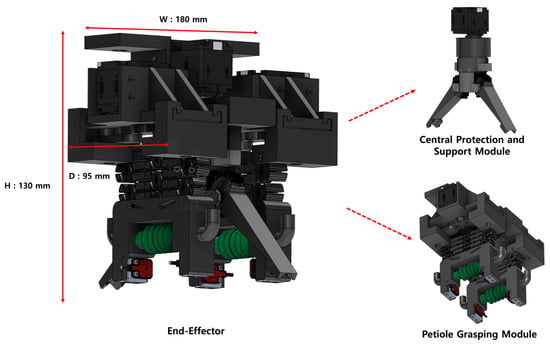
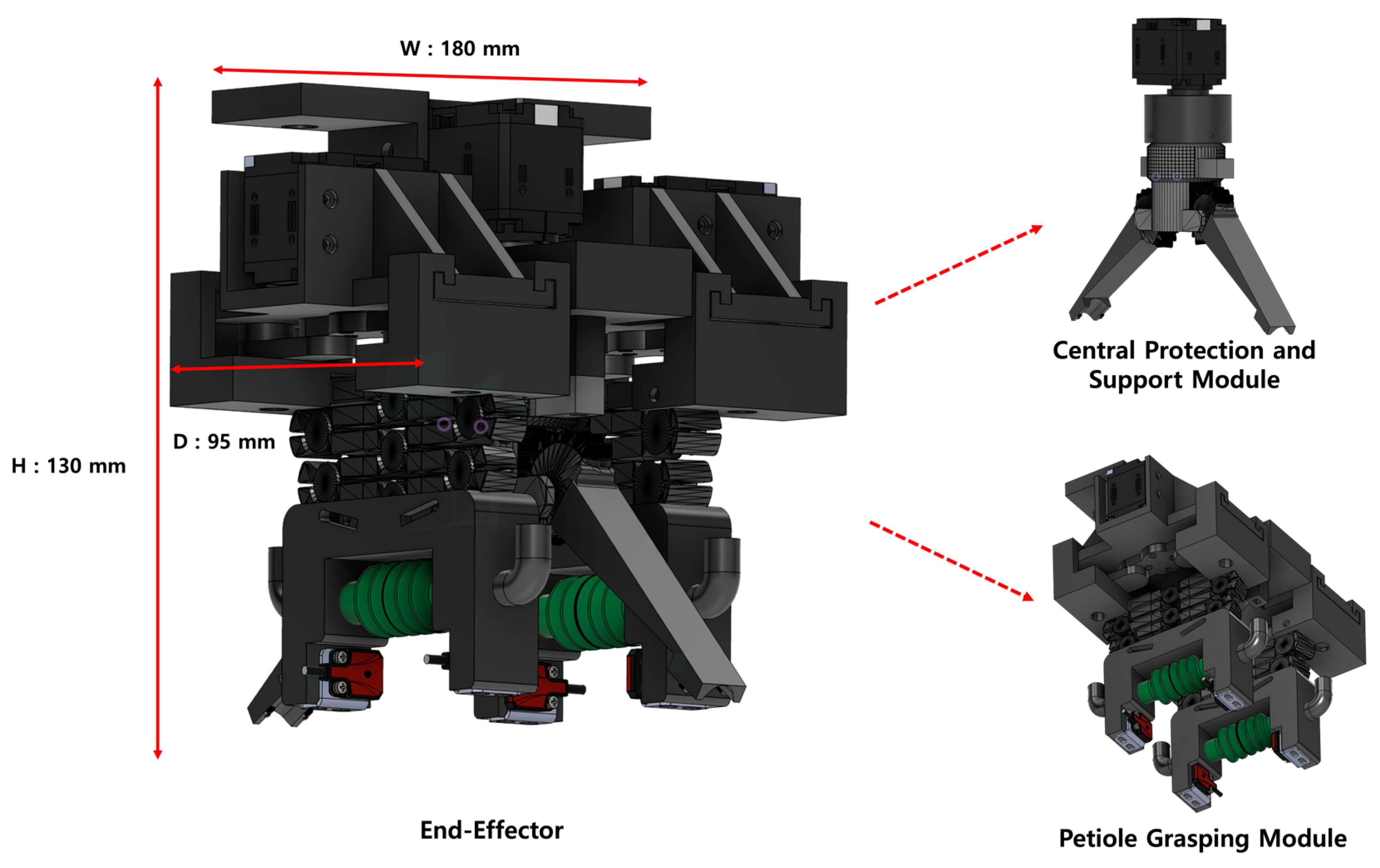
As shown in Figure 3, the developed end-effector integrates the CPS module and the PG module within a compact structure. The CPS module protects the central growing region and provides lateral support to the main stem, whereas the PG module is mounted on a scissor-lift mechanism and moves vertically independently of the CPS module. The overall dimensions of the end-effector are 180 mm × 130 mm × 95 mm, and the device is mounted at the end of an Indy7 robotic arm. The CPS module is actuated by a screw-driven motor mechanism, while the PG module combines pneumatic soft pads with a motor-driven scissor-lift mechanism.
Figure 3.
Overall structure of the proposed dual-module end-effector. The system consists of the central protection and stem-support module and the petiole grasping module.
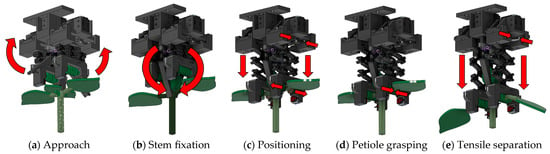
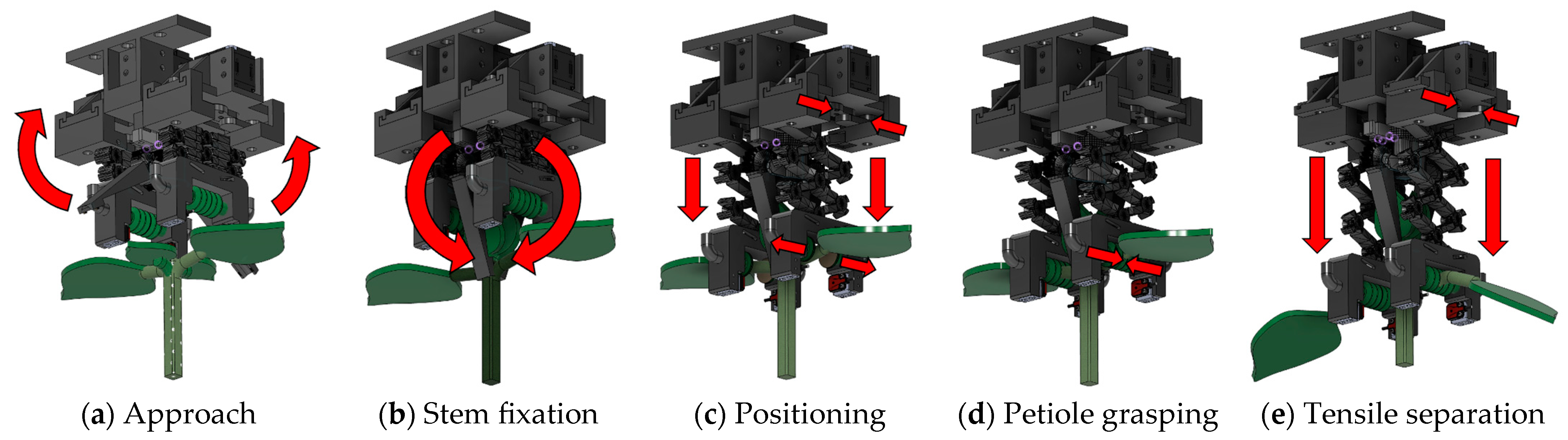
The operation sequence of the end-effector consists of five steps, approach, stem support, gripper positioning, petiole grasping, and tensile separation, as illustrated in Figure 4. First, the robotic arm approaches the upper region of the target leaves. The CPS module then provides lateral support around the main stem, after which the PG module moves downward and positions the grasping pads around the petioles using the photoelectric sensor. Finally, the pneumatic pads grasp the petioles, and the scissor-lift mechanism further descends to apply tensile force to the petiole–stem junction, thereby separating the leaves from the plant.
Figure 4.
Sequential operation of the proposed end-effector: (a) approach, (b) stem fixation, (c) petiole positioning, (d) petiole grasping, and (e) tensile separation. The arrows indicate the movement direction of each module during the harvesting sequence.
3.2.1. Central Growing Region Protection and Stem-Support Module
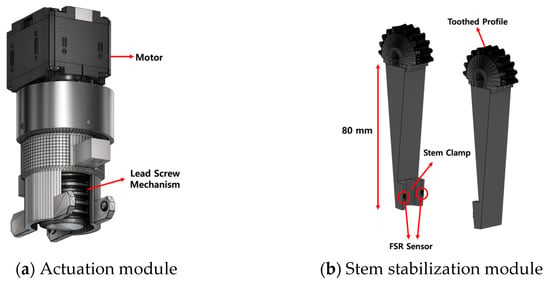
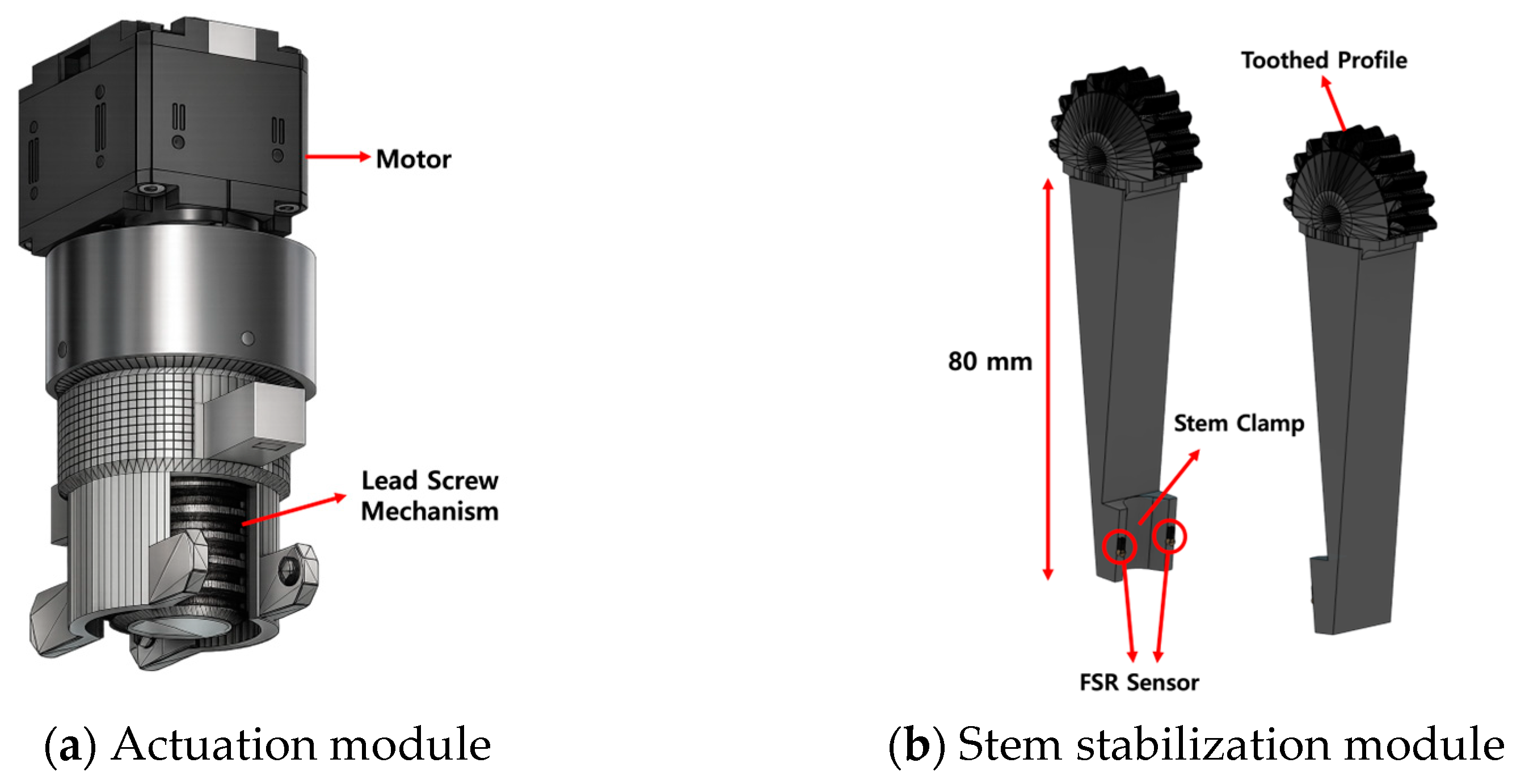
The CPS module protects the central growing region, including the apical meristem and immature inner leaves, during end-effector descent and stabilizes the main stem for the subsequent petiole-grasping process. The module is positioned at the center of the end-effector and consists of two symmetric supports that close around the main stem (Figure 5).
Figure 5.
Structure of the central protection and stem-support module. (a) Actuation module. (b) Stem stabilization module with FSR sensors.
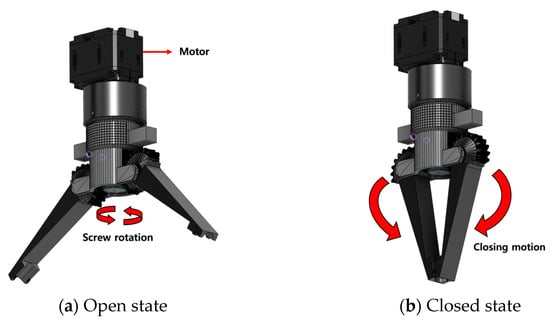
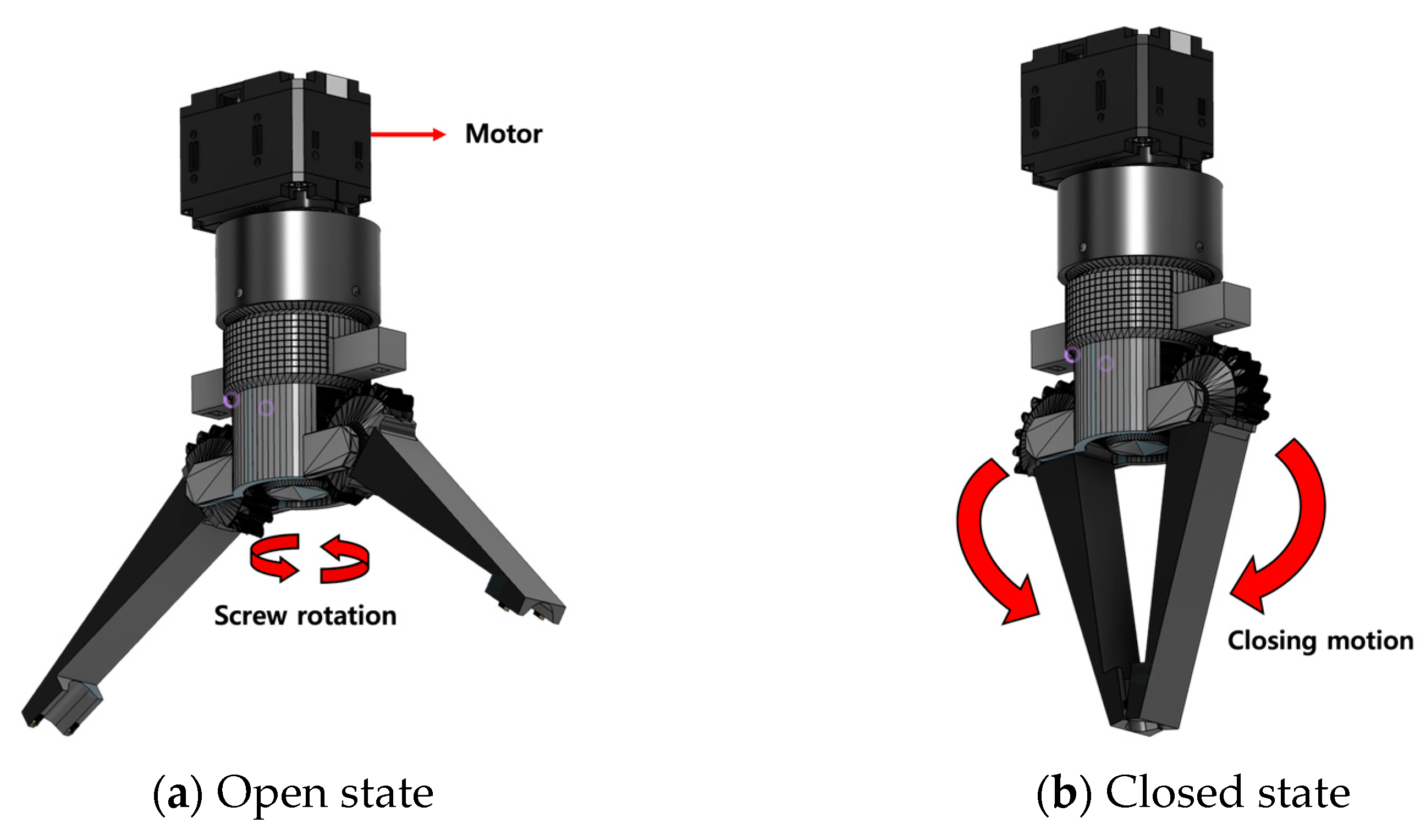
Structure and actuation. The CPS module uses a lead-screw-driven opening and closing mechanism, in which the two support structures move toward the stem as the motor rotates (Figure 6). During closure, the stem is guided into the toothed inner groove shown in Figure 5b, and the two supports engage with each other to restrict excessive lateral movement of the stem. Soft silicone pads are attached to the contact surfaces to reduce local pressure concentration on the stem and central growing region.
Figure 6.
Opening and closing motion of the stem stabilization module: (a) open state and (b) closed state.
FSR-based contact-triggered stopping control. An FSR-402 force-sensitive resistor sensor (Interlink Electronics, Camarillo, CA, USA) is attached to the center of each contact surface. In this module, the FSR sensors are not used to regulate the exact magnitude of the grasping force. Instead, they serve as trigger sensors to detect the initial contact between the supports and the stem during screw-driven closure and to stop the motor accordingly. Therefore, the CPS module employs contact-triggered stopping control rather than precise force control.
The FSR sensors produced low-level fluctuations even under no-contact conditions because of electrical noise and minor mechanical vibration. The ADC output range of the OpenCR board used in this study was 0–1023, and the no-contact noise level was typically observed between 0 and 2. Preliminary observations showed that ADC values lower than 4 did not always provide stable stem support, whereas values greater than approximately 20 increased the risk of visible compression on the stem or central growing region. Based on this response, the contact detection threshold was set to an ADC value of 5. This threshold was sufficiently higher than the noise range while allowing the motor to stop before excessive compression occurred. This threshold was validated during the real-plant harvesting experiment using the stems included in this study; however, additional calibration may be required for substantially different stem diameters, stem stiffness, or cultivar-dependent growth characteristics. The CPS module was not intended to rigidly clamp the stem; rather, it was designed to provide lateral support and reduce stem movement during petiole tensile separation.
3.2.2. Petiole Grasping Module
The PG module grasps the petiole of the target leaf and detaches the leaf from the main stem through the additional downward motion of the scissor-lift mechanism. The module consists of left and right petiole grasping units, scissor-lift mechanisms, photoelectric sensors, and FSR sensors. The left and right PG units are independently actuated to accommodate differences in petiole height, angle, and growth position between two opposite leaves.
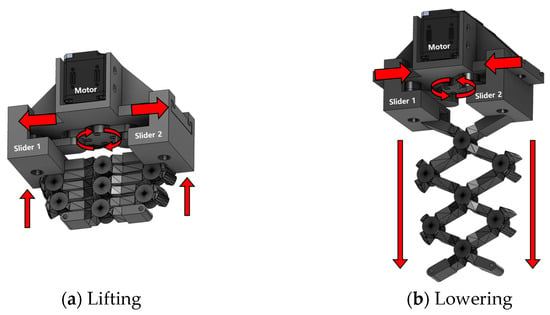
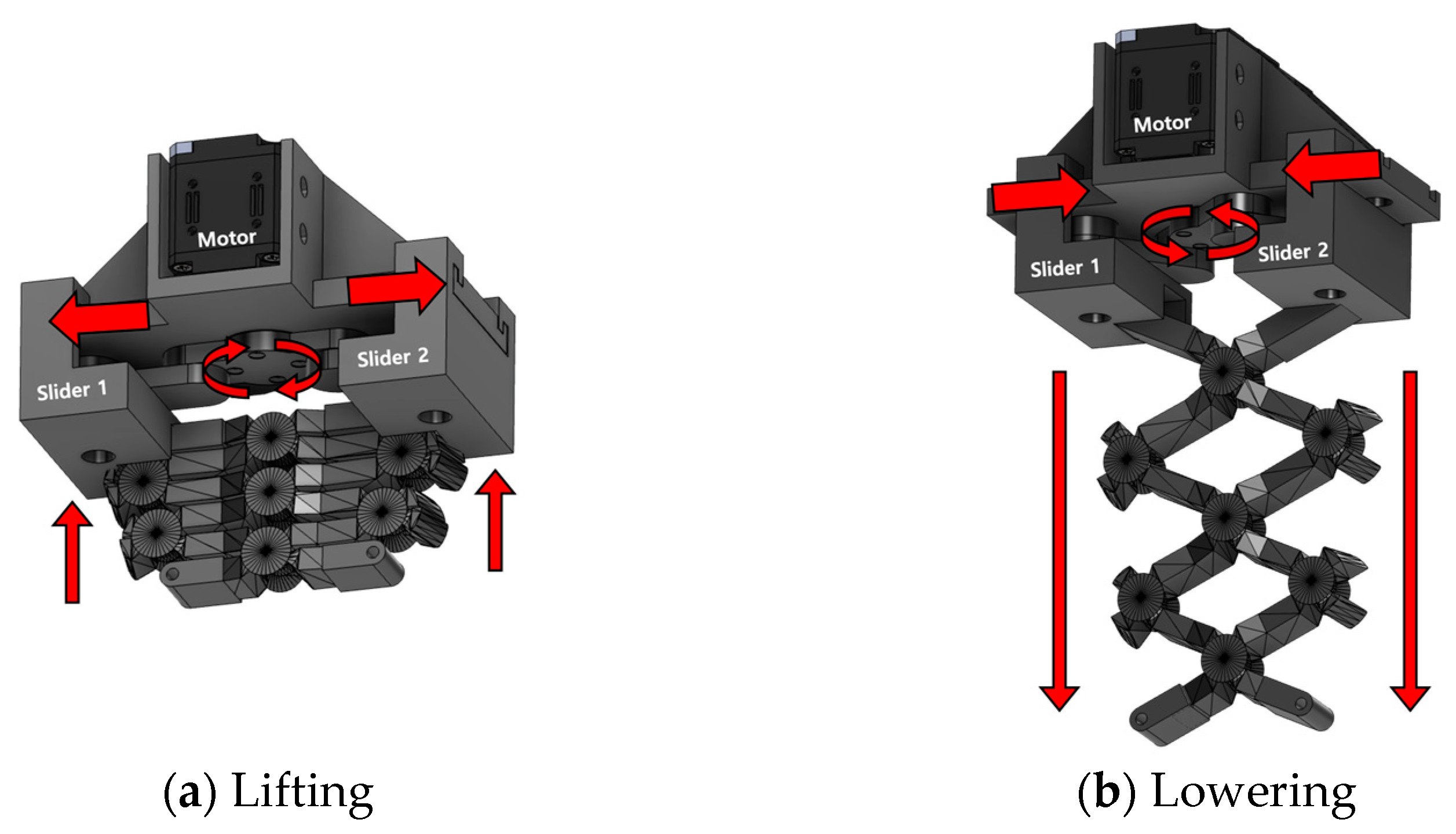
Scissor-lift structure and operating principle. The scissor lift converts the rotation of the upper motor into the linear motion of the left and right sliders, which is then transformed into the vertical motion of the grasping unit (Figure 7). The vertical displacement of the scissor lift, can be expressed as a function of the link angle as follows:
where is the vertical displacement of the scissor lift (mm), is the link length, and and are the initial and current link angles with respect to the horizontal plane, respectively.
Figure 7.
Vertical actuation of the petiole grasping module using the scissor-lift mechanism: (a) lifting and (b) lowering. The arrows indicate the upward and downward movement directions of the petiole grasping module.
In this study, the scissor lift was designed with and an initial compressed angle of . When the motor-driven mechanism reduces to , the lift provides an approximate vertical displacement of 33 mm. This operating range includes the additional downward displacement required for leaf separation, defined as , and accommodates plant-to-plant variation in petiole position.
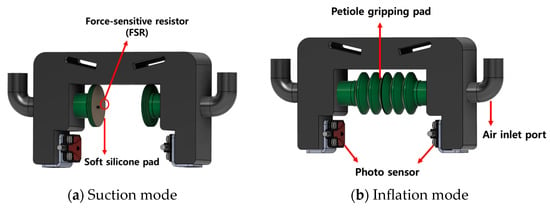
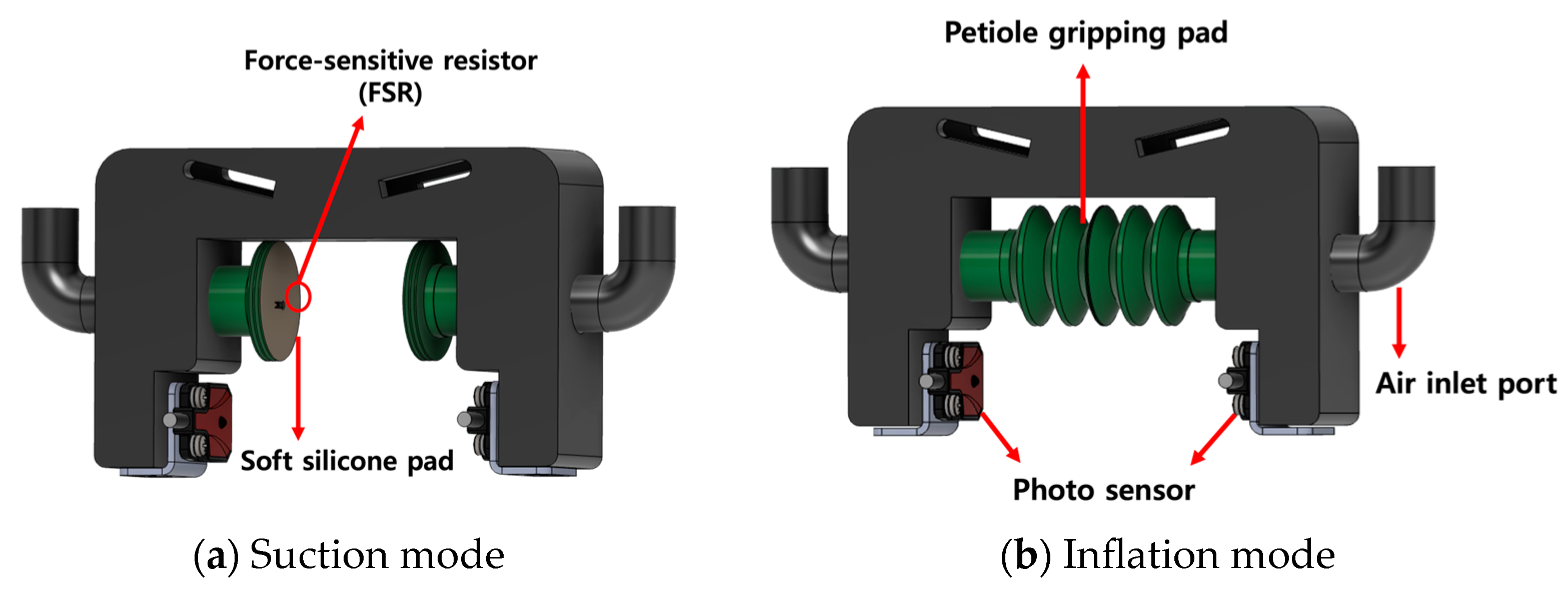
Operation sequence and photoelectric sensor-based stopping control. The PG module descends while maintaining a gap between the two elastic pads in suction mode. The BTF1M-TDTL2 photoelectric sensor placed between the pads detects the moment when the petiole blocks the optical axis, and this signal is used to stop the downward motion of the scissor lift. The pneumatic system is then switched to inflation mode, causing the pads to expand inward and grasp the petiole. This control strategy allows the grasping position to be adjusted according to the petiole height of each plant.
Although perilla leaves generally grow as two opposite leaves at each node, the height and angle of the left and right petioles can differ because of plant-to-plant variation, leaf rotation, or partial overlap. Therefore, the two PG units are controlled independently during positioning. One harvesting attempt targets two opposite mature leaves at the same node, but the left and right PG units independently detect and position around each petiole before grasping and tensile separation are performed within the same harvesting sequence.
Grasping unit and suction–inflation-based actuation principle. The grasping unit consists of two opposing silicone elastic pads (Figure 8). In this study, suction mode was defined as the state in which air is evacuated from inside the pads to secure a gap between them, whereas inflation mode was defined as the state in which air is supplied into the pads to grasp the petiole. In suction mode, the pads contract outward, creating an insertion space for the petiole (Figure 8a). In inflation mode, the pads expand inward and grasp the petiole (Figure 8b). An FSR sensor was attached to the inner center of one pad to measure the contact pressure during grasping.
Figure 8.
Pneumatic operation of the petiole grasping unit: (a) suction mode for opening the gap between the pads and (b) inflation mode for petiole grasping.
The elastic-pad-based grasping method can reduce contact-pressure concentration compared with a mechanism that directly pinches the petiole using rigid links. It can also accommodate variations in petiole thickness and cross-sectional shape.
Pressure-sensor-based setting of grasping pressure. In the proposed grasping method, the force applied to the petiole is determined by the pneumatic pressure supplied to the pads during the inflation mode. If the supplied pressure is too high, the pads expand excessively and apply excessive pressure to the petiole, which may cause petiole bending or leaf damage. Conversely, if the pressure is too low, the pads do not expand sufficiently, making stable petiole grasping difficult.
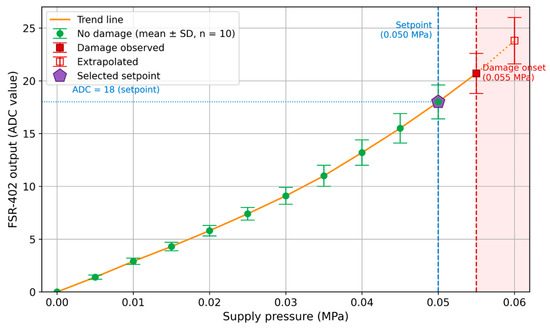
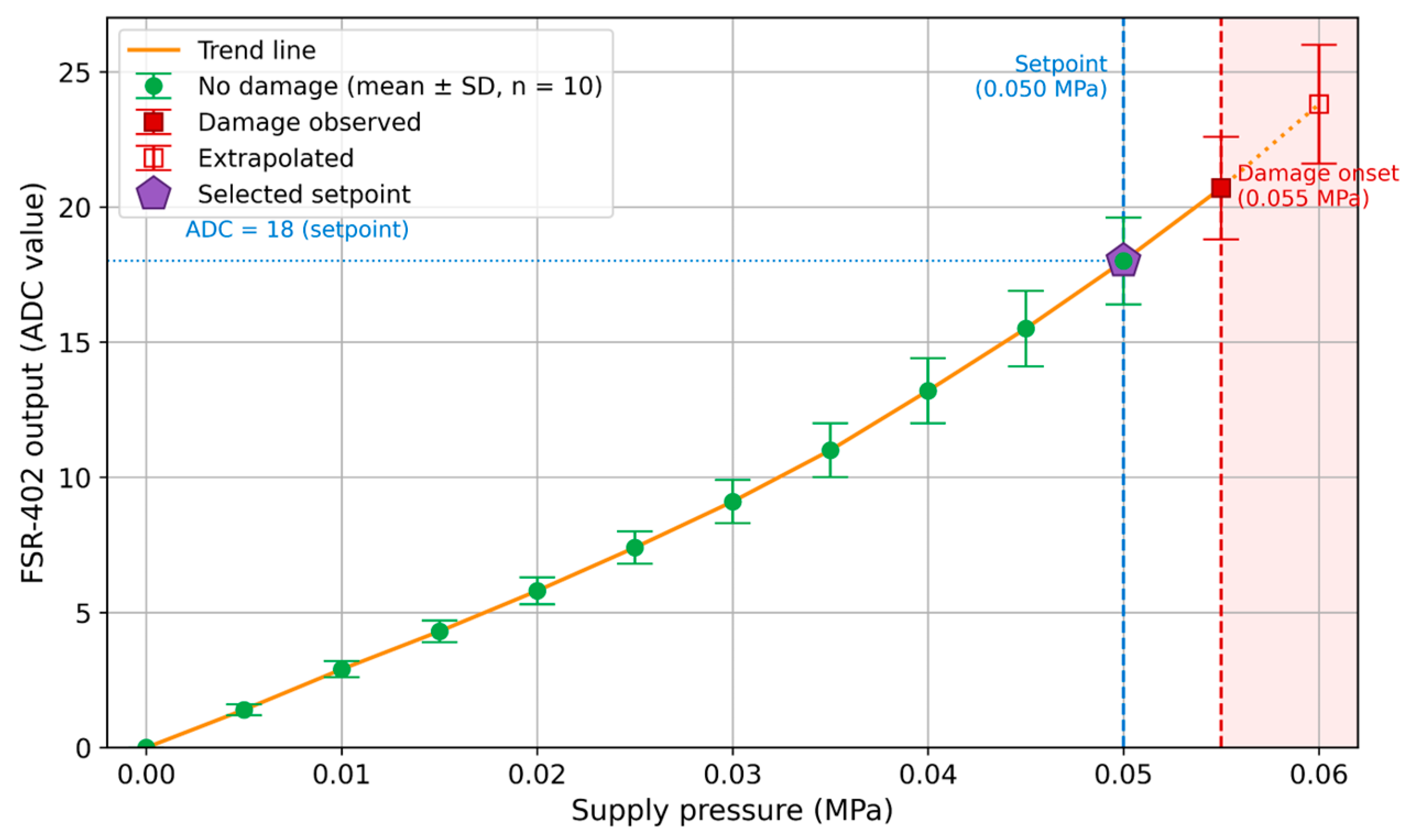
Therefore, to determine a pressure level that enables stable grasping without visible damage, an FSR-402 pressure sensor was attached to the center of the grasping surface to measure the contact response during petiole grasping. The supplied pressure was increased stepwise from 0.000 MPa in increments of 0.005 MPa during the inflation mode. For each pressure condition, the ADC output of the FSR-402 sensor and the occurrence of visible deformation on the harvested leaf surface after grasping and separation were recorded. Each condition was repeated ten times.
As shown in Figure 9, no visible leaf damage was observed in any trial when the supplied pressure was 0.050 MPa or lower. At pressures of 0.055 MPa or higher, petiole bending or compression of the leaf blade began to occur. Therefore, the grasping pressure was set to 0.050 MPa, which was the maximum pressure level at which no damage was observed. Under this condition, the ADC output of the FSR-402 sensor was approximately 18.
Figure 9.
FSR-402 sensor output under different supply pressures during inflation mode (n = 10, mean ± SD). The selected non-damaging pressure was 0.050 MPa. The colored area indicates the pressure range in which no visible leaf damage was observed.
In the suction mode, air was evacuated from the inside of the pads to generate a negative pressure of approximately −0.07 MPa, allowing the two pads to contract outward and create an insertion gap for the petiole. The maximum gap between the two pads in the suction mode was approximately 13 mm. Based on this gap, the module was designed to reliably accommodate perilla petioles with diameters of approximately 2–4 mm. Thus, the selected grasping pressure was validated within the petiole diameter range observed in this study, whereas additional testing is required for wider petiole-size distributions and different growth stages.
Off-center FSR response and fallback grasping strategy. Because the FSR-402 sensor is located at the inner center of one elastic pad, the sensor output can be affected by the petiole insertion angle and contact position. If the petiole is not positioned on the active area of the FSR sensor, the sensor response may be weak or absent even when the petiole is physically grasped by the pneumatic pads. Therefore, the FSR signal in the PG module was used primarily for grasping-pressure calibration and contact monitoring, rather than as the sole criterion for successful petiole grasping.
During operation, the photoelectric sensor first detects petiole presence and stops the downward motion of the PG module. After the pneumatic pads are inflated, the FSR output is monitored. If no FSR response is detected within 1 s after inflation, the system applies the experimentally determined non-damaging pneumatic condition of 0.050 MPa for a fixed grasping duration of 3 s. This fallback strategy allows the end-effector to continue the grasping sequence even when the petiole is not located at the center of the FSR active area.
Tensile separation method. After the petiole is grasped, the scissor lift is further lowered by , applying a tensile force to the petiole and detaching the leaf at the petiole–stem junction. In this study, a tensile separation method was adopted without using an additional cutting device, utilizing the structural weakness of the petiole–stem junction. This approach simplifies the end-effector structure and reduces the risk of damage to neighboring leaves and the central growing region that may occur when a cutting mechanism is used. The additional downward displacement, , was set to 15 mm based on preliminary actuation tests to ensure stable petiole separation. In this study, the tensile detachment force during end-effector operation was not directly measured. Therefore, the scissor-lift displacement was selected based on preliminary actuation tests and the reported petiole force scale in previous perilla harvesting research [22].
3.3. Experimental Setup and Evaluation Protocol
To evaluate the harvesting performance and low-damage characteristics of the developed end-effector, experiments were conducted using both perilla plant models and real cultivated perilla plants. The model-plant experiment was performed first to verify the integrated system operation and harvesting sequence. The real perilla experiment was then conducted in an indoor cultivation environment to quantitatively assess harvesting performance and damage characteristics under actual plant conditions.
3.3.1. Experimental Setup
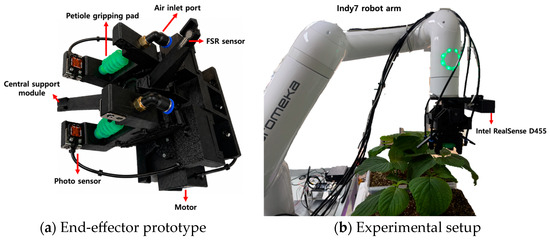
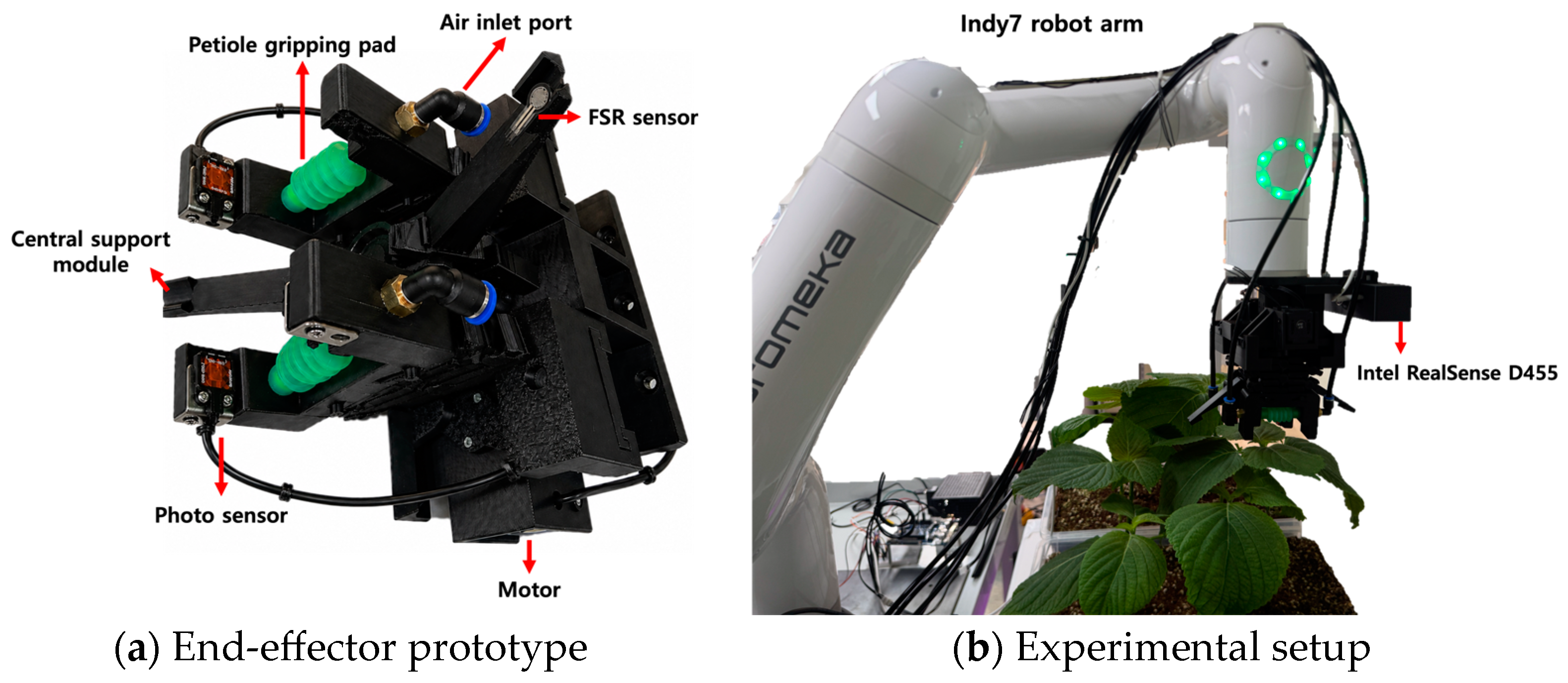
The experiments were conducted using a six-axis collaborative robot, Indy7 (Neuromeka, Seoul, Republic of Korea), with a payload capacity of 7 kg and a repeatability of ±0.1 mm. The developed end-effector was mounted on the end flange of the robot arm (Figure 10).
Figure 10.
Experimental setup for perilla leaf harvesting. (a) Fabricated dual-module end-effector. (b) Robot-mounted setup with the Indy7 robotic arm and Intel RealSense D455 camera.
An RGB-D camera, Intel RealSense D455 (Intel Corporation, Santa Clara, CA, USA) was used as the vision sensor and mounted near the robot end-effector to estimate the position of the target leaves. The target harvesting coordinates were obtained using an instance-segmentation and keypoint-based recognition pipeline. The estimated image coordinates were combined with depth information and transformed into the robot coordinate system to generate the approach position.
For end-effector actuation, an external compressed-air supply and a vacuum ejector, SCPSi (J. Schmalz GmbH, Glatten, Germany) were used. A negative pressure of approximately −0.07 MPa was applied in suction mode, whereas a positive pressure of 0.050 MPa, determined in Section 3.2.2, was applied in inflation mode. Petiole detection was performed using a BTF1M-TDTL2 through-beam photoelectric sensor. Sensor signal acquisition and the control of the motors and solenoid valves were implemented using an OpenCR board (ROBOTIS, Seoul, Republic of Korea).
The overall harvesting operation followed the sequence shown in Figure 4. After the robot approached the target position estimated by the vision system, petiole grasping and separation were automatically performed through the sensor-based control of the end-effector.
3.3.2. Vision-Based Target Localization and Processing Time
The vision system was used to estimate the target leaf region and provide coarse target coordinates for robotic approach motion. Instance segmentation was performed using a YOLOv8-seg model to identify individual perilla leaves, and keypoint detection was performed using a YOLOv8-pose model to estimate the central points of the target outer leaves and inner leaves. The estimated image coordinates were combined with depth information from the Intel RealSense D455 camera and transformed into the robot coordinate system.
Recognition performance was evaluated using both controlled mock-leaf conditions and real perilla images collected under the indoor experimental condition. For the mock-leaf evaluation, three representative conditions were prepared: aligned leaves, rotated leaves, and overlapped leaves. As summarized in Table 2, the YOLOv8-seg model achieved mAP(50–95) values of 0.93, 0.92, and 0.88 under the aligned, rotated, and overlapped mock-leaf conditions, respectively. The YOLOv8-pose model achieved mean OKS (Object Keypoint Similarity) values of 0.92, 0.91, and 0.89 under the same conditions. For real perilla images, the YOLOv8-seg model achieved an mAP(50–95) of 0.92, and the YOLOv8-pose model achieved a mean OKS of 0.91. These results indicate that the vision model maintained stable target-leaf recognition under both mock-leaf and real-plant conditions, although partial overlap slightly reduced recognition performance.
Table 2.
Vision recognition performance and processing time under mock-leaf and real-perilla conditions.
The repeatability of the detected target coordinate was evaluated by repeatedly recognizing the same mock plant while maintaining the robot at the same initial pose. The variation in the estimated coordinate of the detected inner-leaf center was approximately ±0.3 mm. This value represents the repeatability of the detected coordinate output under a repeated mock-target condition, rather than an independently measured absolute localization error. Therefore, the vision system was used for coarse target localization, while final petiole-level positioning was adaptively adjusted by the photoelectric sensor-based stopping control of the PG module.
The vision processing time was measured from image acquisition to the generation of the target position in the robot coordinate frame. This time included instance segmentation, target-leaf cropping, keypoint estimation, keypoint coordinate restoration, depth extraction, and robot-coordinate transformation. Visualization, image saving, and robot motion were excluded from this measurement. The average processing time was approximately 120 ms/frame for aligned leaves, 125 ms/frame for rotated leaves, 180 ms/frame for overlapped leaves, and 145 ms/frame for real perilla leaves.
When overlapping foliage was present, the visible upper mature leaf with a clearly detected contour and keypoint was selected as the harvesting target. This strategy was adopted because the developed end-effector approaches the target node vertically from above. Vision-based detection errors, such as mask mixing between adjacent leaves, were reduced by keypoint-based target validation after segmentation. When the target contour or keypoint reliability was insufficient, the target was excluded from the harvesting sequence.
3.3.3. Simulated Harvesting Experiment
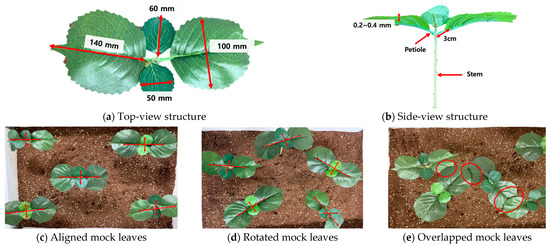
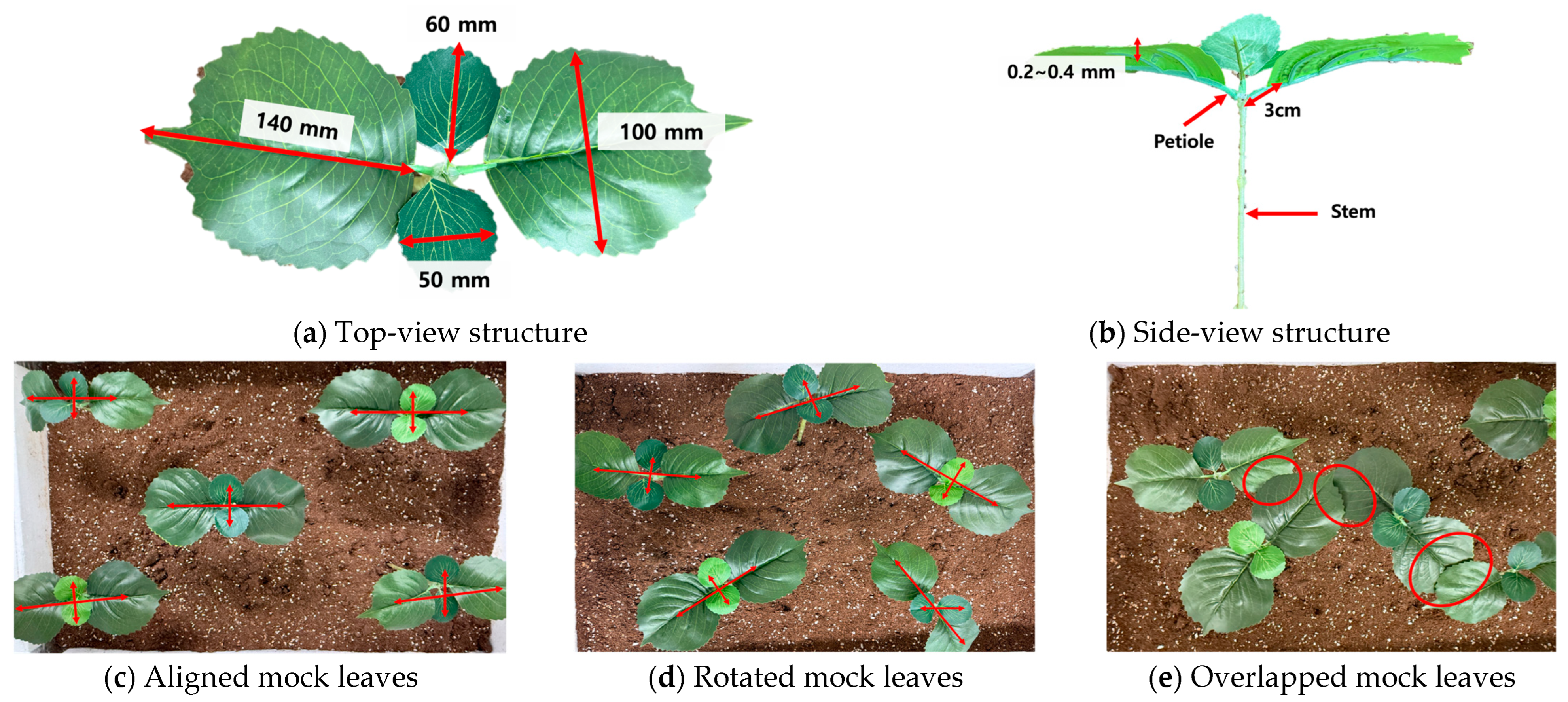
Before conducting experiments with real perilla plants, a simulated harvesting experiment was performed using perilla plant models to verify the stability of the complete harvesting sequence, including vision recognition, robot approach, end-effector actuation, petiole detection, grasping, and separation. The plant models were fabricated using commercially available artificial plant materials, and the leaf size, petiole length, leaf thickness, and within-node leaf arrangement were configured to reflect the main morphological dimensions of real perilla plants (Figure 11a,b).
Figure 11.
Perilla plant model used for the simulated harvesting experiment. (a) Top-view structure. (b) Side-view structure. (c) Aligned mock leaves. (d) Rotated mock leaves. (e) Overlapped mock leaves. The arrows indicate the target leaf orientation and harvesting direction, and the circles indicate the petiole–stem connection regions.
To implement repeatable petiole separation in the mock-plant experiment, each mock petiole was connected to the mock stem using a detachable magnetic connection. A 2 mm diameter magnet was placed at the petiole–stem connection to allow the mock leaf to detach when tensile force was applied by the PG module. This structure was used to approximate the detachable behavior of the petiole–stem junction and to enable repeated harvesting tests under controlled mock-leaf conditions. However, because the magnetic connection does not fully reproduce the mechanical and biological properties of a real perilla petiole, the mock-plant experiment was used primarily to verify the integrated harvesting sequence rather than to evaluate leaf damage characteristics.
The simulated harvesting experiment included three representative leaf conditions: aligned leaves, rotated leaves, and overlapped leaves (Figure 11c–e). These conditions were prepared to evaluate whether the developed end-effector could perform the complete harvesting sequence under different target-leaf arrangements. The aligned condition represented a basic target arrangement in which the two opposite leaves were positioned symmetrically. The rotated condition represented a case in which the target leaves were rotated relative to the robot approach direction. The overlapped condition represented a case in which adjacent leaves partially occluded the target leaves. In the overlapped condition, the visible upper leaf with a clearly identifiable contour was selected as the target to reflect the top-down approach strategy of the developed end-effector.
A total of 30 harvesting attempts were conducted using the perilla plant models. Ten attempts were performed for each leaf condition: aligned leaves, rotated leaves, and overlapped leaves. In each attempt, two opposite model leaves were selected as the harvesting targets; therefore, a total of 60 target leaves were evaluated in the simulated harvesting experiment. Harvesting success was recorded at both the attempt and leaf levels. Attempt-level success was defined as the successful grasping and separation of both target leaves in a single operation, whereas leaf-level success was defined as the successful grasping and separation of each individual leaf. Because this experiment was intended as a preliminary validation of the integrated system operation, damage evaluation was not performed. The operation time was measured from the initial robot position to the completion of leaf detachment and return to the initial position. Operation time was calculated for each of the 10 attempts per condition and reported as mean ± standard deviation.
3.3.4. Real Perilla Harvesting Experiment
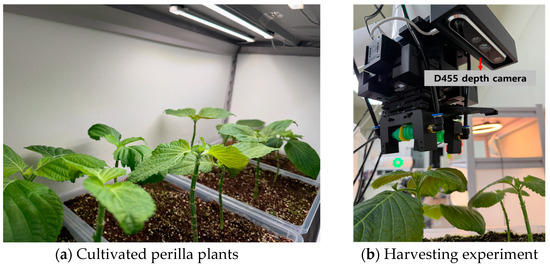
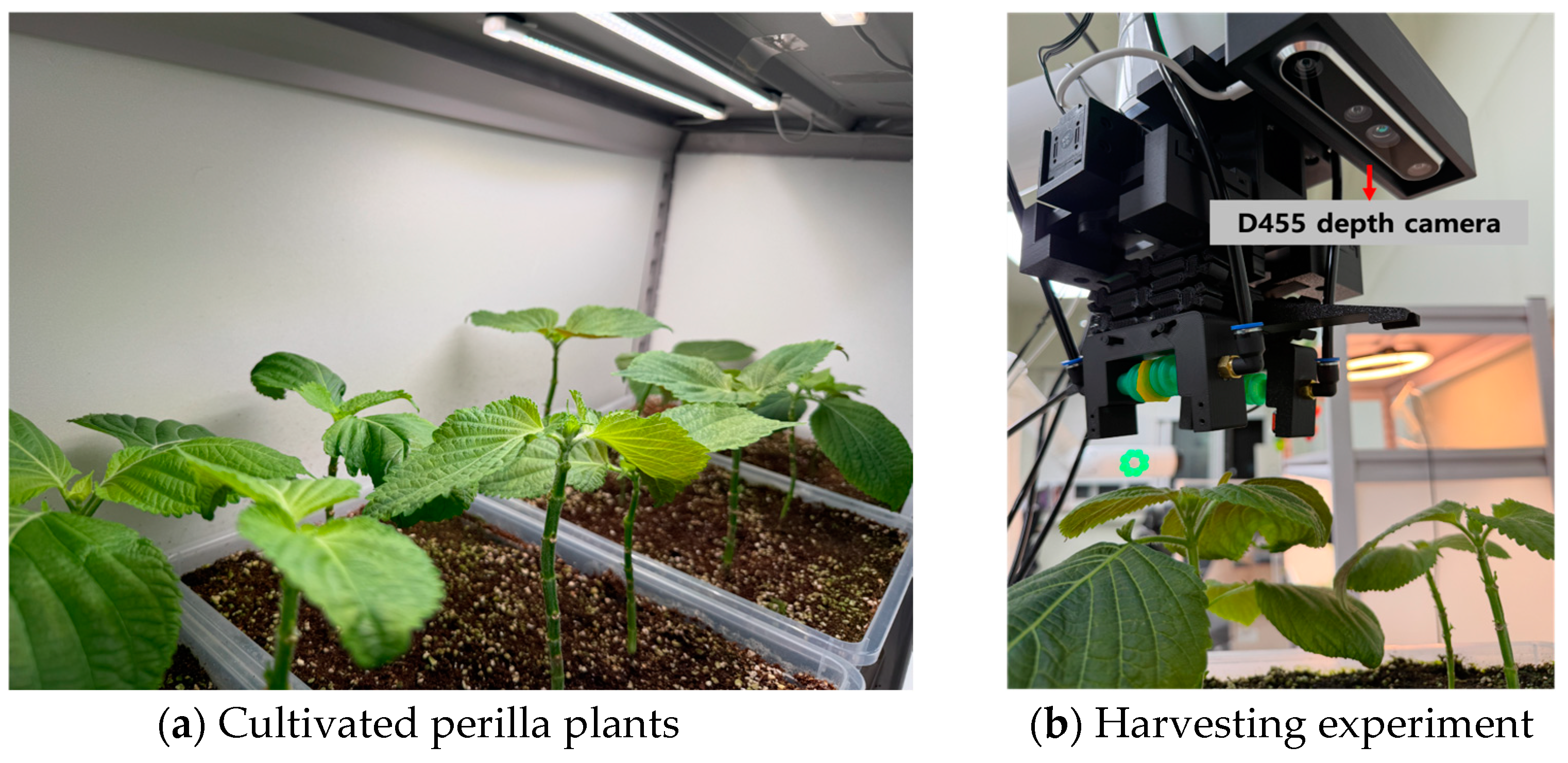
The real perilla harvesting experiment was conducted under indoor cultivation conditions in the laboratory. Edible perilla plants (Perilla frutescens var. japonica) were transplanted into horticultural substrate and cultivated for approximately four weeks under LED plant growth lights. The cultivation environment was maintained at a temperature of 23 ± 2 °C, a relative humidity of 60 ± 10%, and a photoperiod of 14 h per day. At the time of the experiment, all plants had developed at least four true leaves, and mature leaves with a blade length of 14 cm or more were selected as target leaves (Figure 12).
Figure 12.
Cultivated perilla plants used for the real harvesting experiment. (a) Indoor-grown plants. (b) Harvesting experiment.
The plants used in the real-plant experiment were arranged with an inter-plant spacing of approximately 20 cm, as described in Section 3.1. During harvesting, the end-effector approached the target node vertically from above rather than laterally entering the narrow space between neighboring plants. This top-down approach was adopted to reduce the risk of collision with adjacent plants and to improve compatibility with dense planting conditions.
In this experiment, one harvesting attempt was defined as one complete operation of the end-effector targeting two opposite mature leaves at the same node. Because the developed end-effector was designed to harvest two opposite mature leaves within one harvesting sequence, up to two leaves were targeted in each attempt. The left and right PG modules were independently actuated to accommodate differences in petiole height and orientation. Therefore, harvesting performance was recorded at both the attempt level and the leaf level.
To evaluate repeated harvesting capability, the experiment was conducted in two sessions separated by two weeks. In the first session, 14 harvesting attempts were performed on 14 plants, resulting in 28 target leaves. After the first harvesting session, the same plants were maintained under the same cultivation conditions for two weeks to allow new leaves to develop. In the second session, 2 of the 14 plants were excluded because their newly developed leaves did not reach the mature-leaf criterion at the time of the second harvest. Therefore, 12 plants were selected for the second session, and 12 harvesting attempts were performed, resulting in 24 target leaves. Overall, 26 harvesting attempts and 52 target leaves were evaluated across the two sessions.
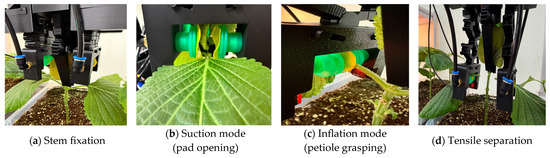
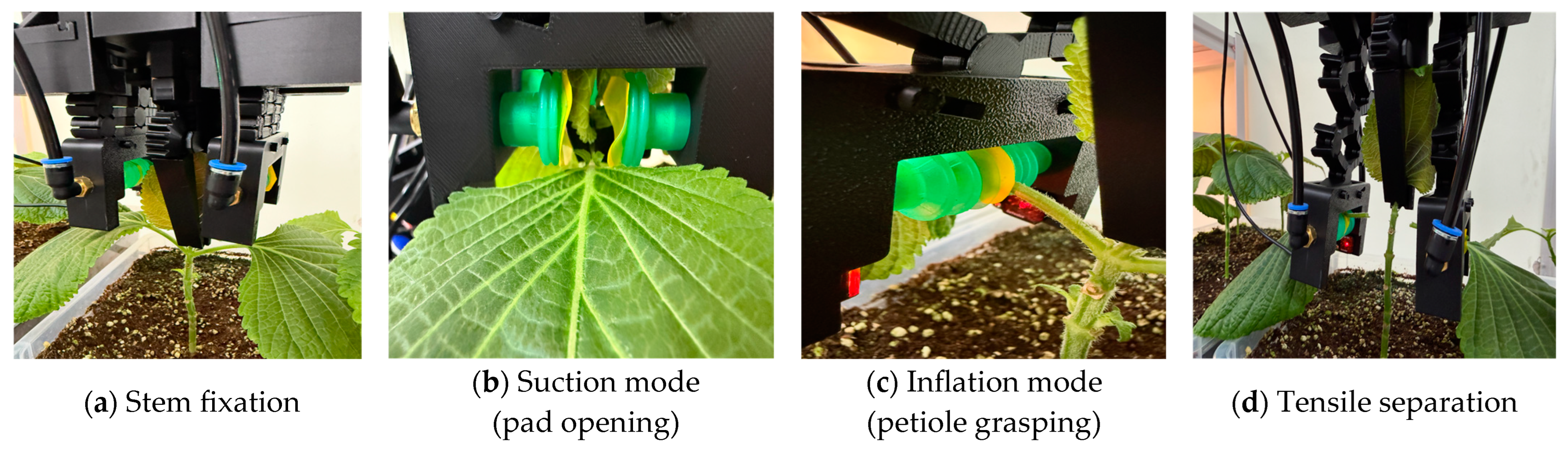
The real perilla harvesting procedure was performed as shown in Figure 13. Each attempt consisted of stem support by the CPS module, petiole positioning by the PG module, pneumatic grasping, and tensile separation. Operation time was measured from the initial robot position to the completion of leaf detachment and return to the initial position. The operation time was calculated for each attempt and reported as mean ± standard deviation.
Figure 13.
Sequential operation during real perilla leaf harvesting: (a) stem fixation, (b) suction mode for pad opening and petiole positioning, (c) inflation mode for petiole grasping, and (d) tensile separation.
3.3.5. Evaluation Metrics and Statistical Analysis
Harvesting performance and damage characteristics were evaluated using four metrics: attempt success rate (ASR), leaf harvest rate (LHR), target-leaf damage rate (TLDR), and non-target damage rate (NTDR). One harvesting attempt was defined as one complete operation targeting two opposite mature leaves at the same node. ASR was defined as the percentage of harvesting attempts in which both target leaves were successfully grasped and detached in one complete operation, whereas LHR was defined as the percentage of target leaves that were successfully harvested among all target leaves.
- (1)
- Attempt Success Rate, ASR
- (2)
- Leaf Harvest Rate, LHRwhere denotes the number of attempts in which both target leaves were successfully harvested, denotes the total number of harvest attempts, denotes the number of harvested leaves, and denotes the total number of target leaves.
Visible damage was evaluated separately for harvested target leaves and non-target plant regions. Target-leaf damage was defined as visible tearing, bending, or compression remaining on the harvested leaf after end-effector operation. In this study, “low-damage” was operationally interpreted based on the visible target-leaf damage rate after harvesting, because visible tearing, bending, or compression directly affects the marketability of harvested perilla leaves. TLDR was calculated as the percentage of harvested target leaves showing visible damage.
- (3)
- Target Leaf Damage Rate, TLDRwhere denotes the number of harvested leaves showing visible damage, and denotes the number of harvested leaves.
Non-target damage was defined as visible compression or damage occurring in the central growing region, immature leaves, or main stem. NTDR was calculated as the percentage of harvesting attempts in which visible damage was observed in any non-target plant region. When damage occurred in more than one non-target region during a single attempt, it was counted as one damaged attempt.
- (4)
- Non-target Damage Rate, NTDRwhere denotes the number of harvest attempts in which visible damage was observed in the central growing region or main stem, and denotes the total number of harvest attempts. Even when damage occurred in both regions during a single attempt, it was counted as one damaged attempt.
Continuous variables, including operation time and vision processing time, were reported as mean ± standard deviation. Proportional outcomes, including ASR, LHR, TLDR, and NTDR, were reported with 95% confidence intervals. Because the number of harvesting attempts was limited, Wilson score confidence intervals were used for binomial proportions. Fisher’s exact test was used to compare harvesting success rates between the first and second harvesting sessions, with statistical significance set at p < 0.05.
3.3.6. Failure Classification
Harvesting outcomes were classified as complete success, partial failure, complete failure, target-leaf damage, or non-target damage. Complete success was defined as successful grasping and detachment of both target leaves in one attempt. Partial failure was defined as successful harvesting of only one of the two target leaves in one attempt. Complete failure was defined as failure to harvest both target leaves. Damage was evaluated separately using TLDR and NTDR, as defined in Section 3.3.5.
Target-leaf damage was recorded when visible tearing, bending, or compression occurred on the harvested target leaves. Non-target damage was recorded when visible compression or damage occurred on the central growing region, immature leaves, or main stem. Failure and damage causes were further classified based on visual observation and experimental records, including petiole slippage during tensile separation, unstable contact between the pneumatic pads and the petiole, partial contact between the elastic pad and the leaf blade, contact between the CPS module and immature leaves or the central growing region, and main-stem damage. This classification was used to support systematic root-cause analysis of harvesting failures and damage cases.
4. Results and Discussion
This section presents the harvesting performance, operation time, damage characteristics, and failure cases of the developed dual-module end-effector. The experiments were conducted using both perilla plant models and real cultivated perilla plants, as described in Section 3.3. Harvesting performance was analyzed using the ASR and LHR metrics defined in Section 3.3.5, whereas damage characteristics were evaluated using TLDR and NTDR. The results are discussed in terms of harvesting reliability, repeated harvesting capability, low-damage characteristics, and remaining limitations of the developed system.
4.1. Simulated Harvesting Performance
The simulated harvesting experiment was conducted to verify the complete harvesting sequence of the developed end-effector before testing with real perilla plants. The experiment included three mock-leaf conditions: aligned leaves, rotated leaves, and overlapped leaves. Ten harvesting attempts were performed for each condition, resulting in a total of 30 attempts and 60 target leaves.
Table 3 summarizes the harvesting performance and operation time under the three mock-leaf conditions. In the aligned-leaf condition, the two opposite target leaves were positioned symmetrically with respect to the robot approach direction. In the rotated-leaf condition, the target leaves were rotated relative to the robot approach direction. In the overlapped-leaf condition, adjacent leaves partially occluded the target region, and the visible upper target leaf was selected according to the top-down approach strategy described in Section 3.3.2.
Table 3.
Simulated harvesting performance and operation time under different mock-leaf conditions.
The developed end-effector successfully completed the harvesting sequence under most mock-leaf conditions. In the aligned and rotated conditions, all harvesting attempts were successful, resulting in 100.0% ASR and LHR. In the overlapped condition, one harvesting attempt resulted in a failure, yielding an ASR of 90.0% and an LHR of 95.0%. This failure occurred when the mock petiole, which was connected to the mock stem using a detachable 2 mm diameter magnetic connection, slightly shifted during the harvesting motion. The magnetic connection induced a reattachment force after partial separation, causing the grasped leaf to deviate from the intended separation trajectory and to be dropped during the harvesting process.
The mean operation time was 9.1 ± 0.4 s for aligned leaves, 9.3 ± 0.3 s for rotated leaves, and 9.6 ± 0.4 s for overlapped leaves. The slightly longer operation time under rotated and overlapped conditions was mainly attributed to additional target alignment and petiole-position adjustment during the approach and grasping sequence. These results indicate that the developed end-effector could maintain stable operation even when the target leaf arrangement differed from the basic aligned condition.
Because the mock leaves differed from real perilla leaves in surface texture, moisture content, and petiole flexibility, this experiment was interpreted as a preliminary validation of system integration and operational stability. Therefore, the low-damage characteristics of the developed end-effector were further evaluated using real cultivated perilla plants, as described in the following sections.
4.2. Real Perilla Harvesting Performance
Harvesting performance under real perilla conditions was analyzed using the ASR and LHR metrics defined in Section 3.3.5. Table 4 summarizes the harvesting performance of the developed end-effector during the two real perilla harvesting trials.
Table 4.
Harvest performance of the developed end-effector under real perilla conditions.
In the first real-plant trial, 12 of 14 harvesting attempts were completely successful, and 25 of 28 target leaves were harvested. Accordingly, the ASR and LHR were 85.7% and 89.3%, respectively. In the second trial, 11 of 12 attempts were completely successful, and 22 of 24 target leaves were harvested, resulting in ASR and LHR values of 91.7% and 91.7%, respectively. Across the two real-plant trials, the developed end-effector achieved an ASR of 88.5% and an LHR of 90.4%.
The 95% Wilson confidence intervals for the total ASR and LHR were 71.0–96.0% and 79.4–95.8%, respectively. The relatively wide intervals reflect the limited number of harvesting attempts, but they provide a transparent estimate of uncertainty in the observed performance.
Fisher’s exact test showed no significant difference in harvesting performance between the first and second real-plant trials (ASR: p = 1.000; LHR: p = 1.000). This result indicates that the harvesting performance was maintained across repeated harvesting sessions under the tested indoor conditions. The higher numerical success rate in the second trial may be attributed to improved accessibility around the petioles after some outer mature leaves had been removed during the first trial. In addition, the 91.7% ASR maintained in the second trial, despite targeting newly developed leaves on the same plants, suggests that the developed end-effector can adapt to morphological changes after the first harvest.
A total of five target leaves were not harvested during the real-plant experiment, corresponding to the remaining 9.6% of target leaves. These unharvested leaves were associated with three harvesting failures: one partial failure and two complete failures. The partial failure occurred when one grasping pad failed to hold the petiole stably, whereas the complete failures were primarily associated with slippage of the petiole during tensile separation. These results indicate that contact stability between the pads and the petiole is a key factor affecting harvesting success.
4.3. Damage Evaluation of Target Leaves and Non-Target Regions
Damage to harvested target leaves and non-target plant regions was analyzed using the TLDR and NTDR metrics defined in Section 3.3.5. Visible damage was defined as mechanically induced tearing, bending, or compression that remained visually identifiable after end-effector contact. Temporary surface marks that recovered immediately after contact were not counted as damage. All harvested leaves were recorded using a camera for post-harvest inspection.
Table 5 summarizes the damage evaluation results observed during the real perilla harvesting experiment. Among the 47 harvested leaves, slight compression on the leaf blade surface was observed in only one leaf, while no tearing or bending occurred. Accordingly, the TLDR was 2.1%, with a 95% Wilson confidence interval of 0.4–11.1%. The observed compression was a minor surface deformation caused by partial contact between the elastic pad and the leaf blade near the petiole during petiole grasping. This case was included as damage based on a conservative evaluation criterion.
Table 5.
Damage evaluation of target leaves and non-target regions during real perilla harvesting.
The damage cases were also checked by harvesting session. In the first trial, one compression case was observed on a harvested target leaf, and two compression cases were observed in the central growing region. In the second trial, one compression case was observed in the central growing region, while no target-leaf damage was observed.
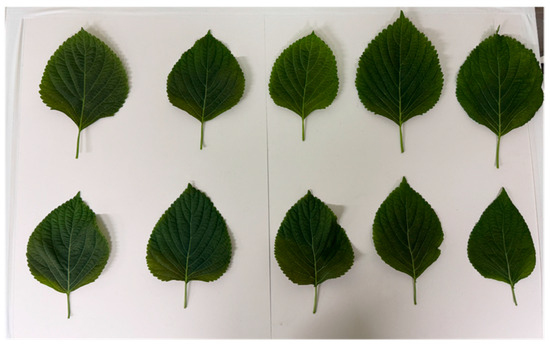
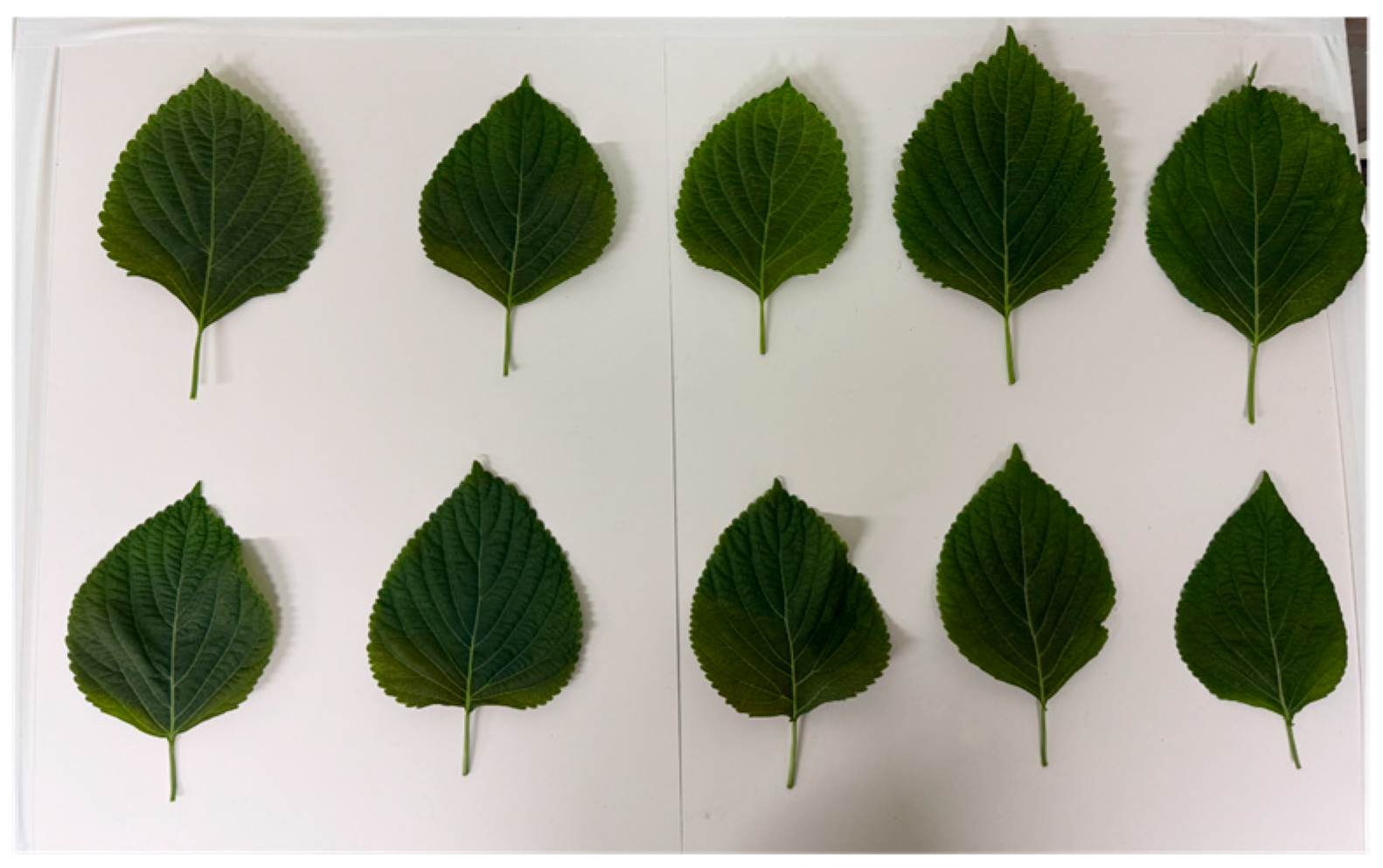
The representative appearance of harvested leaves is shown in Figure 14. Overall, most leaves were detached at the petiole–stem junction without severe compression, bending, or tearing of the leaf blade.
Figure 14.
Representative appearance of harvested perilla leaves after end-effector operation.
For non-target regions, three compression cases were observed in the central growing region over 26 harvesting attempts, resulting in an NTDR of 11.5%. No visible damage was observed on the main stem. Because no attempt involved simultaneous damage to both the central growing region and the main stem, the overall NTDR was also 11.5%.
The compression observed in the central growing region appeared to be a mild surface mark caused by partial contact between immature leaves and the support structure during CPS module closure. This damage was limited to the plant surface, and newly developed mature leaves were observed on the same plants after the first trial, suggesting that its effect on subsequent growth was limited under the tested conditions. In contrast, no main-stem damage was observed, indicating that the FSR-based contact-triggered stopping control effectively prevented excessive compression during stem support.
4.4. Failure Analysis and Discussion
Table 6 summarizes the main failure and damage cases observed during the real perilla harvesting experiment. The failure cases were classified based on visual observation and experimental records, as defined in Section 3.3.6.
Table 6.
Failure and damage cases observed during real perilla harvesting.
The observed failures were primarily associated with insufficient frictional interaction between the grasping pads and the petiole. In particular, complete failures occurred when the petiole slipped during tensile separation, even after successful grasping. Partial failure occurred when one of the two PG modules failed to maintain stable contact with the petiole. These results indicate that, although the scissor-lift mechanism and pneumatic pads enabled low-damage grasping, the frictional properties of the pad material and the resulting contact stability play a critical role in harvesting reliability.
Damage cases were mainly related to unintended contact between the end-effector and non-target tissues. Target-leaf compression occurred when part of the leaf blade contacted the elastic pad during petiole grasping, while central growing region compression resulted from incidental contact with the CPS module during closure. These observations suggest that further improvements in pad geometry, surface texture, and approach-position control could enhance both harvesting success and damage performance.
In addition, oblique or off-center petiole insertion remains a limitation of the current sensing configuration because the FSR-402 sensor is located at the center of one elastic pad. Although the fallback grasping strategy reduced missed detections, improving the effective sensing area and guiding structure would further enhance robustness to variations in petiole orientation.
No photoelectric-sensor stopping failure was separately identified in the real-plant experiment. However, the reliability of this stopping mechanism was evaluated only under the tested indoor and mock-leaf conditions, and further validation under greenhouse illumination and wider petiole-angle variation is required.
4.5. Limitations and Future Improvements
The experimental results show that the developed dual-module end-effector achieved an ASR of 88.5% and an LHR of 90.4% under real perilla conditions, while the TLDR was limited to 2.1%. In particular, no main-stem damage was observed, and the minor compression observed in the central growing region did not appear to hinder subsequent leaf development under the tested conditions. These results indicate that the separated structure of the CPS and PG modules is suitable for repeated selective harvesting of mature perilla leaves while preserving the central growing region.
However, the experimental scale of this study was limited to 26 real-plant harvesting attempts and 52 target leaves, and the experiments were conducted under indoor cultivation conditions. Therefore, the present results should be interpreted as a preliminary validation of the applicability of the developed system under real perilla conditions rather than as evidence of fully generalized performance. Further validation is required under commercial greenhouse conditions, considering variations in illumination, plant spacing, leaf density, stem posture, and cultivar-dependent morphology.
The current system was evaluated using a controlled top-down approach and a limited range of leaf arrangements, and the tensile force applied during petiole separation was not directly measured. Future work should integrate a force/torque sensor or an inline load cell to quantify the tensile detachment force and further optimize the scissor-lift displacement and pad–petiole contact condition. Although mock-leaf tests included aligned, rotated, and overlapped conditions, severe occlusion and highly irregular plant structures may still reduce target recognition and petiole access reliability. The current vision system provides coarse target localization, while final petiole-level positioning is compensated by photoelectric sensor-based stopping control. Future work should improve robustness by integrating more reliable 3D target localization, adaptive approach-path planning, and real-time feedback from tactile or proximity sensors.
Finally, this study did not include a detailed economic analysis or long-term greenhouse operation test. The tensile-separation approach used in this study eliminates the need for a cutting device and may reduce mechanical complexity and safety risks compared with cutting-based mechanisms. However, commercial feasibility should be evaluated through extended field trials, including harvesting throughput, maintenance requirements, crop recovery after repeated harvesting, labor-saving potential, and system cost.
5. Conclusions
In this study, a petiole tensile-separation end-effector with central growing region protection was developed and evaluated for the repeated selective harvesting of perilla leaves. The developed end-effector consists of a central protection and stem-support (CPS) module and a petiole grasping (PG) module. The CPS module protects the central growing region and provides lateral support to the main stem, whereas the PG module grasps the petiole using pneumatic soft pads and detaches the leaf through tensile separation at the petiole–stem junction.
In the mock-plant experiment, the developed end-effector was tested under aligned, rotated, and overlapped leaf conditions, and a total of 30 harvesting attempts were conducted. The system achieved an attempt success rate of 96.7% and a leaf harvest rate of 98.3% under the tested mock-leaf conditions, confirming the operational feasibility of the dual-module structure before real-plant validation. In the real perilla experiments, the end-effector achieved an attempt success rate of 88.5% and a leaf harvest rate of 90.4% across two harvesting trials. The remaining unharvested leaves were mainly associated with incomplete petiole grasping or petiole slippage during tensile separation, indicating that pad–petiole contact stability is a key factor for further improving harvesting reliability.
The target leaf damage rate was limited to 2.1%, and no visible main-stem damage was observed. Although mild compression occurred in the central growing region in some attempts, newly developed leaves on the same plants reached the mature-leaf criterion after the first harvesting trial. In addition, the second trial maintained an attempt success rate of 91.7%, suggesting that the developed end-effector can support repeated selective harvesting while preserving the future growth potential of the same plant under the tested indoor conditions.
These results demonstrate that petiole tensile separation combined with central growing region protection is a feasible structural approach for low-damage and repeated selective harvesting of perilla leaves. Future work will focus on improving pad material and surface friction characteristics to reduce petiole slippage, refining the CPS and PG module geometries to minimize unintended contact with immature leaves, and validating long-term harvesting performance under commercial greenhouse conditions with greater variation in illumination, plant density, stem posture, and growth stage.
Author Contributions
Conceptualization, C.S. and H.Y.; Methodology, C.S. and H.Y.; Software, C.S.; Validation, C.S. and H.Y.; Formal analysis, C.S.; Investigation, C.S.; Resources, H.Y.; Data curation, C.S.; Writing—original draft preparation, C.S.; Writing—review and editing, C.S. and H.Y.; Visualization, C.S.; Supervision, H.Y.; Project administration, H.Y. All authors have read and agreed to the published version of the manuscript.
Funding
This research received no external funding.
Institutional Review Board Statement
Not applicable.
Data Availability Statement
The data presented in this study are available from the corresponding author upon reasonable request.
Conflicts of Interest
The authors declare no conflicts of interest.
References
- Vrochidou, E.; Tsakalidou, V.N.; Kalathas, I.; Gkrimpizis, T.; Pachidis, T.; Kaburlasos, V.G. An overview of end effectors in agricultural robotic harvesting systems. Agriculture 2022, 12, 1240. [Google Scholar] [CrossRef] [Scilit]
- Rajendran, V.; Debnath, B.; Mghames, S.; Mandil, W.; Parsa, S.; Parsons, S. Towards autonomous selective harvesting: A review of robot perception, robot design, motion planning and control. J. Field Robot. 2024, 41, 2247–2279. [Google Scholar] [CrossRef] [Scilit]
- Ao, J.; Ji, W.; Yu, X.; Ruan, C.; Xu, B. End-effectors for fruit and vegetable harvesting robots: A review of key technologies, challenges, and future prospects. Agronomy 2025, 15, 2650. [Google Scholar] [CrossRef] [Scilit]
- Navas, E.; Fernández, R.; Sepúlveda, D.; Armada, M.; Gonzalez-de-Santos, P. Soft grippers for automatic crop harvesting: A review. Sensors 2021, 21, 2689. [Google Scholar] [CrossRef] [Scilit] [PubMed]
- Hayashi, S.; Shigematsu, K.; Yamamoto, S.; Kobayashi, K.; Kohno, Y.; Kamata, J.; Kurita, M. Evaluation of a strawberry-harvesting robot in a field test. Biosyst. Eng. 2010, 105, 160–171. [Google Scholar] [CrossRef] [Scilit]
- Kondo, N.; Yata, K.; Iida, M.; Shiigi, T.; Monta, M.; Kurita, M.; Omori, H. Development of an end-effector for a tomato cluster harvesting robot. Eng. Agric. Environ. Food 2010, 3, 20–24. [Google Scholar] [CrossRef] [Scilit]
- Silwal, A.; Davidson, J.R.; Karkee, M.; Mo, C.; Zhang, Q.; Lewis, K. Design, integration, and field evaluation of a robotic apple harvester. J. Field Robot. 2017, 34, 1140–1159. [Google Scholar] [CrossRef] [Scilit]
- Lehnert, C.; English, A.; McCool, C.; Tow, A.W.; Perez, T. Autonomous sweet pepper harvesting for protected cropping systems. IEEE Robot. Autom. Lett. 2017, 2, 872–879. [Google Scholar] [CrossRef] [Scilit]
- Birrell, S.; Hughes, J.; Cai, J.Y.; Iida, F. A field-tested robotic harvesting system for iceberg lettuce. J. Field Robot. 2020, 37, 225–245. [Google Scholar] [CrossRef] [Scilit] [PubMed]
- Kang, S.; Long, S.; Li, D.; Fan, J.; Du, D.; Wang, J. Design, integration, and field evaluation of a selective harvesting robot for broccoli. Comput. Electron. Agric. 2024, 227, 109654. [Google Scholar] [CrossRef] [Scilit]
- Zuo, Z.; Xue, Y.; Gao, S.; Zhang, S.; Dai, Q.; Ma, G.; Mao, H. Design and evaluation of a novel actuated end effector for selective broccoli harvesting in dense planting conditions. Agriculture 2025, 15, 1537. [Google Scholar] [CrossRef] [Scilit]
- Ahmed, H.M. Ethnomedicinal, phytochemical and pharmacological investigations of Perilla frutescens (L.) Britt. Molecules 2019, 24, 102. [Google Scholar] [CrossRef] [Scilit] [PubMed]
- Rural Development Administration (RDA). Cultivation Technology of Leaf Perilla. Nongsaro Agricultural Information Portal. Available online: https://www.nongsaro.go.kr/portal/ps/psb/psbl/workScheduleDtl.ps?menuId=PS00087&cntntsNo=30607 (accessed on 6 May 2026). (In Korean)
- Chang, D.I.; Cho, H.S.; Zheng, S.Y.; Lim, S.S. Development and performance test of automated harvesting system for edible perilla leaves. In Proceedings of the 2004 ASAE/CSAE Annual International Meeting, Ottawa, ON, Canada, 1–4 August 2004; ASAE/CSAE Meeting Paper No. 041023; ASAE: St. Joseph, MI, USA, 2004. [Google Scholar]
- Song, C.; Yi, H. Vision-based low-damage perilla leaf harvesting using a dual-module end-effector robotic system. In Proceedings of the 21st Korea Robotics Society Annual Conference (KRoC 2026), Pyeongchang, Republic of Korea, 4–7 February 2026; pp. 1233–1236. [Google Scholar]
- Yu, T.; Yi, H. Design and validation of a leaf-damage-preventive perilla harvesting end-effector based on photoelectric sensor-based stem detection. In Proceedings of the Program Book of the 21st Korea Robotics Society Annual Conference (KRoC 2026), Pyeongchang, Republic of Korea, 4–7 February 2026; p. 98. [Google Scholar]
- Wang, X.; Kang, H.; Zhou, H.; Au, W.; Wang, M.Y.; Chen, C. Development and evaluation of a robust soft robotic gripper for apple harvesting. Comput. Electron. Agric. 2023, 204, 107552. [Google Scholar] [CrossRef] [Scilit]
- Kultongkham, A.; Kumnon, S.; Thintawornkul, T.; Chanthasopeephan, T. The design of a force feedback soft gripper for tomato harvesting. J. Agric. Eng. 2021, 52, 1090. [Google Scholar] [CrossRef] [Scilit]
- Zhu, H.; Qin, H.; Qiu, Z.; Chen, X.; Xue, J.; Gu, X.; Lu, M. A compliant active roller gripper with high positional offset tolerance for delicate spherical fruit handling. Agriculture 2025, 15, 220. [Google Scholar] [CrossRef] [Scilit]
- Shan, Y.; Zhao, Y.; Wang, H.; Dong, L.; Pei, C.; Jin, Z.; Sun, Y.; Liu, T. Variable stiffness soft robotic gripper: Design, development, and prospects. Bioinspir. Biomim. 2023, 19, 011001. [Google Scholar] [CrossRef] [Scilit] [PubMed]
- Song, Y.H.; Chang, D.I.; Bahng, S.H.; Cho, H.S. Development of a gripper and a cutter for the automatic harvest of green perilla leaves. J. Biosyst. Eng. 2003, 28, 497–504. (In Korean) [Google Scholar] [CrossRef] [Scilit]
- Yongin Agricultural Technology Center. Leaf Perilla. Available online: https://www.yongin.go.kr/home/atc/cityConsum/cityConsum05/cityConsum05_02/cityConsum05_02_09.jsp (accessed on 24 June 2026). (In Korean)

Disclaimer/Publisher’s Note: The statements, opinions and data contained in all publications are solely those of the individual author(s) and contributor(s) and not of MDPI and/or the editor(s). MDPI and/or the editor(s) disclaim responsibility for any injury to people or property resulting from any ideas, methods, instructions or products referred to in the content. |
© 2026 by the authors. Licensee MDPI, Basel, Switzerland. This article is an open access article distributed under the terms and conditions of the Creative Commons Attribution (CC BY) license.